Cart 0
What Cheer, What Cheer, Iowa

WHAT CHEER

Iowa
Shop the collection

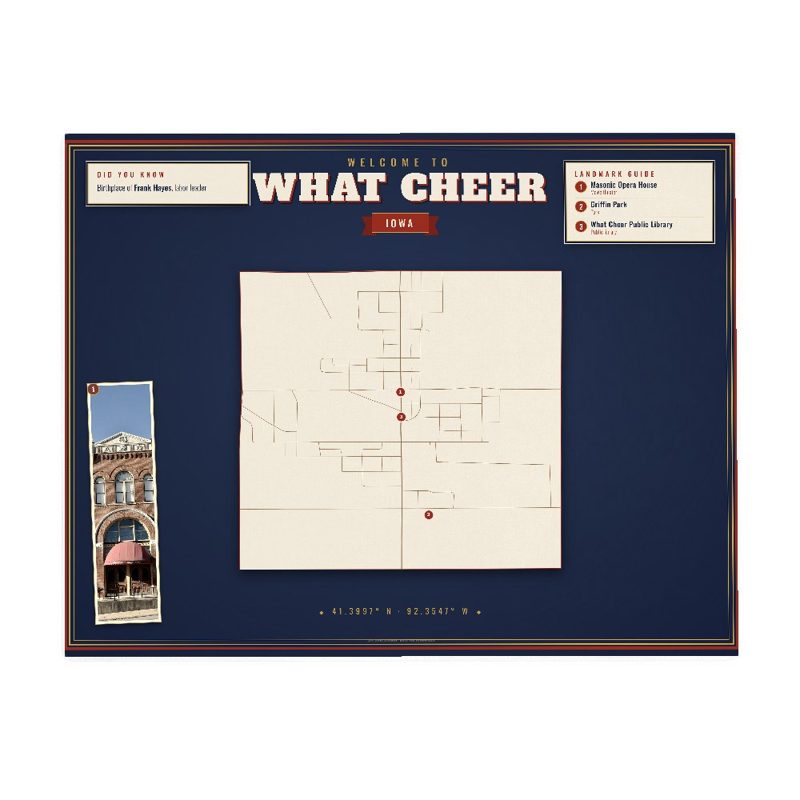
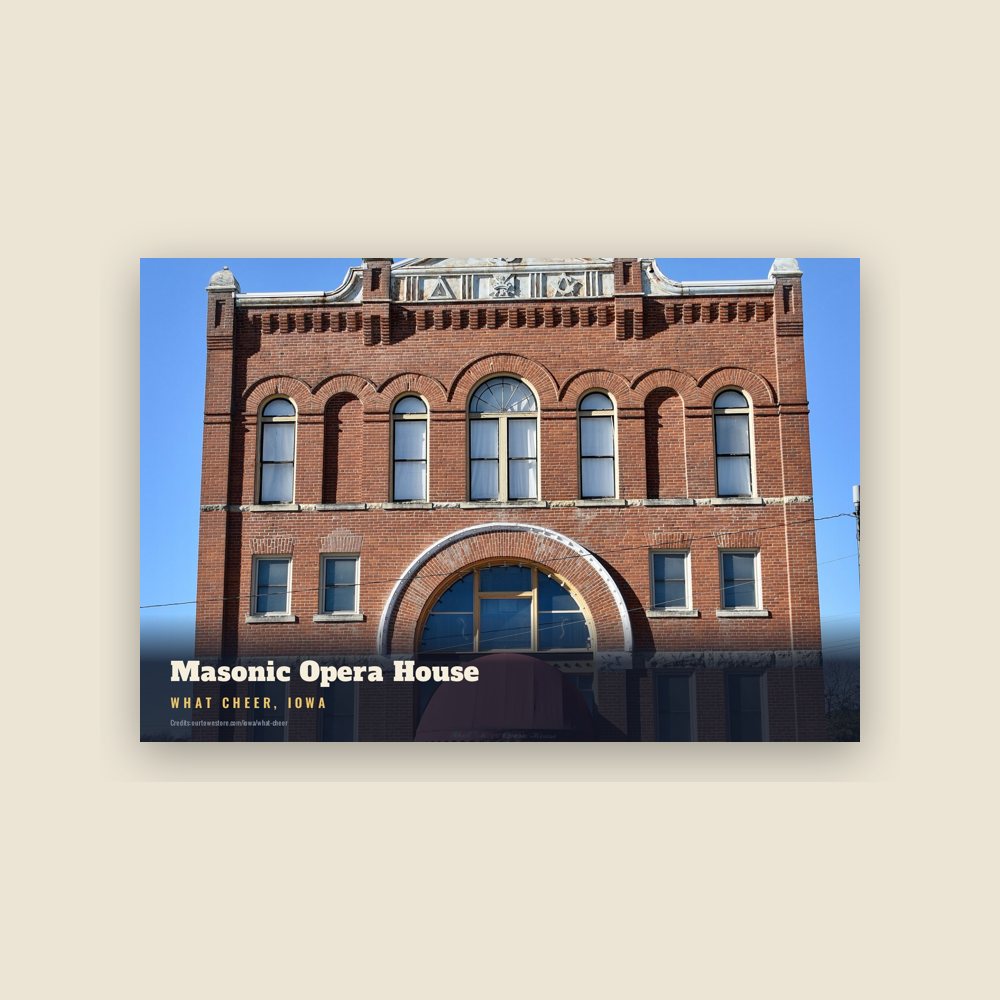
He worked for most of a decade as a coal miner before coming to Petersburg, the future What Cheer. Landmarks include Masonic Opera House. What Cheer is the birthplace of B. J. Palmer, chiropractor.

The What Cheer Collection

Made for What Cheer. Printed to order.

What Cheer, Iowa gifts and souvenirs: 30 designs made from What Cheer's own map, landmarks and history, from $10 to $99. Printed to order and shipped free in the USA.

PopularPrice
What Cheer Hometown Ornament$23
What Cheer Vintage Travel Posterfrom $40
What Cheer Varsity Crewneckfrom $57
What Cheer Est. Teefrom $33
What Cheer Town Line Mugfrom $26
What Cheer Market Tote$37
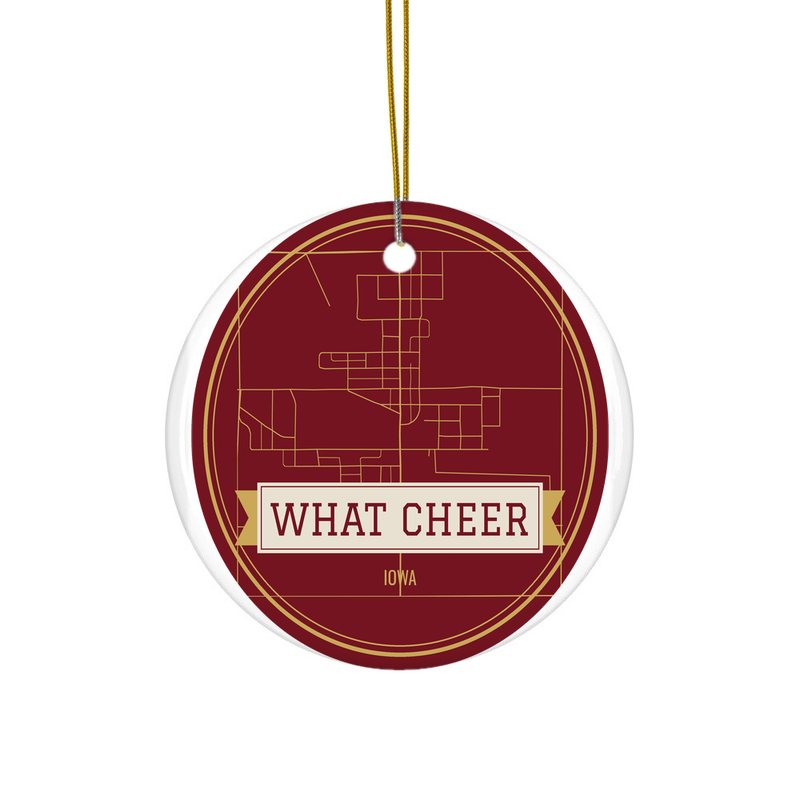
What Cheer Hometown Ornament

What Cheer Hometown Ornament

Ceramic keepsake, gold ribbon

$23
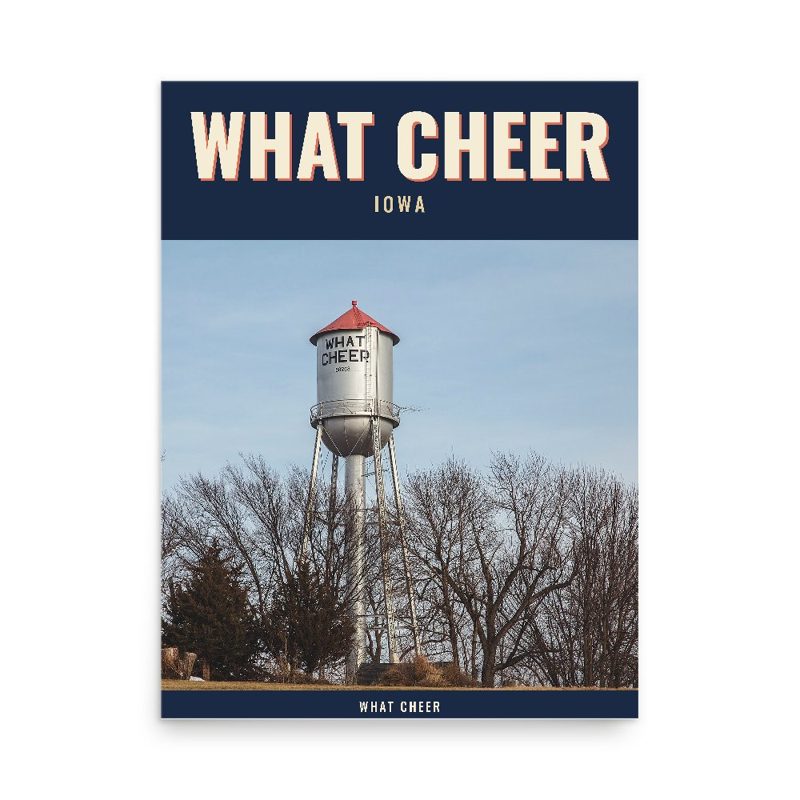
What Cheer Vintage Travel Poster

What Cheer Vintage Travel Poster

Its landmark photo in a classic travel-poster layout

from $40
What Cheer Photo Art Print

What Cheer Photo Art Print

A local landmark photo as a gallery print

from $40
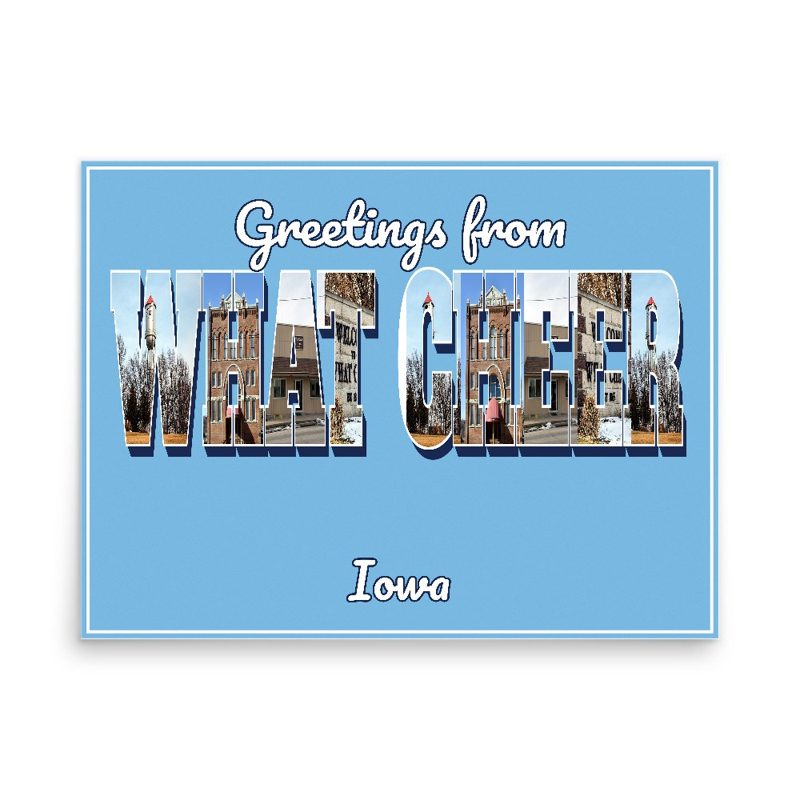
What Cheer “Greetings From” Poster

What Cheer “Greetings From” Poster

Classic large-letter postcard art, filled with local photos

from $40
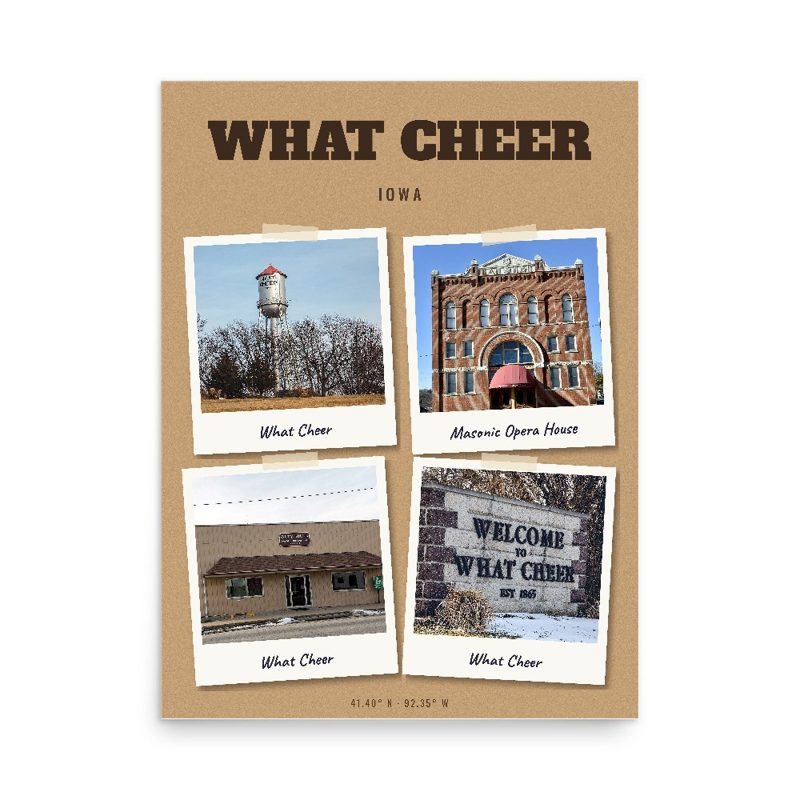
What Cheer Snapshot Collage Poster

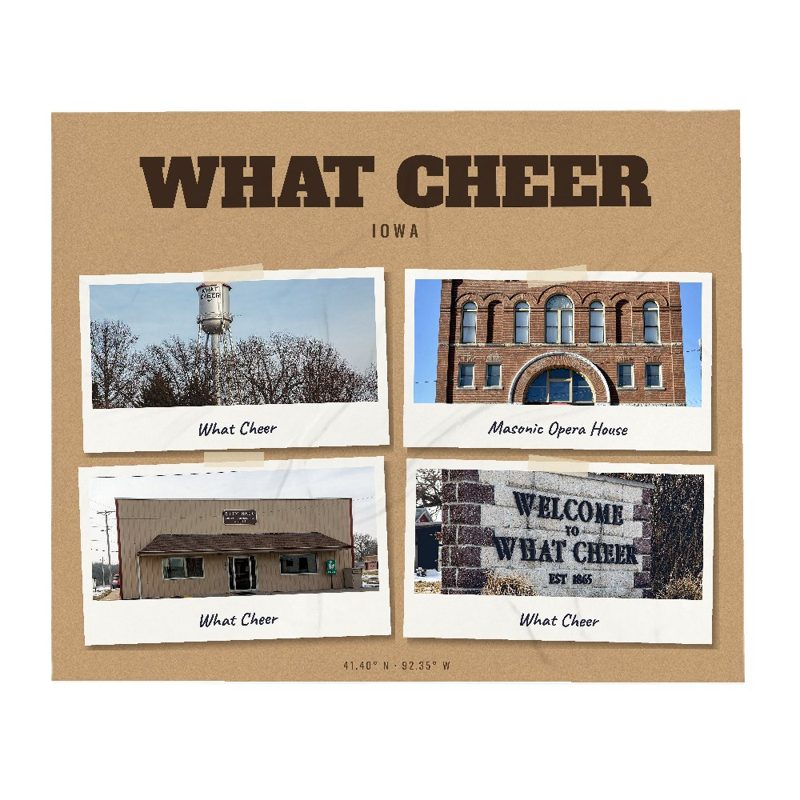
What Cheer Snapshot Collage Poster

Six local landmarks as instant photos on kraft paper

from $40
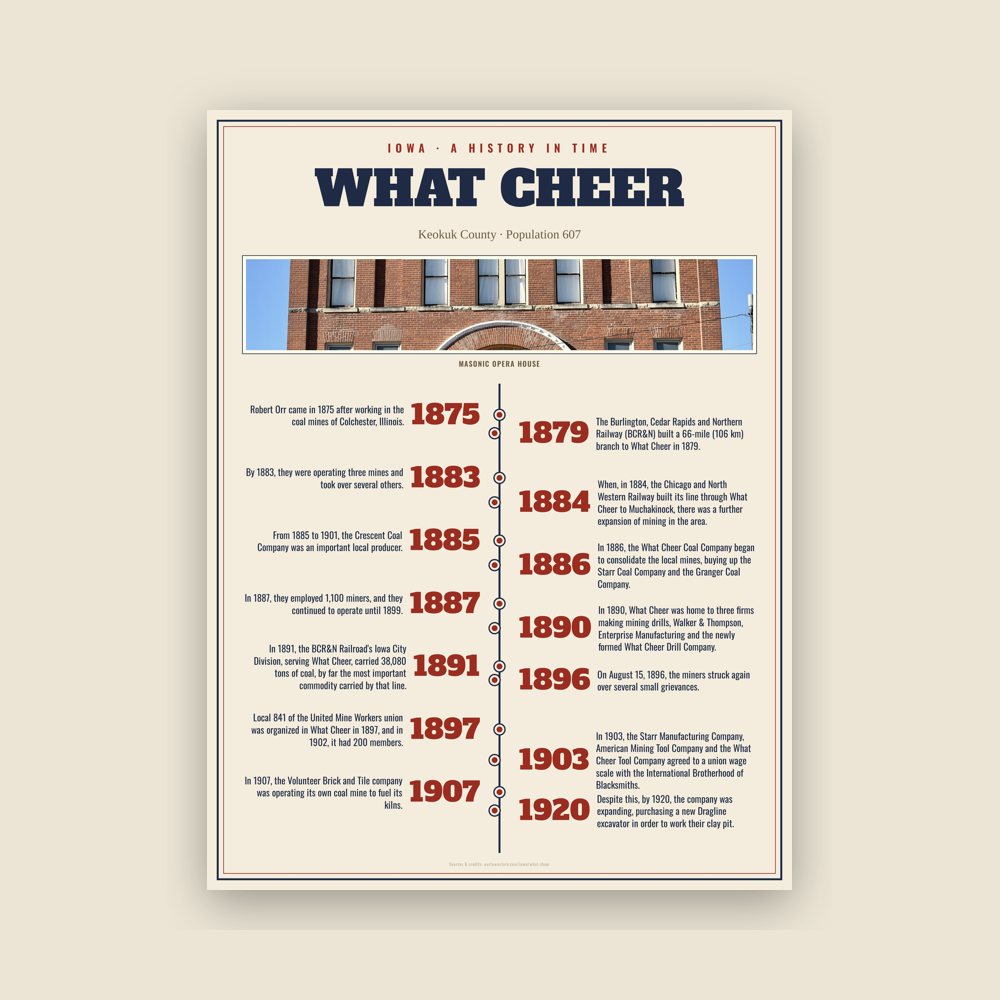
What Cheer History Timeline Poster

What Cheer History Timeline Poster

The town's story in dates, from its own records, for home or classroom

from $44
What Cheer Map Placemat

What Cheer Map Placemat

Map of local landmarks, washable fabric

$31
What Cheer Varsity Crewneck

What Cheer Varsity Crewneck

Heavy-blend fleece, street map printed on the back

from $57
What Cheer Hometown Knit Sweater

What Cheer Hometown Knit Sweater

Red heavy-blend crewneck, knit-stitch town print

from $57
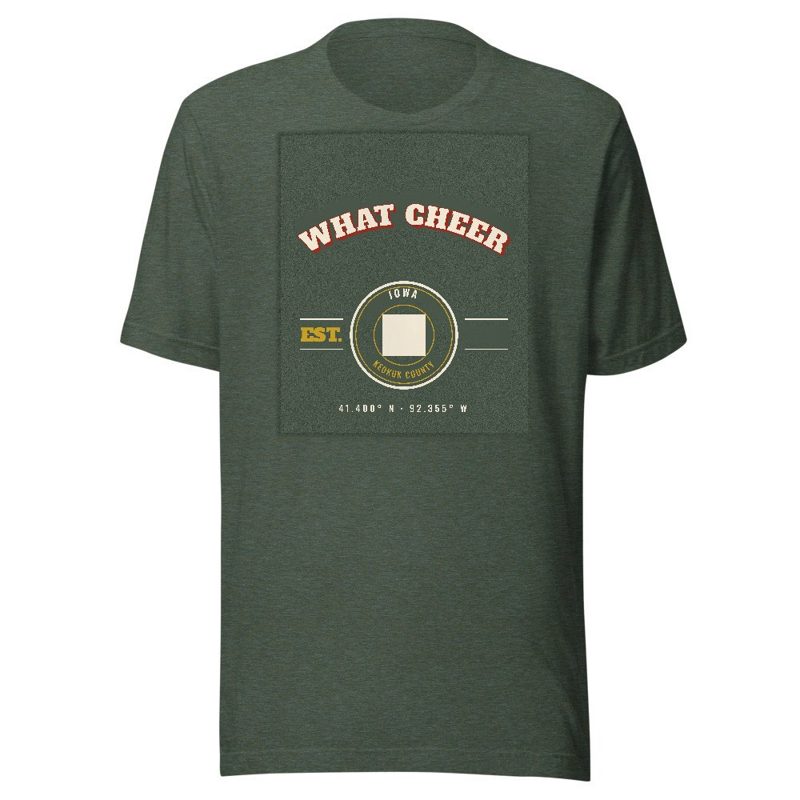
What Cheer Est. Tee

What Cheer Est. Tee

Soft Bella+Canvas jersey

from $33
What Cheer Est. Youth Tee

What Cheer Est. Youth Tee

Kids' Bella+Canvas jersey, youth sizes

$30
What Cheer Est. Toddler Tee

What Cheer Est. Toddler Tee

Bella+Canvas toddler jersey

$29
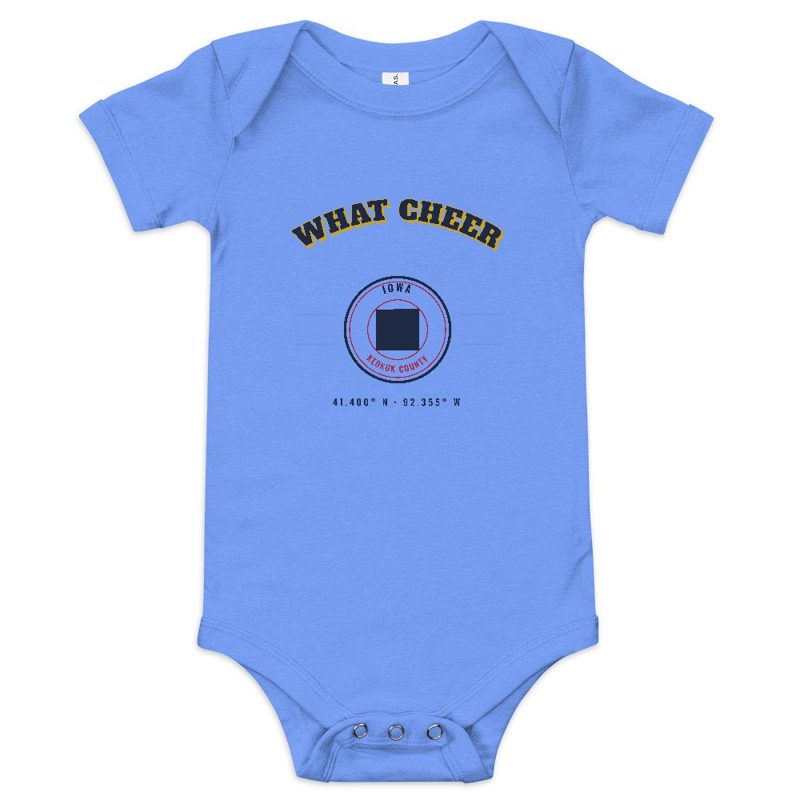
What Cheer Est. Baby One Piece

What Cheer Est. Baby One Piece

Bella+Canvas baby bodysuit

$30
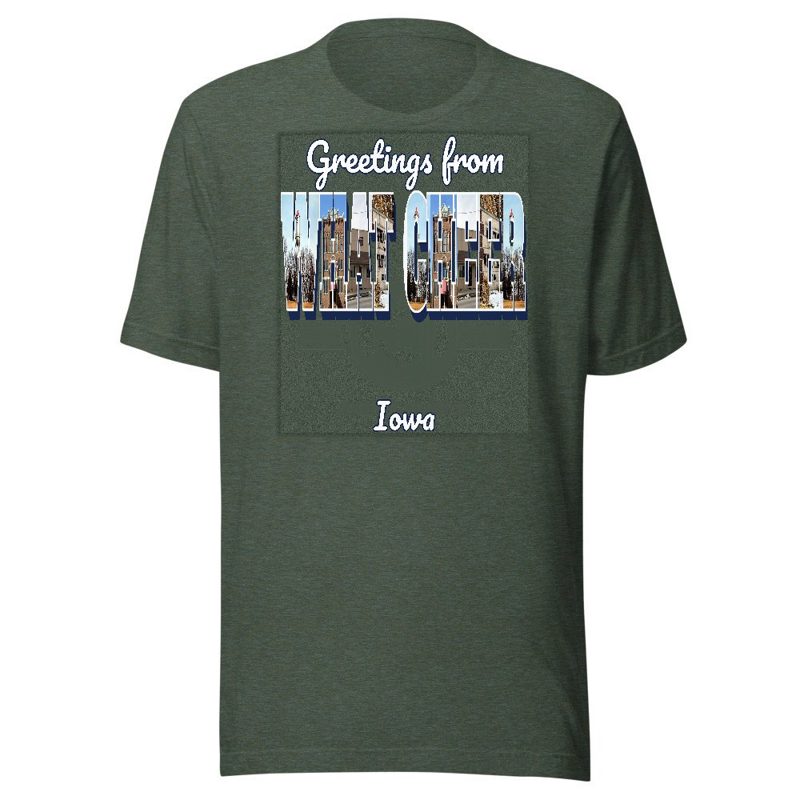
What Cheer “Greetings From” Tee

What Cheer “Greetings From” Tee

Large-letter postcard art filled with local photos

from $35
What Cheer Town Line Mug

What Cheer Town Line Mug

Glossy ceramic, dishwasher safe

from $26
What Cheer “Greetings From” Mug

What Cheer “Greetings From” Mug

Large-letter postcard art filled with local photos, 11 oz ceramic

from $29
What Cheer Garden Flag

What Cheer Garden Flag

Weatherproof, for the front walk

$31
What Cheer Welcome Doormat

What Cheer Welcome Doormat

24″×16″, printed coir-look fibers, rubber back

$66
What Cheer Hometown Wood Sign

What Cheer Hometown Wood Sign

12″×12″ printed wood, ready to hang

$48
What Cheer Map Throw Pillow

What Cheer Map Throw Pillow

Soft-touch, zip cover

$47
What Cheer Landmark Photo Pillow

What Cheer Landmark Photo Pillow

A local landmark photo with the town name, 18″×18″

$49
What Cheer Market Tote

What Cheer Market Tote

Sturdy all-over-print tote

$37
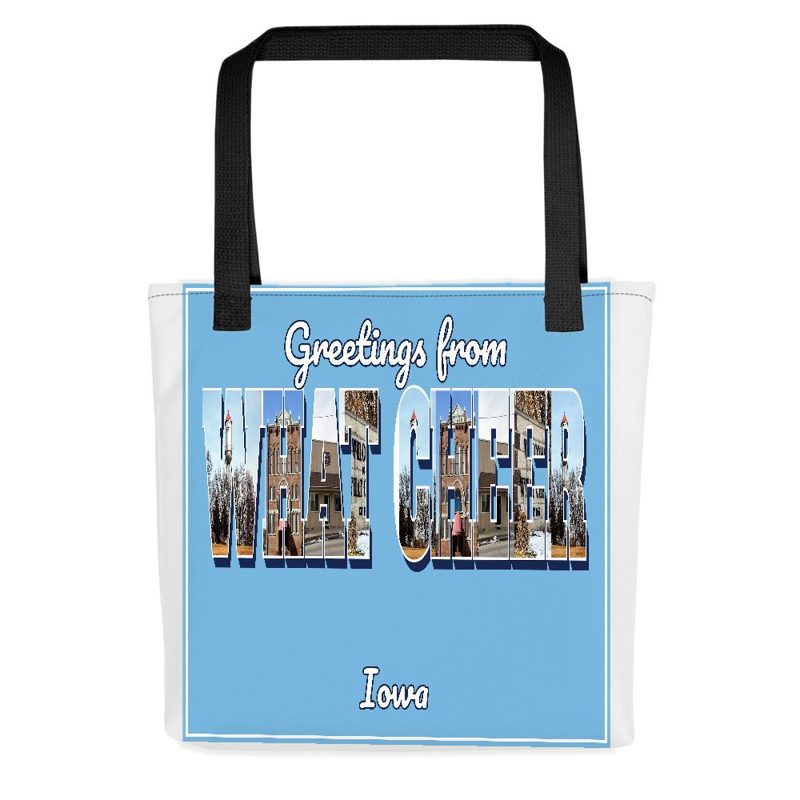
What Cheer “Greetings From” Tote

What Cheer “Greetings From” Tote

Large-letter postcard art on a sturdy tote

$37
What Cheer “Greetings From” Trucker Cap

What Cheer “Greetings From” Trucker Cap

Foam-front trucker, printed (not embroidered) with local photos

$33
What Cheer Cork Coaster

What Cheer Cork Coaster

Glossy top, cork back

$16
What Cheer Street Map Throw Blanket

What Cheer Street Map Throw Blanket

Soft fleece, 50″×60″

from $72
What Cheer Snapshot Collage Blanket

What Cheer Snapshot Collage Blanket

Six local landmarks as instant photos, soft fleece 50″×60″

from $76
What Cheer Est. Tumbler

What Cheer Est. Tumbler

20 oz, double-wall stainless

$51
What Cheer Masonic Opera House Postcard

What Cheer Masonic Opera House Postcard

6″×4″ postcard, glossy front

$10
What Cheer Sanborn Map Print

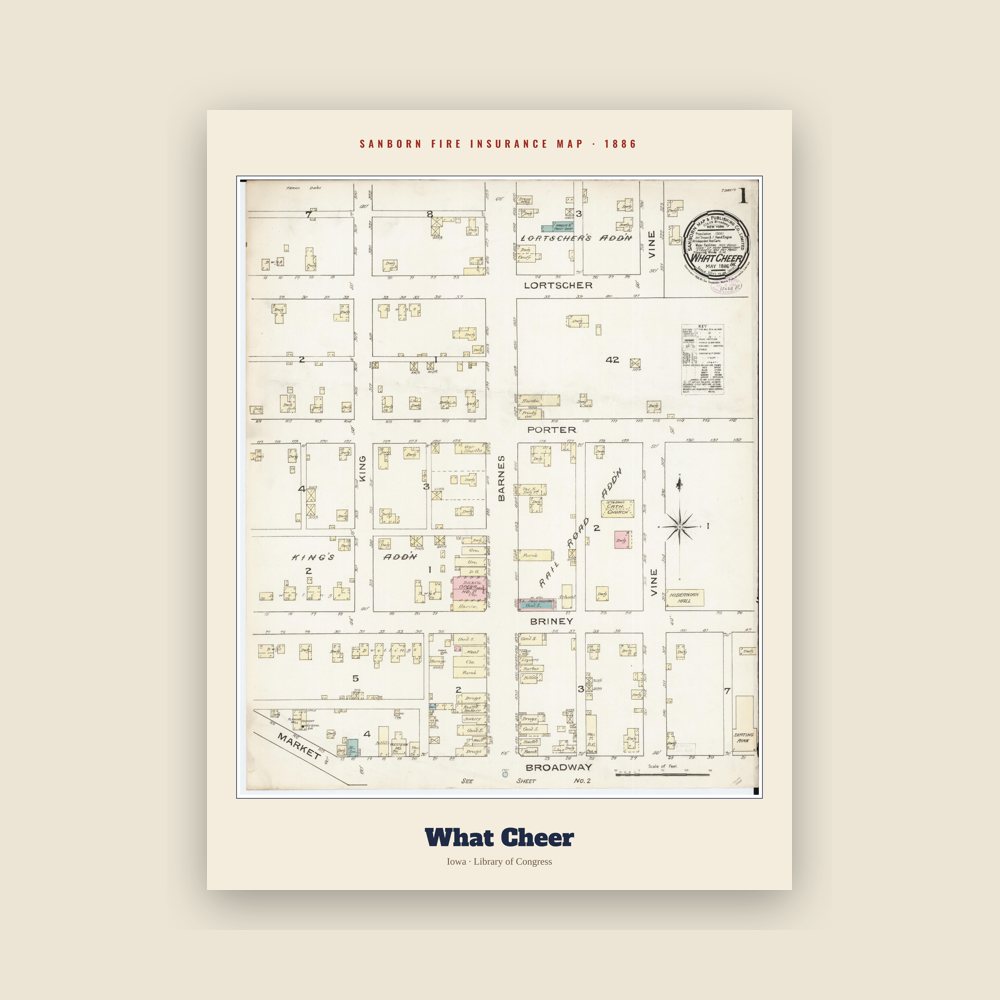
What Cheer Sanborn Map Print

The town's earliest Sanborn fire-insurance map, drawn building by building and hand-coloured, from the Library of Congress

from $44
Hometown roll

Born in What Cheer

On the National Register

Historic places

Population 2010: 646 → 2020: 607

From Wikidata (CC0).

A short history of What Cheer

Robert Forsyth, born in Kilmarnock, Scotland, came to America in 1857, and made his way to Rock Island, Illinois, where he arrived penniless. He worked for most of a decade as a coal miner before coming to Petersburg, the future What Cheer. In the 1870s, he began buying coal lands around town, mostly on credit. When the railroad came to town, he leased his land to the coal companies and bought into a local drug store, eventually operating stores in What Cheer, Mystic and Jerome, Iowa. Other Scots from the Kilmarnock region (Ayrshire) also settled in the area. Robert Orr came in 1875 after working in the coal mines of Colchester, Illinois. His son Alexander went on a successful career as a mine owner in Mystic.

The Burlington, Cedar Rapids and Northern Railway (BCR&N) built a 66-mile (106 km) branch to What Cheer in 1879. With the arrival of the railroad, the What Cheer coalfield quickly became one of the most important coal mining centers in Iowa. The Starr Coal Company had over 200 employees and could produce 1,000 tons of coal per day. By 1883, they were operating three mines and took over several others. When, in 1884, the Chicago and North Western Railway built its line through What Cheer to Muchakinock, there was a further expansion of mining in the area.

Local Assembly 1474 of the Knights of Labor was based in What Cheer and had a membership of 65 in 1884. On Oct. 15, 1884, 500 miners in What Cheer went on strike, demanding higher wages. The established wage was 3 cents per bushel, and the miners demanded an additional half cent. The state militia was put on alert, but after 6 weeks, the miners accepted a quarter-cent raise. This strike cut coal production in the What Cheer significantly.

In 1886, the What Cheer Coal Company began to consolidate the local mines, buying up the Starr Coal Company and the Granger Coal Company. In 1887, they employed 1,100 miners, and they continued to operate until 1899. From 1885 to 1901, the Crescent Coal Company was an important local producer.

In 1891, the BCR&N Railroad's Iowa City Division, serving What Cheer, carried 38,080 tons of coal, by far the most important commodity carried by that line.

On May 1, 1891, the miners of What Cheer and many other mining towns went on strike for the eight-hour day. 1000 men walked off the job in What Cheer, but returned to work defeated on June 16. On August 15, 1896, the miners struck again over several small grievances. The strike lasted 10 to 12 weeks. Local 841 of the United Mine Workers union was organized in What Cheer in 1897, and in 1902, it had 200 members.

The first industrial development in What Cheer was driven by the needs of the coal mines. In 1890, What Cheer was home to three firms making mining drills, Walker & Thompson, Enterprise Manufacturing and the newly formed What Cheer Drill Company. Within the decade, the What Cheer Drill and Miners' Tool Company was selling equipment in mining districts around the nation. Alexander Walker, originally with Walker & Thompson filed numerous patents on mining equipment, most of which were assigned to the What Cheer Drill and Miners' Tool Company, later named the What Cheer Tool Company. In 1903, the Starr Manufacturing Company, American Mining Tool Company and the What Cheer Tool Company agreed to a union wage scale with the International Brotherhood of Blacksmiths. At the time, the blacksmiths local 259 had just 17 members.

In 1907, the Volunteer Brick and Tile company was operating its own coal mine to fuel its kilns. The mine had a steam hoist to lift coal 40 feet from a coal seam from 4 to 5 feet thick. The Lea Brothers' mine in north-central What Cheer also had a steam hoist and still shipped some coal by rail. The remaining mines in the area were all small, using horse-gins to operate their hoists.

By 1909, there were only a few mines left in the county, all producing coal for local consumption in What Cheer. The decline of What Cheer's mines in the 20th century was reflected in declining union membership. In 1912, Local 841 of the United Mine Workers, based in What Cheer, had only 18 members.

The What Cheer Clay Products Company strip mined local coal into the mid-century, but in their case, coal was a byproduct. Their primary source of clay was the 8 to 12 foot (2.5 to 4 meter) underclay found immediately below the coal. What Cheer Clay Products was organized in 1911. The plant cost $300,000 to build, and was seriously damaged by a fire in 1917. Despite this, by 1920, the company was expanding, purchasing a new Dragline excavator in order to work their clay pit.

Adapted (trimmed) from the Wikipedia article What Cheer, Iowa, revision 1379762194 by its contributors, licensed CC BY-SA 4.0.
For local organizations

Are you with a What Cheer historical society?

We share a part of every What Cheer sale with local partners, and we'd love to print from your collection. Old photographs, maps and postcards make the best keepsakes.

Partner with us
Custom orders

Want something What Cheer we don't make yet?

A favorite landmark, your street, a school or team, an anniversary gift, a different product. Tell us and we'll get back to you by email.

Free printables

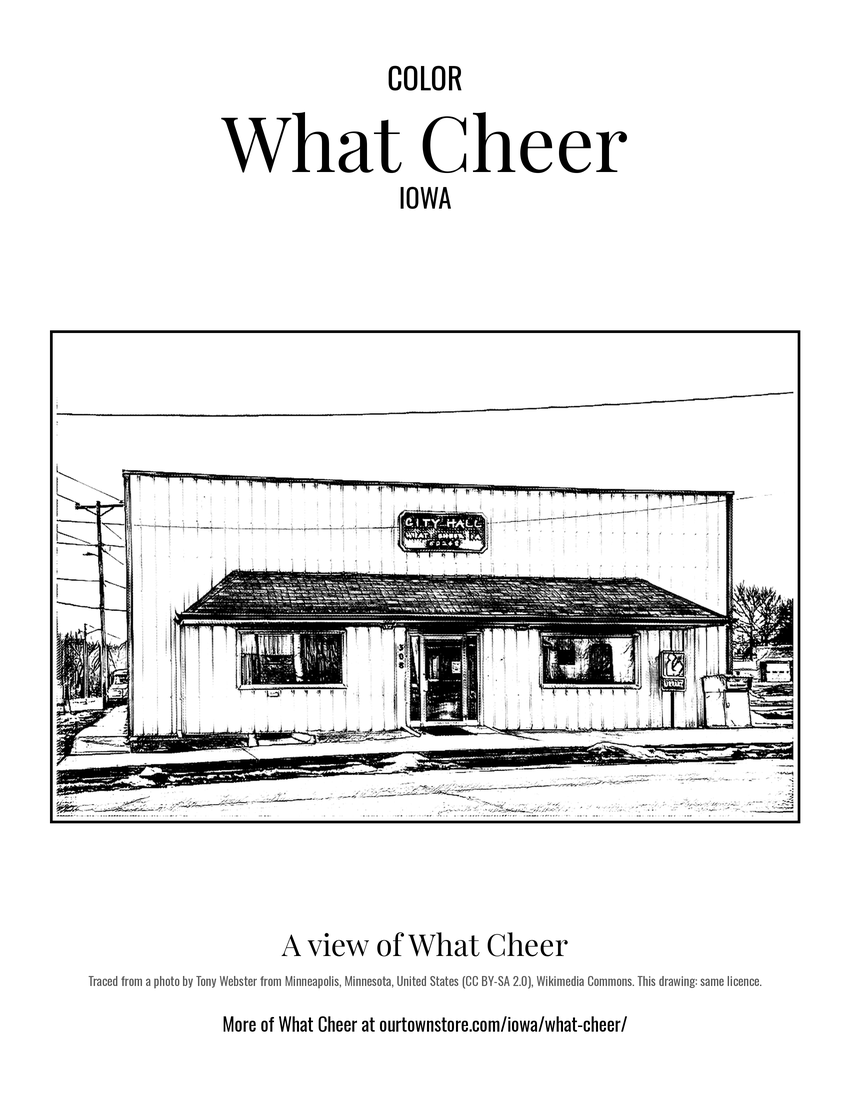
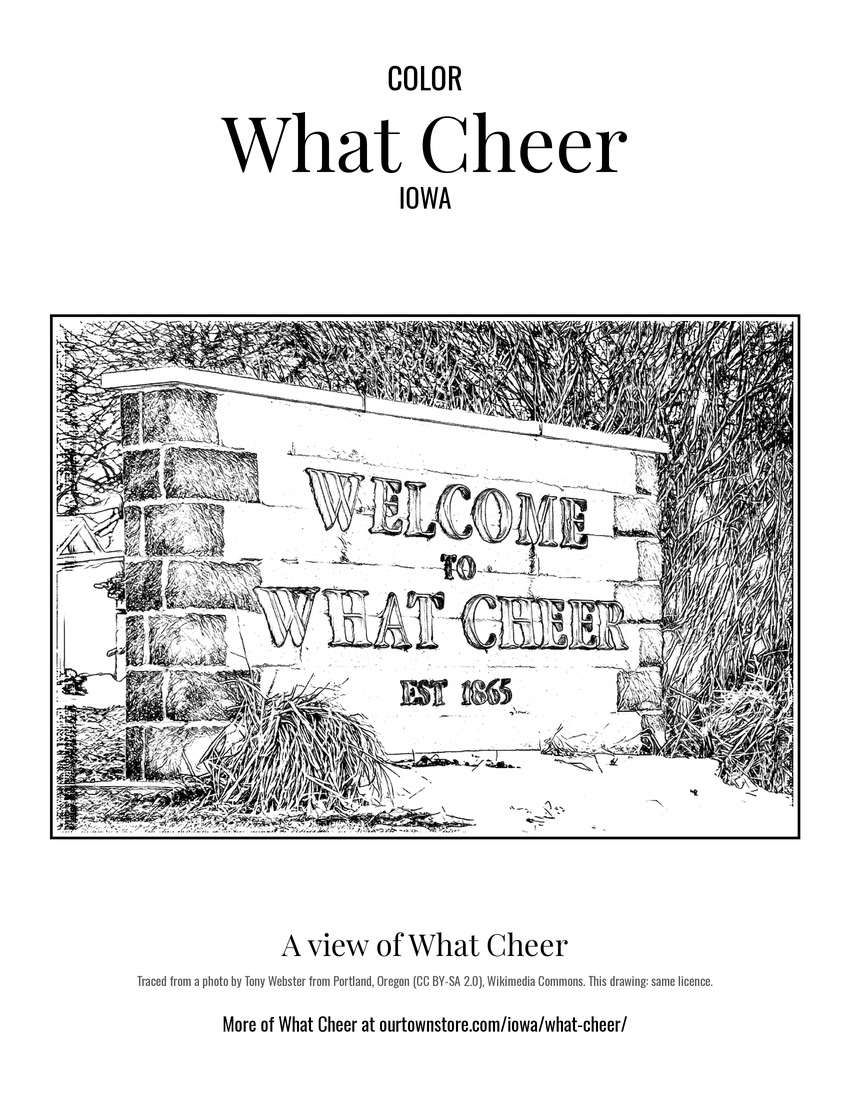
Color What Cheer

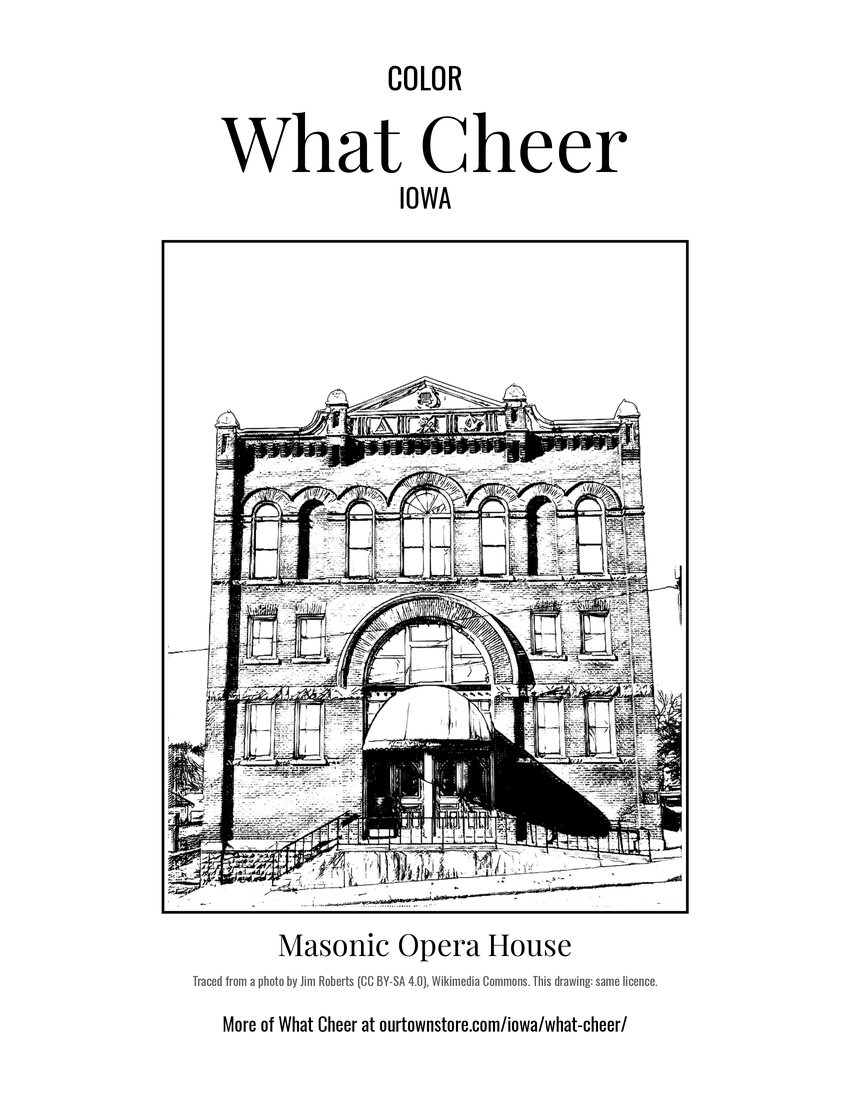
4 free coloring pages of What Cheer, each traced from a photo of a local landmark. Print them at home, at school or for story hour.

Nearby

Neighboring towns

Sources

What Cheer's population was 607 in the 2020 U.S. Census, down from 646 in 2010.