A short history of Hawarden
Calliope and early settlement
The origins of Hawarden can be traced to Calliope, an early settlement along the Big Sioux River approximately one mile north of the present city center. Sioux County was organized in 1860, and a settlement developed at Calliope in 1861. A log courthouse was constructed near the river, serving as the center of county government. The settlement was reportedly named by early county organizer Frederick M. Hubbell after a steam-powered calliope he had heard aboard a riverboat.
Calliope served as Sioux County's first county seat, but its position was challenged following the establishment of the Dutch immigrant settlement of Orange City in 1870. Tensions arose between the county's original officeholders and newly elected officials supported by the Dutch community.
In January 1872, a group of Dutch settlers traveled to Calliope by horse-drawn sleighs and forcibly entered the courthouse, removing county records and the county safe. The records were subsequently returned following an agreement concerning the seating of the newly elected officials. Later that year, county voters approved moving the county seat to Orange City, with the transfer formally taking effect in January 1873.
Despite losing the county seat, Calliope continued to grow. A railroad station was established in 1878, and the community developed stores, hotels, and other businesses serving the surrounding agricultural region.
Read the full history
Founding of Hawarden
The extension of the Chicago and North Western Railway played a central role in Hawarden's establishment. Although a railroad route through Calliope was initially contemplated, the company constructed its station approximately one mile south of the older settlement. A new community developed around the station and railroad facilities.
Hawarden was platted in 1882 by the Western Town Lot Company. Its name was chosen in honor of British statesman William Ewart Gladstone, whose home was at Hawarden Castle in Wales.
The railroad developed extensive facilities at Hawarden, including a roundhouse capable of accommodating approximately 19 locomotives, repair facilities, and hotels serving railroad passengers. Rail transportation contributed to the growth of commercial activity and the movement of agricultural products throughout the region.
Rivalry with Calliope and incorporation
The growth of Hawarden produced a rivalry with the older settlement of Calliope. In 1882, Calliope incorporated an area that included the emerging community of Hawarden, placing both settlements under a single municipal government.
Disagreements over municipal improvements, business development, and the distribution of public resources led Hawarden residents to seek separation from Calliope. In 1886, a court ruled in favor of Hawarden's request to become a separate municipality. The Hawarden Independent, previously published in Calliope, also relocated to Hawarden that December.
In February 1887, residents voted 97 to 3 in favor of incorporation. Hawarden was officially incorporated on March 18, 1887.
Competition between the communities continued, but Hawarden's position as a railroad center attracted businesses and residents from Calliope. In 1893, the two communities were consolidated into a single incorporated municipality under the name Hawarden. Calliope's post office remained in operation until 1911, and the name continued to be used for the northern portion of Hawarden.
Industry and twentieth-century development
During the late nineteenth and early twentieth centuries, Hawarden developed as a regional railroad and agricultural center. The Big Sioux River also supported a substantial ice-harvesting industry. Ice cut from the frozen river was stored in large ice houses and distributed to households, businesses, and neighboring communities. The Hawarden Ice Company continued operations into the mid-twentieth century, although natural ice harvesting was eventually replaced by mechanical refrigeration.
Hawarden experienced repeated flooding from Dry Creek, including major floods in 1897 and 1926. On September 17, 1926, approximately 11 inches of rainfall over six hours caused severe flooding throughout the city. More than 250 homes were damaged or destroyed, and one resident died. The disaster prompted renewed efforts to improve drainage and flood control.
During the Great Depression, Hawarden attracted national attention for a local stamp scrip program developed by businessman Charles Zylstra in 1932. The system used locally issued currency requiring the purchase of stamps as it circulated, with the aim of stimulating economic activity. Hawarden's experiment influenced similar programs adopted by other American communities.
Adapted (trimmed) from the Wikipedia article Hawarden, Iowa, revision 1379898046 by its contributors, licensed CC BY-SA 4.0.




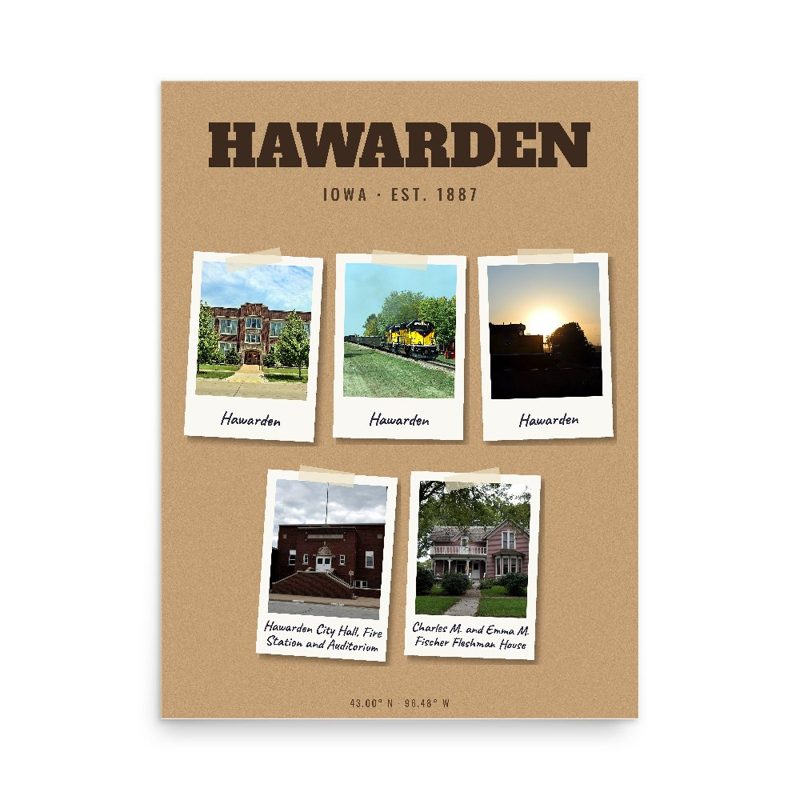
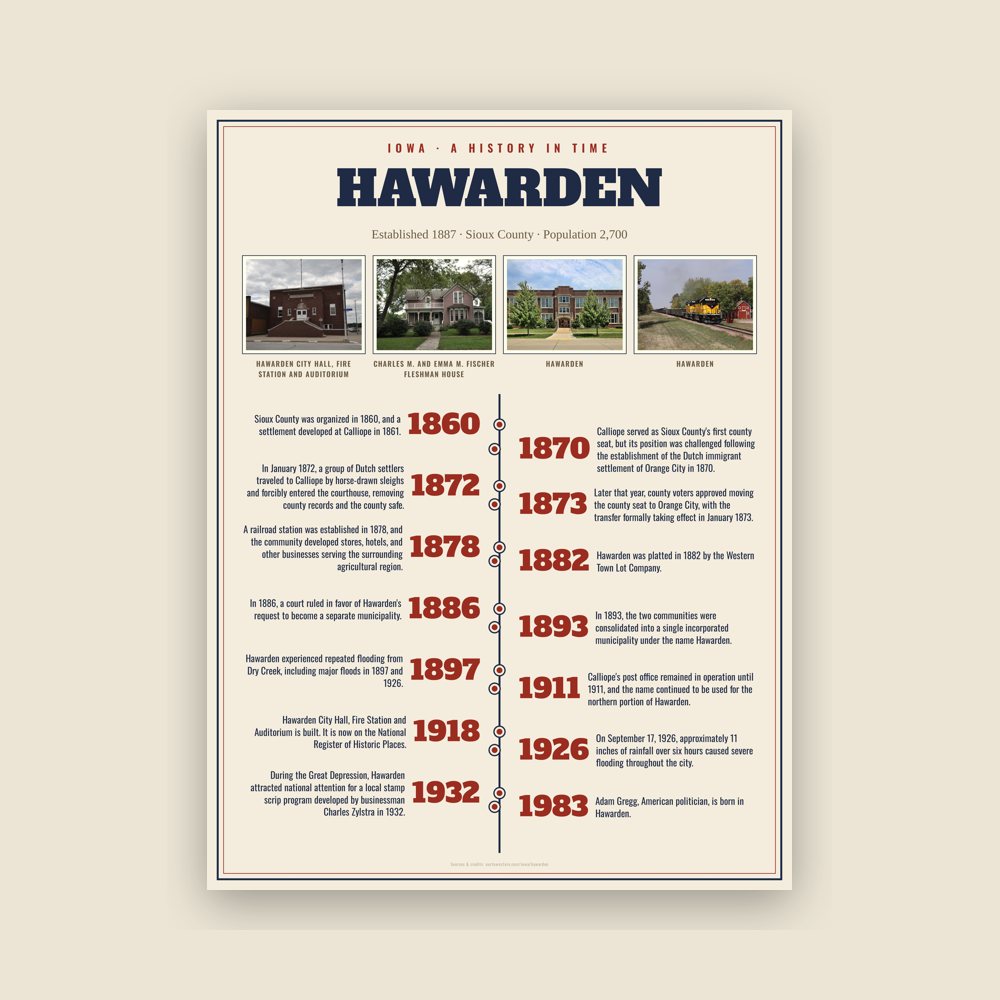
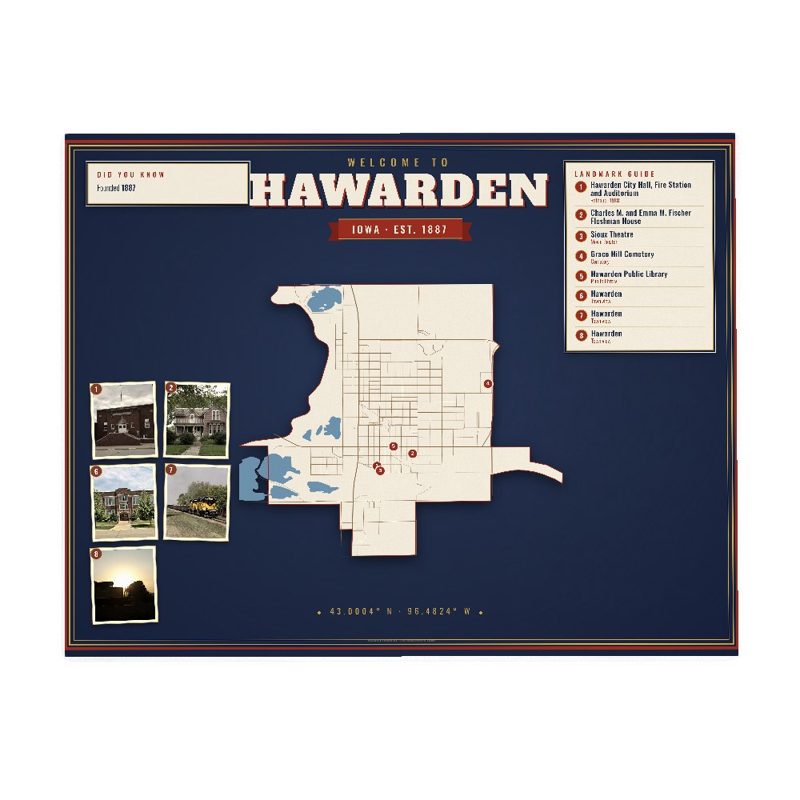

















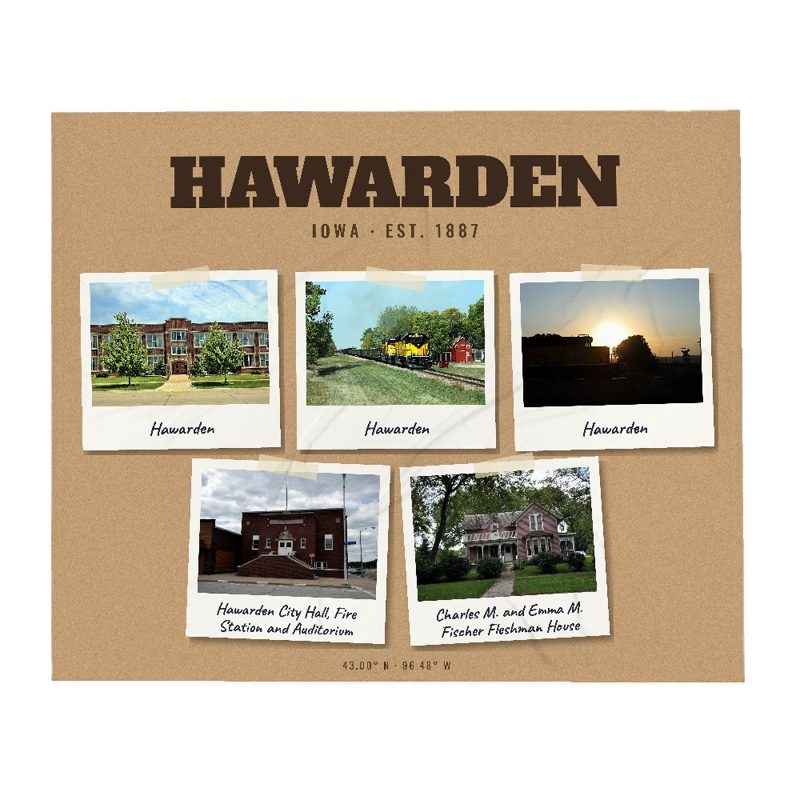
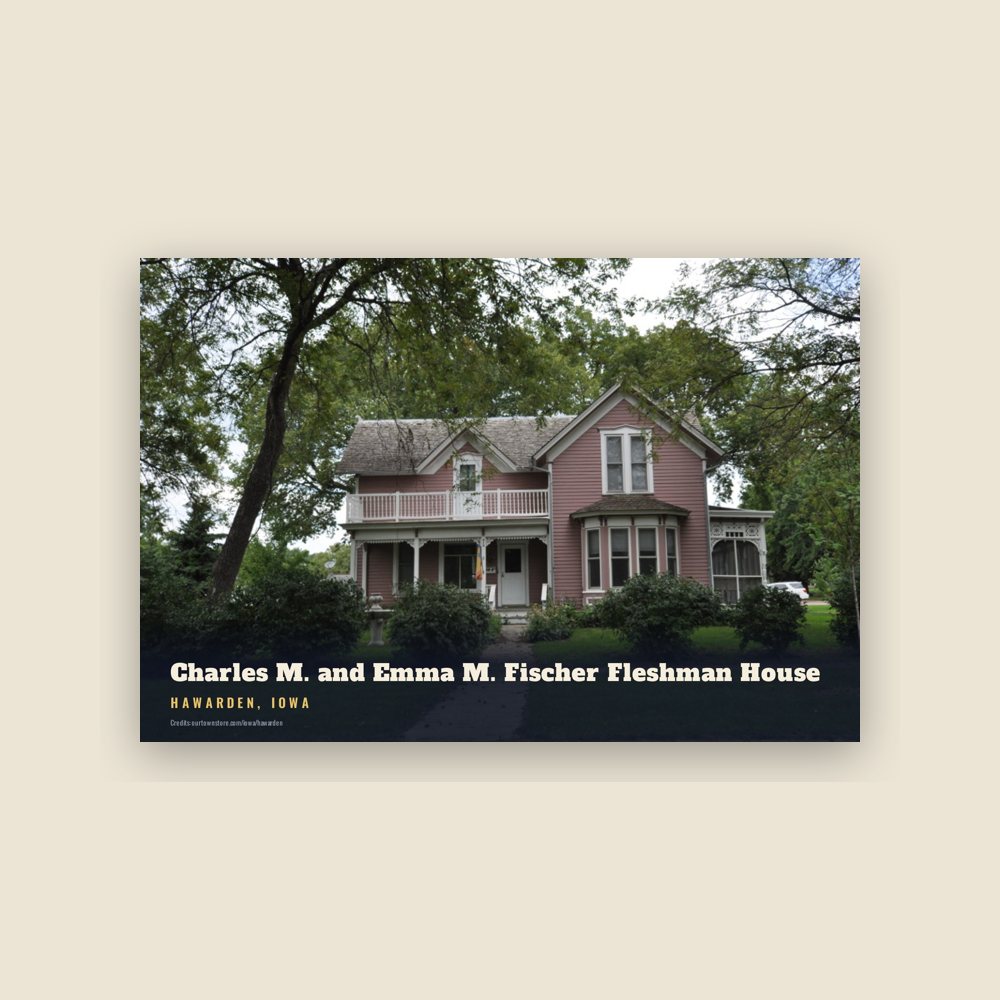
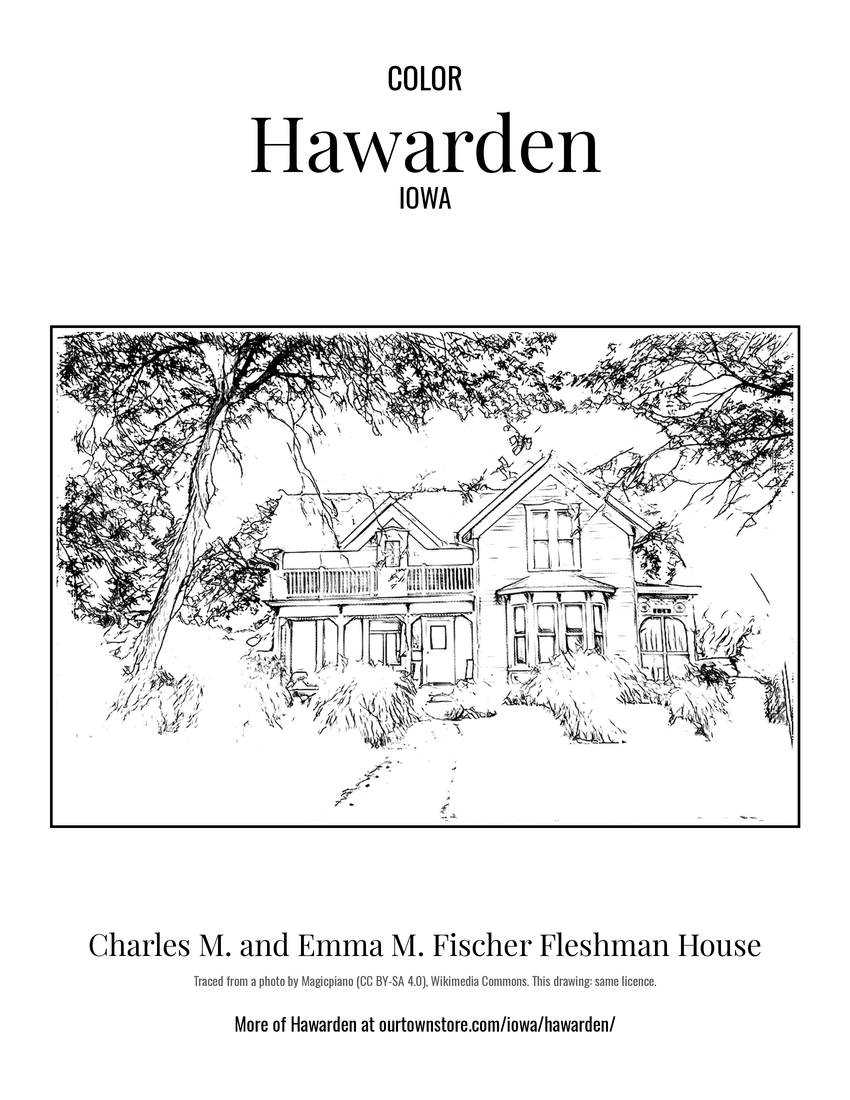 Charles M. and Emma M. Fischer Fleshman House
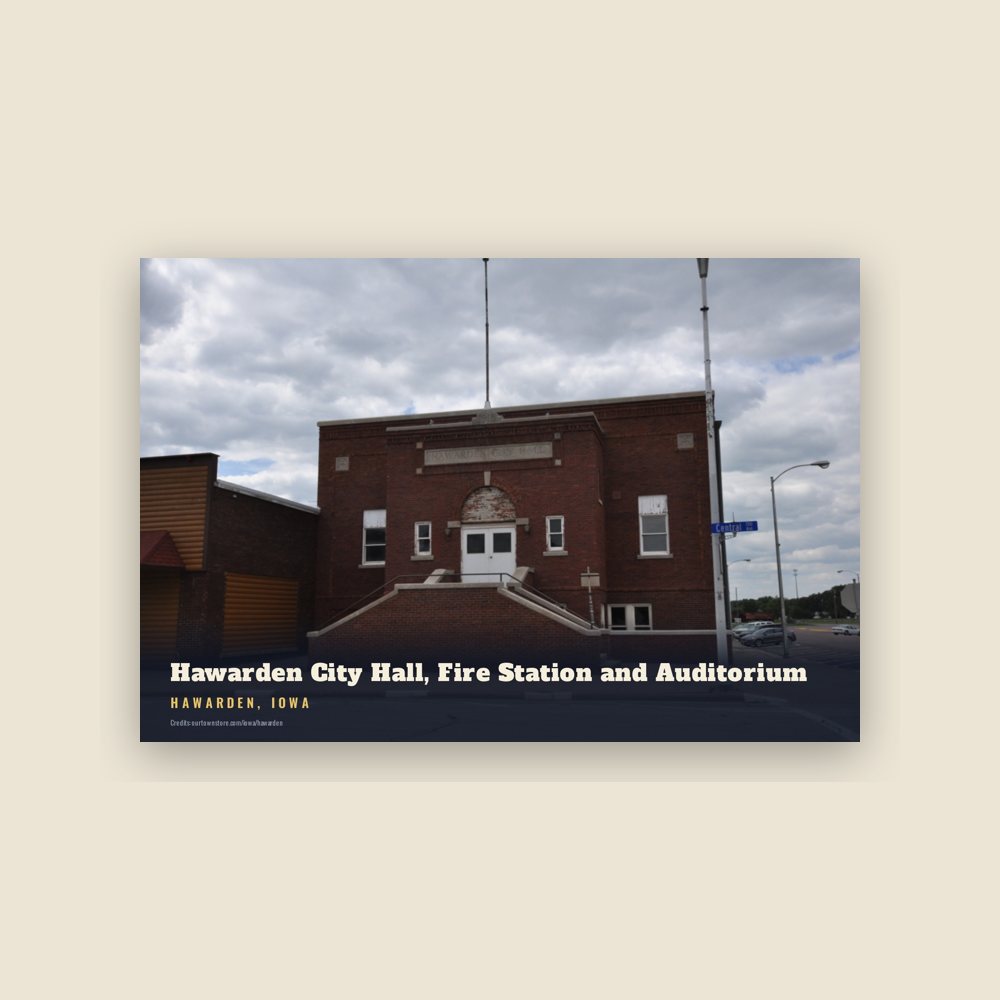
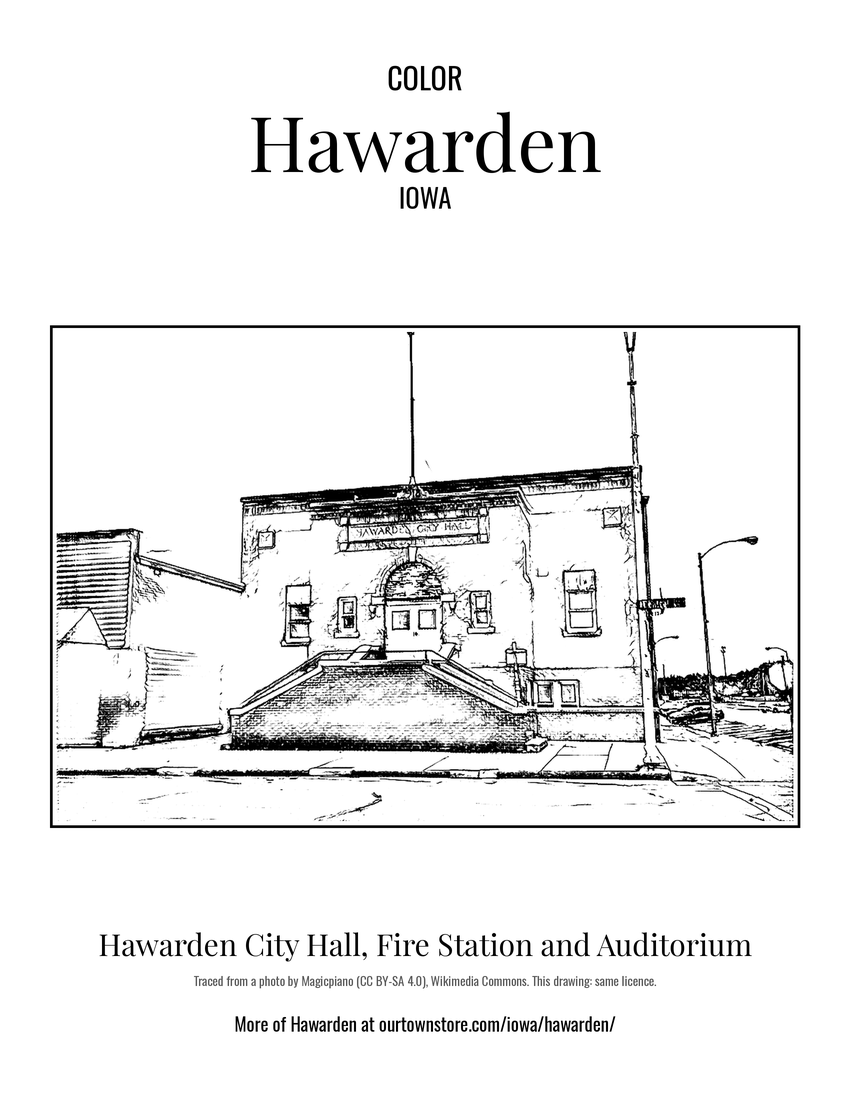 Hawarden City Hall, Fire Station and Auditorium
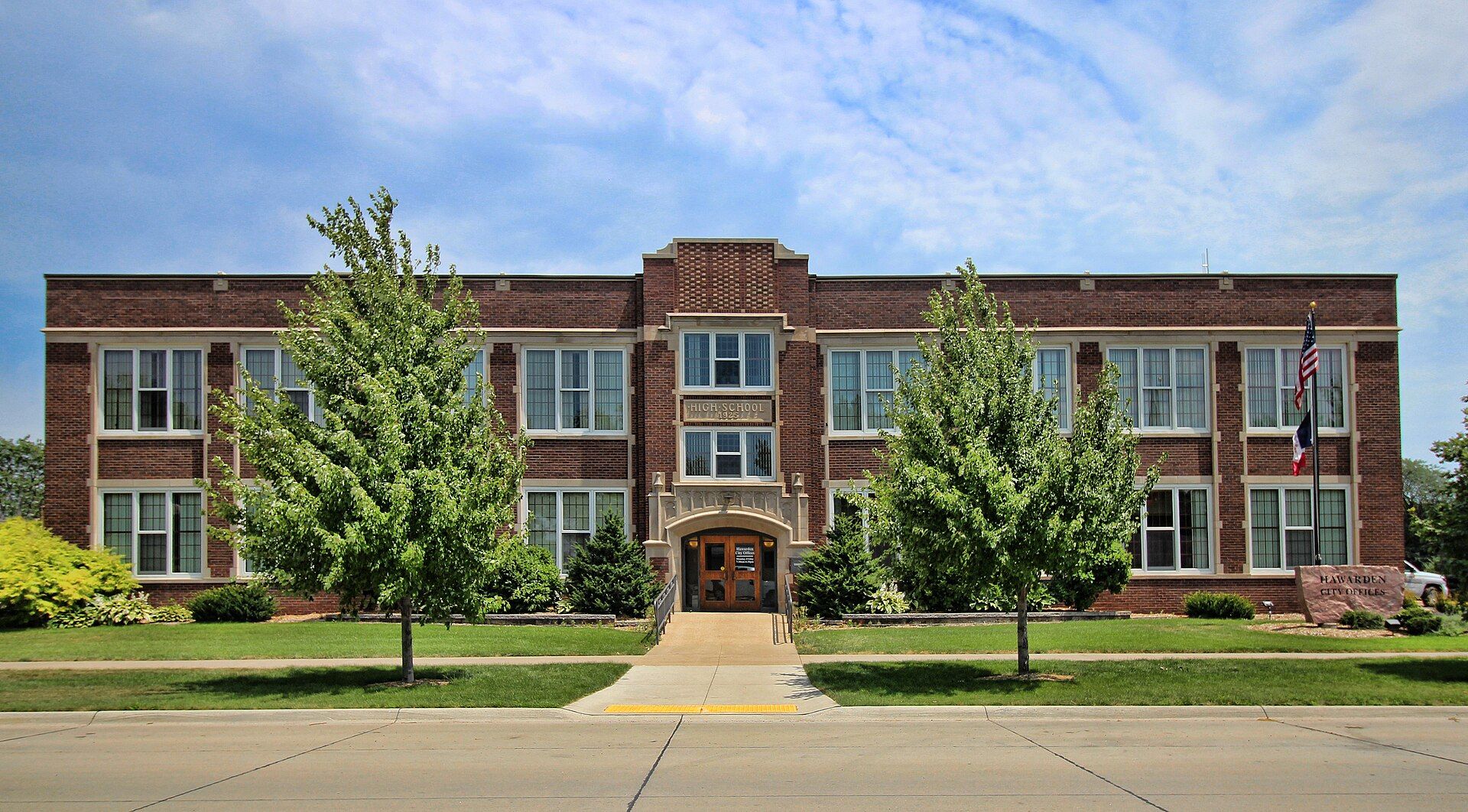
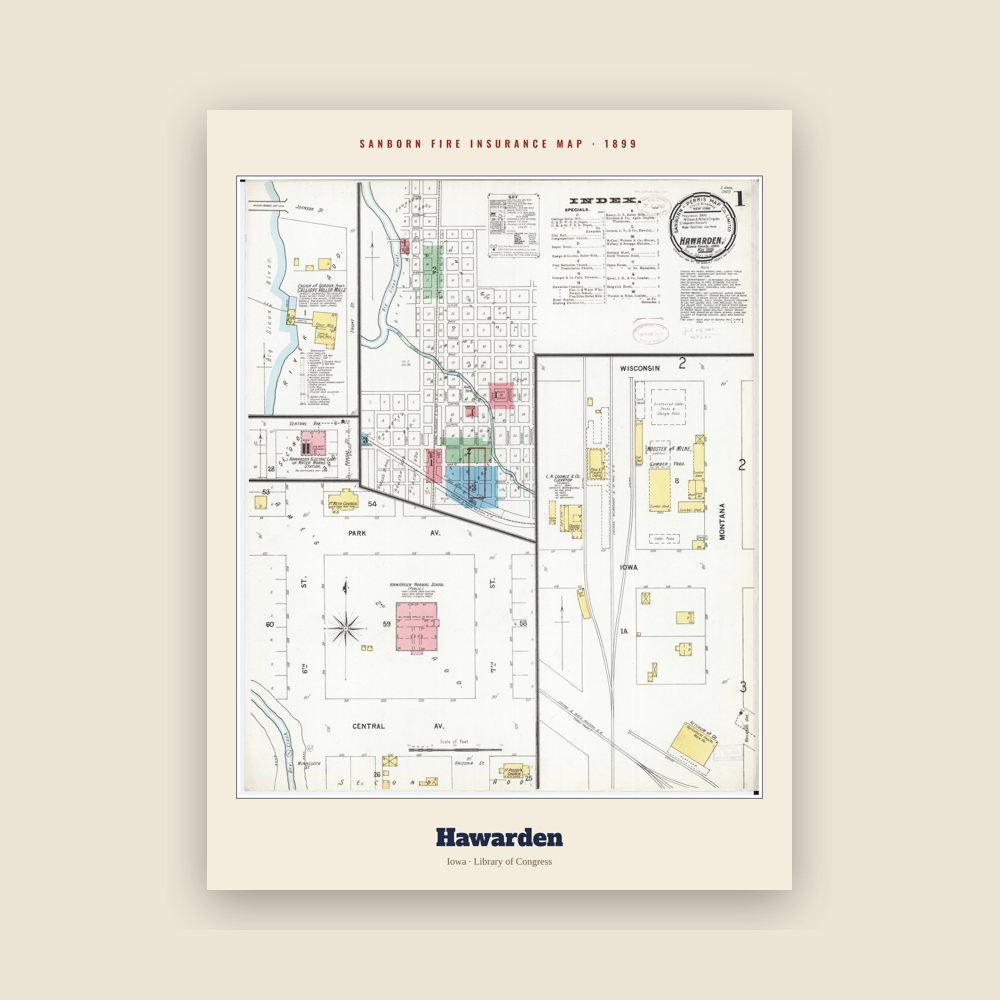
 A view of Hawarden
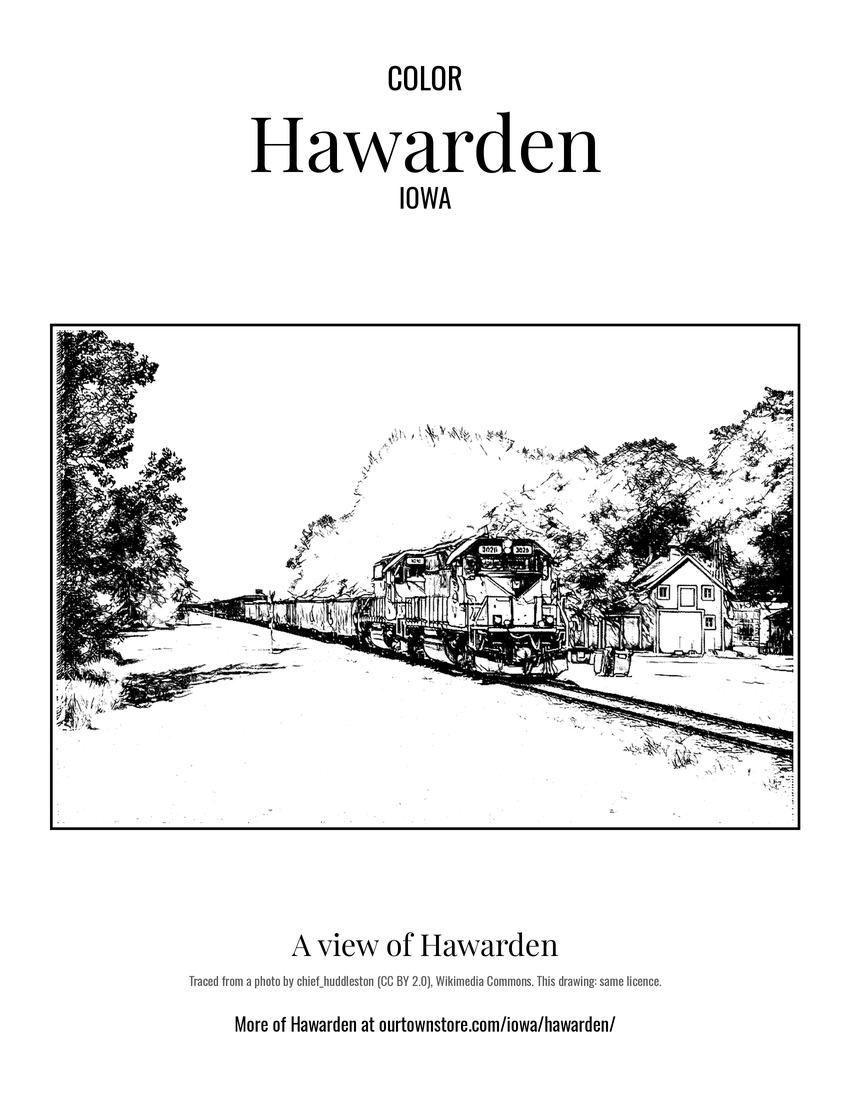 A view of Hawarden