A short history of Grinnell
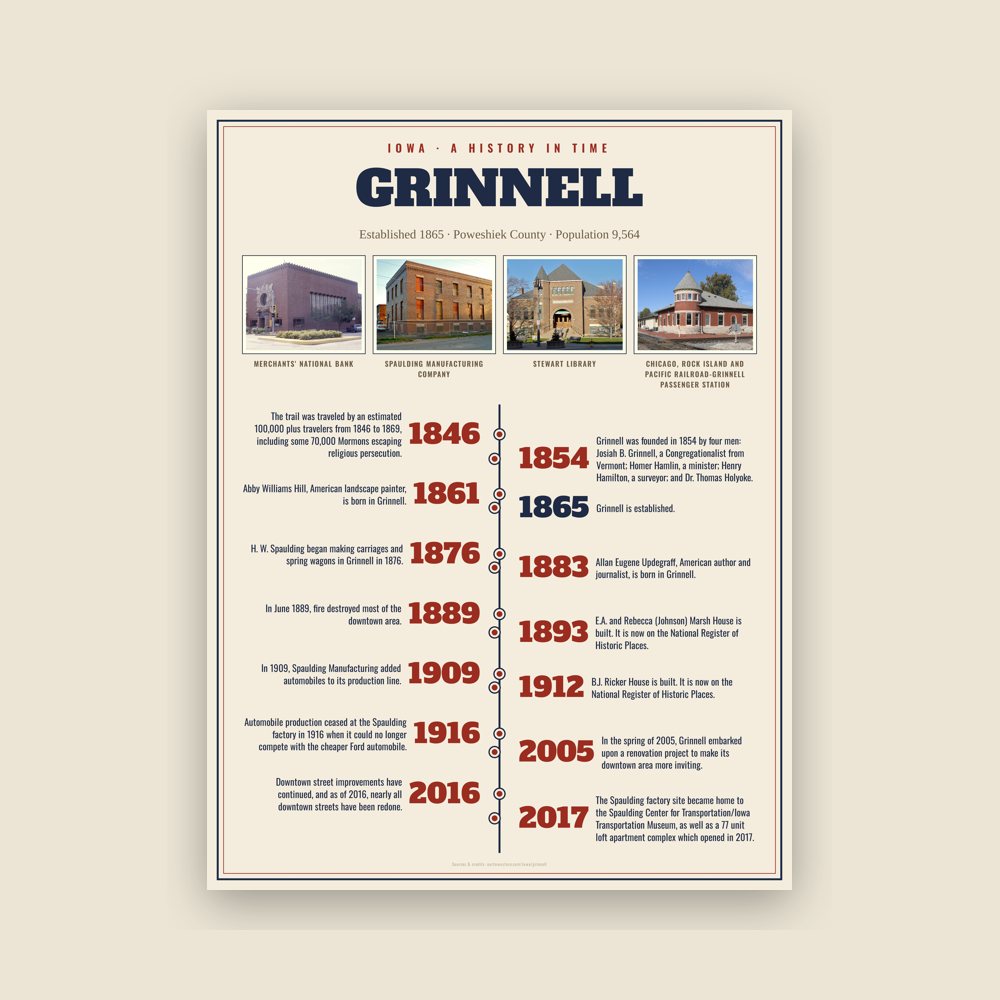
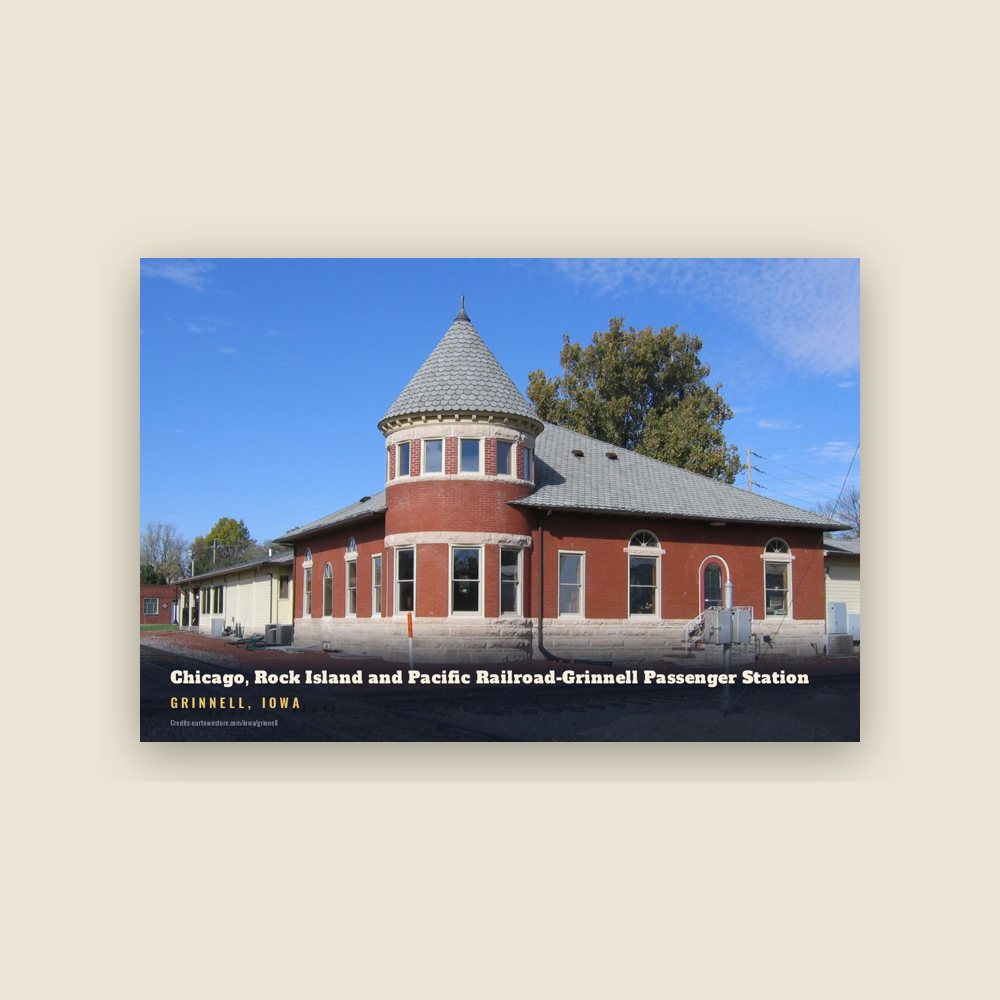
Grinnell was founded by settlers from New England who were descended from English Puritans of the 1600s. Grinnell was founded in 1854 by four men: Josiah B. Grinnell, a Congregationalist from Vermont; Homer Hamlin, a minister; Henry Hamilton, a surveyor; and Dr. Thomas Holyoke. The city was to be named "Stella", but J. B. Grinnell convinced the others to adopt his name, describing it as rare and concise. Grinnell was incorporated on April 28, 1865, and by 1880, Grinnell had a population of around 2,000. Located at the junction of two railway lines (east–west line of the Rock Island Railroad and the north–south Minneapolis and St. Louis Railway), it is the largest community in Poweshiek County.
Grinnell was a stop on the Underground Railroad from its founding. One of the most famous events occurred in February 1859, when abolitionist John Brown, and 12 slaves he was helping escape to freedom, were hosted by J. B. Grinnell and several other community residents. Because of J. B. Grinnell's efforts to help slaves and end slavery, in 2013, the National Park Service included his gravesite at Hazelwood Cemetery on the National Underground Railroad Network to Freedom listings.
The Mormon Trail ran along the southern edge of Grinnell. The trail was traveled by an estimated 100,000 plus travelers from 1846 to 1869, including some 70,000 Mormons escaping religious persecution. The Pioneer Company of 1846–1847 established the first route; from Nauvoo, Illinois, to Salt Lake City. A stone marker memorializes the Mormon Handcart Trail and the grave of a child who died along the trail near Grinnell.
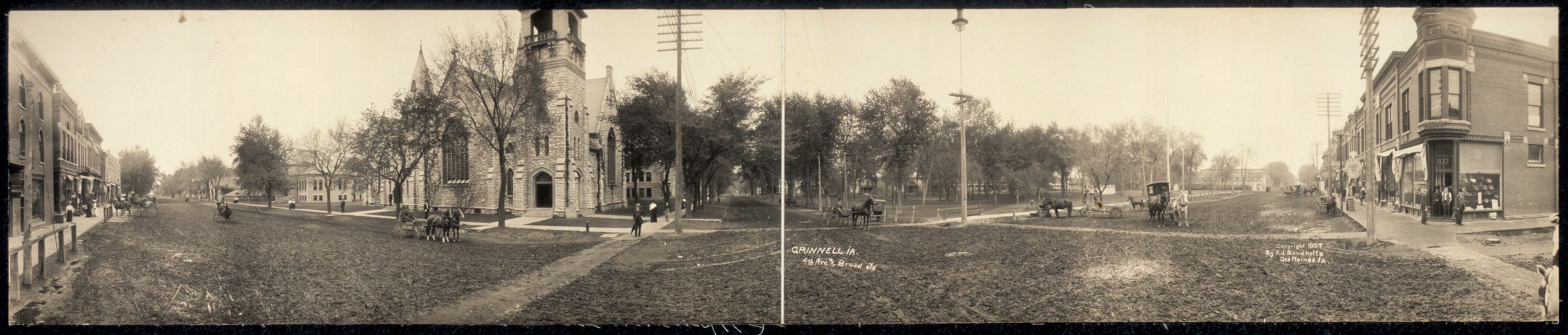
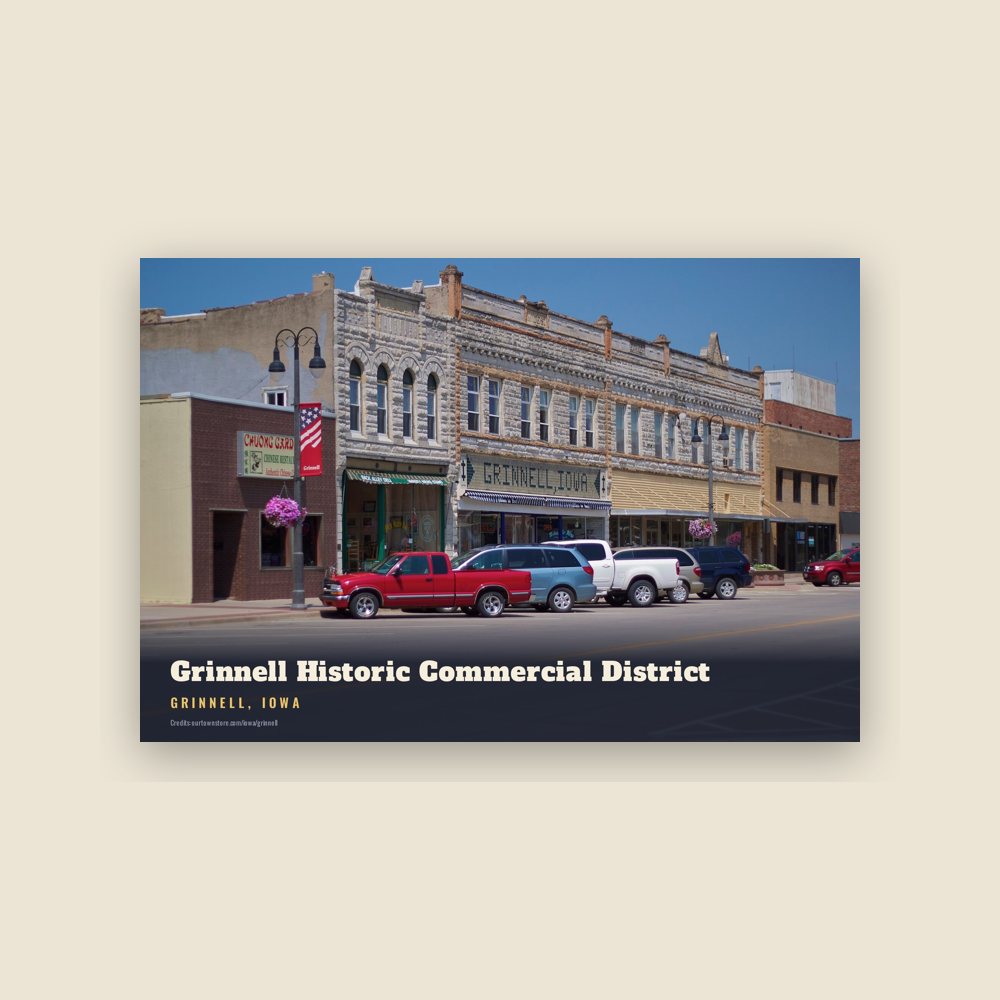
Two major events marked the early years of the community. On June 17, 1882, a violent, estimated, F5 tornado destroyed most of the college campus and much of the community with a death toll of 68, causing up to $1.3 million in total damages (in 1882 USD). In June 1889, fire destroyed most of the downtown area.
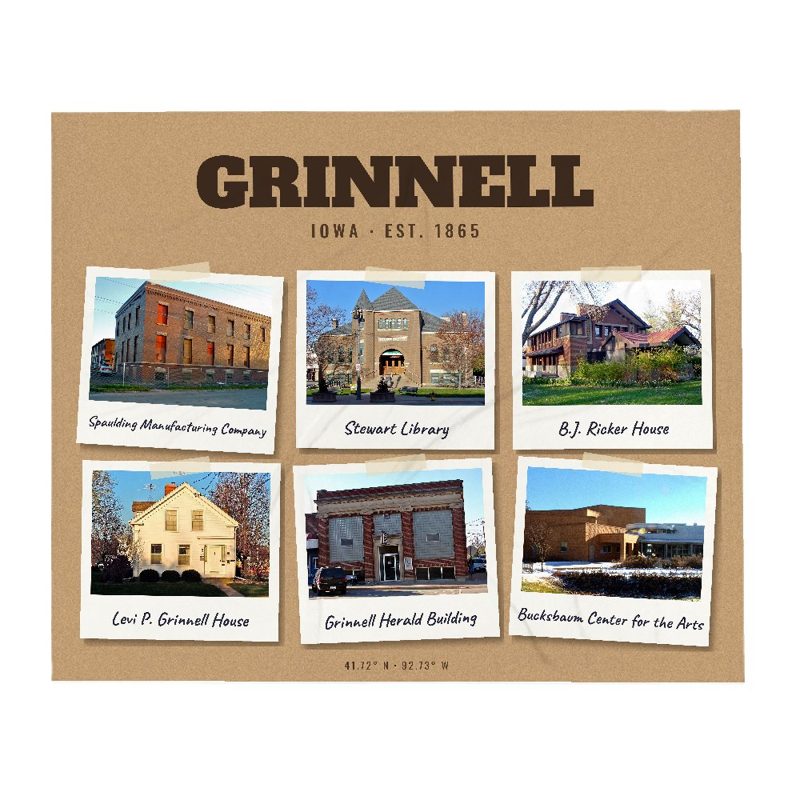
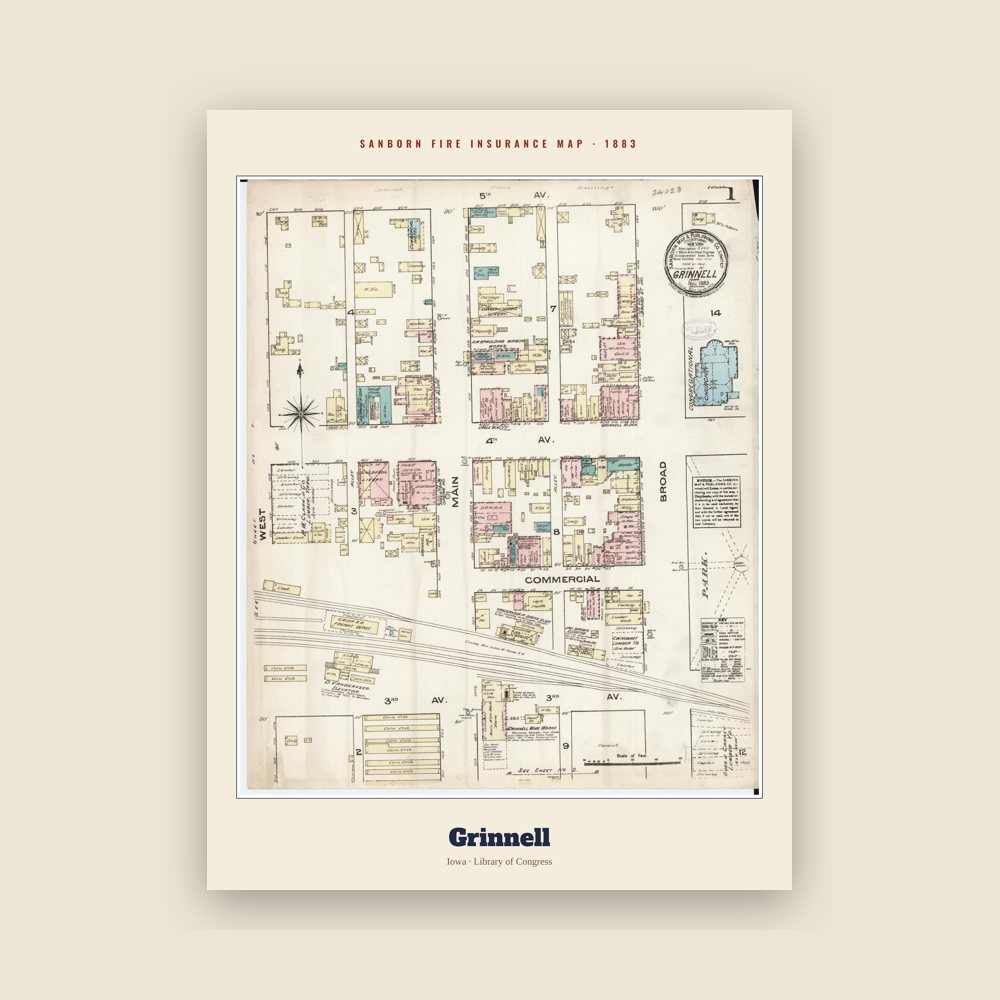
Grinnell was home to the Spaulding Manufacturing Company. H. W. Spaulding began making carriages and spring wagons in Grinnell in 1876. In 1909, Spaulding Manufacturing added automobiles to its production line. At one time, the factory was the largest employer in the county. Automobile production ceased at the Spaulding factory in 1916 when it could no longer compete with the cheaper Ford automobile. The Spaulding factory site became home to the Spaulding Center for Transportation/Iowa Transportation Museum, as well as a 77 unit loft apartment complex which opened in 2017.
Read the full history
Downtown renovations
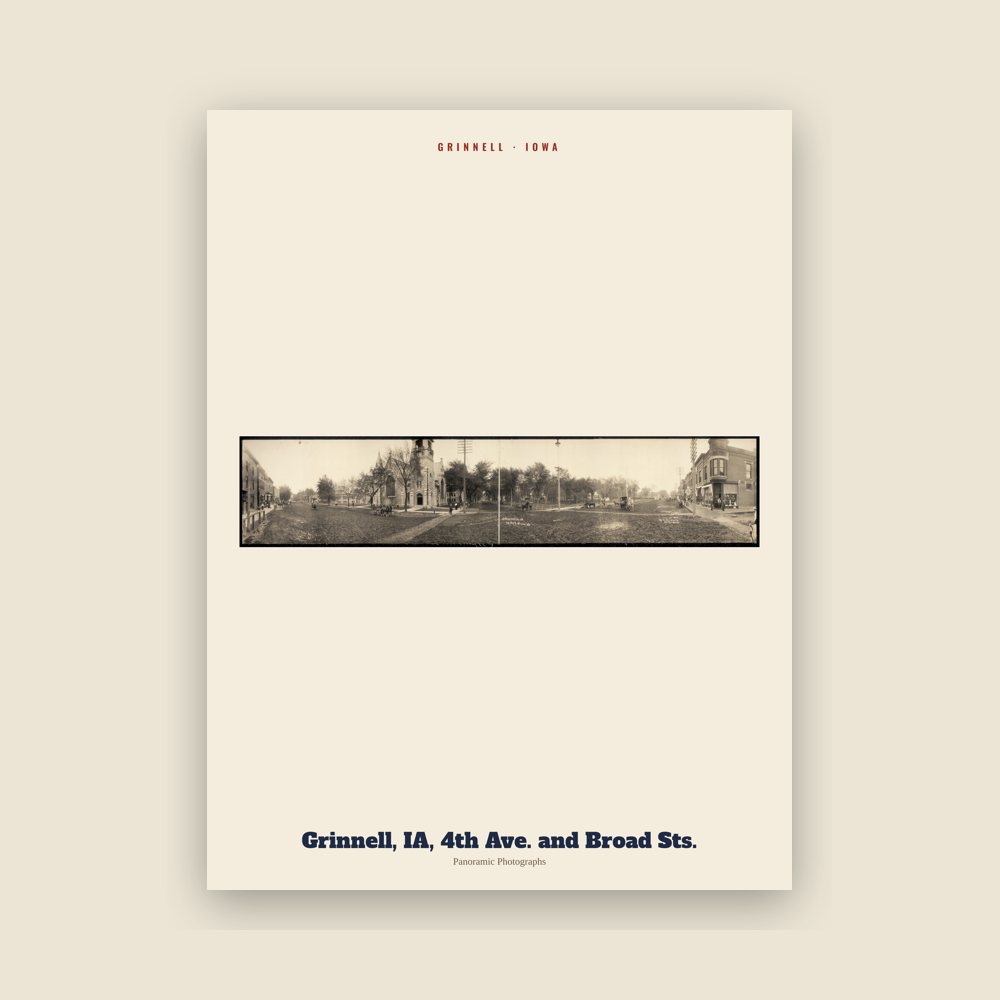
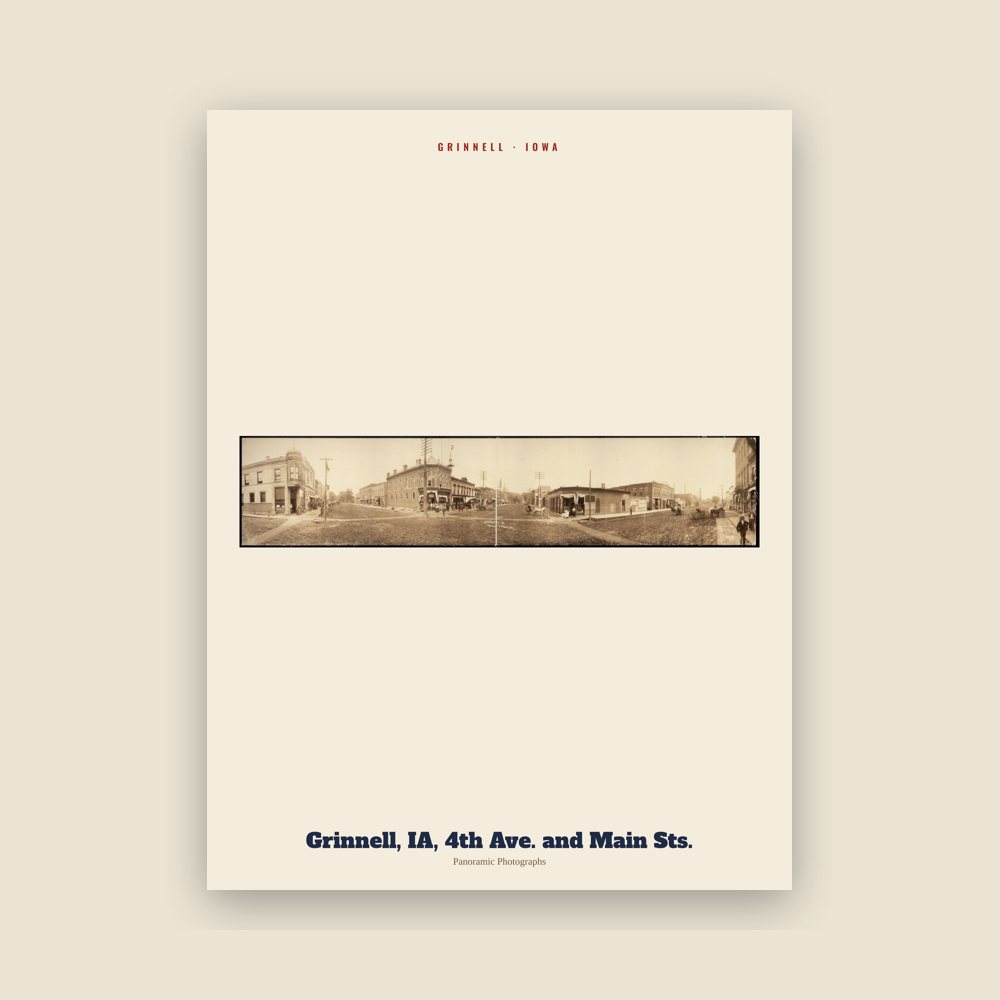
In the spring of 2005, Grinnell embarked upon a renovation project to make its downtown area more inviting. It encompassed new water mains, restoration of two-way traffic flow, brick crosswalks in the middle of each block, and more uniform parking spaces in front of downtown businesses. A median strip at each intersection was designed with Grinnell's distinctive Jewel Box pattern. Infrastructure upgrades and aesthetic renovations were also planned for the southern section of the downtown area, to include Commercial Street. Downtown street improvements have continued, and as of 2016, nearly all downtown streets have been redone. Improvements have been made to many business facades. Central Park underwent a major makeover during the summer of 2016, relocating the gazebo and adding a bandstand, public restrooms, and a large group picnic enclosure. In September 2017, Grinnell's first independently owned, boutique hotel (Hotel Grinnell) opened downtown across from Central Park giving visitors luxury accommodations.
Adapted (trimmed) from the Wikipedia article Grinnell, Iowa, revision 1382156616 by its contributors, licensed CC BY-SA 4.0.

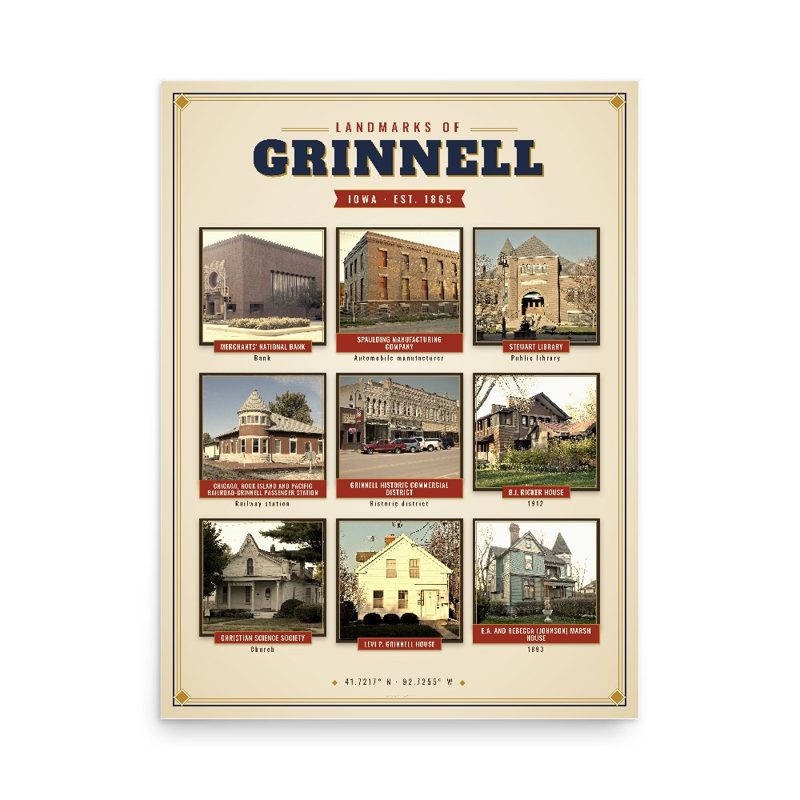


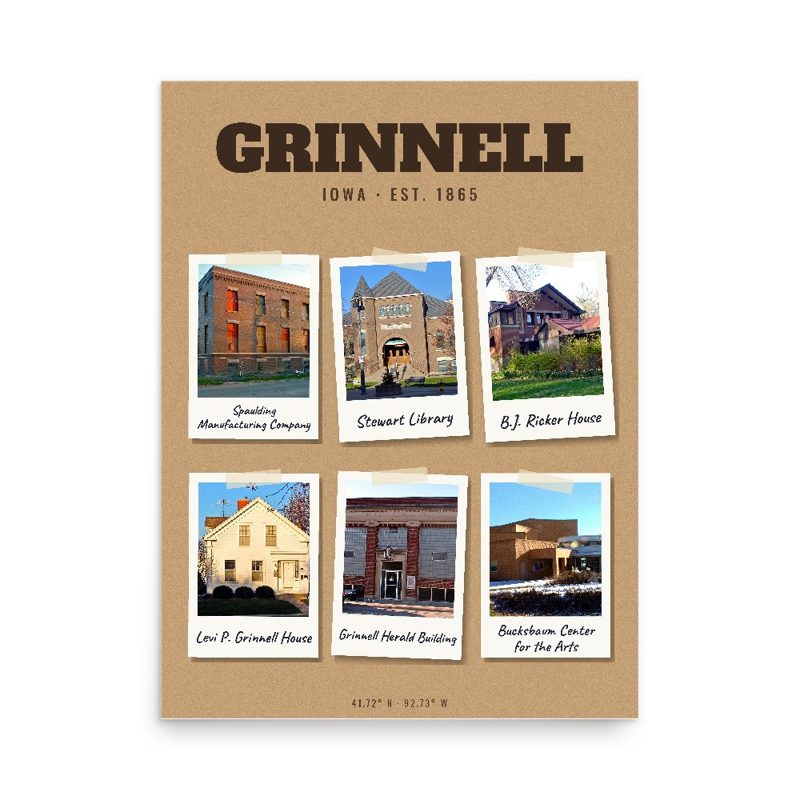
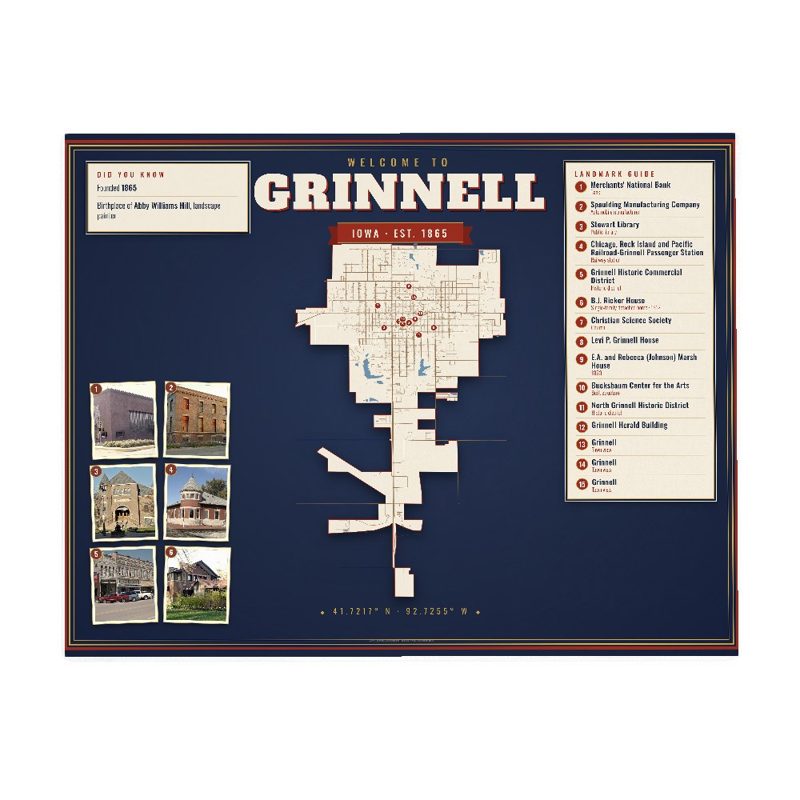


















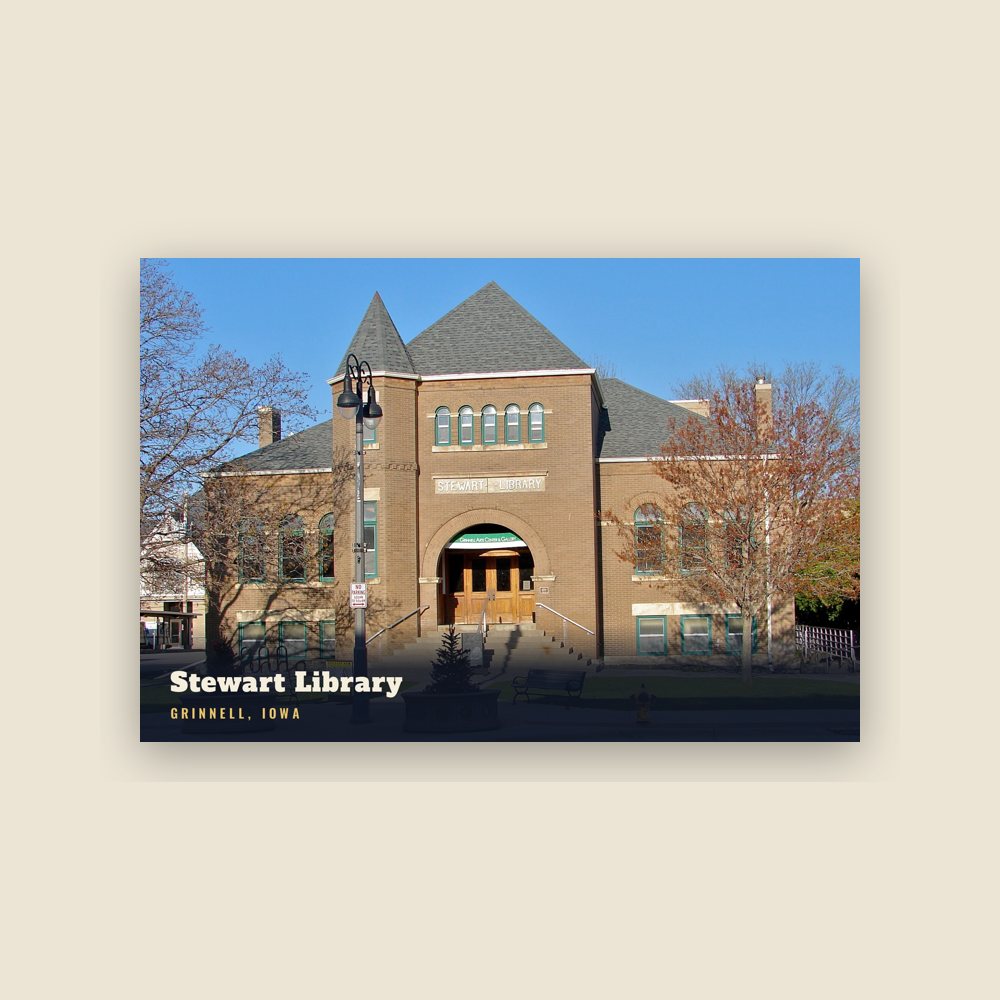
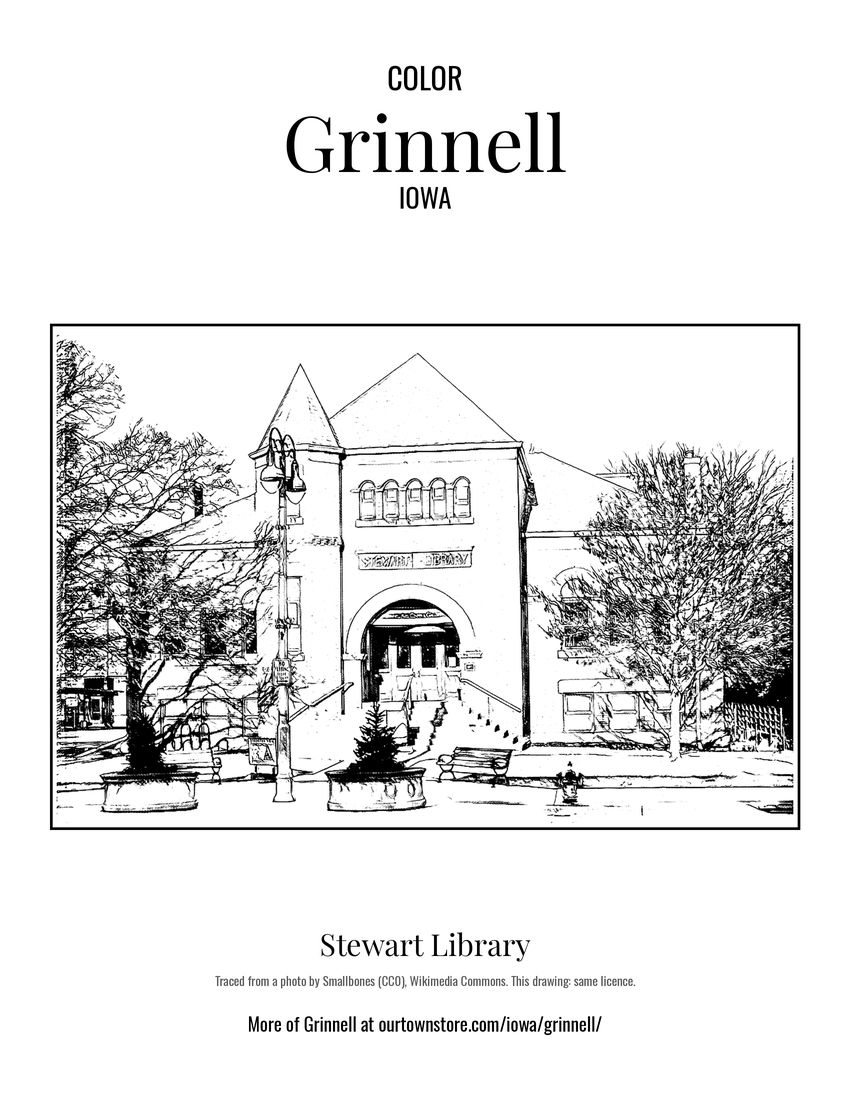 Stewart Library
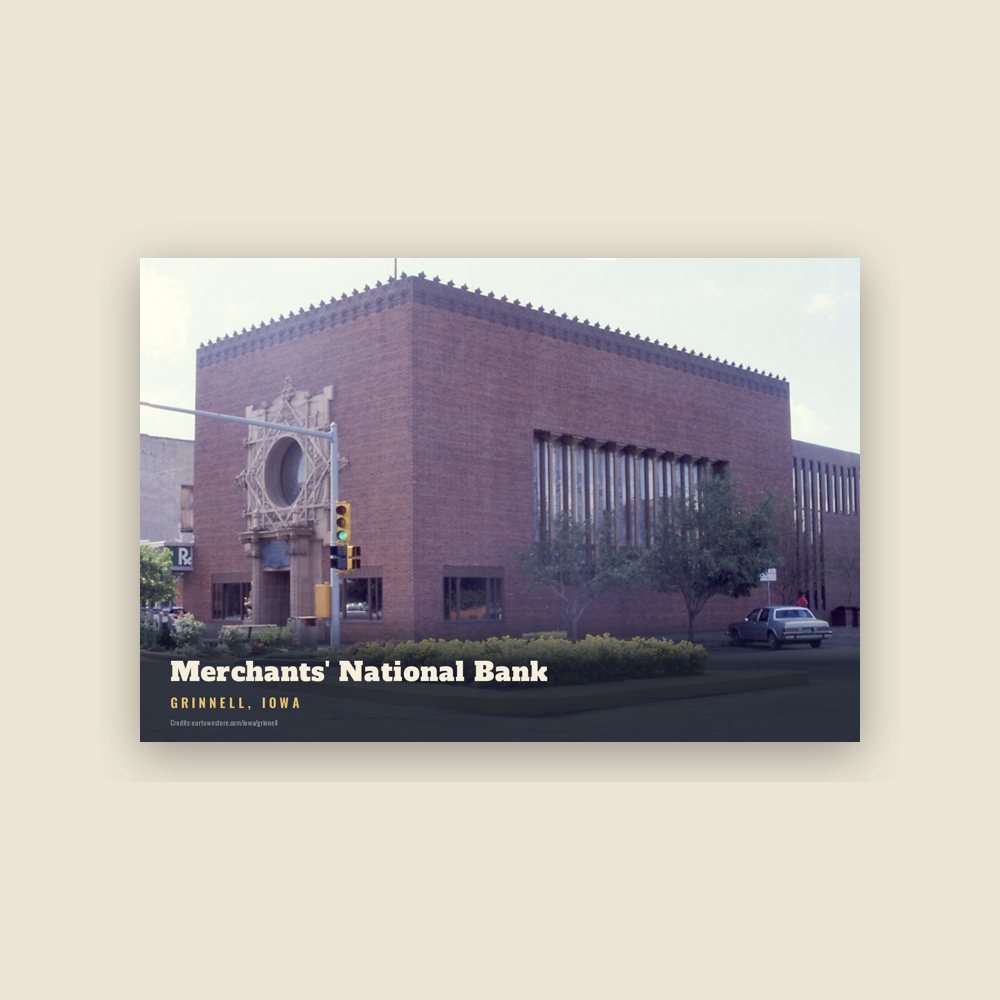
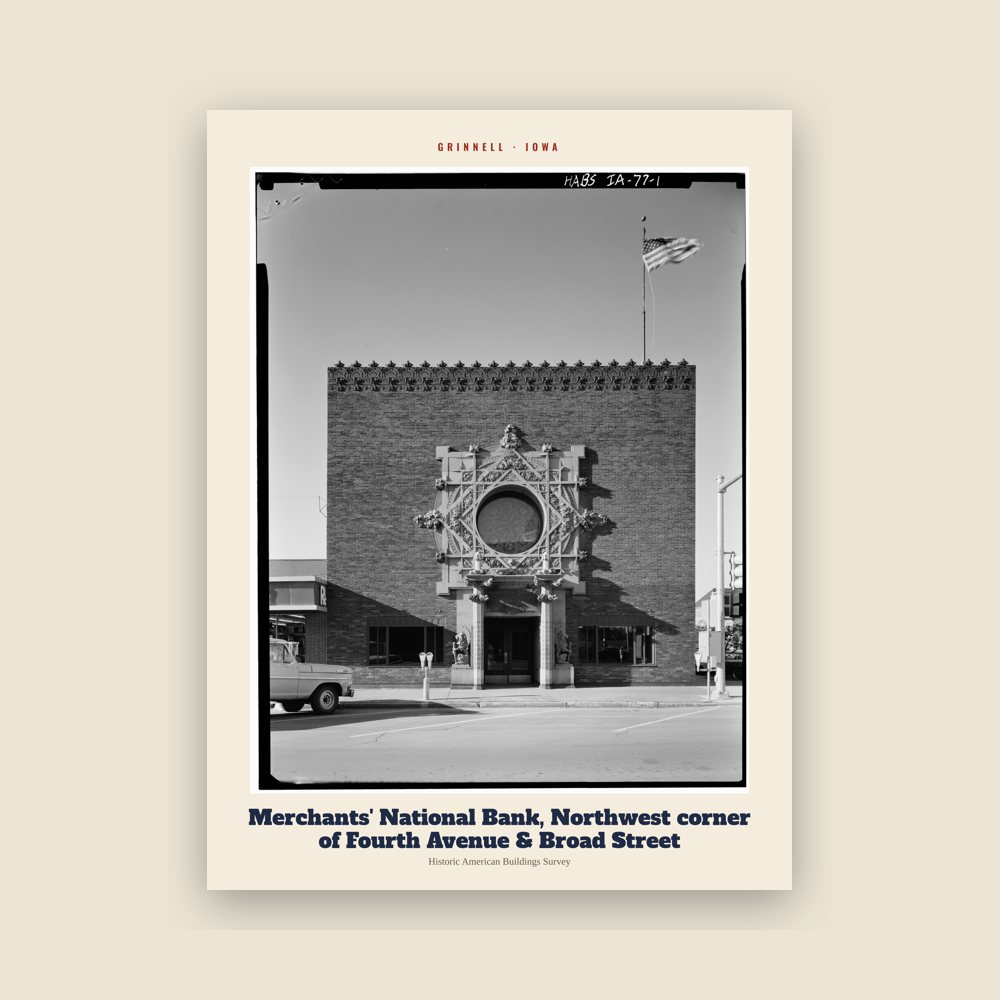
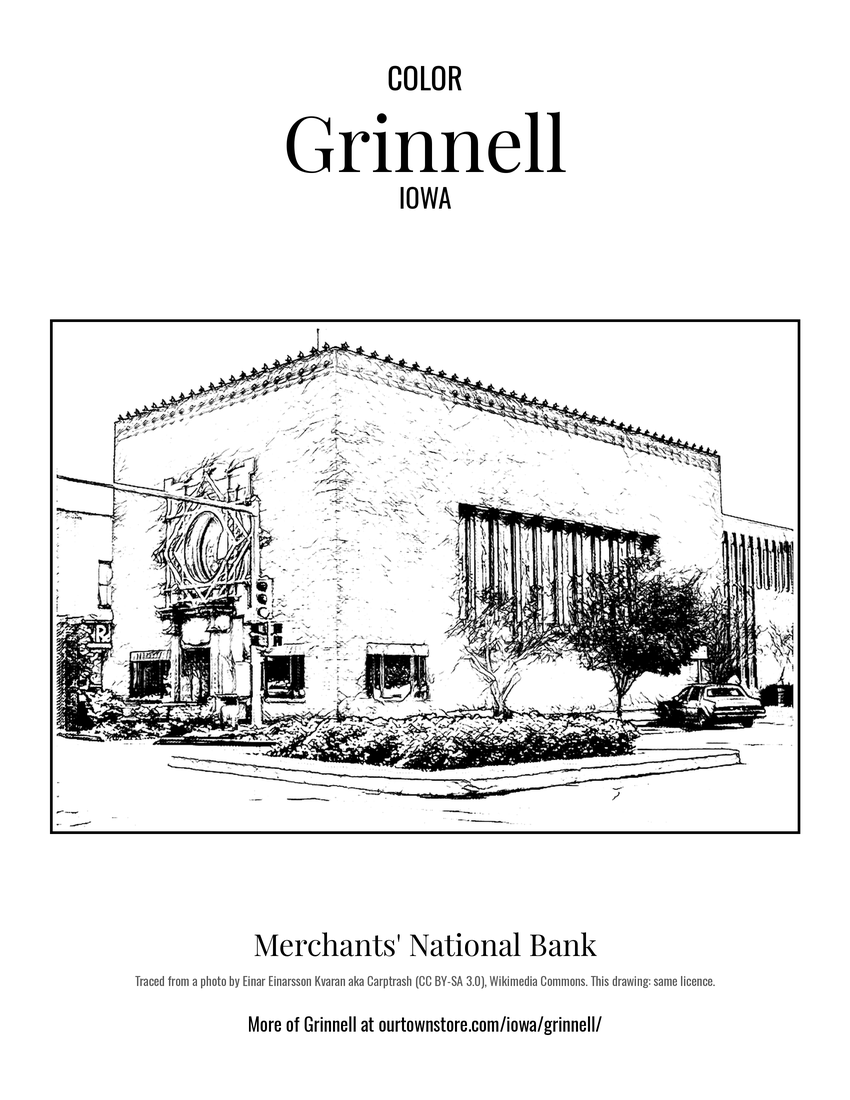 Merchants' National Bank
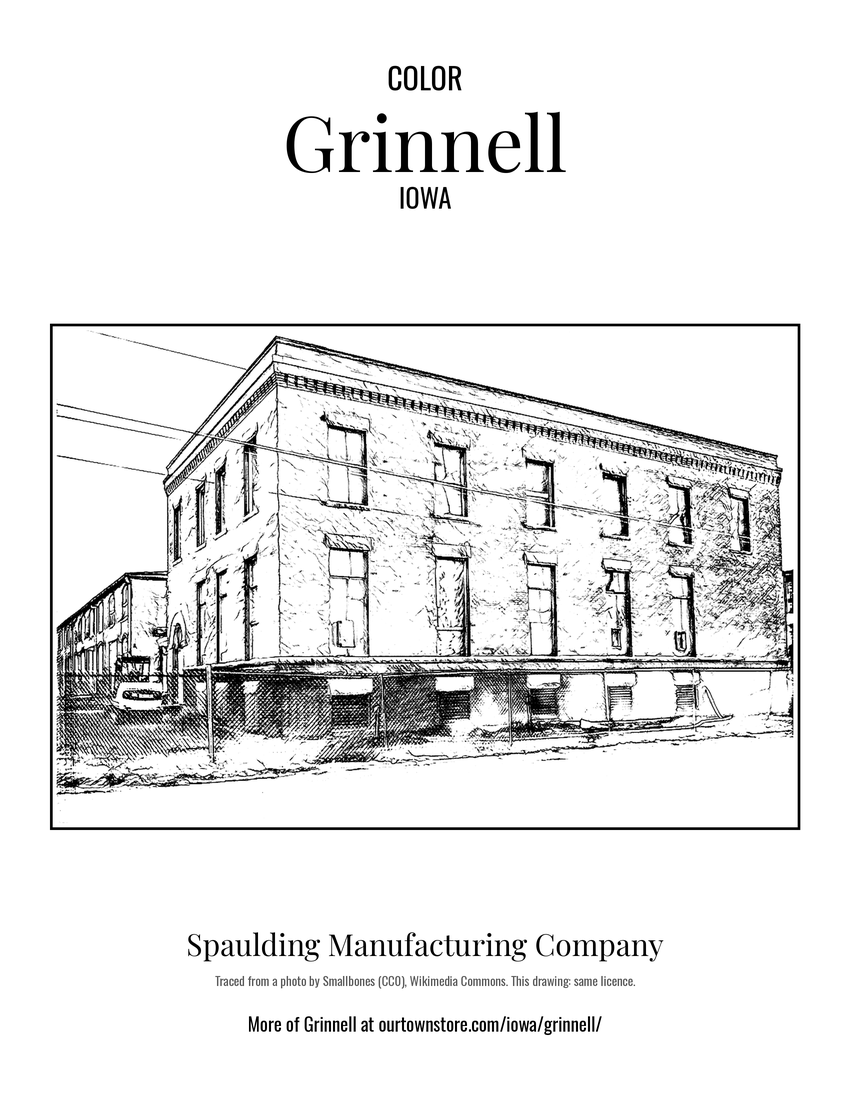 Spaulding Manufacturing Company
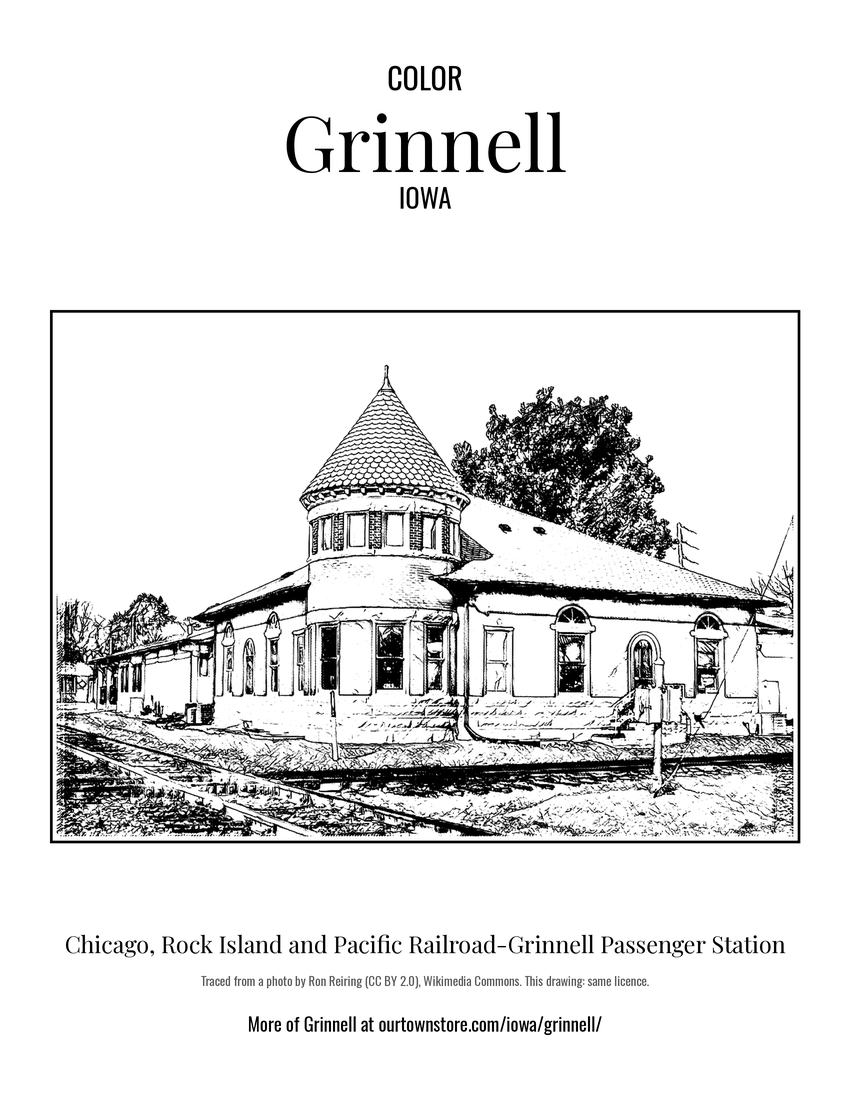 Chicago, Rock Island and Pacific Railroad-Grinnell Passenger Station