Since 1857
A short history of Decorah
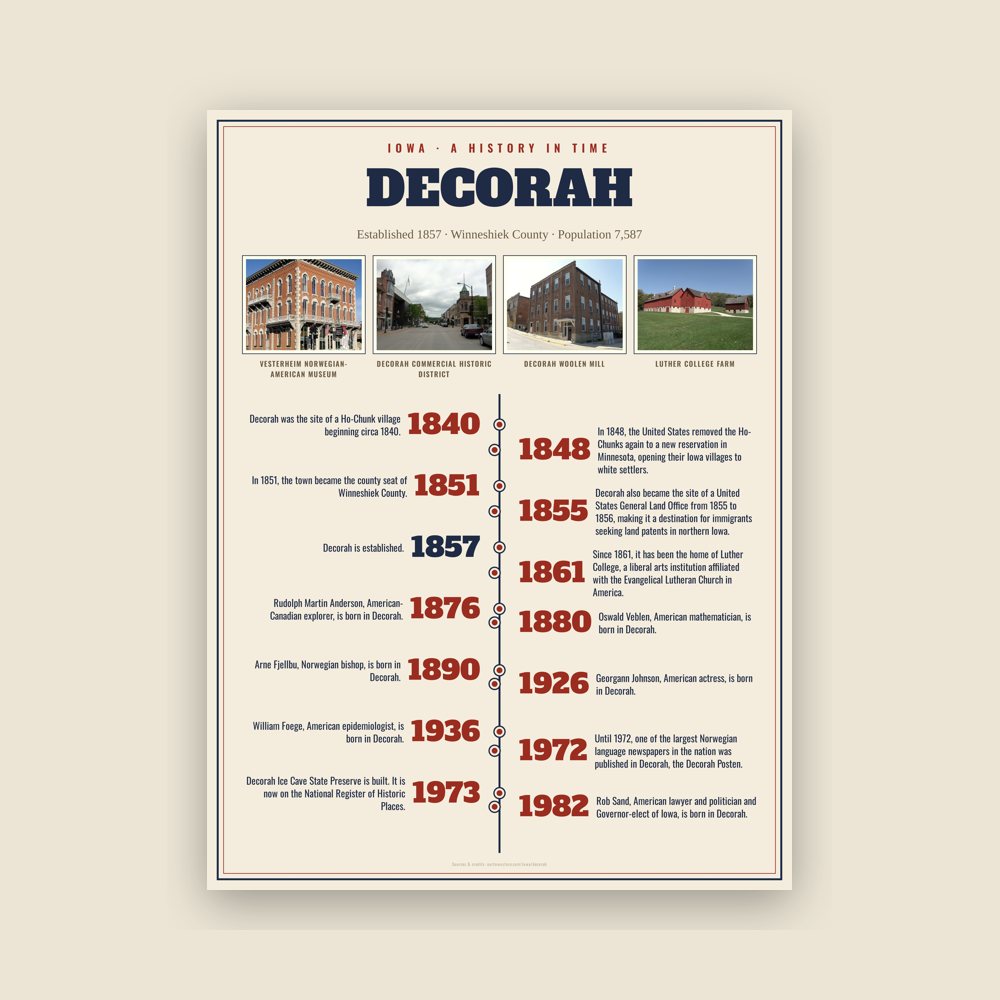
Decorah was the site of a Ho-Chunk village beginning circa 1840. Several Ho-Chunks had settled along the Upper Iowa River that year when the U.S. Army forced them to remove from Wisconsin. In 1848, the United States removed the Ho-Chunks again to a new reservation in Minnesota, opening their Iowa villages to white settlers.
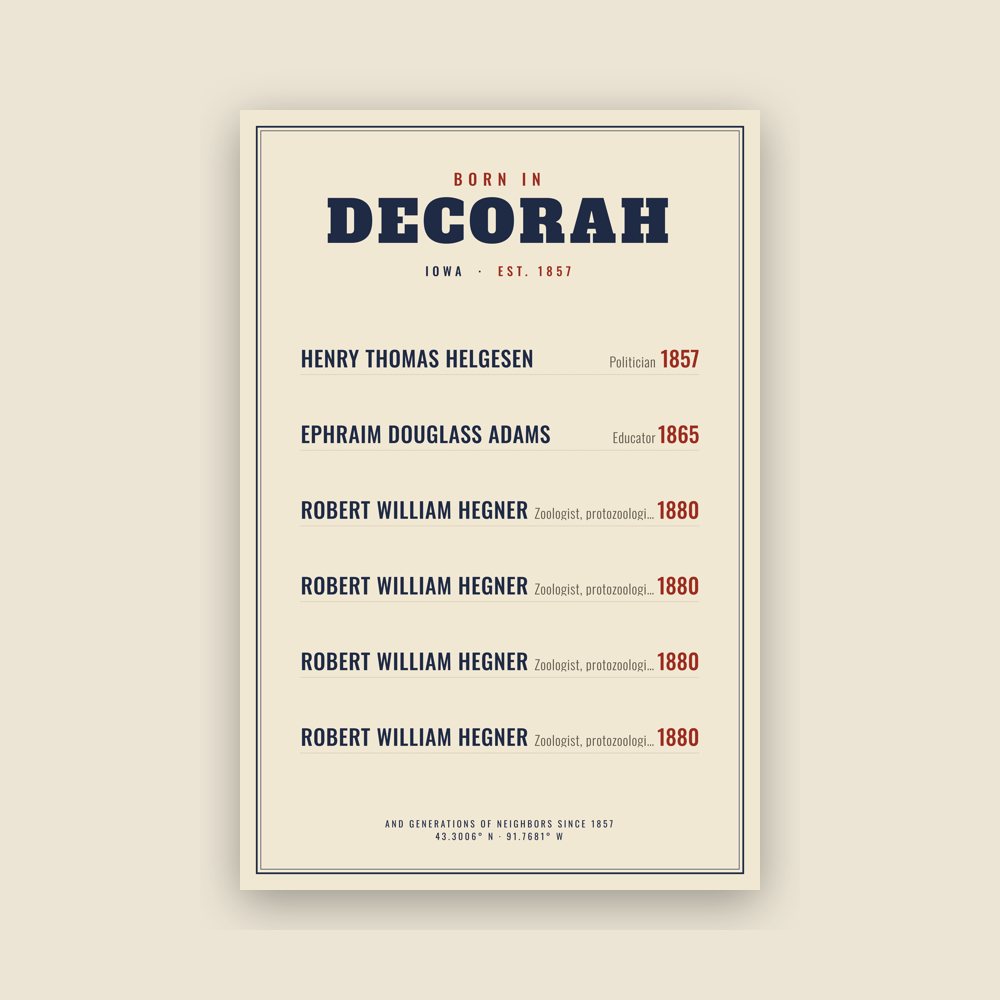
The first European-Americans to settle were the Day family from Tazewell County, Virginia. According to local Congregationalist minister Rev. Ephraim Adams, the Days arrived in June 1849 with the Ho-Chunks' "tents still standing—with the graves of the dead scattered about where now run our streets and stand our dwellings." Judge Eliphalet Price suggested that the Days name their new settlement Decorah after Ho-Chunk leader Waukon Decorah, who was a U.S. ally during the Black Hawk War of 1832.
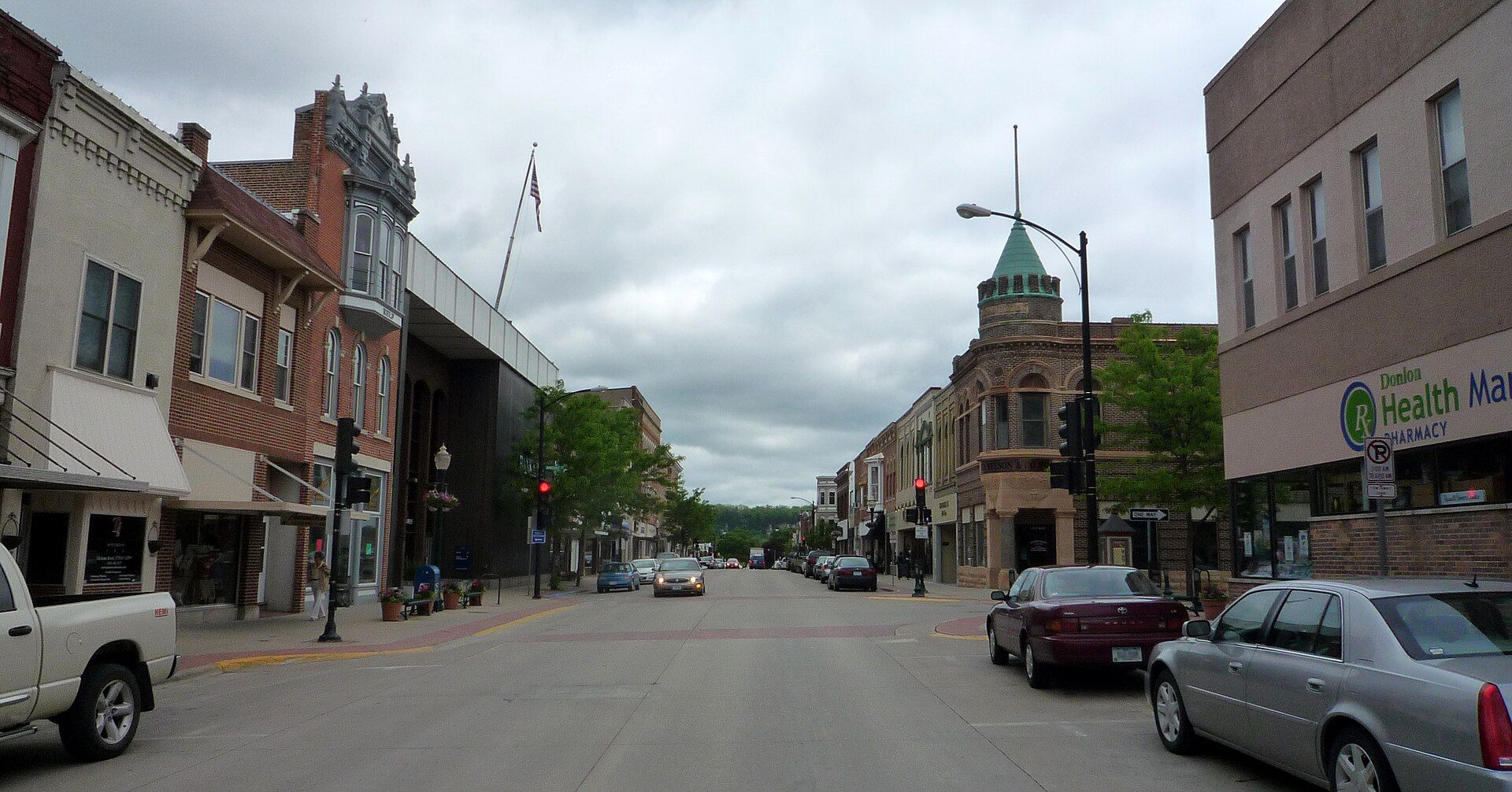
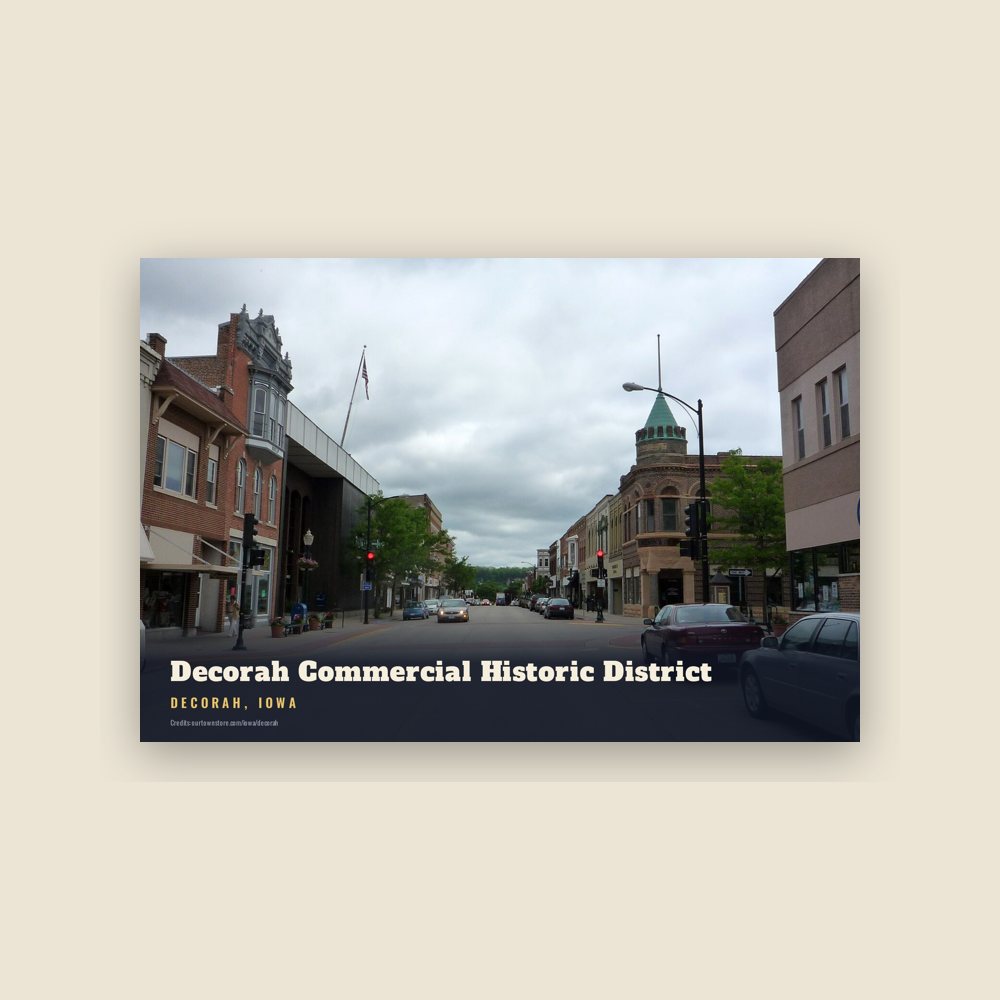
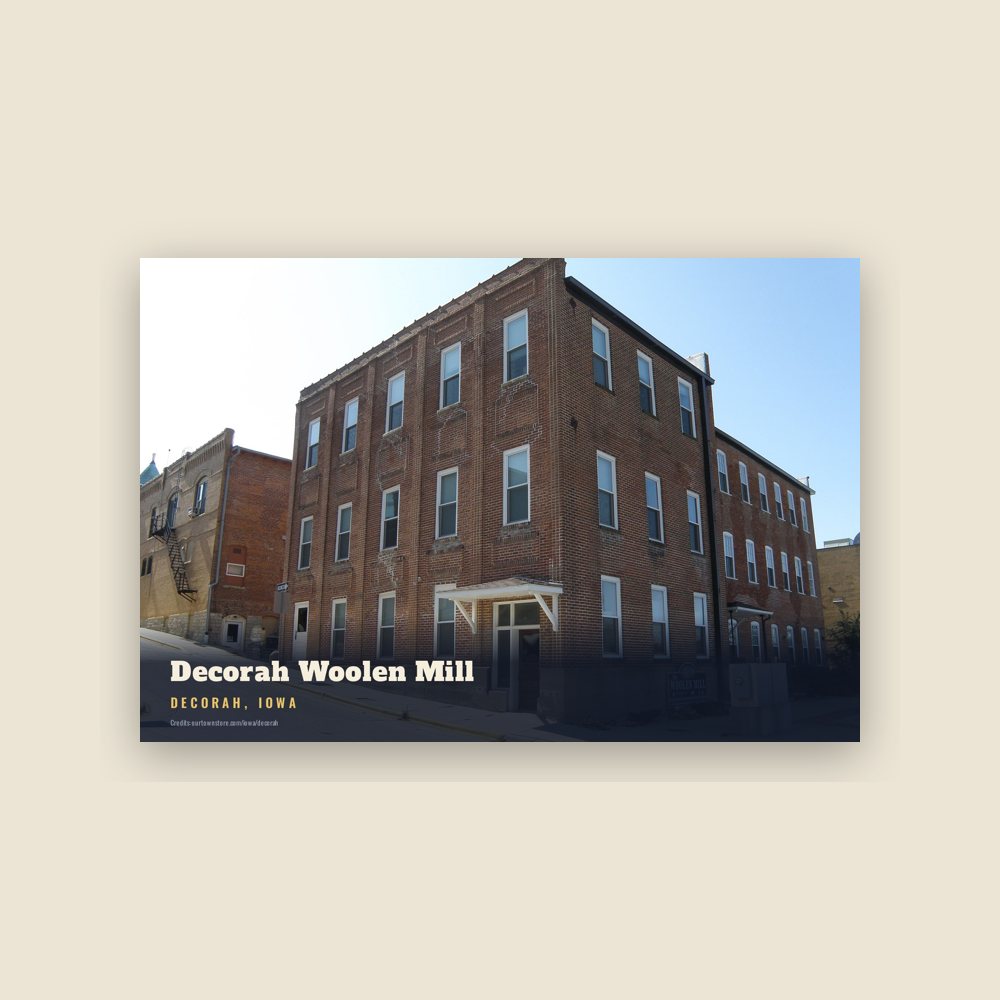
During the 1850s and 1860s, Decorah grew quickly as settlers built dams and mills to harness water power at Dunning's Spring and other local streams. In 1851, the town became the county seat of Winneshiek County. Decorah also became the site of a United States General Land Office from 1855 to 1856, making it a destination for immigrants seeking land patents in northern Iowa.
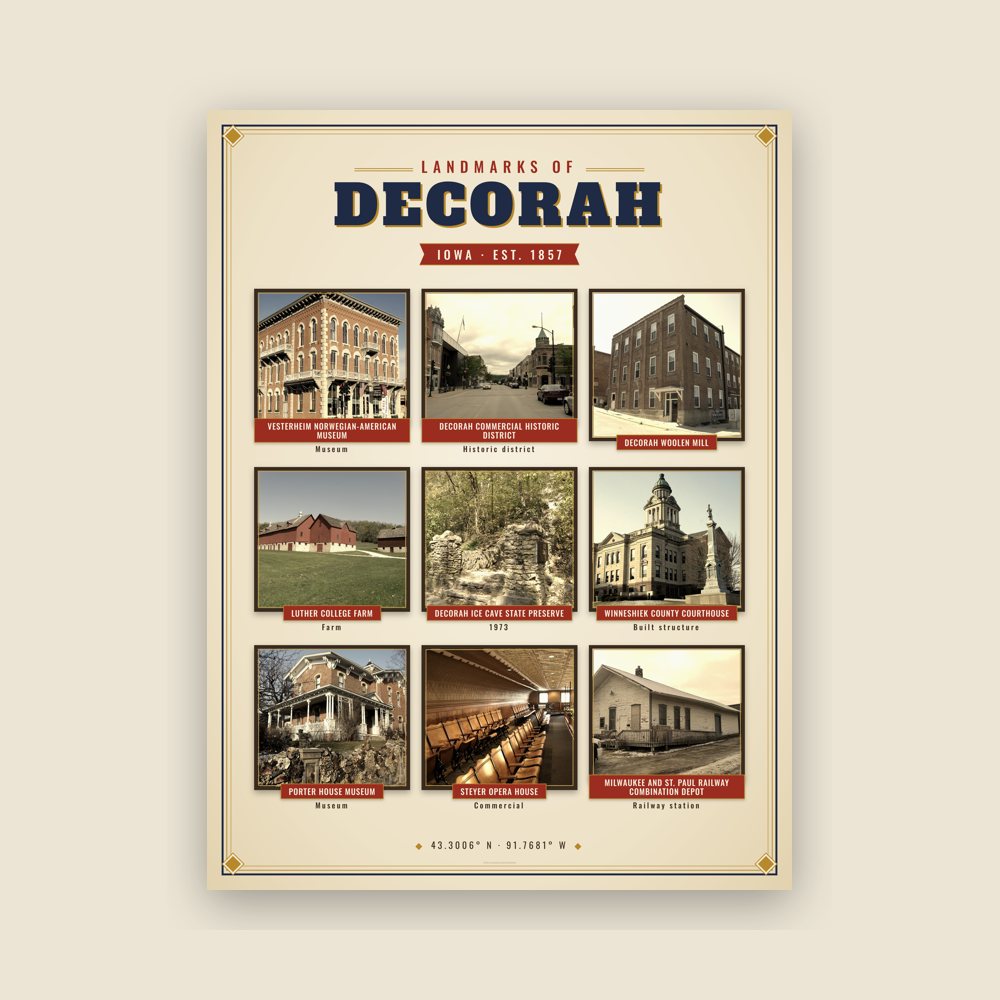
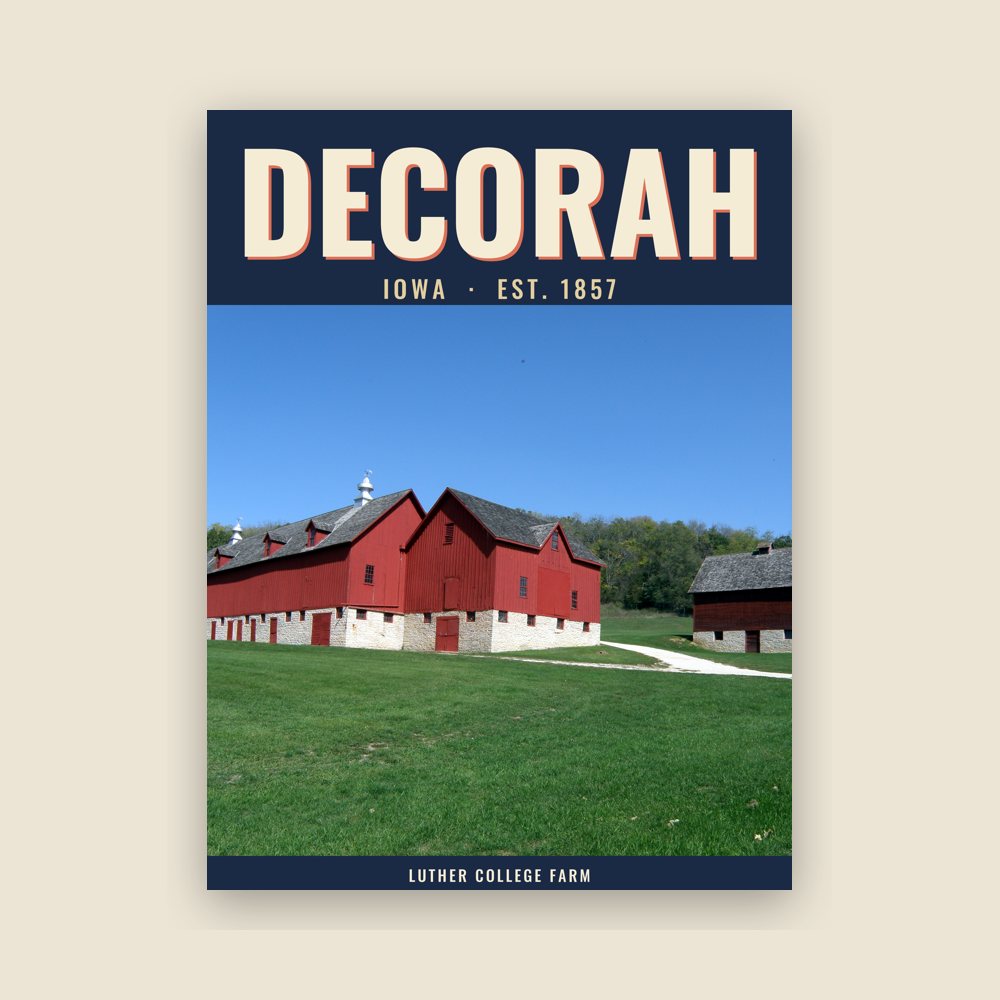
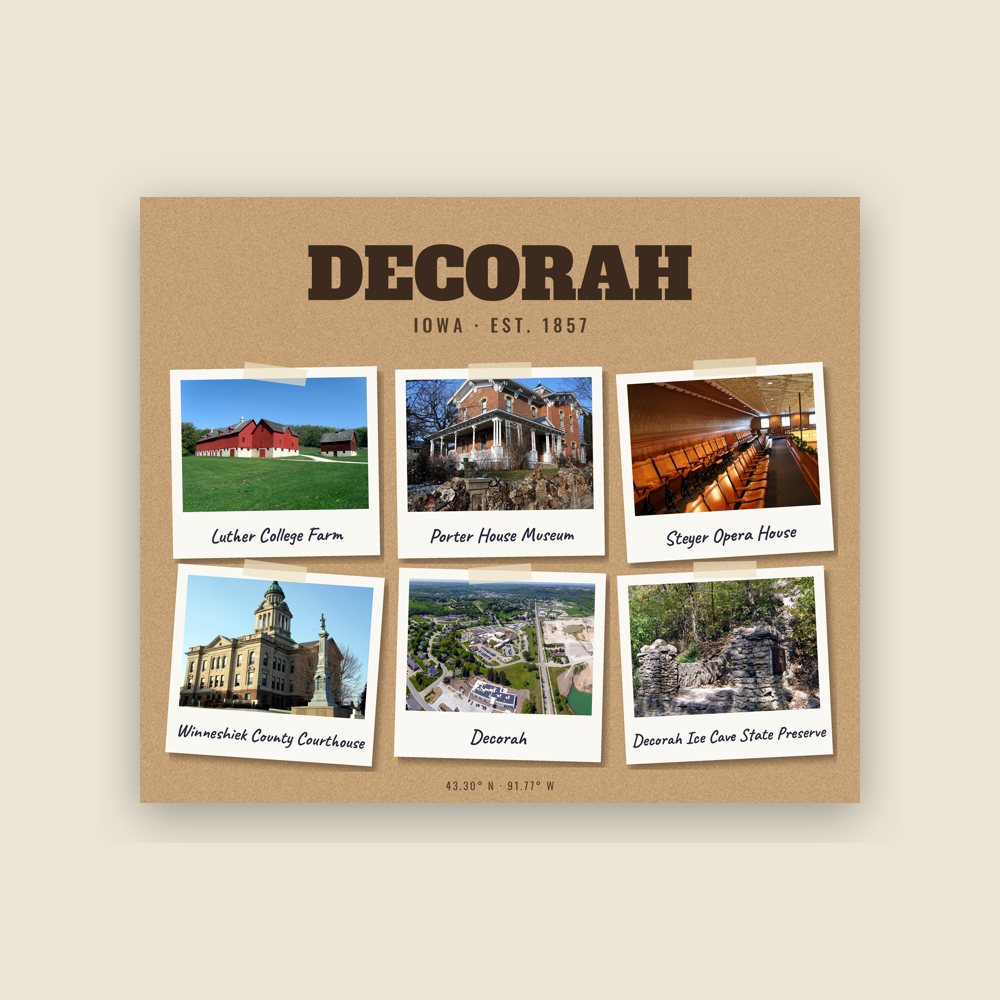
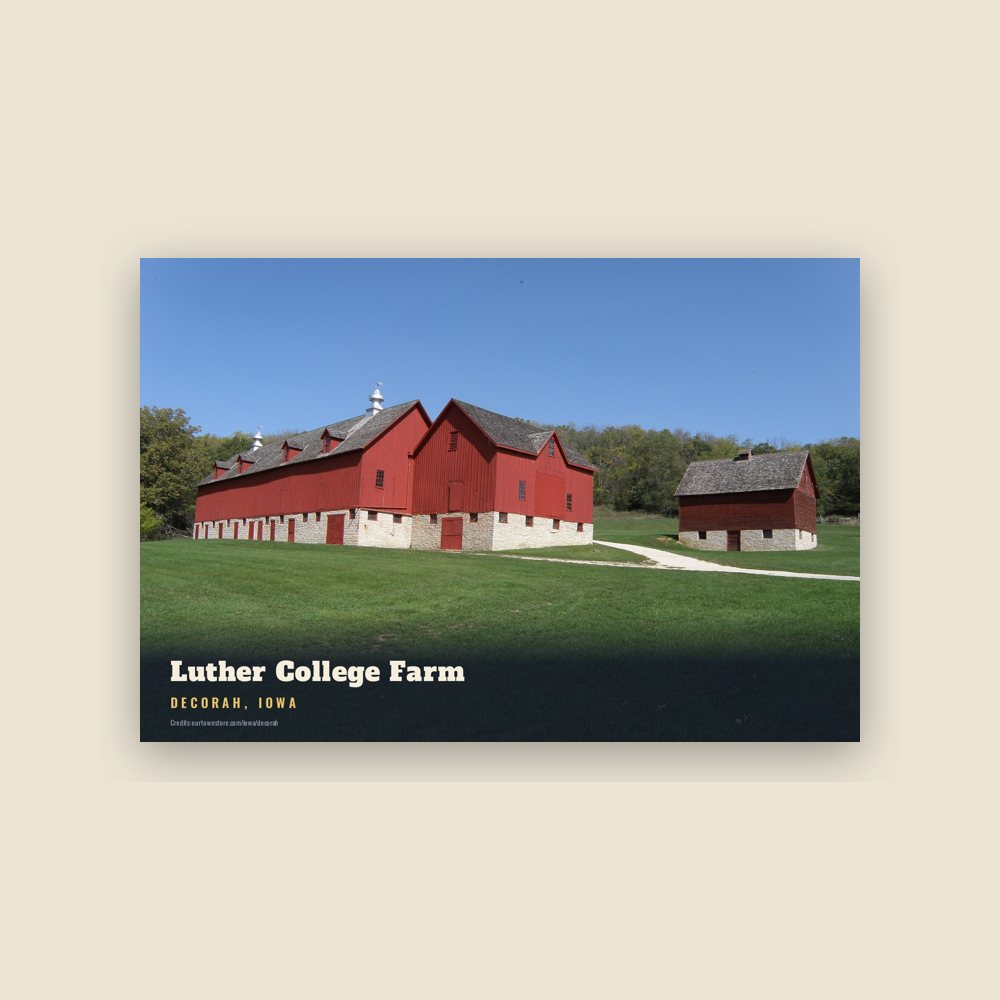
Since 1861, it has been the home of Luther College, a liberal arts institution affiliated with the Evangelical Lutheran Church in America.
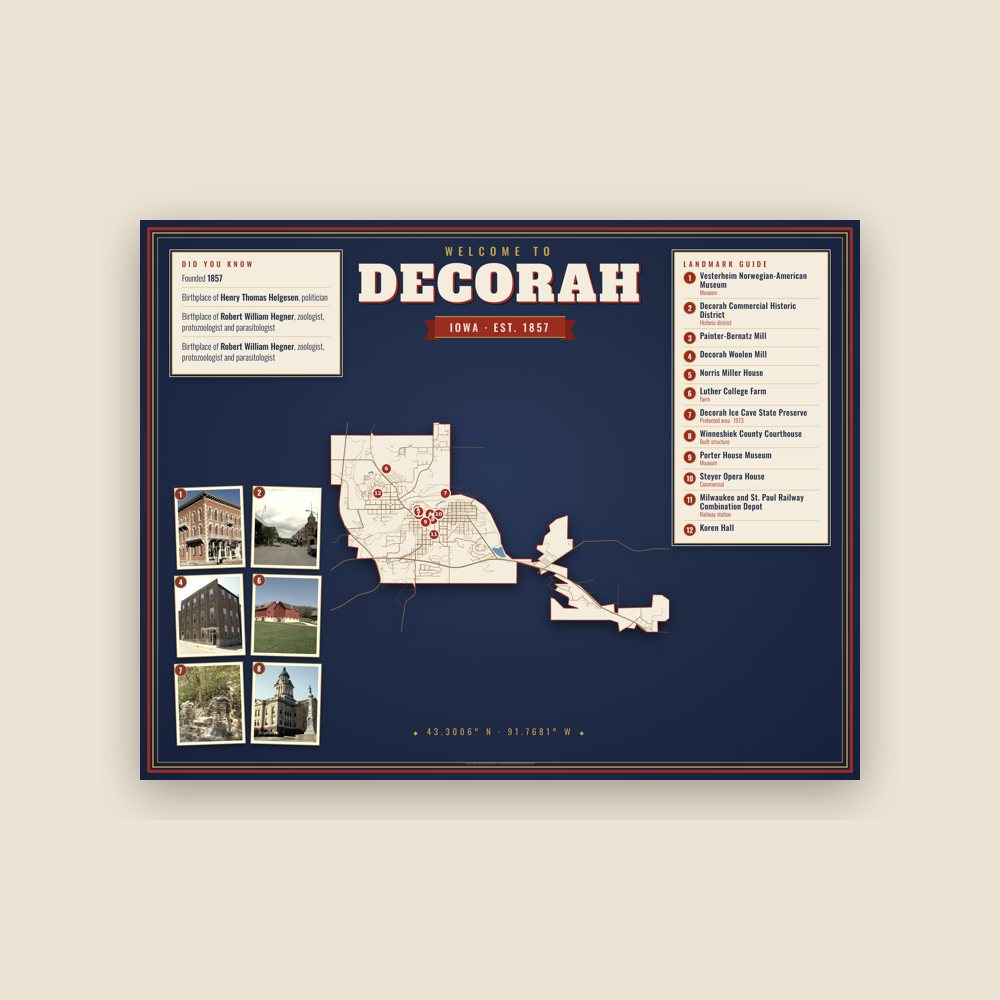
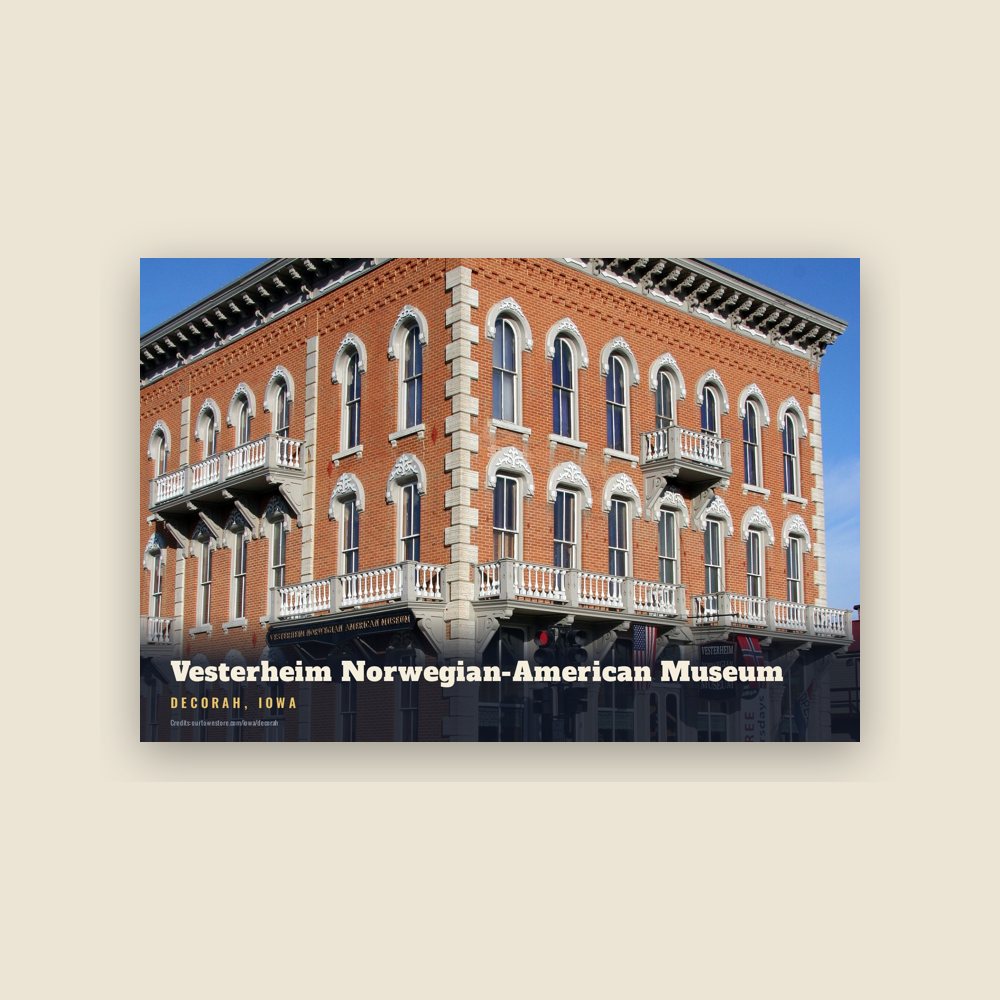
Decorah has become a center for Norwegian-American culture originating from a high number of Norwegian settlements beginning in the 1850s. Each July, Decorah is the host of Nordic Fest, a celebration of Norwegian culture with ethnic dancing, food, and music. Decorah is also the home of the Vesterheim Norwegian-American Museum, the largest museum in the country devoted to a single immigrant group. Until 1972, one of the largest Norwegian language newspapers in the nation was published in Decorah, the Decorah Posten.
Adapted (trimmed) from the Wikipedia article Decorah, Iowa, revision 1383737675 by its contributors, licensed CC BY-SA 4.0.