A short history of Davenport
The land was originally inhabited by the Sauk, Meskwaki, and Ho-Chunk peoples. France laid claim to this territory as part of its New France and Illinois Country in the 18th century. Its traders and missionaries came to the area from Canada (Quebec), but it did not have many settlers here. After losing to Great Britain in the Seven Years' War, France ceded its territory east of the Mississippi River to the British and transferred the lands to the west to Spain.
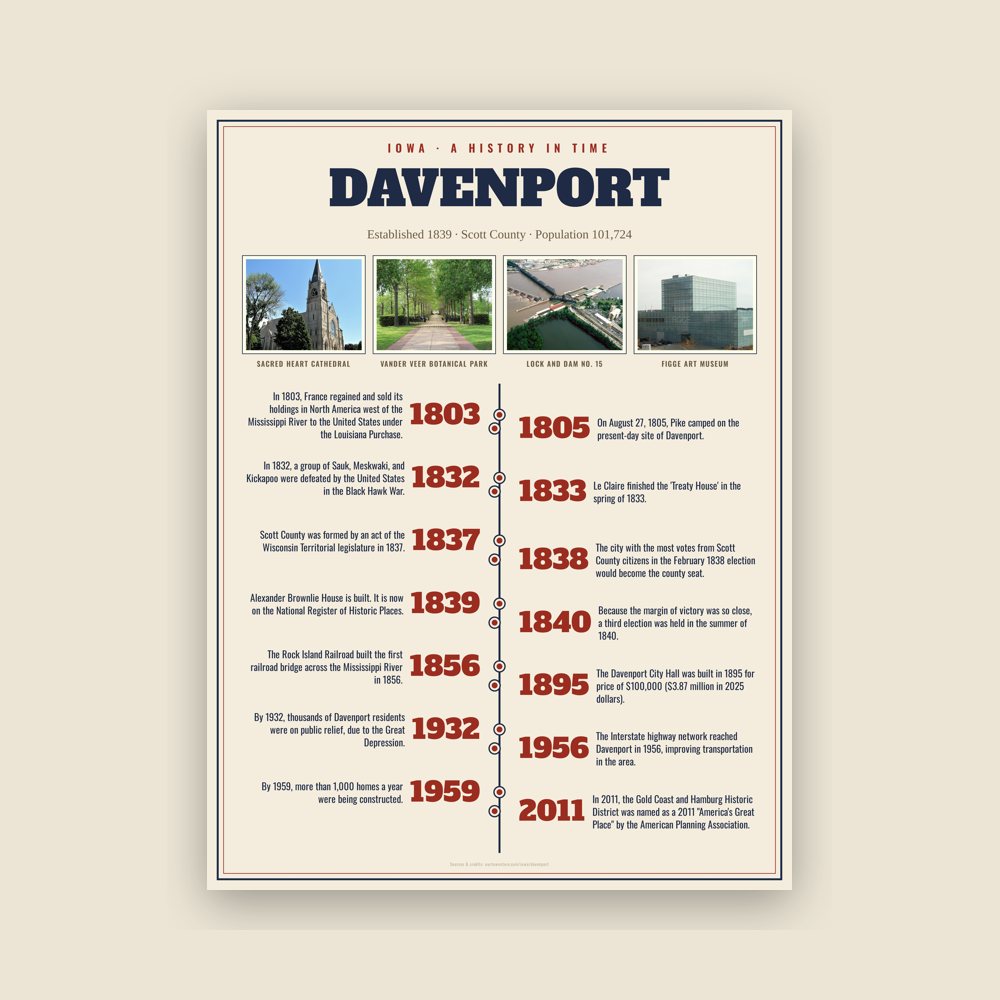
In 1803, France regained and sold its holdings in North America west of the Mississippi River to the United States under the Louisiana Purchase. Lieutenant Zebulon Pike was the first United States representative to officially visit the Upper Mississippi River area. On August 27, 1805, Pike camped on the present-day site of Davenport.
In 1832, a group of Sauk, Meskwaki, and Kickapoo were defeated by the United States in the Black Hawk War. The United States government concluded the Black Hawk Purchase, sometimes called the Forty-Mile Strip or Scott's Purchase, by which the US acquired lands in what is now eastern Iowa. The purchase was made for $640,000 on September 21, 1832, and contained an area of some 6 million acres (24,000 km2), at a price equivalent to 11 cents/acre ($26/km2). Although named after the defeated chief Black Hawk, he was being held prisoner by the US. Sauk chief Keokuk, who had remained neutral in the war, signed off on the purchase. It was made on the site of present-day Davenport. Army General Winfield Scott and Governor of Illinois, John Reynolds, acted on behalf of the United States, with Antoine Le Claire, a mixed-race (Métis) man, serving as translator. He later was credited with founding Davenport.
Chief Keokuk gave a generous portion of land to Antoine Le Claire's wife, Marguerite, the granddaughter of a Sauk chief. Le Claire built their home on the exact spot where the agreement was signed, as stipulated by Keokuk, or he would have forfeited the land. Le Claire finished the 'Treaty House' in the spring of 1833. He founded Davenport on May 14, 1836, naming it for his friend Colonel George Davenport, who was stationed at Fort Armstrong during the war. The city was incorporated on January 25, 1839. The area was successively governed by the legislatures of the Michigan Territory, the Wisconsin Territory, the Iowa Territory, and finally Iowa.
Scott County was formed by an act of the Wisconsin Territorial legislature in 1837. Both Davenport and its neighbor Rockingham campaigned to become the county seat. The city with the most votes from Scott County citizens in the February 1838 election would become the county seat. On the eve of the election, Davenport citizens acquired the temporary service of Dubuque laborers so they could vote in the election. Davenport won the election with the help of the laborers. Rockingham supporters protested the elections to the territorial governor, on the grounds the laborers from Dubuque were not Scott County residents. The governor refused to certify the results of the election. A second election was held the following August. To avoid another import of voters, the governor set a 60-day residency requirement for all voters. Davenport won by two votes. Because the margin of victory was so close, a third election was held in the summer of 1840. As the August election drew nearer, Rockingham residents grew tired of the county seat cause. Davenport easily won the third election. Consequently, to avoid questions about the county seat, Davenport quickly built the first county courthouse.
The Rock Island Railroad built the first railroad bridge across the Mississippi River in 1856. It connected Davenport to Rock Island, Illinois. This railway connection resulted in significant improvements to transportation and commerce with Chicago, a booming 19th-century city. The addition of new railroad lines to Muscatine and Iowa City, and the acquisition of other lines by the Rock Island Railroad, resulted in Davenport becoming a commercial railroad hub.
Steamboat companies rightly saw nationwide railroads as a threat to their business. On May 6, 1856, just weeks after the bridge was completed, a steamboat captain deliberately crashed the Effie Afton into the bridge. The owner of the Effie Afton, John Hurd, filed a lawsuit against the Rock Island Railroad Company. Abraham Lincoln was the lead defense lawyer for the railroad company. The hung jury meant that neither party was awarded damages; the bridge was repaired within the span of a few months, and no further intentional sabotage was pursued. However, further litigation continued for many years, until ultimately the United States Supreme Court upheld the right to bridge navigable streams; the bridge, and others like it that had been built in the interim, were allowed to remain.
Prior to the start of the Civil War, Governor Samuel J. Kirkwood declared Davenport to be Iowa's first military headquarters; five military camps were set up in the city to aid the Union.
The Davenport City Hall was built in 1895 for price of $100,000 ($3.87 million in 2025 dollars). Architectural journals of the time poked fun at the project due to the small amount of money budgeted. The skyline began forming in the 1920s with the construction of the Kahl Building, the Parker Building, and the Capitol Theatre during a period of economic and building expansion.
By 1932, thousands of Davenport residents were on public relief, due to the Great Depression. A shantytown of the poor developed in the west end of the city, along the Mississippi River. Sickness, hunger, and unsanitary living conditions plagued the area.
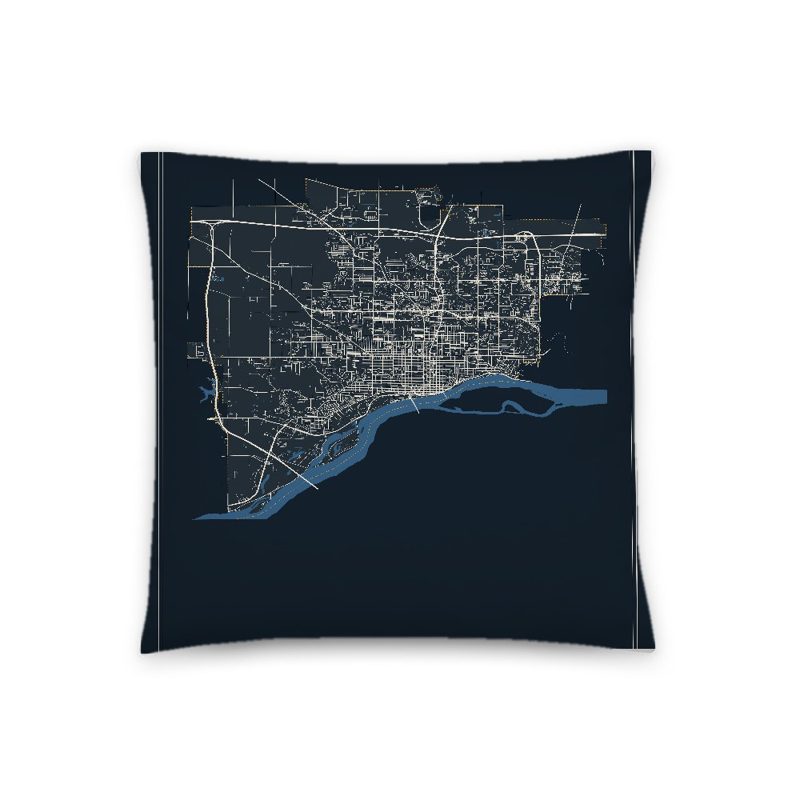
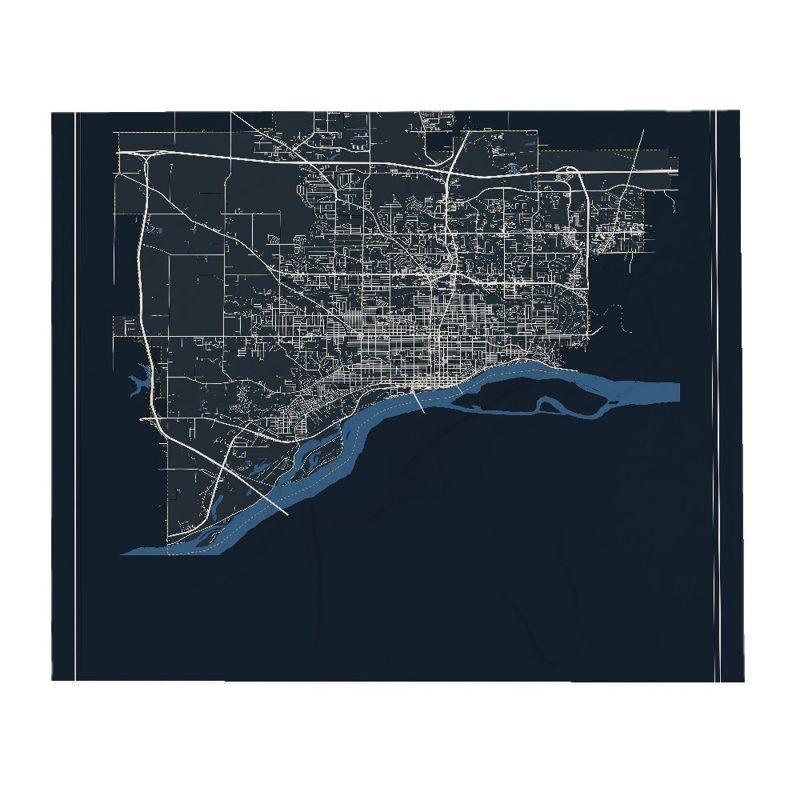
The situation would soon change, as many citizens went to work for the Works Progress Administration. Davenport had an economic boom during and after World War II, driven by wartime industry and peacetime demand. As Davenport grew, it absorbed smaller surrounding communities, annexing Rockingham, Nahant, Probstei, East Davenport, Oakdale, Cawiezeel, Blackhawk, Mt. Joy, Green Tree, and others. Oscar Mayer, Ralston Purina, and other companies built plants in west Davenport. The Interstate highway network reached Davenport in 1956, improving transportation in the area. By 1959, more than 1,000 homes a year were being constructed.
By the late 1970s, the good times were over for both downtown and local businesses and industries. Railroad restructuring in the mid-20th century had caused a loss of jobs in the industry. The farm crisis of the 1980s negatively affected Davenport and the rest of the Quad Cities, where a total of 35,000 workers lost their jobs throughout the entire Quad Cities area. Restructuring of heavy industry also continued: the Caterpillar plant on the city's north side closed, causing another wave of job loss.
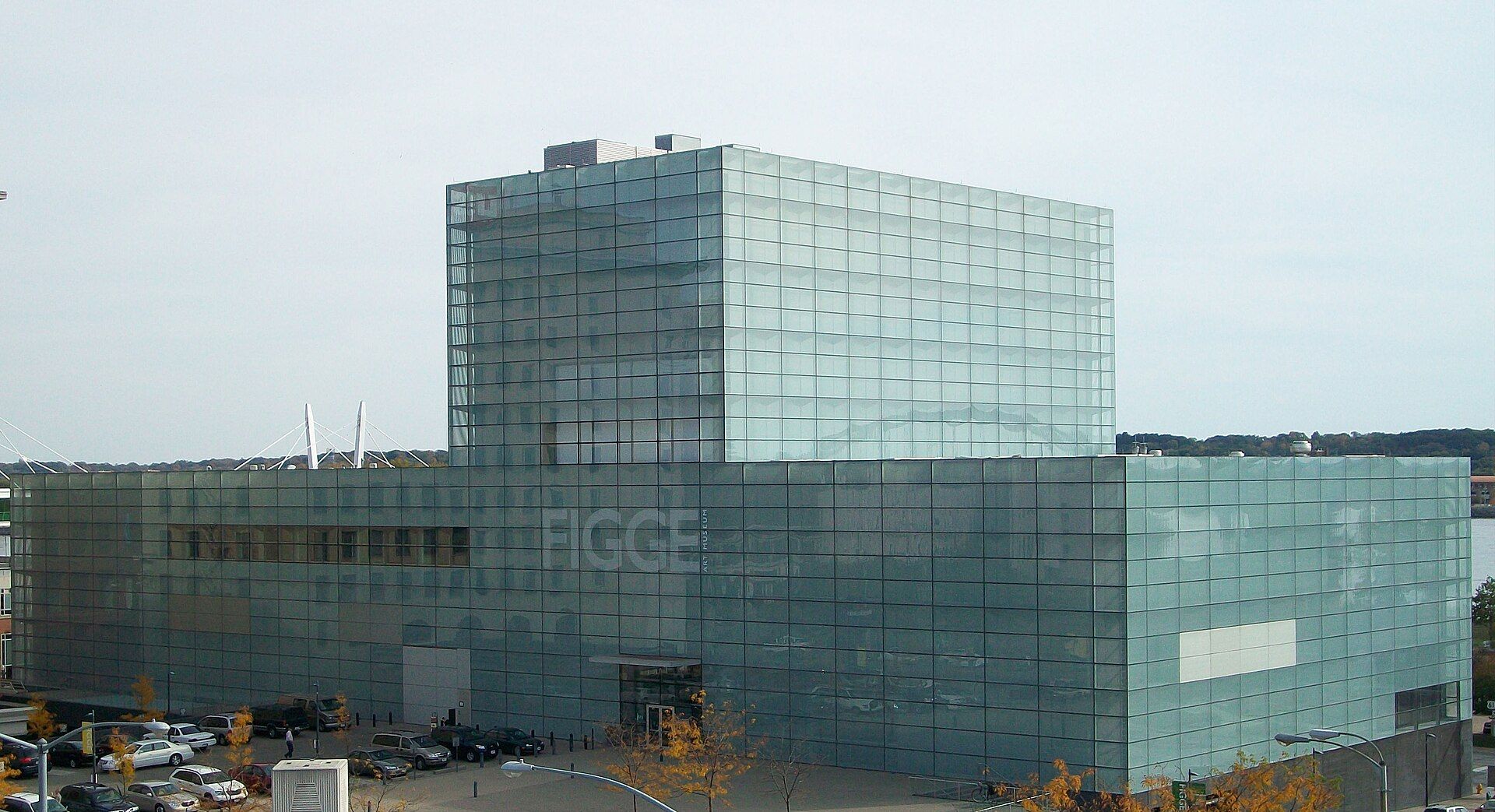
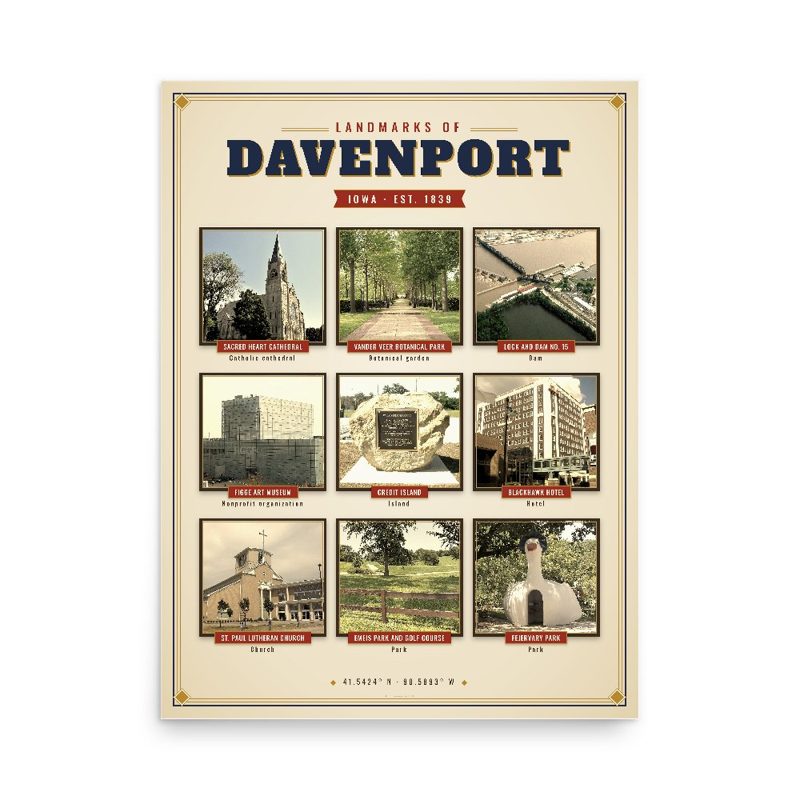
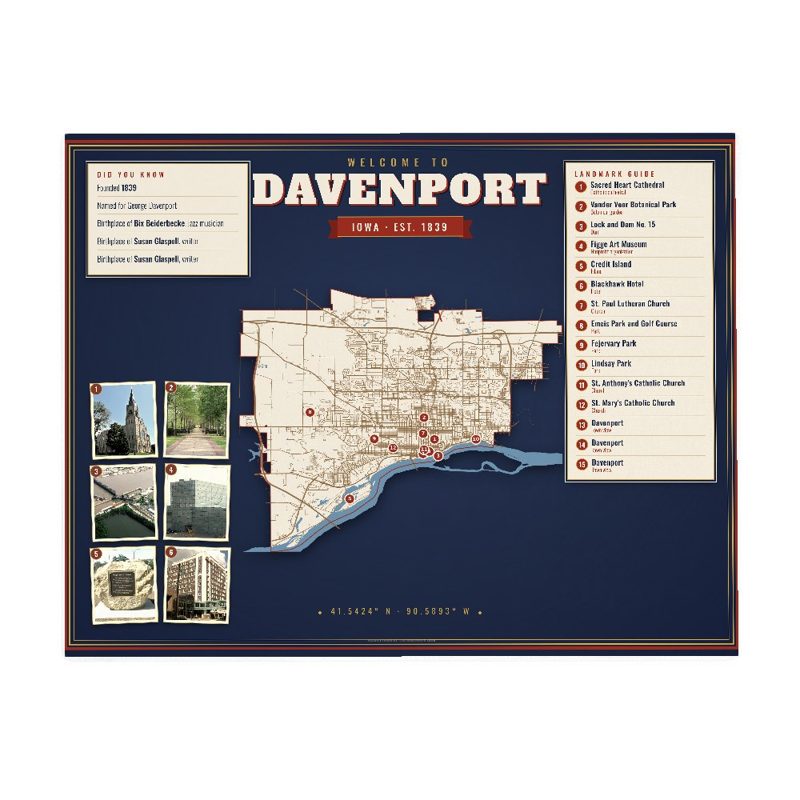
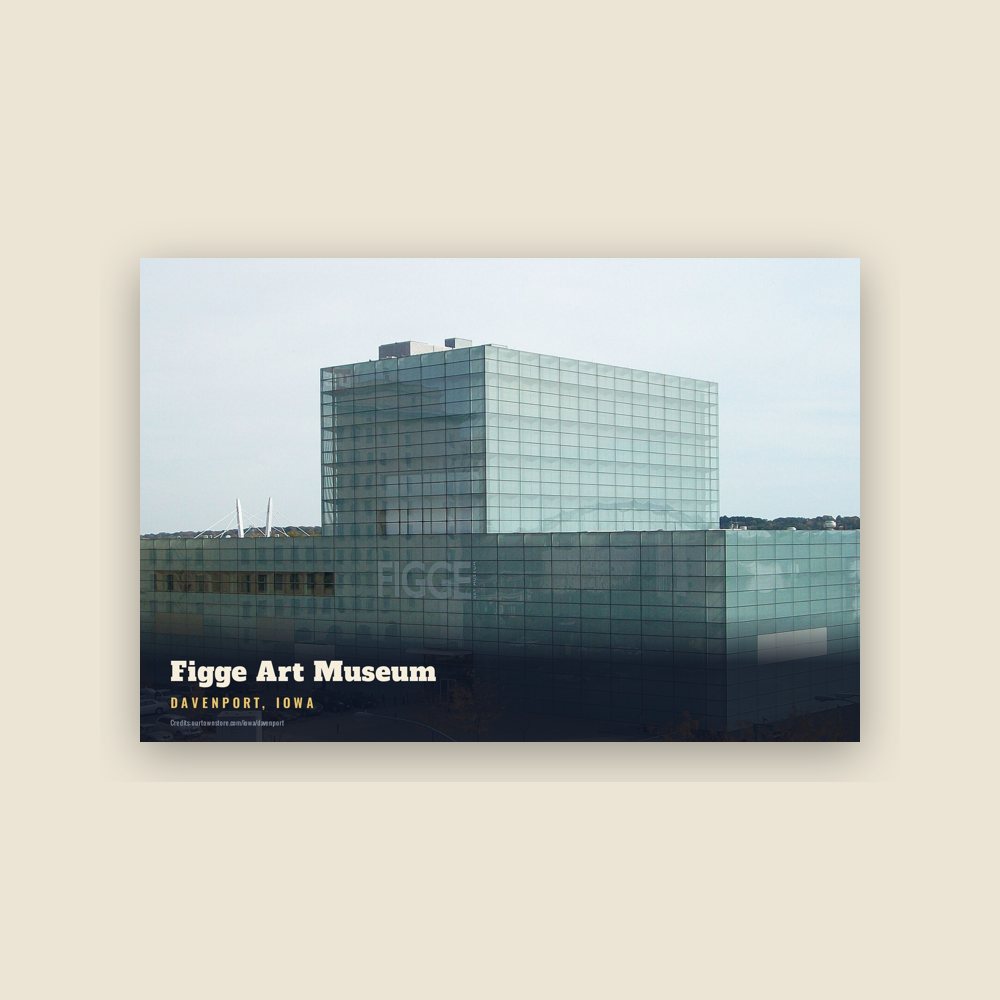
With the 1990s, the city finally showed the beginnings of a resurgence. In the early 21st century, many renovations and building additions have occurred to revitalize the downtown area, including repairing Modern Woodmen Park, the building of the Skybridge, and establishing the Figge Art Museum. In 2011, the Gold Coast and Hamburg Historic District was named as a 2011 "America's Great Place" by the American Planning Association.
Adapted (trimmed) from the Wikipedia article Davenport, Iowa, revision 1385471530 by its contributors, licensed CC BY-SA 4.0.