A short history of Clinton
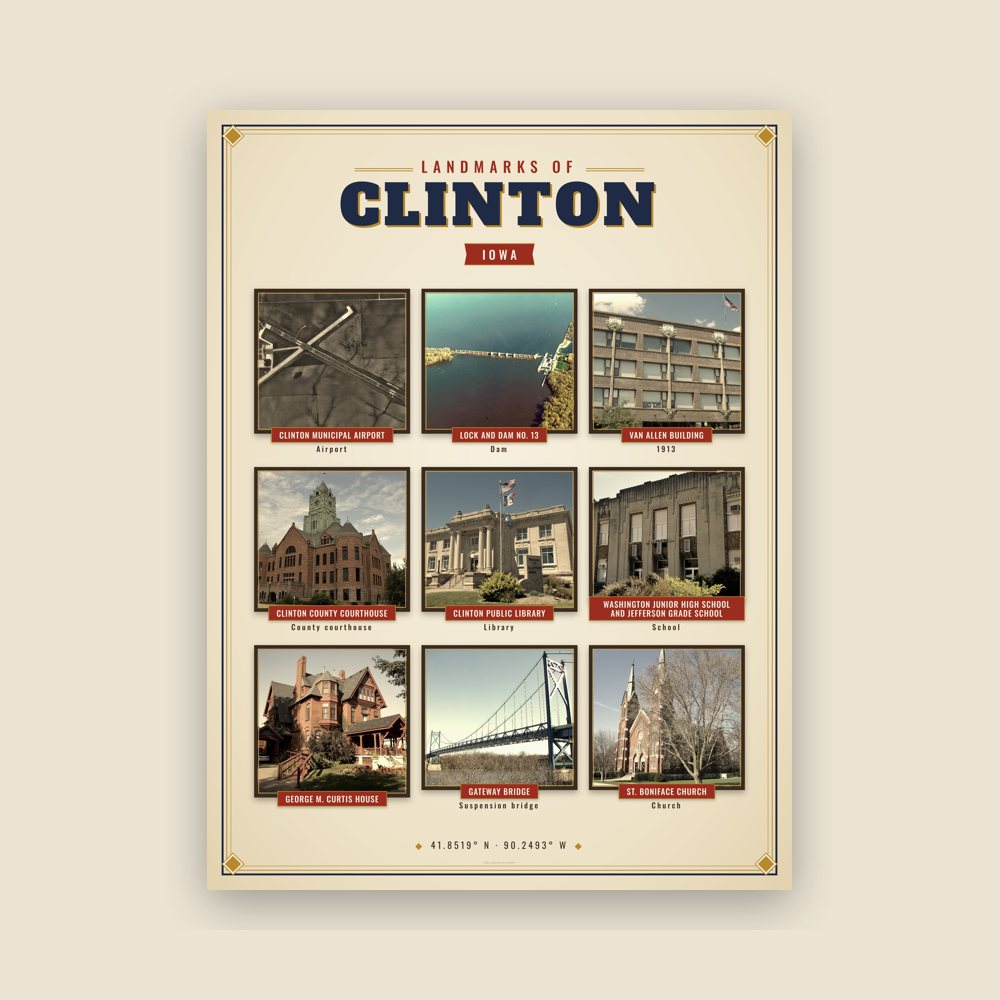
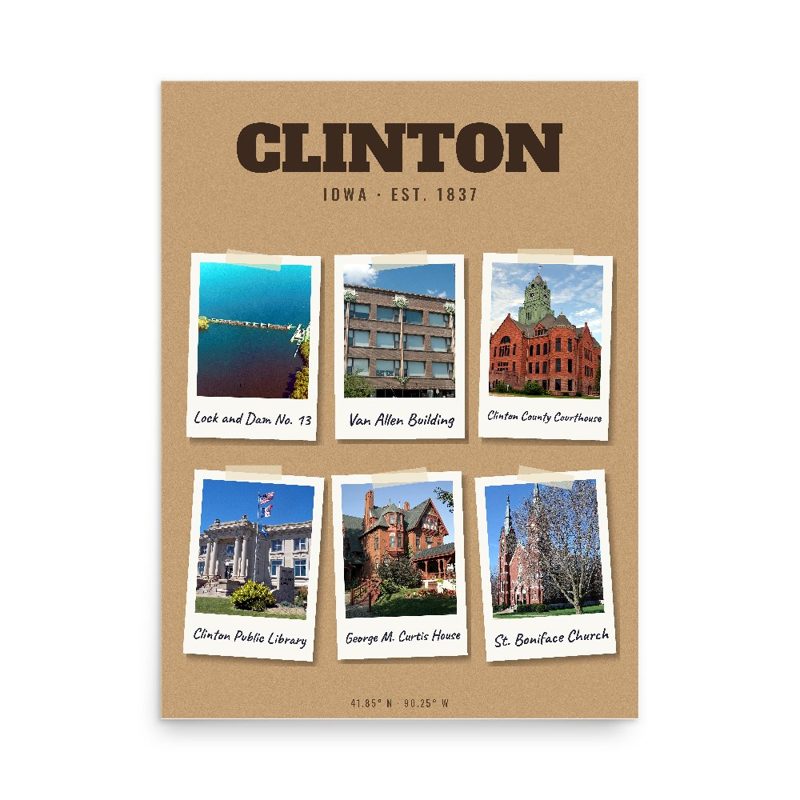
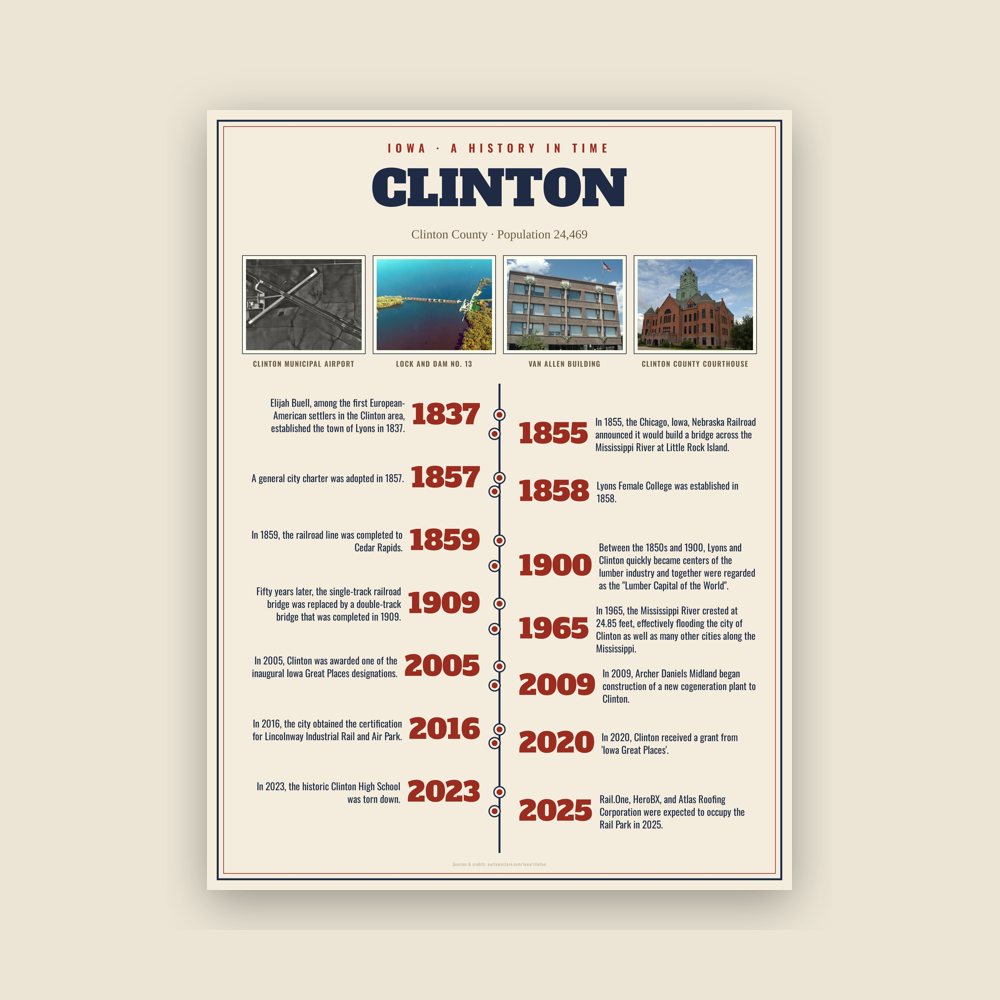
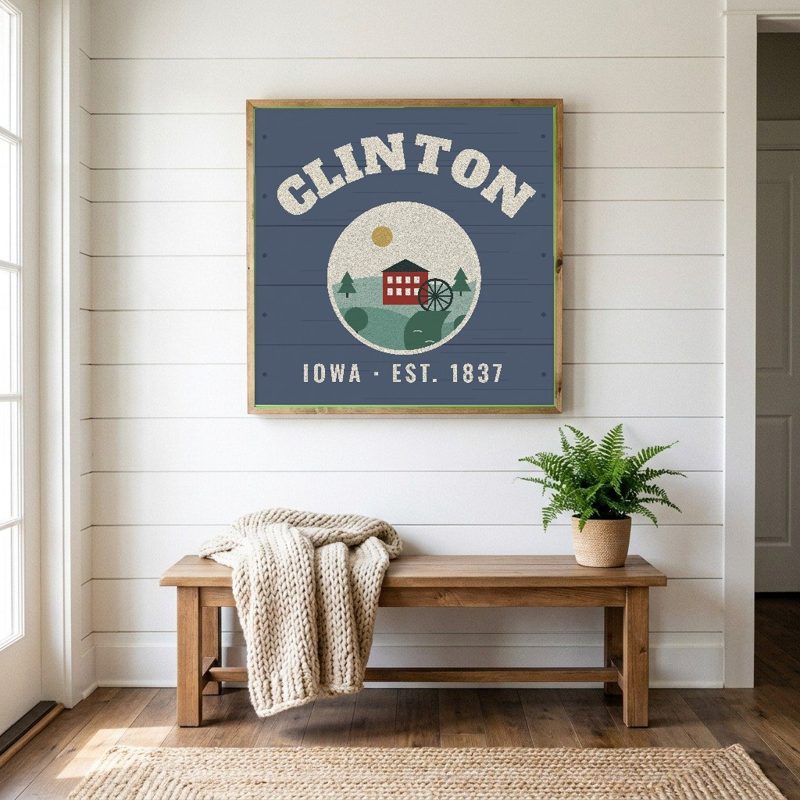
Elijah Buell, among the first European-American settlers in the Clinton area, established the town of Lyons in 1837. It was named after the French city Lyon. It grew with the lumber and railroad industry through the century, and merged in 1895 with the City of Clinton.
In 1855, the Chicago, Iowa, Nebraska Railroad announced it would build a bridge across the Mississippi River at Little Rock Island. The Iowa Land Company named the town as Clinton, in honor of DeWitt Clinton, governor of New York State. A general city charter was adopted in 1857. Lyons Female College was established in 1858.
Clinton's population grew to more than 1,000 as construction of the bridge continued. In 1859, the railroad line was completed to Cedar Rapids. Fifty years later, the single-track railroad bridge was replaced by a double-track bridge that was completed in 1909.
Between the 1850s and 1900, Lyons and Clinton quickly became centers of the lumber industry and together were regarded as the "Lumber Capital of the World". In the 1880s and 1890s, Clinton boasted more millionaires per capita than any other city in the nation.
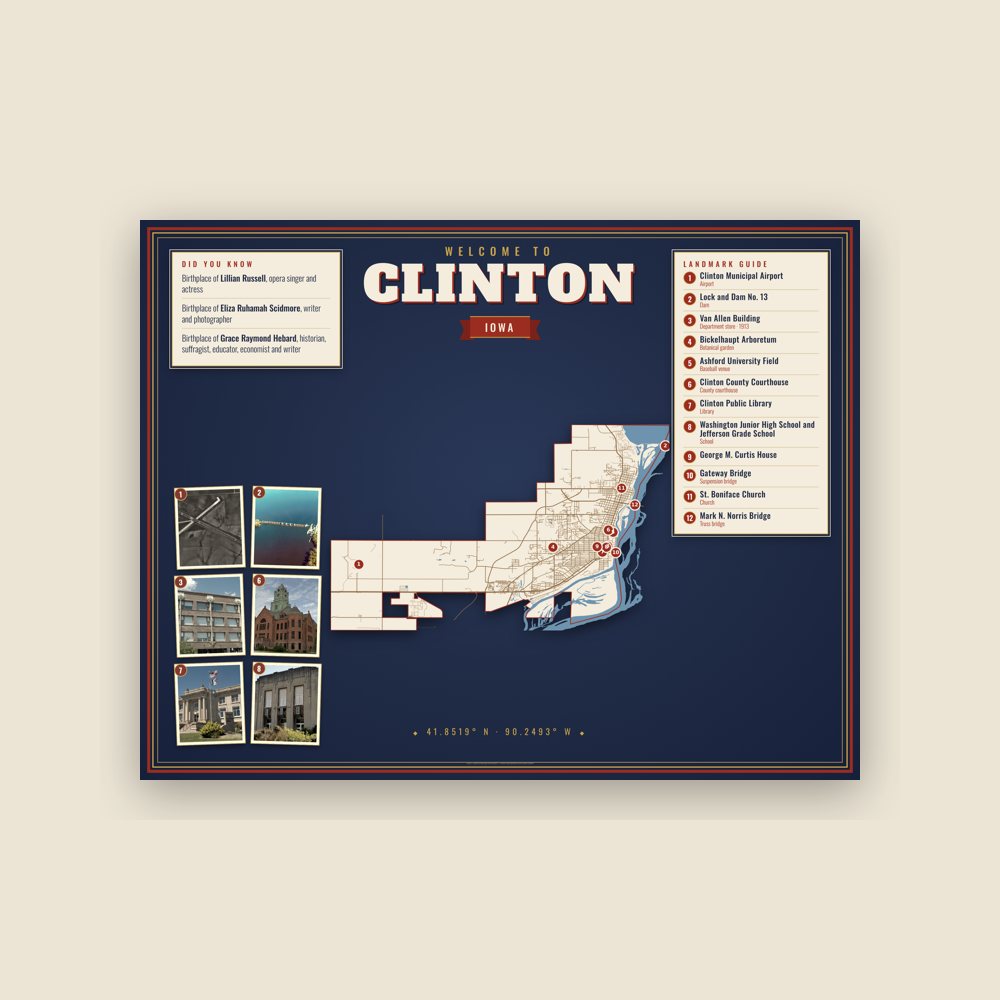
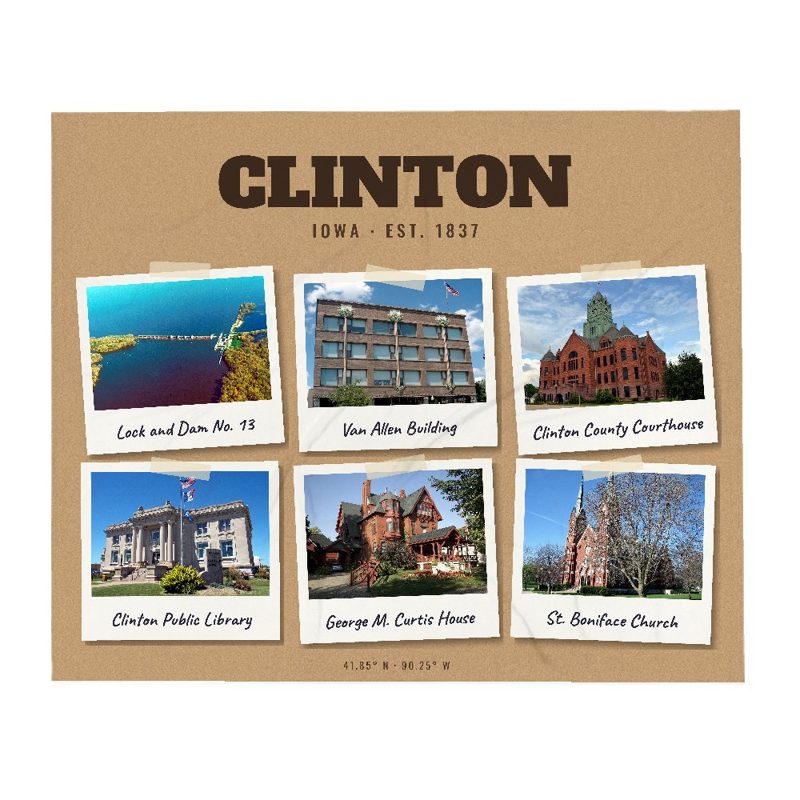
By the end of 1900, the northern forests were depleted and the sawmills closed. The railroad and river, providing economical transportation in all directions, attracted manufacturing and heavy industry. The city still boasts a number of magnificent Victorian mansions built during that time. Among these is the George M. Curtis House.
In 1965, the Mississippi River crested at 24.85 feet, effectively flooding the city of Clinton as well as many other cities along the Mississippi. The US Army Corps of Engineers began a seven-year, $28.9 million levee project. An 8.1-mile dyke, 4,330 feet of concrete flood wall, six pumping stations, seven closure structures, five major street crossings; 17,320 feet of new sewer; and 23 gate wells were completed and dedicated in June 1981.
In 2005, Clinton was awarded one of the inaugural Iowa Great Places designations. Under this award, Clinton received a $1 million state budget allocation for cultural and landscape improvements along the city's riverfront.
In 2009, Archer Daniels Midland began construction of a new cogeneration plant to Clinton. This has brought more jobs and workers to Clinton.
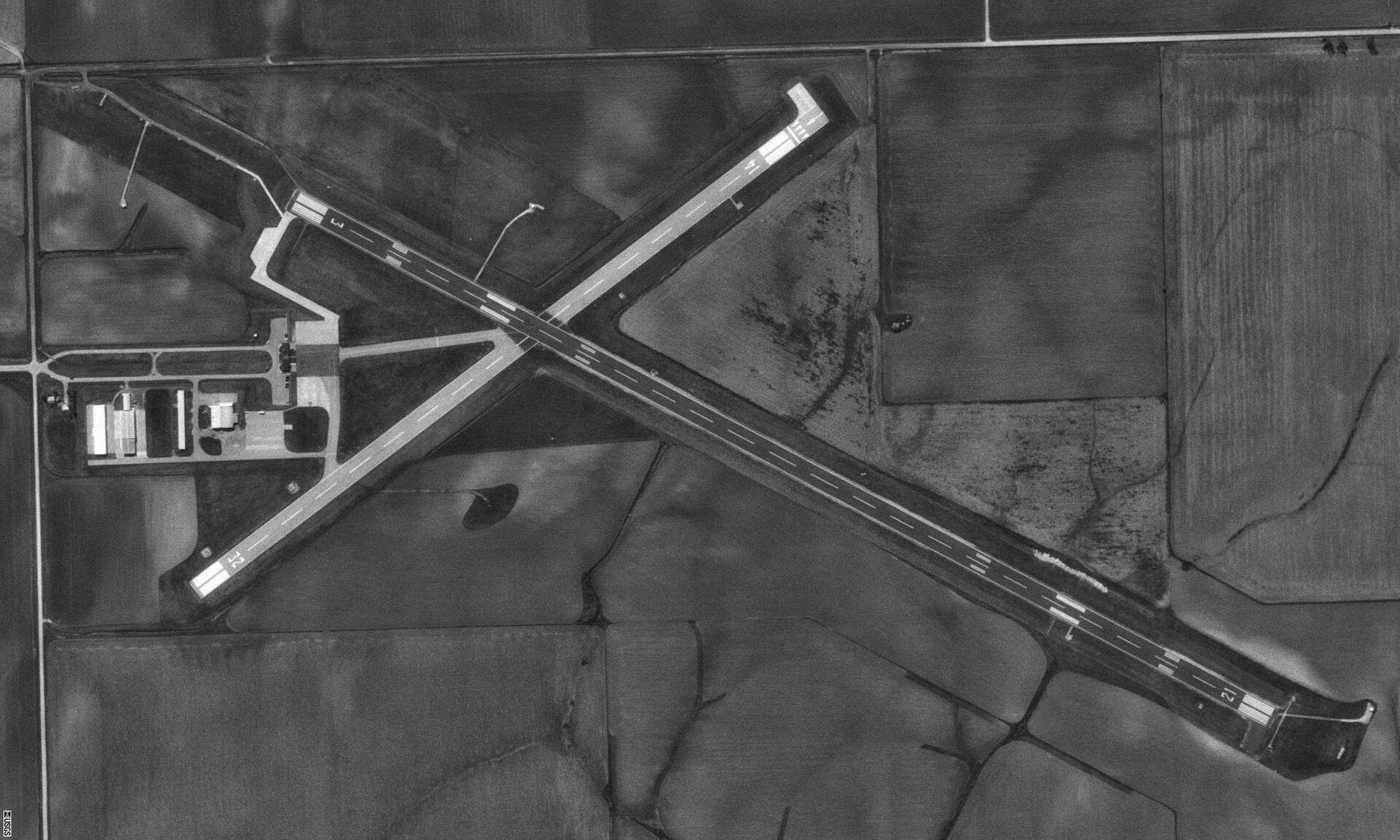
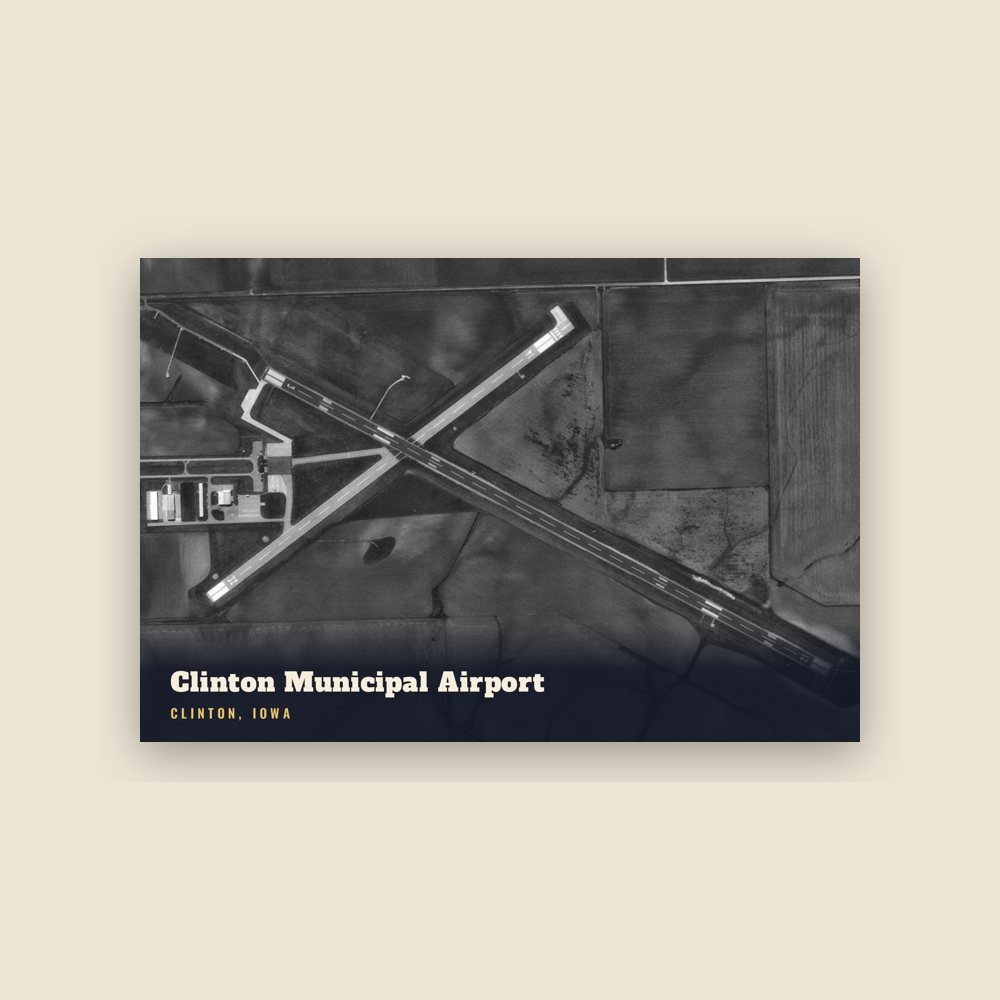
In 2016, the city obtained the certification for Lincolnway Industrial Rail and Air Park. The park is located adjacent to US Highway 30 and the Clinton Municipal Airport. The Union Pacific East-West Mainline runs to the south, with a dedicated spur running into the park. Targeted industries for the Clinton Region included chemicals processing, metal fabrication, and value-added agriculture. Rail.One, HeroBX, and Atlas Roofing Corporation were expected to occupy the Rail Park in 2025.
In the 2010s–2020s, many businesses expanded, adding hundreds of new jobs to the area. These businesses include Big River Packaging, Nestle Purina, and Archer Daniels Midland. They invested millions of dollars into the community. This catalyzed the development of new suburban housing developments, restaurants, and recreational attractions.
In 2020, Clinton received a grant from 'Iowa Great Places'. It dedicated to a project known as 'Even More Things to Do with a River View.' Funds were used to improve the city's riverfront and improve public access.
In 2023, the historic Clinton High School was torn down. The newly built Clinton High was opened for student use. Additionally, the 'Tailgate N' Tallboys' concert brought nearly 9,000 people to Clinton for a 3-day concert series.
Adapted (trimmed) from the Wikipedia article Clinton, Iowa, revision 1377156970 by its contributors, licensed CC BY-SA 4.0.