A short history of Cedar Rapids
Early history
The location of present-day Cedar Rapids was in the territory of the Meskwaki and Sauk peoples at the time of European American settlement.
The first settler on the site of the future city was Osgood Shepherd, who built a log cabin (which he called a tavern) in 1837 or 1838 next to the Cedar River (then known as the Red Cedar) at what is now the corner of First Avenue and First Street Northeast. Shepherd was a squatter who claimed the land without legal title and also a reputed ne'er-do-well, who, if he was not a horse thief himself, definitely consorted with them. Early on, it appears that he "jumped the claim" of another squatter, Wilbert Stone, who had built a cabin and platted out a town, some distance south of Shepherd's cabin, that he called Columbus. Shepherd drove Stone across the river, claiming that Stone had built his cabin on Shepherd's land, then sold Stone's cabin to a buyer named Hull. Shepherd later tried the same tactic with perhaps the first settler on the west side of the river, Robert Ellis, but Ellis happened to be chopping wood at the time and warned that someone would be dead if Shepherd did not retreat.
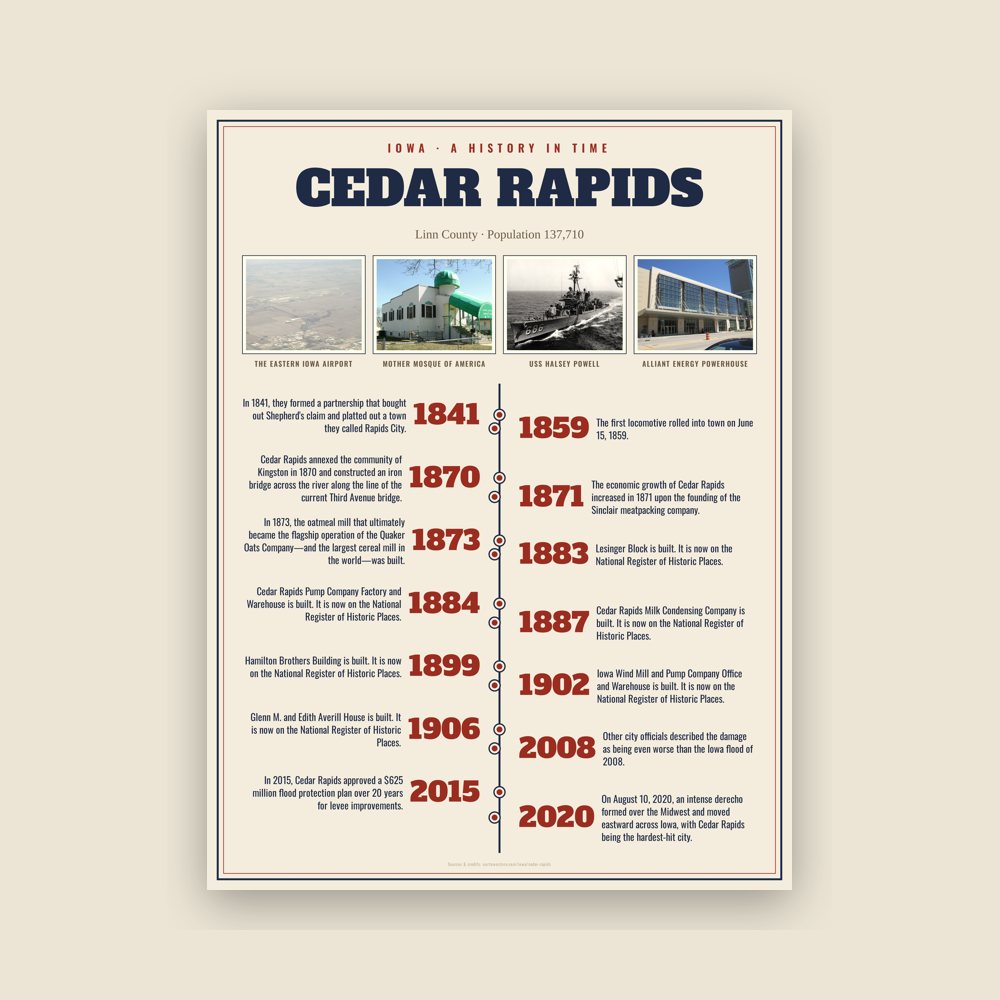
The true founders of the city were George Greene, Nicholas Brown, and a few others. Brown had experience as a miller and Greene had surveyed much of eastern Iowa, so both saw the value of the spot Shepherd had claimed. It was right next to the rapids—a prime spot to build a mill—the last set of rapids on the river before the Cedar fed into the Iowa River, meaning that goods milled on the spot could be carried by boat down river to the Mississippi. In 1841, they formed a partnership that bought out Shepherd's claim and platted out a town they called Rapids City. Brown immediately constructed a primitive dam and then built the town's first mill. His crude dam soon washed away, prompting Greene to induce Alexander Ely, an engineer from Michigan, to build a proper dam that created a mill race capable of powering several mills.
At this time, the city was confined to the east side of the river. The west bank soon contained a village named Kingston for resident David King who early on operated a rope ferry across the river.
The town was formally incorporated by the Iowa State Legislature on January 15, 1849 as Cedar Rapids, named for the rapids in the Cedar River (the river itself was named for the large number of red cedar trees that grew along its banks). The population was less than 400.
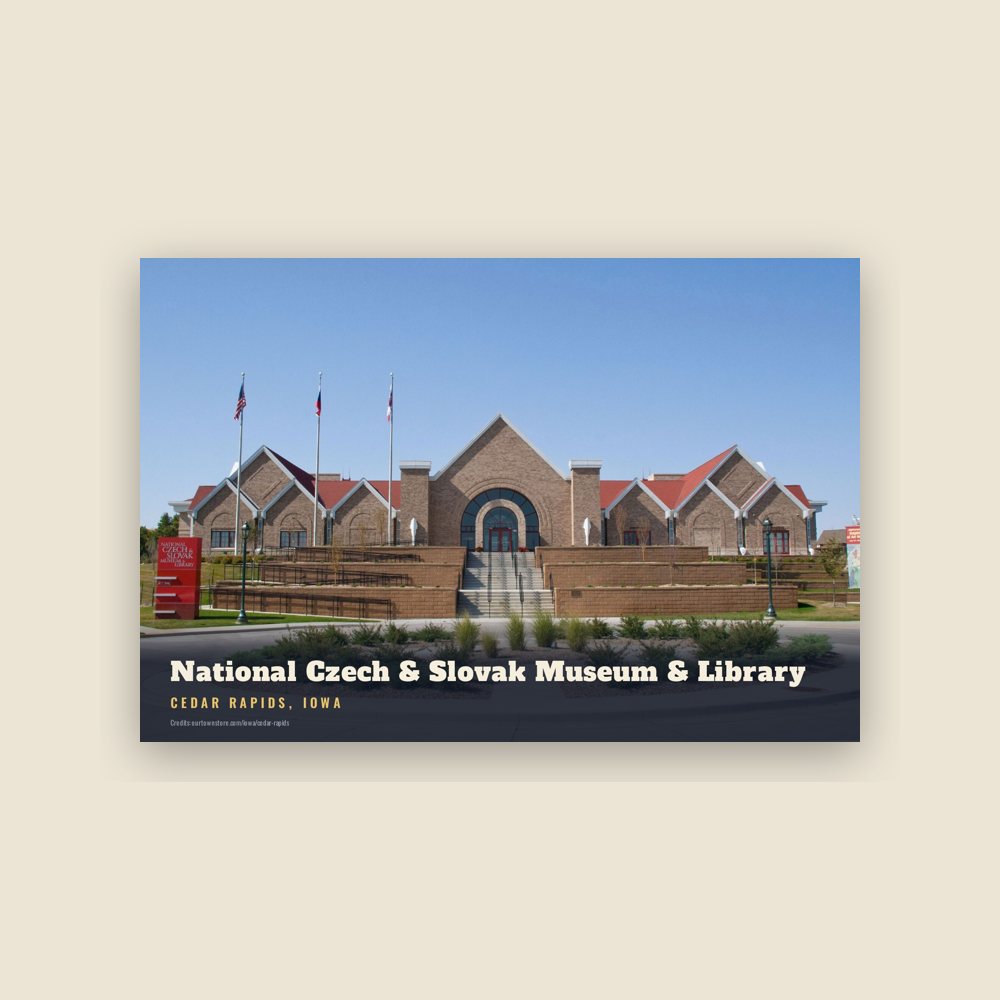
During the 1850s, Cedar Rapids grew in size, and it was during this decade that the Czech population became substantial; when the town was reincorporated in 1856, a quarter of its roughly 1,600 inhabitants were Czech immigrants. The availability of cheap land in the new state of Iowa happened to coincide with the Revolutions of 1848 in the Austrian Empire that caused a large number of Czechs to flee their homeland and emigrate to the U.S. In 1851, the institution that eventually become Coe College was founded. In the same decade, there were attempts by local leaders to improve the city's access to distant markets, first through purchase of a steamboat (aptly named Cedar Rapids) and ultimately through investment in a railroad. The first locomotive rolled into town on June 15, 1859.
Railroads were an important factor in Iowa's development - which at the end of the 19th century had the fifth largest track mileage of any state - and the growth of cities along rail lines such as Cedar Rapids.
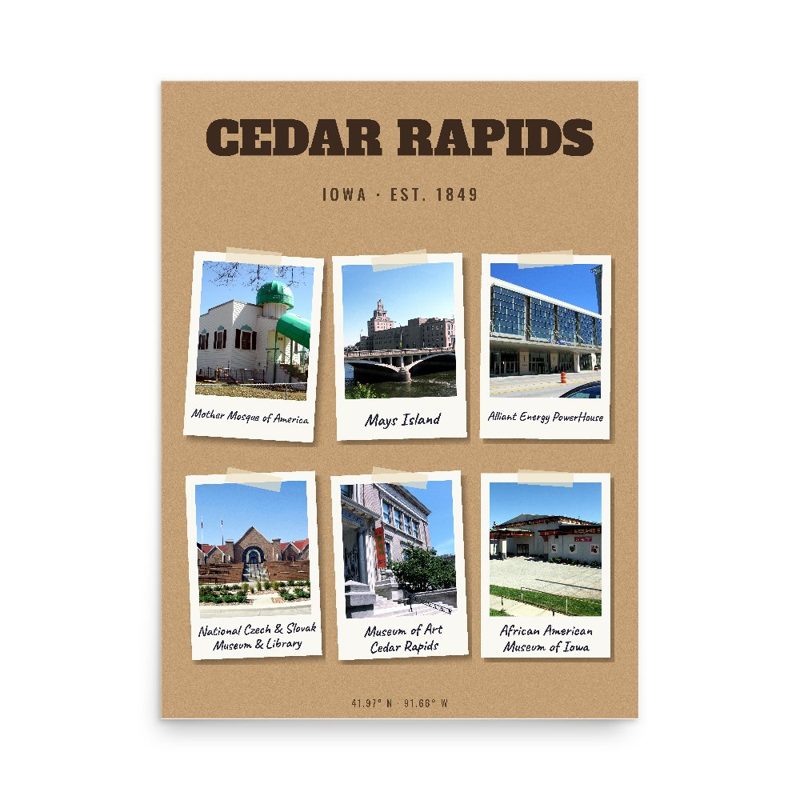
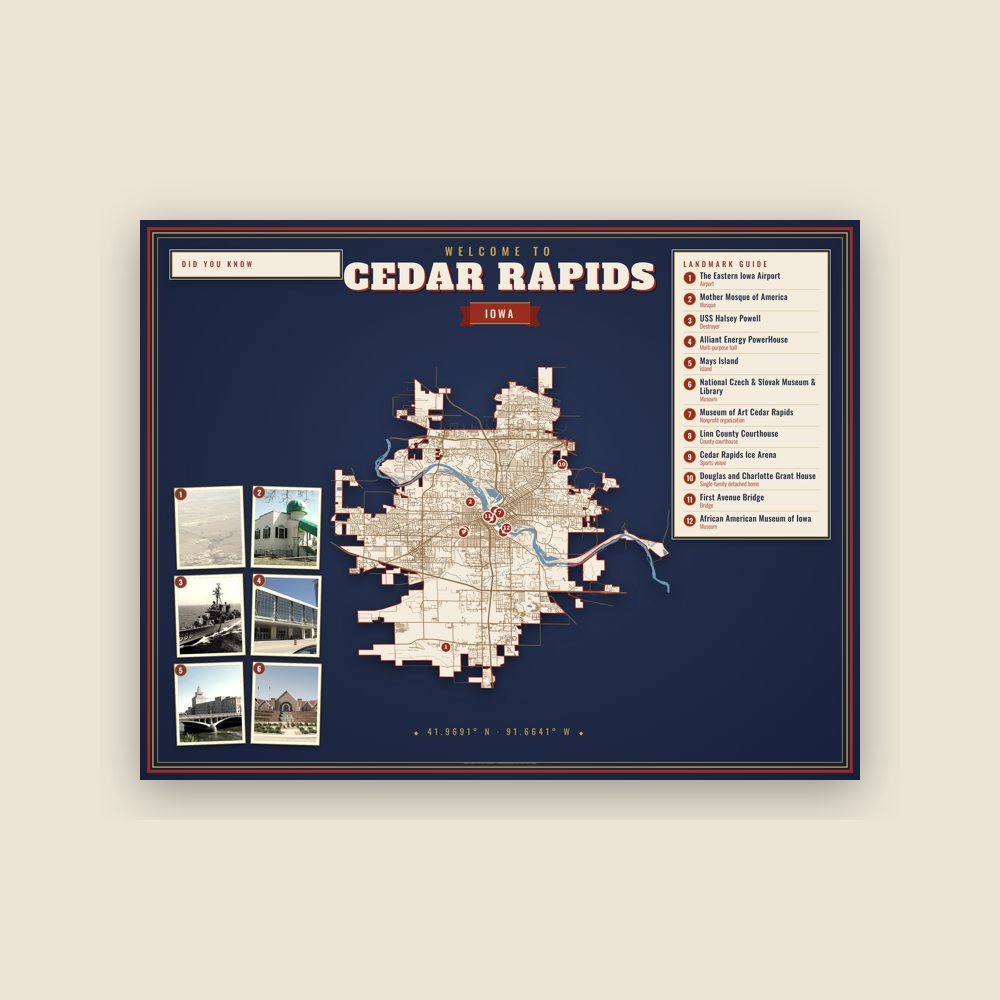
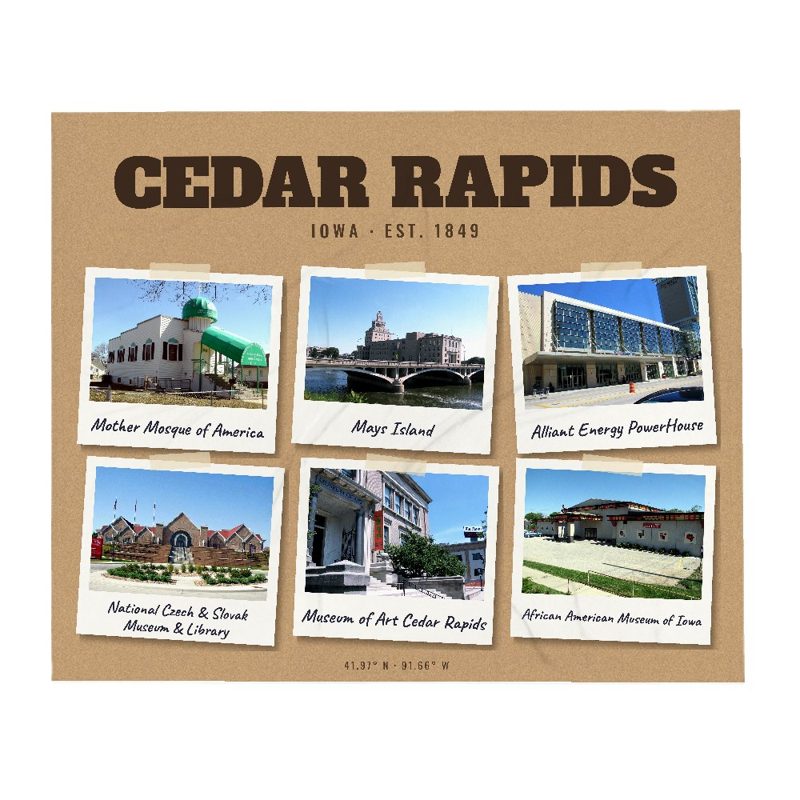
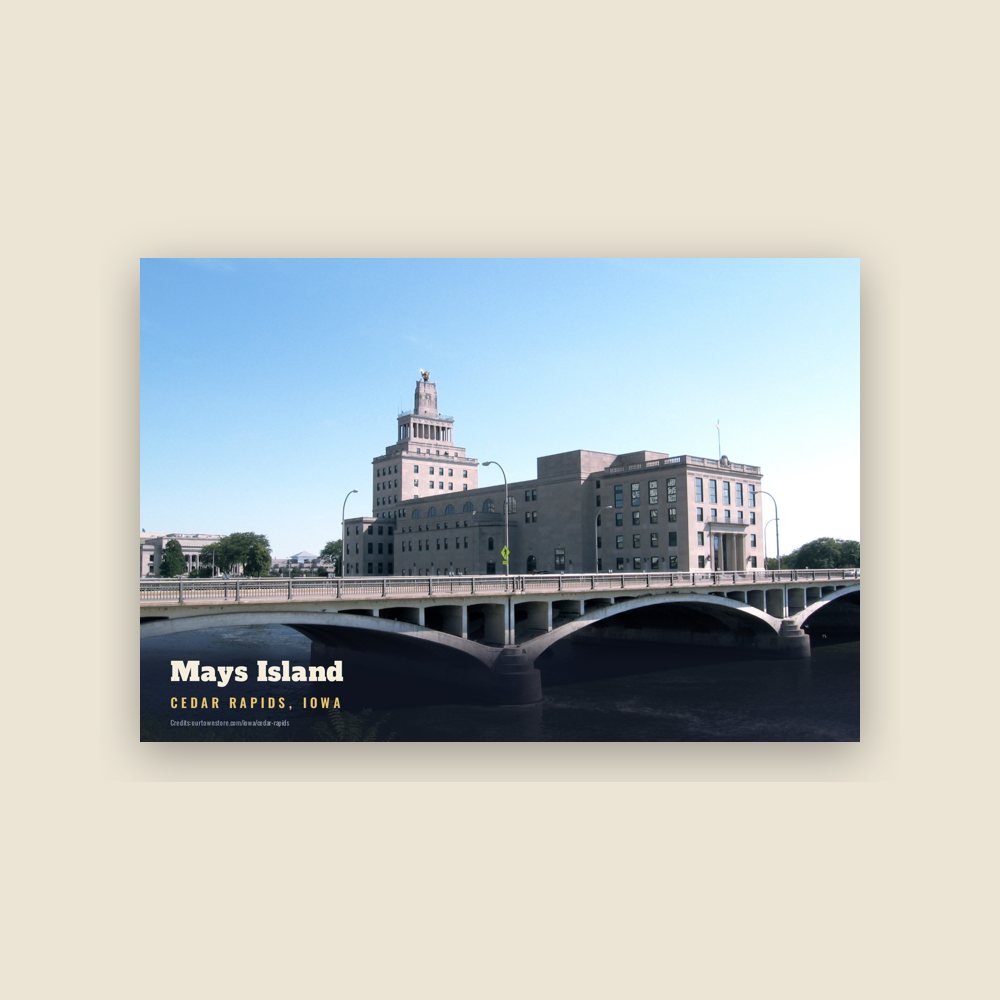
In this same decade, "Major" John May, an inventor and land speculator, purchased the island (now called "May's Island") situated between Cedar Rapids and Kingston with the intention of founding a town he called May Island. When that scheme proved impractical due to the island's tendency to flood, he conceived the idea of making his island the center of a larger city that spanned the river and convinced the state legislature to officially name the land he had bought there, just south of Kingston, "West Cedar Rapids".
Cedar Rapids annexed the community of Kingston in 1870 and constructed an iron bridge across the river along the line of the current Third Avenue bridge.
The economic growth of Cedar Rapids increased in 1871 upon the founding of the Sinclair meatpacking company. The plant allowed for year-round meatpacking because ice could be harvested from the Cedar River in winter to chill an icehouse, and within a few years it became one of the largest factories of its kind in the country, employing 400 people. In 1873, the oatmeal mill that ultimately became the flagship operation of the Quaker Oats Company—and the largest cereal mill in the world—was built.
In 1909, the city acquired May's Island for the purpose of making it the seat of government; then, as now, there were ill feelings between east- and west-siders in Cedar Rapids, and the city's leaders hoped that putting City Hall in the "neutral territory" of the island would help ease tensions. In 1919, the residents of Linn County voted to move the county seat from Marion to Cedar Rapids, partially because Cedar Rapids had offered to donate the southern third of the island as a site for a new county courthouse and jail.
Read the full history
August 10, 2020, Midwest derecho
On August 10, 2020, an intense derecho formed over the Midwest and moved eastward across Iowa, with Cedar Rapids being the hardest-hit city. Sustained winds of 60 to 80 miles per hour (97 to 129 km/h), frequent gusts of 110 miles per hour (180 km/h) or greater, and an estimated peak gust of 140 miles per hour (230 km/h) on the southwest side of the city damaged the majority of residential and commercial buildings in Cedar Rapids, as well as 20 schools, and resulted in the closure of most local businesses. Thousands of trees were downed throughout all 75 square miles of Cedar Rapids. Most of the city's roads became mostly blocked or impassible due to downed trees and blown limbs, power poles along with their lines, and general debris, like large road signs, as well as damaged buildings, homes, and farms. 95% of the city was without power. Trash pickup stopped, cell phone service was very spotty for multiple days, and many gas leaks were reported. Interstate 380 was closed between Cedar Rapids and Iowa City.
Hospitals treated over 300 patients for storm related injuries. Professional estimates suggested that cleanup and removal of the city's downed trees could take months. Arborists urged residents not to clear trees on their own, in order to avoid injury.
On Friday, August 14, Governor Kim Reynolds arrived in Cedar Rapids, accompanied by Adjutant General Benjamin Corell of the Iowa National Guard. Gen. Corell said he had not seen a comparable level of damage since Hurricane Katrina in 2005. Other city officials described the damage as being even worse than the Iowa flood of 2008.
Adapted (trimmed) from the Wikipedia article Cedar Rapids, Iowa, revision 1378527257 by its contributors, licensed CC BY-SA 4.0.