A short history of Carter Lake
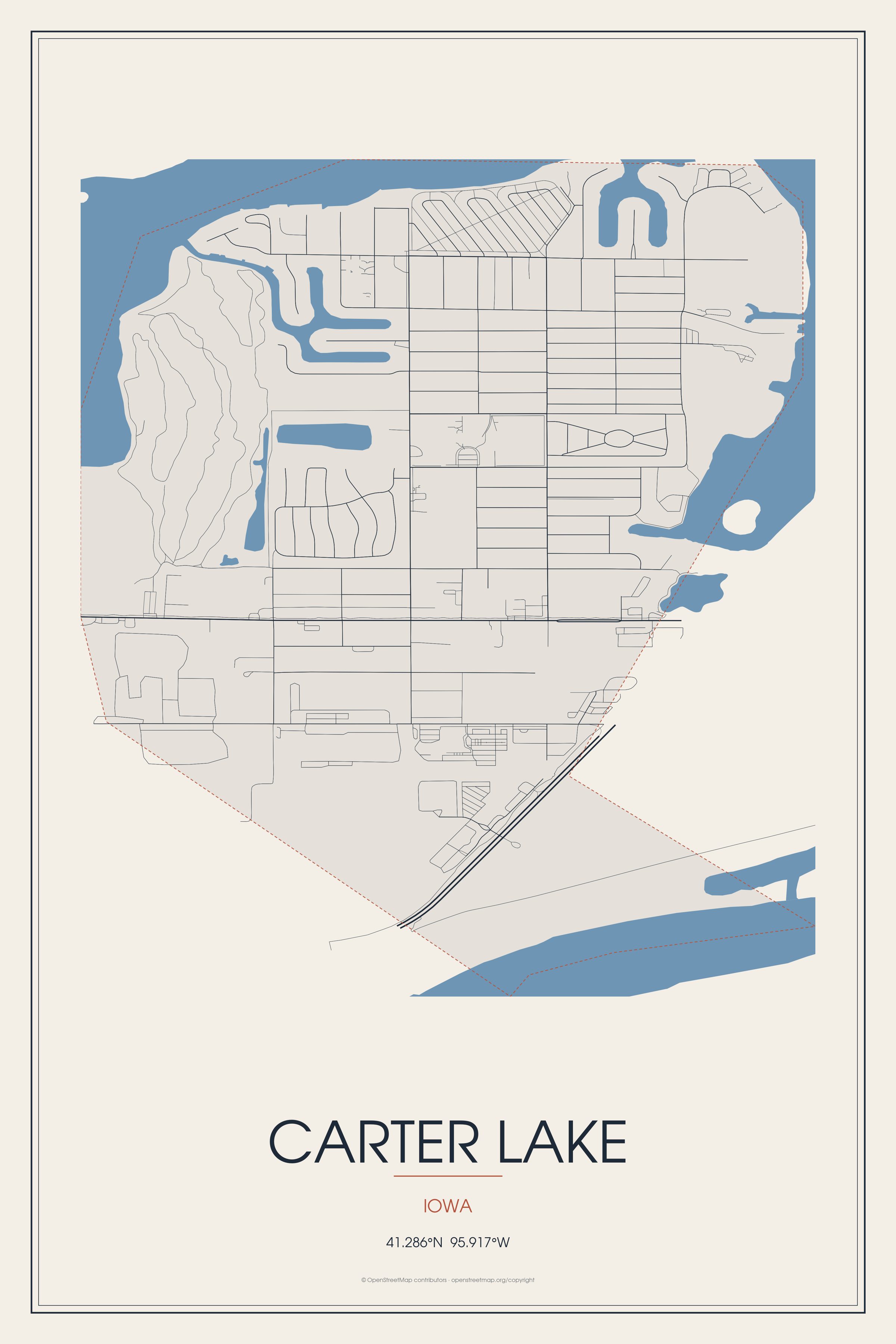
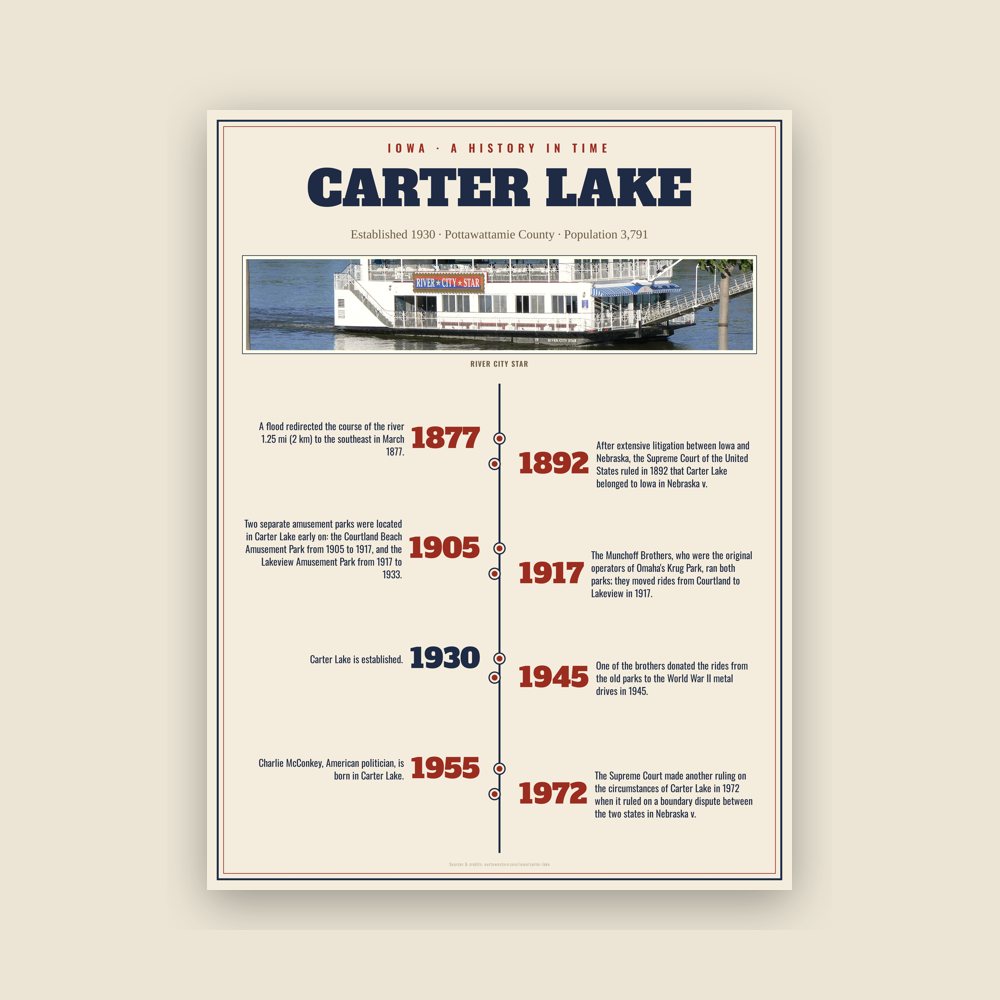
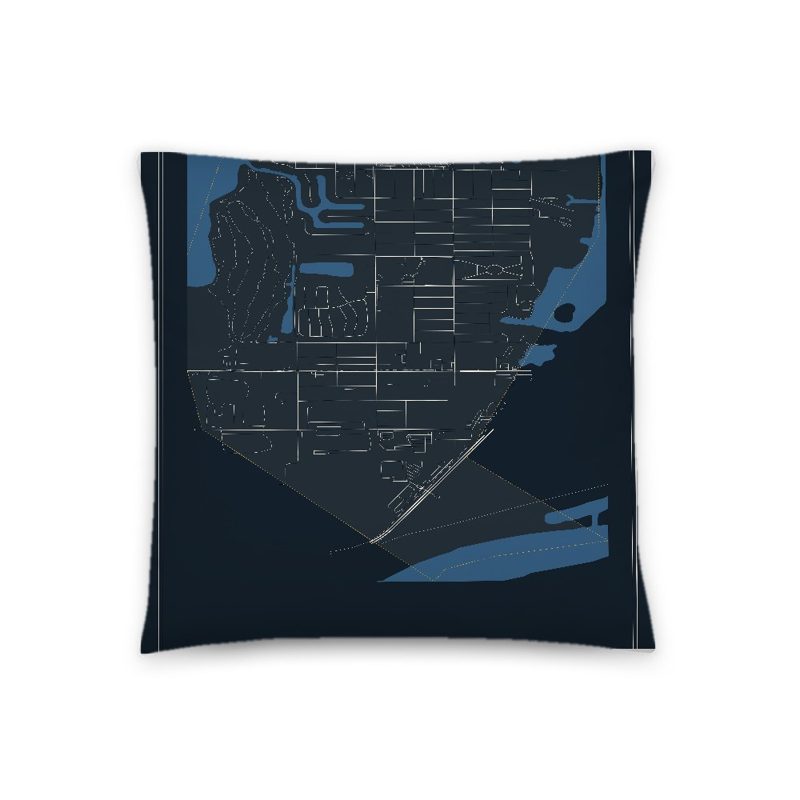
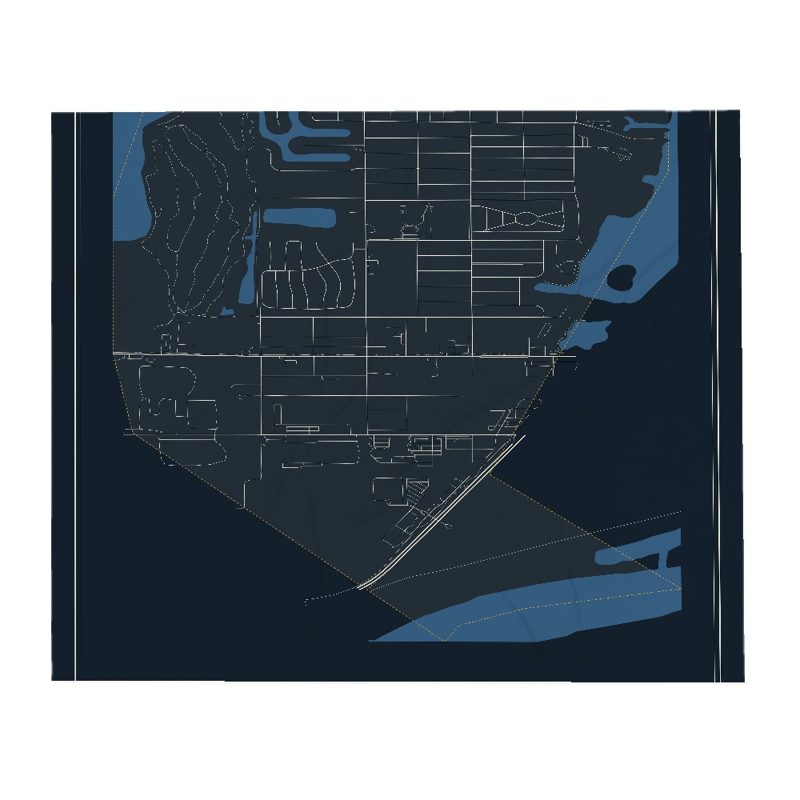
Carter Lake is an example of the border irregularities of the United States, being the only city in Iowa located west of the Missouri River. A flood redirected the course of the river 1.25 mi (2 km) to the southeast in March 1877. The remnants of the old river course, called Saratoga Bend, became an oxbow lake, named Carter Lake. Soon after the formation of the lake, the site became a flourishing recreational area. It included "a boathouse at the foot of Locust street, hotels and club houses were numerous and the lake was the scene of many a pleasant rowing and fishing party."
After extensive litigation between Iowa and Nebraska, the Supreme Court of the United States ruled in 1892 that Carter Lake belonged to Iowa in Nebraska v. Iowa, 143 U.S. 359 (1892). Although the general rule is that state boundaries follow gradual changes in the course of a river, the Court ruled that an exception exists when a river avulses one of its bends. The Supreme Court made another ruling on the circumstances of Carter Lake in 1972 when it ruled on a boundary dispute between the two states in Nebraska v. Iowa, 406 U.S. 117 (1972).
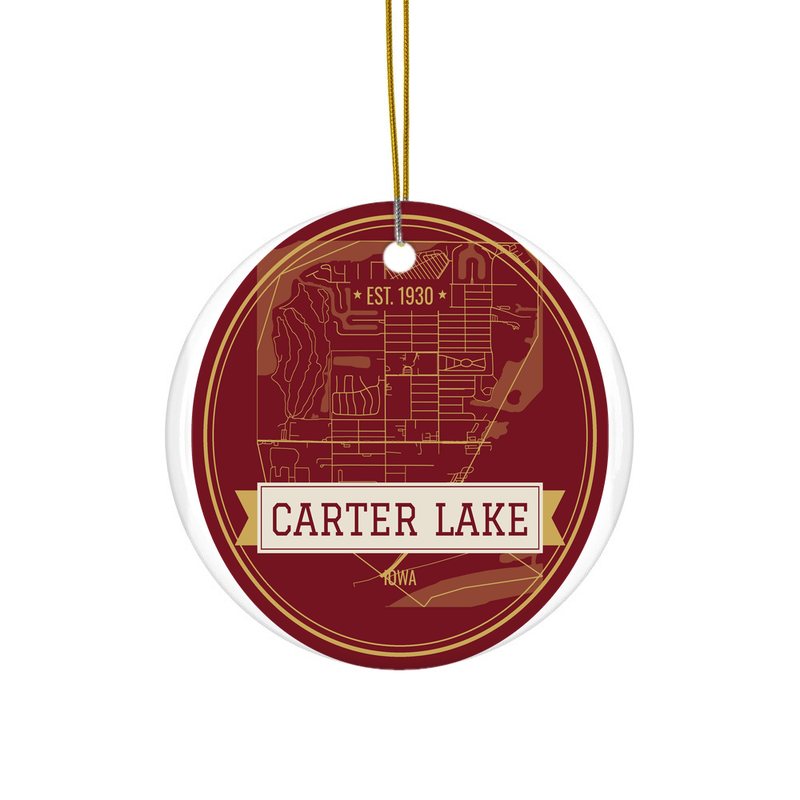
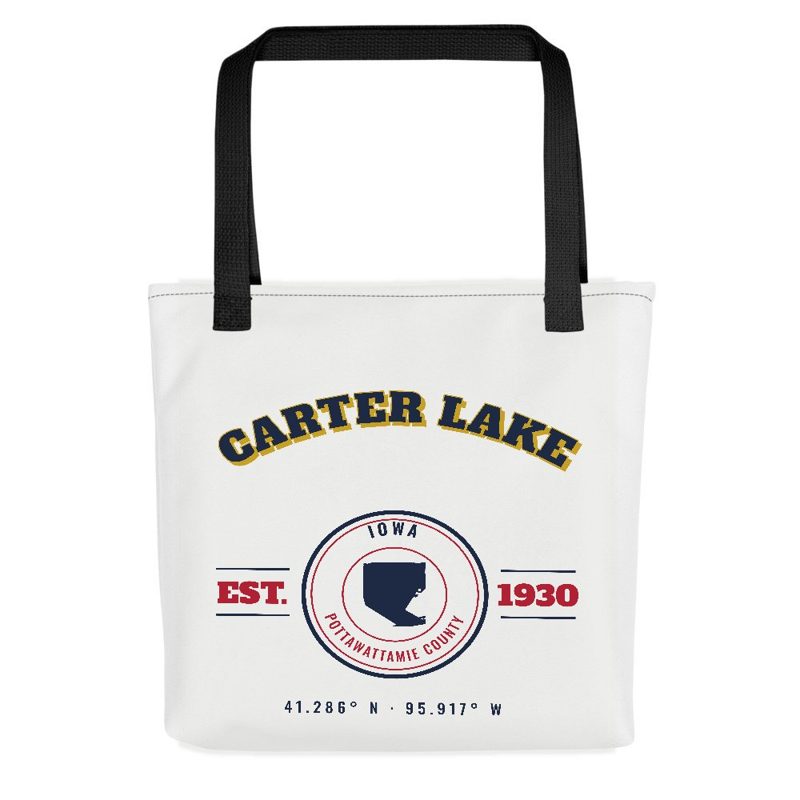
Although Carter Lake was legally considered part of Council Bluffs and residents paid city taxes, they lacked the basic city services enjoyed by residents east of the Missouri River. The community successfully seceded from Council Bluffs in the 1920s, intending to become part of Omaha, Nebraska. However, Omaha did not want to pay to extend sewers or water lines. Consequently, Carter Lake incorporated as a city in the state of Iowa on July 2, 1930.
Two separate amusement parks were located in Carter Lake early on: the Courtland Beach Amusement Park from 1905 to 1917, and the Lakeview Amusement Park from 1917 to 1933. The Munchoff Brothers, who were the original operators of Omaha's Krug Park, ran both parks; they moved rides from Courtland to Lakeview in 1917. One of the brothers donated the rides from the old parks to the World War II metal drives in 1945.
The city became a gambling hot spot in the 1930s and '40s, as law enforcement was limited and because of its important location. At The Chez Paree, you "could listen to Sophie Tucker, have the best prime rib in town and enjoy a gambling raid or two." Patrons could "bet on any horse race in the United States," and the business was described as "the most active casino between Chicago and the West Coast."
The mistaken belief that a defendant corporation located in Carter Lake was a legal resident of Nebraska resulted in another U.S. Supreme Court case, Owen Equipment & Erection Co. v. Kroger, 437 U.S. 365 (1978). The case clarified the law regarding ancillary jurisdiction, which allows claims based on state law to be heard in a federal court when related to a claim based on federal law.
Adapted (trimmed) from the Wikipedia article Carter Lake, Iowa, revision 1374264146 by its contributors, licensed CC BY-SA 4.0.