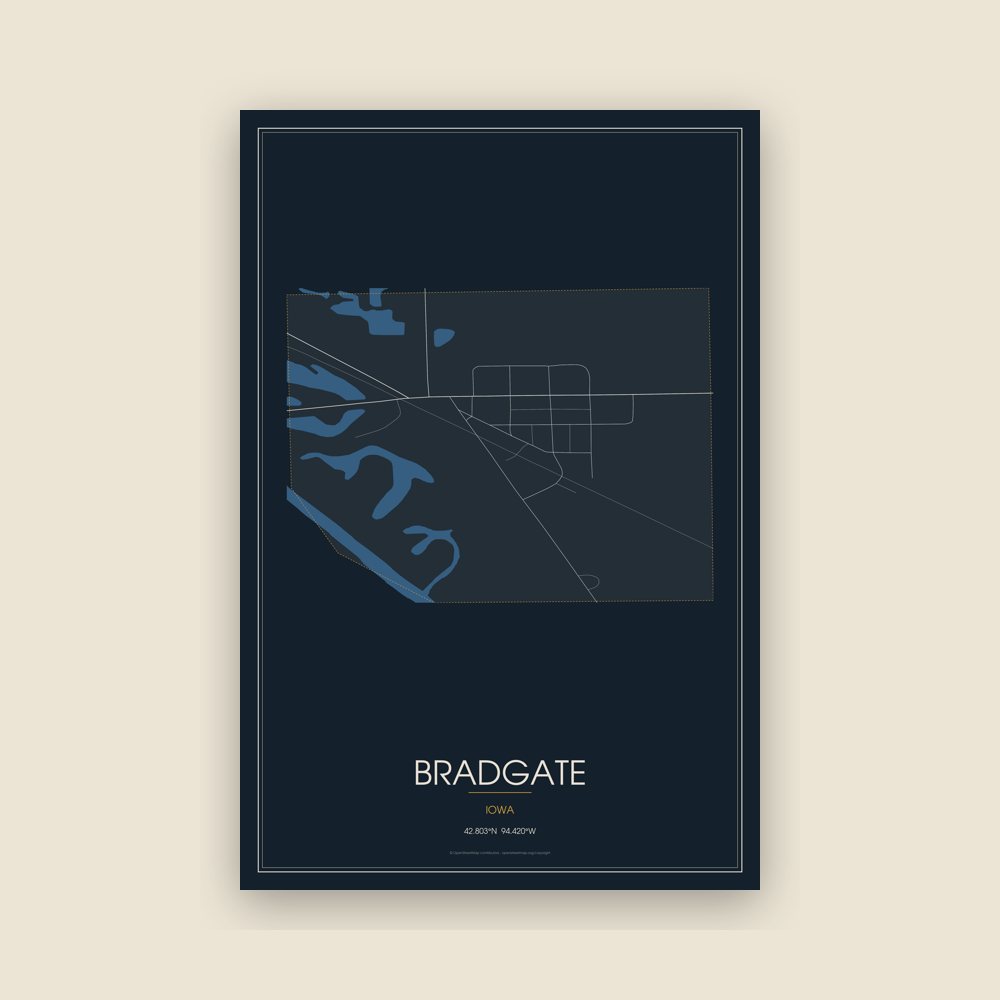
A short history of Bradgate
Last battle between two Iowa American Indian tribes
Nearby Avery's Hill was the site of a significant event in Iowa history. The last battle between two American Indian tribes in Iowa was fought on this hill in 1854 between the Sioux and the Winnebagos.
Some eighteen Sioux warriors under the leadership of Coustawa (Big Tree) surprised the tribe of Winnebago but were driven back after the death of Coustawa. One of the Sioux warriors was reported to be Inkpaduta, who later led a band of Sioux in the famed Spirit Lake Massacre. The Pocahontas County Historical Society has marked the battle spot on the former Clarence Stearns farm with a flag pole and plaque memorial.
A few area residents of Bradgate and surrounding community have acquired large collections of American Indian artifacts, including arrowheads, discovered during walks along the river and on Avery's Hill.
Read the full history
The early days and origin of name
The first settlement just east of present Bradgate (Section 8) was named Willow Glen with no record of why this name was chosen. However, when the town was platted, the name was changed to Bradgate. Several theories are given as to why this name was chosen but the one accepted by most is that Bradgate was named after Bradgate Park at Newtown Linford, six miles northwest of Leicester in Leicestershire County, England. Likewise, just as Leicestershire County is located just west of Rutland County in England, the town of Bradgate, Iowa, is similarly located just six miles to the northwest of the town of Rutland in Humboldt County, Iowa. There were at least seven English families who left England and moved directly to the Bradgate, Iowa, area.
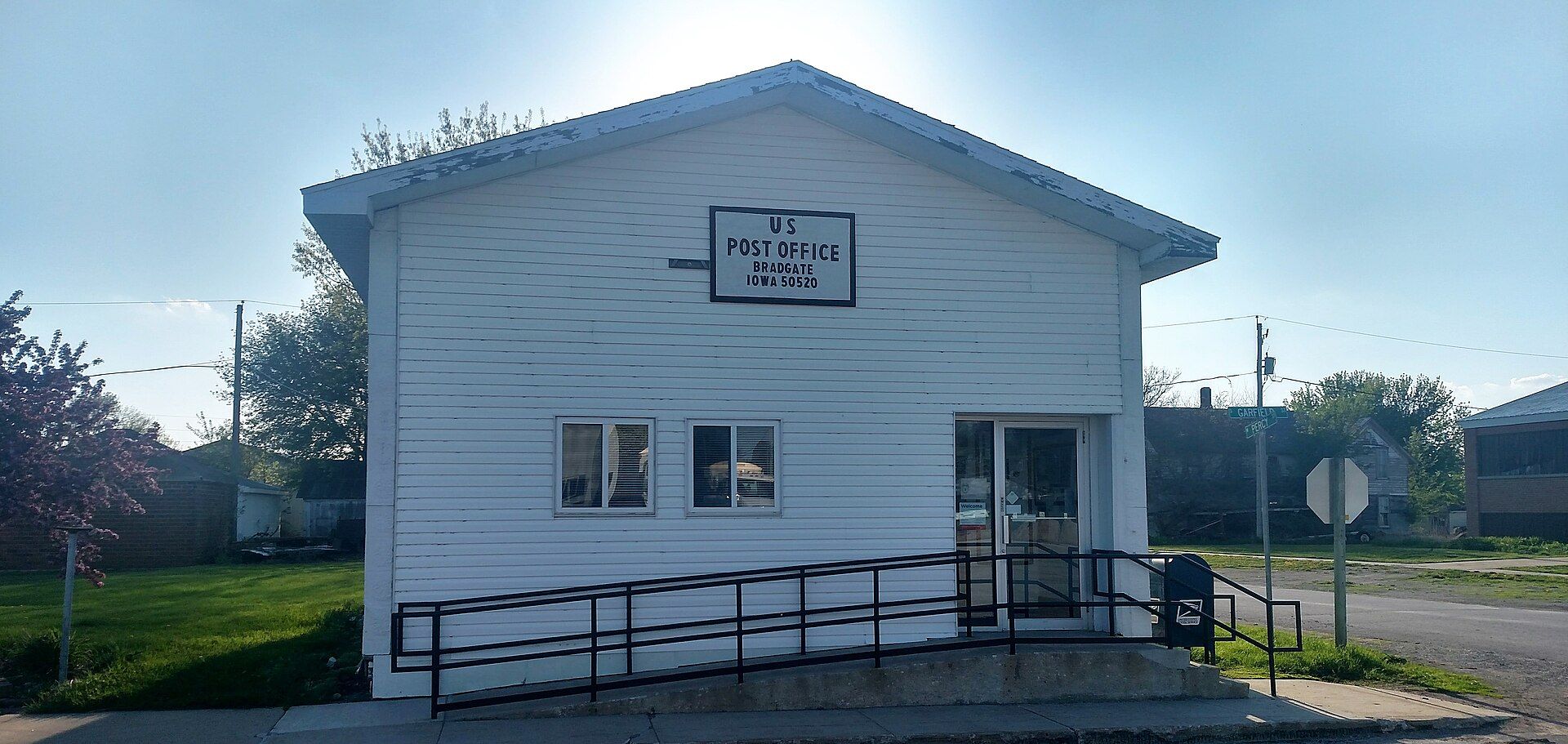
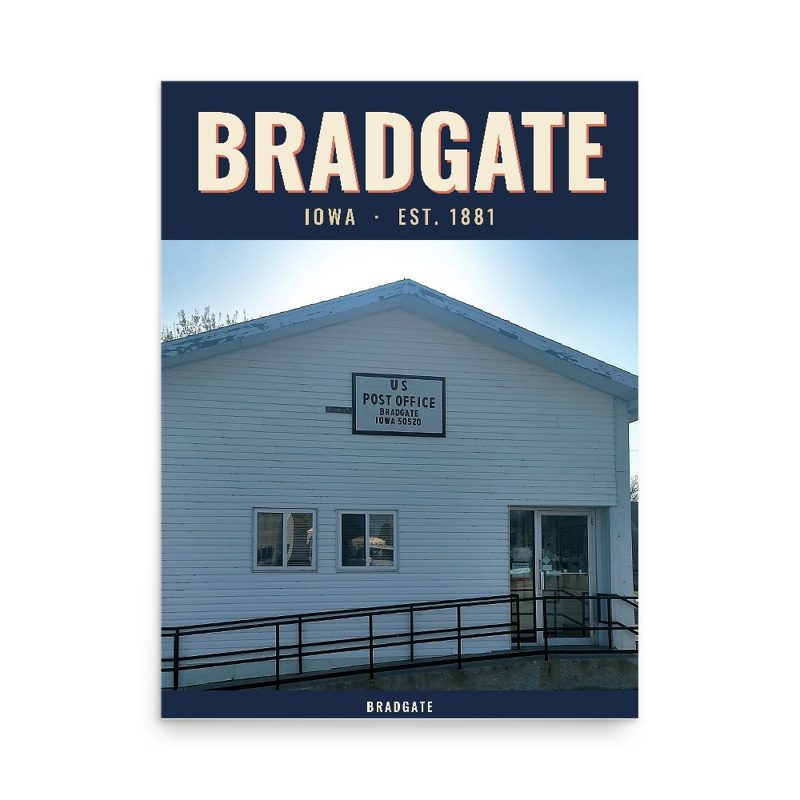
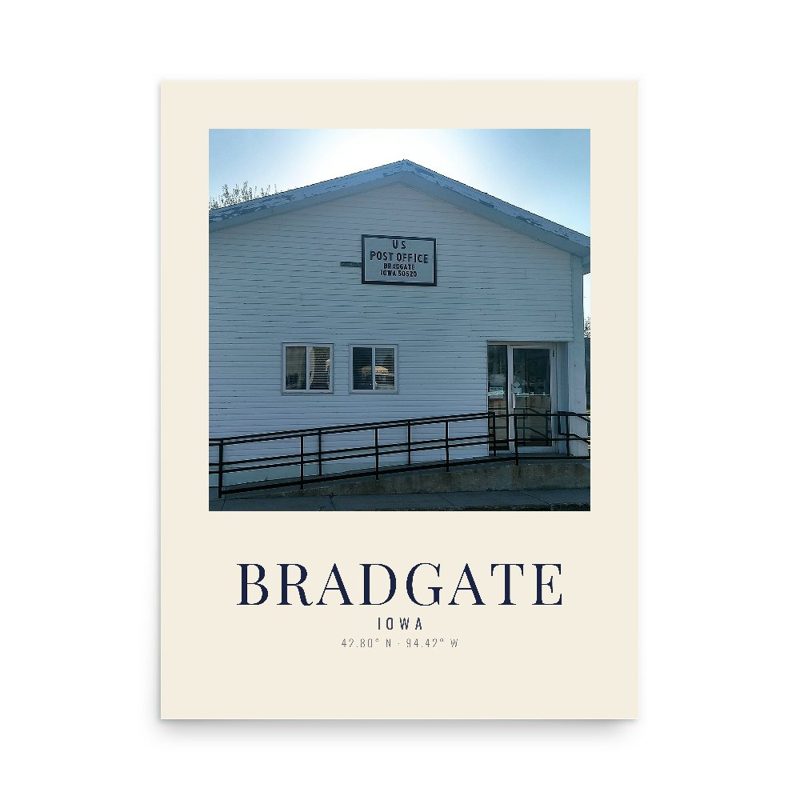
Bradgate was platted by the Western Town Lot Company in 1881–1882 on the Toledo branch of the Chicago and North Western Railway in Avery Township of Humboldt County. The plat was filed for record on March 7, 1882. The post office was established April 7, 1882.
Cord N. King came to Avery Township in 1864 and purchased 247 acres. He farmed this land and operated a grocery store. Much of the land was donated to the railroad by Cord N. King. It was hoped that the terminal would be built at this spot, but after the entire valley of the Des Moines River flooded on July 7, 1881, it was decided to move the terminal to Eagle Grove.
"The town that wouldn’t die"
In the summer of 1950, three people from Life Magazine spent a number of days in Bradgate taking numerous pictures and interviewing nearly everyone for a special profile on a small Iowa town. When the article came to be published, residents were anxious to read the story which profiled their farm community. But when the August 1950 issue appeared, all were disappointed. Bradgate was pictured as a dying town.
This has remained a sore spot in the years since and in 1976, the motto “The town that wouldn’t die” was chosen to commemorate the community's resolve to withstand the dire premonition and continue forward.
Adapted (trimmed) from the Wikipedia article Bradgate, Iowa, revision 1377125250 by its contributors, licensed CC BY-SA 4.0.