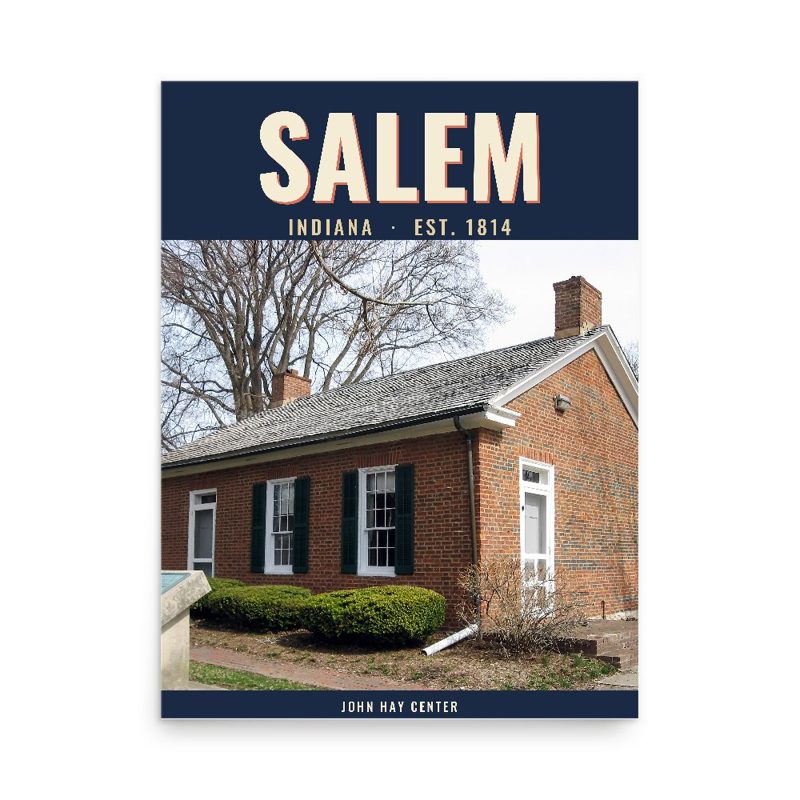
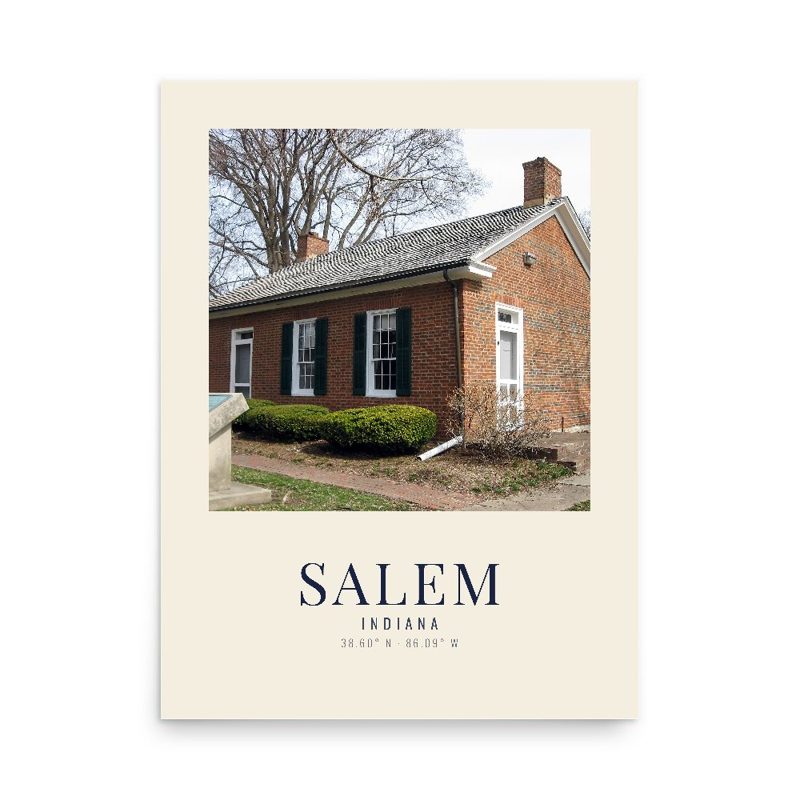
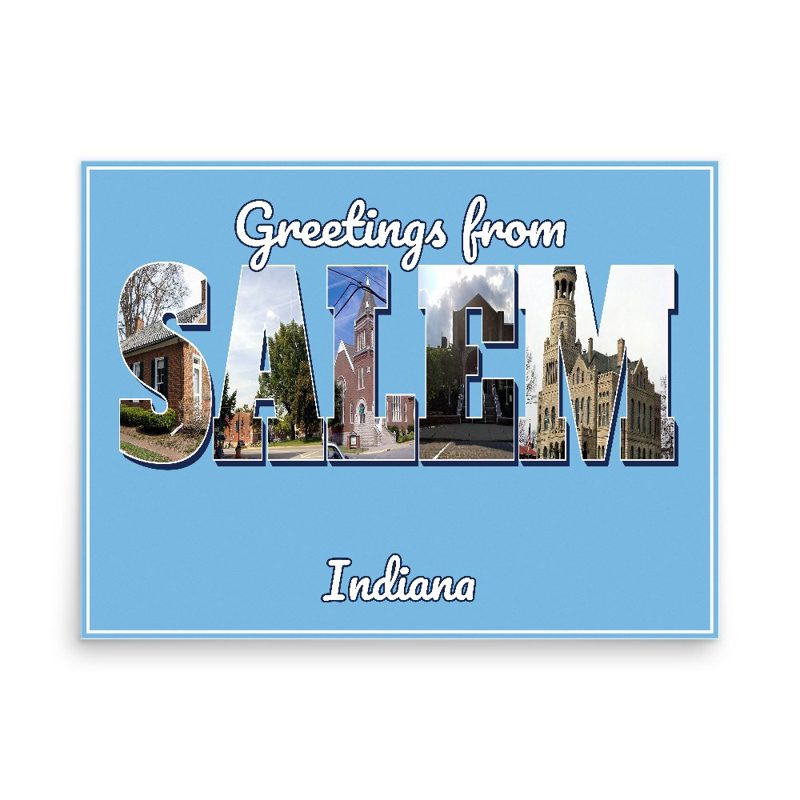
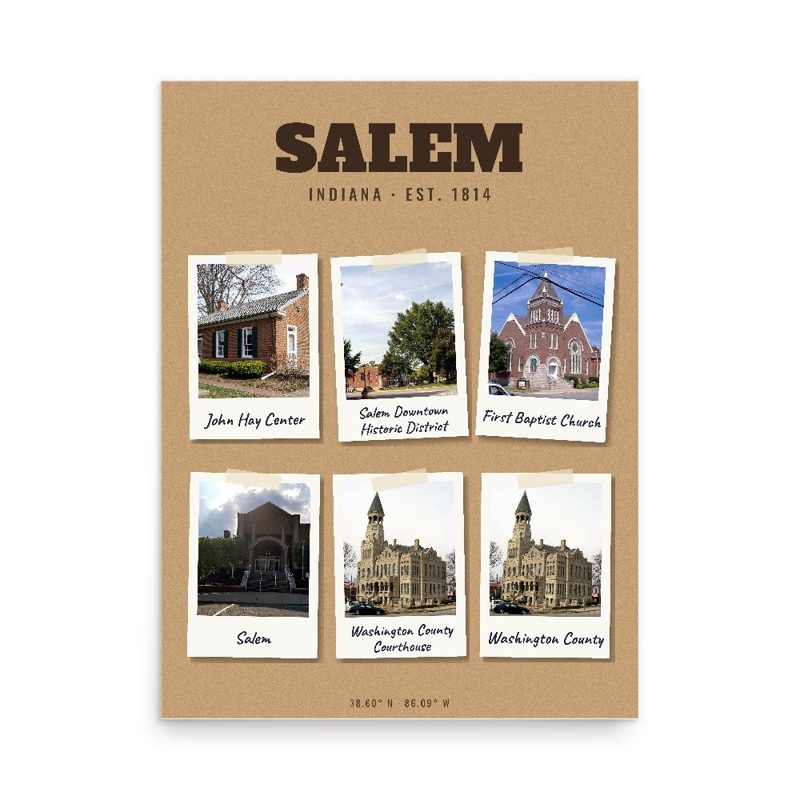
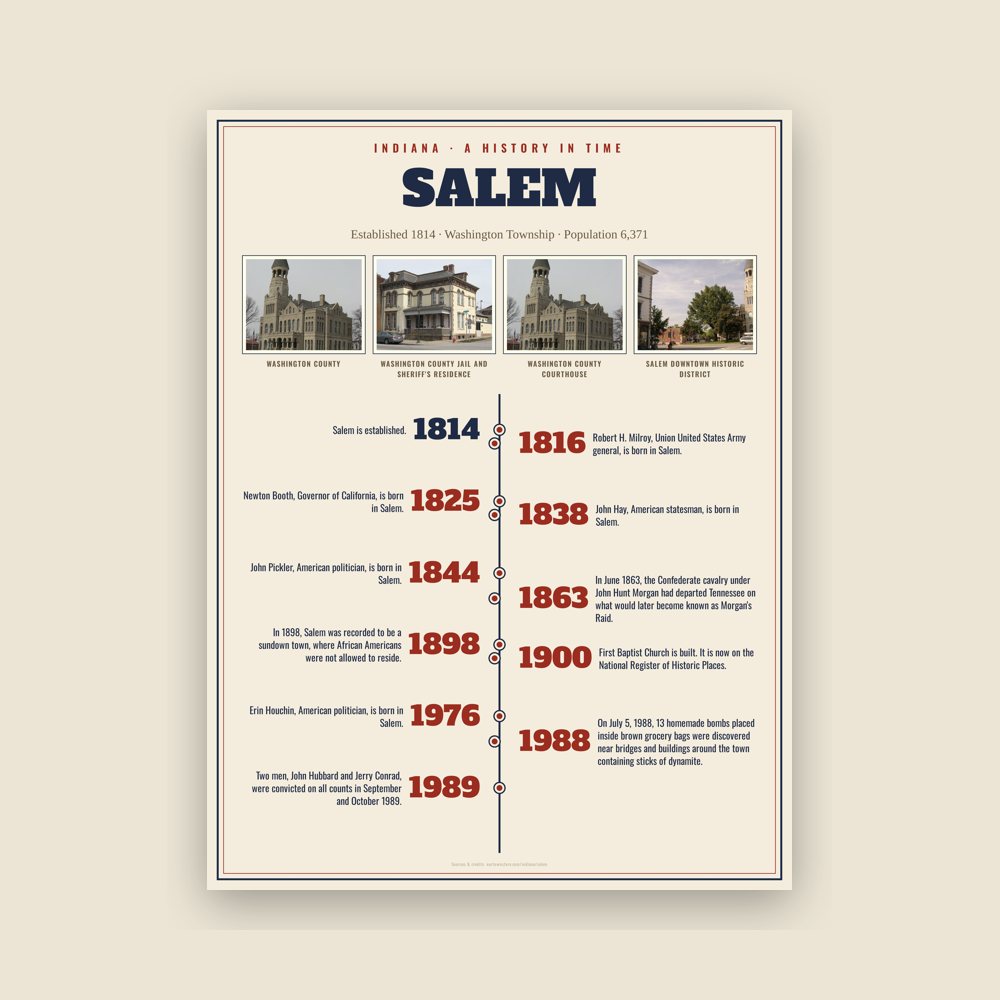
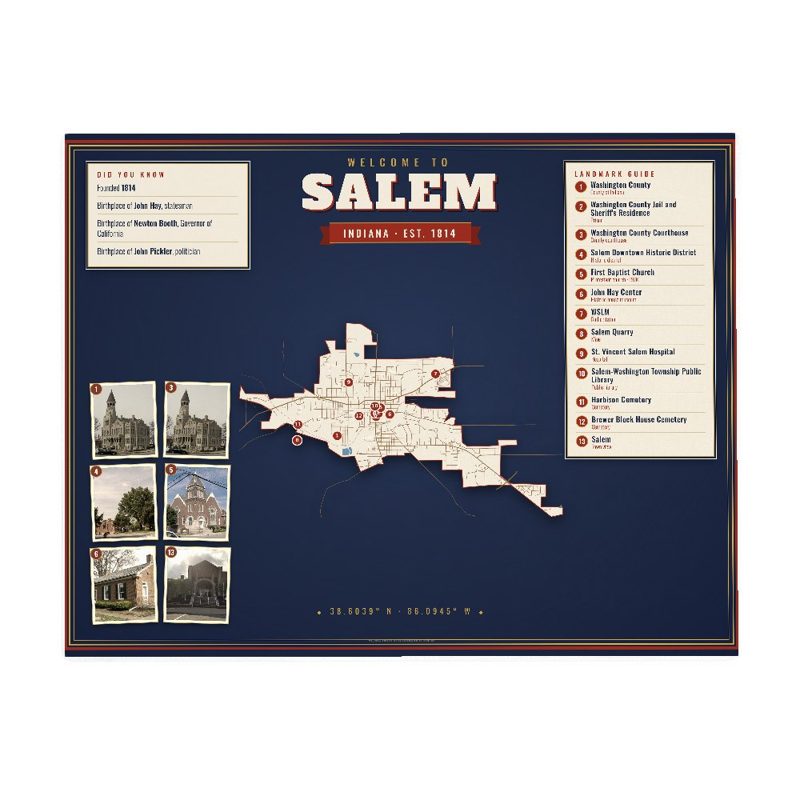
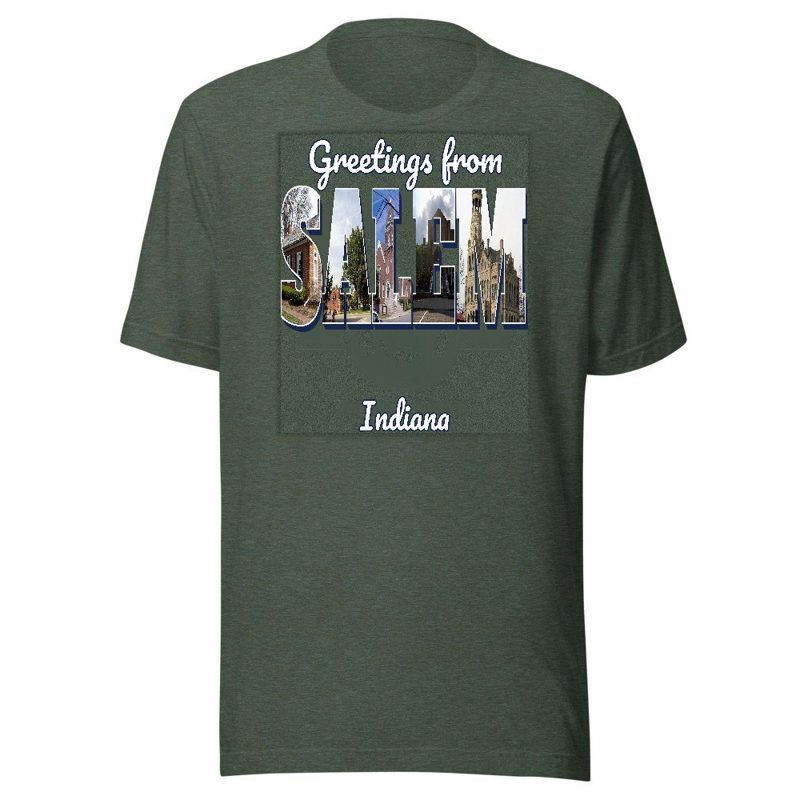
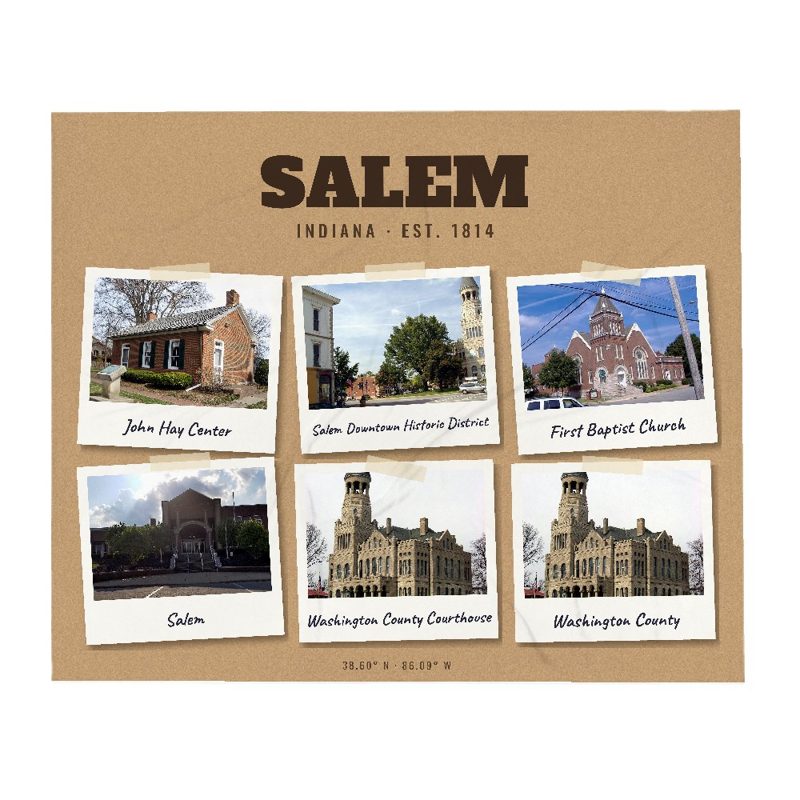
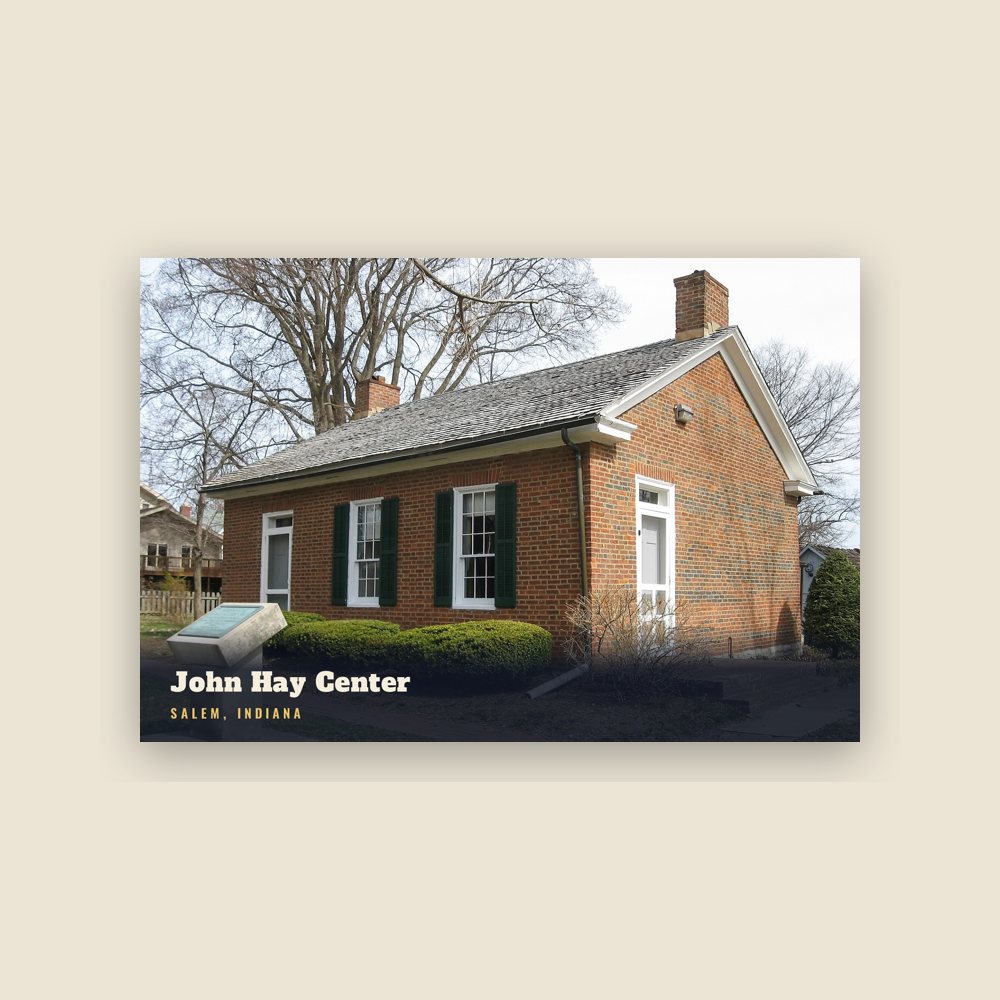
Salem was laid out and platted in 1814. It was named for Salem, North Carolina, the hometown of one of the city founders.
Read the full history
Morgan's Raid
In June 1863, the Confederate cavalry under John Hunt Morgan had departed Tennessee on what would later become known as Morgan's Raid. Traveling through Tennessee and into Kentucky, Morgan eventually crossed into Indiana; he reached Salem on July 10, 1863, coming north from Corydon. Upon entering Salem at approximately 9 a.m., Morgan immediately took possession of the town and placed guards over the stores and streets. The cavalrymen burned the large, brick railroad depot, along with all the train cars on the track and the railroad bridges on each side of the town. Morgan demanded taxes from the two flour mills that belonged to DePauw and Knight, and from the Allen Wollen Mill. Morgan's men looted stores and took about $500 from the area before departing about 3 p.m.
"They did not pillage with any sort of method or reason; it seemed to be a mania, senseless and purposeless. One man carried for two days a bird cage containing three canaries. Another rode with a huge chafing dish on the pommel of his saddle. Although the weather was intensely warm, another slung seven pairs of skates around his neck. I saw very few articles of real value taken; they pillaged like boys robbing an orchard."
African Americans in Salem
In 1898, Salem was recorded to be a sundown town, where African Americans were not allowed to reside. The first Black person who lived in Salem was Alexander White. The minister of the Salem Methodist Episcopal church married Alexander White and his wife Eliza Jane Demars on May 5, 1830. White ran a hotel in Salem. He was murdered in Salem in 1867. The killers were not punished, although one of them, Harvey Zink, was tried for the crime.
1988 bomb scare
On July 5, 1988, 13 homemade bombs placed inside brown grocery bags were discovered near bridges and buildings around the town containing sticks of dynamite. However, due to faulty blasting caps, none of the bombs exploded. Had the explosives gone off, it would have severed the town from outside aid.
Two men, John Hubbard and Jerry Conrad, were convicted on all counts in September and October 1989. Prosecutors allege that Hubbard had a long-standing rivalry with Democratic State Representative Frank Newkirk Jr.