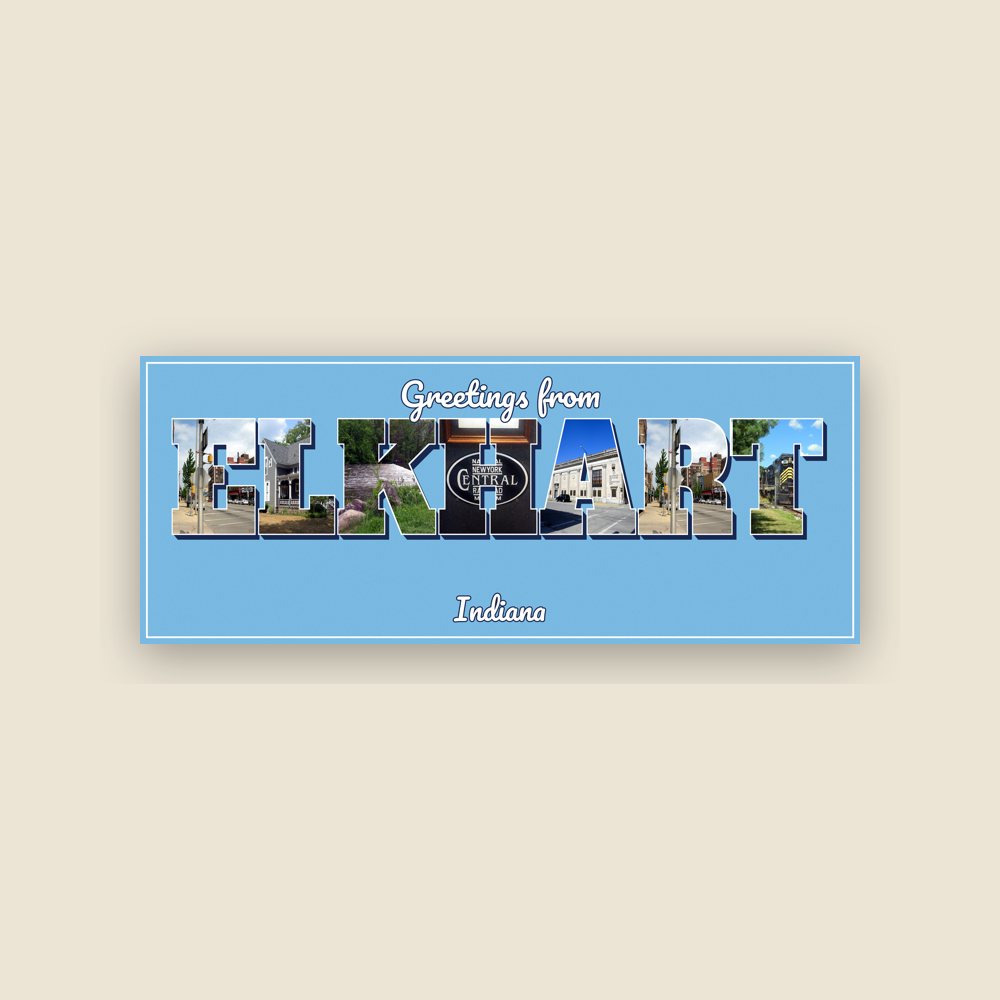
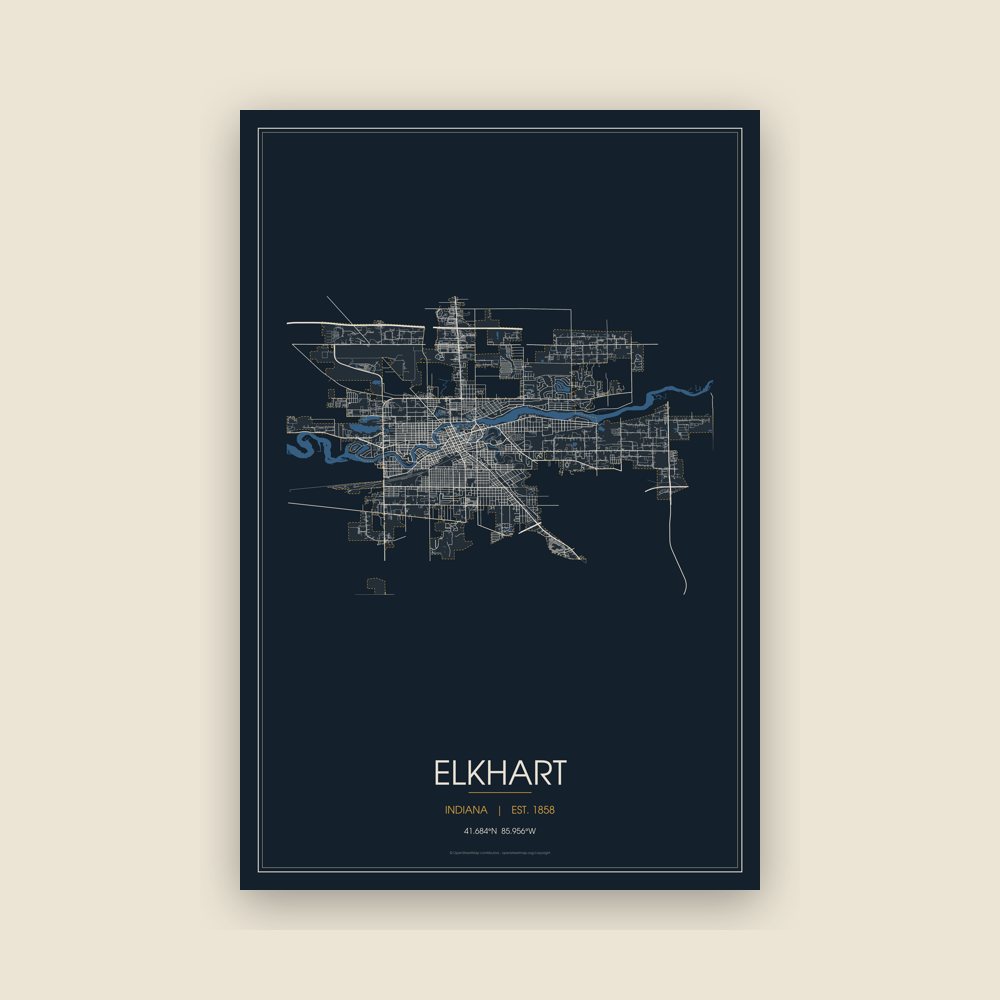
Since 1858
A short history of Elkhart
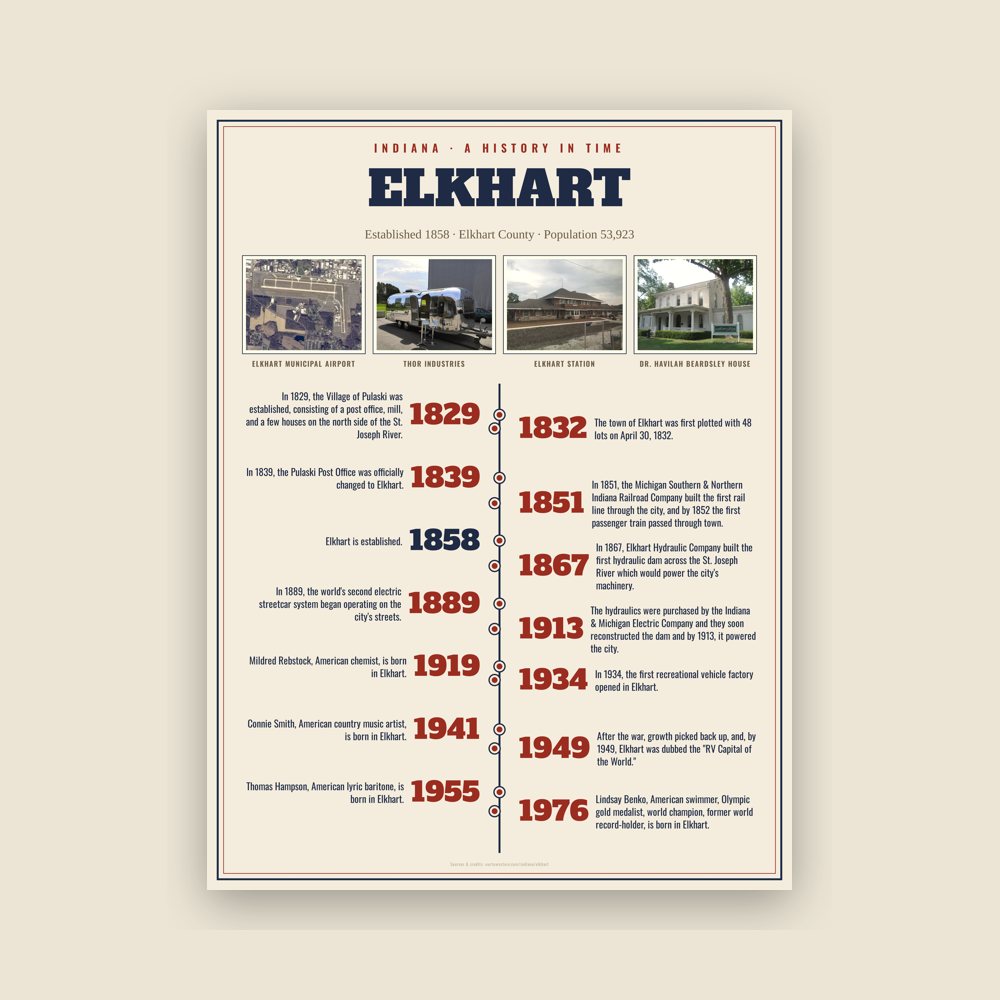
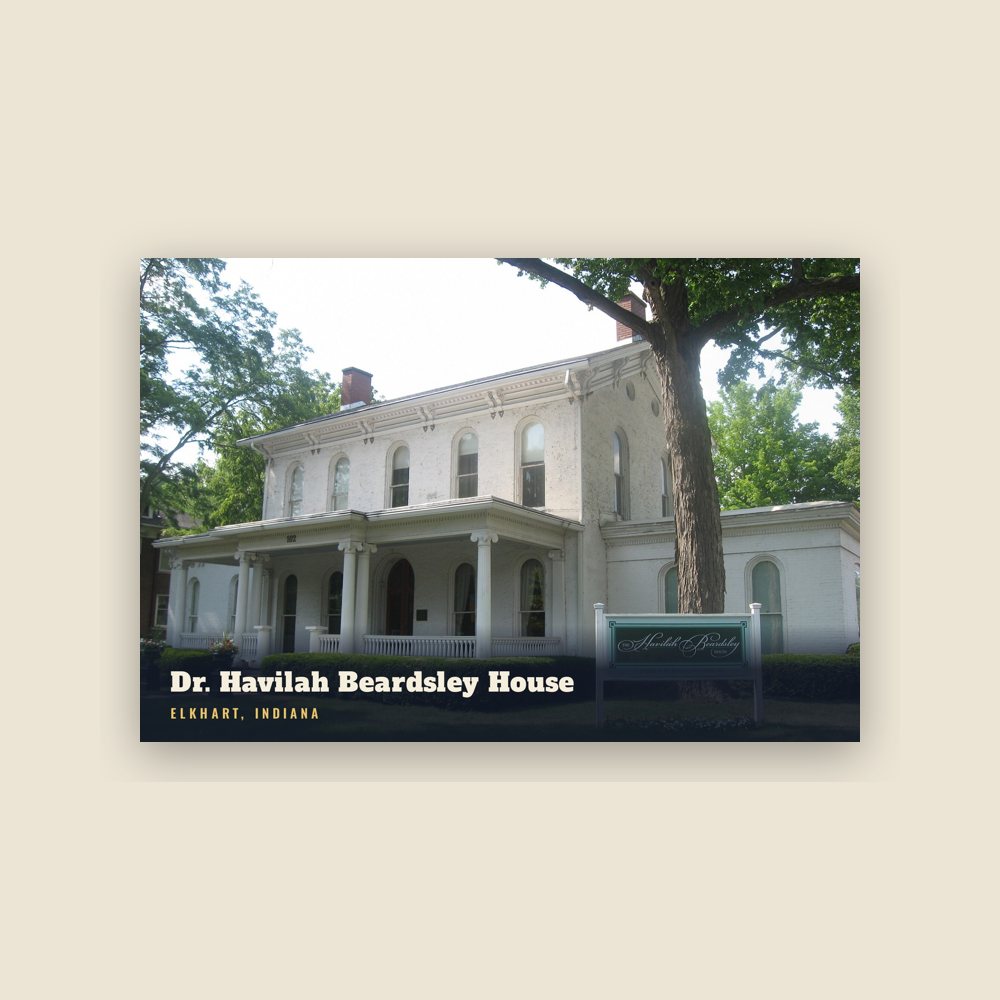
In 1829, the Village of Pulaski was established, consisting of a post office, mill, and a few houses on the north side of the St. Joseph River. Dr. Havilah Beardsley moved westward from Ohio, and on August 9, 1821, purchased one square mile of land from Pierre Moran (a half-French, half-Native American Potawatomi Chief) in order to establish a rival town named Elkhart. The town of Elkhart was first plotted with 48 lots on April 30, 1832. In 1839, the Pulaski Post Office was officially changed to Elkhart. Elkhart was incorporated as a town in 1858 and in 1875 as a city.
Elkhart County was founded exclusively by immigrants from New England. These were old-stock "Yankee" immigrants, that is to say, they were descended from the English Puritans who settled New England in the 1600s. The completion of the Erie Canal caused a surge in New England immigration to what was then the Northwest Territory. The end of the Black Hawk War led to an additional surge of immigration, once again coming almost exclusively from the six New England states as a result of overpopulation combined with land shortages in that region. Some of these later settlers were from upstate New York and had parents who had moved to that region from New England shortly after the Revolutionary War. New Englanders and New England transplants from upstate New York were the vast majority of Elkhart County's inhabitants during the first several decades of its history. These settlers were primarily members of various Protestant religions.
Many inhabitants of Elkhart County fought in the Union Army during the Civil War. In the late 1880s and early 1890s Irish and German migrants began moving into Elkhart County. Most of these later immigrants did not move directly from Ireland and Germany, but rather from other areas in the Midwest where they had already been living, particularly the state of Ohio.
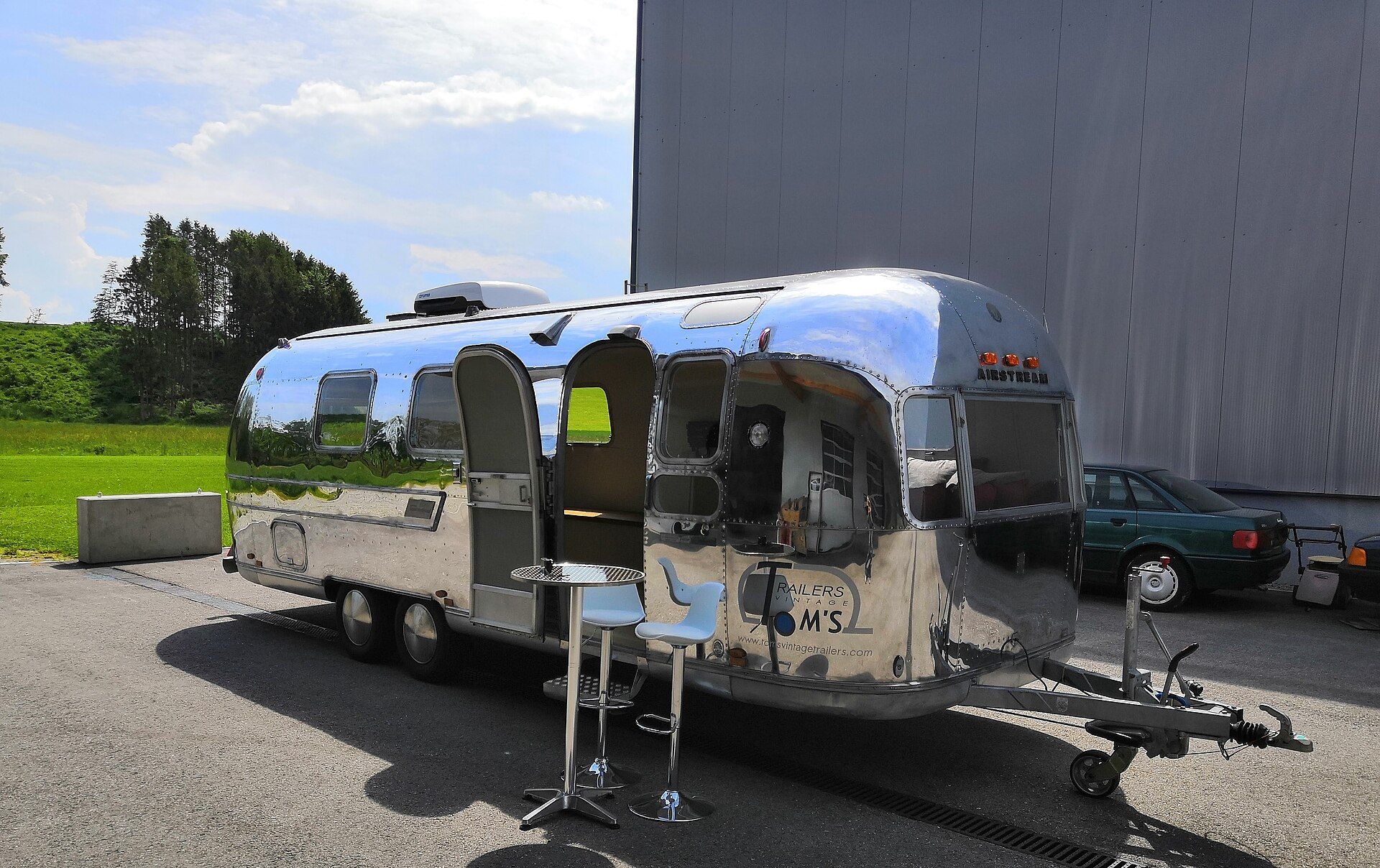
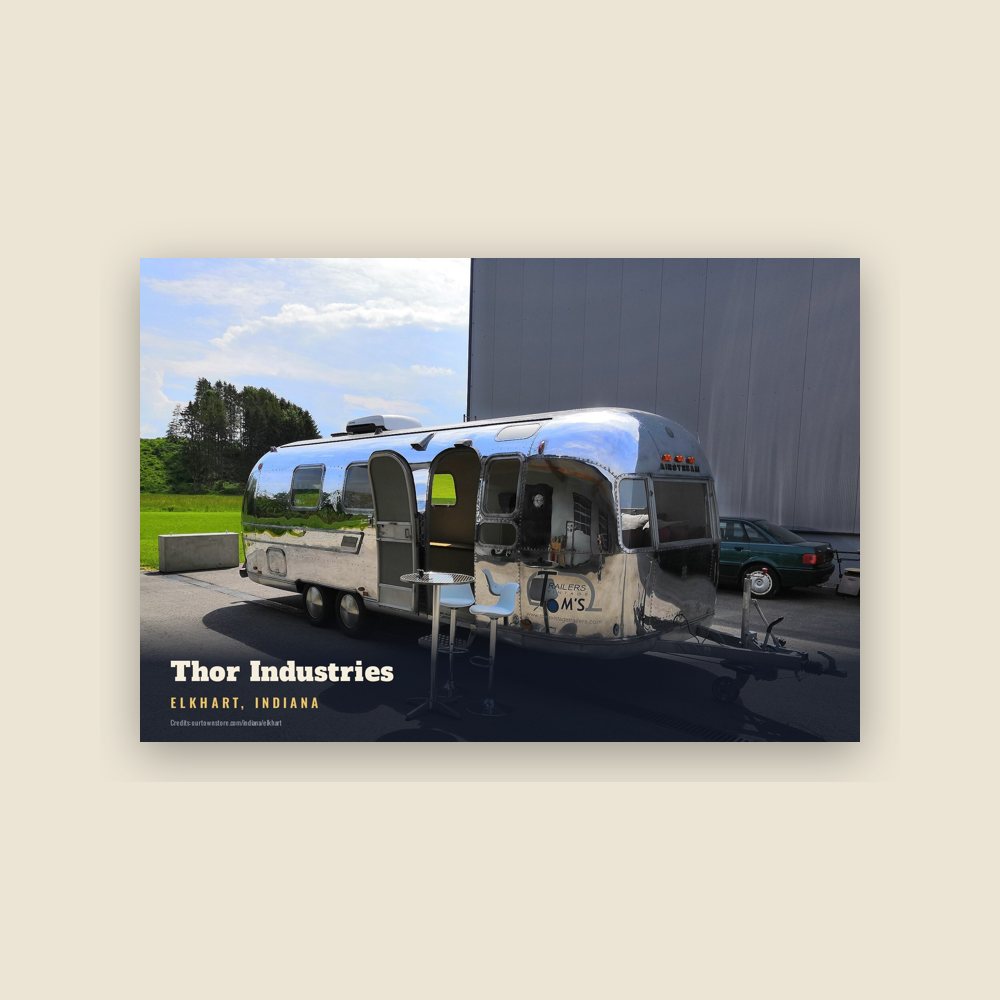
By the early 20th century, musical instrument factories, Miles Laboratories (originally Dr. Miles Medical Company), and numerous mills had set up shop and become the base of the economy. In 1934, the first recreational vehicle factory opened in Elkhart. Similar companies followed suit for the remainder of the decade, and the economy continued to grow until the rationing of materials in World War II. After the war, growth picked back up, and, by 1949, Elkhart was dubbed the "RV Capital of the World."
Read the full history
Infrastructure
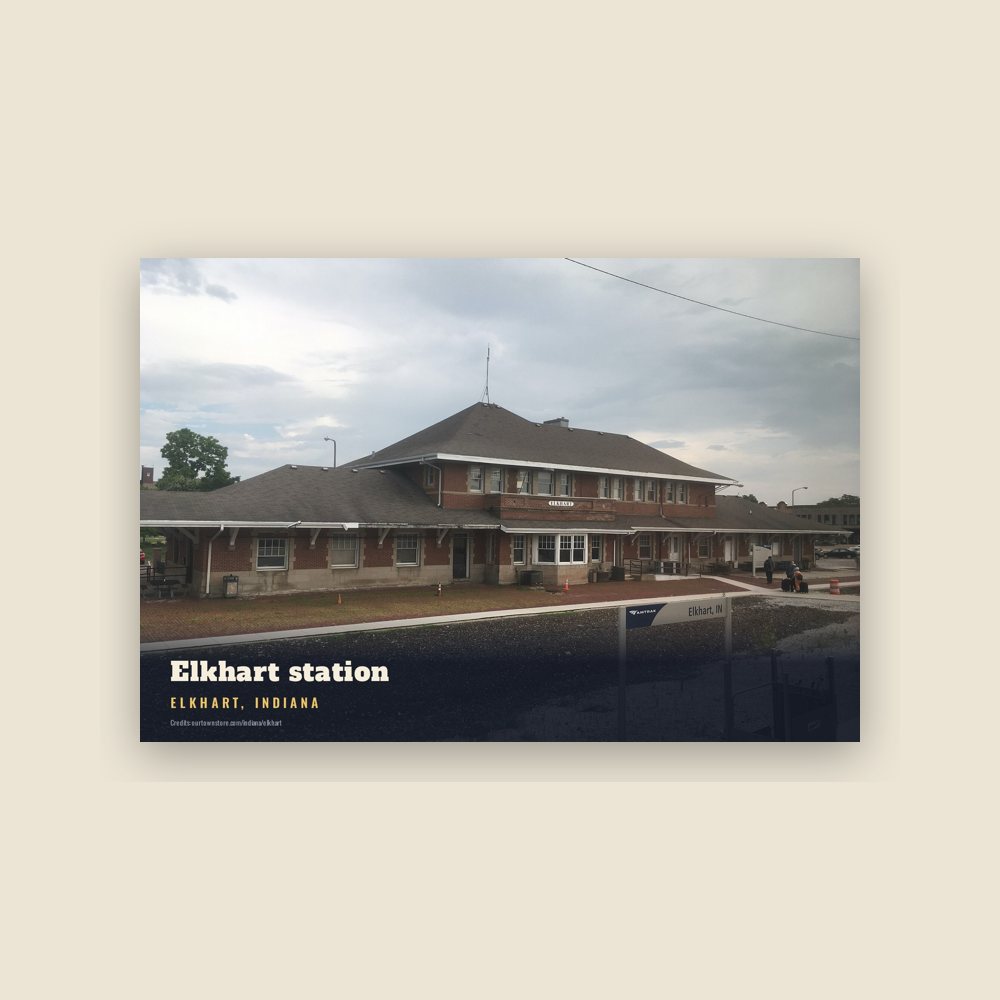
In 1851, the Michigan Southern & Northern Indiana Railroad Company built the first rail line through the city, and by 1852 the first passenger train passed through town. This, in turn, caused major population growth. Today, Norfolk Southern has the biggest railroad presence in town, although Elkhart has two other railroads: Shortline-Elkhart and Western (operated by Pioneer Railcorp) and Regional-Grand Elk (operated by Watco). Amtrak has two trains that stop in Elkhart, Lake Shore Limited and Capitol Limited, both of which stop at the Elkhart station. Canadian Pacific runs 6-8 trains through town on Norfolk Southern's trackage.
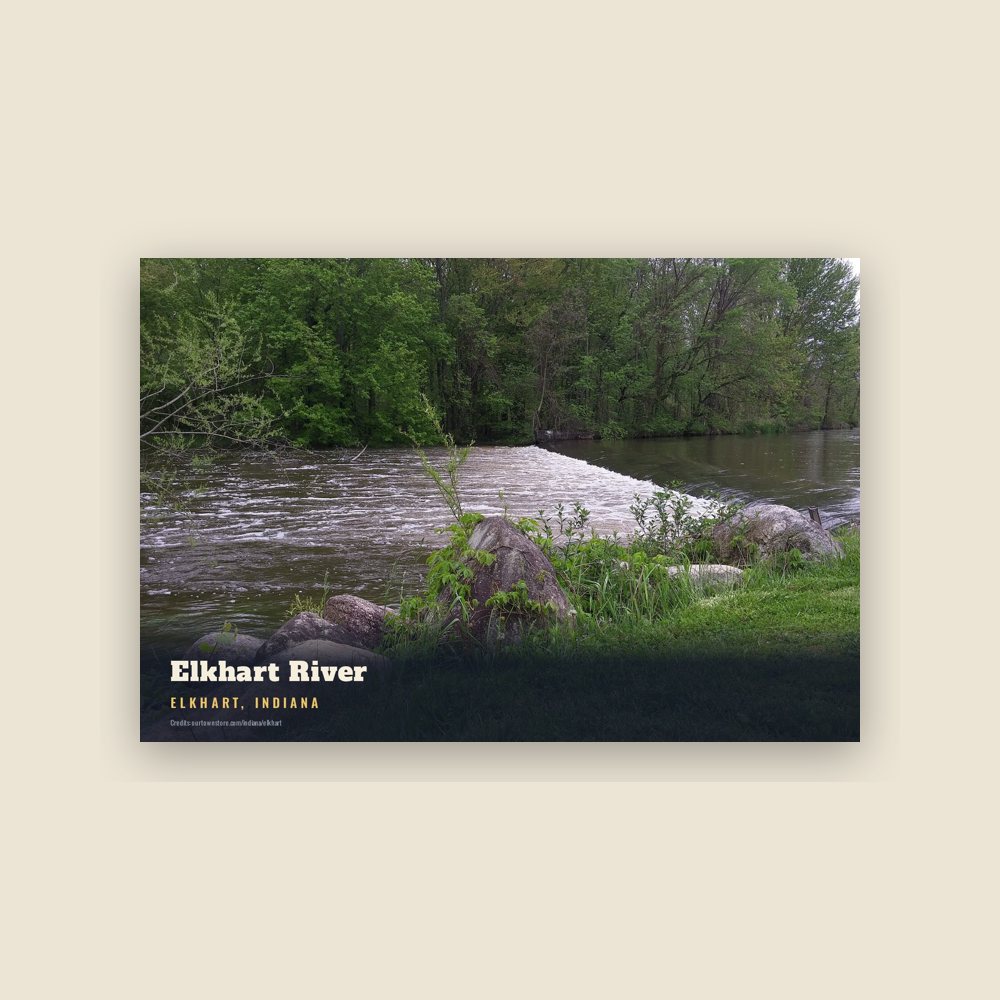
In 1867, Elkhart Hydraulic Company built the first hydraulic dam across the St. Joseph River which would power the city's machinery. Unfortunately, the hydraulics were prone to flooding as was common in those days, the wooden structures were eventually destroyed by fire. The hydraulics were purchased by the Indiana & Michigan Electric Company and they soon reconstructed the dam and by 1913, it powered the city. Today, the dam still produces electric power and is operated by Indiana Michigan Power, a subsidiary of American Electric Power.
In 1889, the world's second electric streetcar system began operating on the city's streets. It has since been decommissioned.
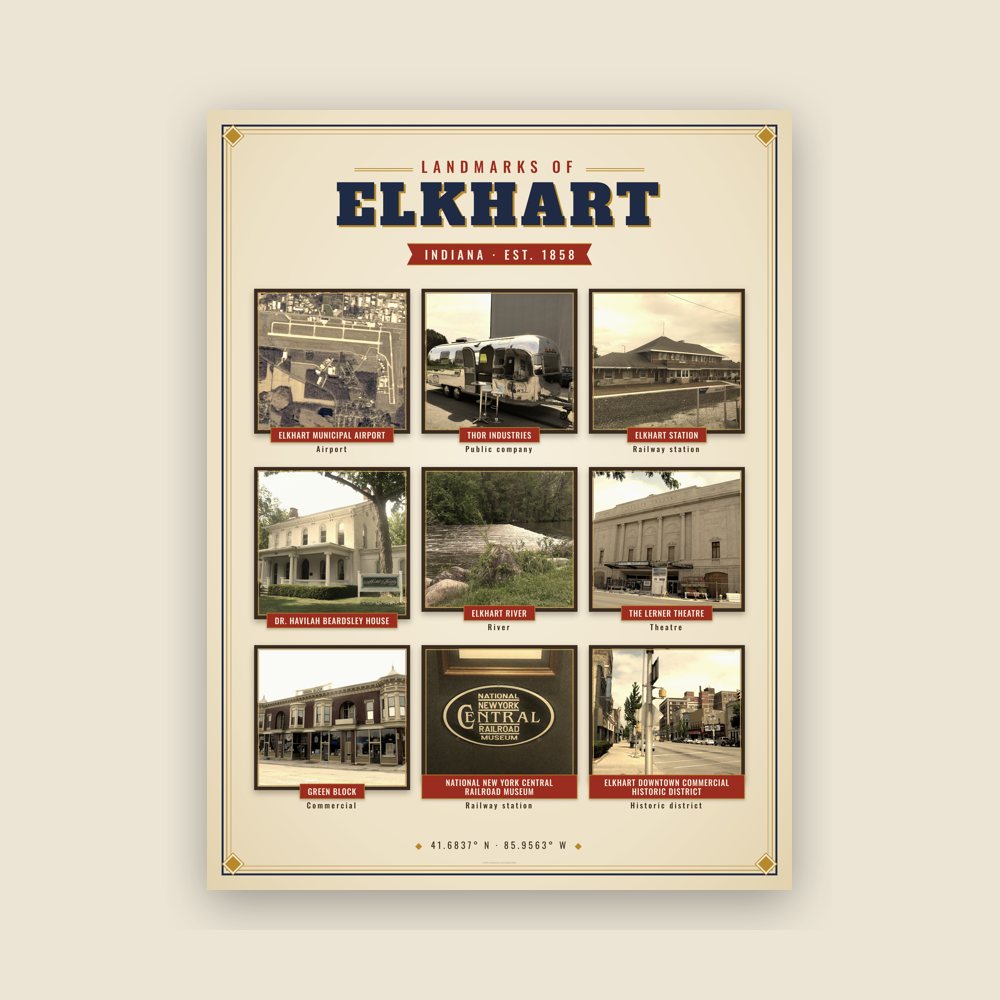
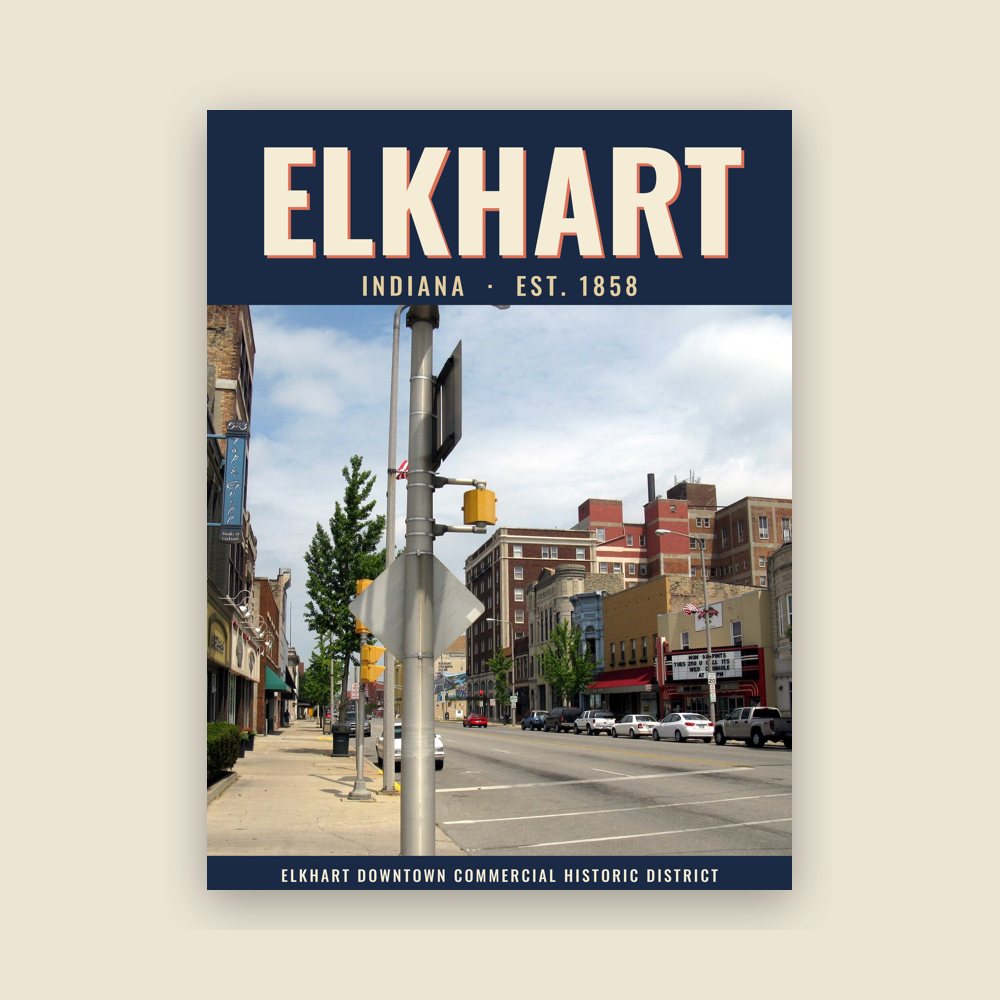
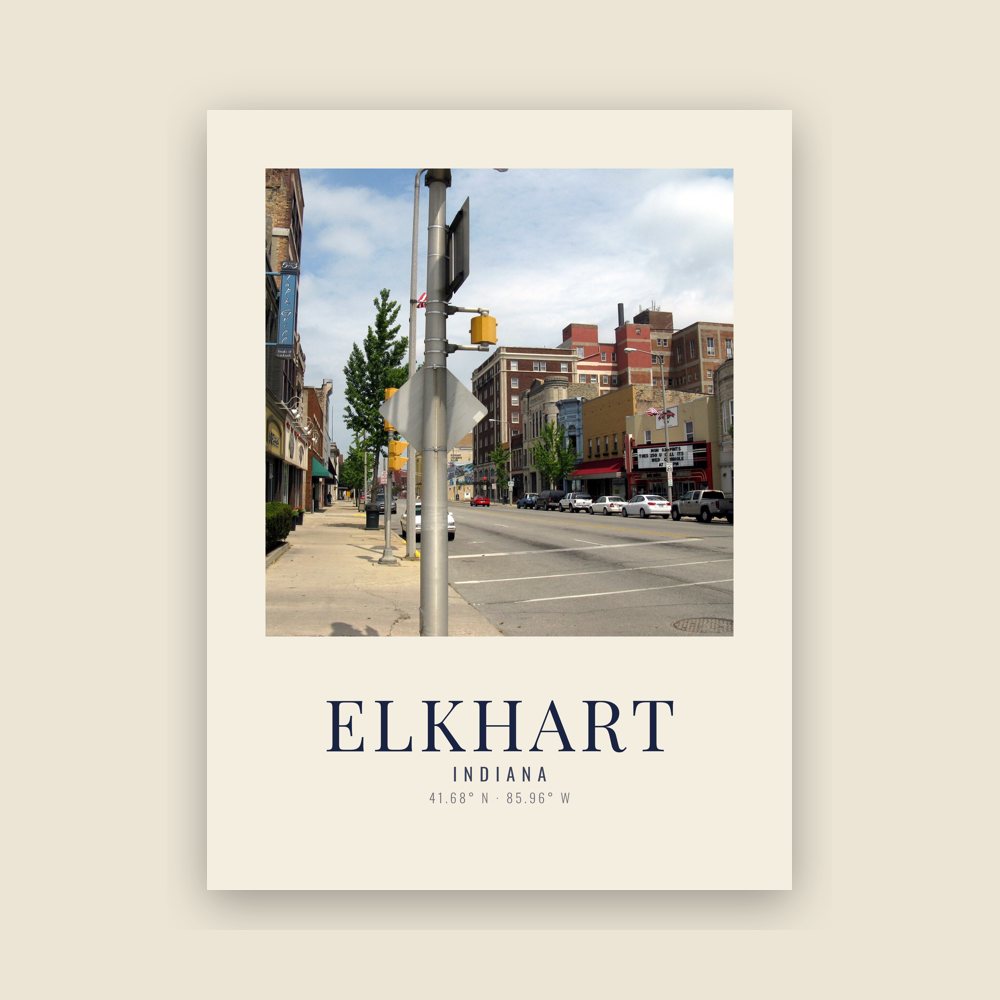
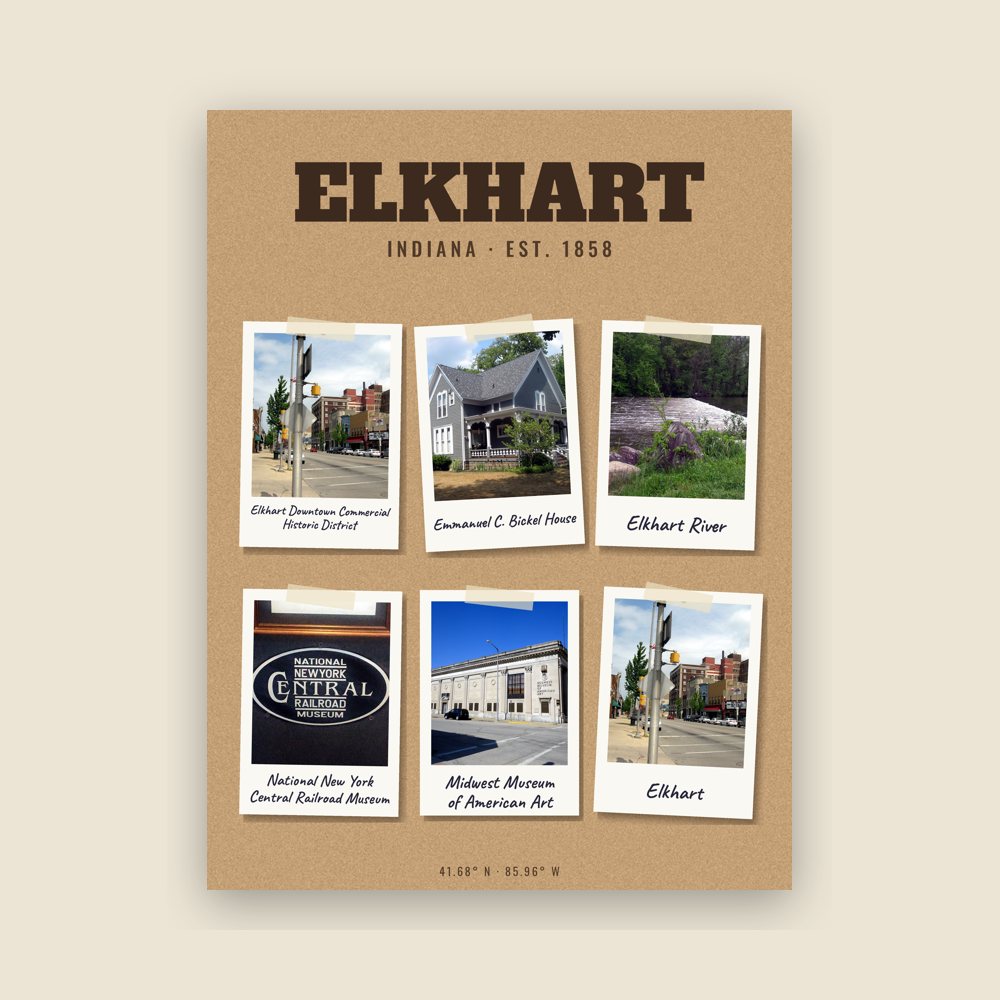
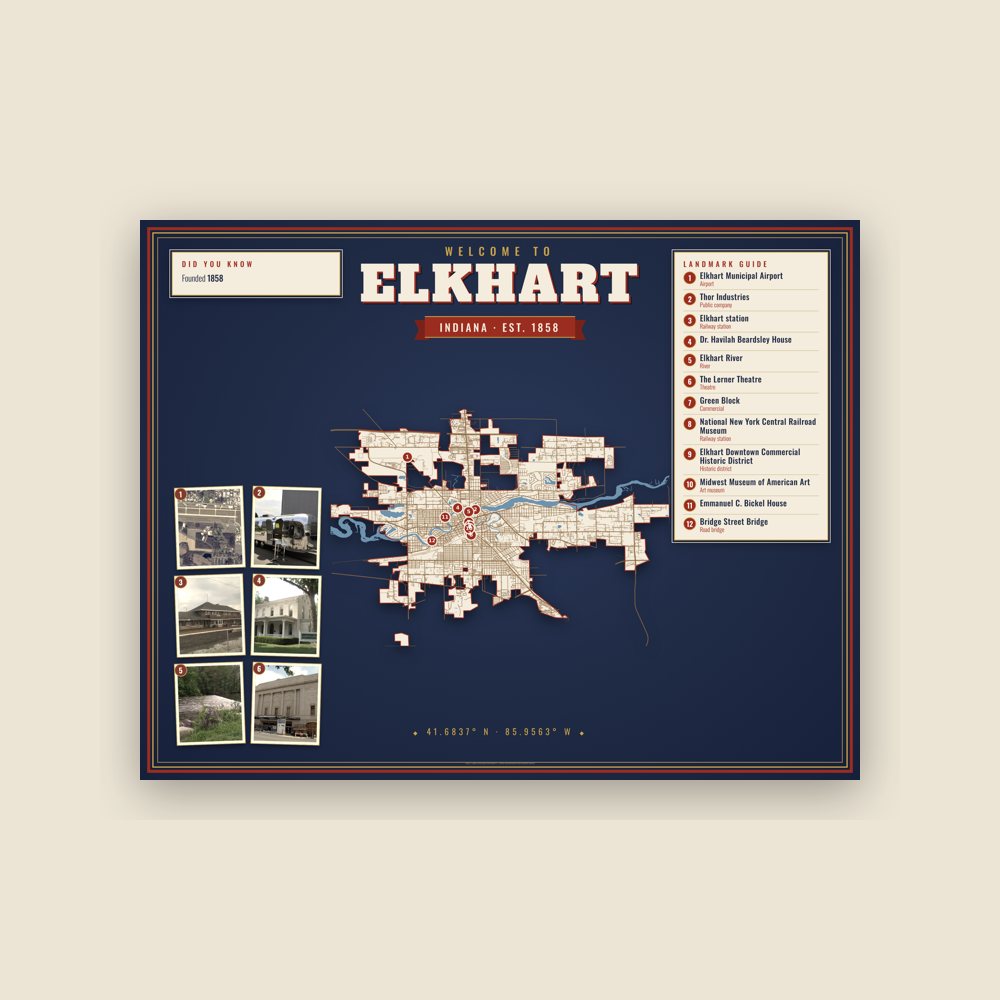
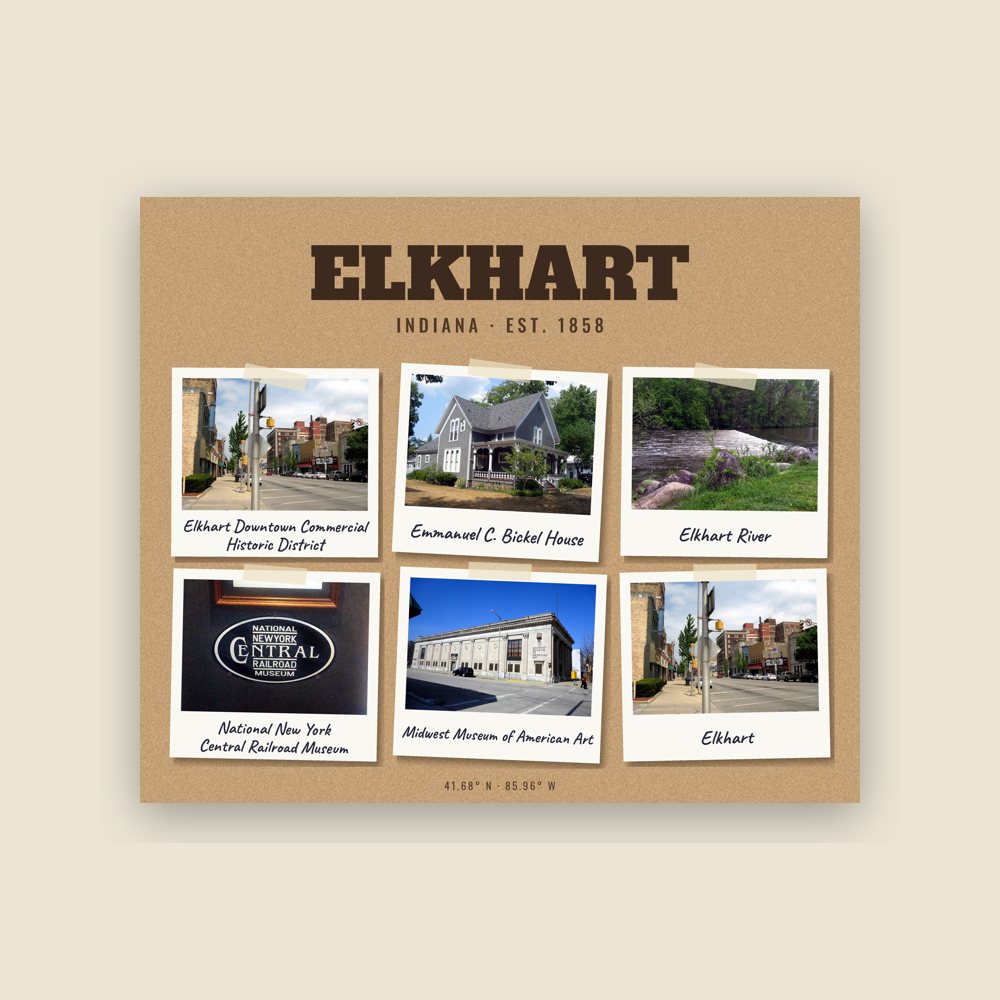
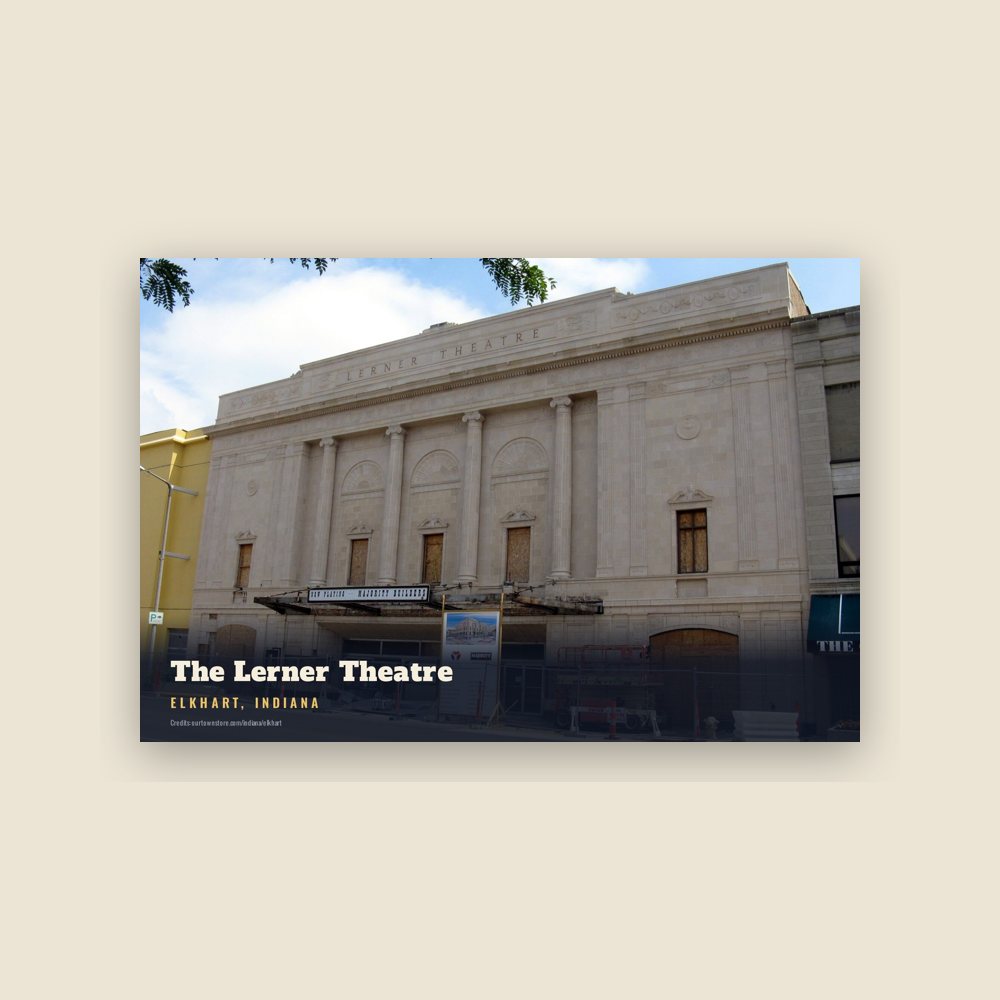
The Beardsley Avenue Historic District, Albert R. Beardsley House, Dr. Havilah Beardsley House, Emmanuel C. Bickel House, Bridge Street Bridge, Charles Gerard Conn Mansion, Elkhart Downtown Commercial Historic District, Green Block, William and Helen Koerting House, Lerner Theatre, Mark L. and Harriet E. Monteith House, Morehous Residential Historic District, State Street-Division Street Historic District, and Young Women's Christian Association are listed on the National Register of Historic Places.
Name
The name Elkhart is a deliberate misspelling or corruption of "Elks-heart", which refers to the now extinct Eastern elk. The name has been attached to the Elkhart River and surrounding area since at least 1749, when it was recorded in French as Coeur de cerf ("elk's heart") as the name of a Miami village there. The place name in Miami-Illinois is mihšiiwiateehi ("elk's heart"). Later in the 18th century the area was inhabited by the Potawatomi; in the Potawatomi language, the place is likewise known as mzewəodeʔig, "at the elk heart".
The name may reflect a prehistoric association of the Elkhart area with the Kaskaskia people, whom the Miami called "elk hearts". The Kaskaskia are not associated with the area in any historical records, however, having been pushed further south and west by the wars of the 17th century.
Other explanations have been suggested. According to an account by two Miami leaders (Jean Baptiste Richardville and Le Gros) recorded in 1824, the name arose from two women fighting over an elk's heart that had been hung up to dry. Alternatively, some historians including Jacob Piatt Dunn have associated the name with the shape of an island in the Elkhart River that is stated to resemble an elk's heart.
Adapted (trimmed) from the Wikipedia article Elkhart, Indiana, revision 1371740773 by its contributors, licensed CC BY-SA 4.0.