Cart 0
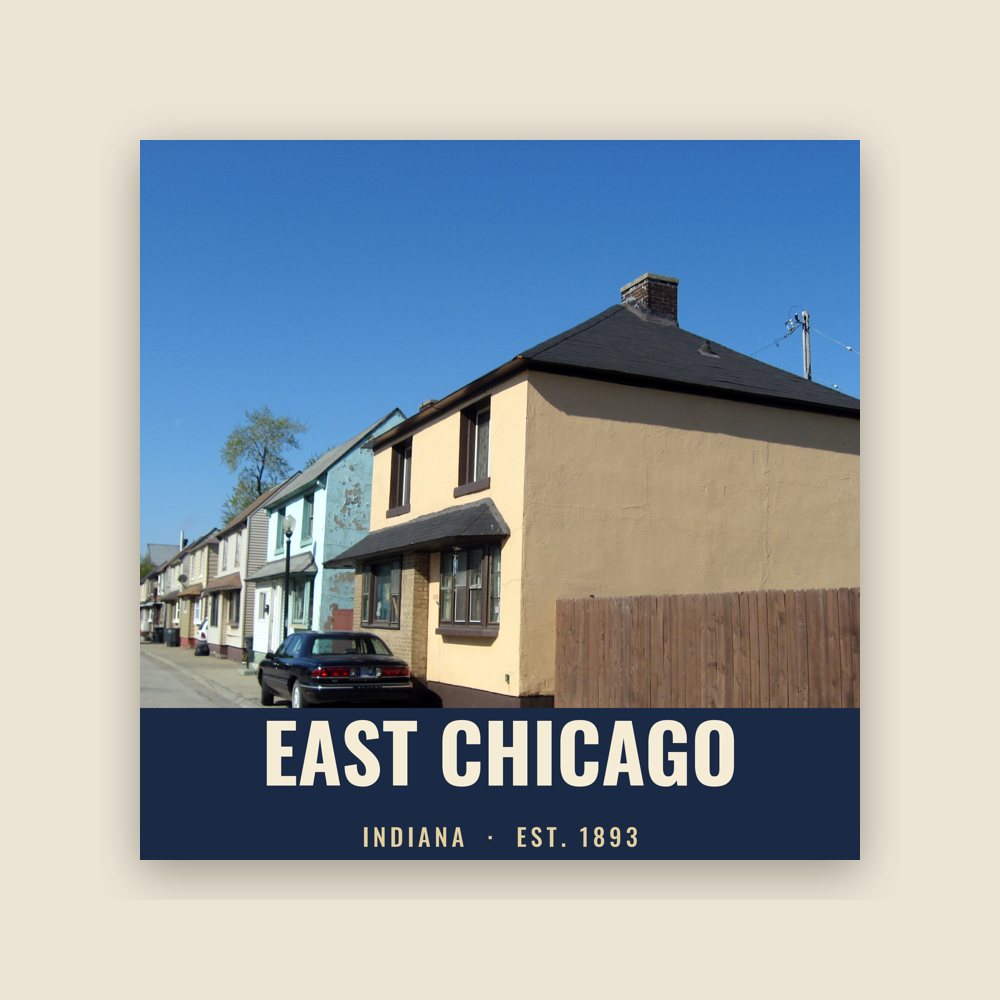
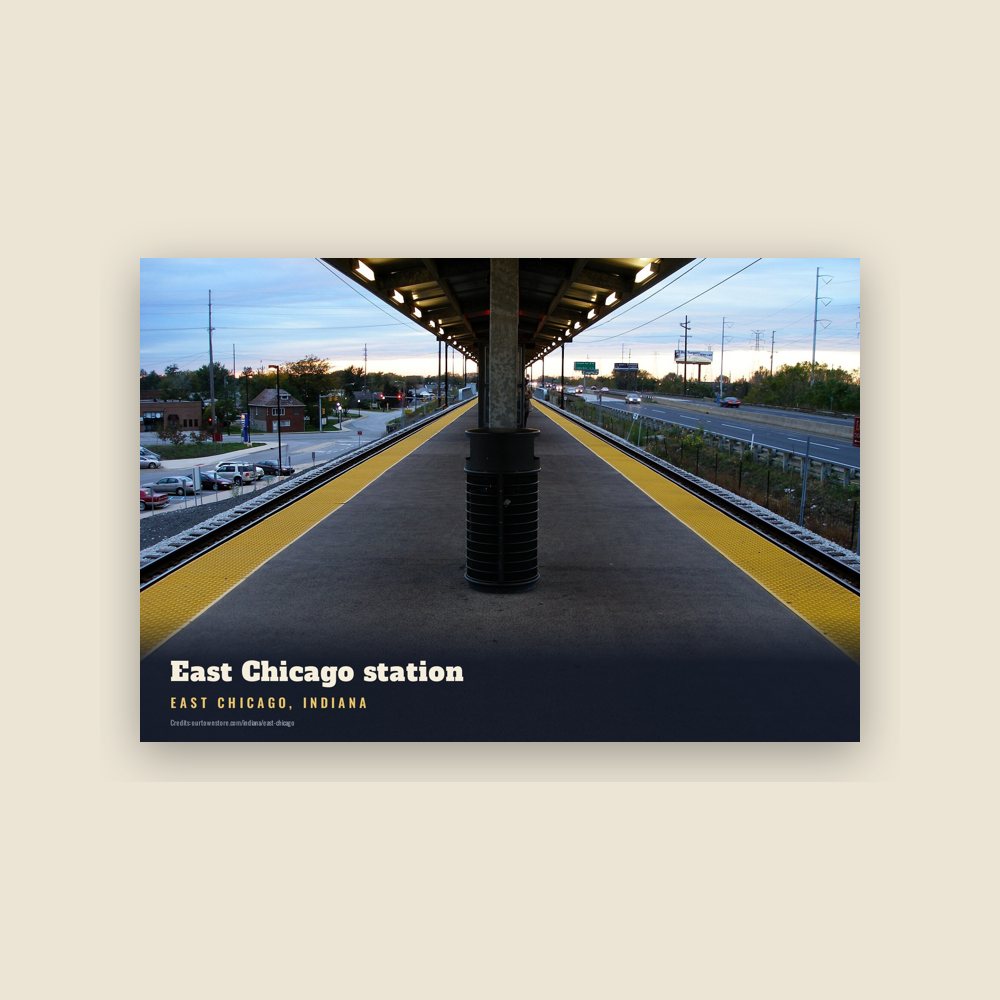
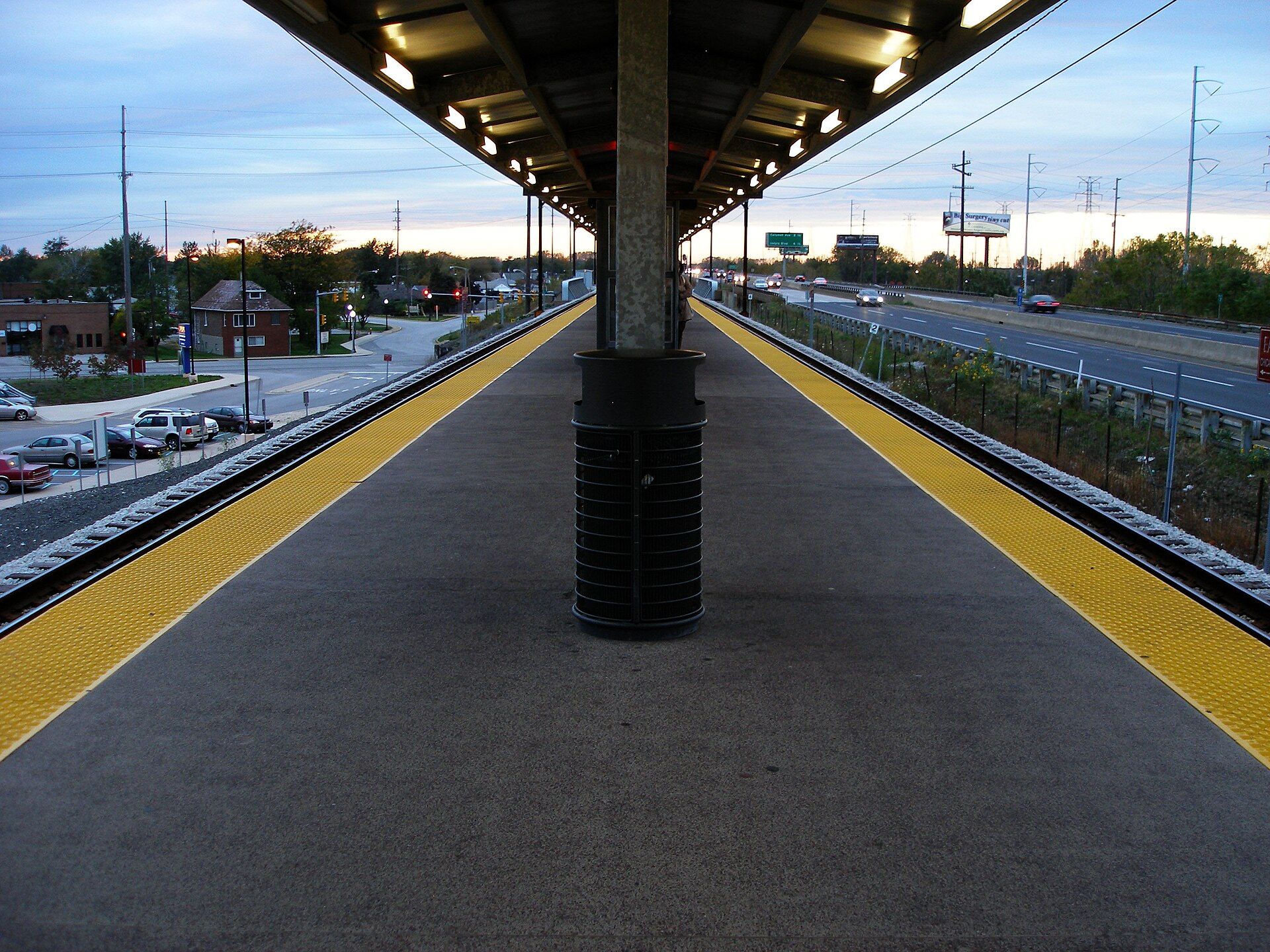
East Chicago station, East Chicago, Indiana

EAST CHICAGO

Indiana · Est. 1893
Shop the collection
The East Chicago Collection

Made for East Chicago. Printed to order.

East Chicago, Indiana gifts and souvenirs: 34 designs made from East Chicago's own map, landmarks and history, from $10 to $99. Printed to order and shipped free in the USA.

PopularPrice
East Chicago Hometown Ornament$23
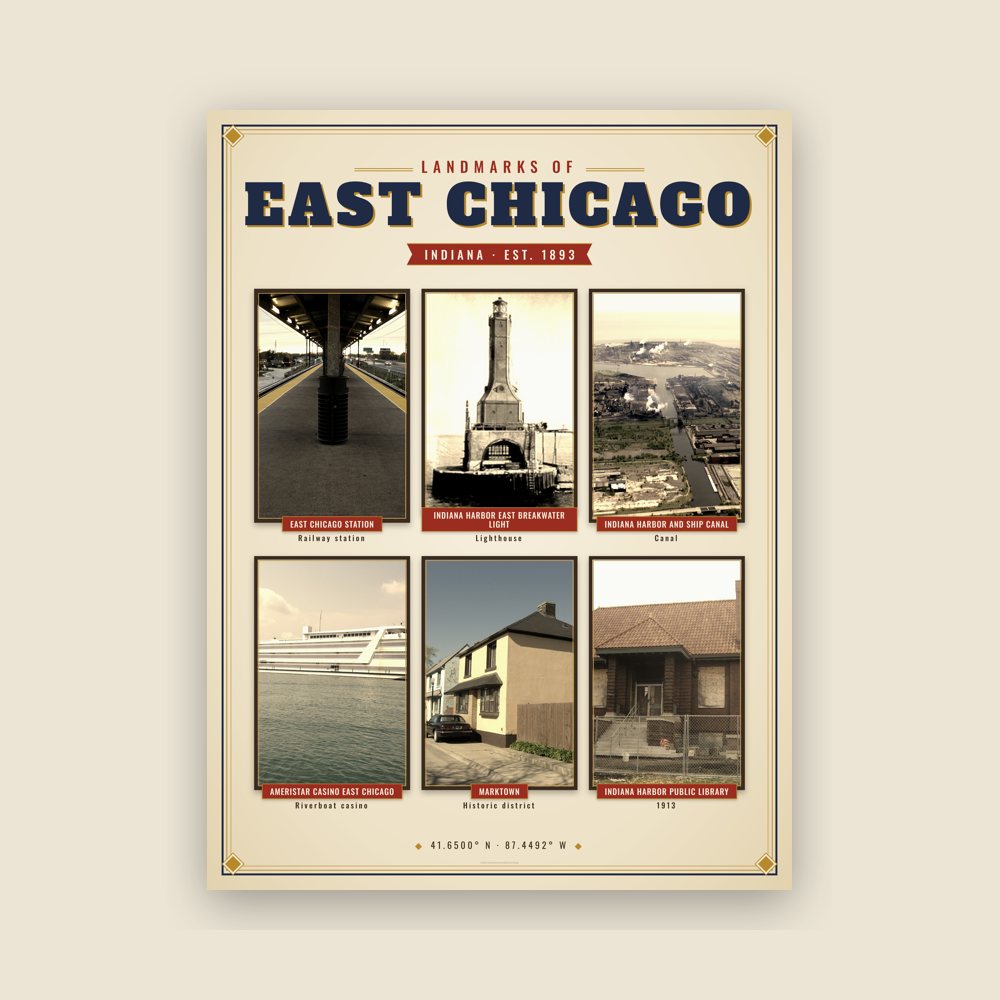
East Chicago Landmarks Photo Posterfrom $40
East Chicago Vintage Travel Posterfrom $40
East Chicago Varsity Crewneckfrom $57
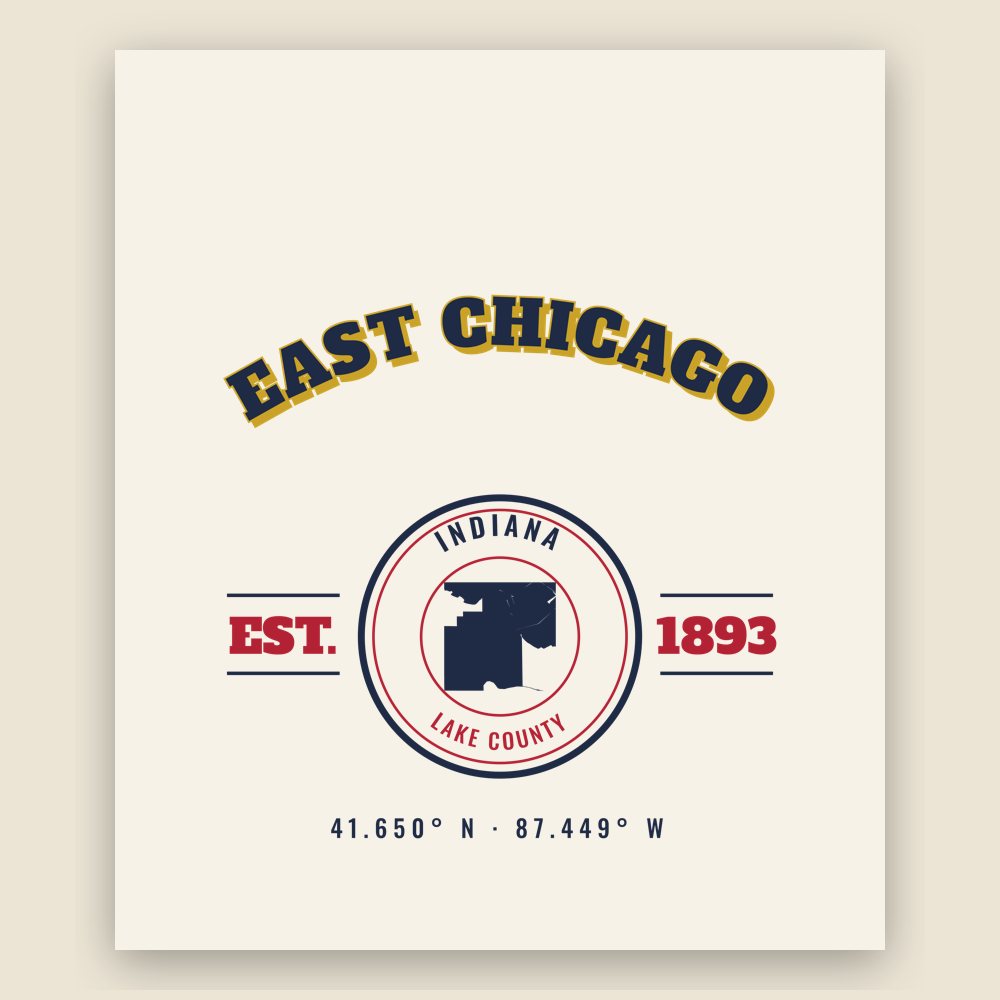
East Chicago Est. Teefrom $33
East Chicago Town Line Mugfrom $26
East Chicago Hometown Ornament

East Chicago Hometown Ornament

Ceramic keepsake, gold ribbon

$23
East Chicago Landmarks Photo Poster

East Chicago Landmarks Photo Poster

Nine local landmarks, archival matte

from $40
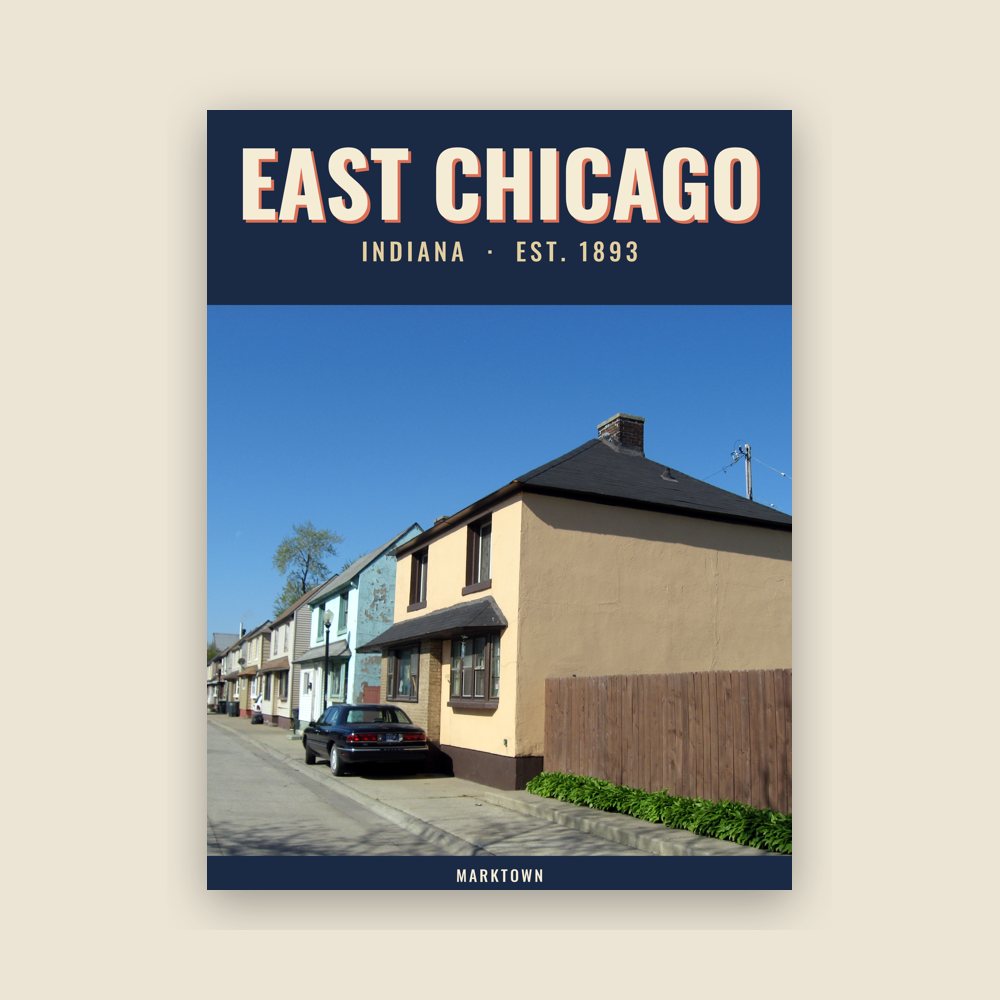
East Chicago Vintage Travel Poster

East Chicago Vintage Travel Poster

Its landmark photo in a classic travel-poster layout

from $40
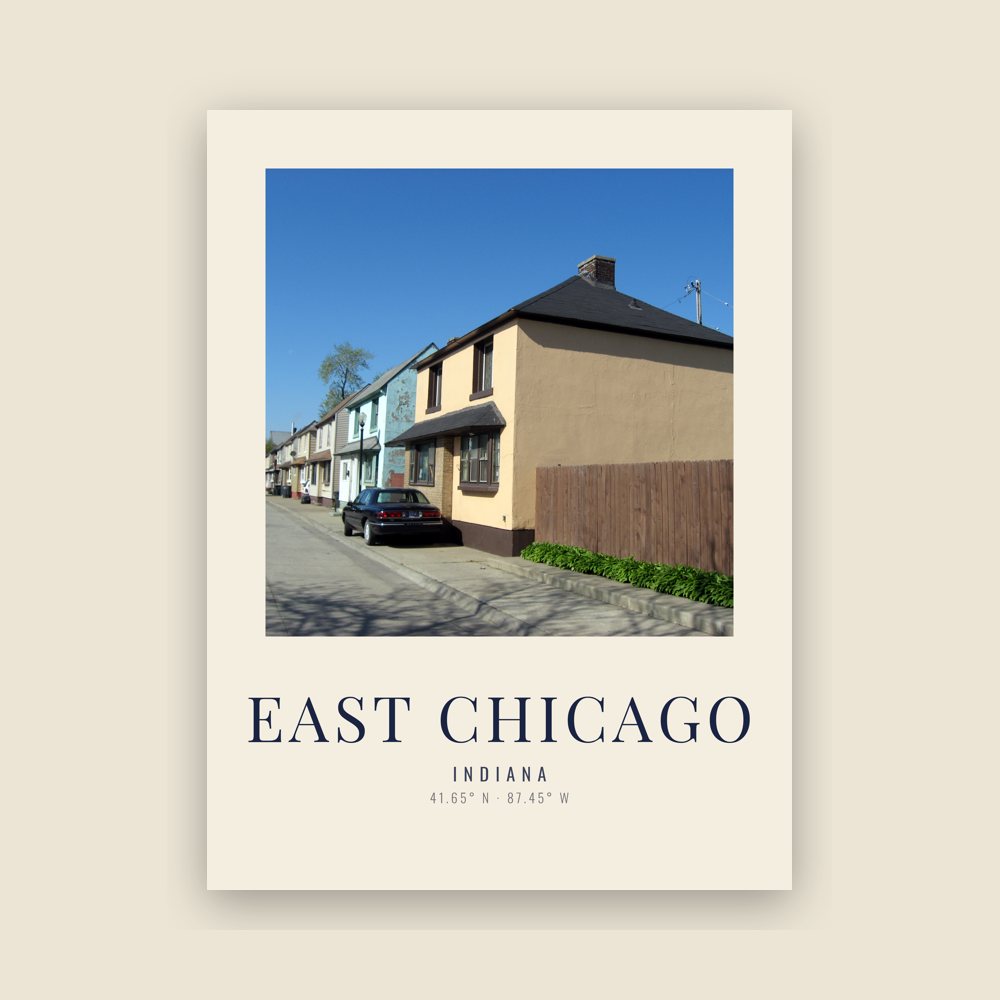
East Chicago Photo Art Print

East Chicago Photo Art Print

A local landmark photo as a gallery print

from $40
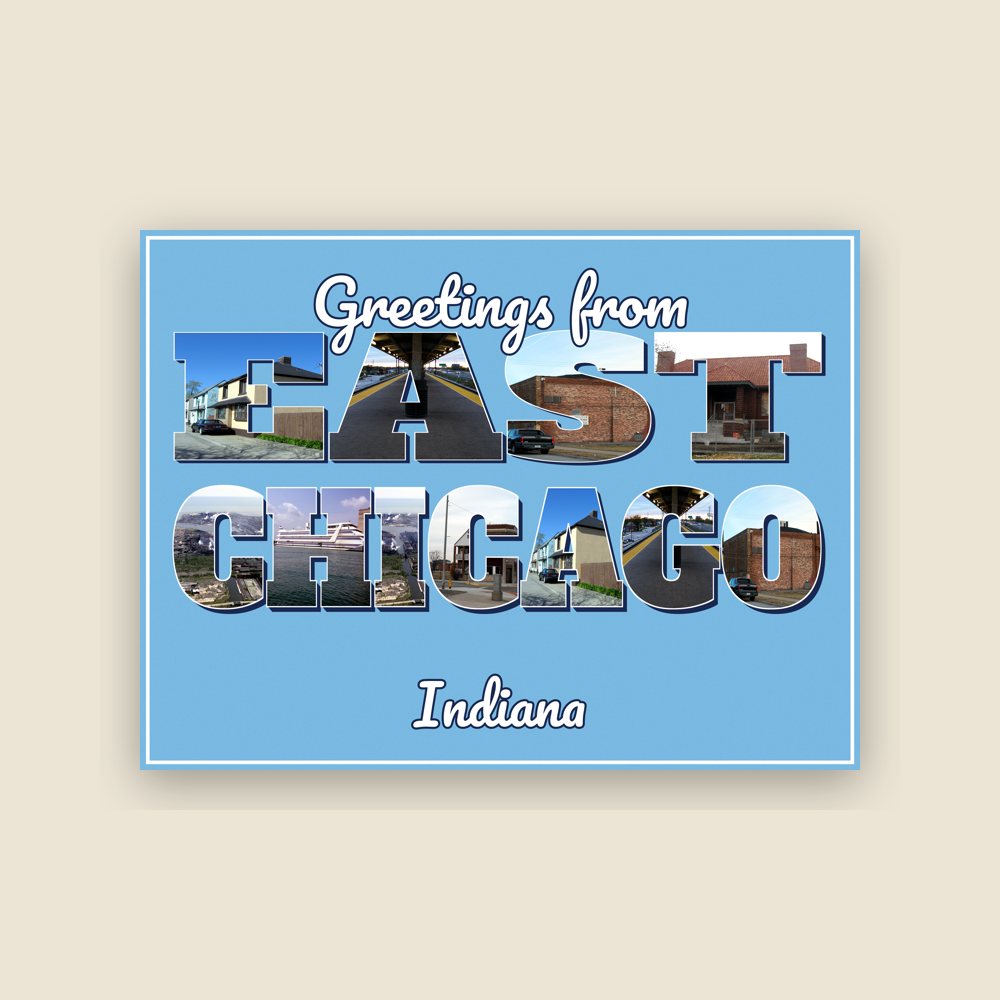
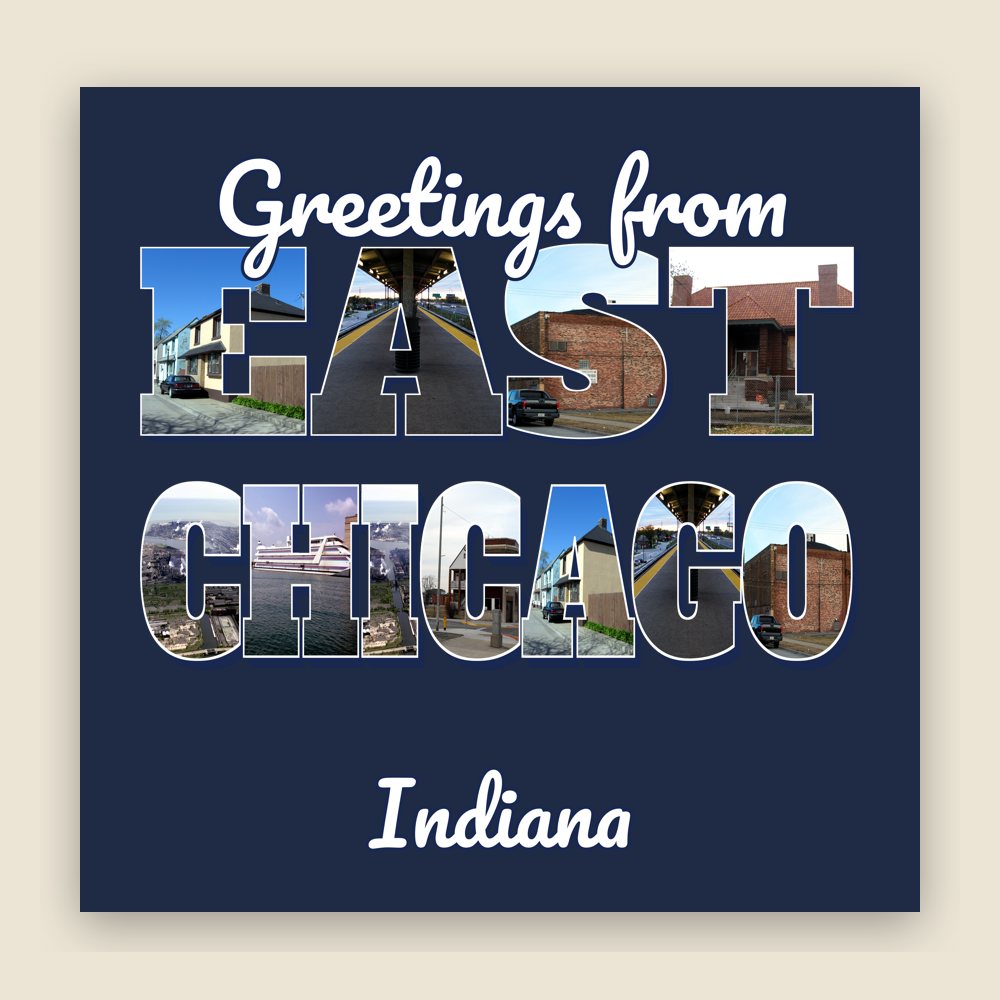
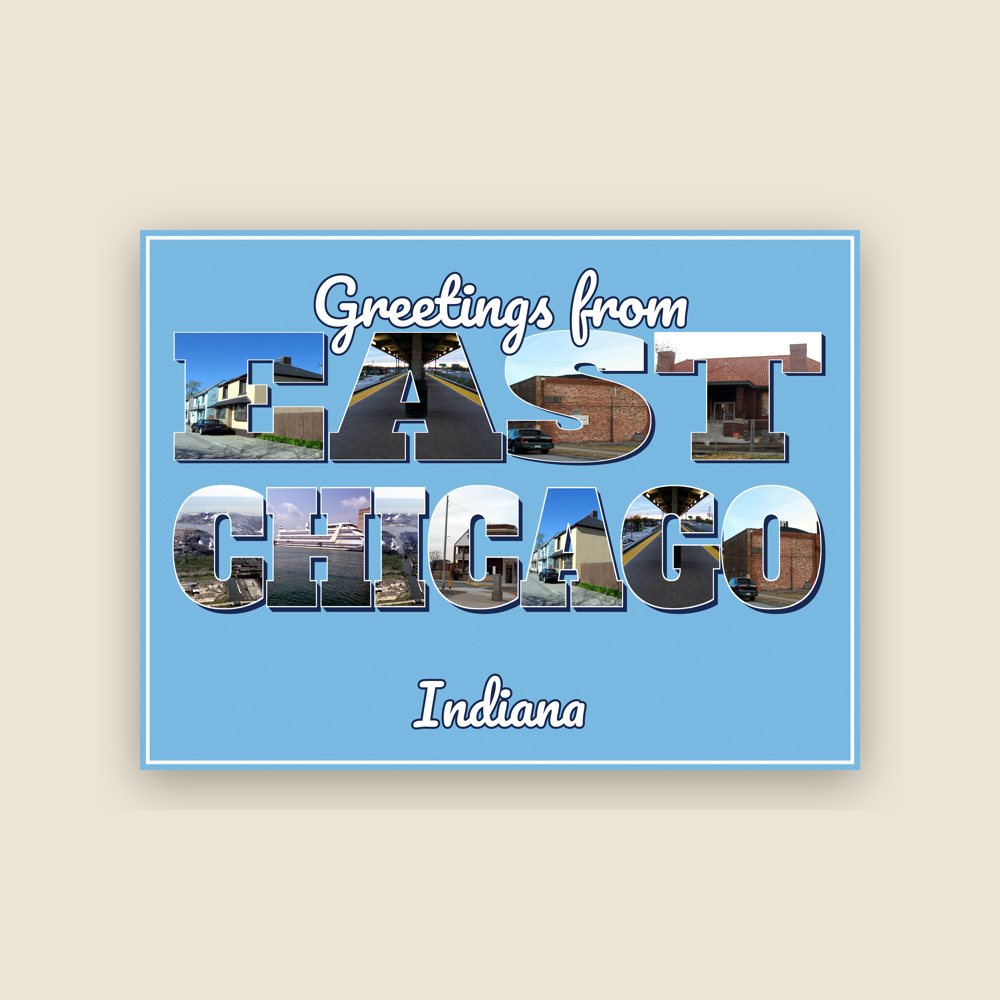
East Chicago “Greetings From” Poster

East Chicago “Greetings From” Poster

Classic large-letter postcard art, filled with local photos

from $40
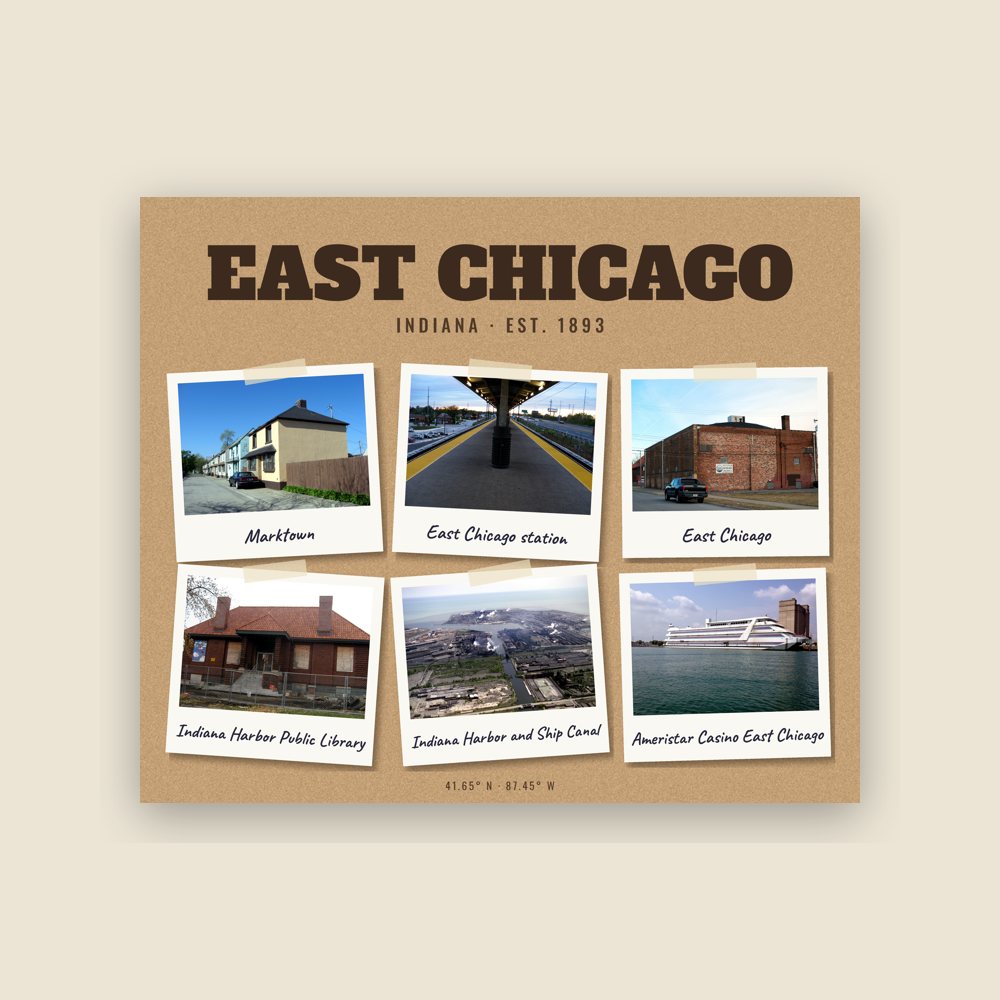
East Chicago Snapshot Collage Poster

East Chicago Snapshot Collage Poster

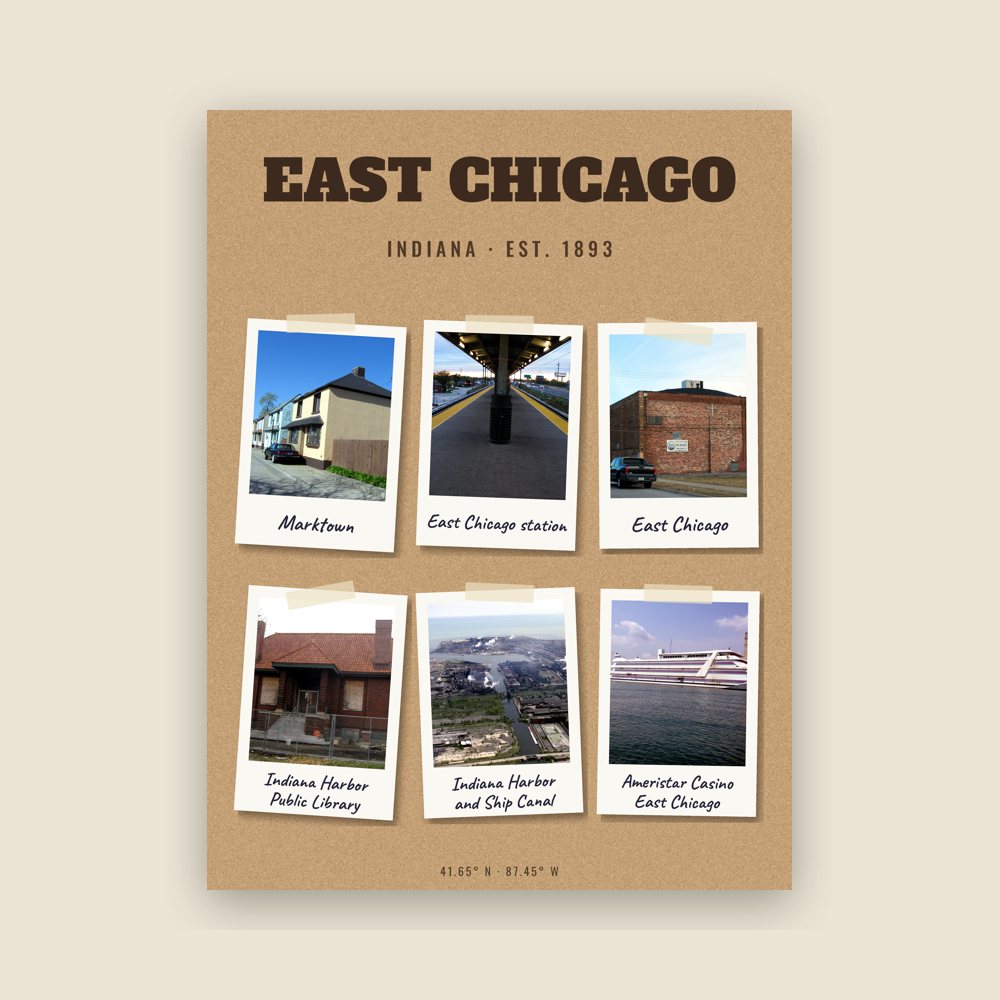
Six local landmarks as instant photos on kraft paper

from $40
East Chicago History Timeline Poster

East Chicago History Timeline Poster

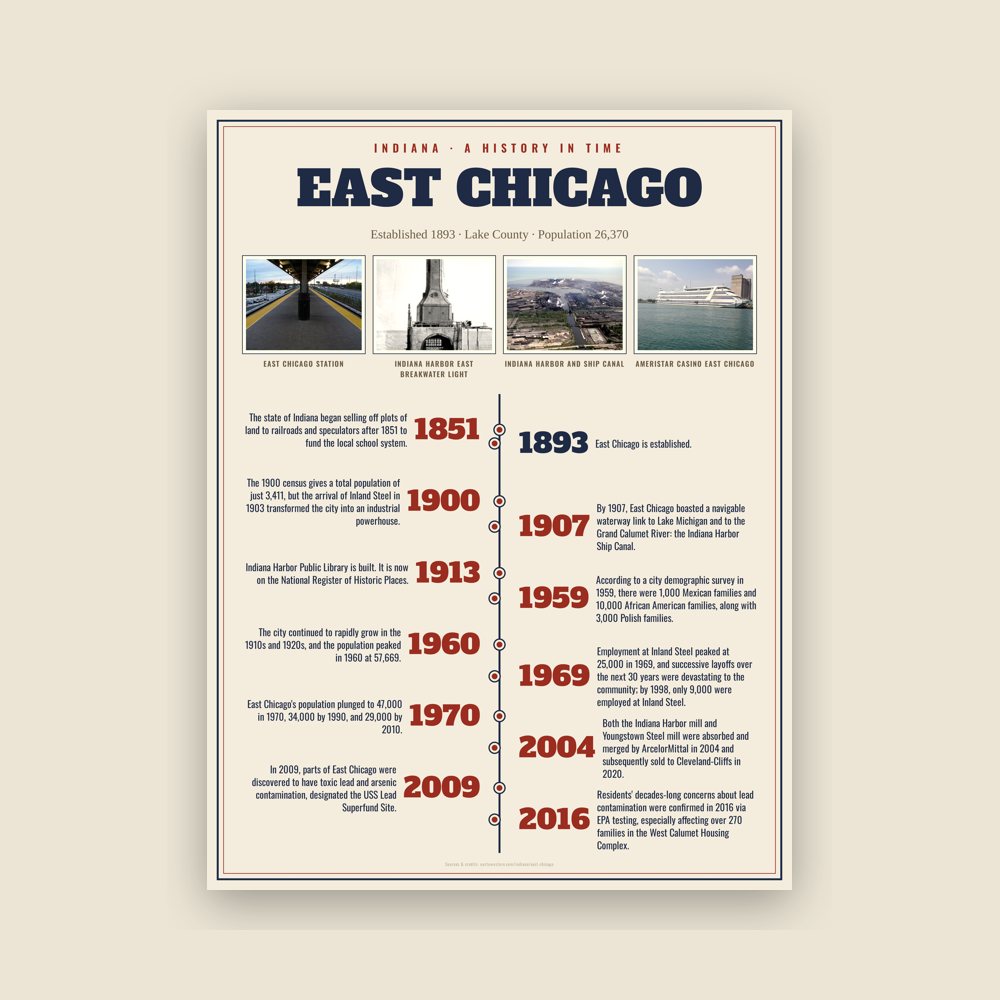
The town's story in dates, from its own records, for home or classroom

from $44
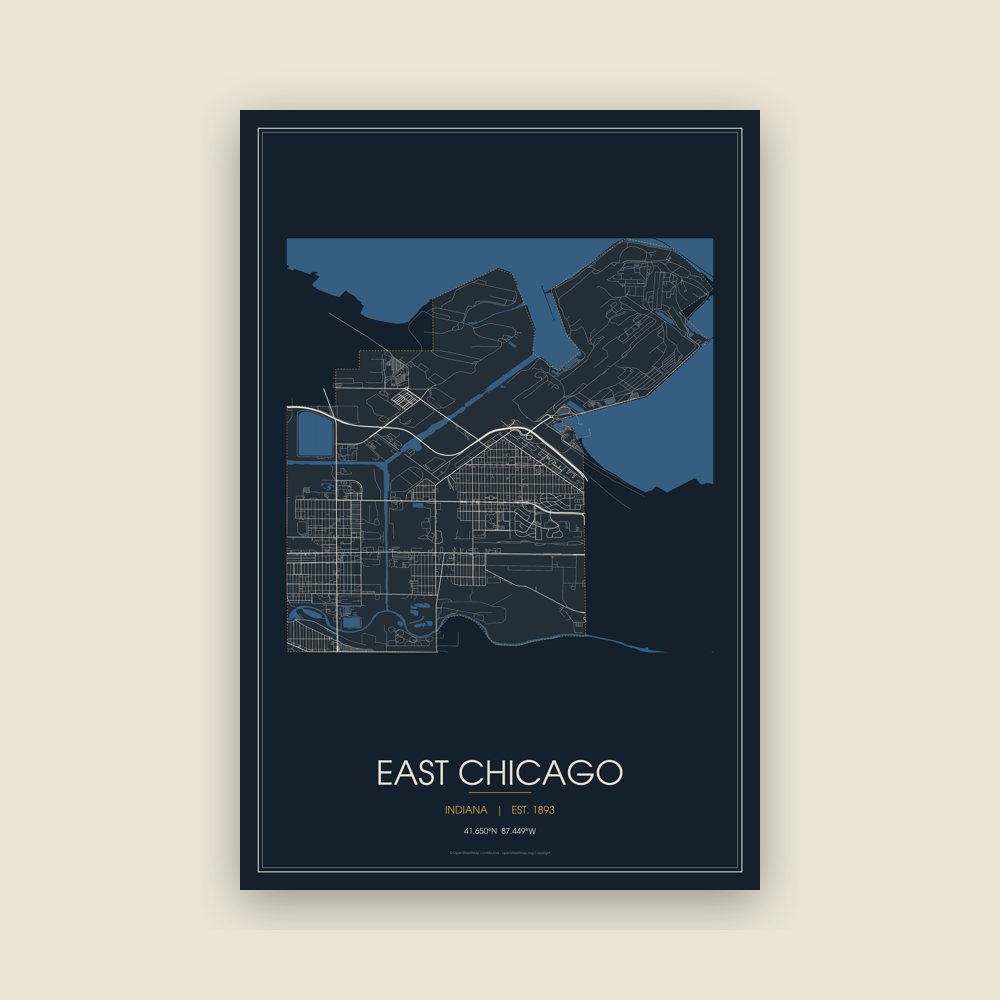
East Chicago Map Placemat

East Chicago Map Placemat

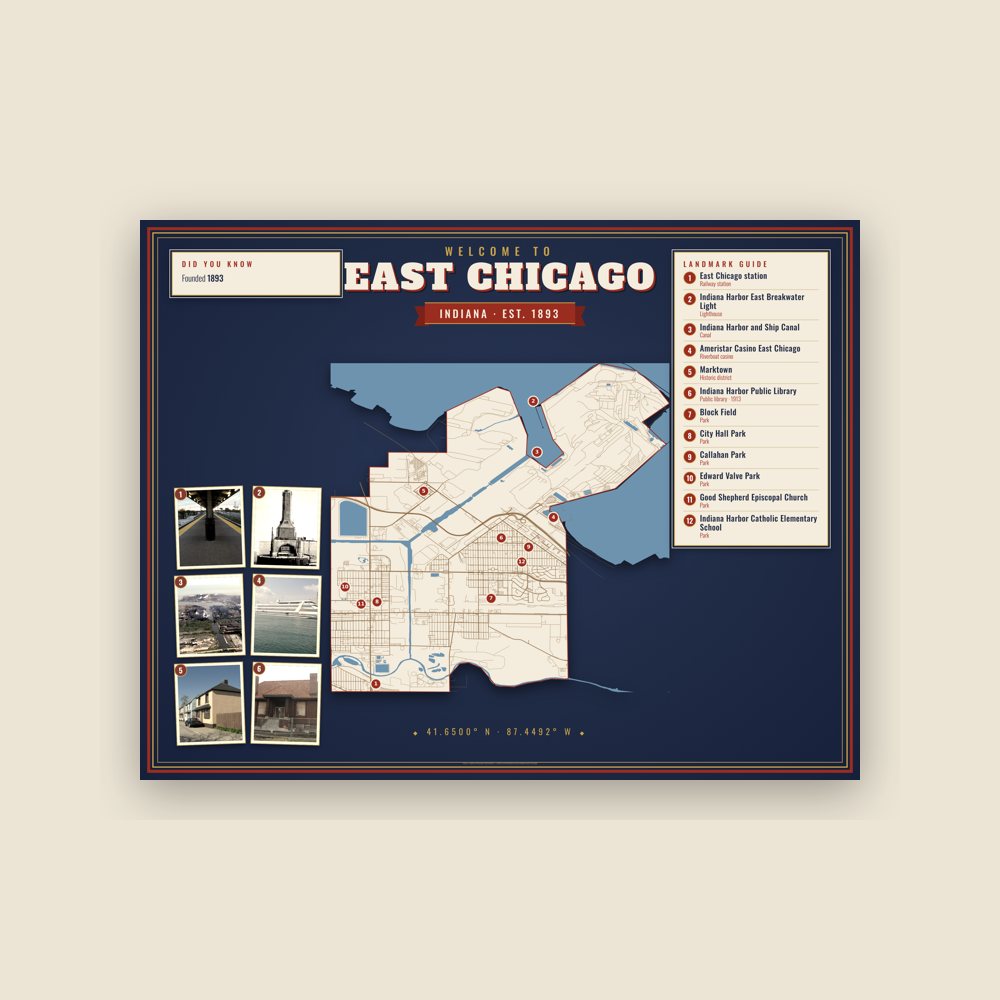
Map of local landmarks, washable fabric

$31
East Chicago Varsity Crewneck

East Chicago Varsity Crewneck

Heavy-blend fleece, street map printed on the back

from $57
East Chicago Est. Tee

East Chicago Est. Tee

Soft Bella+Canvas jersey

from $33
East Chicago Est. Youth Tee

East Chicago Est. Youth Tee

Kids' Bella+Canvas jersey, youth sizes

$30
East Chicago Est. Toddler Tee

East Chicago Est. Toddler Tee

Bella+Canvas toddler jersey

$29
East Chicago Est. Baby One Piece

East Chicago Est. Baby One Piece

Bella+Canvas baby bodysuit

$30
East Chicago “Greetings From” Tee

East Chicago “Greetings From” Tee

Large-letter postcard art filled with local photos

from $35
East Chicago Town Line Mug

East Chicago Town Line Mug

Glossy ceramic, dishwasher safe

from $26
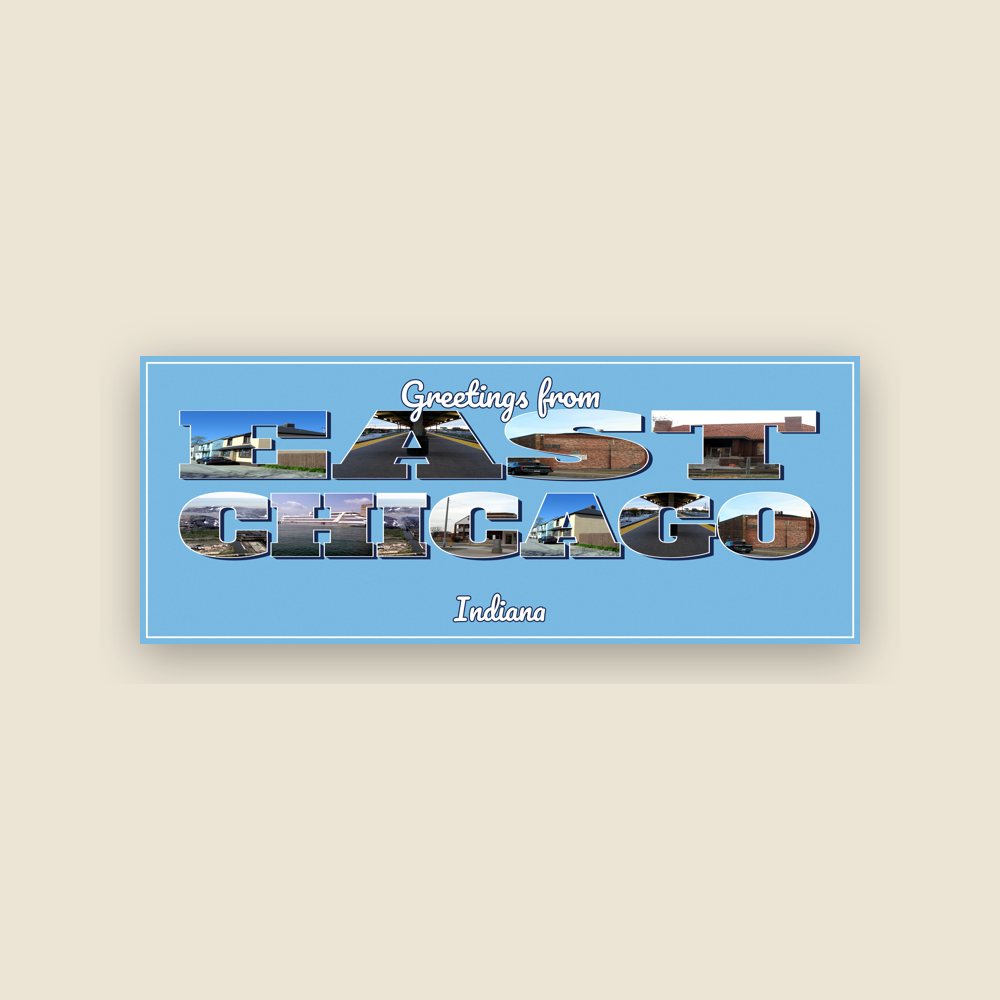
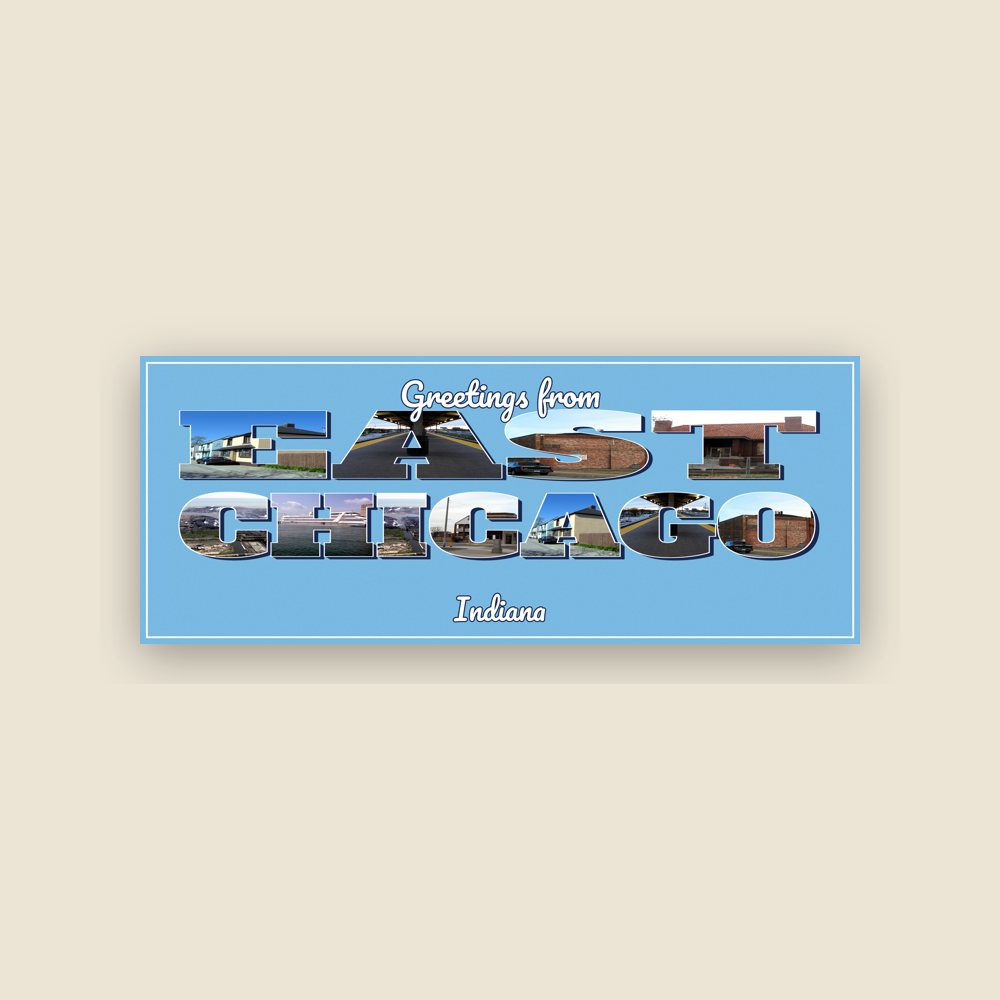
East Chicago “Greetings From” Mug

East Chicago “Greetings From” Mug

Large-letter postcard art filled with local photos, 11 oz ceramic

from $29
East Chicago Garden Flag

East Chicago Garden Flag

Weatherproof, for the front walk

$31
East Chicago Welcome Doormat

East Chicago Welcome Doormat

24″×16″, printed coir-look fibers, rubber back

$66
East Chicago Hometown Wood Sign

East Chicago Hometown Wood Sign

12″×12″ printed wood, ready to hang

$48
East Chicago Map Throw Pillow

East Chicago Map Throw Pillow

Soft-touch, zip cover

$47
East Chicago Landmark Photo Pillow

East Chicago Landmark Photo Pillow

A local landmark photo with the town name, 18″×18″

$49
East Chicago Market Tote

East Chicago Market Tote

Sturdy all-over-print tote

$37
East Chicago “Greetings From” Tote

East Chicago “Greetings From” Tote

Large-letter postcard art on a sturdy tote

$37
East Chicago “Greetings From” Trucker Cap

East Chicago “Greetings From” Trucker Cap

Foam-front trucker, printed (not embroidered) with local photos

$33
East Chicago Cork Coaster

East Chicago Cork Coaster

Glossy top, cork back

$16
East Chicago Street Map Throw Blanket

East Chicago Street Map Throw Blanket

Soft fleece, 50″×60″

from $72
East Chicago Snapshot Collage Blanket

East Chicago Snapshot Collage Blanket

Six local landmarks as instant photos, soft fleece 50″×60″

from $76
East Chicago Est. Tumbler

East Chicago Est. Tumbler

20 oz, double-wall stainless

$51
East Chicago East Chicago station Postcard

East Chicago East Chicago station Postcard

6″×4″ postcard, glossy front

$10
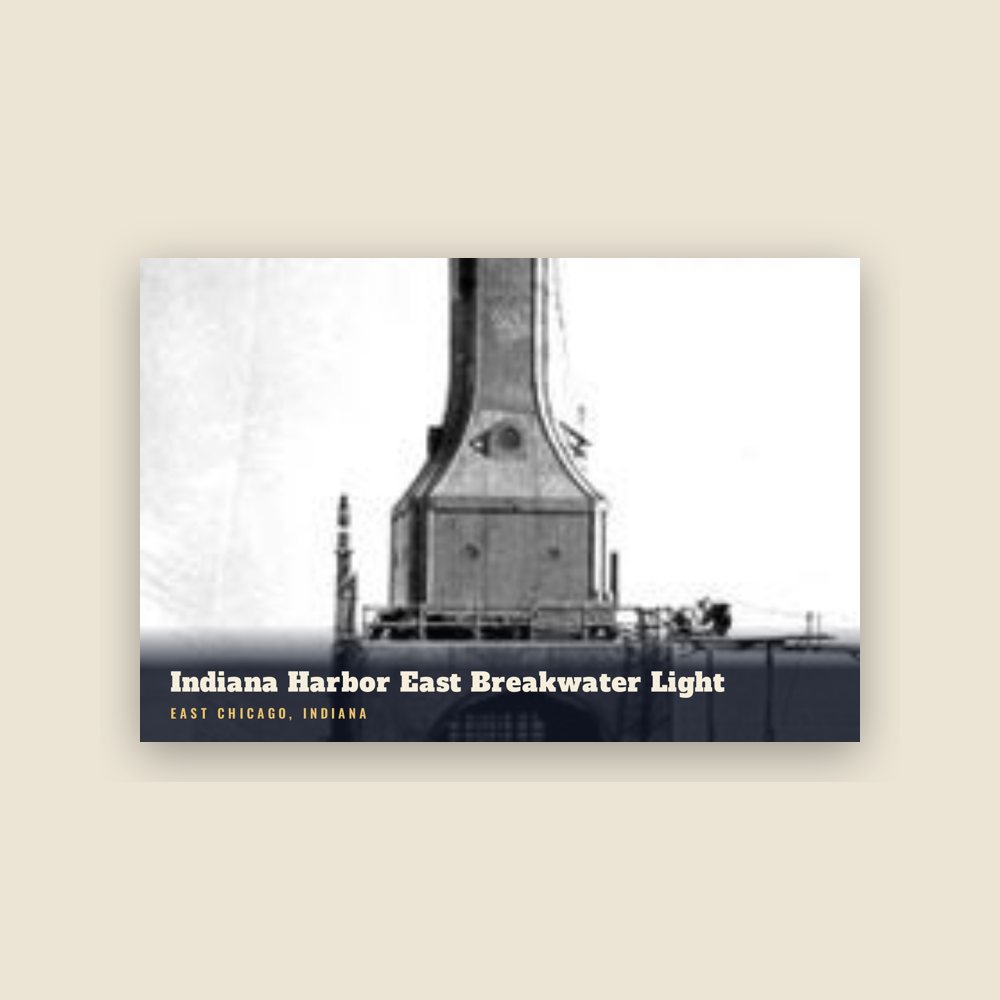
East Chicago Indiana Harbor East Breakwater Light Postcard

East Chicago Indiana Harbor East Breakwater Light Postcard

6″×4″ postcard, glossy front

$10
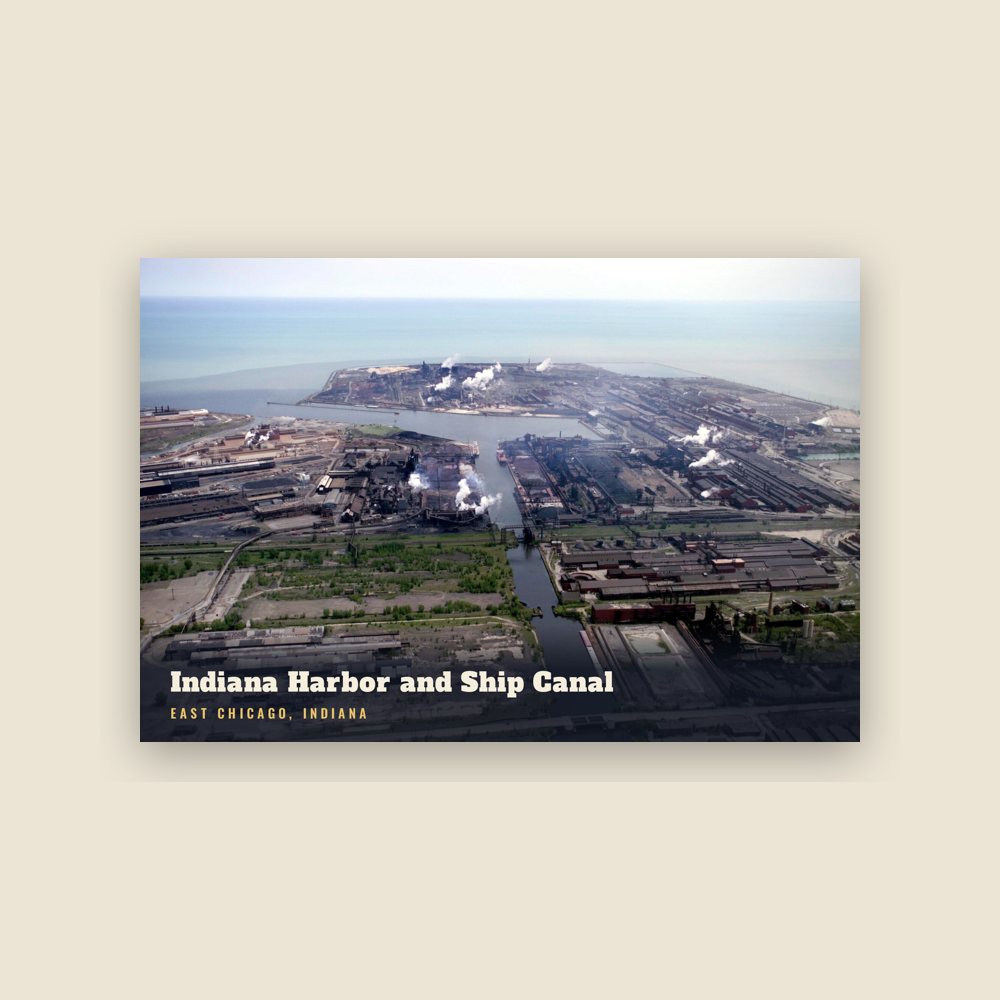
East Chicago Indiana Harbor and Ship Canal Postcard

East Chicago Indiana Harbor and Ship Canal Postcard

6″×4″ postcard, glossy front

$10
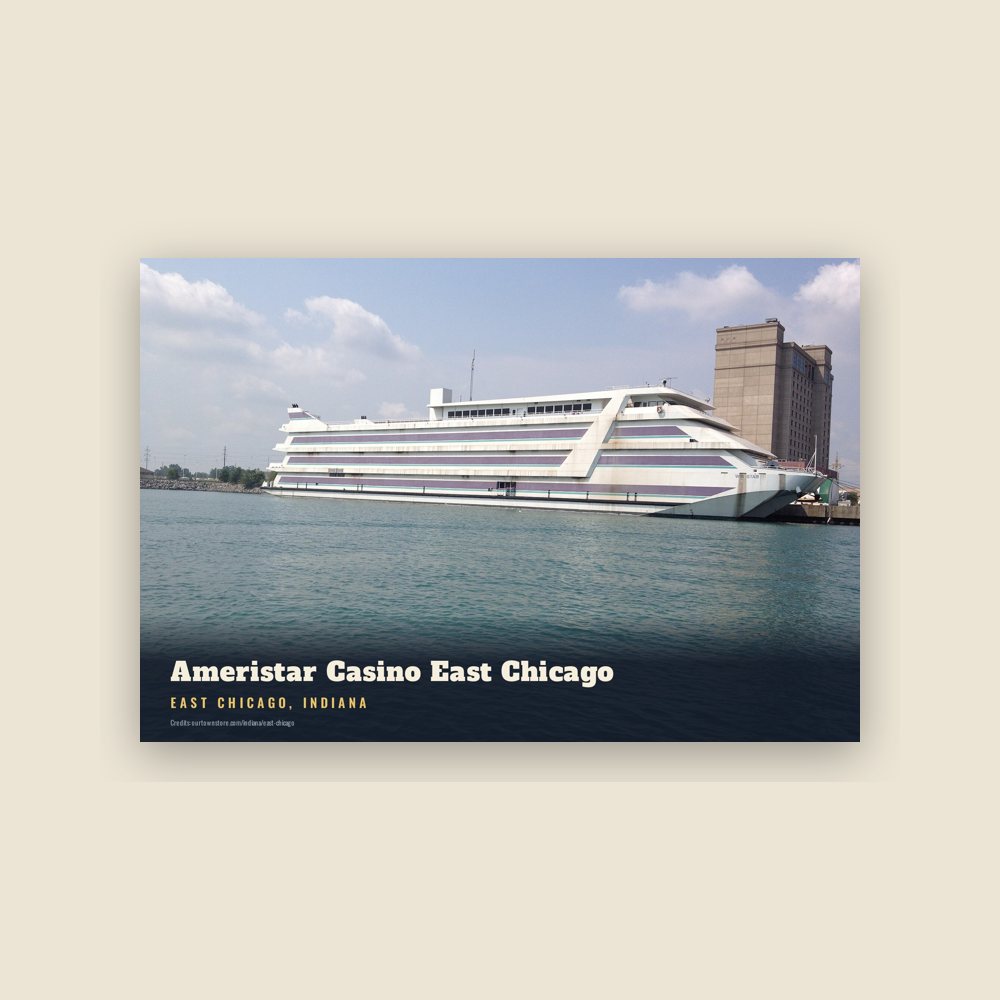
East Chicago Ameristar Casino East Chicago Postcard

East Chicago Ameristar Casino East Chicago Postcard

6″×4″ postcard, glossy front

$10
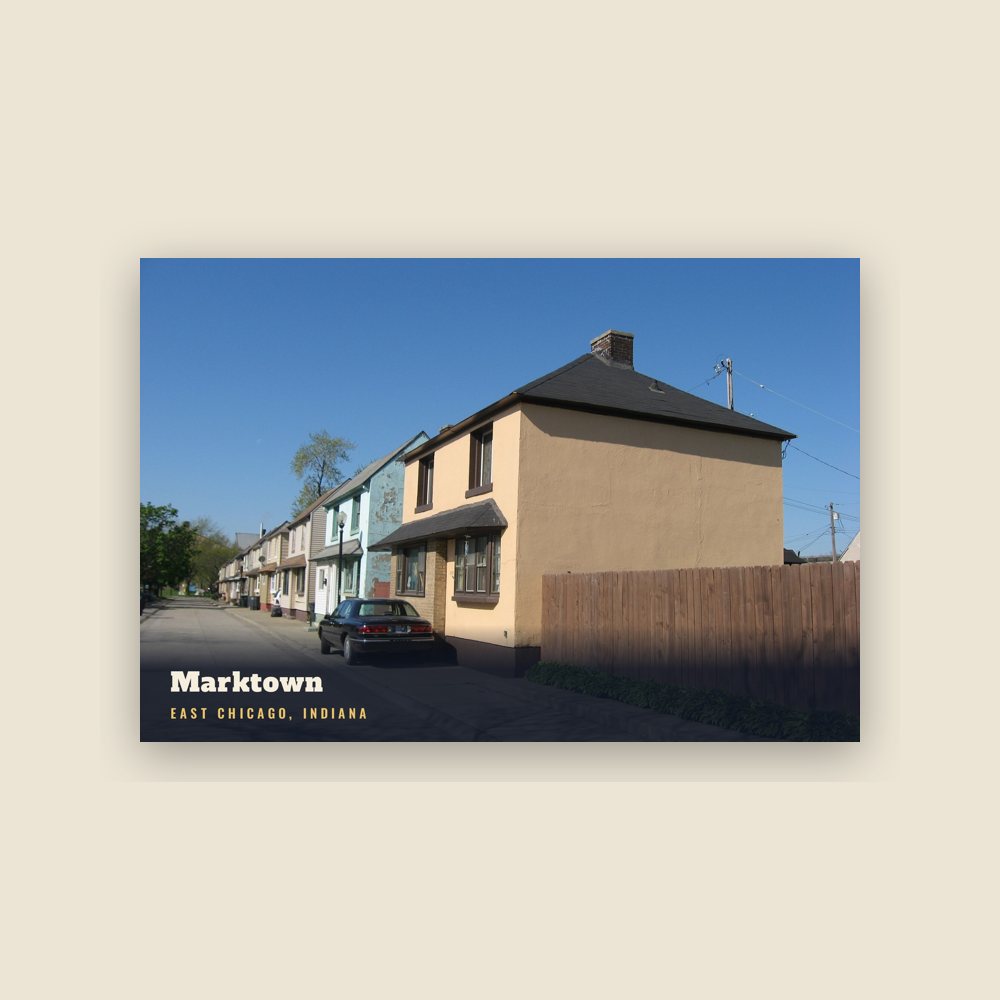
East Chicago Marktown Postcard

East Chicago Marktown Postcard

6″×4″ postcard, glossy front

$10
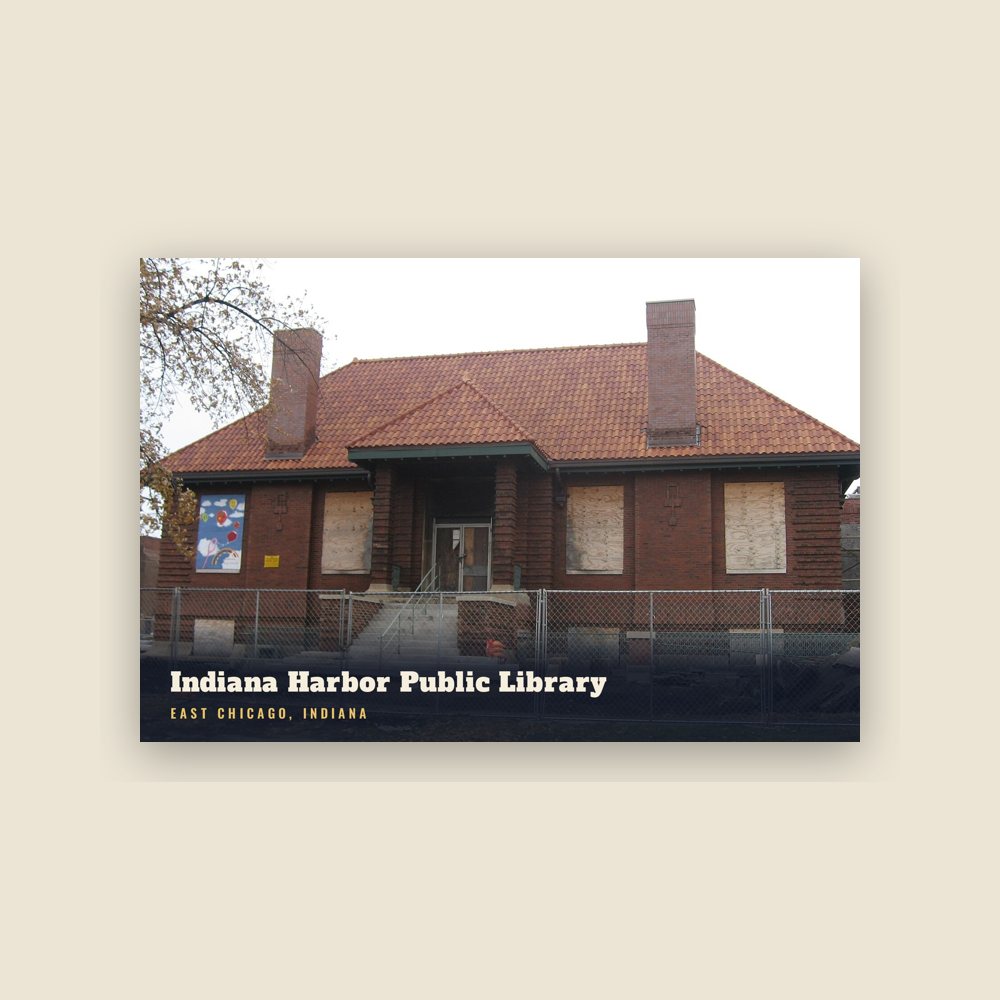
East Chicago Indiana Harbor Public Library Postcard

East Chicago Indiana Harbor Public Library Postcard

6″×4″ postcard, glossy front

$10

The land that became East Chicago was originally swampland unsuitable for farming. Landmarks include East Chicago station, Indiana Harbor East Breakwater Light and Indiana Harbor and Ship Canal. East Chicago is the birthplace of Betsy Palmer, actress.

Hometown roll

Born in East Chicago

On the National Register

Historic places

Population 2010: 29,698 → 2020: 26,370

From Wikidata (CC0).

Since 1893

A short history of East Chicago

Founding and early settlement

The land that became East Chicago was originally swampland unsuitable for farming. The state of Indiana began selling off plots of land to railroads and speculators after 1851 to fund the local school system. Settlement of the area was very slow at first, and as late as the 1890s, the city had no proper streets or public utilities. East Chicago was incorporated as a city in 1893. The city was named from its location east of Chicago, Illinois.

Read the full history

Industrial growth

The 1900 census gives a total population of just 3,411, but the arrival of Inland Steel in 1903 transformed the city into an industrial powerhouse. The city's population skyrocketed to over 24,000 by 1910, powered by immigration from all over Europe and the United States, and quickly became the most industrialized city in the United States, with over 80% of the city's land zoned for heavy industry. Inland Steel dominated the city's economy through the 1990s, and expanded its massive integrated mill at Indiana Harbor multiple times through the 1980s. From 60,000 tons of steel capacity in 1903, it expanded to 600,000 tons by 1914 and reached 1 million in 1917, and eventually peaked at 8.6 million tons in 1978. By 1907, East Chicago boasted a navigable waterway link to Lake Michigan and to the Grand Calumet River: the Indiana Harbor Ship Canal. Steel mills, petroleum refineries, construction firms, and chemical factories operated at Indiana Harbor and along its inner canal system.

Republic Steel, Youngstown Steel, LaSalle Steel, and U.S. Steel all eventually had steel-making operations in the city. During World War I, East Chicago was nicknamed the "Arsenal of America" (not to be confused with Detroit's label as the "Arsenal of Democracy" during WWII) and the "Workshop of America".

A rivalry developed between Indiana Harbor, the “East Side” home of Inland Steel and most working-class families, and East Chicago's “West Side,” the residential enclave of the native-born business community. Locals spoke of the “Twin City” to describe spatial, residential, and class divisions at the heart of the town's identity. The "Twin City" moniker remains to this day.

World War I to the present

During the 1910s, several thousand Mexicans immigrated to East Chicago to work in the mills during the labor shortage of 1917–1918 due to U.S. participation in World War I, and also acted as strike breakers during labor unrest in 1919. Most were single men who eventually hoped to return to Mexico, but many stayed on and eventually were joined by their families. The small Mexican community was targeted for voluntary and forced repatriation during the 1930s and 1950s (1,800 were deported in 1932 alone), but those who remained eventually paved the way for later Latino immigration after 1965.

Black Americans also began to arrive in the 1910s and 1920s as part of the first wave of the Great Migration, and this continued from the 1940s to 1960s. According to a city demographic survey in 1959, there were 1,000 Mexican families and 10,000 African American families, along with 3,000 Polish families. There were also a large number of families that identified as Puerto Rican, Romanian, Serbian, Italian, Lithuanian, and Croatian. Over 70 nationalities were represented, with over 59 congregations of the Protestants, Orthodox, Catholic Churches, as well as Jewish synagogues.

Like neighboring Gary, Indiana, East Chicago quickly developed a reputation as a rough industrial city, plagued by extreme pollution, ethnic and racial tensions, organized crime, illegal gambling and clubs, political corruption, prostitution, and other vices. The city continued to rapidly grow in the 1910s and 1920s, and the population peaked in 1960 at 57,669. However, East Chicago's population began to decline in the 1960s as suburbanization, white flight, affordability of automobiles, and the construction of highways meant that workers no longer had to live in the city, but could commute from less-polluted suburbs.

It was the Steel crisis of the 1974-1986 period that completely devastated East Chicago, as it did other industrial cities like Gary, Cleveland, Pittsburgh, and the south side of Chicago. East Chicago's population plunged to 47,000 in 1970, 34,000 by 1990, and 29,000 by 2010. Employment at Inland Steel peaked at 25,000 in 1969, and successive layoffs over the next 30 years were devastating to the community; by 1998, only 9,000 were employed at Inland Steel. Inland Steel was acquired by Ispat International in 1998. Both the Indiana Harbor mill and Youngstown Steel mill were absorbed and merged by ArcelorMittal in 2004 and subsequently sold to Cleveland-Cliffs in 2020.

In 2009, parts of East Chicago were discovered to have toxic lead and arsenic contamination, designated the USS Lead Superfund Site. The site is divided into three zones, with public housing and residential properties. Residents' decades-long concerns about lead contamination were confirmed in 2016 via EPA testing, especially affecting over 270 families in the West Calumet Housing Complex. As governor of Indiana, Mike Pence declined to declare the Superfund site a state emergency; his successor Governor Eric Holcomb has issued Executive Order 17-13, declaring a disaster emergency in East Chicago.
Adapted (trimmed) from the Wikipedia article East Chicago, Indiana, revision 1381359135 by its contributors, licensed CC BY-SA 4.0.

For local organizations

Are you with a East Chicago historical society?

We share a part of every East Chicago sale with local partners, and we'd love to print from your collection. Old photographs, maps and postcards make the best keepsakes.

Partner with us
Custom orders

Want something East Chicago we don't make yet?

A favorite landmark, your street, a school or team, an anniversary gift, a different product. Tell us and we'll get back to you by email.

Nearby

Neighboring towns

Sources

East Chicago's population was 26,370 in the 2020 U.S. Census, down from 29,698 in 2010.