A short history of Carlisle
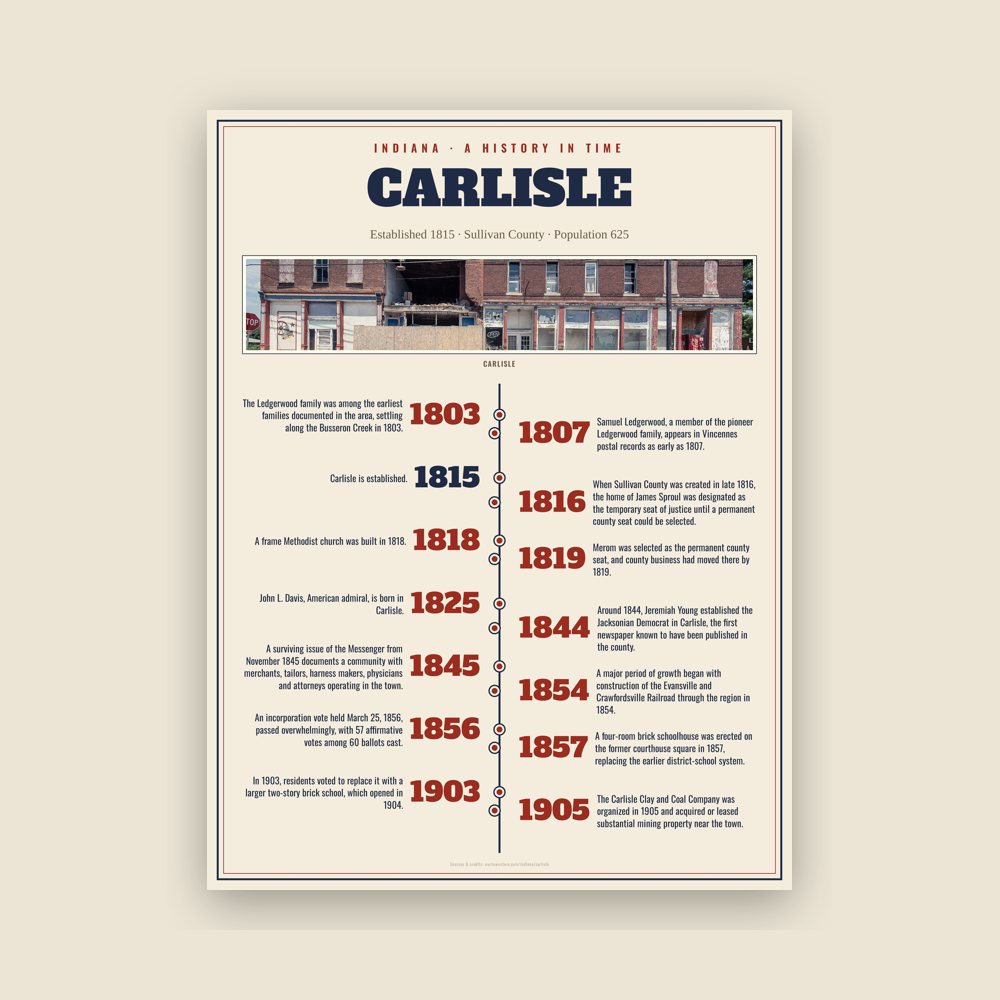
European-American settlement in the area surrounding present-day Carlisle began in the first years of the nineteenth century, when the region was still part of Knox County in the Indiana Territory. The Ledgerwood family was among the earliest families documented in the area, settling along the Busseron Creek in 1803. James Ledgerwood's Mill, it was described in an 1814 advertisement as a combined saw and grist mill and is identified in early county histories as the first grist mill in what became Sullivan County.
Another prominent early settle was John Haddon, a native of Virginia whose family settled in the area during the first decade of the nineteenth century. A fortified settlement known as Fort Haddon was constructed around 1806 near his home, which still remains. During periods of conflict and alarm in the years preceding and during the War of 1812, nearby settler families gathered at Fort Haddon and other fortified blockhouses in the region for protection. Haddon Township, in which Carlisle is located, was later named in honor of John Haddon.
The early settlement was commonly associated with Busseron Creek and became known as the Busseron settlement. Before the establishment of local postal and governmental institutions, residents traveled to Vincennes for mail and public business. Samuel Ledgerwood, a member of the pioneer Ledgerwood family, appears in Vincennes postal records as early as 1807.
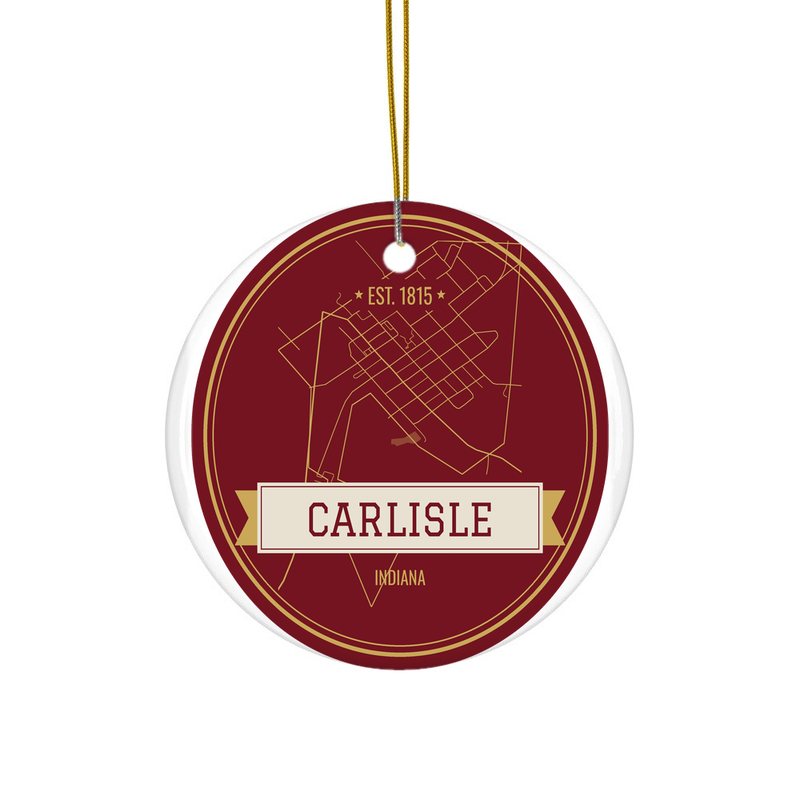
Carlisle was formally laid out in 1815. The land on which the town was established was owned by Samuel Ledgerwood, who joined James Sproul and William McFarland in developing the townsite. An advertisement published in the Vincennes Western Sun on June 10, 1815, announced that lots in the new town would be offered for sale on June 23. The advertisement promoted Carlisle's location near Busseron Creek and the former Ledgerwood mill and emphasized the site's central location within the growing settlement.
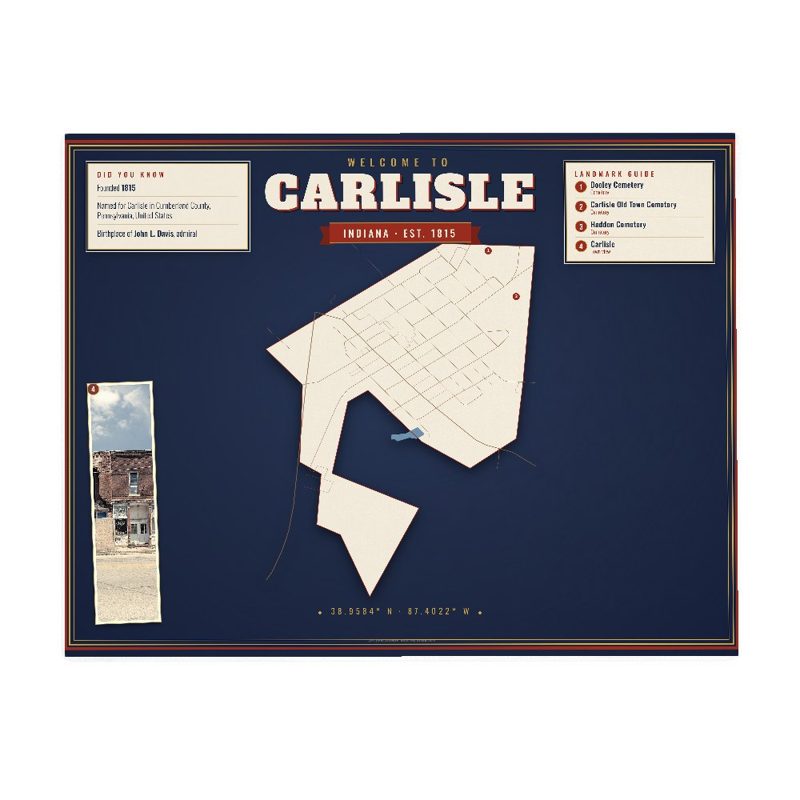
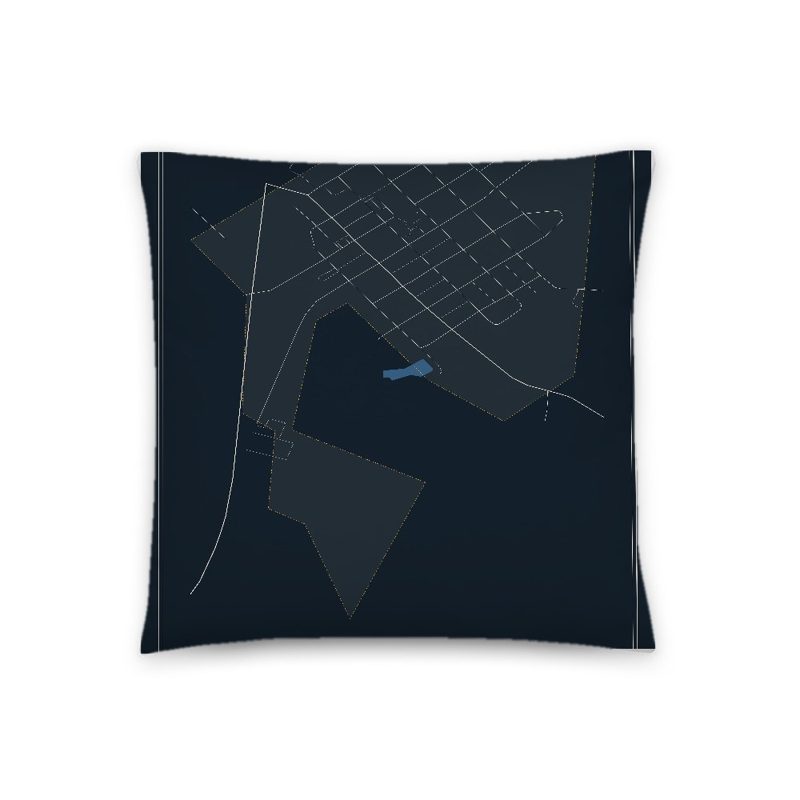
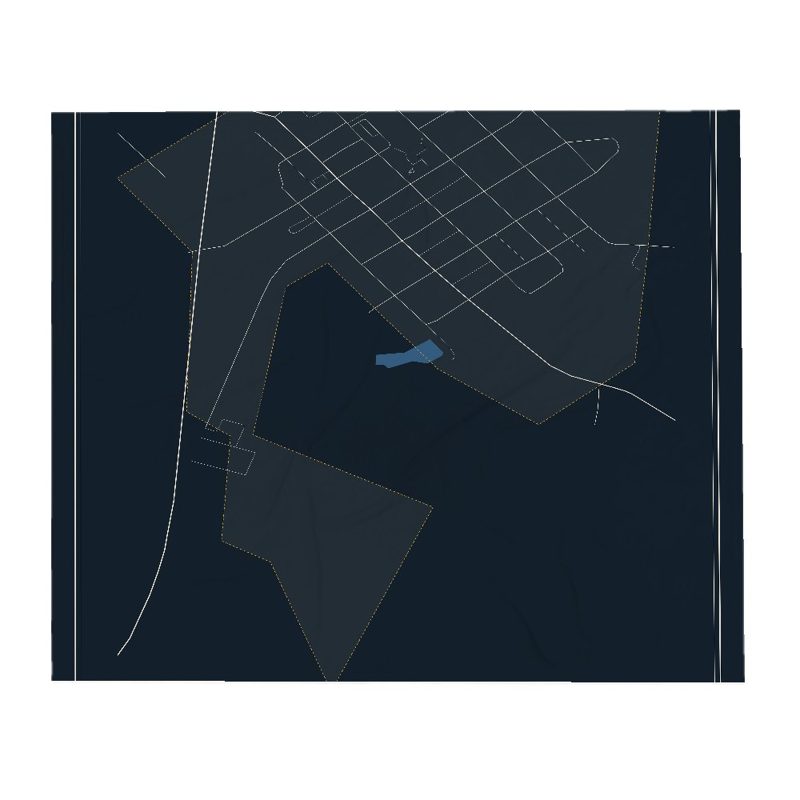
The original town plat consisted of 25 blocks arranged around a central public square. The square was reserved for a courthouse, reflecting the founders' hope that Carlisle would become the seat of government for a new county expected to be formed from northern Knox County. Several streets in the original plat carried the names of pioneer families and early residents, including Ledgerwood, Gill, Turman and Eaton.
When Sullivan County was created in late 1816, the home of James Sproul was designated as the temporary seat of justice until a permanent county seat could be selected. Carlisle consequently functioned as Sullivan County's first center of government for approximately two years. An 1817 notice issued by the county sheriff referred to a tax sale to be held at the "court house in the town of Carlisle." Local tradition recorded in a 1909 county history also held that some early court proceedings were conducted outdoors beneath a large beech tree in the town.
A permanent courthouse was never constructed on Carlisle's public square. Merom was selected as the permanent county seat, and county business had moved there by 1819. The county seat was later relocated to Sullivan in the 1840s.
Carlisle's first store is traditionally dated to 1815, and a post office was established the following year. A frame Methodist church was built in 1818. The removal of the county government to Merom slowed Carlisle's early growth, although the surrounding mills, farms and local businesses continued to support the community.
Read the full history
Newspapers and commerce
Carlisle played an early role in the development of journalism in Sullivan County. Around 1844, Jeremiah Young established the Jacksonian Democrat in Carlisle, the first newspaper known to have been published in the county. It was followed by the Carlisle Messenger, which a later county history described as Sullivan County's first regular newspaper. A surviving issue of the Messenger from November 1845 documents a community with merchants, tailors, harness makers, physicians and attorneys operating in the town.
Railroad and incorporation
A major period of growth began with construction of the Evansville and Crawfordsville Railroad through the region in 1854. The proposed route initially would have passed approximately three miles from Carlisle despite earlier financial support from local residents. In response, sixteen Carlisle businessmen and residents pledged an additional $30,000 to secure a route through the town.
The arrival of the railroad transformed Carlisle into a shipping point for the surrounding agricultural region and encouraged new commercial development. The railroad line was completed through Carlisle in 1854 and connected with the line extending northward later that year.
Following the railroad's arrival, residents petitioned Sullivan County officials to incorporate Carlisle as a town. An incorporation vote held March 25, 1856, passed overwhelmingly, with 57 affirmative votes among 60 ballots cast. Carlisle's first elected town government consisted of five trustees, a clerk and a marshal.
One of the new municipal government's first major projects was construction of a public school. A four-room brick schoolhouse was erected on the former courthouse square in 1857, replacing the earlier district-school system. Classes began in the building in December of that year. In 1903, residents voted to replace it with a larger two-story brick school, which opened in 1904.
Coal era
Coal mining became increasingly important to Carlisle's economy during the early twentieth century. The Carlisle Clay and Coal Company was organized in 1905 and acquired or leased substantial mining property near the town. The sinking of a coal shaft brought new construction and business activity, contributing to a period of population growth during the early decades of the twentieth century.
Adapted (trimmed) from the Wikipedia article Carlisle, Indiana, revision 1382313119 by its contributors, licensed CC BY-SA 4.0.