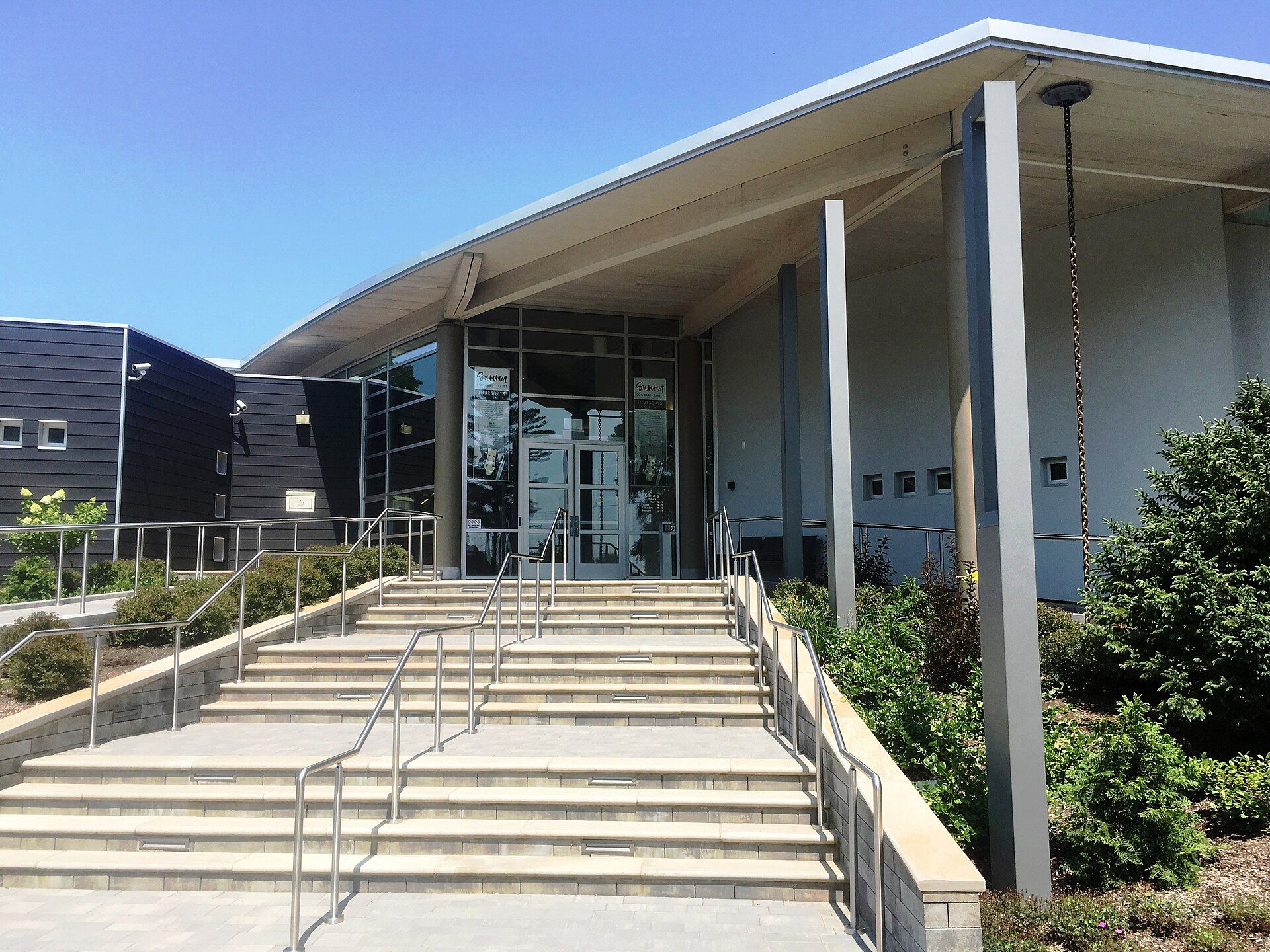
It is the site of the Wauconda Bog Nature Preserve, a National Natural Landmark. Landmarks include Wauconda Area Library.
- CountyLake County
- Population14,084 (2020 U.S. Census)
Wauconda, Illinois gifts and souvenirs: 21 designs made from Wauconda's own map, landmarks and history, from $10 to $95. Printed to order and shipped free in the USA.
| Popular | Price |
|---|---|
| Wauconda Hometown Ornament | $23 |
| Wauconda Vintage Travel Poster | from $40 |
| Wauconda Varsity Crewneck | from $57 |
| Wauconda Est. Tee | from $33 |
| Wauconda Town Line Mug | from $26 |
| Wauconda Market Tote | $37 |
Ceramic keepsake, gold ribbon
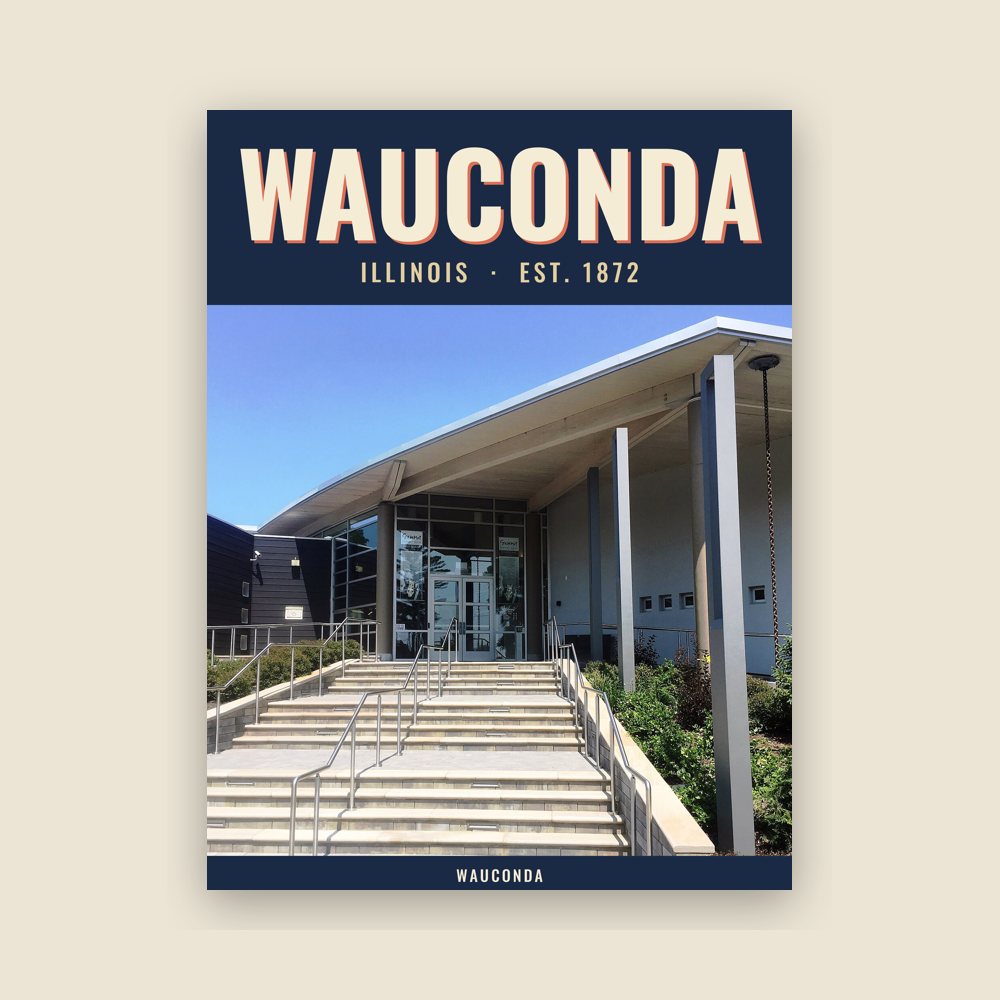
Its landmark photo in a classic travel-poster layout
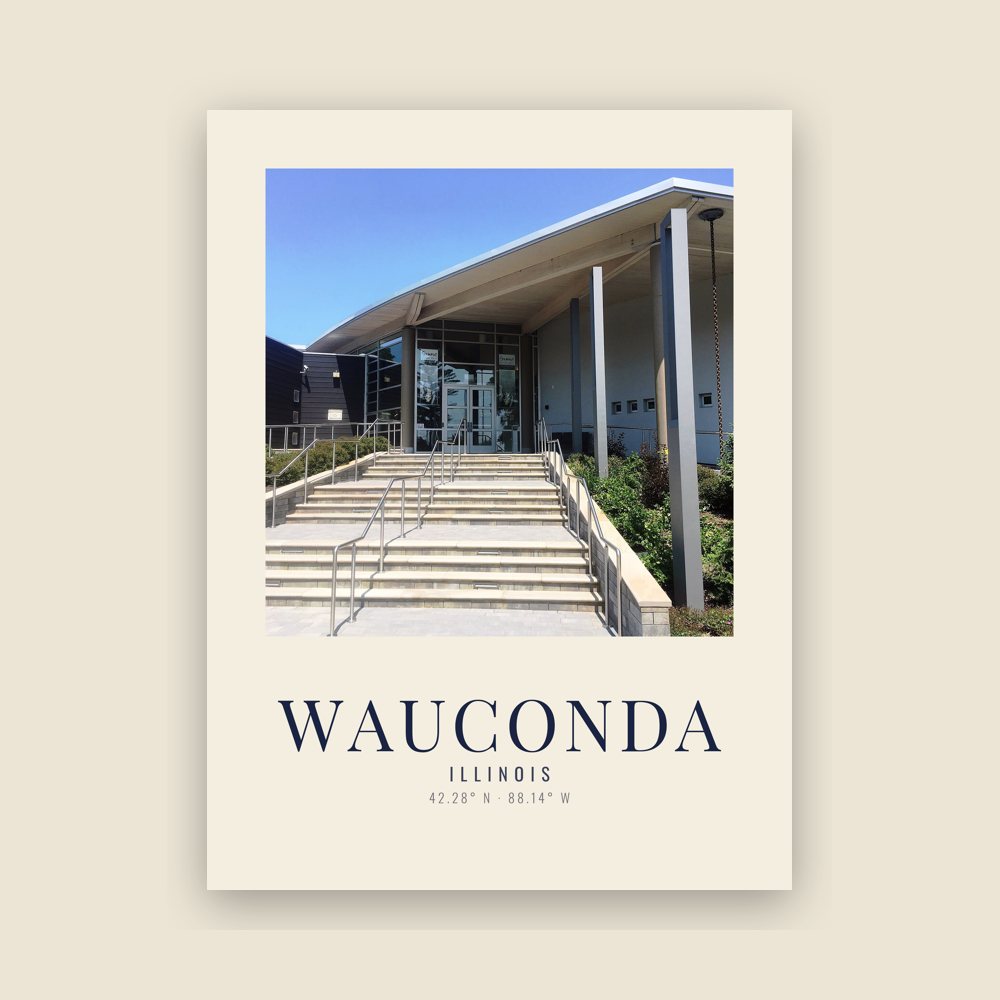
A local landmark photo as a gallery print
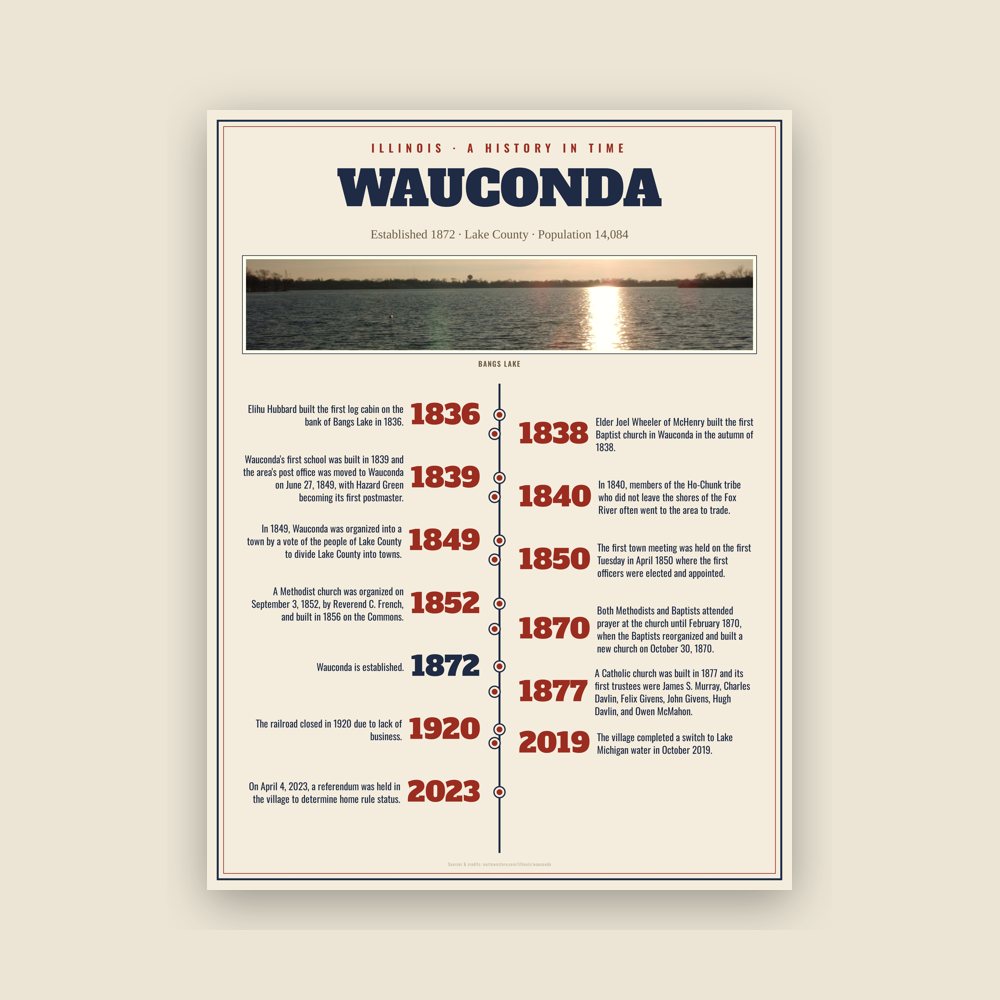
The town's story in dates, from its own records, for home or classroom
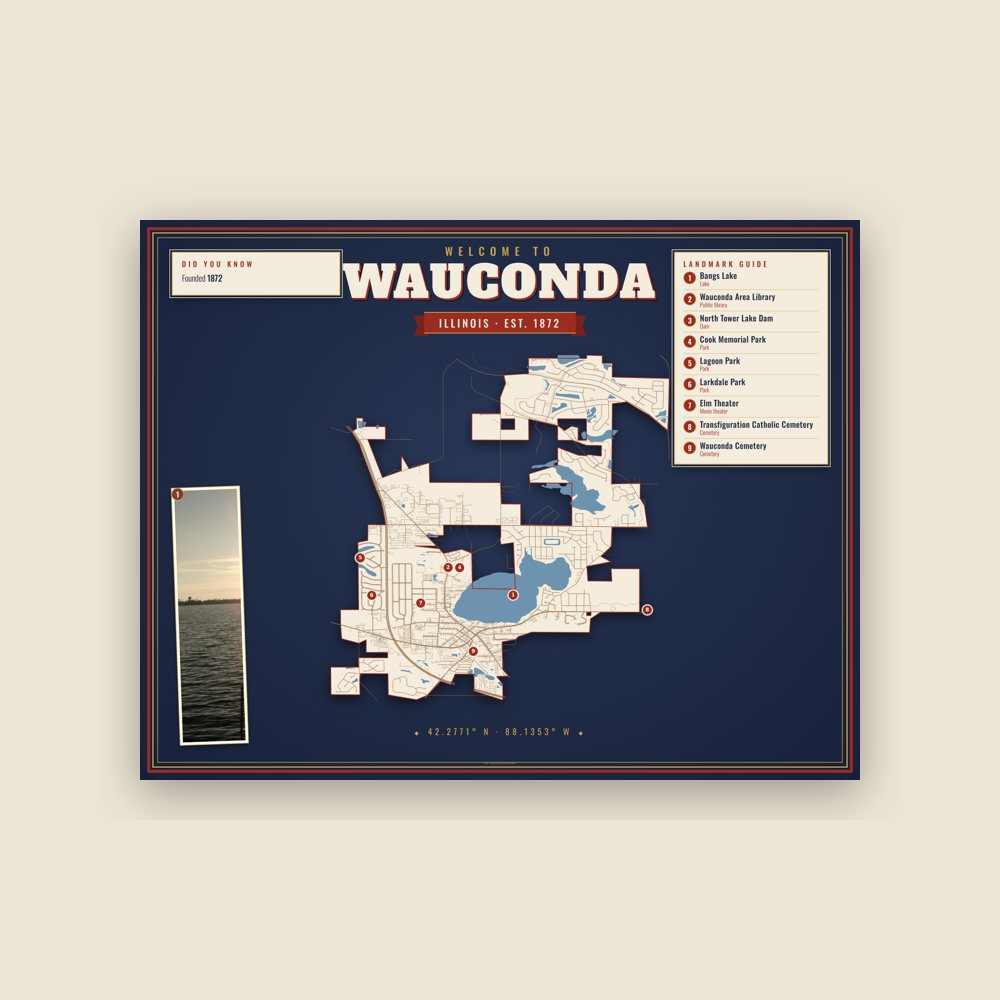
Map of local landmarks, washable fabric
Heavy-blend fleece, street map printed on the back
Soft Bella+Canvas jersey
Kids' Bella+Canvas jersey, youth sizes

Bella+Canvas toddler jersey

Bella+Canvas baby bodysuit
Glossy ceramic, dishwasher safe
Weatherproof, for the front walk

24″×16″, printed coir-look fibers, rubber back
12″×12″ printed wood, ready to hang
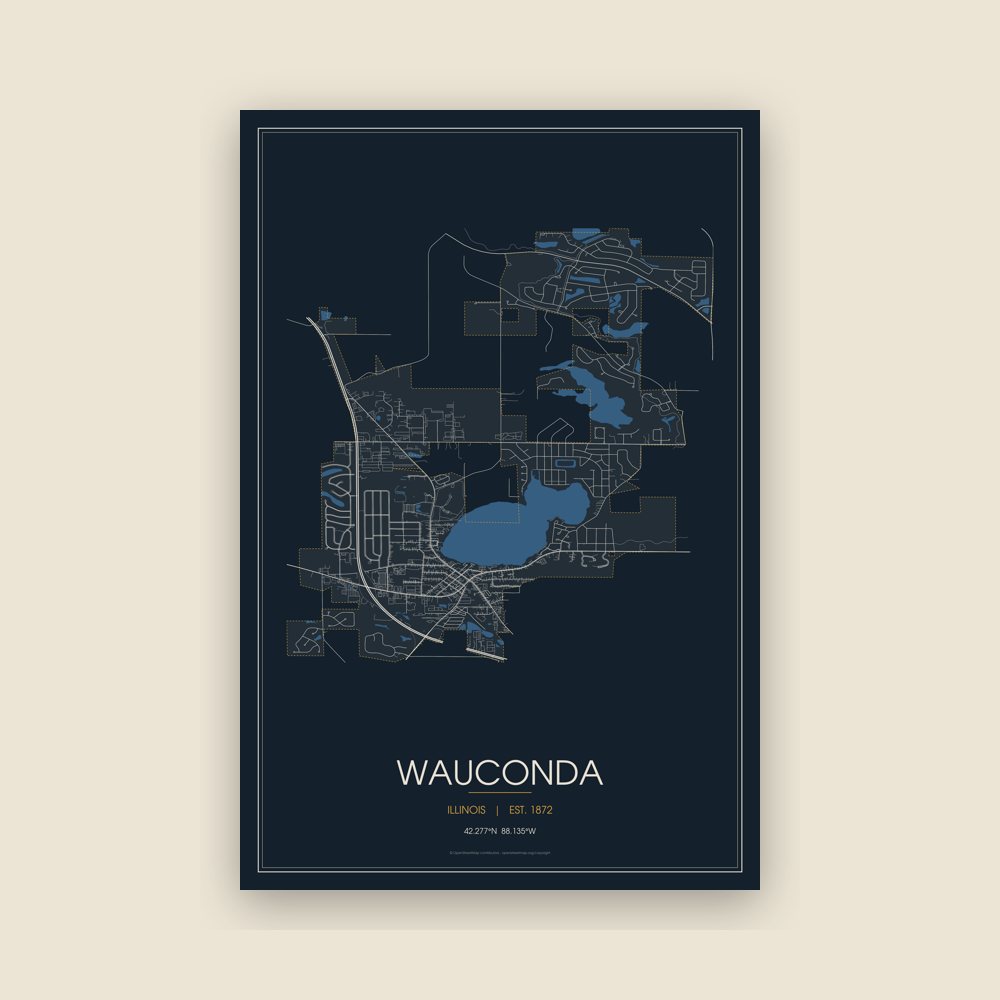
Soft-touch, zip cover
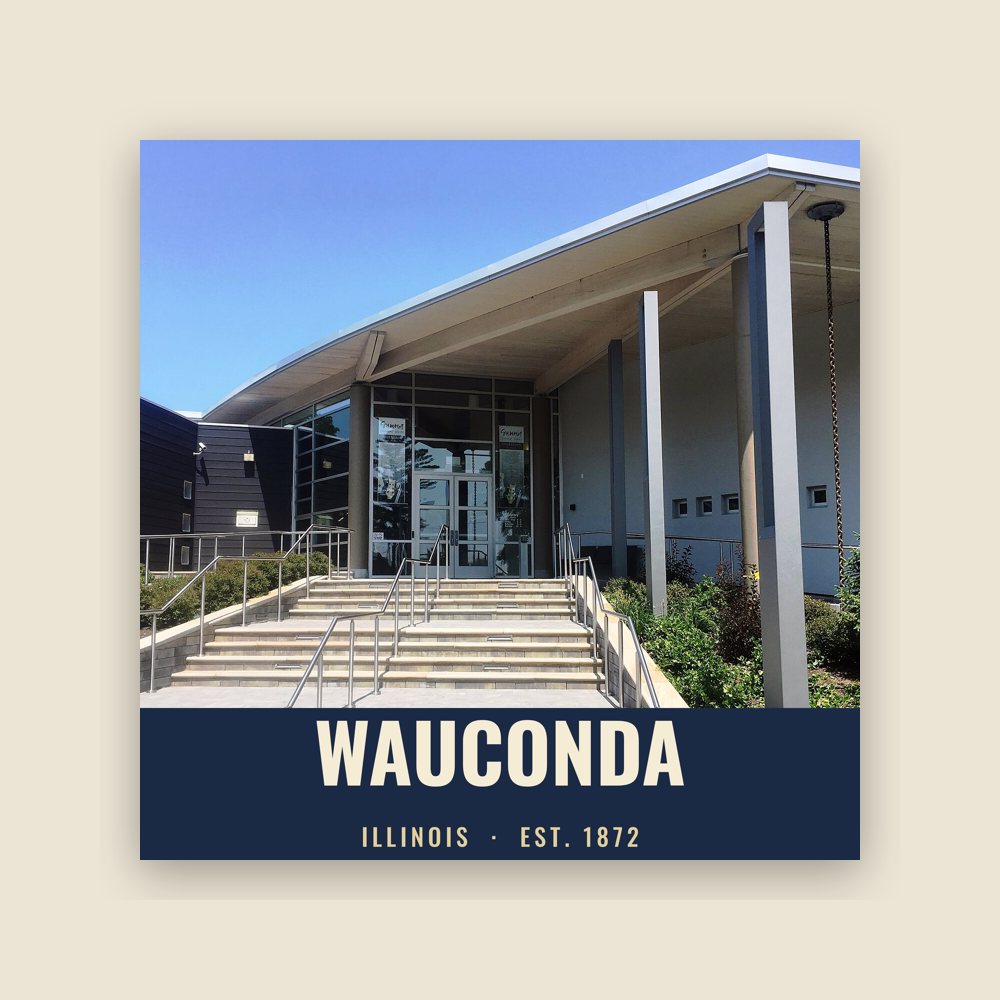
A local landmark photo with the town name, 18″×18″

Sturdy all-over-print tote
Glossy top, cork back
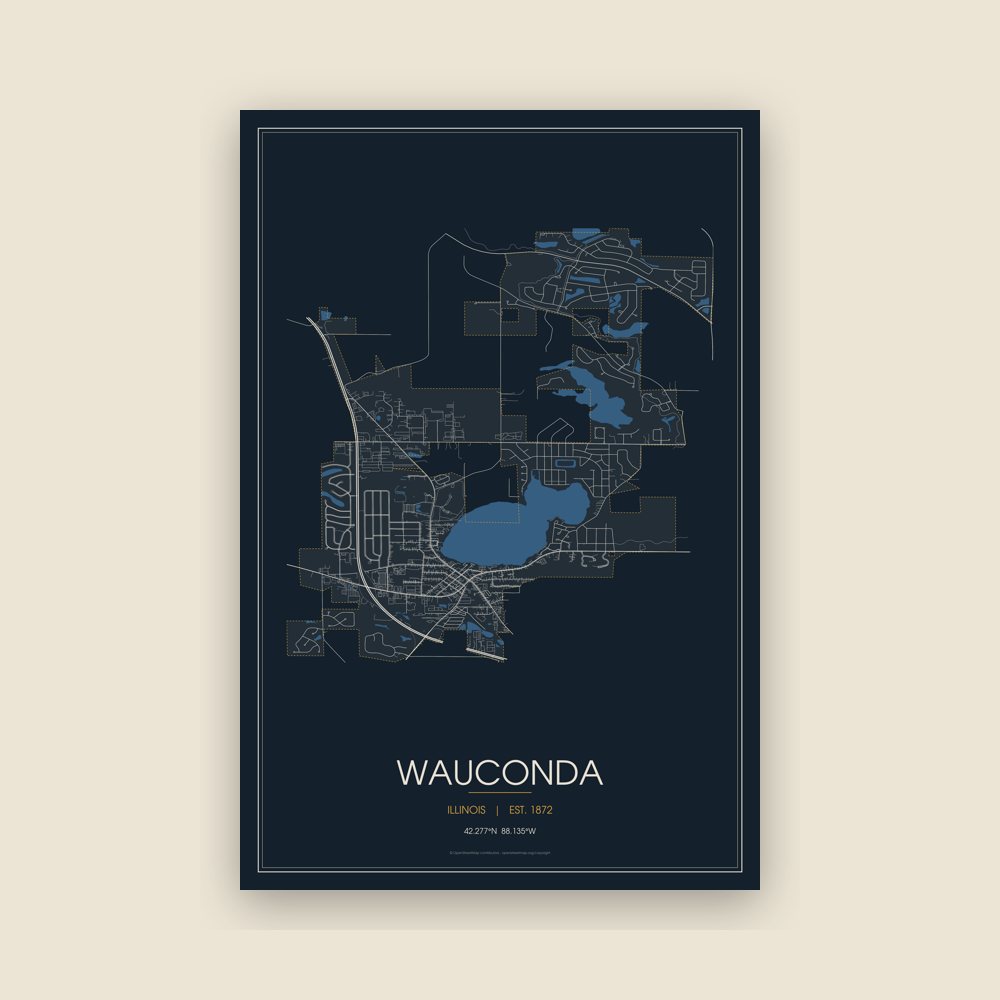
Soft fleece, 50″×60″
20 oz, double-wall stainless
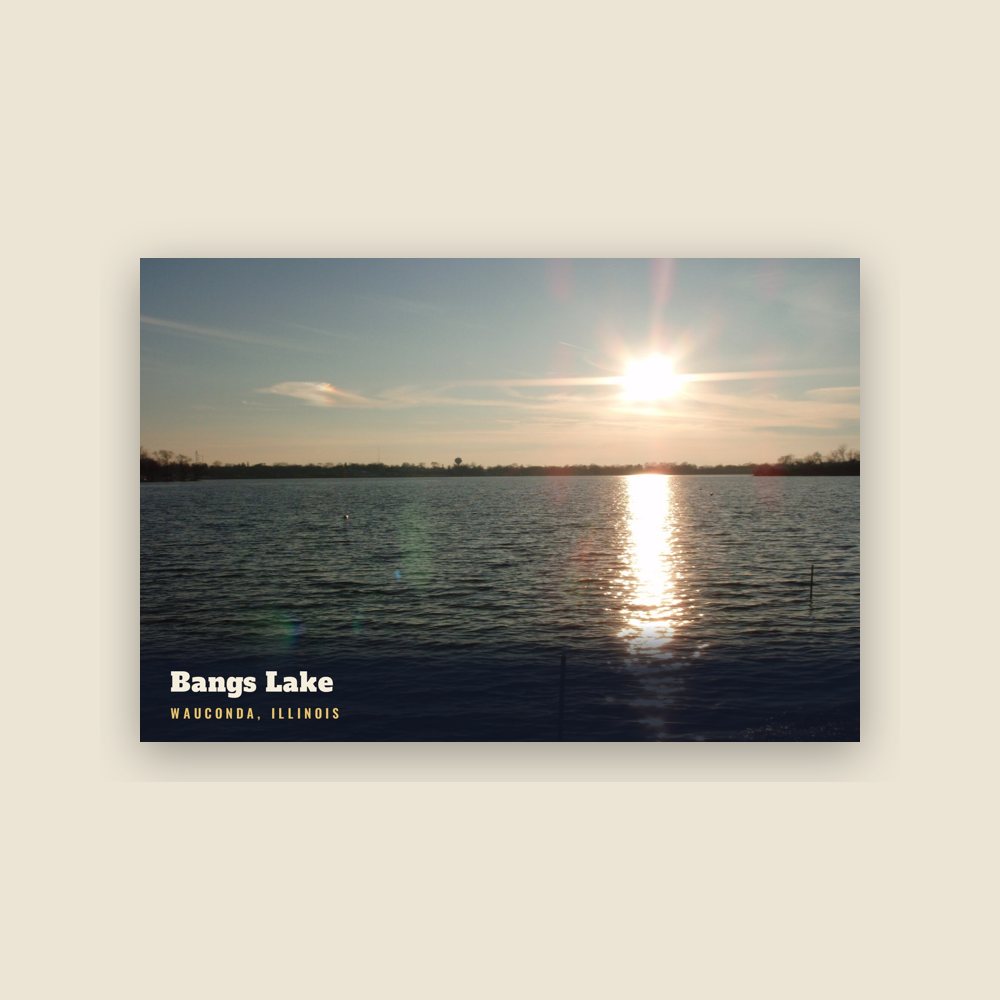
6″×4″ postcard, glossy front
It is the site of the Wauconda Bog Nature Preserve, a National Natural Landmark. Landmarks include Wauconda Area Library.
Many early settlers of Wauconda came from New England and New York by covered wagon or through the Erie Canal and the Great Lakes.
Elihu Hubbard built the first log cabin on the bank of Bangs Lake in 1836. Justus Bangs, the first settler in Wauconda, built a house next to the lake in 1848 and the lake was later named after him. In 1840, members of the Ho-Chunk tribe who did not leave the shores of the Fox River often went to the area to trade. In 1849, Wauconda was organized into a town by a vote of the people of Lake County to divide Lake County into towns. There were 1,695 votes cast and all except three were in favor of the division. The first town meeting was held on the first Tuesday in April 1850 where the first officers were elected and appointed.
Wauconda's first school was built in 1839 and the area's post office was moved to Wauconda on June 27, 1849, with Hazard Green becoming its first postmaster.
Elder Joel Wheeler of McHenry built the first Baptist church in Wauconda in the autumn of 1838. A Methodist church was organized on September 3, 1852, by Reverend C. French, and built in 1856 on the Commons. Both Methodists and Baptists attended prayer at the church until February 1870, when the Baptists reorganized and built a new church on October 30, 1870. A Catholic church was built in 1877 and its first trustees were James S. Murray, Charles Davlin, Felix Givens, John Givens, Hugh Davlin, and Owen McMahon. Its first priest was Father O'Neil.
In 1850, Wauconda had a population of around 200 residents, and the town had three goods stores, two public houses and various mechanics.
By the early 1900s, Wauconda was a popular resort village for Chicago residents and Bangs Lake was made suitable for beaches. The Palatine, Lake Zurich and Wauconda Railroad was completed and hauled agricultural products, delivered mail, transported local passengers, and brought vacationers and day-trippers out from Chicago. Although the railroad did not help develop Wauconda, which remained a small town, it flourished as a resort, and residents depended on it for supplies and for mail.
The railroad closed in 1920 due to lack of business. Later in the decade, Phil's Beach was opened by Phil Froehlke and the right of way was purchased for Route 176 (Liberty Street) through the center of town.
By the end of the 1930s, Wauconda's population exceeded 500 residents. At the end of the 1960s, Wauconda had three elementary schools, a junior high, and a high school. By the end of the 1970s there were about 5,600 residents living in Wauconda.
Throughout the 1980s, most of the beaches on Bangs Lake gradually closed down. They were replaced by houses, townhomes, and other development. Development continued into the 1990s and 2000s as individuals from the outlying Chicago suburbs sought cheaper land. Large new subdivisions were developed north of the town center and small suburbs were established in the surrounding areas.
The village completed a switch to Lake Michigan water in October 2019. This was the largest infrastructure project in village history, costing $48 million.
On April 4, 2023, a referendum was held in the village to determine home rule status. The result of the referendum was to reject home rule status.
Adapted (trimmed) from the Wikipedia article Wauconda, Illinois, revision 1377165521 by its contributors, licensed CC BY-SA 4.0.
We share a part of every Wauconda sale with local partners, and we'd love to print from your collection. Old photographs, maps and postcards make the best keepsakes.
Partner with usA favorite landmark, your street, a school or team, an anniversary gift, a different product. Tell us and we'll get back to you by email.
Wauconda's population was 14,084 in the 2020 U.S. Census, up from 13,603 in 2010.