Staunton is the second largest city in Macoupin County, Illinois, United States. Landmarks include U.S. Route 66. Staunton is the birthplace of Harold Brodkey, writer.
- CountyMacoupin County
- Population5,054 (2020 U.S. Census)
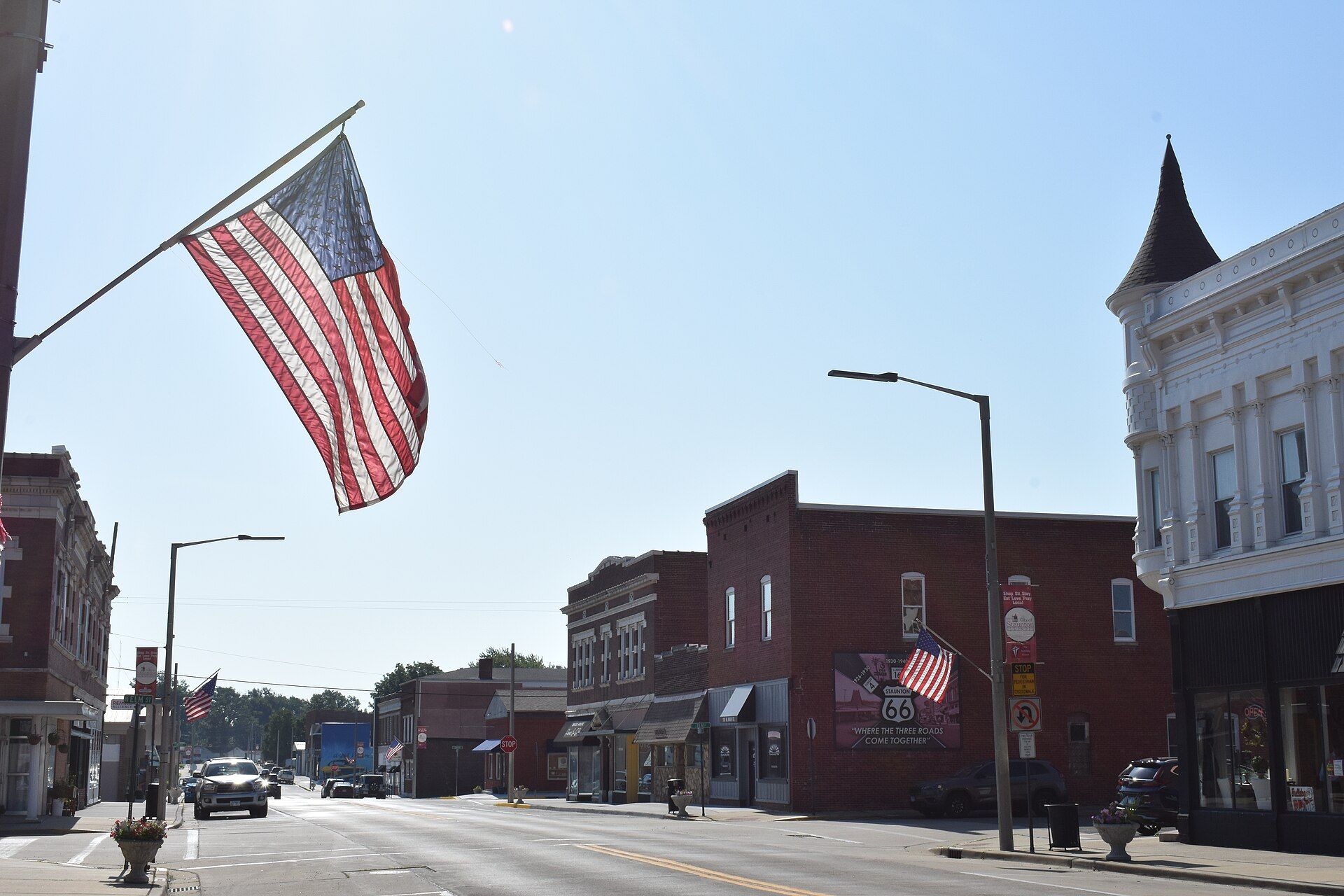
Staunton, Illinois gifts and souvenirs: 21 designs made from Staunton's own map, landmarks and history, from $10 to $95. Printed to order and shipped free in the USA.
| Popular | Price |
|---|---|
| Staunton Hometown Ornament | $23 |
| Staunton Vintage Travel Poster | from $40 |
| Staunton Varsity Crewneck | from $57 |
| Staunton Est. Tee | from $33 |
| Staunton Town Line Mug | from $26 |
| Staunton Market Tote | $37 |

Ceramic keepsake, gold ribbon
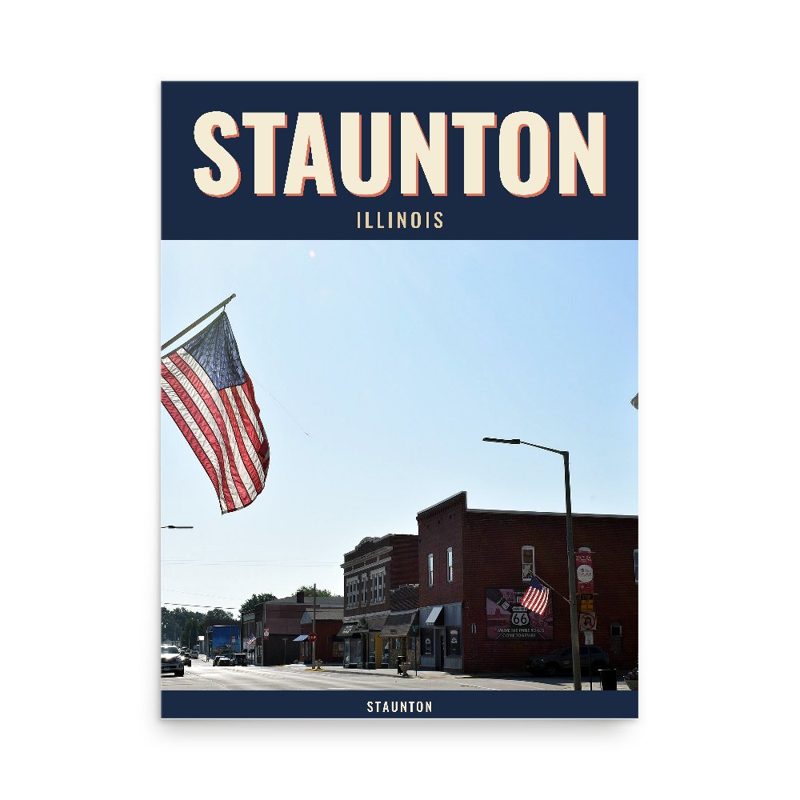
Its landmark photo in a classic travel-poster layout
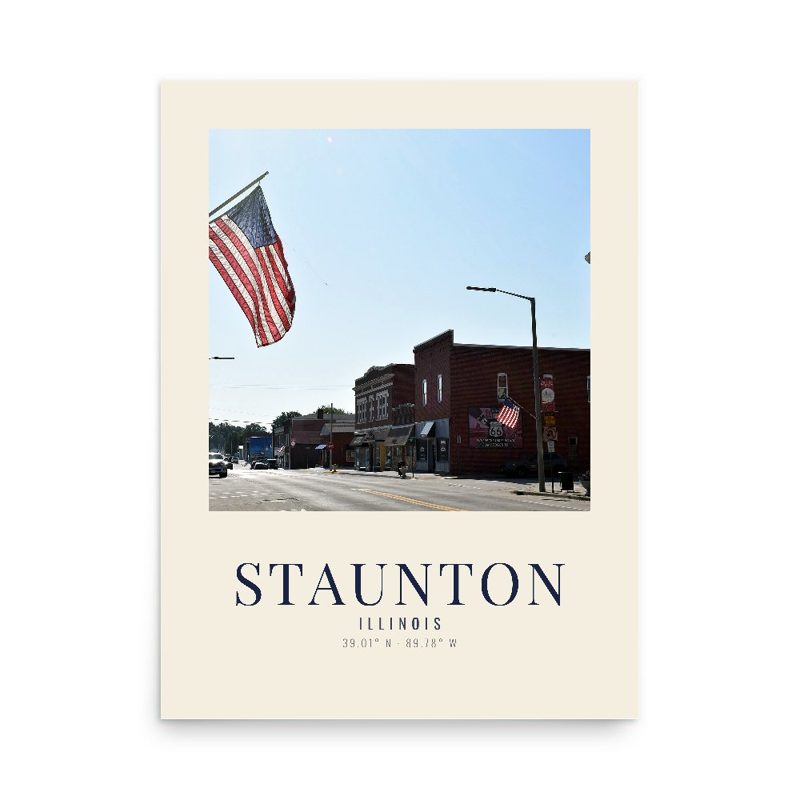
A local landmark photo as a gallery print
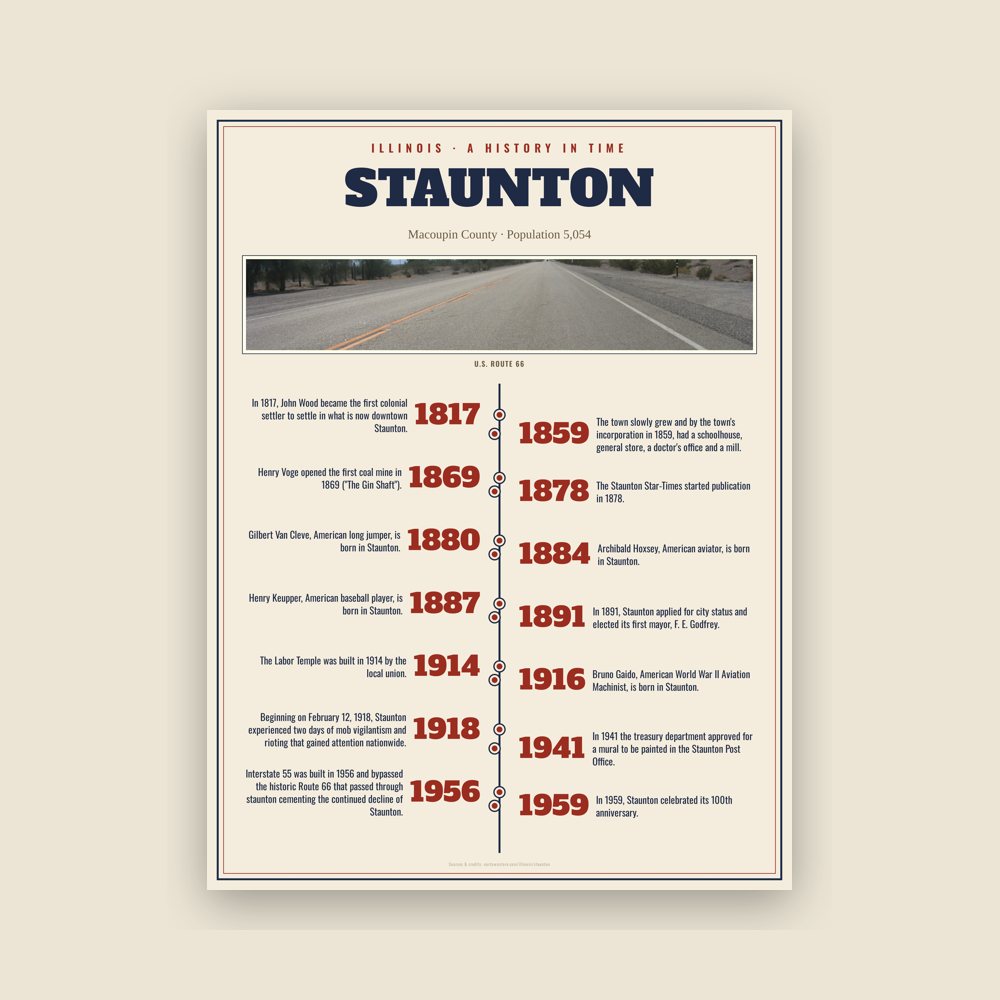
The town's story in dates, from its own records, for home or classroom
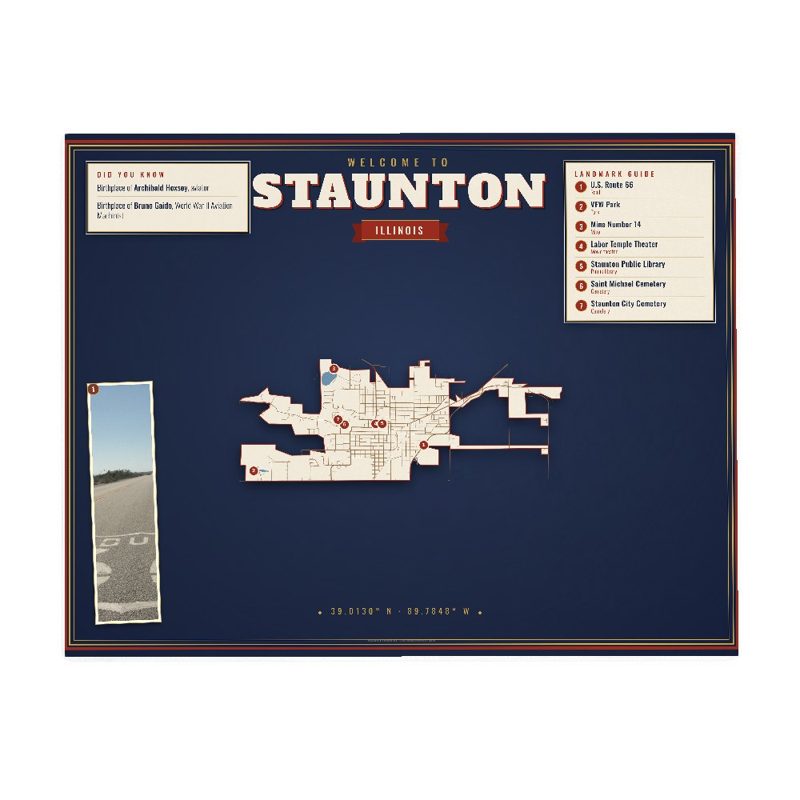
Map of local landmarks, washable fabric

Heavy-blend fleece, street map printed on the back

Soft Bella+Canvas jersey
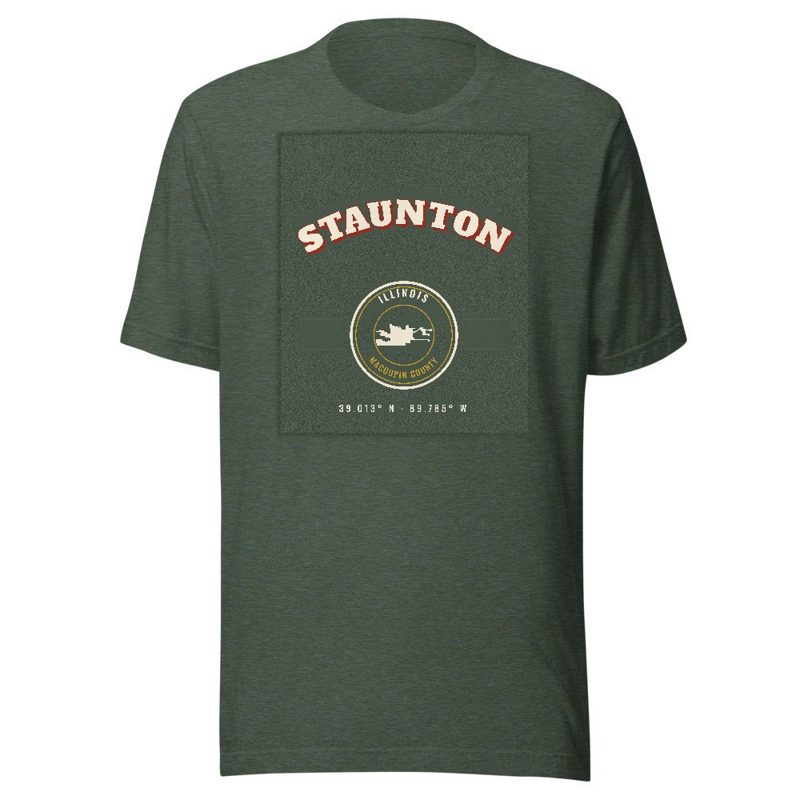
Kids' Bella+Canvas jersey, youth sizes

Bella+Canvas toddler jersey
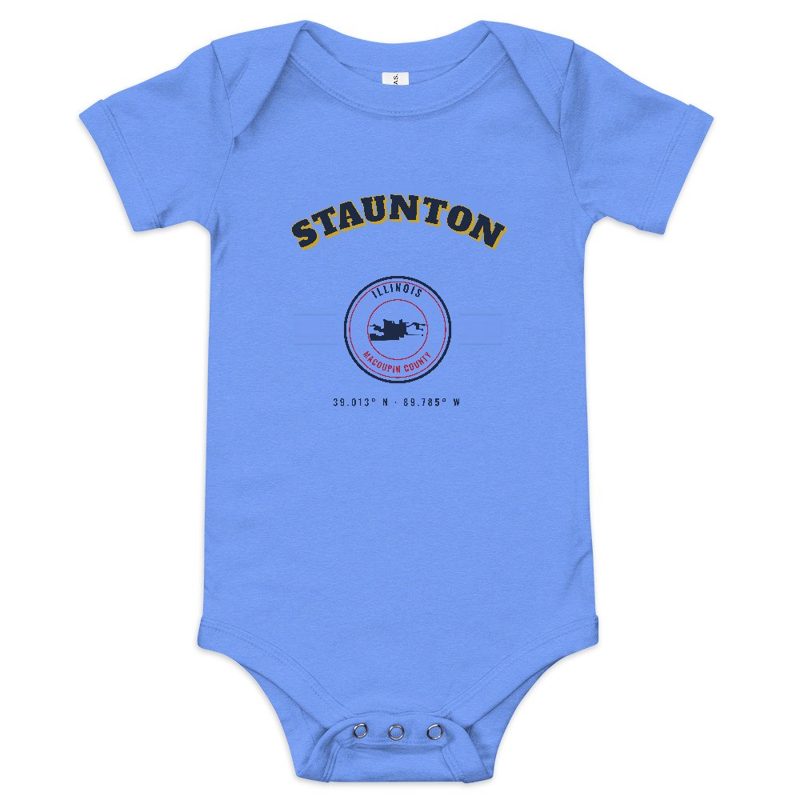
Bella+Canvas baby bodysuit
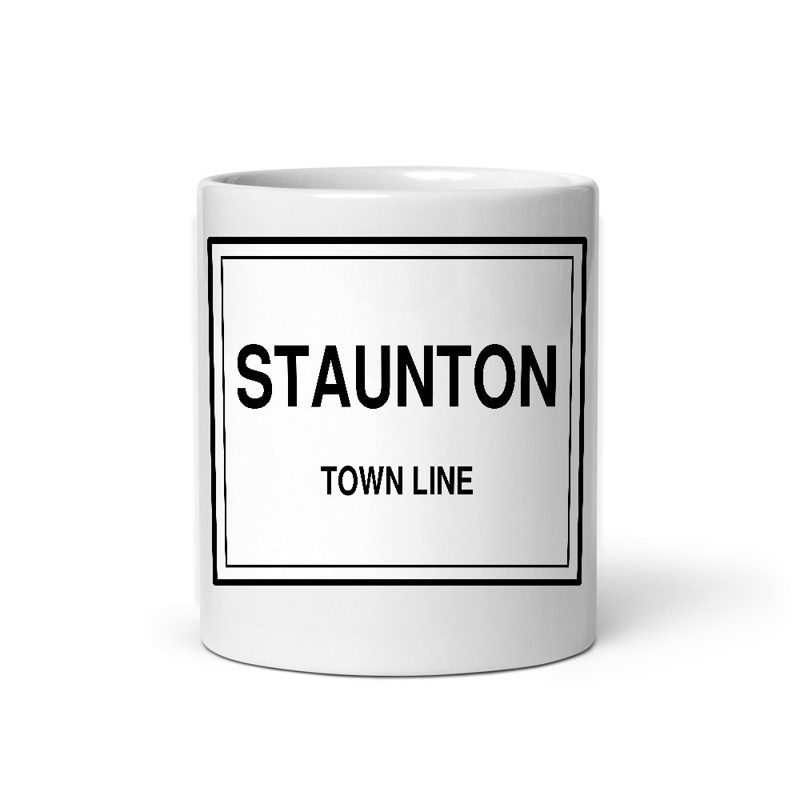
Glossy ceramic, dishwasher safe
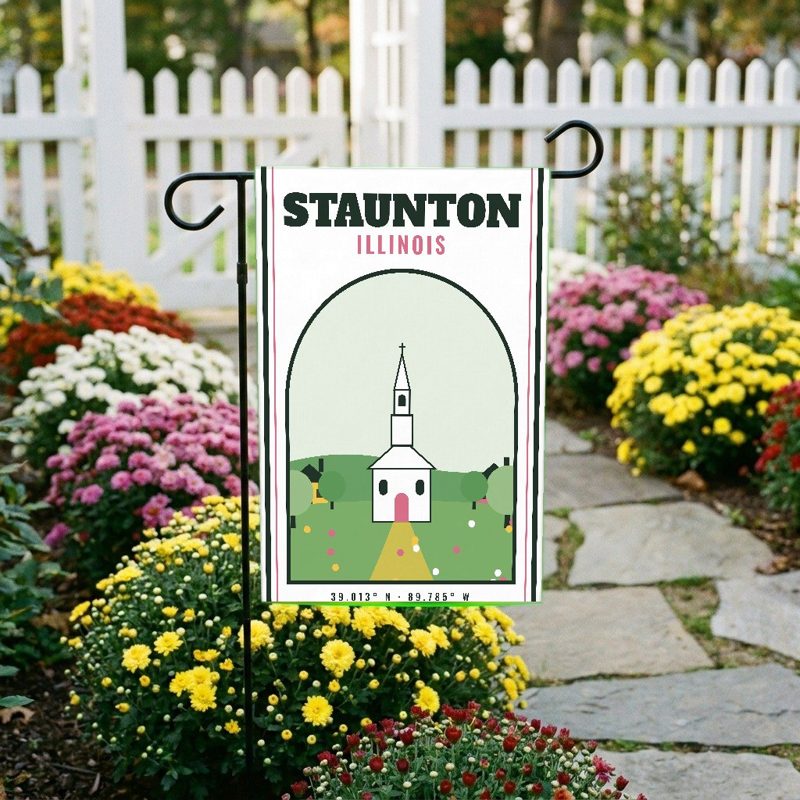
Weatherproof, for the front walk
24″×16″, printed coir-look fibers, rubber back
12″×12″ printed wood, ready to hang
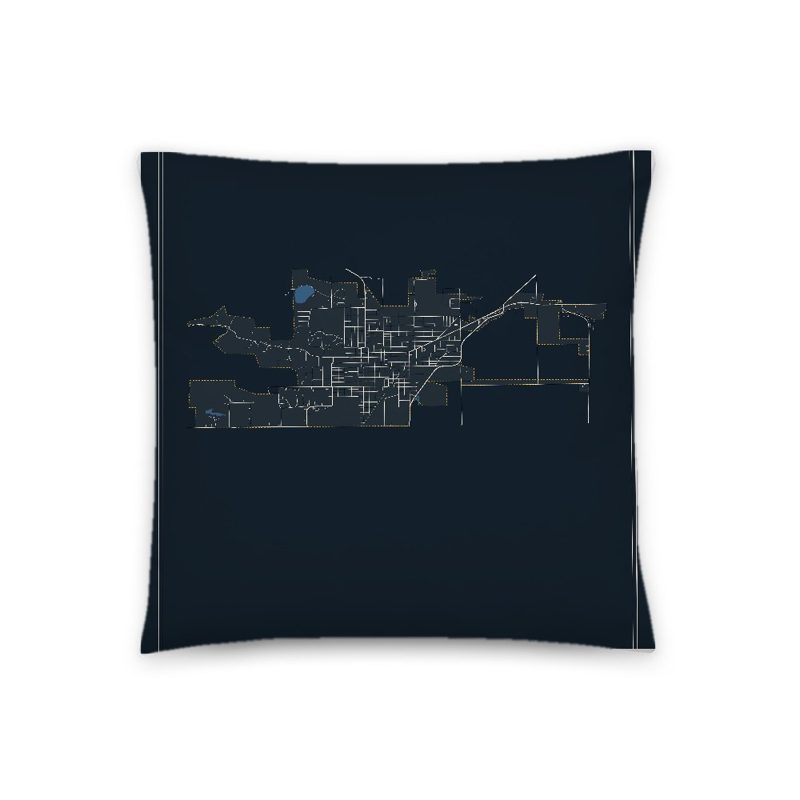
Soft-touch, zip cover

A local landmark photo with the town name, 18″×18″
Sturdy all-over-print tote

Glossy top, cork back
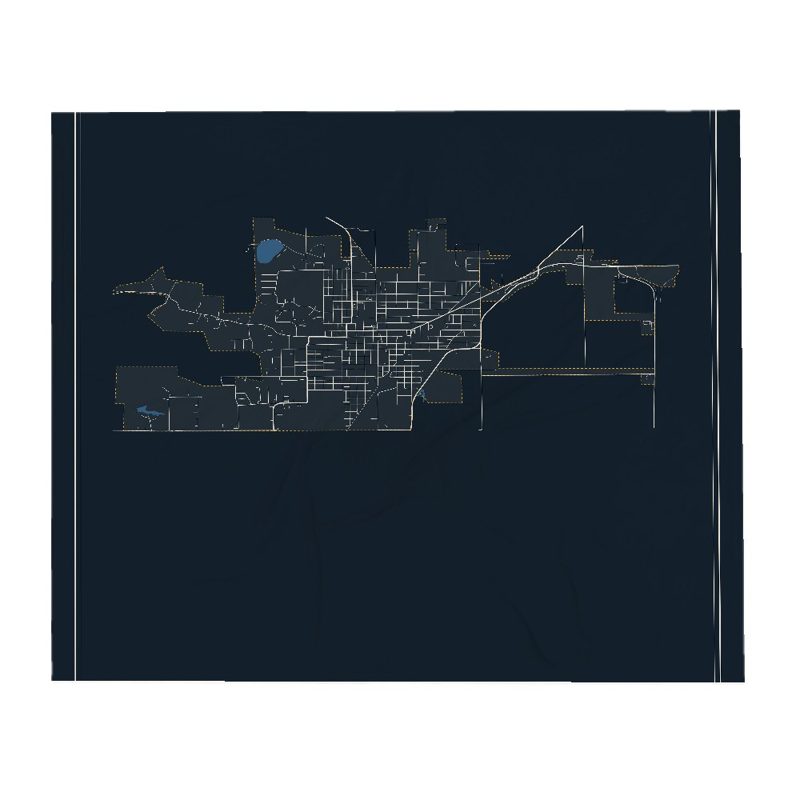
Soft fleece, 50″×60″
20 oz, double-wall stainless
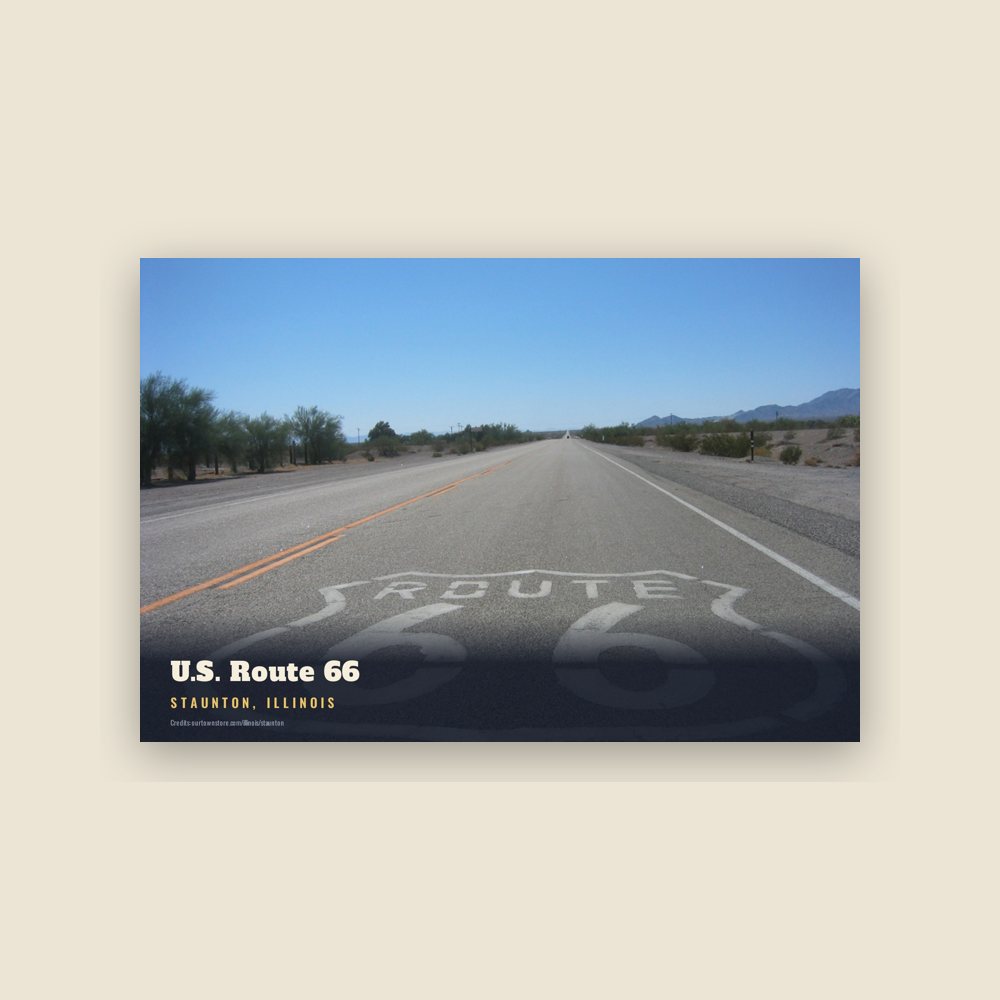
6″×4″ postcard, glossy front
Staunton is the second largest city in Macoupin County, Illinois, United States. Landmarks include U.S. Route 66. Staunton is the birthplace of Harold Brodkey, writer.
Population 2010: 5,139 → 2020: 5,054
From Wikidata (CC0).
A settler named Stanton bought land in the area and donated the land to a nearby village. The village decided to name the town Stanton after the original settler. An application for the town's incorporation was sent to Washington DC where it was approved but misspelled as Staunton due to the name being similar to Staunton, Virginia.
In 1817, John Wood became the first colonial settler to settle in what is now downtown Staunton. The town slowly grew and by the town's incorporation in 1859, had a schoolhouse, general store, a doctor's office and a mill. Staunton grew with the introduction of the railroad and a coal mine in the 1860s. New immigrants from Ireland, Germany and Italy moved to Staunton, and the community soon became one of the largest cities in southern Illinois. The Staunton Star-Times started publication in 1878. In 1891, Staunton applied for city status and elected its first mayor, F. E. Godfrey.
Coal mining characterized the city for nearly a century. Henry Voge opened the first coal mine in 1869 ("The Gin Shaft"). Two large mounds of slag that rise from prairie farmland on the outskirts of Staunton tell much about the history and the present status of the small city. The size of the piles indicates many years of deep shaft coal production, while the weeded erosions indicate the tipples have been idle for years. Mining started here shortly before the Civil War. It ended shortly before World War II. When the shafts were operating, they provided most of the employment in the town.
Staunton Local 755 became the largest coal miners' union in the state. The Labor Temple was built in 1914 by the local union. The front doors of this fine structure opened onto an attractive lobby with a wide stairway to the second floor on the right and a ticket office centered between two entrances to a large auditorium which had a sloping floor, aisles between three sections of comfortable seats and in front a large, well-arranged stage. This auditorium had the first air conditioning system to be found anywhere within 35 miles (56 km) of Staunton. From Tuesday through Sunday it was a theatre showing first-run movies for many years. The musical film Don't Give Up the Ship gave inspiration to local high school students in writing the Staunton High School fight song Don't Give Up the Fight. The first Monday of each month the Miners Union held their meeting there. The other Mondays could be booked for graduations, dramatic or musical productions by local groups, speakers, etc. Upstairs were toilet facilities, several small conference or committee meeting rooms, and a large hall where lodges met and dances and receptions could be held.
In the 1920s, Staunton accomplished the building of several notable institutions such as Lake Staunton, Staunton Community High School and the Staunton Fire Department. Staunton's population reached at all-time high during the 1920s. In 1941 the treasury department approved for a mural to be painted in the Staunton Post Office. The mural is "Going to Work" (Ralf Henrikson, completed 1941). It was the subject of a documentary, Silver Lining, about federal-sponsored art projects in Illinois during the Great Depression.
In the 1950s, the Illinois Traction system ran its last passenger train through Staunton, leading to a substantial decline in business in the area. Interstate 55 was built in 1956 and bypassed the historic Route 66 that passed through staunton cementing the continued decline of Staunton. In 1959, Staunton celebrated its 100th anniversary.
Adapted (trimmed) from the Wikipedia article Staunton, Illinois, revision 1379137822 by its contributors, licensed CC BY-SA 4.0.
We share a part of every Staunton sale with local partners, and we'd love to print from your collection. Old photographs, maps and postcards make the best keepsakes.
Partner with usA favorite landmark, your street, a school or team, an anniversary gift, a different product. Tell us and we'll get back to you by email.
Staunton's population was 5,054 in the 2020 U.S. Census, down from 5,139 in 2010.