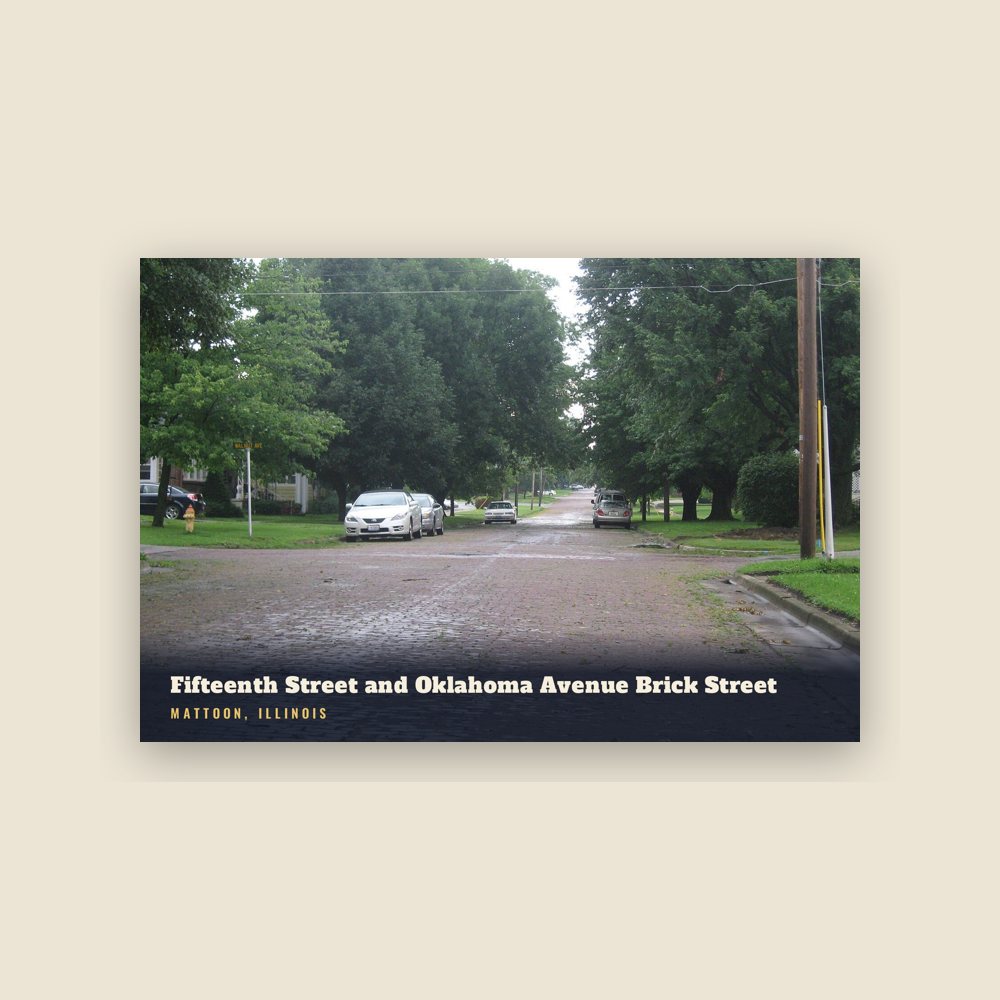
"Away from the timber to the north, the face of the country is generally quite level, broken only by long undulations. It is almost entirely prairie land in this part, and was allowed to remain uncultivated until after the opening of the railroads. It was largely used for pasturage during this period, and often presented signs of great animation as the herds of cattle, under the care of their drovers, moved about over its grassy, slightly undulating surface."
Groves could be found scattered throughout the area. Early settlers to the area started homesteads in the timberline, which provided building materials and fuel. Since the vast majority of early settlers came from wooded areas of Indiana, Kentucky, and Tennessee (by way of the Ohio and Wabash River valleys), the forests also provided a sense of familiarity.
In 1826, Kentucky émigré Charles Sawyer became the first white man known to settle in the Mattoon area, just north of the timberline (known as the Wabash Point Timber) along the Little Wabash River. Levi Doty built Sawyer's cabin while the latter returned to Kentucky to retrieve the rest of his family. Within a year, a few families very quickly settled around Sawyer in the area of Paradise Township, including Dr. John Epperson, the county's first physician. Settlers built log cabins using pegs (no iron or nails). "The luxuries of life were generally not seen the first years of the settlement, but appeared as the residents could obtain them."
Corn was planted and remained a staple crop. Gardens of potatoes and other vegetables were maintained. Hogs, which ran wild in the woods, provided pork, while "deer, bears, wild turkeys, and prairie chickens provided an abundant supply of wild meat." Wolves proved troublesome to domesticated animals.
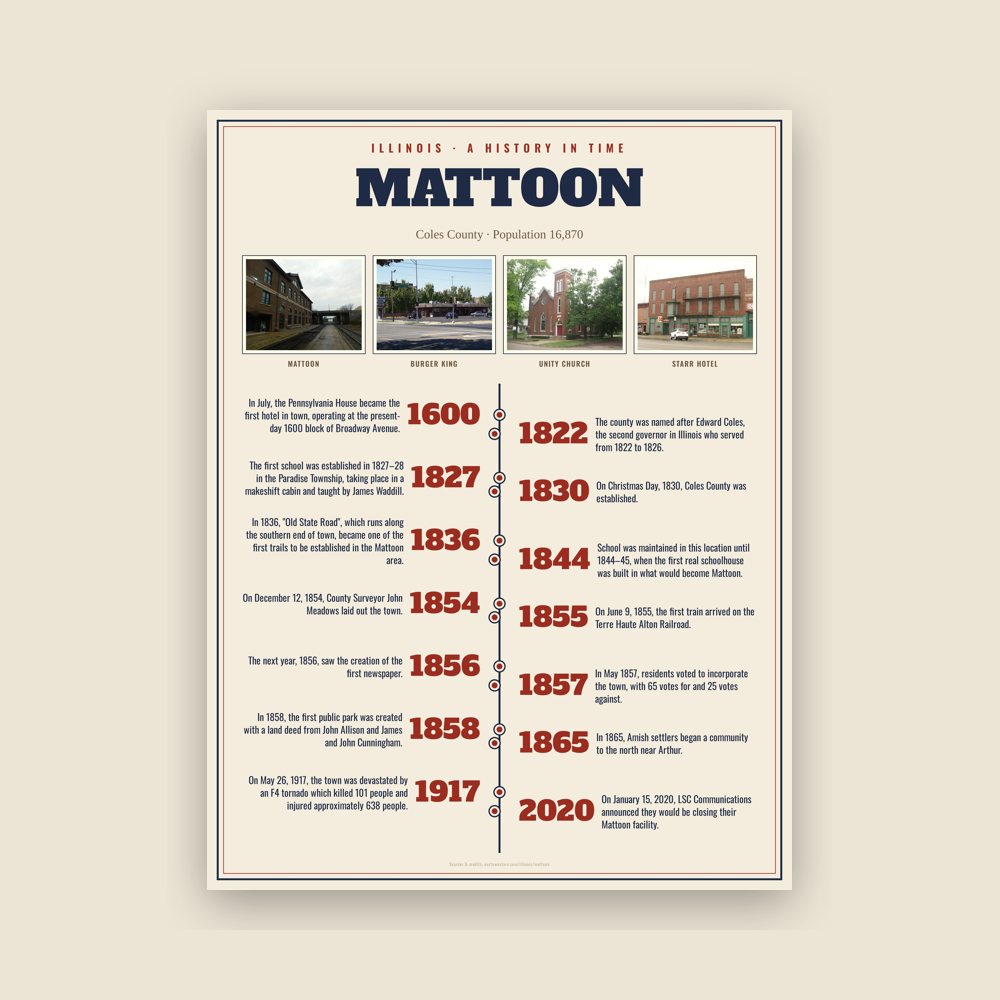
The first school was established in 1827–28 in the Paradise Township, taking place in a makeshift cabin and taught by James Waddill. The costs were $2.50-3.00 per student. School was maintained in this location until 1844–45, when the first real schoolhouse was built in what would become Mattoon. That year, the Illinois State Legislature passed its first school laws, making Mattoon a forerunner for early education in the state.
As the population grew, demand for a local government increased. On Christmas Day, 1830, Coles County was established. The county was named after Edward Coles, the second governor in Illinois who served from 1822 to 1826. Settlers in the Mattoon area remained poor and humble, but their community remained close knit.
In 1836, "Old State Road", which runs along the southern end of town, became one of the first trails to be established in the Mattoon area. Another trail, the Kaskaskia Pass, traveled past what was known as "The Lone Elm Tree", a natural landmark that helped guide visitors and newcomers. The tree was cut down on August 1, 1950, due to disease. A plaque at the corner of 32nd Street and Western Avenue marks the location of this important landmark.
Read the full history
1850–1900
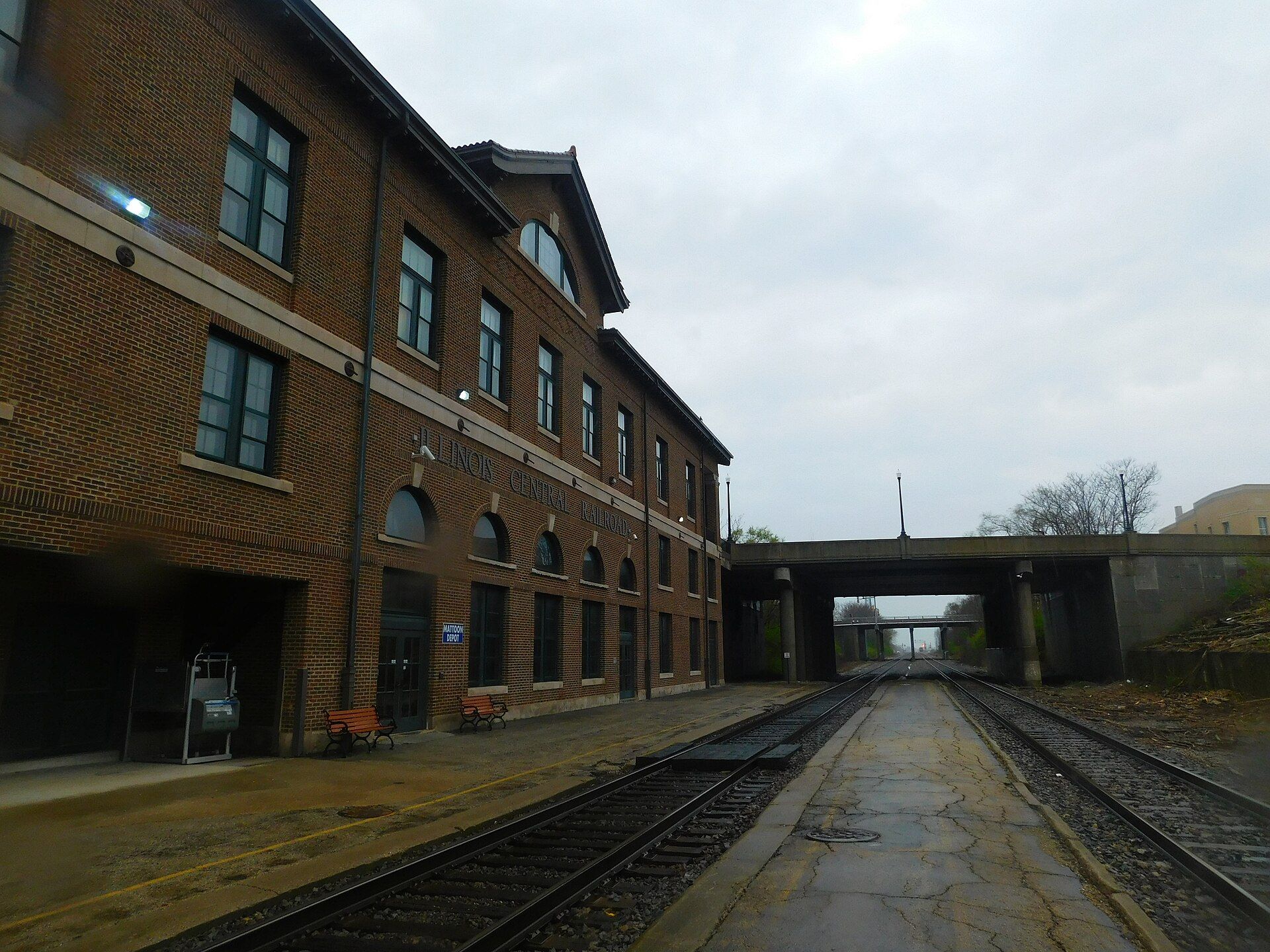
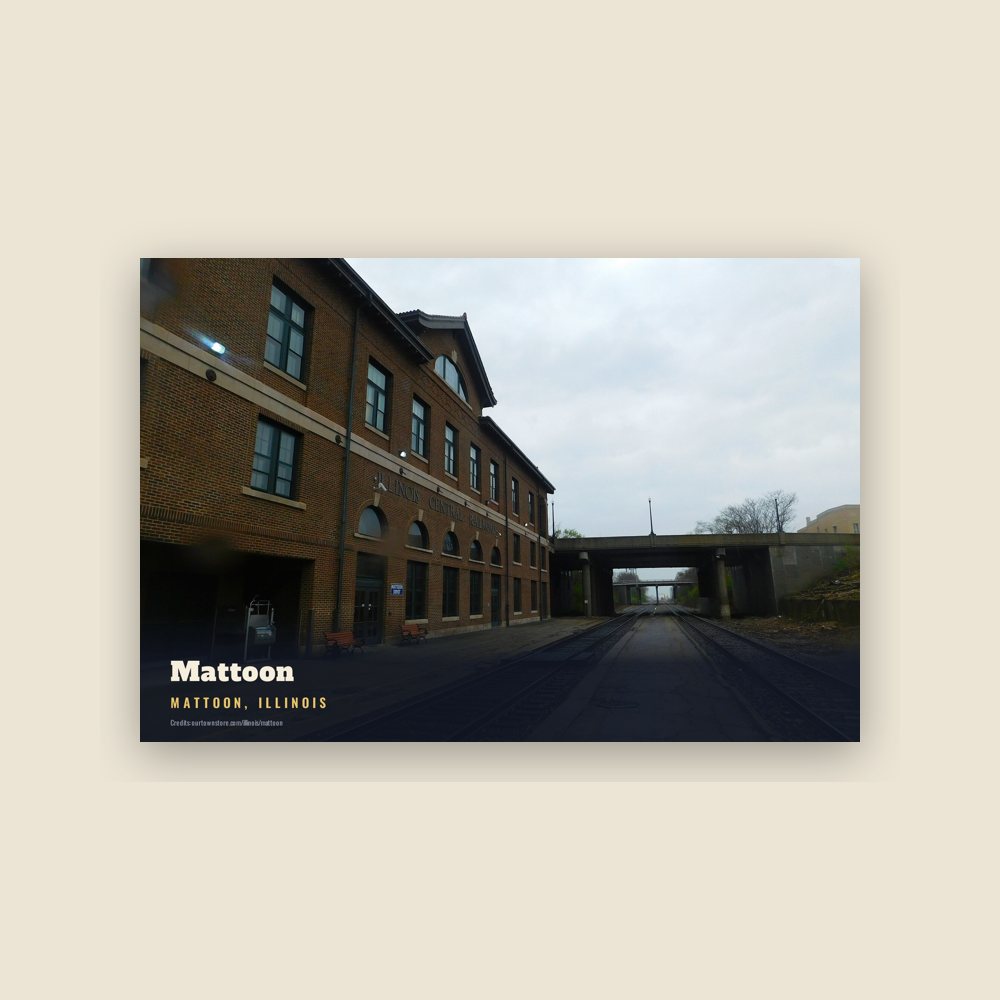
The growth and subsequent history of Mattoon is tied to that of local railroads. In 1854, railroad surveyors from the Illinois Central Railroad and Terre Haute and Alton Railroad found their railroads would cross in the Mattoon area, and a burst of investment and land speculation began. The two railroads raced to the meeting point, on the understanding that the first to arrive would not have to pay to maintain the crossing. The community that had grown in the area of swamp grass and prairie came to be known as "Pegtown", which referred to the pegs (stakes) used to demarcate lots to be sold at public auction. Among the speculators were Elisha Linder, Ebenezer Noyes, James T. Cunningham, Stephen D. Dole, John L. Allison, and John Cunningham. Land was purchased for $2.50 per acre. On December 12, 1854, County Surveyor John Meadows laid out the town.
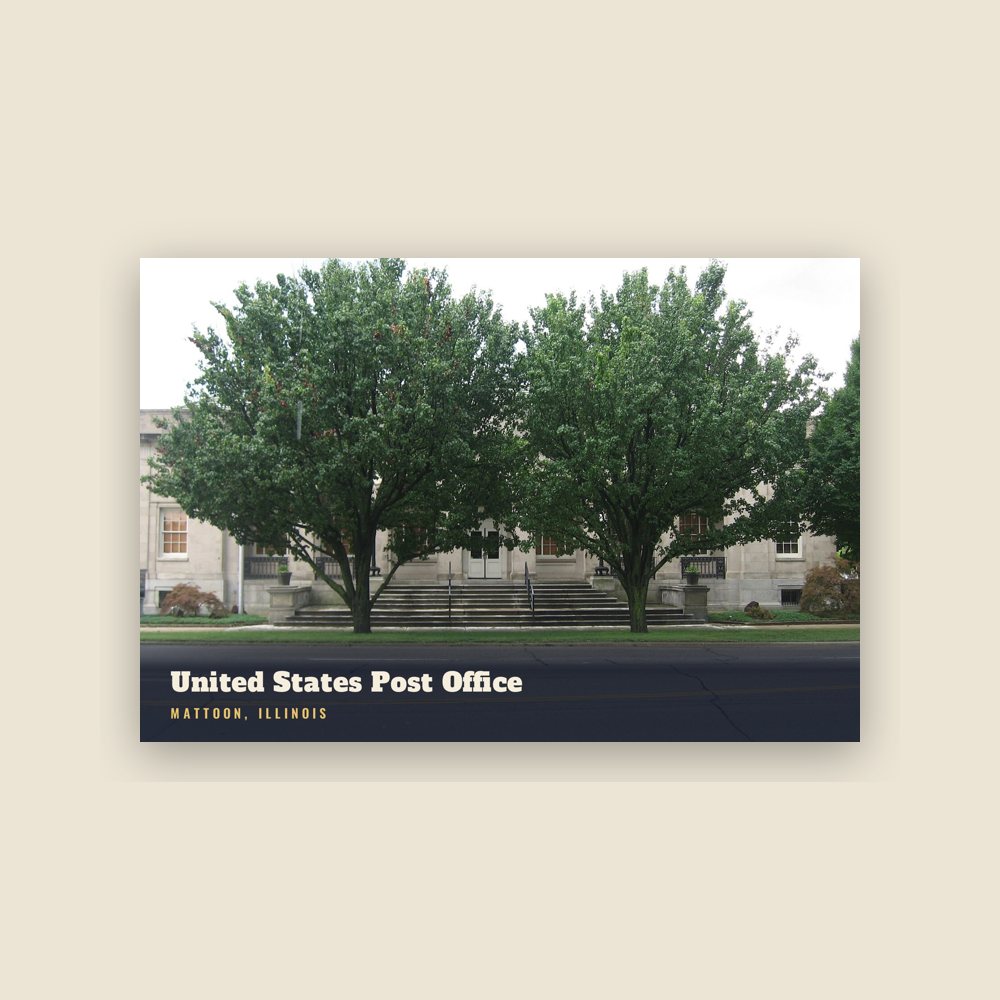
The 1850s saw a flurry of activity for the emerging town. In 1855, the first houses were built. Benjamin Turney used 16 yoke of oxen to drag his home from a farm three miles away, while R. H. McFadden built his home near the area of present-day First Street and Prairie Avenue. In May that year, "Pegtown" lots were auctioned. On June 9, 1855, the first train arrived on the Terre Haute Alton Railroad. In July, the Pennsylvania House became the first hotel in town, operating at the present-day 1600 block of Broadway Avenue. That month the first post office was established, with James M. True serving as postmaster. In September, Rev. Isaac Hart performed the town's first wedding, marrying Sarah Norvell and R. H. McFadden.
The next year, 1856, saw the creation of the first newspaper. The weekly "Independent Gazette" published four page, seven-column editions. In that same year, the first public school was established (at 1307 Champaign Ave.). In 1856, the first two babies were born in Mattoon, Charles Cartmell in July and Mollie Puff in September. By now, the rapidly growing town had more than 100 buildings. Between 1856 and 1857, the first Baptist, Catholic, Methodist, Christian, and Presbyterian churches were formed.
In May 1857, residents voted to incorporate the town, with 65 votes for and 25 votes against. Also in 1857, ordinances passed forbidding drunkenness, working on Sunday, disturbing public or religious meetings, gaming, leaving carcasses on the streets, littering, obstructing sidewalks, and driving fast horses. In 1858, the first public park was created with a land deed from John Allison and James and John Cunningham. The park remains and is today called Allison–Cunningham Park.
On the night before the fourth Lincoln-Douglas debate of September 18, 1858, at the Coles County Fairgrounds, both Abraham Lincoln and Stephen A. Douglas slept in nearby Mattoon. Lincoln slept in the Essex House hotel, a popular hotel in those times. He addressed a small crowd from his hotel room. The Essex House, the third brick building in town, opened on the southwest corner of the railroad intersection with Union Station located on the lower story. The Essex House served as hotel, restaurant, and ticket office for both railroads. Later, Ulysses S. Grant would also use the hotel. Today, the mural "Civility" (2009), located in Progress Square, commemorates the arrival of the railroad and depicts the Essex House and both Lincoln and Douglas. "The Lone Elm Tree" occupies the center of the mural.
In 1861, the town was officially named after William B. Mattoon, the chief construction engineer working for the Terre Haute and Alton Railroad and partner of the Massachusetts firm "Phelps, Mattoon, and Barnes." The reason for the honor is unclear; some say he won the naming rights because his rail crew arrived first. Others say he beat other claimants in a card game, or that Pegtown residents hoped the wealthy Mattoon would invest in the town if they named it after him. With its combination of excellent transportation and remarkably fertile prairie soils, Mattoon expanded rapidly. By the dawn of the 20th century, Mattoon's growing population and rail access brought manufacturing and industry.
On June 17, 1861, General Ulysses S. Grant took his first post of the American Civil War when he assumed command of the 21st Illinois Infantry in Mattoon. The flagpole from General Grant's camp was preserved and is on display at the Mattoon Public Library.
In 1865, Amish settlers began a community to the north near Arthur. Amish farm stands and horse-drawn buggies are not uncommon sights in the northern part of Mattoon today.
In the 1890s, Mattoon led the successful campaign to have a proposed college in eastern Illinois located in Coles County. The citizens were chagrined when neighboring Charleston was chosen as the home of the future Eastern Illinois University instead.
20th century
On May 26, 1917, the town was devastated by an F4 tornado which killed 101 people and injured approximately 638 people. The tornado was Illinois's third-deadliest tornado disaster.
In 1932, the Kuehne Manufacturing Co. began producing dinette sets at their new plant on the south side of Mattoon. Its early sets were wooden, but by the 1950s Kuehne was making the chromed metal breakfast-room sets so popular during that decade. The company closed in 1965. Today, Kuehne dinette sets are prized by collectors of mid-century modern furniture.
The 1940 discovery of petroleum reserves near Mattoon led to a small "oil boom" over the next two decades, bringing with it economic benefits and increased civic pride. Oil extraction continues to be an important economic activity.
In 1966, Lake Land College was built just south of the city. The community college offers degrees for immediate employment and pre-university education.
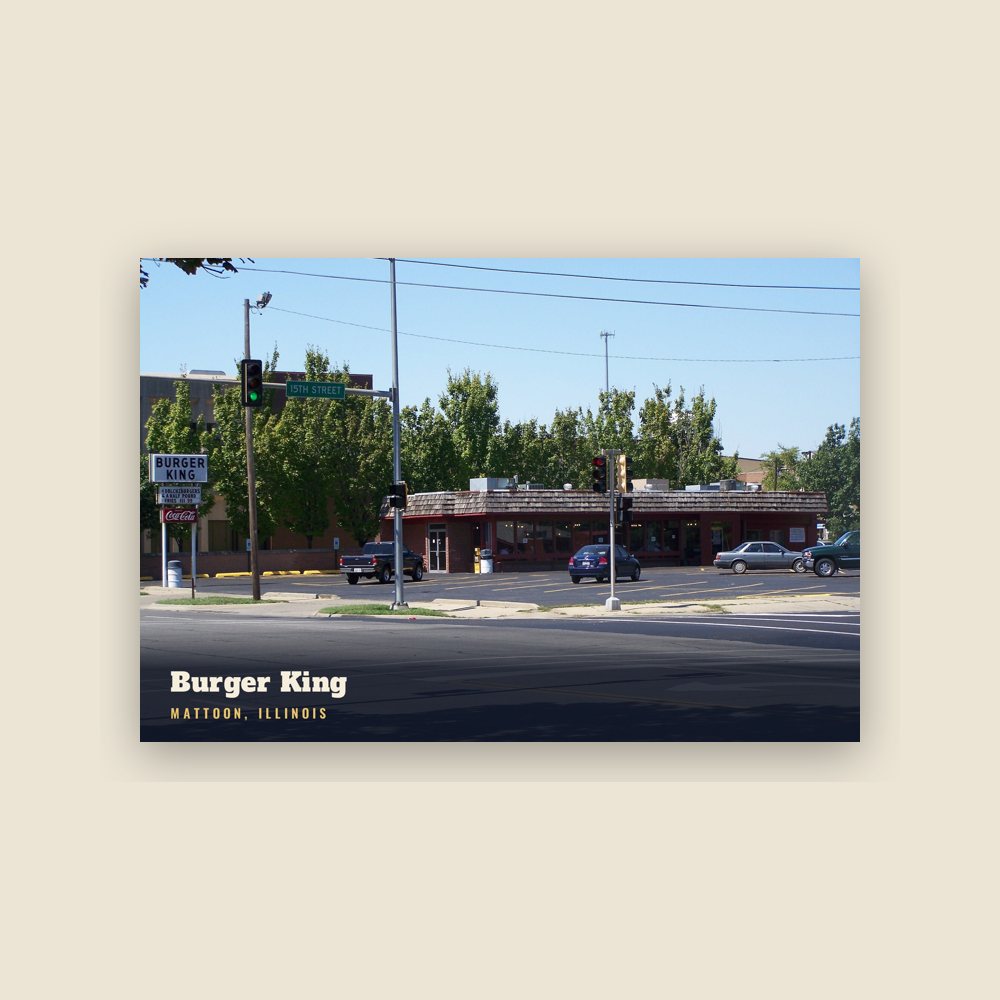
The Burger King — unrelated to the Florida-based fast food chain Burger King — is a Mattoon restaurant whose owners claim it is the "original" Burger King. In 1968, they sued the national chain Burger King, producing a well-known case in United States trademark law. The federal 7th Circuit Court of Appeals ruled that federal trademark registration has priority over state law, giving the national Burger King chain rights to the name beyond a 20-mile radius around the original Burger King. Today, the closest Burger King franchise location is 25 miles away in Tuscola, Illinois.
Mattoon was home to several minor-league baseball teams in the late 19th and early 20th centuries. The last stadium, with about 2,000 seats, was torn down in the late 1950s. Today, the city has a thriving junior league and has hosted many junior league regionals and World Series.
21st century
Traditionally a bastion of manufacturing, Mattoon has lost several major plants in the last two decades. On December 18, 2007, the U.S. Department of Energy chose the city as the site of its FutureGen project, a zero-emissions coal-fueled power plant that was to make hydrogen and electricity while using carbon capture and storage. Three years later, the city rejected the proposal after DoE announced its intention to retrofit an existing power plant in Meredosia instead of building a new one in Mattoon.
In 2000, Mattoon native Clyde D. Hood was indicted for the Omega Trust scam, a 1994–95 scam that brought in around $10 million and was one of the largest in U.S. history. Hood and accomplices bought businesses in the Mattoon area, including the Blue Bird Diner, a longtime family favorite in the small town.
The 1986 arrival of the Lender's Bagels factory led Mattoon to dub itself the "Bagel Capital of the World." Home to the world's largest bagel, the town holds a weeklong family festival, "Lenders Bagelfest", at the end of July. The main event is a three-day weekend festival held in Peterson Park near downtown, featuring food and craft vendors, local organizations, rides such as the Ferris wheel and the Tilt-A-Whirl, and morning community events such as The Big Bagel Breakfast and Bagel Bingo. A beauty pageant crowns winners in various age groups, who ride in the parade held on the Saturday morning of the event. The festival features concerts by local and national musicians. In 2009, Zac Brown Band headlined the festival; others have included Night Ranger, 38 Special, Jason Aldean, The Marshall Tucker Band, Travis Tritt, and Ronnie Milsap. There is also a Christian night featuring contemporary Christian musicians such as Building 429 and Remedy Drive.
General Electric closed since the need for traditional lighting has decreased. The plant opened in the 1940s and has remained a staple ever since. On January 15, 2020, LSC Communications announced they would be closing their Mattoon facility. LSC Communications was Mattoon's largest employer. Affiliates of Phoenix Investors purchased LSC.