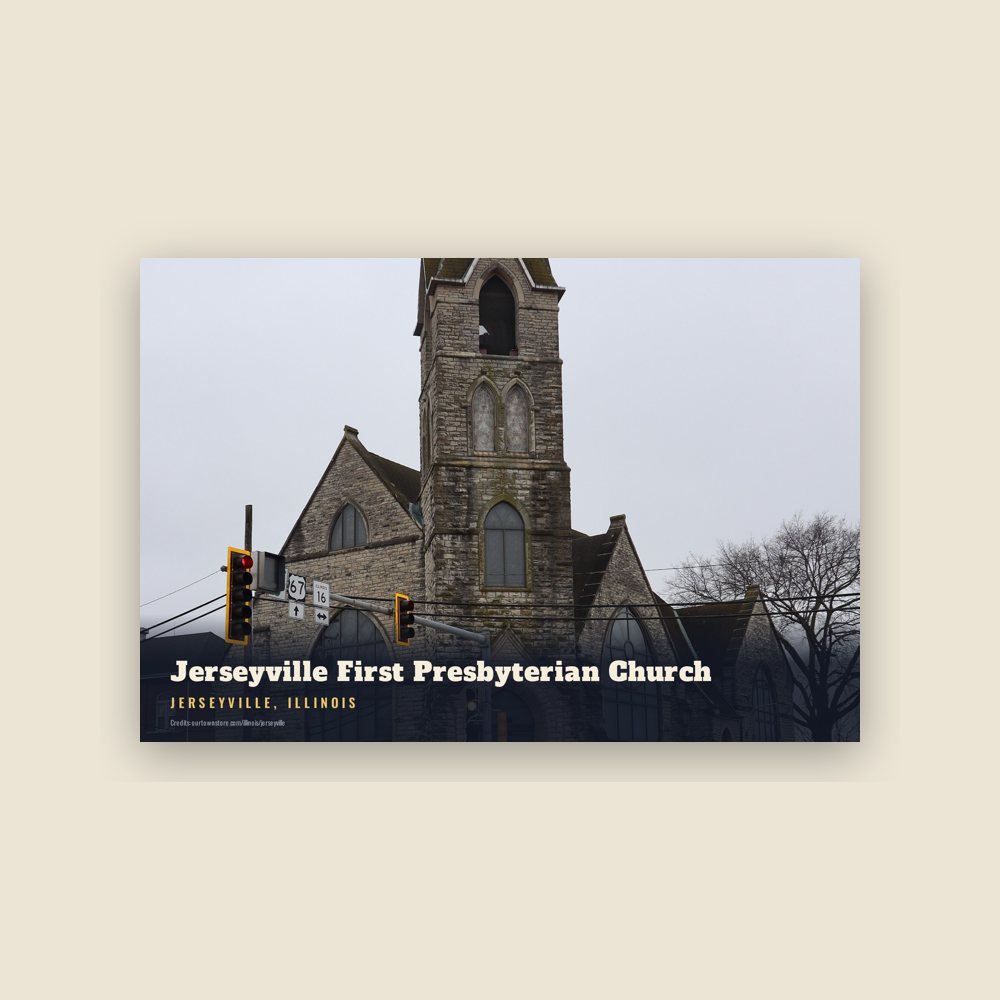
A short history of Jerseyville
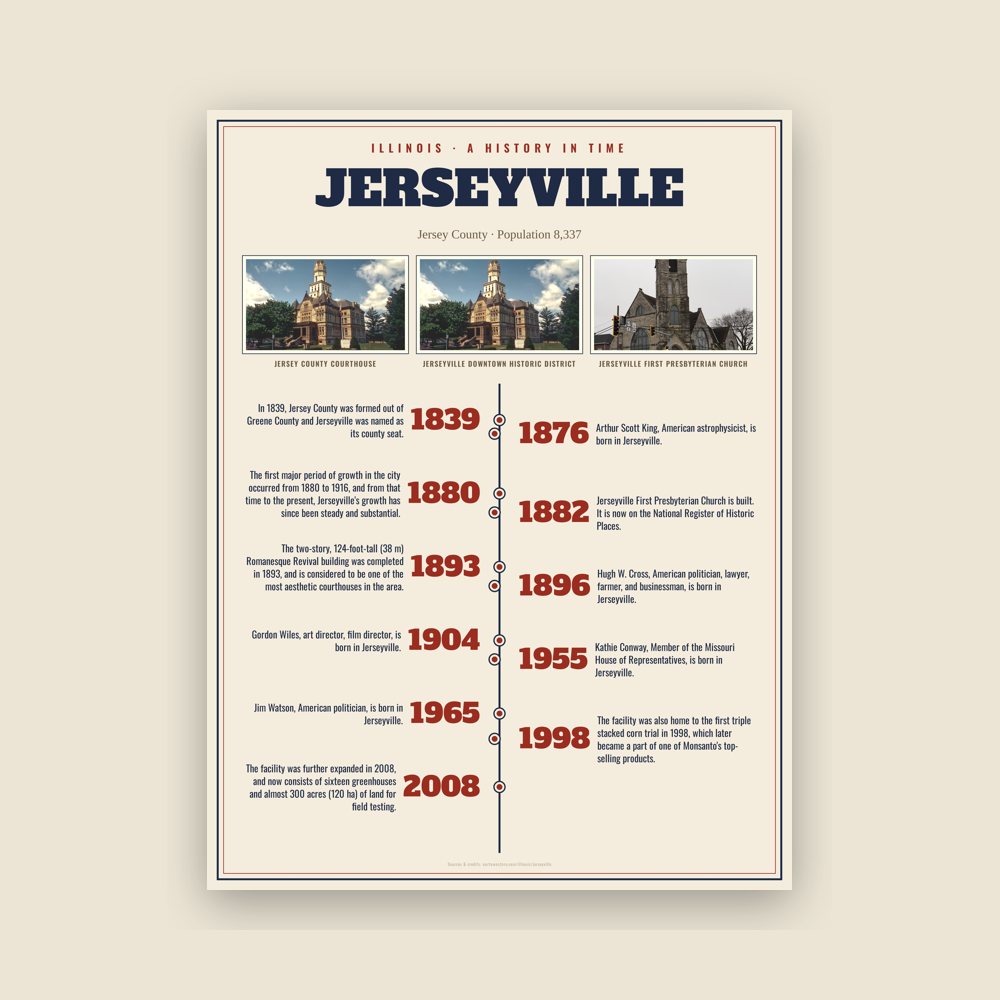
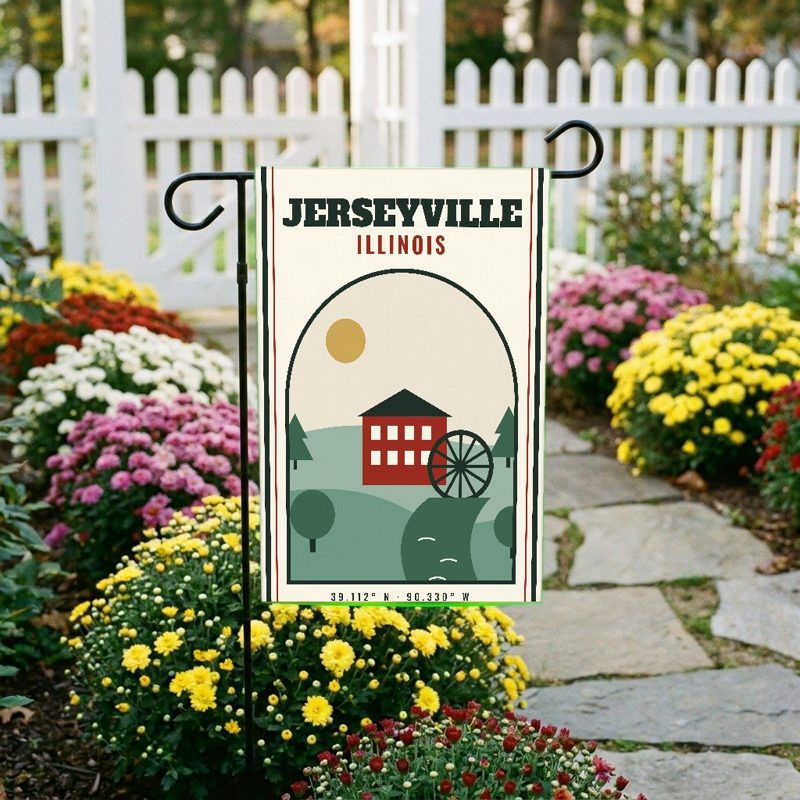
In 1827, James Faulkner, a Pennsylvania native, and his family built a small framed structure that was named the "Little Red House," in the area that is now known as Jerseyville. The "Little Red House" served as the first stagecoach station, first tavern, first school, and first bank in the immediate area. By 1834, the small settlement that grew up around Faulkner's home, then known as Hickory Grove by its residents, was surveyed and platted by three immigrants from New Jersey, John Lott, Edward M. Daly Brandon F. Kennedy, and Mason A. Roberts. Lott and Daly's involvement marked the beginning of a proportionally large number of merchants, businessmen and settlers from New Jersey. A meeting was called in that same year at the "Little Red House" to vote for a town name, so a post office could be established. The name of Jerseyville was chosen to honor the native state of many of its inhabitants. In 1839, Jersey County was formed out of Greene County and Jerseyville was named as its county seat.
Jerseyville was a minor stopping point on the historic Underground Railroad before and during the Civil War. The "Little Red House" and a few other residences were utilized as stations for the Underground Railroad until the end of the Civil War, with some residences having false cellars that were used to hide slaves searching for freedom.
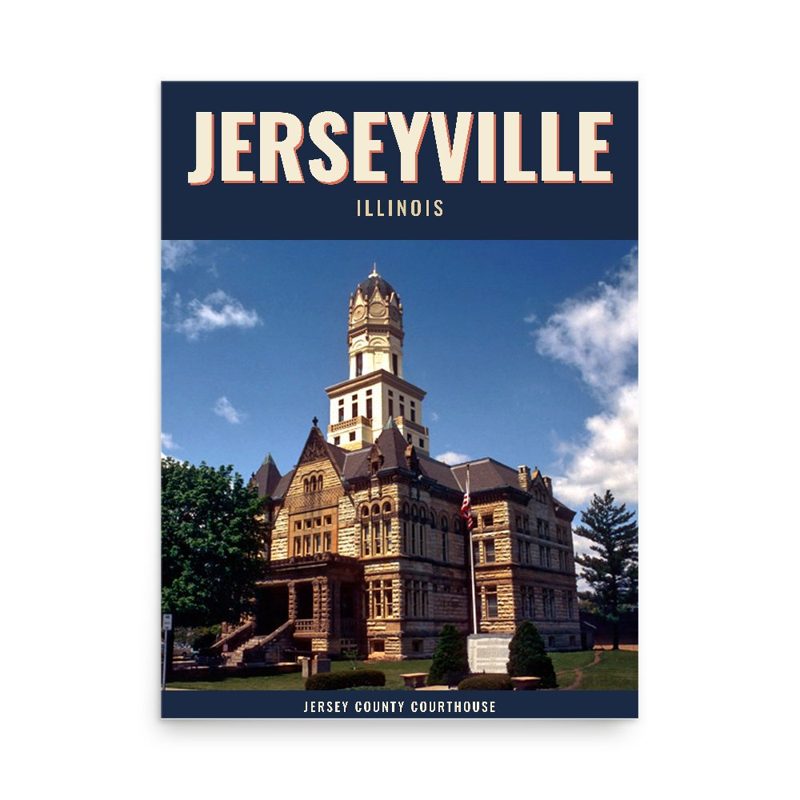
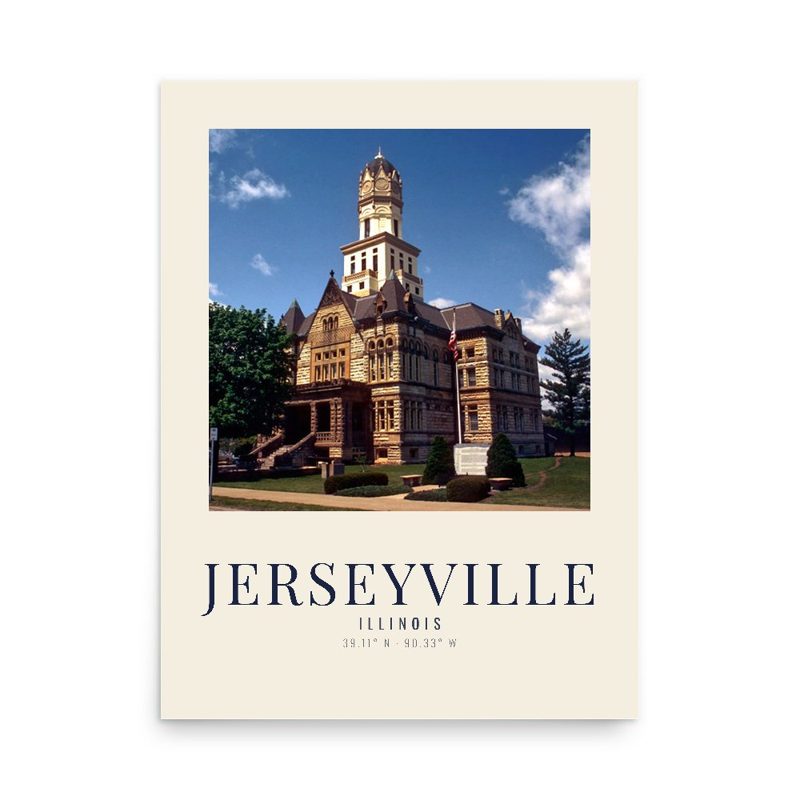
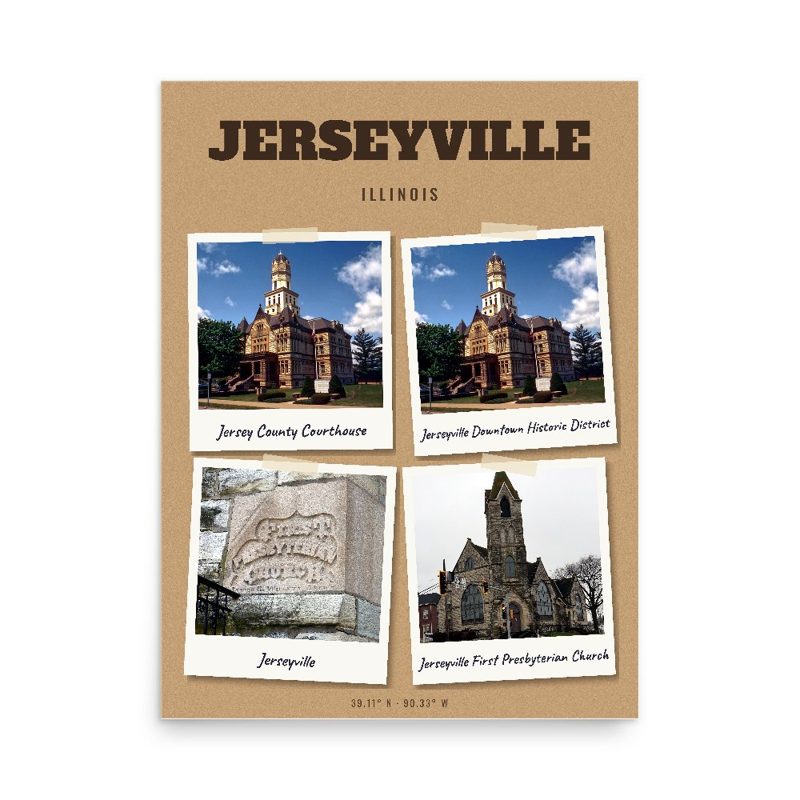
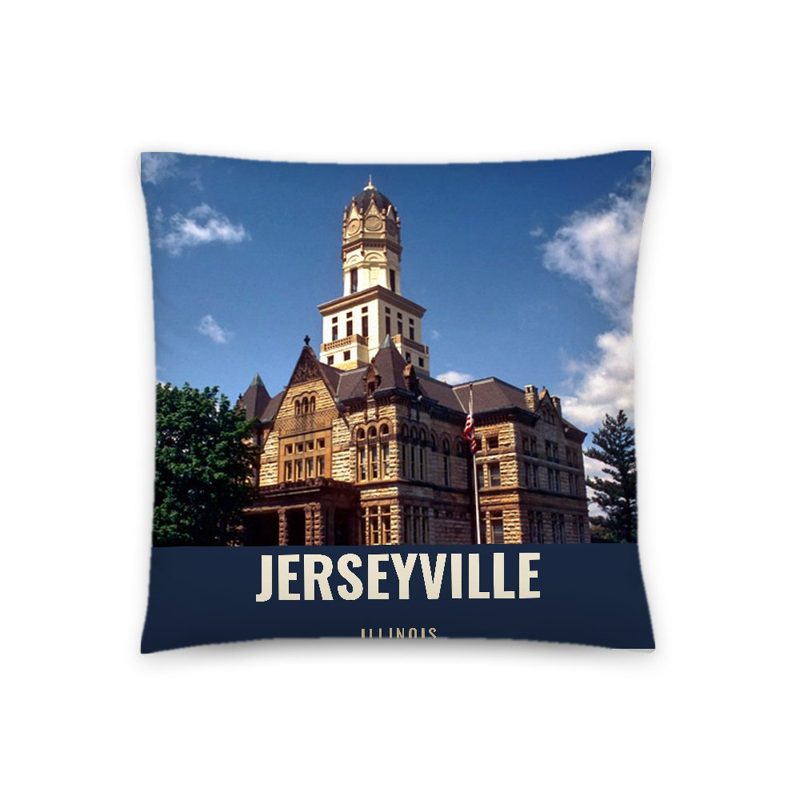
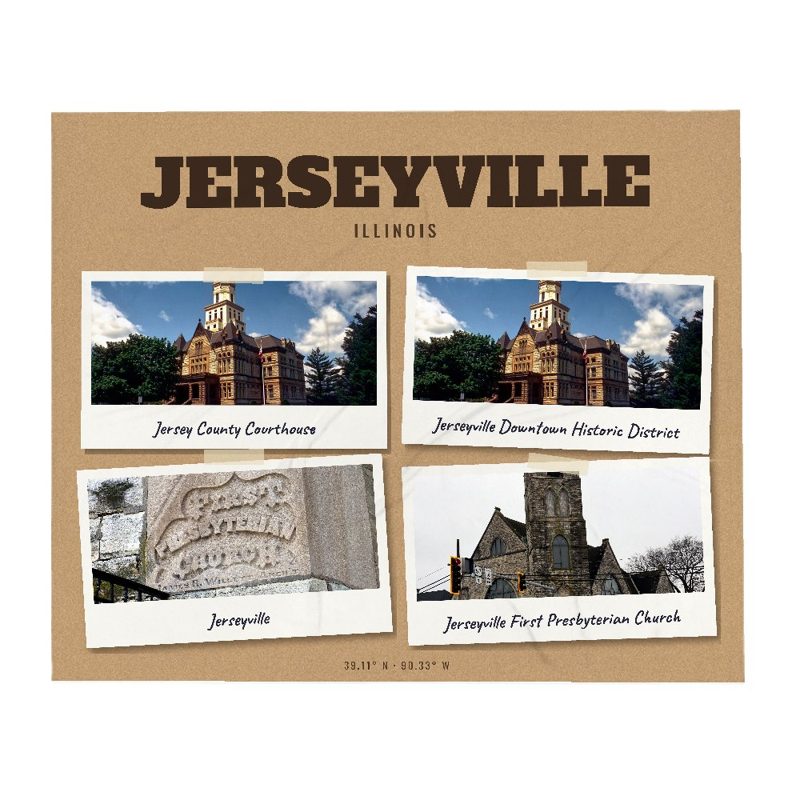
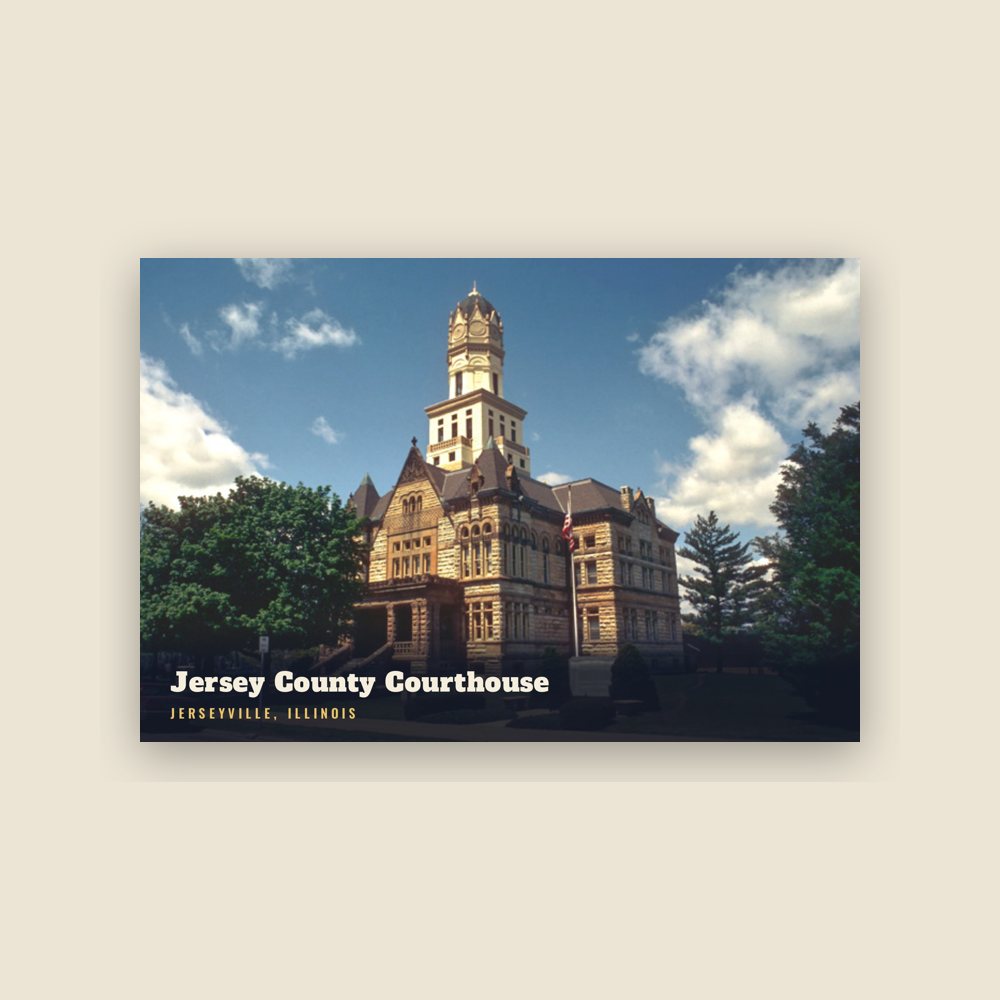
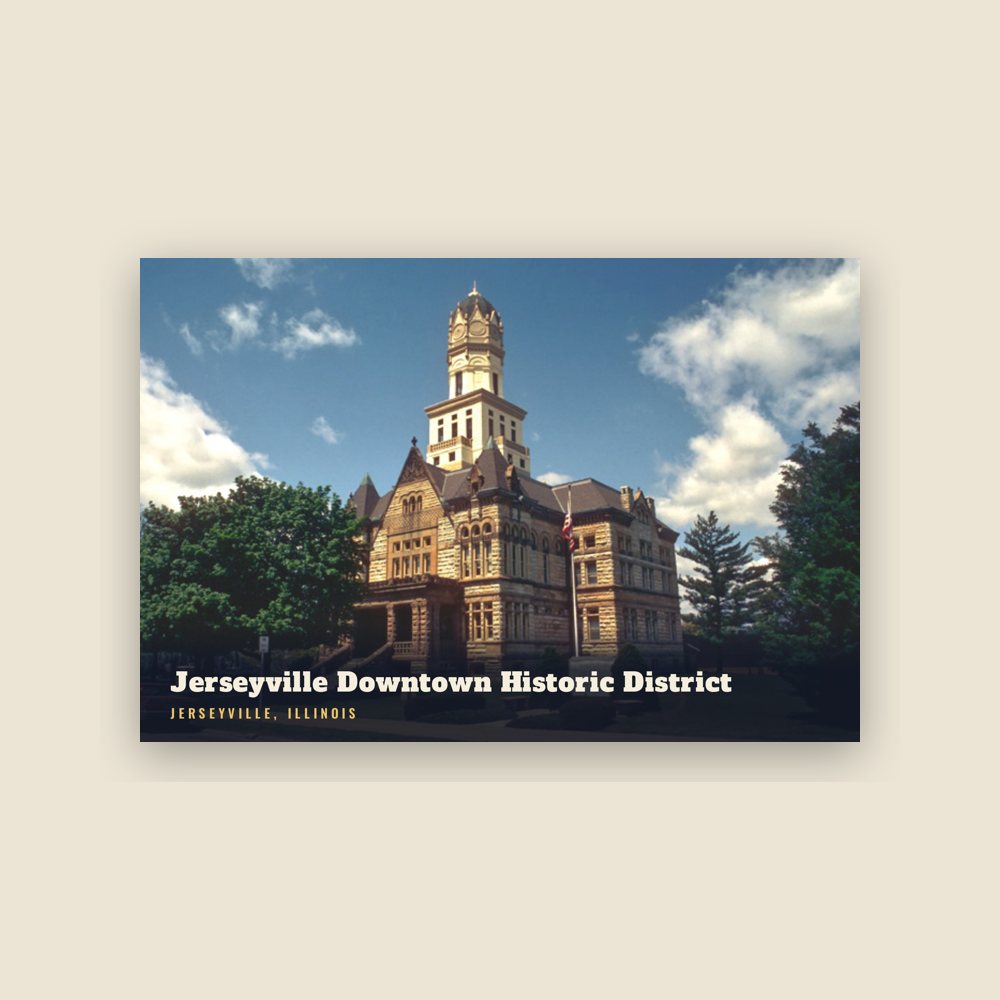
After the American Civil War ended, and the construction of the Alton & Chicago Railroad was completed, Jerseyville saw a period of commercial, industrial and urban growth. The first major period of growth in the city occurred from 1880 to 1916, and from that time to the present, Jerseyville's growth has since been steady and substantial. The majority of the commercial structures that are now located in the Downtown Historic District and Courthouse Square were built during the late 19th and early 20th centuries. It was also during this time that the present Jersey County Courthouse was built. The two-story, 124-foot-tall (38 m) Romanesque Revival building was completed in 1893, and is considered to be one of the most aesthetic courthouses in the area. Other nearby Victorian style buildings in the city include Queen Anne, Edwardian and Italianate architectural features, with several of these buildings having been recently renovated.
From 1912 to 1918, Jerseyville was the terminus of an interurban electric passenger railroad from Alton which was the stub of a project by the Alton, Jacksonville and Peoria Railway for a line to Peoria.
In recent decades, Jerseyville has been a testing ground in the agricultural biotechnology field. Bayer (formerly Monsanto) owns and operates a facility located just south of the city, which in 1987, was the site of the world's very first biotechnology field trial – first with tomatoes and later that year with soybeans. The facility was also home to the first triple stacked corn trial in 1998, which later became a part of one of Monsanto's top-selling products. The facility was further expanded in 2008, and now consists of sixteen greenhouses and almost 300 acres (120 ha) of land for field testing.
The Downtown Historic District is presently home to some antique stores and gift shops. Jerseyville also has some clothing and shoe stores, pharmacies, a public library, a post office, and several local restaurants and banks. Most of the growth that has occurred since the early 1990s has been in the southern and southwestern portions of the city, where new residential subdivisions and retail shopping centers have been built, and where numerous land annexations have been made by the city.
Adapted (trimmed) from the Wikipedia article Jerseyville, Illinois, revision 1376808218 by its contributors, licensed CC BY-SA 4.0.