A short history of Jacksonville
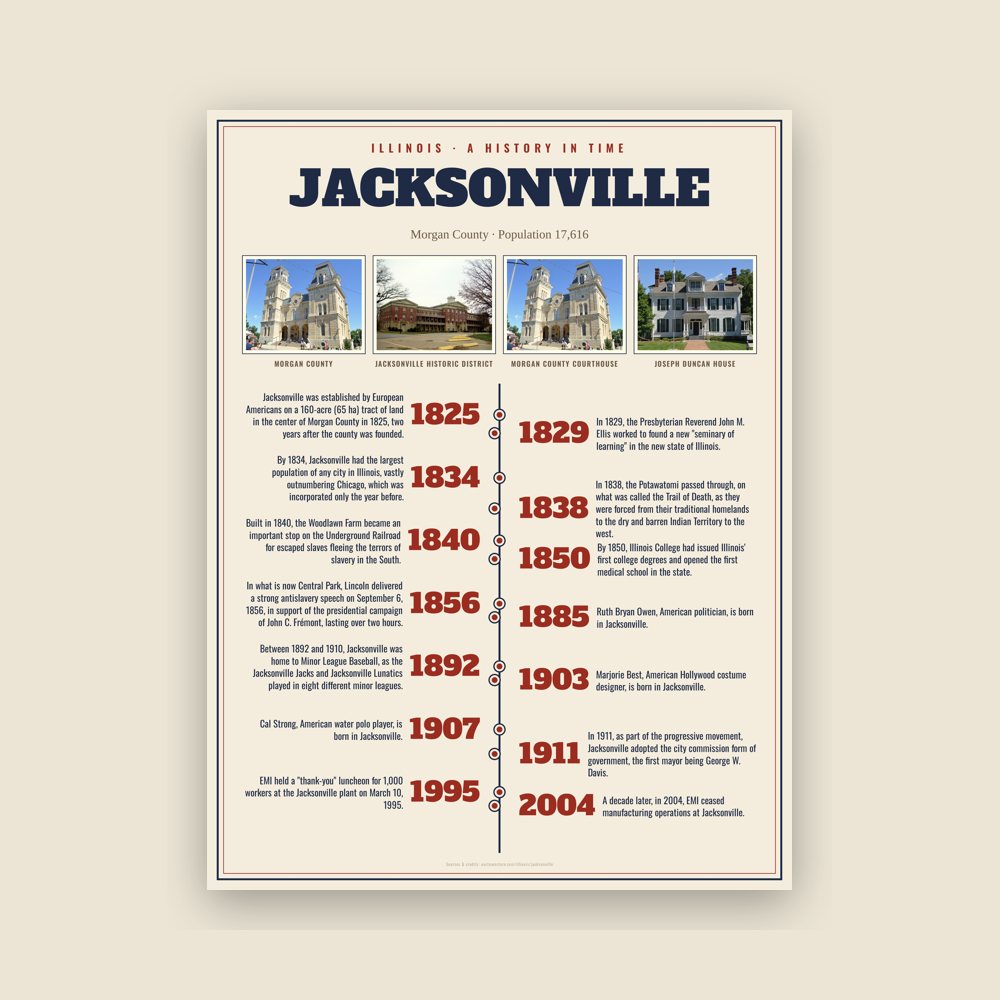
Jacksonville was established by European Americans on a 160-acre (65 ha) tract of land in the center of Morgan County in 1825, two years after the county was founded. The founders of Jacksonville were settlers from New England, descended from the English Puritans who had settled New England in the 1600s. They were part of a wave of New England farmers who headed west into what was then the wilds of the Northwest Territory, during the early 1800s. Most of them arrived as a result of the completion of the Erie Canal and the end of the Black Hawk War.
When they arrived in what is now Jacksonville, there was only dense forest and wild prairie. The "Yankee" New Englanders laid out farms, constructed roads, erected government buildings, and established post routes. They brought certain values with them, such as a passion for education and establishing many schools, as well as a staunch support for abolitionism. They were mostly members of the Congregationalist Church, though some were Episcopalian. Due to the Second Great Awakening, some of them had converted to Methodism and Presbyterianism, while some others became Baptist, before moving to what is now Jacksonville. For most of its early history, Jacksonville, like some other parts of Illinois, would be culturally very continuous with early New England culture.
The town grew at a rapid rate, and a town square was quickly developed. In 1829, the Presbyterian Reverend John M. Ellis worked to found a new "seminary of learning" in the new state of Illinois. A group of Congregational students at Yale College heard about his plans and headed westward to establish the new school. These students were a part of the famous "Yale Bands", groups of students who established several colleges in the frontier, in what is now the Midwest. Illinois College was one of the first institutions of higher learning in the Midwest.
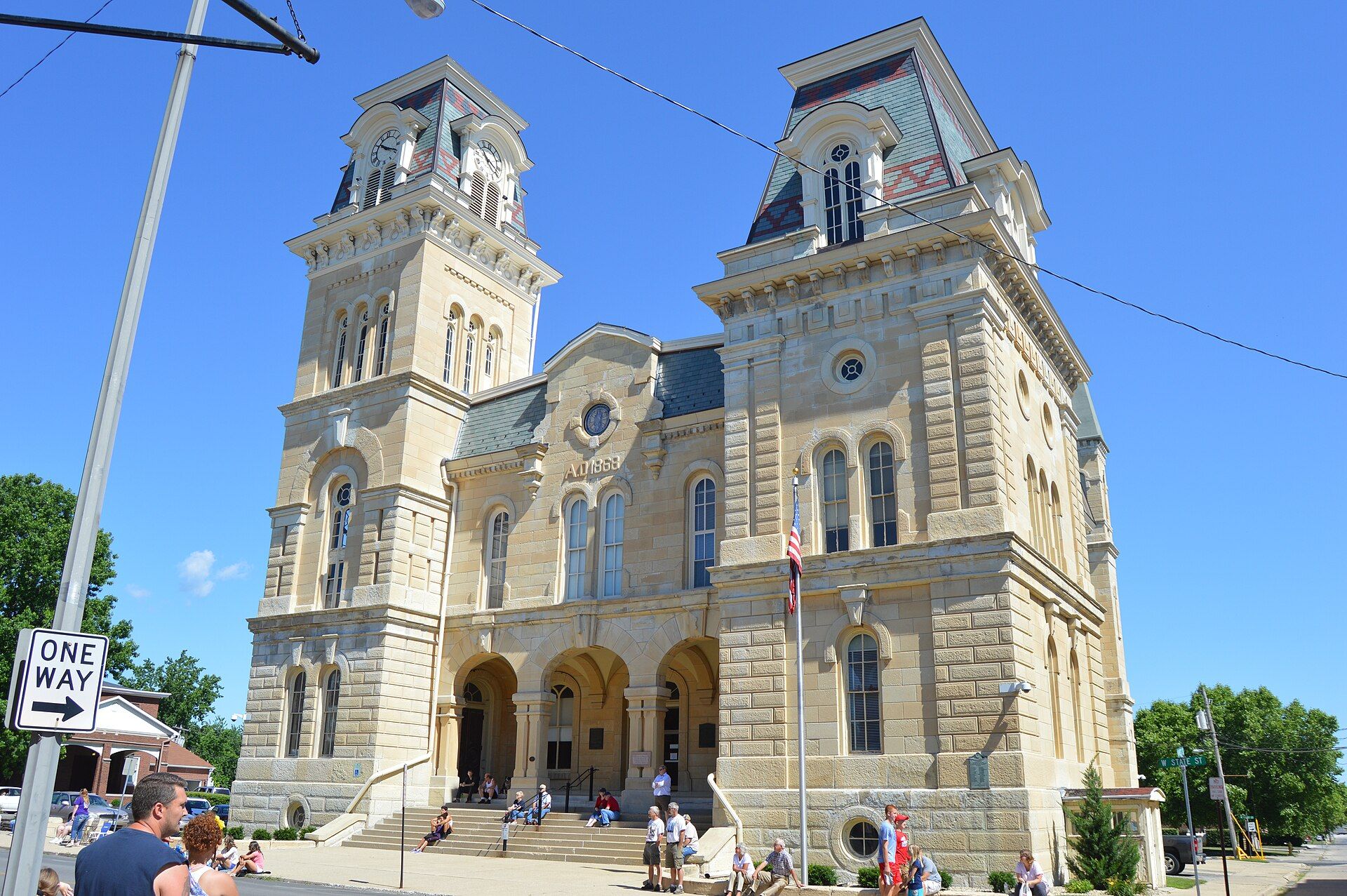
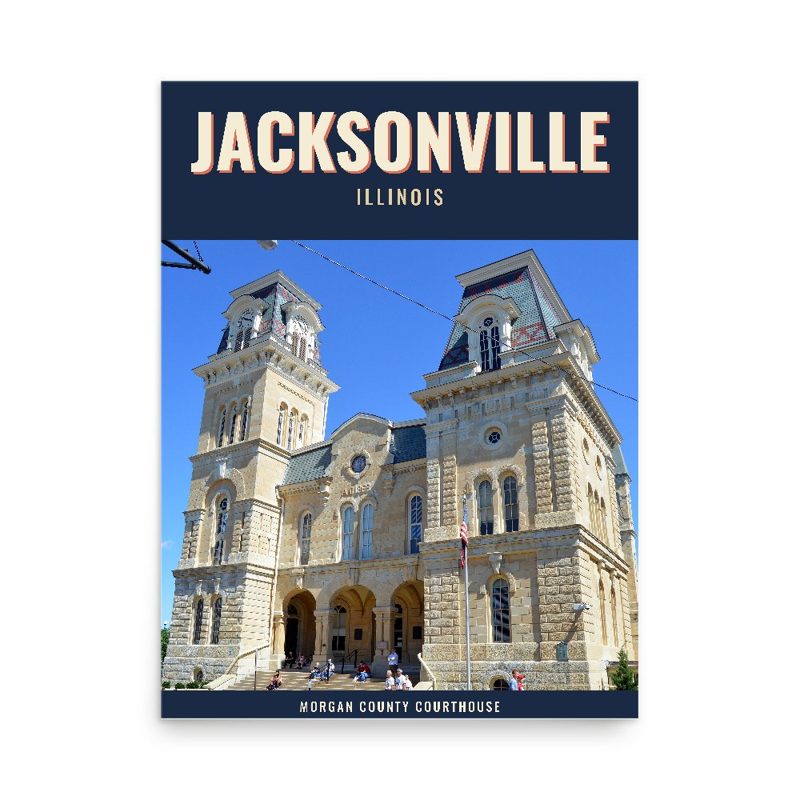
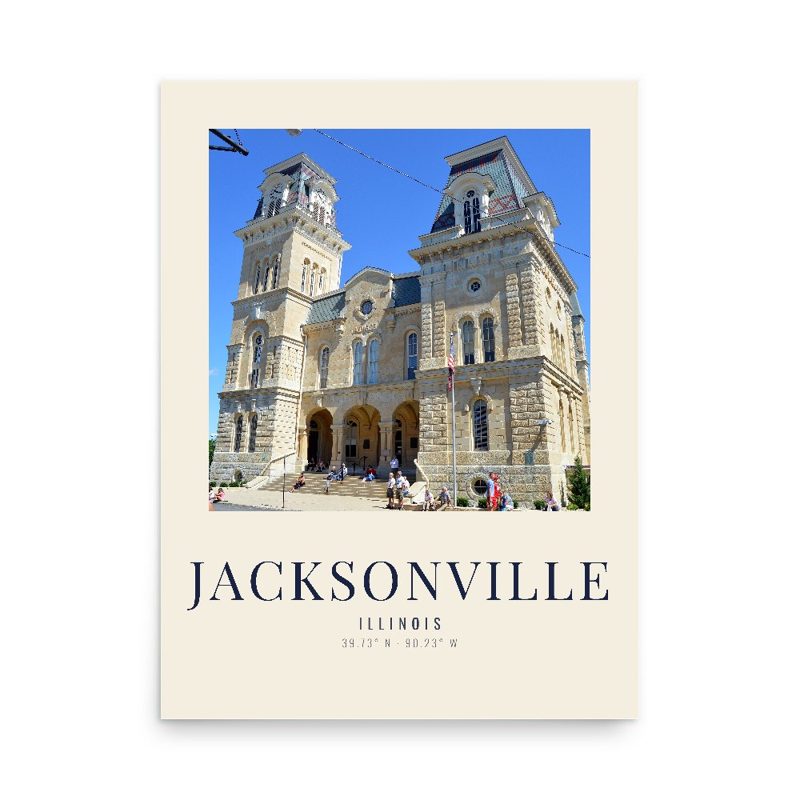
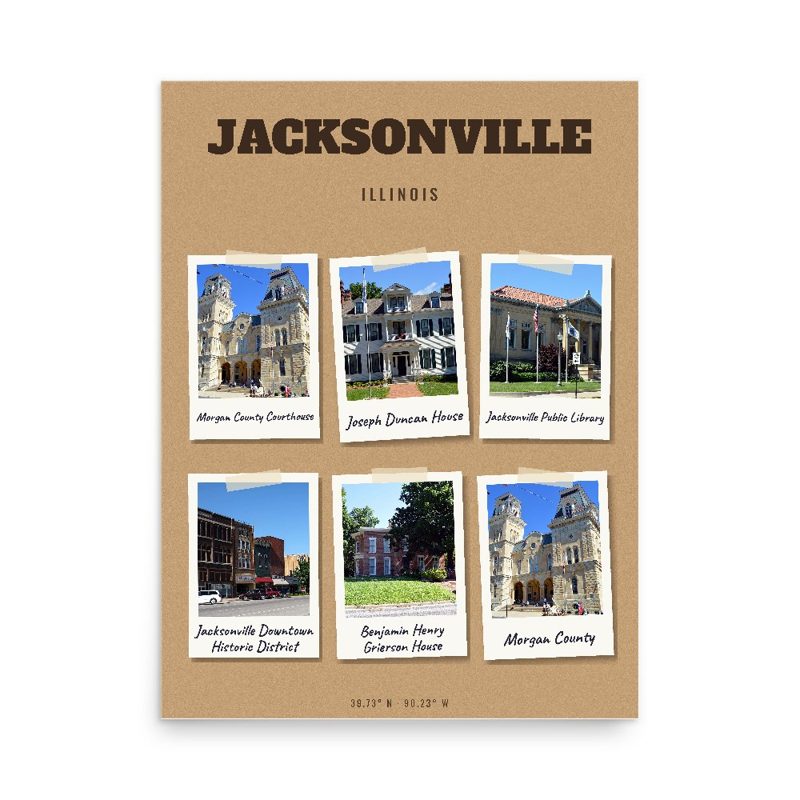
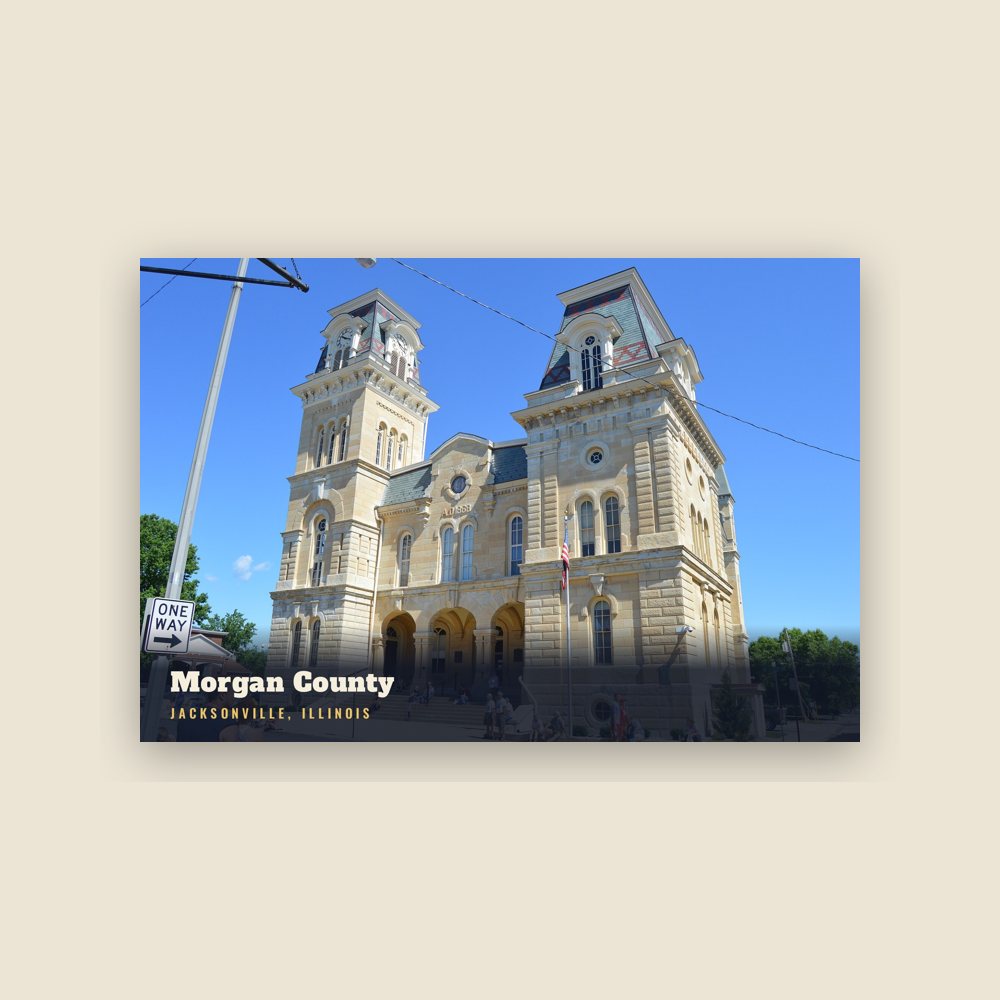
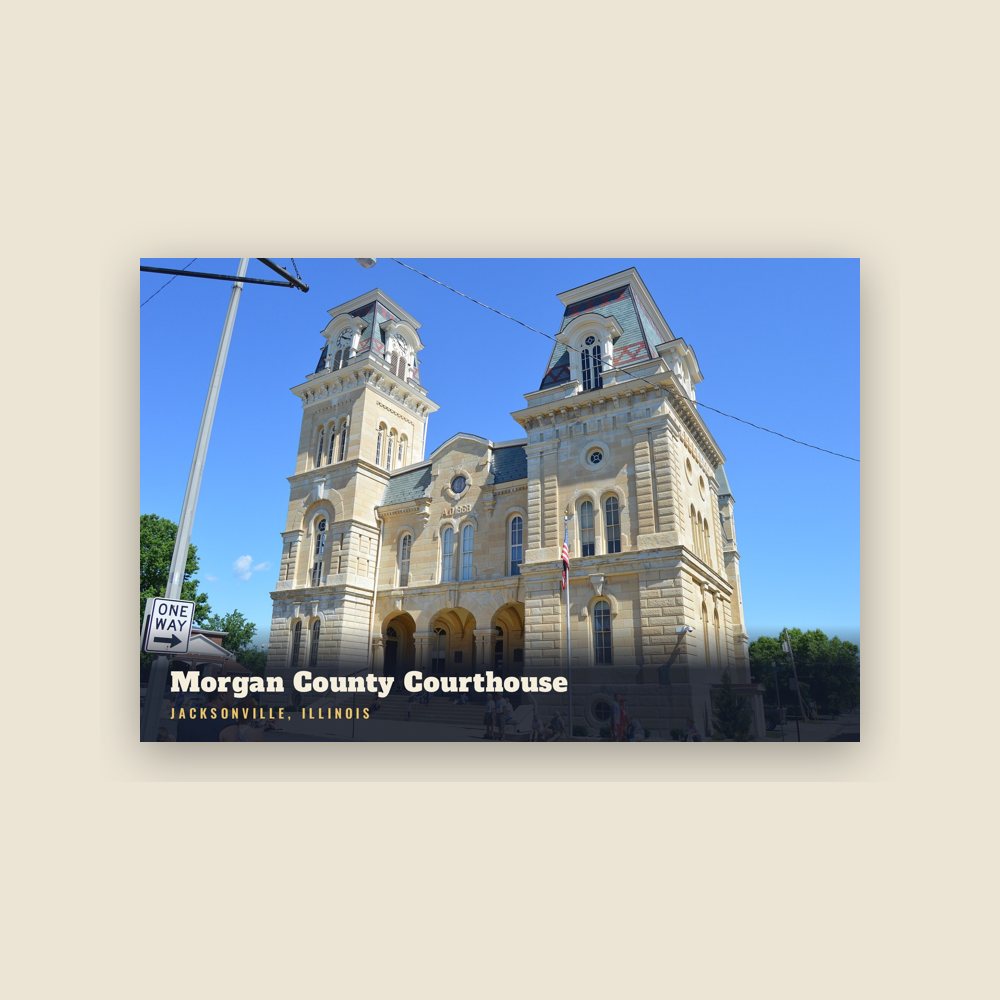
A new courthouse was built on the square, churches were constructed, railroads were planned, and stores and taverns were built. By 1834, Jacksonville had the largest population of any city in Illinois, vastly outnumbering Chicago, which was incorporated only the year before. In the 1830s, the town was on the path of Native Americans who were being forcibly removed by the federal government to west of the Mississippi. In 1838, the Potawatomi passed through, on what was called the Trail of Death, as they were forced from their traditional homelands to the dry and barren Indian Territory to the west.
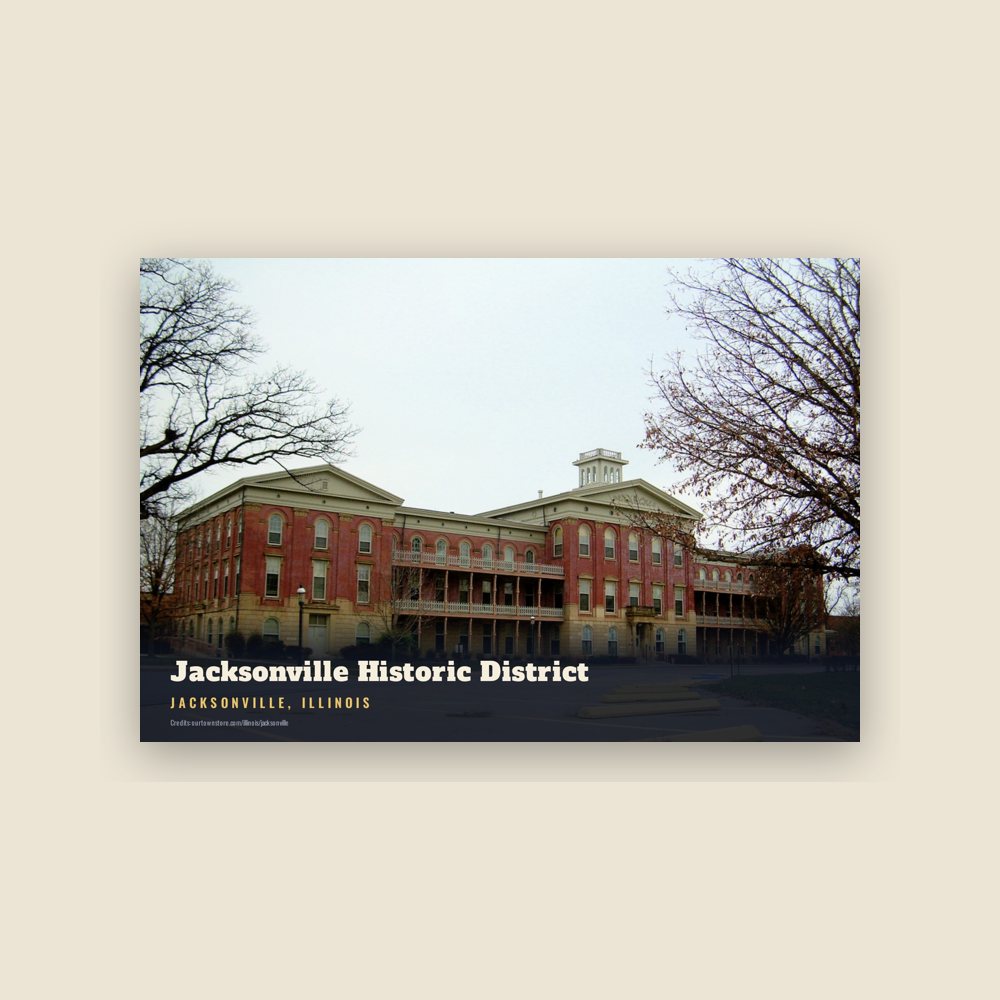
Jacksonville's education complex and standing in the state were developed by the establishment of state institutions: the Illinois School for the Deaf, and what is now called the Illinois School for the Visually Impaired. The Illinois Conference Female Academy was founded for education for women, which later developed as MacMurray College. By 1850, Illinois College had issued Illinois' first college degrees and opened the first medical school in the state. Because of this, Jacksonville earned the nickname of "Athens of the West".
Attorney, and future president, Abraham Lincoln occasionally had legal business in Jacksonville, frequently acting either as co-counsel or opposing counsel with David A. Smith, a Jacksonville resident. In what is now Central Park, Lincoln delivered a strong antislavery speech on September 6, 1856, in support of the presidential campaign of John C. Frémont, lasting over two hours. A mural depicting the event has been painted on the side of a building at the southwest corner of the square.
Built in 1840, the Woodlawn Farm became an important stop on the Underground Railroad for escaped slaves fleeing the terrors of slavery in the South. This historical site is open to tours in the summer.
One of Lincoln's early political rivals, Stephen A. Douglas, settled in Jacksonville in 1833, where he first got involved in local politics. He quickly rose through the ranks of Illinois politics and was elected to the House of Representatives in 1842.
Read the full history
1900 to present
Between 1892 and 1910, Jacksonville was home to Minor League Baseball, as the Jacksonville Jacks and Jacksonville Lunatics played in eight different minor leagues. Jacksonville teams played at League Park on Finley Street.
In 1911, as part of the progressive movement, Jacksonville adopted the city commission form of government, the first mayor being George W. Davis.
In the summer of 1965, in order to keep up with customer demand for records by the Beatles, the popular English band, Capitol Records opened a vinyl record pressing plant on the western outskirts of Jacksonville, at 1 Capitol Way. The plant produced a number of highly collectible pressings. This plant eventually served the Capitol Records Club, producing vinyl LPs and later audiocassettes, CDs, and DVDs of a number of artists. At its peak, operating as EMI Records (owner of Capitol), the plant employed over 1,000 workers. It was a significant location in the music industry. For example, all seven albums released by country western artist Garth Brooks sold more than 50million copies. EMI held a "thank-you" luncheon for 1,000 workers at the Jacksonville plant on March 10, 1995. A decade later, in 2004, EMI ceased manufacturing operations at Jacksonville.
Adapted (trimmed) from the Wikipedia article Jacksonville, Illinois, revision 1377880461 by its contributors, licensed CC BY-SA 4.0.