Since 1867
A short history of Geneva
Two Native American trails crossed through Geneva. The Potawatomi people lived in the Geneva area, with their main chief, Waubonsee, leading a group that gathered just north of Aurora.
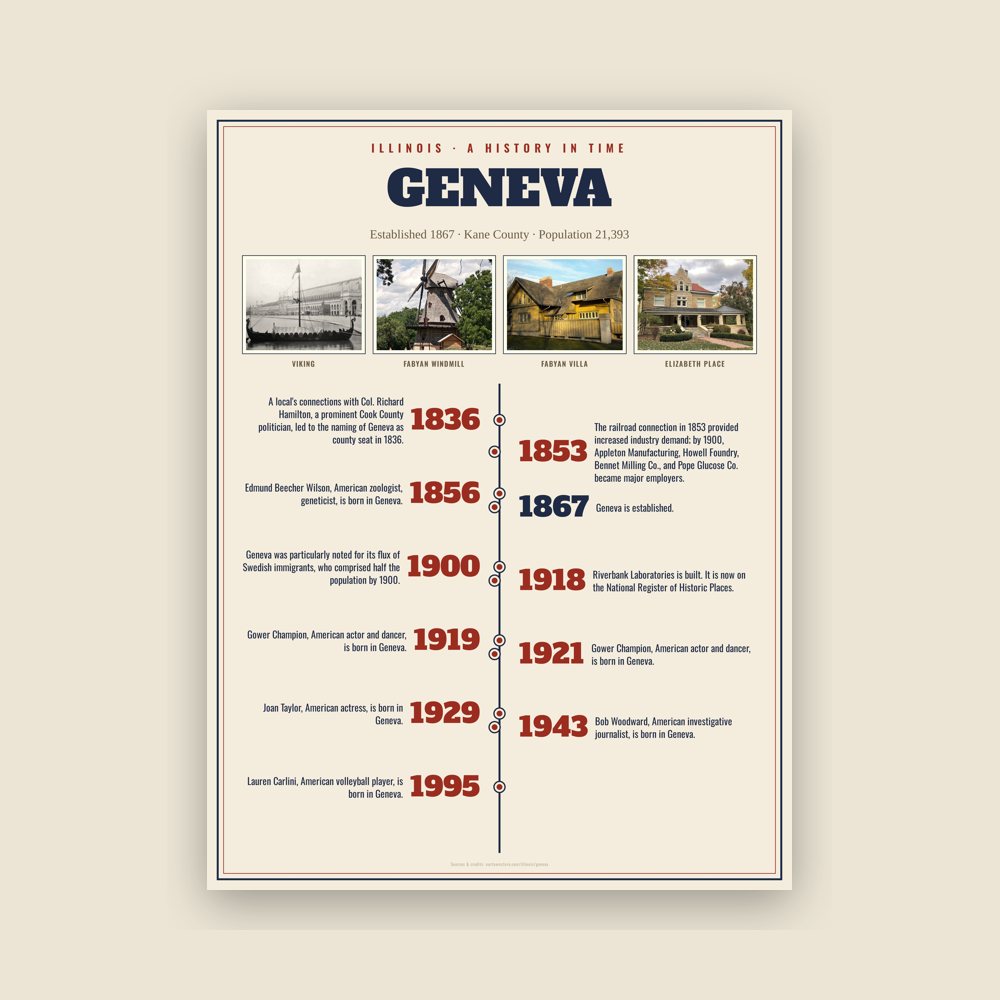
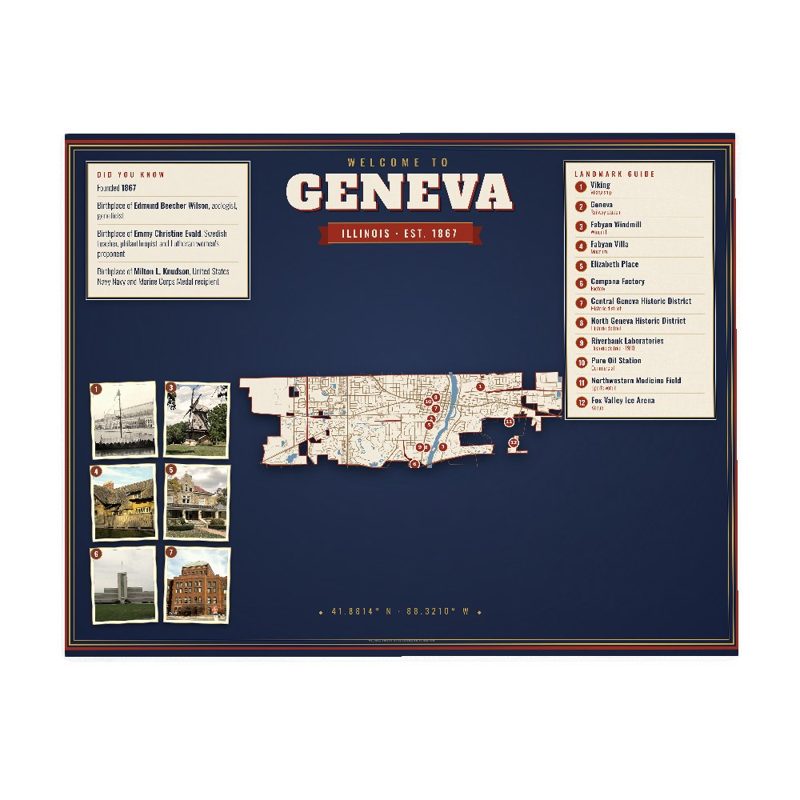
Geneva was first settled in the 1830s on an important route from Chicago. Daniel Shaw Haight was the first European settler in Geneva. Haight sold his claim in 1835 to James and Charity Herrington, who were influential in the creation of the town of Geneva. A local's connections with Col. Richard Hamilton, a prominent Cook County politician, led to the naming of Geneva as county seat in 1836. The town was platted a year later and was probably named after Geneva, New York. Before the name Geneva was chosen, the names LaFox, Big Spring, and Herrington's Ford were used. A courthouse and jail were among the first major works. Geneva was incorporated as a village in 1867. While its site as a county seat attracted attention, the village's location on the Fox River provided the most economic opportunities. Early goods manufactured in Geneva included cheese, butter, milled grains, and packed meat. The railroad connection in 1853 provided increased industry demand; by 1900, Appleton Manufacturing, Howell Foundry, Bennet Milling Co., and Pope Glucose Co. became major employers. This resulted in major civic improvement projects such as pumping stations and water mains in 1896. Geneva was particularly noted for its flux of Swedish immigrants, who comprised half the population by 1900. Geneva was connected to other Fox Valley communities a year later through the Aurora, Elgin and Fox River Electric Company.
Adapted (trimmed) from the Wikipedia article Geneva, Illinois, revision 1384338631 by its contributors, licensed CC BY-SA 4.0.