A short history of Des Plaines
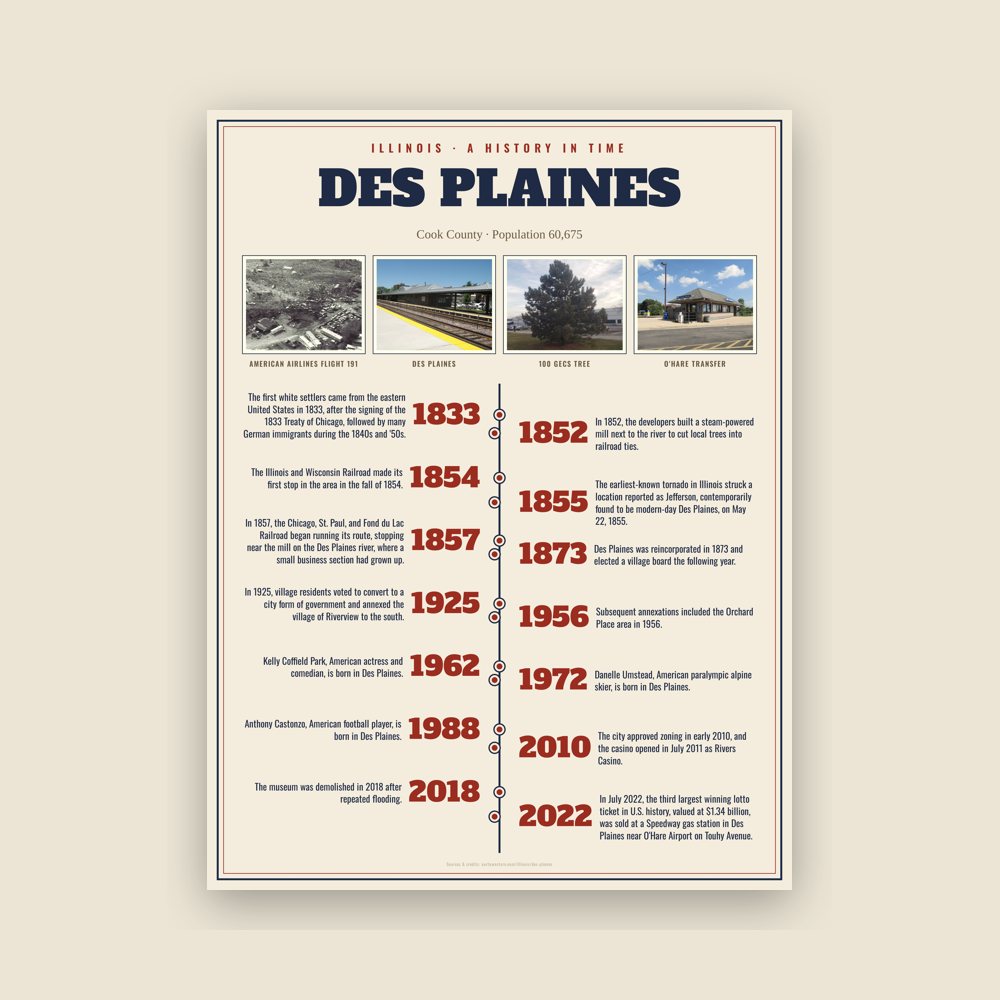
Potawatomi, Ottawa, and Ojibwe (Chippewa) Native American tribes inhabited the Des Plaines River Valley prior to Europeans' arrival. When French explorers and missionaries arrived in the 1600s in what was then the Illinois Country of New France, they named the waterway La Rivière des Plaines (English translation: "Plains River") as they felt that trees on the river resembled European plane trees. The first white settlers came from the eastern United States in 1833, after the signing of the 1833 Treaty of Chicago, followed by many German immigrants during the 1840s and '50s. In the 1850s, the land in this area was purchased by the Illinois and Wisconsin Land Company along a railroad line planned between Chicago and Janesville, Wisconsin. In 1852, the developers built a steam-powered mill next to the river to cut local trees into railroad ties. Socrates Rand then bought the mill and converted it into a grist mill, which attracted local farmers. The Illinois and Wisconsin Railroad made its first stop in the area in the fall of 1854.
The earliest-known tornado in Illinois struck a location reported as Jefferson, contemporarily found to be modern-day Des Plaines, on May 22, 1855. It killed 3 in a granite home lifted off of its foundation. The correspondence between the Smithsonian Institution's Joseph Henry and the Daily Democratic Press in Chicago would lead to the eventual creation of the United States Signal Company, which is the earliest predecessor of the modern-day National Weather Service.
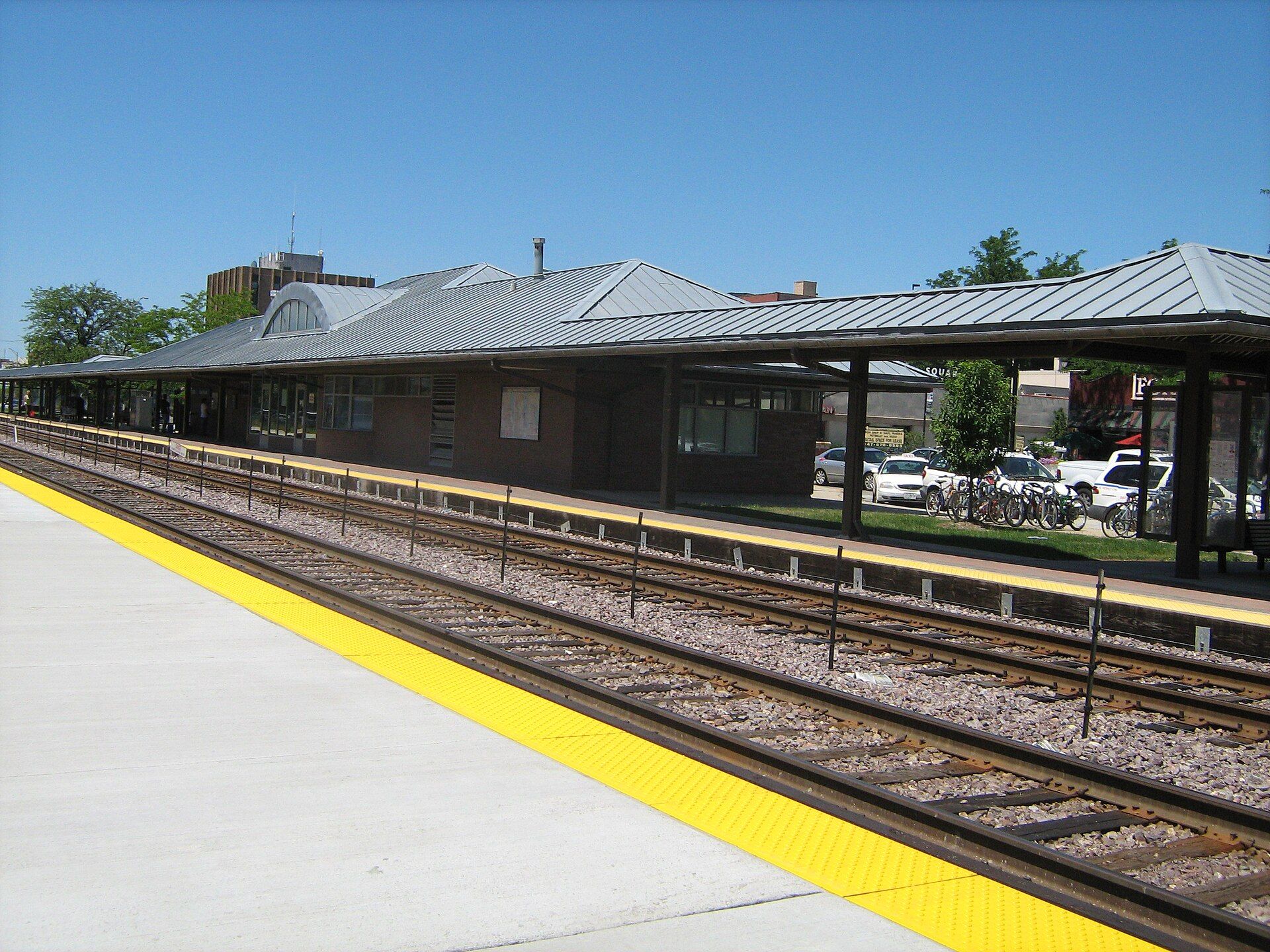
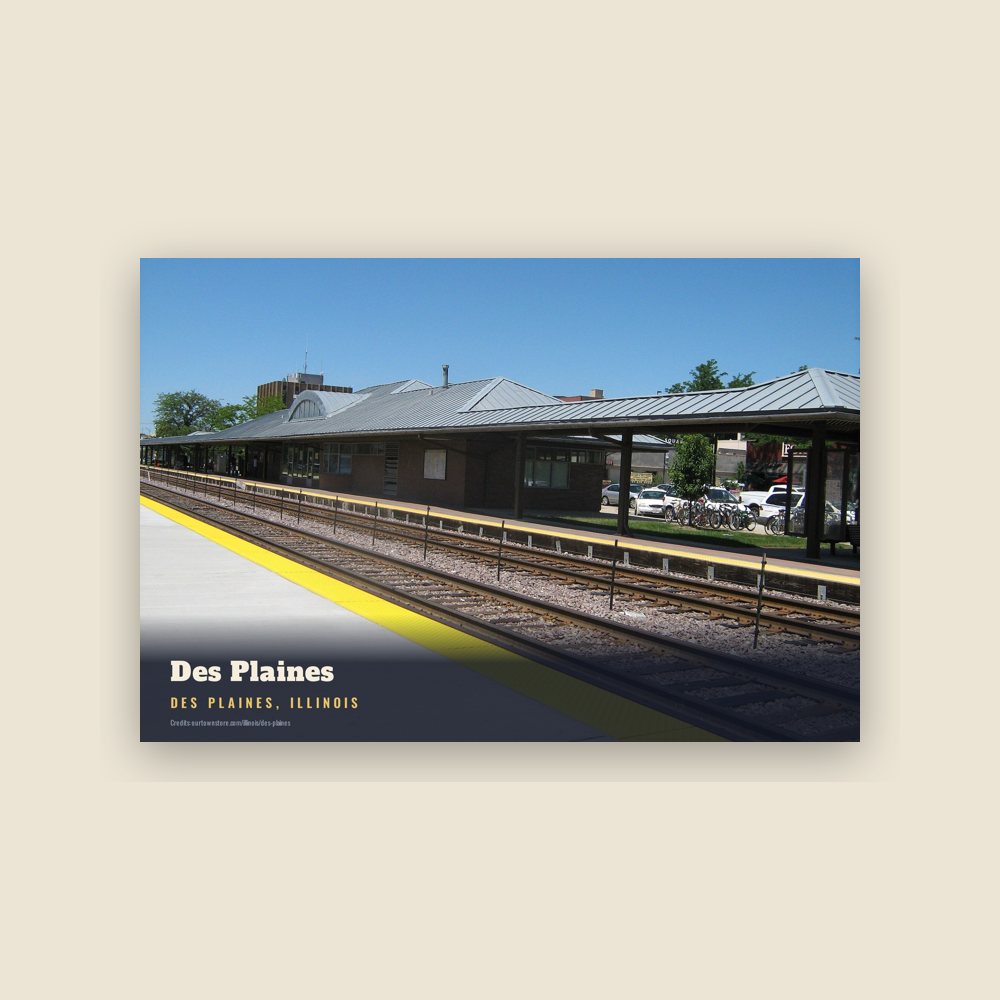
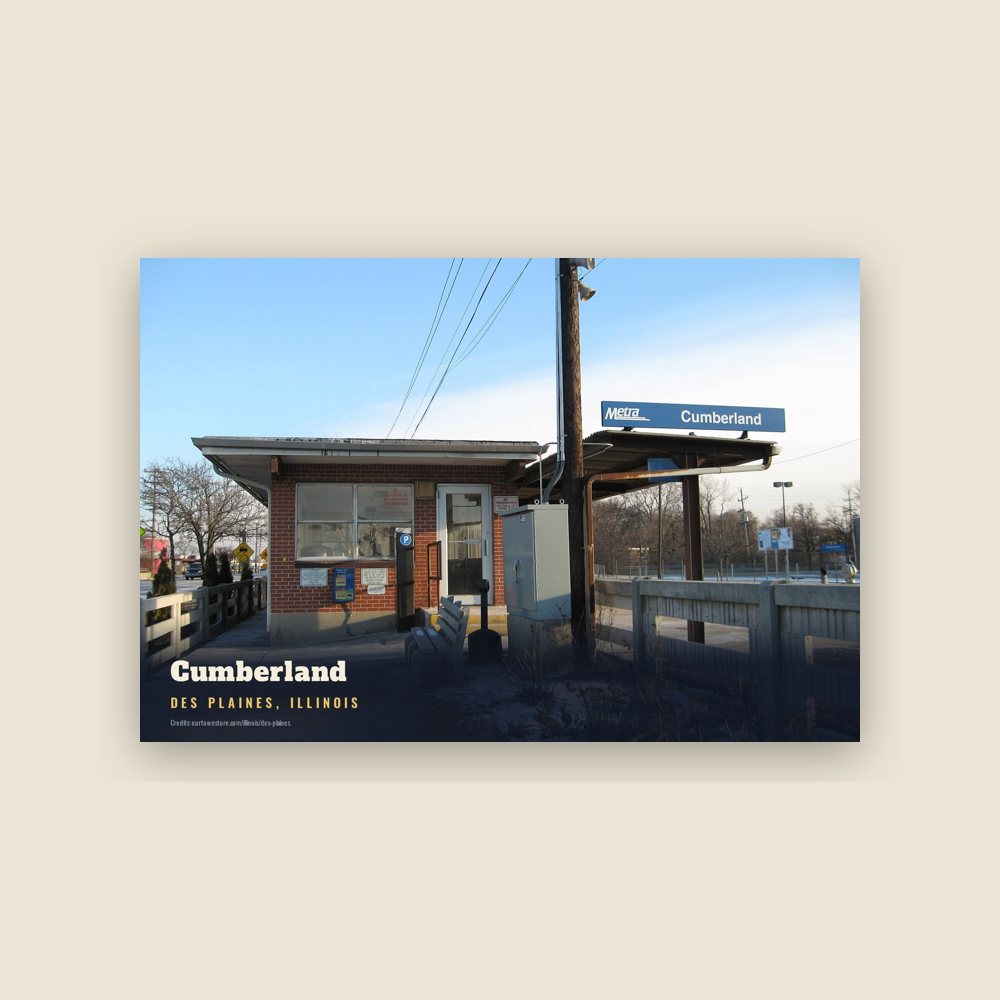
In 1857, the Chicago, St. Paul, and Fond du Lac Railroad began running its route, stopping near the mill on the Des Plaines river, where a small business section had grown up. The railroad platted the prospective town of Rand at the site. In 1859, the Chicago and North Western Railway purchased the rail line, giving the train station the name "Des Plaines." In 1869, the Rand subdivision's name was changed to Des Plaines, and the village of Des Plaines was then incorporated.
Des Plaines was reincorporated in 1873 and elected a village board the following year. Local brick manufacturer Franklin Whitcomb served as the first Village President.
In 1925, village residents voted to convert to a city form of government and annexed the village of Riverview to the south. Subsequent annexations included the Orchard Place area in 1956. The city experienced rapid growth after World War II and with the opening of nearby O'Hare International Airport.
In 1955, Des Plaines became the site of the ninth McDonald's restaurant, which was often inaccurately claimed to be the first McDonald's franchise, and which was torn down in 1984 and replaced by a museum the following year. The museum was demolished in 2018 after repeated flooding.
In 1979, Des Plaines was the site of the accident of American Airlines Flight 191, in which a McDonnell Douglas DC-10 departing from O'Hare lost an engine and wing material and crashed near a local trailer park just north of Touhy Avenue. All 271 people on board the aircraft died, as did two workers at a repair garage. Two more, along with three civilians, were injured.
In 2008, the Illinois Gaming Board awarded the state's 10th casino license to Midwest Gaming and Entertainment LLC to build a 140,000-square-foot (13,000 m2) casino on approximately 21 acres (85,000 m2) adjacent to the Tri-State Tollway at the northwest corner of Devon Avenue and Des Plaines River Road. Midwest Gaming received the award despite having the lowest bid because other bidders were found unacceptable by the Board, with one board member finding no bidders acceptable. The city approved zoning in early 2010, and the casino opened in July 2011 as Rivers Casino.
In July 2022, the third largest winning lotto ticket in U.S. history, valued at $1.34 billion, was sold at a Speedway gas station in Des Plaines near O'Hare Airport on Touhy Avenue. As of November 2022, the winning ticket holder has not come forward or been identified.
Adapted (trimmed) from the Wikipedia article Des Plaines, Illinois, revision 1377727920 by its contributors, licensed CC BY-SA 4.0.