Since 1837
A short history of Carthage
The first European-American settlers arrived in Carthage and in Hancock County in the first few decades of the 19th century. While sharing a name with the ancient city of Carthage, it is likely named more directly for Carthage, Tennessee. By 1833, they had erected simple buildings in Carthage. That year, a log cabin was built to serve as the county courthouse, and the county seat was moved from Montebello to Carthage. The town was platted in 1837.
The only person legally hanged in Hancock County, William Fraim, had been defended in his trial by roaming circuit attorney Abraham Lincoln. Fraim was found guilty of murder following a drunken brawl. Lincoln filed an appeal with the judge in the trial, which was as far as most appeals in those days went. Because Carthage then had no jail, Fraim was kept at the courthouse, which was next to the school. Fraim conversed with the children from his second-floor window. As a result of those conversations, most of the school children were present when their new friend was hanged. The hanging is believed to have taken place near the current city sewer plant east of town, where a natural amphitheater allowed for a crowd to view the spectacle.
While they were incarcerated in the Carthage Jail in June 1844, Joseph Smith, founder of the Church of the Jesus Christ of Latter-Day Saints and his brother Hyrum Smith were killed by a mob on Thursday, June 27, 1844.
On October 22, 1858, Lincoln spoke in Carthage while he was campaigning for the US Senate. A large stone on the south side of the Courthouse Square commemorates the spot.
Over the years, the jail has been modified and used for different purposes. For a while, it was home to Carthage College. The jail has been restored to a close approximation of its appearance in 1844 and is now owned by the Church of Jesus Christ of Latter-day Saints. The site, a full city block, is a historical visitor center open daily.
The regionally-noted botanist, philanthropist, and traveler Dr. Alice L. Kibbe called Carthage home. Along with her personal collections, Carthage's Kibbe Hancock Heritage Museum houses a variety of exhibits celebrating local and regional history.
Carthage is the only city in Illinois to have all of the jails that it has ever used still in existence: the old jail, called the Mormon Jail; the jail next built, which was also the Sheriff's residence, is on the south side of Courthouse Square; and the new jail, which is on Highway 136 in the city's west side.
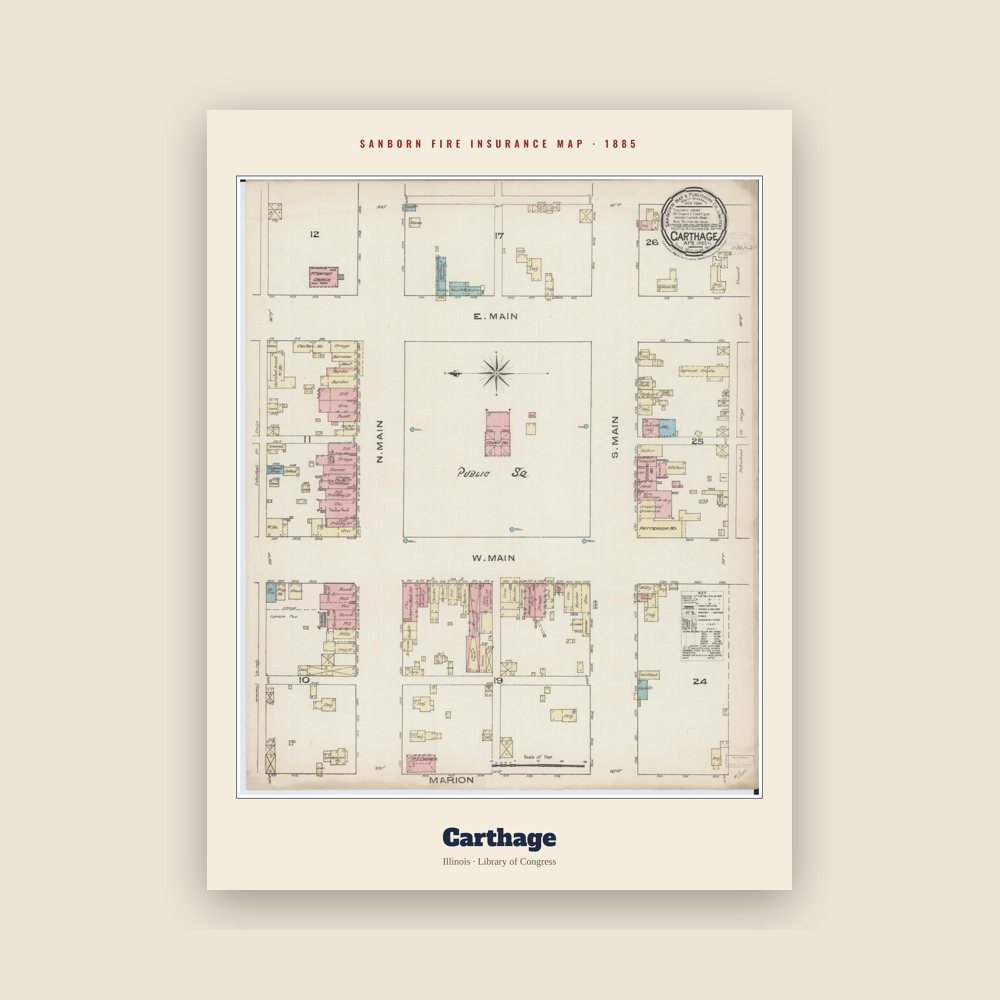
The Hancock County Courthouse in Carthage was built in 1908 and is the third courthouse for the county. It is at the center of the square in Carthage. The courthouse and the shops surrounding the square have been listed on the National Register of Historic Places since 1986.
Adapted (trimmed) from the Wikipedia article Carthage, Illinois, revision 1378524889 by its contributors, licensed CC BY-SA 4.0.
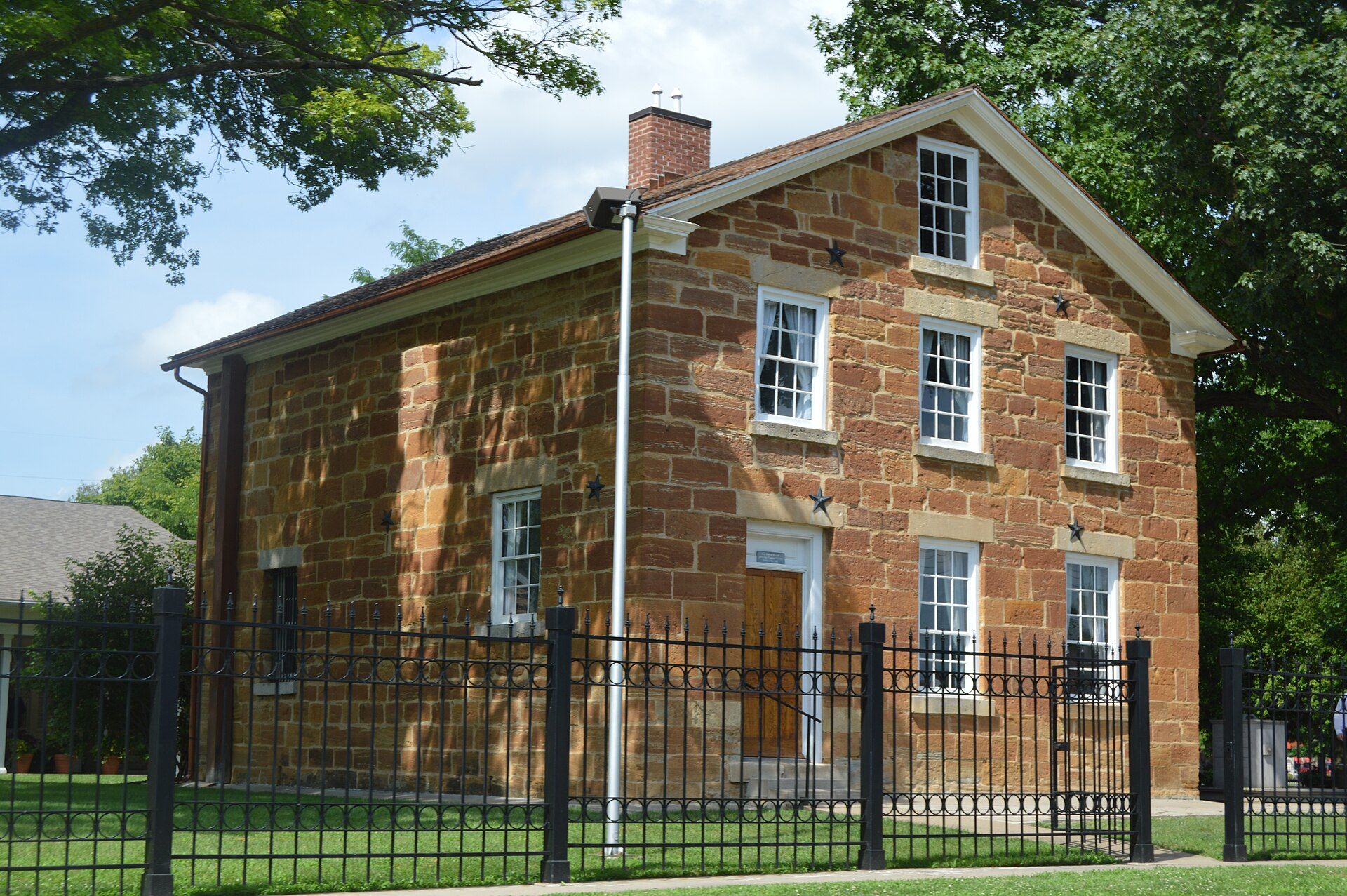





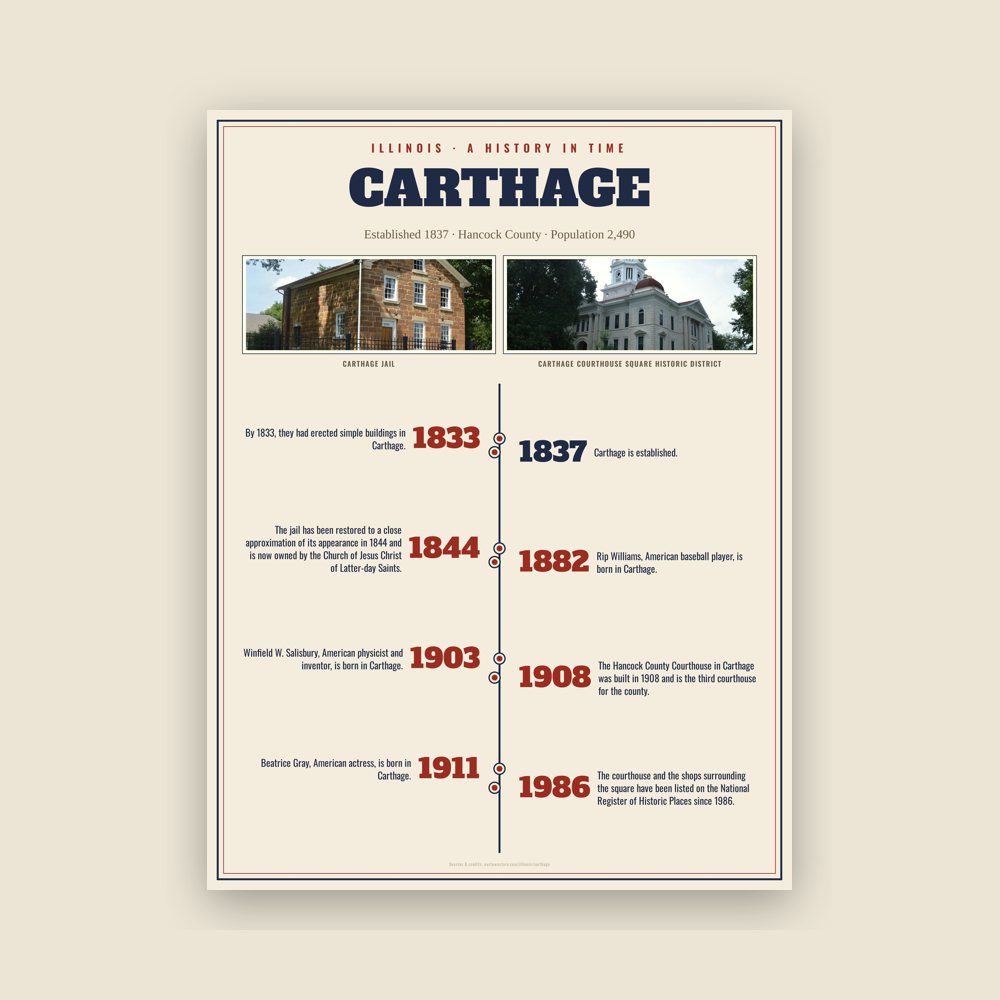




















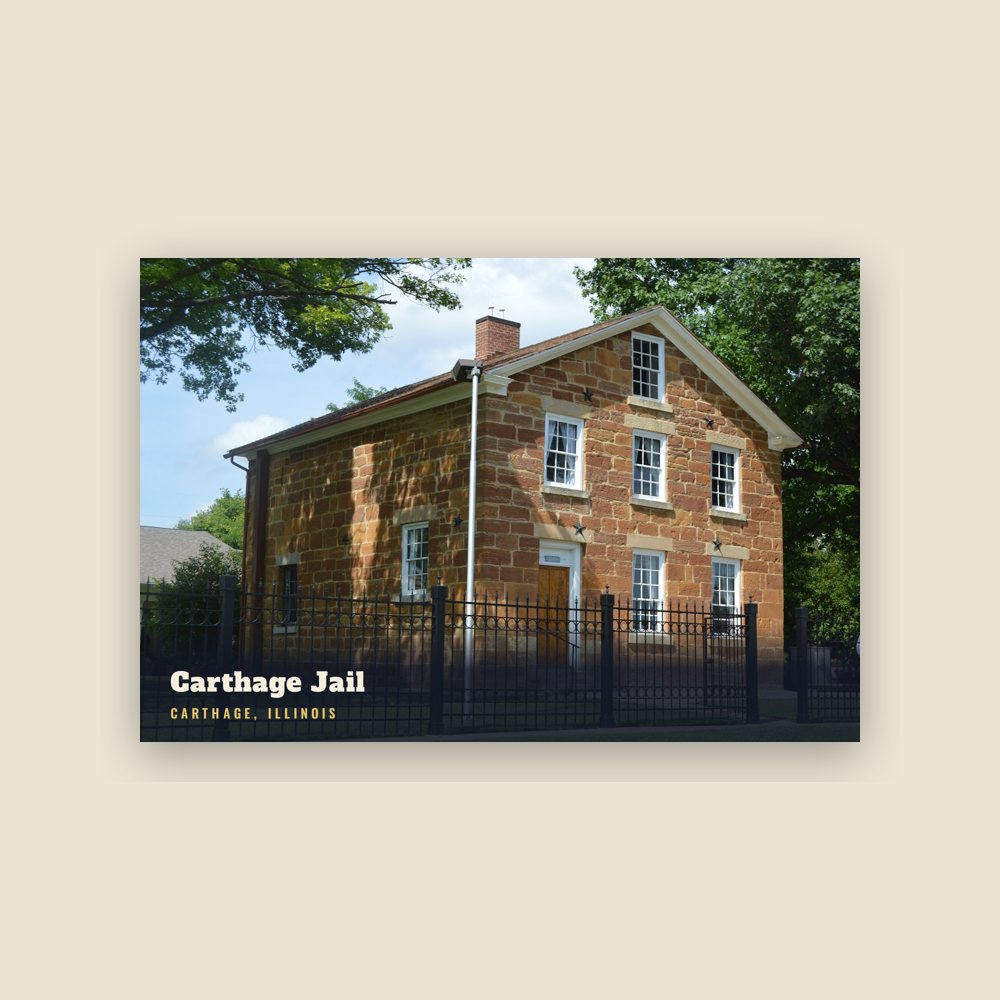

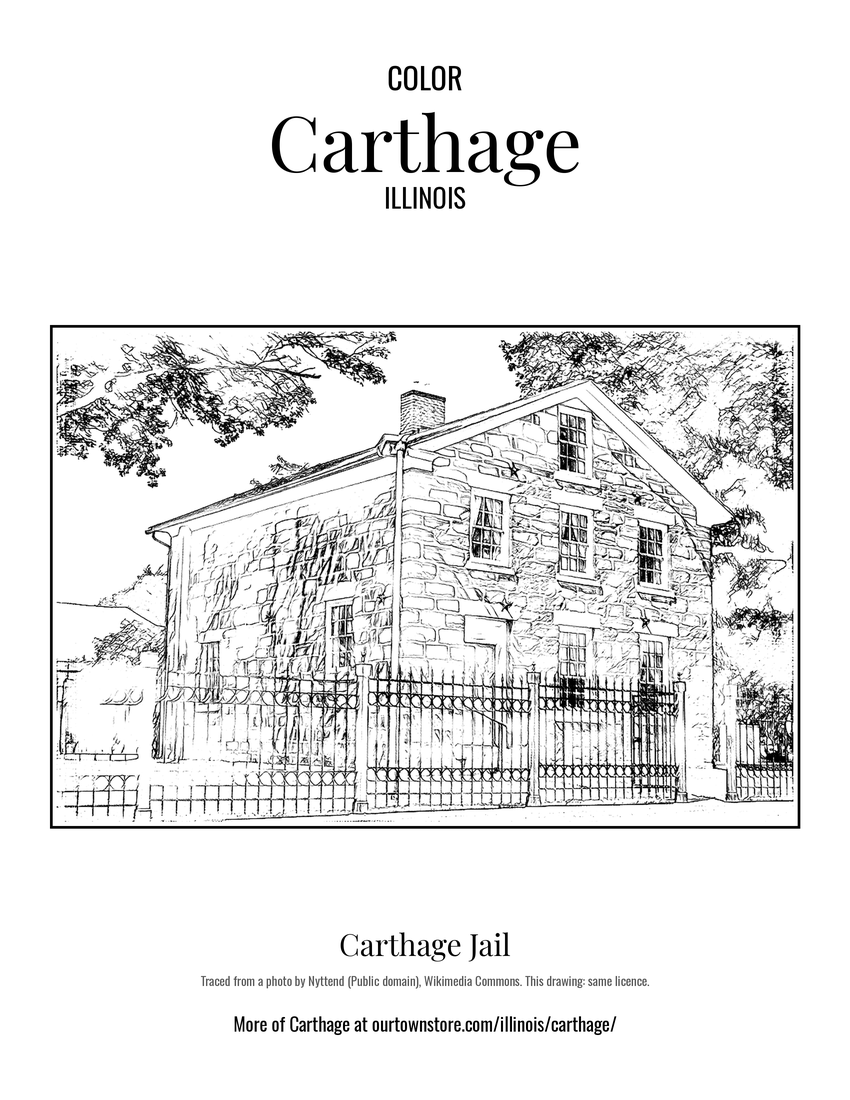 Carthage Jail
 Carthage Courthouse Square Historic District
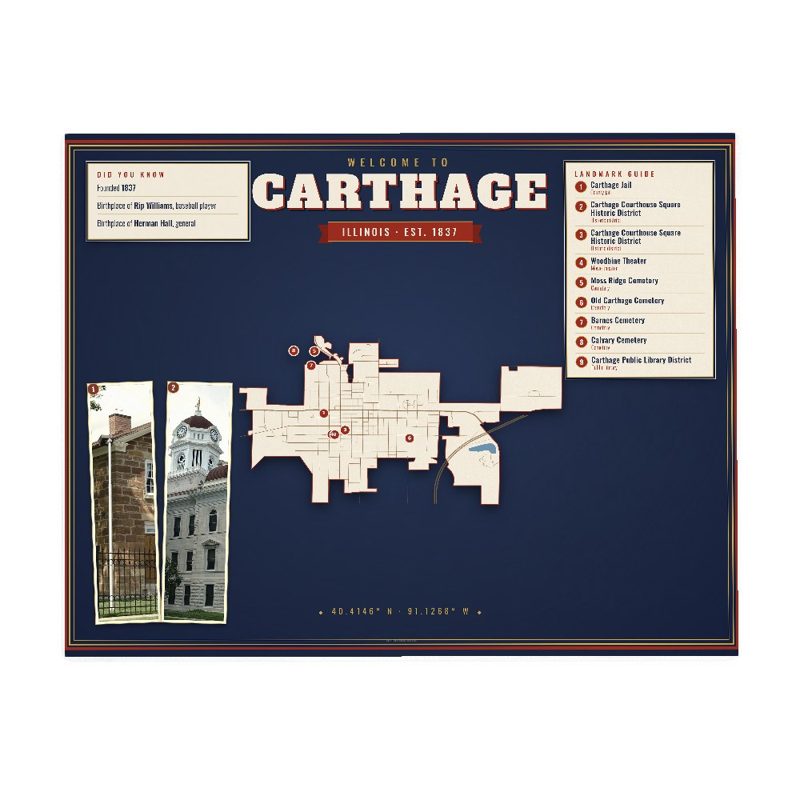
 A view of Carthage
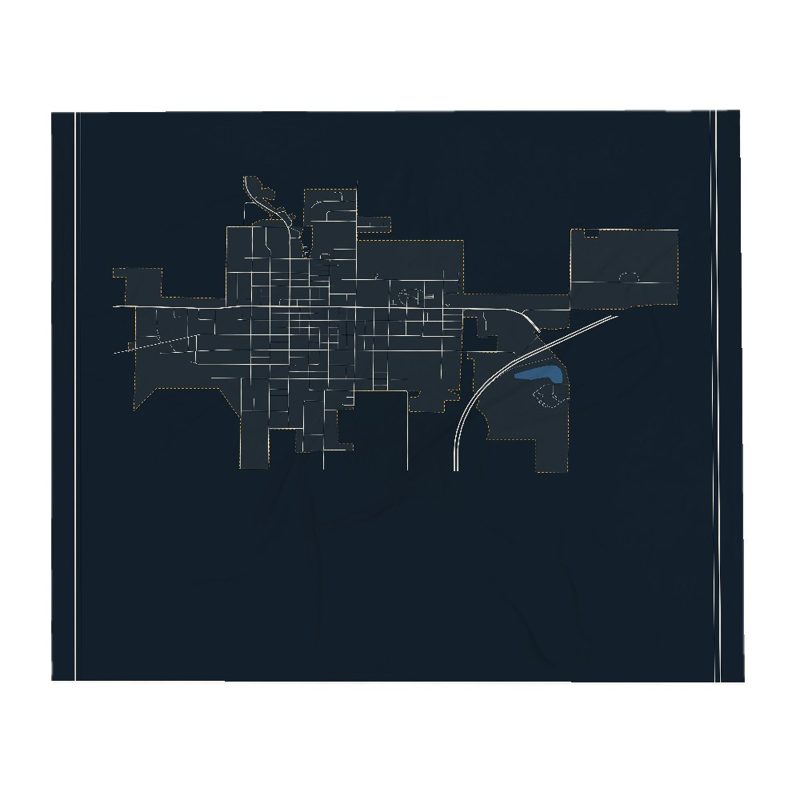
 A view of Carthage