A short history of Algonquin
Long before Europeans settled in Algonquin, the Potawatomi originally inhabited the land. Algonquin was the location of Indian burial mounds known in the 1800s as the Algonquin Mounds. By 1834 the first settler of Algonquin, Samuel Gillilan, came to the area from Virginia. Settlers Dr. Cornish, Dr. Plumleigh, Eli Henderson, Alex Dawson, and William Jackson arrived shortly thereafter. There was some dispute regarding the original name of Algonquin, and numerous other names were suggested including Denny's Ferry, Cornish Ferry, Cornishville, and Osceola. But Samuel Edwards suggested the name Algonquin and on December 23, 1847, the name Algonquin became official.
The first signs of economic growth occurred in 1855 when the town saw the construction of the railroad, which enabled farmers in the neighboring area to have other means of getting their products to the markets in Chicago. Finally on February 25, 1890, the Village of Algonquin was formed.
The Village Hall of Algonquin was erected on January 31, 1907, at 2 South Main Street, and is still standing today, where it functions as a historical landmark and community gathering place. It served as the village hall of Algonquin until a new village hall was built at 2200 Harnish Drive in 1996.
From 1906 to 1913, the automobile companies began to go to the Algonquin Hill Climbs, which was an event where if an automobile was able to make it up a series of steep hills in the village, it would be given the stamp of approval. And because of that, the Algonquin Cup was formed which received national recognition at the time. The two hills used in the race were the Phillips Hill which extends from Illinois Route 31 to the cemetery and Perry Hill, located south of downtown, and which is now Lundstrom Lane. The village created a new hill for the race called Huntington Hill, which is now Huntington Drive. A park stands in place of the finish line of Huntington Hill at the intersection of Huntington Drive and Circle Drive which is called Hill Climb Park. The festival in recognition of the event continues to be held each year.
Algonquin road route 62 now, was once noted as the first bridge to be installed on an incline. The first bridge was level with a steep incline headed east. It was later replaced with a four-lane bridge with an incline to reduce stress on vehicles headed east.
In the 1990s, development shifted to Randall Road, which saw the construction of numerous retailers, restaurants, and services. In 2004, the 80-store Algonquin Commons outdoor mall (the largest outdoor mall in Illinois) opened for business, followed by the Algonquin Galleria outdoor mall, which is under development and saw its first stores open in 2006. In the mid-2000s, development also began on the Algonquin Corporate Campus, which is slated to include industrial and office development spread over 1,000 acres (4.0 km2) on the southwest side of the village, bringing hundreds of high-paying jobs to the area.
Adapted (trimmed) from the Wikipedia article Algonquin, Illinois, revision 1378463196 by its contributors, licensed CC BY-SA 4.0.

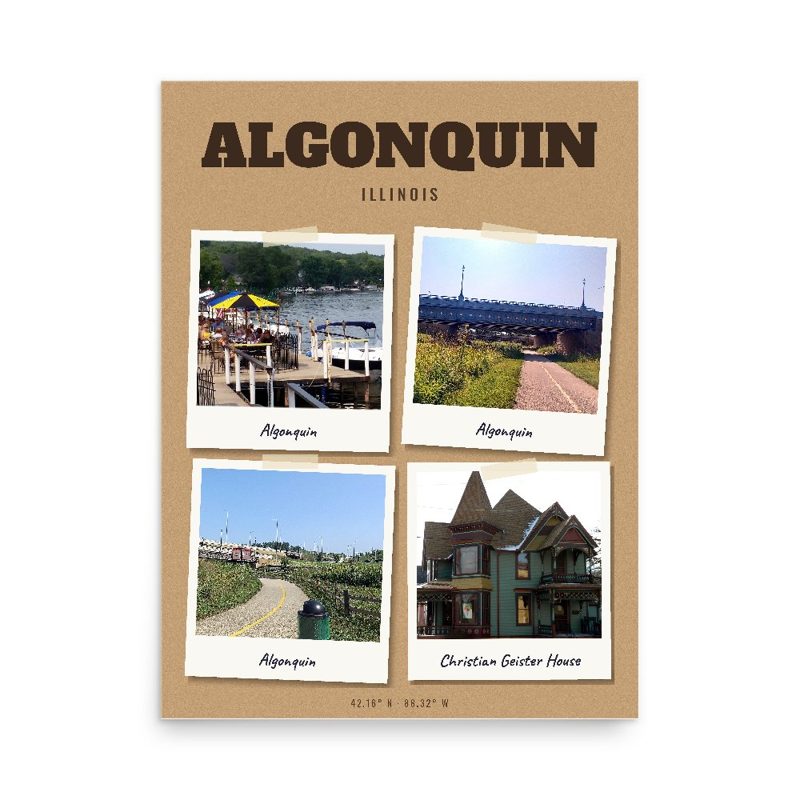
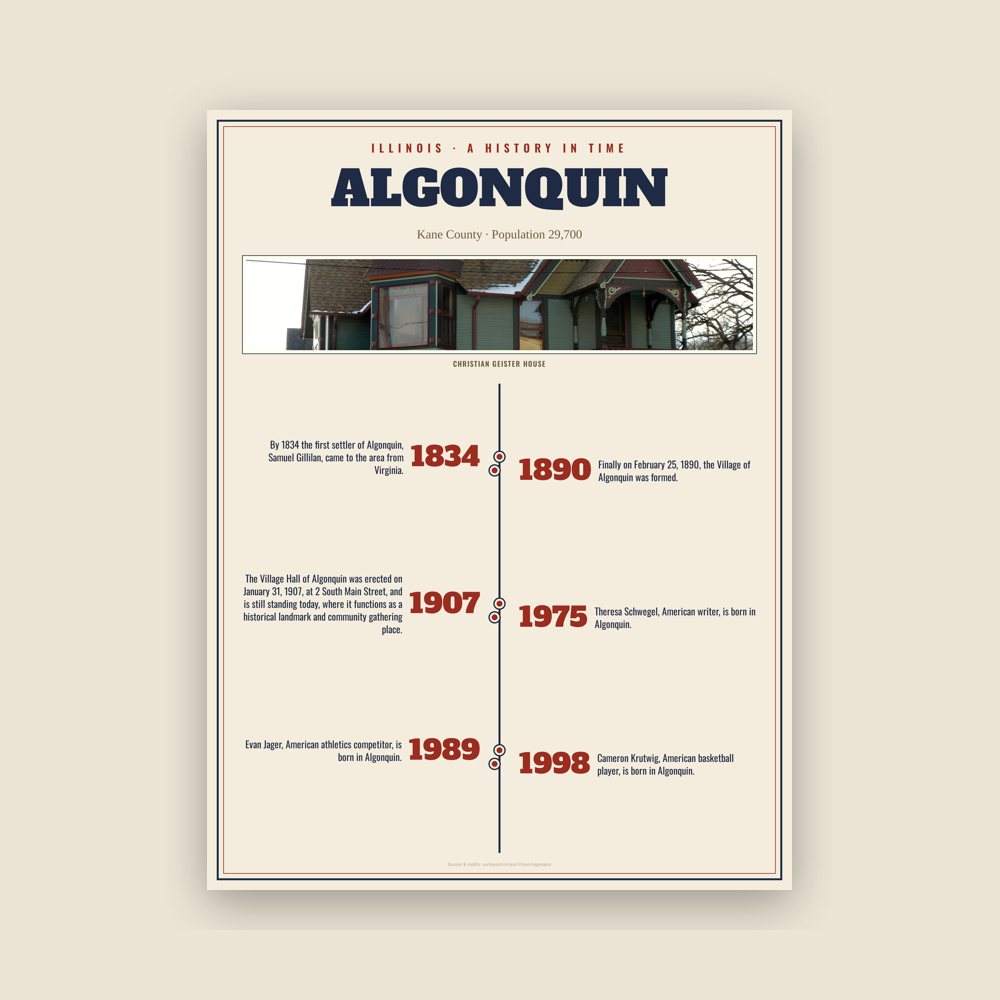
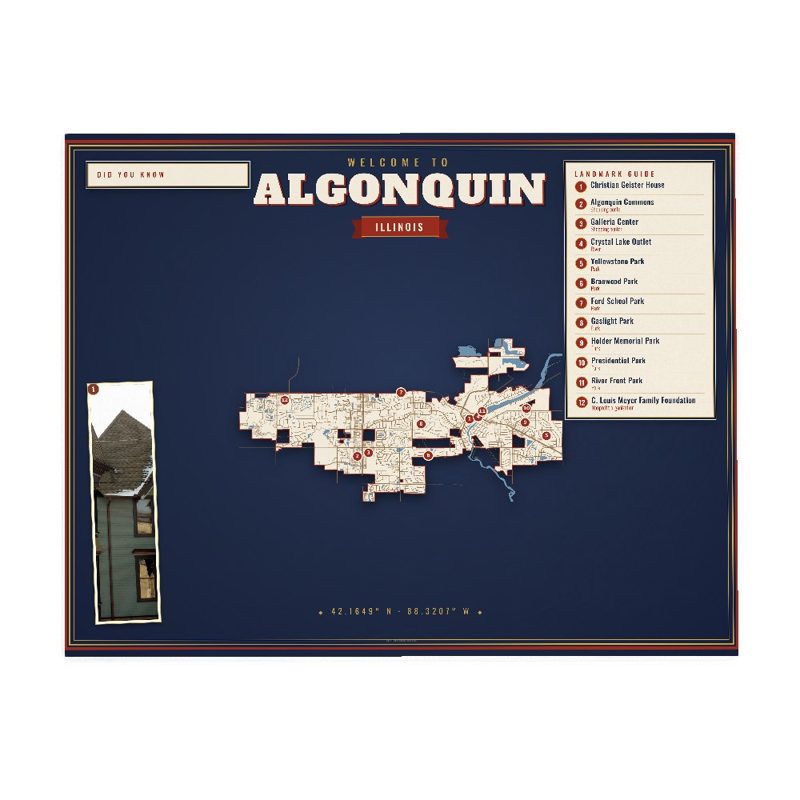







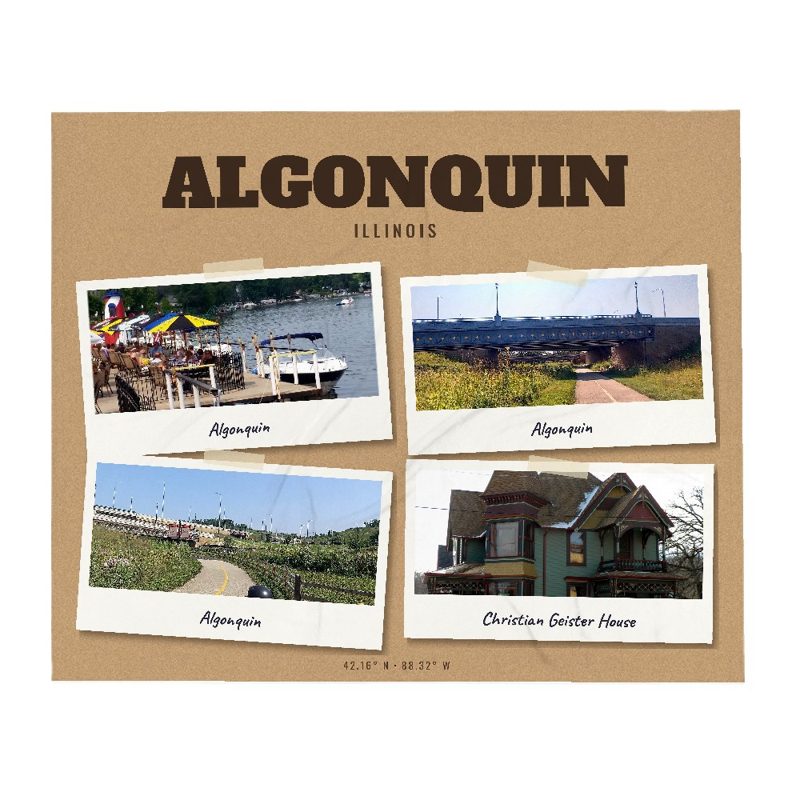
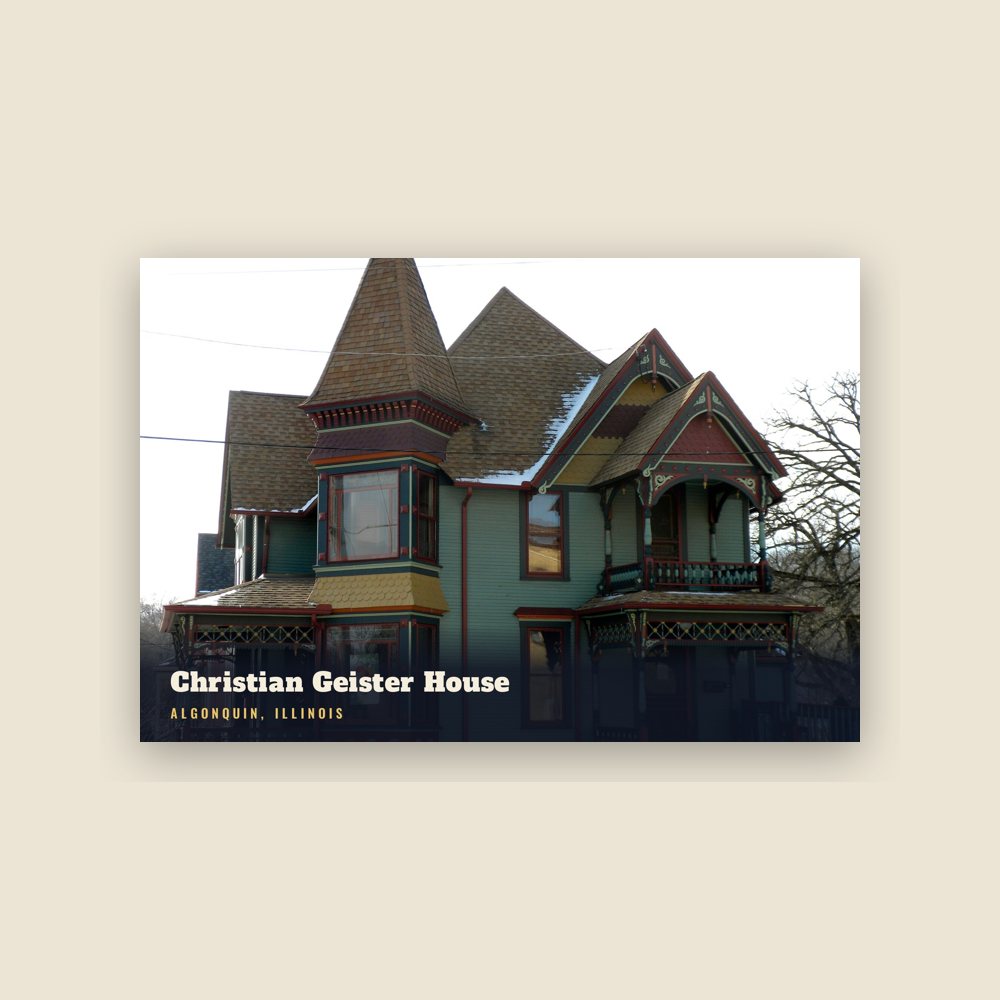
 Christian Geister House
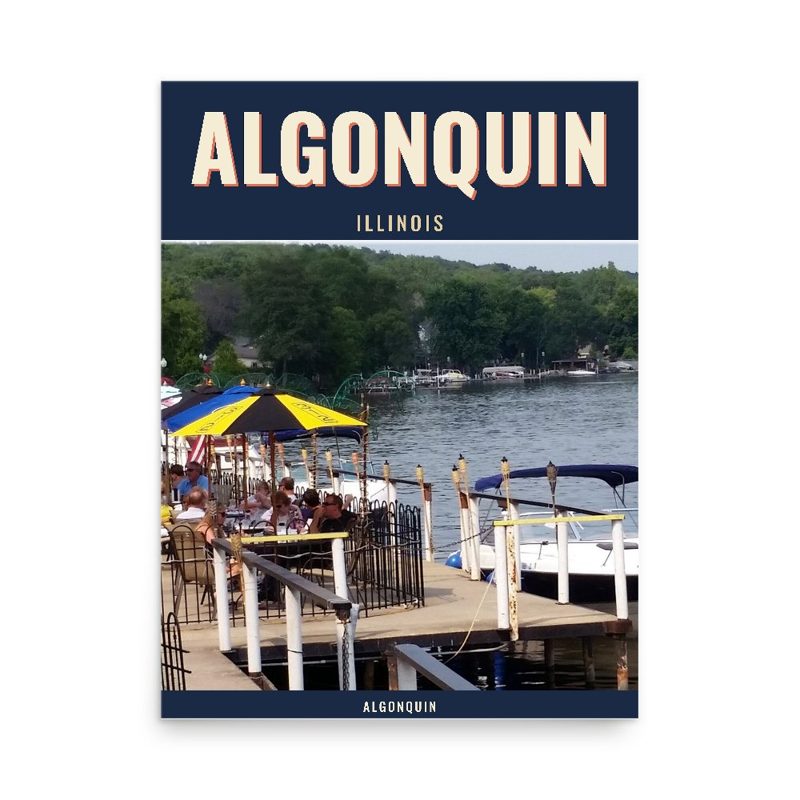
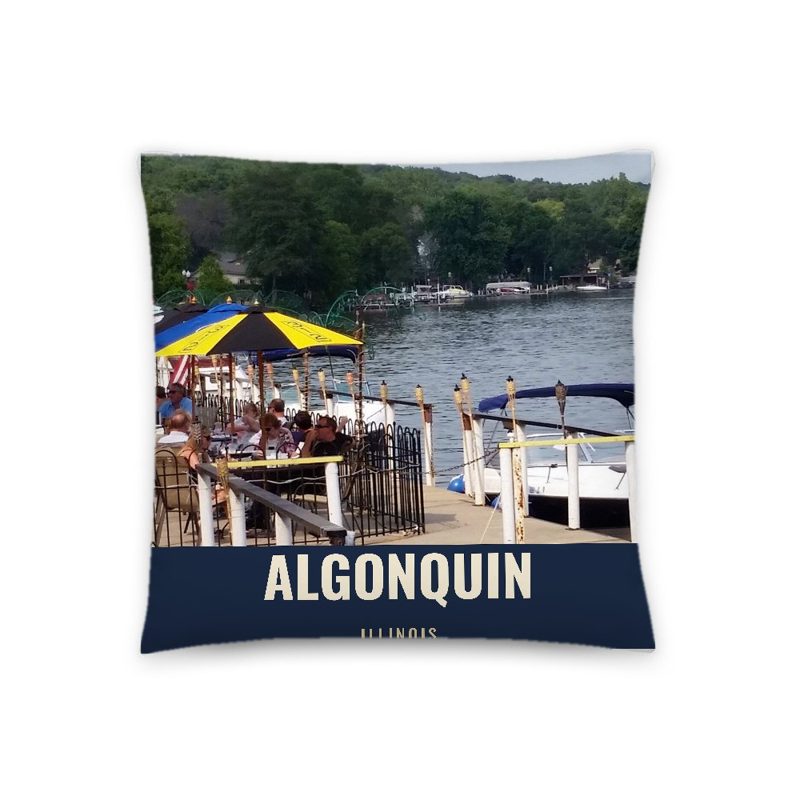
 A view of Algonquin
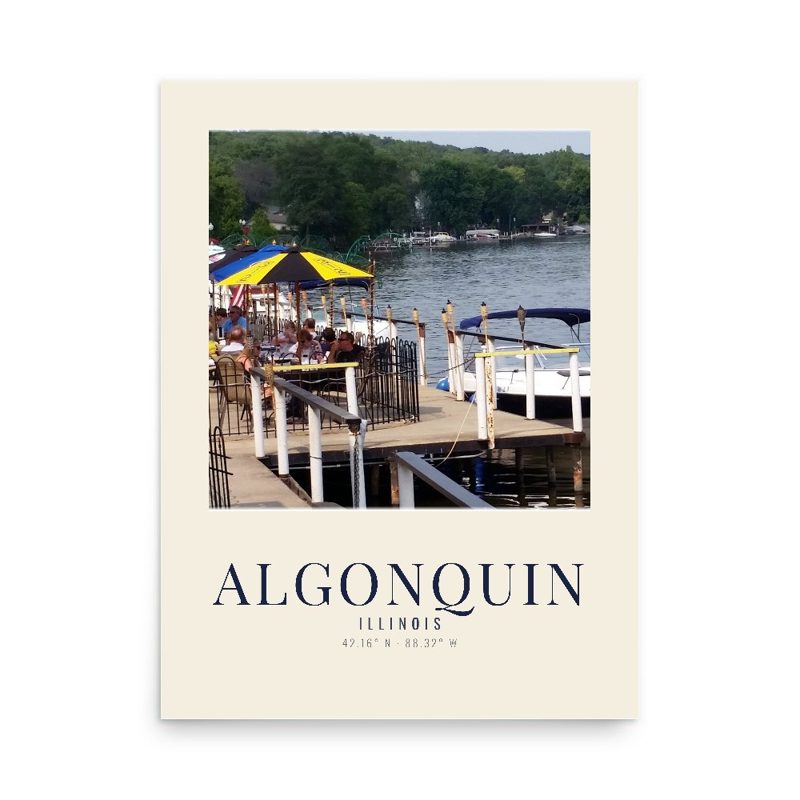
 A view of Algonquin
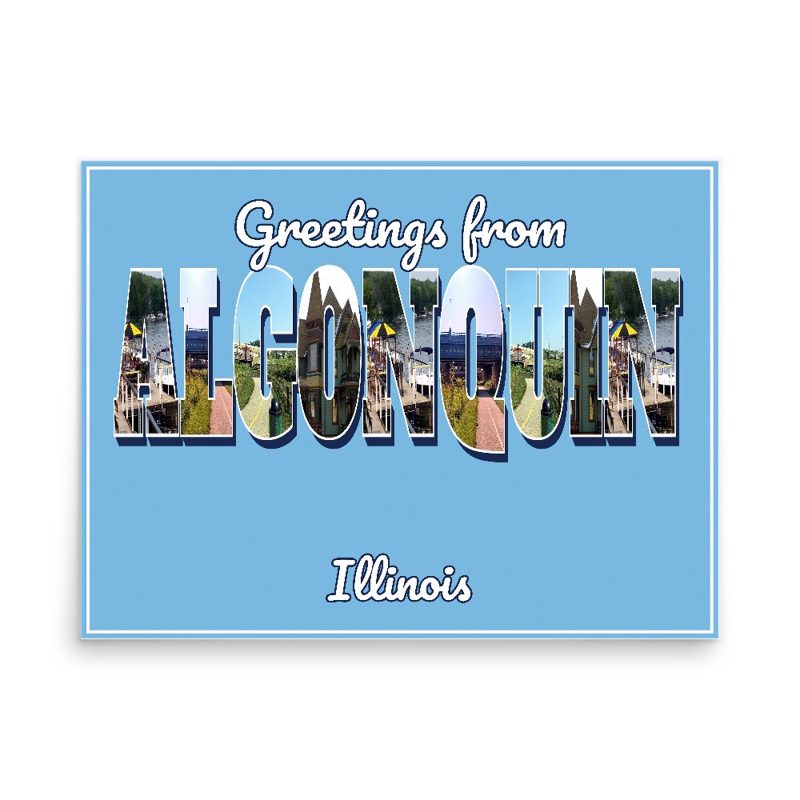
 A view of Algonquin