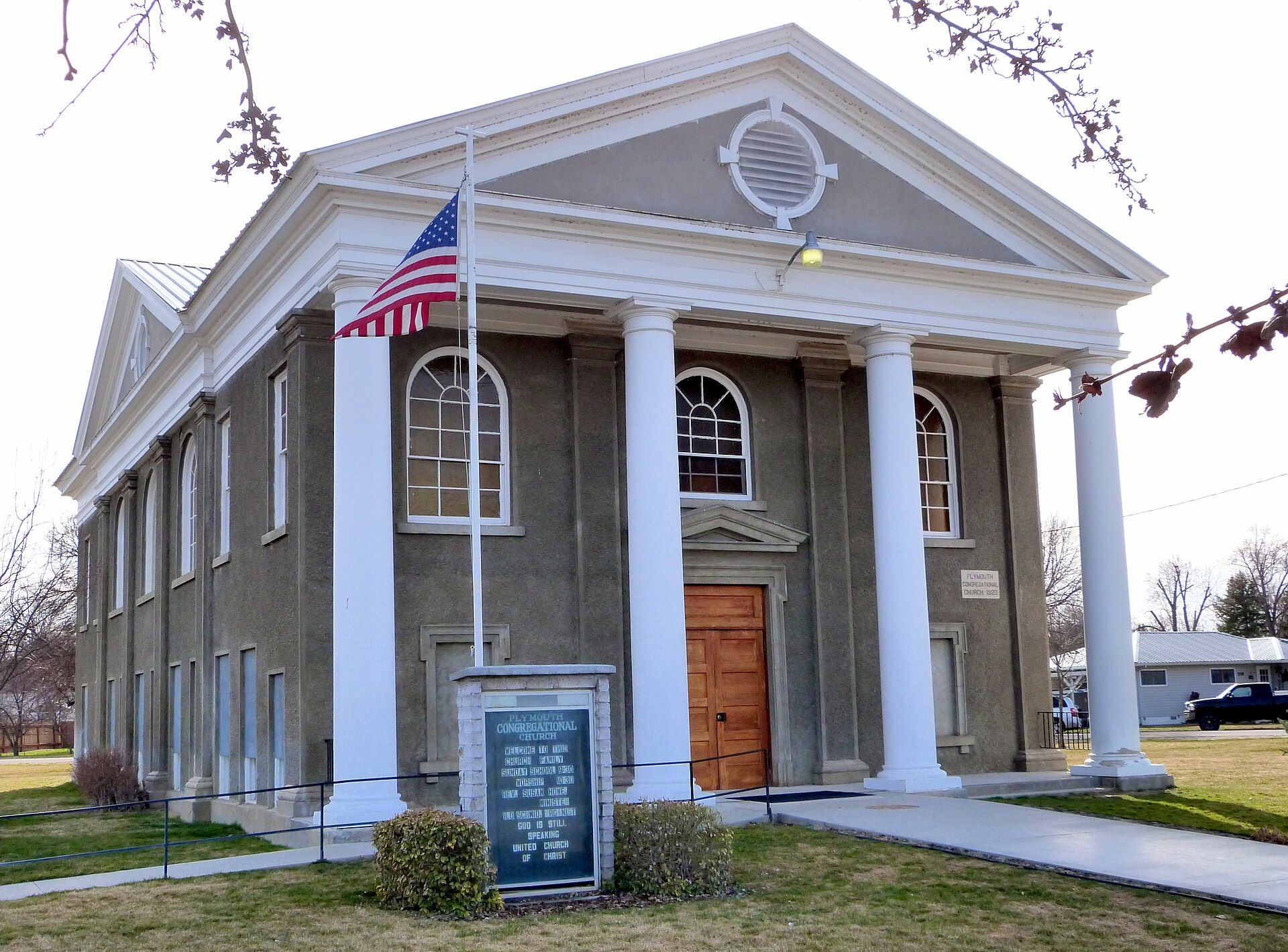
New Plymouth was a colony town, bought and planned before it was settled. Landmarks include New Plymouth Congregational Church.
- CountyPayette County
- Population1,494 (2020 U.S. Census)
- Historic places1 on the National Register
New Plymouth, Idaho gifts and souvenirs: 26 designs made from New Plymouth's own map, landmarks and history, from $10 to $95. Printed to order and shipped free in the USA.
| Popular | Price |
|---|---|
| New Plymouth Hometown Ornament | $23 |
| New Plymouth Vintage Travel Poster | from $40 |
| New Plymouth Varsity Crewneck | from $57 |
| New Plymouth Est. Tee | from $33 |
| New Plymouth Town Line Mug | from $26 |
| New Plymouth Market Tote | $37 |
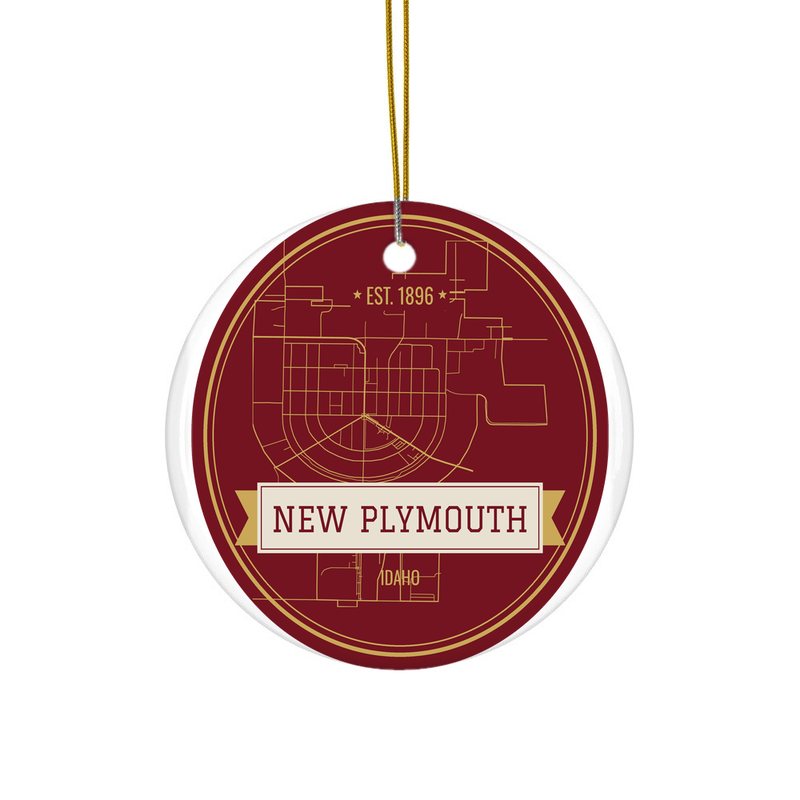
Ceramic keepsake, gold ribbon, in 4 styles
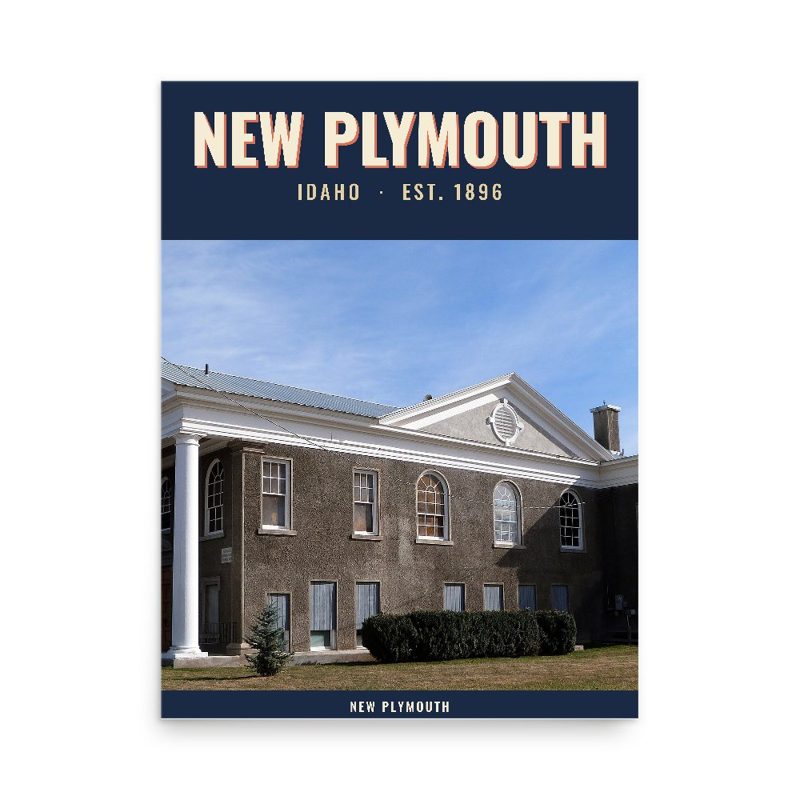
Its landmark photo in a classic travel-poster layout
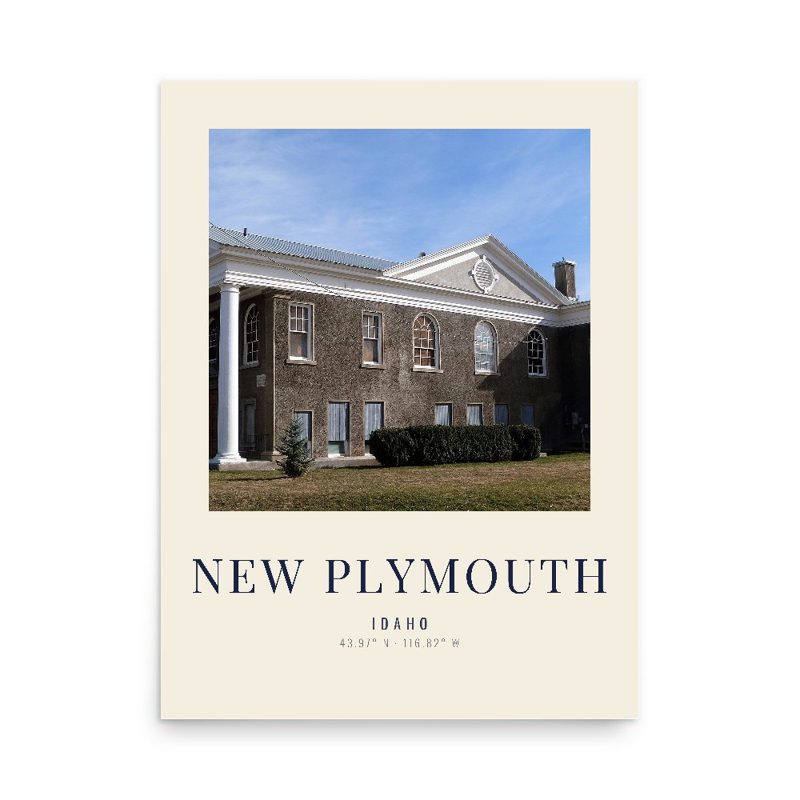
A local landmark photo as a gallery print
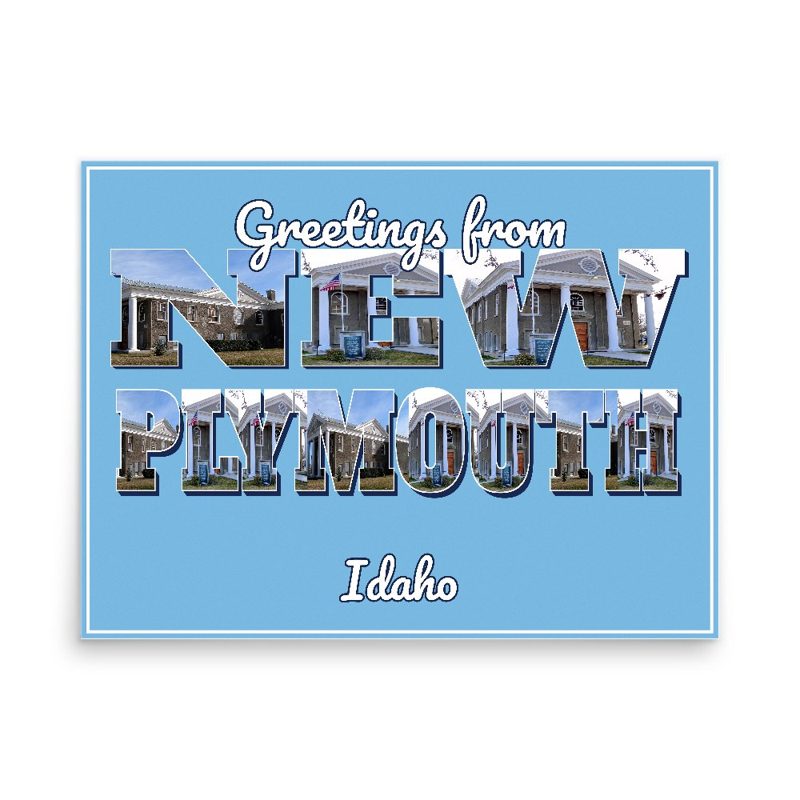
Classic large-letter postcard art, filled with local photos

Heavy-blend fleece, street map printed on the back
Red heavy-blend crewneck, knit-stitch town print
Soft Bella+Canvas jersey
Kids' Bella+Canvas jersey, youth sizes
Bella+Canvas toddler jersey
Bella+Canvas baby bodysuit
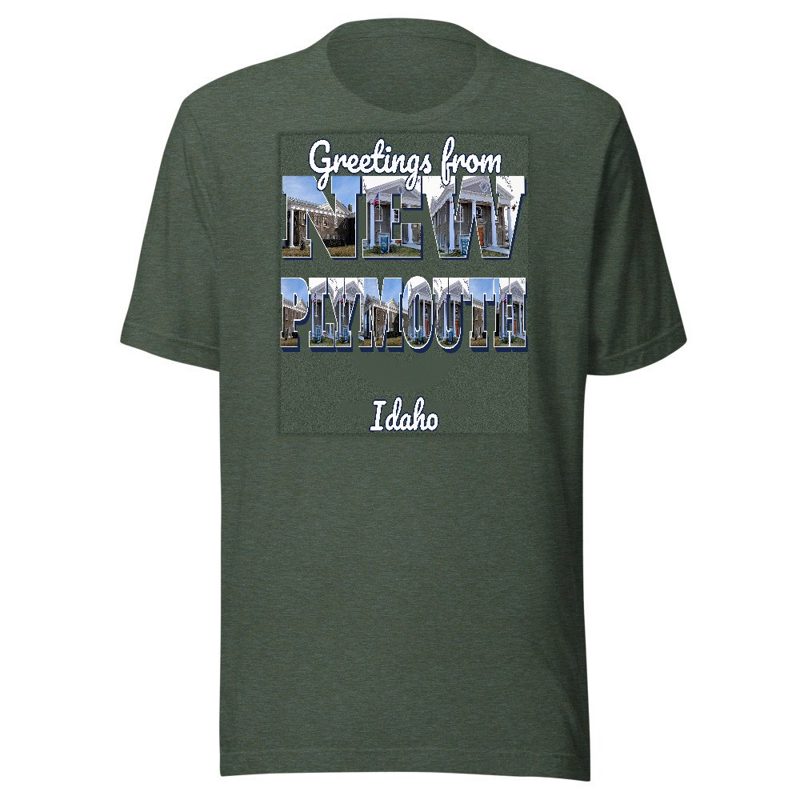
Large-letter postcard art filled with local photos
Glossy ceramic, dishwasher safe
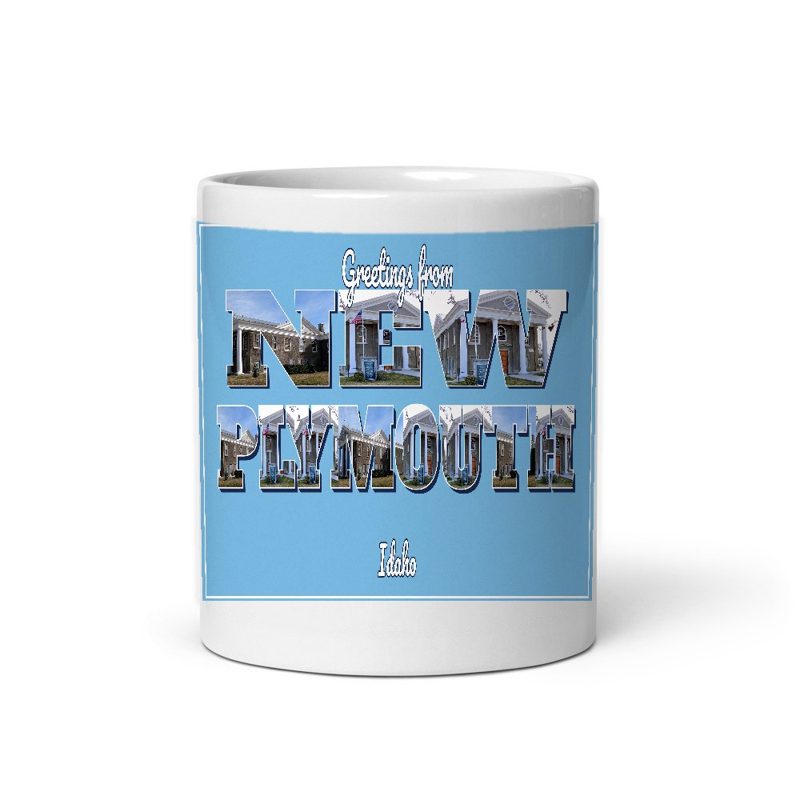
Large-letter postcard art filled with local photos, 11 oz ceramic
Weatherproof, for the front walk
24″×16″, printed coir-look fibers, rubber back
12″×12″ printed wood, ready to hang
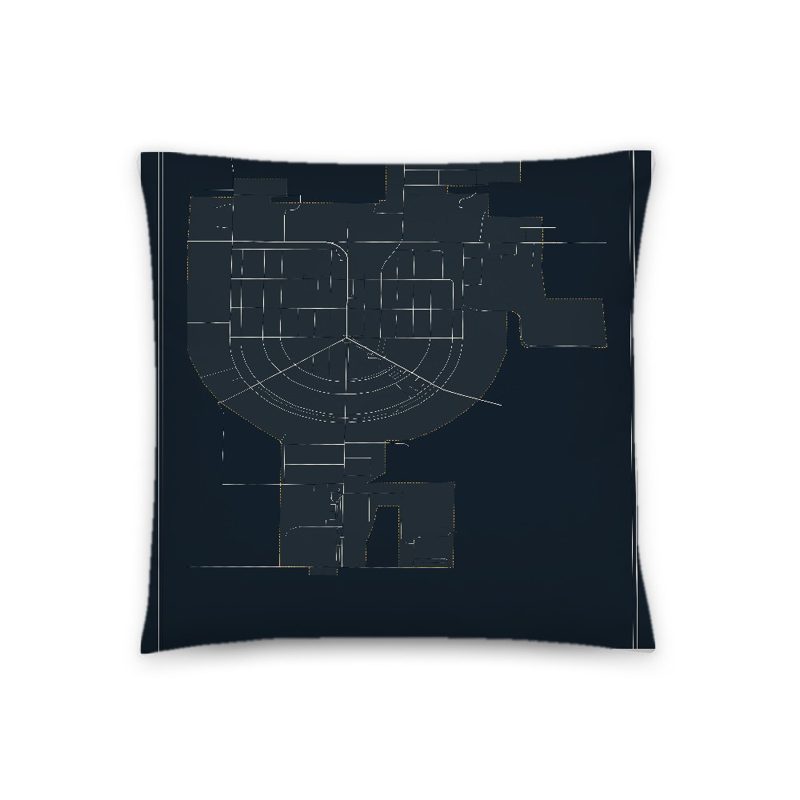
Soft-touch, zip cover
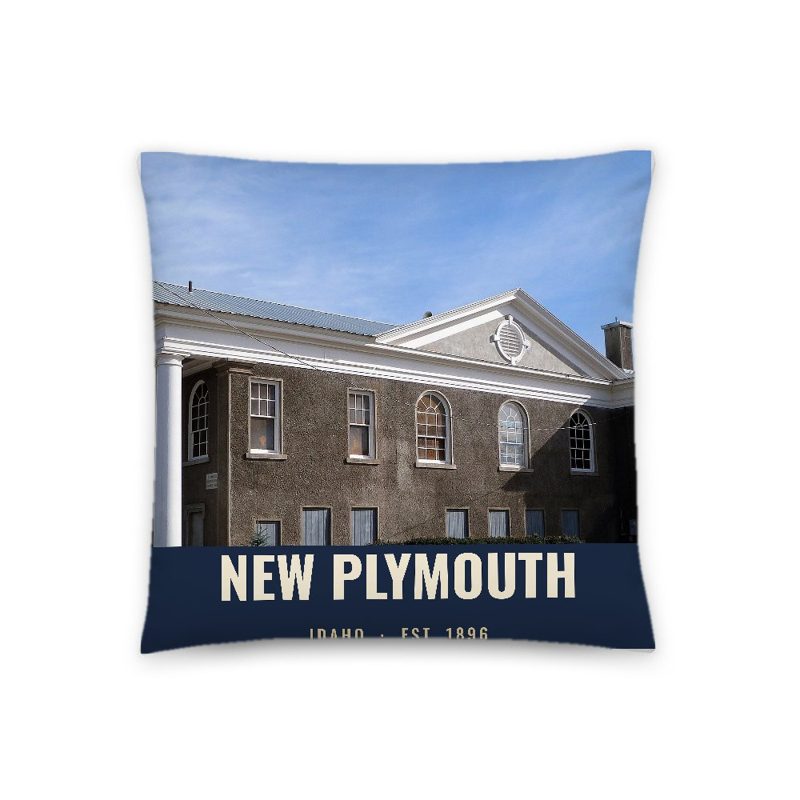
A local landmark photo with the town name, 18″×18″
Sturdy all-over-print tote
Large-letter postcard art on a sturdy tote

Foam-front trucker, printed (not embroidered) with local photos
Glossy top, cork back
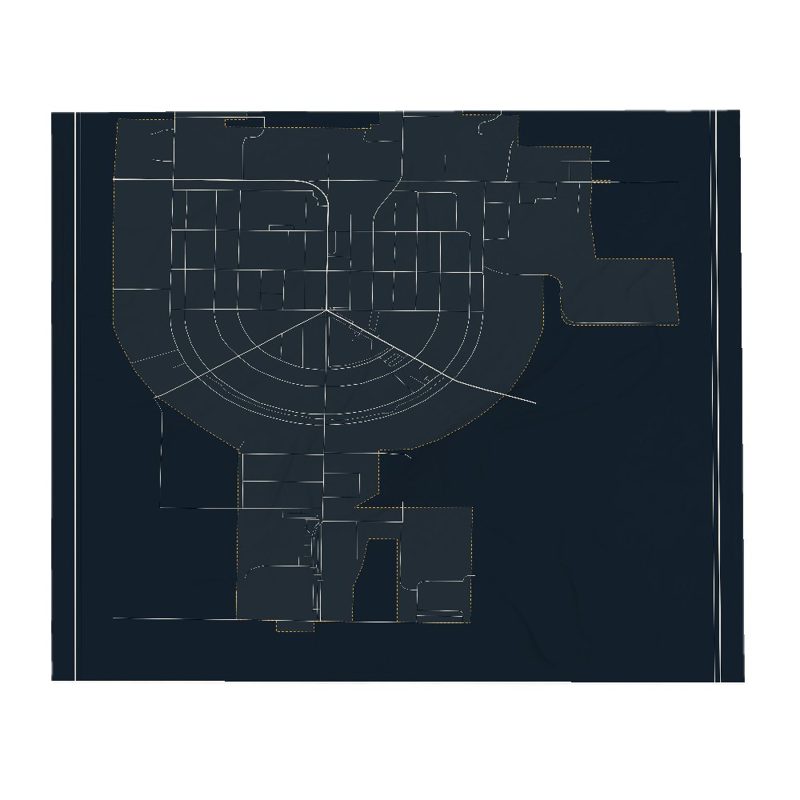
Soft fleece, 50″×60″
20 oz, double-wall stainless
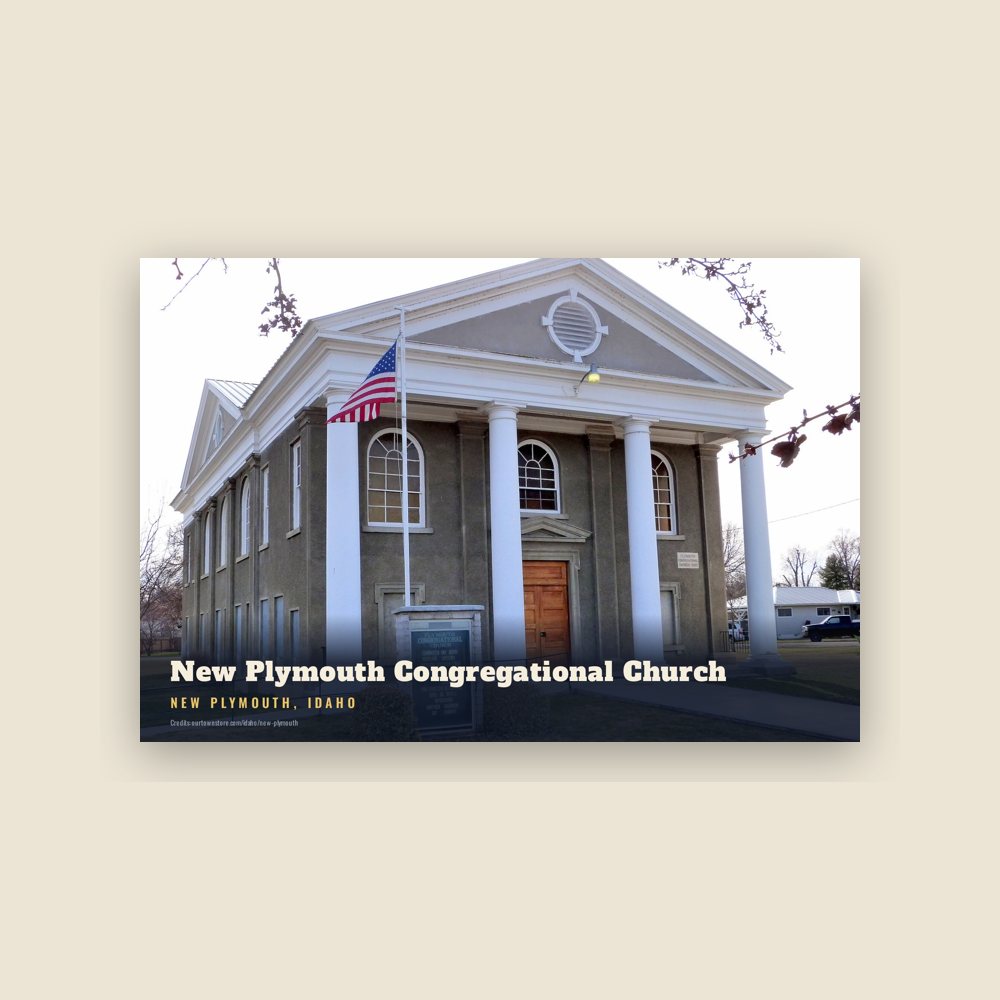
6″×4″ postcard, glossy front
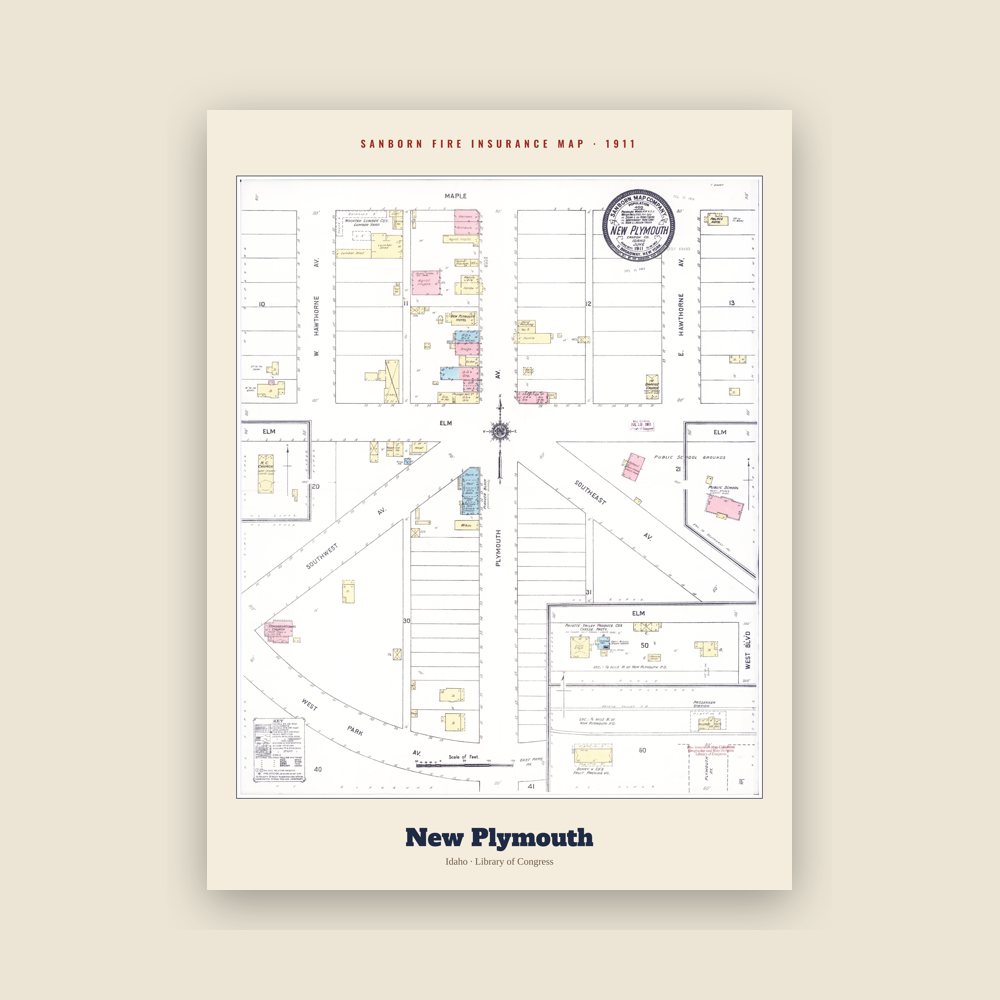
The town's earliest Sanborn fire-insurance map, drawn building by building and hand-coloured, from the Library of Congress
New Plymouth was a colony town, bought and planned before it was settled. Landmarks include New Plymouth Congregational Church.
Population 2010: 1,538 → 2020: 1,494
From Wikidata (CC0).
New Plymouth was a colony town, bought and planned before it was settled. It was the combined project of a group of people purportedly dissatisfied with city life in Chicago, who in 1895 formed what they called "The Plymouth Society of Chicago" and William E. Smythe, who was the chairman of the executive committee of the National Irrigation Congress and a famous irrigation promoter. Mr. Smythe was determined to found a colony to serve as a striking argument in favor of his project - irrigation. He spoke throughout the east, urging young and old men to go west in colonies and develop the country with the help of irrigation. He wanted the first colony to be called New Plymouth — after Plymouth, Massachusetts — and wanted it located in southwestern Idaho in the Payette Valley, which he had found apt for his purpose because of the extraordinary water supply via the nearby Payette River.
The Plymouth Society of Chicago selected a committee to investigate the irrigated Payette River Valley in the five-year-old state of Idaho, and another site in Colorado, to be purchased for the colony. The present city of New Plymouth was on the drawing boards in Chicago, designed as a town able to be self-reliant through the use of irrigation, solidly built on an agricultural and railroad economy.
In February 1896, each colonist purchased 20 shares of stock at $30 per share, which entitled him to 20 acres (81,000 m2) of land and a town lot. He was to clear the land of sagebrush and plant fruit trees, preferably apples. The town was platted with a horseshoe shape with its open end facing to the north, toward the railroad and the river. This area was planned as an industrial zone, and the acre tracts around the horseshoe were the residential lots.
The homes were to be built on the street side and the balance of the acre for garden and pasture for the family cow and the driving team. Two streets, separated by an 80-foot (24 m) park, curve around the town in a horseshoe shape. This mile-long (1.6 km) park and the streets that enclose it were called "The Boulevard." The park was planted with grass and shade trees. Plymouth Avenue, the main street and principal business thoroughfare, was surveyed (16 feet off the section line) down the center of the horseshoe from the railroad on the north through the Boulevard on the south.
The community was at first called the New Plymouth Farm Village and was governed by a colony board of directors until it incorporated as a village in 1908, dropping the last two words in the name.
Adapted (trimmed) from the Wikipedia article New Plymouth, Idaho, revision 1374771969 by its contributors, licensed CC BY-SA 4.0.
We share a part of every New Plymouth sale with local partners, and we'd love to print from your collection. Old photographs, maps and postcards make the best keepsakes.
Partner with usA favorite landmark, your street, a school or team, an anniversary gift, a different product. Tell us and we'll get back to you by email.
3 free coloring pages of New Plymouth, each traced from a photo of a local landmark. Print them at home, at school or for story hour.
New Plymouth's population was 1,494 in the 2020 U.S. Census, down from 1,538 in 2010.
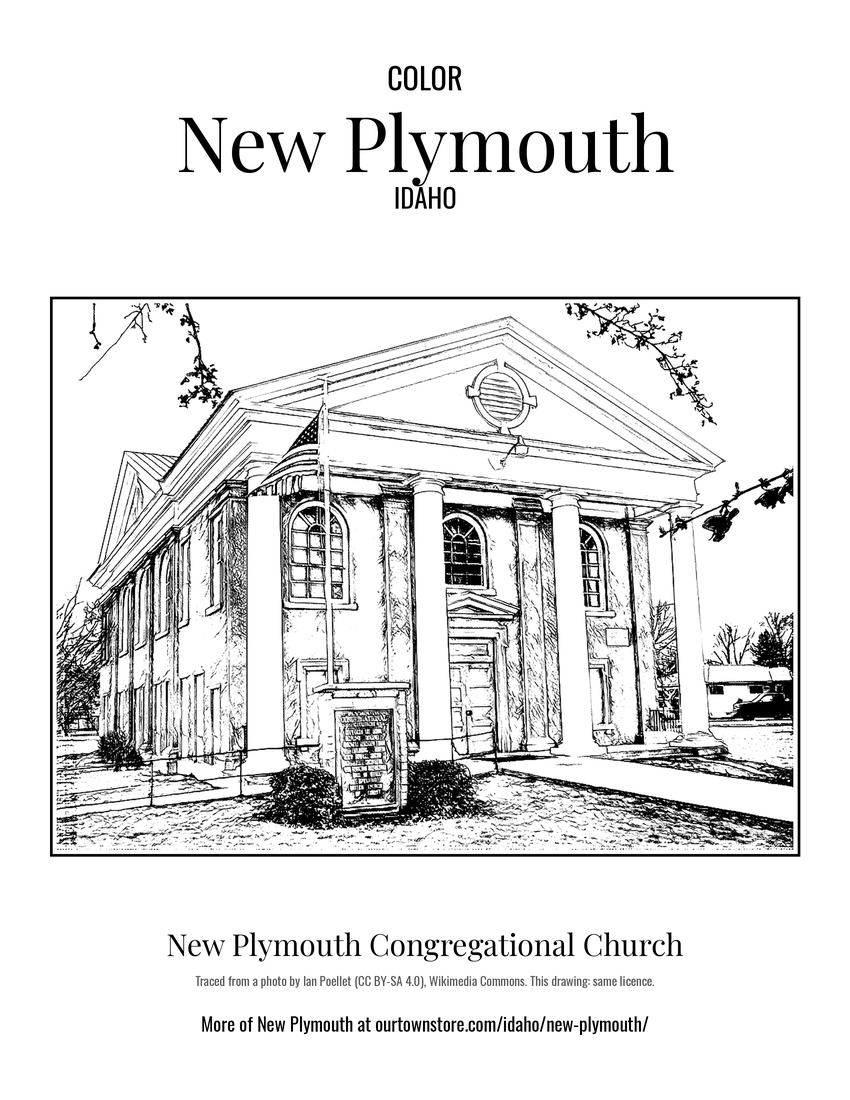 New Plymouth Congregational Church
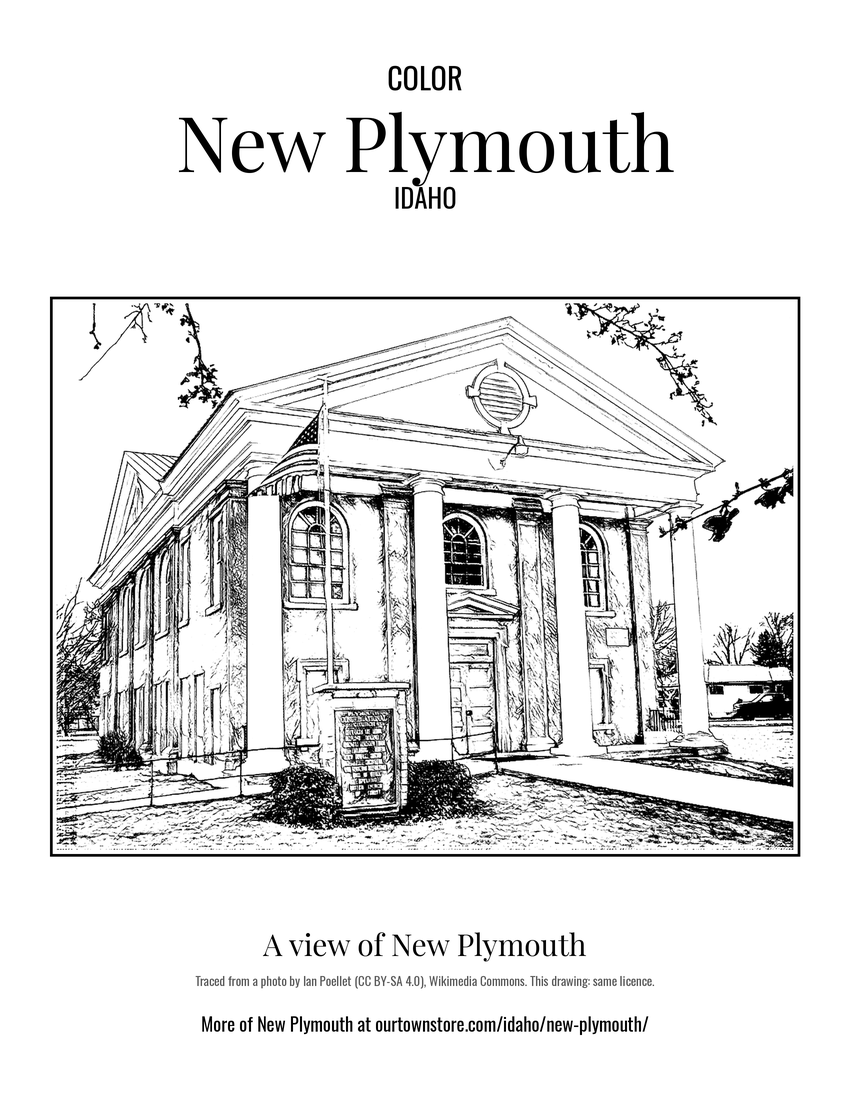 A view of New Plymouth
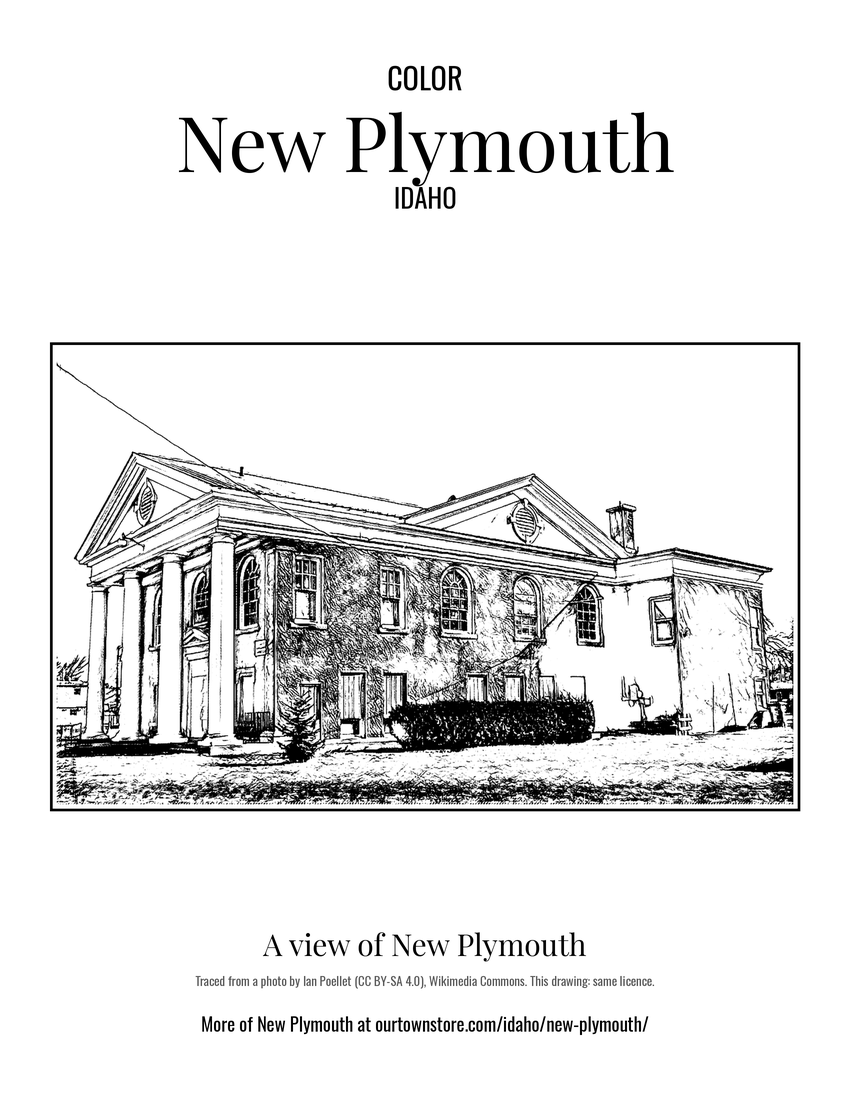 A view of New Plymouth