Stone Mountain's history traces back to before the time of European settlement, with local burial mounds dating back hundreds of years built by the ancestors of the historical Muskogee Creek nation who first met the settlers in the early colonial period.
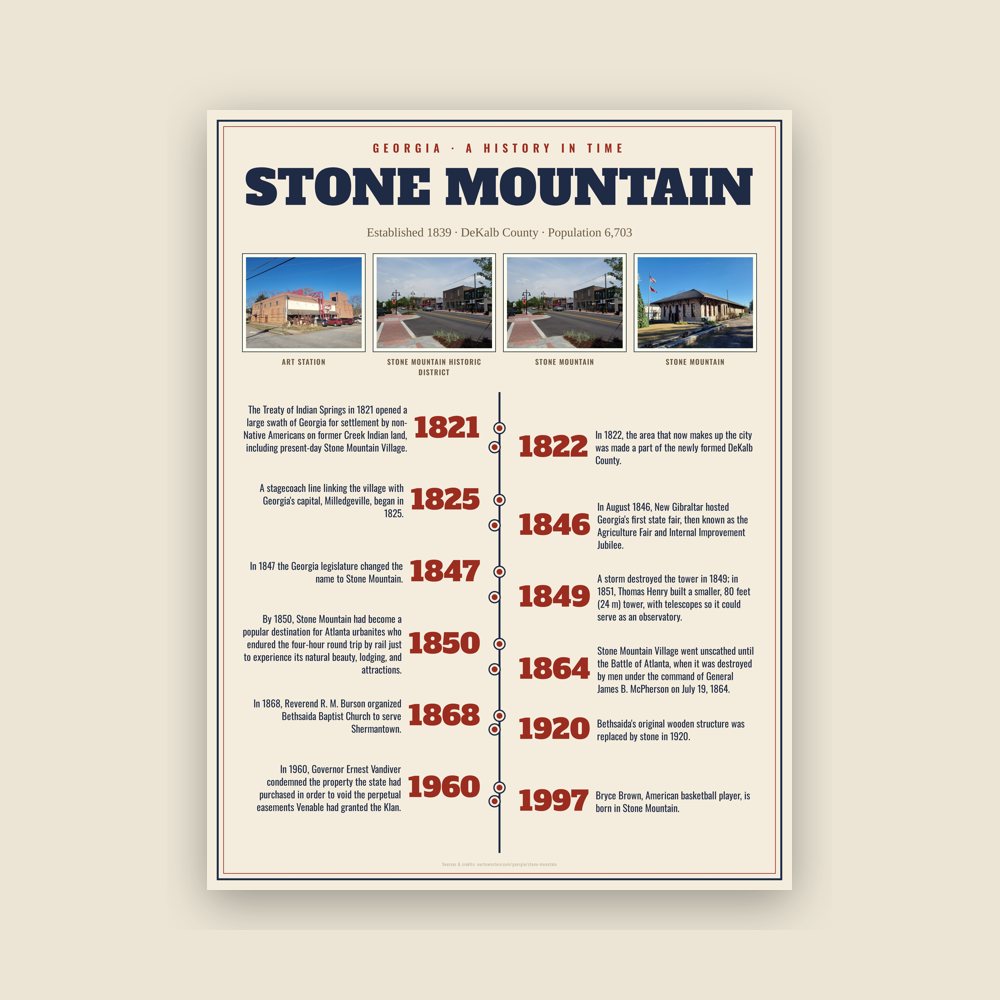
The Treaty of Indian Springs in 1821 opened a large swath of Georgia for settlement by non-Native Americans on former Creek Indian land, including present-day Stone Mountain Village. In 1822, the area that now makes up the city was made a part of the newly formed DeKalb County.
Read the full history
Settlement
By the 1820s, Rock Mountain, as it was then called, was "a major travel center", with an inn for travelers. A stagecoach line linking the village with Georgia's capital, Milledgeville, began in 1825. Another stage line ran to Winder and Athens. In 1828 another stage line began trips to Dahlonega, and a fourth connected the community with Macon. "Hundreds of people visited Rock Mountain in the summer [of 1828] and ... a house of entertainment was nearby." Rail service did not reach the town, by then New Gibraltar, until 1845.
A post office was created in 1834 on the old Augusta Road, and Andrew Johnson, called the founder of New Gibraltar and first mayor, around whose house the city limits were drawn, built a hotel along the road in 1836. ("An 1843 amendment to the act of incorporation extended the town limits to 600 yards (550 m) in every direction from the house of Andrew Johnson.") About 1839 Aaron Cloud, who also had a hotel, built a wooden observation tower, octagonal like a lighthouse and 150 feet (46 m) high, along with a restaurant and club, at the mountain's summit. A storm destroyed the tower in 1849; in 1851, Thomas Henry built a smaller, 80 feet (24 m) tower, with telescopes so it could serve as an observatory. Visitors to the mountain traveled by rail and road, then hiked up the 1.3-mile (2.1 km) mountaintop trail to the top. By 1850, Stone Mountain had become a popular destination for Atlanta urbanites who endured the four-hour round trip by rail just to experience its natural beauty, lodging, and attractions.
Industry
Granite quarrying at the mountain was the area's lifeblood for decades, employing many thousands. The excellent grade of building stone from the mountain was used in many notable structures, including the locks of the Panama Canal, the roof of the bullion depository at Fort Knox, Philadelphia's Liberty National Building, and the steps in the east wing of the U.S. Capitol.
In August 1846, New Gibraltar hosted Georgia's first state fair, then known as the Agriculture Fair and Internal Improvement Jubilee. The fair had just one exhibit—three horses and two cows, both belonging to the event's organizer, John Graves. The next year, the village again hosted the event, which featured caskets, marble, embroidery, brooms, bedspreads, vegetables, blooded stock, wheat, farm tools, and a magnetic telegraph. Stone Mountain hosted the event until 1850, when it moved to Macon.
American Civil War
Though DeKalb County voted against secession from the United States, it was not spared the devastation of the Civil War. Stone Mountain Village went unscathed until the Battle of Atlanta, when it was destroyed by men under the command of General James B. McPherson on July 19, 1864. Several antebellum homes were spared as they were used as hospitals. The railroad depot's roof burned, but the building stood, owing to its 2-foot-thick granite walls.
From the village's destruction in July 1864 until November, Union forces scavenged Stone Mountain and the surrounding area, taking corn, wheat, cotton, cattle, and other goods. On November 15, 1864, between 12,000 and 15,000 Union troops marched through Stone Mountain and further destroyed the rail lines. The rails were rendered useless by heating them over burning railroad ties, then twisting them around trees. The term Sherman's neckties was coined for this form of destruction.
Birth of Shermantown
After the Civil War ended, housing in the area was rebuilt as Stone Mountain granite was again in demand for construction across the nation. A significant portion of the quarry's work force were African Americans, but they were generally excluded from areas where white families lived, so a shantytown, Shermantown, came into being at the southeast side of the village; its name was a reference to Union General William T. Sherman.
In 1868, Reverend R. M. Burson organized Bethsaida Baptist Church to serve Shermantown. A church building was then built under Reverend F. M. Simons at what is now 853 Fourth Street. Simons was among a delegation of southern African American pastors to meet with Sherman in Washington, D.C. after the war to discuss the treatment of the freedmen. Bethsaida Baptist is still an active part of the Stone Mountain Village.
By the 20th century, much of Shermantown's original structures had been replaced. Bethsaida's original wooden structure was replaced by stone in 1920. Though Shermantown has mostly integrated into the growing Stone Mountain Village, it retains its own distinct community.
Rebirth of the Ku Klux Klan
The year 1915 was when the Ku Klux Klan, a white supremacist organization, was reborn. Members assembled at Stone Mountain with permission of quarry owner Samuel Venable, an active member. Their activities, including annual cross-burnings, continued for over 40 years, but Stone Mountain's association with the Klan began to erode when the State of Georgia began to acquire the mountain and surrounding property in 1958. In 1960, Governor Ernest Vandiver condemned the property the state had purchased in order to void the perpetual easements Venable had granted the Klan. This ended any official link between Stone Mountain and the Klan.
Civil rights movement
During the civil rights movement's March on Washington, on August 28, 1963, Martin Luther King Jr. referred to Stone Mountain in his iconic "I Have a Dream" speech when he proclaimed, "let freedom ring from Stone Mountain of Georgia!" Charles Burris, the Village's first African-American mayor, dedicated the Freedom Bell on Main Street in King's honor on February 26, 2000. At an annual ceremony held on Martin Luther King Jr. Day, the bell is rung to commemorate King's legacy.
Many names
The mountain has been known by countless names throughout the centuries. It was called Crystal Mountain by 16th-century Spanish explorer Juan Pardo when he visited in 1567. The Creek Indians who inhabited the area at that time used a name translating to "Lone Mountain". Around the turn of the 19th century, settlers called it Rock Mountain or Rock Fort Mountain. By the end of the 1830s, Stone Mountain had become the generally accepted name. Like the mountain, the village formed at its base was initially known as Rock Mountain but was incorporated as New Gibraltar in 1839 by an act of the General Assembly. In 1847 the Georgia legislature changed the name to Stone Mountain.
Cemetery
The Stone Mountain Cemetery, established around 1850, is a microcosm of the village's past. It is the final resting place for roughly 200 unknown Confederate soldiers. 71 known Confederate soldiers are buried there, along with James Sprayberry, a Union soldier. Another notable site is the grave of George Pressley Trout, who is buried there with his wife and his horse. James B. Rivers, the village's first African American police chief, is at rest there on a hillside facing the mountain. The cemetery is still in use.
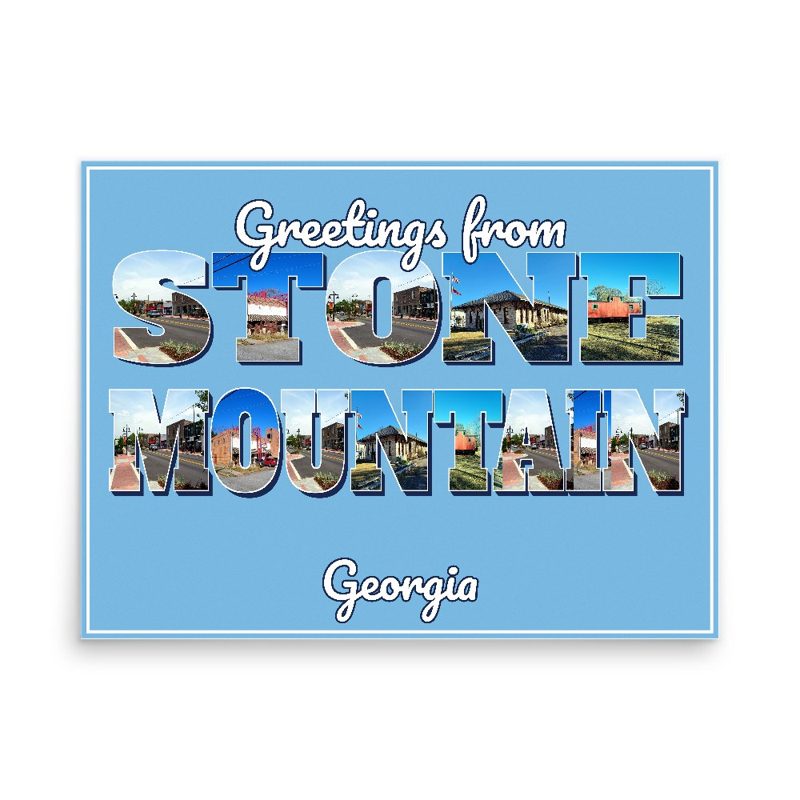
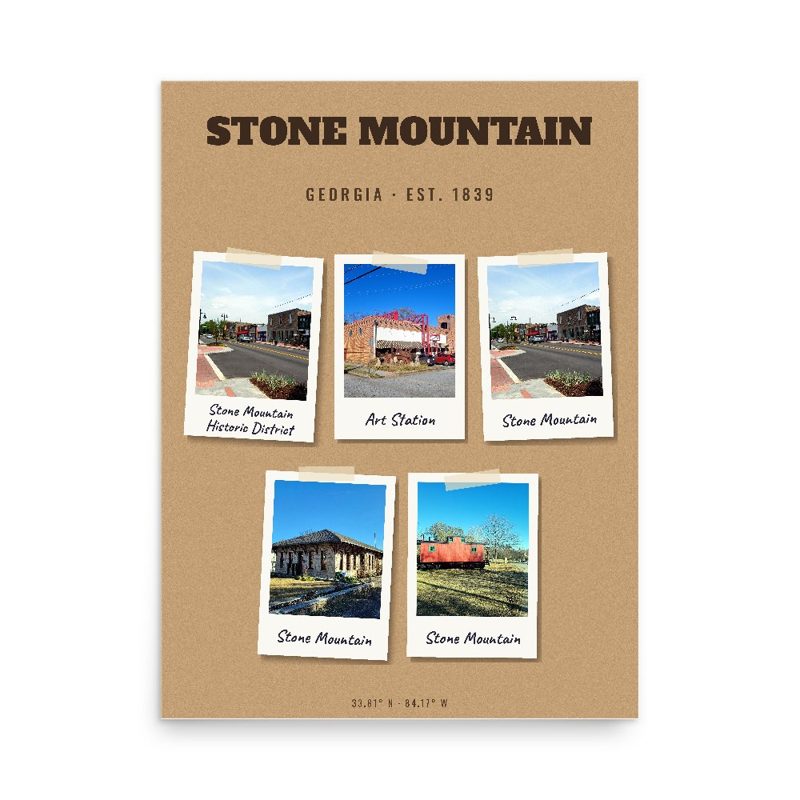
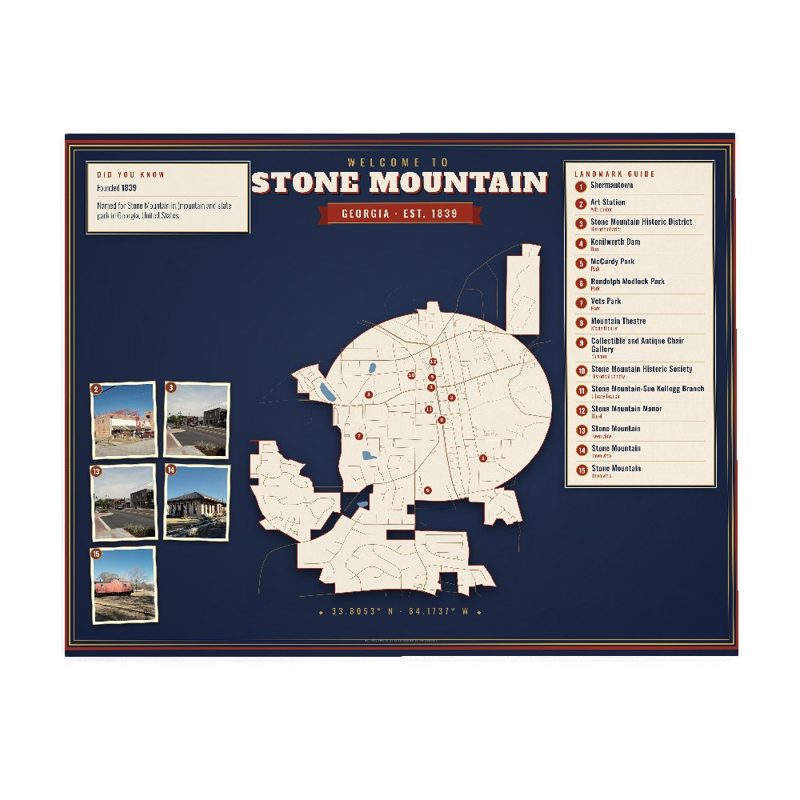














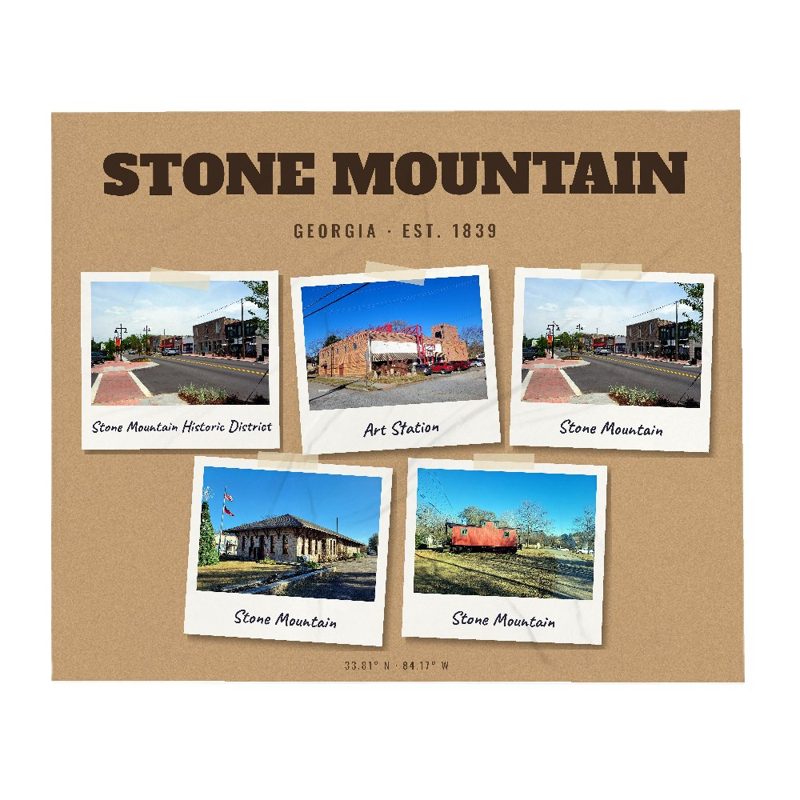

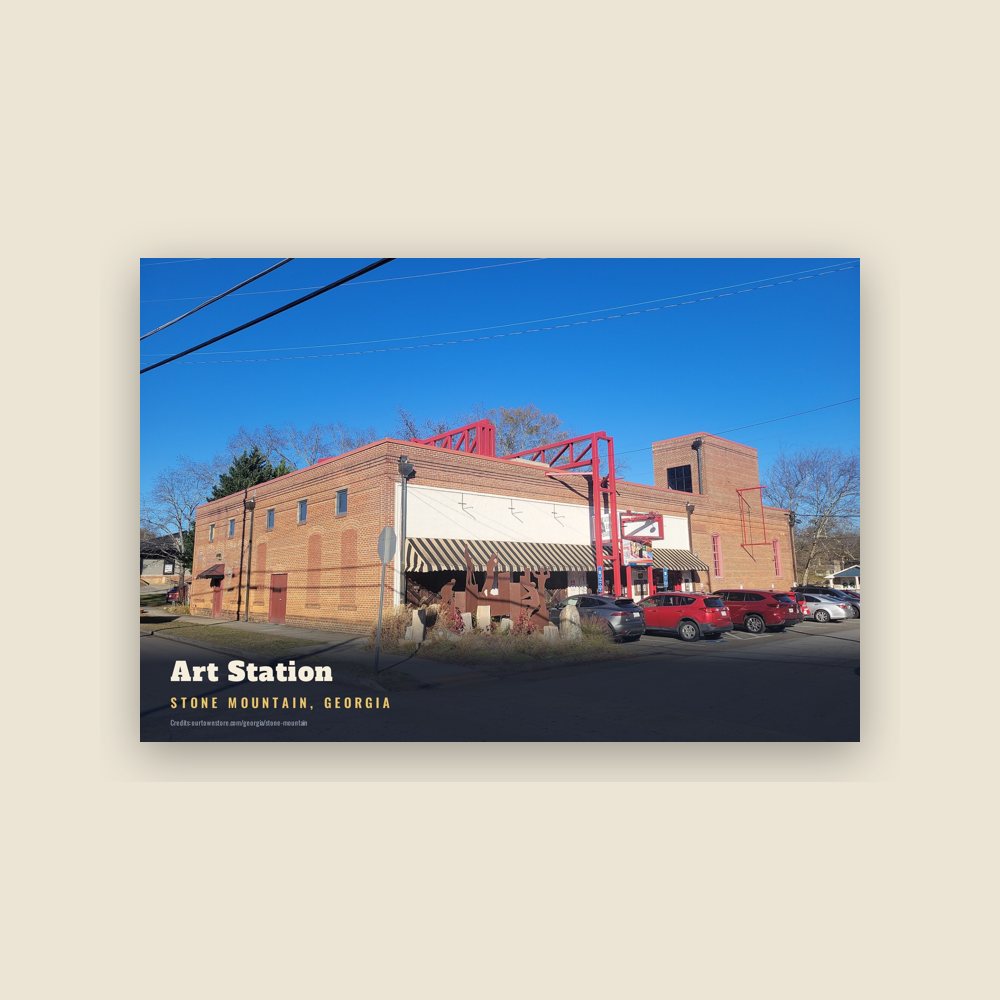
 Art Station
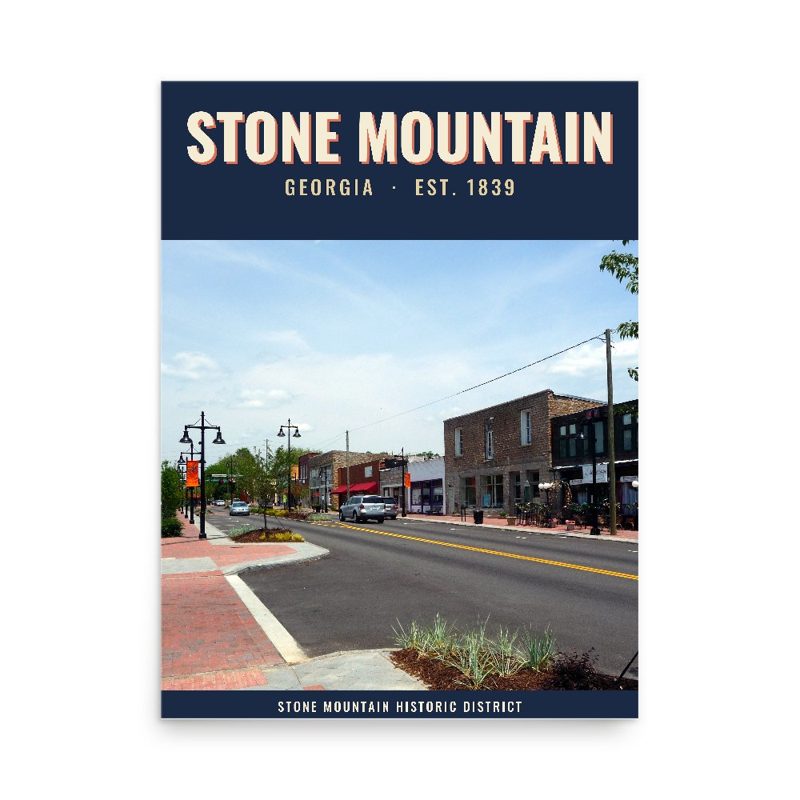
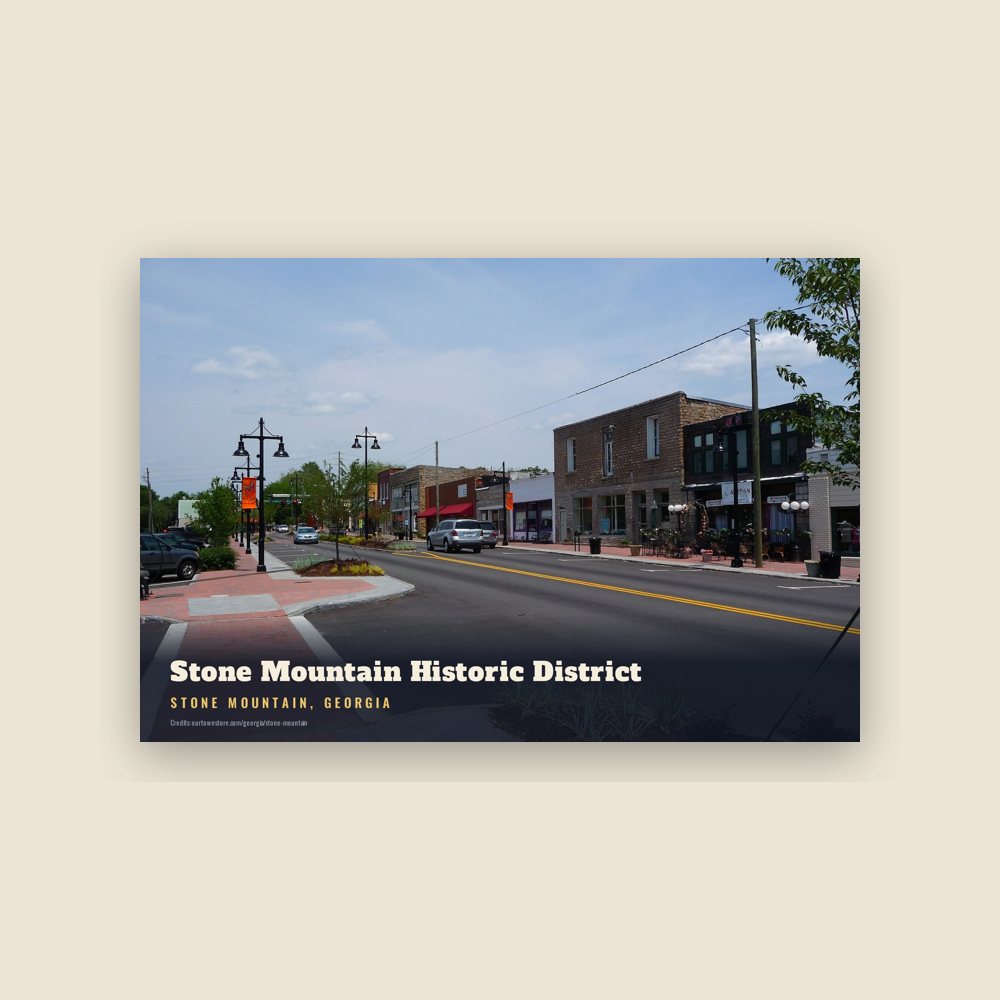
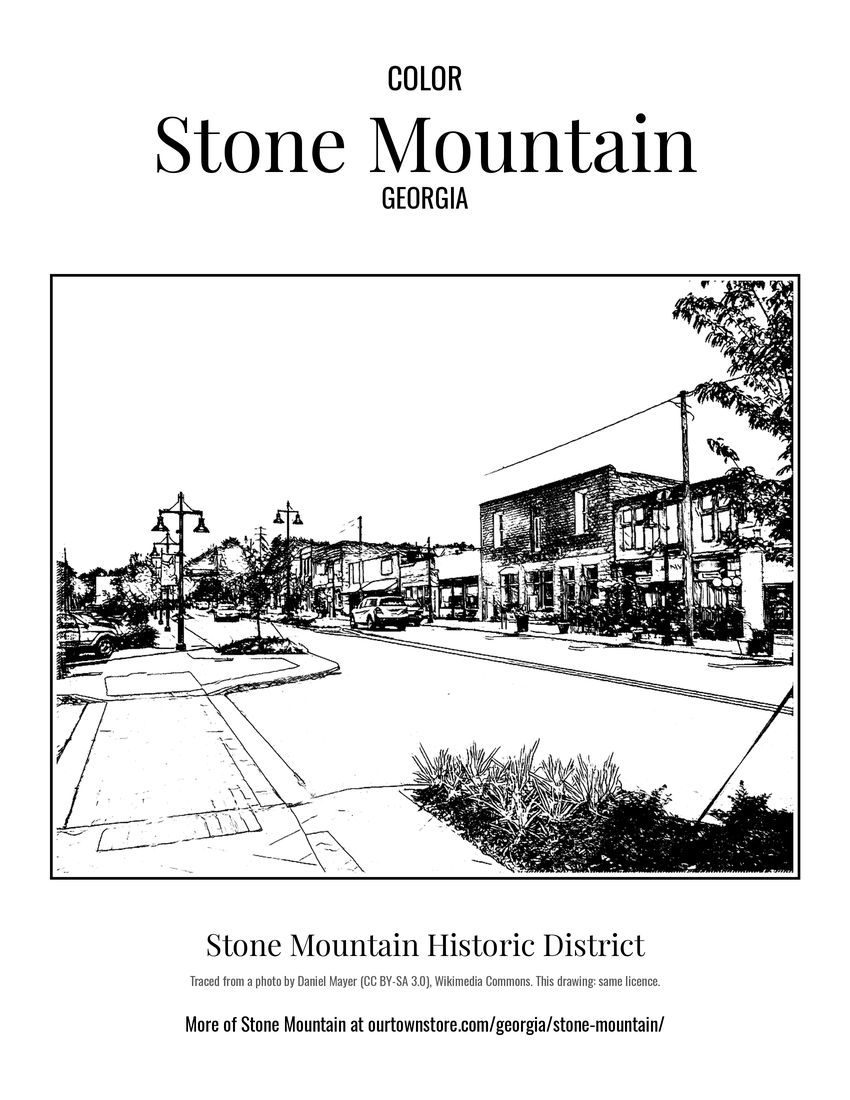 Stone Mountain Historic District
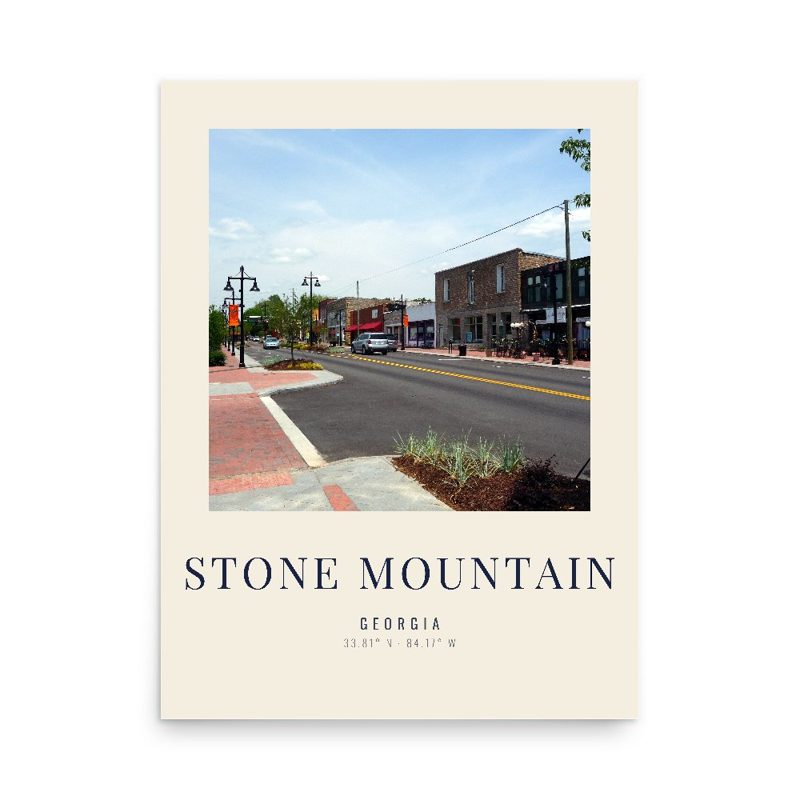
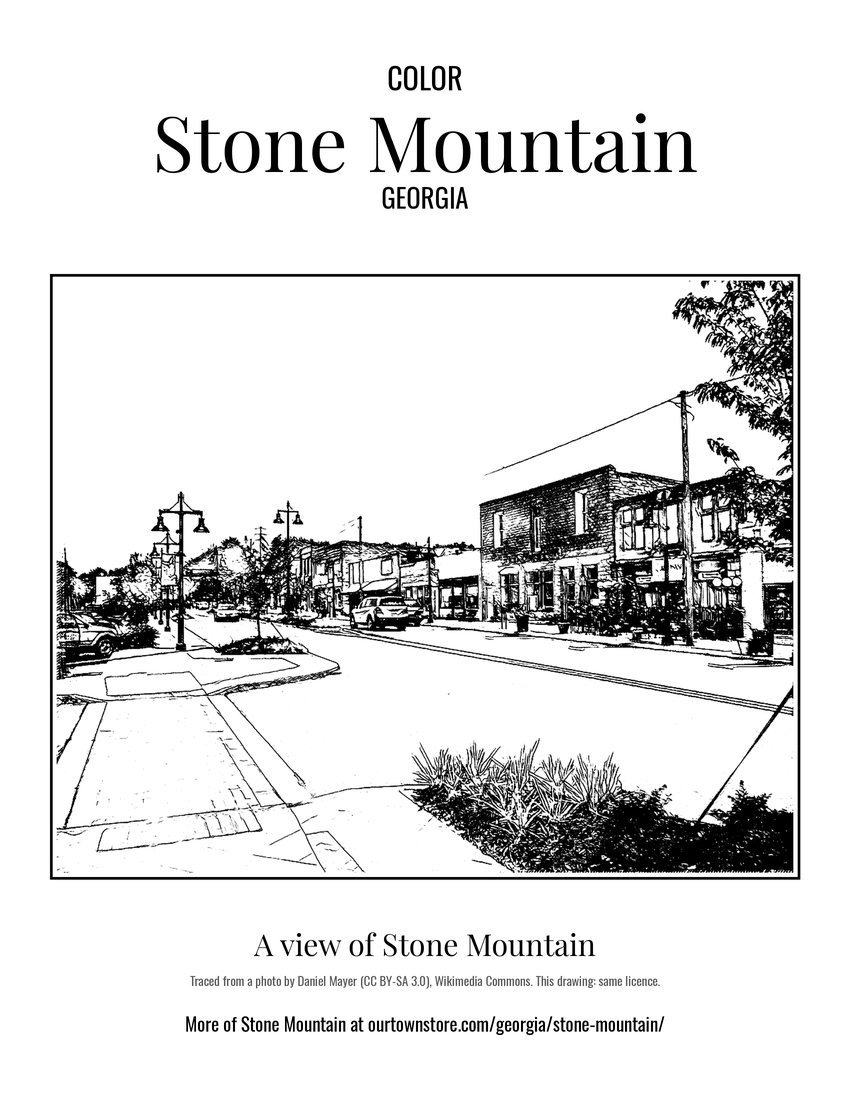 A view of Stone Mountain
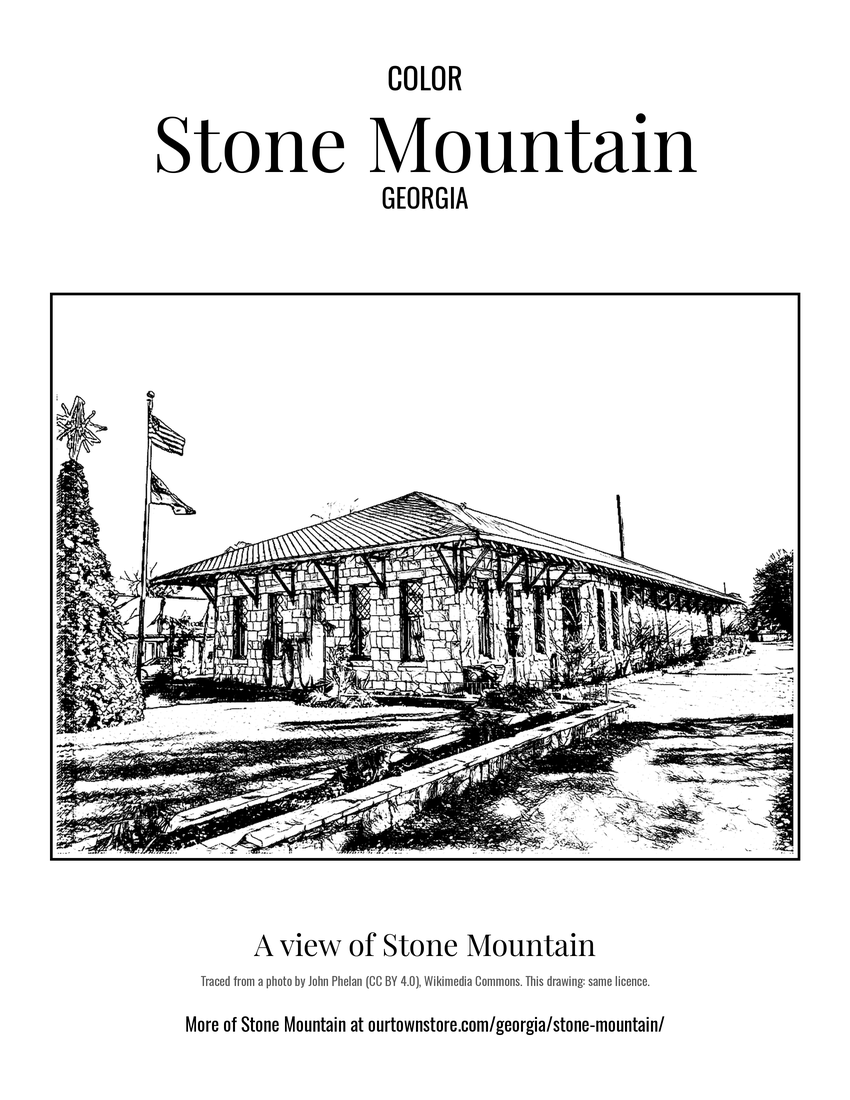 A view of Stone Mountain