A short history of Rome
Indigenous history
The Abihka tribe of Creek in the area of Rome later became part of the Upper Creek people (who occupied the Northern Creek territory, called themselves the Muscogee). They merged with other Creek tribes to become the Ulibahali, who later migrated westward into Alabama in the general region of Gadsden. By the mid-18th century, the Iroquoian-speaking Cherokee had moved into this area and occupied it. They had moved down from areas of Tennessee, under pressure from settlement by Americans migrating across the Appalachians from eastern territories.
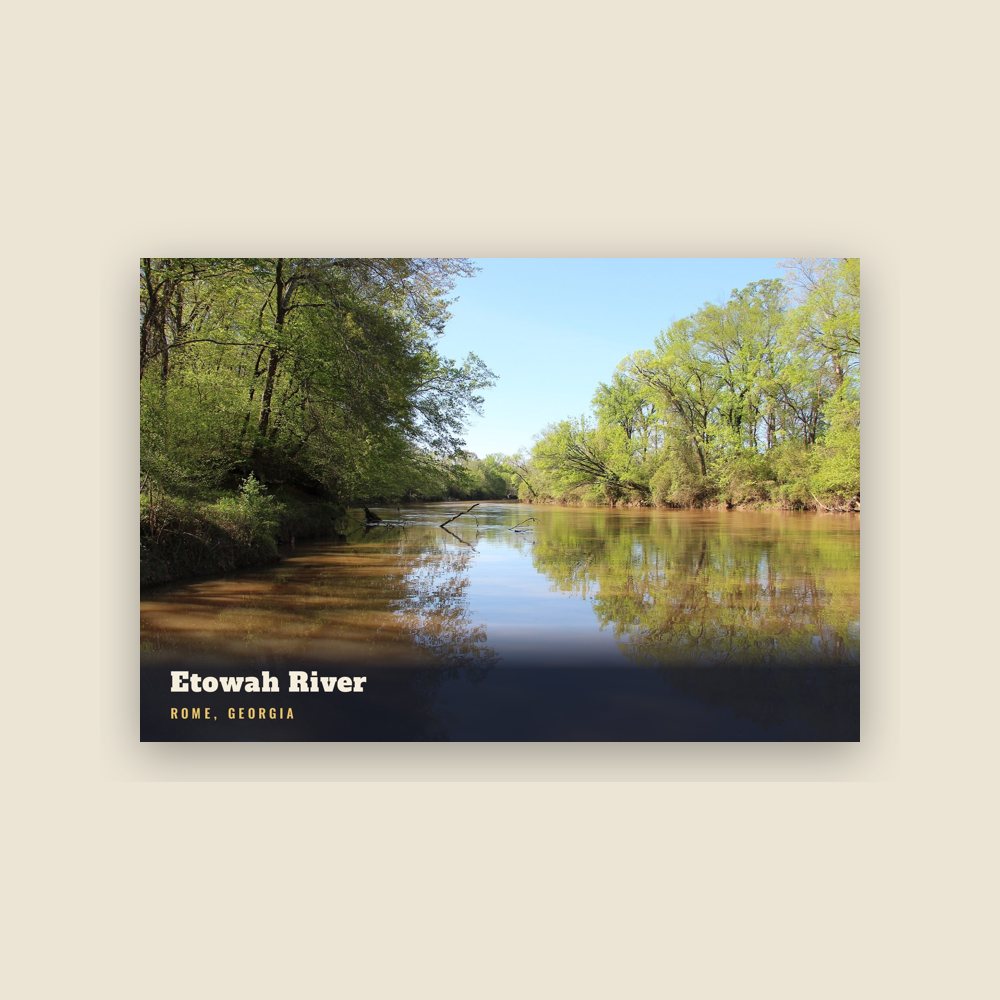
A Cherokee village named Etowah (Cherokee: ᎡᏙᏩ, romanized: Etowa), which means "Head of Coosa", was settled in this area during the late 18th century, in the period of the Cherokee–American wars (1776–94) during and after the American Revolutionary War. Several Cherokee national leaders settled here and developed their own cotton plantations, including chiefs Major Ridge and John Ross. Some of the Cherokee planters and others among the Southeast tribes bought enslaved African Americans to use as laborers on such plantations.
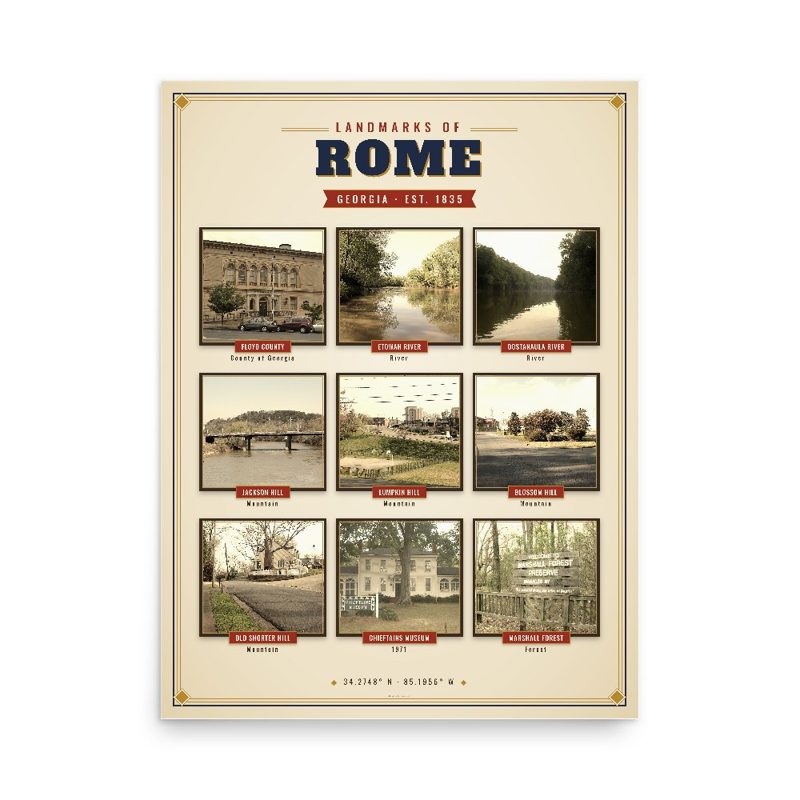
In the 20th century, Ridge's home here was preserved as Chieftain's House. It has been adapted by the state for use as the Chieftains Museum. It is used to interpret the history of the Cherokee in this area, especially Major Ridge.
In the 18th century, a high demand in Europe for American deerskins had led to a brisk trade between Indian hunters and White traders. A few White traders and some settlers (primarily from the Southern Colonies of Georgia and Carolina) were accepted by the Head of Coosa Cherokee. These were later joined by Christian missionaries, and more settlers. After the American War of Independence, most new settlers came from the area of Georgia east of the Proclamation Line of 1763.
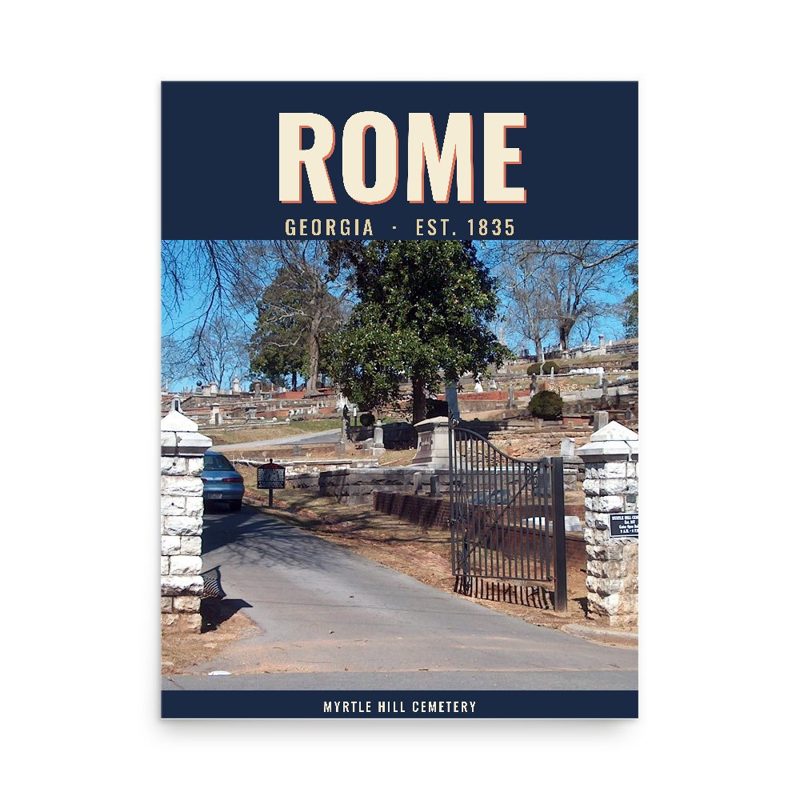
In 1793, in response to a Cherokee raid into Tennessee, John Sevier, the Governor of Tennessee, led a retaliatory raid against the Cherokee in the vicinity of Myrtle Hill, in what was known as the Battle of Hightower.
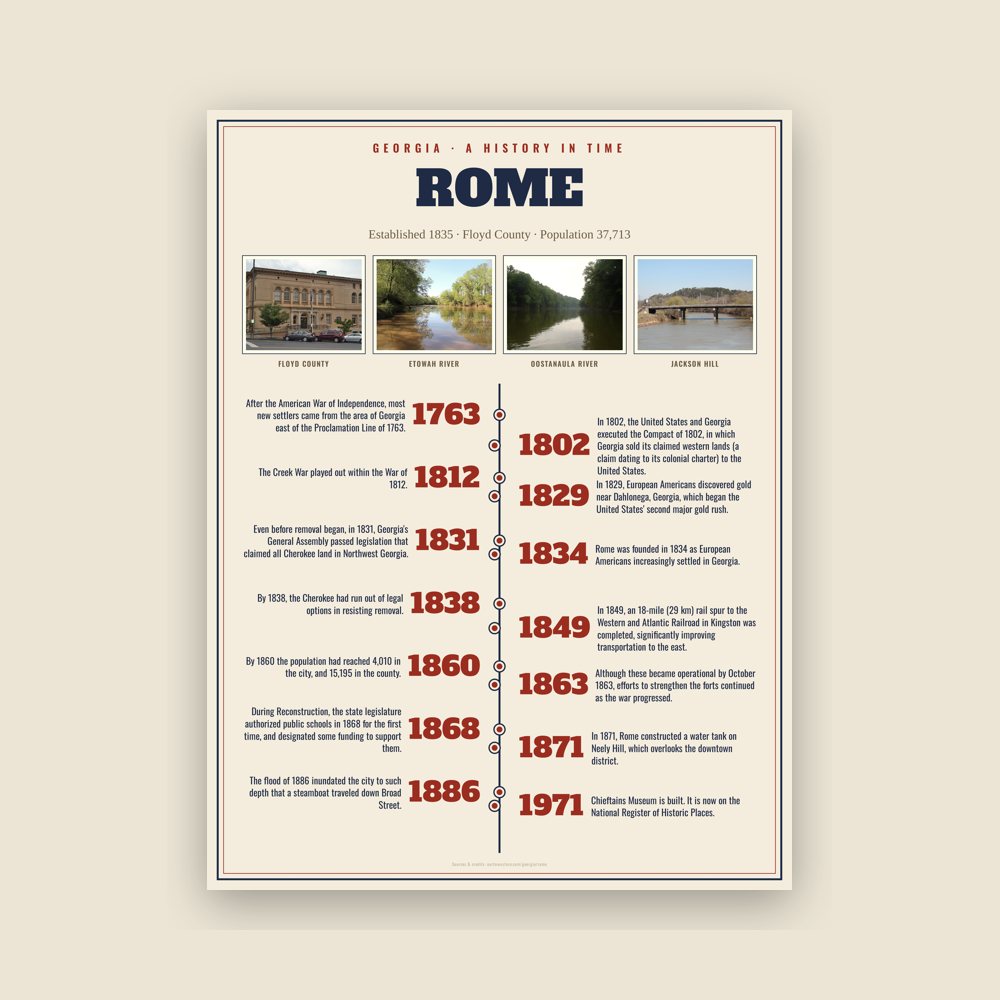
In 1802, the United States and Georgia executed the Compact of 1802, in which Georgia sold its claimed western lands (a claim dating to its colonial charter) to the United States. In return, the federal government agreed to ignore Cherokee land titles and remove all Cherokee from Georgia. The commitment to evict the Cherokee was not immediately enforced, and Chiefs John Ross and Major Ridge led efforts to stop their removal, including several federal lawsuits.
During the 1813 Creek Civil War, most Cherokee took the side of the Lower Creek Indians, who were more assimilated and willing to deal with European Americans, against the Red Sticks or Upper Creek. As they had lived more isolated from the Whites, they had maintained strong, conservative cultural traditions. Before the Cherokee moved to Head of Coosa, Chief Ridge commanded a company of warriors as a unit of the Tennessee militia, with Chief Ross as adjutant. This Cherokee unit was under the overall command of United States Major Andrew Jackson, and supported the Upper Creek. They were the part of the Creek who had adopted more European-American customs and were more aligned with American settlers. The Creek War played out within the War of 1812.
In 1829, European Americans discovered gold near Dahlonega, Georgia, which began the United States' second major gold rush. Congressional passage of the Indian Removal Act of 1830, which fulfilled the Compact of 1802, was related to that gold discovery and the desire of Whites to settle the land, as well as President Andrew Jackson's commitment to removal of Native Americans to enable development by the whites.
Even before removal began, in 1831, Georgia's General Assembly passed legislation that claimed all Cherokee land in Northwest Georgia. This entire territory was called Cherokee County; the following year, the Assembly organized the territory as the nine counties that still exist in the 21st century.
Read the full history
City founding period
Rome was founded in 1834 as European Americans increasingly settled in Georgia. Founders were Col. Daniel R. Mitchell, Col. Zacharia Hargrove, Maj. Philip Hemphill, Col. William Smith, and John Lumpkin (nephew of Governor Lumpkin); most were veterans of the War of 1812. They held a drawing at Alhambra to determine the name of the new city, with Col. Mitchell submitting the name of Rome because of the area's hills and rivers. Mitchell's submission was drawn, and the Georgia Legislature chartered Rome as an official city in 1835. The county seat was subsequently moved east from the village of Livingston to Rome.
With the entire area still occupied primarily by Cherokee, the city developed to serve the agrarian needs of the new cotton-based economy. Invention of the cotton gin in the late 18th century made processing of short-staple cotton profitable. This was the type of cotton that best thrived in the upland areas, in contrast to that grown on the Sea Islands and in the Low Country.
Much of upland Georgia was developed as what became known as the Black Belt, named for the fertile soil. Planters brought or purchased many enslaved African Americans as workers for the labor-intensive crop. The leading Cherokee participated in the cultivation of cotton as a commodity crop, which soon replaced deerskin trading as a source of wealth in the region. The first steamboat navigated the Coosa River to Rome in 1836, reducing the time-to-market for the cotton trade and speeding travel between Rome and New Orleans on the Gulf Coast, the major port for export of cotton.
By 1838, the Cherokee had run out of legal options in resisting removal. They were the last of the major Southeast tribes to be forcibly moved to the Indian Territory (in modern-day Oklahoma) on the Trail of Tears. After the removal of the Cherokee, their homes and businesses were taken over by Whites, with much of the property distributed through a land lottery.
The Rome economy continued to grow. In 1849, an 18-mile (29 km) rail spur to the Western and Atlantic Railroad in Kingston was completed, significantly improving transportation to the east. This route was later followed in the 20th-century construction of Georgia Highway 293. By 1860 the population had reached 4,010 in the city, and 15,195 in the county.
Civil War period
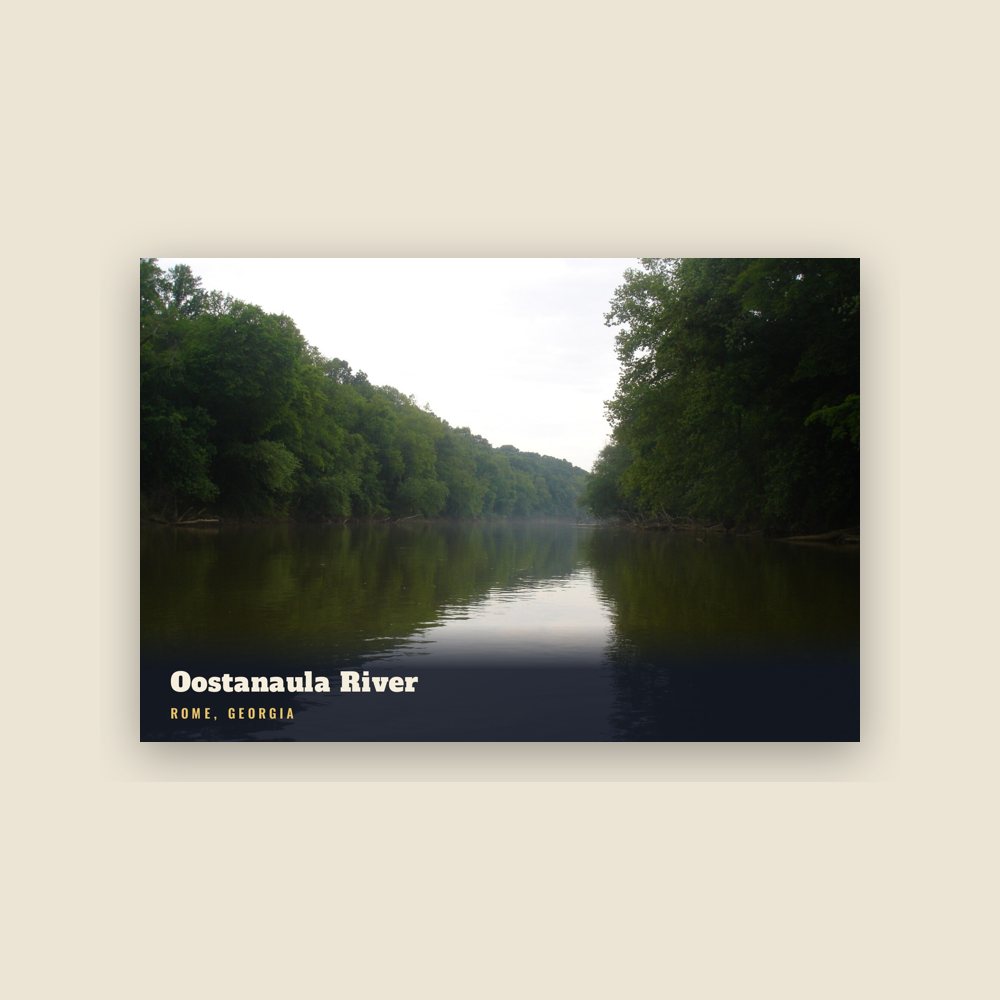
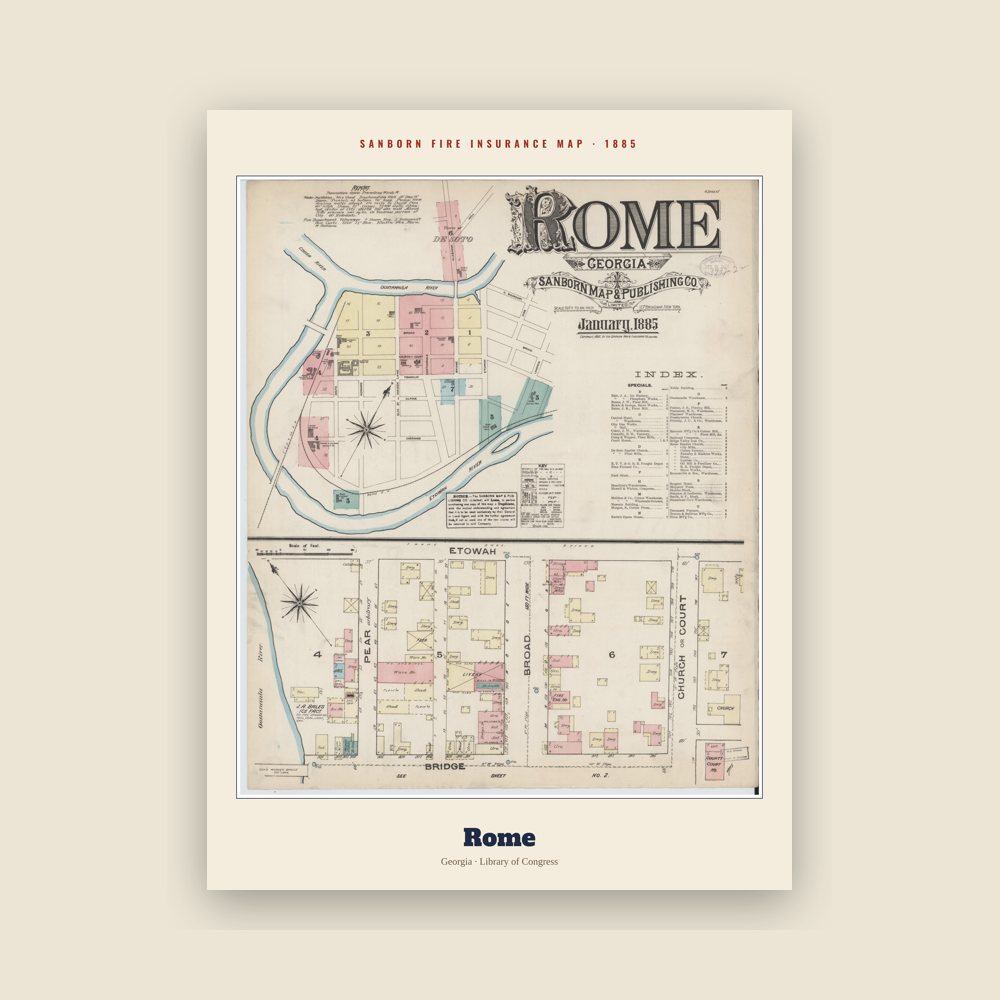
Rome's iron works were an important manufacturing center during the Civil War, supplying many cannons and other armaments to the Confederate effort. In April 1863, the city was defended by Confederate General Nathan Bedford Forrest against Union Colonel Abel Streight's "lightning mule" raid from the area east of modern-day Cedar Bluff, Alabama. General Forrest tricked Colonel Streight into surrendering just a few miles shy of Rome. Realizing their vulnerability, Rome's city council had allocated $3,000 to build three fortifications. Although these became operational by October 1863, efforts to strengthen the forts continued as the war progressed. These forts were named after Romans who had been killed in action: Fort Attaway was on the western bank of the Oostanaula River, Fort Norton was on the eastern bank of the Oostanaula, and Fort Stovall was on the southern bank of the Etowah River. The Confederates later built at least one other fort on the northern side of the Coosa River.
In May 1864, Union General Jefferson C. Davis, under the command of Major General William Tecumseh Sherman, attacked and captured Rome when the outflanked Confederate defenders retreated under command of Major General Samuel Gibbs French. Union General William Vandever was stationed in Rome and is shown with his staff in a photograph taken there. Due to Rome's forts and iron works, which included the manufacture of cannons, Rome was a significant target during Sherman's march through Georgia to take and destroy Confederate resources. Davis' forces occupied Rome for several months, making repairs to use the damaged forts and briefly quartering General Sherman. On November 11, 1864, in accordance with Sherman's Special Field Orders, No. 120, Union forces destroyed Rome's forts, iron works, the rail line to Kingston, and any other materiel that could be useful to the South's war effort as they withdrew from Rome to participate in Sherman's March to the Sea.
Reconstruction era and 19th century
In 1871, Rome constructed a water tank on Neely Hill, which overlooks the downtown district. This later was adapted as a clock tower visible from many points in the city. It has served as the town's iconic landmark ever since, and is featured in the city's crest and local business logos. As a result, Neely Hill is also referred to as Tower or Clock Tower Hill.
During Reconstruction, the state legislature authorized public schools in 1868 for the first time, and designated some funding to support them. The city established its first public schools. Schools were racially segregated and tended to have short sessions, because of limited funding. In addition, many families depended on their children to work in agriculture and other basic survival work. Freedmen had been granted the franchise and tended to join the Republican Party of President Abraham Lincoln, who had freed them. The abolition of slavery required new labor arrangements to arrange for paid labor.
Due to its riverside location, Rome has occasionally suffered serious flooding. The flood of 1886 inundated the city to such depth that a steamboat traveled down Broad Street. In 1891, upon recommendation of the United States Army Corps of Engineers, the Georgia State Legislature amended Rome's charter to create a commission to oversee the construction of river levees to protect the town against future floods. In the late 1890s, additional flood control measures were instituted, including raising the height of Broad Street by about 15 feet (4.6 m). As a result, the original entrances and ground-level floors of many of Rome's historic buildings became covered over and had to serve as basements.
Twentieth century
In the early 20th century, the Georgia Assembly approved a charter for the city to establish a commission-manager form of government, a reform idea to add a management professional to the team.
This statue of the Capitoline Wolf, as a forecast of prosperity and glory, has been sent from Ancient Rome to New Rome during the consulship of Benito Mussolini in the year 1929.
In 1940, anti-Italian sentiment due to World War II became so strong that the Rome city commission moved the statue into storage to prevent vandalism. They replaced it with an American flag. In 1952, the city restored the statue to its former location in front of City Hall.
Great Depression
In Rome, the effect of the Great Depression was significantly less severe than in other, larger cities across the United States. Since Rome was an agricultural town, food could be grown in surrounding areas. Rome's textile mill continued operating, providing steady jobs for whites as a buffer against the economic hardships of the Great Depression.
The Great Depression was preceded by the "Cotton Bust" across the South. This reached Rome in the mid-1920s, and caused many farmers to move away, sell their land, or convert to other agricultural crops, such as corn. Farm workers were displaced, and many African Americans left the area in the Great Migration, seeking work in cities, including those in the North and Midwest. Cotton crops were being destroyed by the boll weevil, a tiny insect that reached Georgia in 1915 (invading from Louisiana). The boll weevil destroyed many fields of cotton and suppressed Rome's economy.
Many families struggled through hard financial times. Jobs were scarce, and prices of food and basic commodities went up. The federal "postal employees took a fifteen per cent cut in pay, and volunteered a further ten per cent reduction in work time to save the jobs of substitute employees who otherwise would have been thrown out of work." Among fundraising activities for the poor, wealthier residents bought tickets to a show put on by local performers; the fares were paid to grocers, who made boxes of food to sell at a discount price to needy families.
In a private "works project" to provide employment to men out of work, S.H. Smith Sr. decided to replace the Armstrong Hotel. After demolishing it, he employed many people to help build the towering Greystone Hotel at the corner of Broad and East Second streets. The Rome News-Tribune reported on November 30, 1933, an increase in local building permits for a total of $95,800; of this amount, $85,000 were invested by S.H. Smith Sr. in the construction of the Greystone Hotel. He added the Greystone Apartments in 1936.
Adapted (trimmed) from the Wikipedia article Rome, Georgia, revision 1380460025 by its contributors, licensed CC BY-SA 4.0.
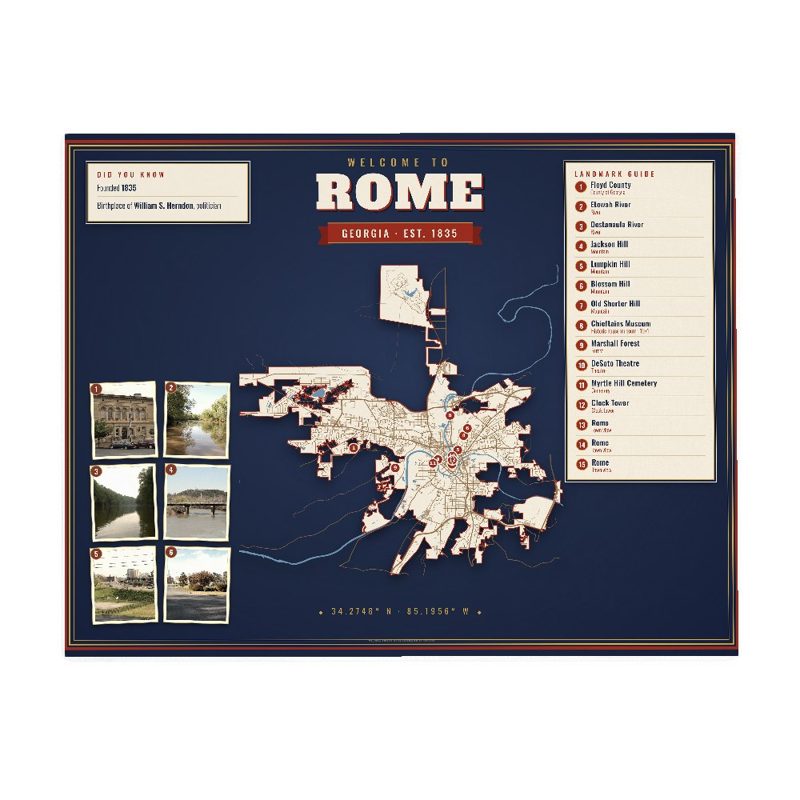






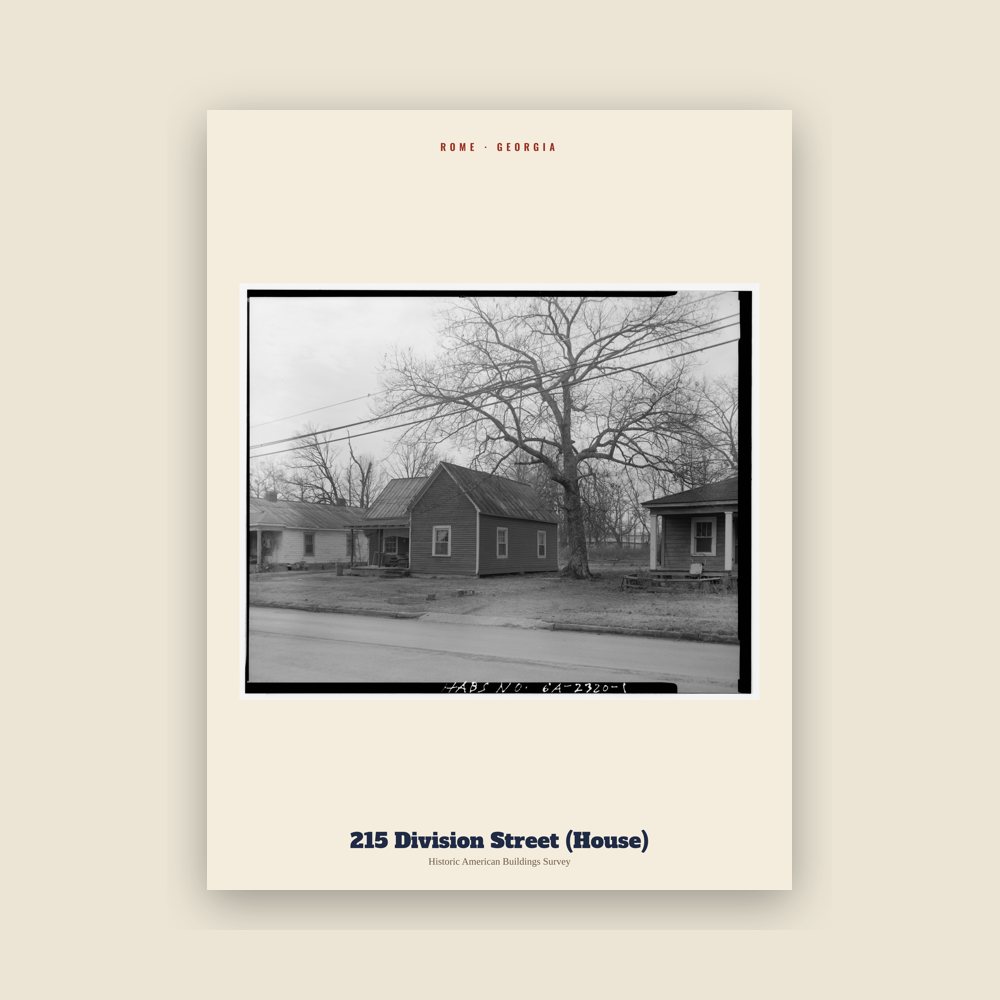

 Chieftains Museum
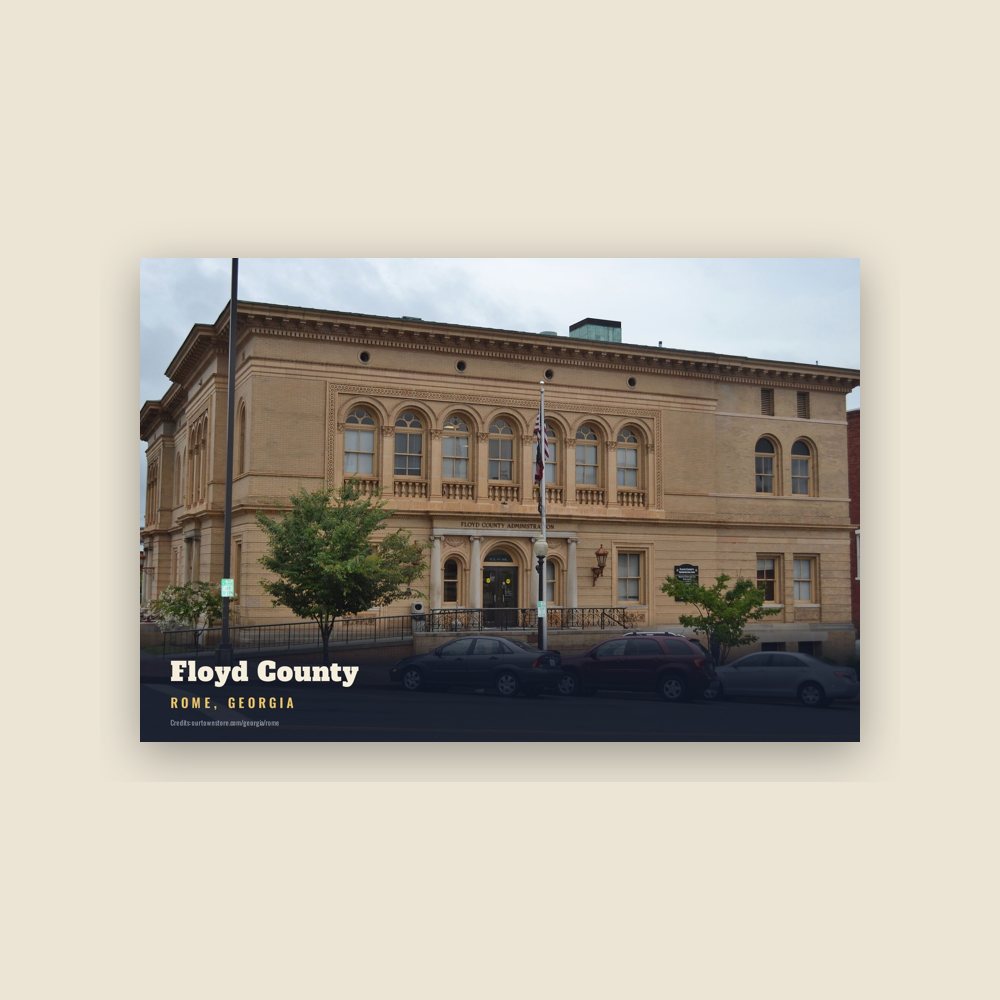
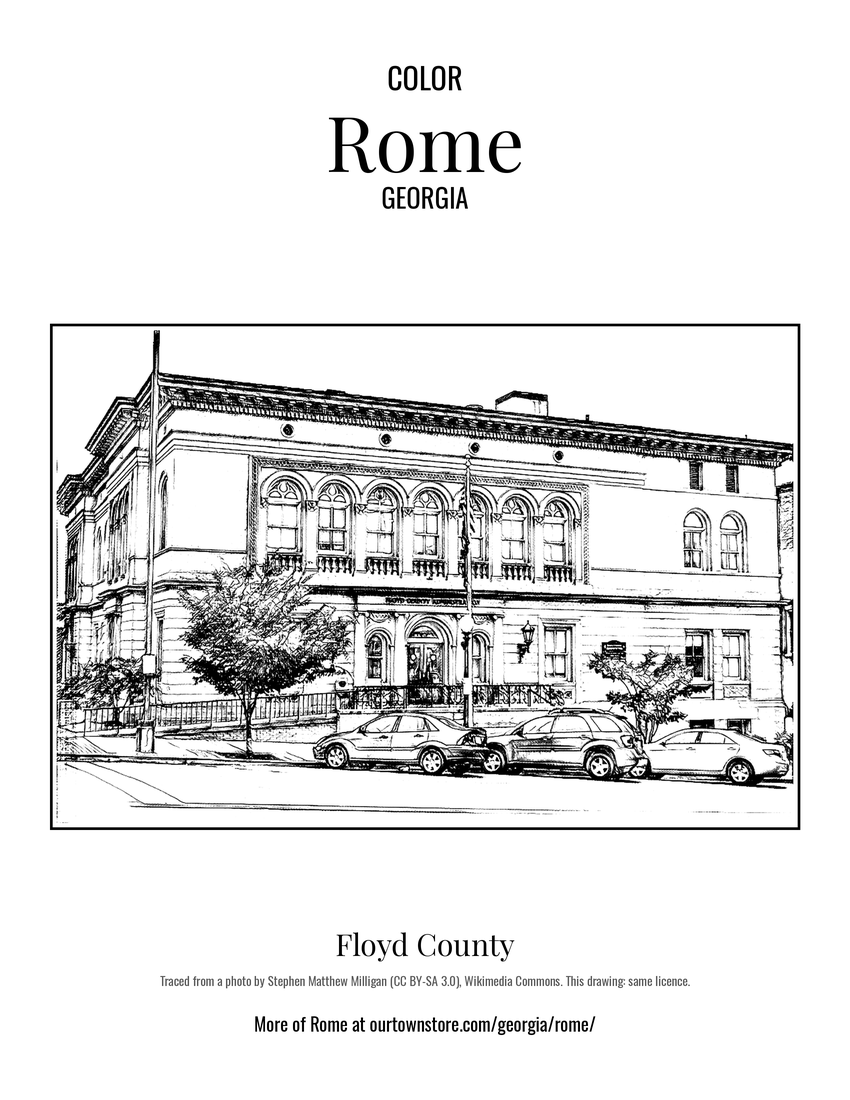 Floyd County
 Etowah River
 Oostanaula River