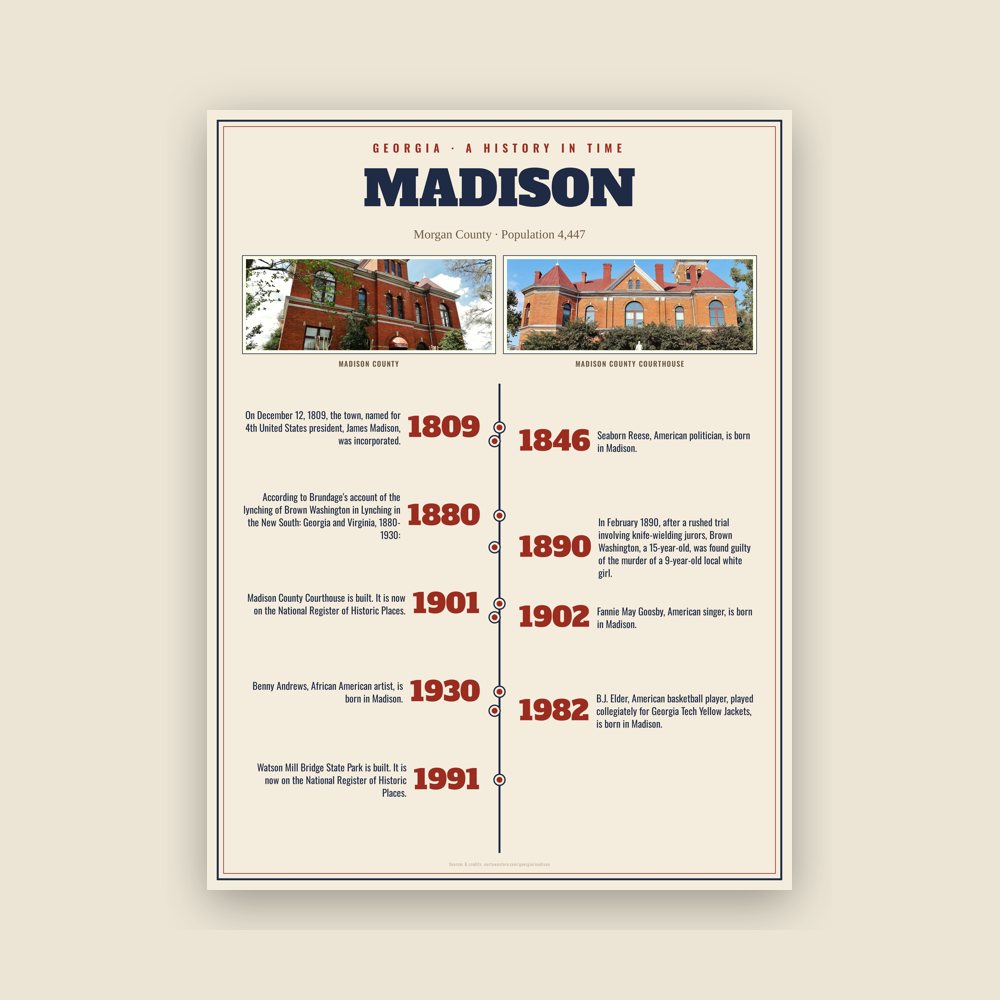
On December 12, 1809, the town, named for 4th United States president, James Madison, was incorporated. Madison was described in an early 19th-century issue of White's Statistics of Georgia as "the most cultured and aristocratic town on the stagecoach route from Charleston to New Orleans." An 1849 edition of White's Statistics stated, "In point of intelligence, refinement, and hospitality, this town acknowledges no superior."
While many believe that William Tecumseh Sherman spared the town because it was too beautiful to burn during his March to the Sea, the truth is that Madison was home to pro-Union Congressman (later Senator) Joshua Hill. Hill had ties with General Sherman's brother in the House of Representatives, so his sparing the town was more political than appreciation of its beauty.
Read the full history
Jim Crow era
In 1895 Madison was reported to have an oil mill with a capital of $35,000, a soap factory, a fertilizer factory, four steam ginneries, a mammoth compress, two carriage factories, a furniture factory, a grist and flouringmill, a bottling works, a distillery with a capacity of 120 gallons a day, an ice factory with a capital of $10,500, a canning factory with a capital of $10,000, a bank with a capital of $75,000, surplus $12,000, and a number of small industries operated by individual enterprise. One of the carriage factories was owned and operated by prominent African-American businessman and entrepreneur H. R. Goldwire.
Against the backdrop of this Jim Crow-era prosperity, white Madisonians participated in at least three documented lynchings of African Americans. In February 1890, after a rushed trial involving knife-wielding jurors, Brown Washington, a 15-year-old, was found guilty of the murder of a 9-year-old local white girl. After the verdict, though the sheriff with the governor's approval called up the Madison Home Guard to protect Washington, "only three militiamen and none of the officers" responded to the order. Washington was thus easily taken from jail by a posse of ten men organized by a "leading local businessman". Described as "among the best citizens", they promptly handed him over to a mob of over 300 people waiting outside the courthouse. From there, he was taken to a telegraph pole behind a local residence, allowed a prayer, then strung up and shot, his body mutilated by more than 100 bullets. Afterwards, in the patriarchal exhibition-style common of southern lynchings, a sign was posted on the telegraph pole: "Our women and children will be protected." His body was not taken down until noon the next day.
The open participation of men 'of all ages and standing in life,' the carefully organized public meeting that planned the mob's course of action, the obvious complicity of the militia, and the ritualized execution of Washington all highlight the degree to which the lynching was sanctioned by the community at large. Shared attitudes toward women, sexuality, and black criminality, combined with local bonds of community and family, focused the fears and rage of whites on Washington and guaranteed mass involvement in his execution.
In the aftermath, though local and state authorities vowed to thoroughly investigate the lynching as well as the Madison Home Guard's dereliction of duty, just a week later a grand jury was advised by a judge of the superior court of Madison that any investigation would be a waste of time. In addition, the state body charged with investigating the home guard's non-response reported that their absence had been satisfactorily explained and no tribunal would be convened to investigate the matter."
Although the local Madisonian newspaper failed to report on the 1890 extra-judicial murder of Mr. Washington, an even earlier first lynching by Madisonians of a man they similarly pulled out of the old stone county jail appears in the contemporary accounts from the Atlanta Constitution.
In 1919, ten years after the erection of a Confederate memorial one block from the newly built Morgan County courthouse, another lynching occurred in the dark of night a few days before Thanksgiving. This time, citizens skipped the show-trials altogether, opting to travel to the home of Mr. Wallace Baynes in what one paper of the day called an "arresting party", though no charges against Mr. Baynes were stipulated in the news account. Baynes shot at the party, striking Mr. Frank F. Ozburn of Madison in the head, killing him instantly. In response, the mob outside his home grew to 40-50 men. Despite the arrival of Madison Sheriff C.S. Baldwin, Mr. Baynes was pulled from his home by a rope and shot near the Little River. Afterwards, the sheriff present at the lynching said he could not identify any of the men who came for Mr. Baynes, despite the fact that they arrived in cars and lit up Mr. Baynes' home with the headlights of their vehicles. In an editorial that argued that mobs in the South were no worse than mobs in the North yet condemned future lynchings, the local Madisonian claimed: "There is not now and perhaps will never be, any friction between the races here."
The Confederate monument erected in 1909 by the Morgan County Daughters of the Confederacy one block from the courthouse where Mr. Baynes was not afforded a trial was inscribed in part: "NO NATION ROSE/SO WHITE AND FAIR, NONE FELL SO PURE OF CRIME." In the 1950s, the monument was moved to Hill Park, a Madison city property donated by Bell Hill Knight, daughter of Joshua Hill, the aforementioned pro-Union senator who before the Civil War resigned his position rather than support secession. Mrs. Knight, whose husband Captain Gazaway Knight was Commander of the Panola Guards, a Confederate brigade that was organized in Madison, was a staunch member of the Morgan County Daughters of the Confederacy.
Present day
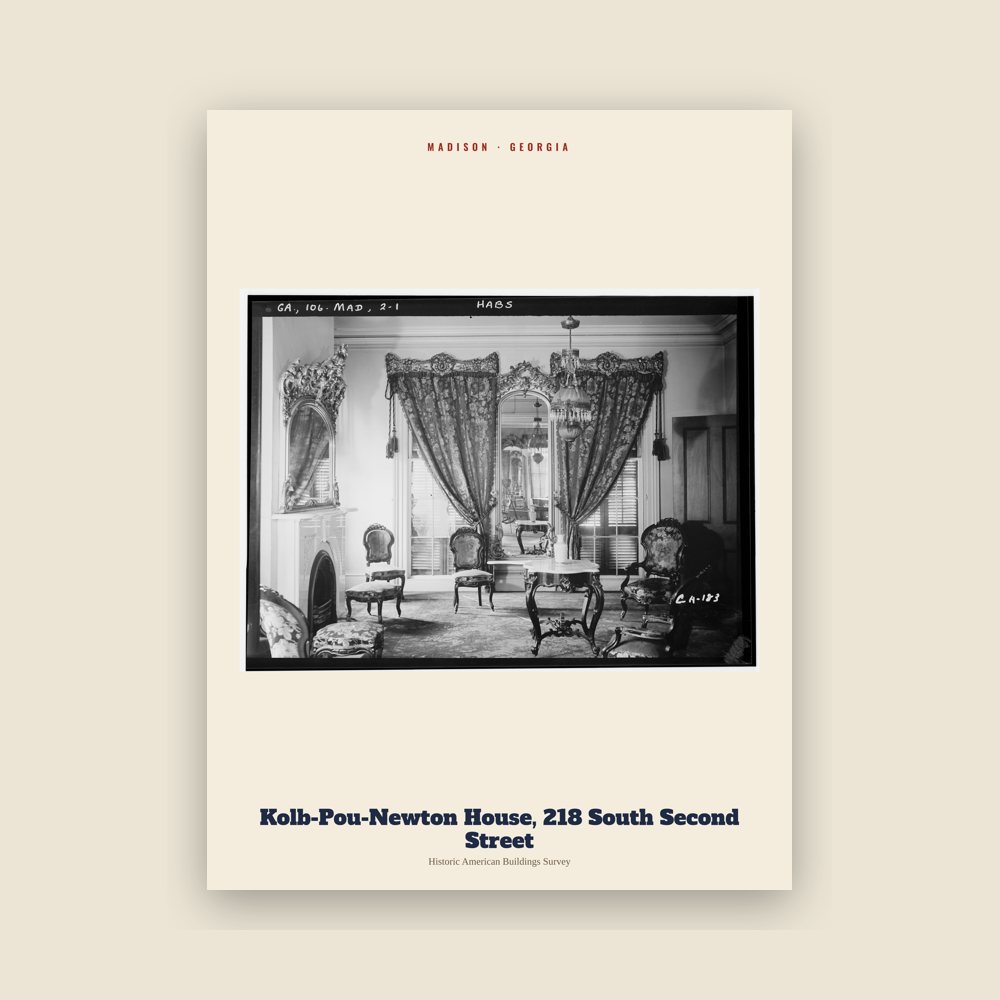
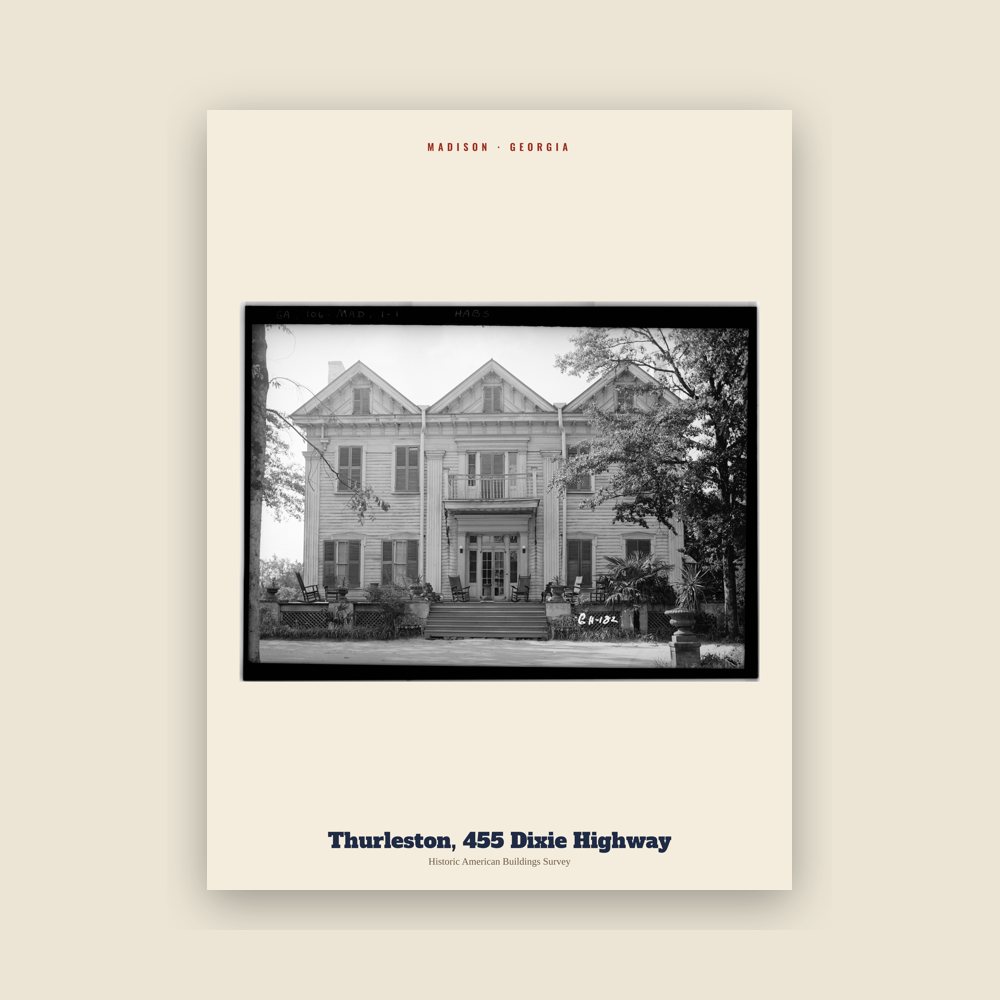
Madison has one of the largest historic districts in the state of Georgia, with visitors coming to see the antebellum architecture of the homes. Allie Carroll Hart was instrumental in establishing Madison's historical prestige.
According to the Madison Historic Preservation Commission, "The Madison Historic District is listed in the National Register of Historic Places and is Madison's foremost tourist attraction. Preservation of the district and of each property within its boundary provides for the protection of Madison's unique historic character and quality environment. Madison's preservation efforts reflect a nationwide movement to preserve a 'sense of place' amid generic modern development." The Historic Preservation Commission, appointed by Mayor and Council, is charged with protecting the historic character of the district through review of proposed exterior changes.
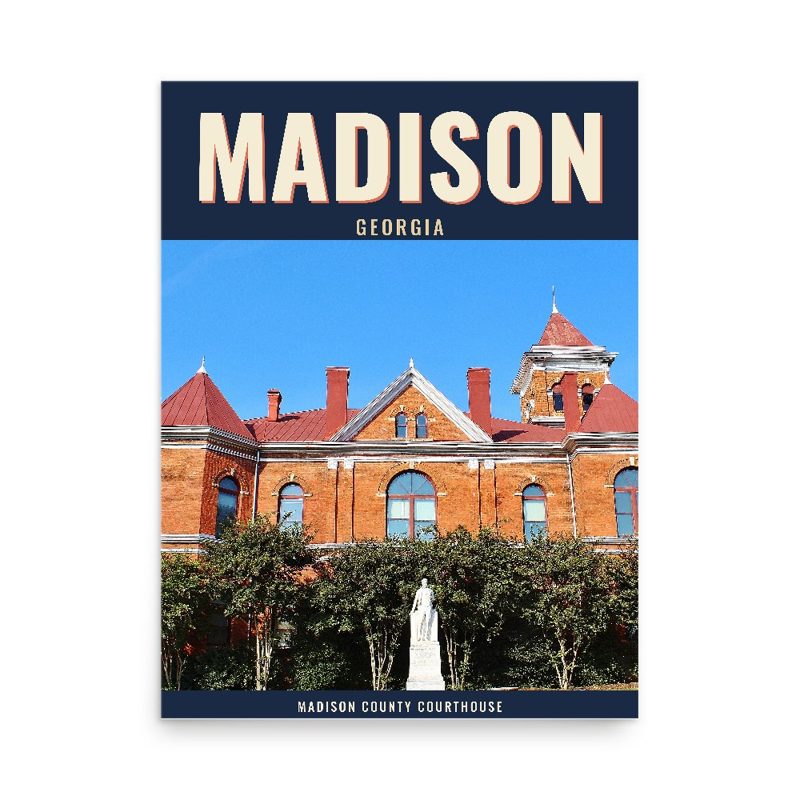
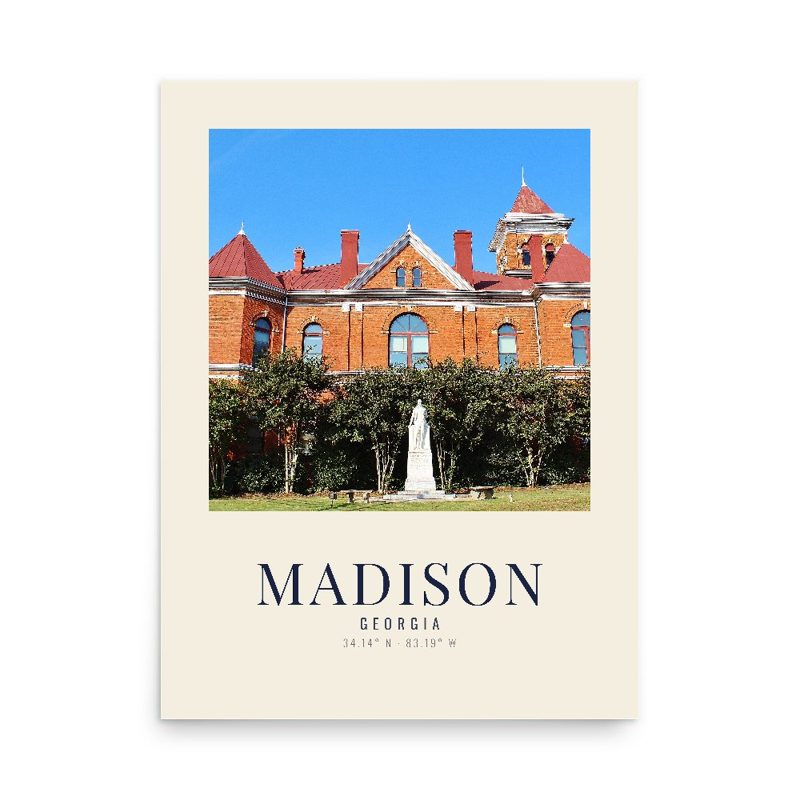
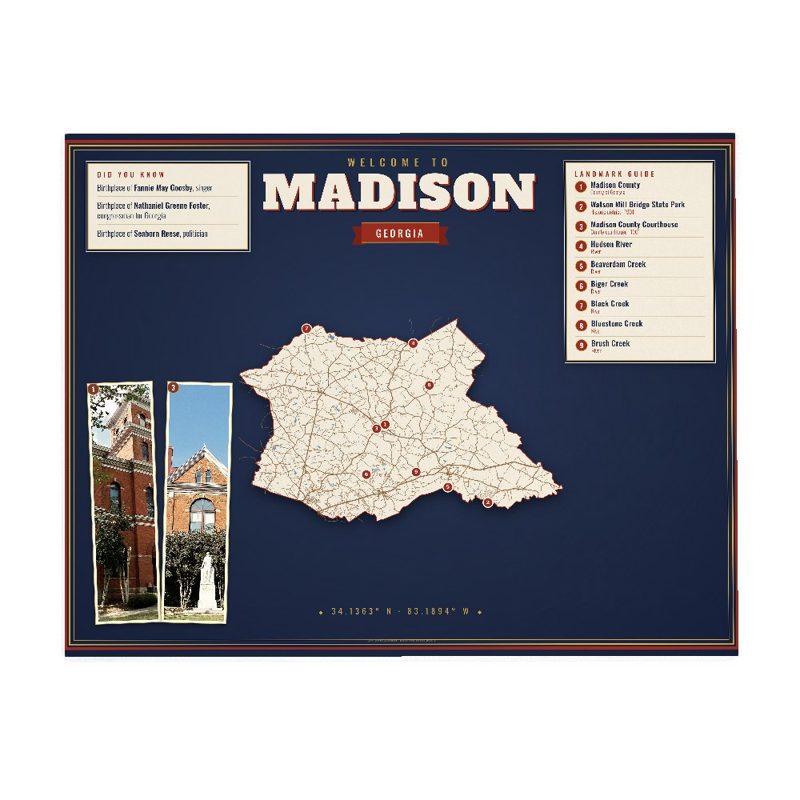




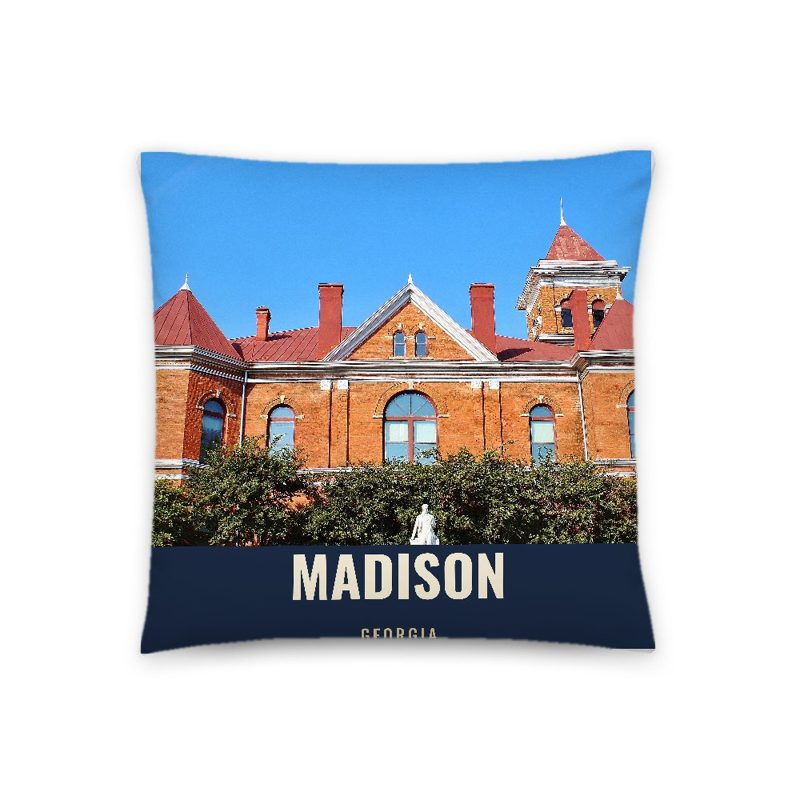



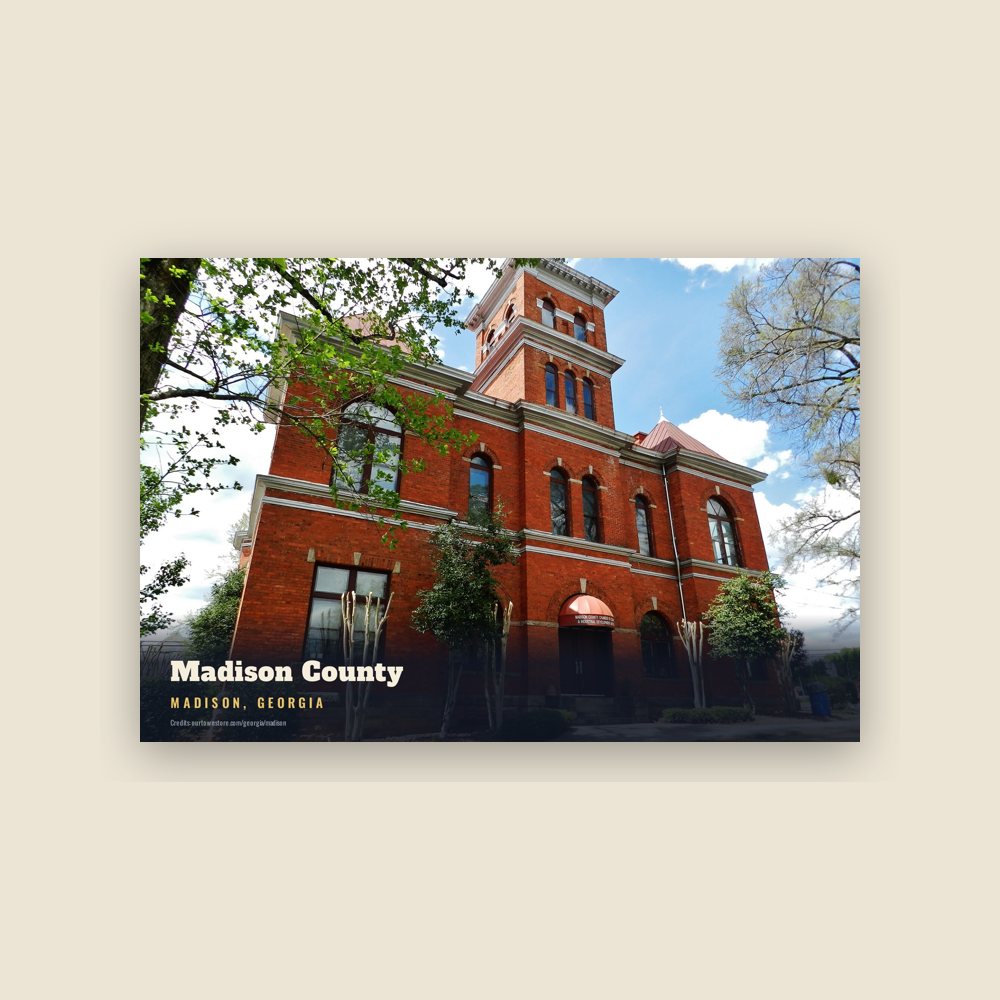
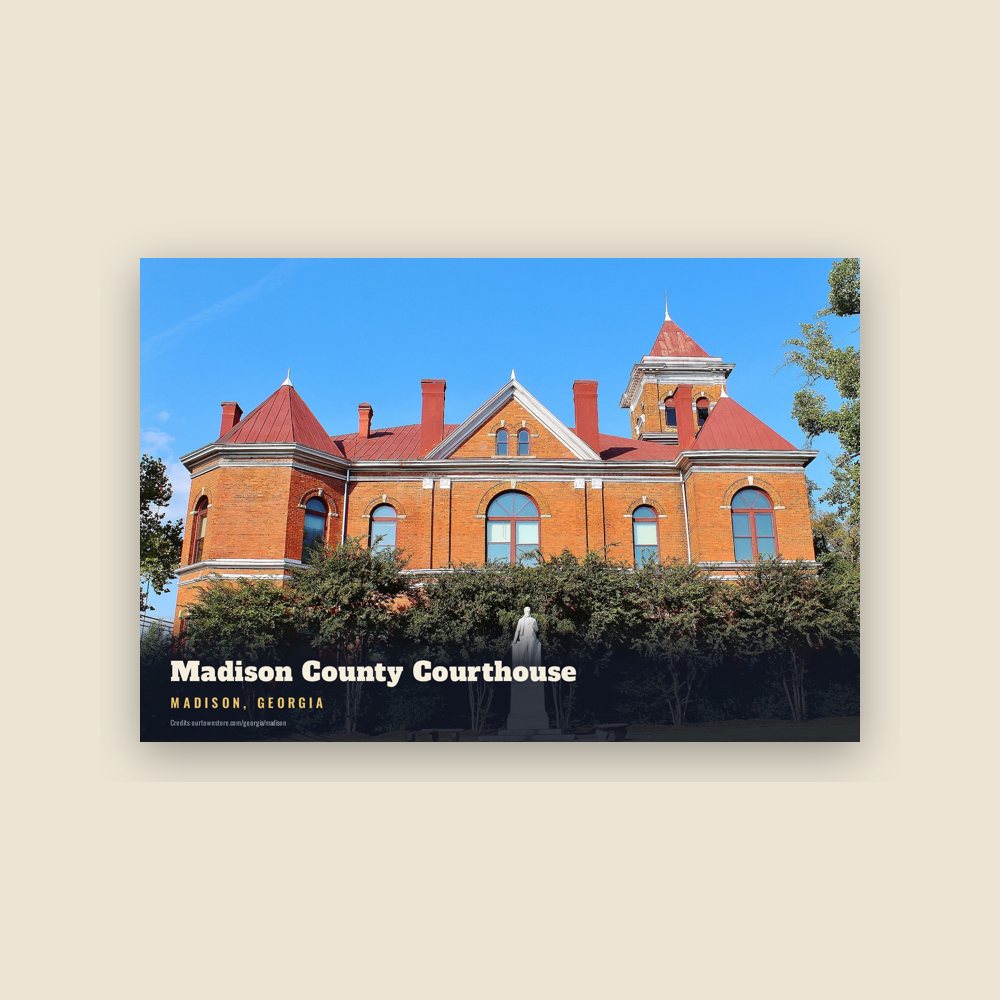
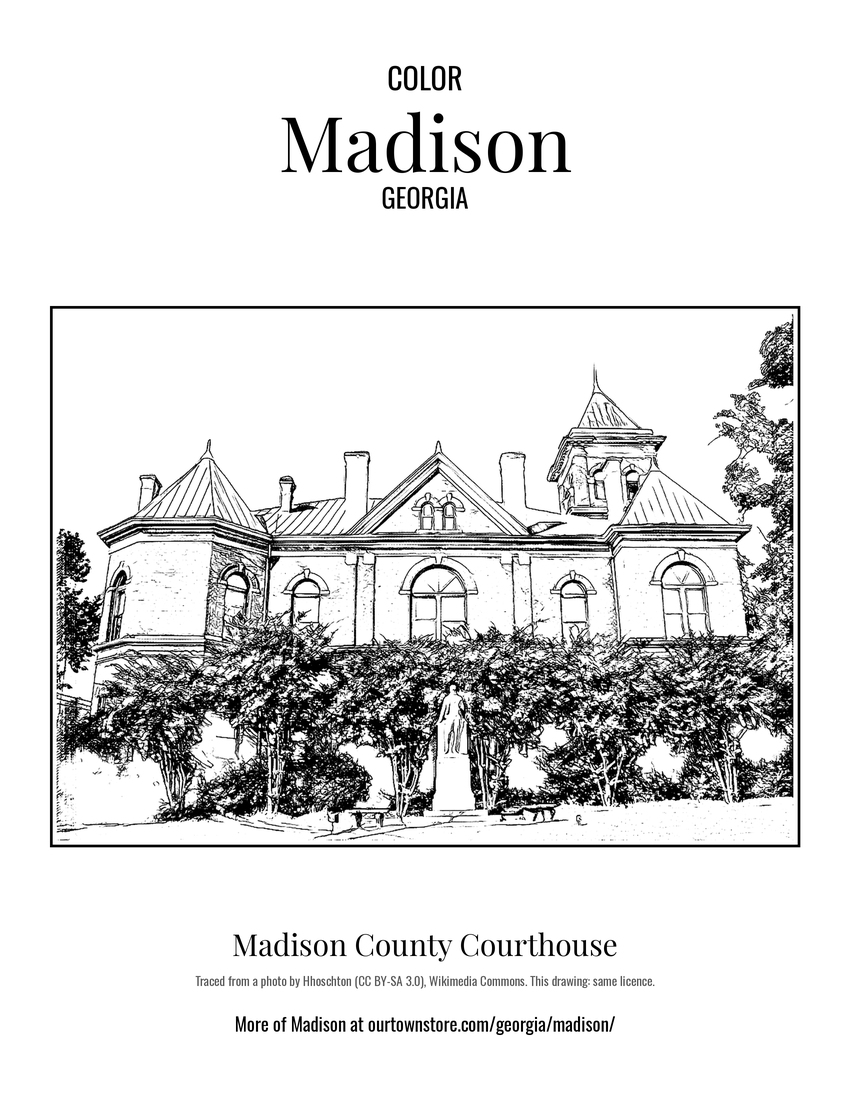 Madison County Courthouse
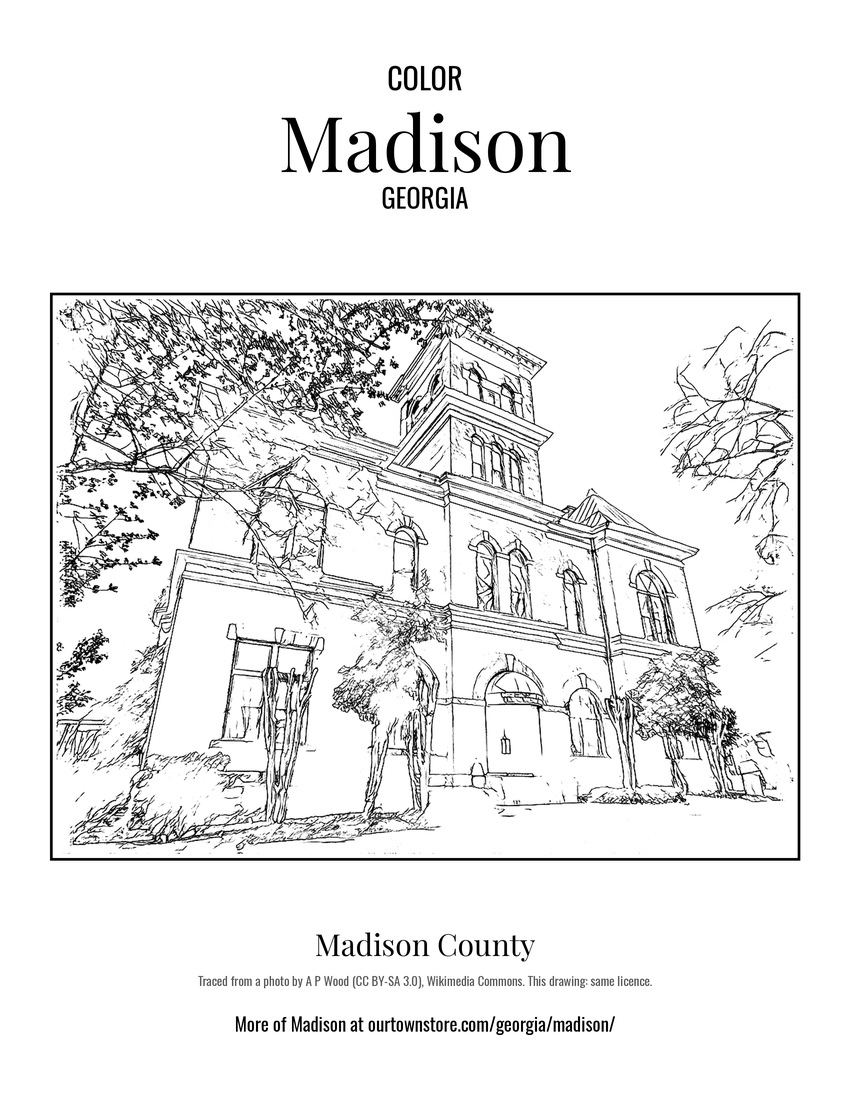 Madison County