A short history of Gainesville
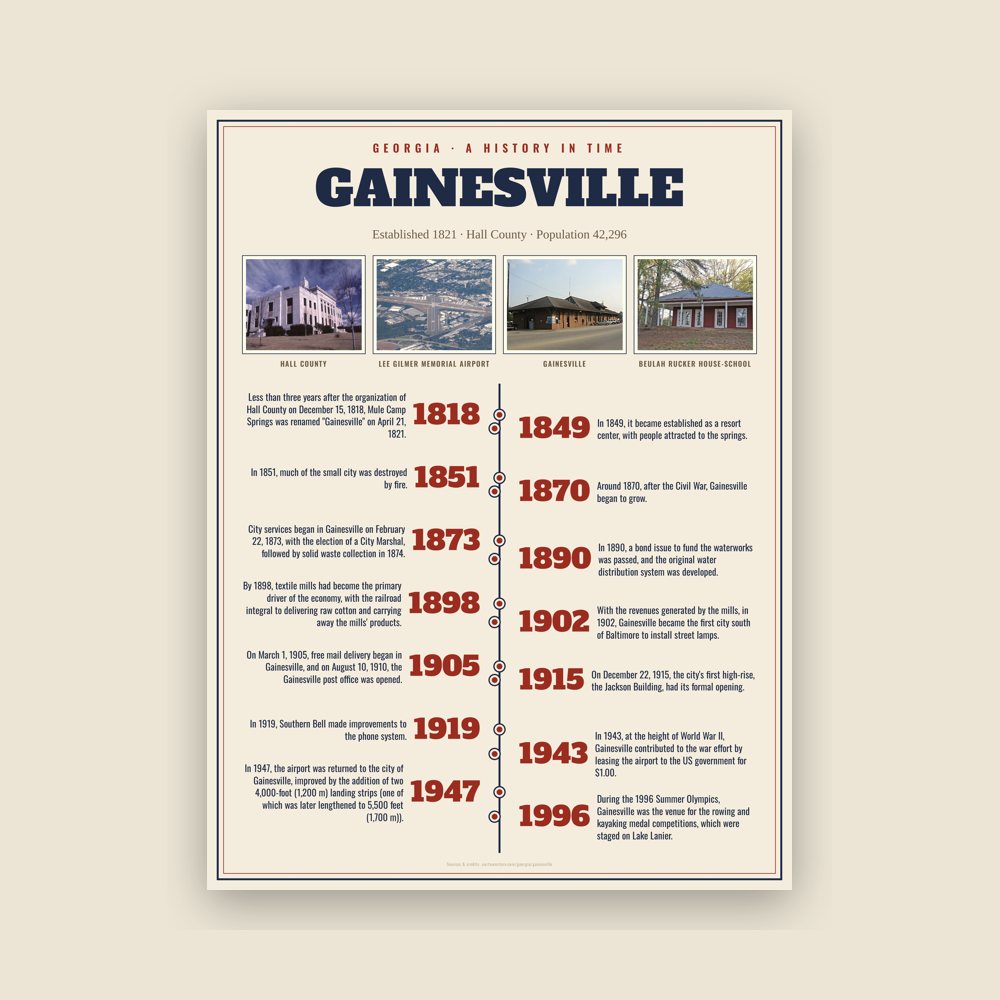
Gainesville was established as "Mule Camp Springs" by European-American settlers in the early 1800s. Less than three years after the organization of Hall County on December 15, 1818, Mule Camp Springs was renamed "Gainesville" on April 21, 1821. It was named in honor of General Edmund P. Gaines, a hero of the War of 1812 and a noted military surveyor and road-builder. Gainesville was selected to be the county seat and chartered by the Georgia General Assembly on November 30, 1821.
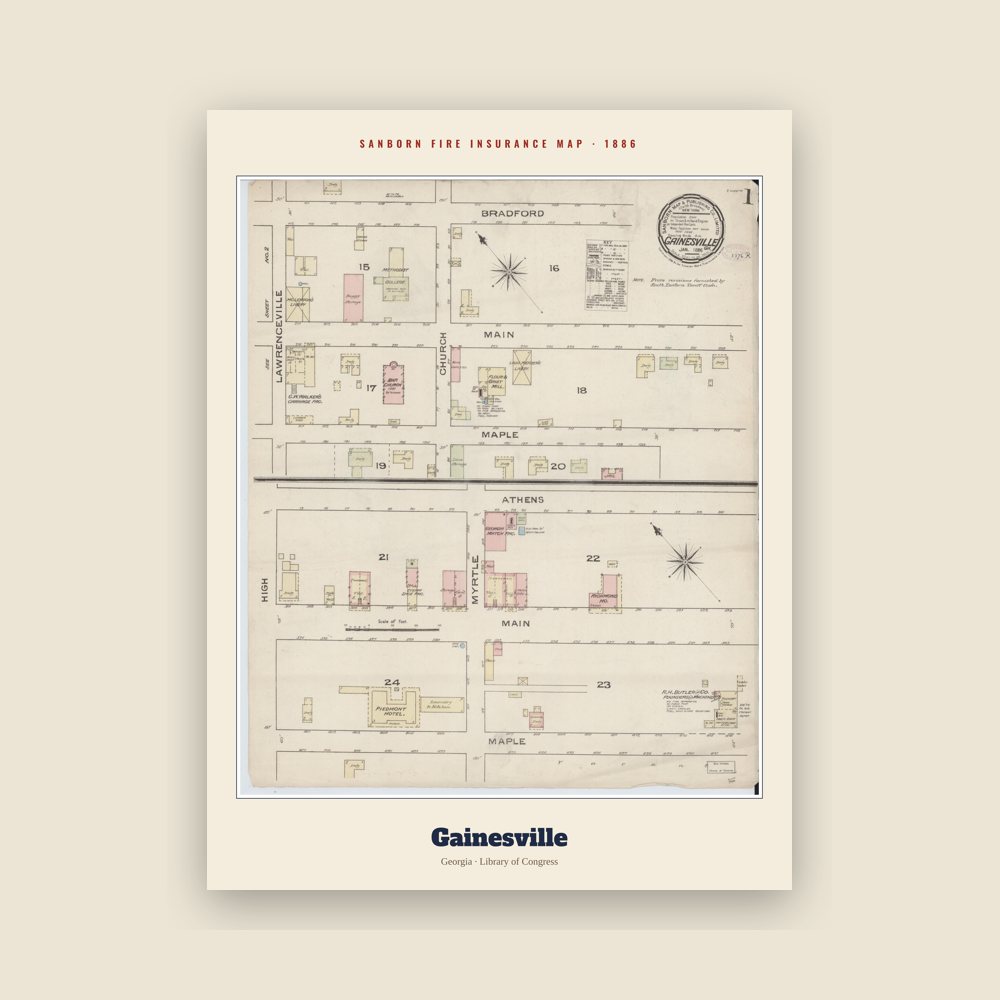
A gold rush that began in nearby Lumpkin County in the 1830s resulted in an increase in the number of settlers and the beginning of a business community. In the middle of the 19th century, Gainesville had two important events. In 1849, it became established as a resort center, with people attracted to the springs. In 1851, much of the small city was destroyed by fire.
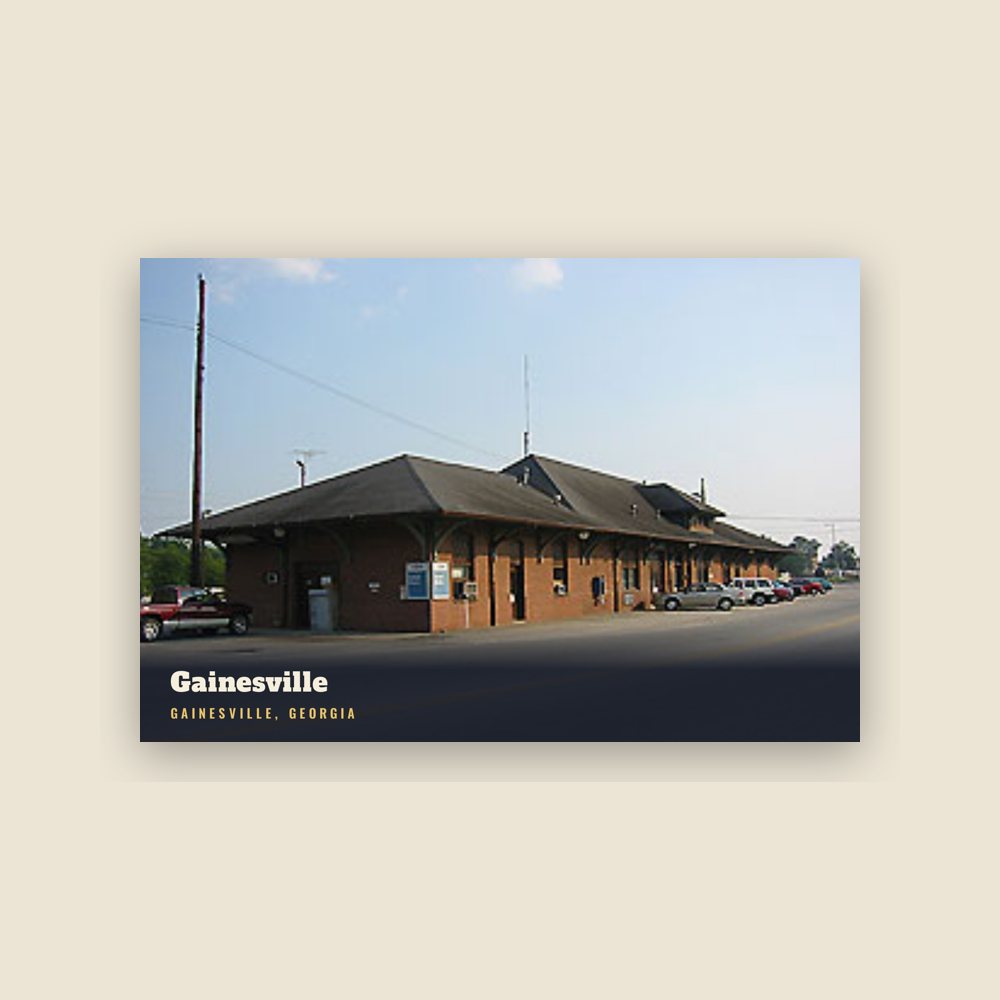
Around 1870, after the Civil War, Gainesville began to grow. In 1871, the Atlanta and Richmond Air-Line Railway, later re-organized into The Atlanta and Charlotte Air Line Railroad, began to stop in Gainesville, increasing its ties to other markets and stimulating business and population. It grew from 1,000 in 1870 to over 5,000 by 1900.
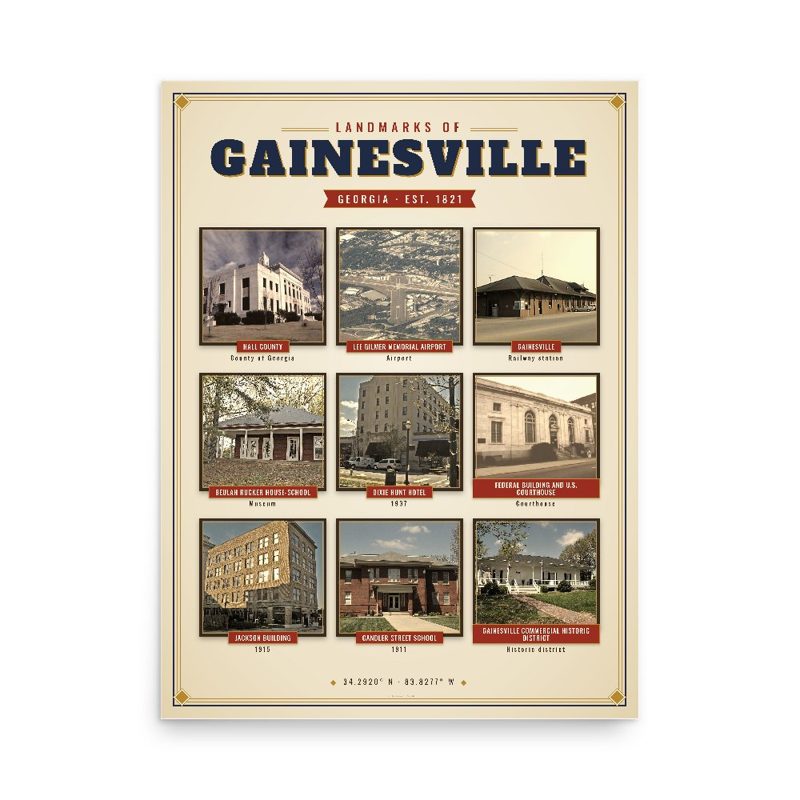
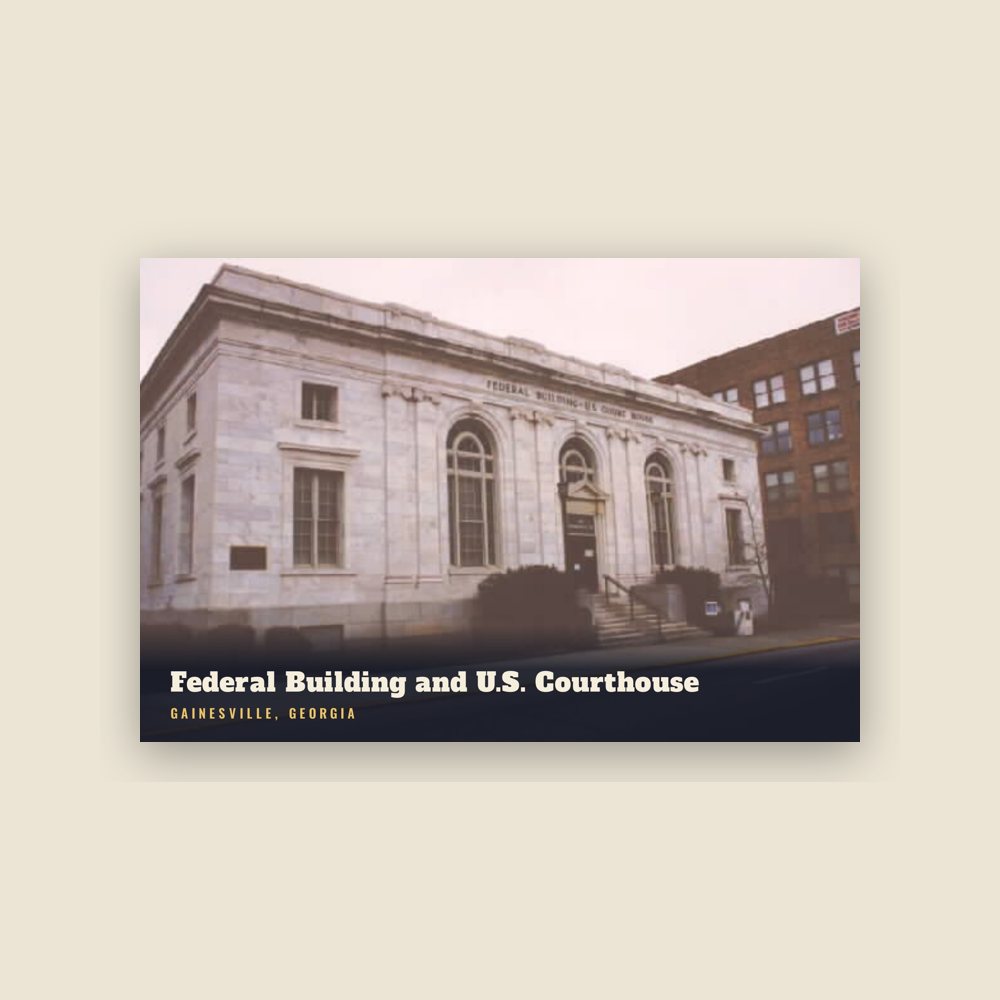
By 1898, textile mills had become the primary driver of the economy, with the railroad integral to delivering raw cotton and carrying away the mills' products. With the revenues generated by the mills, in 1902, Gainesville became the first city south of Baltimore to install street lamps. On March 1, 1905, free mail delivery began in Gainesville, and on August 10, 1910, the Gainesville post office was opened. On December 22, 1915, the city's first high-rise, the Jackson Building, had its formal opening. In 1919, Southern Bell made improvements to the phone system.
City services began in Gainesville on February 22, 1873, with the election of a City Marshal, followed by solid waste collection in 1874. In 1890, a bond issue to fund the waterworks was passed, and the original water distribution system was developed.
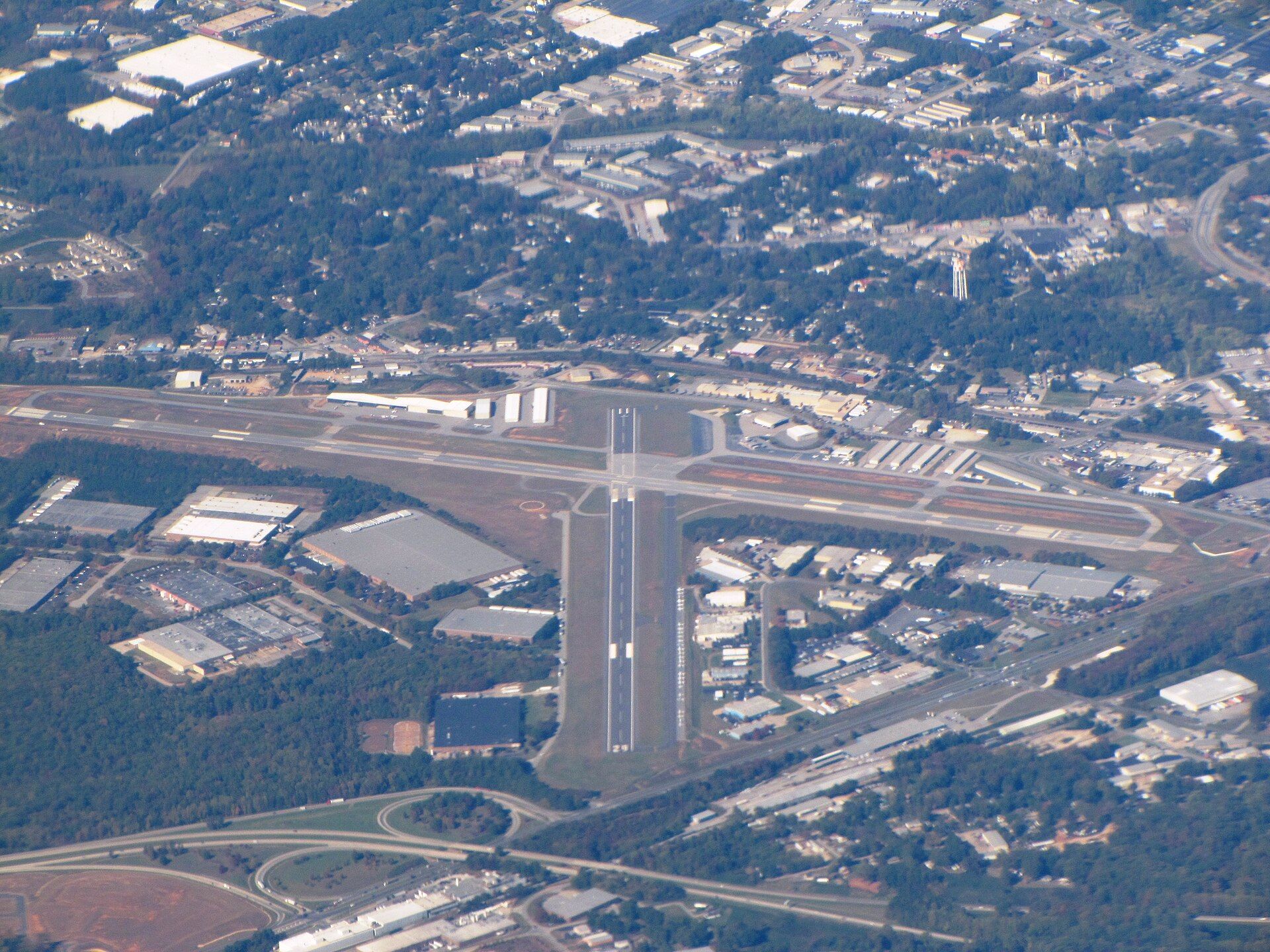
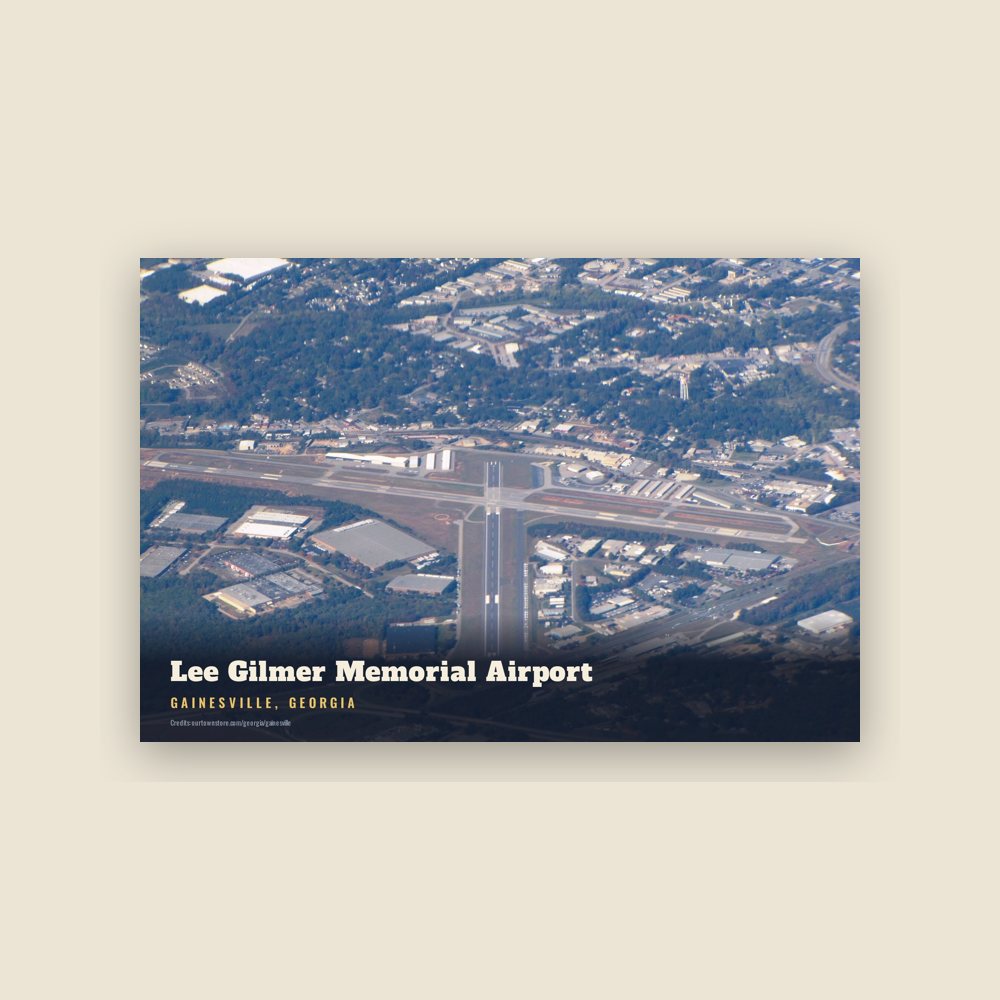
In 1943, at the height of World War II, Gainesville contributed to the war effort by leasing the airport to the US government for $1.00. The military used it as a naval air station for training purposes. In 1947, the airport was returned to the city of Gainesville, improved by the addition of two 4,000-foot (1,200 m) landing strips (one of which was later lengthened to 5,500 feet (1,700 m)).
After World War II, a businessman named Jesse Jewell started the poultry industry in north Georgia. Chickens have since become the state's largest agricultural crop.
In 1956, the U.S. Army Corps of Engineers constructed Lake Sidney Lanier by building Buford Dam on the Chattahoochee River. During the 1996 Summer Olympics, Gainesville was the venue for the rowing and kayaking medal competitions, which were staged on Lake Lanier.
Adapted (trimmed) from the Wikipedia article Gainesville, Georgia, revision 1379177630 by its contributors, licensed CC BY-SA 4.0.
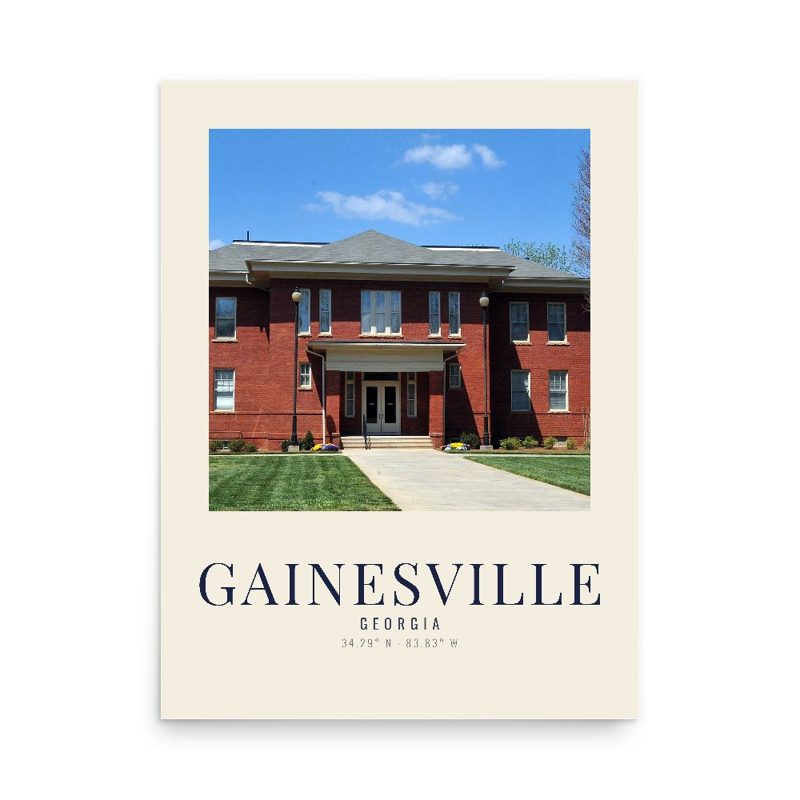

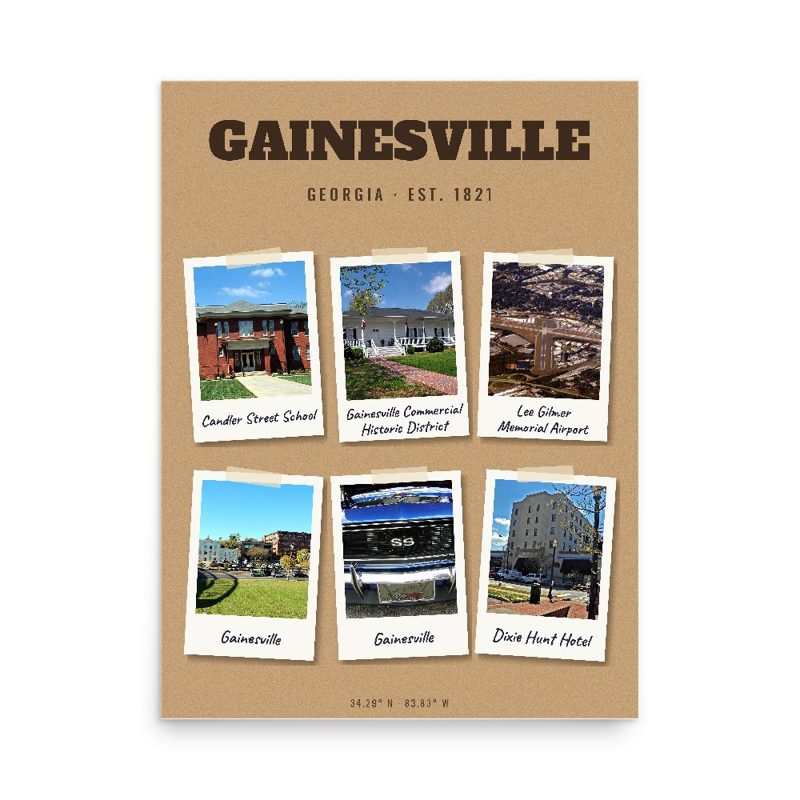
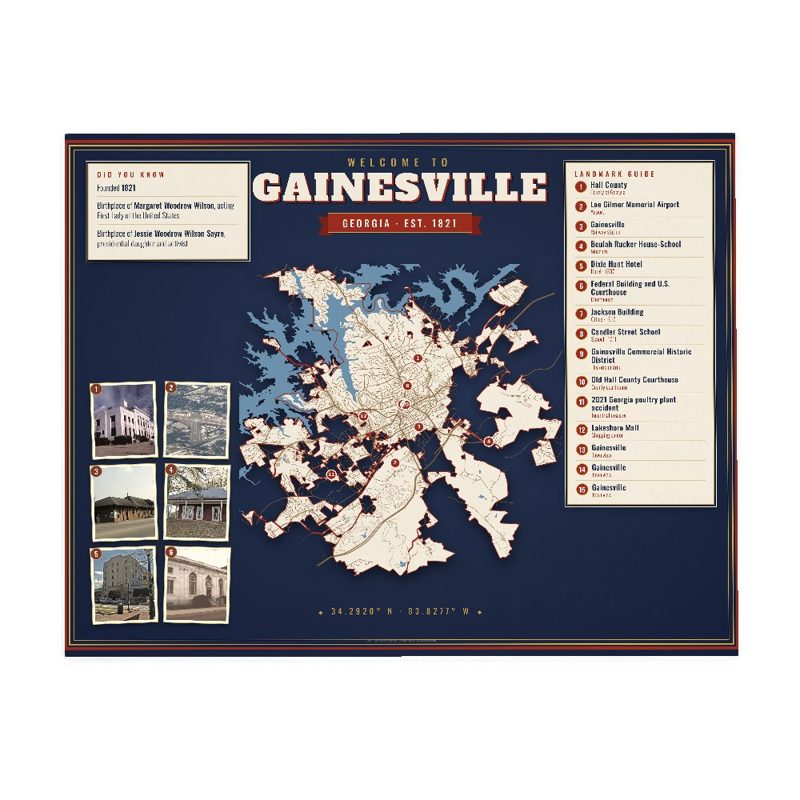










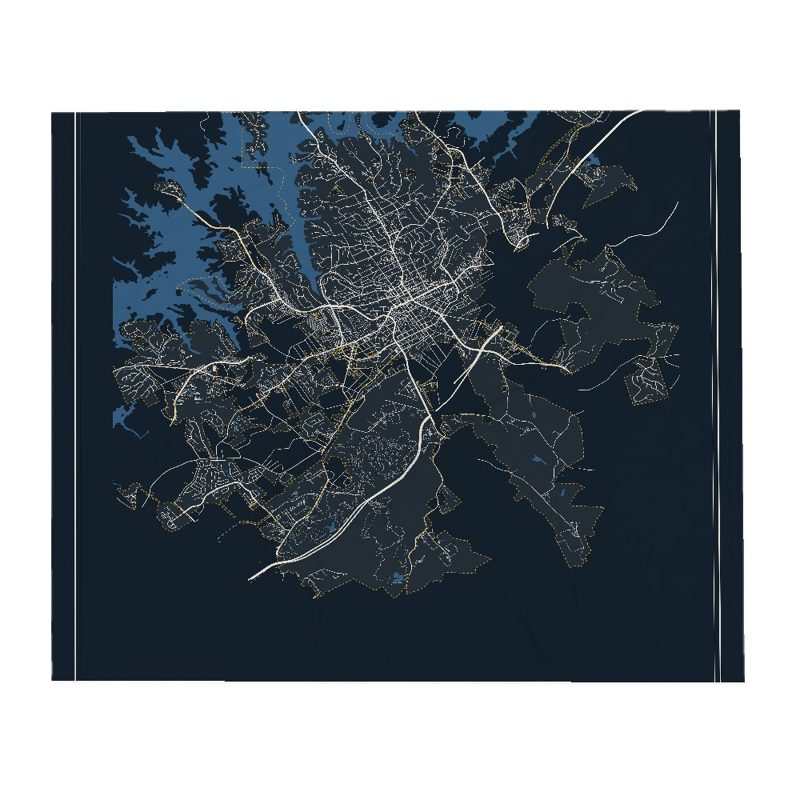
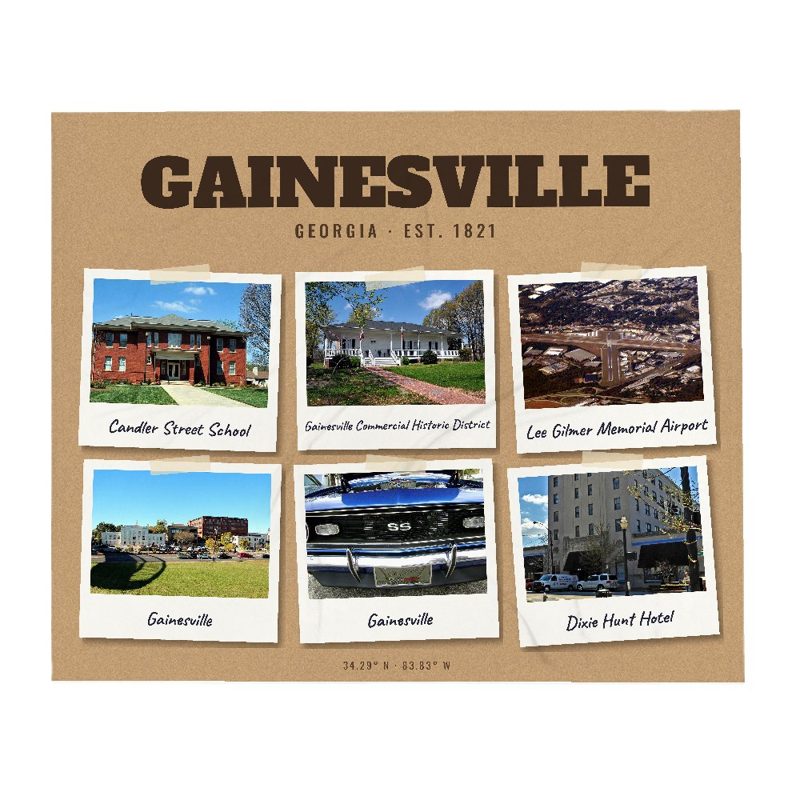



 A view of Gainesville
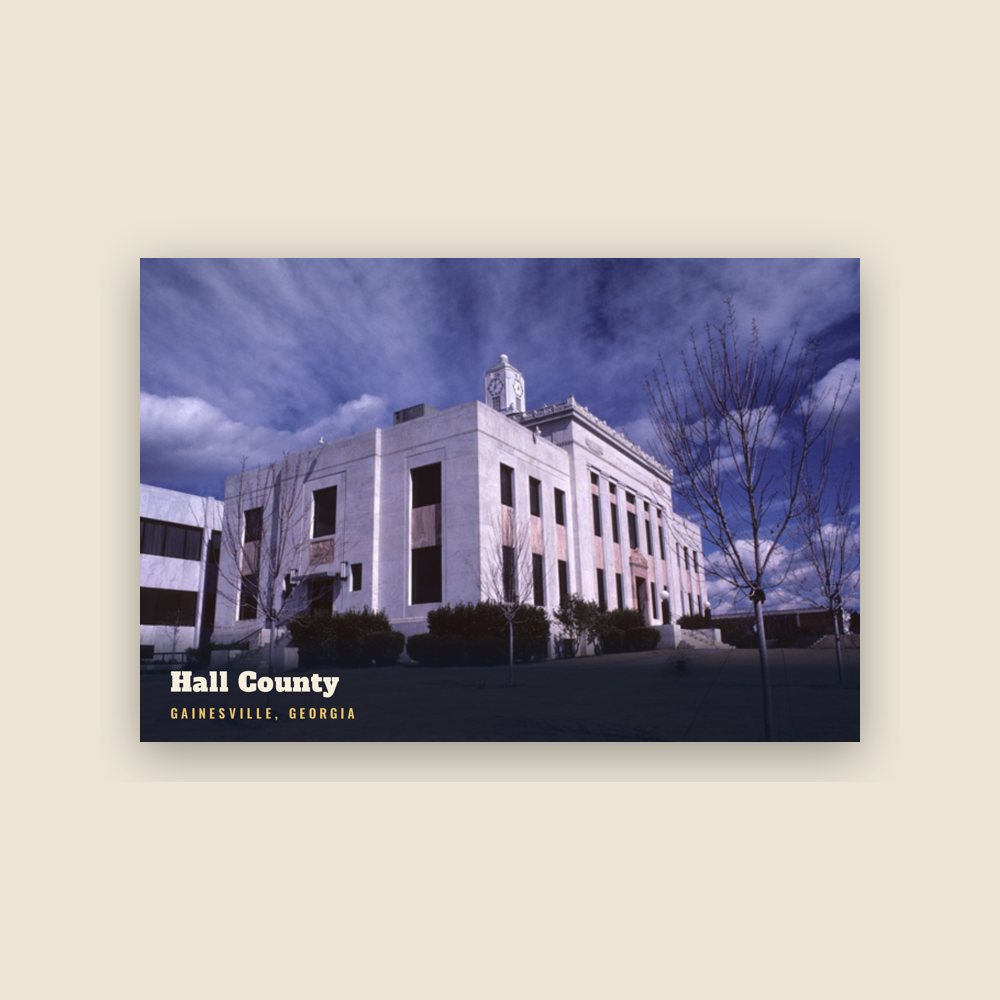
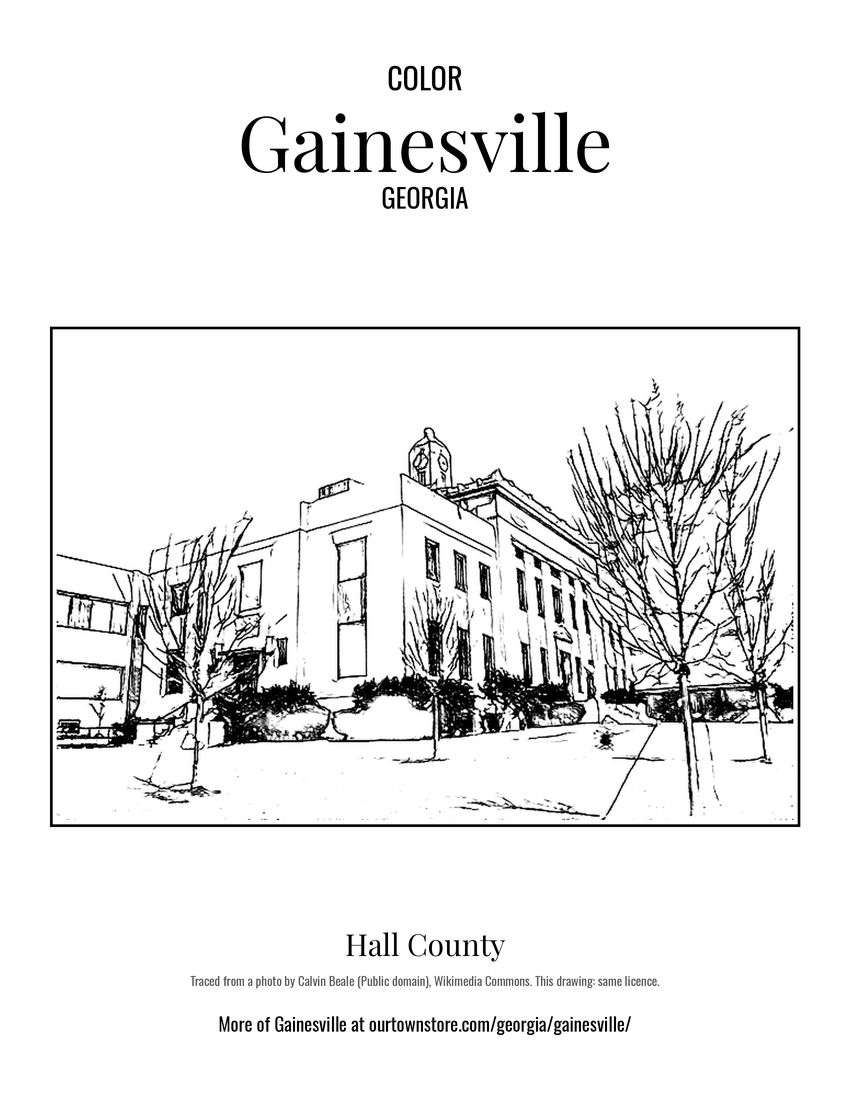 Hall County
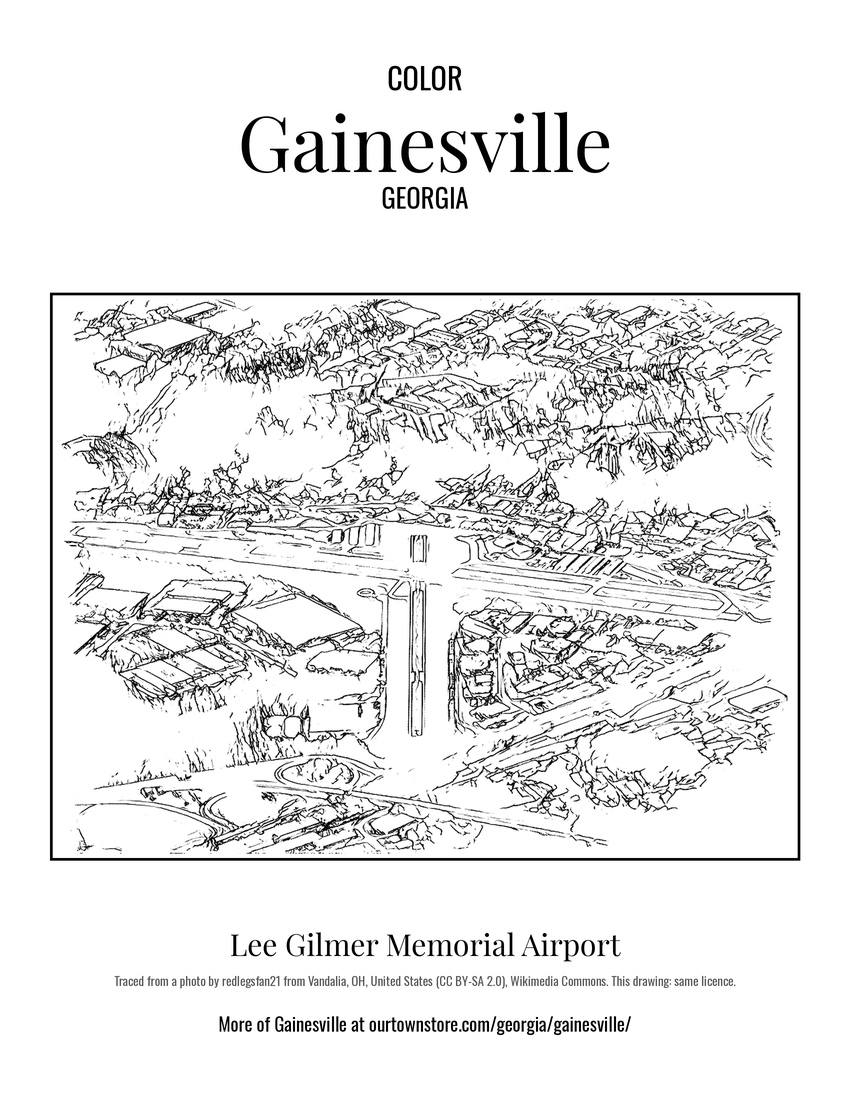 Lee Gilmer Memorial Airport
 Beulah Rucker House-School