A short history of Carnesville
The original inhabitants of the area where Carnesville sits in the Piedmont region were the Cherokee and Creek indigenous peoples of the Southeastern Woodlands of the United States. Yet, over the years, the indigenous people became indebted to the settlers, which led to the Treaty of Augusta in 1773 and 1783, where they relinquished their claim over the land to the new settlers.
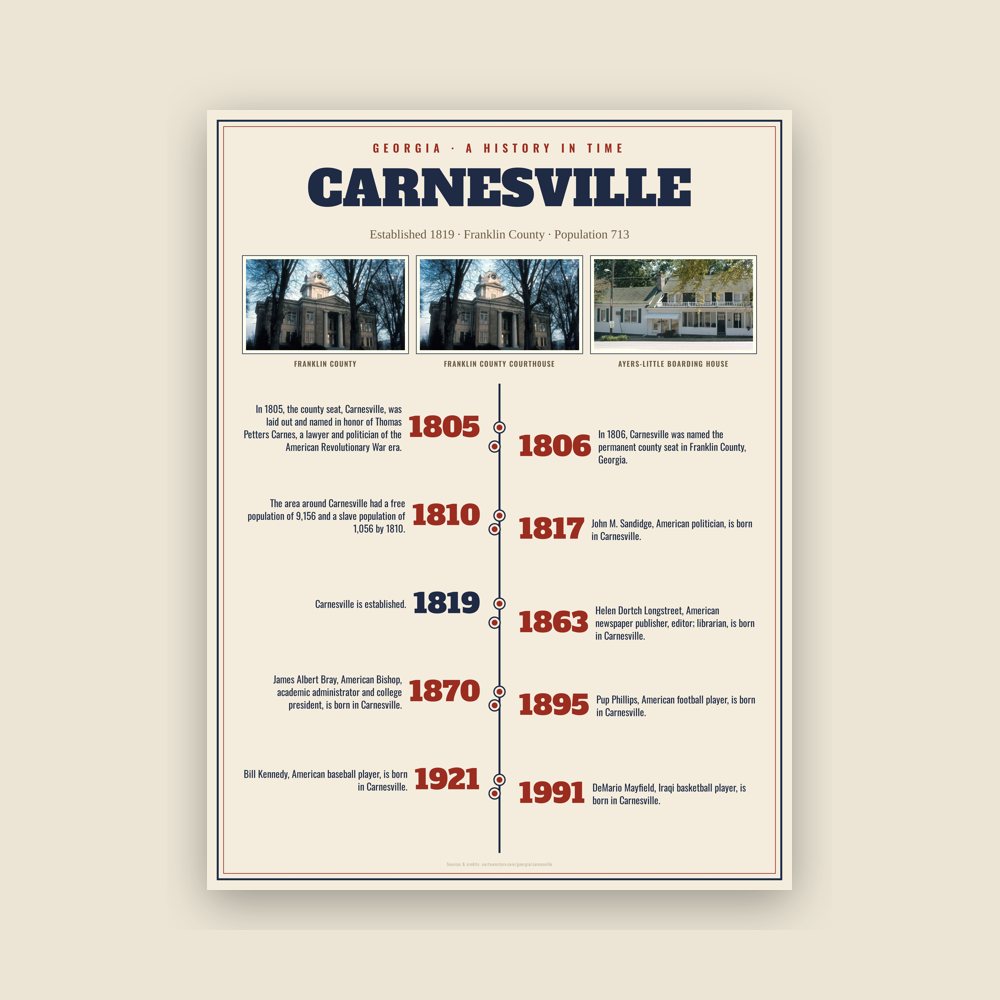
In 1805, the county seat, Carnesville, was laid out and named in honor of Thomas Petters Carnes, a lawyer and politician of the American Revolutionary War era. In 1806, Carnesville was named the permanent county seat in Franklin County, Georgia. Carnesville was incorporated as a town in 1819 and subsequently enlarged to a city in 1901.
Carnesville was thinly settled for a considerable time after being laid out. About 80 people lived in the city at the time of its incorporation. The area around Carnesville had a free population of 9,156 and a slave population of 1,056 by 1810.
Although primarily settled by the English, some Scotch-Irish people came from Pennsylvania into western North Carolina and South Carolina. Their children came to Franklin County, Georgia, but many of pure English origin came with them.
Growing rapidly during the American Civil War era, Carnesville grew to about 240 people, while the area around Carnesville had a free population of 9,131 and a slave population of 2,382 by 1850.
At its height, the city prospered. The city engaged to some extent in manufacturing. The area around Carnesville was an agricultural center, with farms producing crops, like cotton, corn, potatoes, sorghum, and small grains.
Adapted (trimmed) from the Wikipedia article Carnesville, Georgia, revision 1377578393 by its contributors, licensed CC BY-SA 4.0.



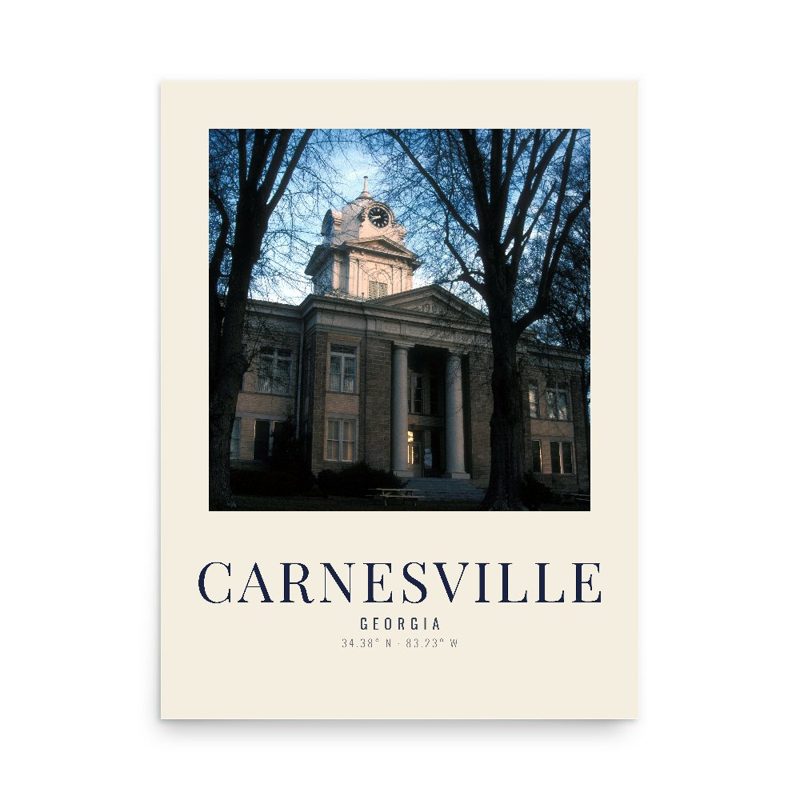

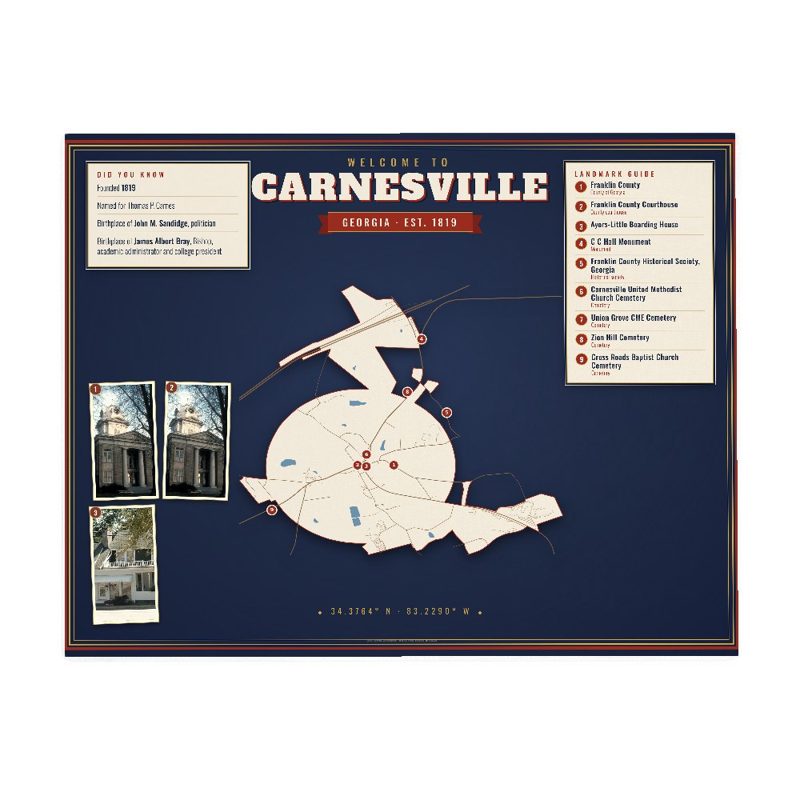

















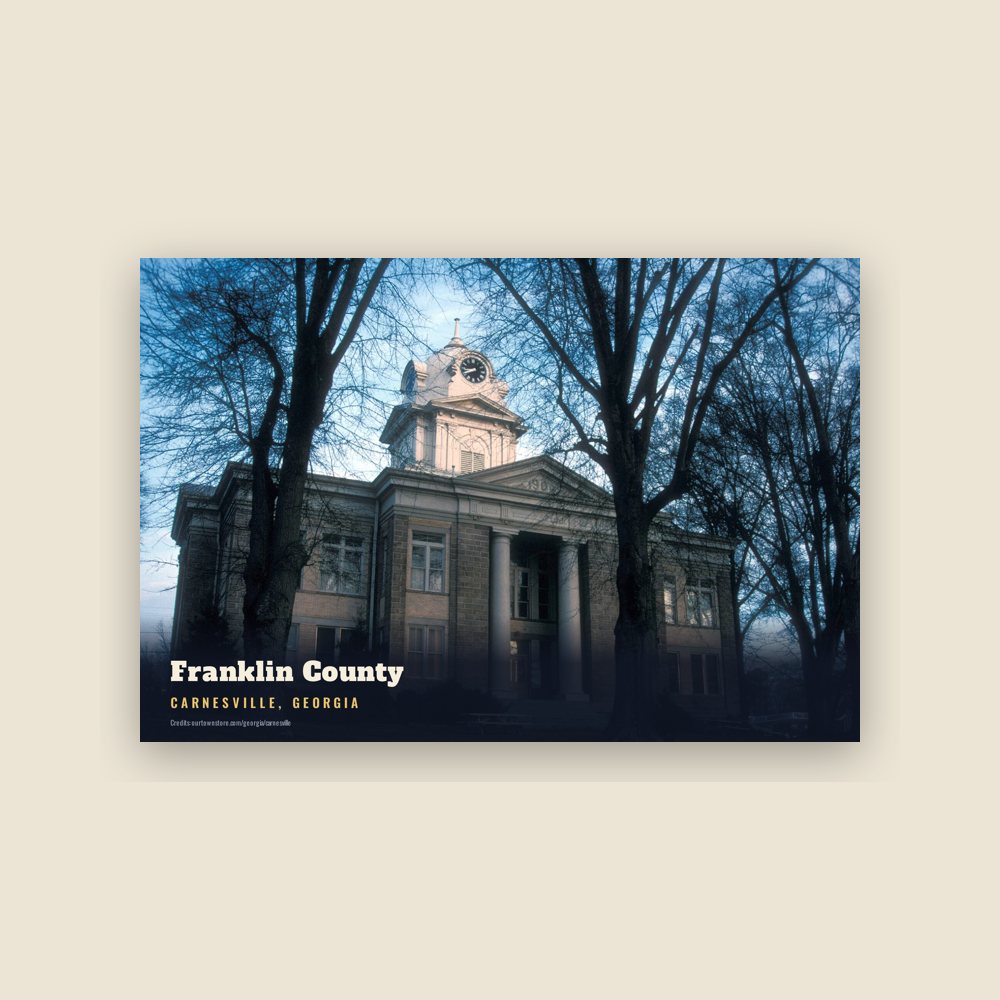
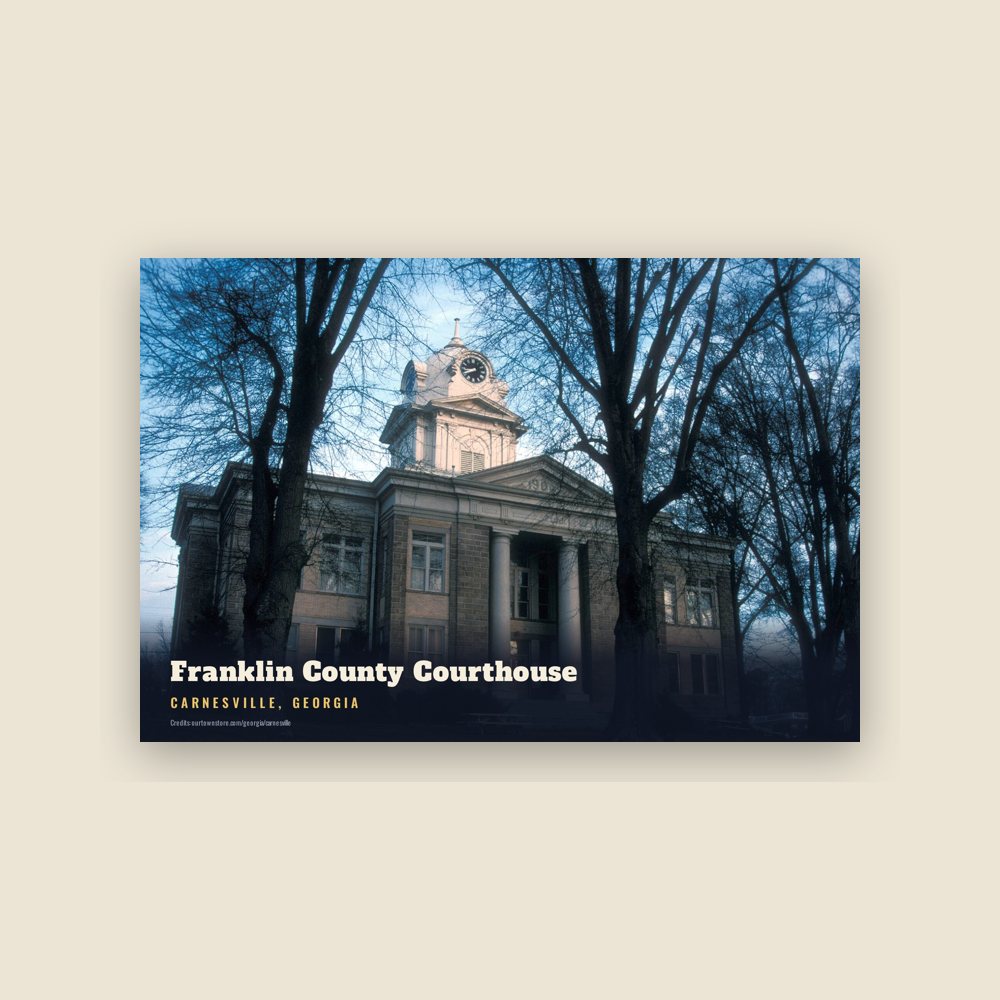

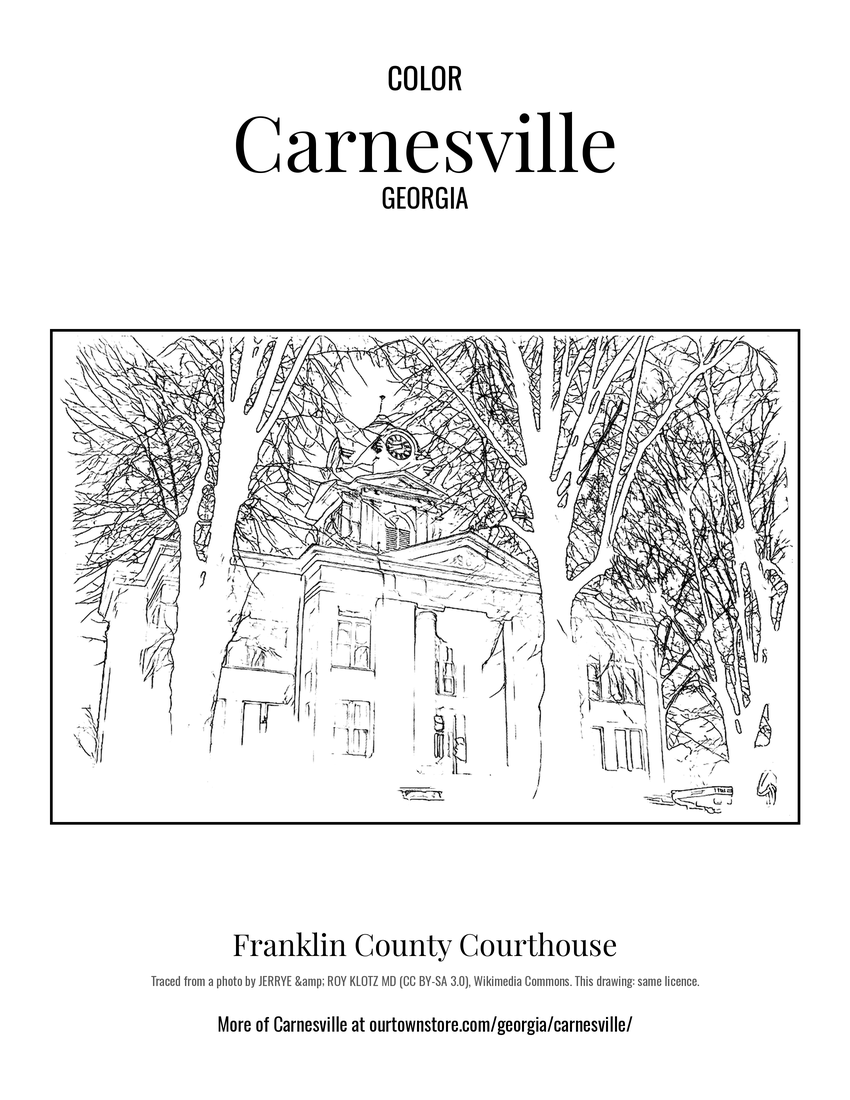 Franklin County Courthouse
 Franklin County
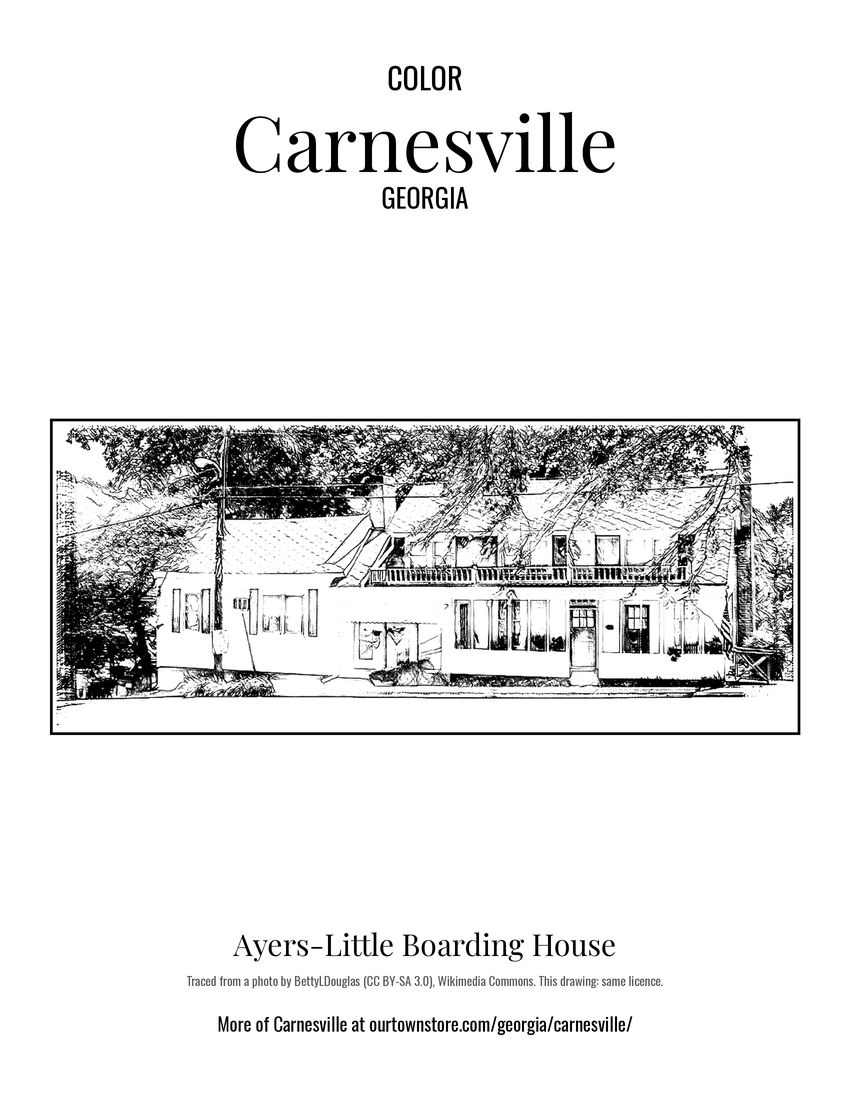 Ayers-Little Boarding House