Cart 0
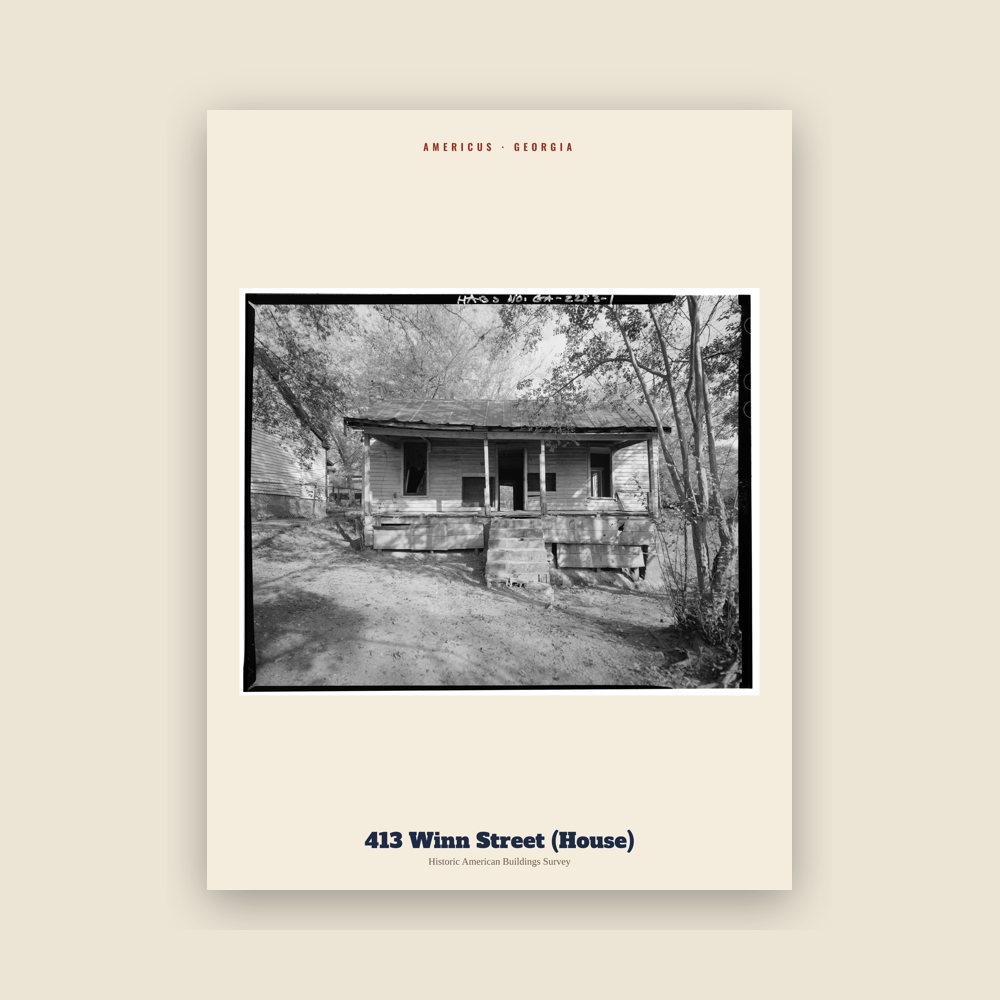
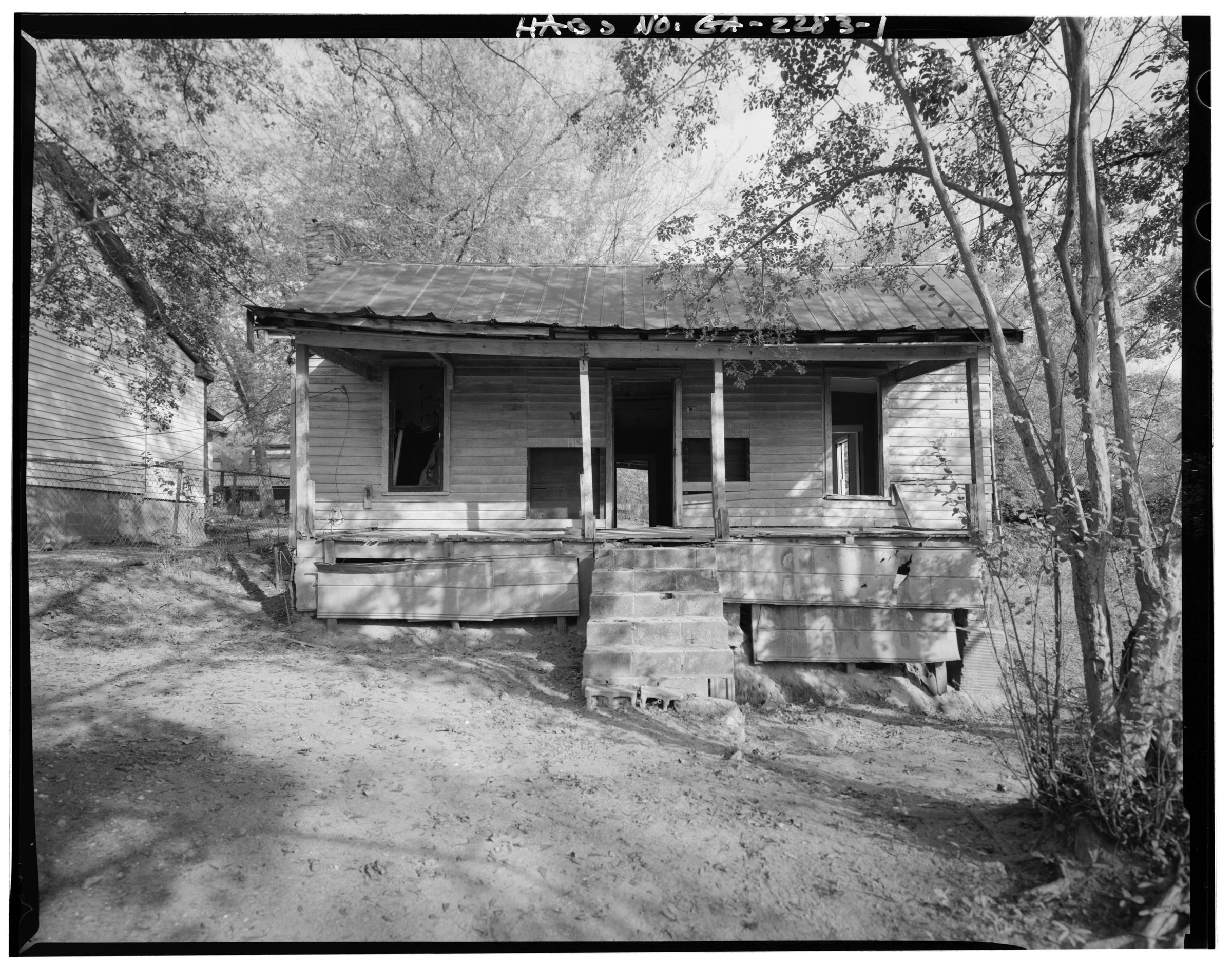
413 Winn Street (House), Americus, Georgia, Historic American Buildings Survey photograph

AMERICUS

Georgia
Shop the collection

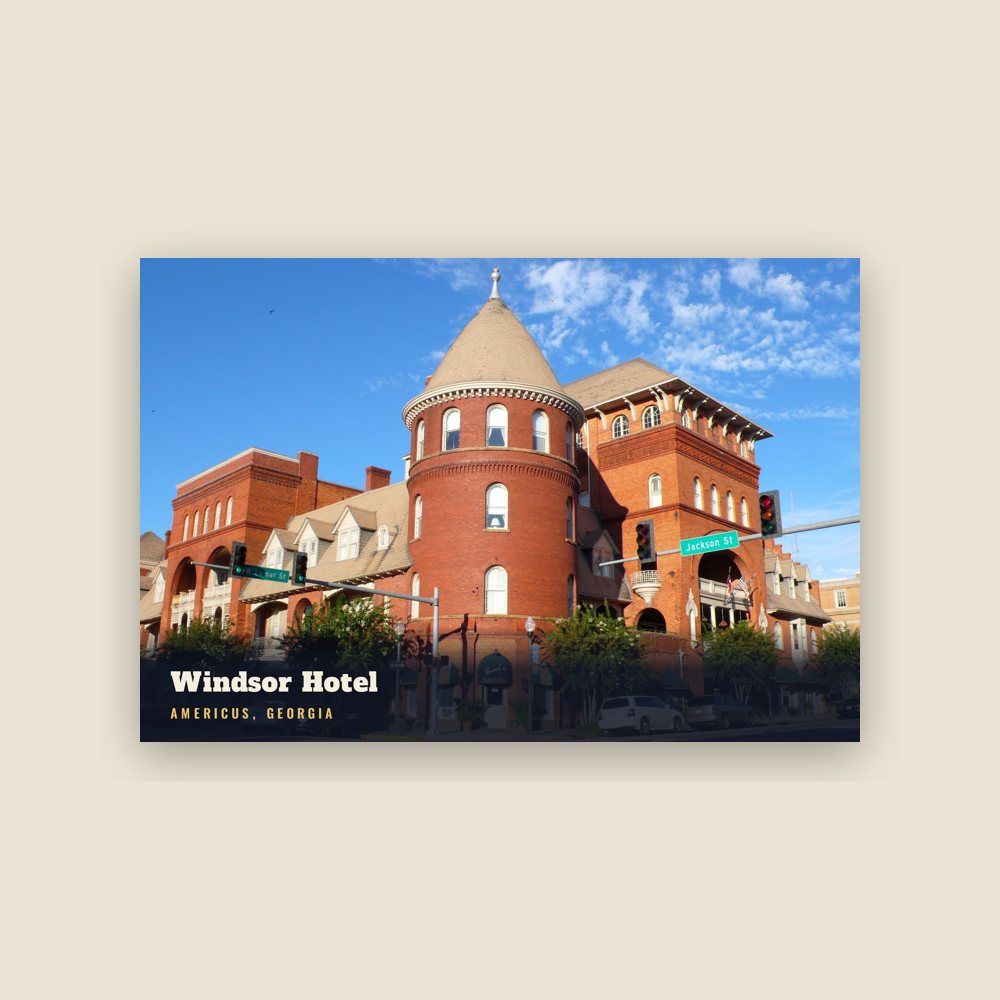
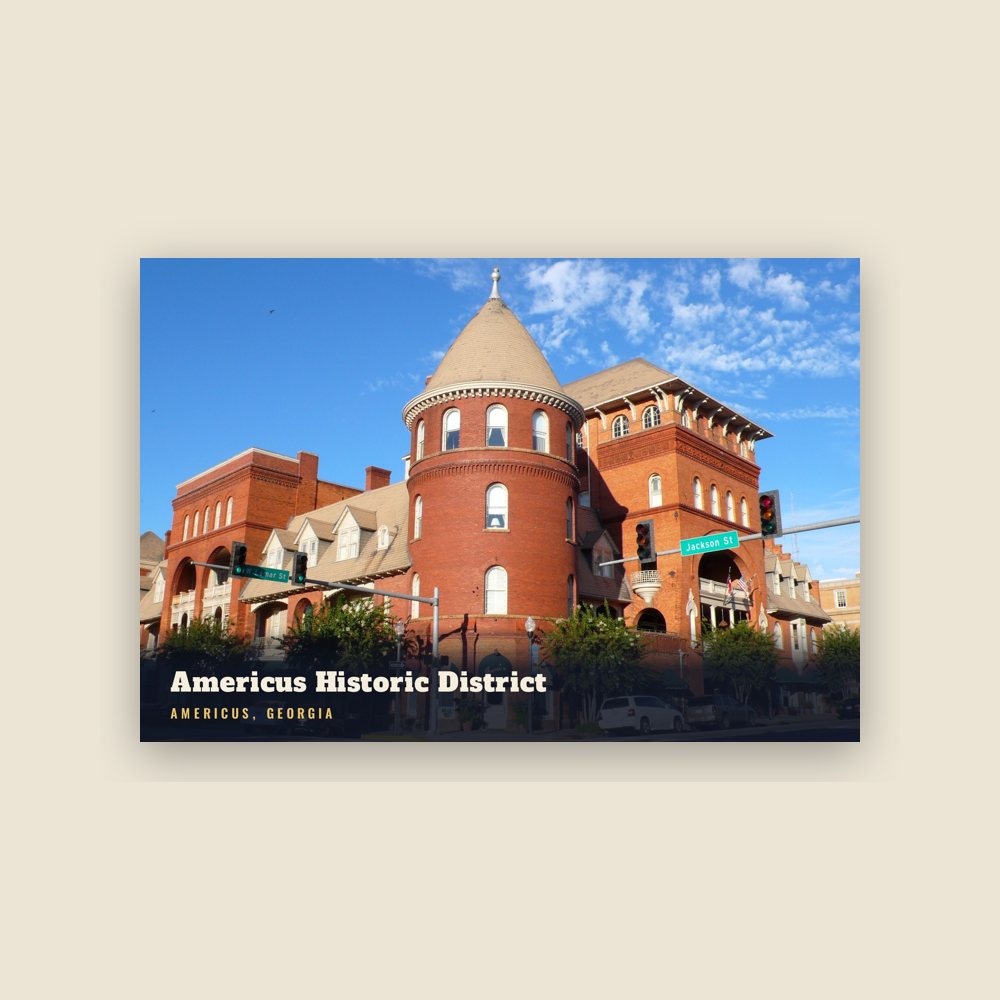
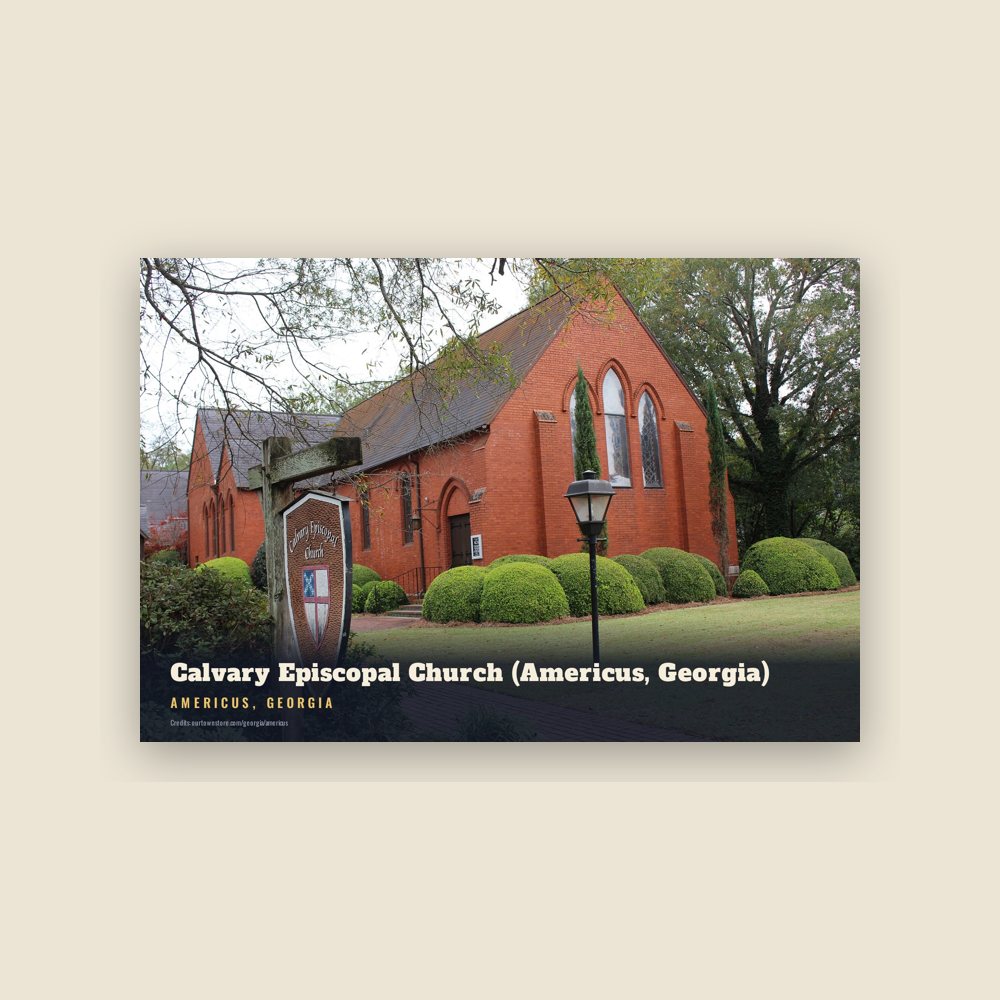
Americus is the county seat of Sumter County, Georgia, United States. Landmarks include Windsor Hotel, Americus Historic District and Calvary Episcopal Church (Americus, Georgia). Americus is the birthplace of Griffin Bell, judge.

The Americus Collection

Made for Americus. Printed to order.

Americus, Georgia gifts and souvenirs: 42 designs made from Americus's own map, landmarks and history, from $10 to $99. Printed to order and shipped free in the USA.

PopularPrice
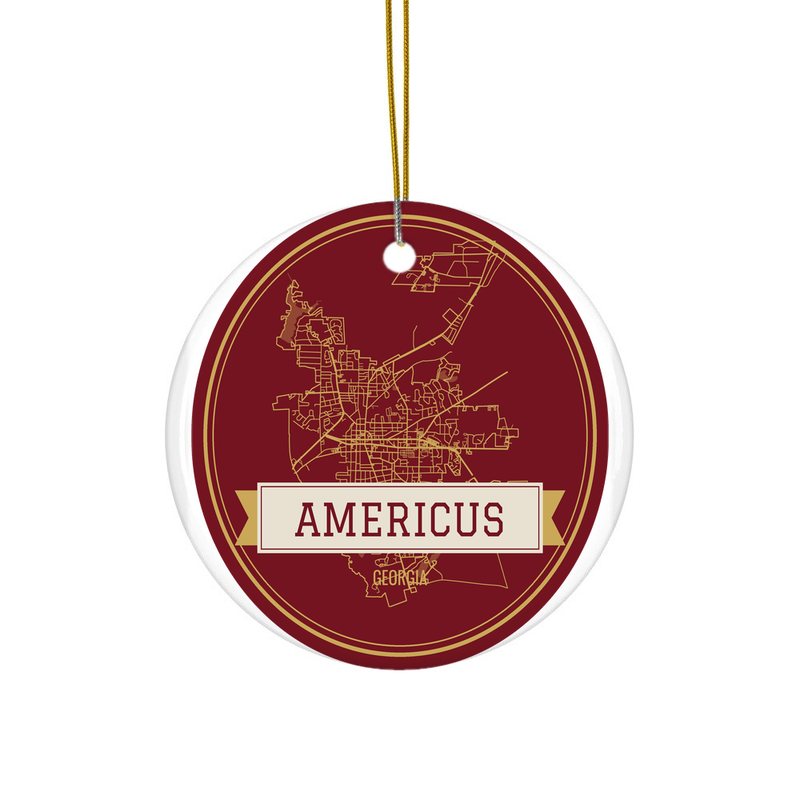
Americus Hometown Ornament$23
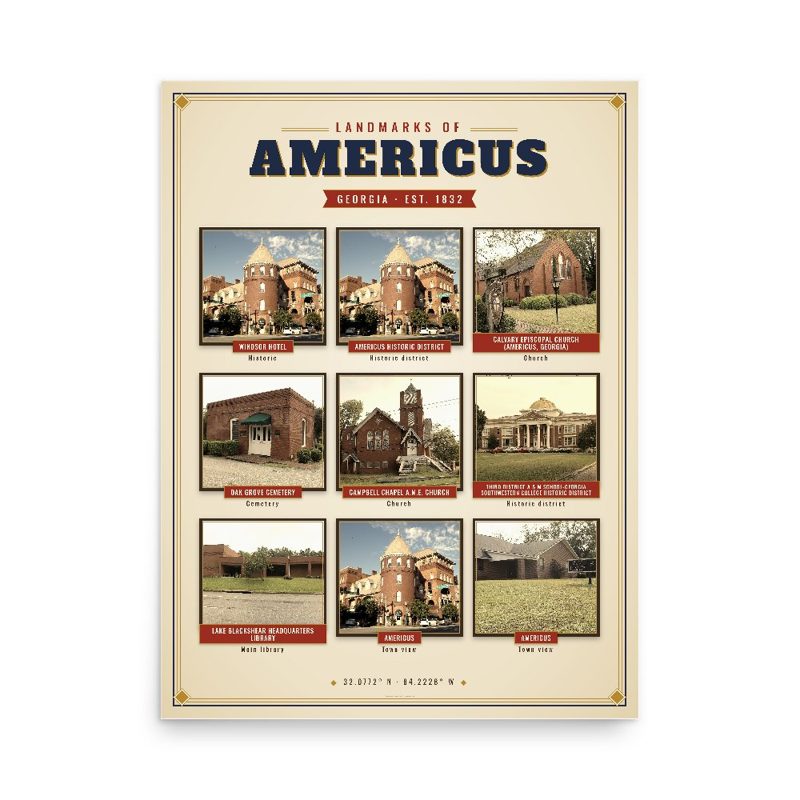
Americus Landmarks Photo Posterfrom $40
Americus Vintage Travel Posterfrom $40
Americus Varsity Crewneckfrom $57
Americus Est. Teefrom $33
Americus Town Line Mugfrom $26
Americus Hometown Ornament

Americus Hometown Ornament

Ceramic keepsake, gold ribbon, in 4 styles

$23
Americus Landmarks Photo Poster

Americus Landmarks Photo Poster

Nine local landmarks, archival matte

from $40
Americus Vintage Travel Poster

Americus Vintage Travel Poster

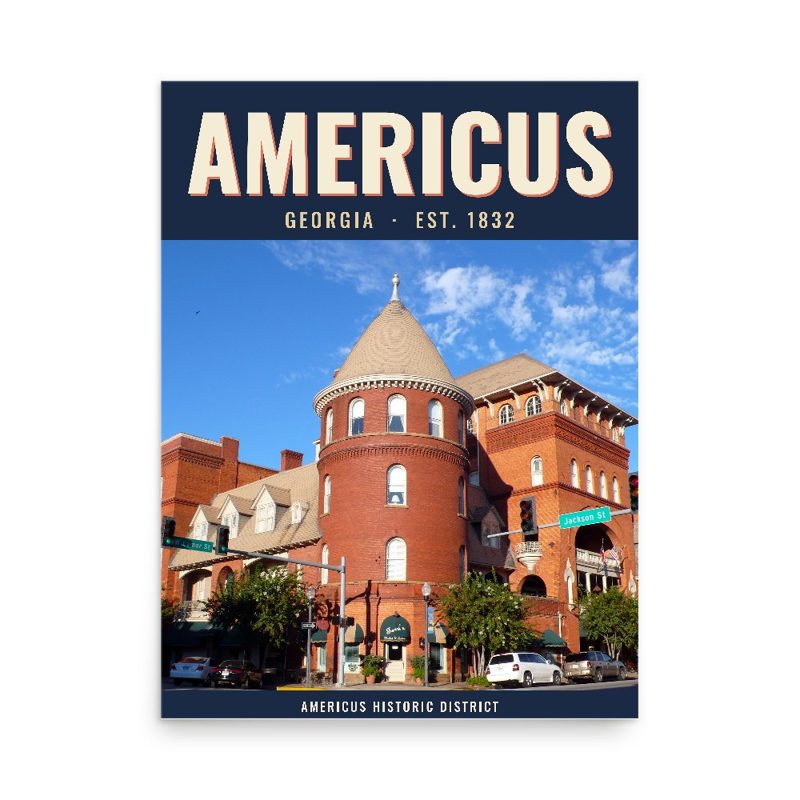
Its landmark photo in a classic travel-poster layout

from $40
Americus Photo Art Print

Americus Photo Art Print

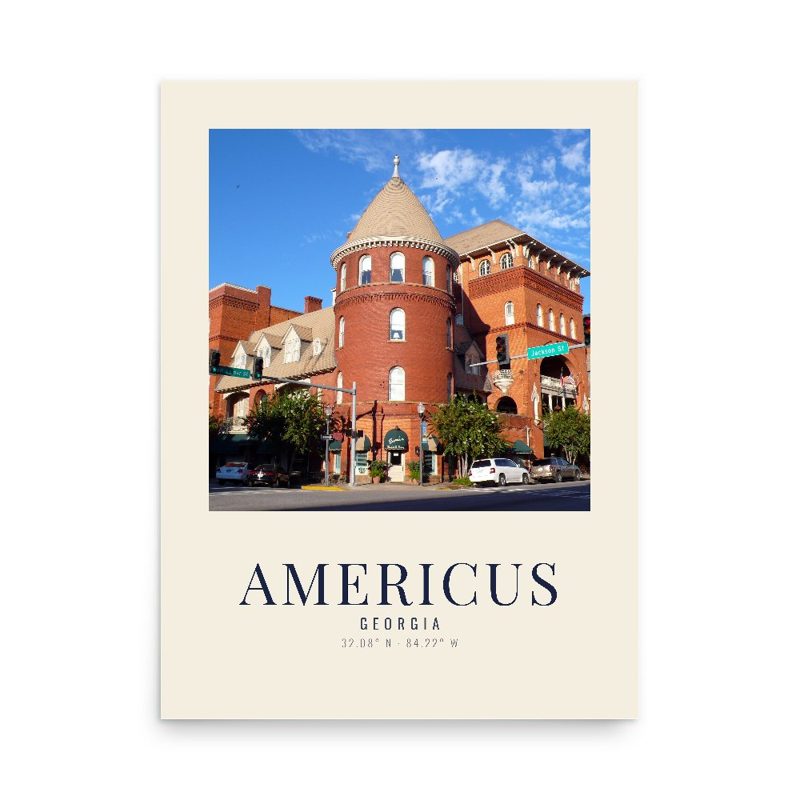
A local landmark photo as a gallery print

from $40
Americus “Greetings From” Poster

Americus “Greetings From” Poster

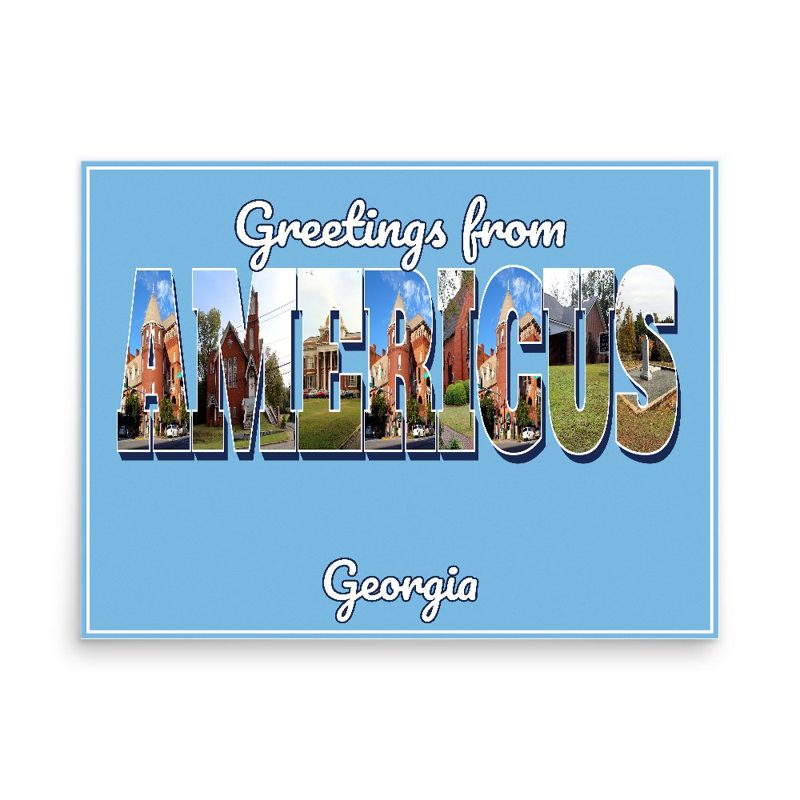
Classic large-letter postcard art, filled with local photos

from $40
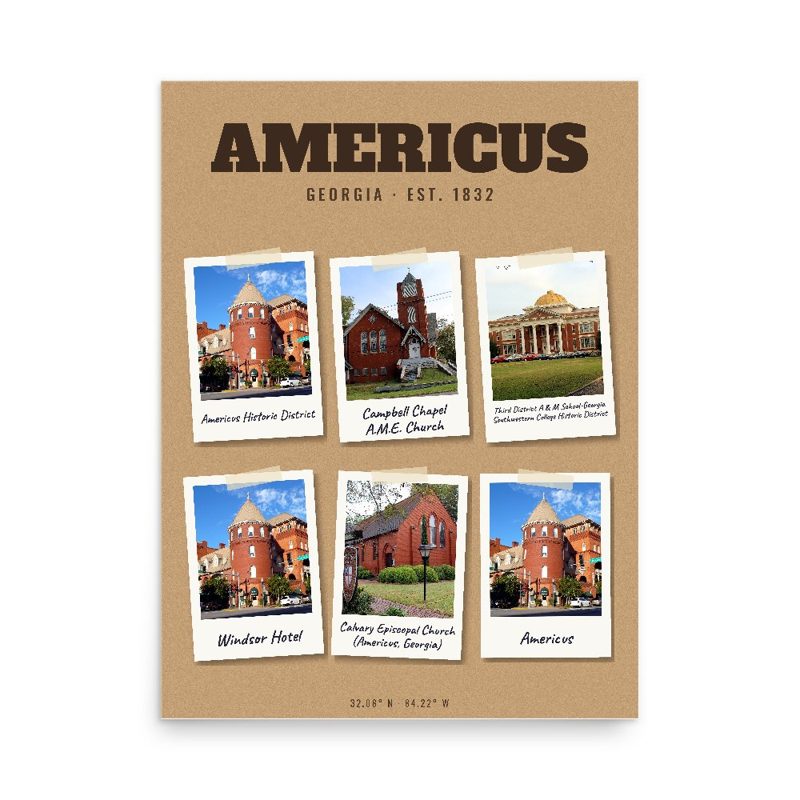
Americus Snapshot Collage Poster

Americus Snapshot Collage Poster

Six local landmarks as instant photos on kraft paper

from $40
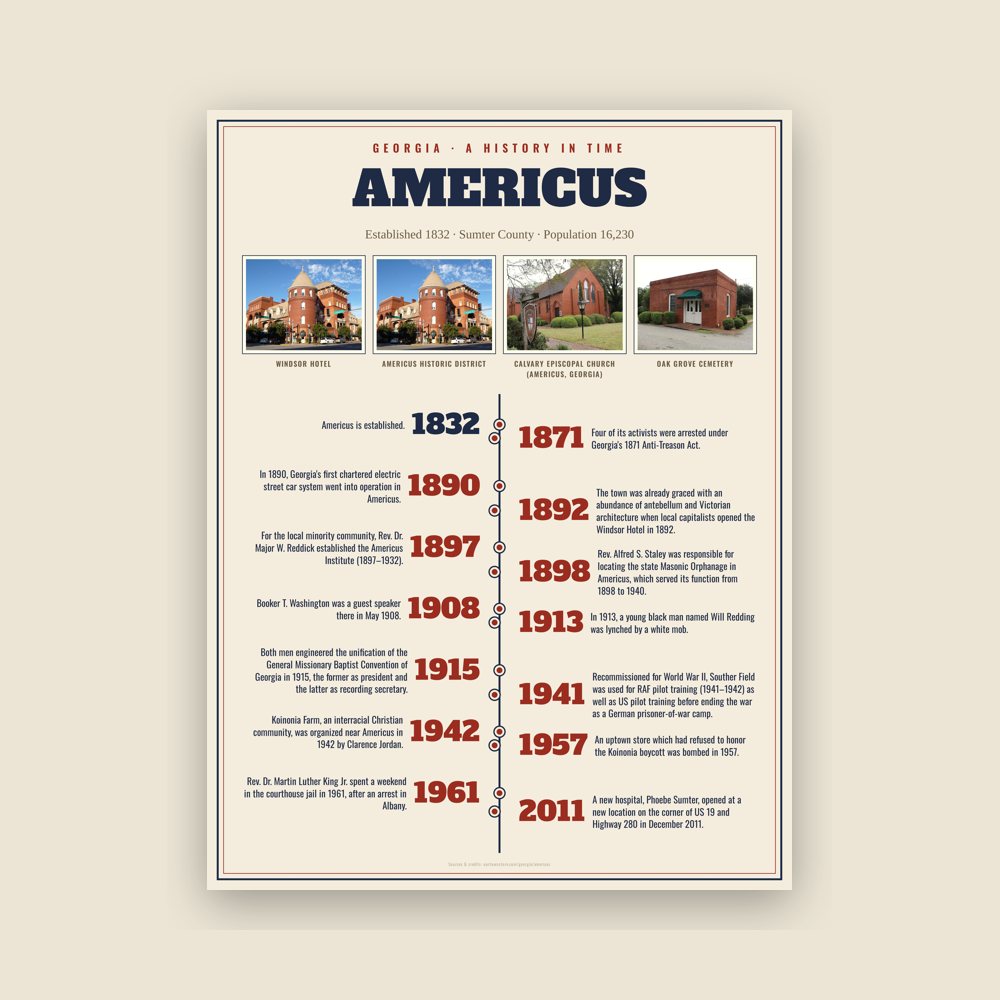
Americus History Timeline Poster

Americus History Timeline Poster

The town's story in dates, from its own records, for home or classroom

from $44
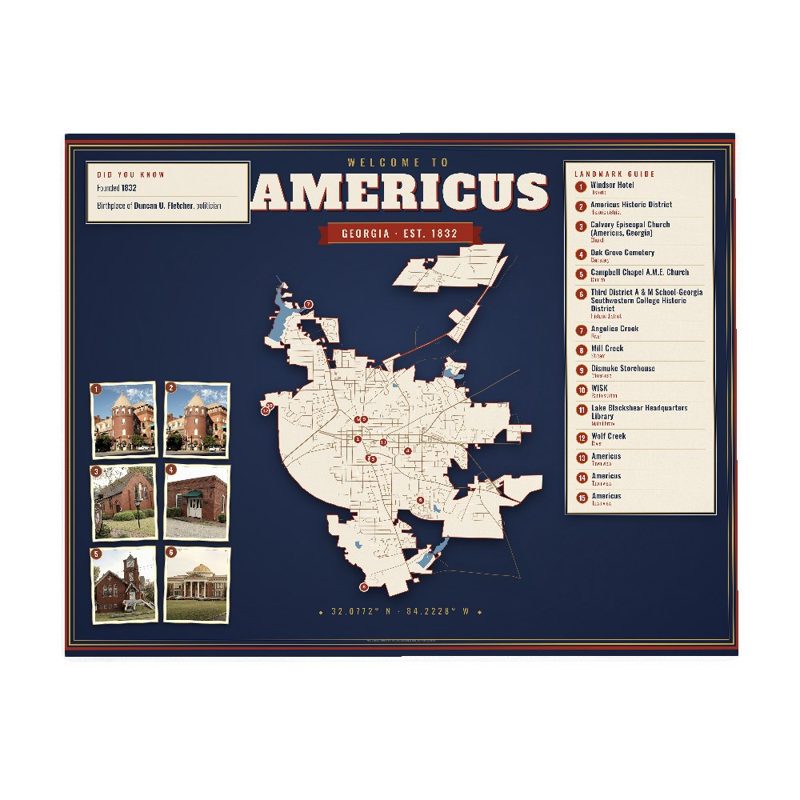
Americus Map Placemat

Americus Map Placemat

Map of local landmarks, washable fabric

$31
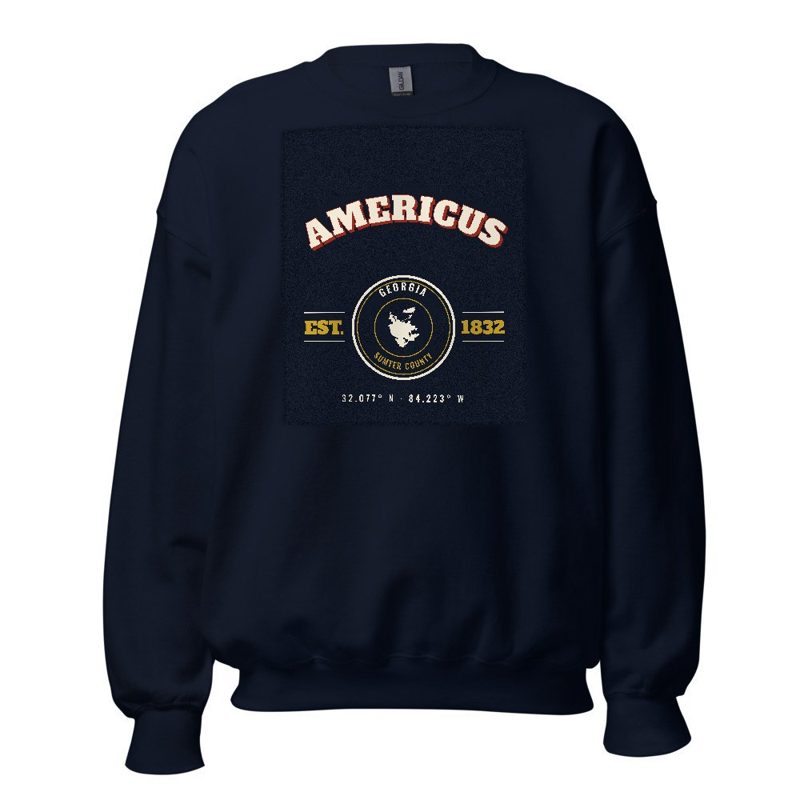
Americus Varsity Crewneck

Americus Varsity Crewneck

Heavy-blend fleece, street map printed on the back

from $57
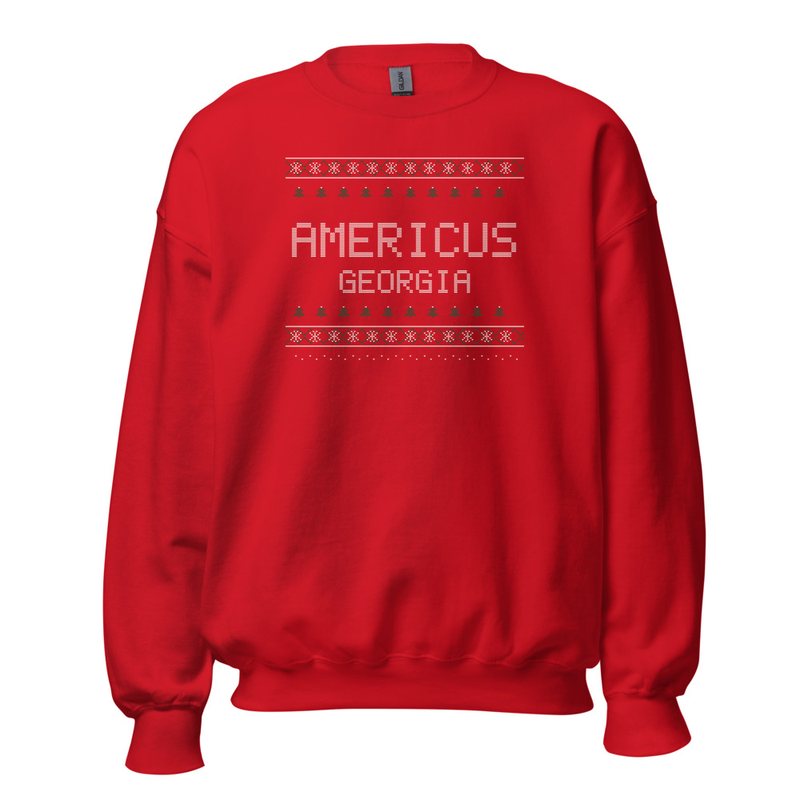
Americus Hometown Knit Sweater

Americus Hometown Knit Sweater

Red heavy-blend crewneck, knit-stitch town print

from $57
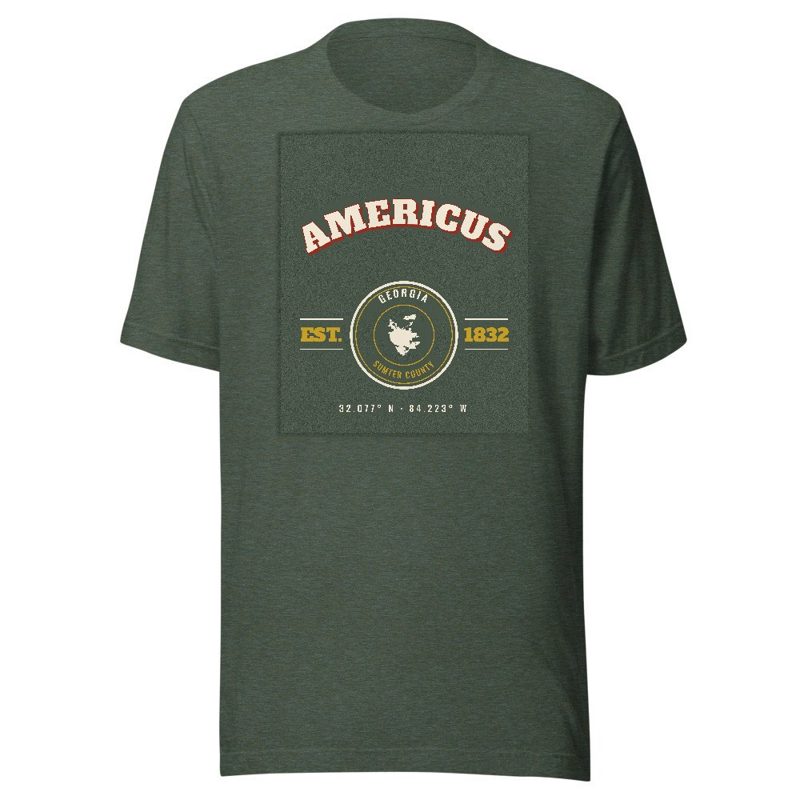
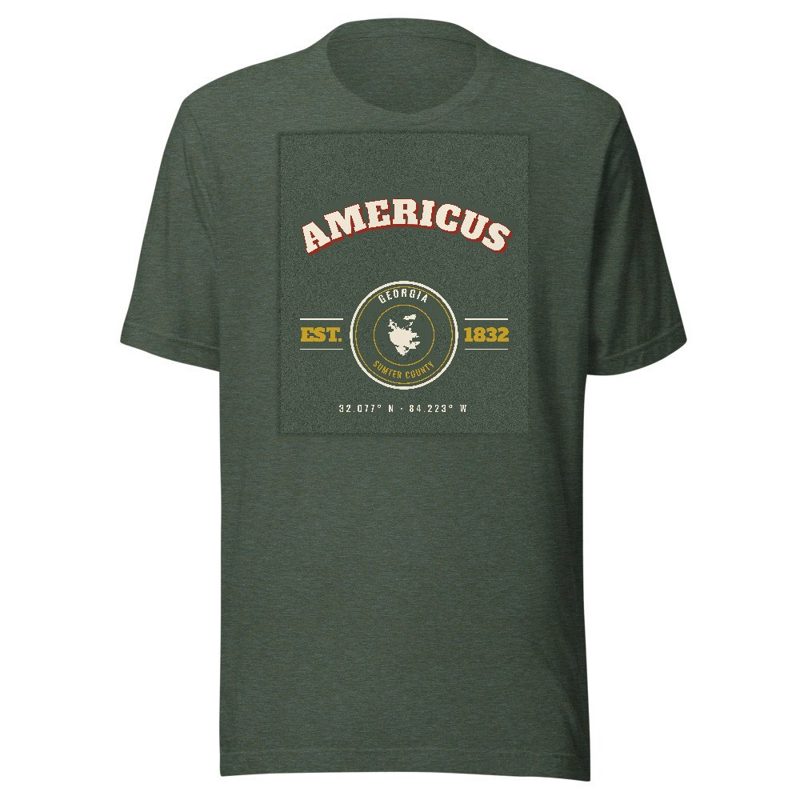
Americus Est. Tee

Americus Est. Tee

Soft Bella+Canvas jersey

from $33
Americus Est. Youth Tee

Americus Est. Youth Tee

Kids' Bella+Canvas jersey, youth sizes

$30
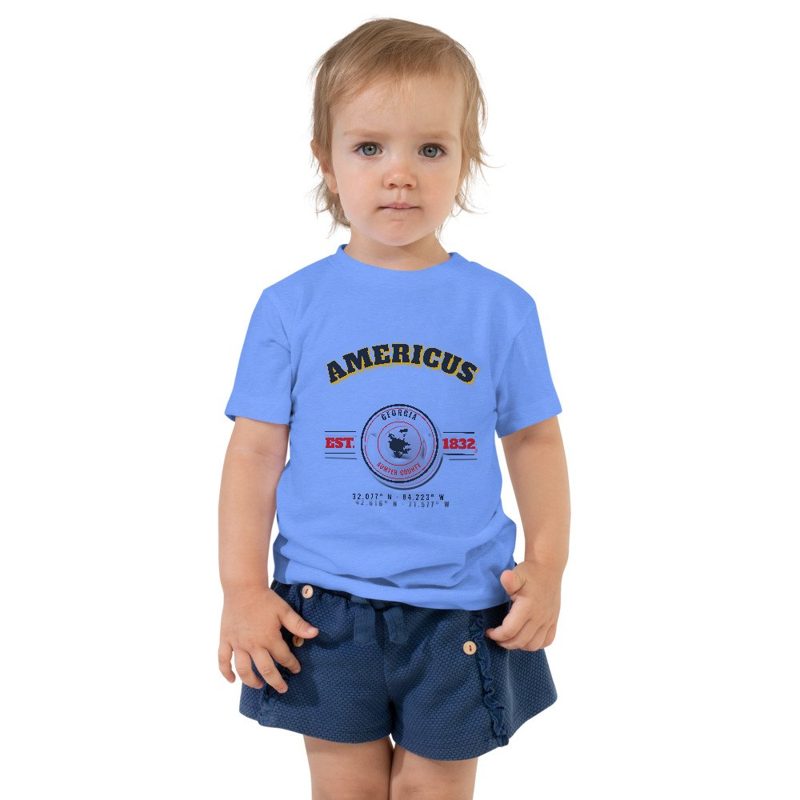
Americus Est. Toddler Tee

Americus Est. Toddler Tee

Bella+Canvas toddler jersey

$29
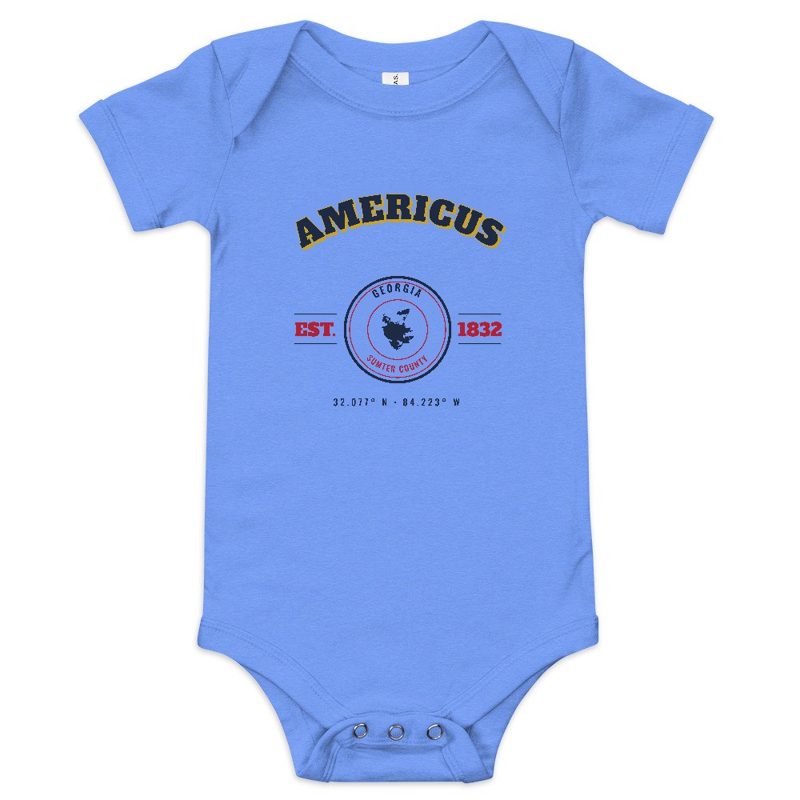
Americus Est. Baby One Piece

Americus Est. Baby One Piece

Bella+Canvas baby bodysuit

$30
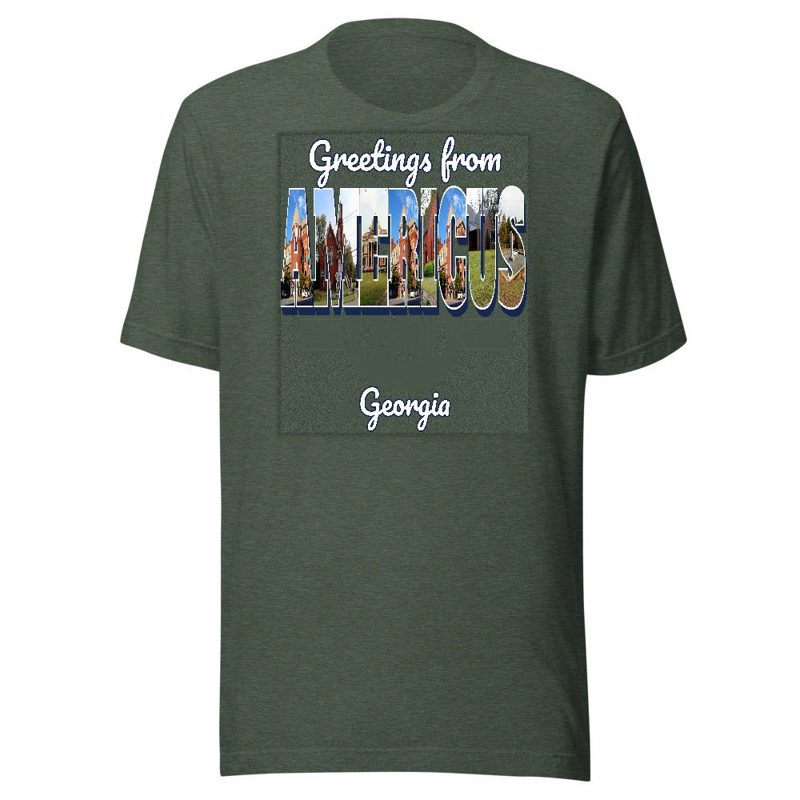
Americus “Greetings From” Tee

Americus “Greetings From” Tee

Large-letter postcard art filled with local photos

from $35
Americus Town Line Mug

Americus Town Line Mug

Glossy ceramic, dishwasher safe

from $26
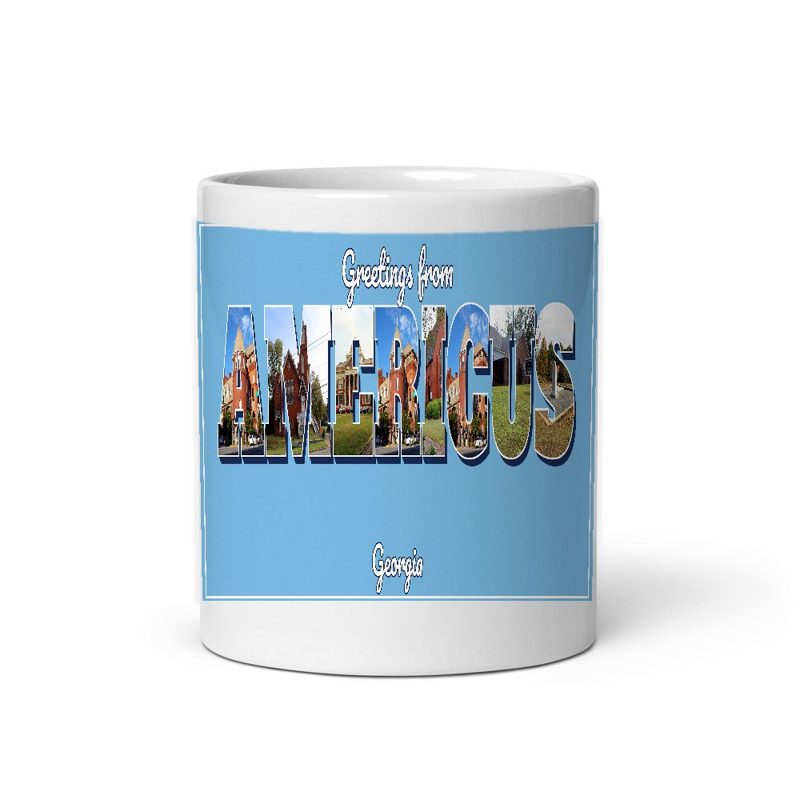
Americus “Greetings From” Mug

Americus “Greetings From” Mug

Large-letter postcard art filled with local photos, 11 oz ceramic

from $29
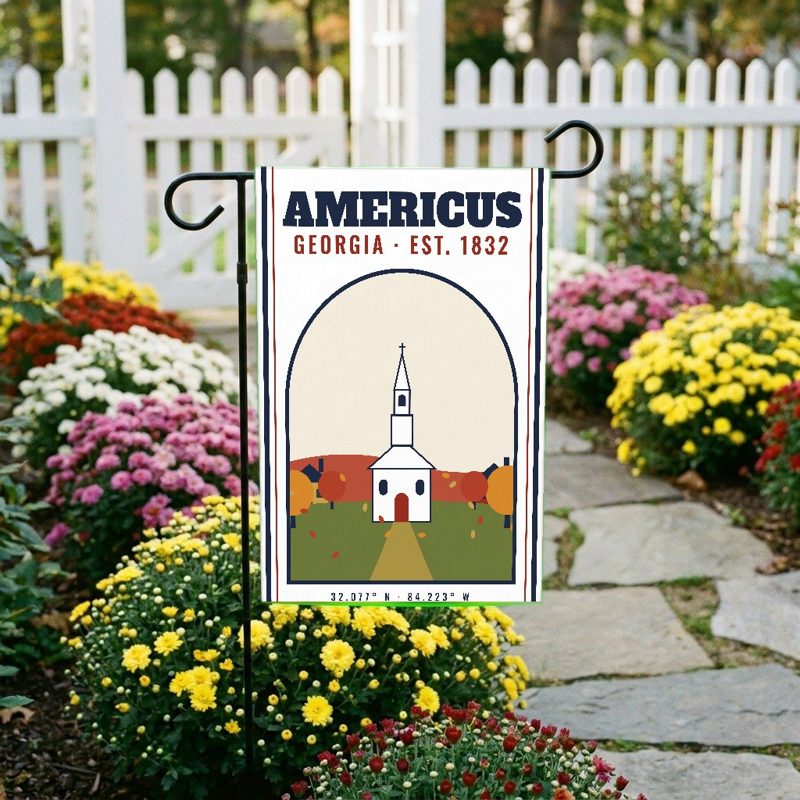
Americus Garden Flag

Americus Garden Flag

Weatherproof, for the front walk

$31
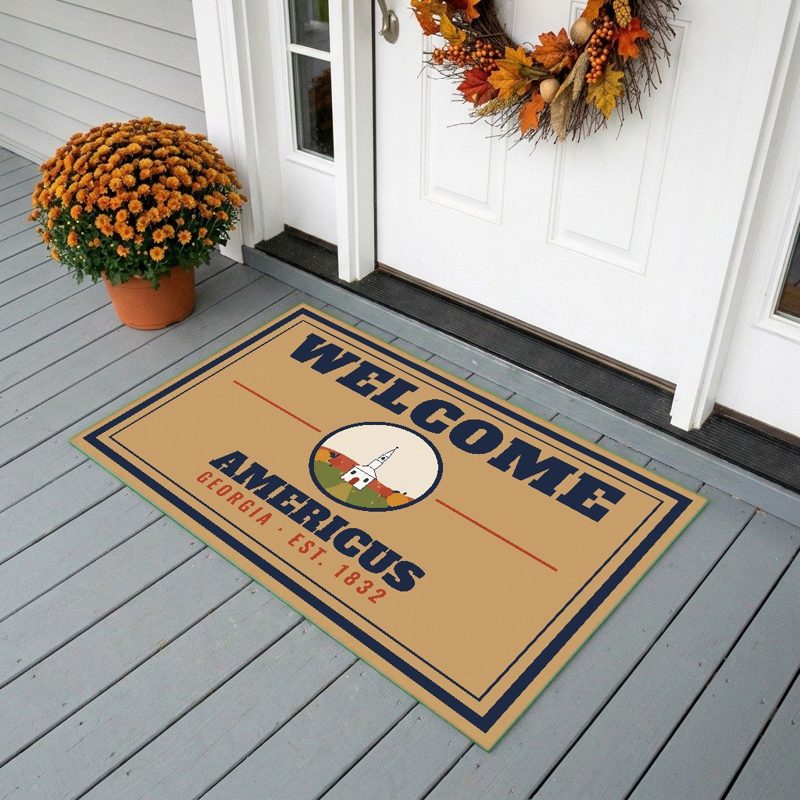
Americus Welcome Doormat

Americus Welcome Doormat

24″×16″, printed coir-look fibers, rubber back

$66
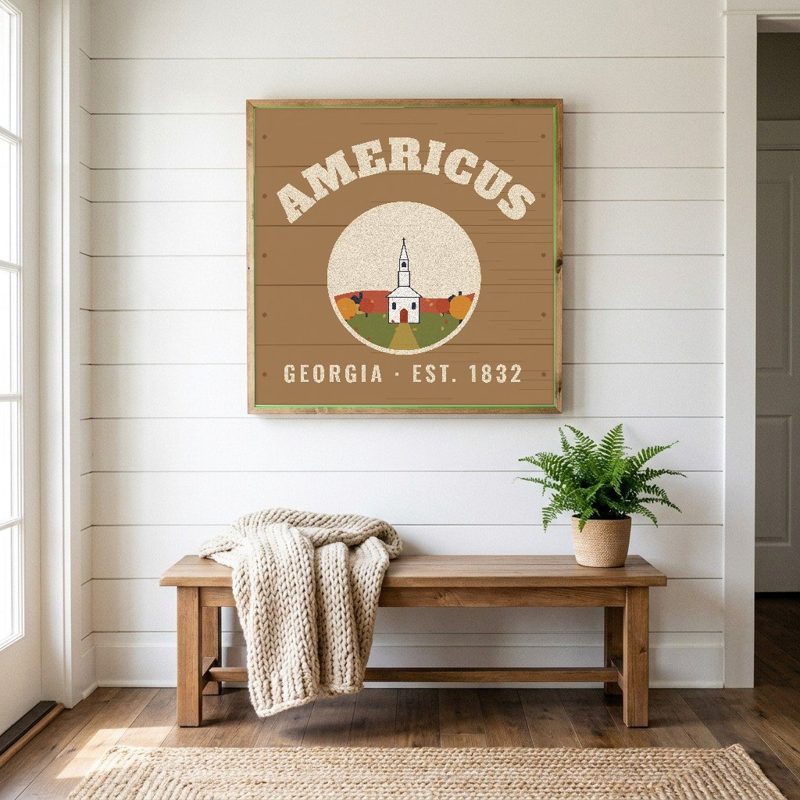
Americus Hometown Wood Sign

Americus Hometown Wood Sign

12″×12″ printed wood, ready to hang

$48
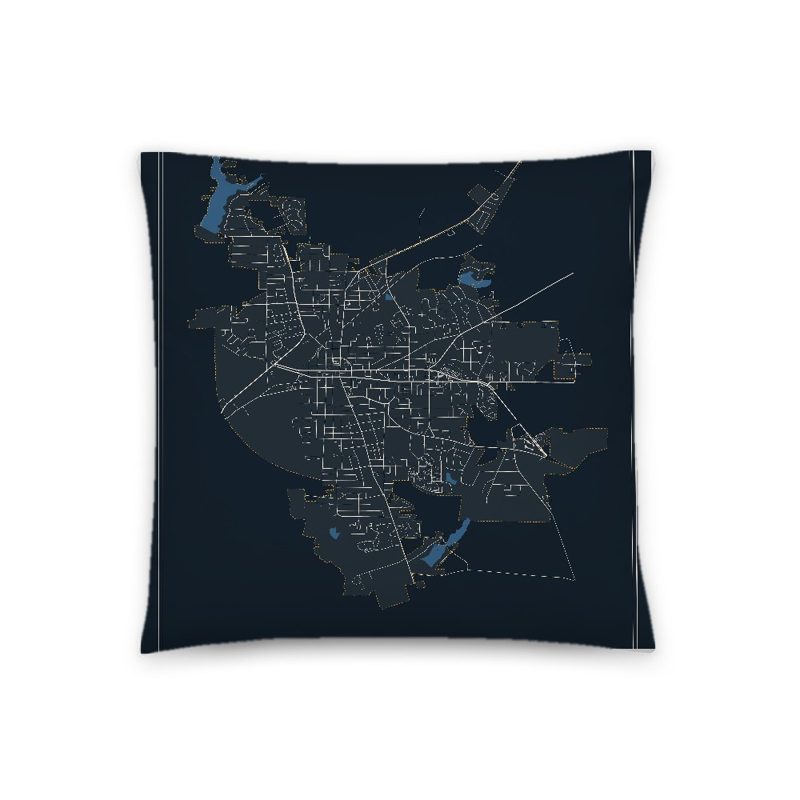
Americus Map Throw Pillow

Americus Map Throw Pillow

Soft-touch, zip cover

$47
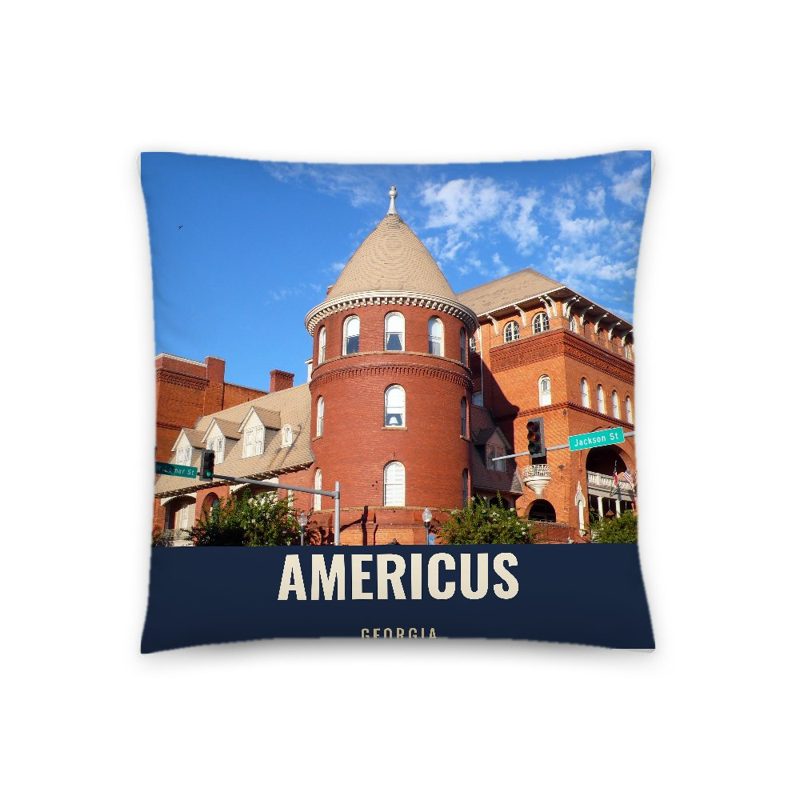
Americus Landmark Photo Pillow

Americus Landmark Photo Pillow

A local landmark photo with the town name, 18″×18″

$49
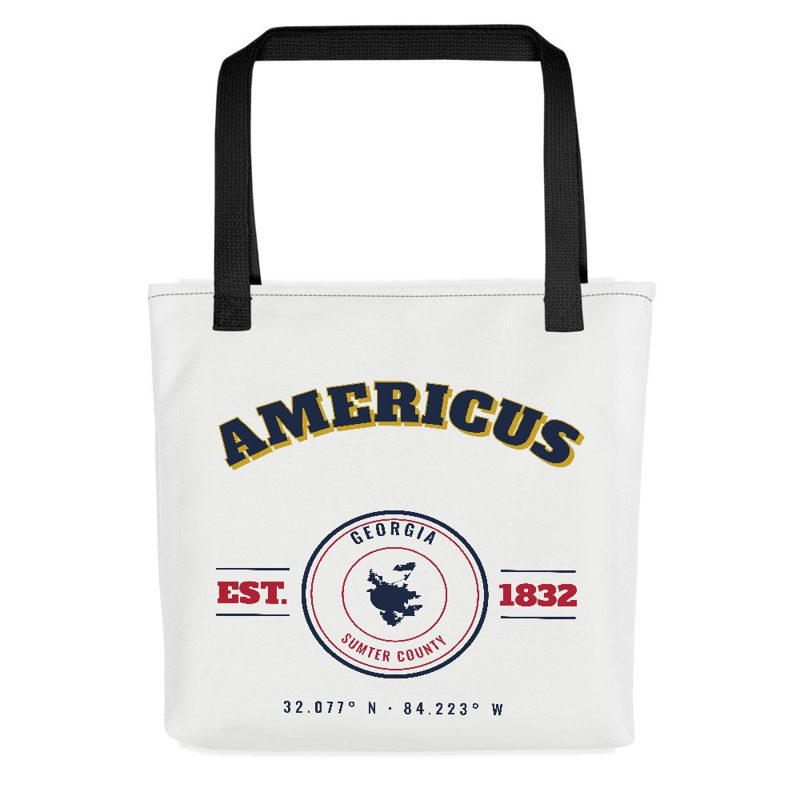
Americus Market Tote

Americus Market Tote

Sturdy all-over-print tote

$37
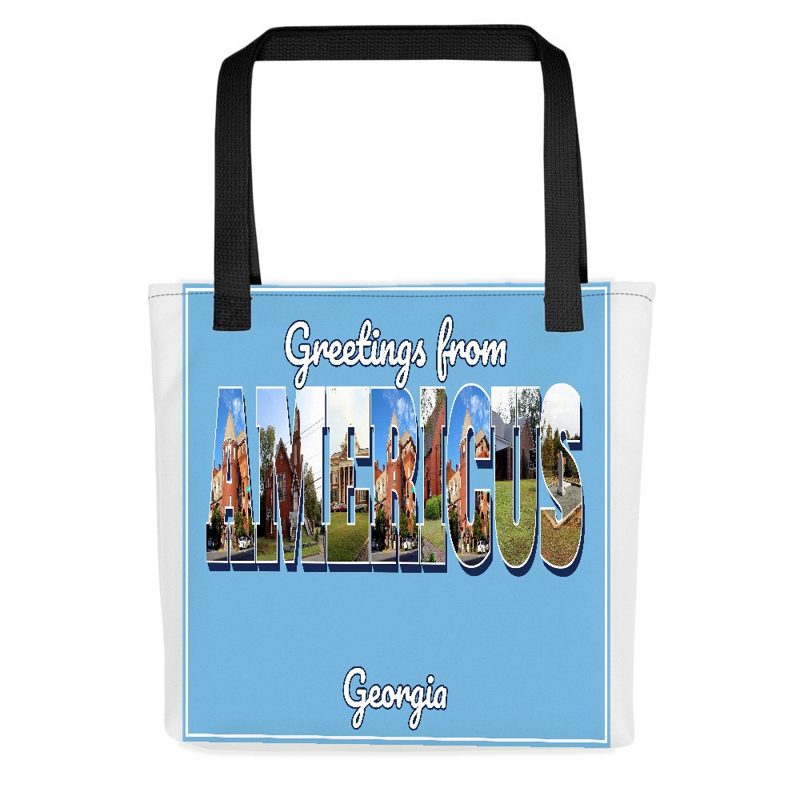
Americus “Greetings From” Tote

Americus “Greetings From” Tote

Large-letter postcard art on a sturdy tote

$37
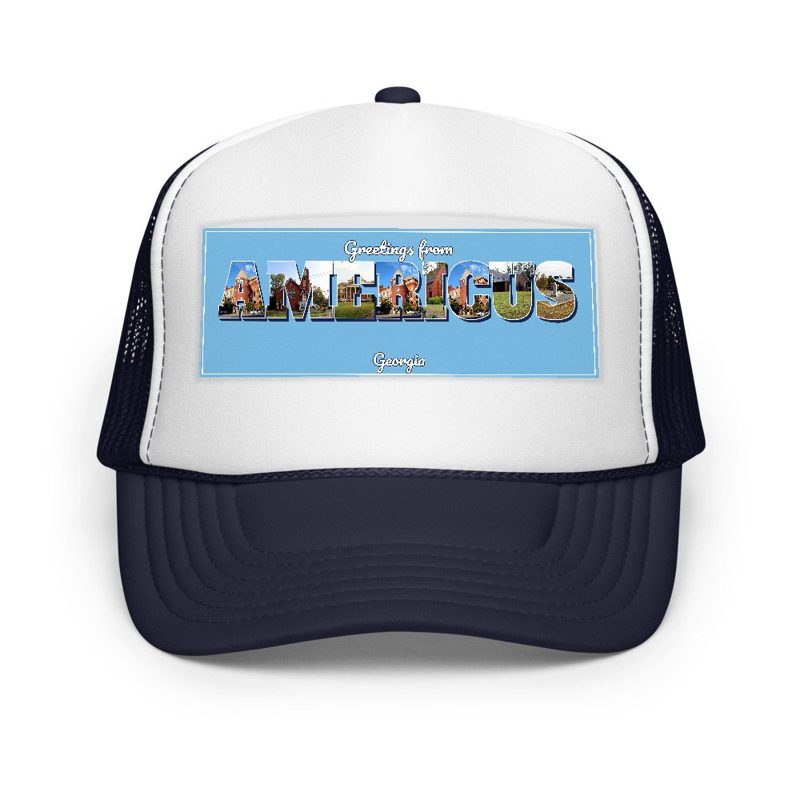
Americus “Greetings From” Trucker Cap

Americus “Greetings From” Trucker Cap

Foam-front trucker, printed (not embroidered) with local photos

$33
Americus Cork Coaster

Americus Cork Coaster

Glossy top, cork back

$16
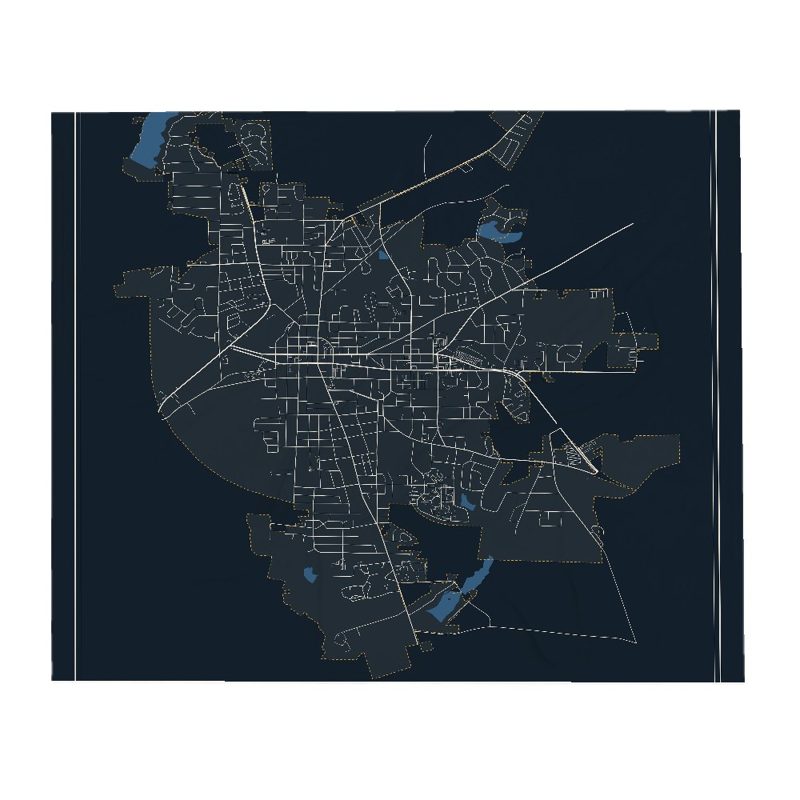
Americus Street Map Throw Blanket

Americus Street Map Throw Blanket

Soft fleece, 50″×60″

from $72
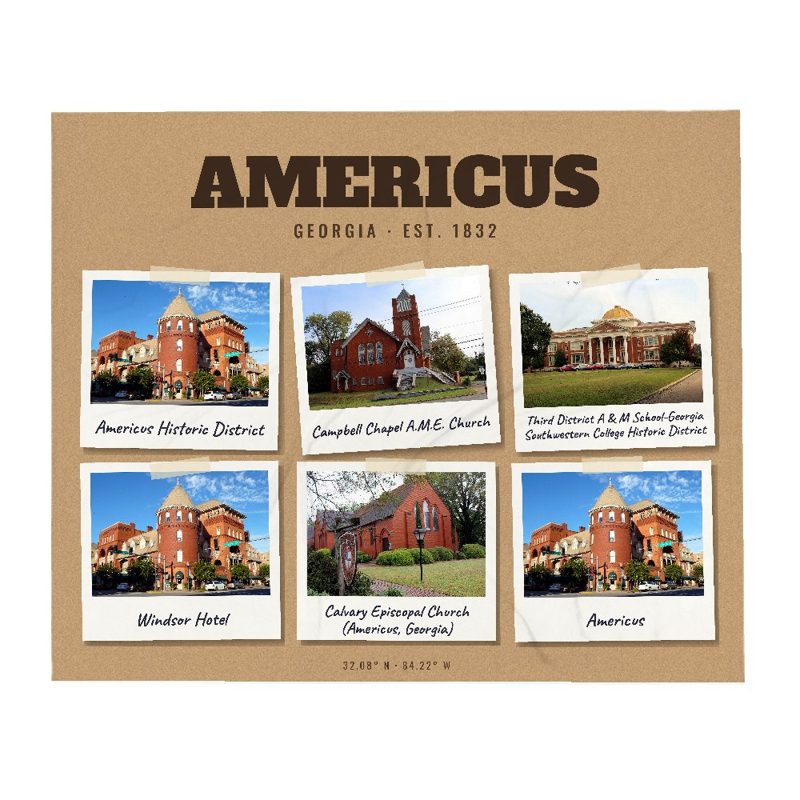
Americus Snapshot Collage Blanket

Americus Snapshot Collage Blanket

Six local landmarks as instant photos, soft fleece 50″×60″

from $76
Americus Est. Tumbler

Americus Est. Tumbler

20 oz, double-wall stainless

$51
Americus Windsor Hotel Postcard

Americus Windsor Hotel Postcard

6″×4″ postcard, glossy front

$10
Americus Americus Historic District Postcard

Americus Americus Historic District Postcard

6″×4″ postcard, glossy front

$10
Americus Calvary Episcopal Church (Americus, Georgia) Postcard

Americus Calvary Episcopal Church (Americus, Georgia) Postcard

6″×4″ postcard, glossy front

$10
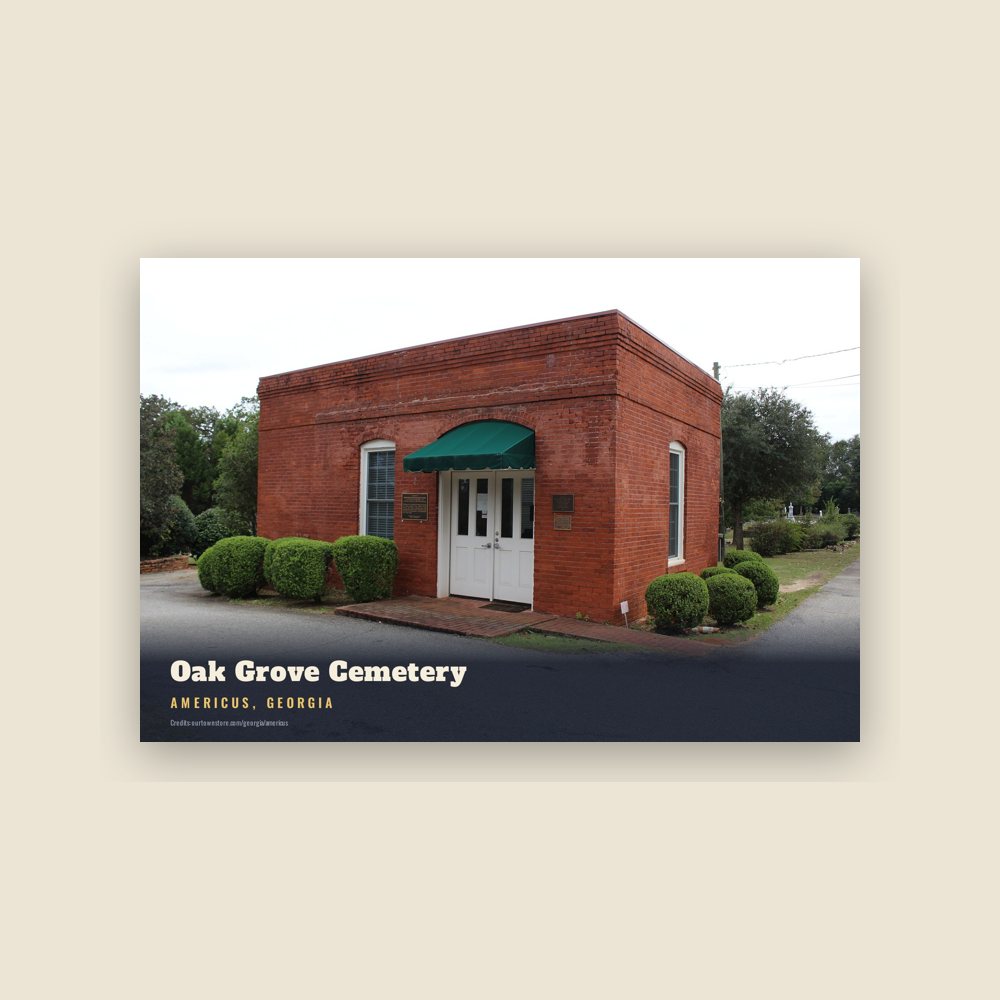
Americus Oak Grove Cemetery Postcard

Americus Oak Grove Cemetery Postcard

6″×4″ postcard, glossy front

$10
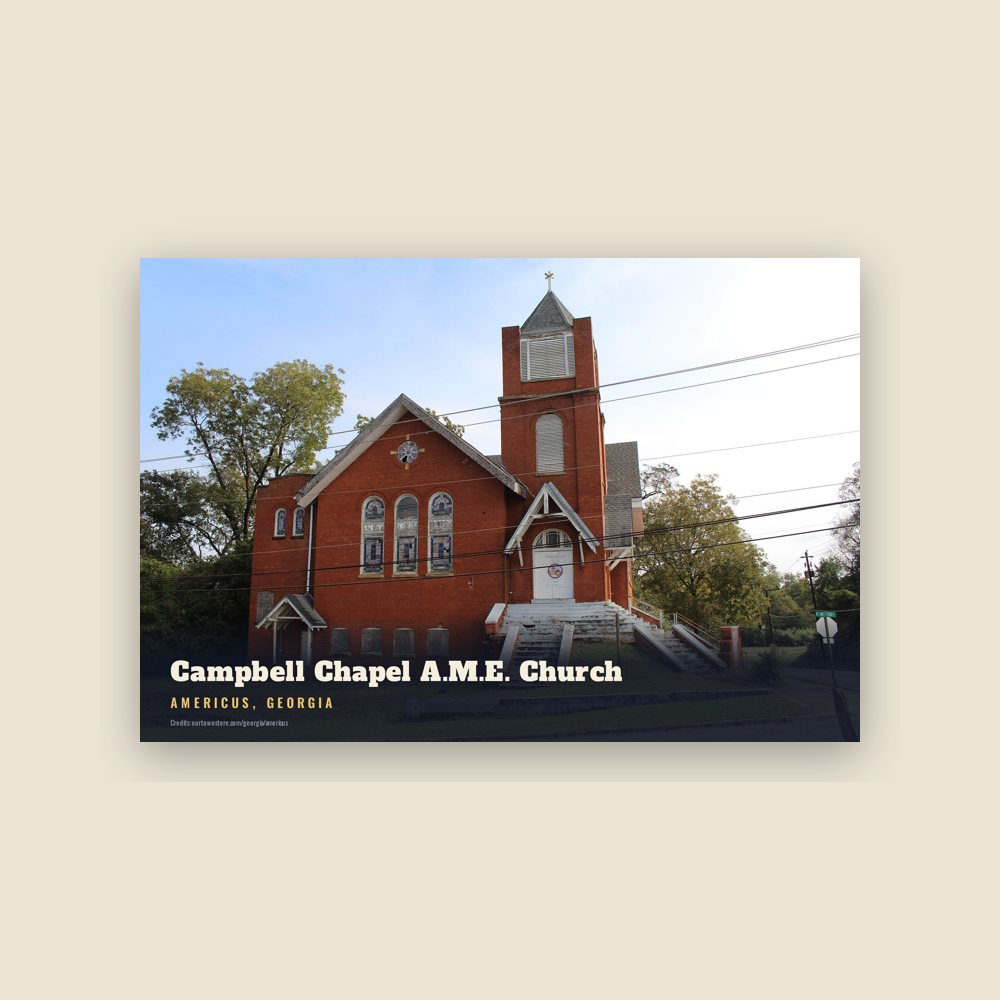
Americus Campbell Chapel A.M.E. Church Postcard

Americus Campbell Chapel A.M.E. Church Postcard

6″×4″ postcard, glossy front

$10
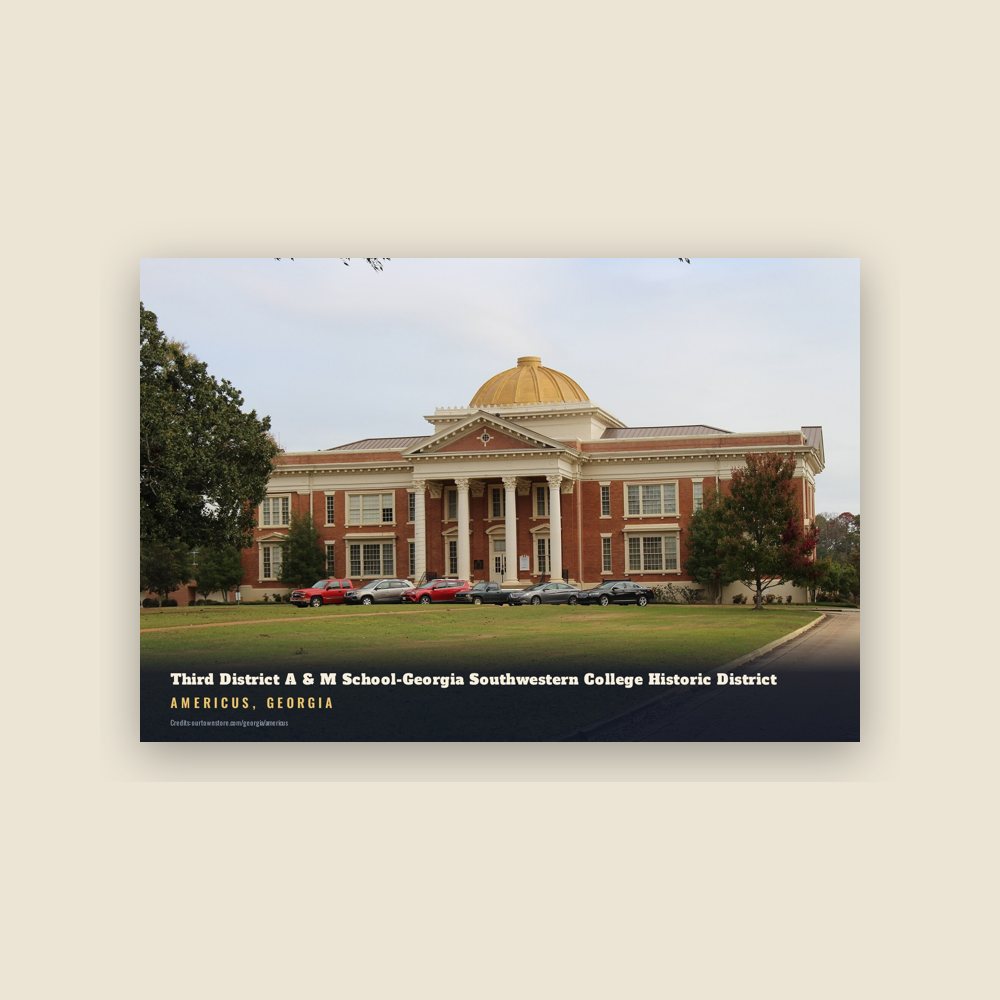
Americus Third District A & M School-Georgia Southwestern College Historic District Postcard

Americus Third District A & M School-Georgia Southwestern College Historic District Postcard

6″×4″ postcard, glossy front

$10
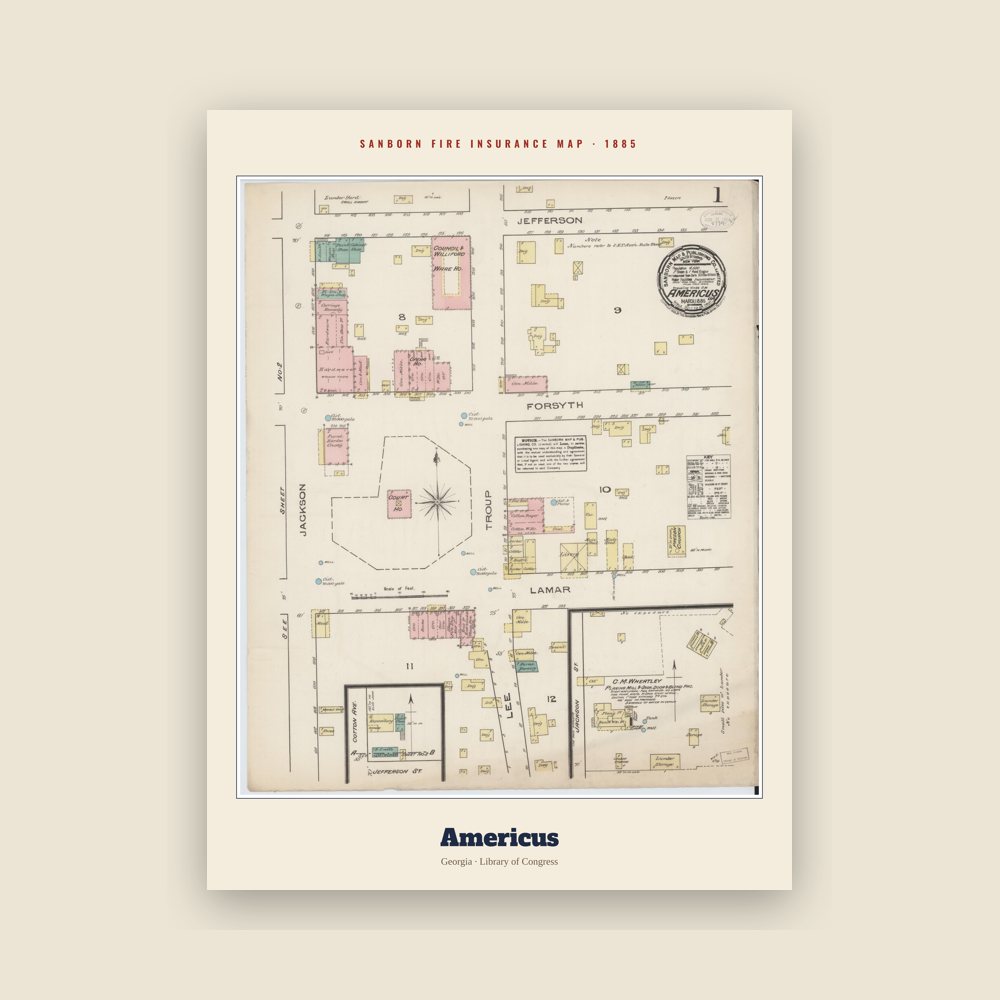
Americus Sanborn Map Print

Americus Sanborn Map Print

The town's earliest Sanborn fire-insurance map, drawn building by building and hand-coloured, from the Library of Congress

from $44
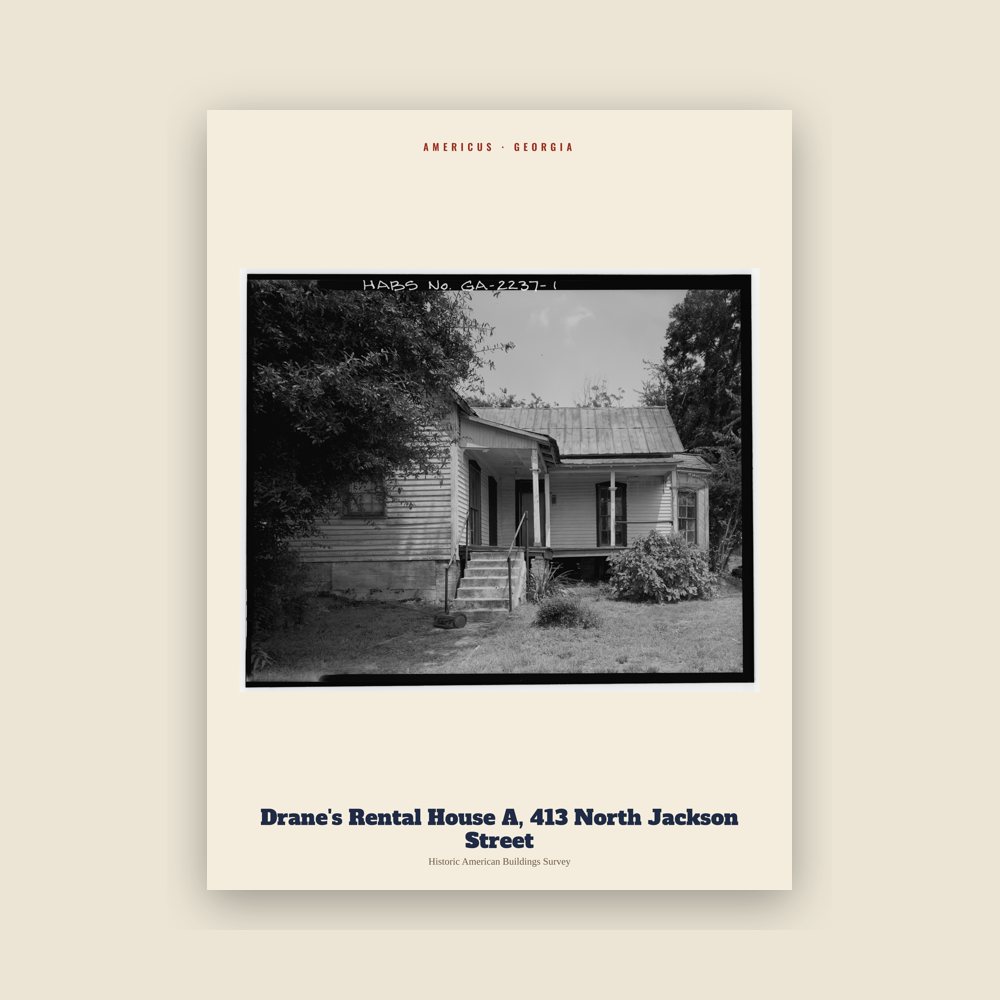
Americus Drane's Rental House A, 413 North Jackson Street Archive Print

Americus Drane's Rental House A, 413 North Jackson Street Archive Print

From the Library of Congress collections: a historic survey drawing or photograph of the town

from $44
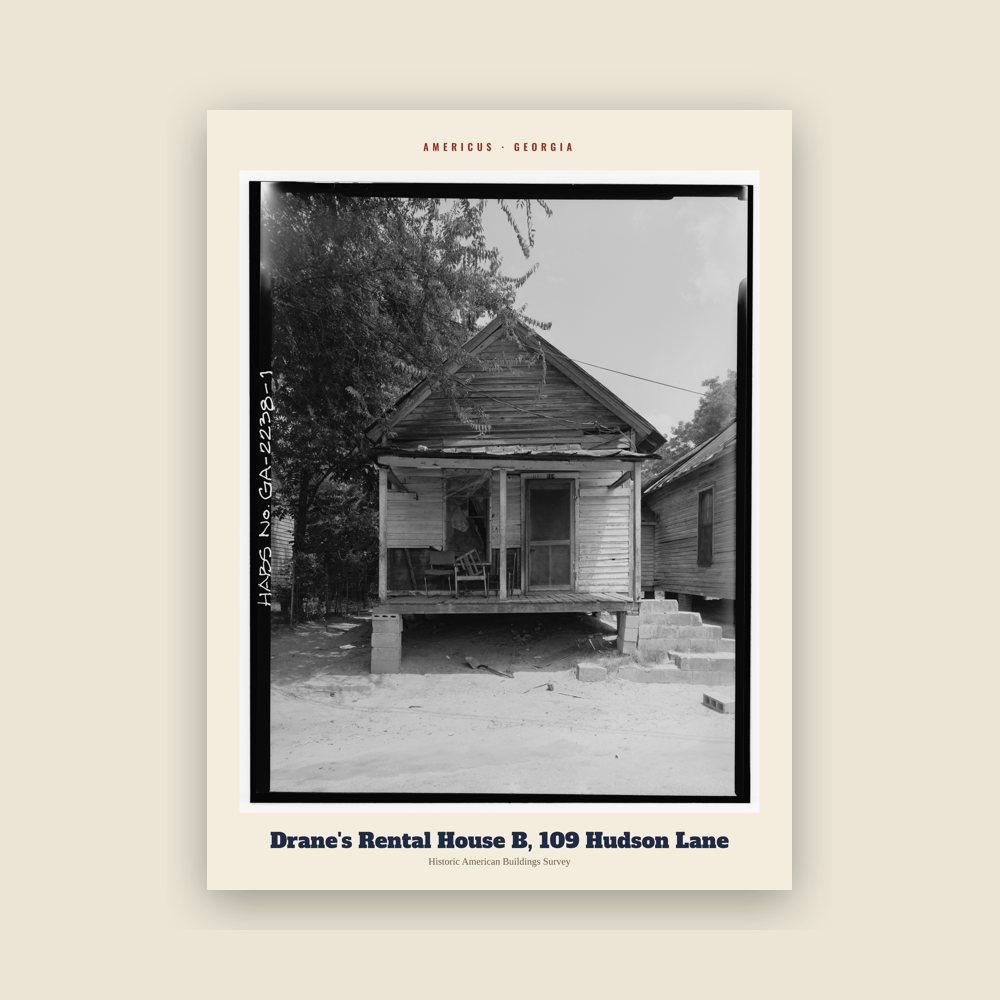
Americus Drane's Rental House B, 109 Hudson Lane Archive Print

Americus Drane's Rental House B, 109 Hudson Lane Archive Print

From the Library of Congress collections: a historic survey drawing or photograph of the town

from $44
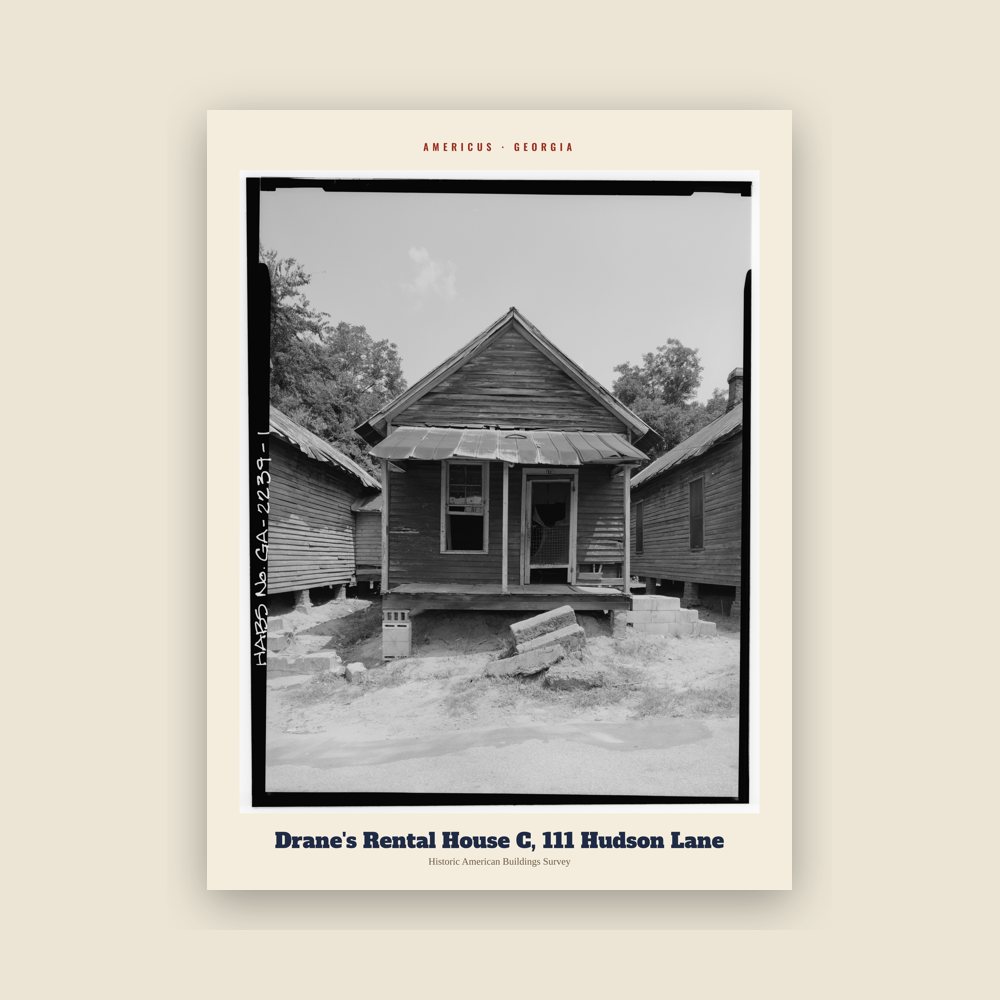
Americus Drane's Rental House C, 111 Hudson Lane Archive Print

Americus Drane's Rental House C, 111 Hudson Lane Archive Print

From the Library of Congress collections: a historic survey drawing or photograph of the town

from $44
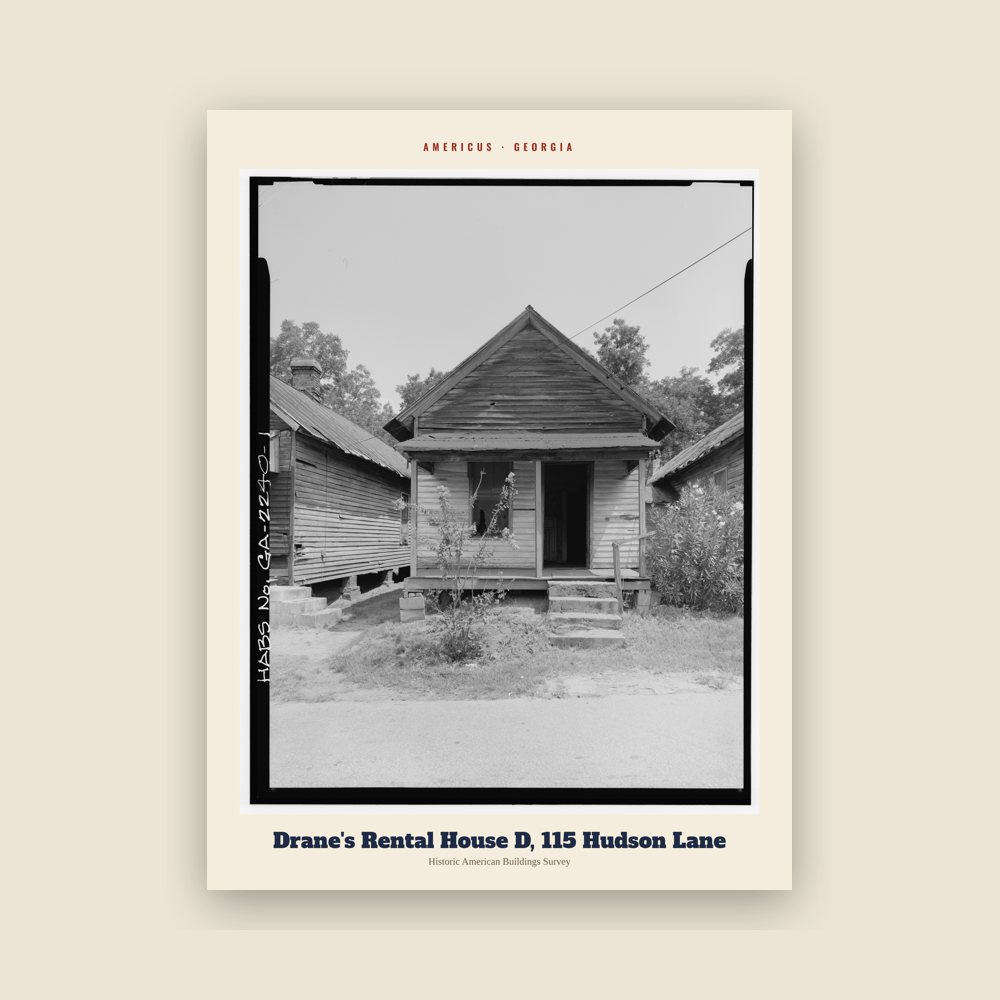
Americus Drane's Rental House D, 115 Hudson Lane Archive Print

Americus Drane's Rental House D, 115 Hudson Lane Archive Print

From the Library of Congress collections: a historic survey drawing or photograph of the town

from $44
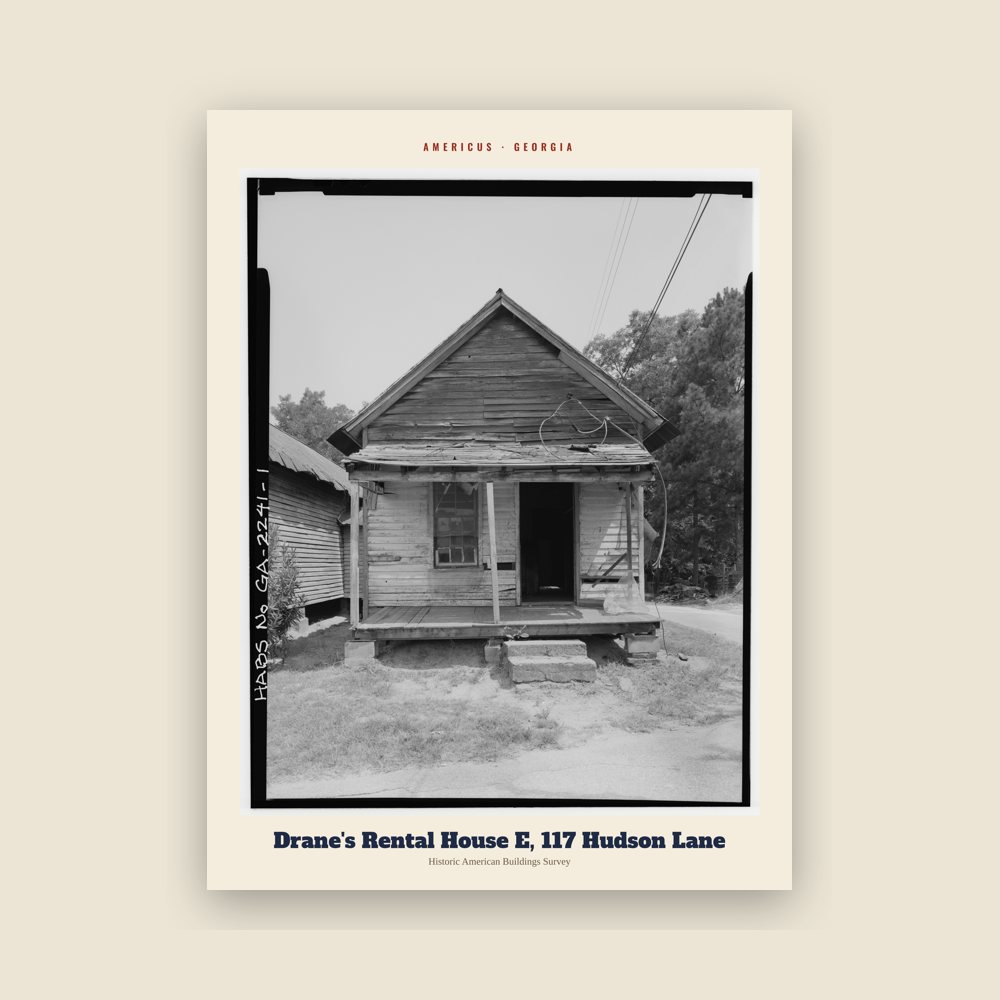
Americus Drane's Rental House E, 117 Hudson Lane Archive Print

Americus Drane's Rental House E, 117 Hudson Lane Archive Print

From the Library of Congress collections: a historic survey drawing or photograph of the town

from $44
Americus 413 Winn Street (House) Archive Print

Americus 413 Winn Street (House) Archive Print

From the Library of Congress collections: a historic survey drawing or photograph of the town

from $44
Hometown roll

Born in Americus

On the National Register

Historic places

Population 2010: 17,041 → 2020: 16,230

From Wikidata (CC0).

A short history of Americus

Early years

For its first two decades, Americus was a small courthouse town. The Starksville Road, now Lee Street, was an important highway before the city was founded, and is now the location of many of the older buildings and homes listed in the Americus Historic District. The arrival of the railroad in 1854 and, three decades later, local attorney Samuel H. Hawkins' construction of the only privately financed railroad in state history made Americus the eighth largest city in Georgia into the 20th century. It was known as the "Metropolis of Southwest Georgia", a reflection of its status as a cotton distribution center.

In 1890, Georgia's first chartered electric street car system went into operation in Americus. One of its restored cars is on permanent display at the Lake Blackshear Regional Library, a gift from the Robert T. Crabb family who acquired the street car in the 1940s.

The town was already graced with an abundance of antebellum and Victorian architecture when local capitalists opened the Windsor Hotel in 1892. A five-story Queen Anne edifice, it was designed by a Swedish architect, Gottfried L. Norrman, in Atlanta. U.S. Vice President Thomas R. Marshall gave a speech from the balcony in 1917, and soon-to-be New York Governor and future U.S. President Franklin D. Roosevelt spoke in the dining room in 1928.

On January 1, 1976, the city center was listed on the National Register of Historic Places as the Americus Historic District; and the district boundaries were extended in 1979.

Read the full history

Into the 20th century

For the local minority community, Rev. Dr. Major W. Reddick established the Americus Institute (1897–1932). Booker T. Washington was a guest speaker there in May 1908. Rev. Alfred S. Staley was responsible for locating the state Masonic Orphanage in Americus, which served its function from 1898 to 1940. Both men engineered the unification of the General Missionary Baptist Convention of Georgia in 1915, the former as president and the latter as recording secretary. The public school named in honor of A.S. Staley was designated a National School of Excellence in 1990.

Two other colleges were also established in Americus, the Third District Agricultural and Mechanical School in 1906 (now Georgia Southwestern State University), and the South Georgia Trade and Vocational School in 1948 (now South Georgia Technical College). South Georgia Technical College is located on the original site of Souther Field.

In World War I, an Army Air Service training facility, Souther Field (now Jimmy Carter Regional Airport), was commissioned northeast of the city limits. Charles A. Lindbergh, the "Lone Eagle", bought his first airplane and made his first solo flight there during a two-week stay in May 1923. Recommissioned for World War II, Souther Field was used for RAF pilot training (1941–1942) as well as US pilot training before ending the war as a German prisoner-of-war camp. The town was incorporated in 1832, and the name Americus was picked out of a hat.

Shoeless Joe Jackson served as the field manager for the local baseball team after his banishment from professional baseball. A plaque at Thomas Bell Stadium commemorates his contribution to the local baseball program.

Race relations and the civil rights movement

In 1913, a young black man named Will Redding was lynched by a white mob. Redding refused the Chief of Police's order to stop loitering, was arrested, a struggle ensued, and ultimately Redding grabbed the Chief's gun and shot him. He was then chased down, shot, and put in jail. An angry mob went into the jail and tore down the door to Redding's cell, dragged him out onto Forsyth street, and beat him to death with crow bars and hammers.

Koinonia Farm, an interracial Christian community, was organized near Americus in 1942 by Clarence Jordan. Its interracial nature occasioned much opposition from local residents. A terrorist campaign of violence, intimidation, vandalism, and harassment by the Ku Klux Klan and others went on for the next 25 years, as well a boycott of Koinonia's products, such that by the late 1960s the once-thriving community was practically depopulated and essentially defunct. In the late 1960s Millard and Linda Fuller, with Clarence Jordan, revived Koinonia Farm and it thrived again. Miller and Fuller founded Habitat for Humanity International at Koinonia in 1976 before moving it into Americus the following year. In 2005, they founded The Fuller Center for Housing, also in Americus. Koinonia Farm remains in operation and is currently located southwest of Americus on Highway 49.

The civil rights era in Americus was a time of great turmoil. An uptown store which had refused to honor the Koinonia boycott was bombed in 1957. The Student Nonviolent Coordinating Committee (SNCCC) organized the peaceful protests and a voter registration drive, the Americus Movement. Rev. Dr. Martin Luther King Jr. spent a weekend in the courthouse jail in 1961, after an arrest in Albany.

In 1963 occurred the Leesburg Stockade incident. A group of African-American girls aged 12 to 15 were arrested in Americus after trying to buy movie tickets at a theatre's whites-only window, as a form of civil protest. At least fourteen girls were taken to a filthy "hellhole", an isolated prison in Leesburg, Georgia where they were held incommunicado for at least 45 days, in appalling conditions, without right of correspondence or legal representation, and with their families not knowing where they had been or disappeared to. Some weeks later, the girls were surreptitiously photographed by Danny Lyon who had learned the girls' location. The publishing of Lyon's photograph in the black press eventually brought the situation to national attention, and the girls were released some weeks later without ever having been charged with any crime.

In the same year of 1963, the local Sumter Movement to end racial segregation was organized and led by Rev. Joseph R. Campbell. Four of its activists were arrested under Georgia's 1871 Anti-Treason Act. A federal court ruled the law unconstitutional, establishing that peaceful protests could not be punishable by execution. Color barriers were first removed in 1965 when J.W. Jones and Henry L. Williams joined the Americus police force. Lewis M. Lowe was elected as the first black city councilman ten years later. With their election in 1995, Eloise R. Paschal and Eddie Rhea Walker broke the gender barrier on the city's governing body. In 1968, the last segregated black school in Americus was closed, A. S. Staley High School.

In 1971, the city was featured in a Marshall Frady article, "One Another Town", in Life magazine. The portrayal of the city's school integration was relatively benign, especially considering the community's history of troubled race relations.
Adapted (trimmed) from the Wikipedia article Americus, Georgia, revision 1379304098 by its contributors, licensed CC BY-SA 4.0.

For local organizations

Are you with a Americus historical society?

We share a part of every Americus sale with local partners, and we'd love to print from your collection. Old photographs, maps and postcards make the best keepsakes.
Partner with us
Custom orders

Want something Americus we don't make yet?

A favorite landmark, your street, a school or team, an anniversary gift, a different product. Tell us and we'll get back to you by email.
Free printables

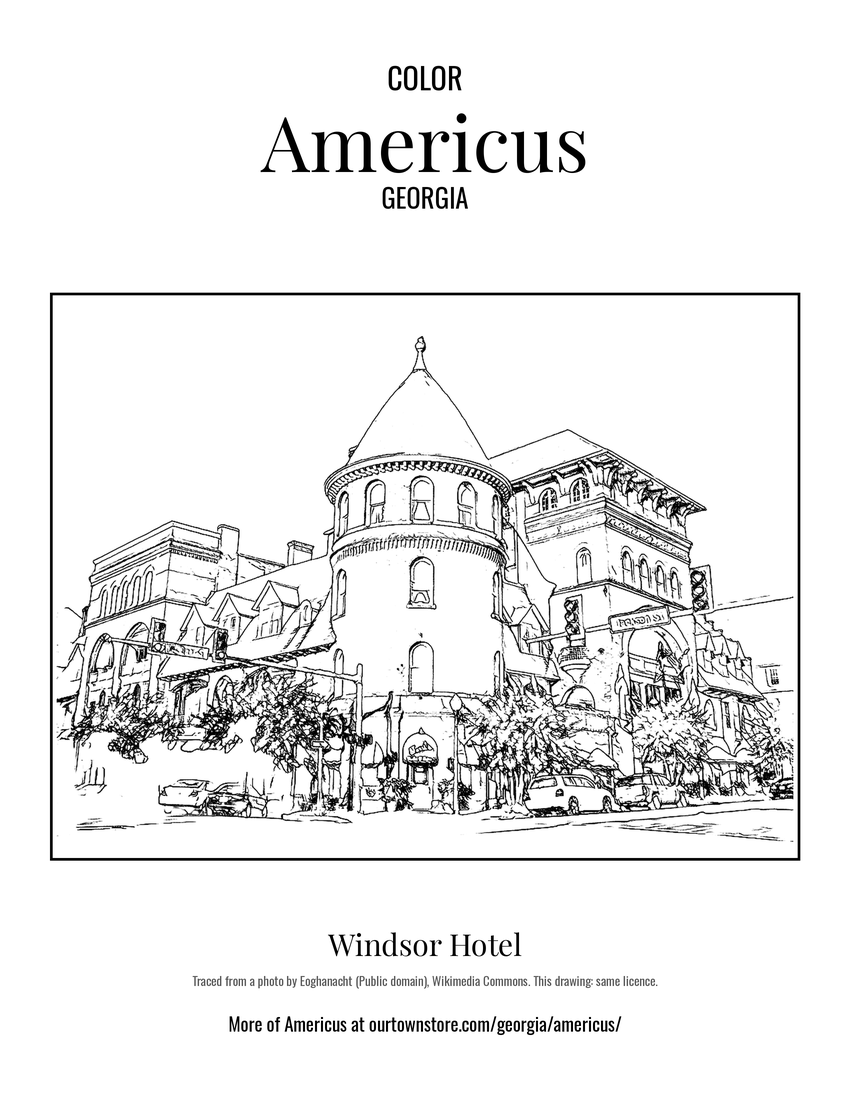
Color Americus

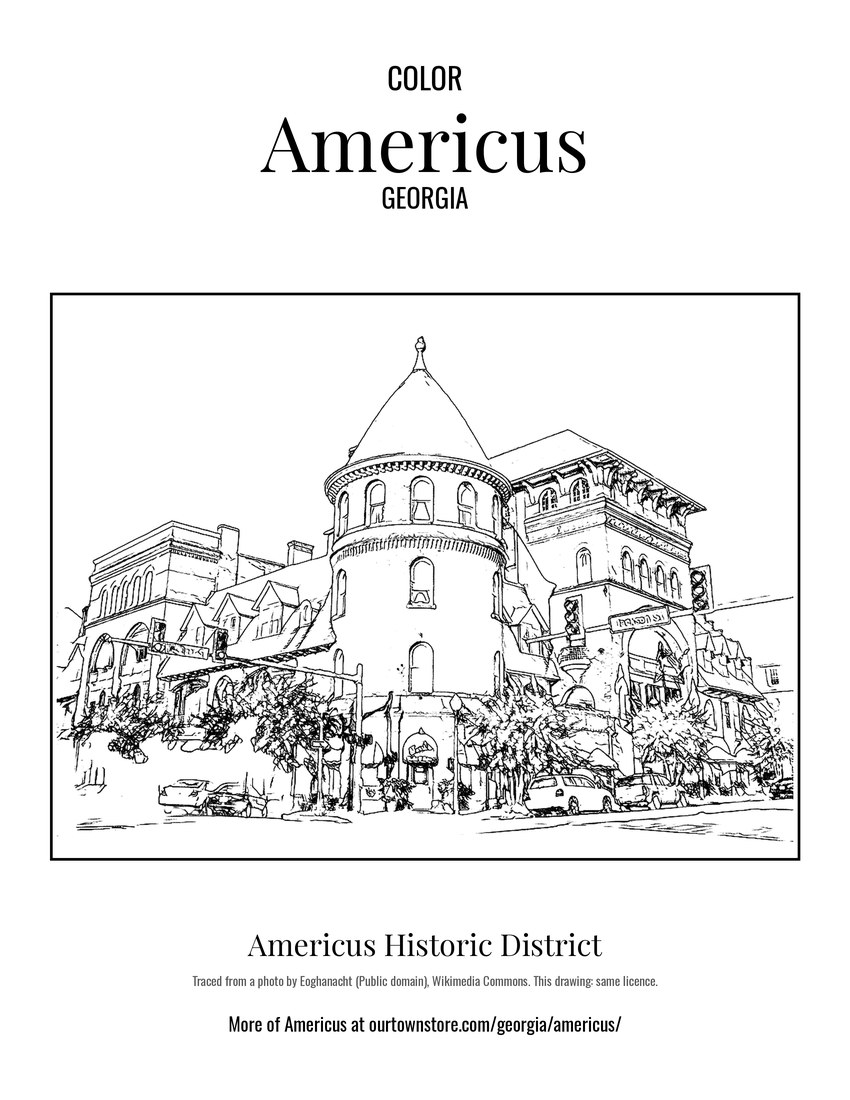
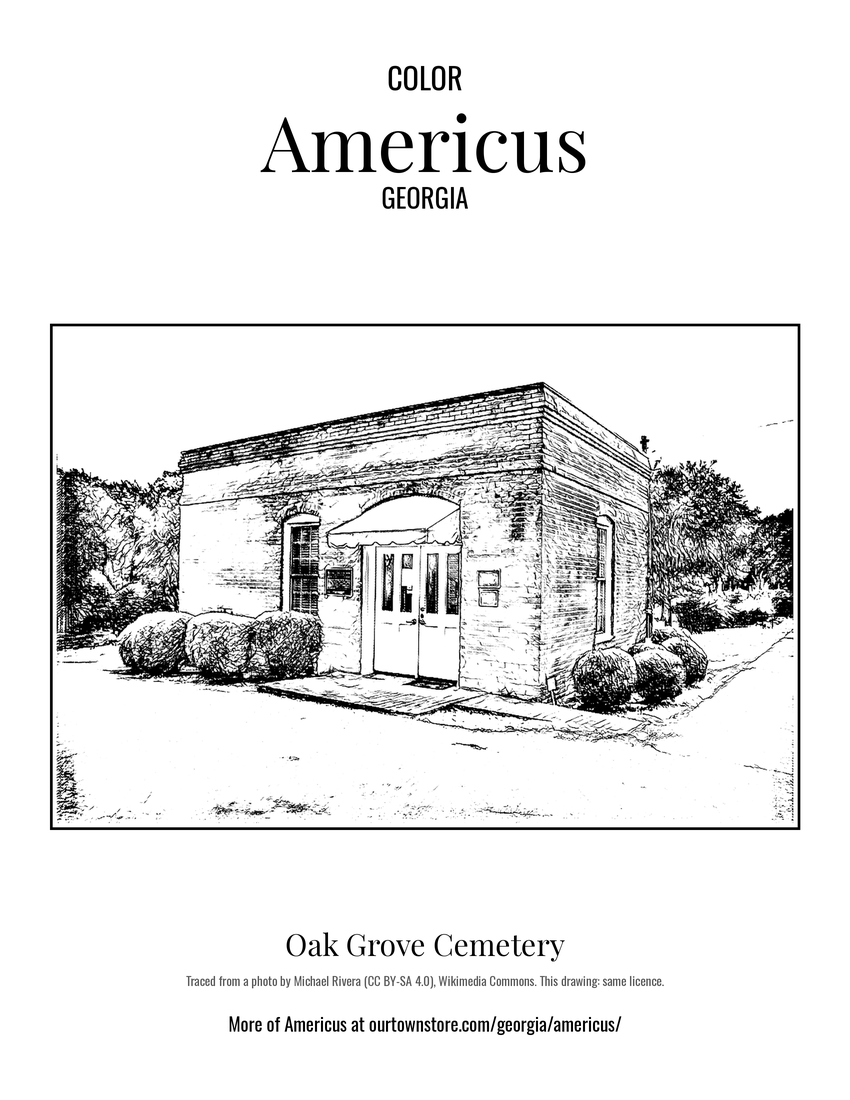
10 free coloring pages of Americus, each traced from a photo of a local landmark. Print them at home, at school or for story hour.

Nearby

Neighboring towns

Sources

Americus's population was 16,230 in the 2020 U.S. Census, down from 17,041 in 2010.