Since 1834
A short history of Micanopy
A historical marker in the area notes that Spanish explorer Hernando de Soto recorded finding a village of the Timucua portion of the Potano tribe located near by in 1539. In 1774, the American naturalist William Bartram recorded his impressions of a proto-Seminole village named "Cuscowilla" (sometimes spelled "Cuscawilla").
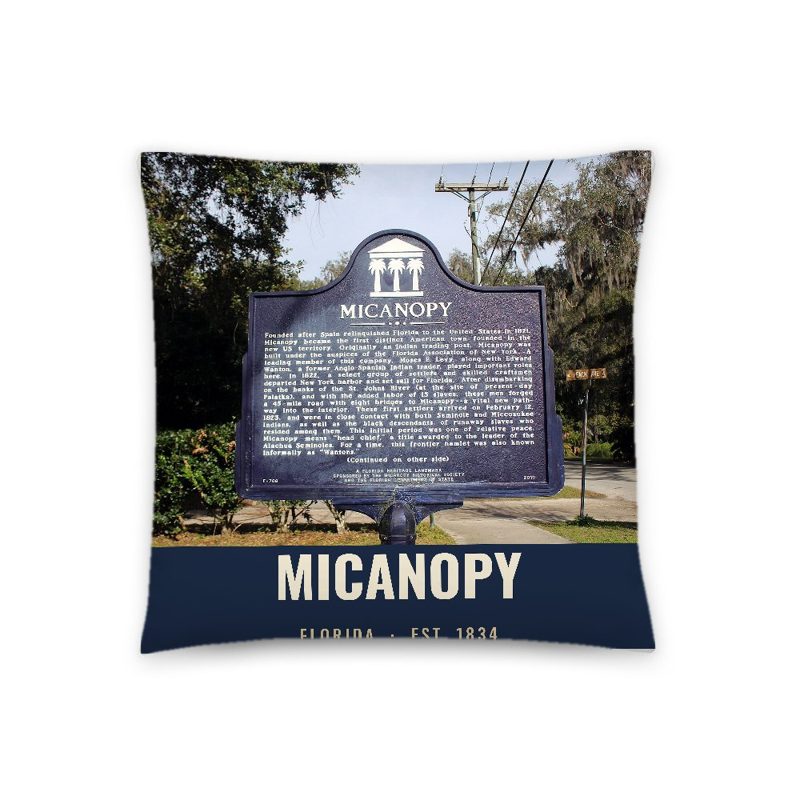
By the time Spain ceded Spanish Florida's provinces, (East Florida and West Florida,) to the U.S. in 1821, the newly constructed hamlet of Micanopy became the first distinct United States town in the Florida Territory. One of the early settlers of the area was Moses Elias Levy, a wealthy Jewish businessman and philanthropist who was involved in West Indies shipping and other interests. He immigrated to the United States in 1820 and founded "Pilgrimage", the first Jewish communal settlement in the United States located two miles from town.
The Micanopy community was built under the auspices of the Florida Association of New York (the earliest Florida development corporation, headquartered in Manhattan). Chief Micanopy lived about 60 miles (97 km) south in present-day Sumter County. In 1821, when the territorial village was developed, a faction of Miccosukee Indians lived in the immediate area. In the early days, the frontier village was referred to as "Wantons" (sometime spelled "Wanton's" or called "Wanton"), after one of the original settlers. The historian C. S. Monaco has suggested that the town was named after Micanopy "to appease the chief and acknowledge his original authority over the land." And in 1834, the community was renamed "Micanopy".
Both Fort Defiance (1835–1836) and Fort Micanopy (1837–1843) were located here during the Second Seminole War. Some of the bloodiest battles of that war took place along the road southwest from Fort Micanopy to Fort Wacahoota, just inside modern Alachua County. A recent archaeological study has verified both forts as well as the location of two battlefields within the town limits: the Battle of Micanopy and the Battle of Welika Pond (1836).
The Town of Micanopy was officially incorporated as a municipality in 1837, when Florida was still an American territory. When Florida became an American state, the town was reincorporated on September 15, 1858.
Prior to the 1880s, produce from Micanopy, including citrus, was carried to the southern shore of Lake Alachua and taken by boat to the northern shore, which was served by branch lines from the Transit Railroad. In 1883, the Florida Southern Railway built a branch line to Micanopy from its line running from Rochelle (southeast of Gainesville) to Ocala. In 1895, a rail line was laid from Micanopy by the Gainesville and Gulf Railroad, and by 1889, reached to Irvine and Fairfield in Marion County, and Sampson City in Bradford County, where it connected to the Atlantic, Suwannee River and Gulf Railway and the Georgia Southern and Florida Railroad. The railroads spurred farming in the surrounding area. It had a population of over 600 in 1880. In the 1920s, cars crossed Paynes Prairie on the Micanopy Causeway.
Adapted (trimmed) from the Wikipedia article Micanopy, Florida, revision 1379439760 by its contributors, licensed CC BY-SA 4.0.
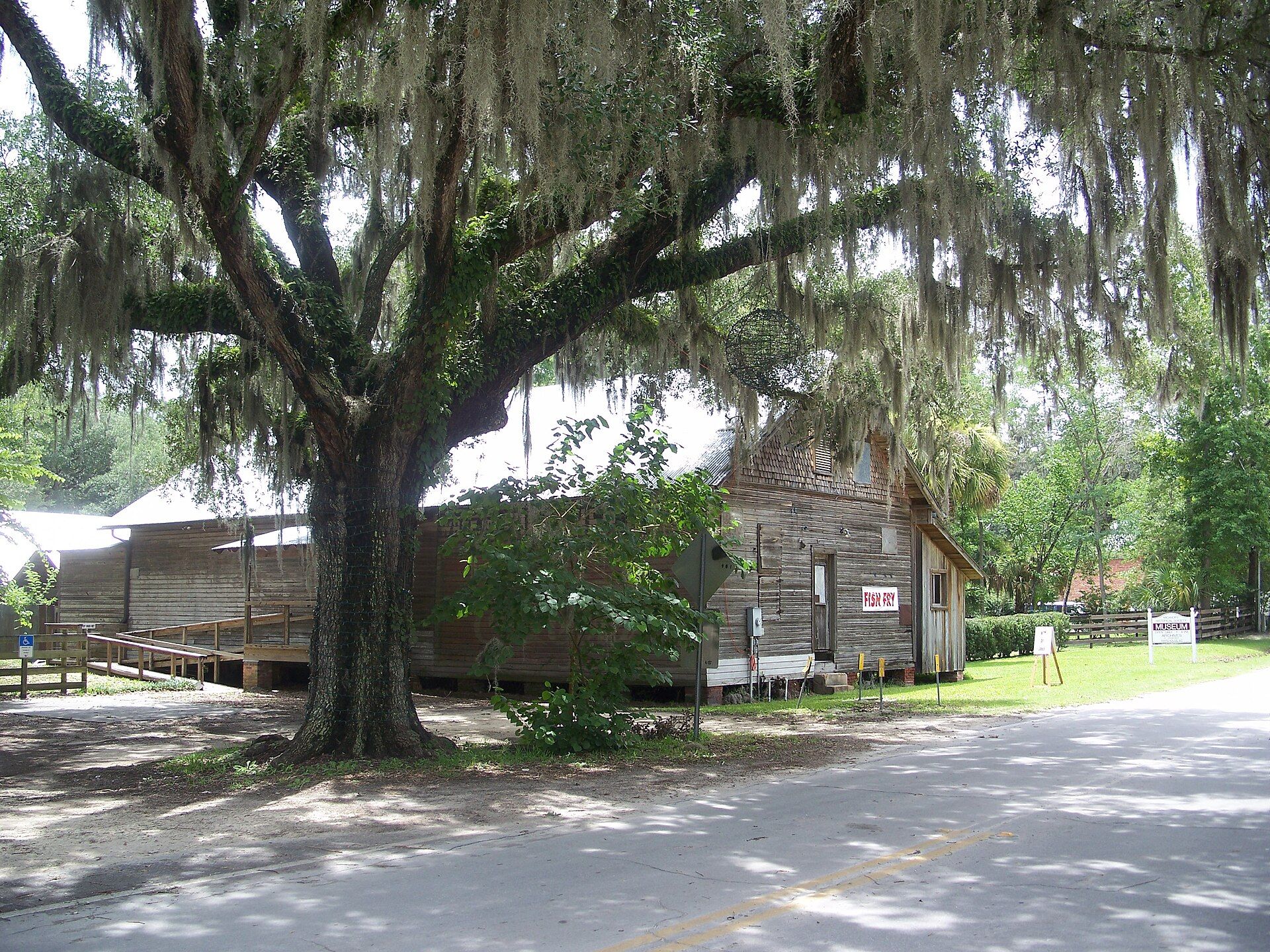
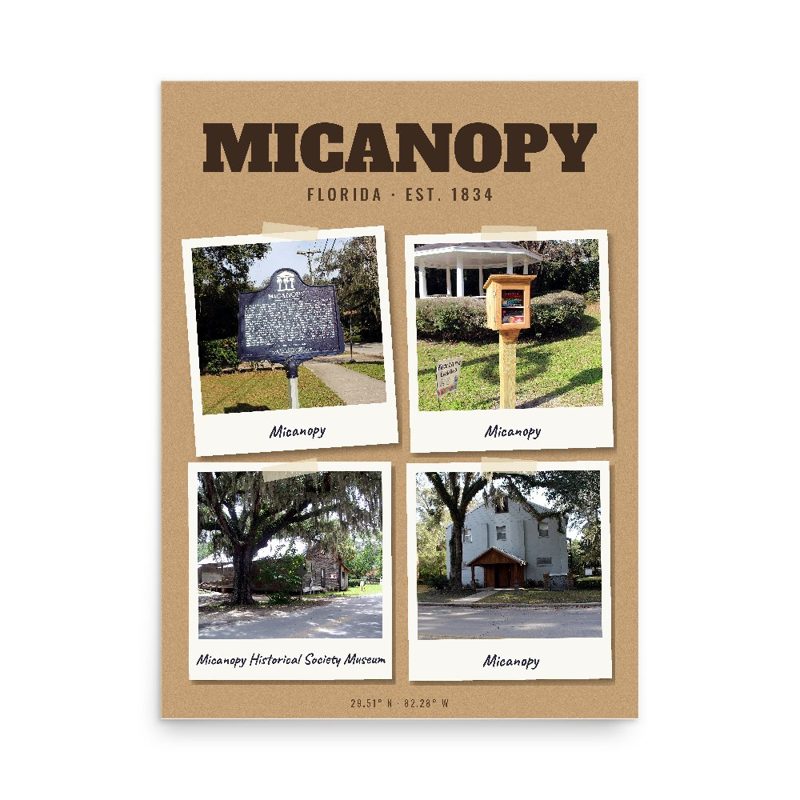









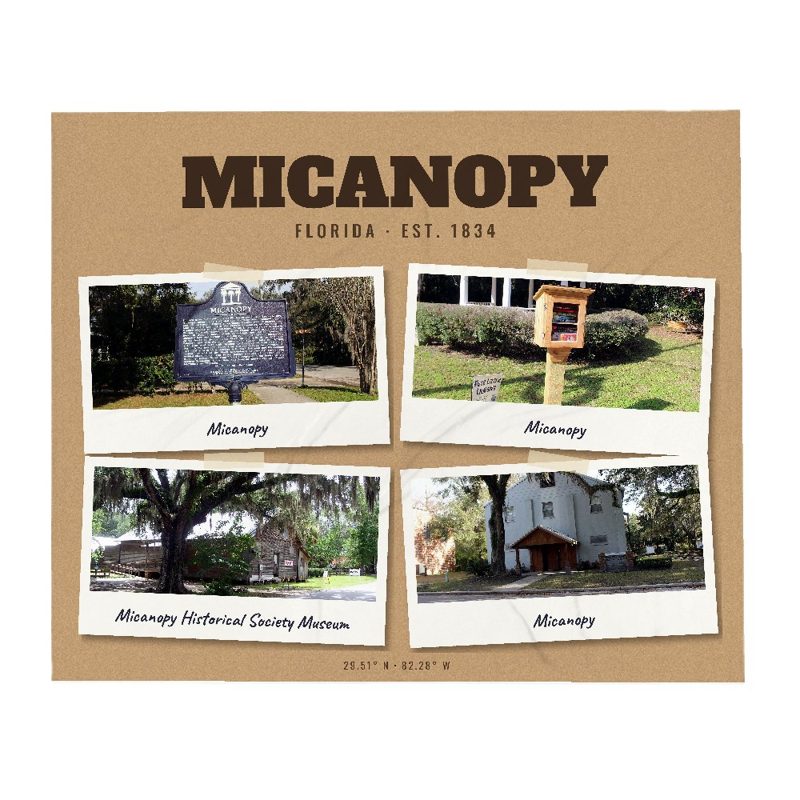

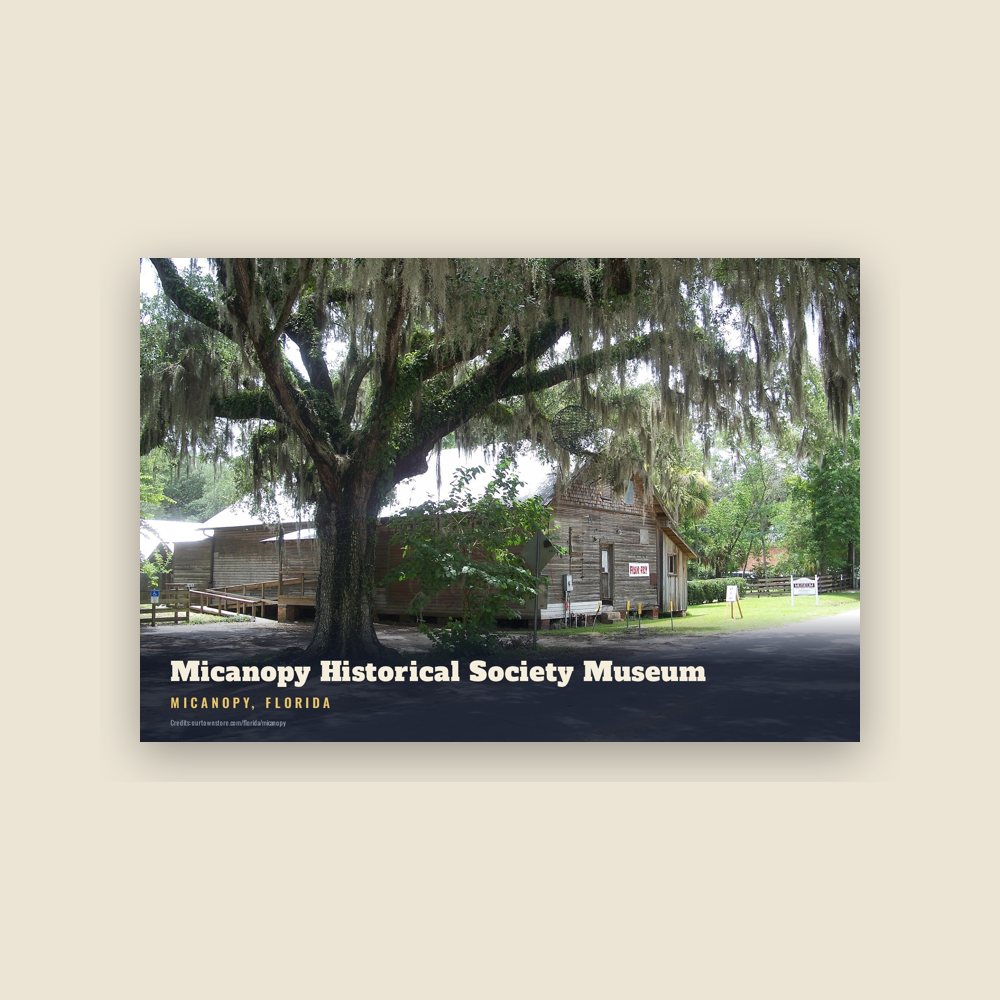
 Micanopy Historical Society Museum
 A view of Micanopy
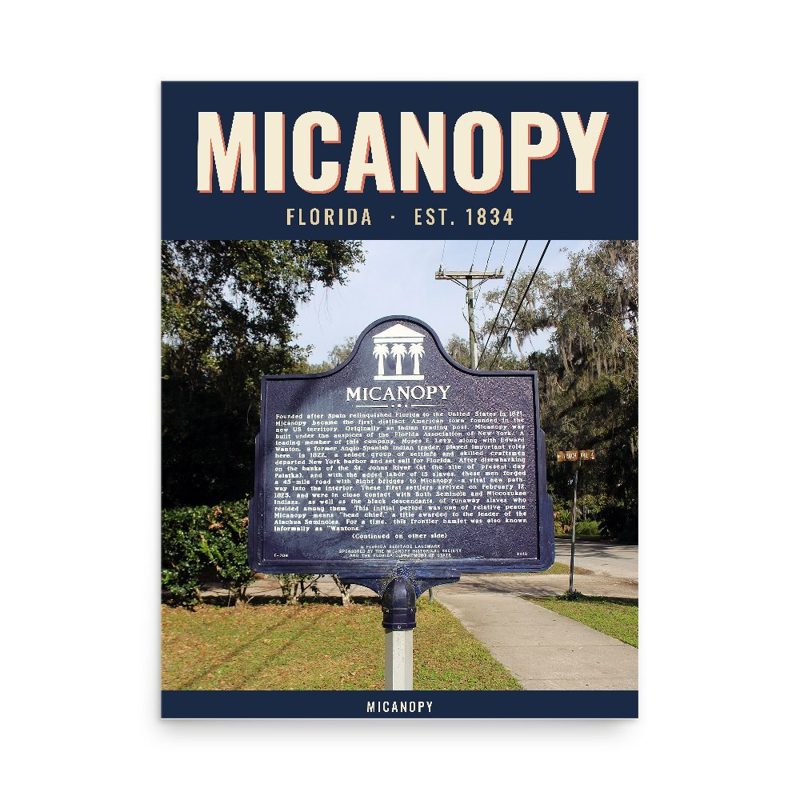
 A view of Micanopy
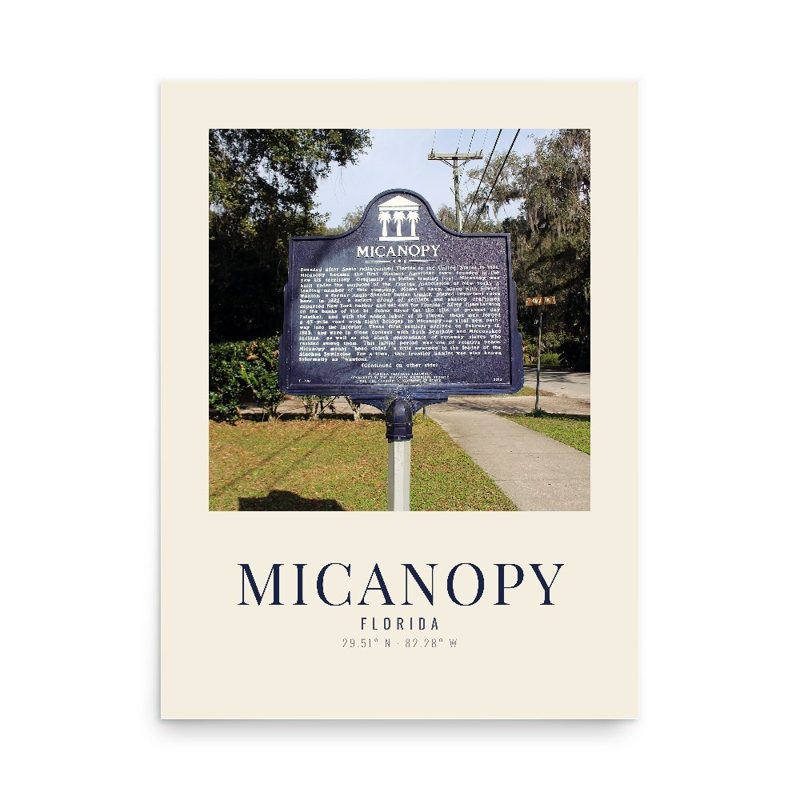
 A view of Micanopy