Evidence for the presence of Paleo-Indians in the Melbourne area during the late Pleistocene epoch was uncovered during the 1920s. C. P. Singleton, a Harvard University zoologist, discovered the bones of a mammoth (Mammuthus columbi) on his property along Crane Creek, 1.5 miles (2.4 km) from Melbourne, and brought in Amherst College paleontologist Frederick B. Loomis to excavate the skeleton. Loomis found a second elephant, with a "large, rough, flint instrument" among fragments of the elephant's ribs. Loomis found in the same stratum mammoth, mastodon, horse, ground sloth, tapir, peccary, camel, and sabertooth cat bones, all extinct in Florida since the end of the Pleistocene 10,000–8,000 BCE. At a nearby site, a human rib and charcoal were found in association with Mylodon, Megalonyx, and Chlamytherium (ground sloth) teeth. A finely worked spear point found with these items may have been displaced from a later stratum.
In 1925, attention shifted to the Melbourne golf course. A crushed human skull and finger, arm, and leg bones were found in association with a horse tooth. A piece of ivory that appeared to have been modified by humans was found at the bottom of the stratum containing bones. Other finds included a spear point near a mastodon bone and a turtle-back scraper and blade found with bear, camel, mastodon, horse, and tapir bones. Similar human remains, Pleistocene animals, and Paleo-Indian artifacts were found in Vero Beach, 30 miles (48 km) south of Melbourne, and similar Paleo-Indian artifacts were found at the Helen Blazes archaeological site, 10 miles (16 km) southwest of Melbourne.
Read the full history
Settlement
The first settlers, who arrived after 1877, included Richard W. Goode, his father John Goode, Cornthwaite John Hector, Captain Peter Wright, Balaam Allen, Wright Brothers, and Thomas Mason. Three of these men, Wright, Allen, and Brothers were black freedmen.
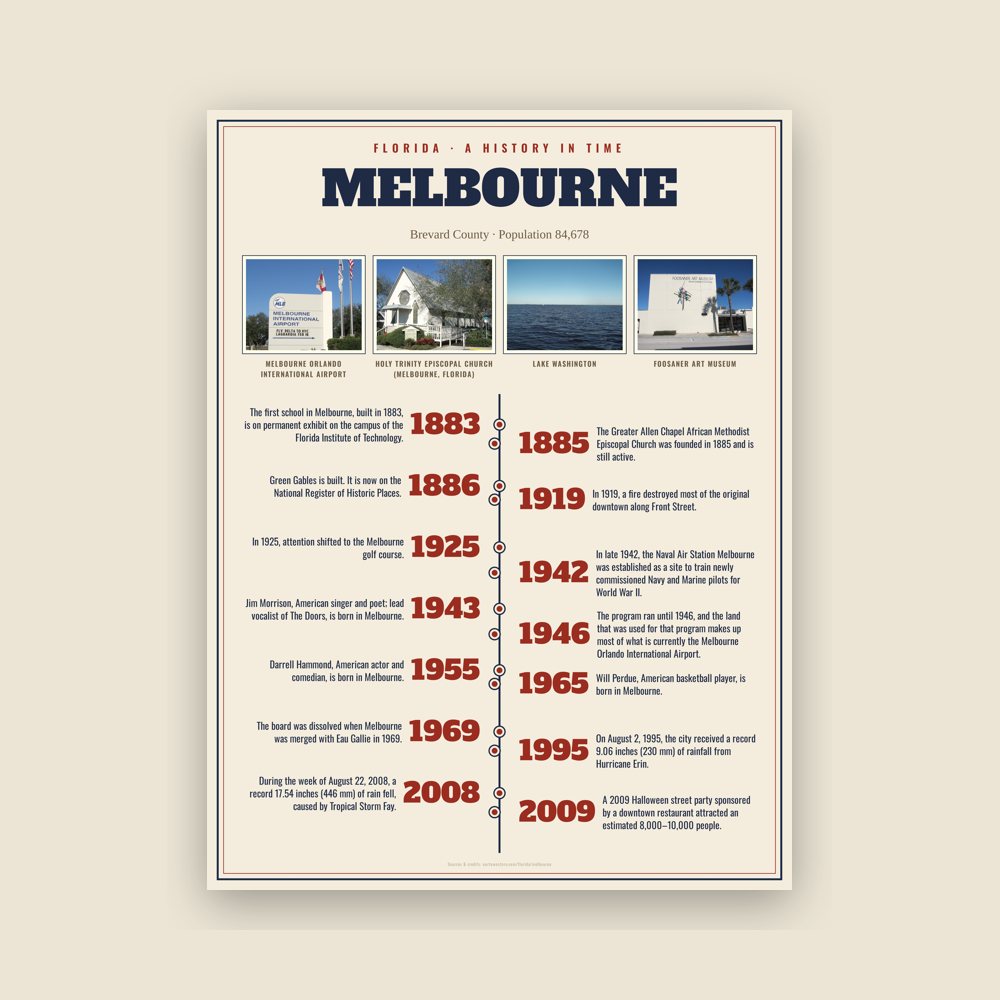
The city, formerly called "Crane Creek", was named Melbourne in honor of its first postmaster, Cornthwaite John Hector, an Englishman who had spent much of his life in Melbourne, Victoria, Australia (which, in turn, was named after British Prime Minister William Lamb, 2nd Viscount Melbourne). He is buried in the Melbourne Cemetery, along with many early residents in the area. The first school in Melbourne, built in 1883, is on permanent exhibit on the campus of the Florida Institute of Technology. By 1885, the town had 70 people. The Greater Allen Chapel African Methodist Episcopal Church was founded in 1885 and is still active.
In the late 1890s, the Brownlie-Maxwell Funeral Home opened, and it is still in business. The oldest Black-owned business in the county is Tucker's Cut-Rate Plumbing. It opened in 1934.
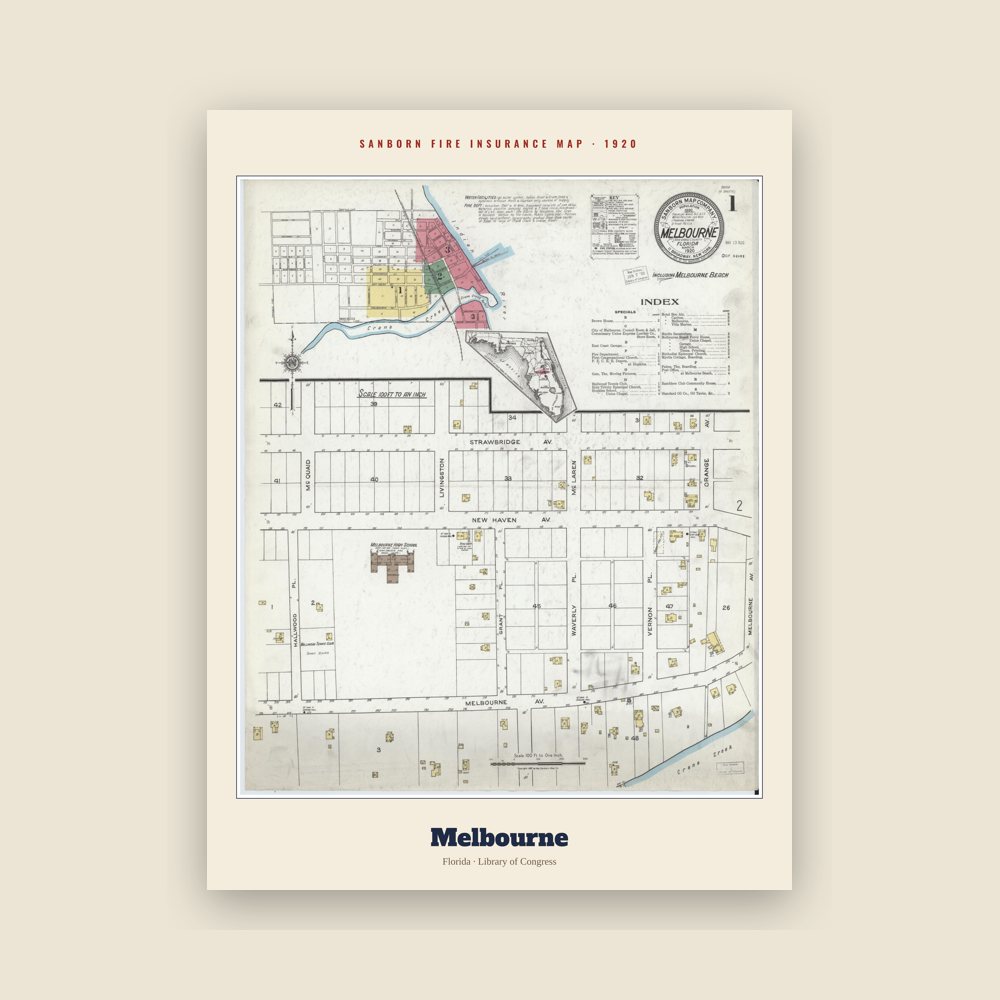
In the early 1900s, houses were often built in the frame vernacular style. In 1919, a fire destroyed most of the original downtown along Front Street. At the time, it was rebuilt west of U.S. Route 1.
During the Jim Crow years, Black people were required to enter movie theaters by a different entrance from Whites and sit in the balcony. Gas stations had signs for restrooms labeled "Men", "Women", and "Colored". This persisted until integration in the late 1960s.
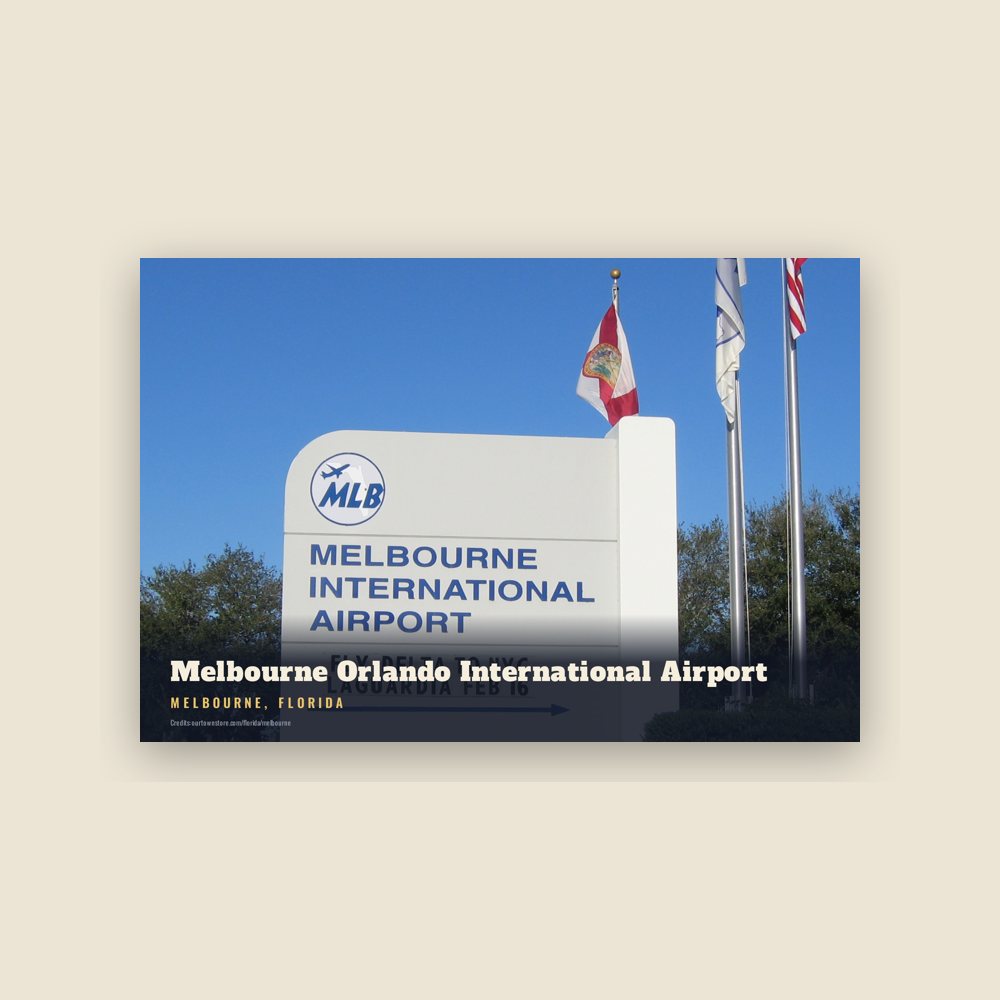
In late 1942, the Naval Air Station Melbourne was established as a site to train newly commissioned Navy and Marine pilots for World War II. The program ran until 1946, and the land that was used for that program makes up most of what is currently the Melbourne Orlando International Airport.
Postwar
In the 1950s, Babcock Street was extended north to intersect with US 1. The Melbourne Shopping Center was constructed on Babcock, the area's first strip mall. Consumers were sufficiently attracted to this new mall that the traditional downtown, off New Haven, suffered. Urban blight was successfully mitigated in the 1980s.
A board was created by the legislature to spend a 10% tax on electric bills. This was used by the Melbourne Civic Improvement Board to build the Melbourne Auditorium, the first library and fire station, and various parks. The board was dissolved when Melbourne was merged with Eau Gallie in 1969. That merger doubled the size of Melbourne.
Streetlights were gradually added until by the early 1960s, streets east of Babcock Street had lights. Lights were added to streets west of Babcock after the early 1960s.
In 1969, the city elected Julius Montgomery, its first Black councilman. Montgomery was also the first African American student of Brevard Engineering College, later Florida Institute of Technology, which named their Pioneer Award after him.
On August 2, 1995, the city received a record 9.06 inches (230 mm) of rainfall from Hurricane Erin. During the week of August 22, 2008, a record 17.54 inches (446 mm) of rain fell, caused by Tropical Storm Fay.
A 2009 Halloween street party sponsored by a downtown restaurant attracted an estimated 8,000–10,000 people. This overwhelmed the downtown area. Street parties were curtailed until public-safety issues were addressed.
On February 18, 2017, president Donald Trump held his first postinauguration rally at the Orlando-Melbourne International Airport, drawing a crowd around 9,000 people according to the Melbourne police department.
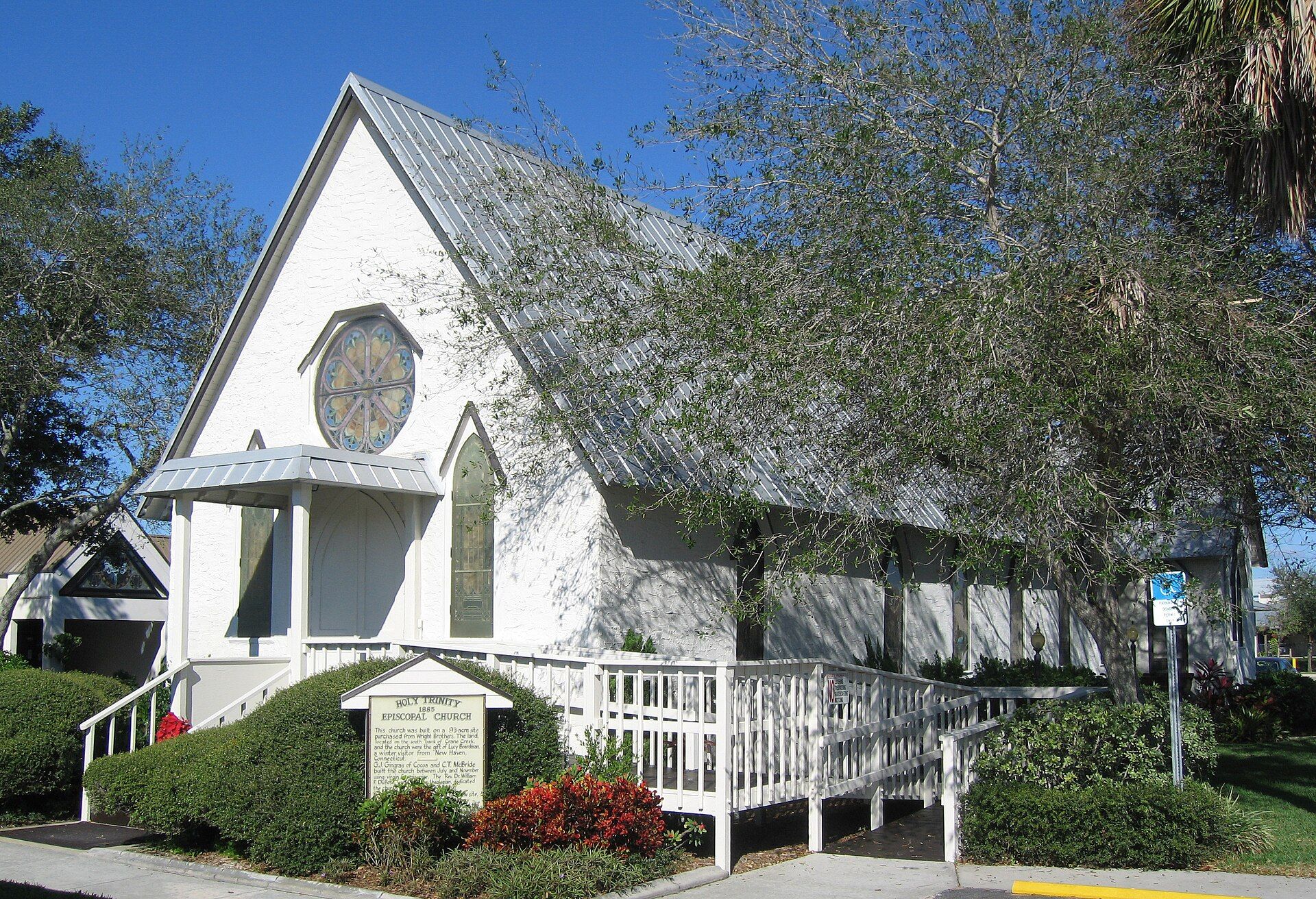
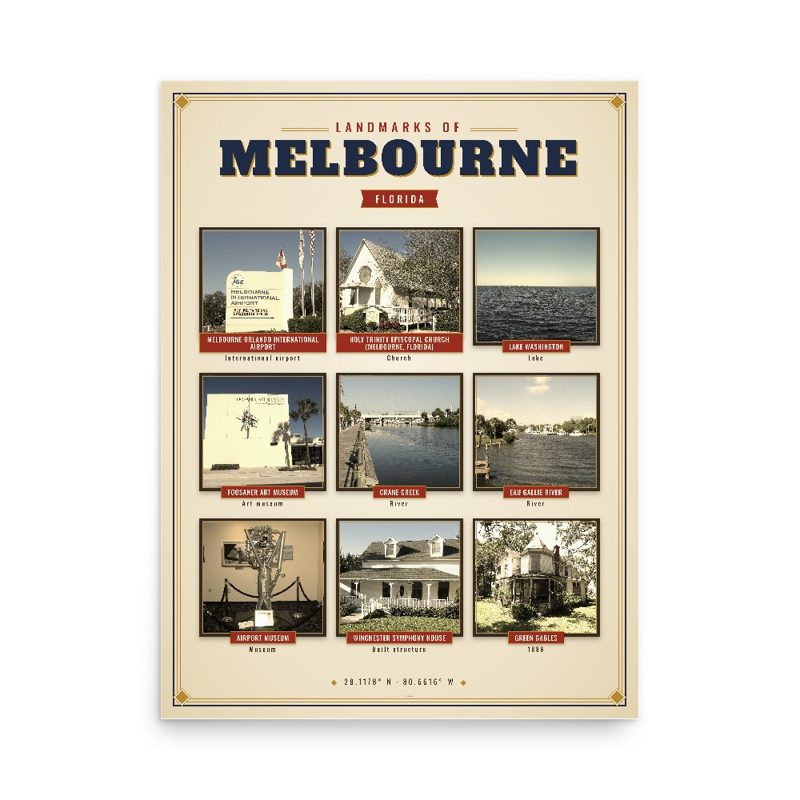
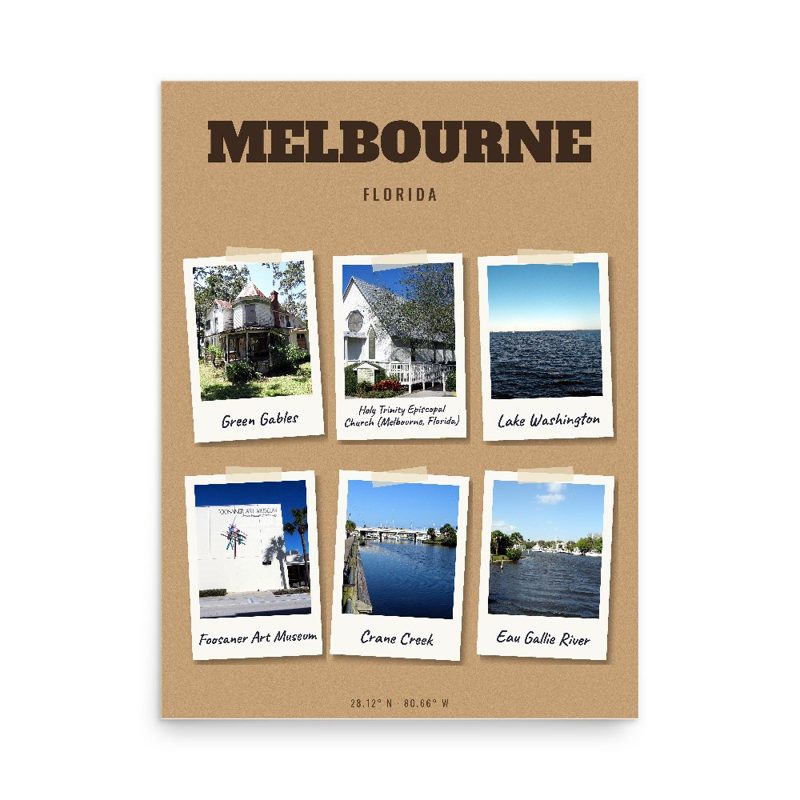
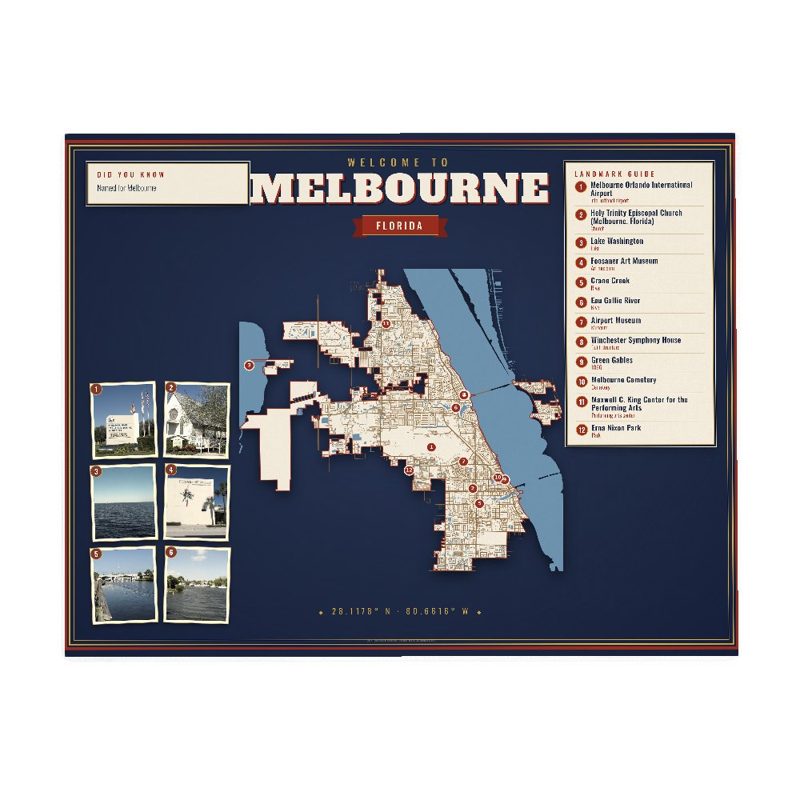


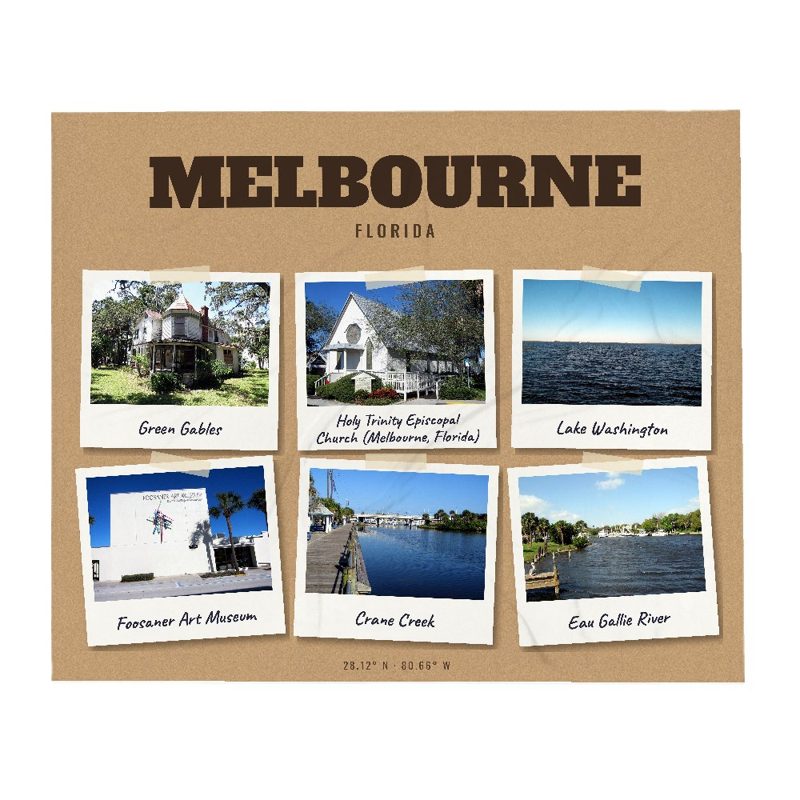
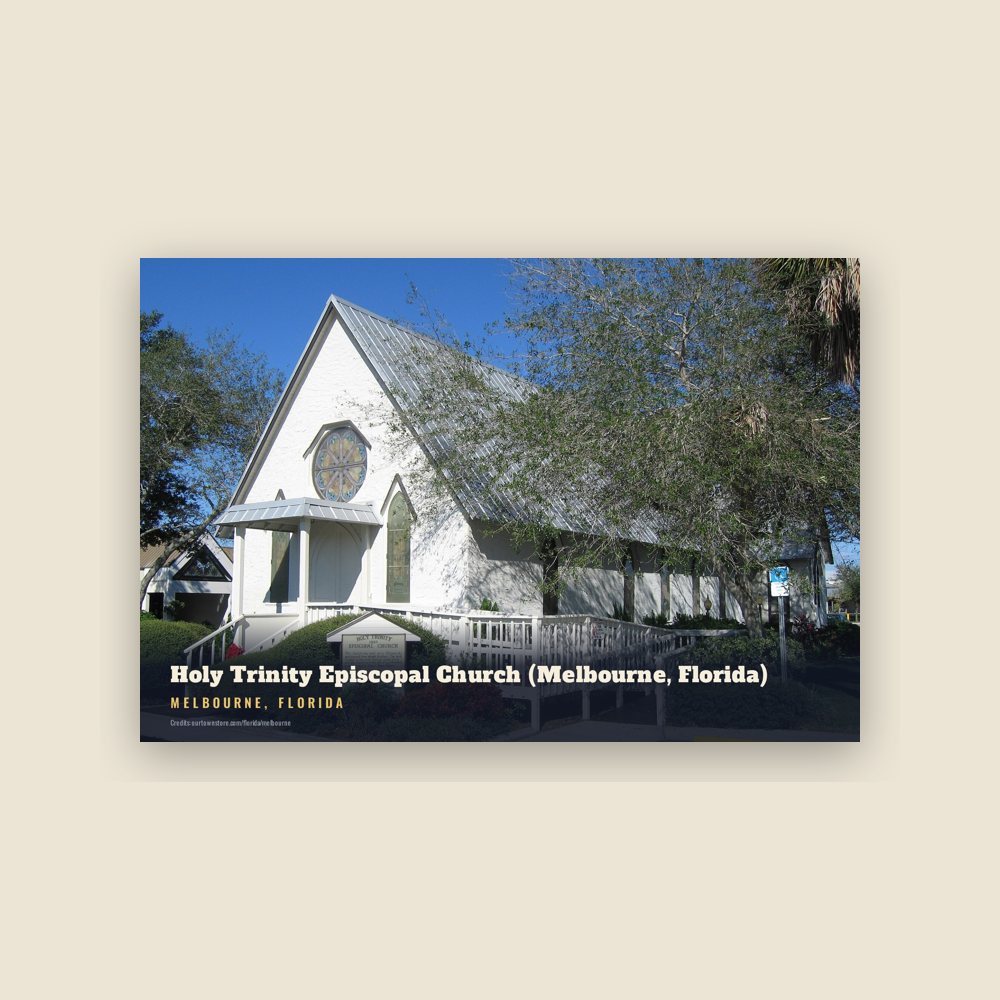
 Holy Trinity Episcopal Church (Melbourne, Florida)
 Melbourne Orlando International Airport
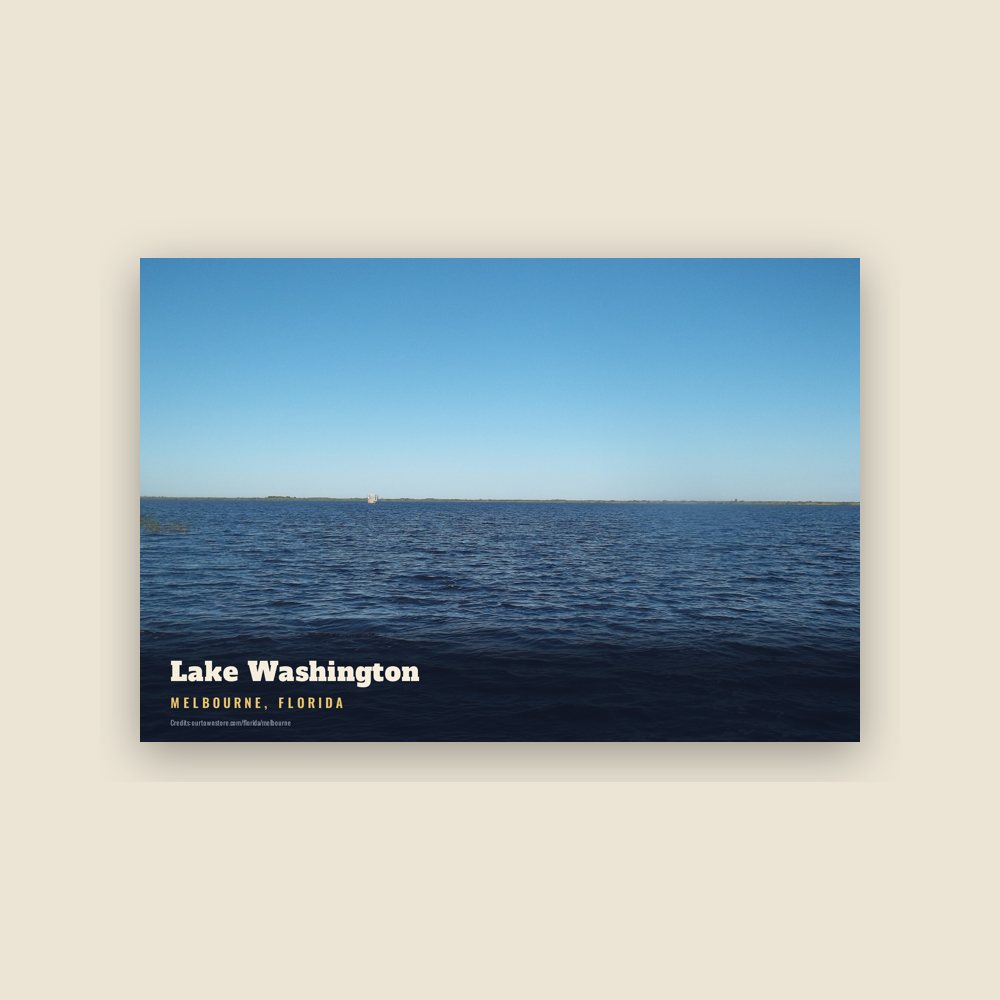
 Lake Washington
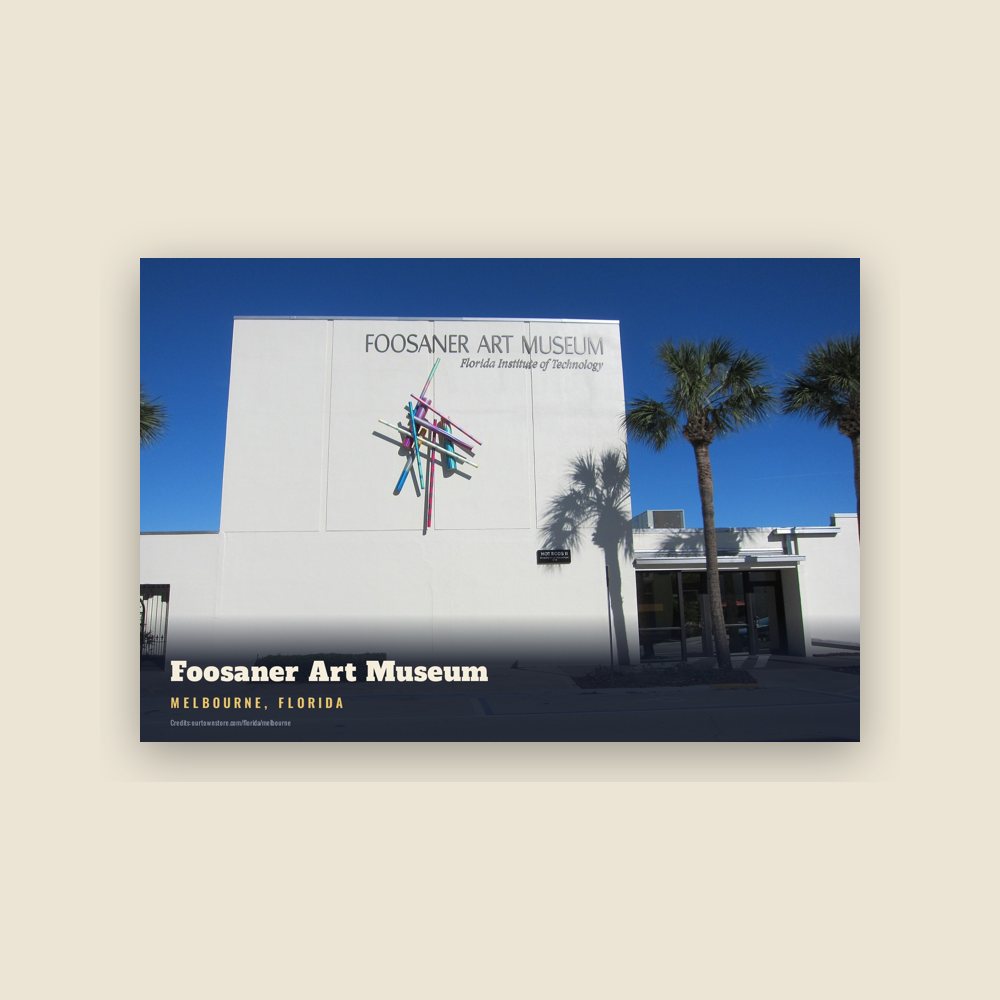
 Foosaner Art Museum