Since 1932
A short history of El Portal
The Village of El Portal is a small, diverse enclave between Miami Shores and Miami. The enclave was originally the capital of the Tequesta tribal area, and was visited by Pedro Menéndez de Avilés in the 1560s.
Nearly three centuries later, in 1848, the community was resettled by settlers, and was eventually annexed into the city of Miami, briefly becoming a neighborhood of Miami from 1925 to 1932. Because of the financial damage done during the Great Depression and the 1926 Miami hurricane, in 1932, Miami decided to disincorporate its jurisdiction over El Portal to cut the city's expenses, and instead, it was officially incorporated as a separate municipality of its own on December 6, 1937.
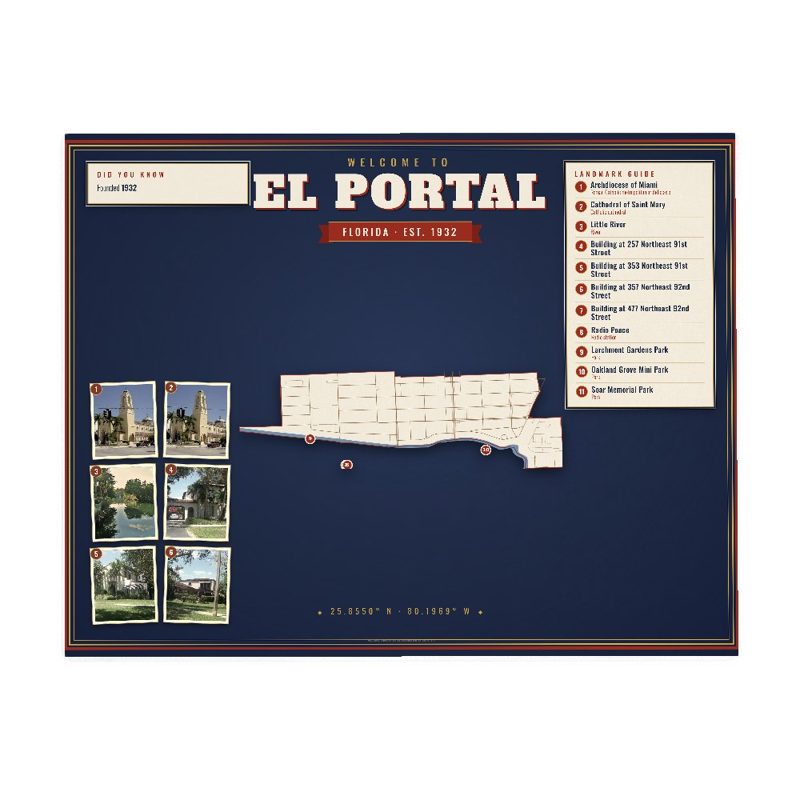
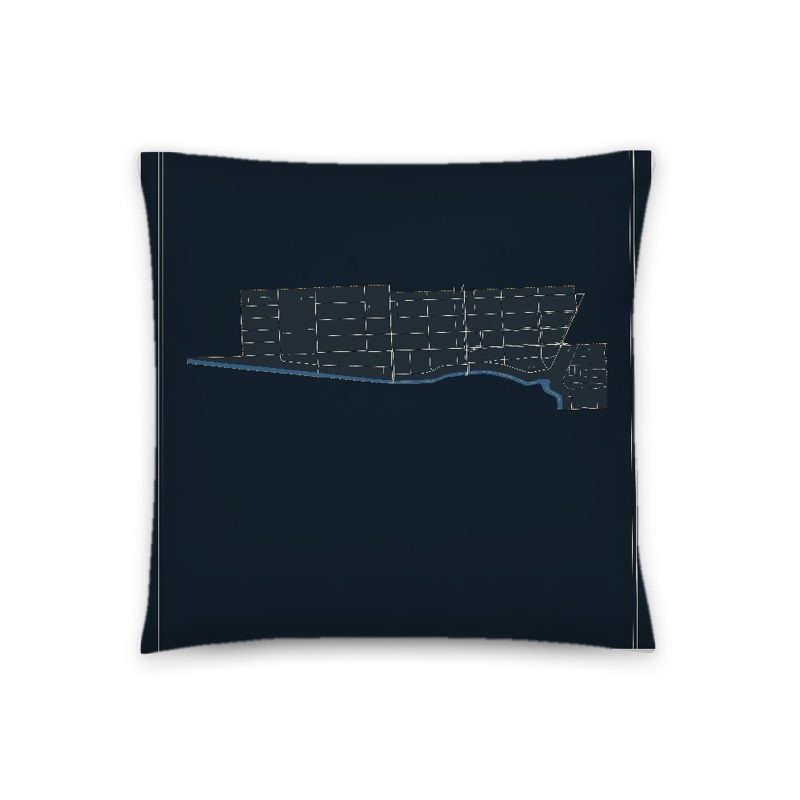
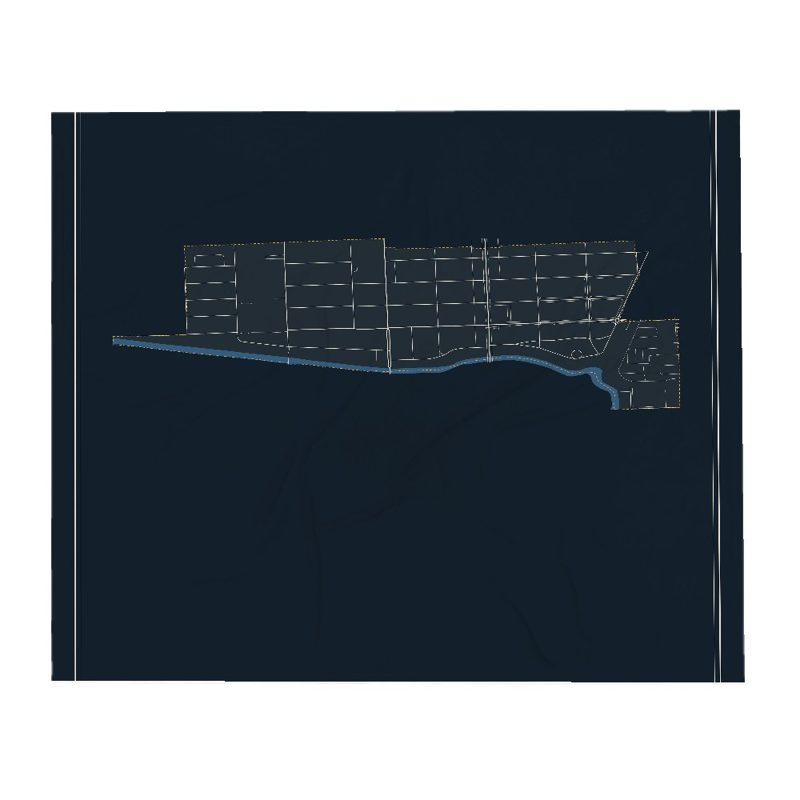
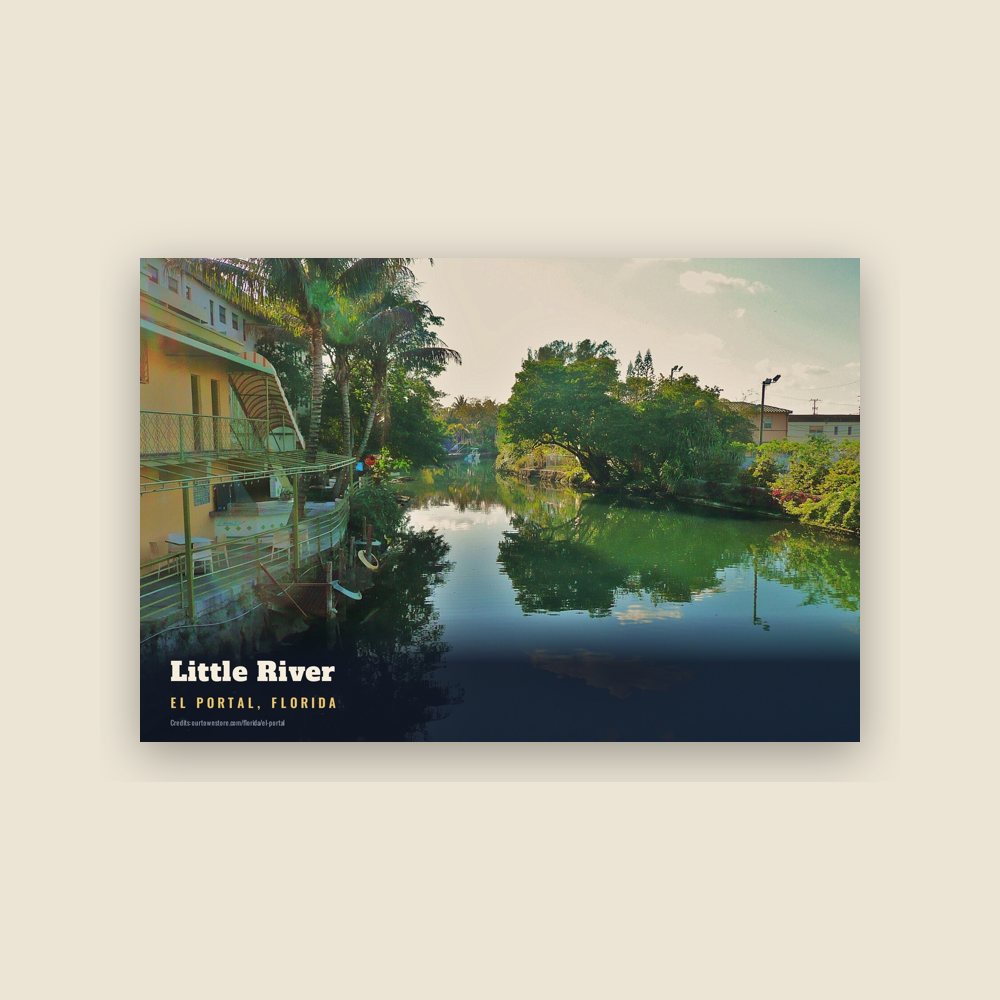
Three small subdivisions (now neighborhoods)—Sherwood Forest, El Jardin (Spanish for "The Garden"), and El Portal—merged into the Village of El Portal. Its borders include 91st Street on the north, the Little River Canal on the south, Northeast Fifth Avenue on the east and Northwest Fifth Avenue on the west.
The village's name is a Spanish term meaning "the gate," referring to two huge wooden gates on Northeast Second Avenue that were taken down in the 1940s.
The village has been designated as a bird sanctuary by the State of Florida since the 1950s, which means that the birds and trees cannot be harmed in any way. A nature trail winds its way through the village. El Portal also boasts links to prehistoric Native American life at the Little River Mound, a four-foot-high, man-made structure that looks like a grassy knoll, but is actually an ancient burial ground dating back to 600 AD, while the precolonial Native American village itself dates back to 200 AD. The Little River Mound, located in the Sherwood Forest neighborhood, was the first archaeological site to be publicly recognized and preserved in Miami-Dade County.
Adapted (trimmed) from the Wikipedia article El Portal, Florida, revision 1374463426 by its contributors, licensed CC BY-SA 4.0.
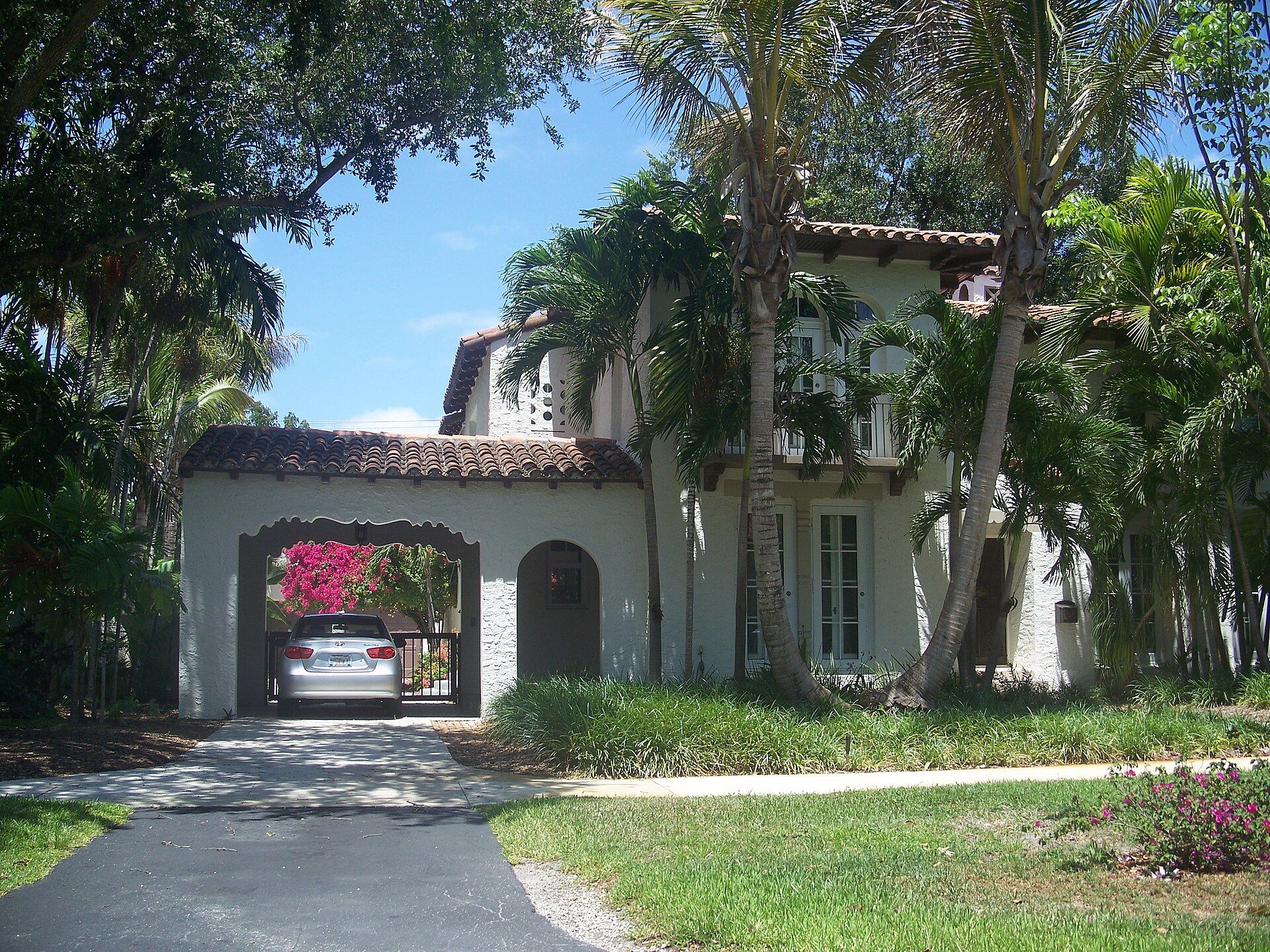
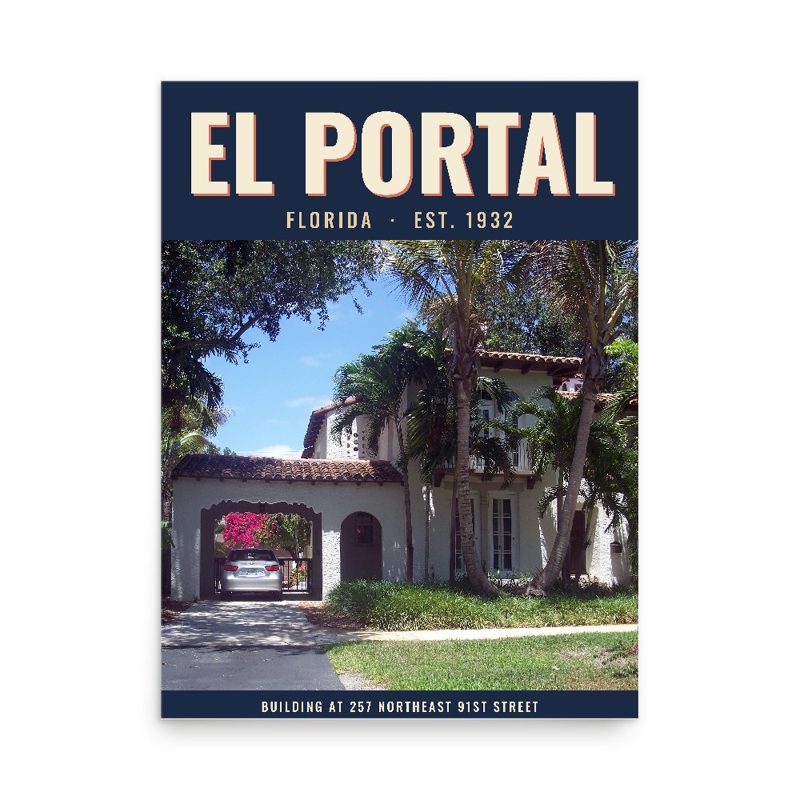
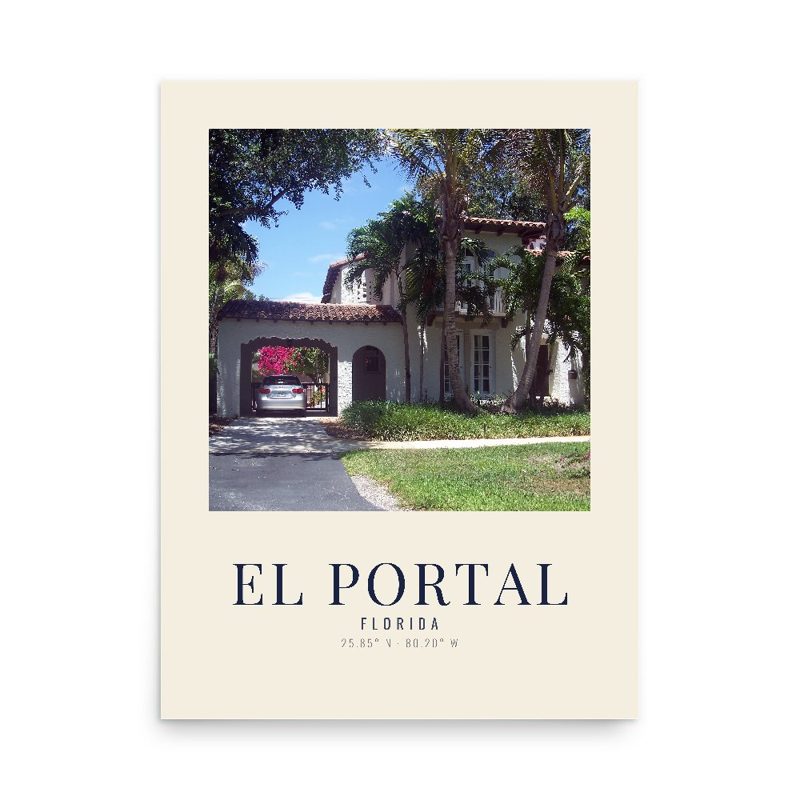
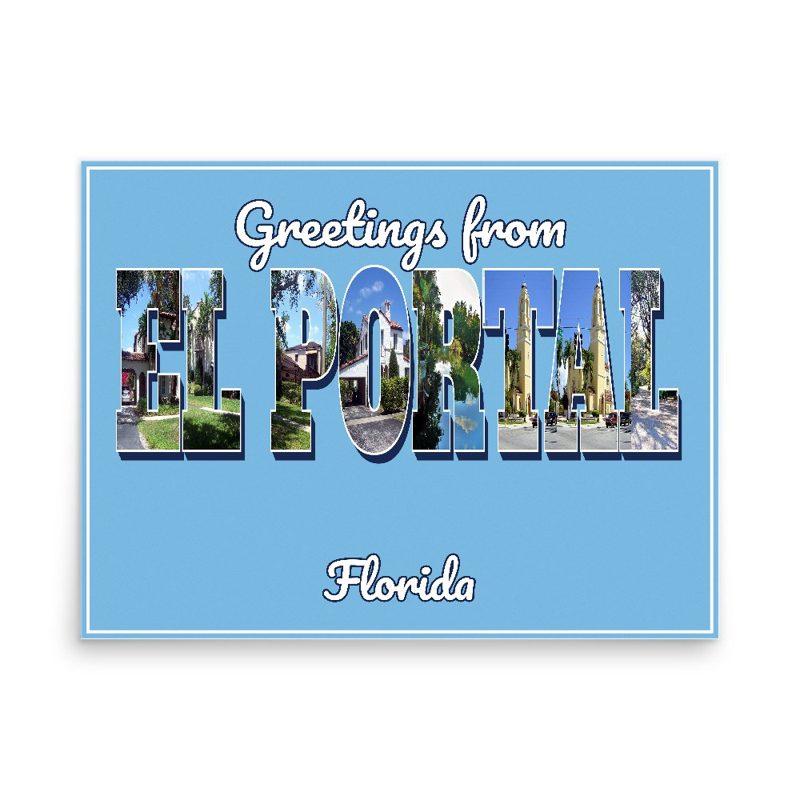
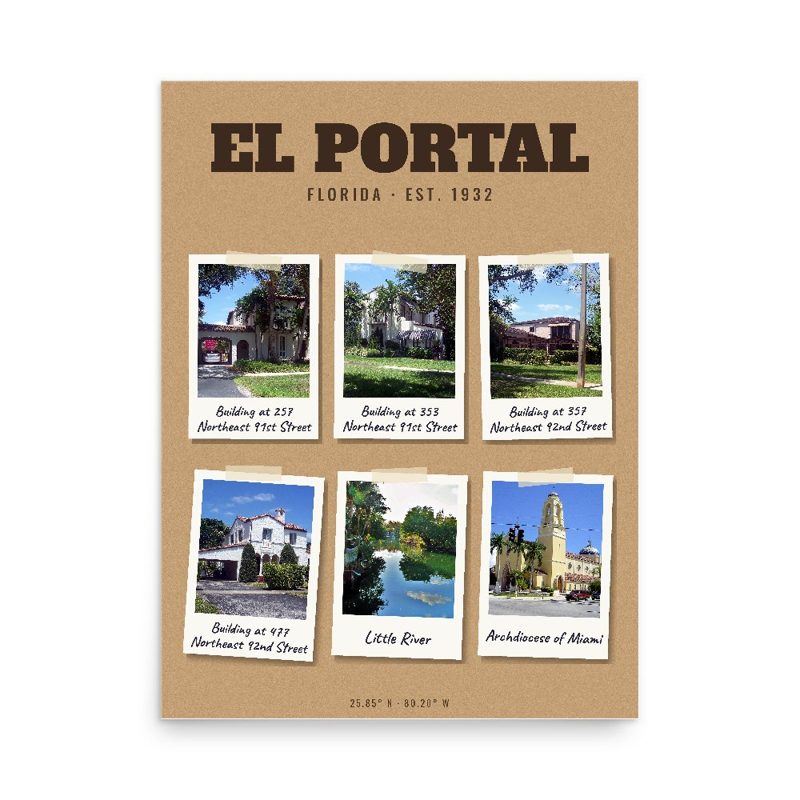




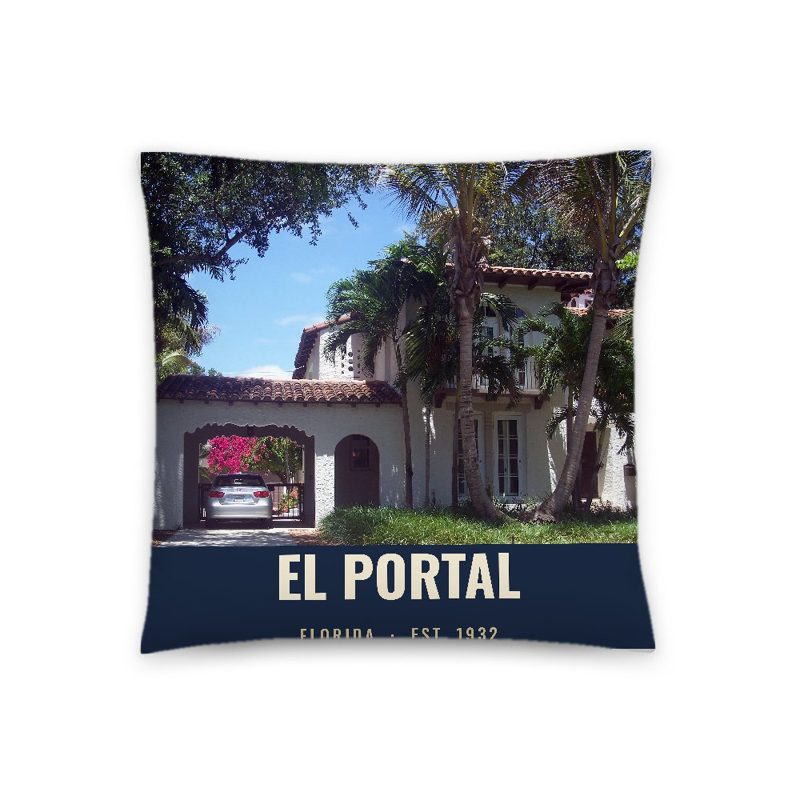


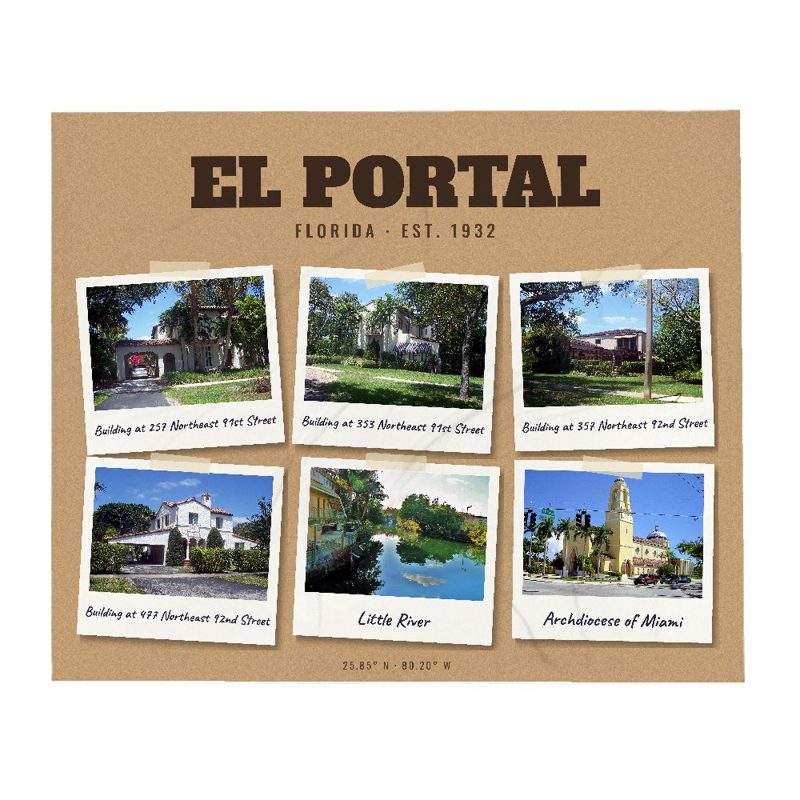
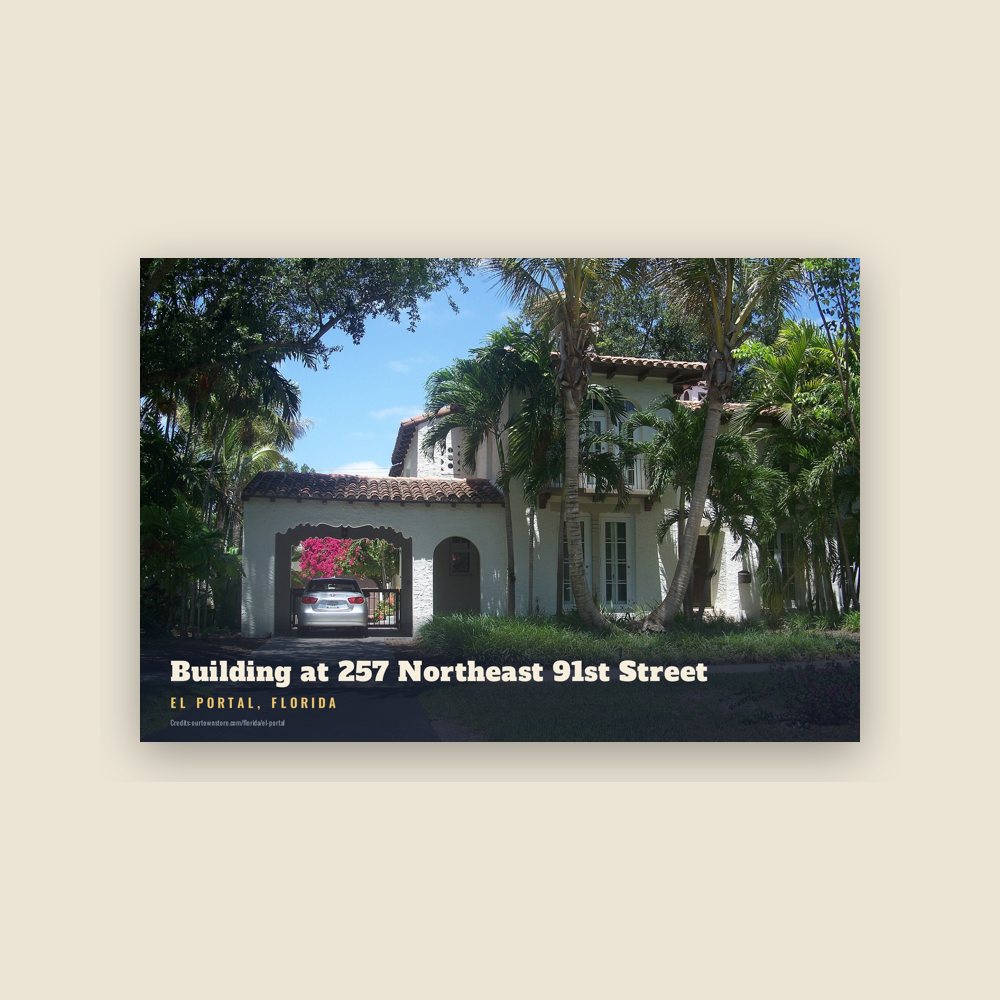
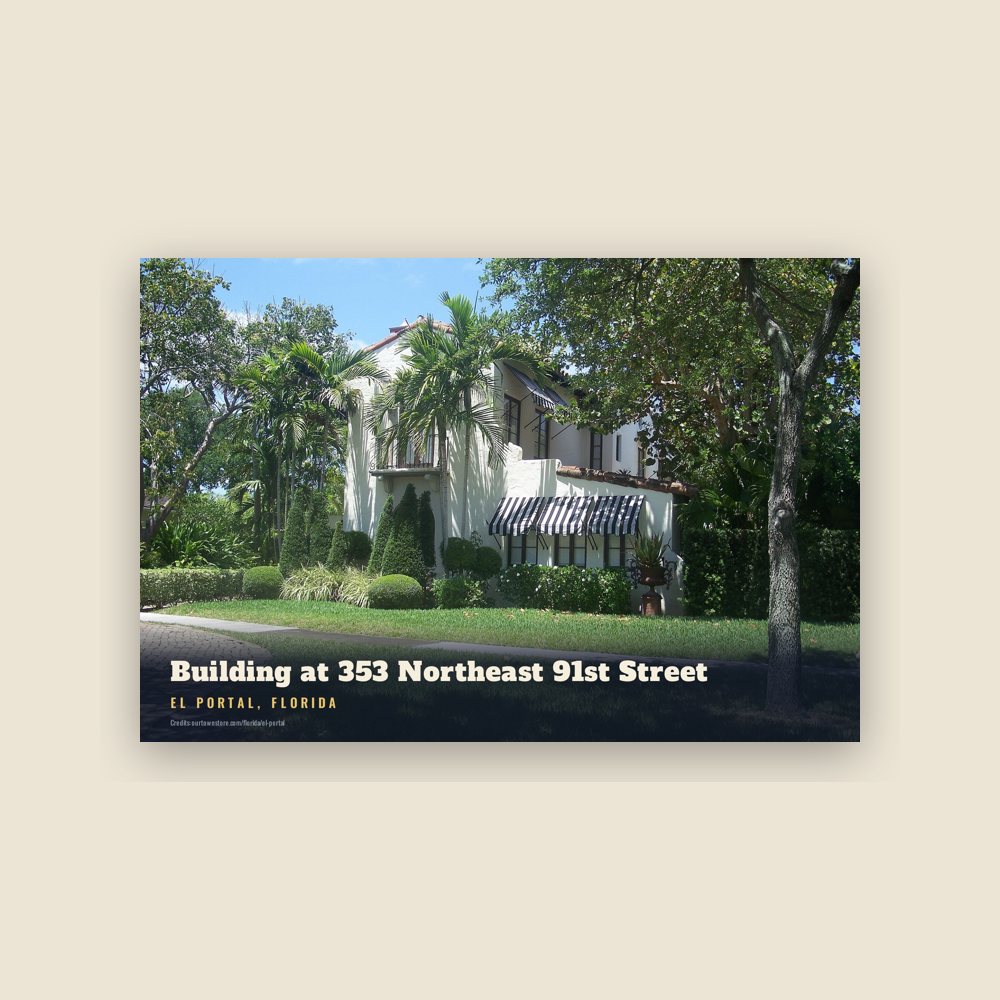
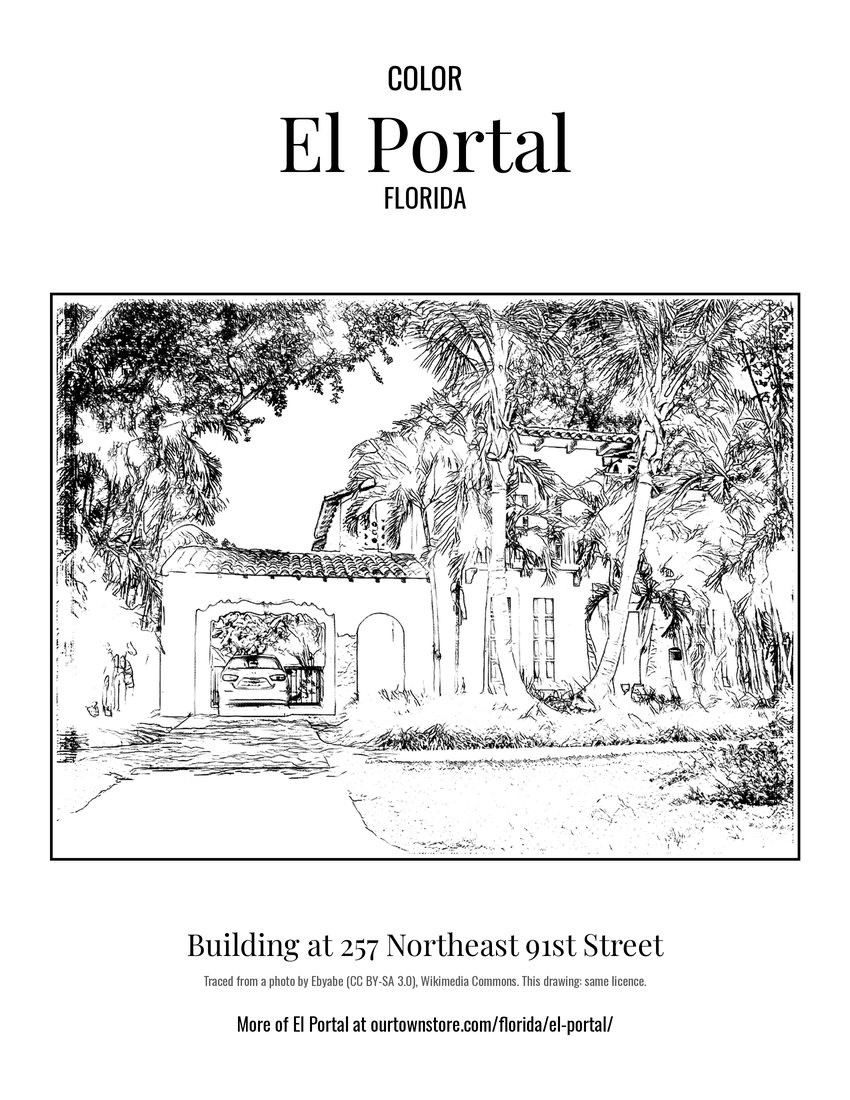 Building at 257 Northeast 91st Street
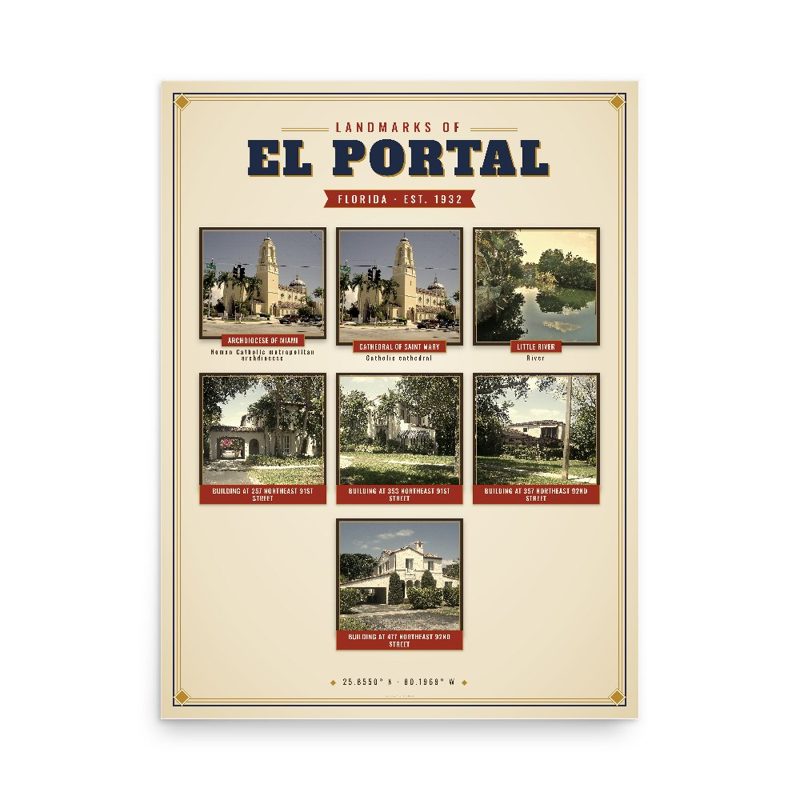
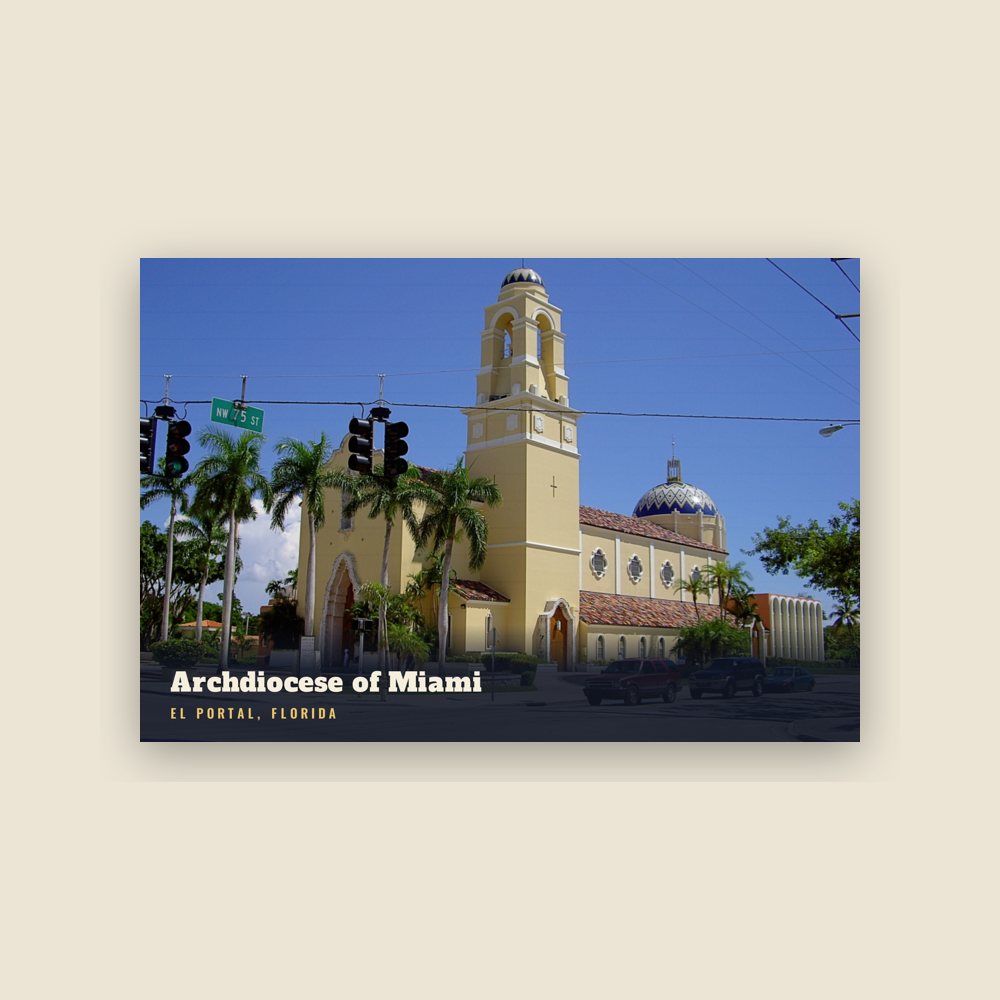
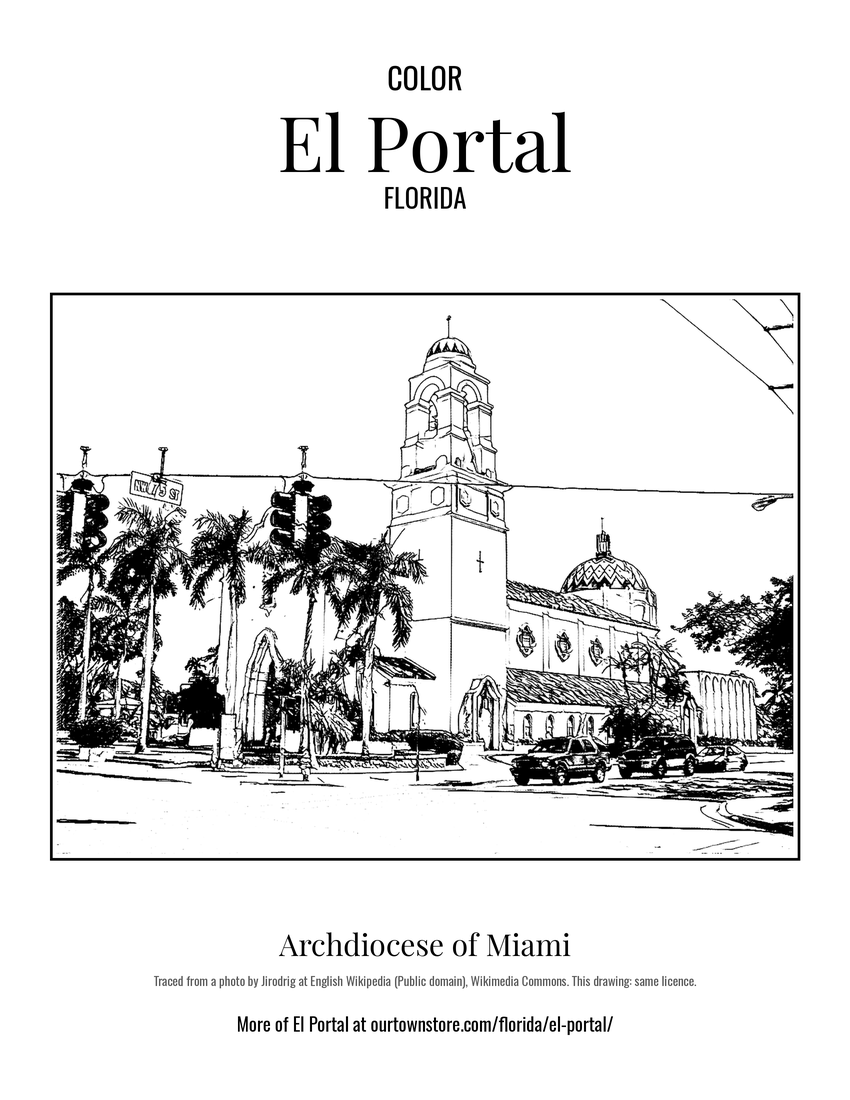 Archdiocese of Miami
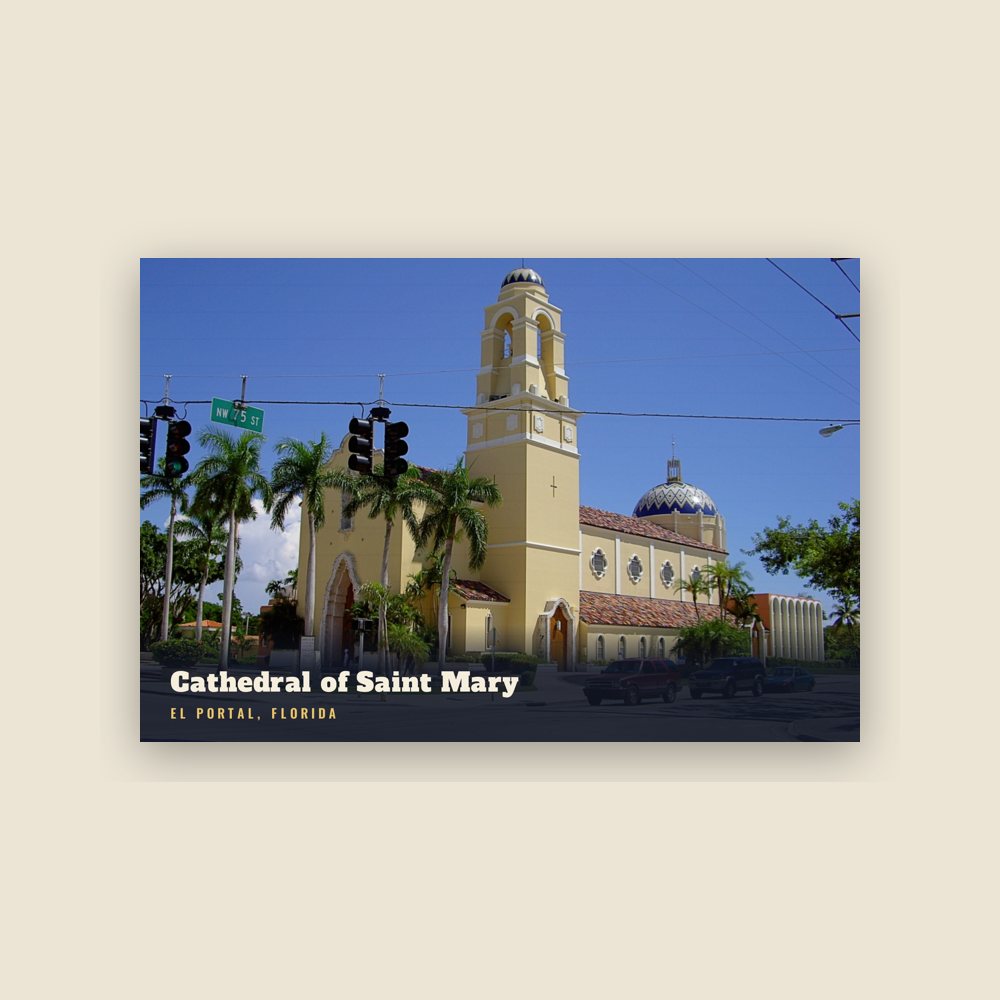
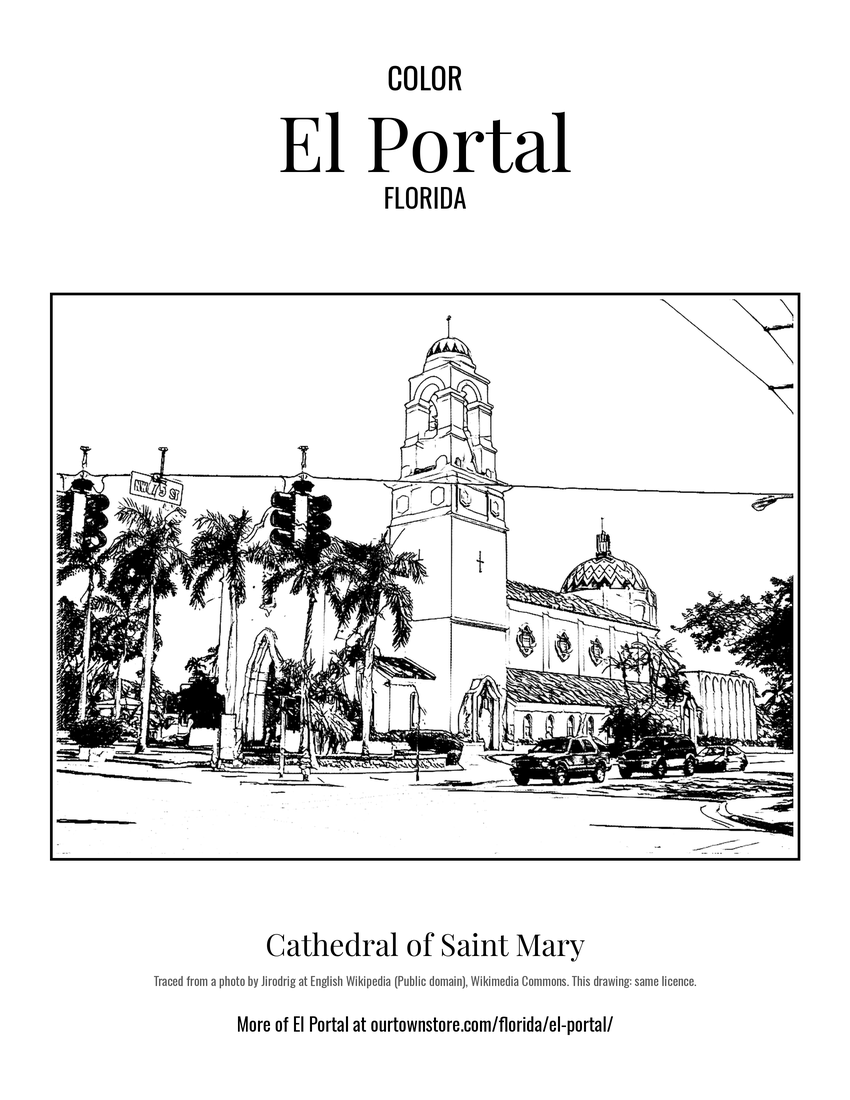 Cathedral of Saint Mary
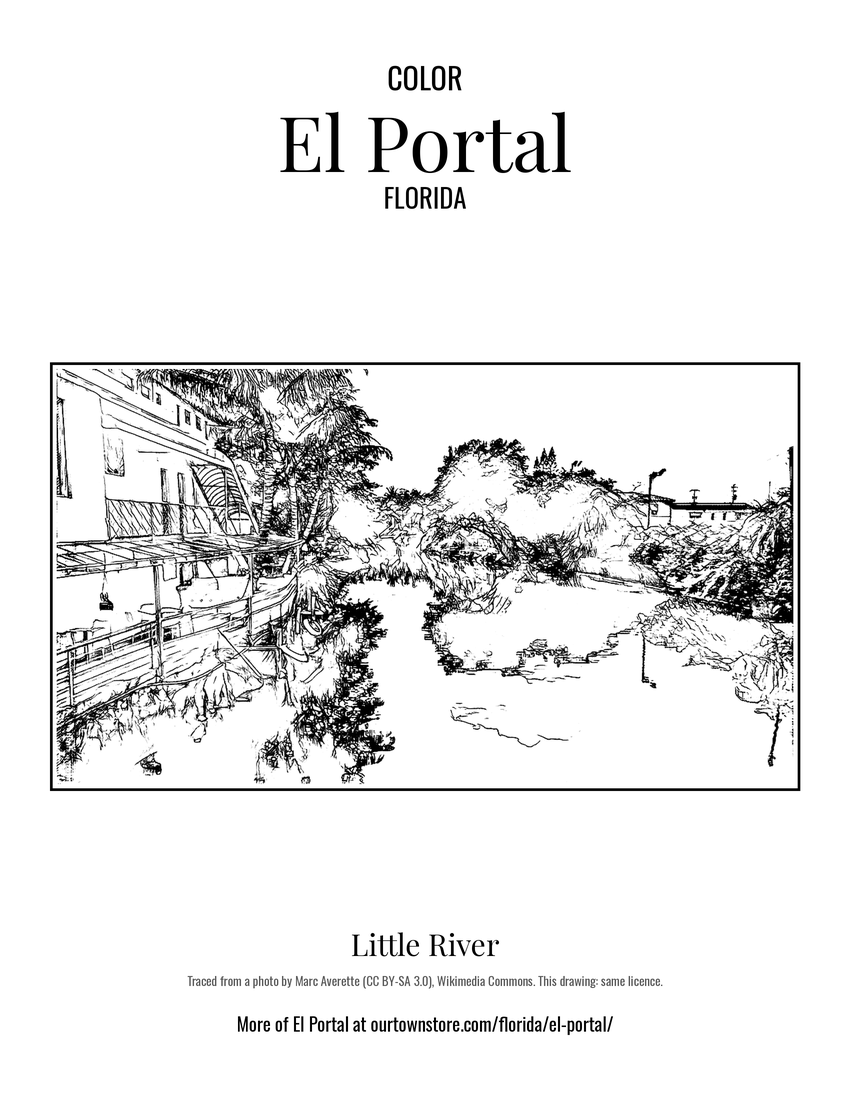 Little River