A short history of DeBary
The Timucuan Indians once lived in the vicinity of Lake Monroe, where the domain of Chief Utina extended to just north of Lake George. They hunted, fished, and gathered plants and berries from the forest. By 1760, however, the Timucua had disappeared and been replaced by the Seminole tribe from Alabama and Georgia. Florida was acquired from Spain in 1821, but the Seminole Wars delayed settlement. In 1866, Elijah Watson of Enterprise sold land to Oliver and Amanda Arnett on the northern shore of the St. Johns River at Lake Monroe, where they built a house.
In 1875, deBary bought a small steamboat, the George M. Bird, to transport his horses and dogs along the St. Johns River for hunting expeditions, and also to take fruit to market. He established the DeBary Merchants' Line in 1876, a steamship service contracted to carry mail between Jacksonville and Enterprise. It acquired the sidewheeler Frederick DeBary. In 1883, the firm merged with the Baya Line, owned by Colonel H.T. Baya, to create the DeBary-Baya Merchants' Line, with 13 steamboats and a crew of 3,000 running to Sanford. The DeBary-Baya Merchants' Line sold its business in 1889 to the Clyde Line, which survived until 1928.
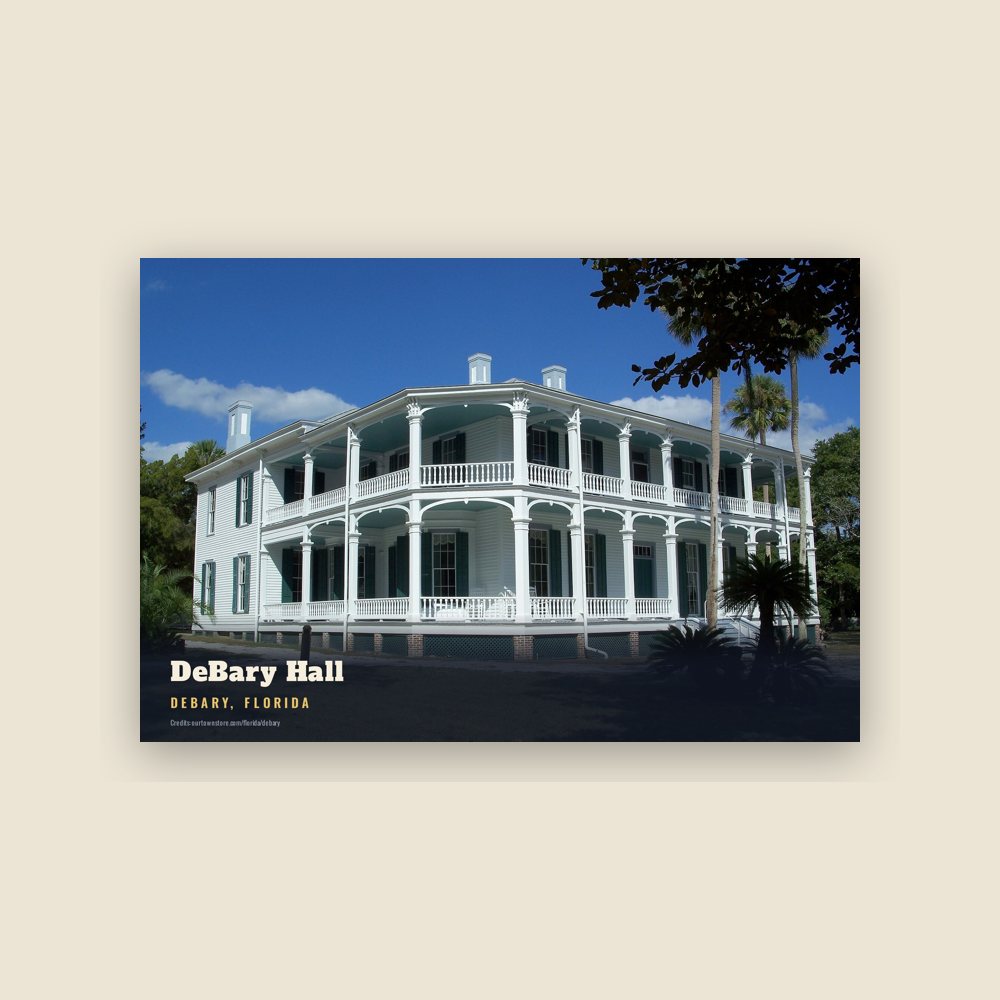
Frederick deBary died in 1898, and his mansion is today a restored museum, listed on the National Register of Historic Places in 1972. The estate, reduced to 10 acres (40,000 m2), now features the community's oldest building, the Arnett House. Incorporated in 1993, the City of DeBary is named for its noted settler.
Adapted (trimmed) from the Wikipedia article DeBary, Florida, revision 1375757476 by its contributors, licensed CC BY-SA 4.0.
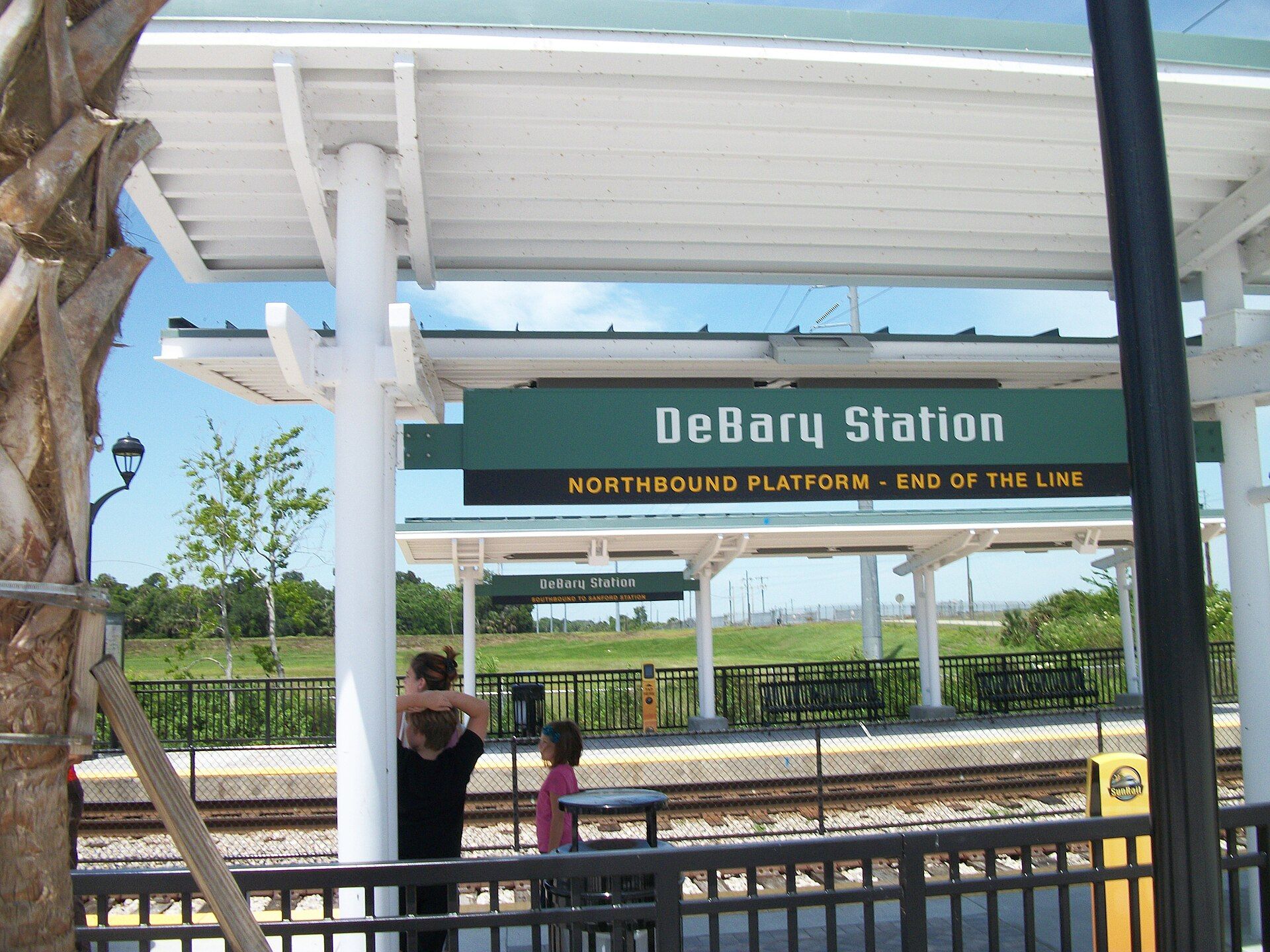


























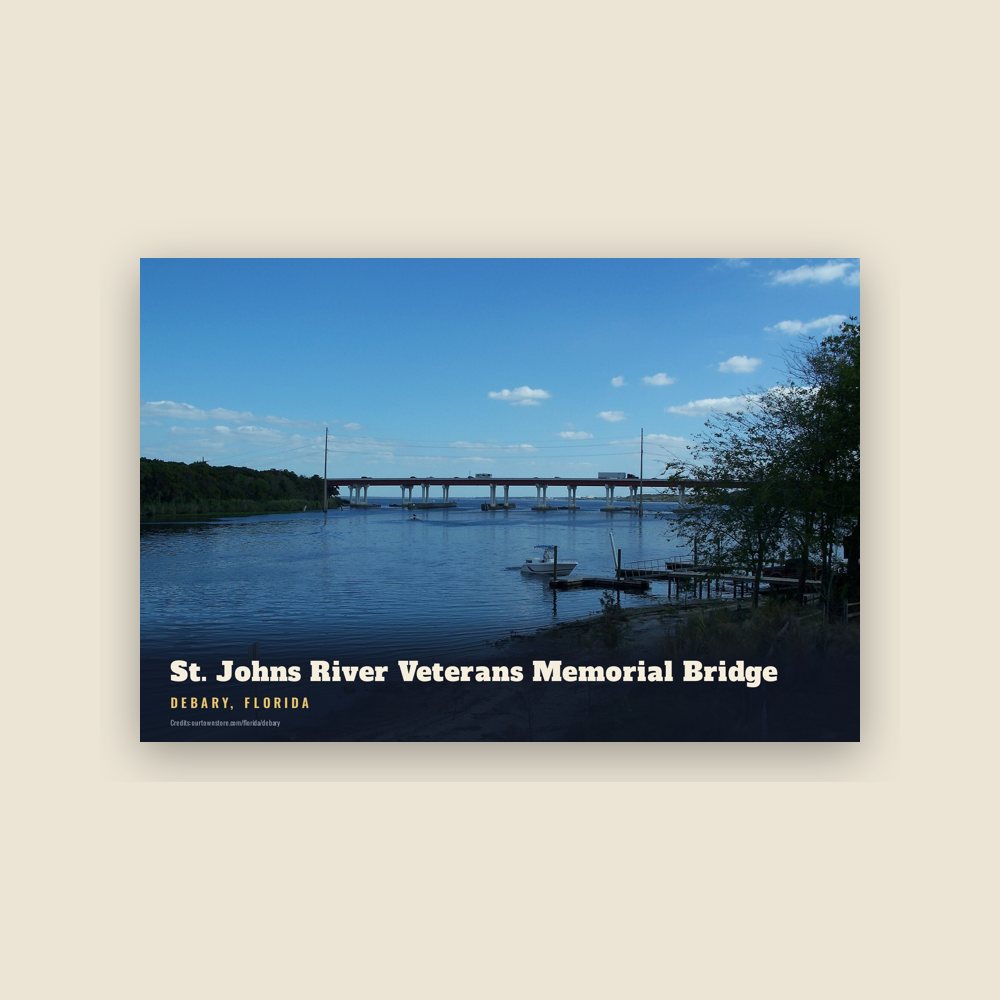
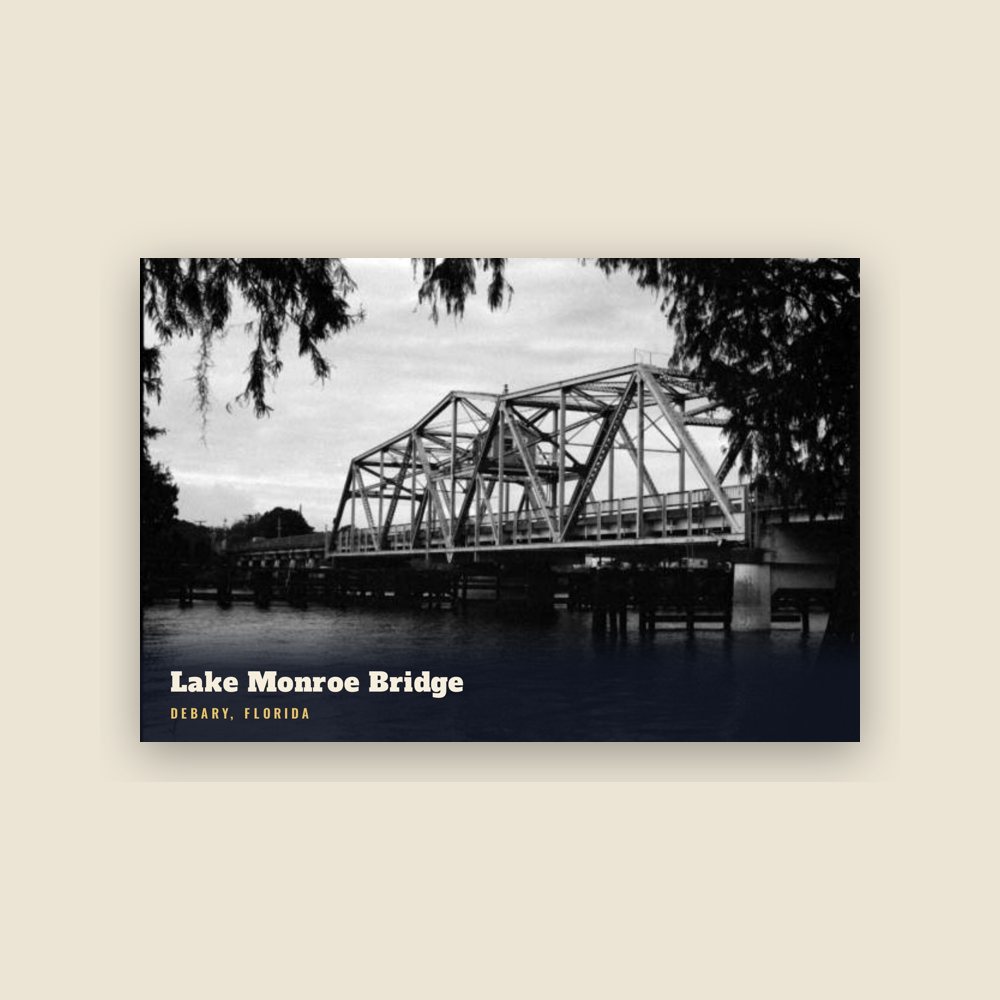
 DeBary station
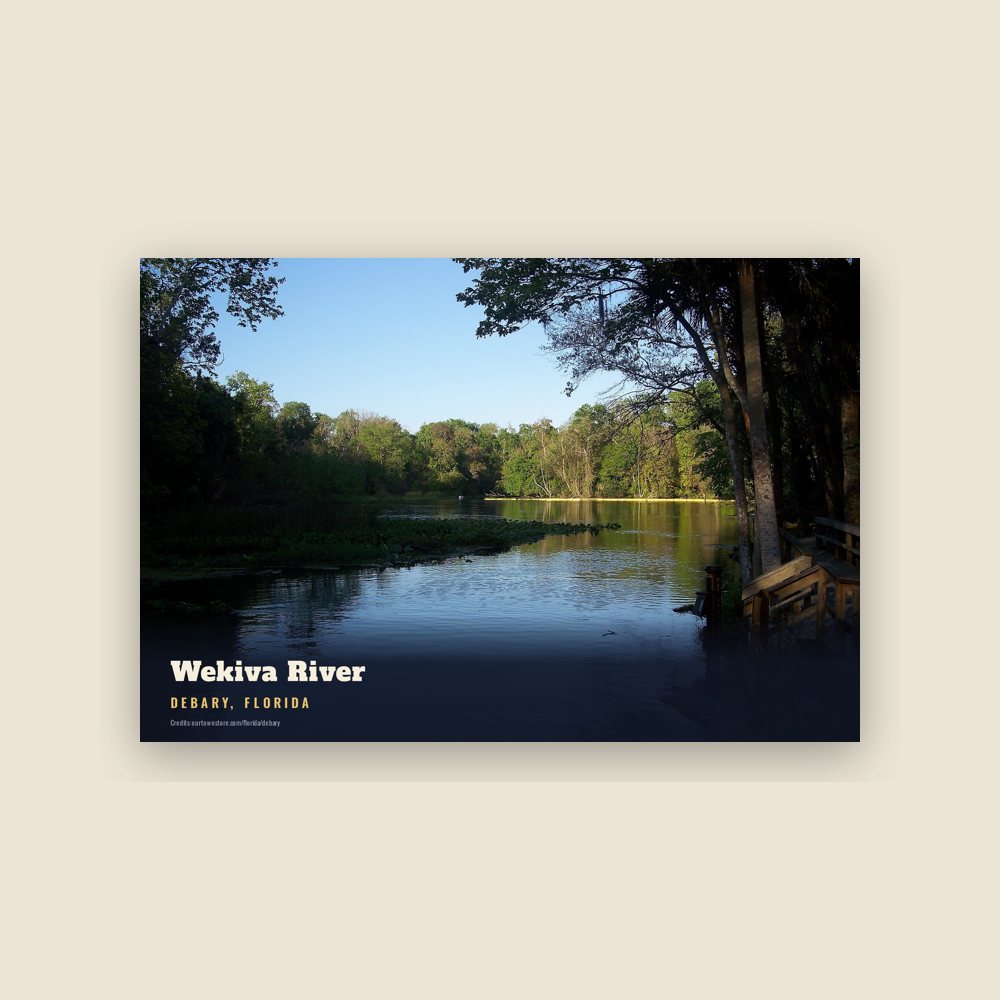
 Wekiva River
 Gemini Springs Park
 DeBary Hall