Fenwick Island is a coastal resort town in Sussex County, Delaware, United States. Fenwick Island is the birthplace of Isaac J. MacCollum, physician.
- CountySussex County
- Population343 (2020 U.S. Census)
- Historic places1 on the National Register
Fenwick Island, Delaware gifts and souvenirs: 29 designs made from Fenwick Island's own map, landmarks and history, from $10 to $99. Printed to order and shipped free in the USA.
| Popular | Price |
|---|---|
| Fenwick Island Hometown Ornament | $23 |
| Fenwick Island Vintage Travel Poster | from $40 |
| Fenwick Island Varsity Crewneck | from $57 |
| Fenwick Island Est. Tee | from $33 |
| Fenwick Island Town Line Mug | from $26 |
| Fenwick Island Market Tote | $37 |
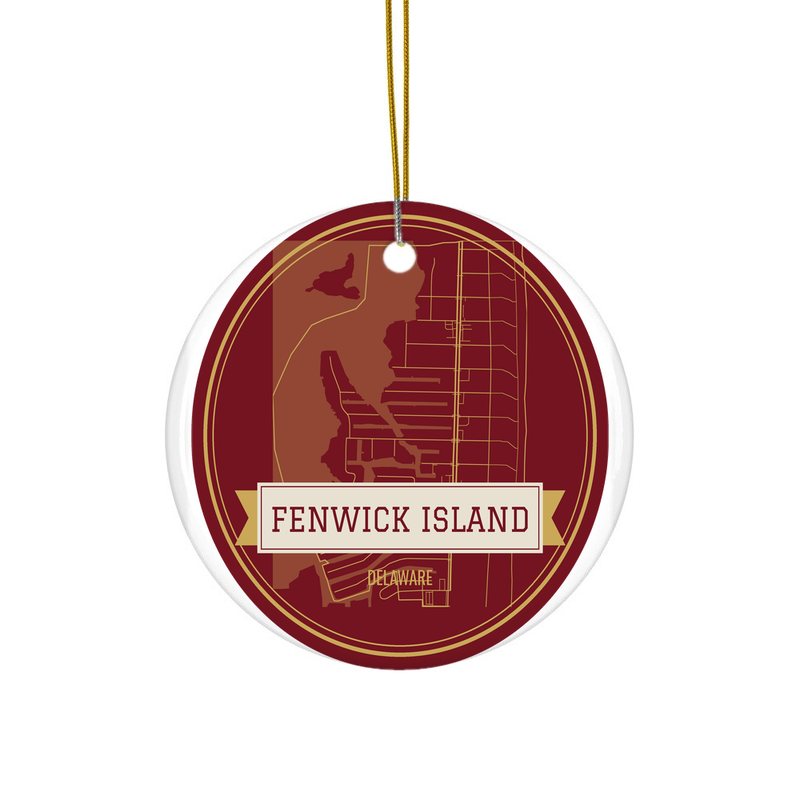
Ceramic keepsake, gold ribbon, in 4 styles
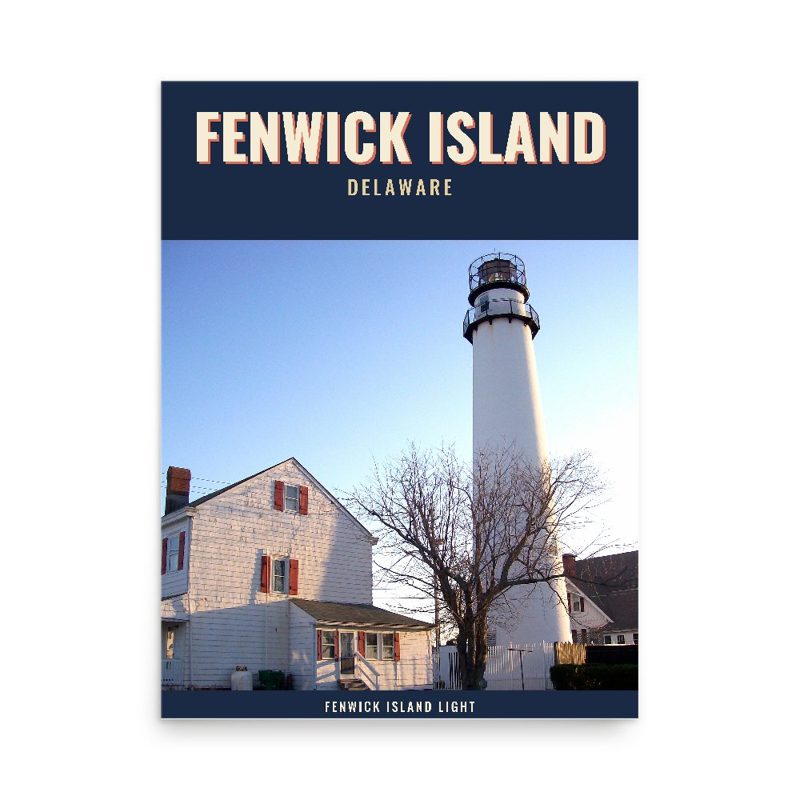
Its landmark photo in a classic travel-poster layout
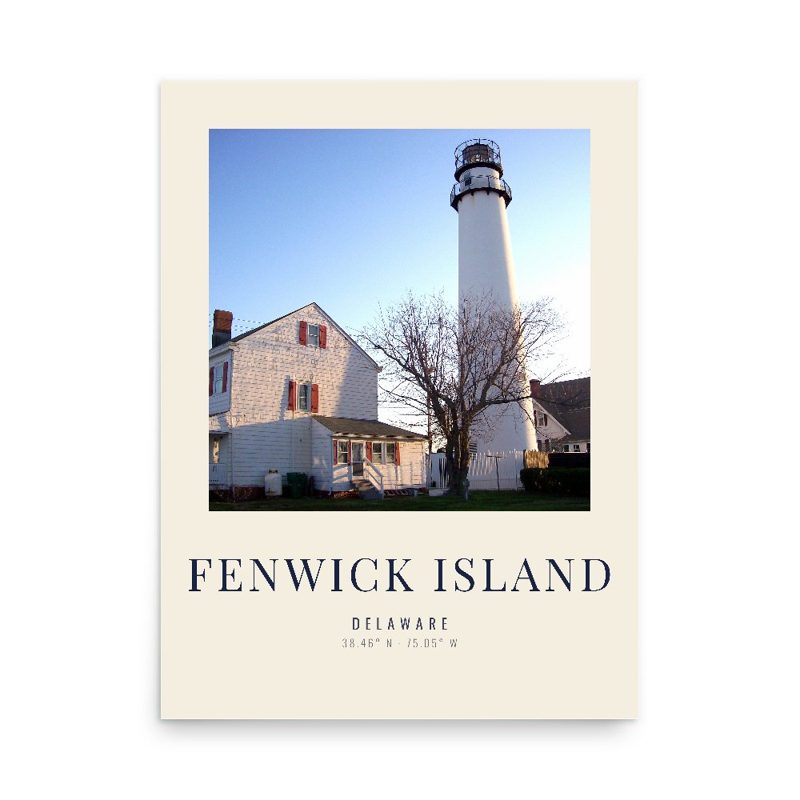
A local landmark photo as a gallery print
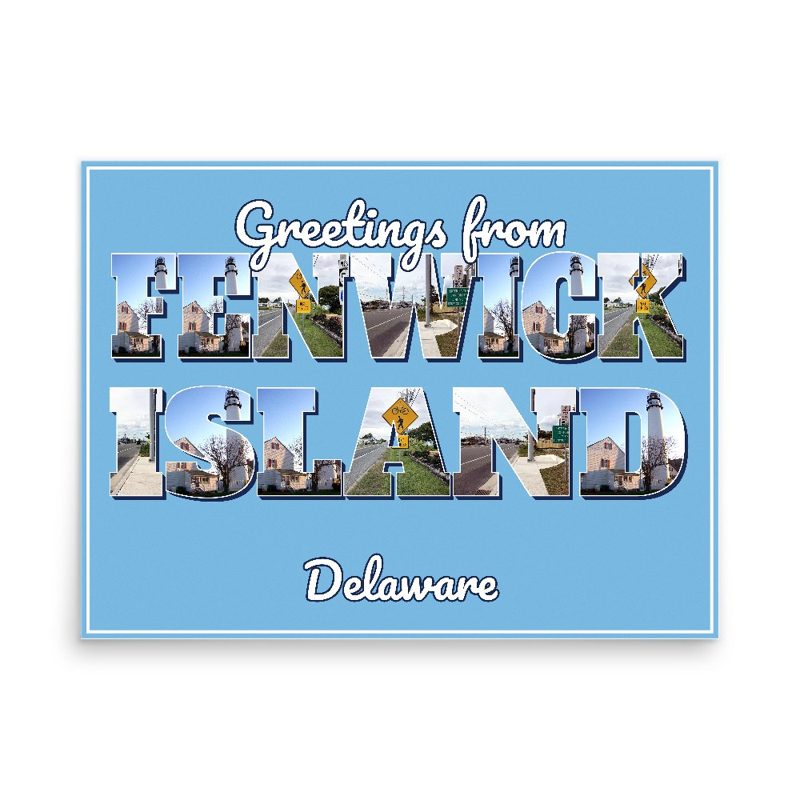
Classic large-letter postcard art, filled with local photos
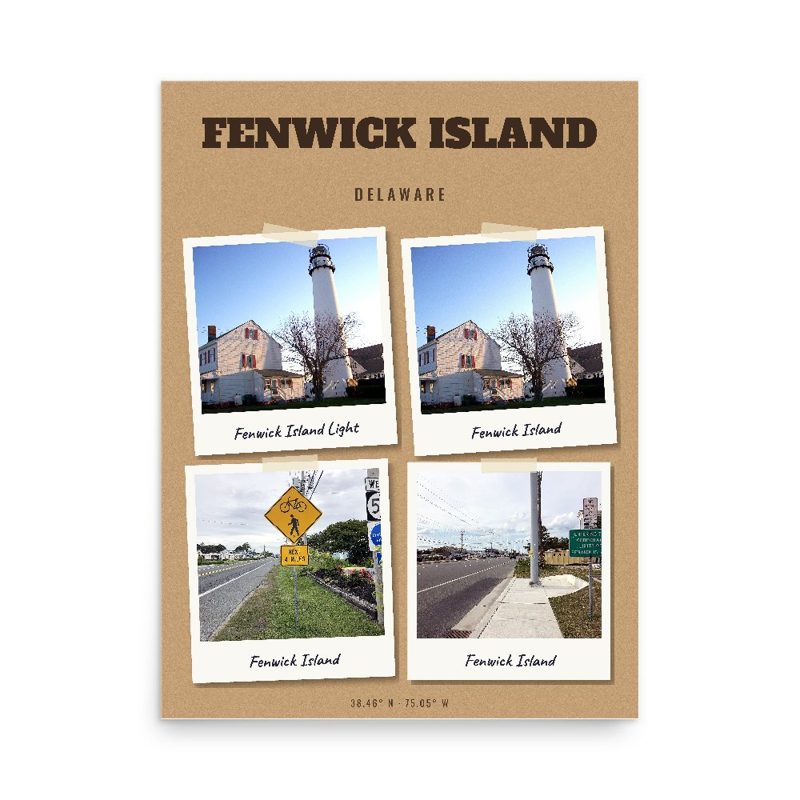
Six local landmarks as instant photos on kraft paper
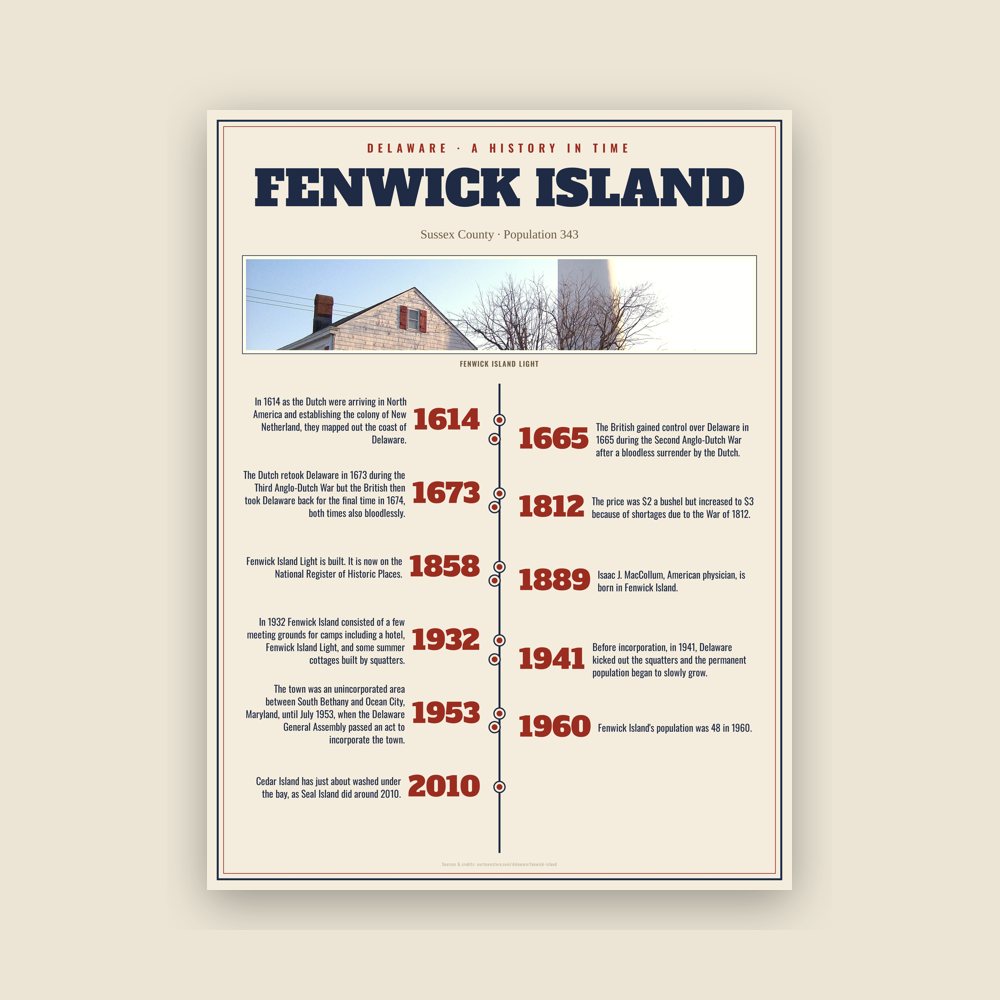
The town's story in dates, from its own records, for home or classroom
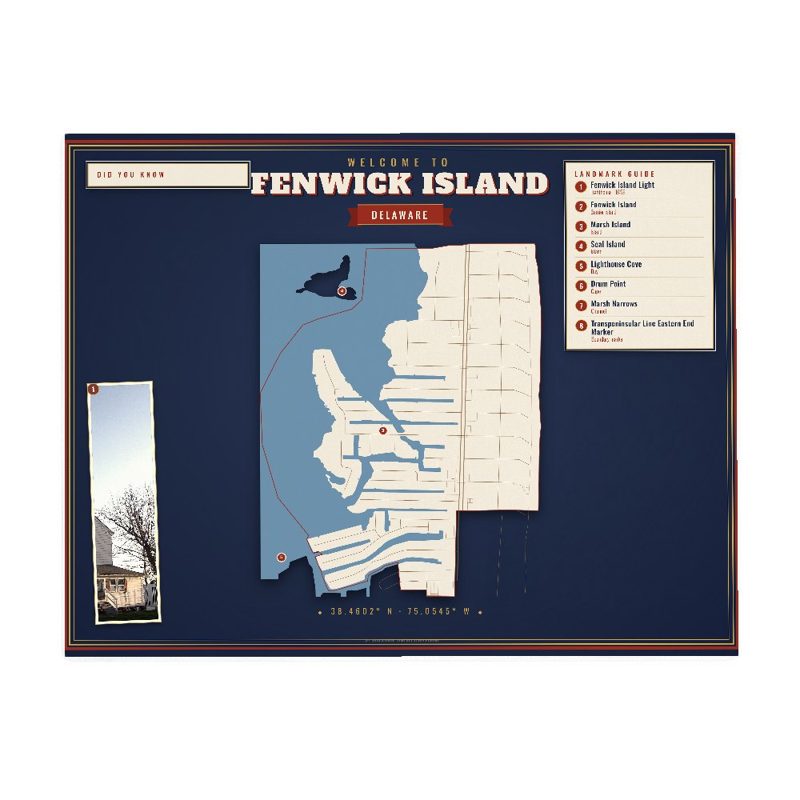
Map of local landmarks, washable fabric
Heavy-blend fleece, street map printed on the back
Red heavy-blend crewneck, knit-stitch town print
Soft Bella+Canvas jersey
Kids' Bella+Canvas jersey, youth sizes
Bella+Canvas toddler jersey
Bella+Canvas baby bodysuit
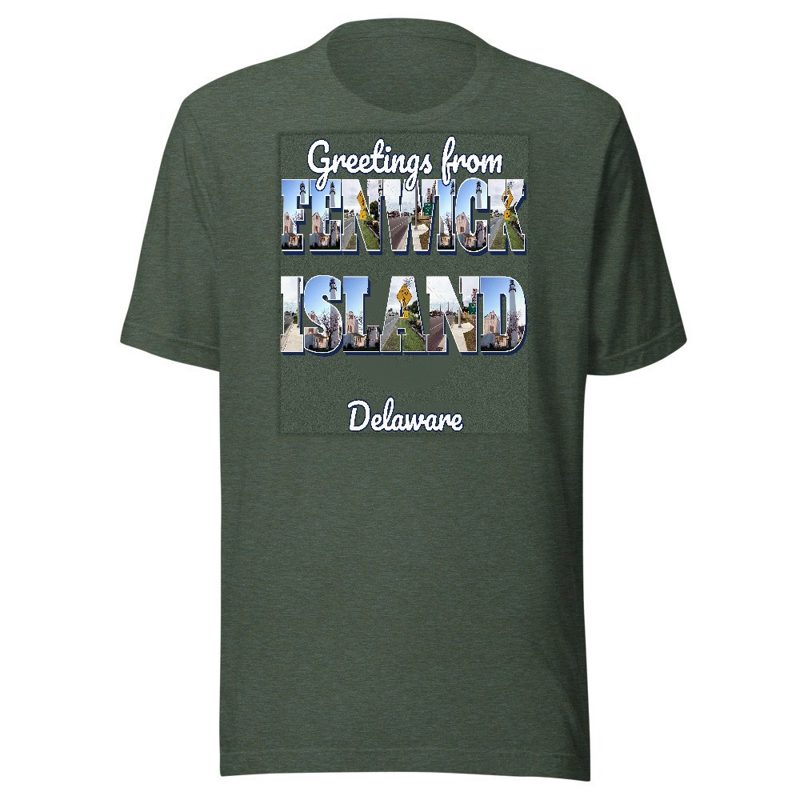
Large-letter postcard art filled with local photos
Glossy ceramic, dishwasher safe

Large-letter postcard art filled with local photos, 11 oz ceramic
Weatherproof, for the front walk
24″×16″, printed coir-look fibers, rubber back
12″×12″ printed wood, ready to hang
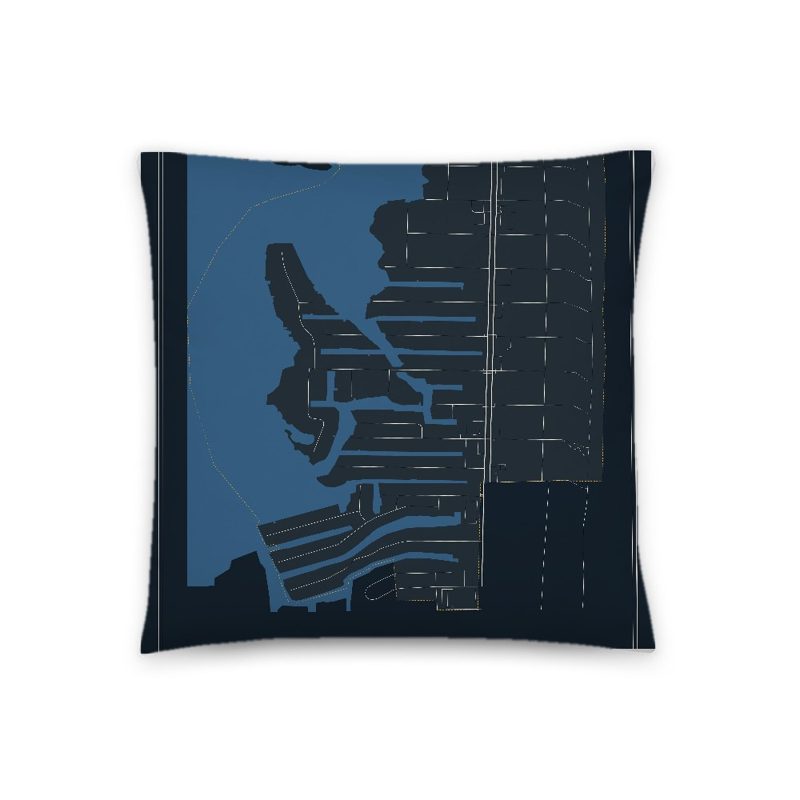
Soft-touch, zip cover
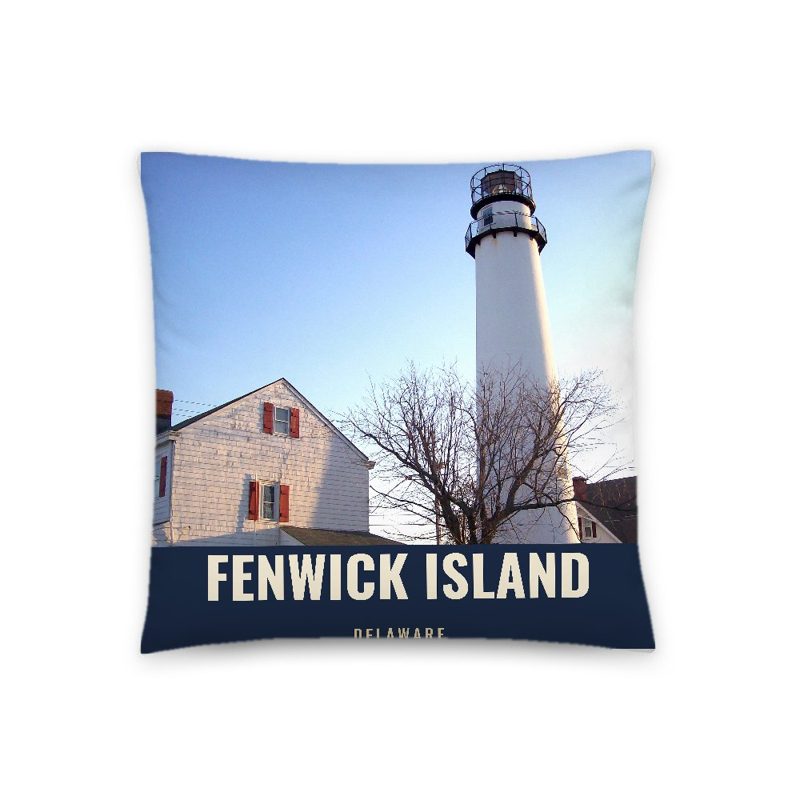
A local landmark photo with the town name, 18″×18″
Sturdy all-over-print tote
Large-letter postcard art on a sturdy tote
Foam-front trucker, printed (not embroidered) with local photos
Glossy top, cork back
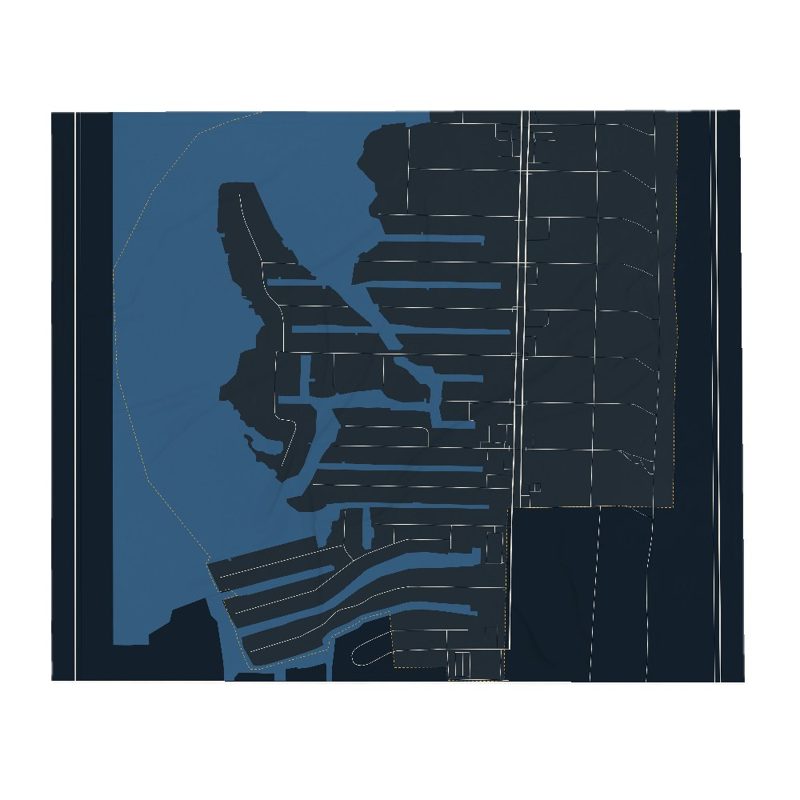
Soft fleece, 50″×60″
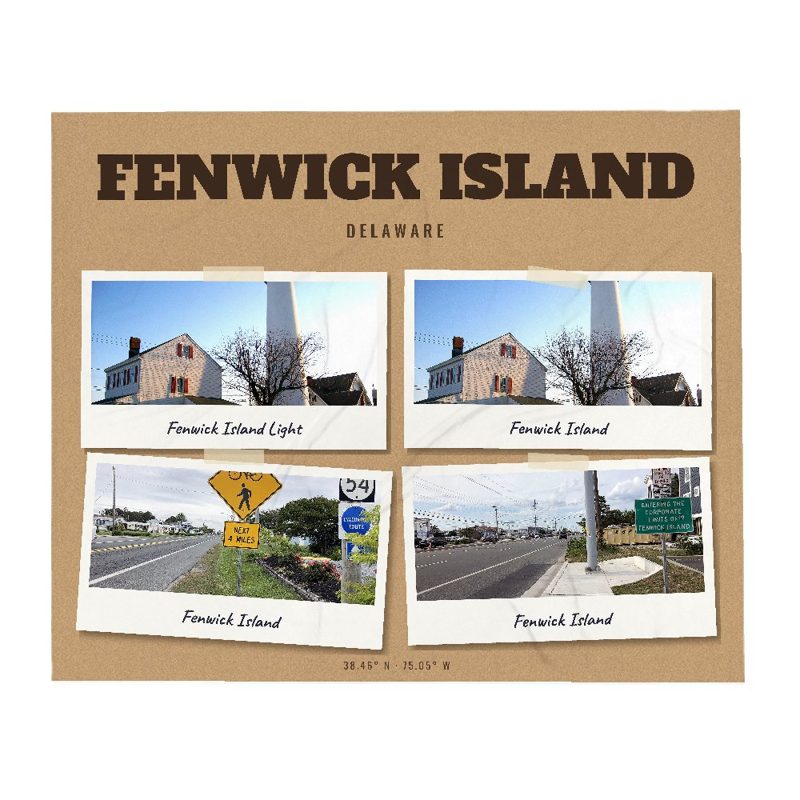
Six local landmarks as instant photos, soft fleece 50″×60″
20 oz, double-wall stainless
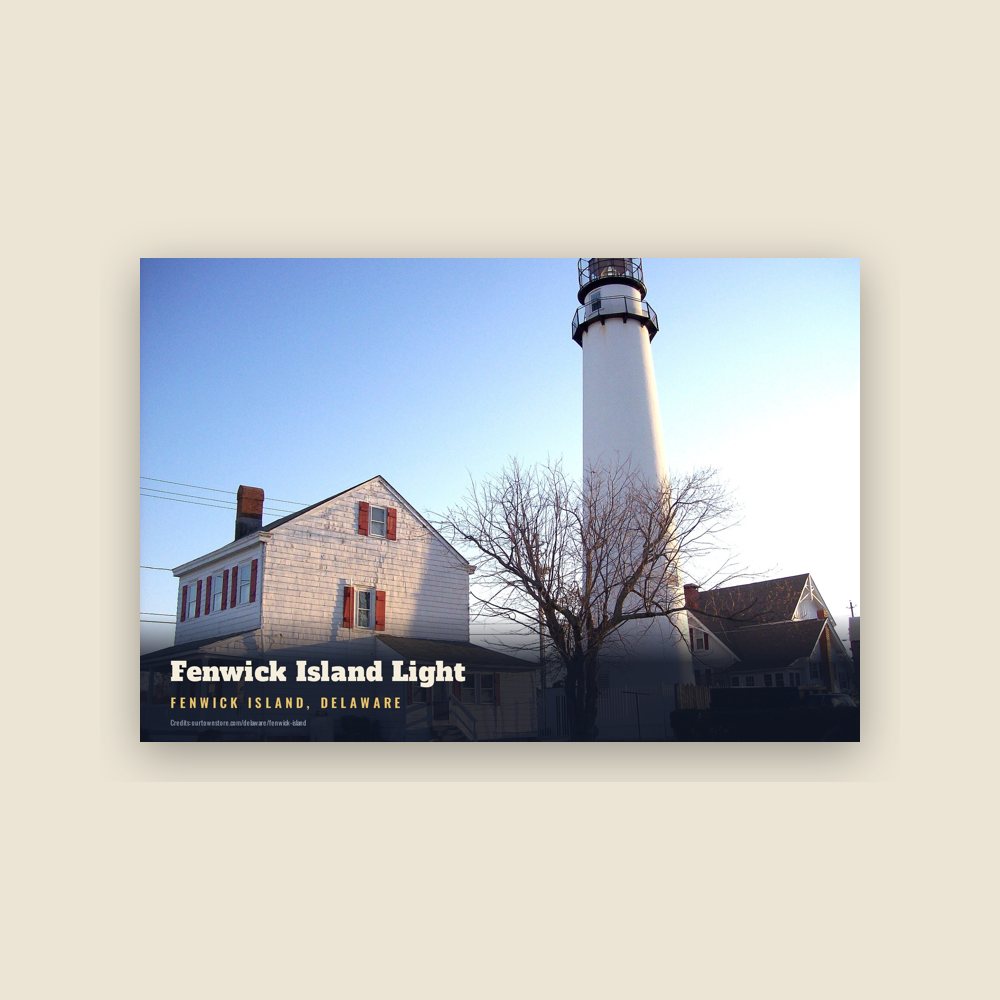
6″×4″ postcard, glossy front
Fenwick Island is a coastal resort town in Sussex County, Delaware, United States. Fenwick Island is the birthplace of Isaac J. MacCollum, physician.
Population 2010: 379 → 2020: 343
From Wikidata (CC0).
There is very little information about the Native Americans in and around Fenwick Island but the Nanticoke Tribe and Assateague Tribe are the tribes that inhabited the area. It is documented that the Nanticoke Tribe inhabited Strawberry Landing, which is just northwest of the town on Little Assawoman Bay, and the Assateague Tribe inhabited the area around Indian River, which is about 30 minutes by car north of the town. Little Assawoman Bay, just west the town, is named after an Algonkian name, Assawoman, that means "midway fishing stream." Both the Nanticoke and Assateague Tribes speak Algonkian.
In 1614 as the Dutch were arriving in North America and establishing the colony of New Netherland, they mapped out the coast of Delaware. Cornelius Jacobsen May was the explorer who was sent out to map the Delaware coast. In his 1614 map of the coast he calls the area around Fenwick Island "Hindlopen," sometimes the name "False Cape" was also used. This is the first known map that names the area around Fenwick Island. While the original 1614 map is lost, a 1656 and later 1684 map incorporate May's findings. In these maps the area around Fenwick Island is called "Hindlopen." The Dutch never developed Fenwick Island and left it largely uninhabited as the main Dutch settlement in Delaware was in modern day Lewes, called Zwaanendael. The British gained control over Delaware in 1665 during the Second Anglo-Dutch War after a bloodless surrender by the Dutch. The Dutch retook Delaware in 1673 during the Third Anglo-Dutch War but the British then took Delaware back for the final time in 1674, both times also bloodlessly.
In and around 1700, when the British controlled Delaware, pirates operated in the area and specifically used the bay behind Fenwick Island, Little Assawoman Bay, as a shelter from local authorities. In Fenwick Island there used to be many naturally forming inlets/channels that ran from the ocean into the bay, the believed conclusion is that these inlets are what the pirates used to get their ships into the bay. Local legend states that Cedar Island in Little Assawoman Bay was the pirates base of operations and a spot for the pirates to bury treasure. Regardless of the truth of the legend, Little Assawoman Bay and the Delaware coastal area as a whole was a well known place for pirates to hide from the law. Cedar Island has just about washed under the bay, as Seal Island did around 2010.
Thomas Fenwick, a planter from England who settled in Maryland, was the owner of the land during the years surrounding 1700 and the land was therefore named after him. Fenwick Island lay in the part of Delaware which Lord Baltimore and his heirs claimed during the Penn–Baltimore border dispute.
In the late 1700s Fenwick Island was a small "hotspot" for salt collection. People would dig holes in the "back of the dunes" where there was very salty water and they would boil that water until it was just the salt. The salt would then be shipped to surrounding communities and counties, even Philadelphia. The price was $2 a bushel but increased to $3 because of shortages due to the War of 1812. In the 1870s the salt collection in Fenwick Island had stopped due to the cheaper salt mining in other parts of the country.
In 1932 Fenwick Island consisted of a few meeting grounds for camps including a hotel, Fenwick Island Light, and some summer cottages built by squatters.
During an interrogation in Dover, police found out about a future rum-running operation in Fenwick Island. Delaware State Police asked the Coast Guard station nearby, Indian River Life-Saving Station, to keep an eye out and before sunrise on the stormy morning of October 3rd a Coast Guardsmen patrolling the area spotted a wagon moving across the beach. Fenwick Island was thought to be empty as the camps were not in session at the time. Alarm was raised, the State Police got word, and they headed to the area. The police raised the island's drawbridge as to not allow the run-runners to leave the island. Once the police arrived a mothership could be seen offshore, highlighted by lightning flashes, and two smaller boats could be seen coming ashore. One small boat had already made it ashore but the other one tried to turn around, however the crew had trouble rowing in the stormy seas, abandoned the boat, and tried to swim. The Coast Guardsmen opened fire and got the men to come ashore. They then gave orders to the mothership but the ship fled for open water. The State Police and Coast Guardsmen opened fire on the ship with their rifles but the ship managed to get away. The police then followed the wagon tracks to the empty hotel where 200 cases of alcohol were found, totaled around $30,000 at the time. Five people were arrested during the incident. The event made national news for a short time and was a big discovery for the area.
The town was an unincorporated area between South Bethany and Ocean City, Maryland, until July 1953, when the Delaware General Assembly passed an act to incorporate the town. Local sentiment demanded incorporation to prevent the relentless high-rise development of Ocean City from creeping north into Fenwick Island. Before incorporation, in 1941, Delaware kicked out the squatters and the permanent population began to slowly grow. Fenwick Island's population was 48 in 1960.
Adapted (trimmed) from the Wikipedia article Fenwick Island, Delaware, revision 1378430422 by its contributors, licensed CC BY-SA 4.0.
We share a part of every Fenwick Island sale with local partners, and we'd love to print from your collection. Old photographs, maps and postcards make the best keepsakes.
Partner with usA favorite landmark, your street, a school or team, an anniversary gift, a different product. Tell us and we'll get back to you by email.
4 free coloring pages of Fenwick Island, each traced from a photo of a local landmark. Print them at home, at school or for story hour.
Fenwick Island's population was 343 in the 2020 U.S. Census, down from 379 in 2010.
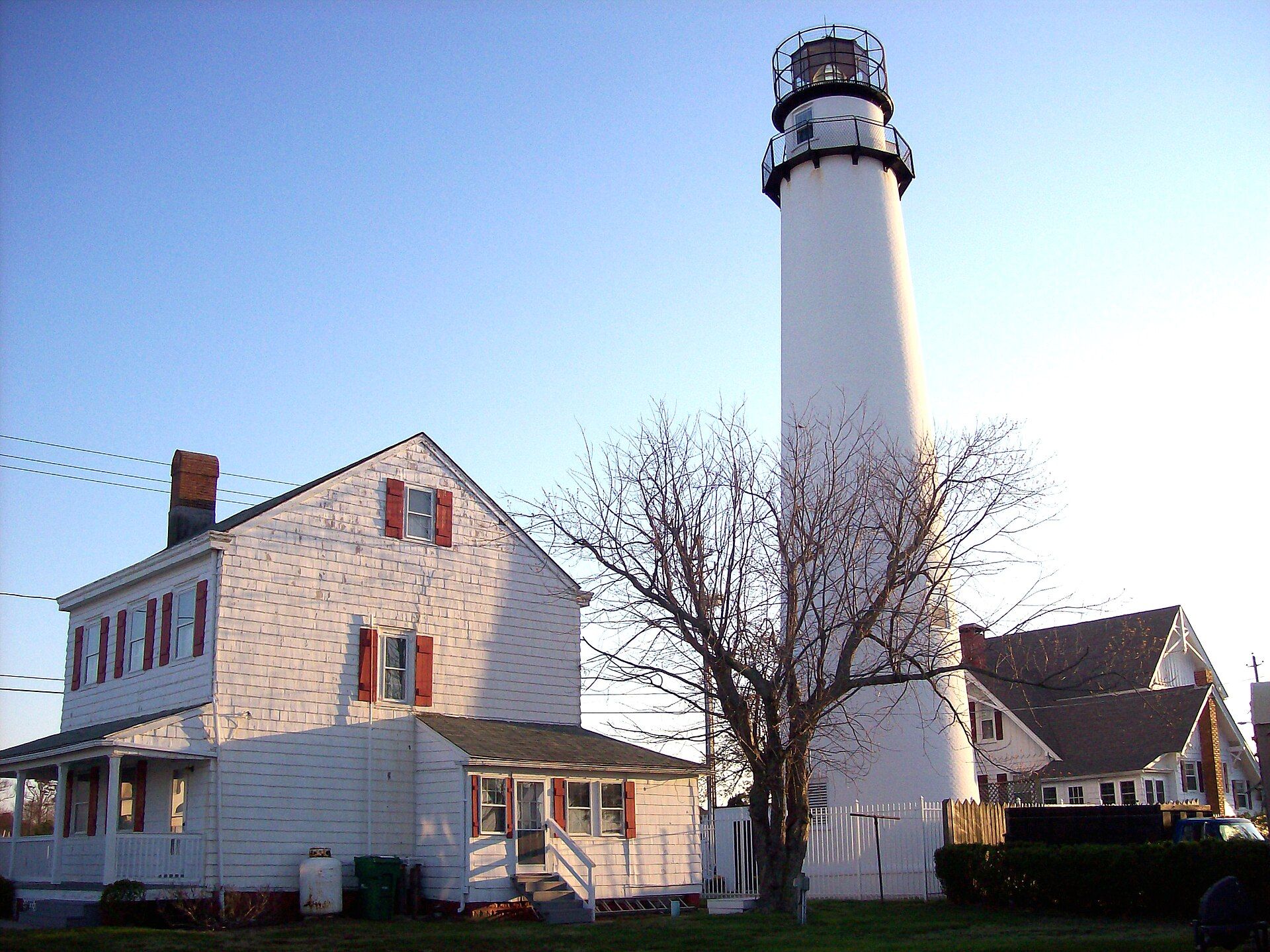
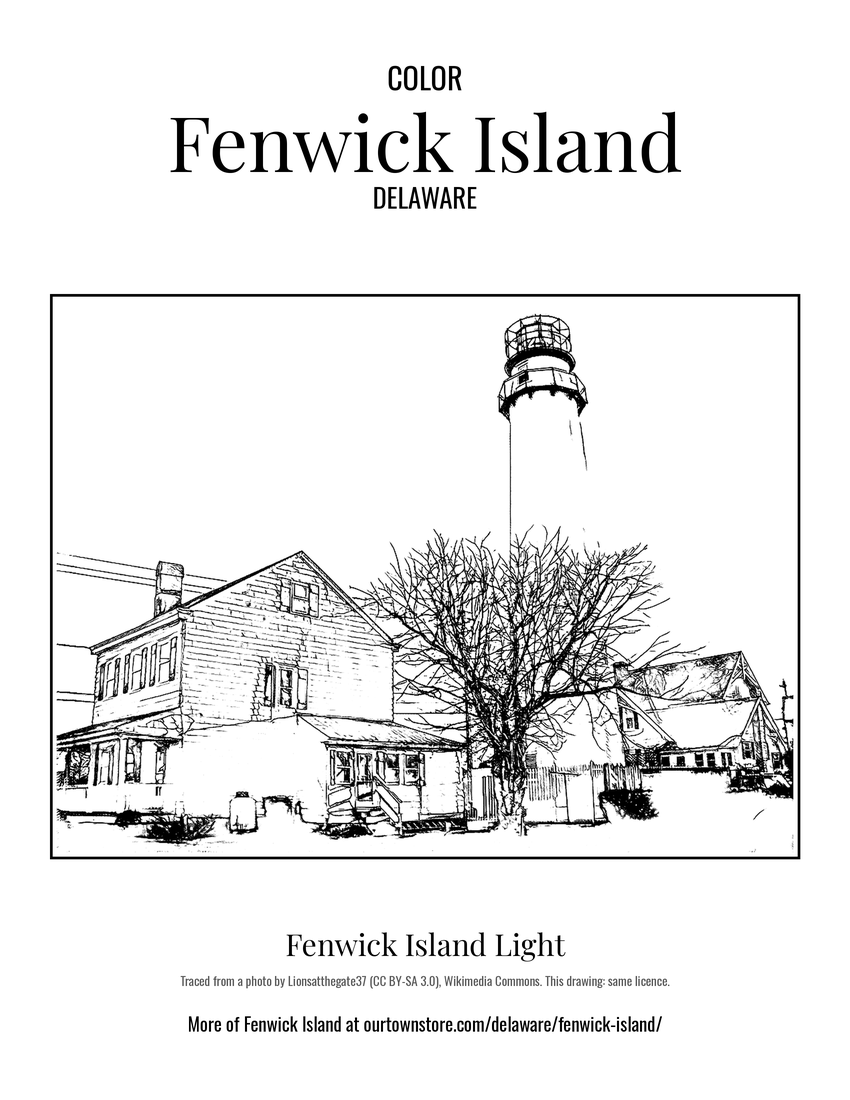 Fenwick Island Light
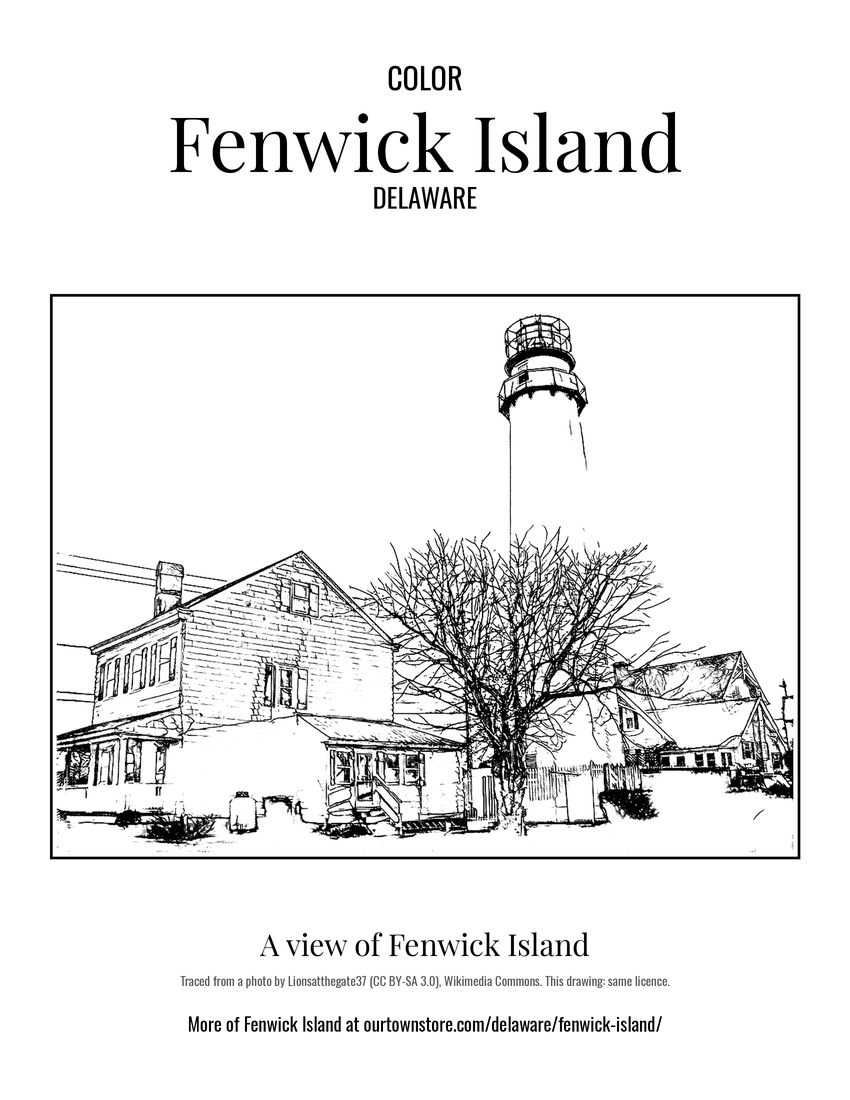 A view of Fenwick Island
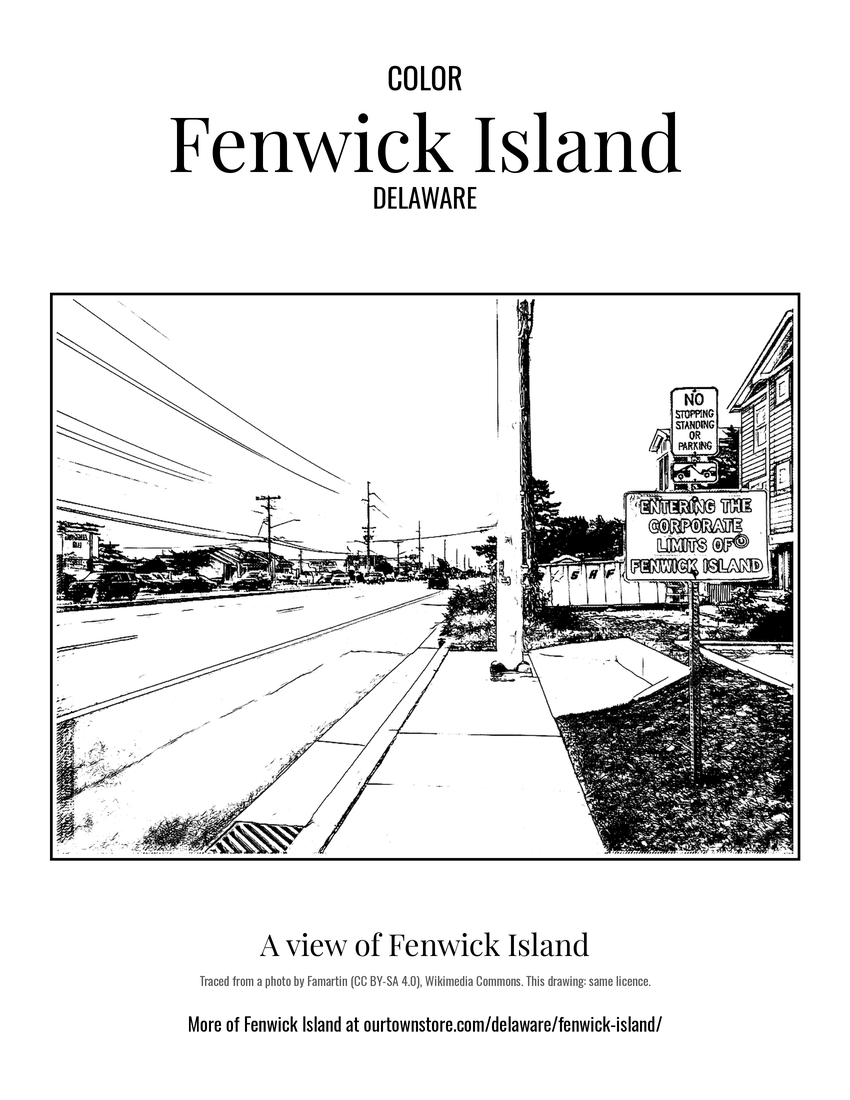 A view of Fenwick Island
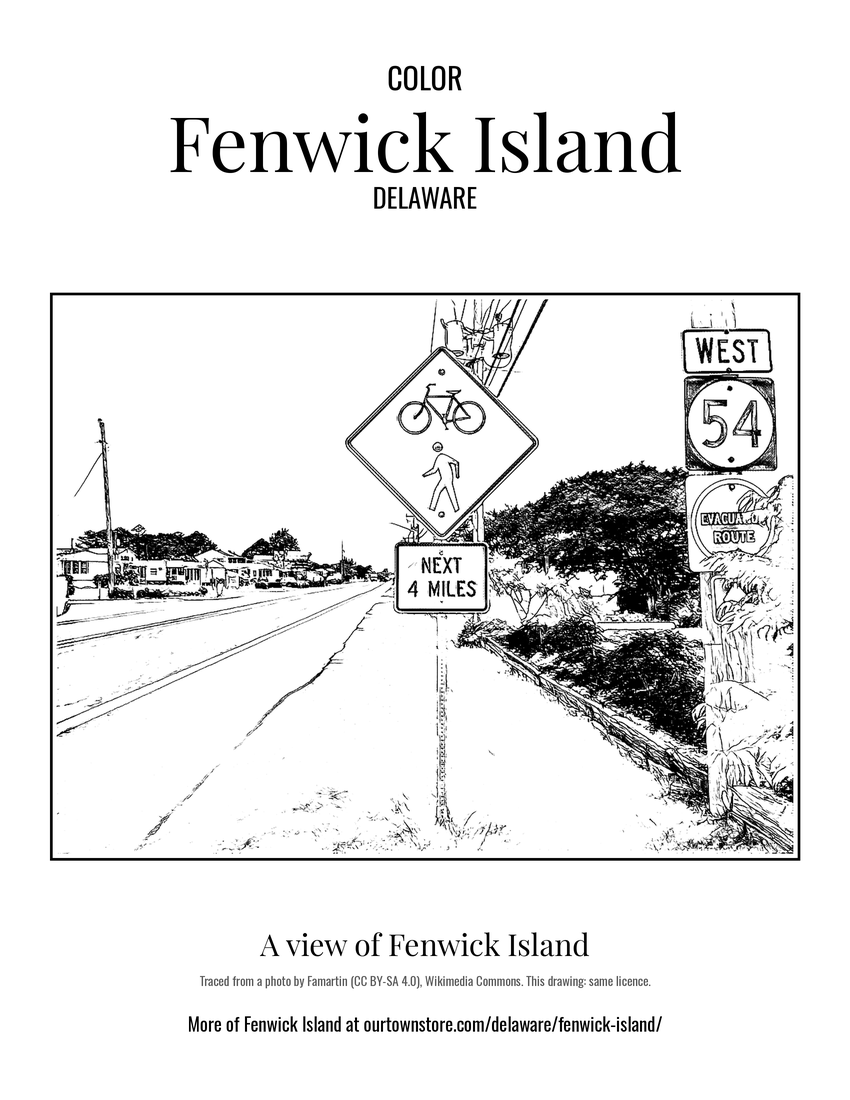 A view of Fenwick Island