Ellendale started as a forest and swamp on the divide between the Chesapeake Bay and Delaware Bay.
- CountySussex County
- Population487 (2020 U.S. Census)
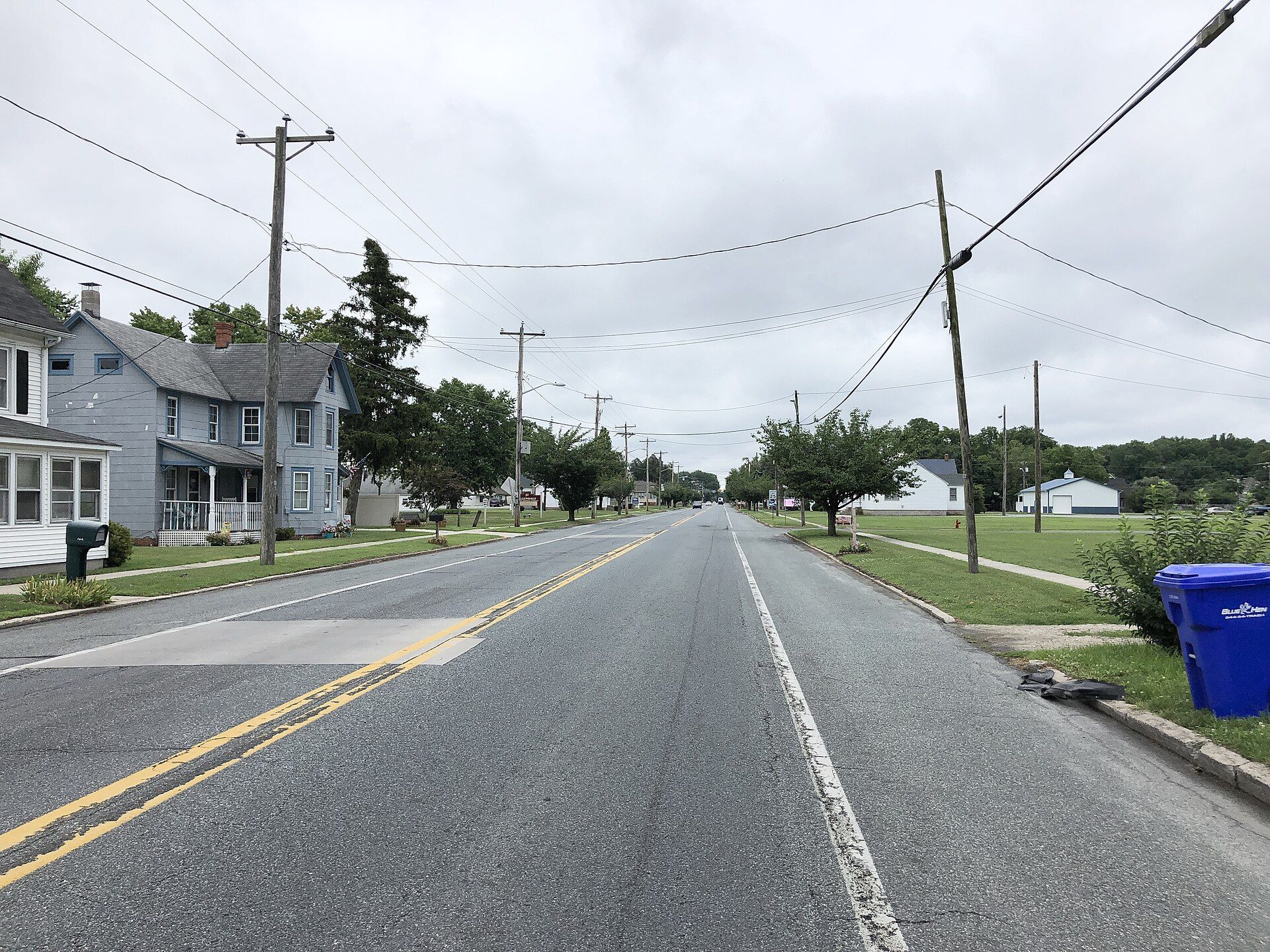
Ellendale started as a forest and swamp on the divide between the Chesapeake Bay and Delaware Bay.
Ellendale, Delaware gifts and souvenirs: 26 designs made from Ellendale's own map, landmarks and history, from $16 to $95. Printed to order and shipped free in the USA.
| Popular | Price |
|---|---|
| Ellendale Hometown Ornament | $23 |
| Ellendale Vintage Travel Poster | from $40 |
| Ellendale Varsity Crewneck | from $57 |
| Ellendale Est. Tee | from $33 |
| Ellendale Town Line Mug | from $26 |
| Ellendale Market Tote | $37 |
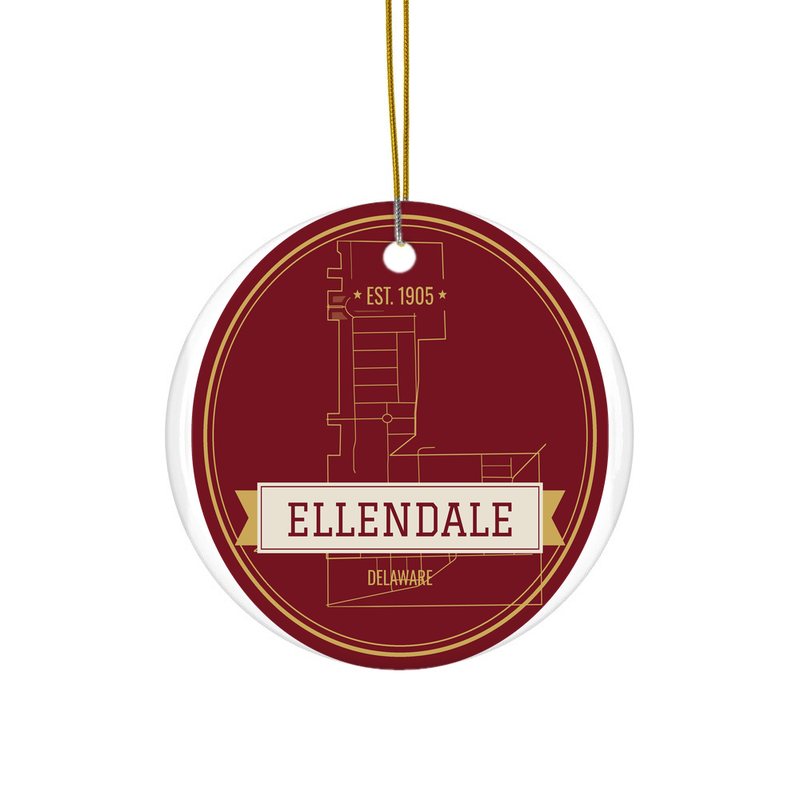
Ceramic keepsake, gold ribbon, in 3 styles
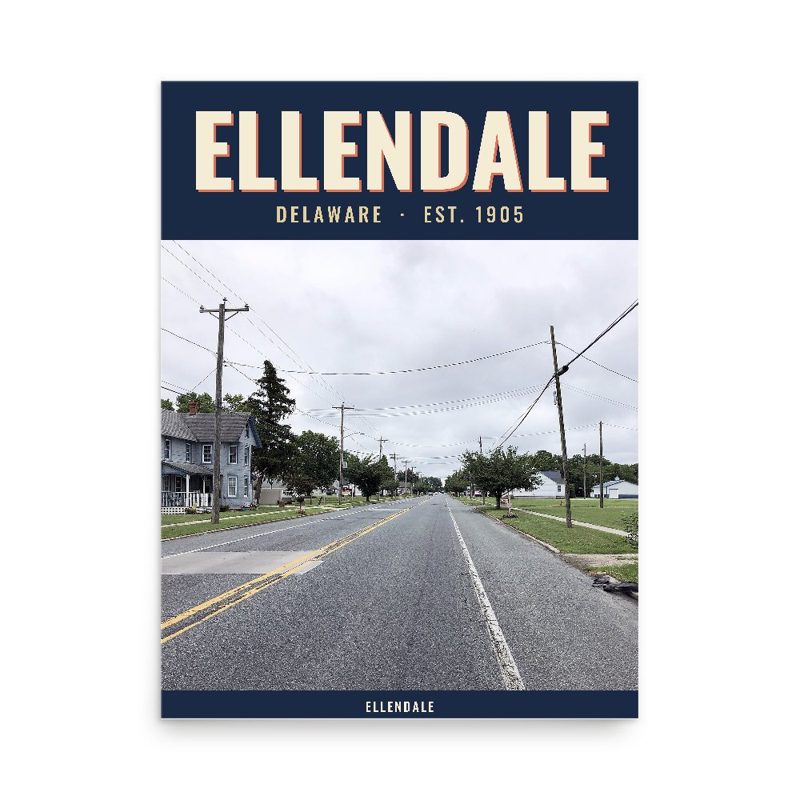
Its landmark photo in a classic travel-poster layout
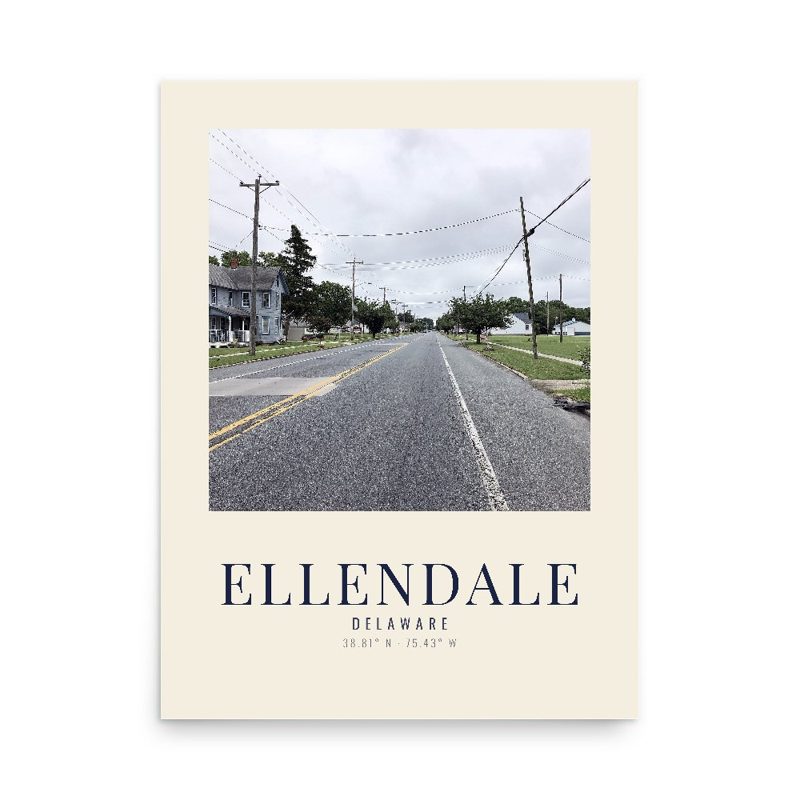
A local landmark photo as a gallery print
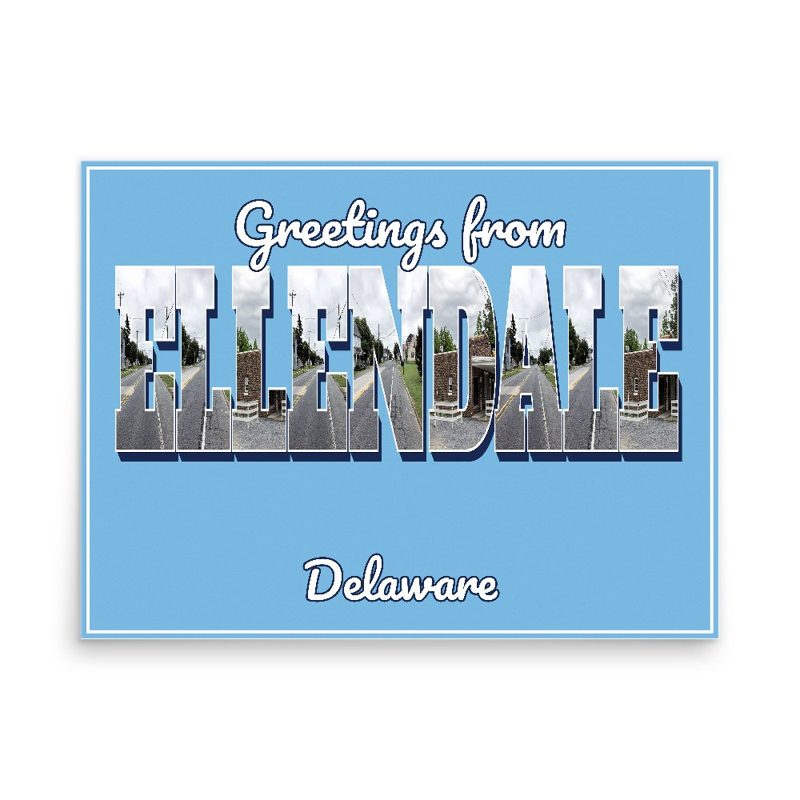
Classic large-letter postcard art, filled with local photos
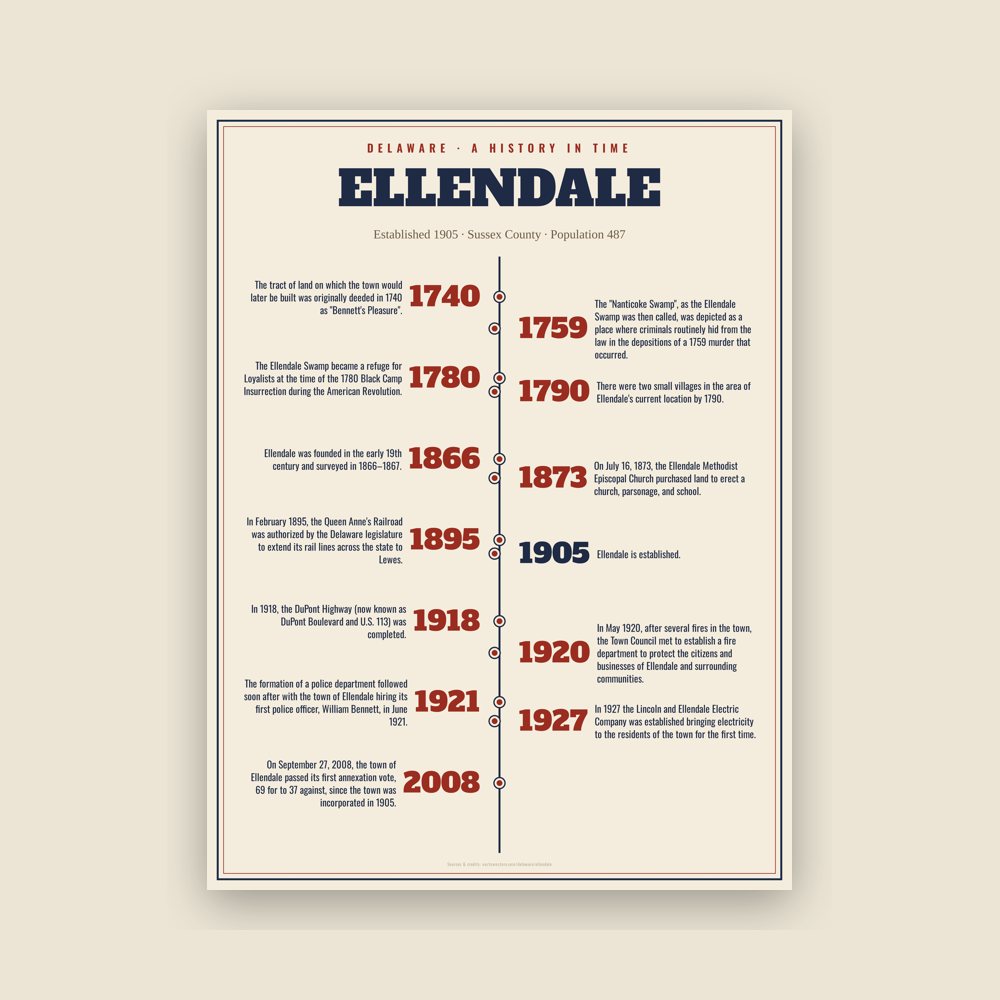
The town's story in dates, from its own records, for home or classroom
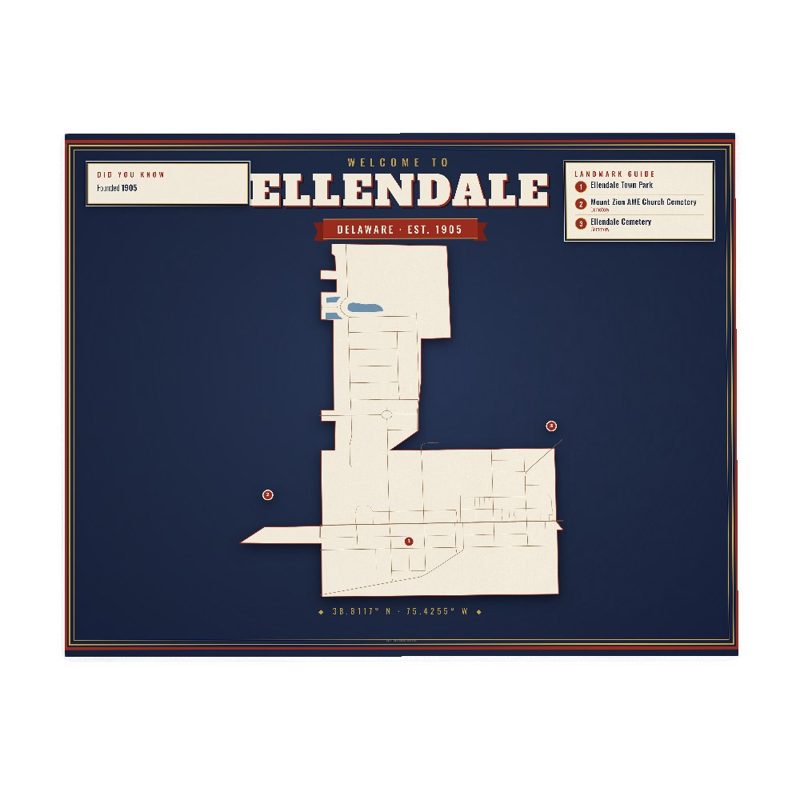
Map of local landmarks, washable fabric

Heavy-blend fleece, street map printed on the back
Red heavy-blend crewneck, knit-stitch town print
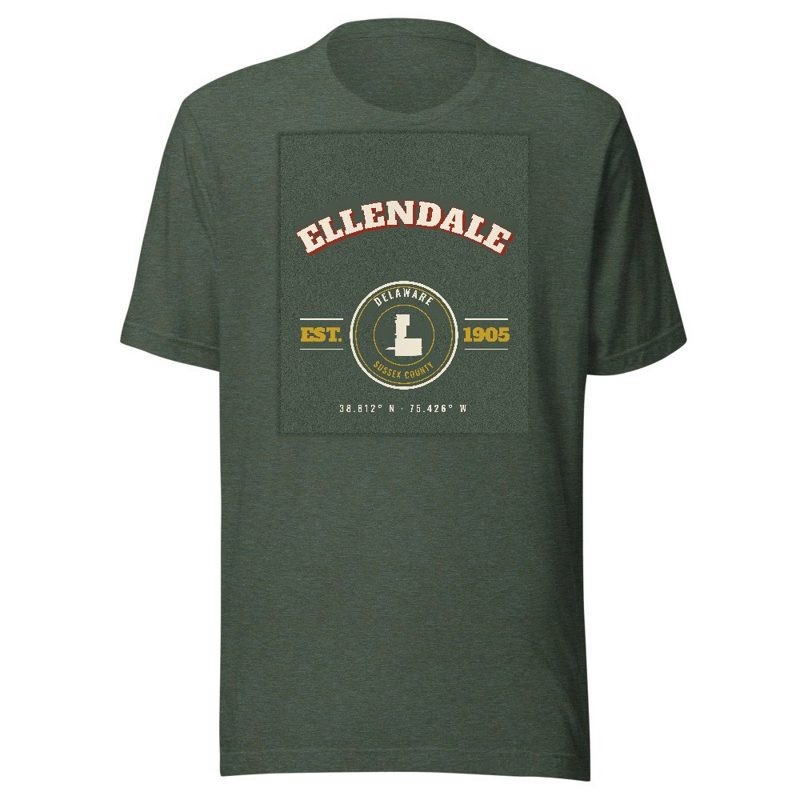
Soft Bella+Canvas jersey
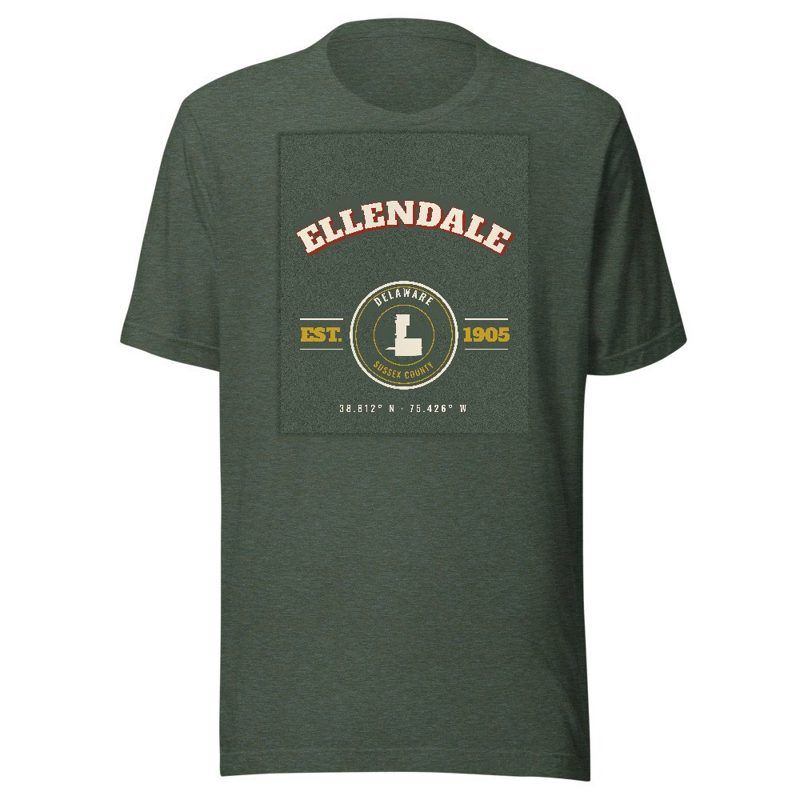
Kids' Bella+Canvas jersey, youth sizes

Bella+Canvas toddler jersey
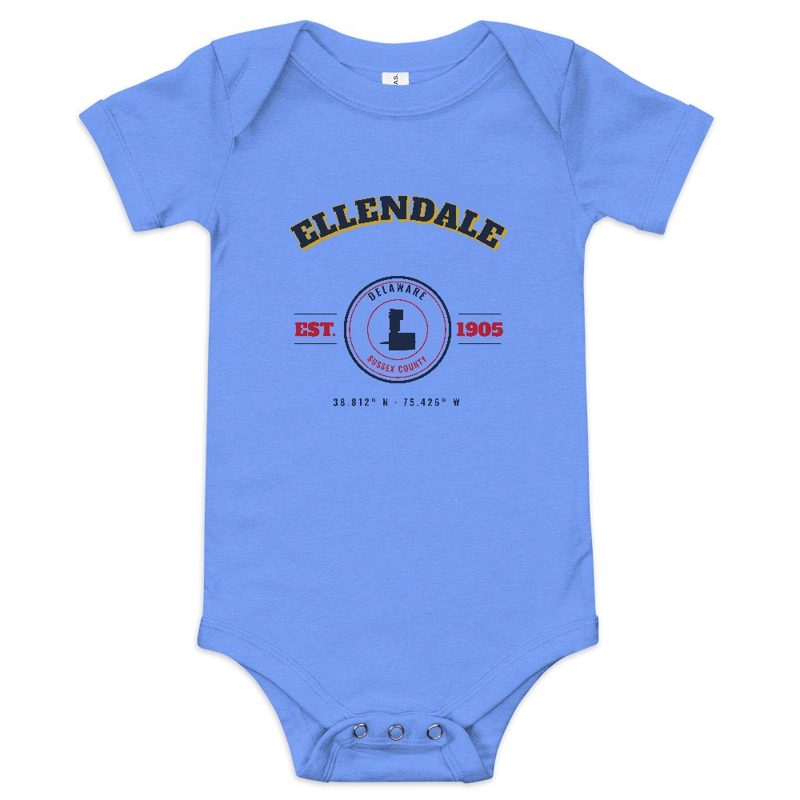
Bella+Canvas baby bodysuit
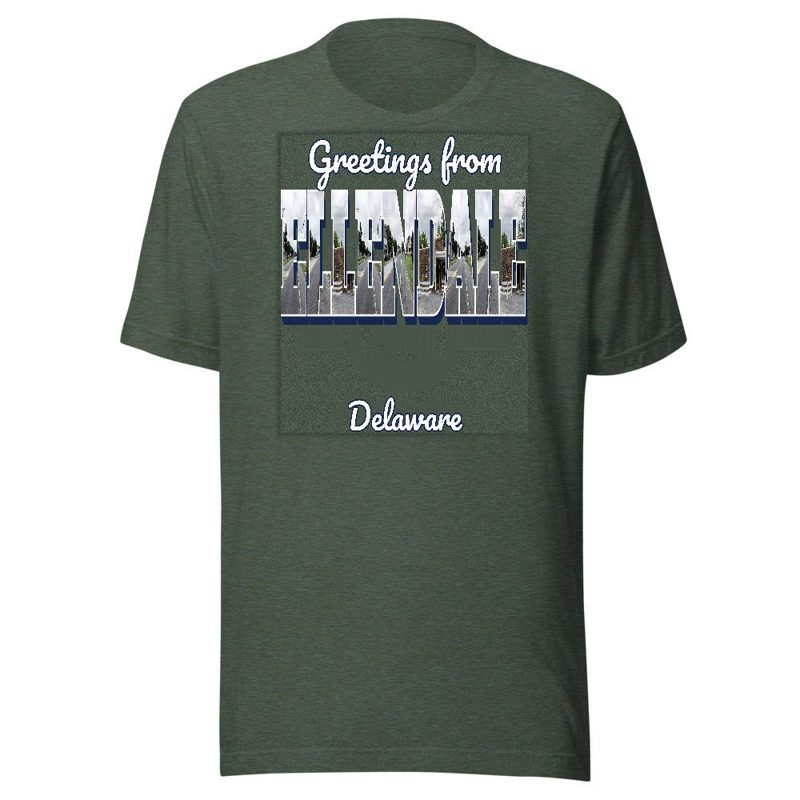
Large-letter postcard art filled with local photos
Glossy ceramic, dishwasher safe

Large-letter postcard art filled with local photos, 11 oz ceramic
Weatherproof, for the front walk
24″×16″, printed coir-look fibers, rubber back
12″×12″ printed wood, ready to hang
Soft-touch, zip cover
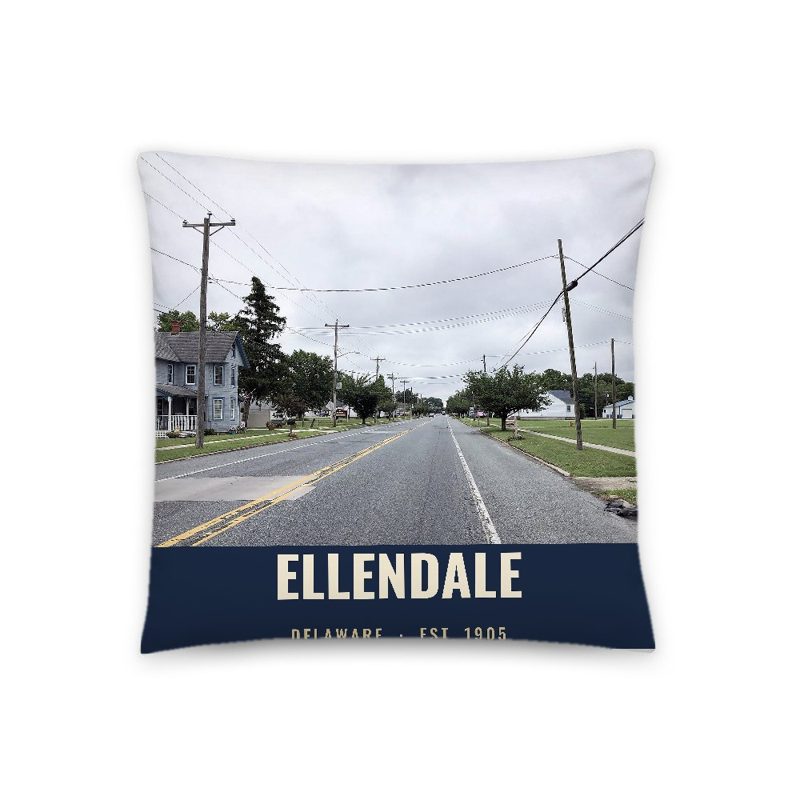
A local landmark photo with the town name, 18″×18″
Sturdy all-over-print tote
Large-letter postcard art on a sturdy tote

Foam-front trucker, printed (not embroidered) with local photos
Glossy top, cork back
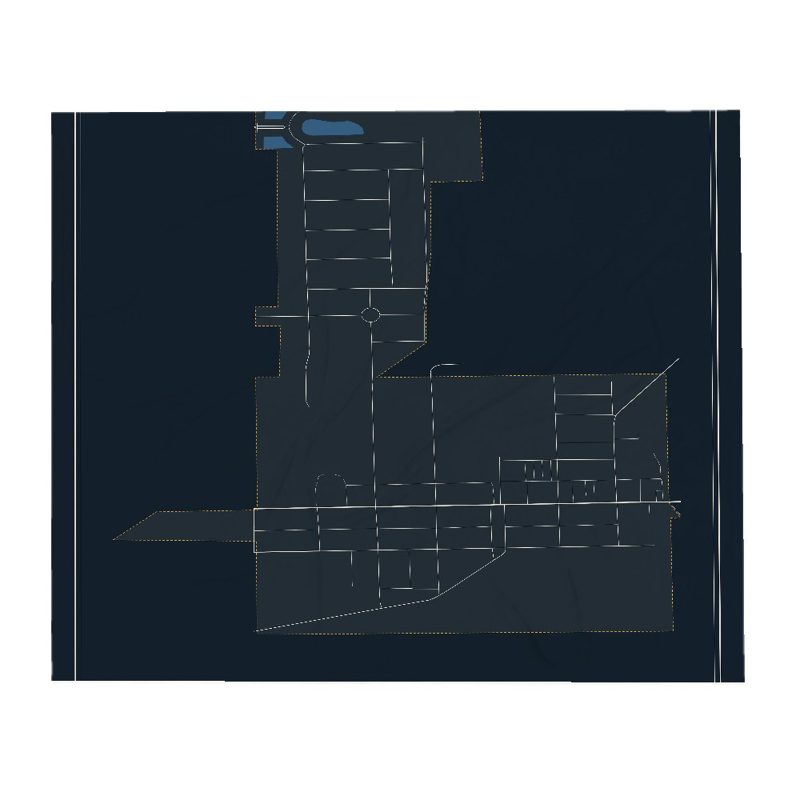
Soft fleece, 50″×60″
20 oz, double-wall stainless
Ellendale started as a forest and swamp on the divide between the Chesapeake Bay and Delaware Bay. The swamp was the hunting grounds of the Nanticoke tribe until they were driven out by the Lenape tribe in the Battle Green near Chestnut Ridge, a hill on Ellendale's north side. The Lenape Trace, a main thoroughfare of a trail, passed through Ellendale as a Native American trade route from Pocomoke City, Maryland to Marcus Hook, Pennsylvania. With the arrival of Europeans, the Ellendale area was a province of fur traders and hunters. Early in the 18th century, farming and timbering pushed back the swamp that once covered the area. The tract of land on which the town would later be built was originally deeded in 1740 as "Bennett's Pleasure".
Militia from Kent County dispersed the insurrectionists. Some were sent off to serve in the Continental Army, and thirty-seven were indicted for treason in the State Supreme Court. Eight were ordered to be hanged ‘by the neck but not till you be dead, for then your bowels must be taken out and burnt before your face, then your head must be severed from your body, and your body divided into four Quarters, and these must be at the disposal of the Supreme Authority in the State. Fortunately this sentence which was customary for treason was not carried out, and all the participants were pardoned by the General Assembly on November 4, 1780."
There were two small villages in the area of Ellendale's current location by 1790. They were Fleatown (or Federalsburg) to the north, and New Market to the east, both of which later became ghost towns with the establishment of Ellendale.
In the Federal era, the Old State Road was built to connect the newly founded county seat of Georgetown with the state capital of Dover. With emancipation, African Americans took up free lives in the area and the railroads came after the American Civil War. Ellendale was founded in the early 19th century and surveyed in 1866–1867. Ellendale was first settled near the Morris Tavern Crossroads, near the current Old State Road and Main Street intersection, by a handful of families. The town is rumored to be named after either the daughter of Whig Republican Alfred Short, a state legislator, the wife of Dr. John S. Prettyman who laid out the town, or the daughter of Mr. Thomas William Dale, the chief engineer of the railroad survey team. Ellendale's current site was established in 1866 when the families moved east to settle around the Junction and Breakwater Railroad Depot. On July 16, 1873, the Ellendale Methodist Episcopal Church purchased land to erect a church, parsonage, and school. Ellendale's economy rapidly advanced as the RJ Clendaniel Sawmill, the Jester & Reed Canning Company, a brick yard, several peach evaporating and canning companies, basket factory, the Phillip J Ritter Ketchup Company, Ellendale Excelsior Company, and button factory opened in the town. The railroad was purchased by the Pennsylvania Railroad in 1905 and that same year the town was formally incorporated. In February 1895, the Queen Anne's Railroad was authorized by the Delaware legislature to extend its rail lines across the state to Lewes. The goal of the company was to establish a direct link between Baltimore and Delaware's coastal resorts. This additional rail line passed through Ellendale and provided passenger, freight, and mail services as far west as Queenstown, Maryland (with links to Baltimore via steamship) and east to Rehoboth Beach (with links to Cape May, New Jersey via steamship) with the first passenger trains passing through in 1897. A post office was erected, with a large second floor room that was used by the Independent Order of Red Men, a break off group of the Improved Order of Red Men that was established in the town, at the site of what is now the Town Hall.
In 1918, the DuPont Highway (now known as DuPont Boulevard and U.S. 113) was completed. While this was seen as a great boon to the town, it would eventually lead to the decline of the railroad and the town's economy, leading to the closing of all the towns factories. In May 1920, after several fires in the town, the Town Council met to establish a fire department to protect the citizens and businesses of Ellendale and surrounding communities. The newly formed fire department purchased a Ford Model T fire truck for $1400 from the Viscose Silk Company in Marcus Hook, Pennsylvania. The formation of a police department followed soon after with the town of Ellendale hiring its first police officer, William Bennett, in June 1921.
New schools were built in the 1920s. In 1920, the Ellendale School 125 was built in the International style on Main Street on the towns west side, and the Ellendale Colored School 195C, was built between 1922 and 1925 on North Old State Road after funding was provided by the DuPont family. By the middle of the 1920s, with profits declining and competition for its other lines increasing, the Pennsylvania Railroad decided to abandon a large portion of the railway. The Denton, Maryland to Lewes section was purchased by the Maryland & Delaware Coast Railway, but with the decline of the locomotive as vehicle traffic increased, the line was again scheduled to be abandoned in 1931. The state of Delaware eventually purchased the portion of the line from Ellendale to Milton to maintain a freight link, making this section the last operable section of one that once spanned over 100 miles (160 km). Over sixty residents of Ellendale served in World War I, World War II, the Korean War, and Vietnam War.
In 1927 the Lincoln and Ellendale Electric Company was established bringing electricity to the residents of the town for the first time. Also in 1927 the Ellendale State Forest was established by the State Highway Department. When it was turned over to the State Forestry Department in 1932, it totalled 40 acres (160,000 m2), today it has been expanded and combined with the Redden State Forest to well over 5,000 acres (20 km2). The Appenzeller Tract in Ellendale, a small 45-acre (180,000 m2) section, was a gift to the state from the DuPont family. A large woods fire between Ellendale, Georgetown, and Milton burned over 38,000 acres (150 km2) in 1930 and forced the General Assembly to pass a series of forest protection laws establishing a fire control system which included building a 120-foot (37 m) fire tower just outside Ellendale to alert people of fires.
In the 1950s, numerous school districts in Kent and Sussex Counties, including Ellendale, continued to fight against desegregation after the ruling of Brown v. Board of Education. The protests which begin at the Milford School District, eventually bringing about a lawsuit that went to the Delaware Supreme Court which ruled that while segregation was unconstitutional, it did not require immediate desegregation. This was further bolstered by the findings of Griffin v. County School Board of Prince Edward County. Bryant Bowles, President of the National Association for the Advancement of White People led several anti-desegregation rallies and boycotts in the area, including Ellendale, that resulted in decreased attendance at the schools. Ellendale School 125 and Ellendale Colored School 195C reached an agreement on consolidation, but attorney Louis L. Redding complained to the Department of Public Instruction that black teachers were being subjected to scrutiny that their white counterparts were not. After desegregation, all students were educated at Ellendale School 125.
The Ellendale Town Council reorganized a police department in the 1970s. Due to fiscal constraints, the department was shut down again in the 1980s. After being restarted in the 1990s, the economic crash that started with the housing crisis caused Congress to cut funding to community policing grants and the town was forced to cut its department down to one part-time officer.
On September 27, 2008, the town of Ellendale passed its first annexation vote, 69 for to 37 against, since the town was incorporated in 1905. The 5-acre (20,000 m2) parcel at the corner of Main Street and South Old State Road will be used for commercial purposes. Since 2022, the town has annexed more than 625 acres (2.53 km2) of surrounding properties and their associated residential and commercial developments, which has more than tripled the land area of the town, and has the potential to increase the town population to over 5,500 residents.
Adapted (trimmed) from the Wikipedia article Ellendale, Delaware, revision 1375243288 by its contributors, licensed CC BY-SA 4.0.
We share a part of every Ellendale sale with local partners, and we'd love to print from your collection. Old photographs, maps and postcards make the best keepsakes.
Partner with usA favorite landmark, your street, a school or team, an anniversary gift, a different product. Tell us and we'll get back to you by email.
3 free coloring pages of Ellendale, each traced from a photo of a local landmark. Print them at home, at school or for story hour.
Ellendale's population was 487 in the 2020 U.S. Census, up from 381 in 2010.
 A view of Ellendale
 A view of Ellendale
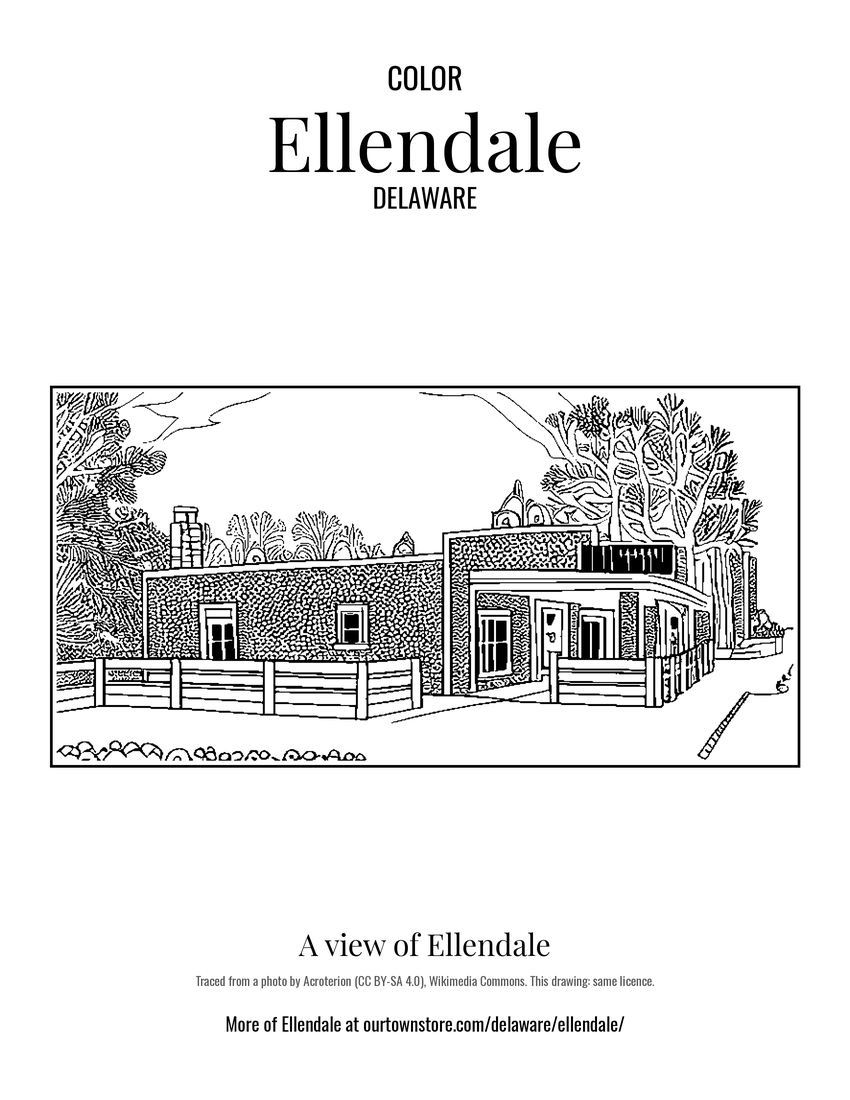 A view of Ellendale