A short history of Prospect
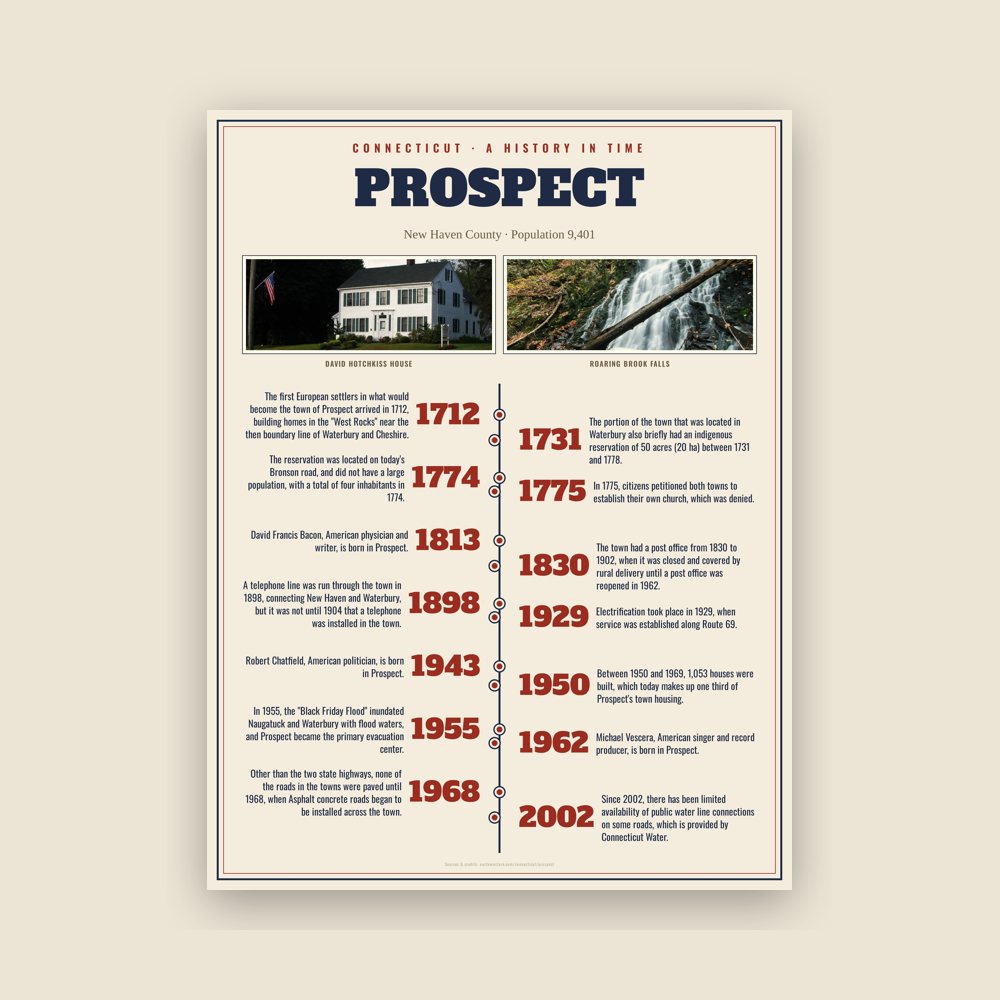
It is believed that the Native Americans who lived in the area now known as Prospect first arrived to the area between 20,000 and 40,000 years ago. Little is known of their time living here, with only a few arrowheads, stone tools, and utensils being found in the town. What is known is that the town rested near the border zone of the Quinnipiac and Tunxis peoples, and it was known that the area served as a hunting and fishing ground for both tribes. There is no known evidence for any indigenous permanent settlement within the town prior to white European settlers permanently occupying the town. The portion of the town that was located in Waterbury also briefly had an indigenous reservation of 50 acres (20 ha) between 1731 and 1778. The reservation was located on today's Bronson road, and did not have a large population, with a total of four inhabitants in 1774.
The first land record inside the town comes from a 1694 land record of John Moss, Jr., who owned 90 acres (36 ha) to 100 acres (40 ha) of land on "ye Tenn Mile river alongside an irremovable hill." The land was then first surveyed in 1697, and divided into four tracts, starting from the Waterbury border, and advancing towards Cheshire in half-mile intervals. Several roads in the town today follow the tier lines as outlined in the original survey, and the old border between Wallingford and Waterbury is seen in the modern-day Straitsville road.
The first European settlers in what would become the town of Prospect arrived in 1712, building homes in the "West Rocks" near the then boundary line of Waterbury and Cheshire. In 1775, citizens petitioned both towns to establish their own church, which was denied. It was in 1778 that a separatist church was constructed, which gained the name Columbia church from its official title of "Society of Columbia." In 1797, through an act of the Connecticut General Assembly, the Congregational Church was established, governed by the "Columbia Company," earning the territory the name Columbia Parish until its incorporation as a municipality in 1827. The town was denied the name Columbia, owing to the already incorporated Columbia in Tolland County, and instead it was named Prospect. This name was chosen because of the view from the town green, which before the growth of the trees, one could observe Long Island Sound, the Connecticut River, and even Long Island on clear days.
The town's economic history has long been dominated by agriculture, with agricultural production never being eclipsed by manufacturing or services until the onset of suburbanization in the 1950s. The town used to produce wood, charcoal, hay, ice, apples, cider, milk, butter, cheese, eggs, wool, flax, corn, rye, barley, and oats. For some time, the town did have a manufacturing base. From the onset of the Industrial Revolution, farmers saw manufacturing as a way to supplement their incomes. Manufacturing activities that required water power were often located at the edges of the town, where the steep drops allowed for a large amount of power to be obtained. This led to the highest concentration of industry in the town being located in the Rag Hollow area, near the border of Cheshire. This section of town had factories that made sewing needles, britannia and pewter ware, cutlery, buttons, button hooks, hardware, and wagon wheels. The town was also where the first parlor matches were made in the United States, with the factory of Ives & Judd producing them. Other manufacturing was scattered around the town, often on the farms of those who owned the factories. These factories often moved locations. The town's brief foray into manufacturing came to a close by the twentieth century, with operations halting and entrepreneurs leaving for Waterbury, Naugatuck, Cheshire, or even New York.
Given the town's rural nature and sparse population, modern amenities developed slowly in the town. A telephone line was run through the town in 1898, connecting New Haven and Waterbury, but it was not until 1904 that a telephone was installed in the town. Electrification took place in 1929, when service was established along Route 69. At this time, the Grange hall, the Congregational church, and three street lights made up the initial electric customers. The town made use of dirt roads until the 1920s, where they were upgraded to gravel roads. Other than the two state highways, none of the roads in the towns were paved until 1968, when Asphalt concrete roads began to be installed across the town. The town had a post office from 1830 to 1902, when it was closed and covered by rural delivery until a post office was reopened in 1962. The town has no publicly available sewer service, and all extant hookups are privately funded. Since 2002, there has been limited availability of public water line connections on some roads, which is provided by Connecticut Water. Most town residents and businesses rely on septic systems for discharge, and wells for water. Regulation of these systems is managed by Chesprocott, the regional health authority.
Since the 1950s, the town has undergone a rapid period of suburbanization, as families fled the nearby city of Waterbury and other municipalities during the period of the national white flight. Between 1950 and 1969, 1,053 houses were built, which today makes up one third of Prospect's town housing. Today, 88.4% of the houses in the town have been built since 1950. Single family homes make up 90% of the housing stock in the town. In 1955, the "Black Friday Flood" inundated Naugatuck and Waterbury with flood waters, and Prospect became the primary evacuation center. Those who lost their homes found refugee in Prospect's Community School, where they received medical attention and temporary housing. This event helped to drive more residents to move to the town.
In 1977, Lorne J. Acquin murdered several members of his extended family. It was the largest mass murder in Connecticut history until the Sandy Hook Elementary School shooting.
Prospect is known locally as being "The Best Small Town in Connecticut," with the phrase posted on the town's trucks and website. The name originates from an early 1990s article in Connecticut Magazine which ranked Prospect as the worst small town in the entire state. The measurement was done based on its school system, economy, the cost of living, crime rate and cultural resources. In response to this, the town's long-time mayor Robert Chatfield removed the magazine from the library, and declared Prospect "The Best Small Town in Connecticut," and ordered it placed on town vehicles and bumper stickers.
Adapted (trimmed) from the Wikipedia article Prospect, Connecticut, revision 1379139932 by its contributors, licensed CC BY-SA 4.0.
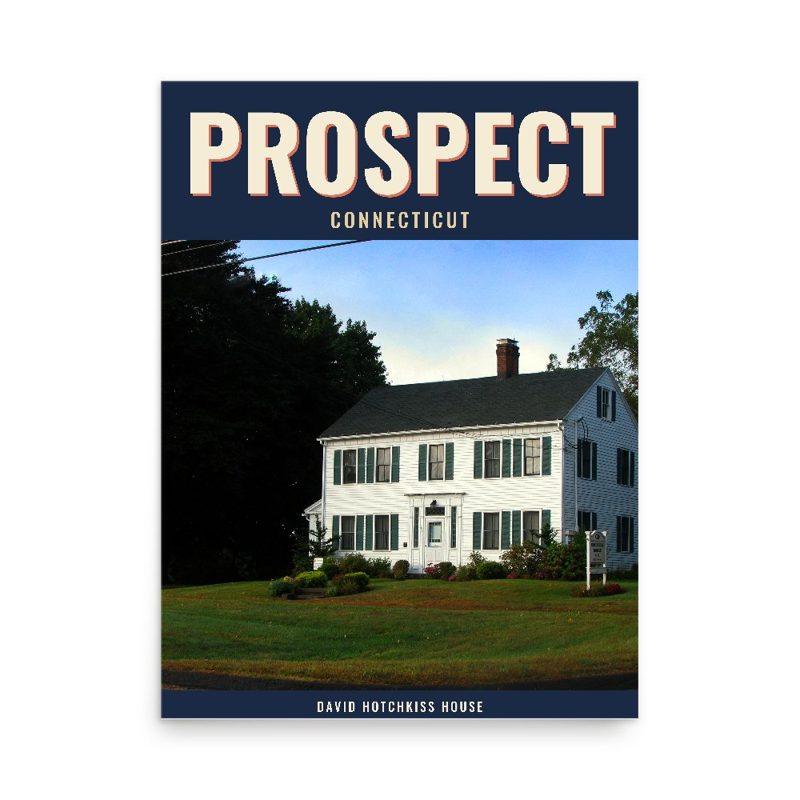
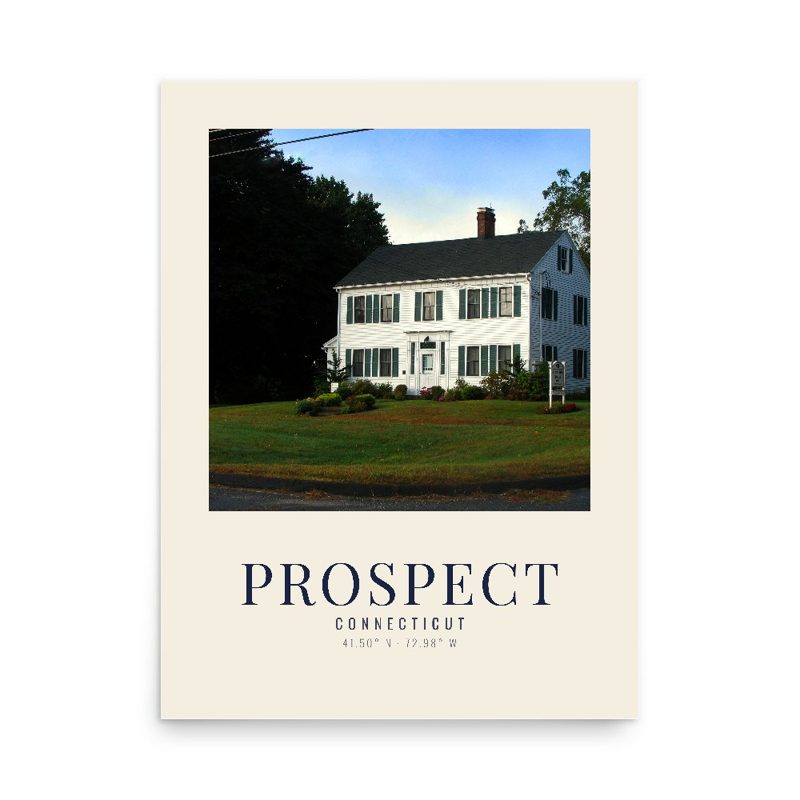
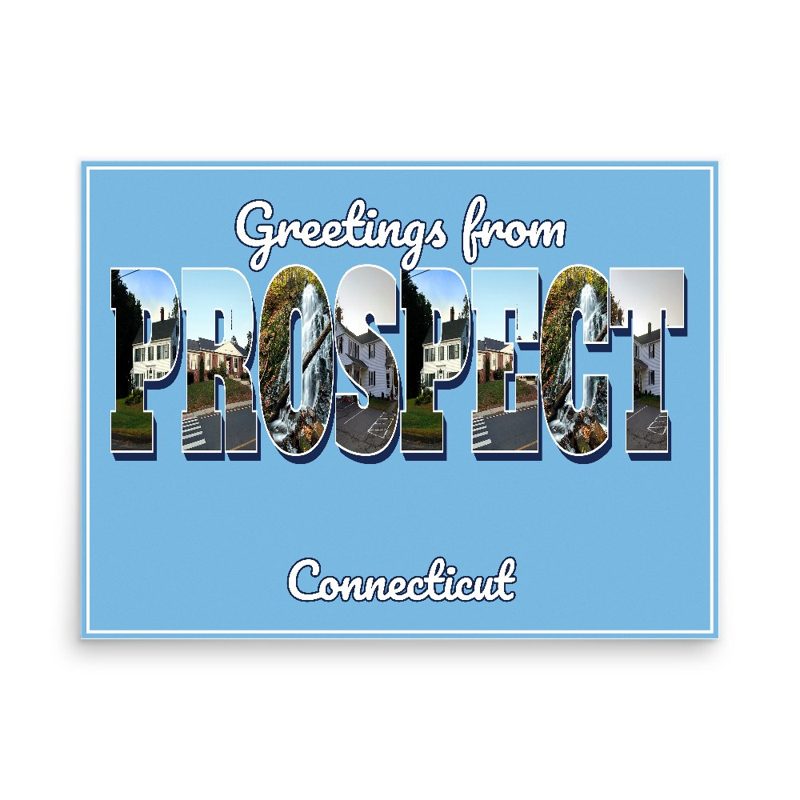
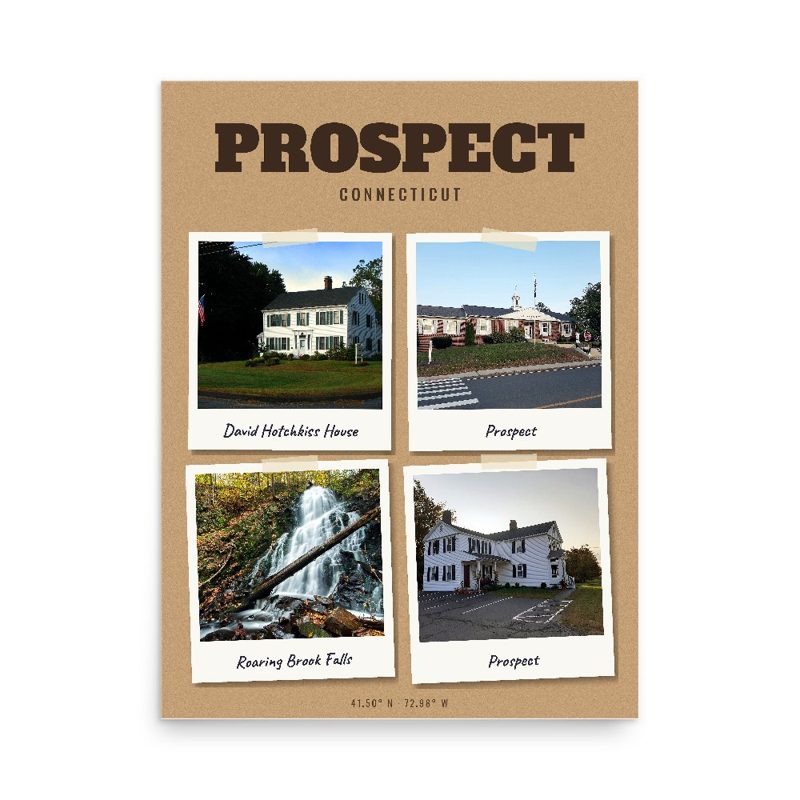
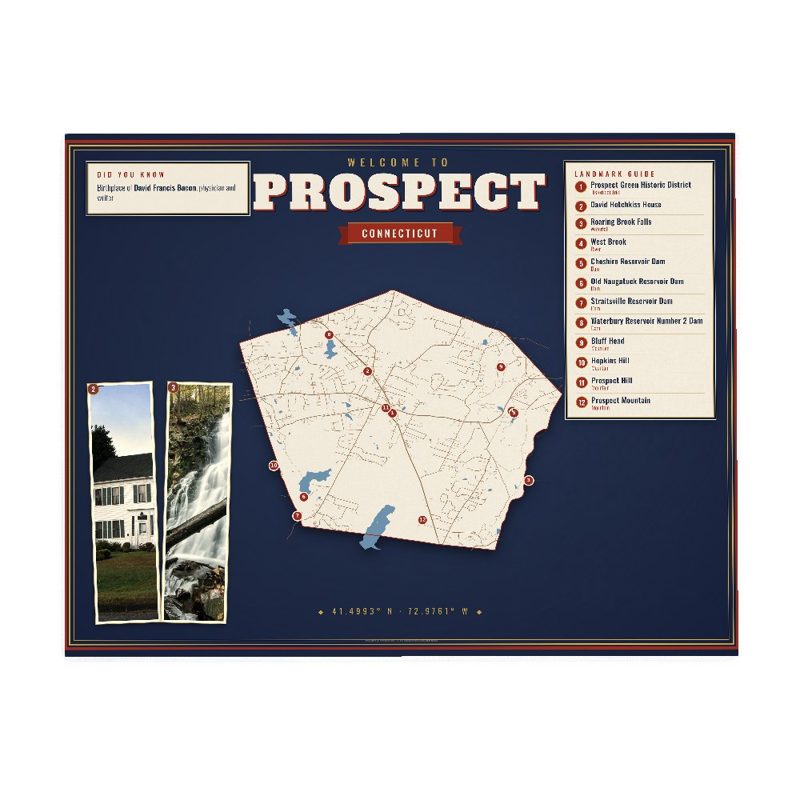


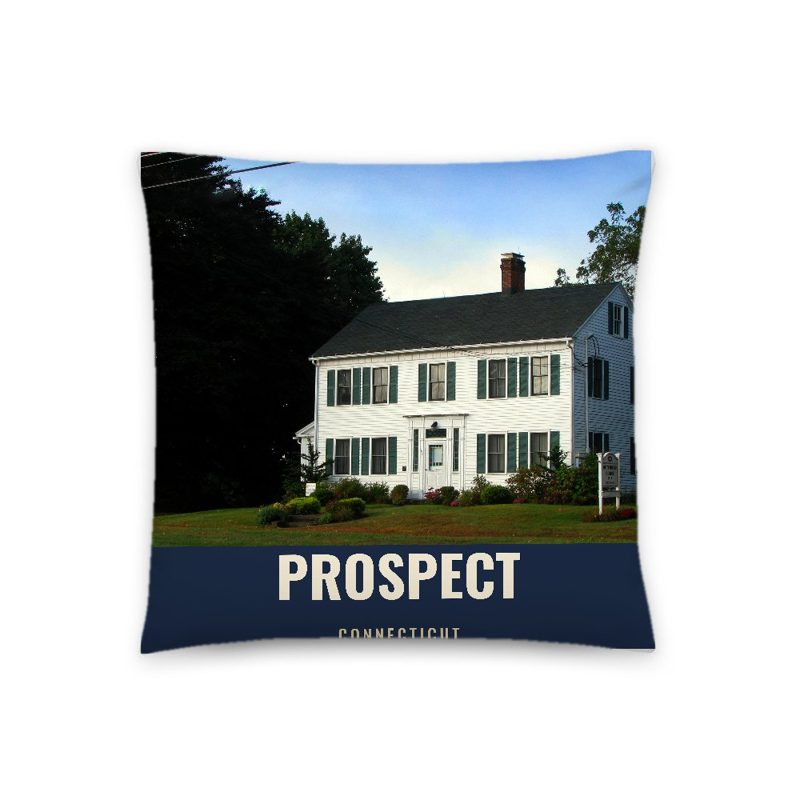


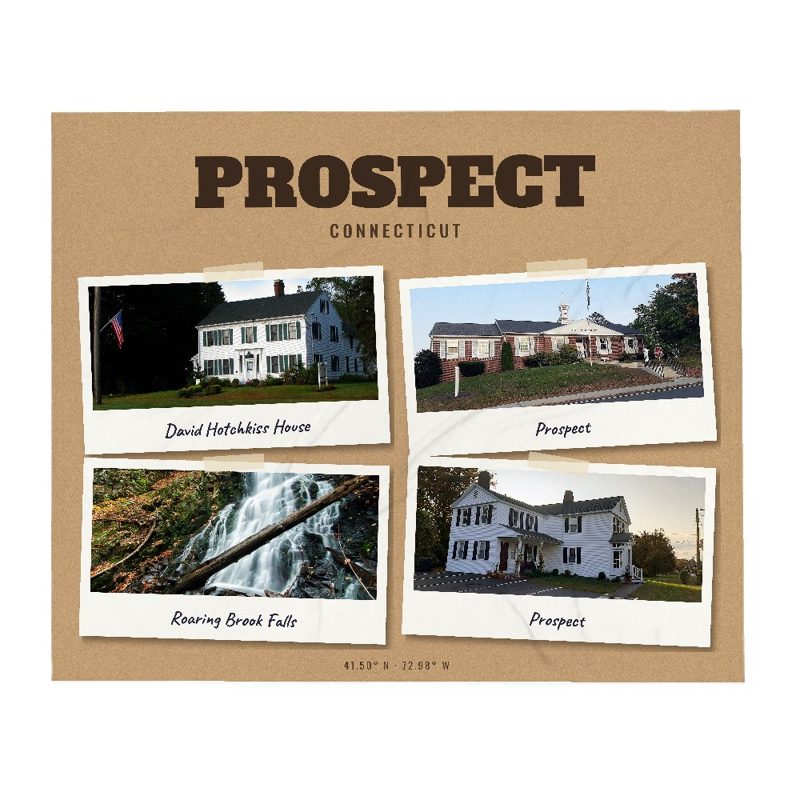
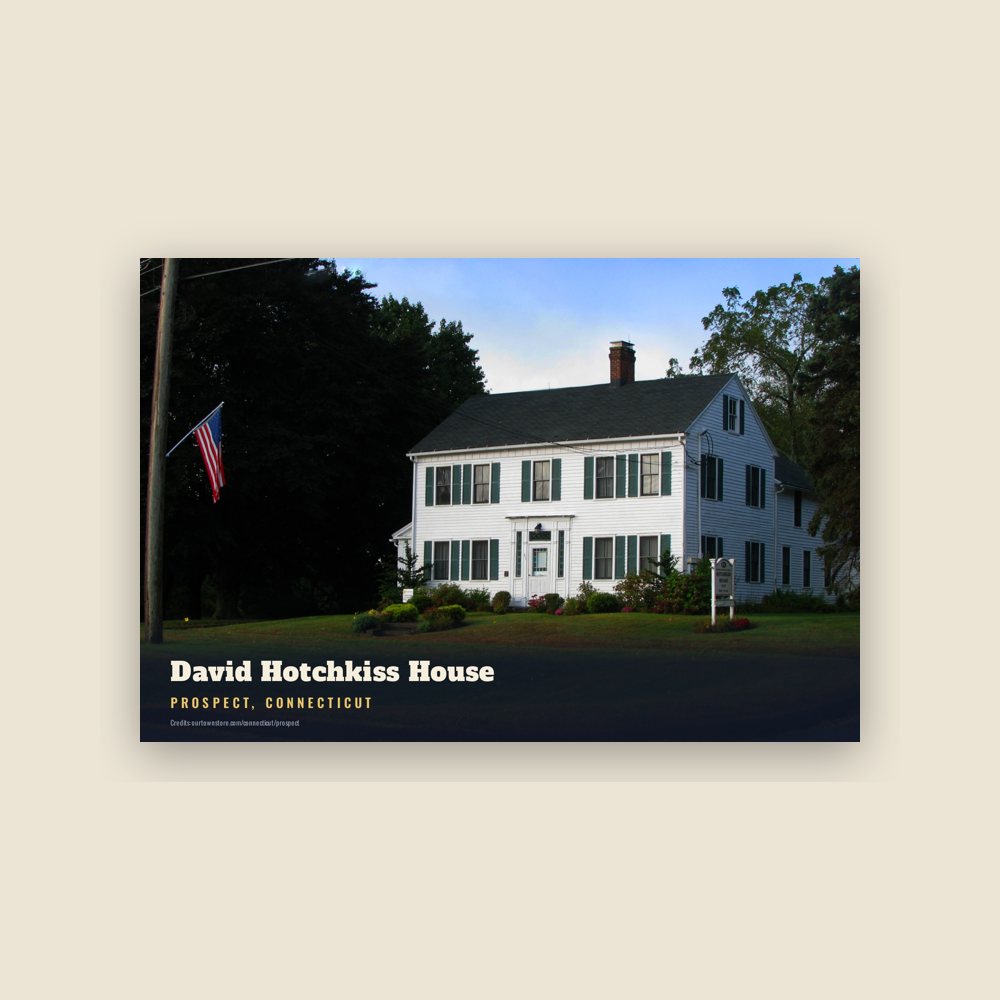
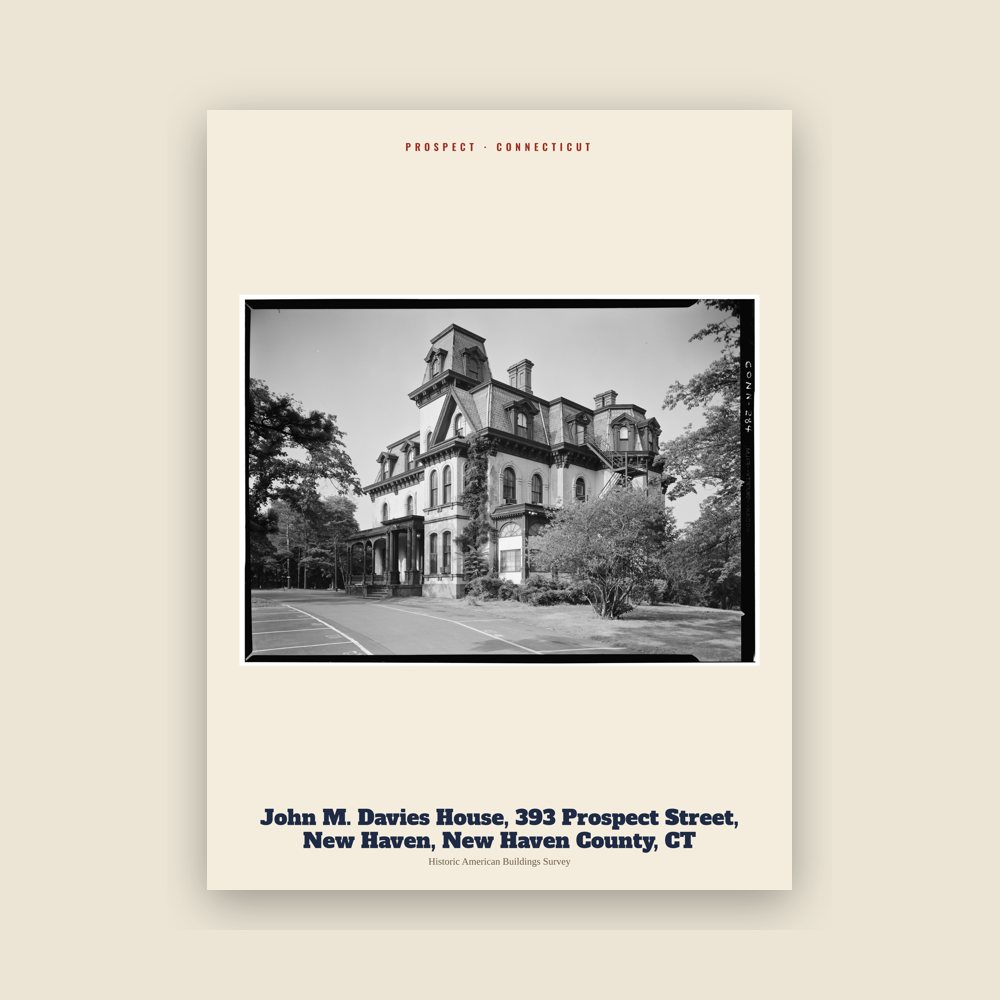
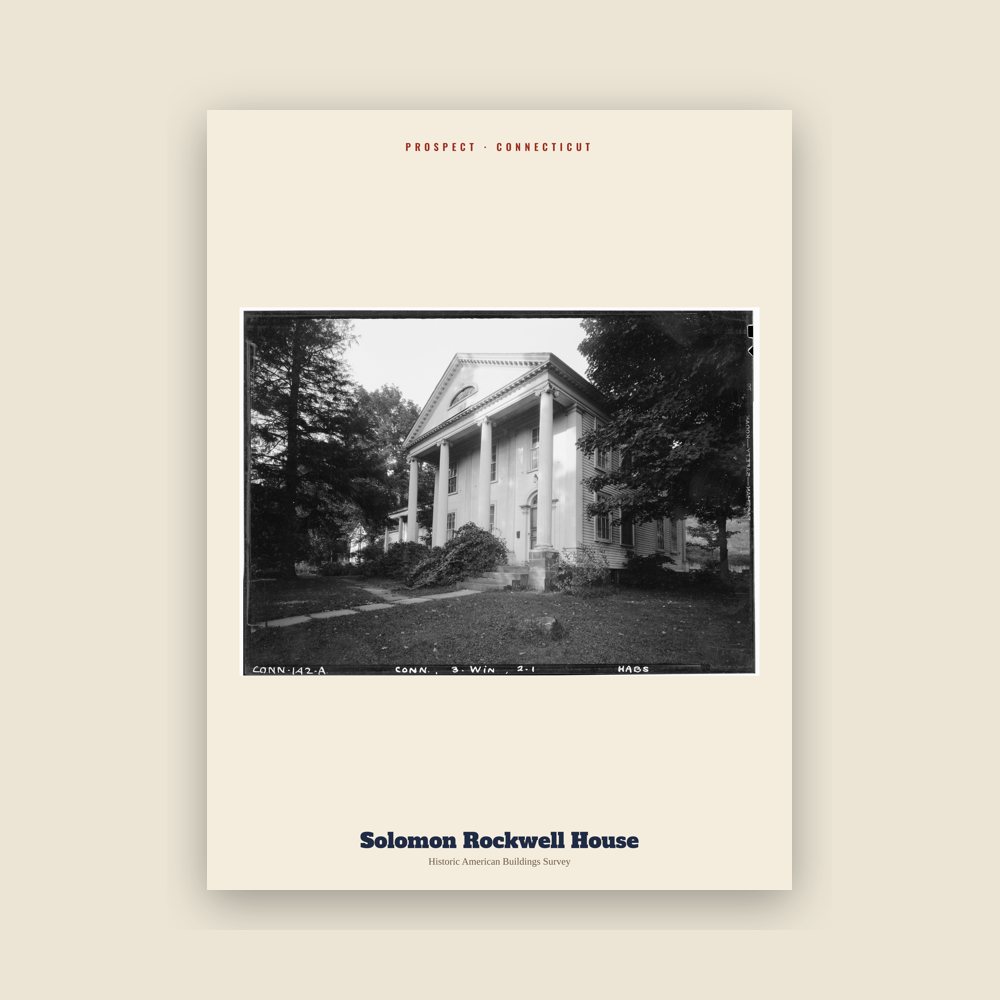
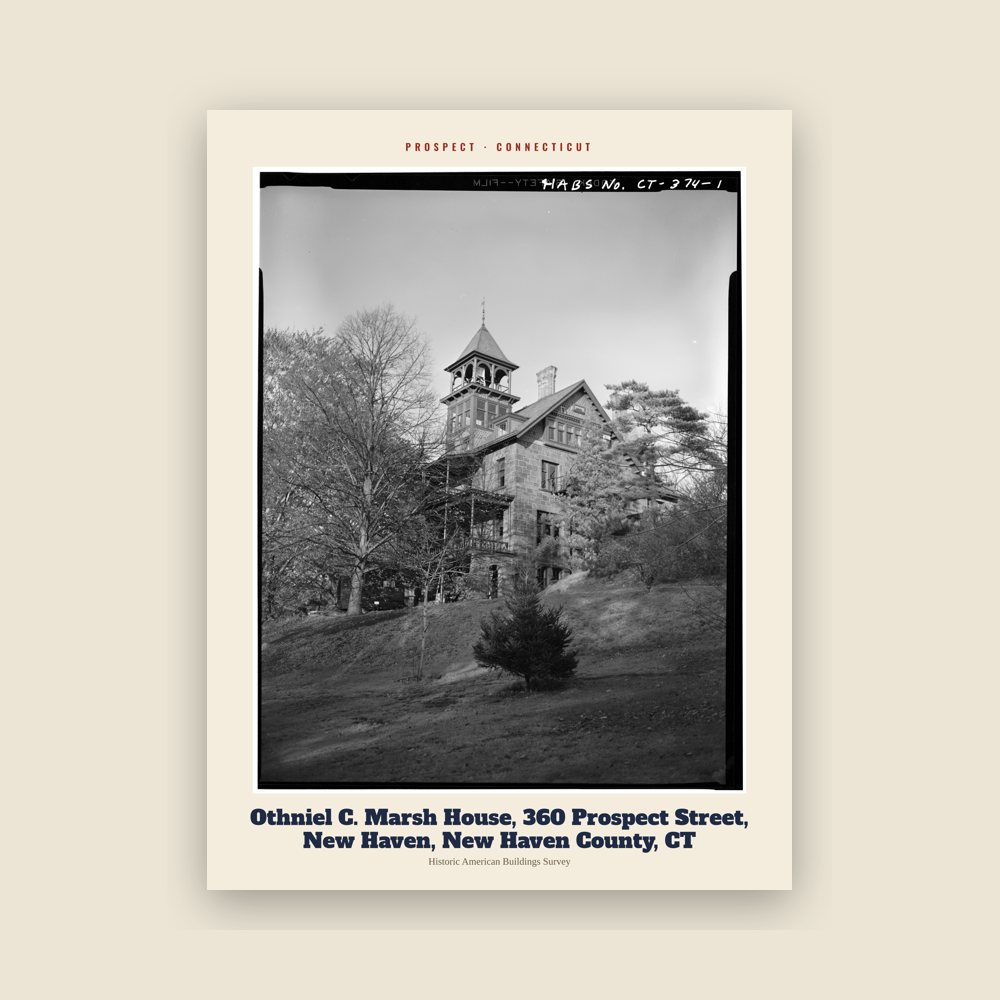
 David Hotchkiss House
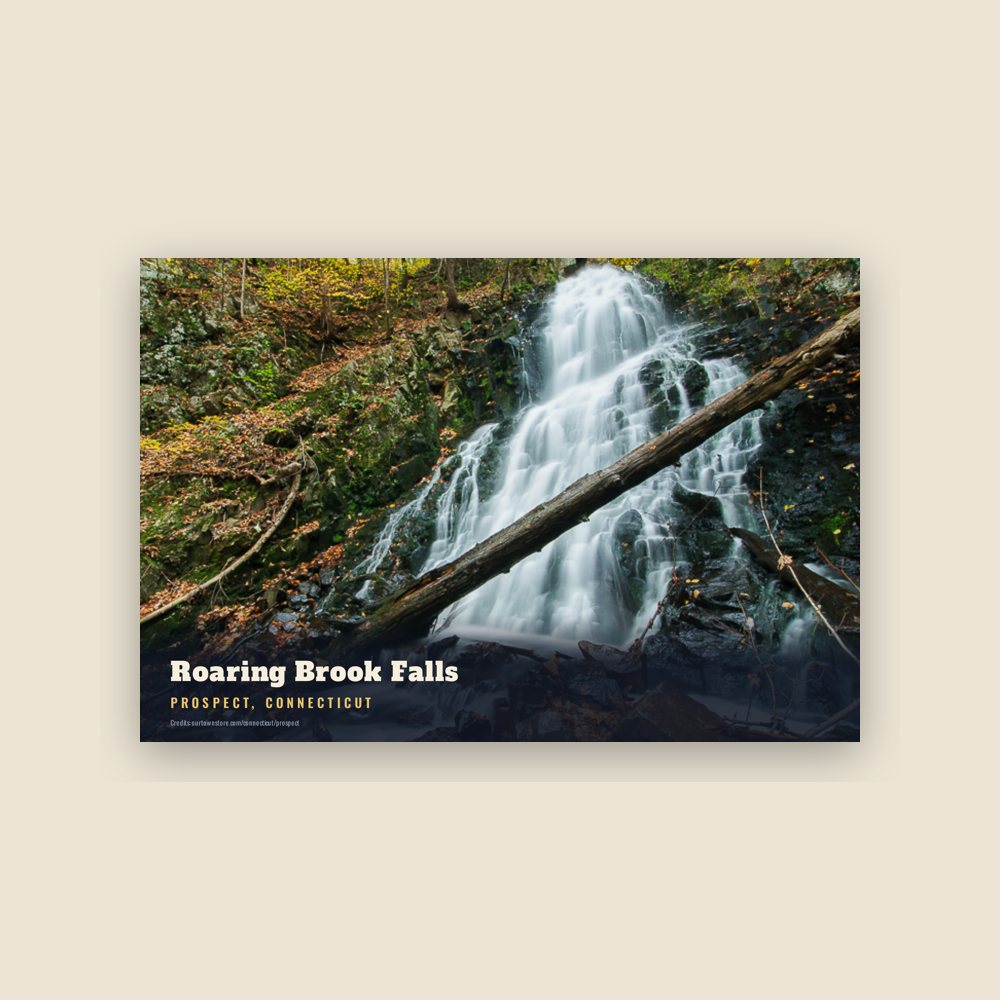
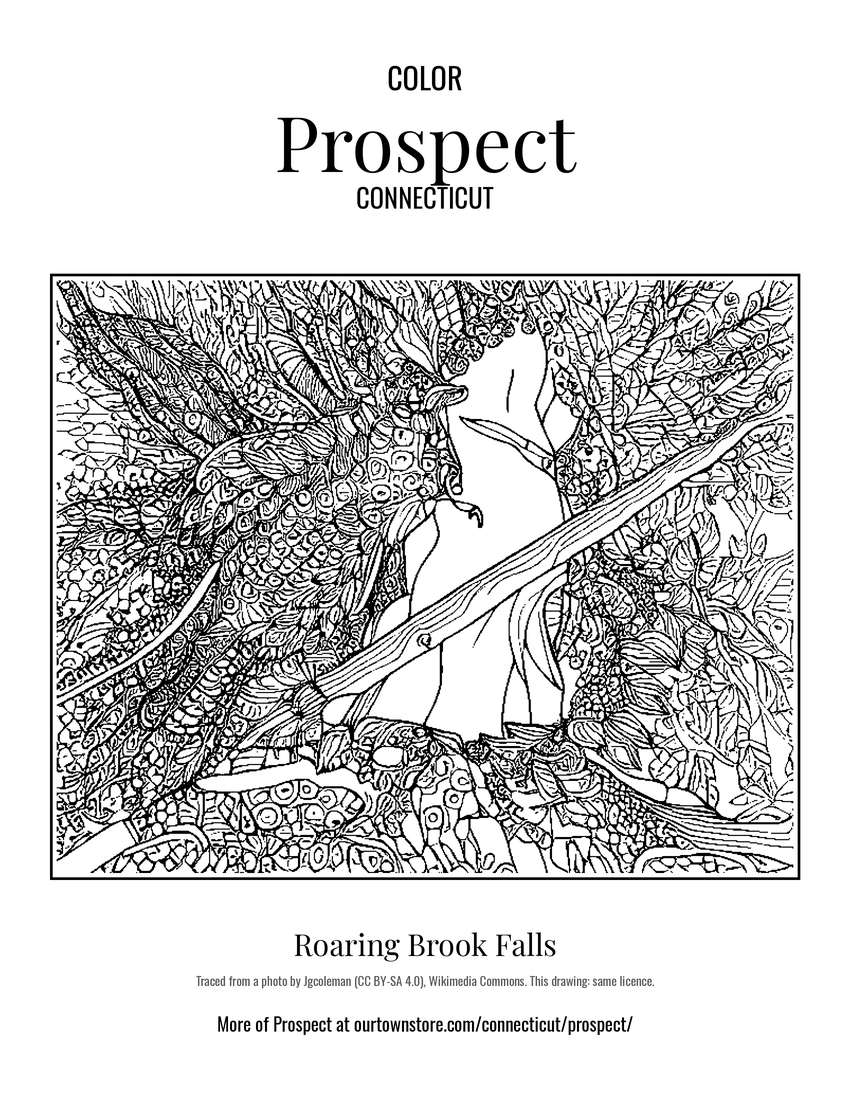 Roaring Brook Falls
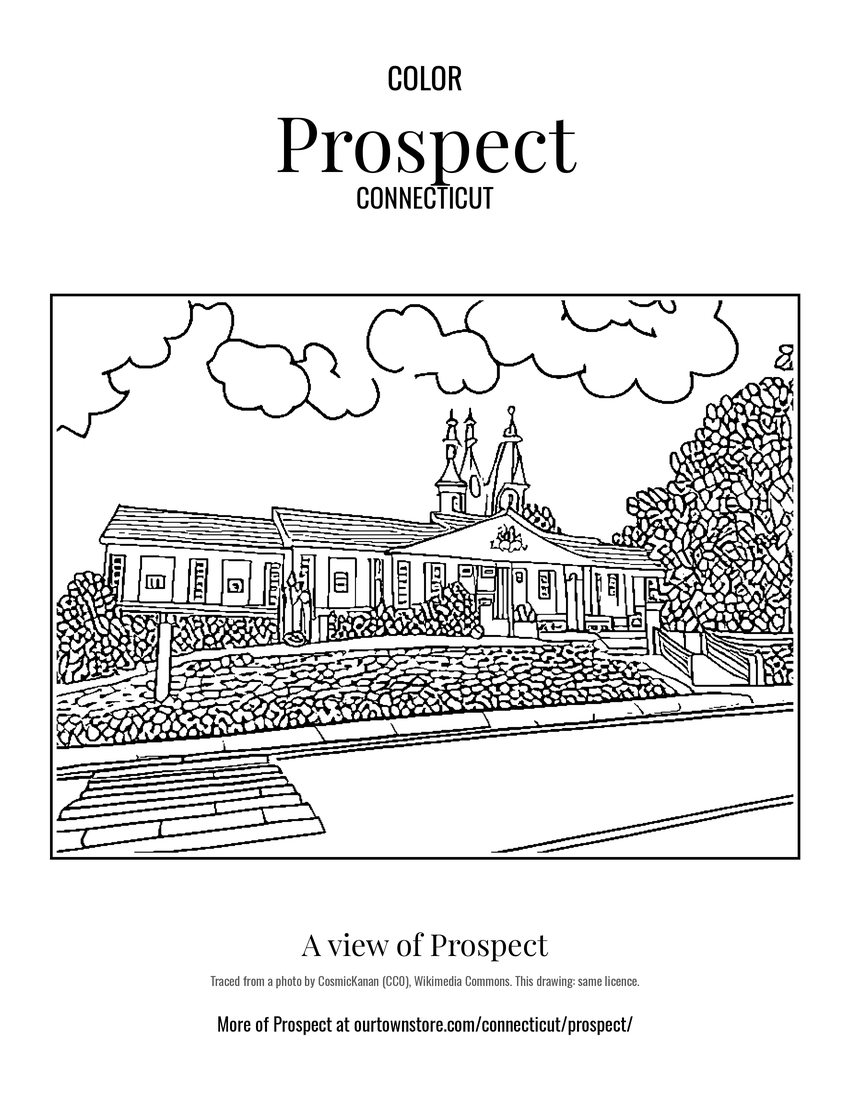 A view of Prospect
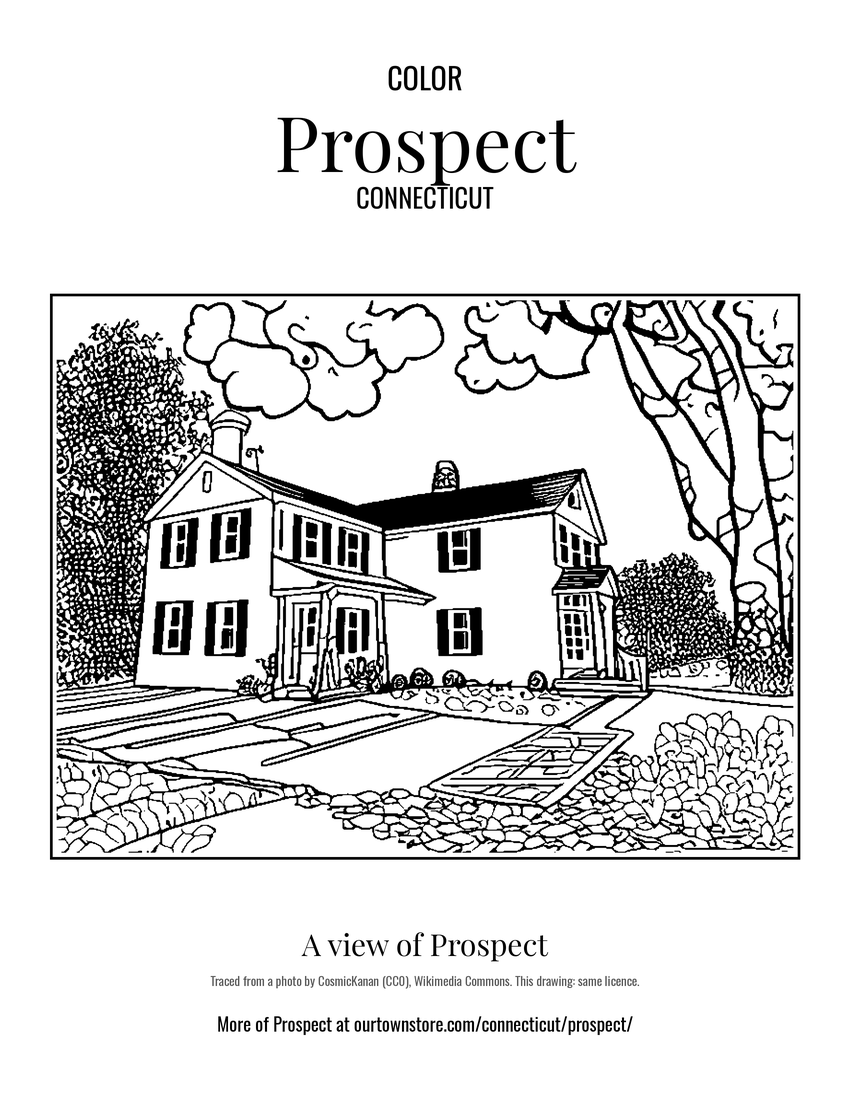 A view of Prospect