Superior is located in Colorado’s Front Range on the western side of the Denver Basin and is a part of the Laramie Formation. The formation is known for its deposits of bituminous and lignite coal, which led to the area’s development as a coal mining hub in the late 1800s. The area became known as the “Northern Field,” covering a 20-mile (32.19 km) radius from the city of Boulder, extending through the present-day counties of Adams, Boulder, Broomfield, Gilpin, Jefferson, Larimer and Weld.
Read the full history
Early Peoples
The land was originally used by Native American people including the Arapaho and Ute. It was territory of the Southern Arapaho in February 1861, when Colorado Territory and Boulder County were created and the tribe was forced to relocate as part of the Treaty of Fort Wise.
Modern History
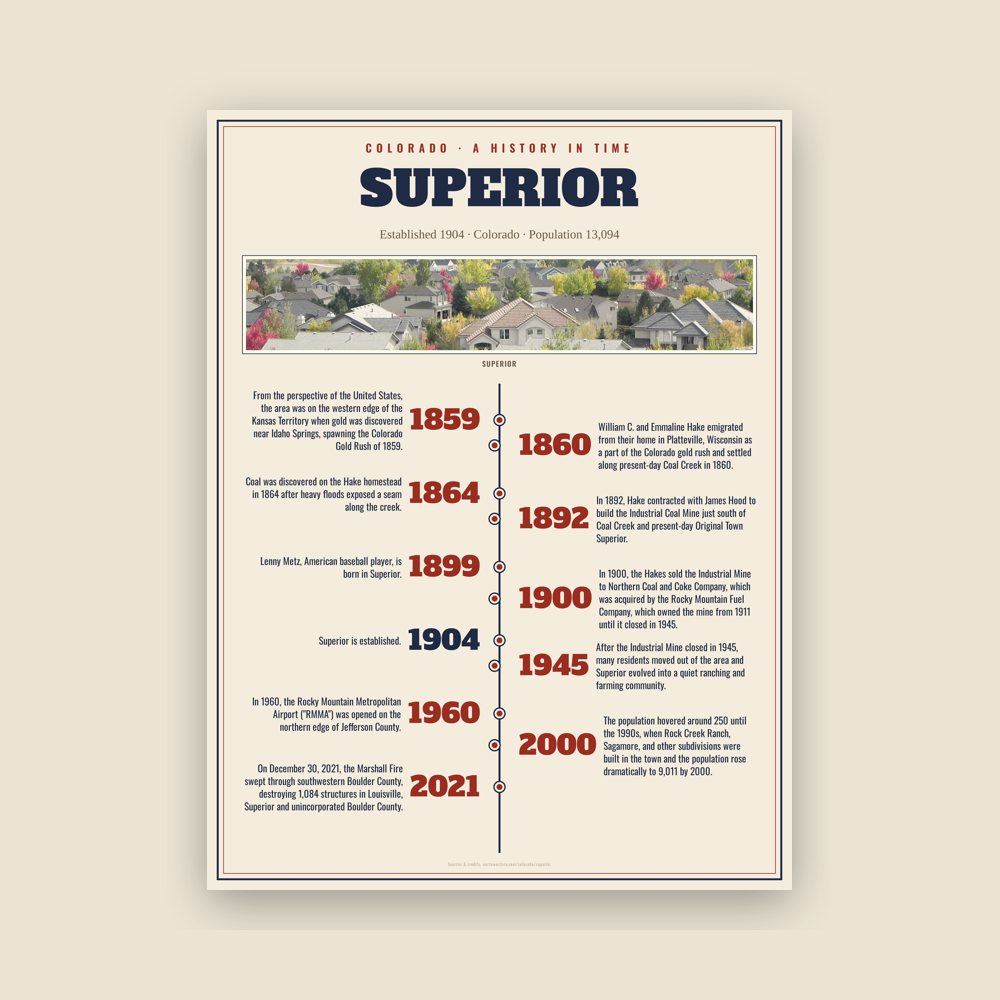
From the perspective of the United States, the area was on the western edge of the Kansas Territory when gold was discovered near Idaho Springs, spawning the Colorado Gold Rush of 1859.
William C. and Emmaline Hake emigrated from their home in Platteville, Wisconsin as a part of the Colorado gold rush and settled along present-day Coal Creek in 1860. Coal was discovered on the Hake homestead in 1864 after heavy floods exposed a seam along the creek. Hake formalized his ownership of the land in 1870 under the Homestead Acts. He founded the Town of Superior in 1896, and it was formally incorporated in 1904. It was reportedly named after the “superior” quality of coal found in the area, a sub-bituminous grade rather than the lignite predominant in the Northern Field.
In 1892, Hake contracted with James Hood to build the Industrial Coal Mine just south of Coal Creek and present-day Original Town Superior. The mine was fully operational by 1895. In 1900, the Hakes sold the Industrial Mine to Northern Coal and Coke Company, which was acquired by the Rocky Mountain Fuel Company, which owned the mine from 1911 until it closed in 1945.
Northern Coal and Coke and Rocky Mountain Fuel were among the six major coal operators in the Northern Field who signed the first union agreement with the United Mine Workers District 15 in June 1908. The success of the union movement was attributed in part to the self-sufficient socioeconomic base of the Northern Field, which remained largely agrarian even as the mines flourished. Mining was a winter employment and the majority of miners also held small landholdings, which they farmed in summer.
Two local history museums display artifacts from Superior's past. Recollections of members of pioneer families in Superior, including the Hakes and Autreys, are preserved as part of the Maria Rogers Oral History Program at the Carnegie Library for Local History in Boulder, Colorado.
After the Industrial Mine closed in 1945, many residents moved out of the area and Superior evolved into a quiet ranching and farming community. The population hovered around 250 until the 1990s, when Rock Creek Ranch, Sagamore, and other subdivisions were built in the town and the population rose dramatically to 9,011 by 2000. More recently, infill and the Downtown Superior mixed-use development have added additional businesses and residences.
Recent events
On December 30, 2021, the Marshall Fire swept through southwestern Boulder County, destroying 1,084 structures in Louisville, Superior and unincorporated Boulder County. Of these, Superior lost 398 structures - 393 residential, four commercial and one public. In Original Town Superior, only seven of the historic homes survived. The Sagamore subdivision was totally lost. The Marshall Fire was the most destructive wildfire in Colorado history. It forced the evacuation of 37,000 residents, killed two persons and caused $2 billion in damages. It was attributed to downed power lines and a possible secondary source of a licensed burn. High winds and unseasonably dry conditions were contributing factors.
In 1960, the Rocky Mountain Metropolitan Airport ("RMMA") was opened on the northern edge of Jefferson County. At the time, the population of Superior was approximately 175 citizens. Since the first flight from RMMA, the airport has continued to experience annual growth. As a result of a perceived national pilot shortage, numerous flight schools have established their base of operations at the airport. This has led to conflict between Superior and RMMA. As a result, the Town of Superior has filed a lawsuit against the airport. This lawsuit was dismissed on March 28, 2025 by the Boulder County District Court, citing federal preemption. Superior also ignored previous letters sent by Jefferson County, who is the airport sponsor, warning the town that the new developments of Rock Creek and schools were too close to the airport, and that these new homes would experience repeated noise events and vibrations.

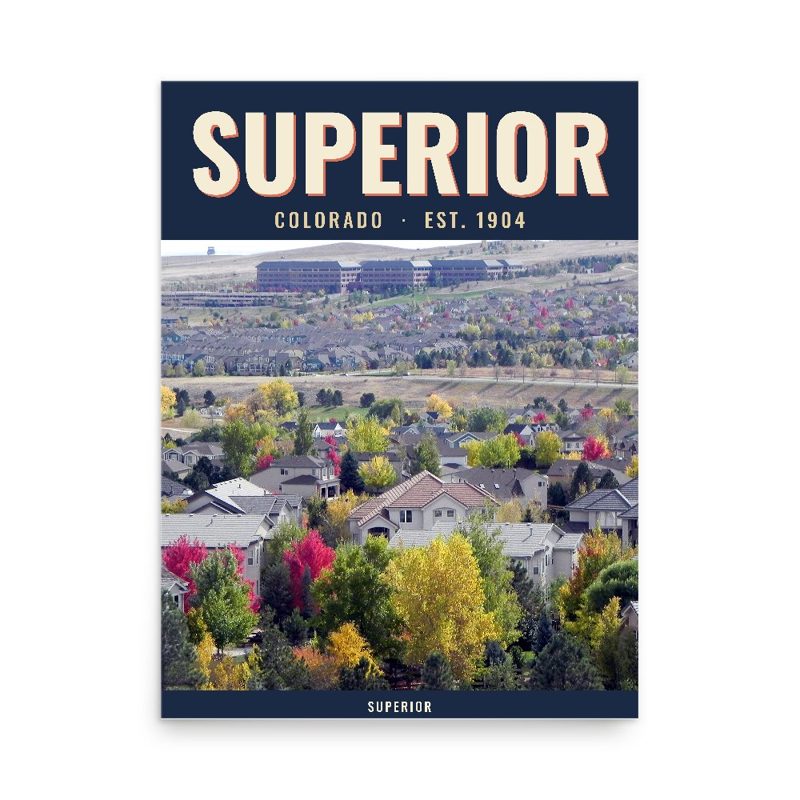
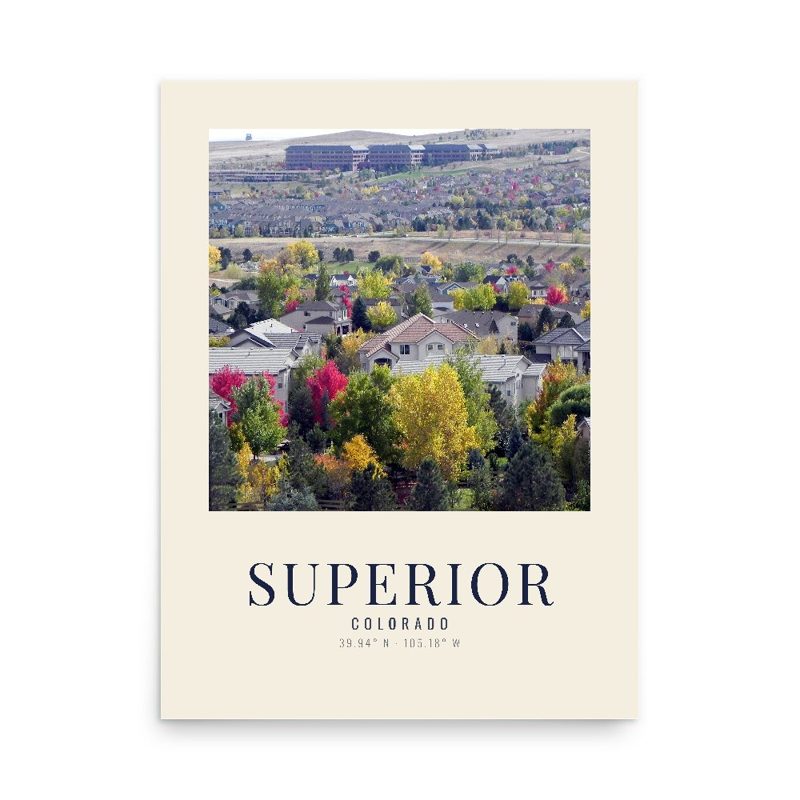
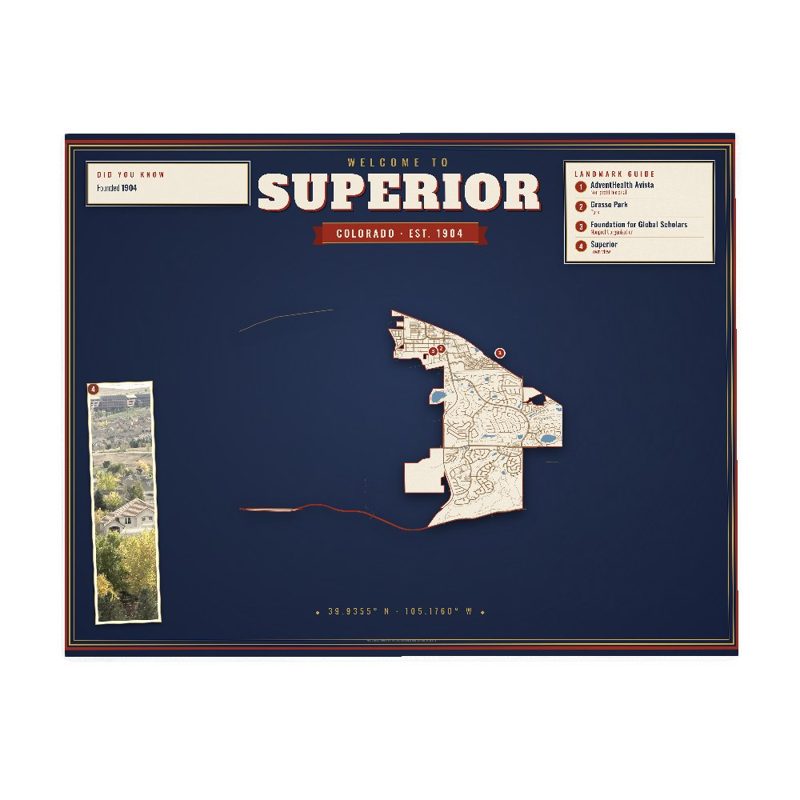












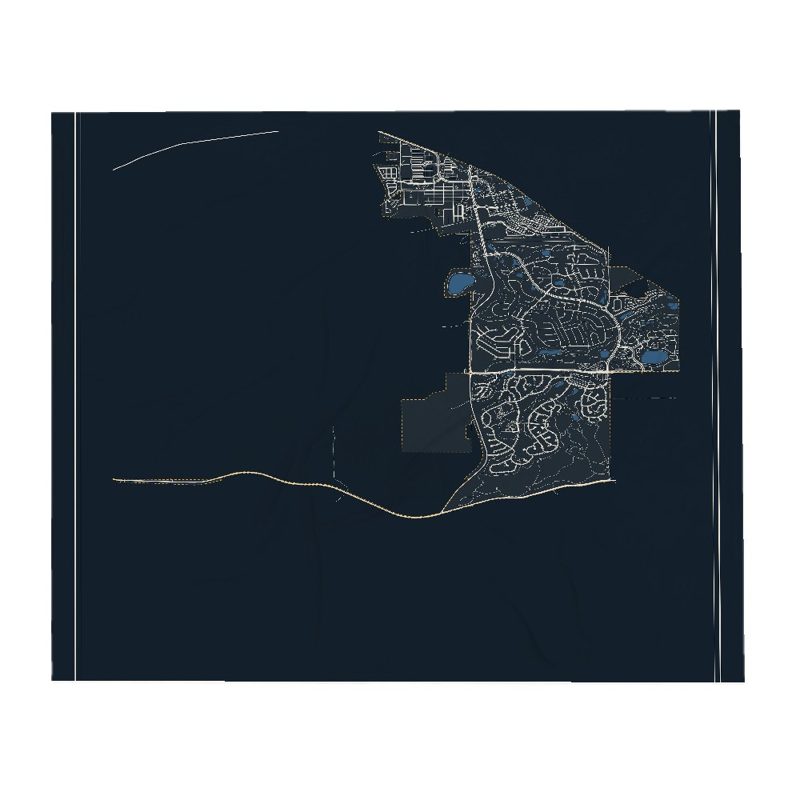

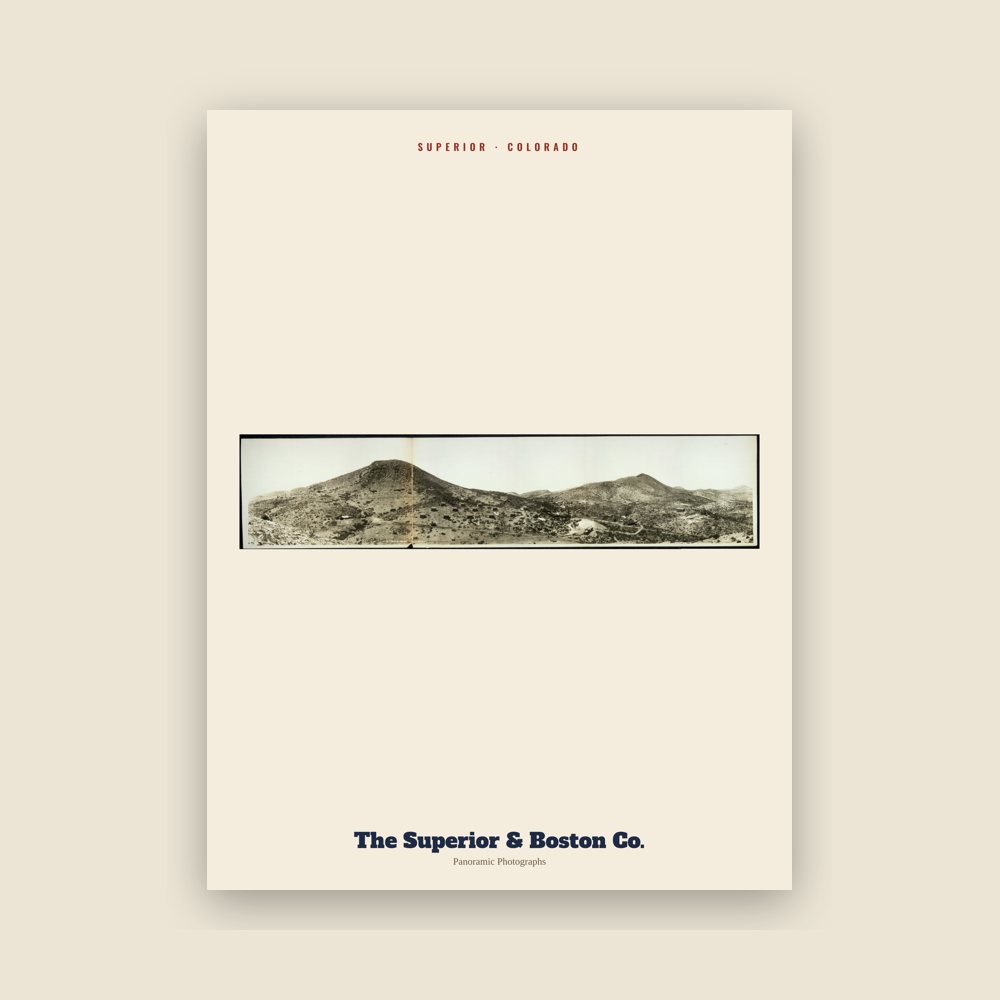
 A view of Superior