A short history of Westminster
Westminster was founded in 1870 by Rev. Lemuel Webber as a Presbyterian temperance colony. The name is derived from the Westminster Assembly of 1643, which established the basic tenets of the Presbyterian faith. During the early years of its history, farmers refused to harvest grapes since they associated grapes with alcohol.
During the late 1800s, arable land held dairy farms alongside agricultural plots which cultivated walnuts, strawberries, celery, and lima beans until they were replaced by the sugar beet industry at the turn of the century.
A change in tariffs laws along with an influx of beet pests resulted in the collapse of the Southern California Sugar Beet Industry and was supplemented by goldfish farms.
Transitions from agricultural spacing to suburban housing was delayed by the economic strain of the Great Depression and later 1933 earthquake as well as a severe flood in 1938. The varied residential landscape is a direct result from the relatively early homeowner development of less uniform spaces.
In 1947, Westminster became the site of Mendez v. Westminster, a landmark federal court case that challenged the segregation of Mexican American students in Orange County schools. The case was brought by the family of Sylvia Mendez against several school districts, including the Westminster School District. The ruling led to the end of school segregation practices in California and is considered an important precursor to later desegregation efforts in the United States, including Brown v. Board of Education.
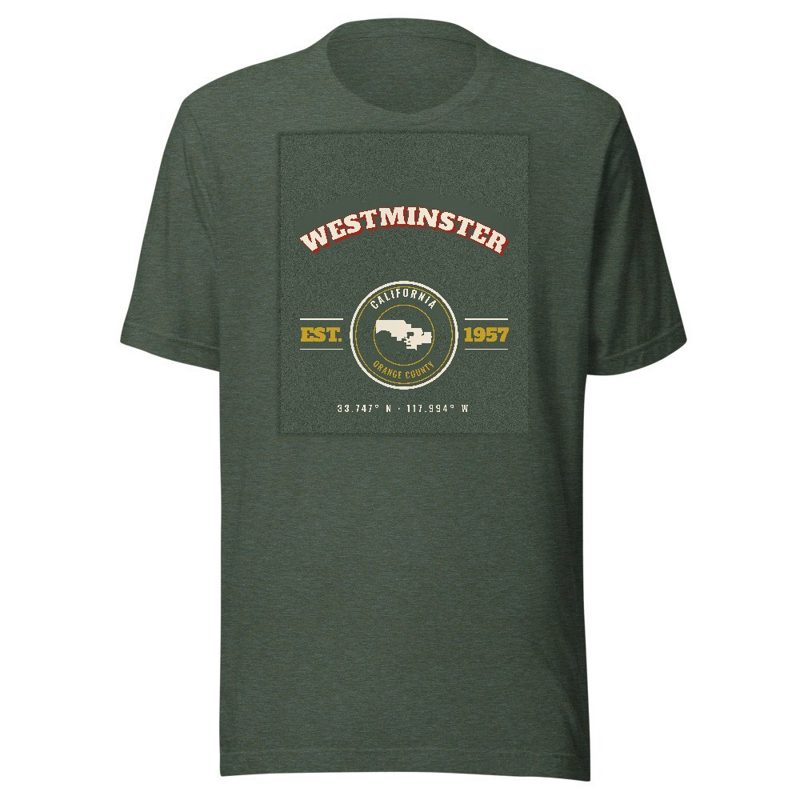
Westminster was incorporated in 1957, at which time it had 10,755 residents. Originally, the city was named Tri-City because it was to be the amalgamation of three cities: Westminster, Barber City, and Midway City. Midway City ultimately refused incorporation, leaving only Barber City to be absorbed into the new city, which changed its name to Westminster in a vote just five months later. The former Barber City was located in the western portion of the current city of Westminster.
The city has attracted large numbers of immigrants, refugees, and LGBTQ+ groups due to historic accessibility and community that had been built. One of the most notable examples of this is the influx of a Vietnamese refugee population during the 1970s due to the Vietnam War. Westminster hosts a portion of Little Saigon, the largest population of ethnically Vietnamese people outside of Vietnam. The heart of the enclave runs along Bolsa Avenue, where historic shops such as Danh's Pharmacy (one of the first Vietnamese businesses on the street) and cultural icons like Asian Garden Mall (also known as Phước Lộc Thọ) line the street. The area is the first officially recognized Vietnamese business enclave.
Adapted (trimmed) from the Wikipedia article Westminster, California, revision 1379601751 by its contributors, licensed CC BY-SA 4.0.
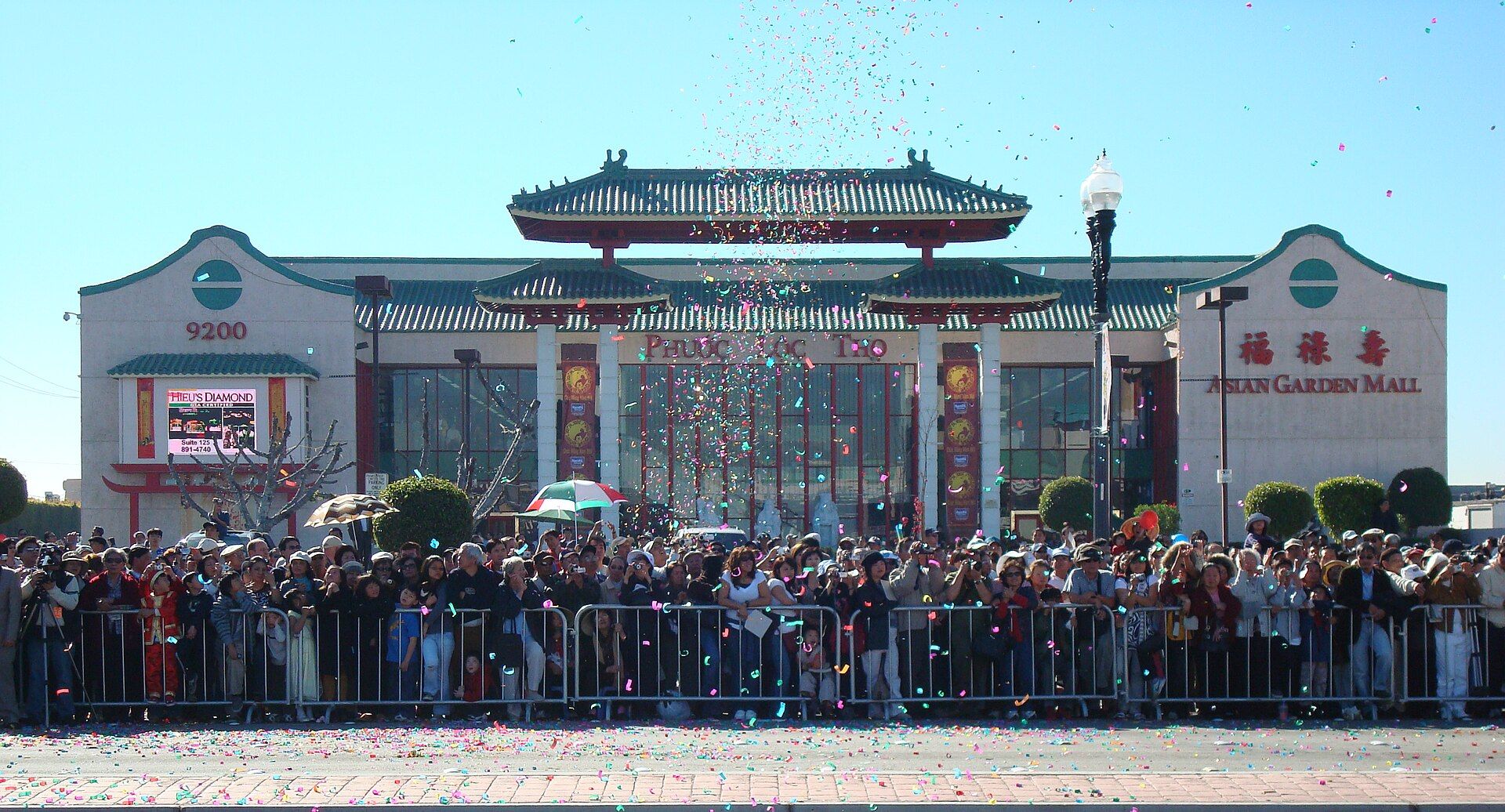
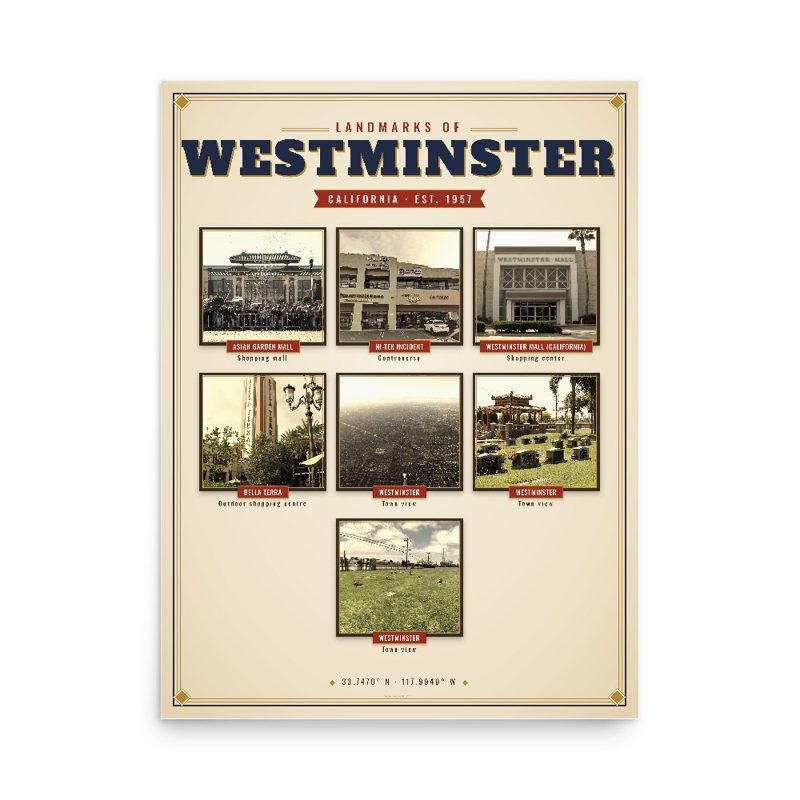
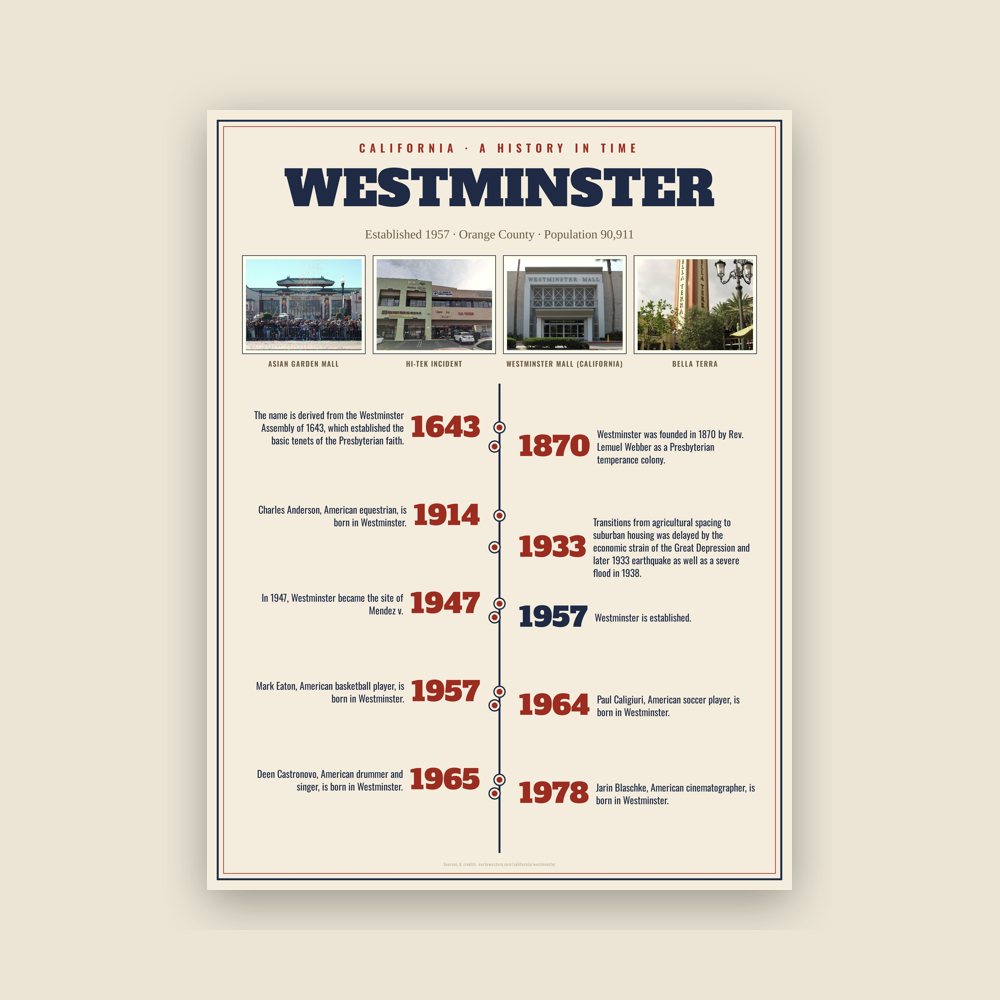
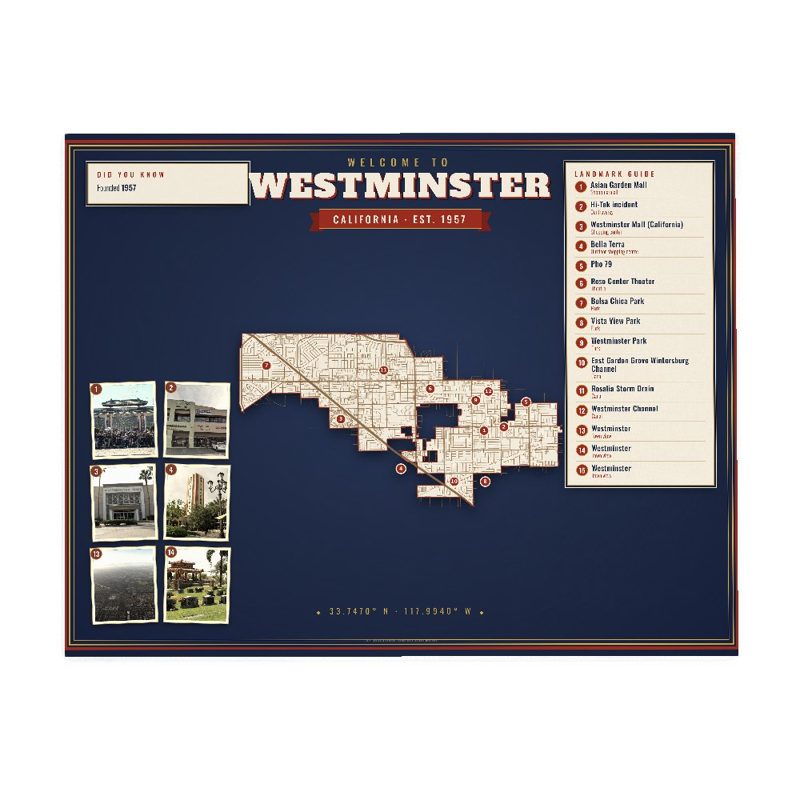


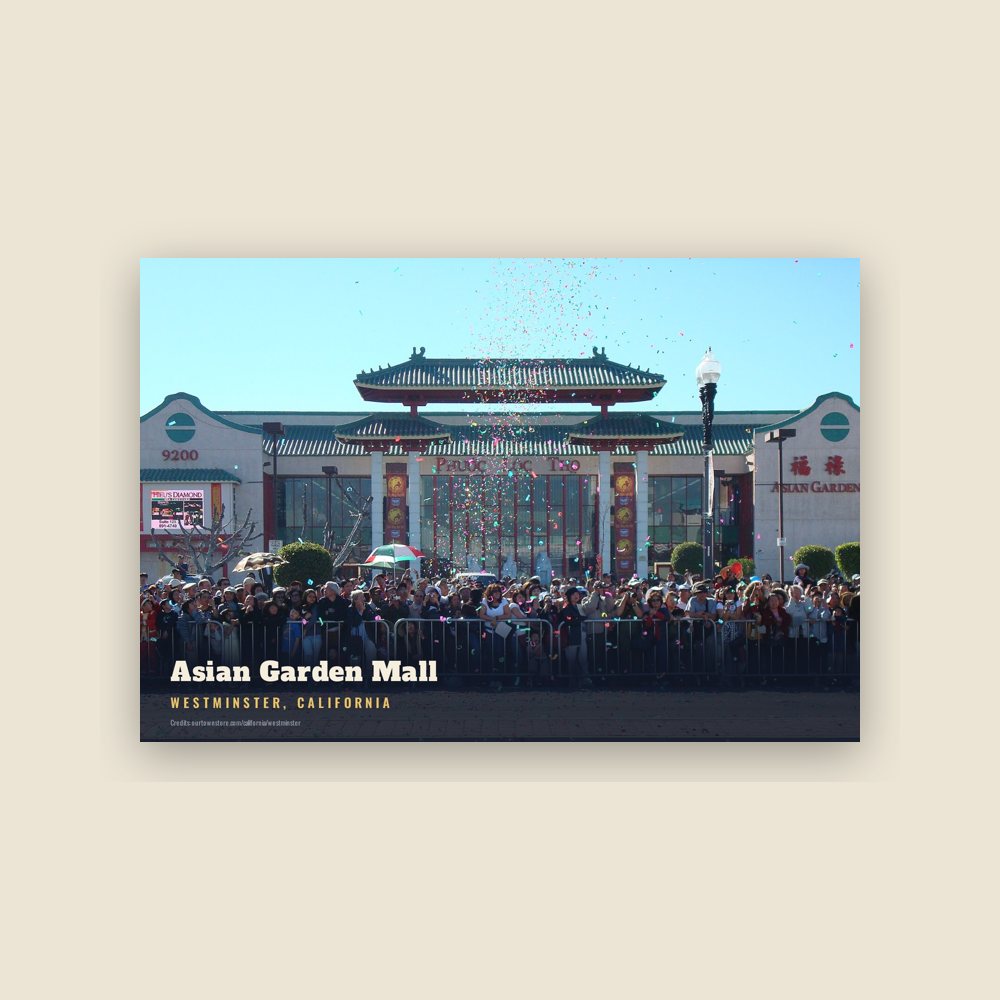
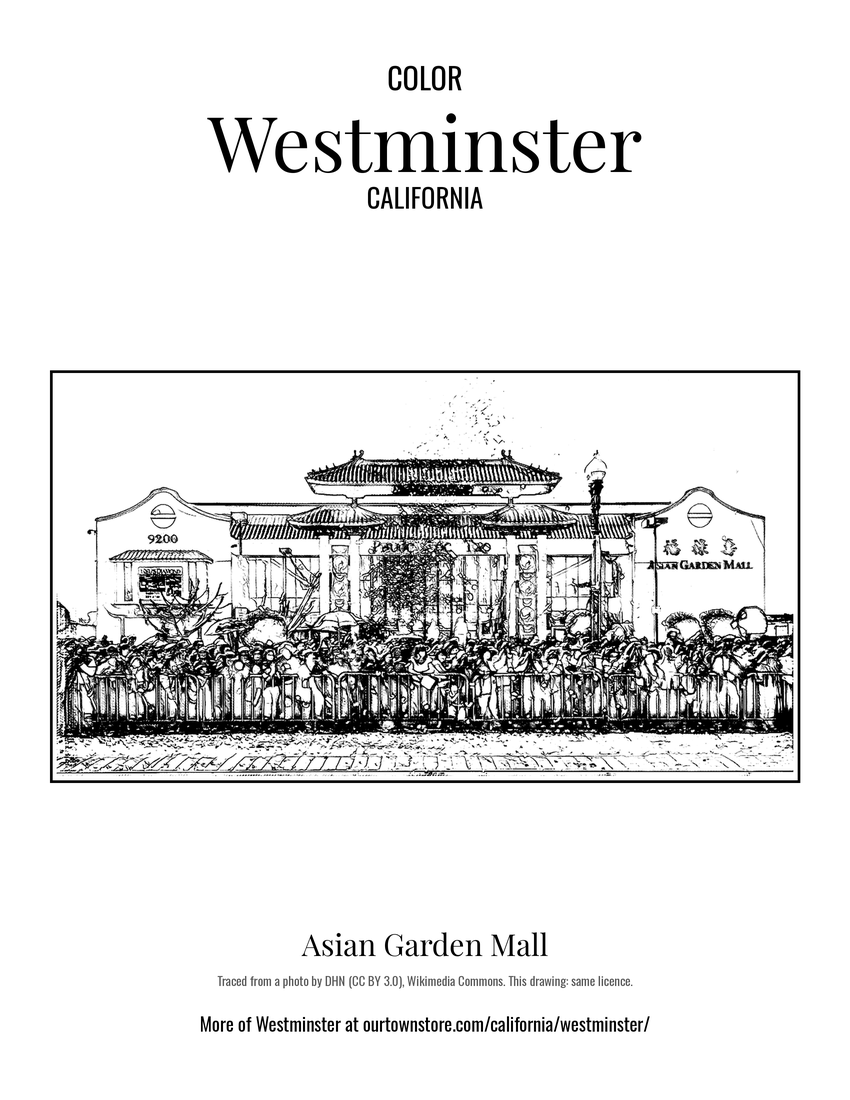 Asian Garden Mall
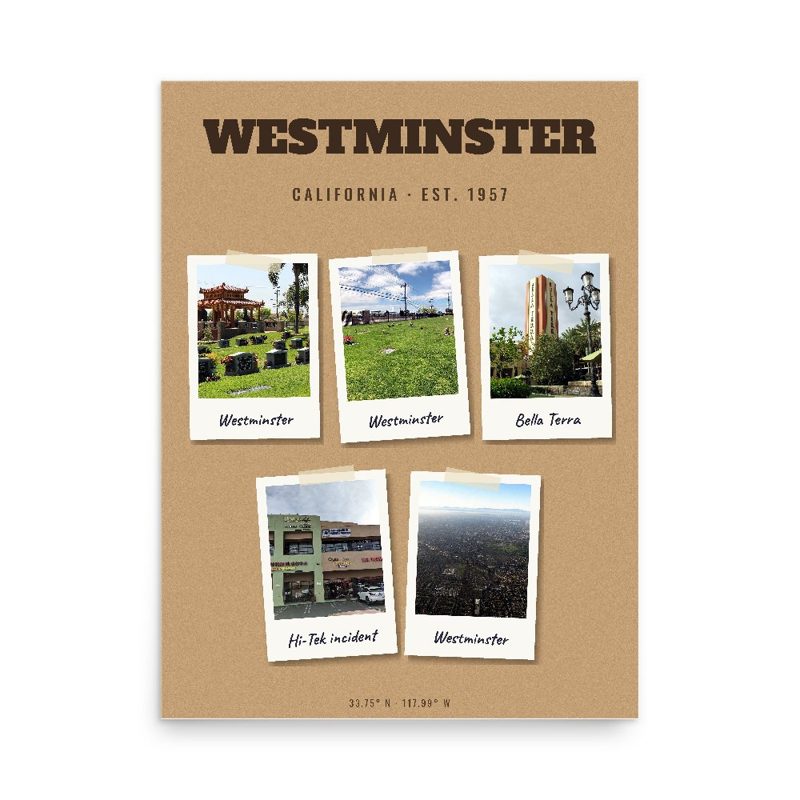
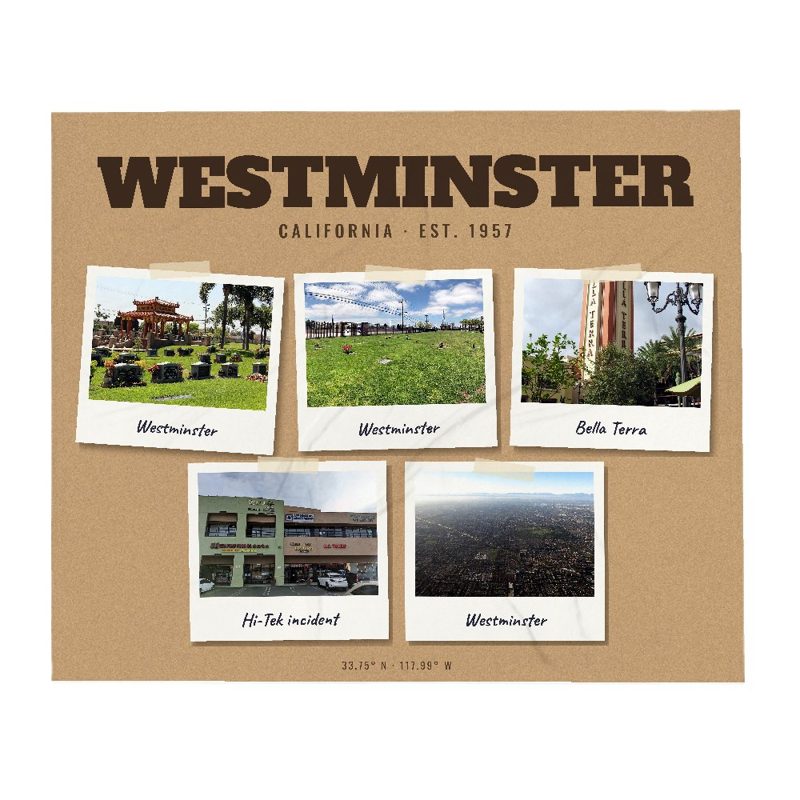
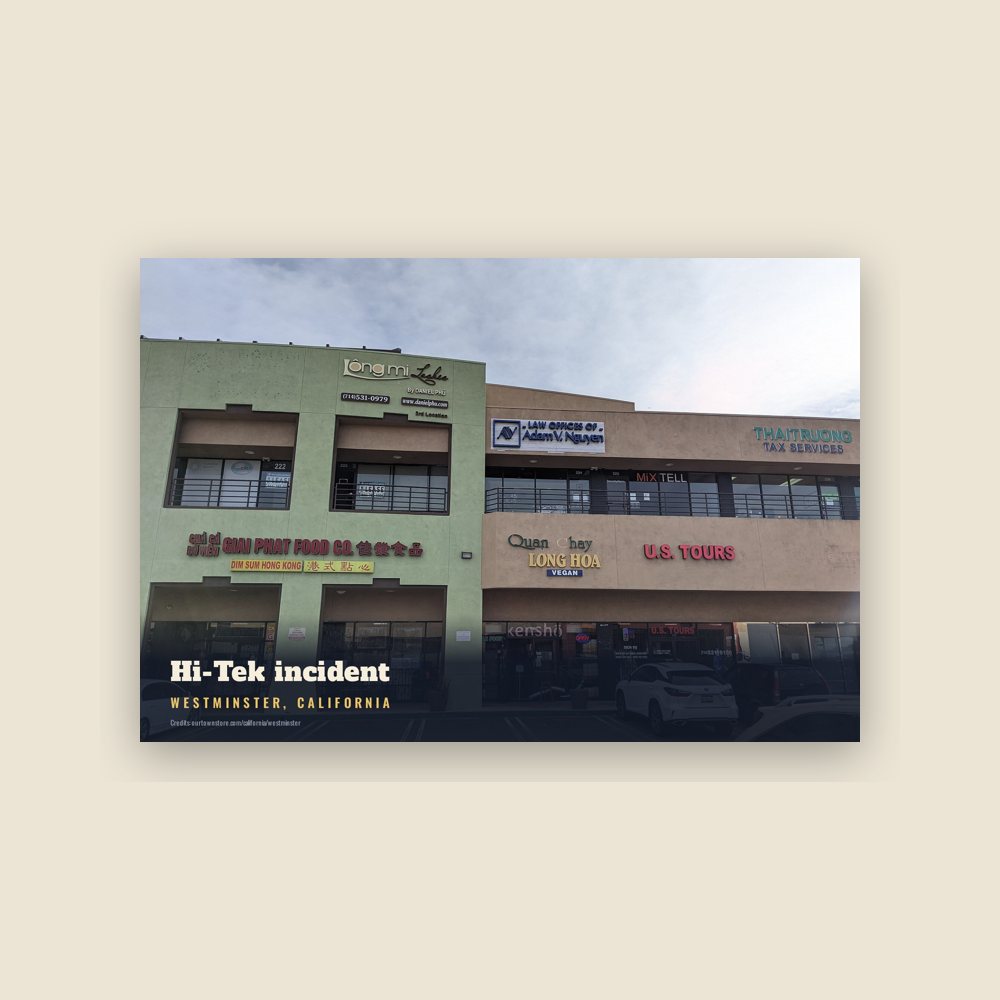
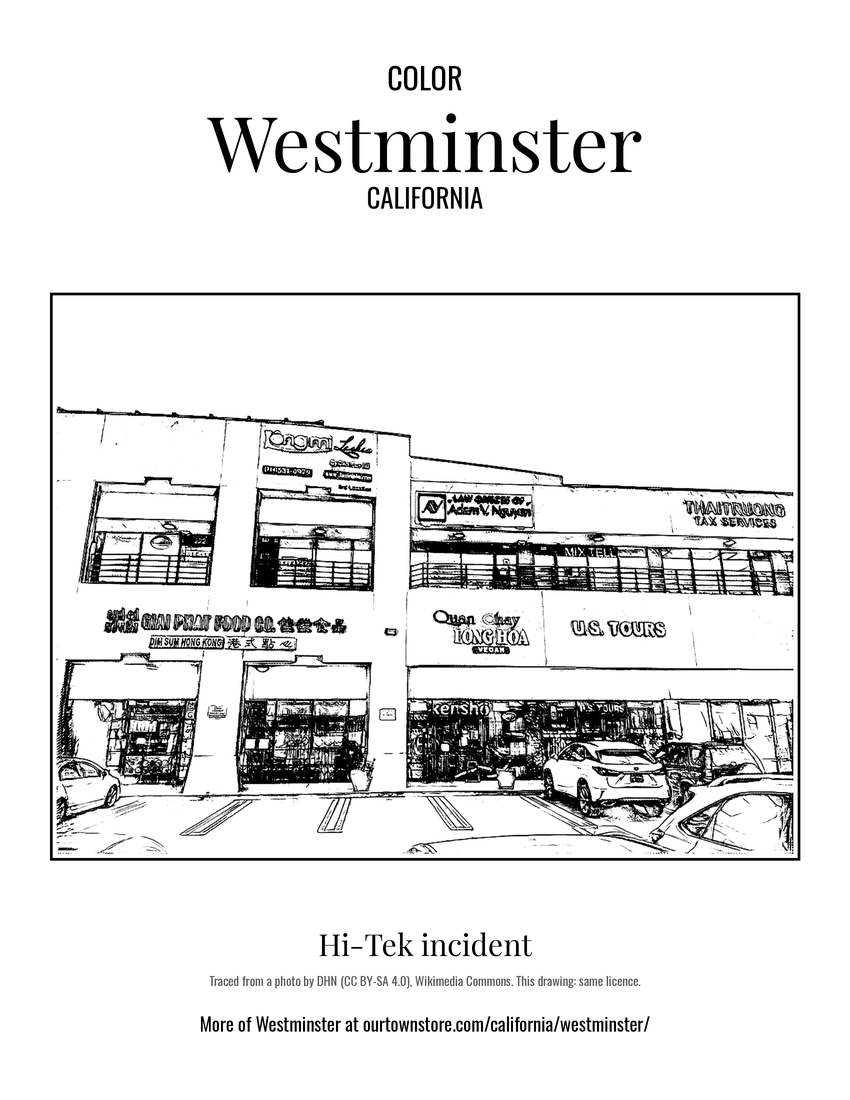 Hi-Tek incident
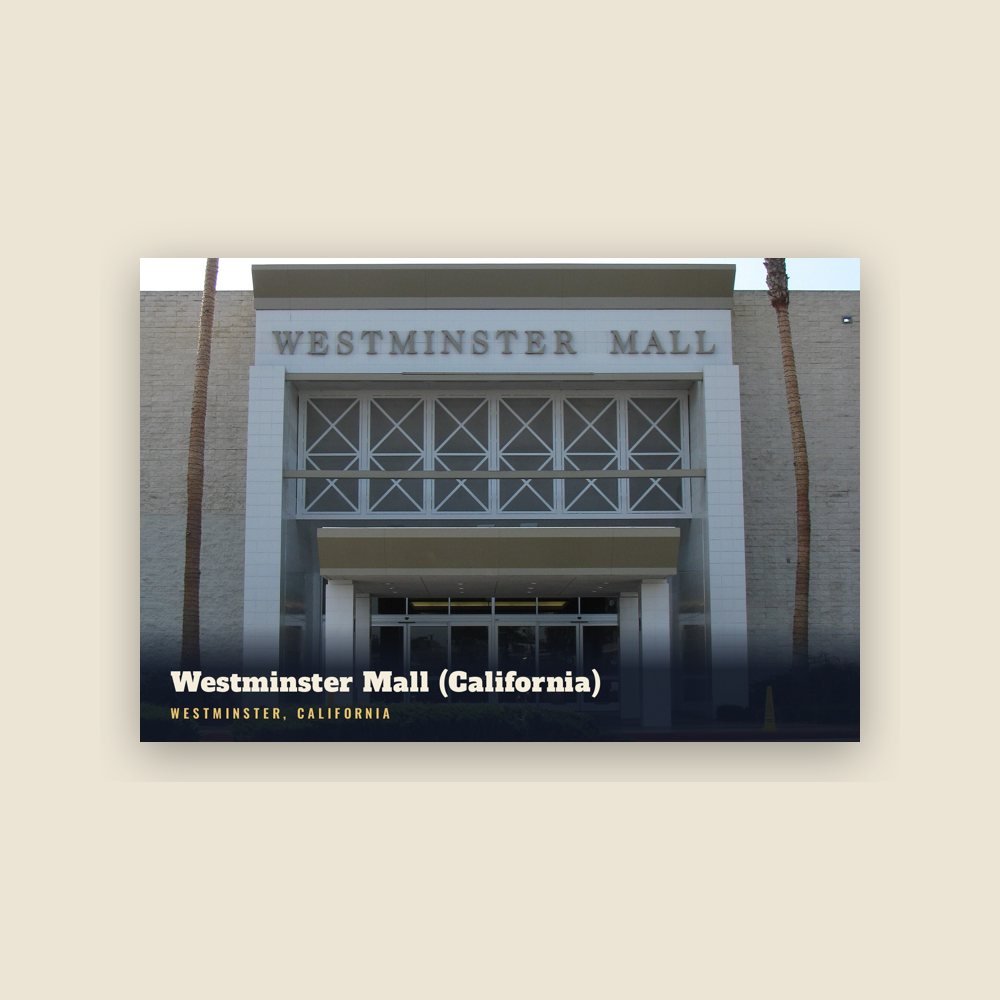
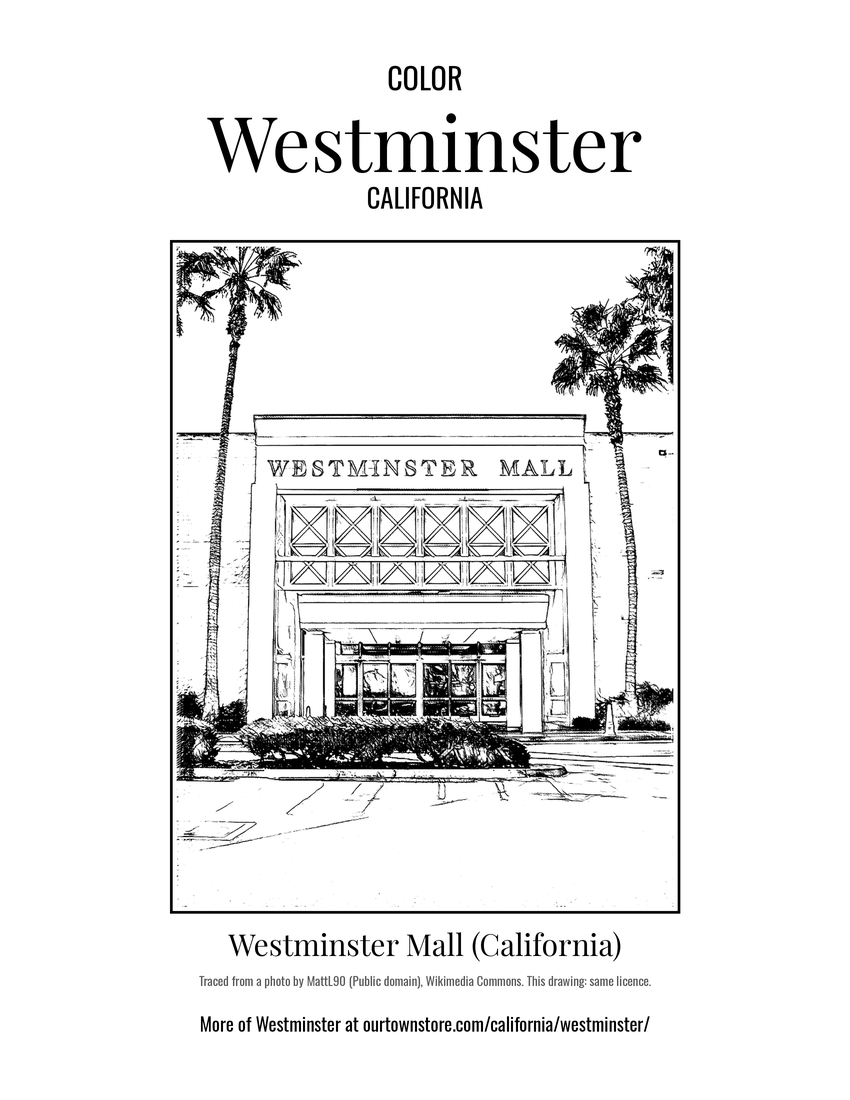 Westminster Mall (California)
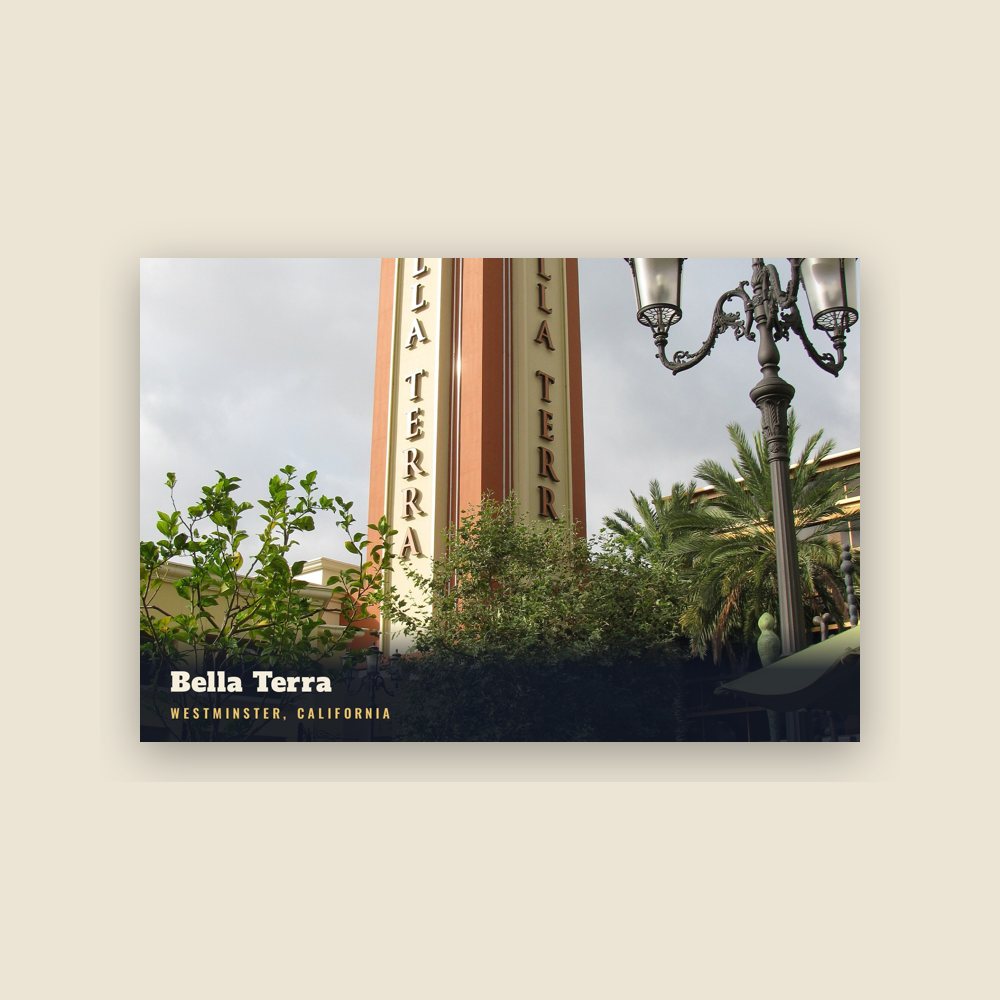
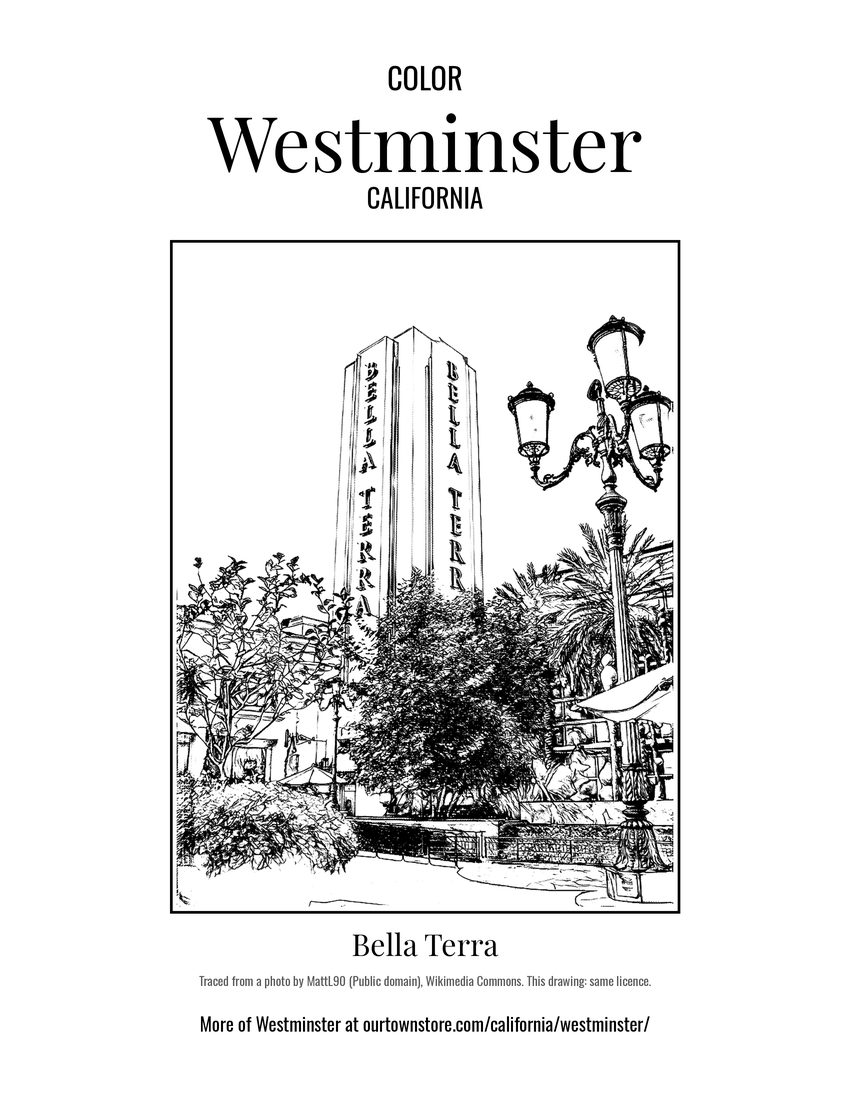 Bella Terra