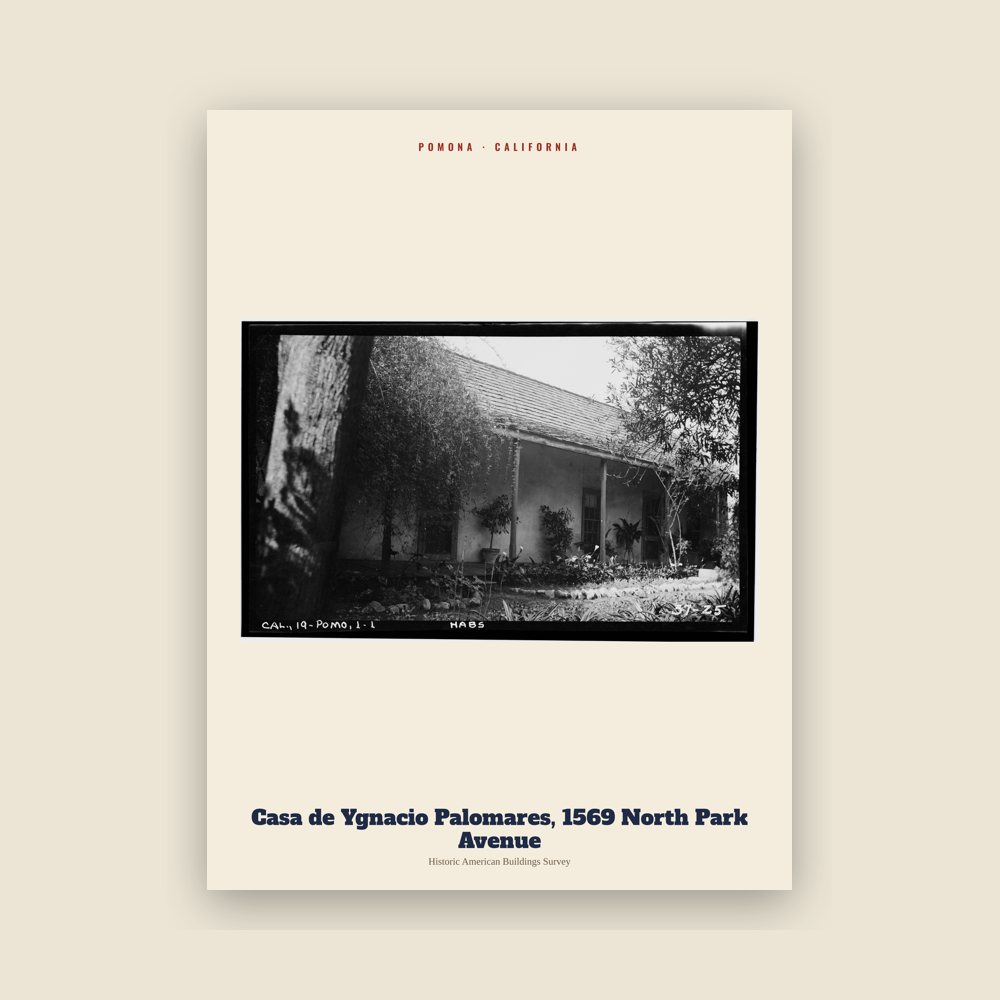
At the time Spanish conquistadors first arrived in California, the Tongva people inhabited what is now Pomona and the LA Basin. The area eventually became part of Mexico, and what is now Pomona was claimed by Ricardo Véjar and Ygnacio Palomares in the 1830s.
The first Anglo-Americans arrived prior to 1848 when the signing of the Treaty of Guadalupe Hidalgo resulted in California becoming part of the United States.
In 1875, a group of real estate developers called the Los Angeles Immigration and Land Cooperative Association held a contest to name the burgeoning town. The winning entry, submitted by citrus worker Solomon Gates, was Pomona, the name of the Roman goddess of fruit.
Read the full history
Spadra
Phillips sold a parcel of his land to William "Uncle Billy" Rubottom, in 1866 who founded a new town there and named it Spadra after his hometown, now part of Clarksville, Arkansas. The site of Spadra is 3 miles (4.8 km) west of the Pomona Station along Pomona Blvd. just east of the 57 (Orange) Freeway. Spadra became a stagecoach stop, Rubottom built the Spadra Hotel and Tavern to serve travelers, and by 1870, Spadra had 400–500 residents, three stores, a school, and a post office. In 1873, Phillips convinced the Southern Pacific Railroad to build a line to Spadra. Phillips thought Spadra would become a great town, and built his Phillips Mansion there in 1875, which together with the Spadra Cemetery are the only two remnants of the town that still exist today. Fullerton's Main north–south road was named Spadra Road for its first 75 years, as long before the 57 Freeway it was the road through Brea Canyon to Spadra, and was later renamed Harbor Boulevard. The Southern Pacific Railroad had a terminus at Spadra, but the line was extended east to Colton, and Spadra lost momentum. In 1964, the area was annexed by Pomona.
1880–present
By the 1880s, the arrival of Coachella Valley water, together with railroad access, made it the western anchor of the citrus-growing region. Pomona was officially incorporated on January 6, 1888.
In the 1920s Pomona was known as the "Queen of the Citrus Belt", with one of the highest per-capita levels of income in the United States. In the 1940s it was used as a movie-previewing location for major motion picture studios to see how their films would play to modally middle-class audiences around the country (for which Pomona was at that time viewed as an idealized example).
Pomona Mall was a downtown pedestrian mall, recognized by the Los Angeles Conservancy as an outstanding example of Mid-century modern and modern architecture and design. It was completed in 1962, one element in a larger plan of civic improvements covering the whole city. The eastern end is now part of the Western University of Health Sciences campus, while the western end now houses numerous art galleries, art studios and restaurants.
In 2005, Pomona citizens elected Norma Torres, the first woman of Guatemalan heritage to be elected to a mayoral post outside of Guatemala. Later, she would become a U.S. congresswoman representing California's 35th congressional district in 2015.
On April 22, 2026, construction began on the Knight Riders Cricket Ground, which became the home of the Los Angeles Knight Riders of Major League Cricket. The stadium opened on July 1, 2026. The stadium will also host the cricket competition at the 2028 Summer Olympics.
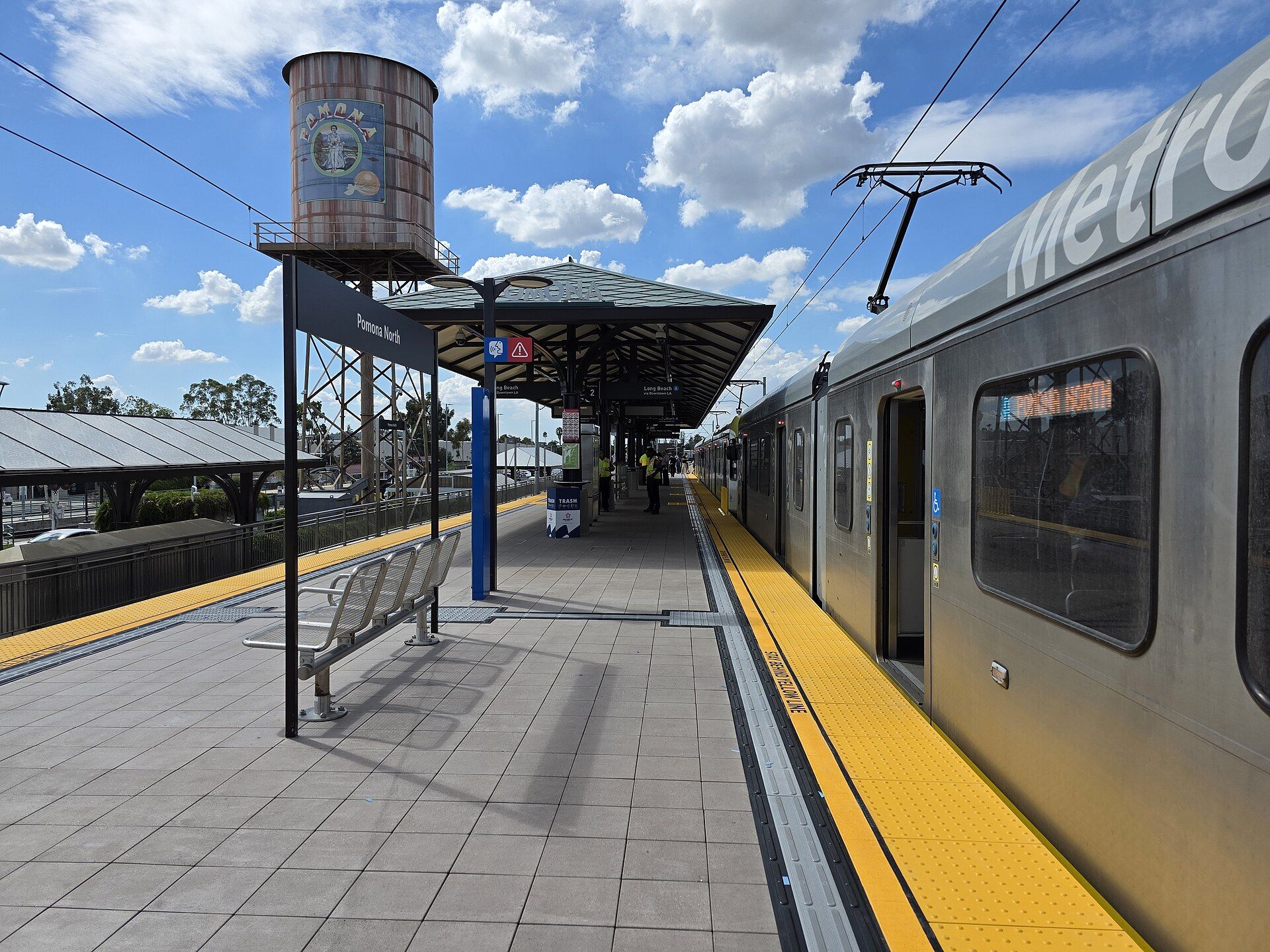
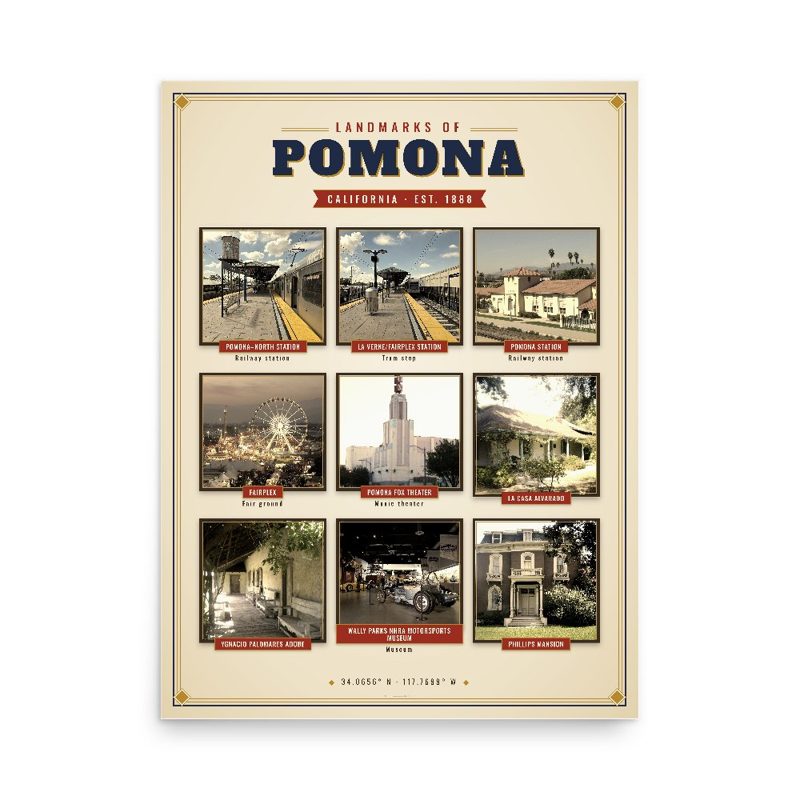
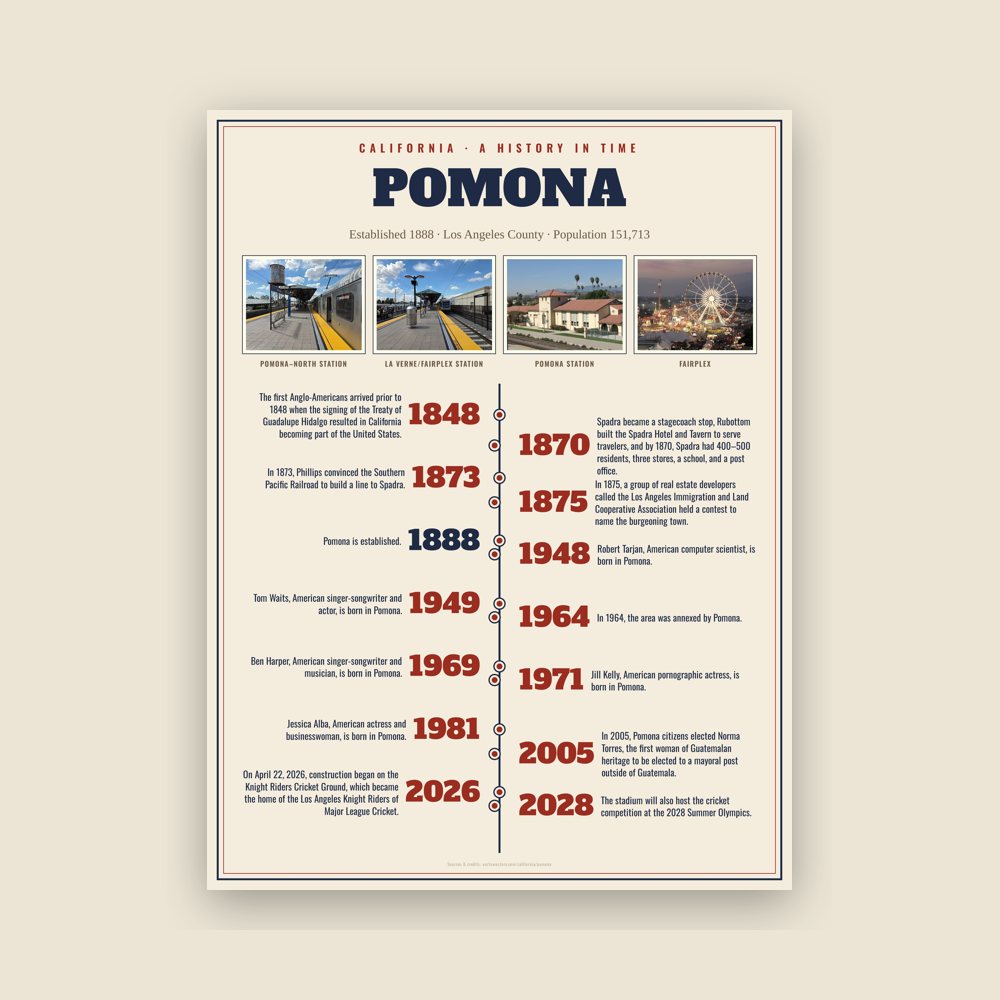
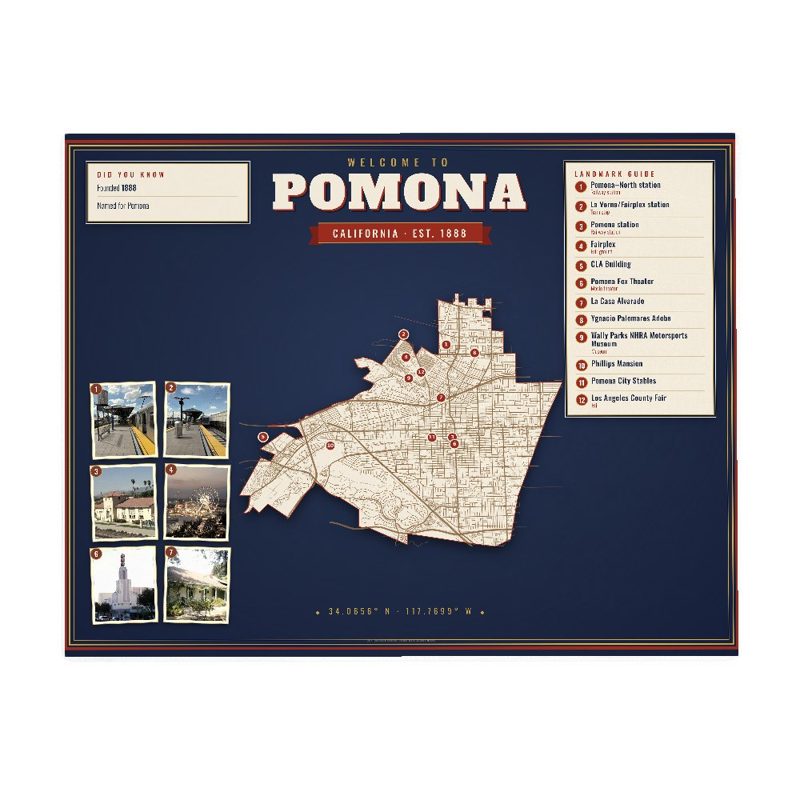


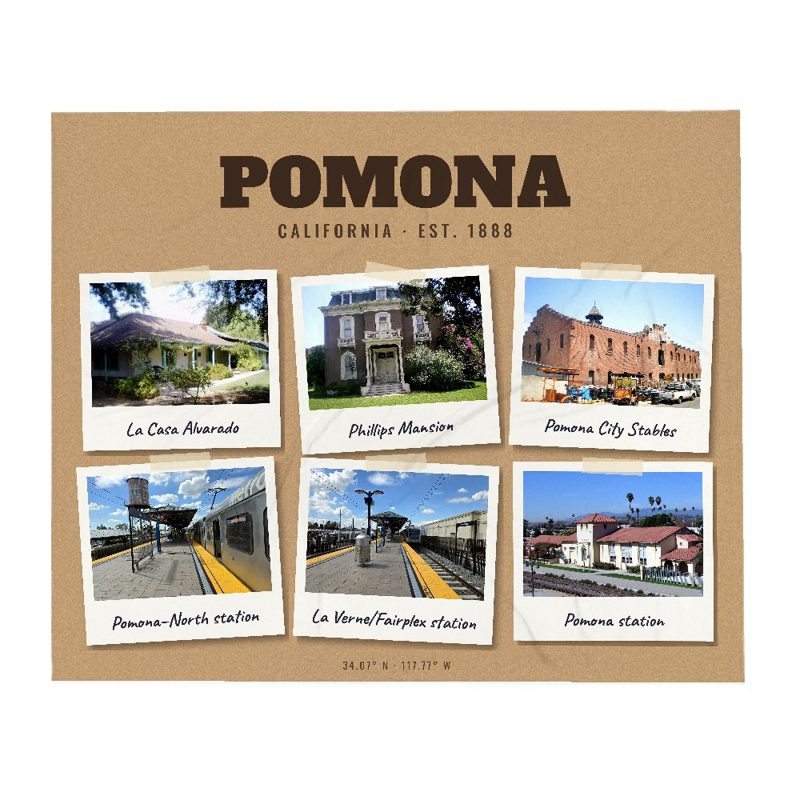
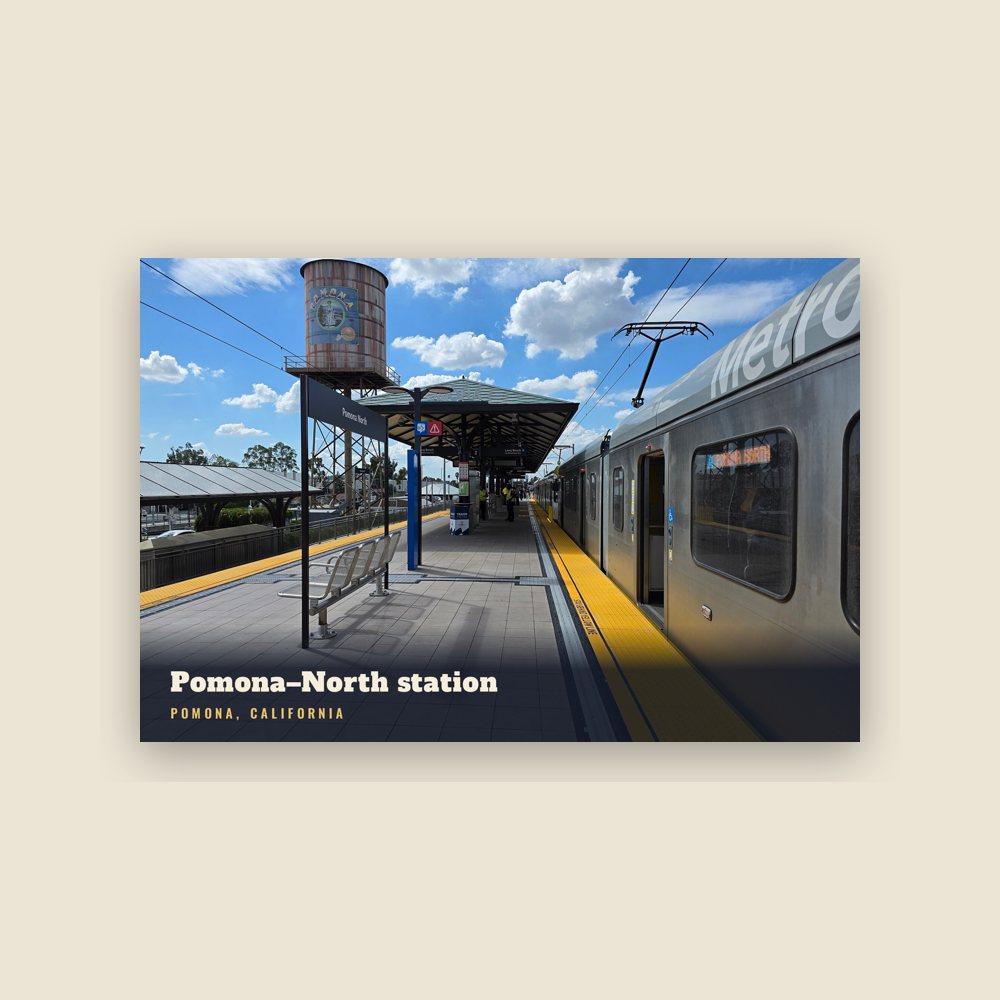
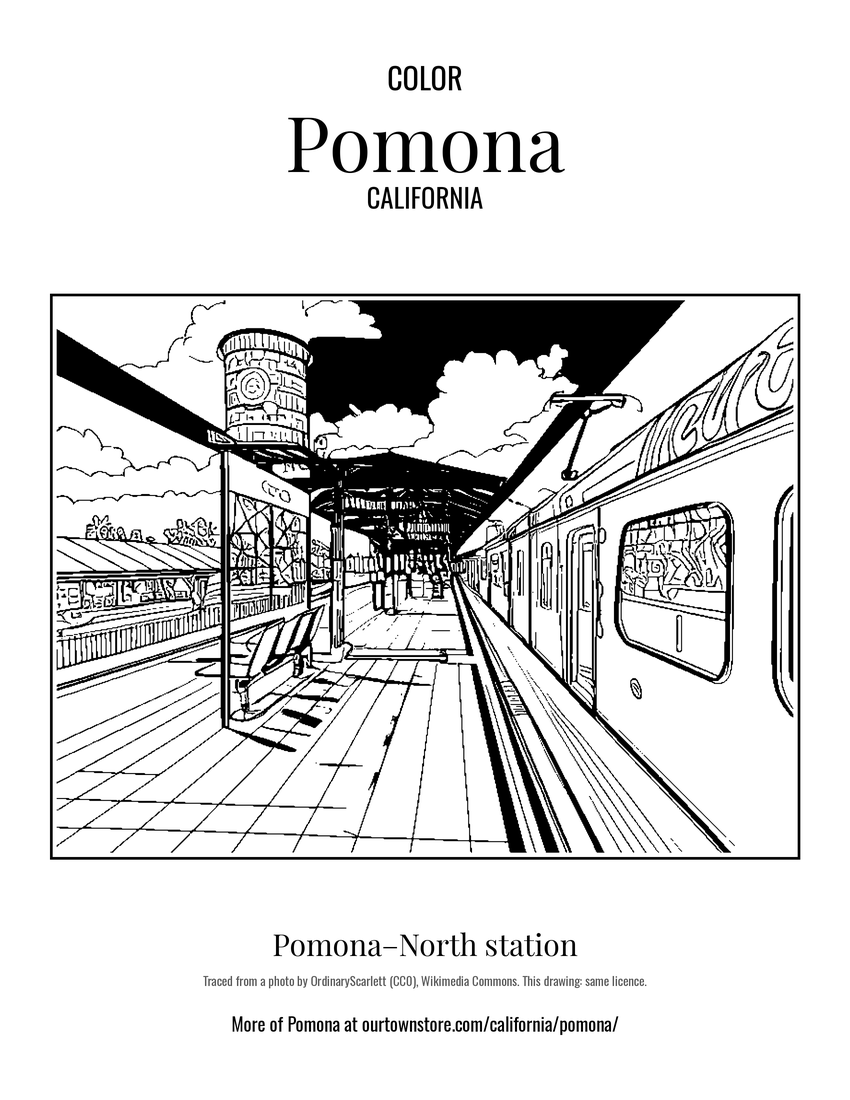 Pomona–North station
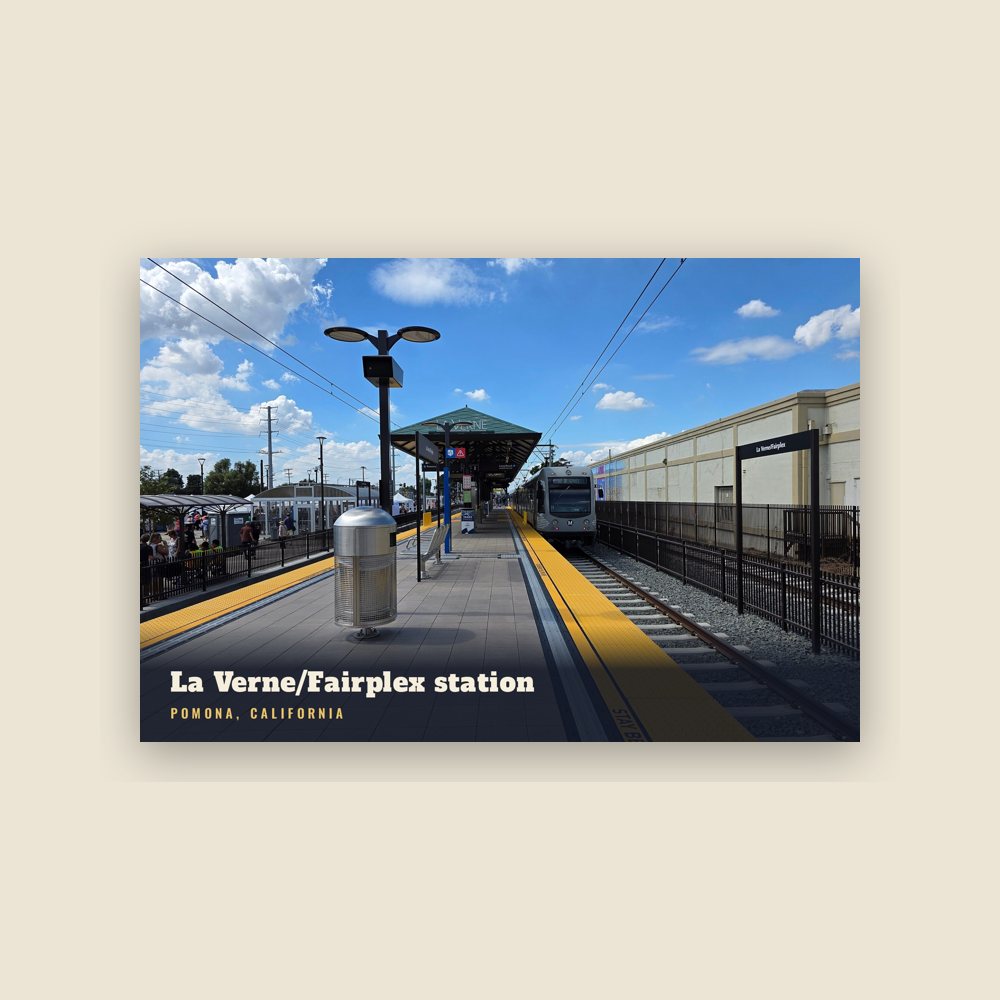
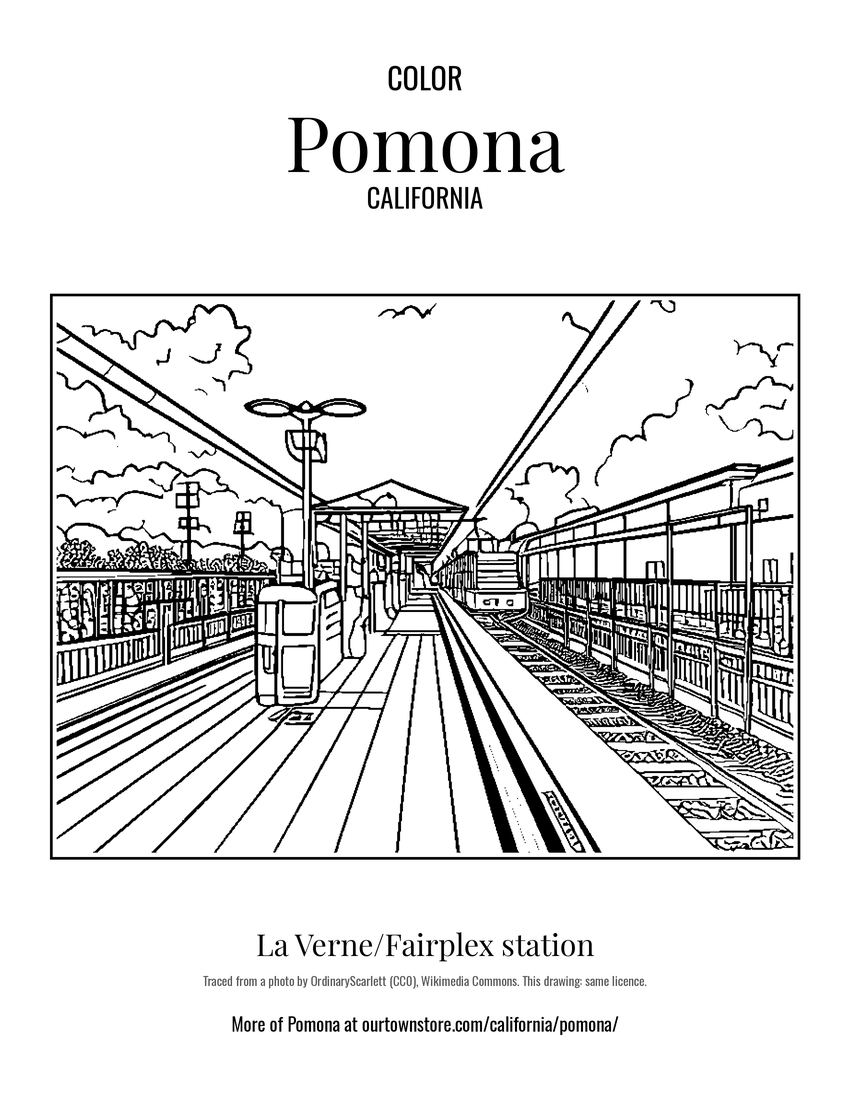 La Verne/Fairplex station
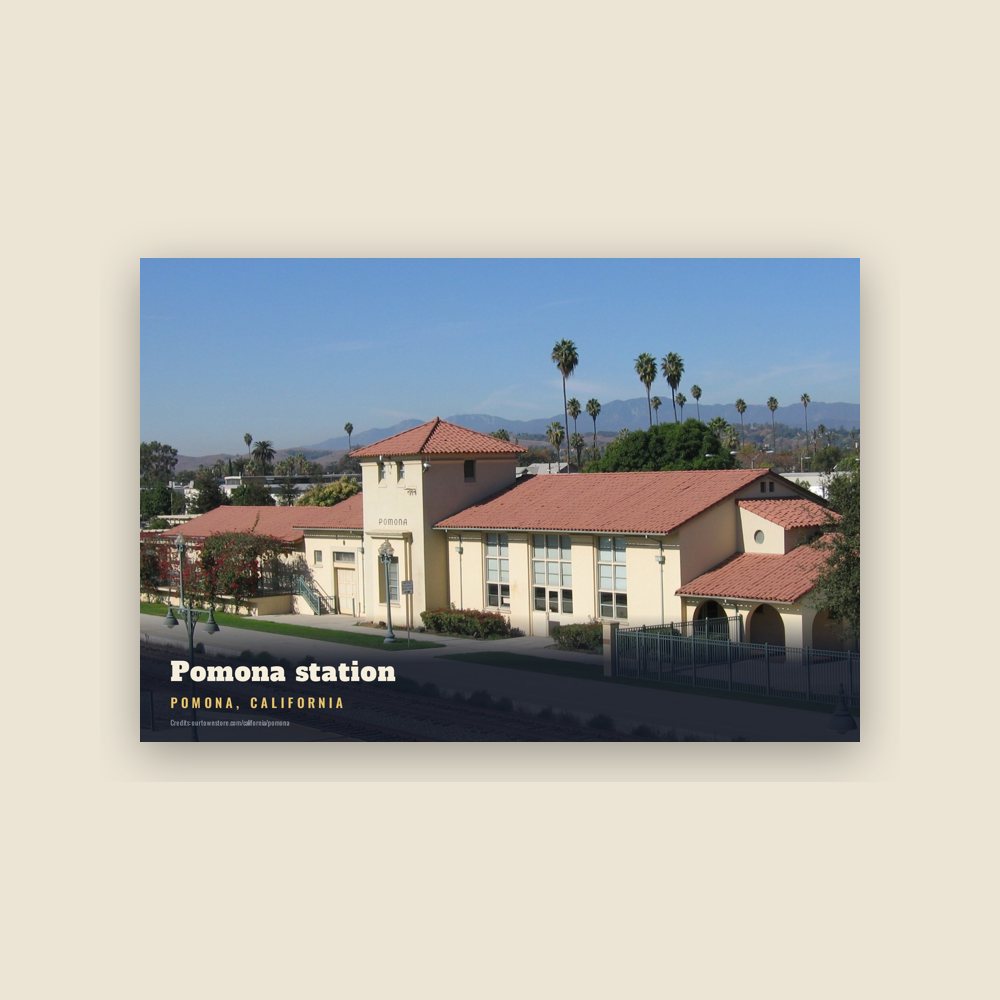
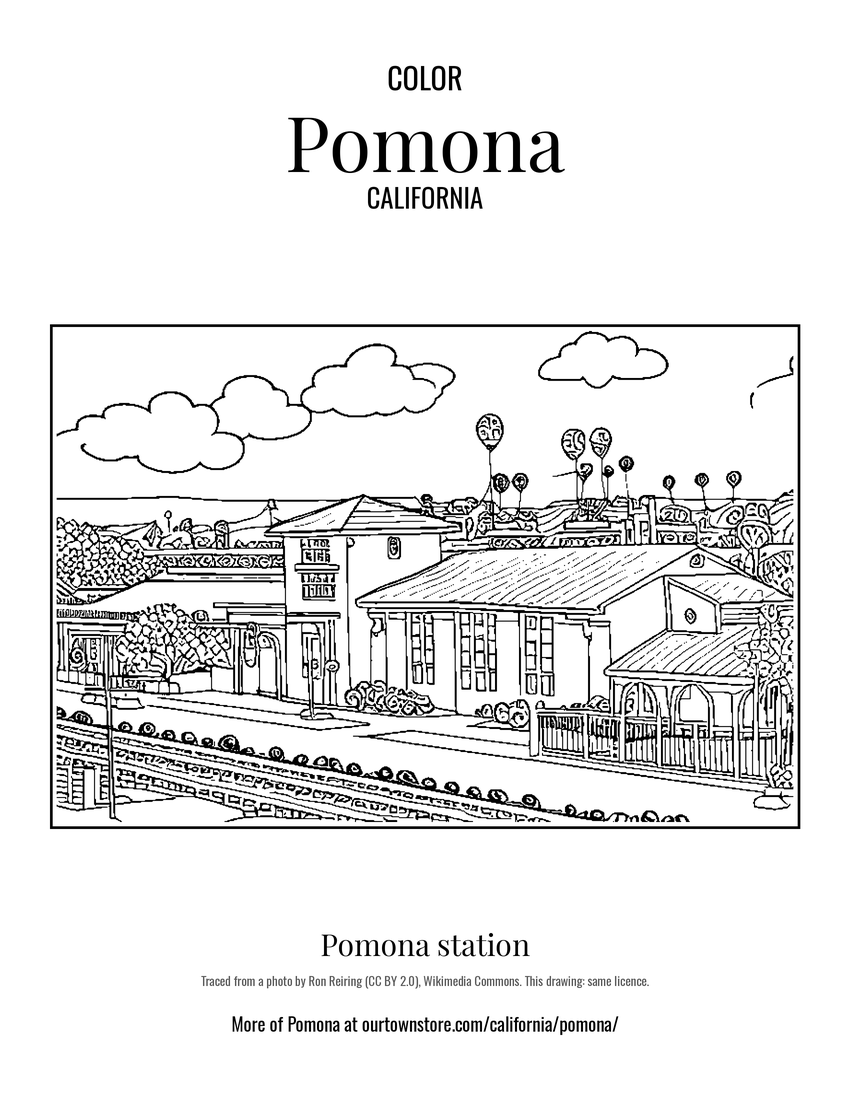 Pomona station
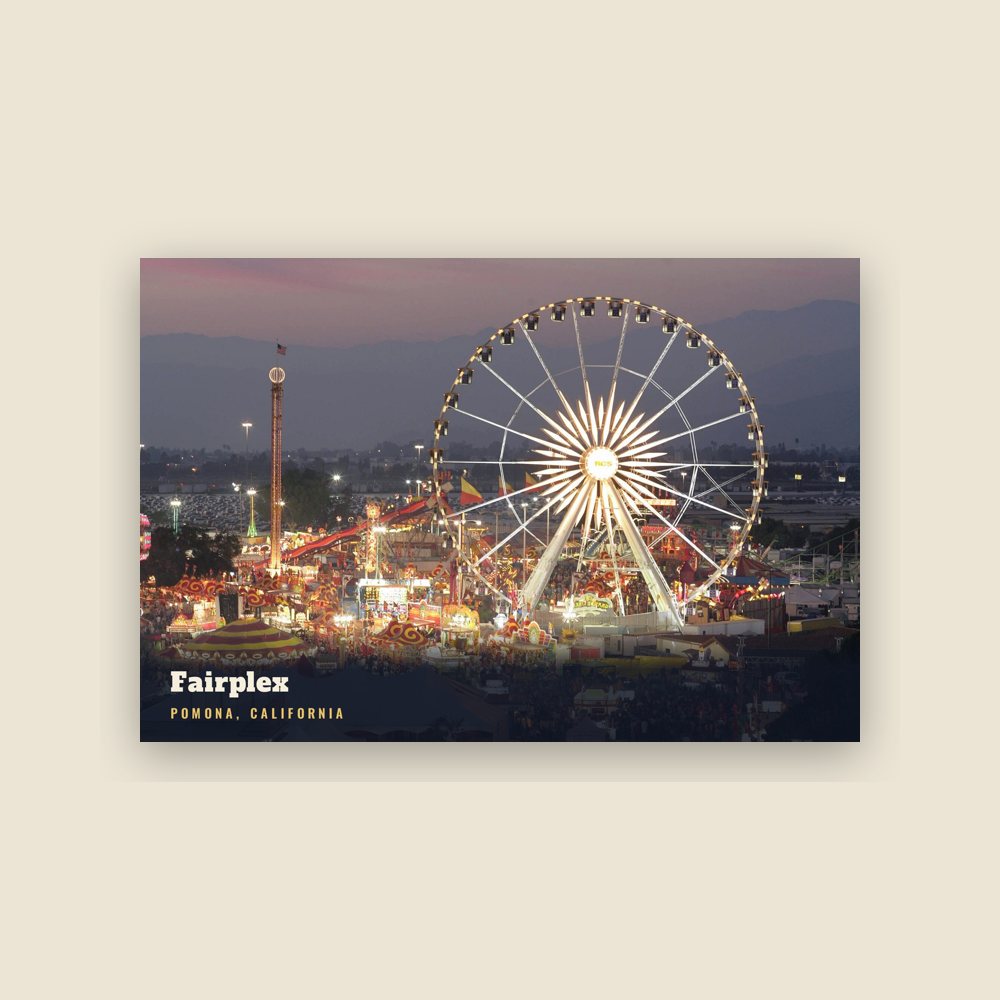
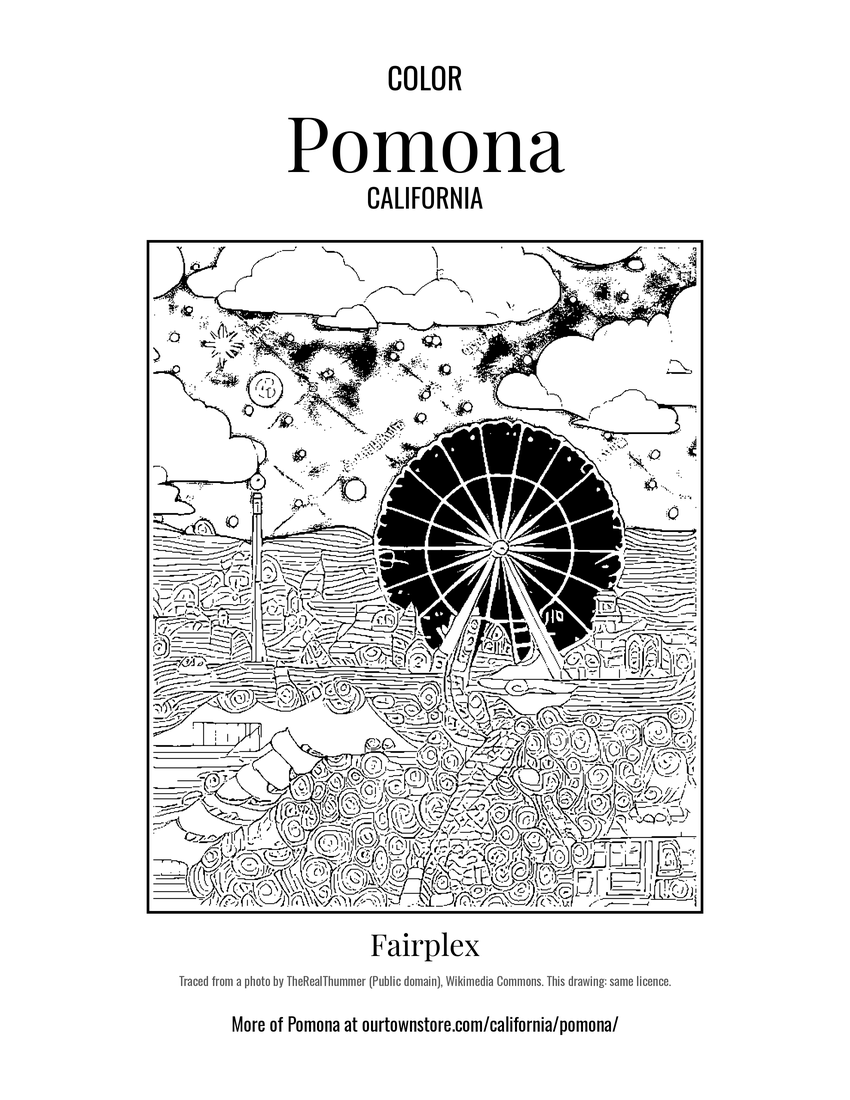 Fairplex