A short history of Modesto
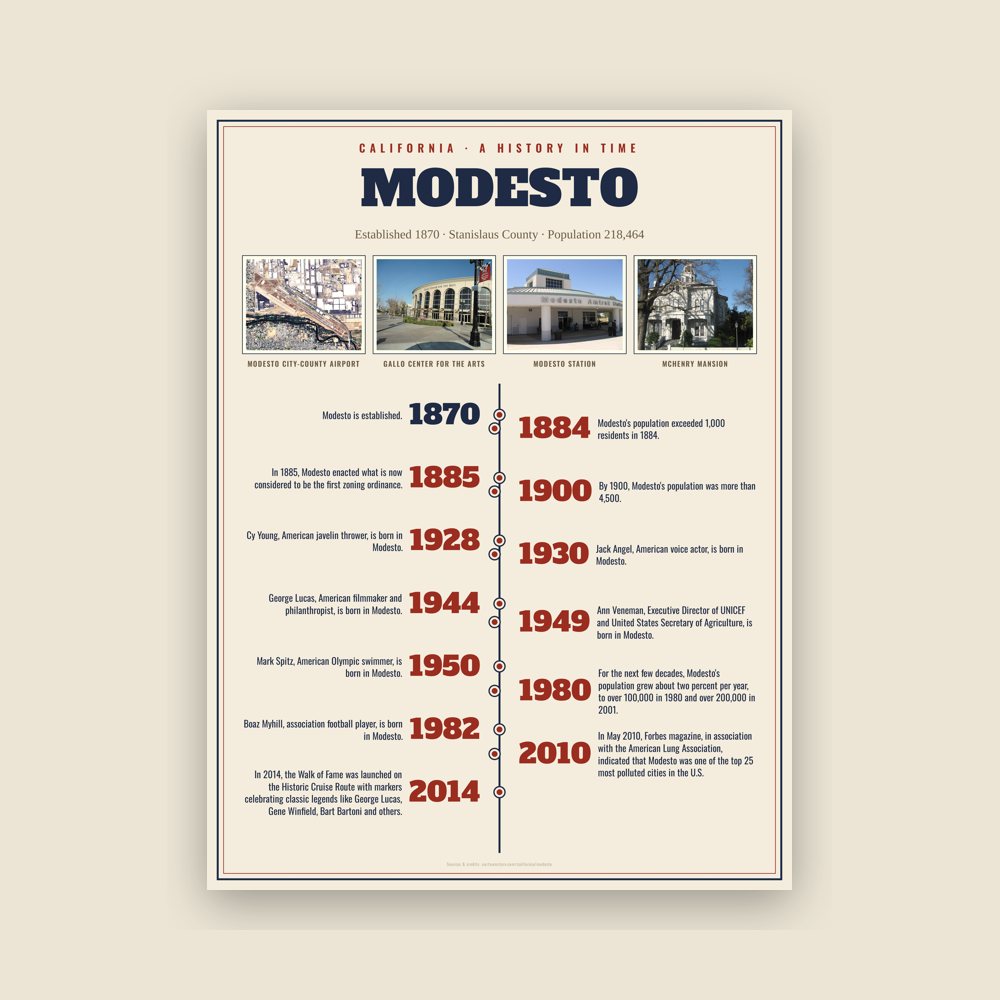
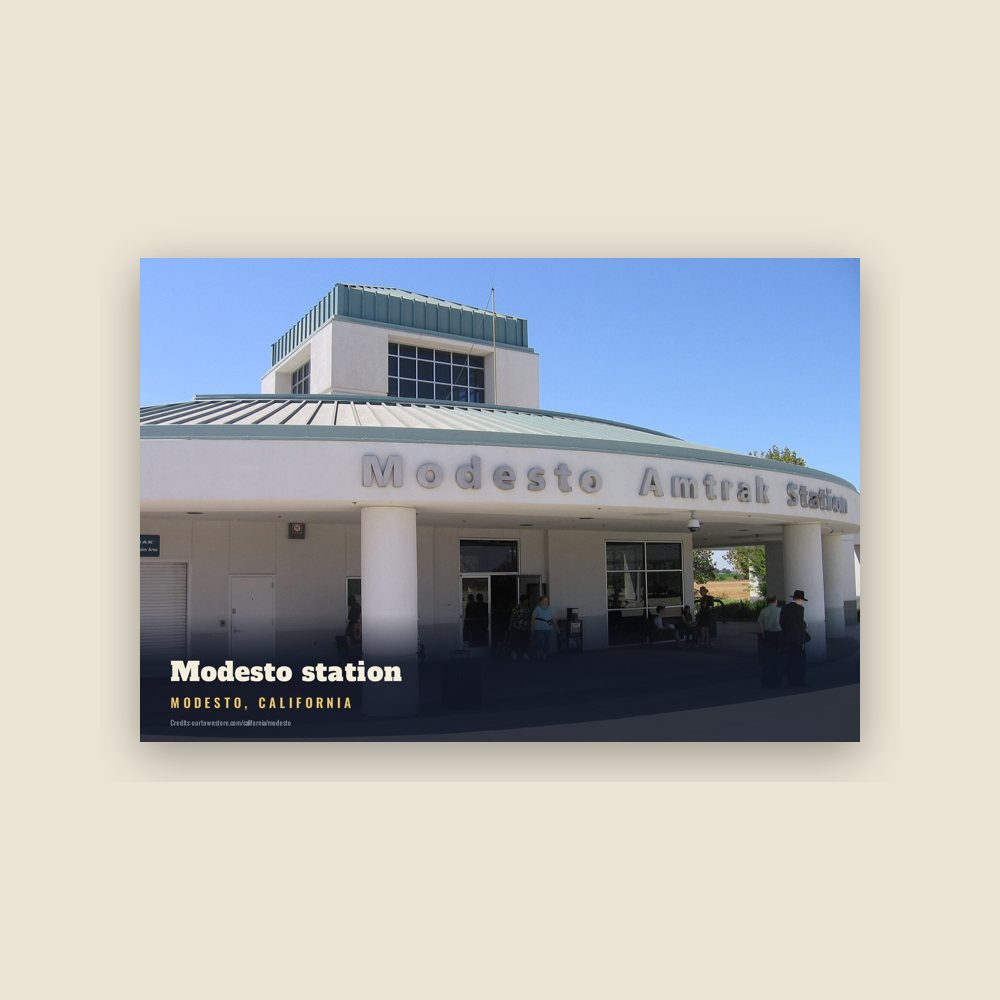
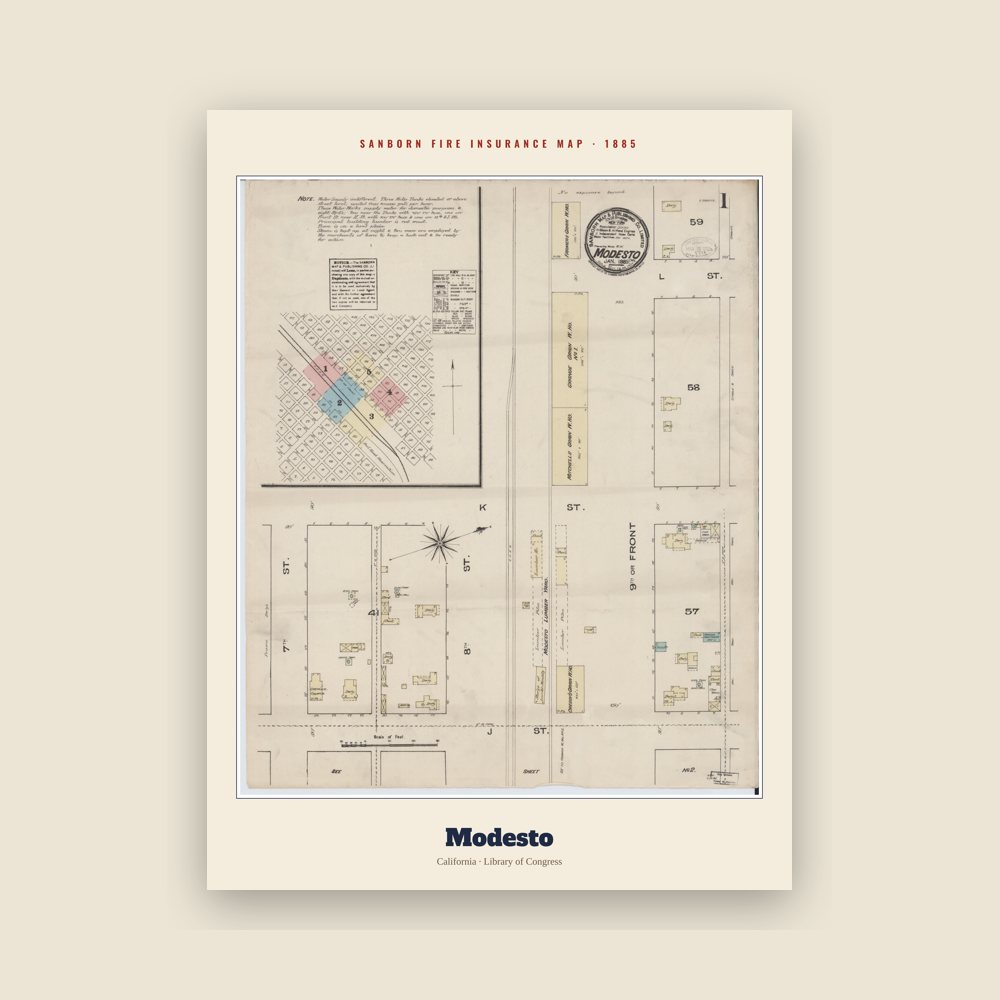
The City of Modesto was originally a stop on the railroad connecting Sacramento to Los Angeles, built by Central Pacific Railroad. When Modesto was founded in 1870, the railroad company co-founder Mark Hopkins Jr. suggested to name it after his associate the banker William C. Ralston. Ralston asked that another name be found, and a railroad employee exclaimed loudly in Spanish that Ralston was a modest man. The railroad company co-founder Charles Crocker then named the town Modesto in recognition of Ralston's modesty.
Modesto's population exceeded 1,000 residents in 1884. With fields of grain, the nearby Tuolumne River for grain barges, and railroad traffic, the town grew. Irrigation water came from dams in the foothills, and irrigated fields of vegetables and fruit and nut trees flourished. By 1900, Modesto's population was more than 4,500. During World War II, the area provided canned goods, powdered milk, and eggs for the US armed forces and Allied forces. For the next few decades, Modesto's population grew about two percent per year, to over 100,000 in 1980 and over 200,000 in 2001.
The city's official motto, "Water Wealth Contentment Health," is emblazoned on the downtown Modesto Arch, which is featured in local photographs and postcards. The motto was selected in a contest held in 1911, with a $3 prize for the winner. (The original winning motto, "Nobody's got Modesto's goat", was later declined by town officials.) Modesto's motto is sometimes spoofed as "The land gets the water, the bankers get the wealth, the cows get contentment, and the farmers get the health."
Read the full history
Planning and environment
In 1885, Modesto enacted what is now considered to be the first zoning ordinance. The ordinance's primary goal was to keep laundries (which were primarily Chinese run), out of the city. After an arrested man filed to contest the constitutionality of the ordinance, the case escalated to the California Supreme Court which found the law to be constitutional.
In the late 1980s Modesto embarked on an update to the city's general plan pursuant to requirements of the State of California. The result was a comprehensive evaluation of alternative population and land use projections along with associated environmental impact analysis. Some of the environmental factors technically assessed were air quality, water quality, environmental noise, soil contamination and visual impacts.
Much of the soils in Modesto are classified as part of the Hanford series: (HbpA) fine sandy loam, moderately deep over silt. These soils are well-drained, moderately coarse-textured soils derived from alluvium from granitic rock. The Hanford soils are important for the production of a wide variety of irrigated orchard, field, and truck crops.
Vicinity watercourses include the Stanislaus River, the Tuolumne River, and the Dry Creek which empties into the Tuolumne River. Area groundwater, which is the principal source of water supply in the city, has been historically impaired in a fashion that is spatially variable. Water from the nearby Modesto Reservoir is now used to augment city water. In various parts of the city and its perimeter the following water pollutants have occurred from time to time: nitrates, dibromochloromethane, volatile organics, salinity, total dissolved solids and other pesticides. Each of these contaminants is not present citywide.
The EPA rates air quality in Modesto as a 23 on a scale to 100 (higher is better), making Modesto an unhealthy place to live for those with breathing difficulties. This is based on ozone alert days and number of pollutants in the air. In May 2010, Forbes magazine, in association with the American Lung Association, indicated that Modesto was one of the top 25 most polluted cities in the U.S.
Downtown revitalization
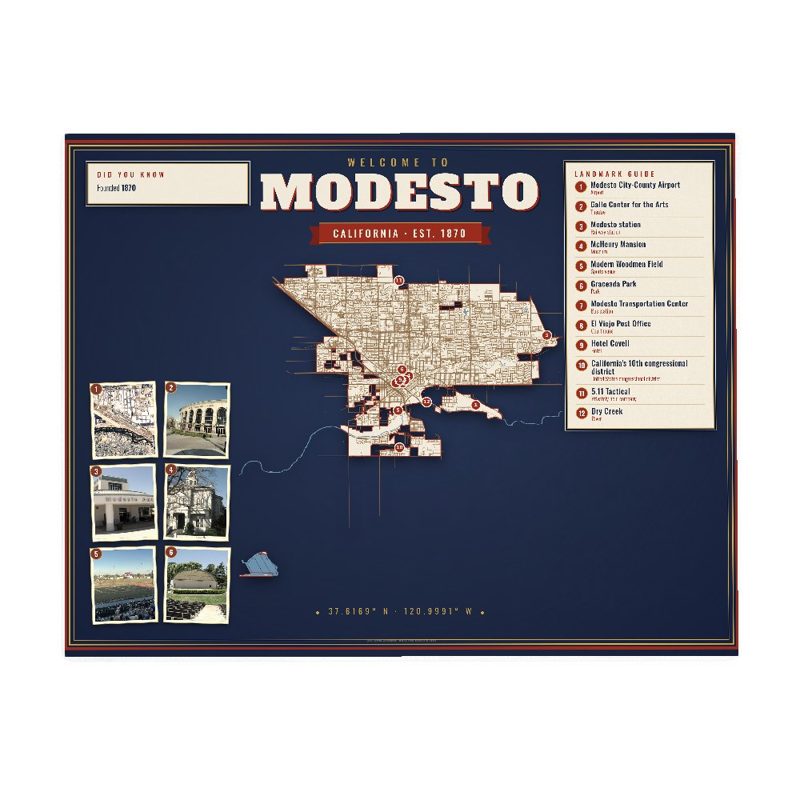
As of the 2000s, downtown Modesto (DOMO) has new attractions including the Gallo Center for the Arts and the new Downtown Plaza adjacent to Modesto Centre Plaza. Downtown Modesto has lost the Hotel Covell, the art deco Strand Theatre, and the Sears building.
Historic 10th and 11th streets, which were the original locations of the cruising featured in American Graffiti, have been designated by the City of Modesto as the Historic Cruise Route. This is now a tourist walk with information about Modesto's music, car and Graffiti culture.
In 2014, the Walk of Fame was launched on the Historic Cruise Route with markers celebrating classic legends like George Lucas, Gene Winfield, Bart Bartoni and others.
Classic Community Murals was launched by Modesto magazine ModestoView and the Peer Recovery Art Center to create a series of large scale murals celebrating the Modesto Classic Graffiti heritage. Many of these are on the Cruise Route.
New business incentives have been created to enhance facades, signage, and permitting. A promenade is being designed to create a special entertainment zone along the corridor between the Modesto Centre Plaza and the Gallo Center for the Arts and the adjacent core streets of 10th, 11th and J streets.
Adapted (trimmed) from the Wikipedia article Modesto, California, revision 1380282435 by its contributors, licensed CC BY-SA 4.0.
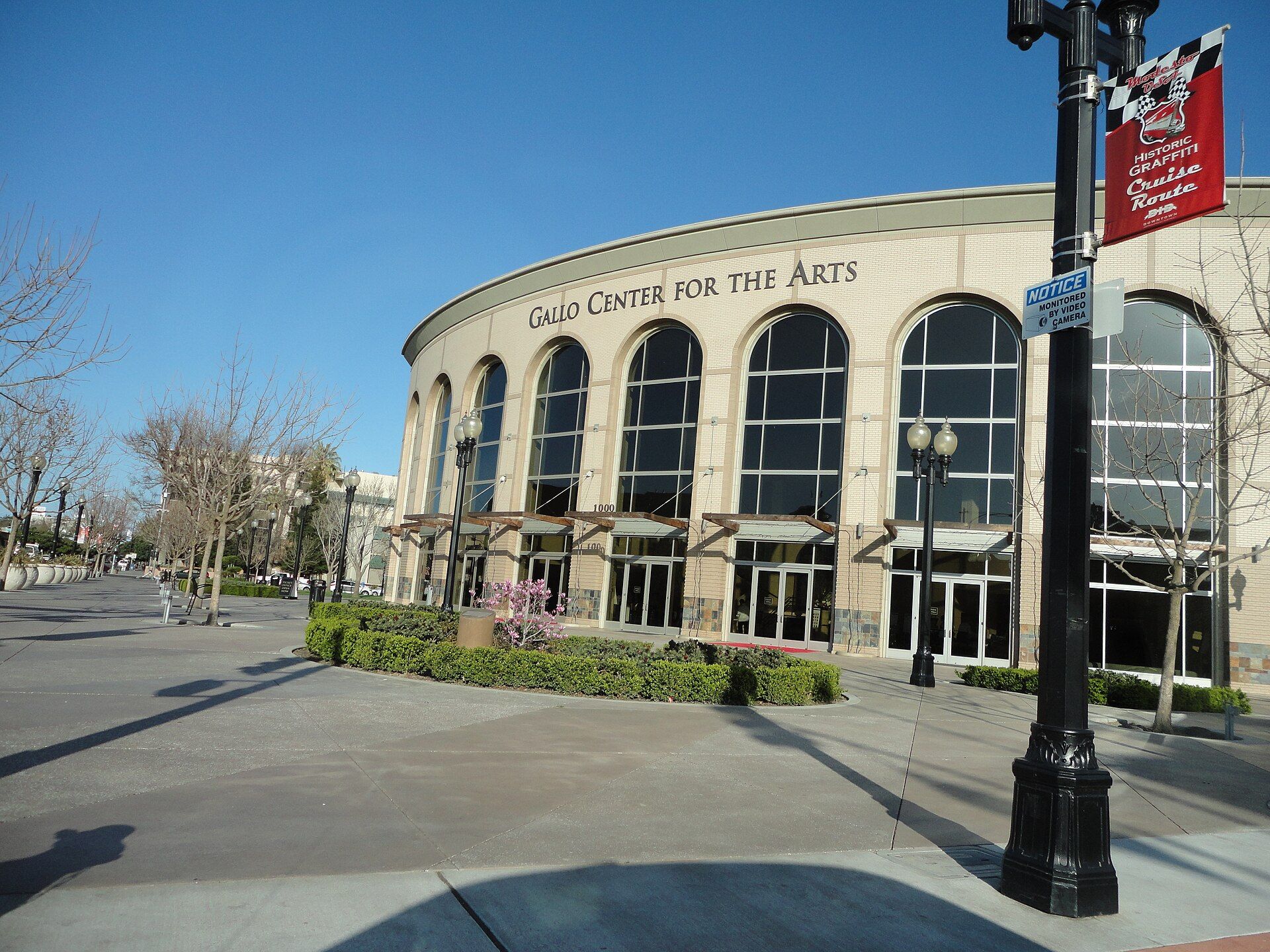
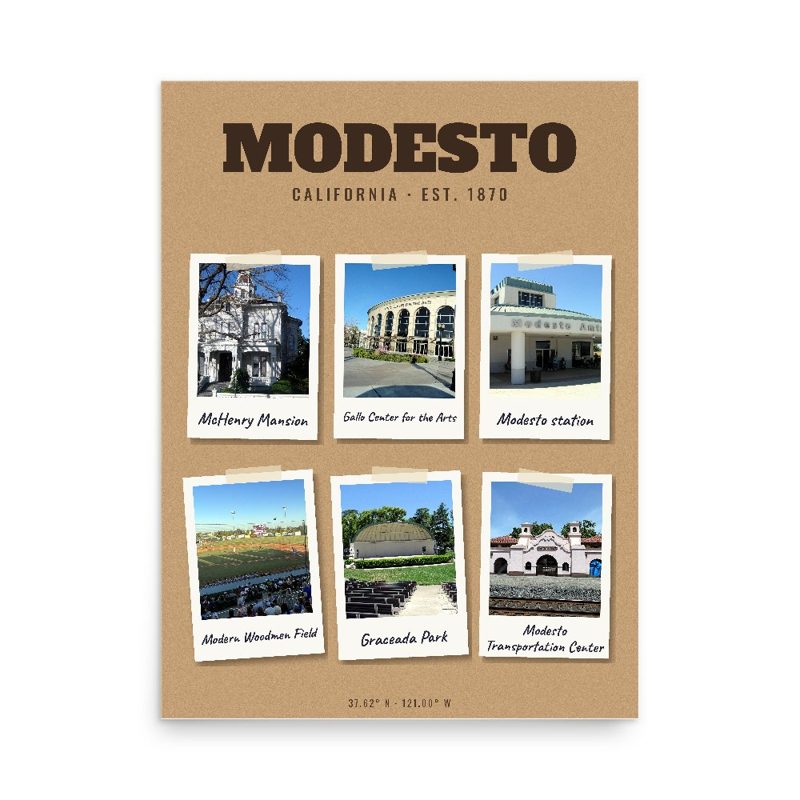

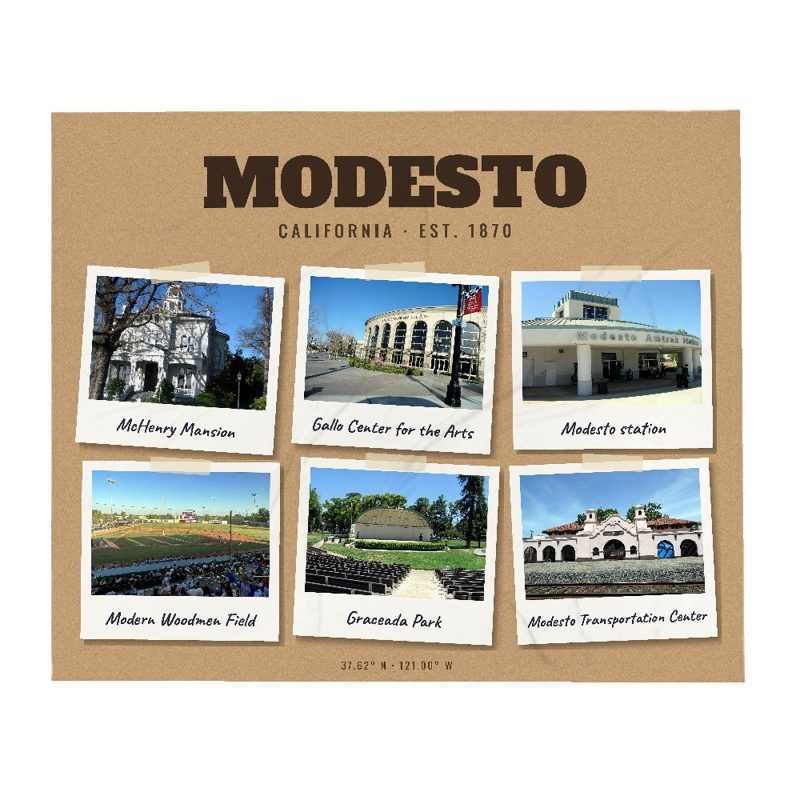
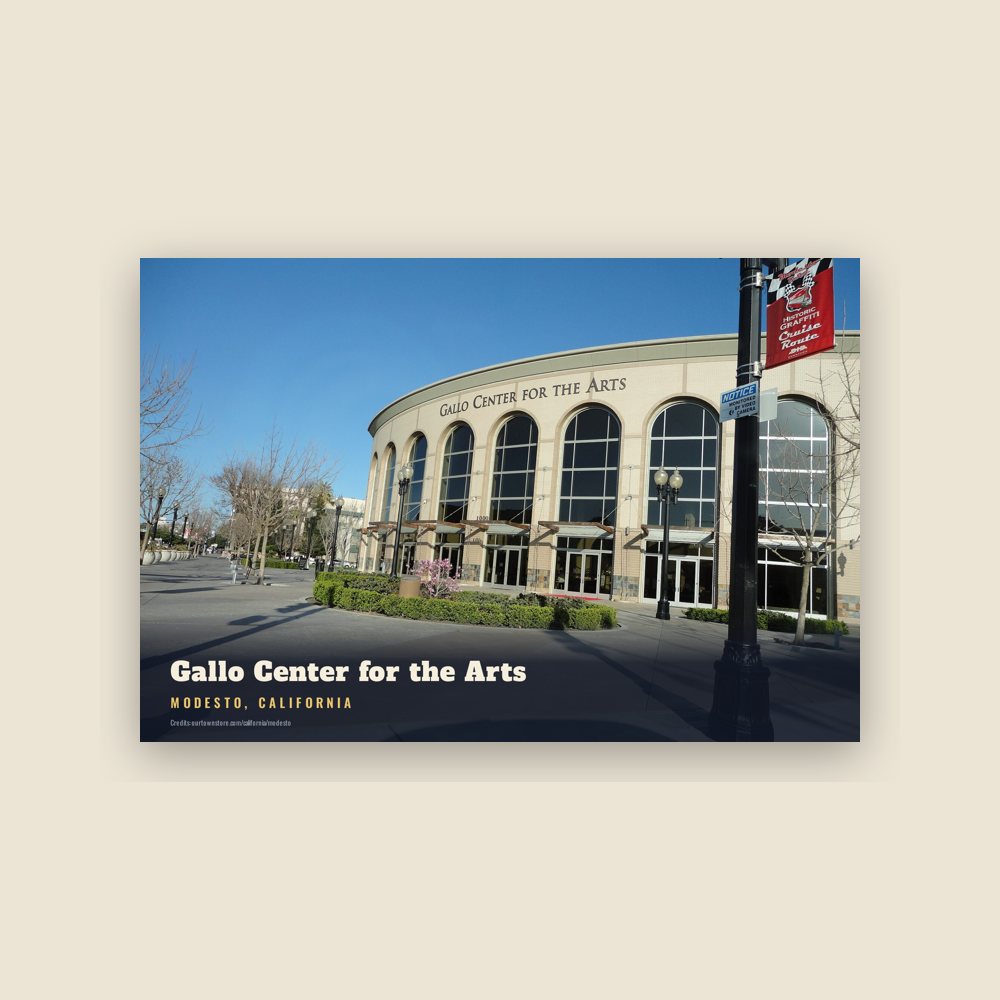
 Gallo Center for the Arts
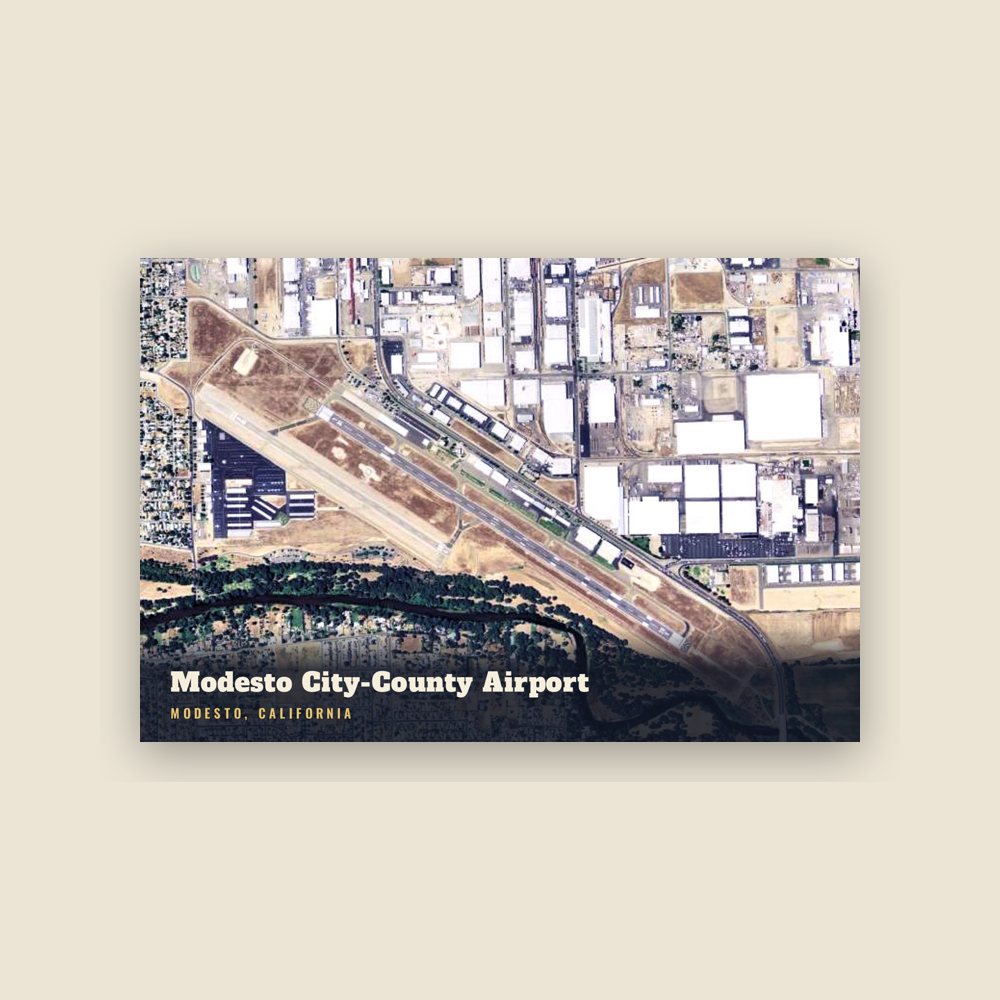
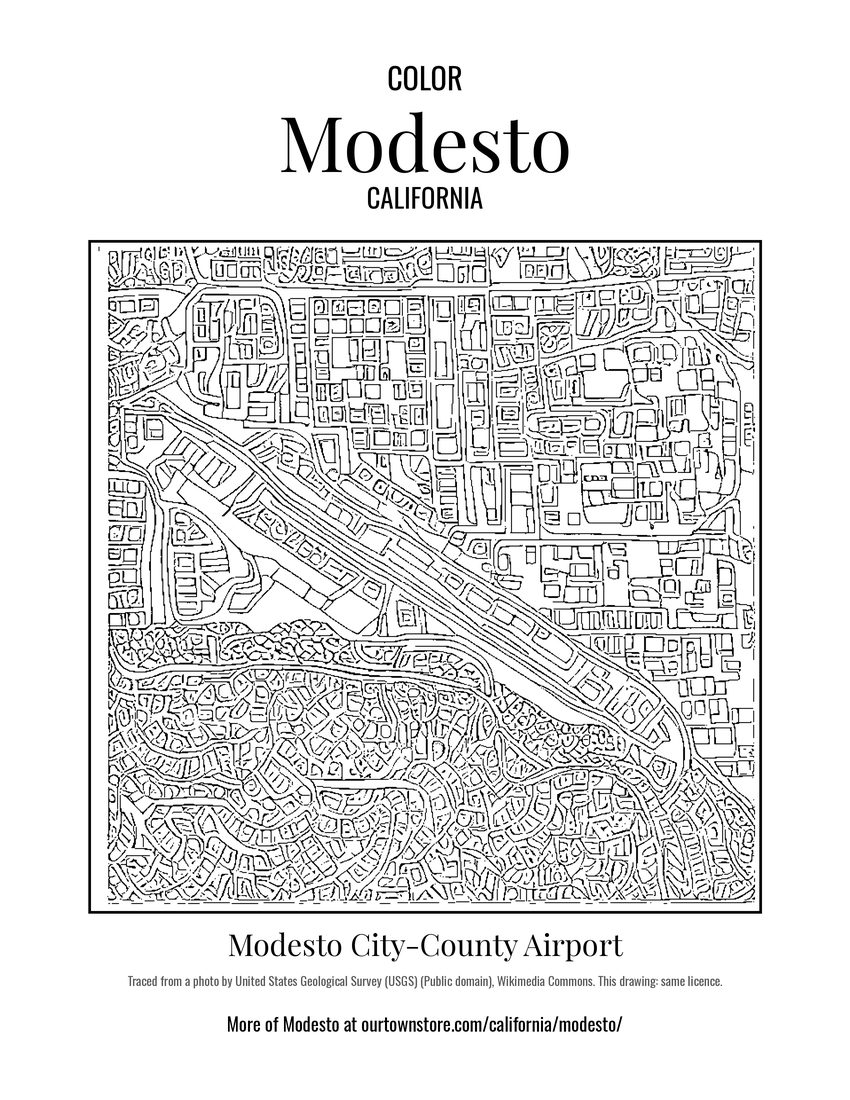 Modesto City-County Airport
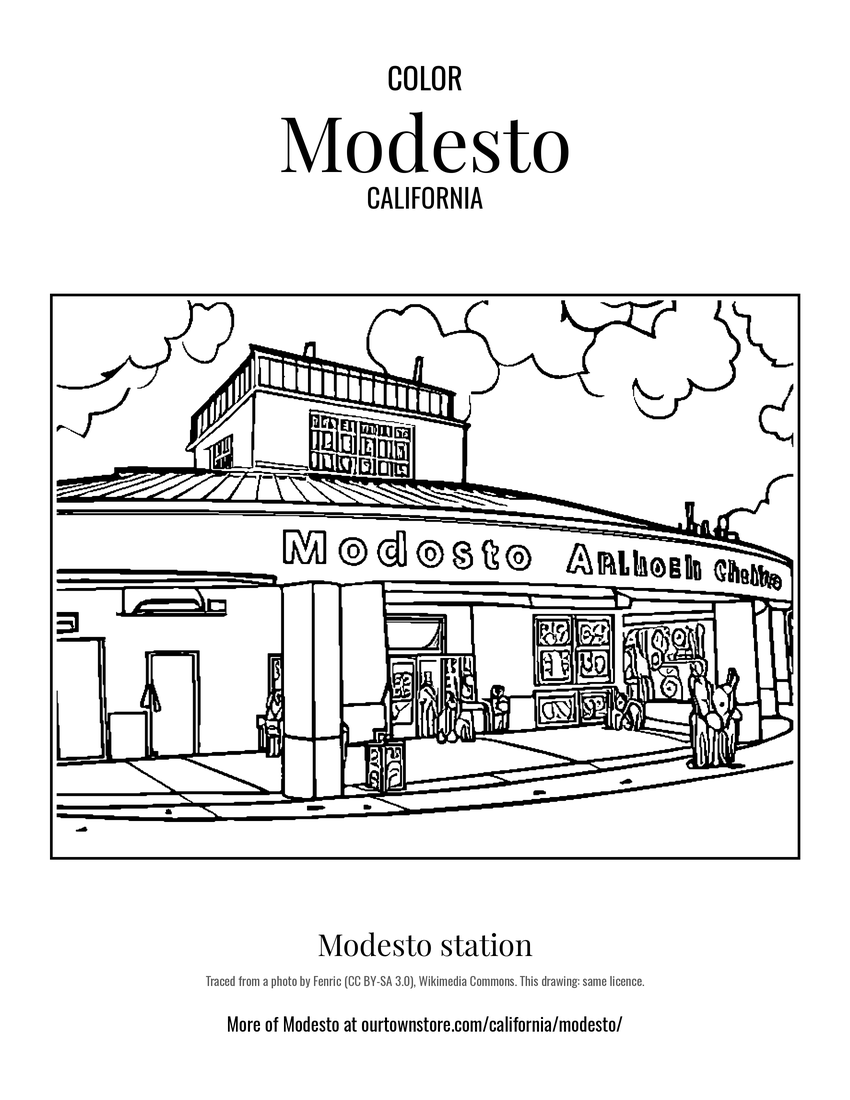 Modesto station
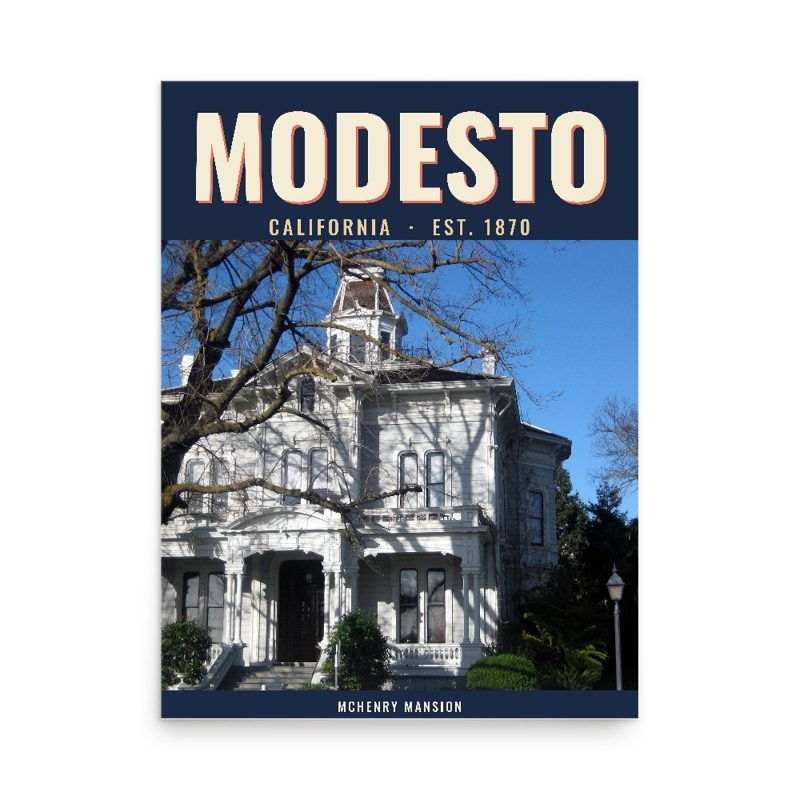
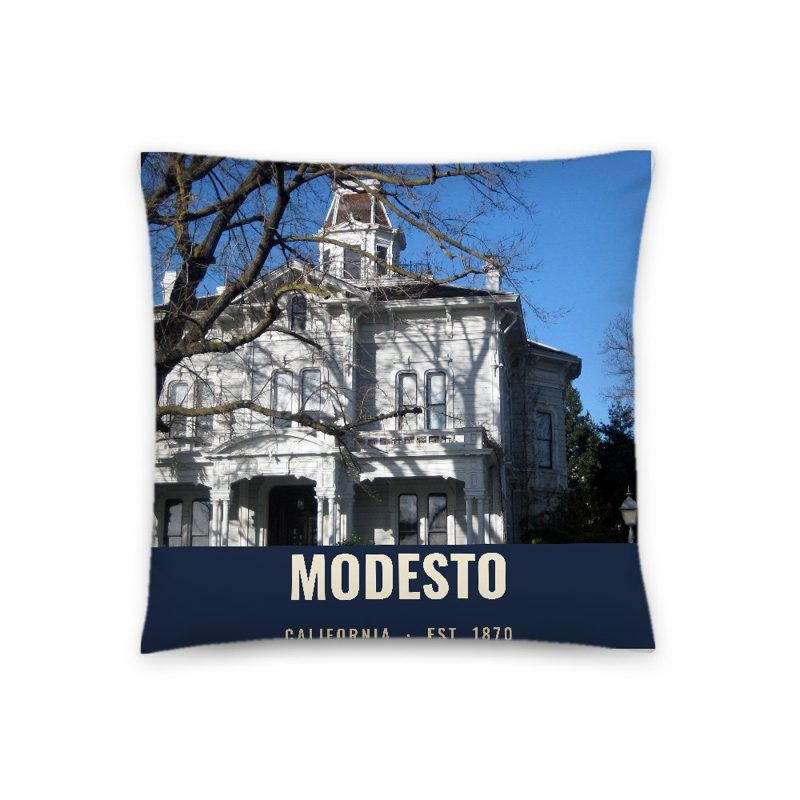
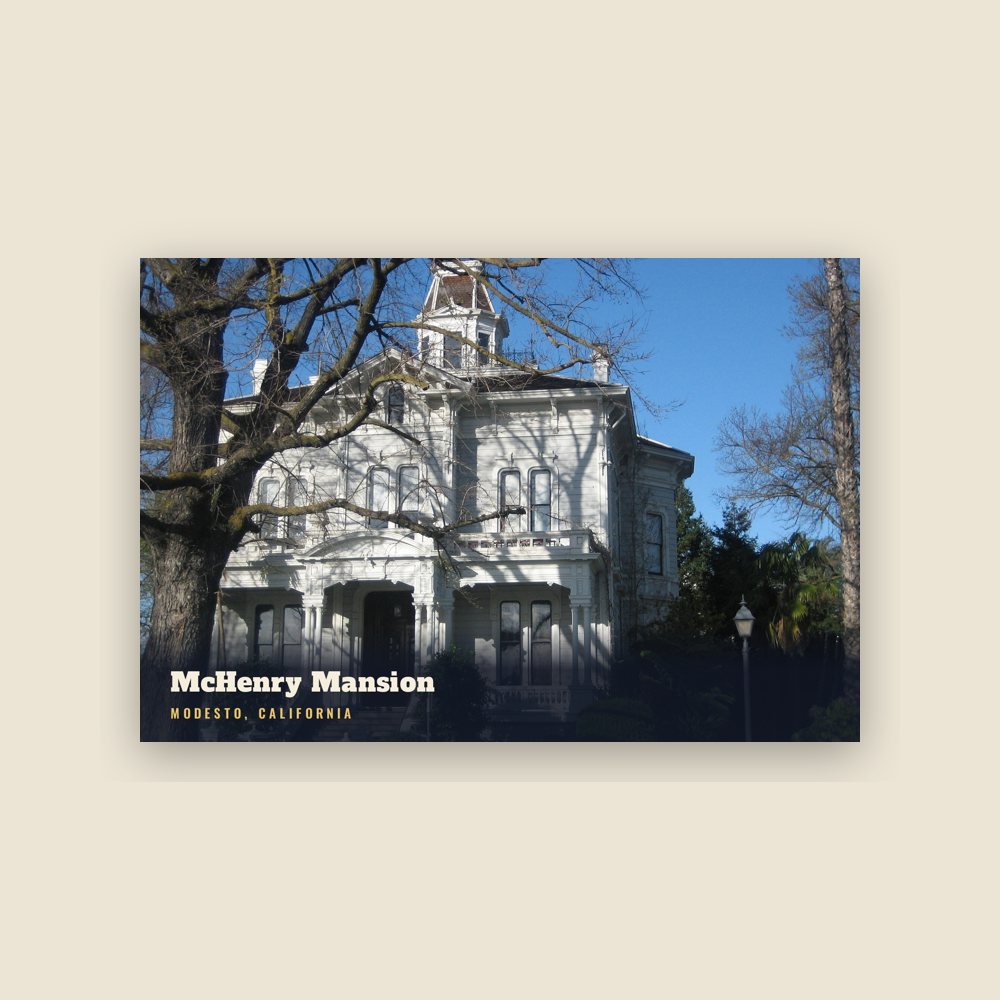
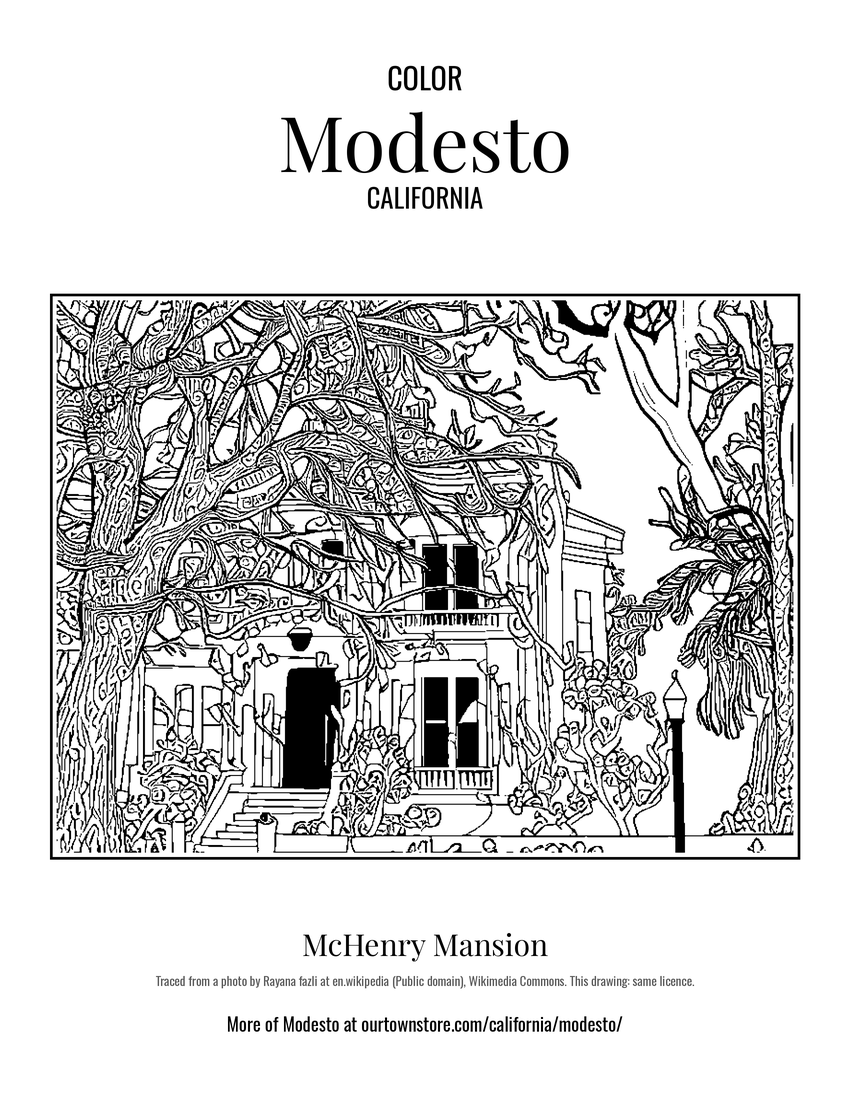 McHenry Mansion