Before the Spanish conquest, the area around Lompoc was inhabited by the Chumash people. Lompoc is the birthplace of Jonathan Majors, actor.
- CountySanta Barbara County
- Population44,444 (2020 U.S. Census)
Lompoc, California gifts and souvenirs: 26 designs made from Lompoc's own map, landmarks and history, from $16 to $95. Printed to order and shipped free in the USA.
| Popular | Price |
|---|---|
| Lompoc Hometown Ornament | $23 |
| Lompoc Vintage Travel Poster | from $40 |
| Lompoc Varsity Crewneck | from $57 |
| Lompoc Est. Tee | from $33 |
| Lompoc Town Line Mug | from $26 |
| Lompoc Market Tote | $37 |
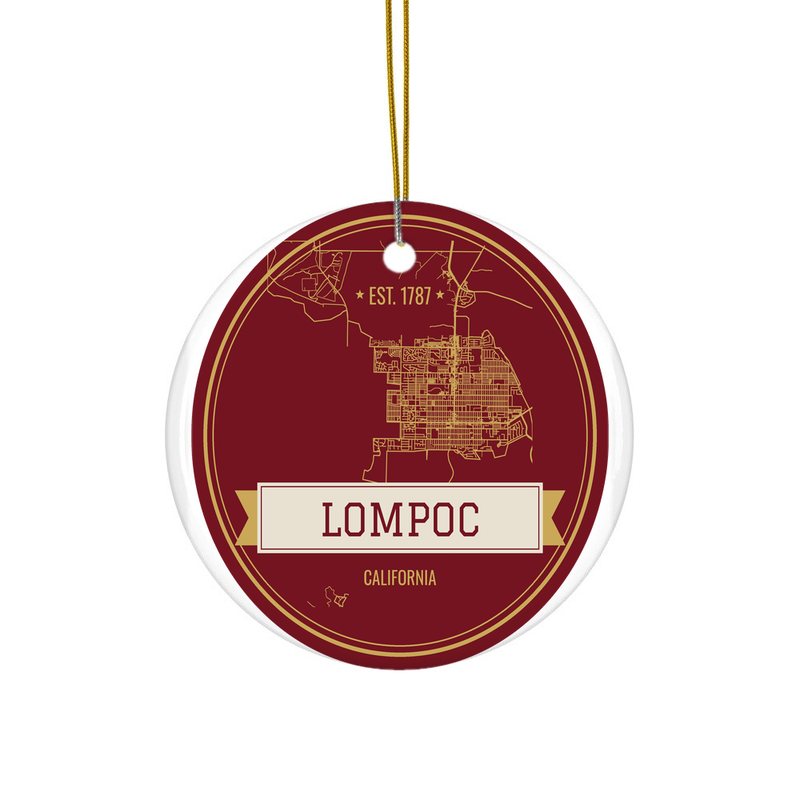
Ceramic keepsake, gold ribbon
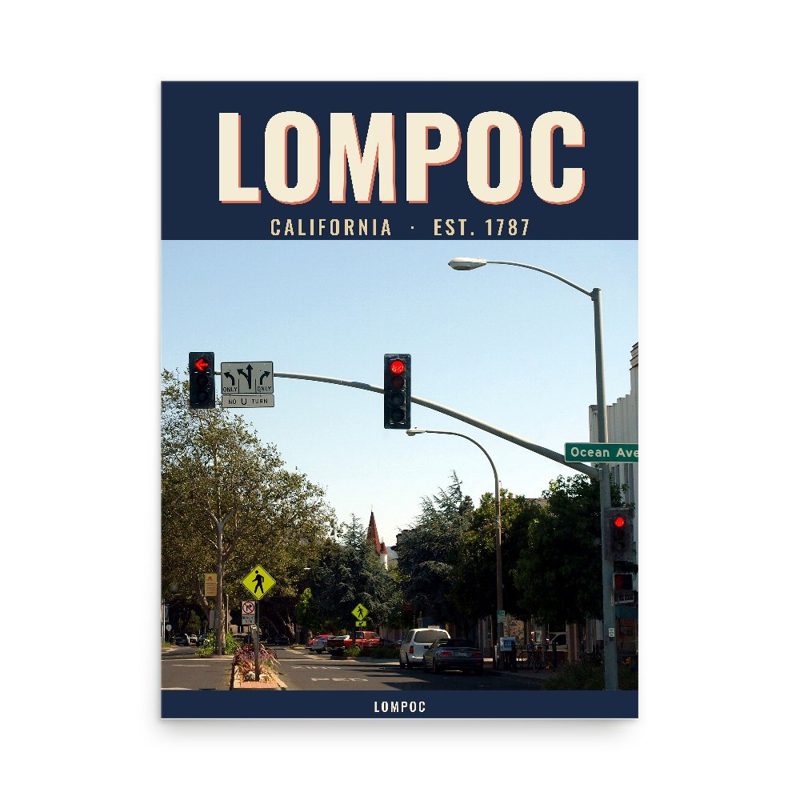
Its landmark photo in a classic travel-poster layout
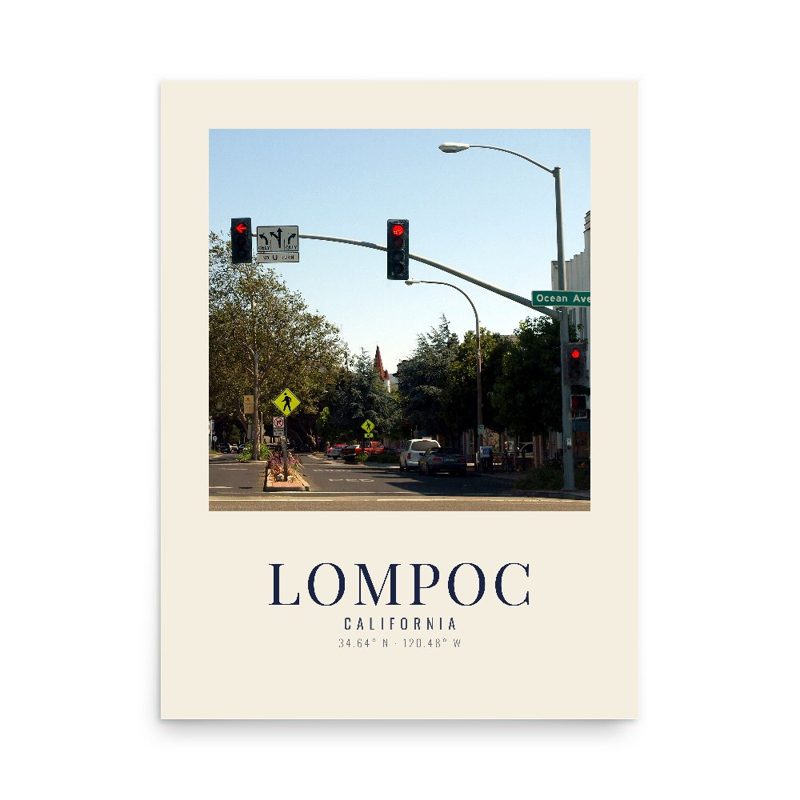
A local landmark photo as a gallery print
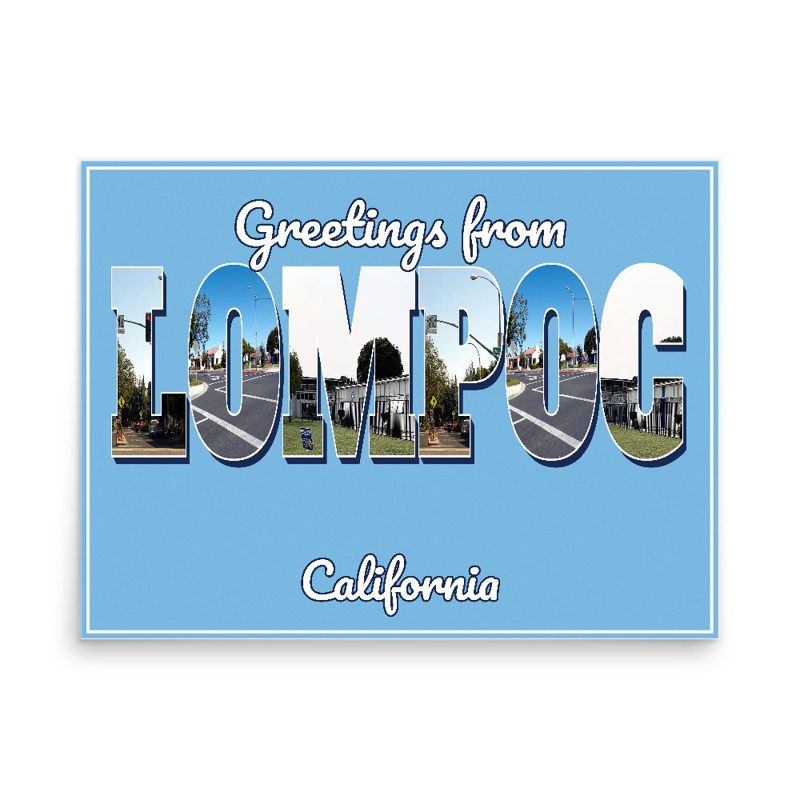
Classic large-letter postcard art, filled with local photos
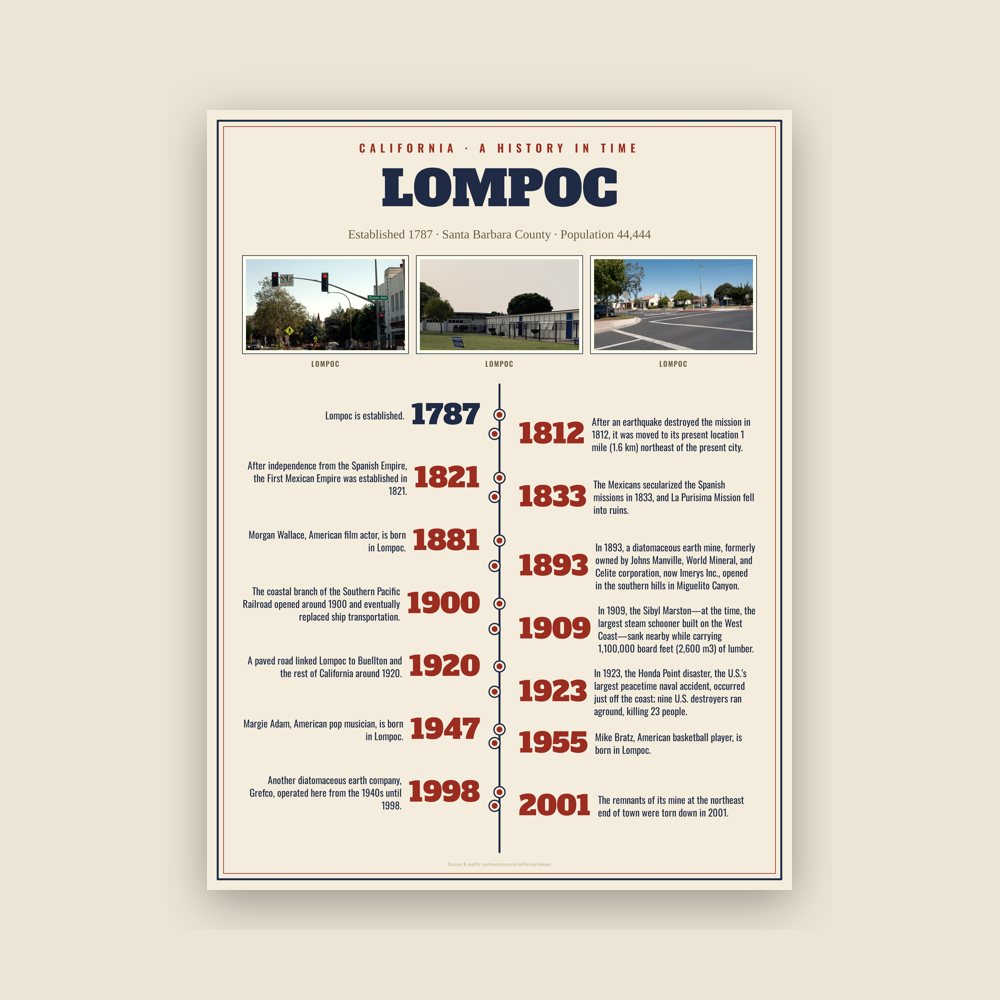
The town's story in dates, from its own records, for home or classroom

Heavy-blend fleece, street map printed on the back
Soft Bella+Canvas jersey
Kids' Bella+Canvas jersey, youth sizes
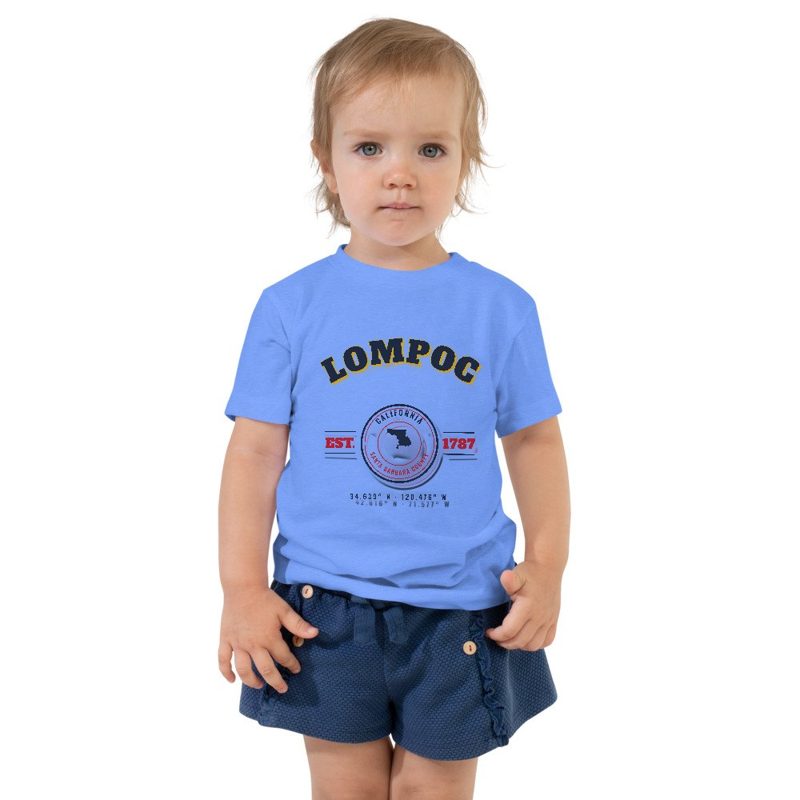
Bella+Canvas toddler jersey
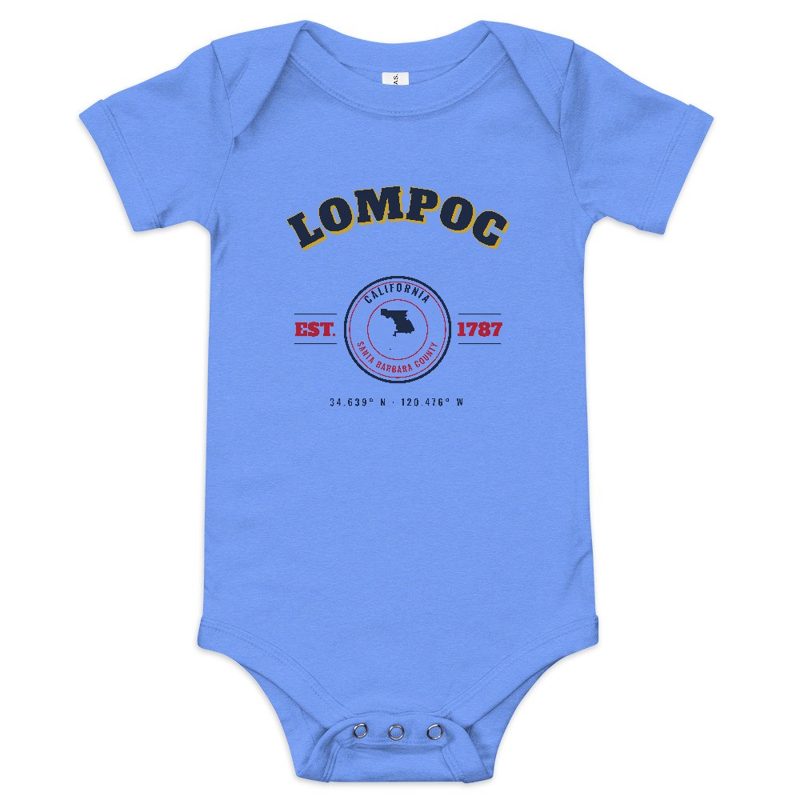
Bella+Canvas baby bodysuit
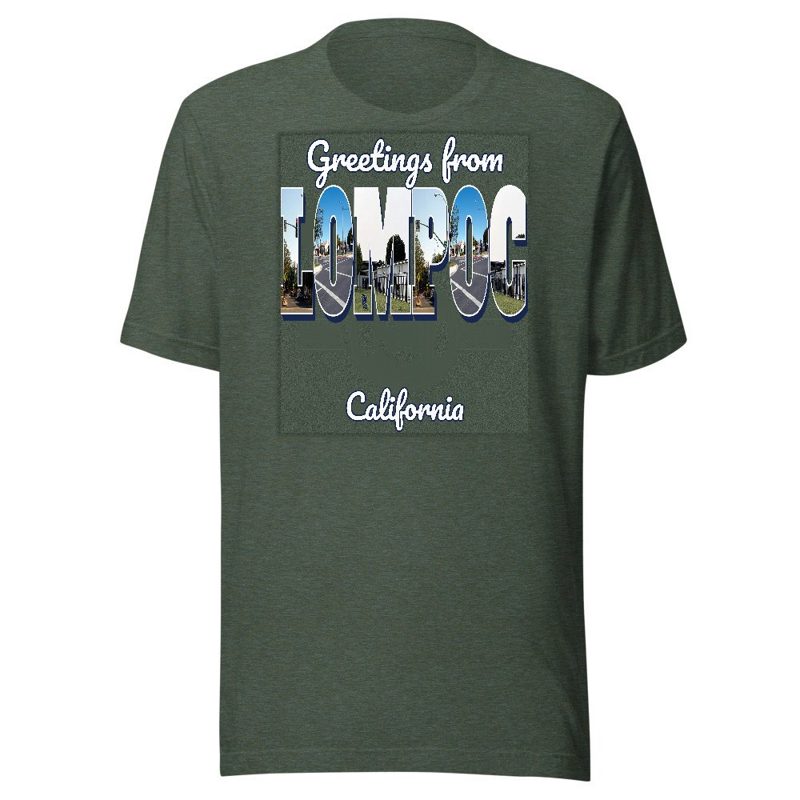
Large-letter postcard art filled with local photos
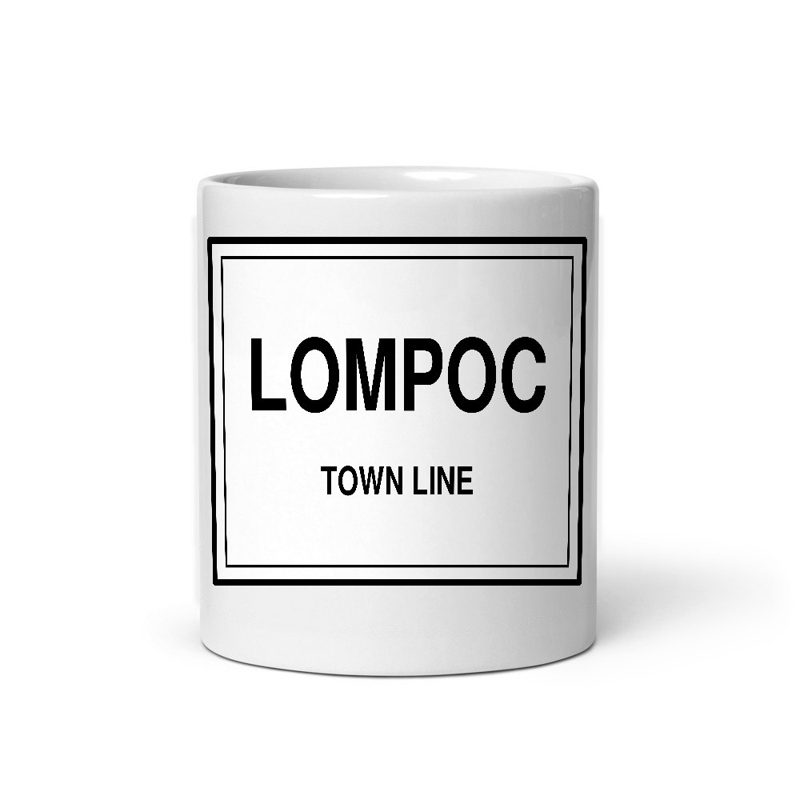
Glossy ceramic, dishwasher safe

Large-letter postcard art filled with local photos, 11 oz ceramic
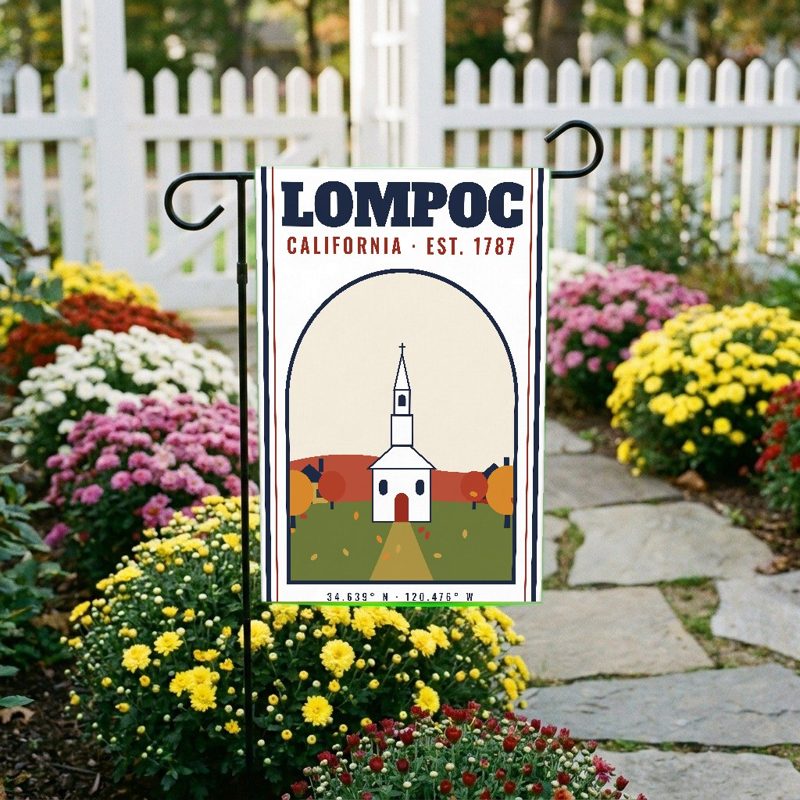
Weatherproof, for the front walk
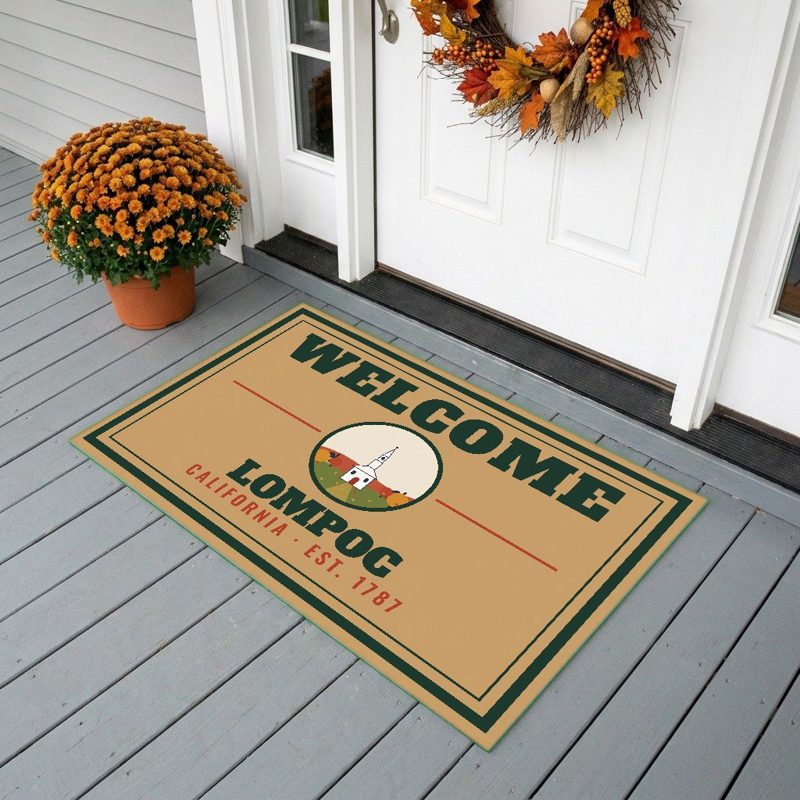
24″×16″, printed coir-look fibers, rubber back
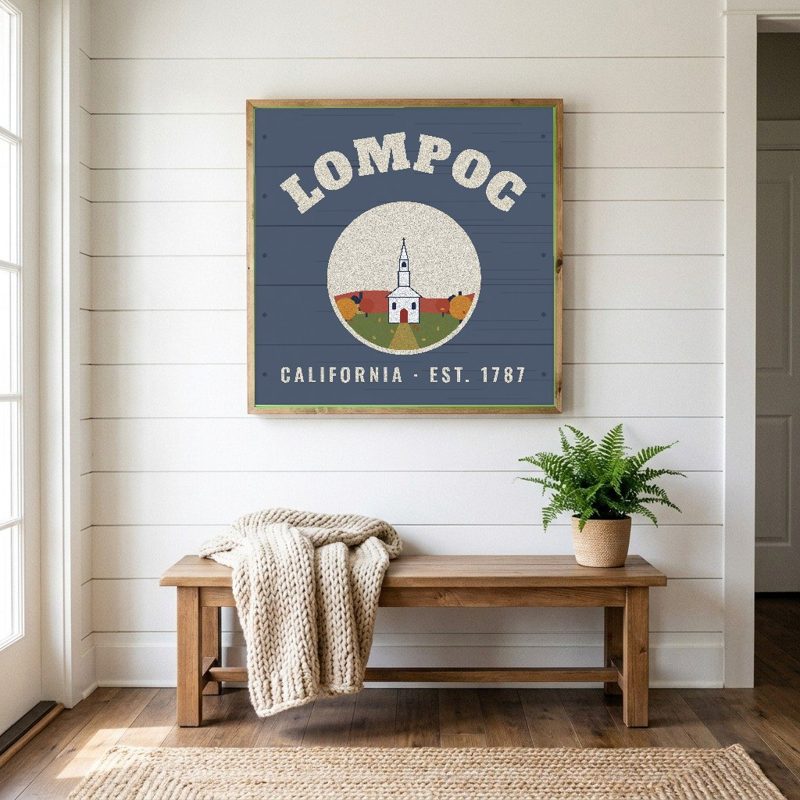
12″×12″ printed wood, ready to hang
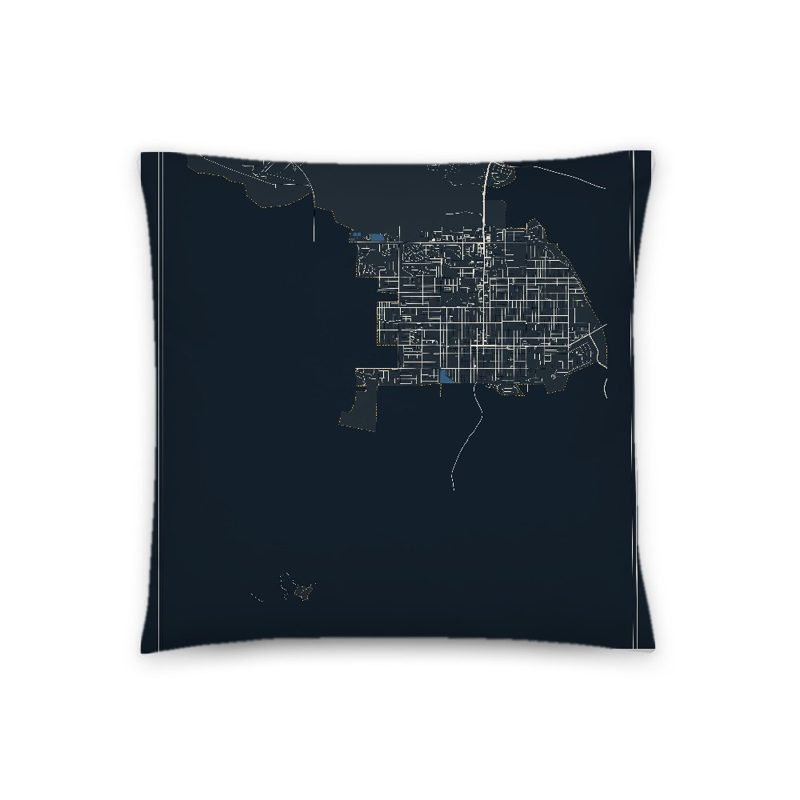
Soft-touch, zip cover

A local landmark photo with the town name, 18″×18″
Sturdy all-over-print tote

Large-letter postcard art on a sturdy tote

Foam-front trucker, printed (not embroidered) with local photos
Glossy top, cork back
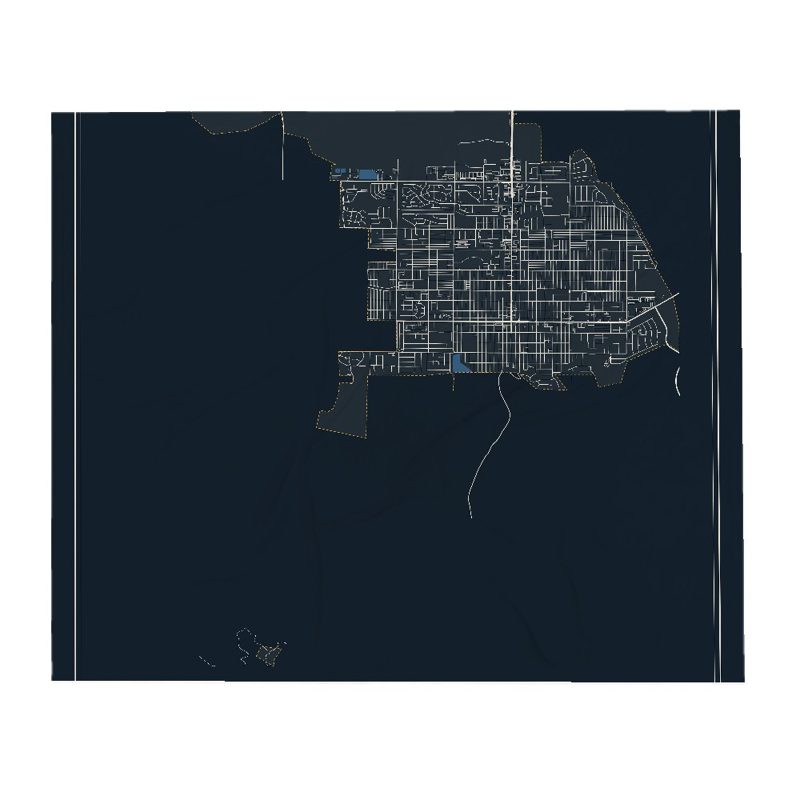
Soft fleece, 50″×60″
20 oz, double-wall stainless
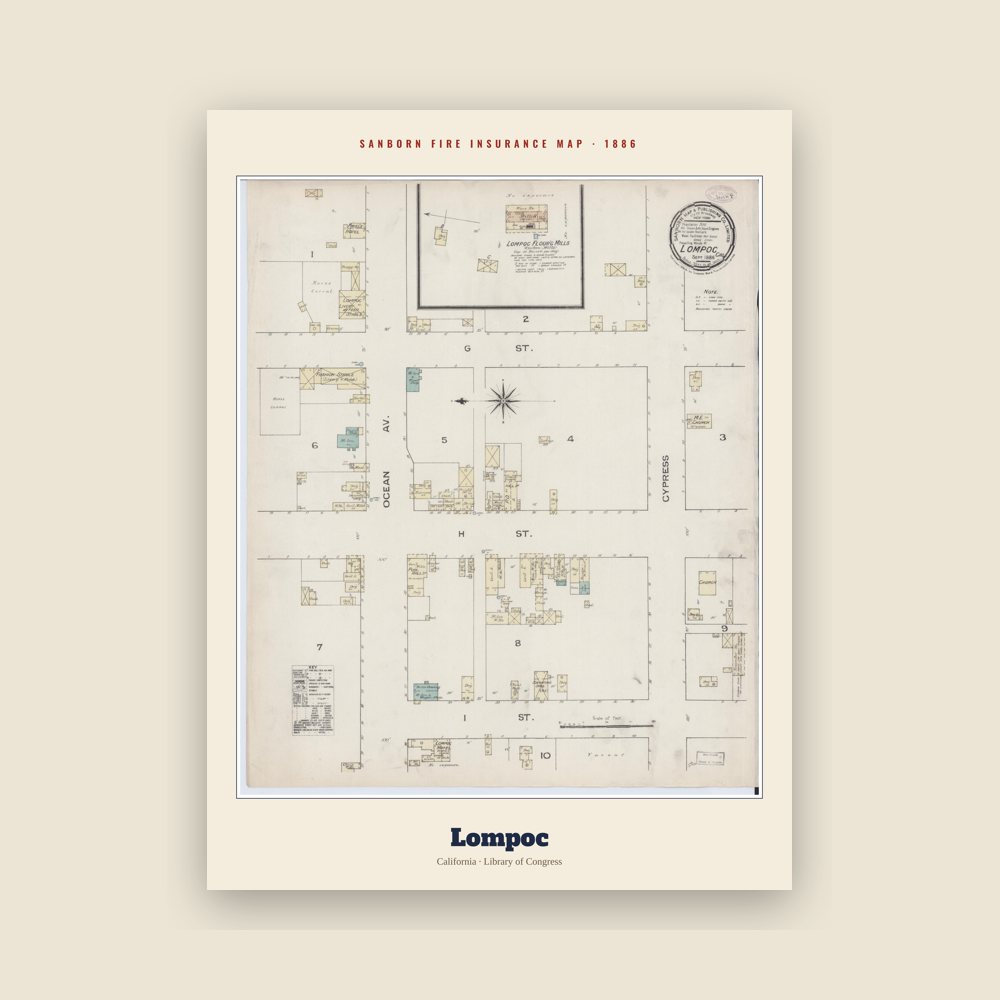
The town's earliest Sanborn fire-insurance map, drawn building by building and hand-coloured, from the Library of Congress
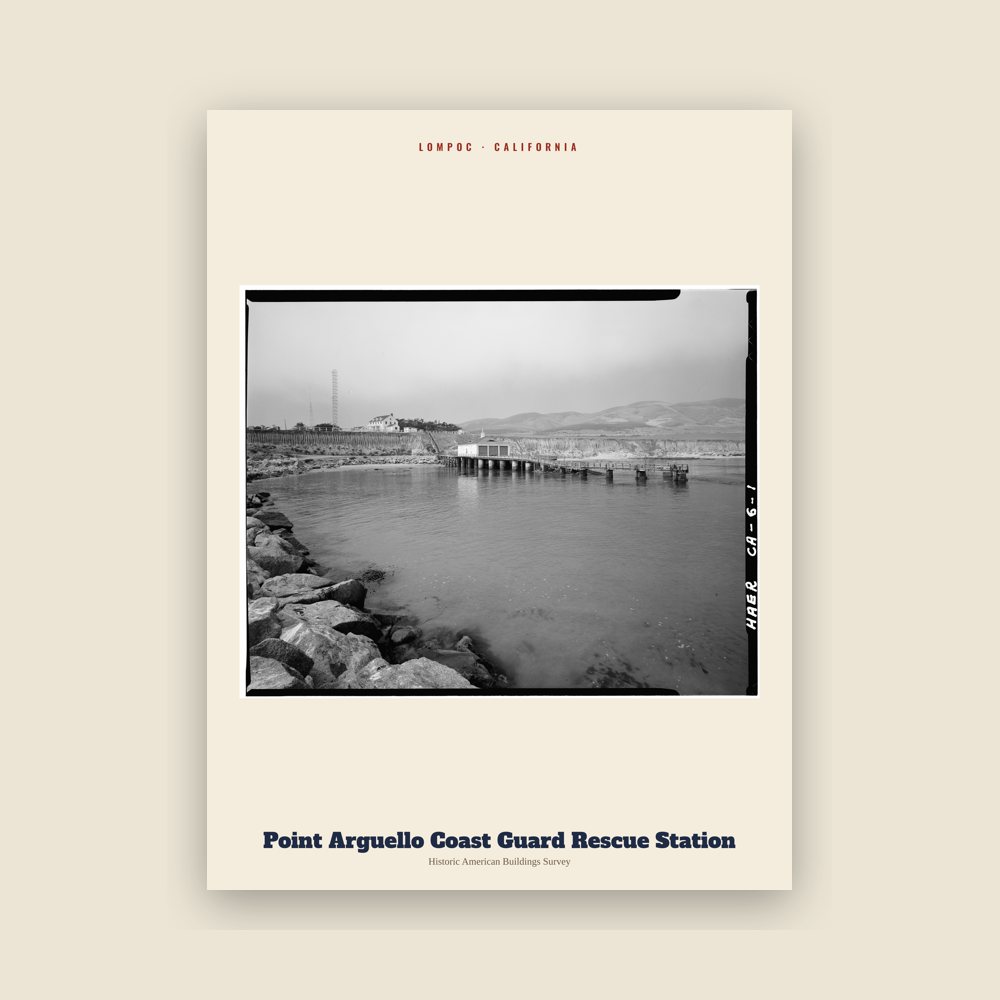
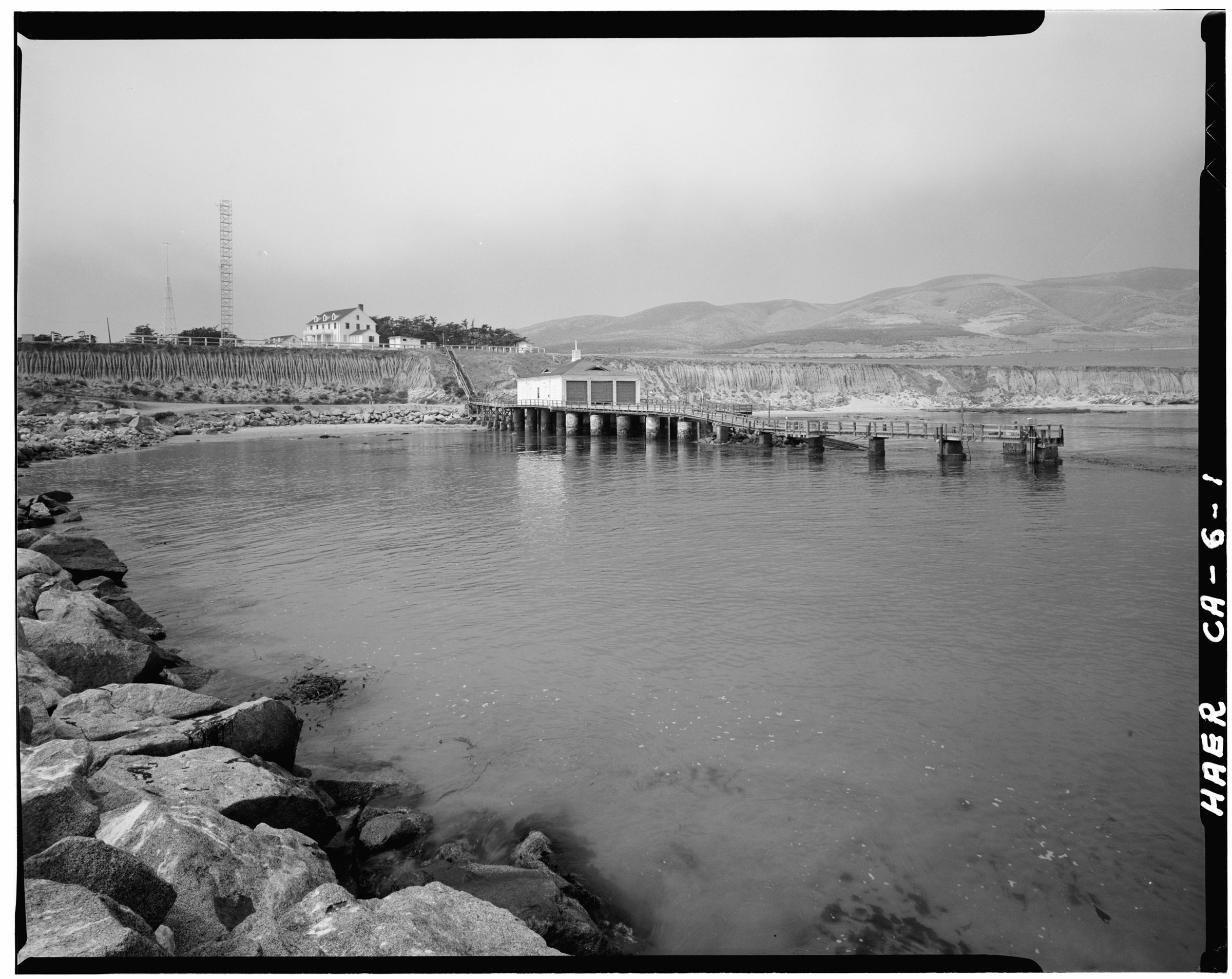
From the Library of Congress collections: a historic survey drawing or photograph of the town
Before the Spanish conquest, the area around Lompoc was inhabited by the Chumash people. Lompoc is the birthplace of Jonathan Majors, actor.
Population 2010: 42,434 → 2020: 44,444
From Wikidata (CC0).
Before the Spanish conquest, the area around Lompoc was inhabited by the Chumash people. The Original Mission La Purísima was established in 1787 near what is now the southern edge of the city. Purisimeño, a Chumashan language, was spoken in the region during the mission period. After an earthquake destroyed the mission in 1812, it was moved to its present location 1 mile (1.6 km) northeast of the present city. After independence from the Spanish Empire, the First Mexican Empire was established in 1821. The Mexicans secularized the Spanish missions in 1833, and La Purisima Mission fell into ruins.
In 1893, a diatomaceous earth mine, formerly owned by Johns Manville, World Mineral, and Celite corporation, now Imerys Inc., opened in the southern hills in Miguelito Canyon. It became (and still is) the largest marine diatomite mine in the world, and at one time was the largest employer in the valley. While owned by Johns Manville, the mine employed more than 900 people at its peak, and built housing for its employees onsite and in town; the houses in town are next to JM park, which the mine donated to the city. Another diatomaceous earth company, Grefco, operated here from the 1940s until 1998. The remnants of its mine at the northeast end of town were torn down in 2001.
In 1909, the Sibyl Marston—at the time, the largest steam schooner built on the West Coast—sank nearby while carrying 1,100,000 board feet (2,600 m3) of lumber. Many Lompoc homes were built with lumber from the shipwreck. The wreckage can still be seen south of Surf Beach.
The coastal branch of the Southern Pacific Railroad opened around 1900 and eventually replaced ship transportation. A paved road linked Lompoc to Buellton and the rest of California around 1920. In 1923, the Honda Point disaster, the U.S.'s largest peacetime naval accident, occurred just off the coast; nine U.S. destroyers ran aground, killing 23 people. During the Great Depression, La Purisima Mission was restored by the Civilian Conservation Corps (CCC). During World War II, the coast west of Lompoc was the site of Camp Cooke, a United States Army training camp where large units could practice maneuvers.
Lompoc grew slowly until 1958, when the United States Air Force announced that the former Camp Cooke would be a test site for the Thor family of intermediate-range ballistic missiles and the first operational base for the SM-65 Atlas, an intercontinental ballistic missile. The city then began to grow rapidly to provide housing for thousands of civilians and contractors employed at what was soon renamed Vandenberg Air Force Base. It was the Air Force's first missile base.
The Space Shuttle program was slated to begin launches from Vandenberg in the late 1980s, and the city experienced a boom in restaurant and hotel construction in anticipation of tourists coming to see shuttle launches. But after the Challenger exploded during takeoff from Cape Canaveral in 1986, the West Coast shuttle program was terminated, sending Lompoc into a severe recession.
Adapted (trimmed) from the Wikipedia article Lompoc, California, revision 1384242124 by its contributors, licensed CC BY-SA 4.0.
We share a part of every Lompoc sale with local partners, and we'd love to print from your collection. Old photographs, maps and postcards make the best keepsakes.
Partner with usA favorite landmark, your street, a school or team, an anniversary gift, a different product. Tell us and we'll get back to you by email.
3 free coloring pages of Lompoc, each traced from a photo of a local landmark. Print them at home, at school or for story hour.
Lompoc's population was 44,444 in the 2020 U.S. Census, up from 42,434 in 2010.
 A view of Lompoc
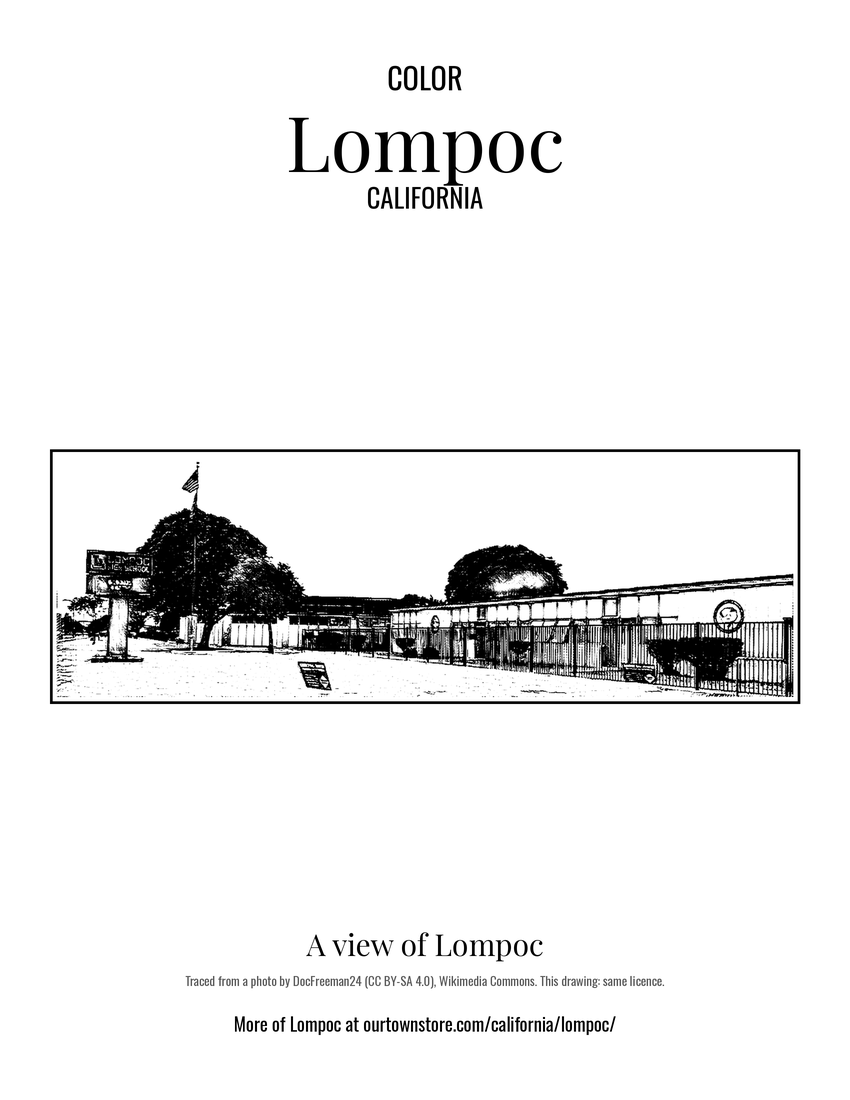 A view of Lompoc
 A view of Lompoc