Avenal is located 35 miles southwest of Hanford, at an elevation of 807 ft. Landmarks include Avenal State Prison. Avenal is the birthplace of Jose Ramírez, boxer.
- CountyKings County
- Population13,696 (2020 U.S. Census)
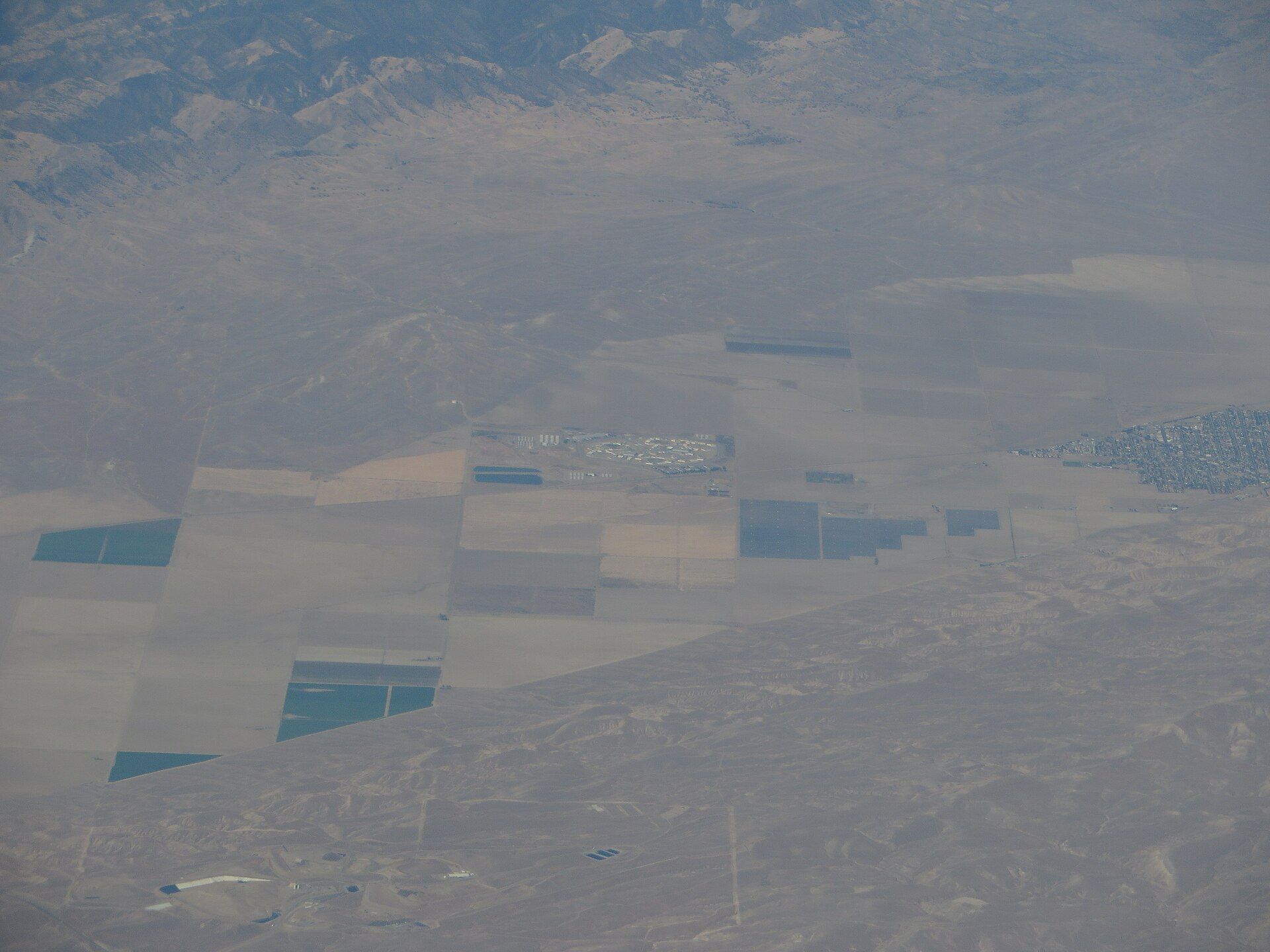
Avenal is located 35 miles southwest of Hanford, at an elevation of 807 ft. Landmarks include Avenal State Prison. Avenal is the birthplace of Jose Ramírez, boxer.
Avenal, California gifts and souvenirs: 22 designs made from Avenal's own map, landmarks and history, from $10 to $95. Printed to order and shipped free in the USA.
| Popular | Price |
|---|---|
| Avenal Hometown Ornament | $23 |
| Avenal Vintage Travel Poster | from $40 |
| Avenal Varsity Crewneck | from $57 |
| Avenal Est. Tee | from $33 |
| Avenal Town Line Mug | from $26 |
| Avenal Market Tote | $37 |

Ceramic keepsake, gold ribbon, in 4 styles
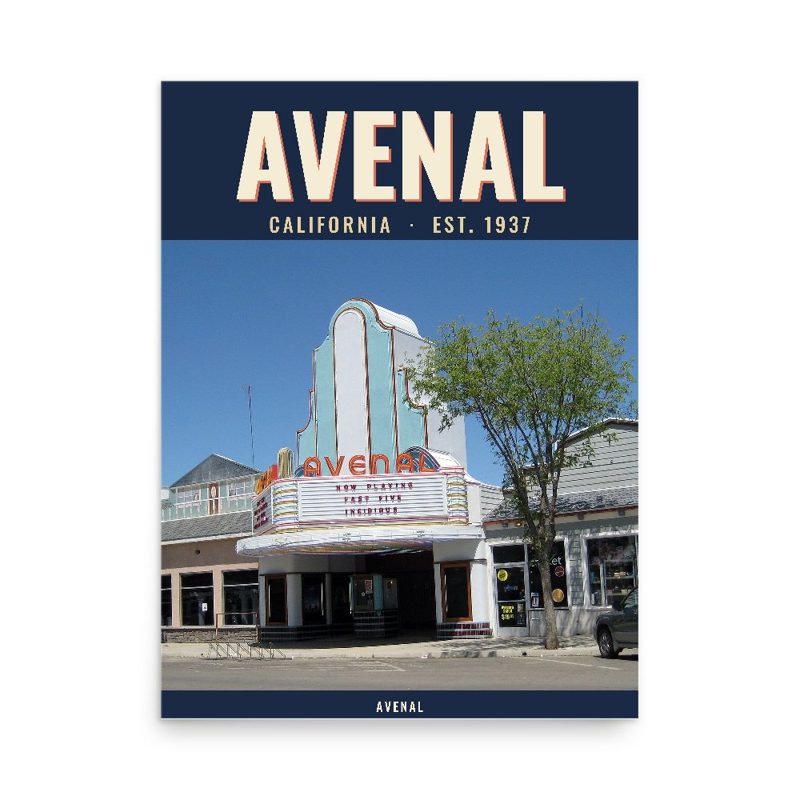
Its landmark photo in a classic travel-poster layout

A local landmark photo as a gallery print
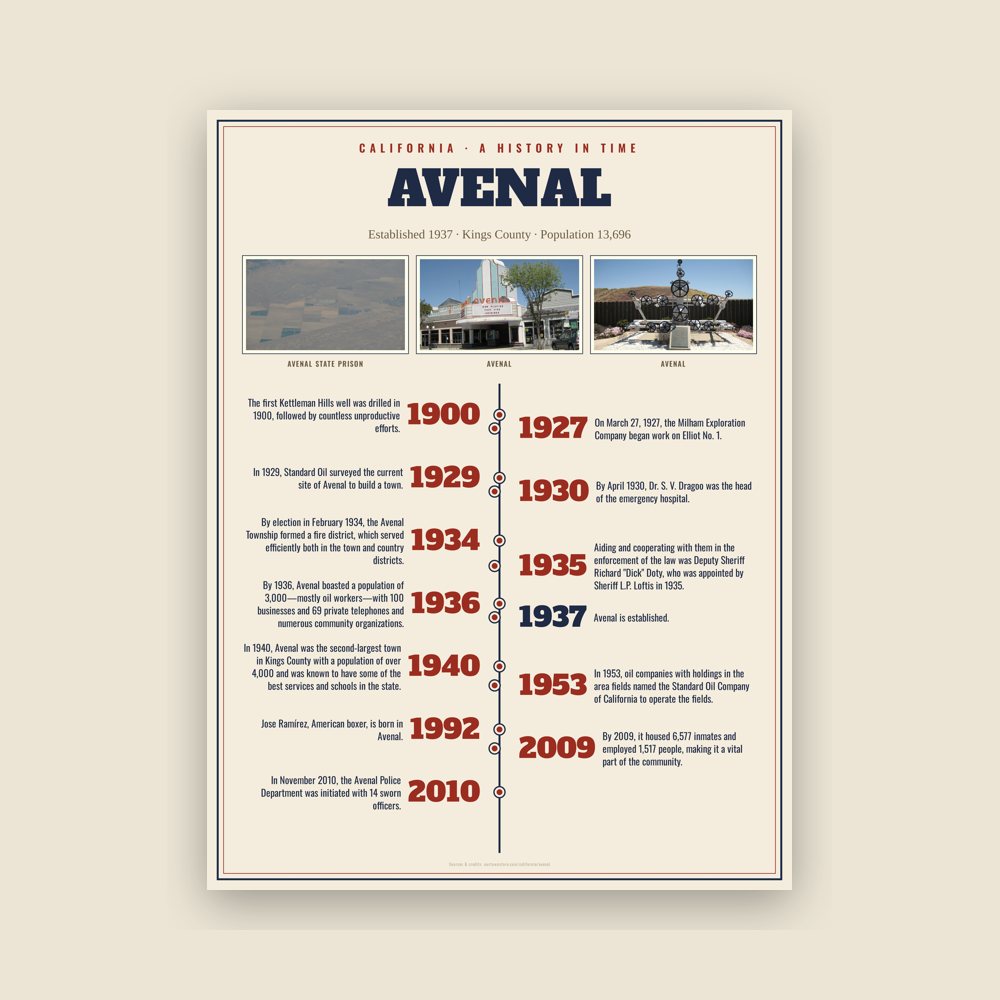
The town's story in dates, from its own records, for home or classroom
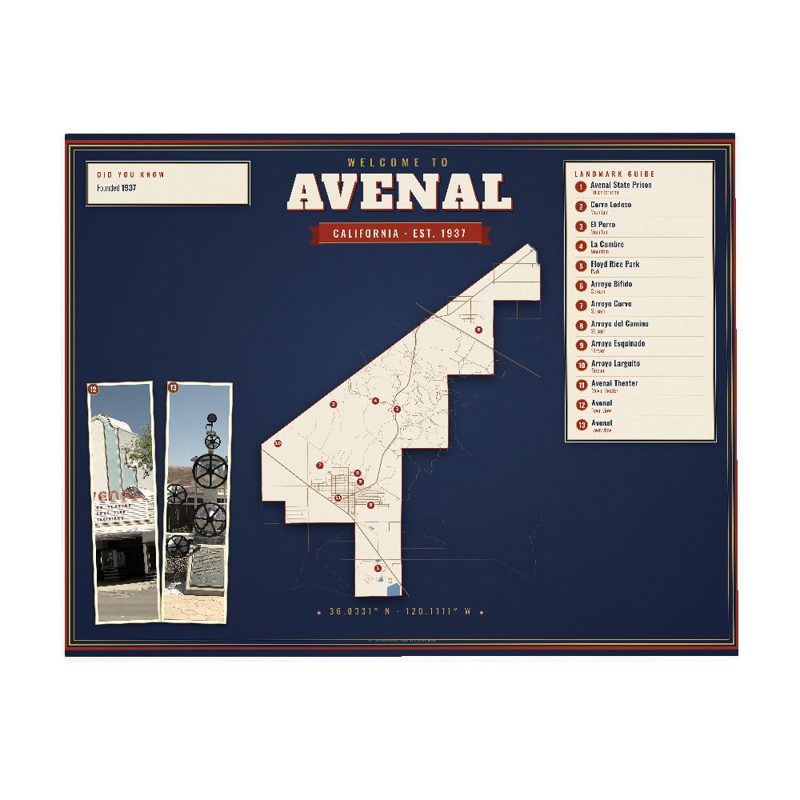
Map of local landmarks, washable fabric
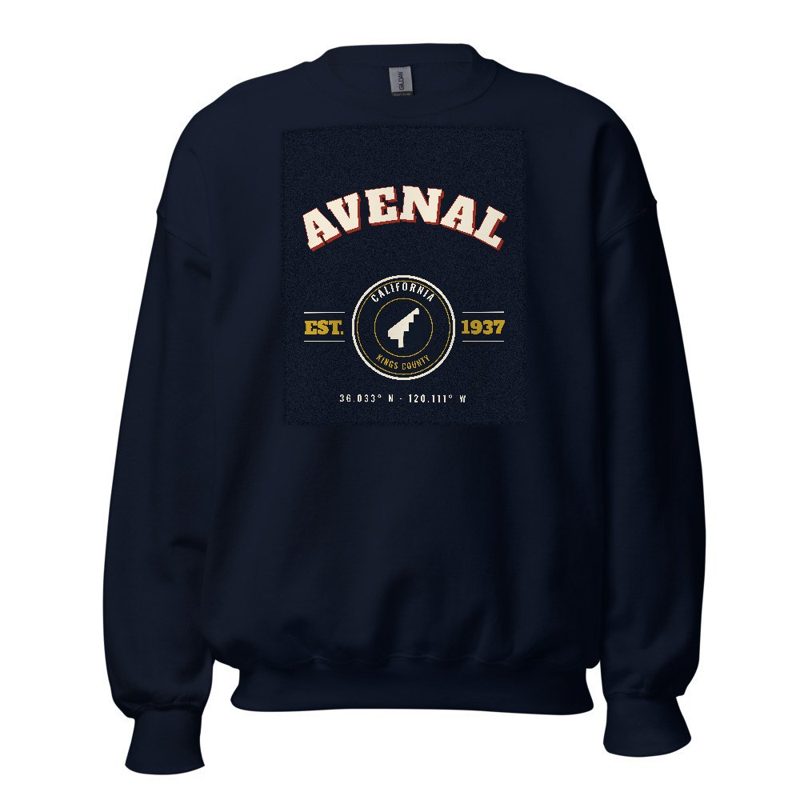
Heavy-blend fleece, street map printed on the back
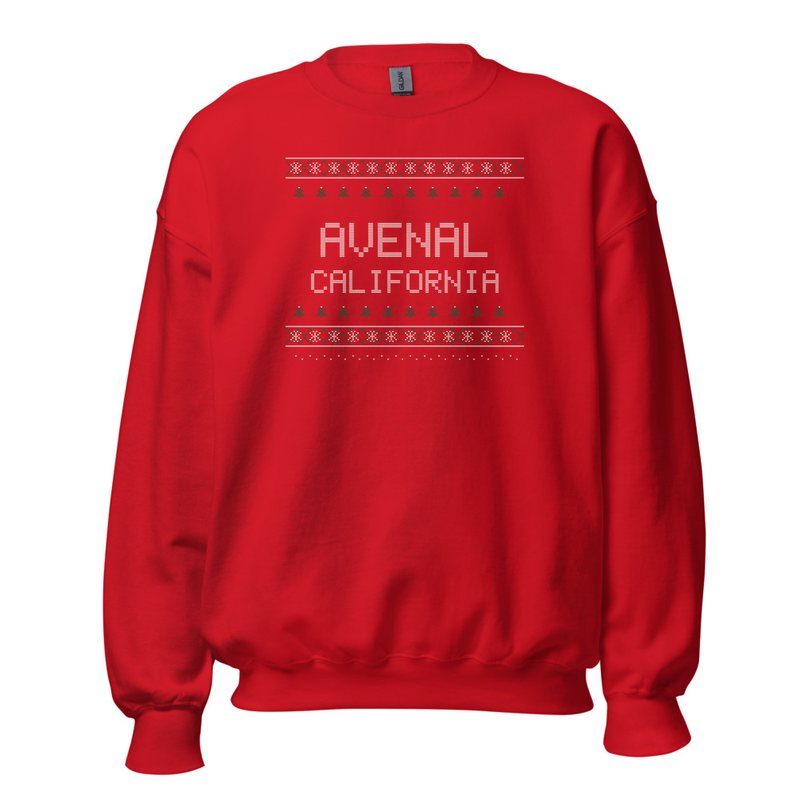
Red heavy-blend crewneck, knit-stitch town print
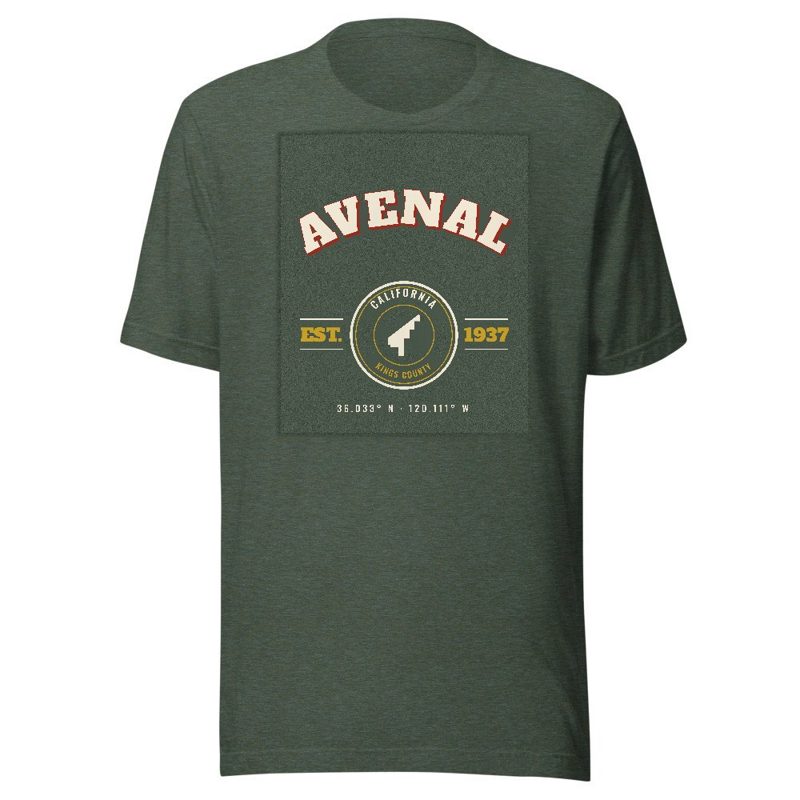
Soft Bella+Canvas jersey
Kids' Bella+Canvas jersey, youth sizes

Bella+Canvas toddler jersey
Bella+Canvas baby bodysuit
Glossy ceramic, dishwasher safe
Weatherproof, for the front walk
24″×16″, printed coir-look fibers, rubber back
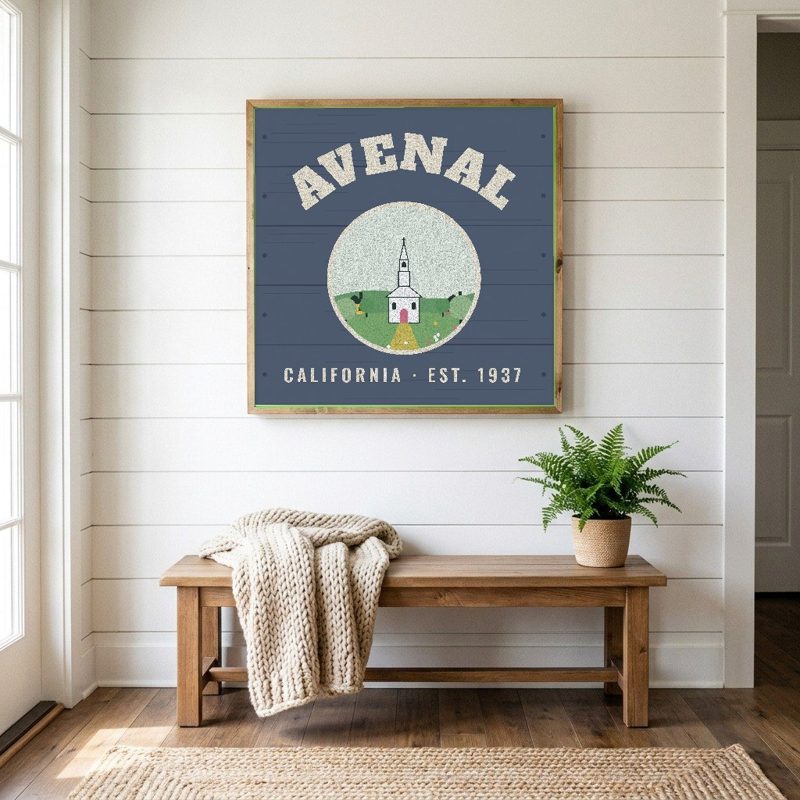
12″×12″ printed wood, ready to hang
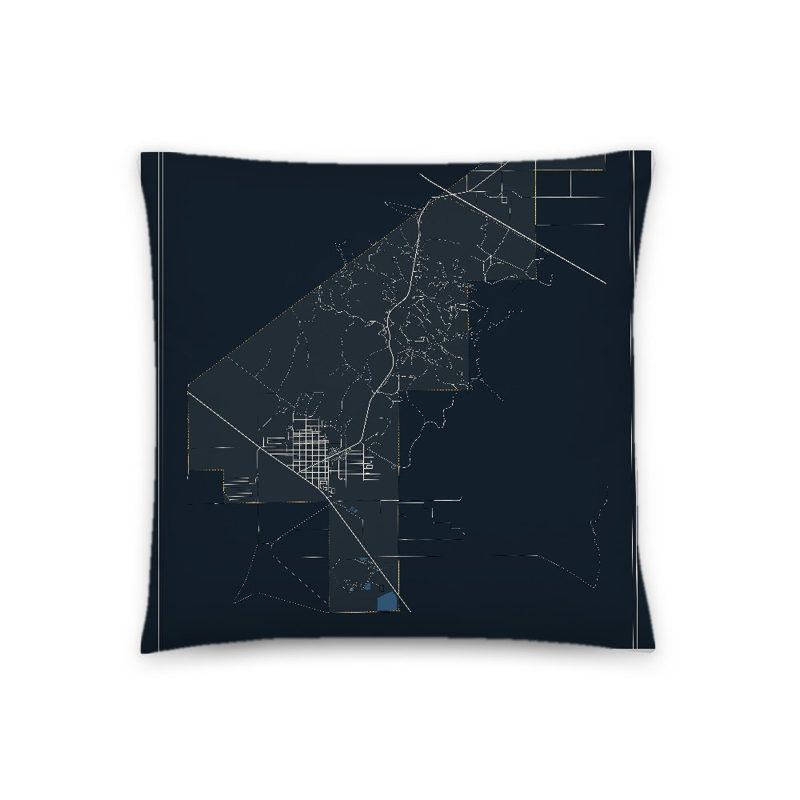
Soft-touch, zip cover
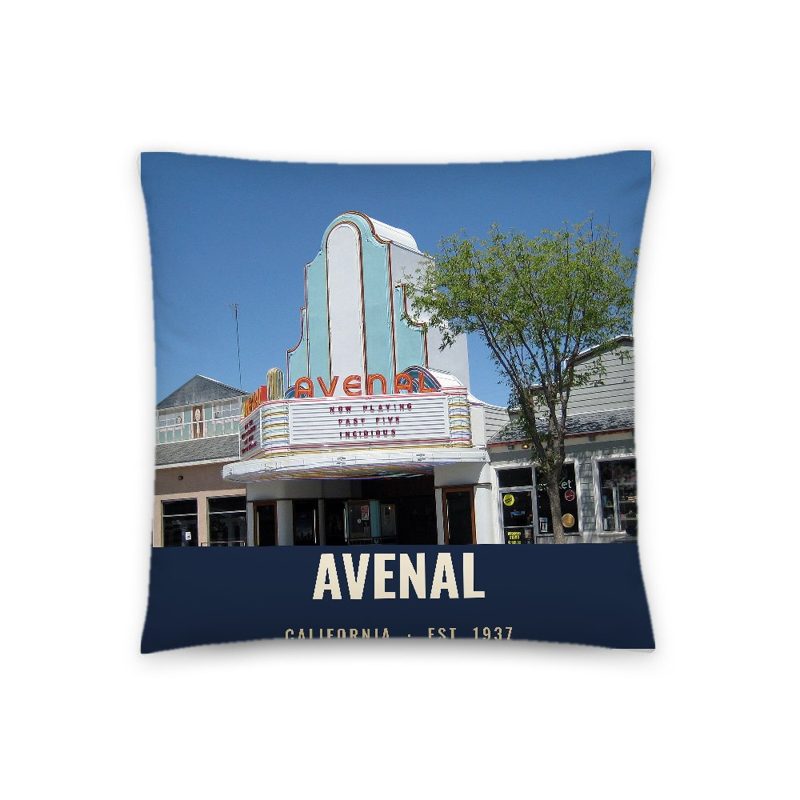
A local landmark photo with the town name, 18″×18″
Sturdy all-over-print tote
Glossy top, cork back
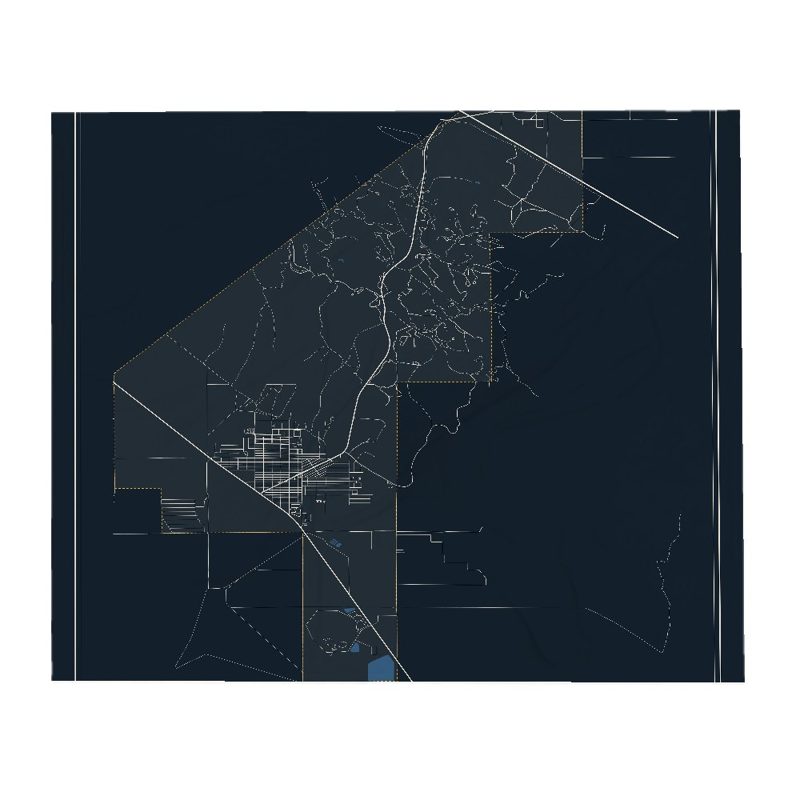
Soft fleece, 50″×60″
20 oz, double-wall stainless
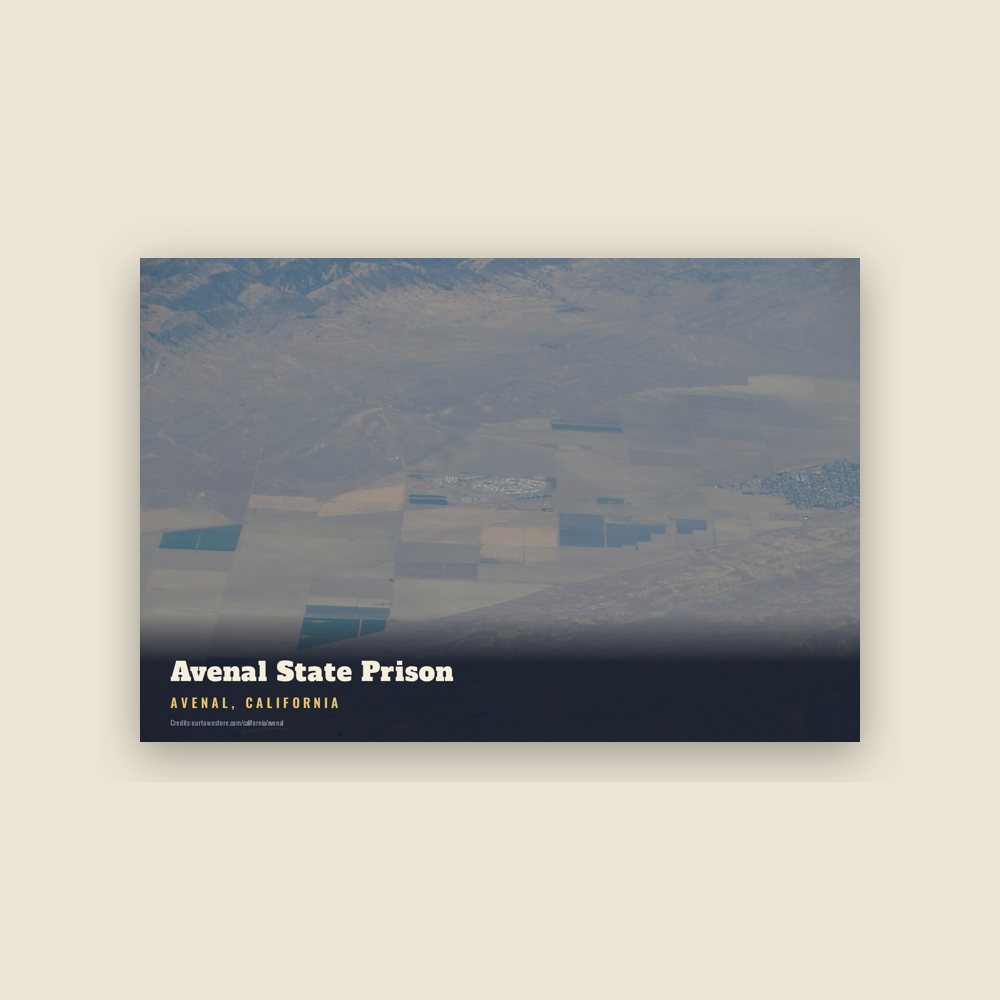
6″×4″ postcard, glossy front
The City of Avenal was named by Spanish soldiers and explorers. In Spanish, avena means 'oats', and avenal means 'oatfield'. This area was covered with wild oats, "waist high," that looked like golden silk and covered the Kettleman Plains.
Early American settlers arrived in the Kettleman Hills during the 1850s with dreams of raising cattle and farming. Oil, however, would bring fame, fortune and people to the area. Native Americans had always known oil was in the hills, with natural seepage around Coalinga and Tar Canyon. The first Kettleman Hills well was drilled in 1900, followed by countless unproductive efforts.
On March 27, 1927, the Milham Exploration Company began work on Elliot No. 1. The crew toiled for 19 months, drilling past the 7,000-foot (2,100 m) mark. On October 5, 1928, the well blew out with a roar which was heard 20 miles (32 km) away, spewing forth an oil so fine that its color was white, and reportedly could be used unrefined as gasoline in automobiles.
The discovery of oil transformed Avenal into a boomtown. In 1929, Standard Oil surveyed the current site of Avenal to build a town. Makeshift houses were hauled in from Taft to take the place of the tents. A water line was laid and later a sewer plant was installed, a post office replaced a cigar box in the general store, a fire department was organized, and a community grew. Standard Oil Company built the residents a 600-seat theater and a hospital.
Also in the first year (1929), nearly 20 businesses occupied Kings Street and Skyline Boulevard. By 1936, Avenal boasted a population of 3,000—mostly oil workers—with 100 businesses and 69 private telephones and numerous community organizations. In 1940, Avenal was the second-largest town in Kings County with a population of over 4,000 and was known to have some of the best services and schools in the state.
Although today Avenal and its economy are largely reliant on the Avenal State Prison and agriculture, Avenal was once a booming oil town known as the "Oil Fields Capital."
Development of the oil fields led to rapid population growth in the area, creating a need for residential facilities and infrastructure in nearby settlement sites.
Milham City was projected by a group of Kings County citizens who owned lands on the slope of the hills east of the oil field. It scarcely had emerged from the dream stage when the Standard Oil Company announced in 1929 that a townsite had been set aside on the northwestern slope of the hills and that it would be called Avenal.
Thus the present town of Avenal came into being as the "oil capital" of the great field. Roads and streets were surveyed and laid out, water mains were laid, the town was launched on its career almost overnight.
An emergency hospital was built. Small and large homes were purposefully constructed to enjoy a fuller life in the erstwhile barren plains and trees were planted to provide much needed shade.
Among the first business establishments at Avenal were Koepp's Welding Works, The Republic Supply Company, Mac's Coffee Shop, Moore's Soda Fountain and the Cross Lumber Company. Presently, the town included 26 oil field supply houses, 12 oil field service company branches, 9 grocery stores, 9 service stations, 8 restaurants, 5 welding establishments, 4 builders' supply houses and numerous other enterprises.
While the oil fields and their urban center were populated with industrious, law-abiding people the problem of keeping the peace and maintaining the dignity of the law existed there just as it does in all other communities where there is life, action and big payrolls. To meet this commonplace problem a township was established and on April 1, 1937, E.W. Oliver was appointed as justice of the peace and William "Bill" Brendal was named constable. Aiding and cooperating with them in the enforcement of the law was Deputy Sheriff Richard "Dick" Doty, who was appointed by Sheriff L.P. Loftis in 1935.
Two other county offices maintained deputies at Avenal for service in the oil fields. They were Orville Robbins, deputy county assessor; and R. W. Zivnuska, deputy county treasurer.
By election in February 1934, the Avenal Township formed a fire district, which served efficiently both in the town and country districts. The three fire district commissioners originally elected were Ray Mohler, Floyd Rice and Jess Hamilton.
The Avenal district owned one well-equipped White fire truck and a half interest with the West Side Fire Protection District, of a two-ton Reo fire truck. Two full-time drivers were regularly employed and 20 firemen worked call. The firehouse provided living quarters for the employees. Fire Chief L. H. Dell was assisted by M. L. Sperling.
By April 1930, Dr. S. V. Dragoo was the head of the emergency hospital. Dr. Dragoo was assisted by one office worker and two nurses, having two special nurses on call. Between five and six hundred calls per month with about thirty accident cases were handled by this organization, not to mention the ambulance service extended.
Appointed postmistress in November 1931, Mrs. Marie Eads served in that office until July 1933, when she resigned and Charles E. Day was appointed. The post office later occupied a two-story building leased by the Standard Oil Company in 1935. Later in Avenal's history, the Post Office leased a space adjacent to Finster's Market (later T&T Market). In the late 1990s, the post office was relocated to its current location near the intersection of Skyline Blvd and San Joaquin Street.
The collapse of oil and gas production came with the intrusion of salt water into the oil reservoir, leaving 65 to 70 percent of the North Dome of the Kettleman Hills still undisturbed.
In 1953, oil companies with holdings in the area fields named the Standard Oil Company of California to operate the fields. Avenal's economy dwindled and with it, many stores, buildings and houses were vacated until the 1960s when an influx of agricultural workers made a major impact on Avenal and surrounding area.
The early 1970s saw two substantial projects that had significant impacts on the city: the completion of the California Aqueduct which brought in needed water to the westside of the San Jaoquin valley, and the opening of Interstate 5.
The citizens of Avenal voted for incorporation in September 1979, and while going through the early stages of being a new city, the citizens pursued and were successful in bringing a state prison to Avenal. Avenal State Prison opened in 1987. By 2009, it housed 6,577 inmates and employed 1,517 people, making it a vital part of the community. The building of the facility dramatically increased the city's total valuation with construction, improvements and activity that could be seen in every area of the city.
Avenal is also home to the Central California Soaring Club headquartered at the Avenal Gliderport. This year-round operation is one of the few glider-only airports in the western United States, and one of only a few in the entire US that owns/operates its own airport. A soaring contest is held there every spring.
Construction has been completed on the renovation of Skyline Boulevard (California State Route 269) in the city's joint effort with Caltrans. Avenal has also completed a massive public improvement project with the development of 52 miles (84 km) of new curbs, gutters and sidewalks throughout the city.
In November 2010, the Avenal Police Department was initiated with 14 sworn officers. Jack Amoroso was the first police chief.
Although Avenal's future is no longer closely tied to oil, it will always mark its beginnings from "the day Milham came in," and the cigar box on the counter of the general store which was its first post office.
Adapted (trimmed) from the Wikipedia article Avenal, California, revision 1380461277 by its contributors, licensed CC BY-SA 4.0.
We share a part of every Avenal sale with local partners, and we'd love to print from your collection. Old photographs, maps and postcards make the best keepsakes.
Partner with usA favorite landmark, your street, a school or team, an anniversary gift, a different product. Tell us and we'll get back to you by email.
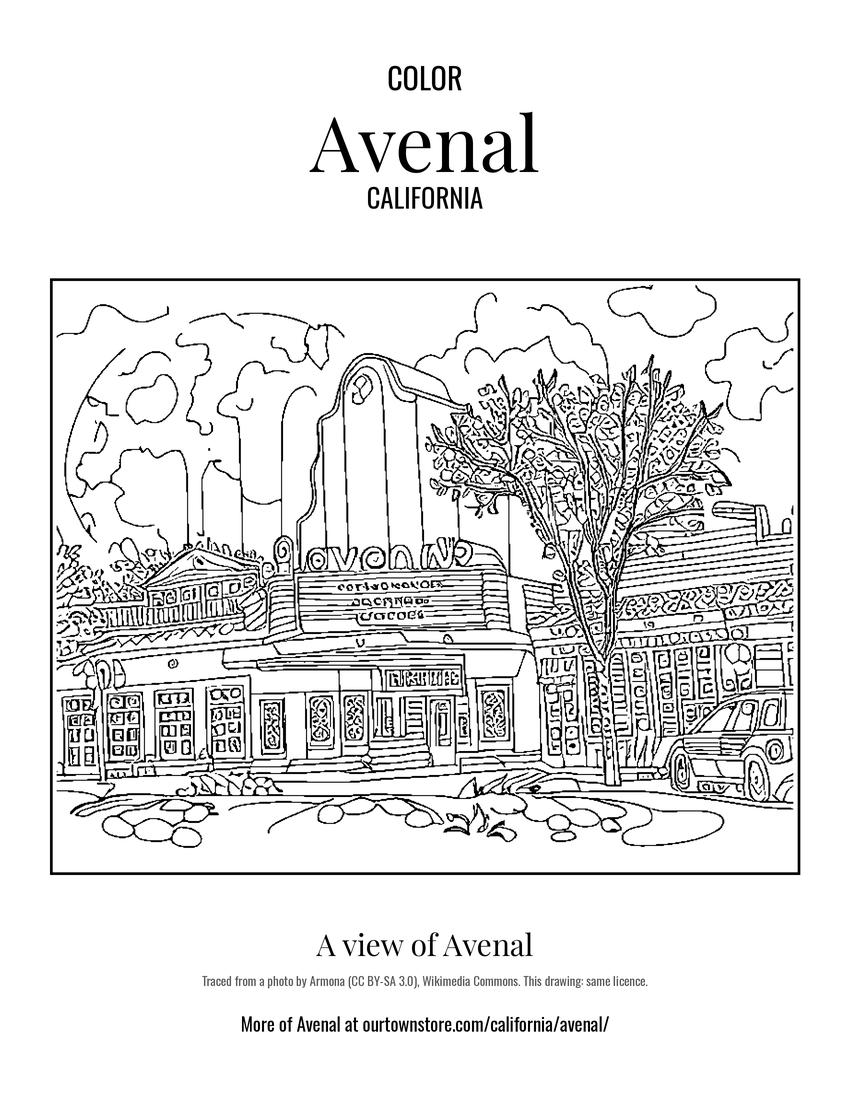
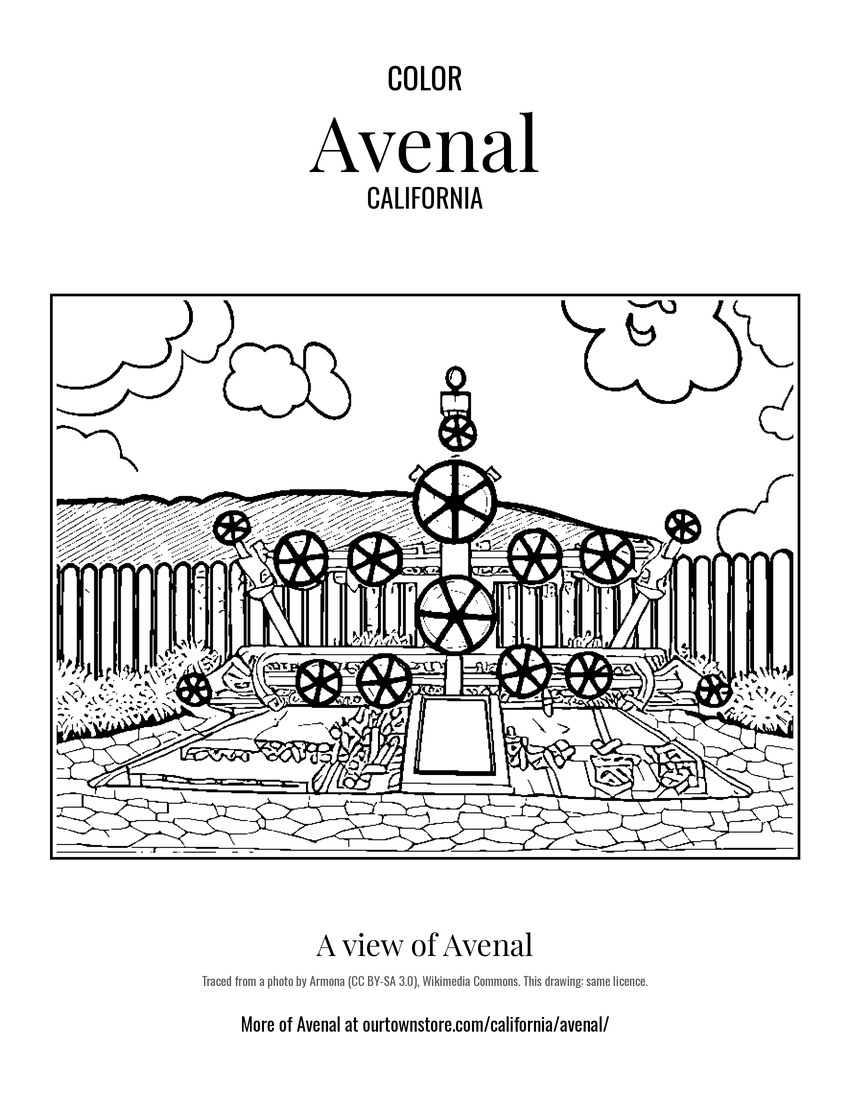
3 free coloring pages of Avenal, each traced from a photo of a local landmark. Print them at home, at school or for story hour.
Avenal's population was 13,696 in the 2020 U.S. Census, down from 15,505 in 2010.
 Avenal State Prison
 A view of Avenal
 A view of Avenal