Pollard was the first established county seat of Escambia County, from its creation in 1868 until 1883, when it lost that distinction to Brewton.
- CountyEscambia County
- Population128 (2020 U.S. Census)
Pollard was the first established county seat of Escambia County, from its creation in 1868 until 1883, when it lost that distinction to Brewton.
Pollard, Alabama gifts and souvenirs: 18 designs made from Pollard's own map, landmarks and history, from $16 to $95. Printed to order and shipped free in the USA.
| Popular | Price |
|---|---|
| Pollard Hometown Ornament | $23 |
| Pollard Varsity Crewneck | from $57 |
| Pollard Est. Tee | from $33 |
| Pollard Town Line Mug | from $26 |
| Pollard Market Tote | $37 |
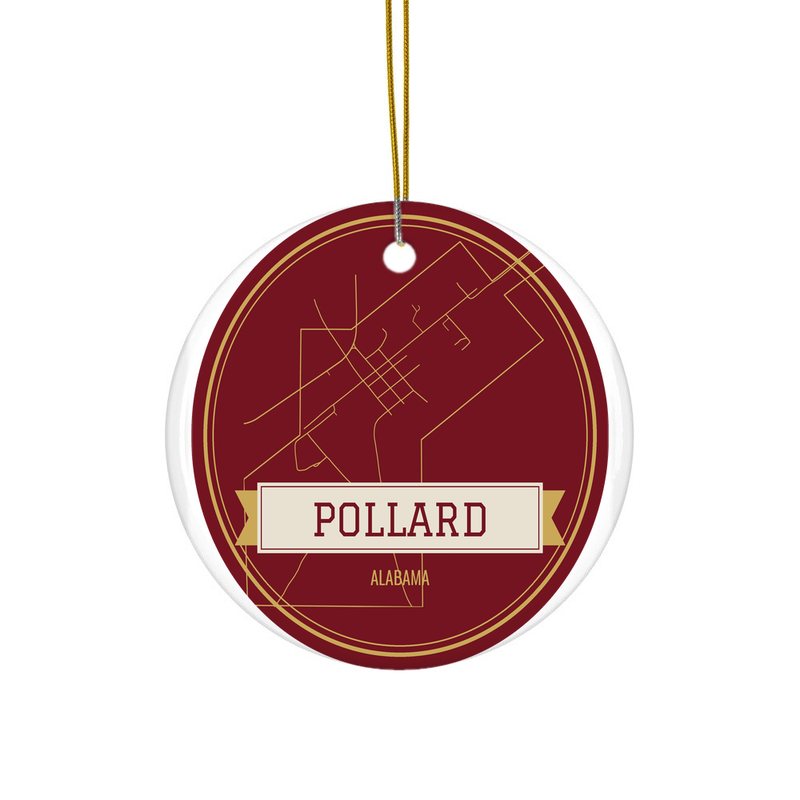
Ceramic keepsake, gold ribbon, in 3 styles
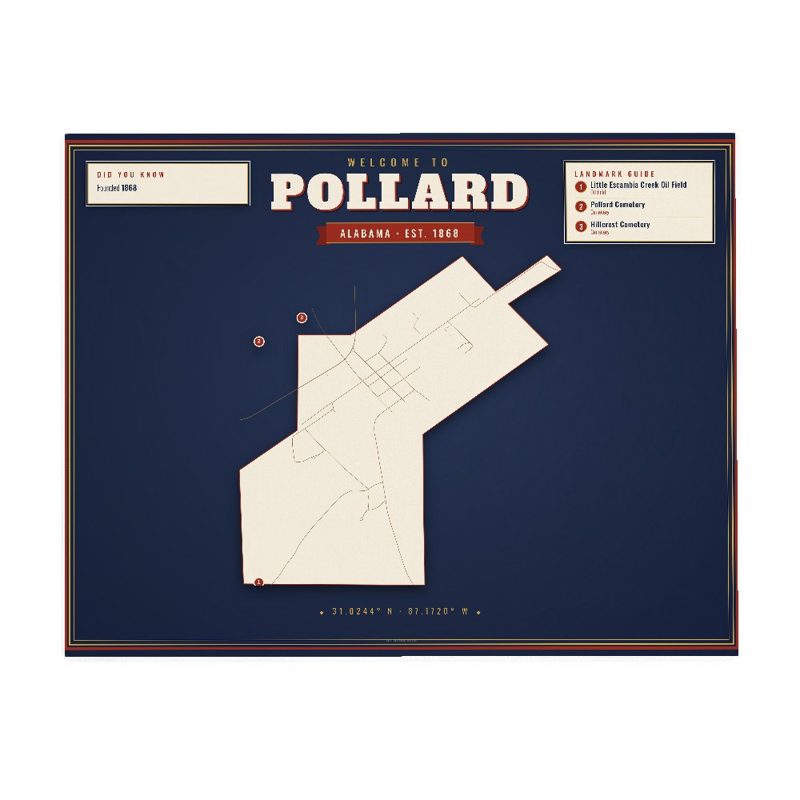
Map of local landmarks, washable fabric
Heavy-blend fleece, street map printed on the back
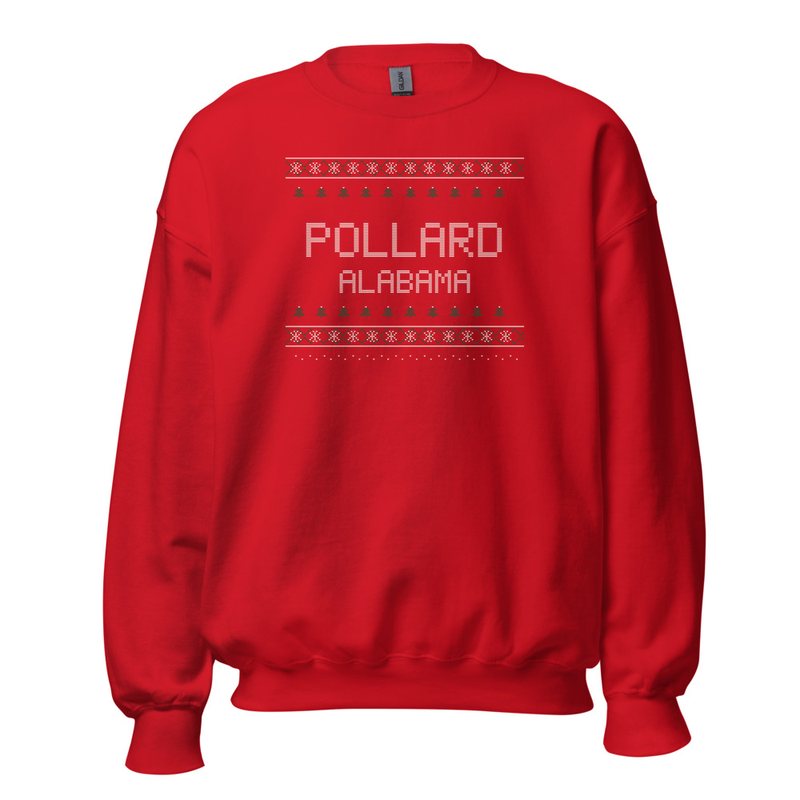
Red heavy-blend crewneck, knit-stitch town print
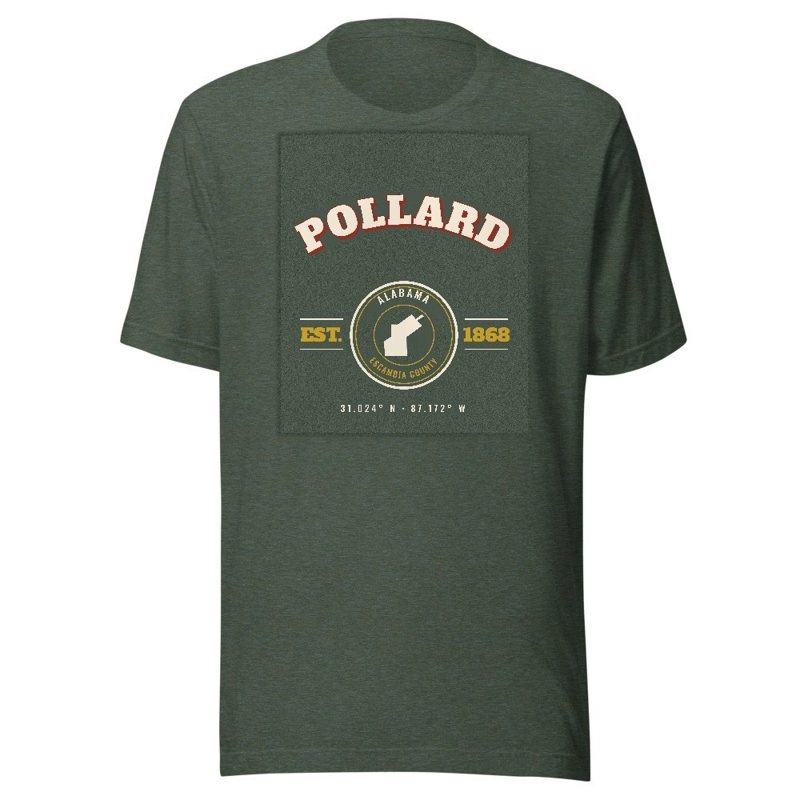
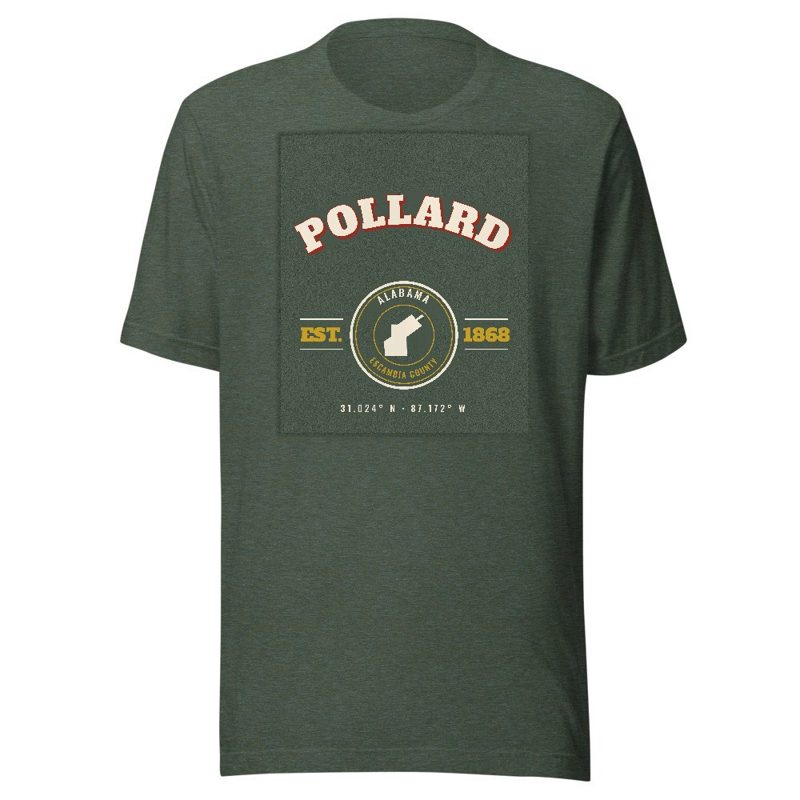
Soft Bella+Canvas jersey
Kids' Bella+Canvas jersey, youth sizes
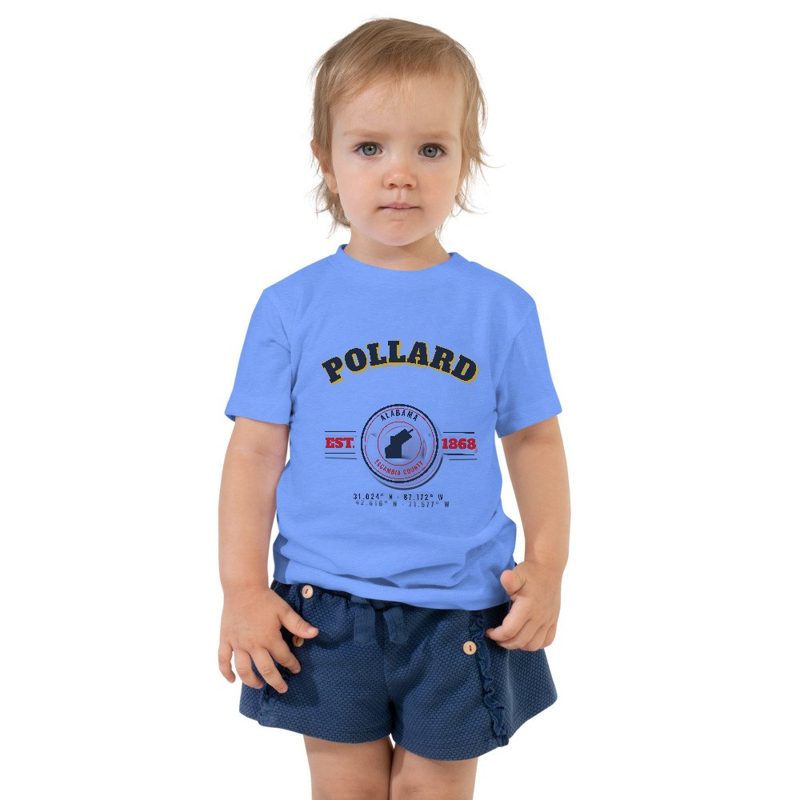
Bella+Canvas toddler jersey
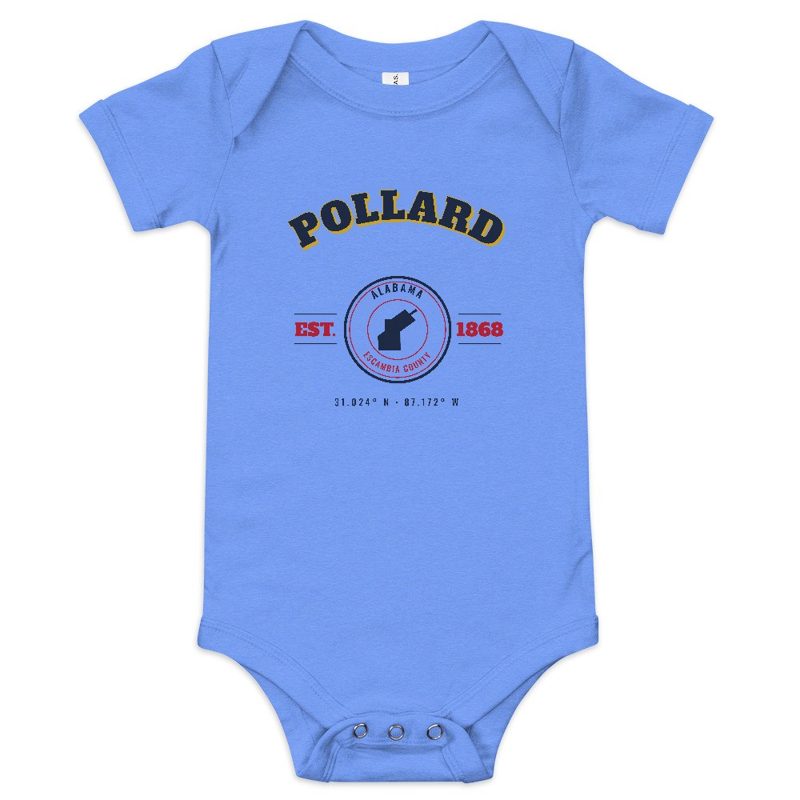
Bella+Canvas baby bodysuit
Glossy ceramic, dishwasher safe
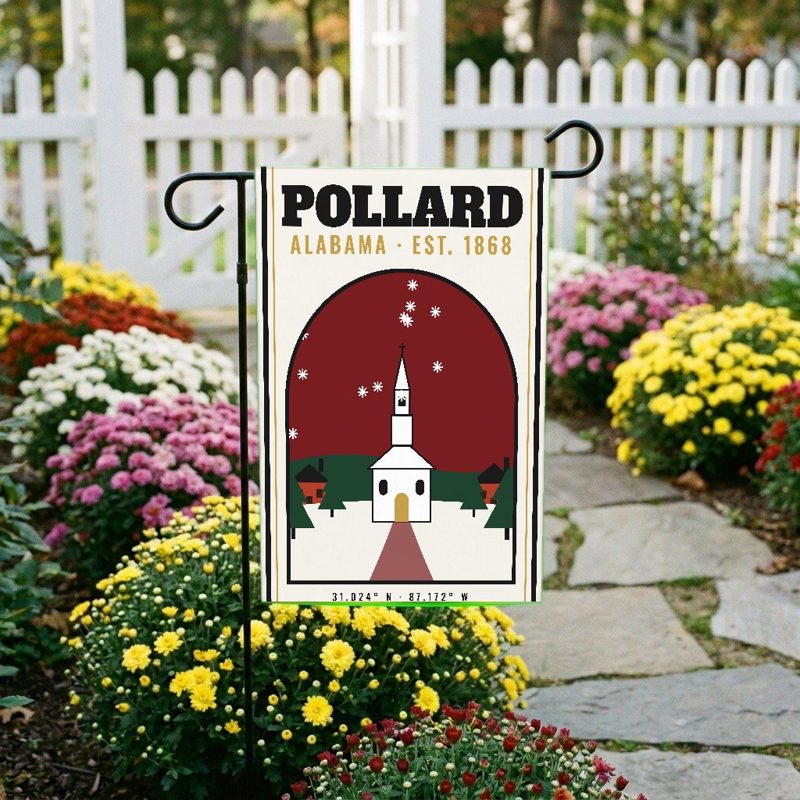
Weatherproof, for the front walk
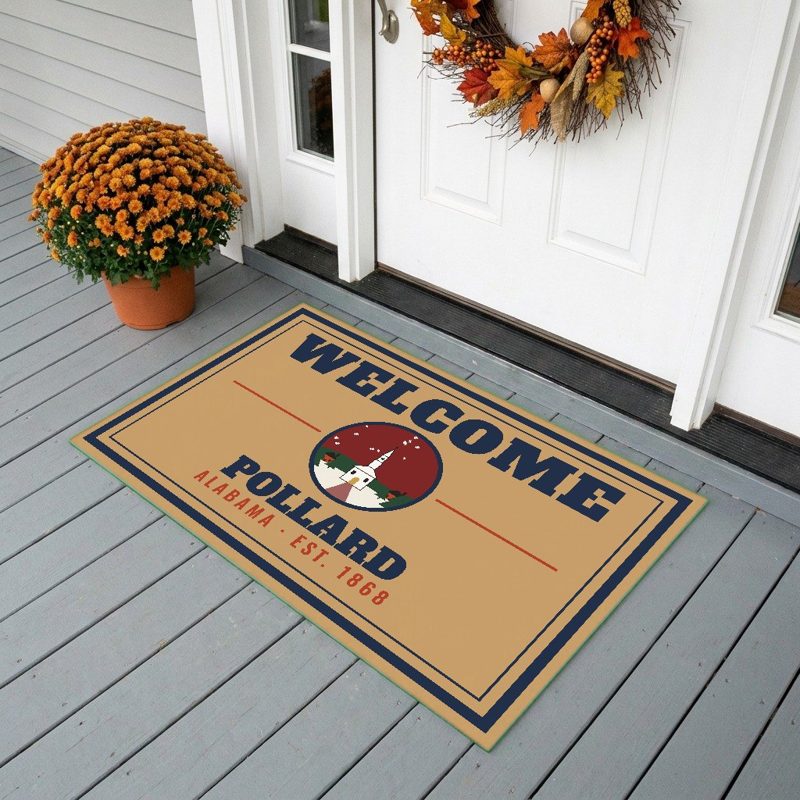
24″×16″, printed coir-look fibers, rubber back
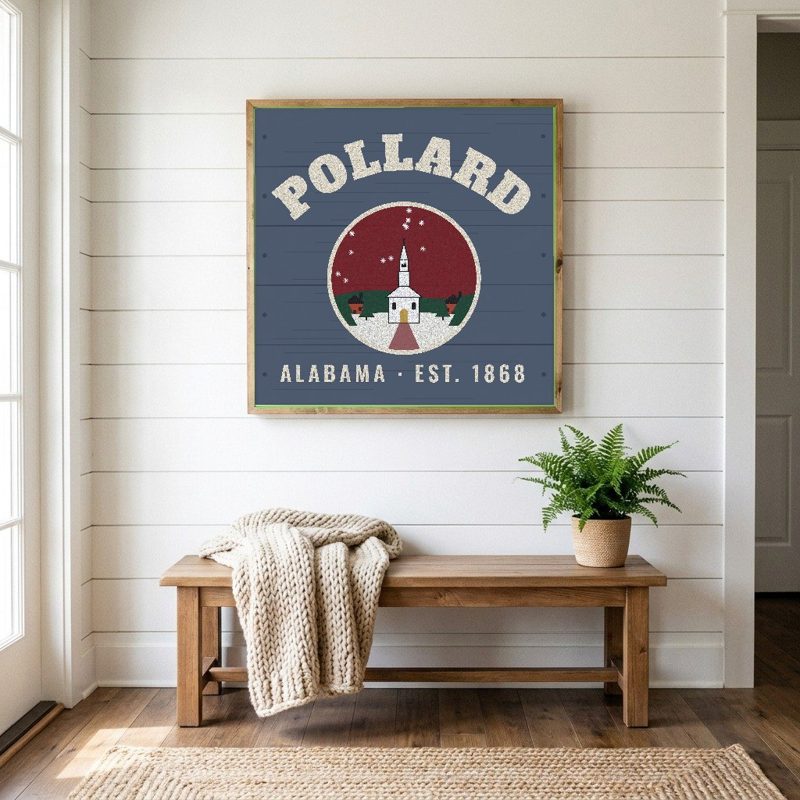
12″×12″ printed wood, ready to hang
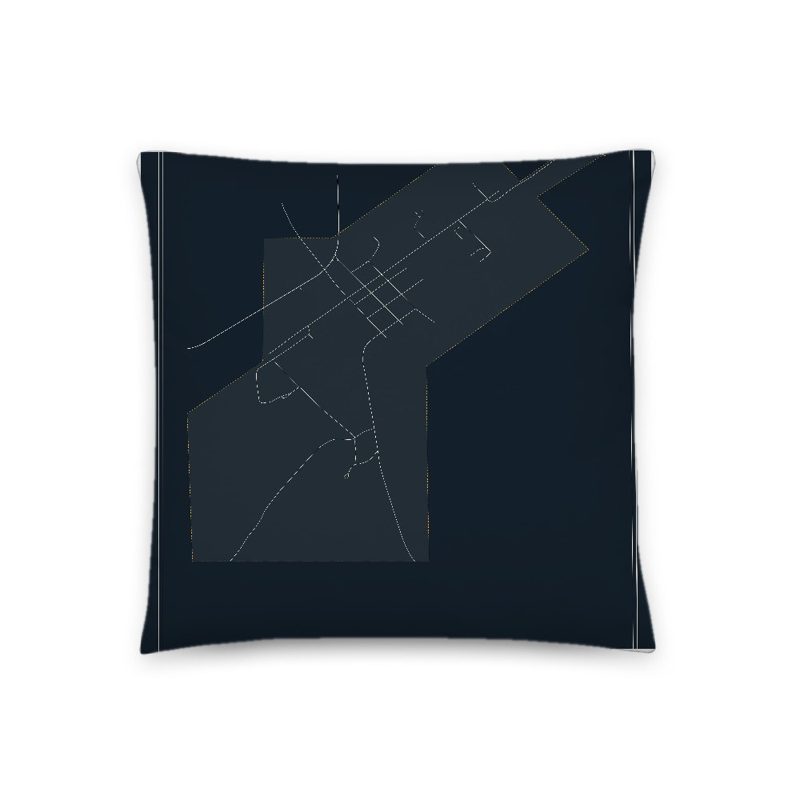
Soft-touch, zip cover
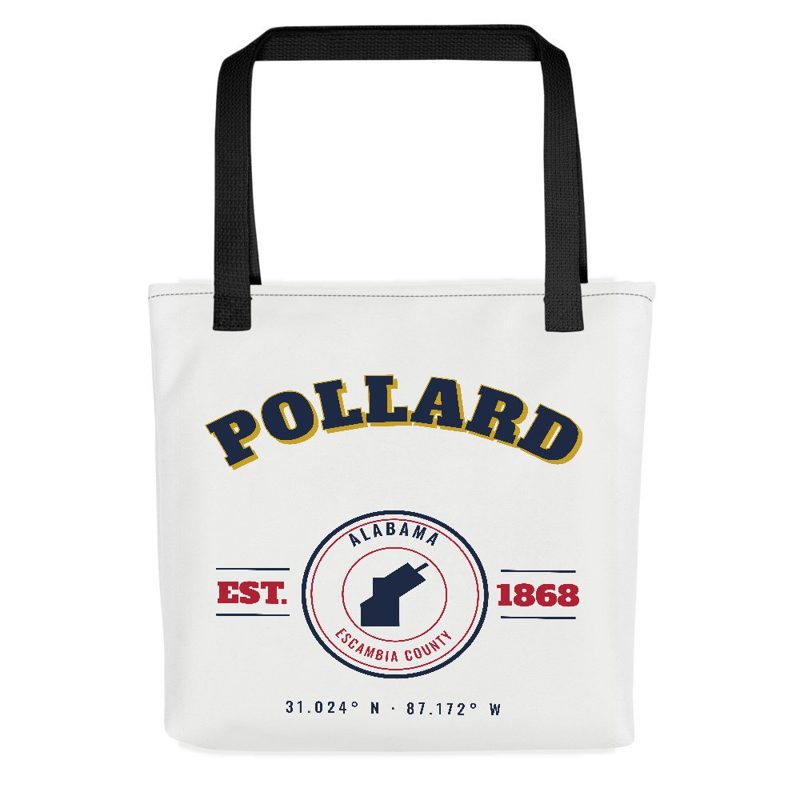
Sturdy all-over-print tote
Glossy top, cork back
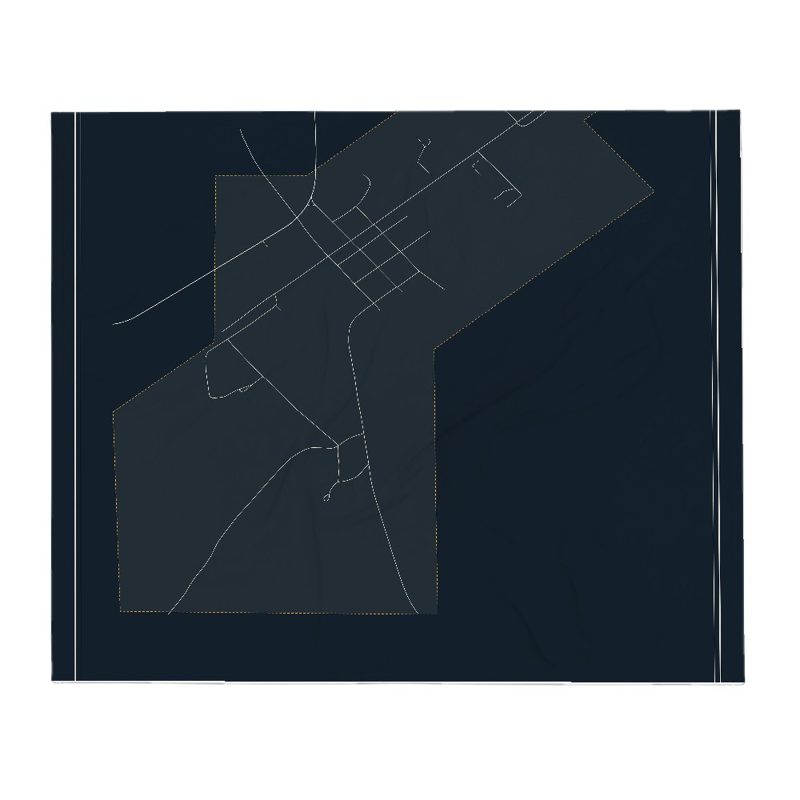
Soft fleece, 50″×60″
20 oz, double-wall stainless
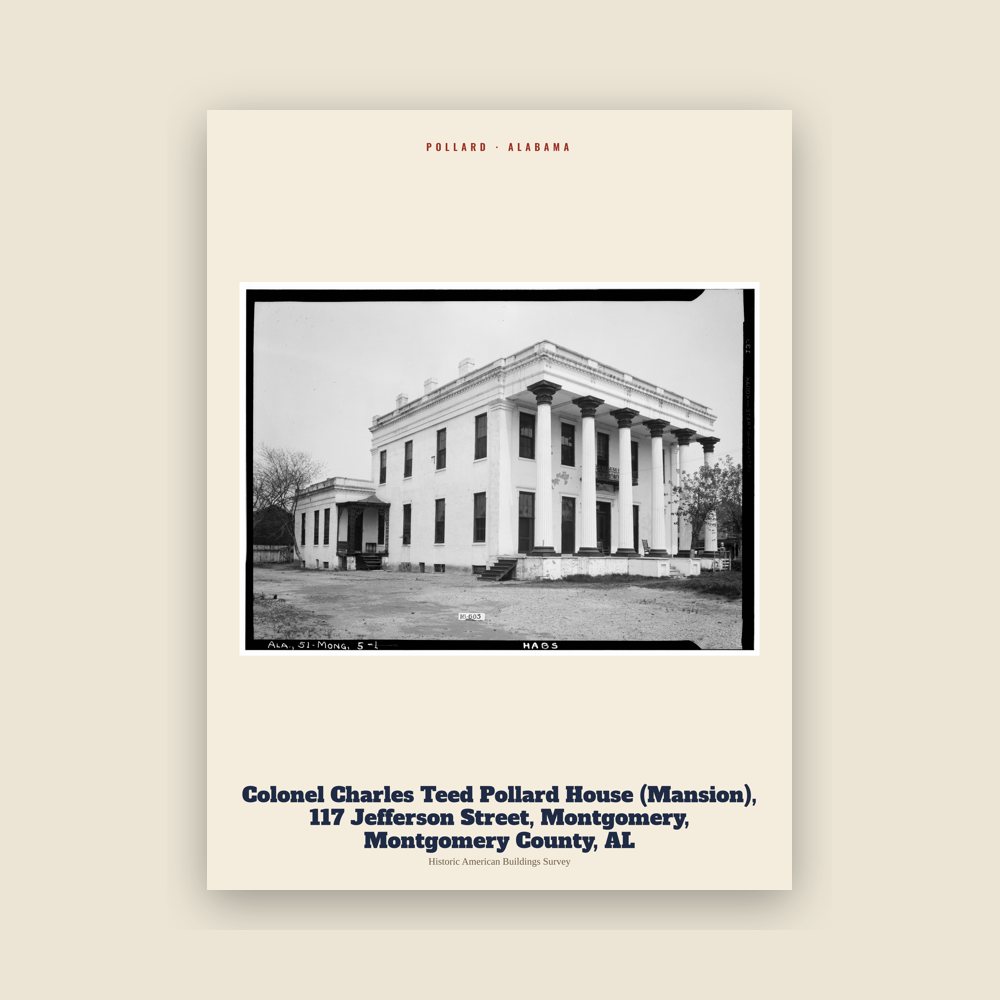
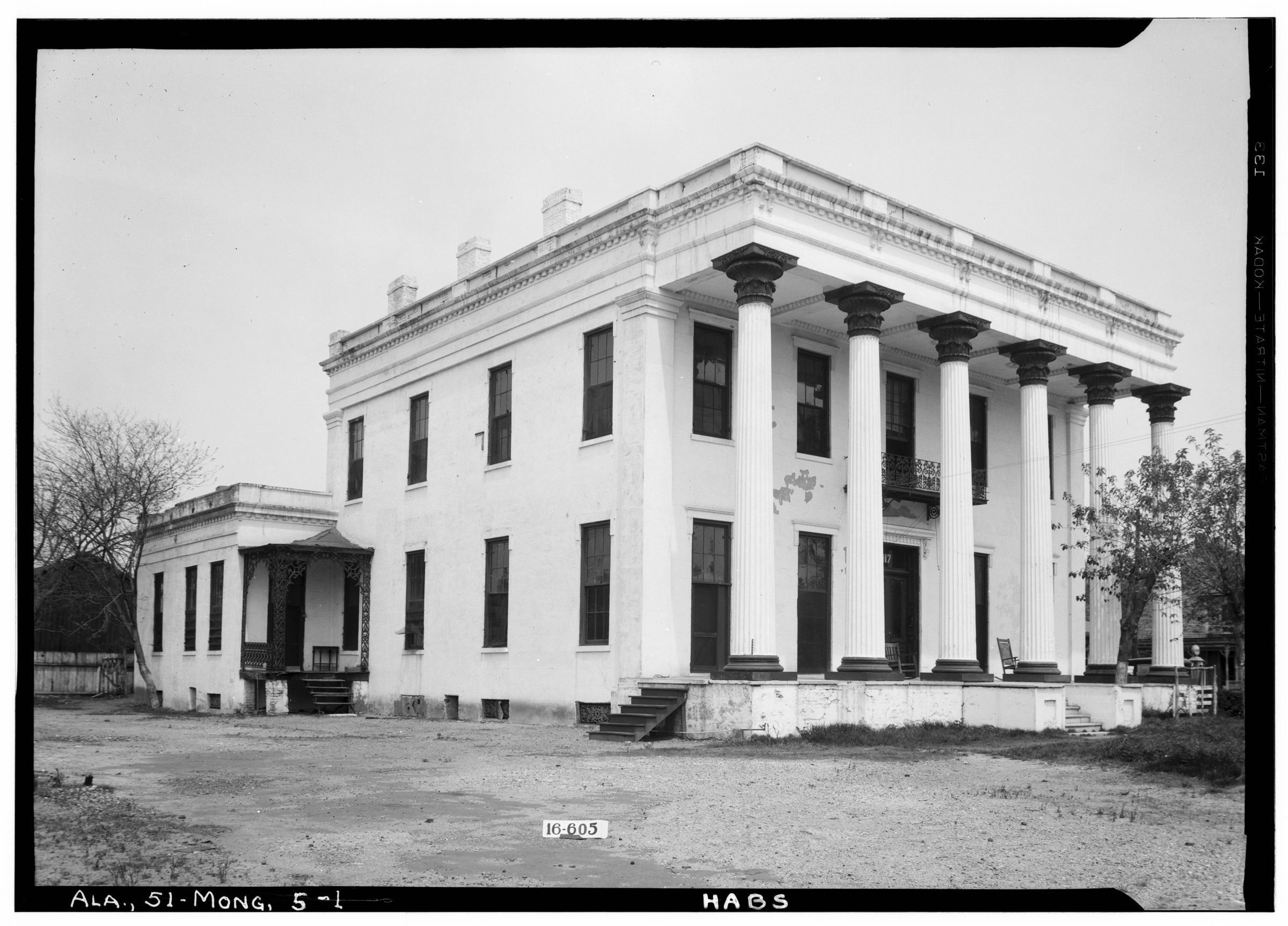
From the Library of Congress collections: a historic survey drawing or photograph of the town
Pollard was the first established county seat of Escambia County, from its creation in 1868 until 1883, when it lost that distinction to Brewton. The community is named for Charles T. Pollard, the founder of the Alabama and Florida Railroad. This railroad constructed a line which connect Pollard with Montgomery and Pensacola.
During the Civil War, the Confederate States Army constructed Camp Pollard just north of the town, which protected the railroad junction and served as a training camp. In December 1864, Brigadier General Alexander Asboth commanded Colonel George Robinson to lead a force from Fort Barrancas to attack Pollard with the goal of destroying the Mobile and Great Northern Railroad junction. This force was made up of two regiments: the 1st Regiment, commanded by Lieutenant Colonel G. E. Yarrington, consisted of the 82nd, 86th, and 97th United States Colored Infantry Regiment, while the 2nd Regiment was commanded by Lt. Col. Andrew Barclay Spurling and included the 2nd Maine Cavalry Regiment, 1st Florida Cavalry Regiment, and 14th New York Cavalry Regiment. On December 16, 1864, the detachment found Pollard abandoned by local Confederate forces and destroyed the local railroad bridges and burned most of the town.
Adapted (trimmed) from the Wikipedia article Pollard, Alabama, revision 1378795821 by its contributors, licensed CC BY-SA 4.0.
We share a part of every Pollard sale with local partners, and we'd love to print from your collection. Old photographs, maps and postcards make the best keepsakes.
Partner with usA favorite landmark, your street, a school or team, an anniversary gift, a different product. Tell us and we'll get back to you by email.
Pollard's population was 128 in the 2020 U.S. Census, down from 137 in 2010.