A short history of Newton
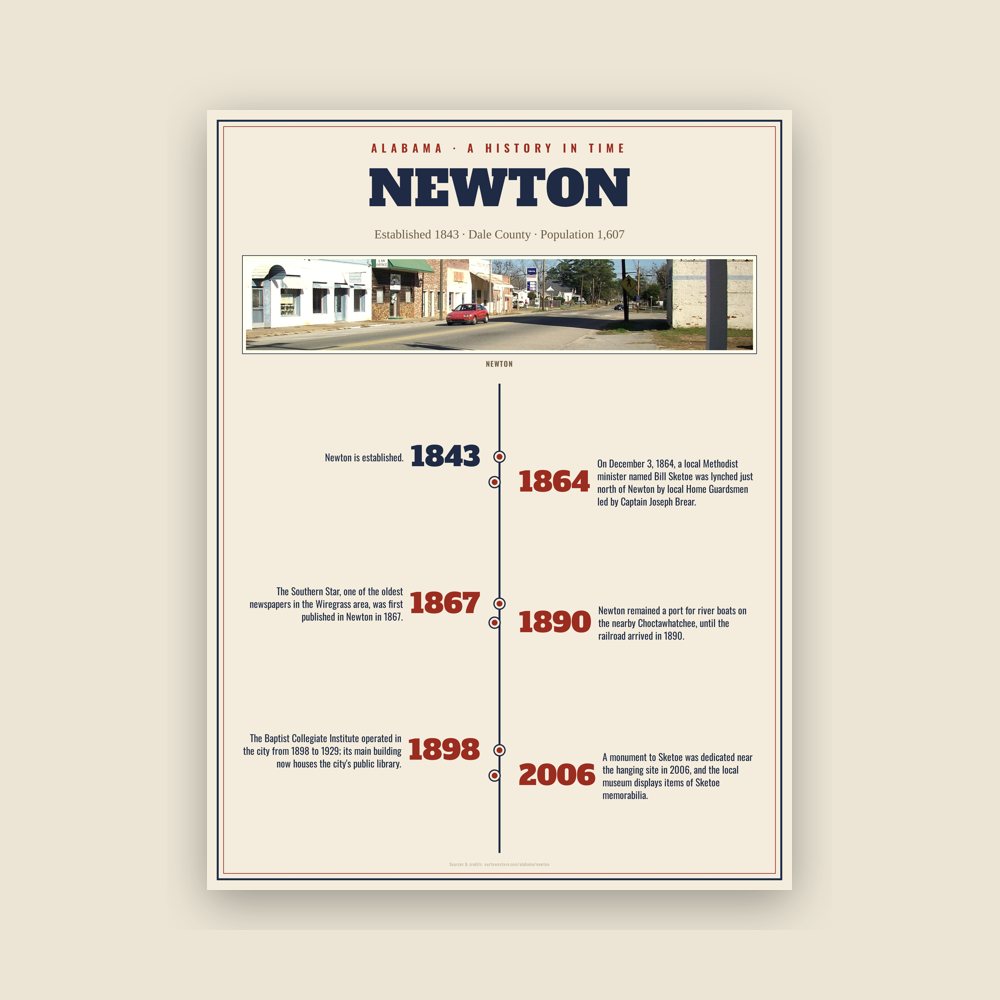
Newton was founded in 1843 after the formation of Coffee County from Dale County's western half, which rendered the original county seat of Daleville off-center. The town was a scene for Confederate recruiting during the Civil War, and was the site of a battle in March 1865 between local Home Guard troops and elements of the 1st Florida Cavalry (US) operating out of Florida. The Federals were led by Joseph Sanders, a Dale County resident who had previously been a captain in the 31st Georgia Infantry, but had later switched sides and joined the Federals. Seeking to burn the county courthouse, the attackers were repulsed when local troops ambushed their column as they entered the town. This event is commemorated by a monument located in downtown Newton, and by annual re-enactments.
On December 3, 1864, a local Methodist minister named Bill Sketoe was lynched just north of Newton by local Home Guardsmen led by Captain Joseph Brear. Since Sketoe was tall, a hole had to be dug beneath his feet to accommodate his large frame. Local legend insists that "the hole that won't stay filled" never vanished—even after being filled in numerous times during the years that followed. Though covered in 1979 by a new bridge and tons of rip-rap, "Sketoe's hole" remains a local attraction, and was documented by Alabama writer Kathryn Tucker Windham in 13 Alabama Ghosts and Jeffrey. A monument to Sketoe was dedicated near the hanging site in 2006, and the local museum displays items of Sketoe memorabilia.
Following a fire which destroyed the courthouse in March 1869, and the formation of Geneva County in 1870 from the southern third of Dale and Coffee Counties, voters relocated the county seat to Ozark, which was more centralized.
The Southern Star, one of the oldest newspapers in the Wiregrass area, was first published in Newton in 1867. It later relocated to Ozark, where it continues to be published today. Newton remained a port for river boats on the nearby Choctawhatchee, until the railroad arrived in 1890. The Baptist Collegiate Institute operated in the city from 1898 to 1929; its main building now houses the city's public library.
Adapted (trimmed) from the Wikipedia article Newton, Alabama, revision 1377788150 by its contributors, licensed CC BY-SA 4.0.
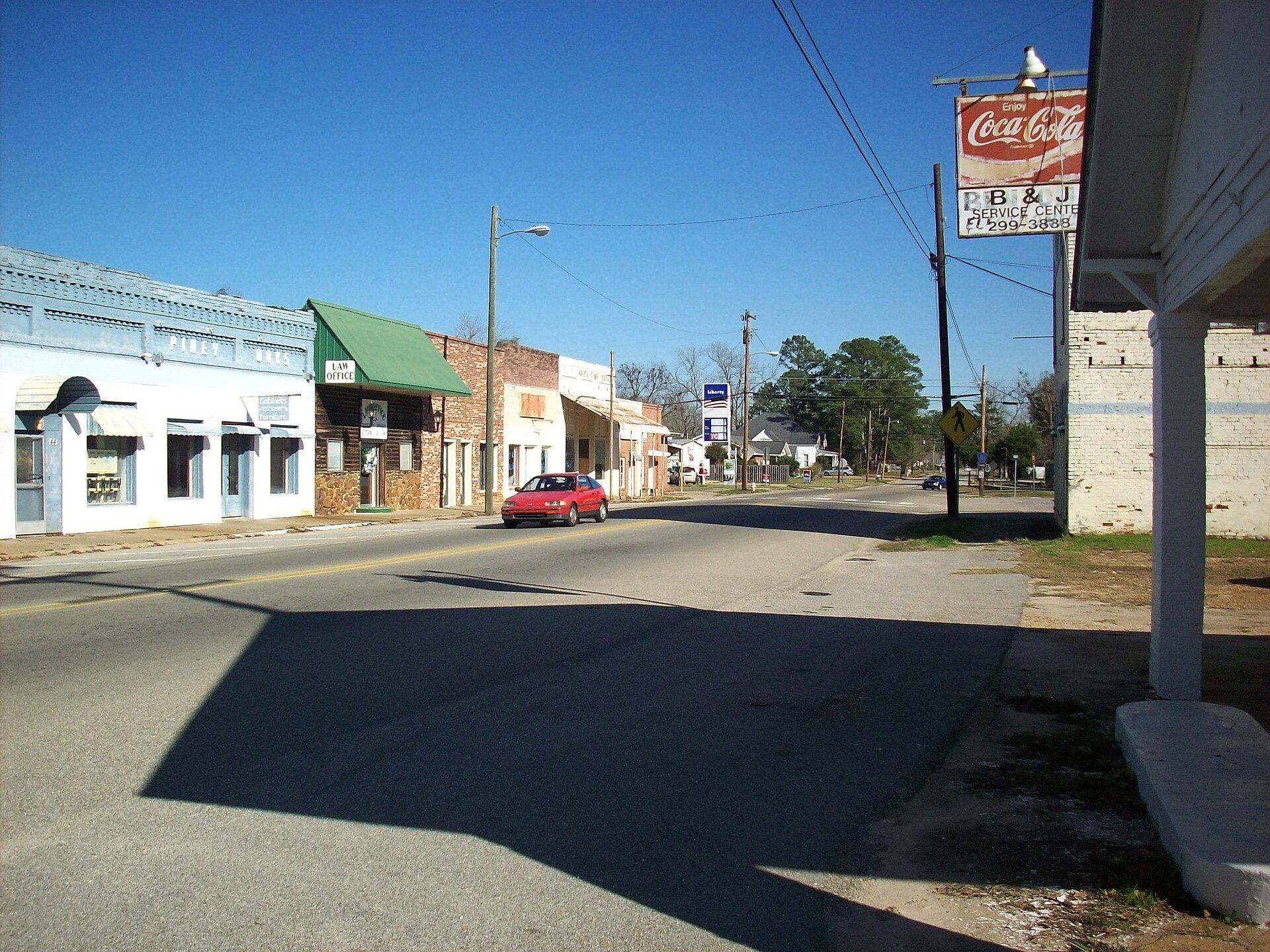
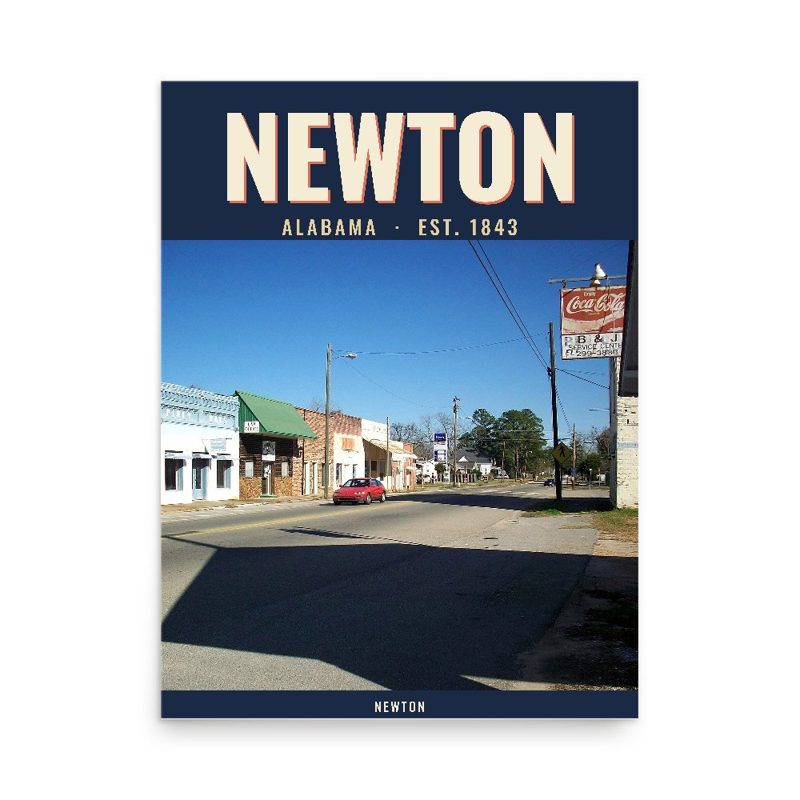
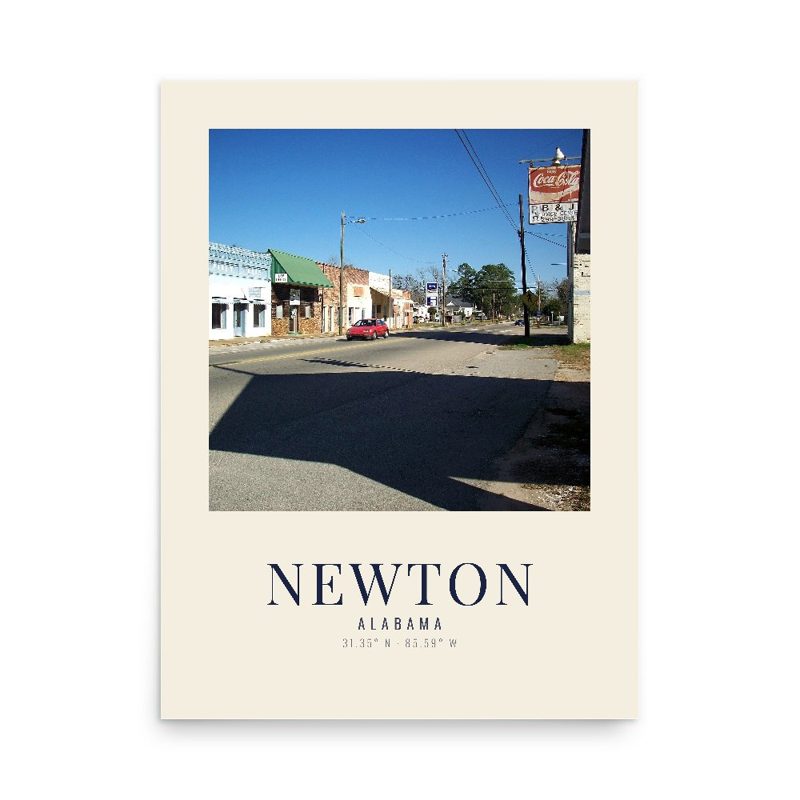
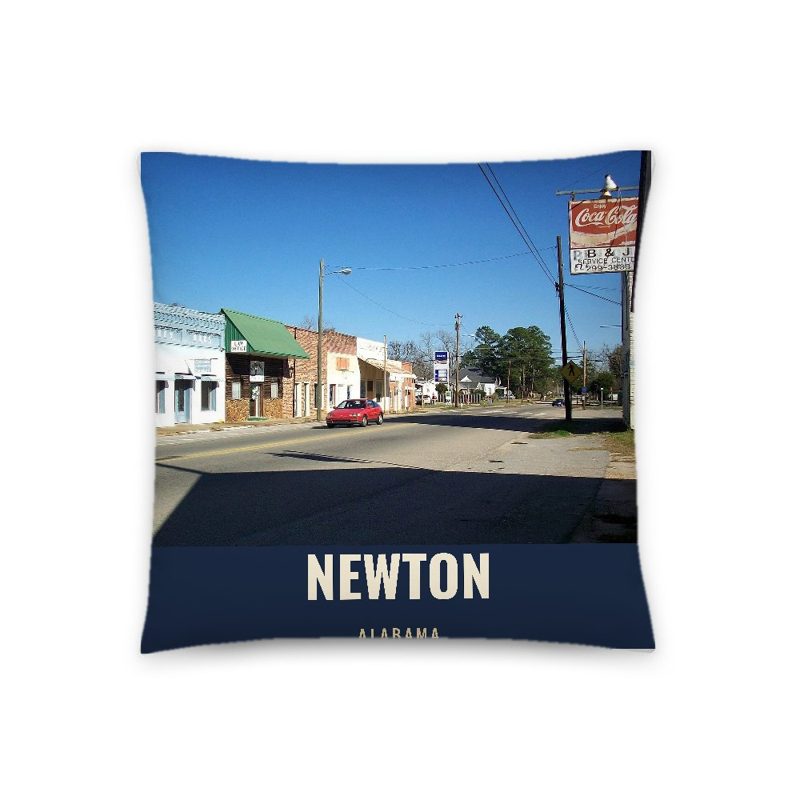
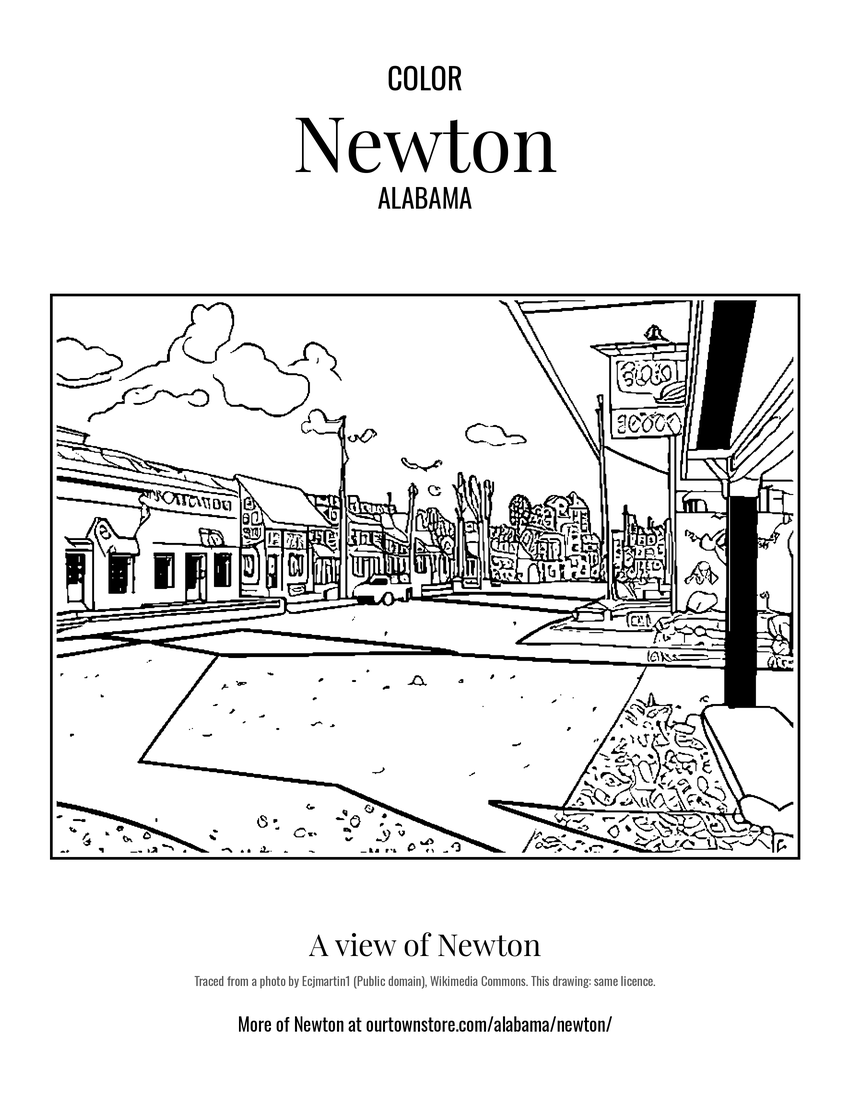 A view of Newton