A short history of Gadsden
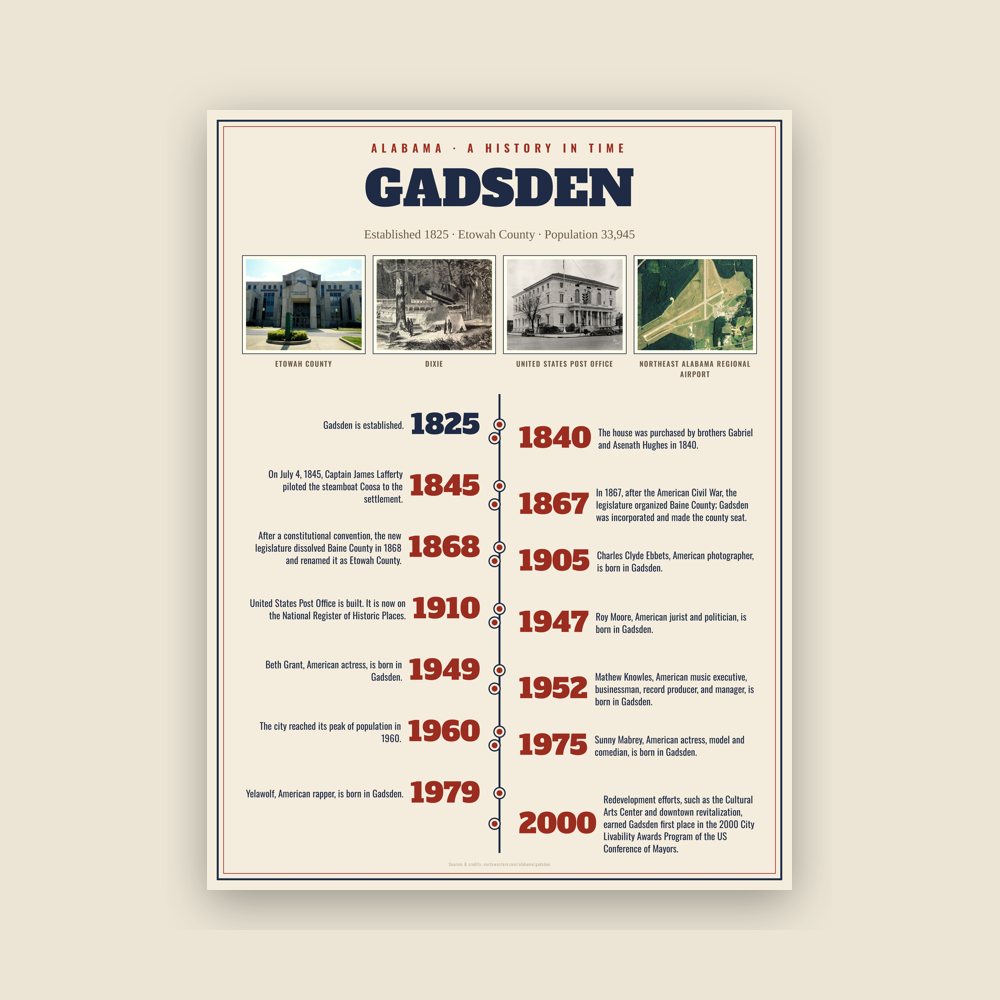
The first substantial European-American settlement in the area that developed as Gadsden was a village called "Double Springs". It was founded in about 1825 by John Riley, a mixed-race American Indian and European-American settler who built his house near two springs. Riley used his house for a stagecoach stop on the Huntsville-to-Rome route. The original building still stands as the oldest in Gadsden.
The house was purchased by brothers Gabriel and Asenath Hughes in 1840. The Hughes brothers purchased much of the land between Lookout Mountain, the Coosa River, and the mouth of Wills Creek. The brothers proposed constructing a railroad from the port of Savannah to Nashville, Tennessee through their land. The original 120 acres (49 ha) survey of Gadsden included the Hughes brothers' land, plus that of John S. Moragne and Lewis L. Rhea.
On July 4, 1845, Captain James Lafferty piloted the steamboat Coosa to the settlement. He landed near the site where the Memorial Bridge was built. The Hughes brothers suggested renaming the town as "Lafferty's Landing", but residents adopted "Gadsden" in honor of Colonel James Gadsden of South Carolina. He later was noted for negotiating the United States' Gadsden Purchase from Mexico.
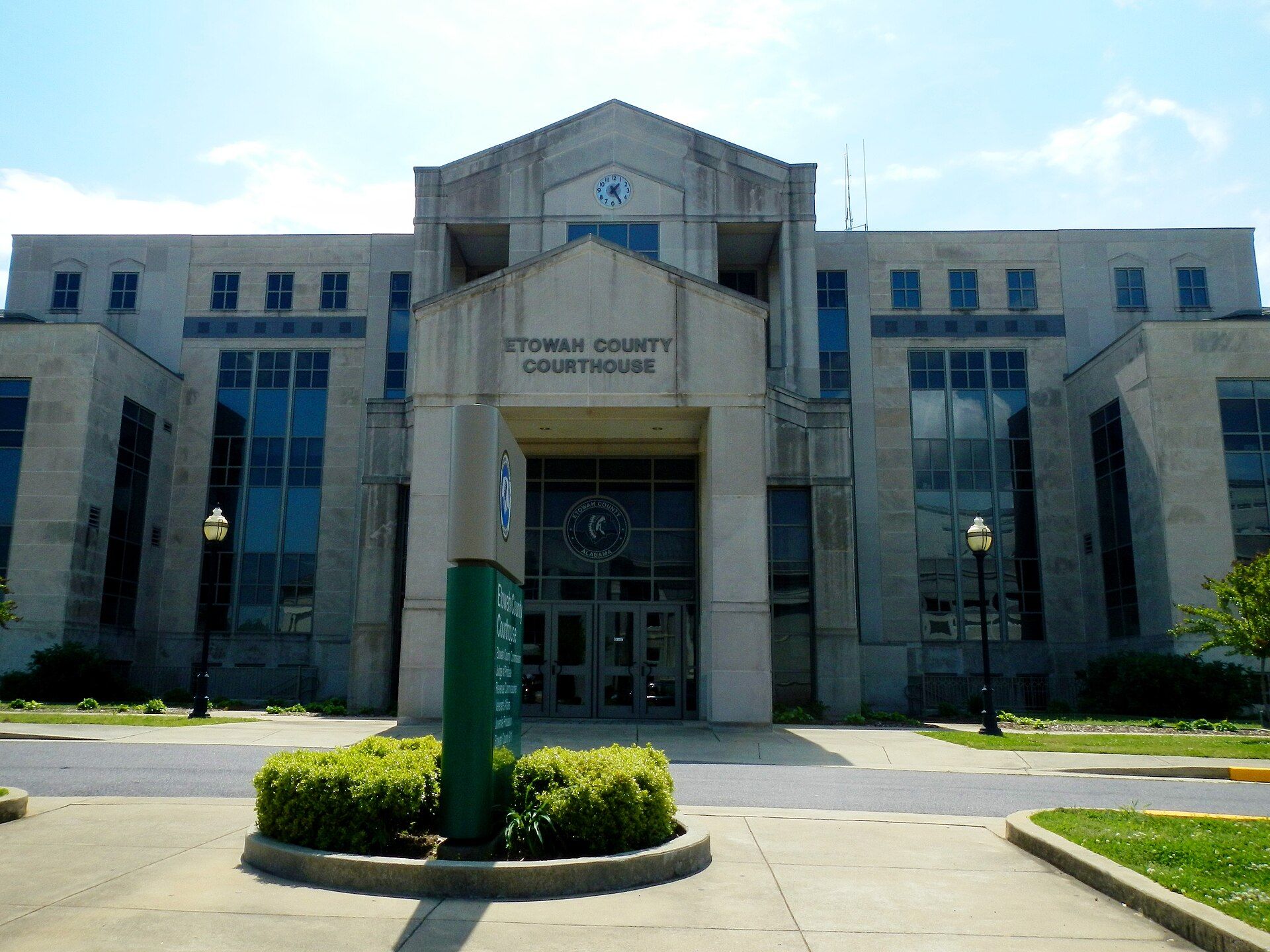
In 1867, after the American Civil War, the legislature organized Baine County; Gadsden was incorporated and made the county seat. After a constitutional convention, the new legislature dissolved Baine County in 1868 and renamed it as Etowah County. Gadsden retained its standing as county seat.
By the late 19th century, Gadsden had developed as a major river port on the Coosa River, and was second to Mobile, a seaport on the Gulf Coast, in importance. It also developed as a center of heavy industry.
Read the full history
20th century to present
With unionization, industrial workers could earn middle-class salaries and improve their lives, even as African Americans struggled under Jim Crow laws and political disenfranchisement. The city reached its peak of population in 1960.
Affected by the national restructuring of railroads and heavy industry, most of Gadsden's major industries closed in the 1970s and 1980s. The city lost many jobs and much population and began to decline. The city government has struggled to manage the transition to a different economy, just as numerous other industrial cities had to do.
Redevelopment efforts, such as the Cultural Arts Center and downtown revitalization, earned Gadsden first place in the 2000 City Livability Awards Program of the US Conference of Mayors. Underemployment continues to be a severe problem, as indicated by the economic data presented below.
Adapted (trimmed) from the Wikipedia article Gadsden, Alabama, revision 1378583751 by its contributors, licensed CC BY-SA 4.0.
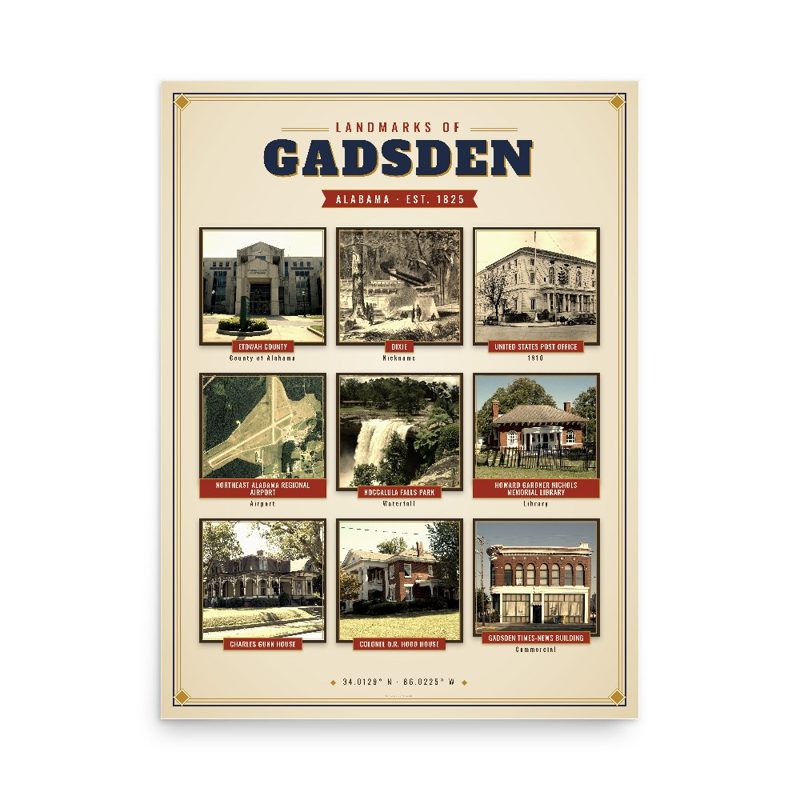
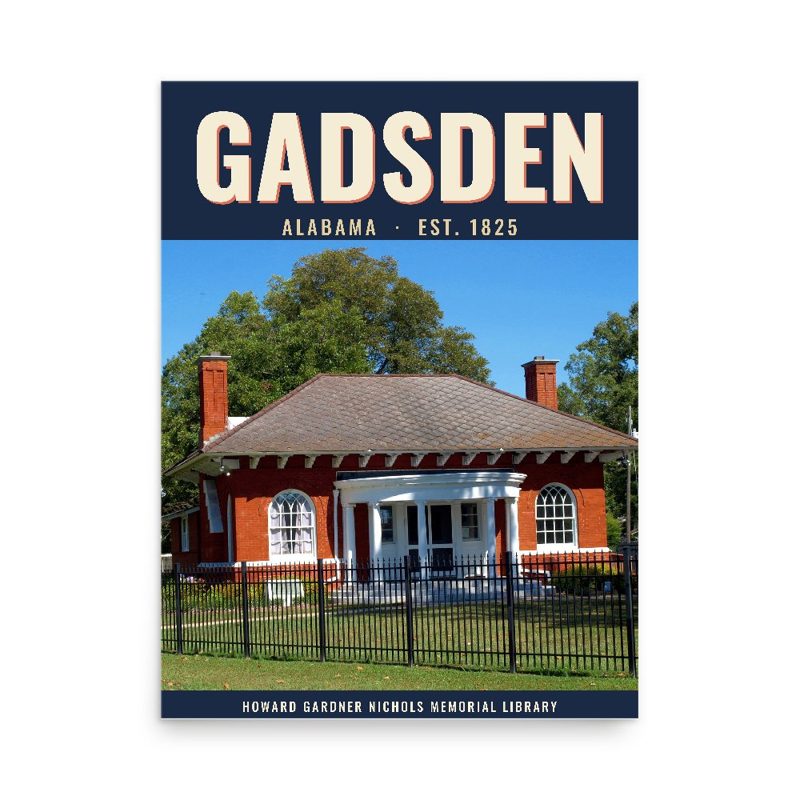
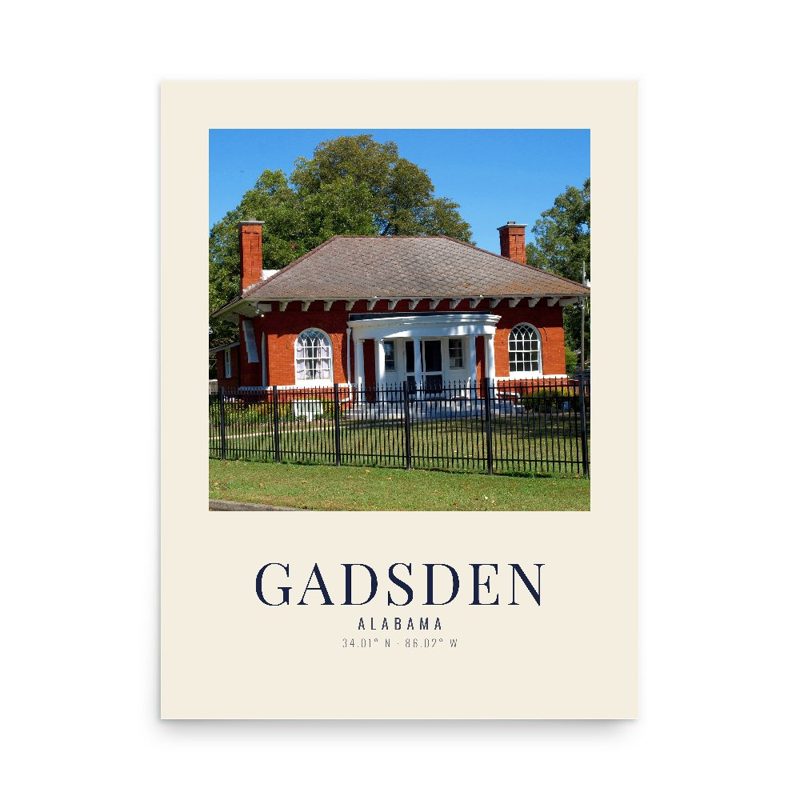
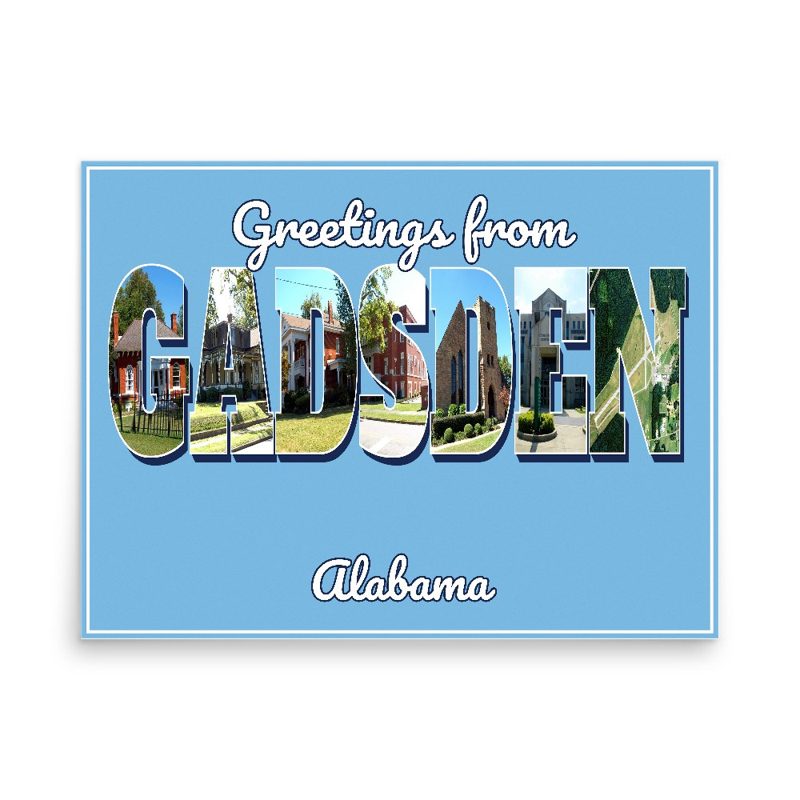
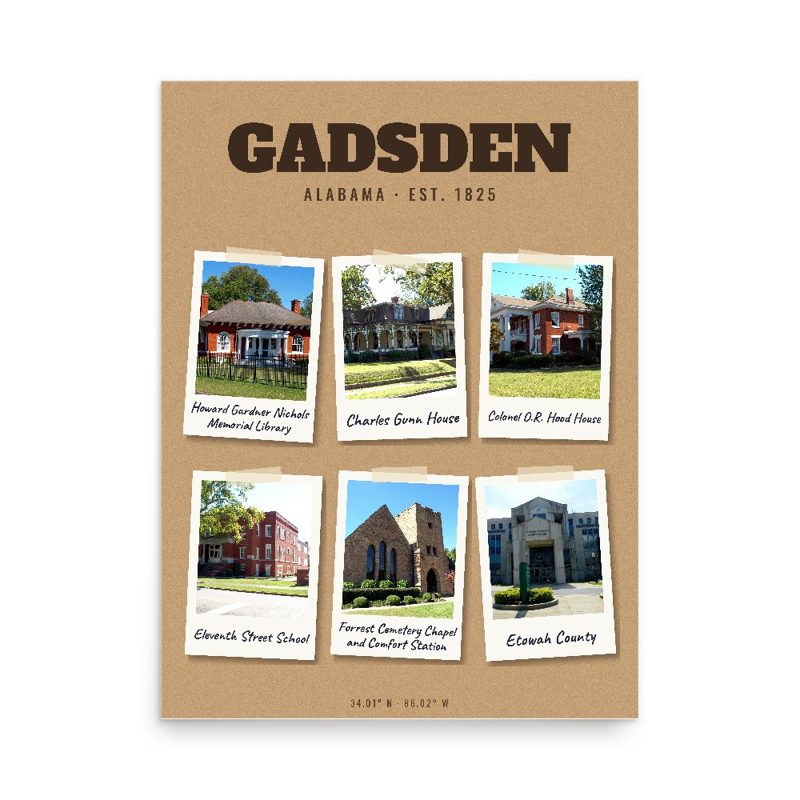
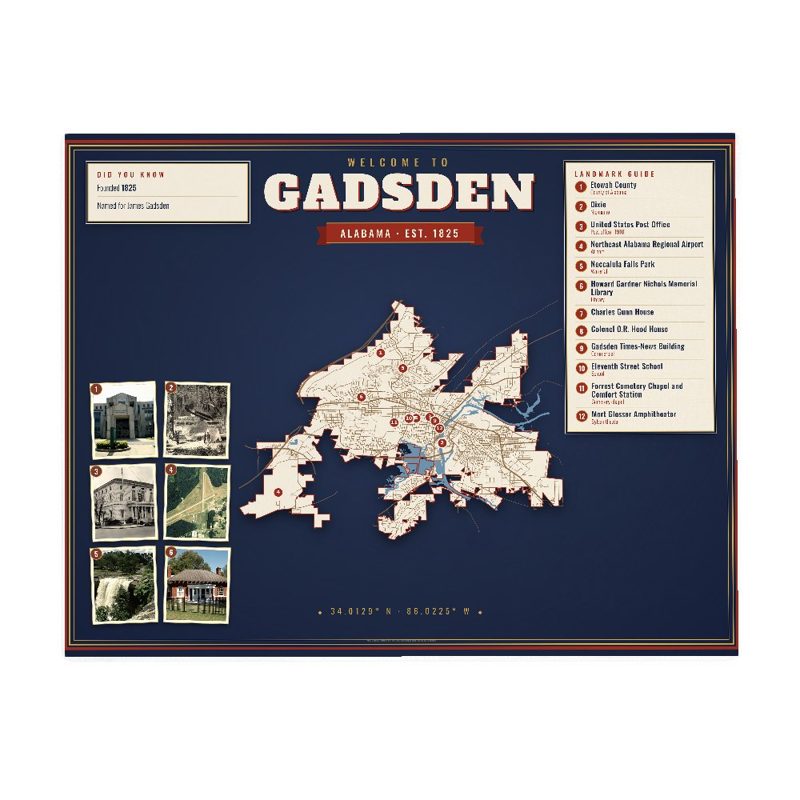







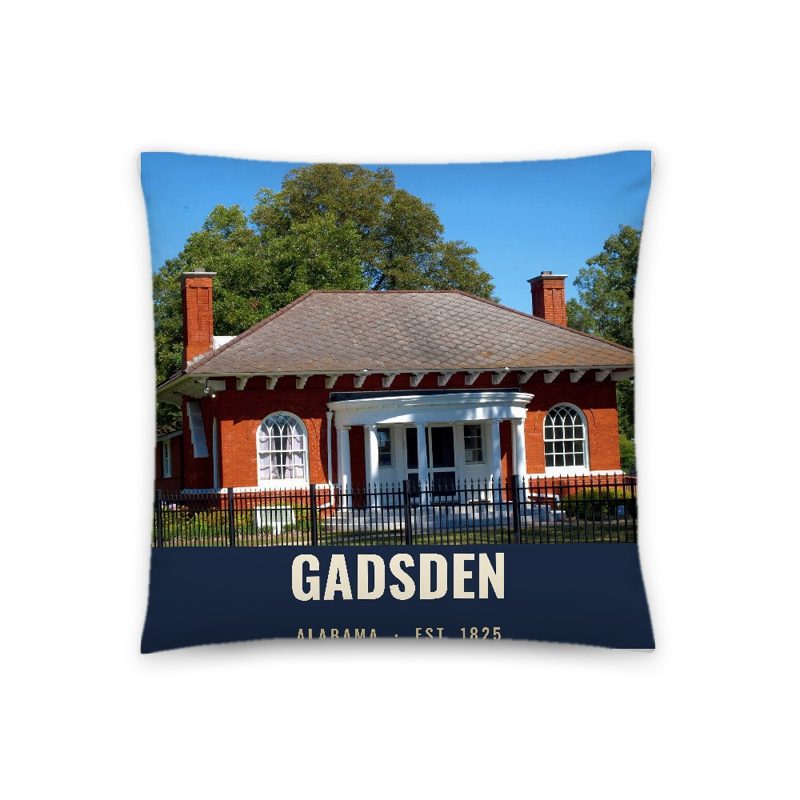


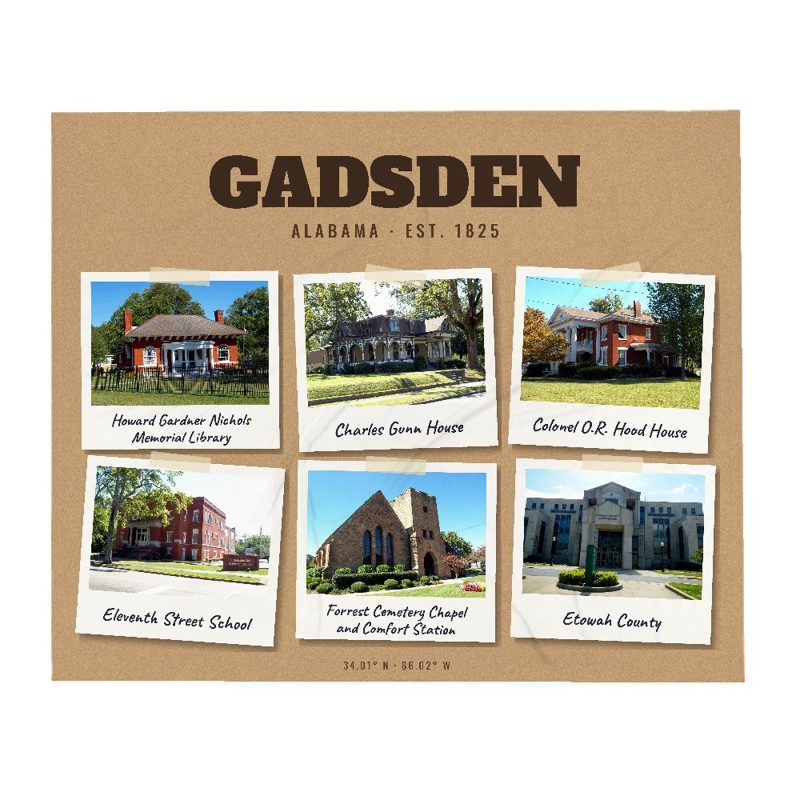
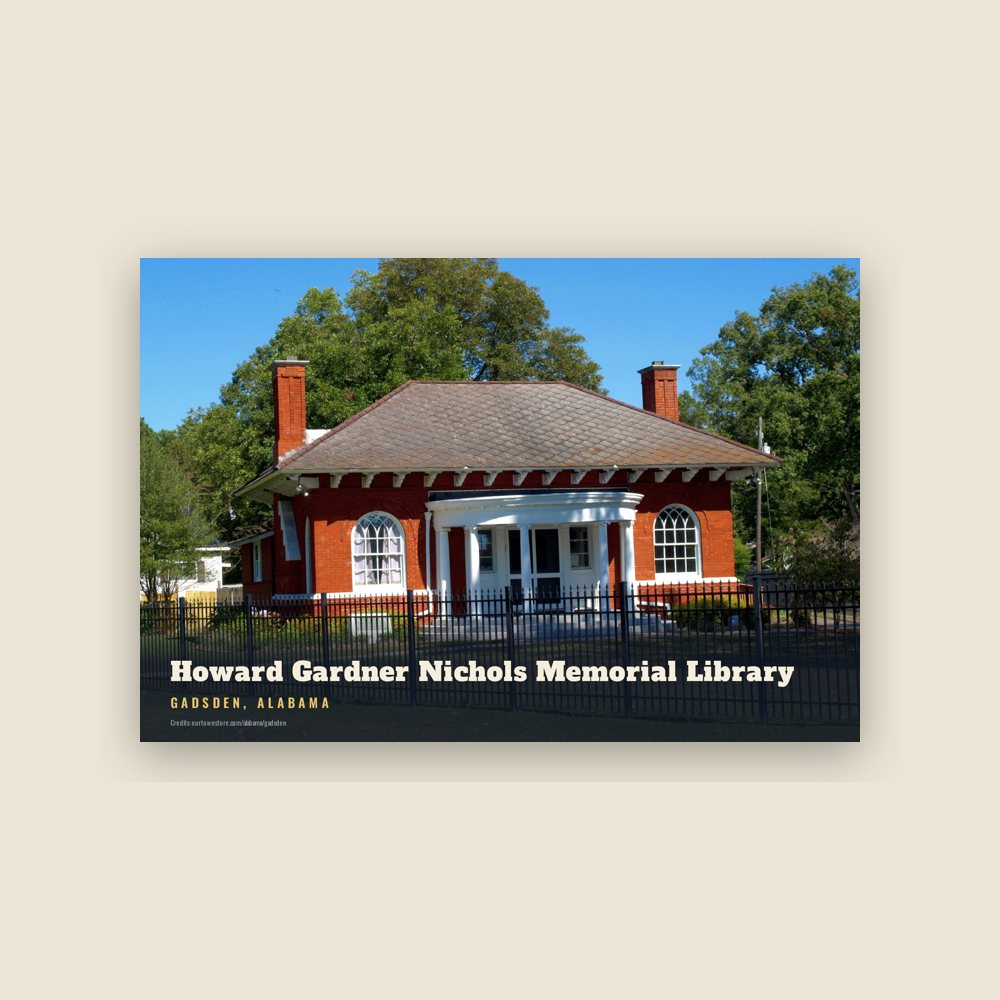
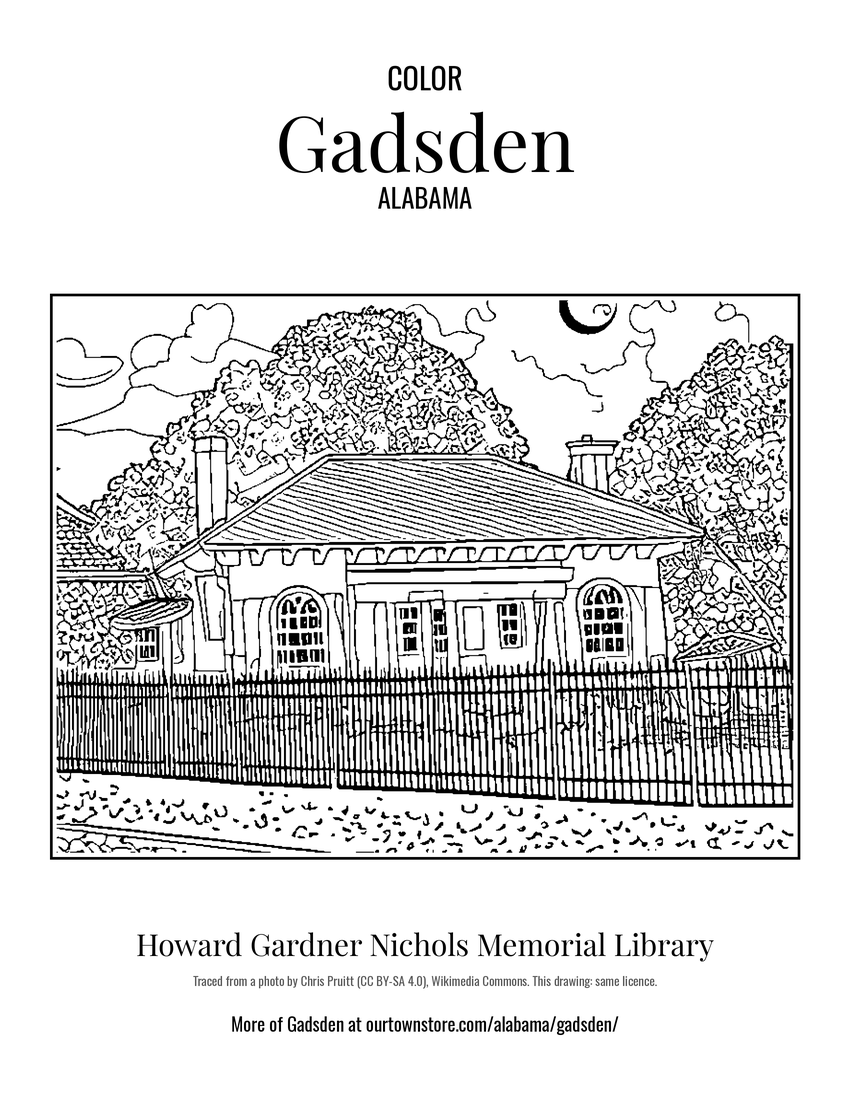 Howard Gardner Nichols Memorial Library
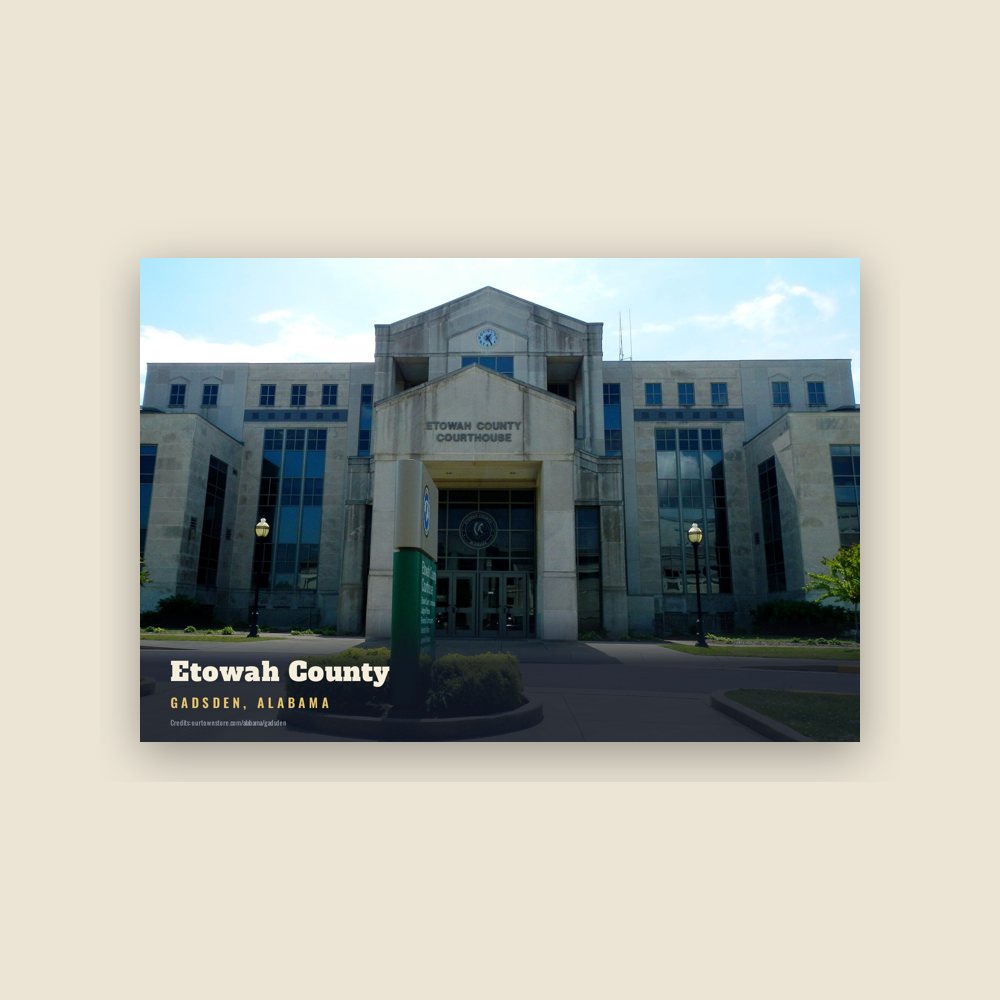
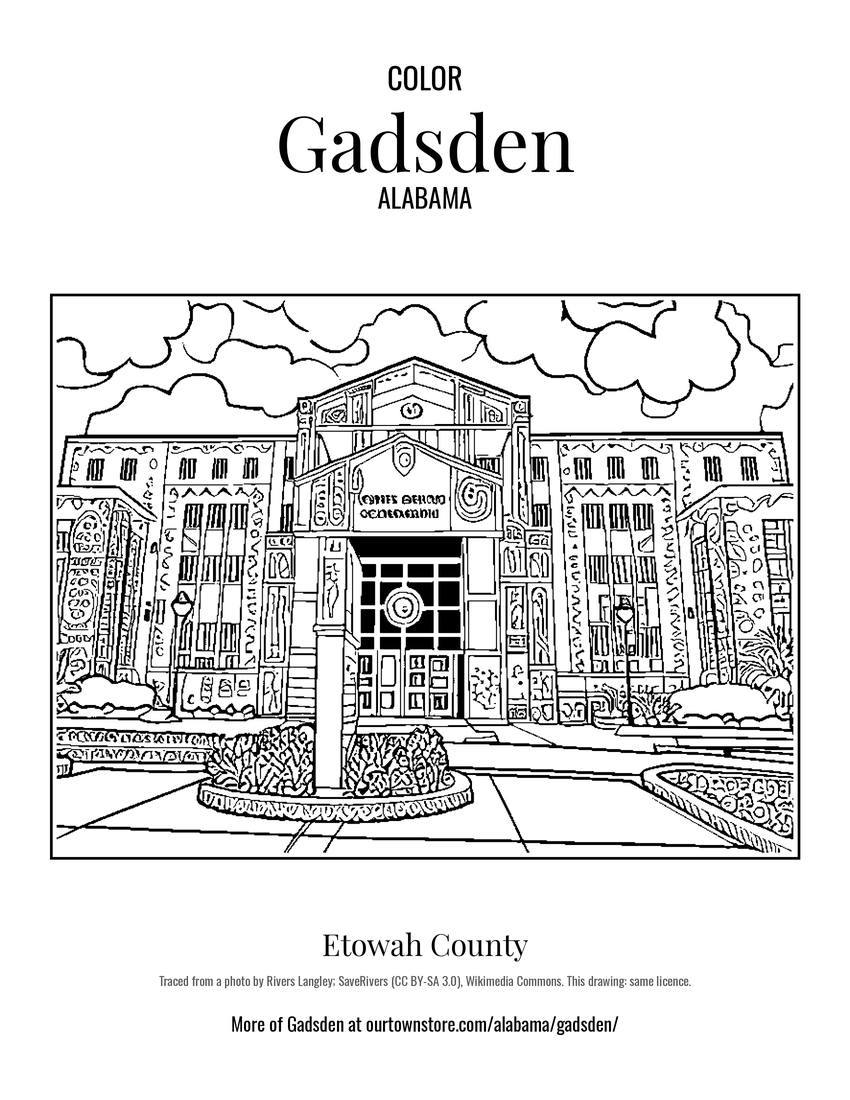 Etowah County
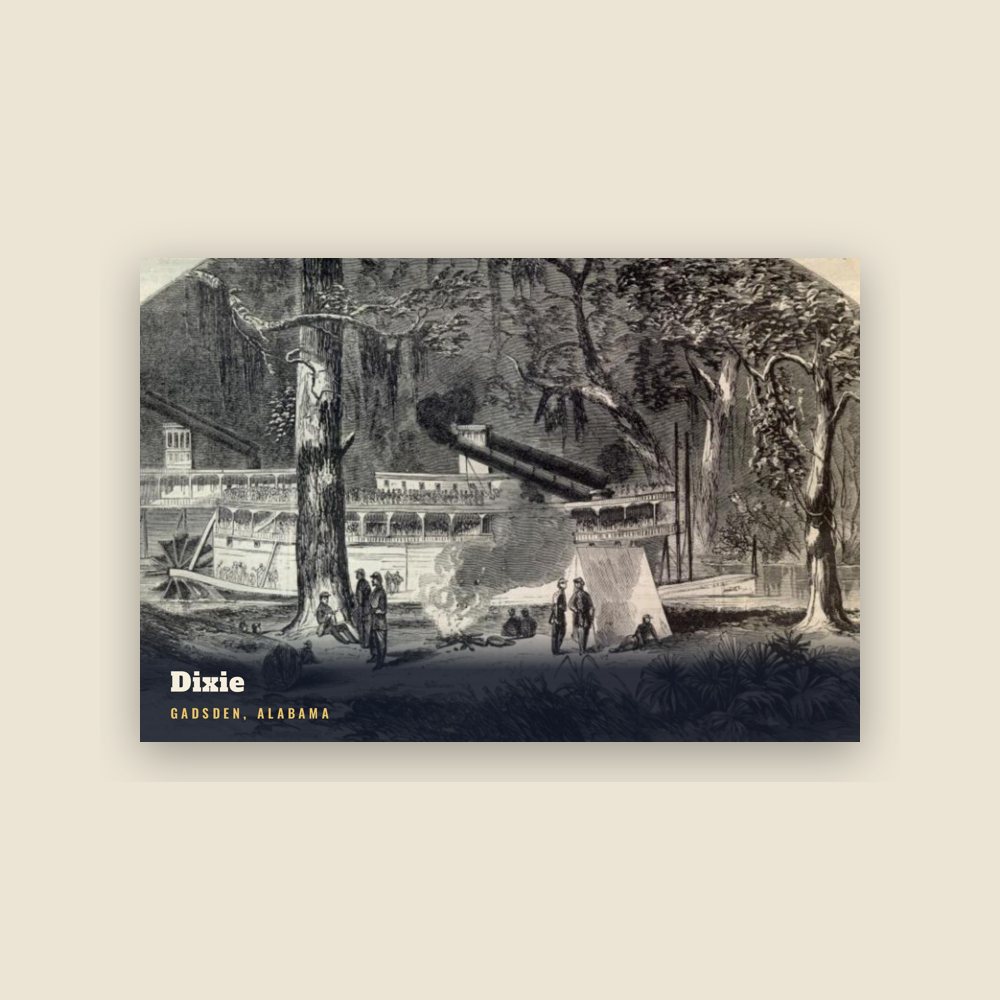
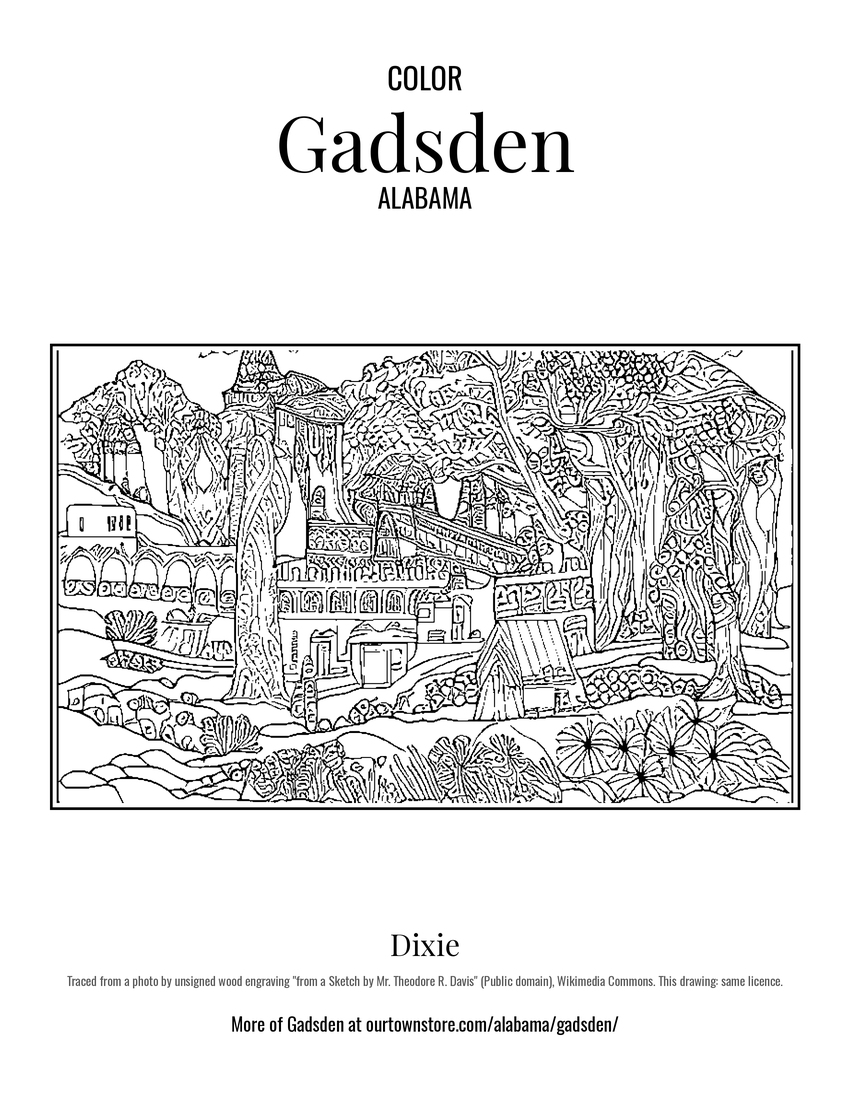 Dixie
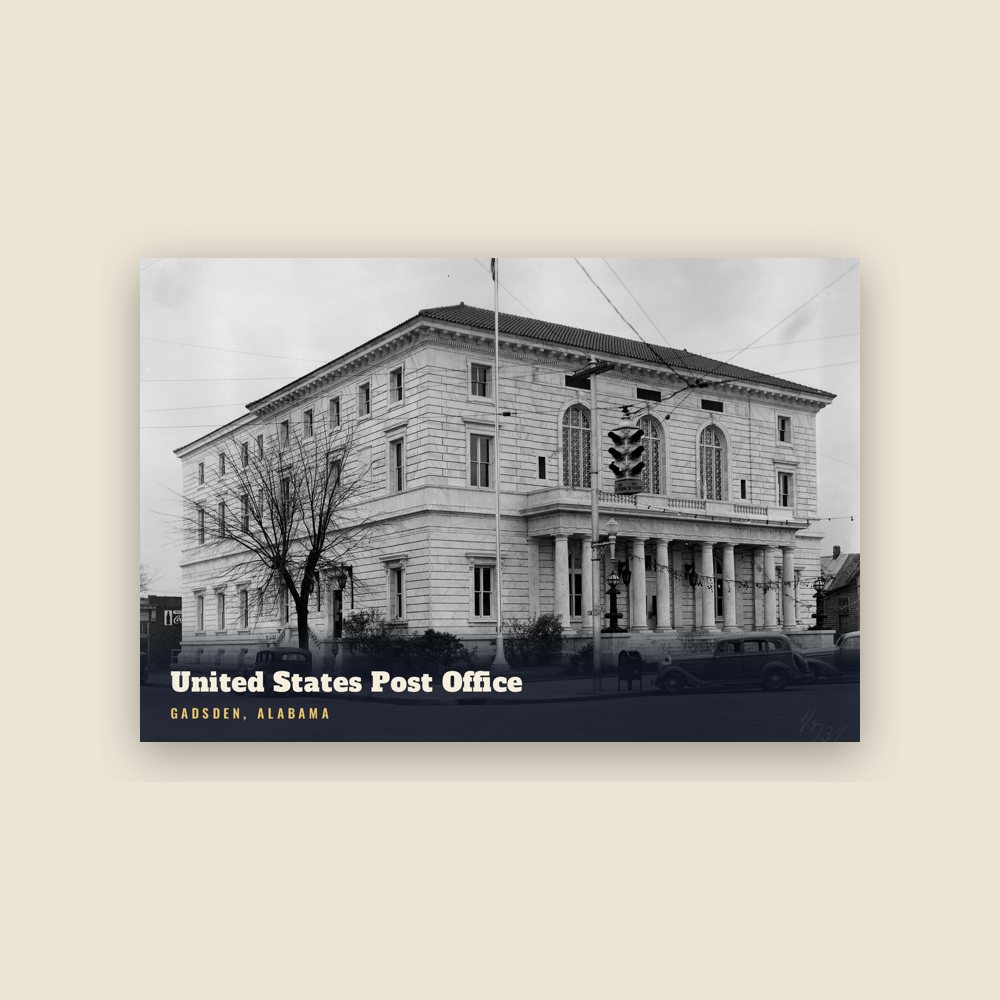
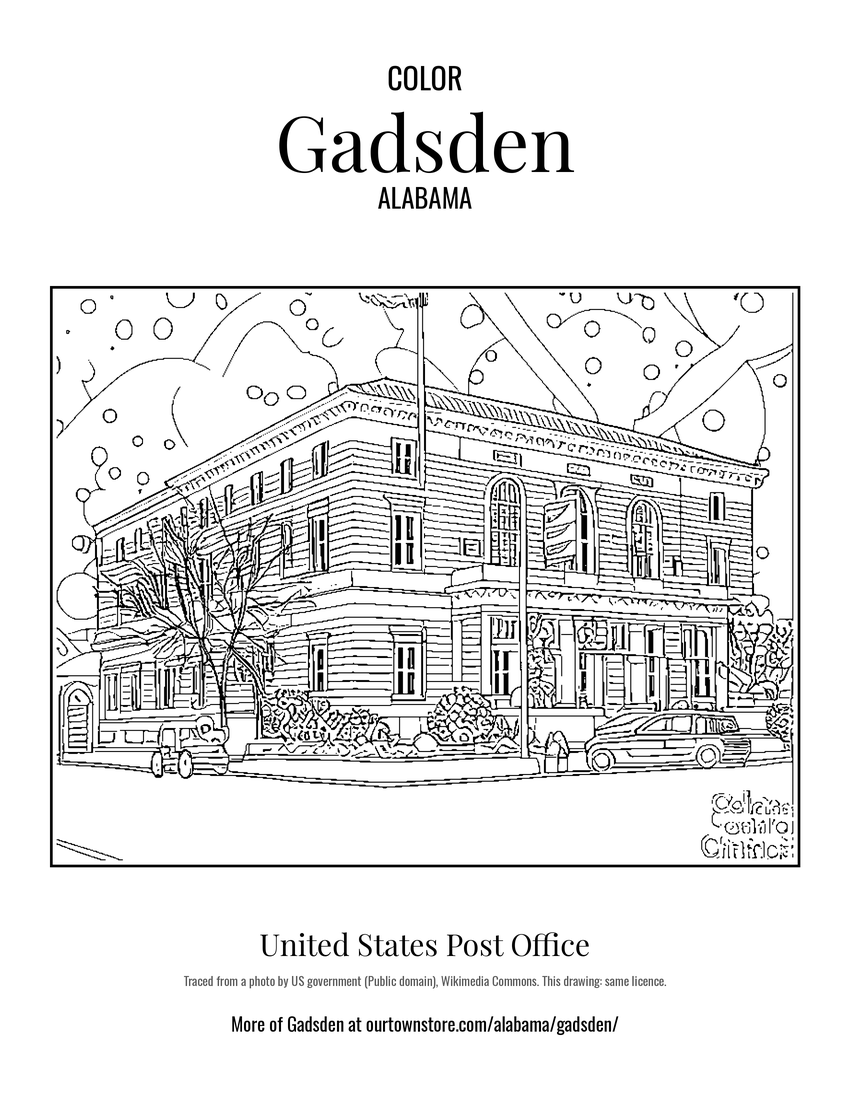 United States Post Office