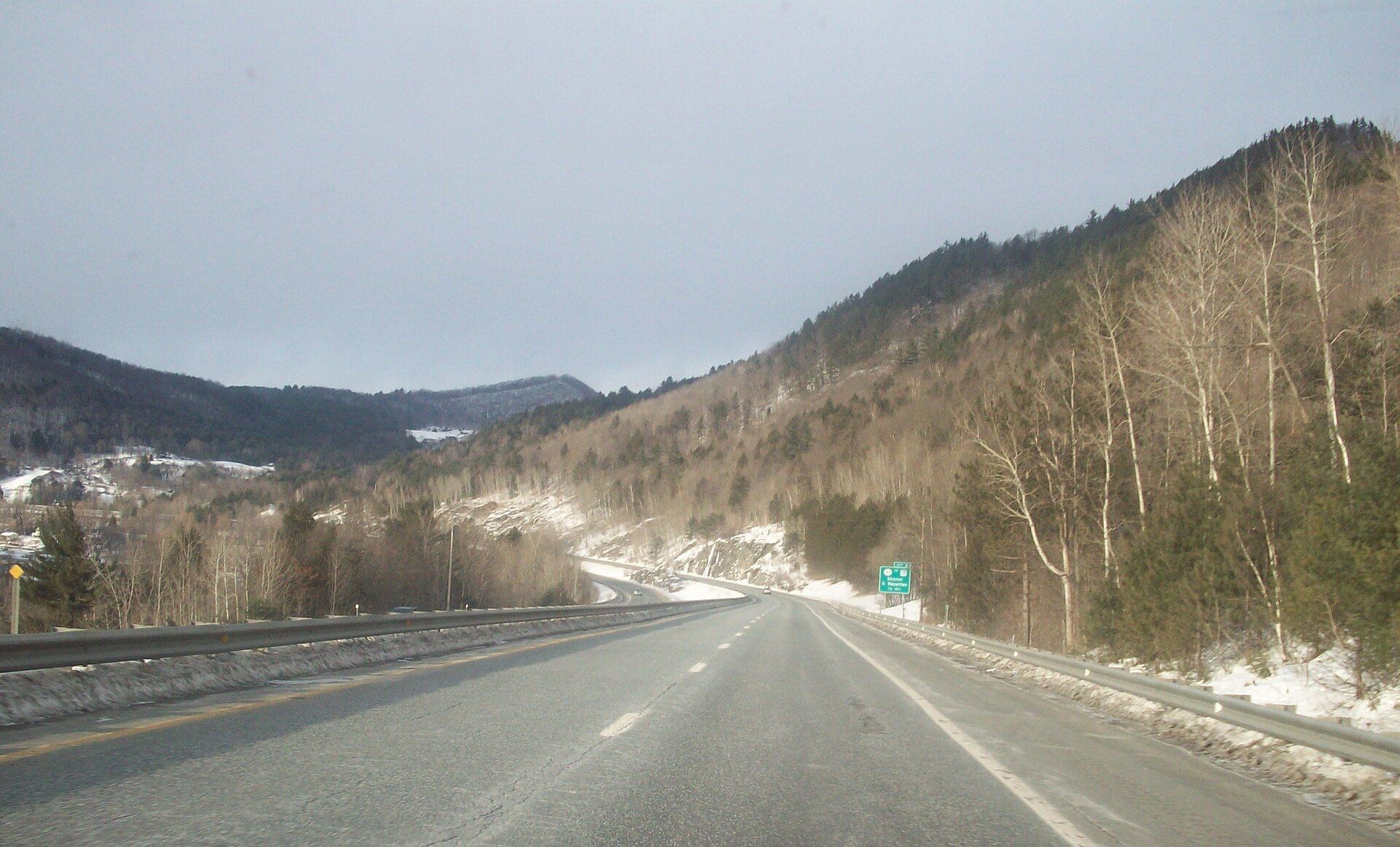
It was granted to John Taylor and 61 others, many from Sharon, Connecticut. Landmarks include Interstate 89, Joseph Smith Birthplace Memorial and Bridge 15. Sharon is the birthplace of Joseph Smith, religious leader and founder of the Latter Day Saint movement.
Every piece is drawn from Sharon's own map data and historic archives, then printed and shipped from the USA when you order. No two towns look alike.
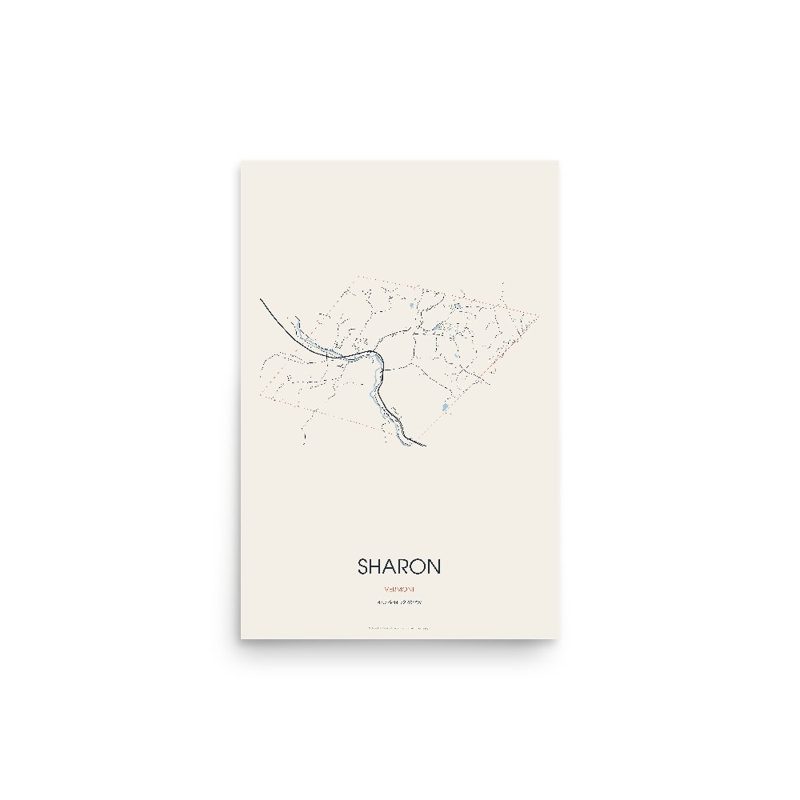
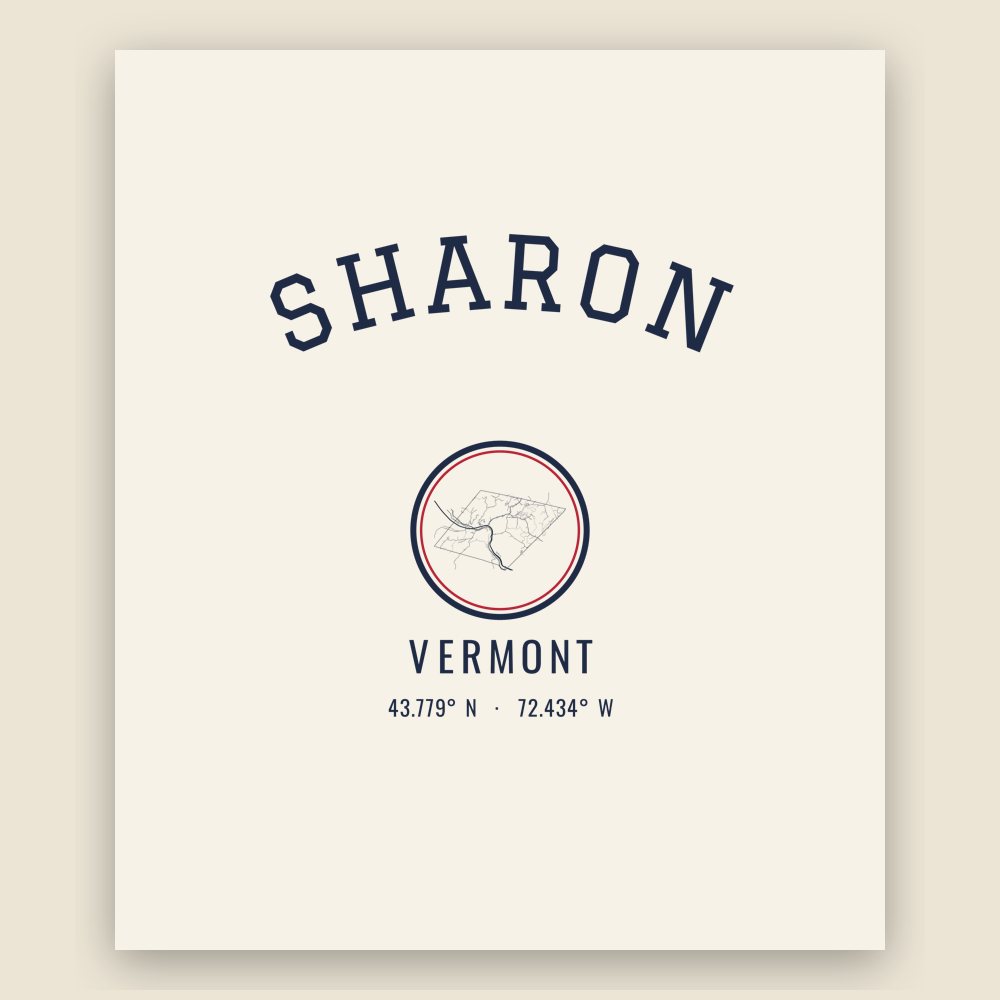
Every road in town, on archival matte paper

The same map, in navy and silver

Famous natives, by birth year
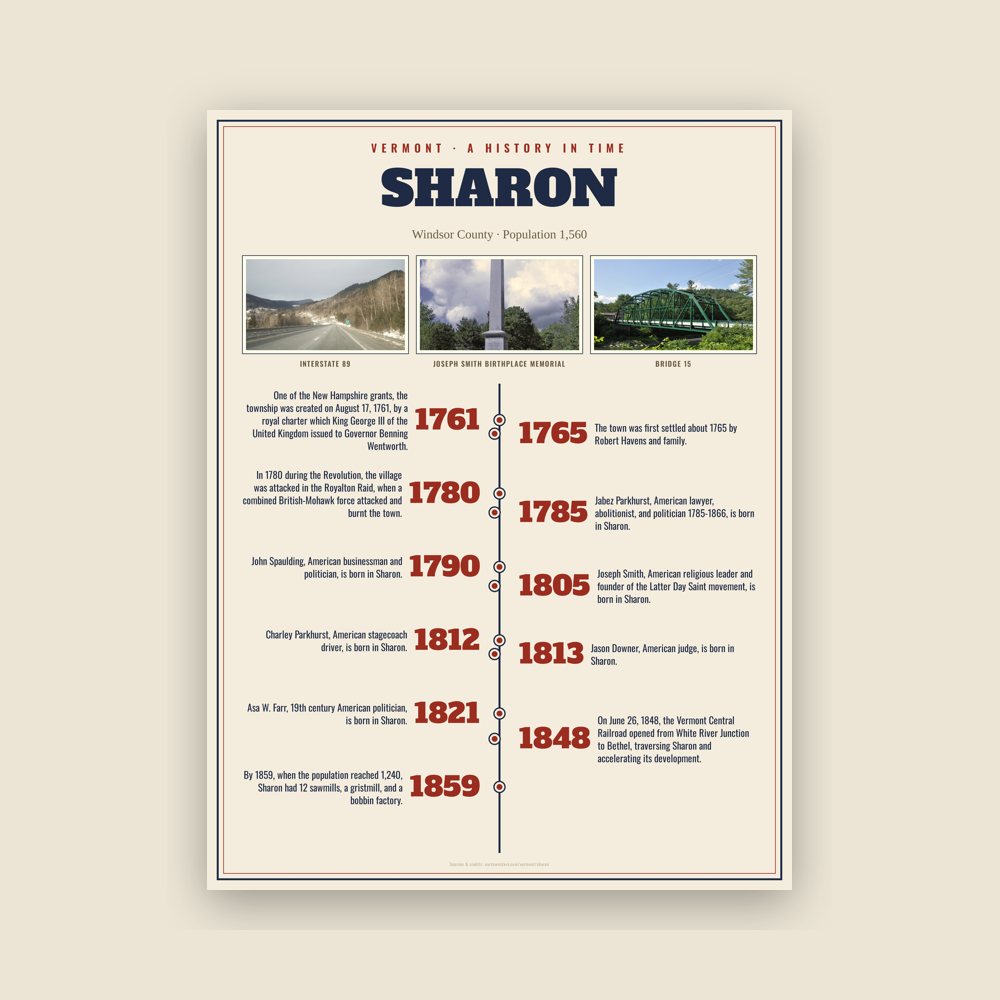
The town's story in dates, from its own records, for home or classroom
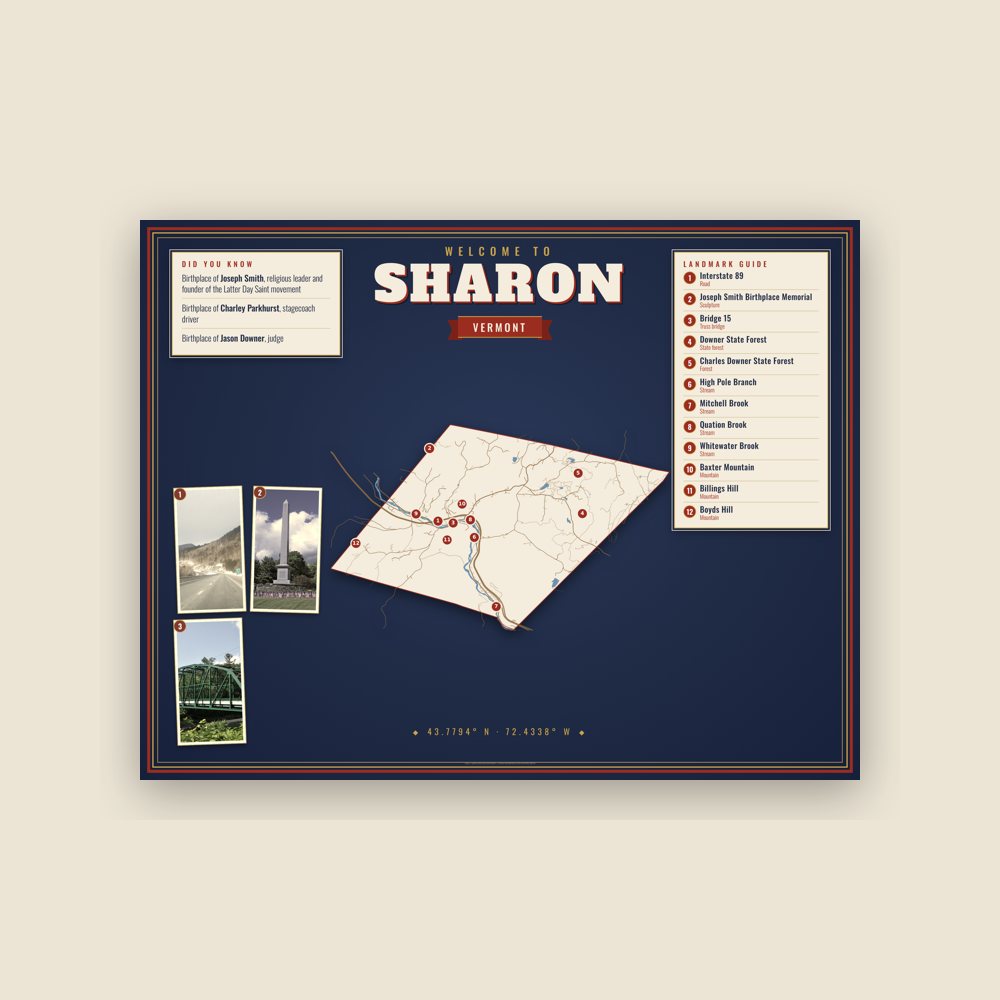
Map of local landmarks, washable fabric
Heavy-blend fleece, street map printed on the back
Soft Bella+Canvas jersey
Glossy ceramic, dishwasher safe
Ceramic keepsake, gold ribbon
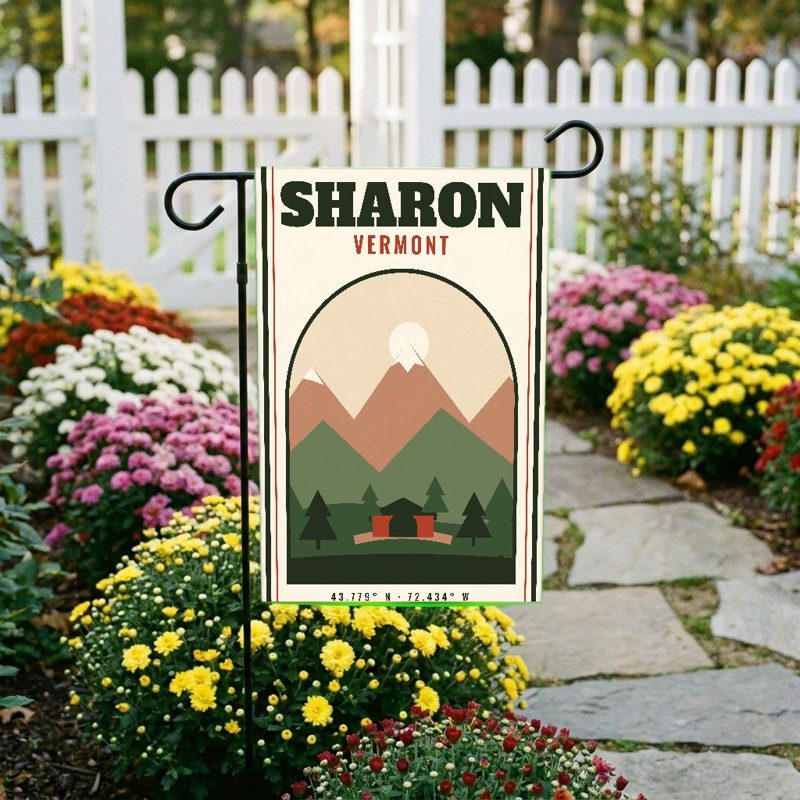
Weatherproof, for the front walk

24″×16″, printed coir-look fibers, rubber back
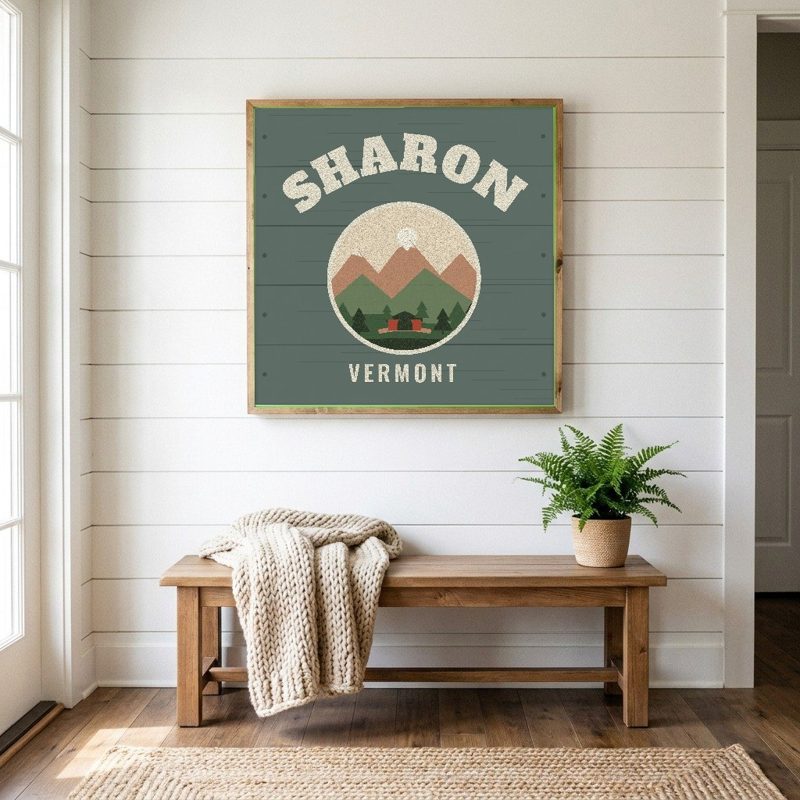
12″×12″ printed wood, ready to hang
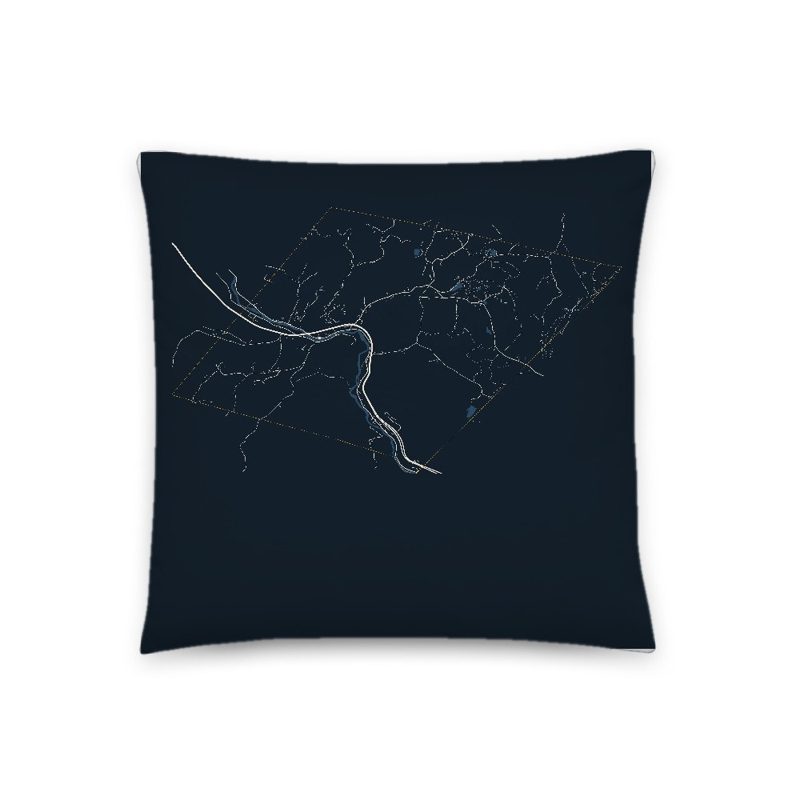
Soft-touch, zip cover

Sturdy all-over-print tote
Glossy top, cork back
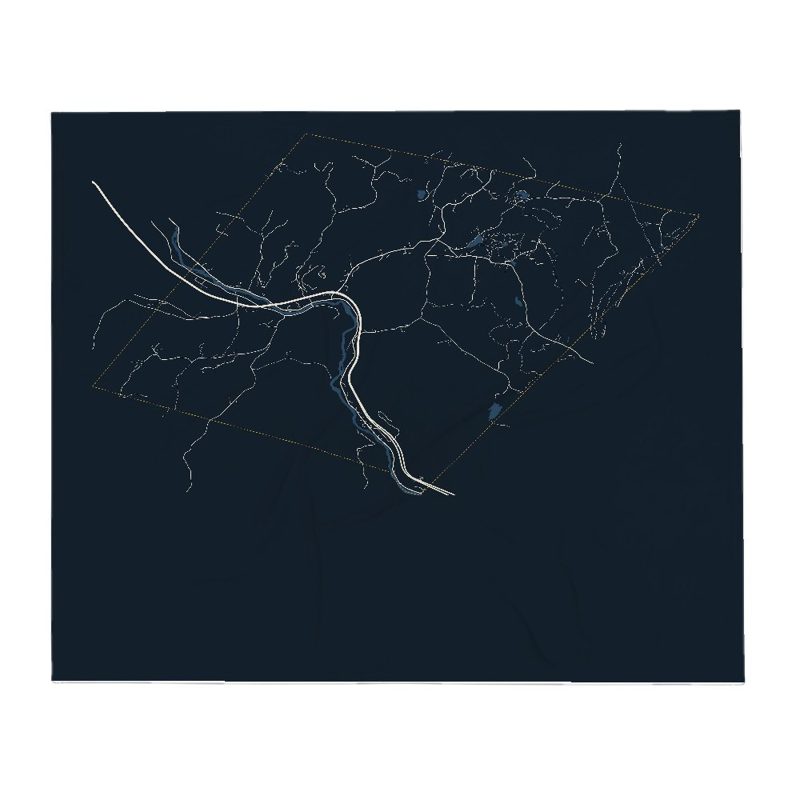
Soft fleece, 50″×60″
20 oz, double-wall stainless
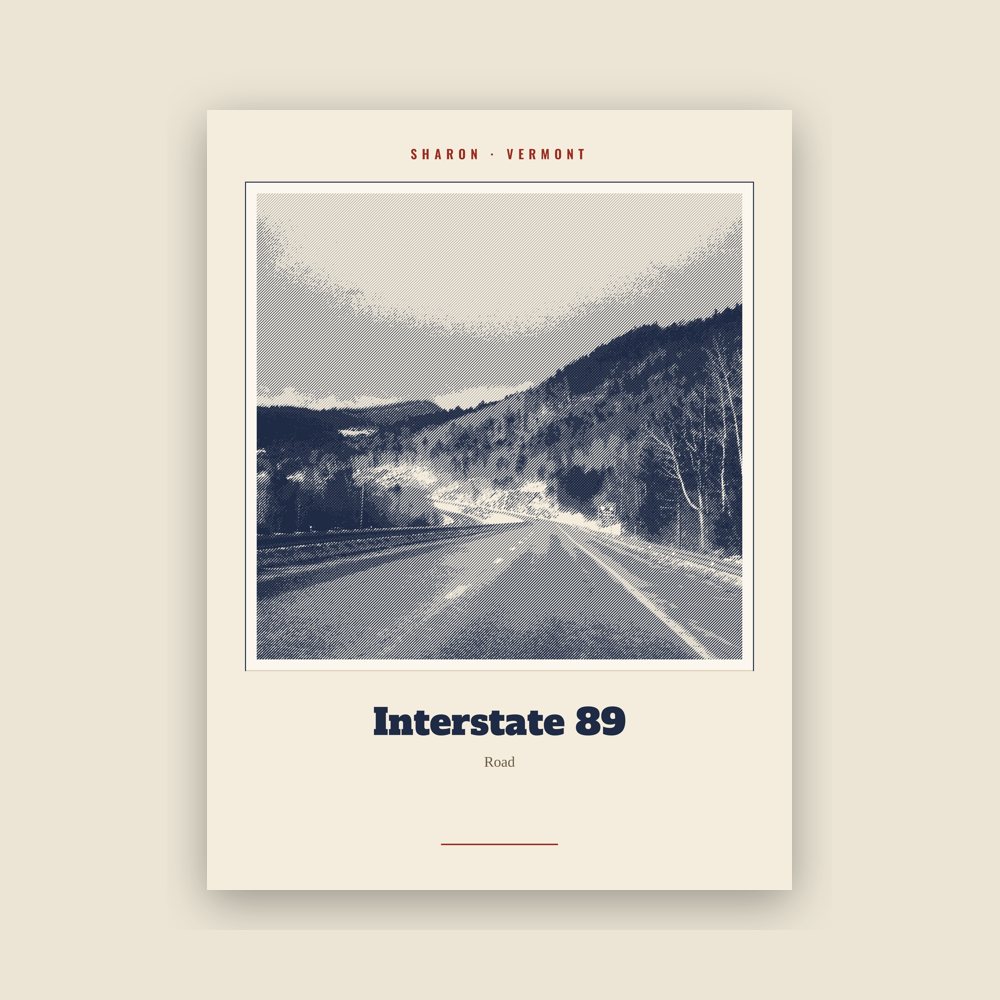
Archival matte print of a local landmark, credited to its photographer
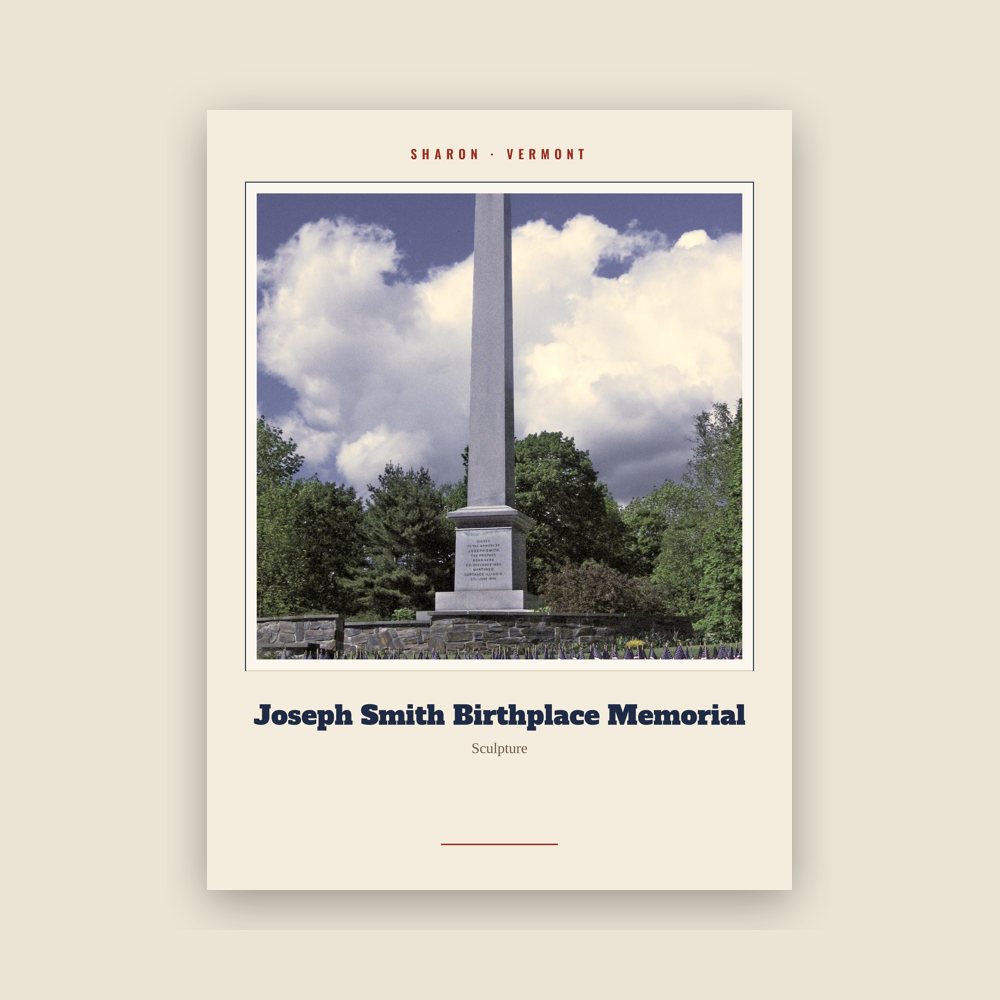
Archival matte print of a local landmark, credited to its photographer
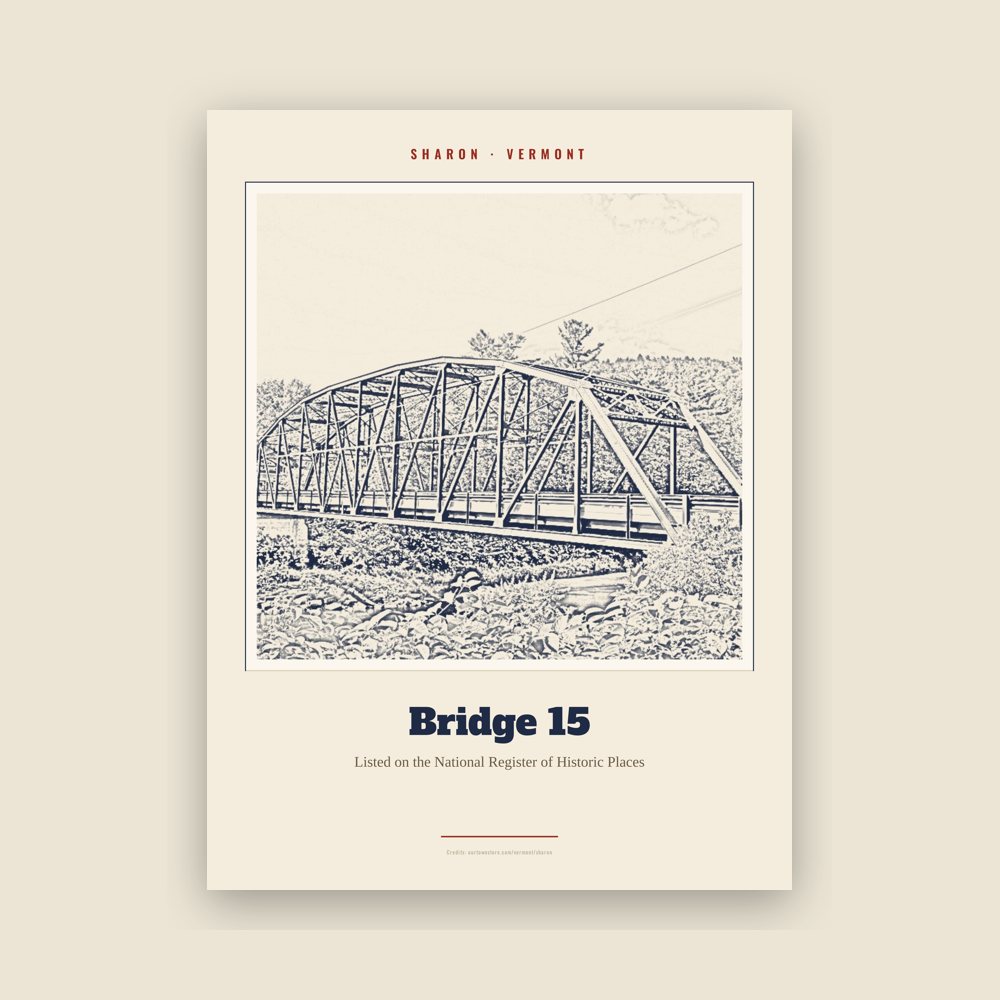
Archival matte print of a local landmark, credited to its photographer
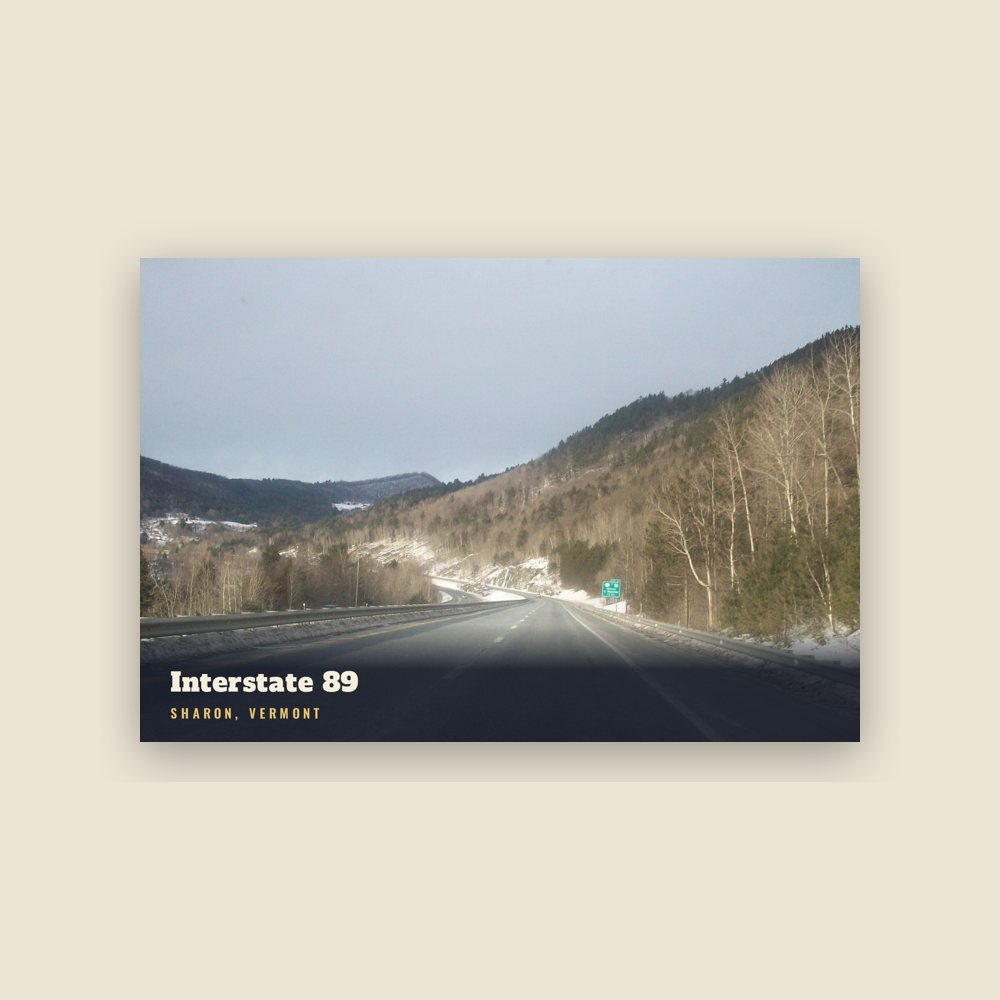
6″×4″ postcard, glossy front
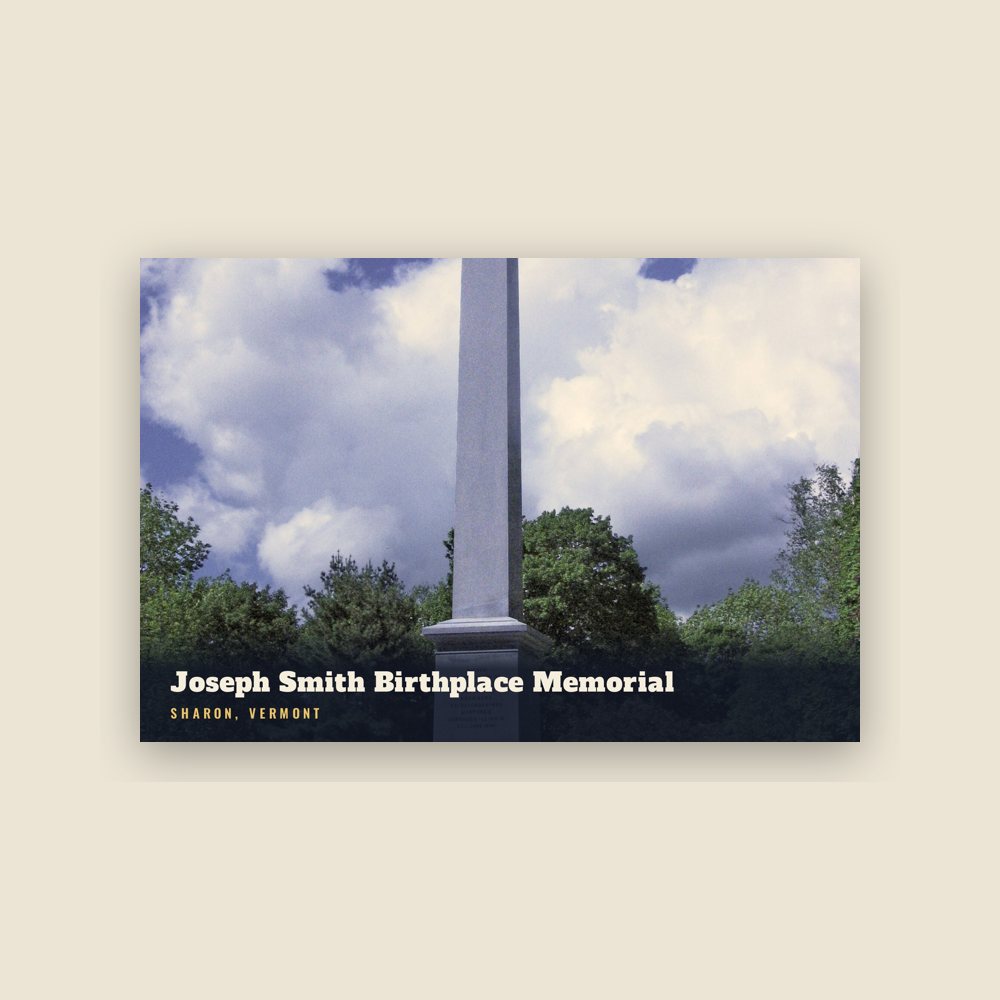
6″×4″ postcard, glossy front
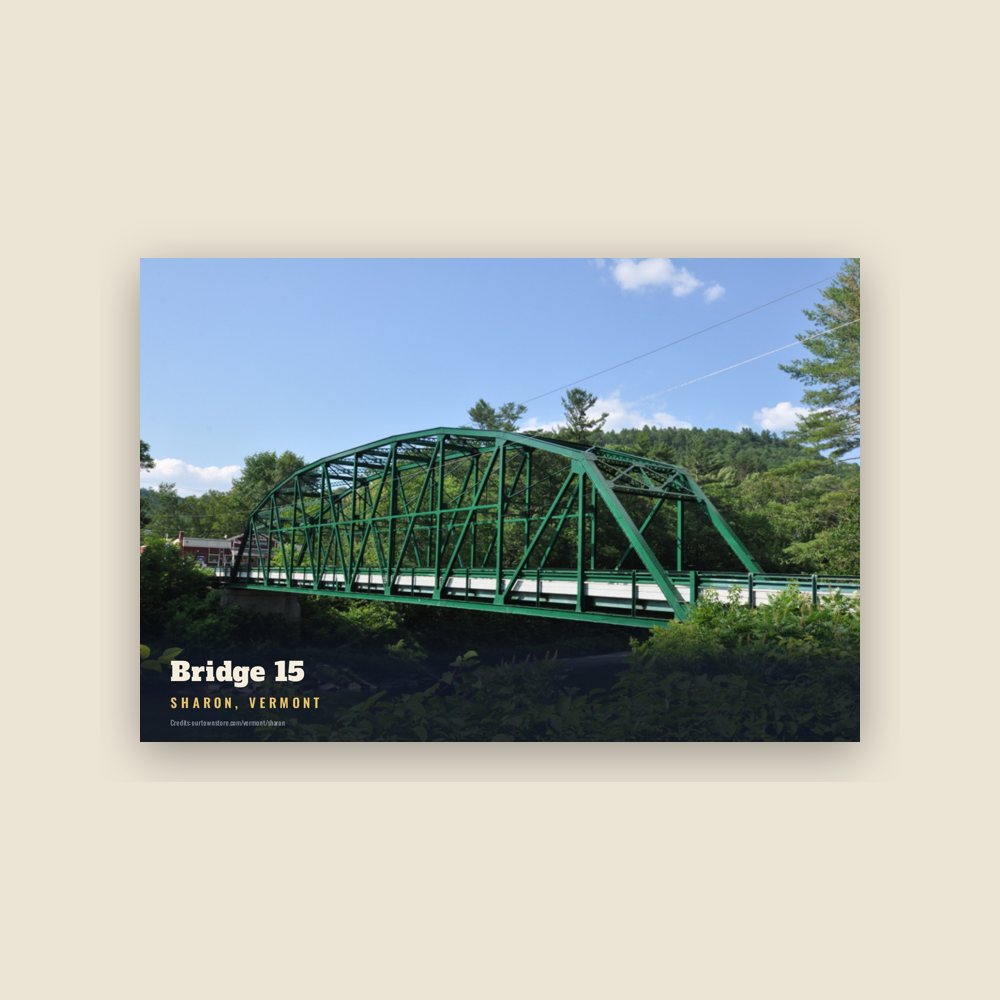
6″×4″ postcard, glossy front
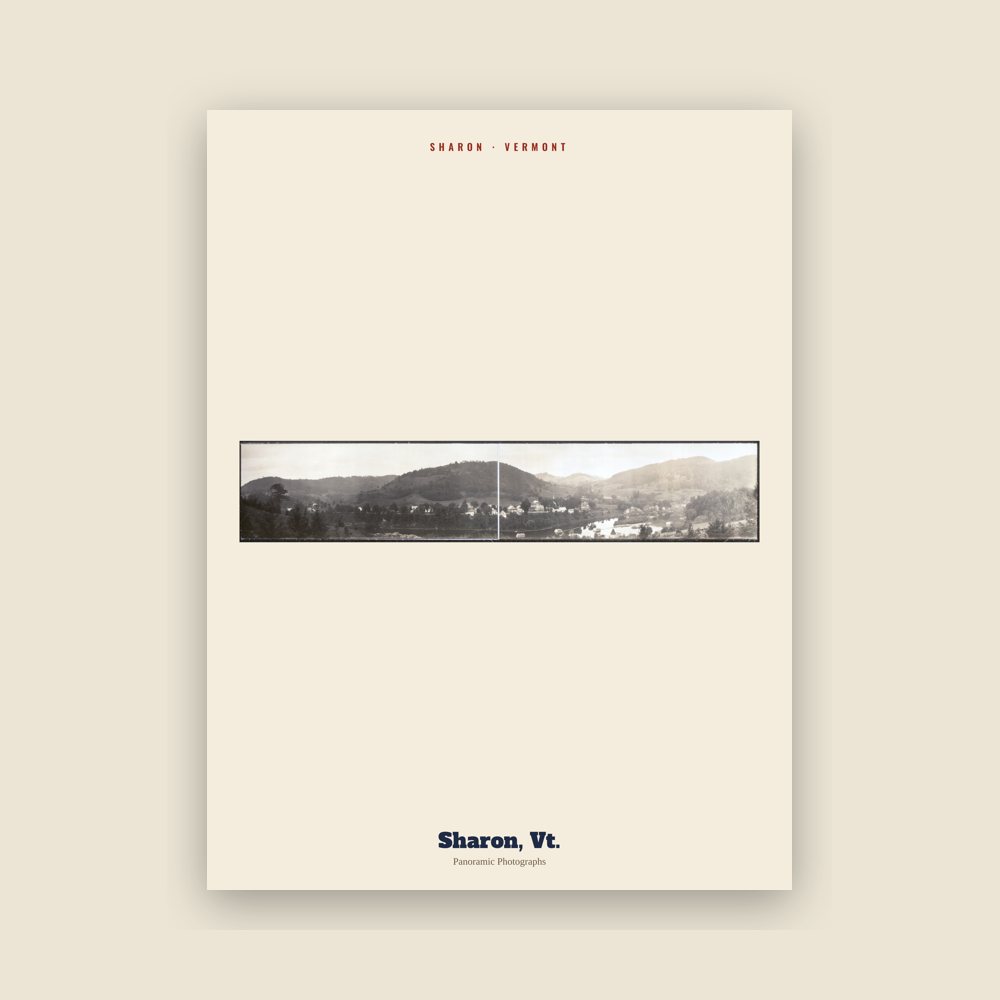
From the Library of Congress collections: a historic survey drawing or photograph of the town
Population 2010: 1,502 → 2020: 1,560
From Wikidata (CC0).
One of the New Hampshire grants, the township was created on August 17, 1761, by a royal charter which King George III of the United Kingdom issued to Governor Benning Wentworth. It was granted to John Taylor and 61 others, many from Sharon, Connecticut. The town was first settled about 1765 by Robert Havens and family. In 1780 during the Revolution, the village was attacked in the Royalton Raid, when a combined British-Mohawk force attacked and burnt the town.
Although the surface of the town is broken, the intervales contain fertile soil, and farming became an important industry. On June 26, 1848, the Vermont Central Railroad opened from White River Junction to Bethel, traversing Sharon and accelerating its development. The White River and its tributaries provided water power for mills. By 1859, when the population reached 1,240, Sharon had 12 sawmills, a gristmill, and a bobbin factory. Many of Sharon's most historic homes still line the White River.
Adapted (trimmed) from the Wikipedia article Sharon, Vermont, revision 1379123130 by its contributors, licensed CC BY-SA 4.0.
We share a part of every Sharon sale with local partners, and we'd love to print from your collection. Old photographs, maps and postcards make the best keepsakes.
Partner with us