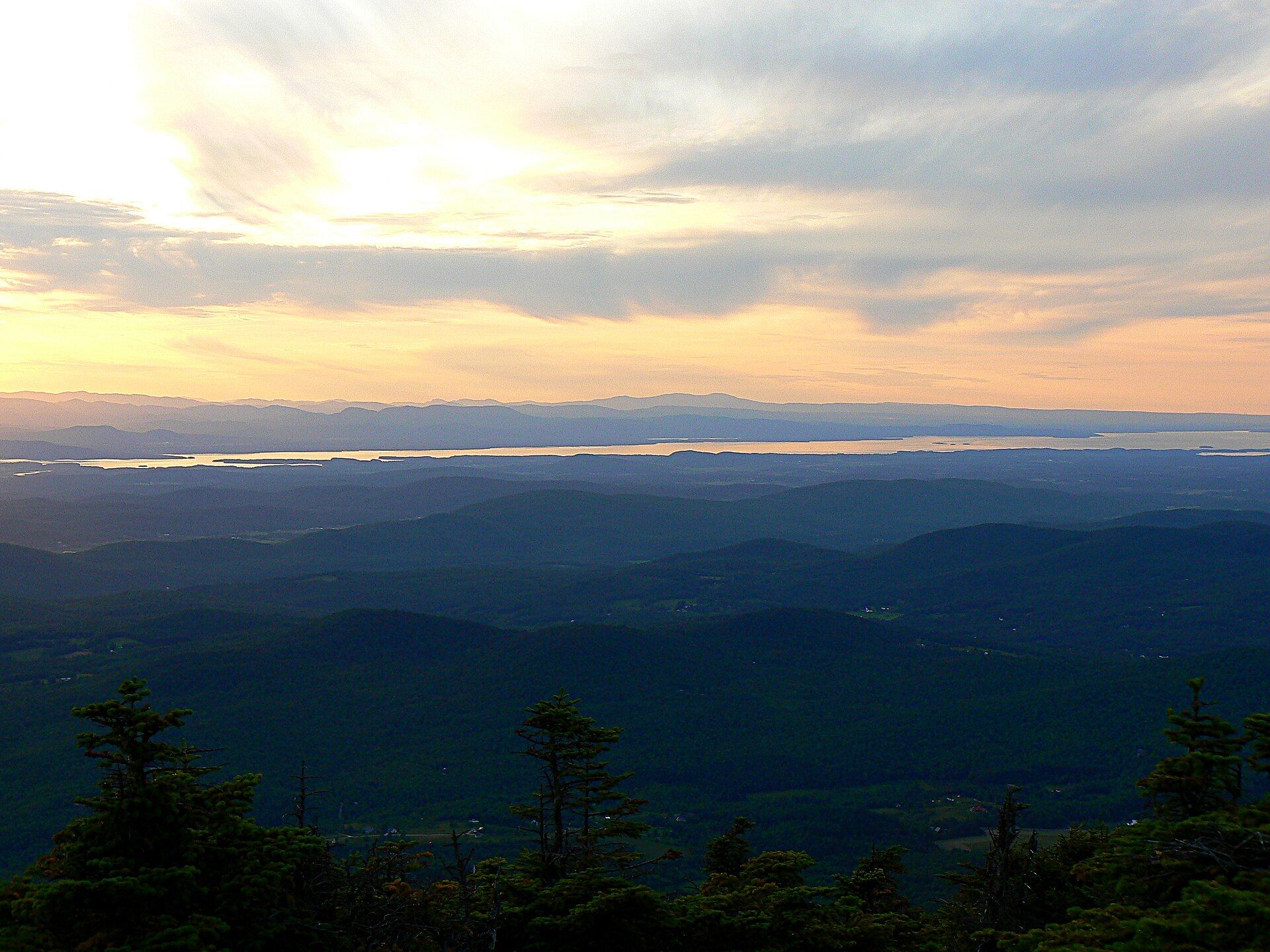
Lincoln is at the base of Mount Abraham in the Green Mountains. Landmarks include Lincoln Peak, Presidential Range and Lincoln Gap. Lincoln is the birthplace of Abram Hatch, politician.
Every piece is drawn from Lincoln's own map data and historic archives, then printed and shipped from the USA when you order. No two towns look alike.
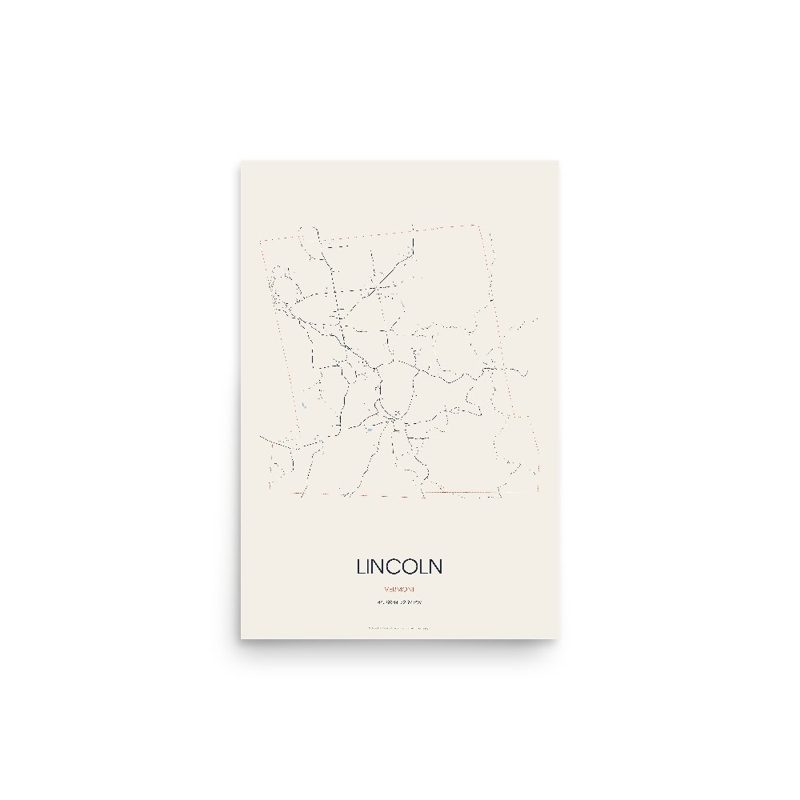
Every road in town, on archival matte paper
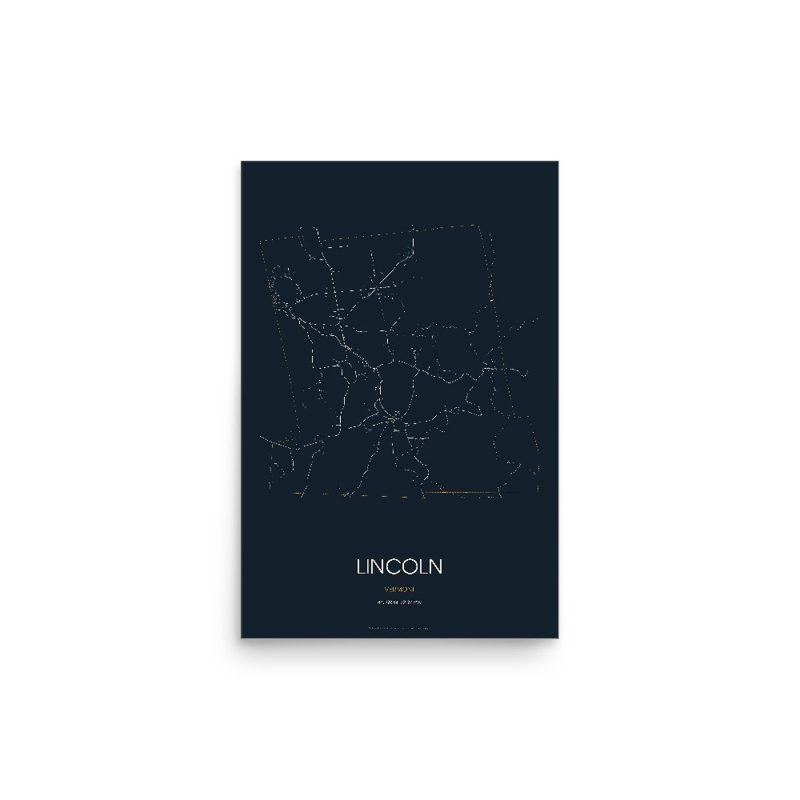
The same map, in navy and silver
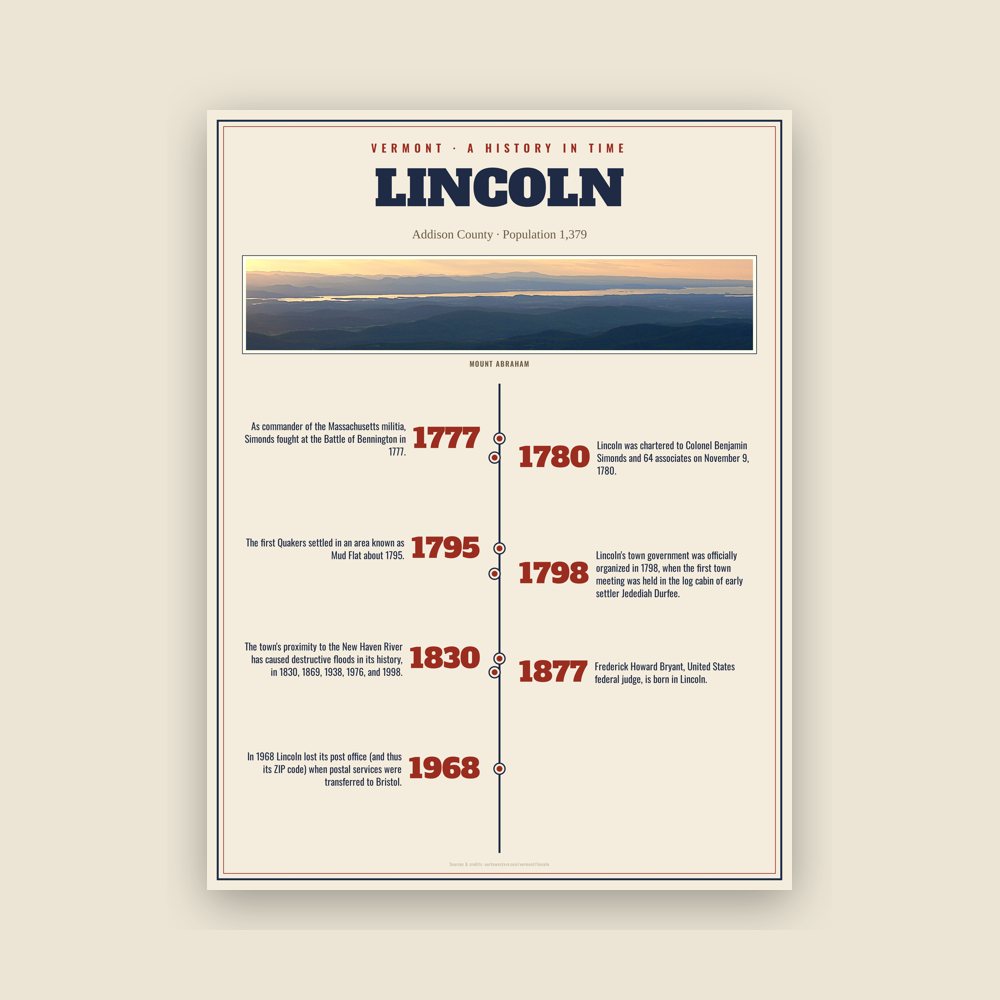
The town's story in dates, from its own records, for home or classroom
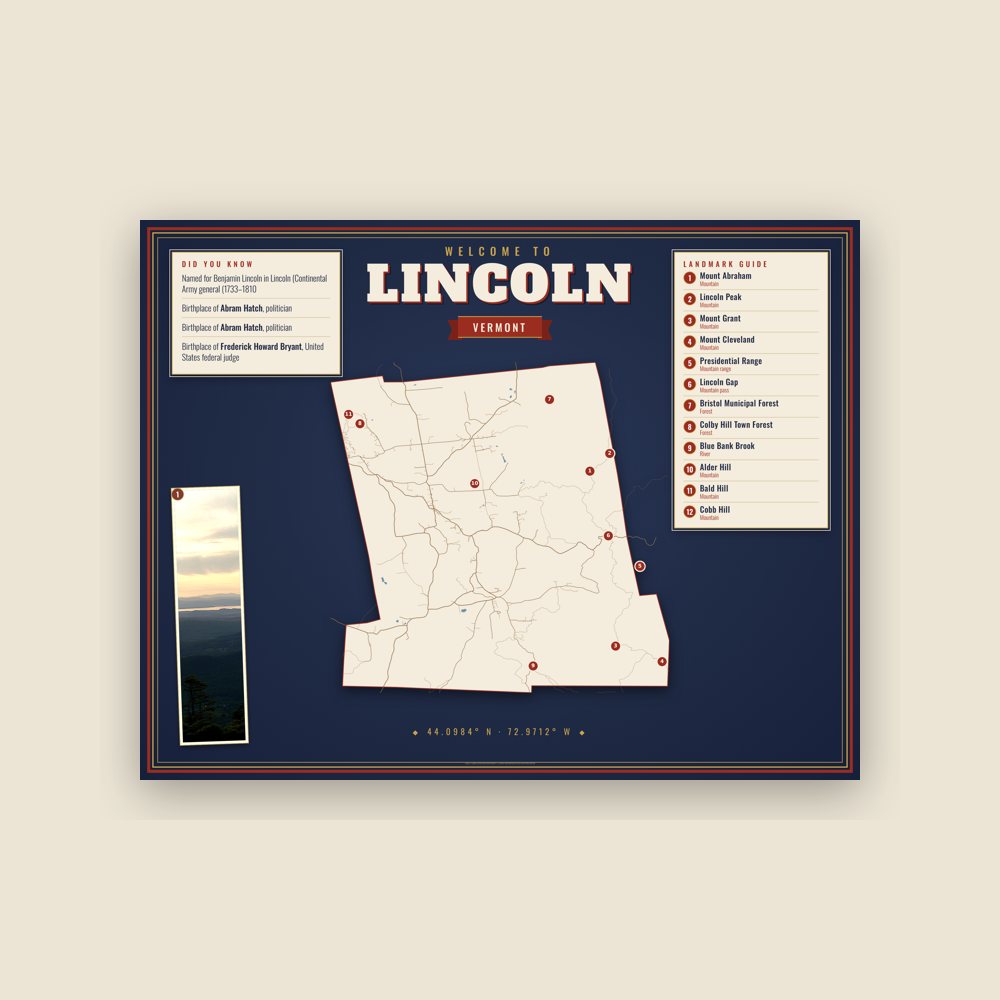
Map of local landmarks, washable fabric
Heavy-blend fleece, street map printed on the back
Soft Bella+Canvas jersey
Glossy ceramic, dishwasher safe
Ceramic keepsake, gold ribbon
Weatherproof, for the front walk
24″×16″, printed coir-look fibers, rubber back
12″×12″ printed wood, ready to hang
Soft-touch, zip cover
Sturdy all-over-print tote
Glossy top, cork back
Soft fleece, 50″×60″
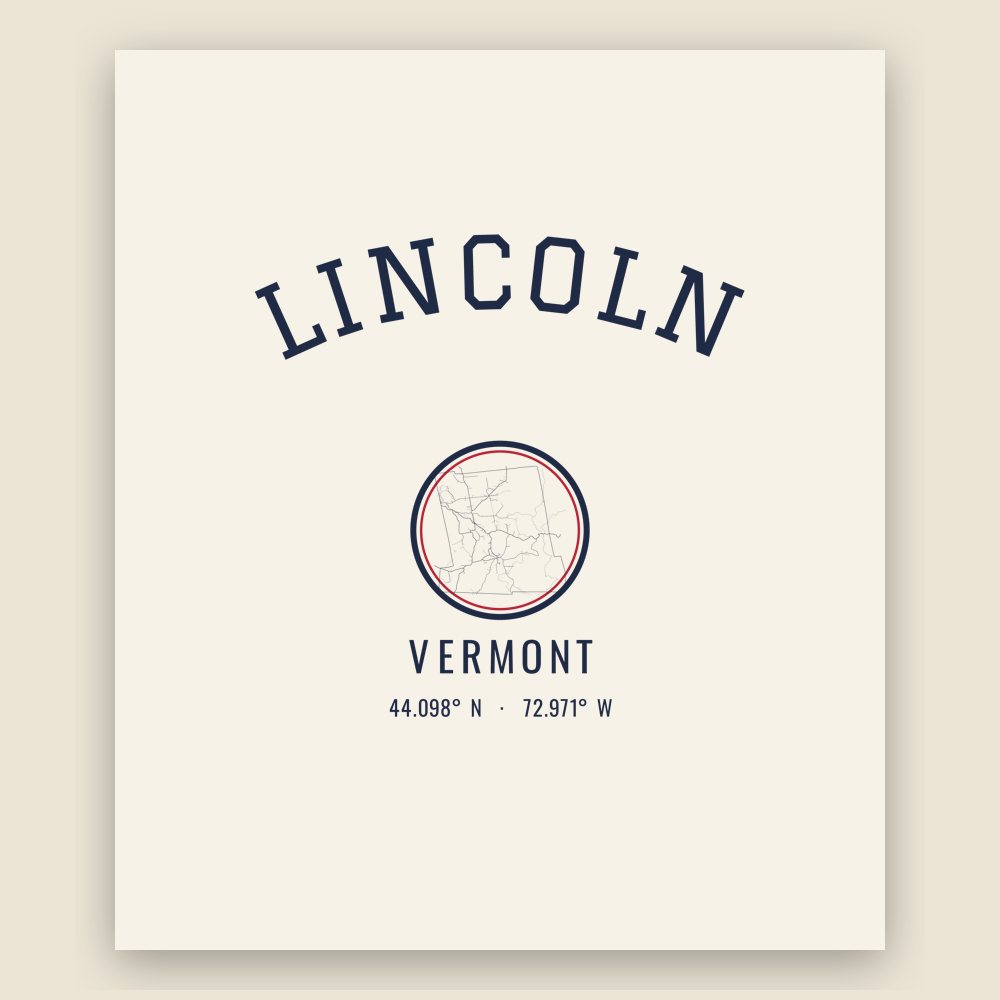
20 oz, double-wall stainless
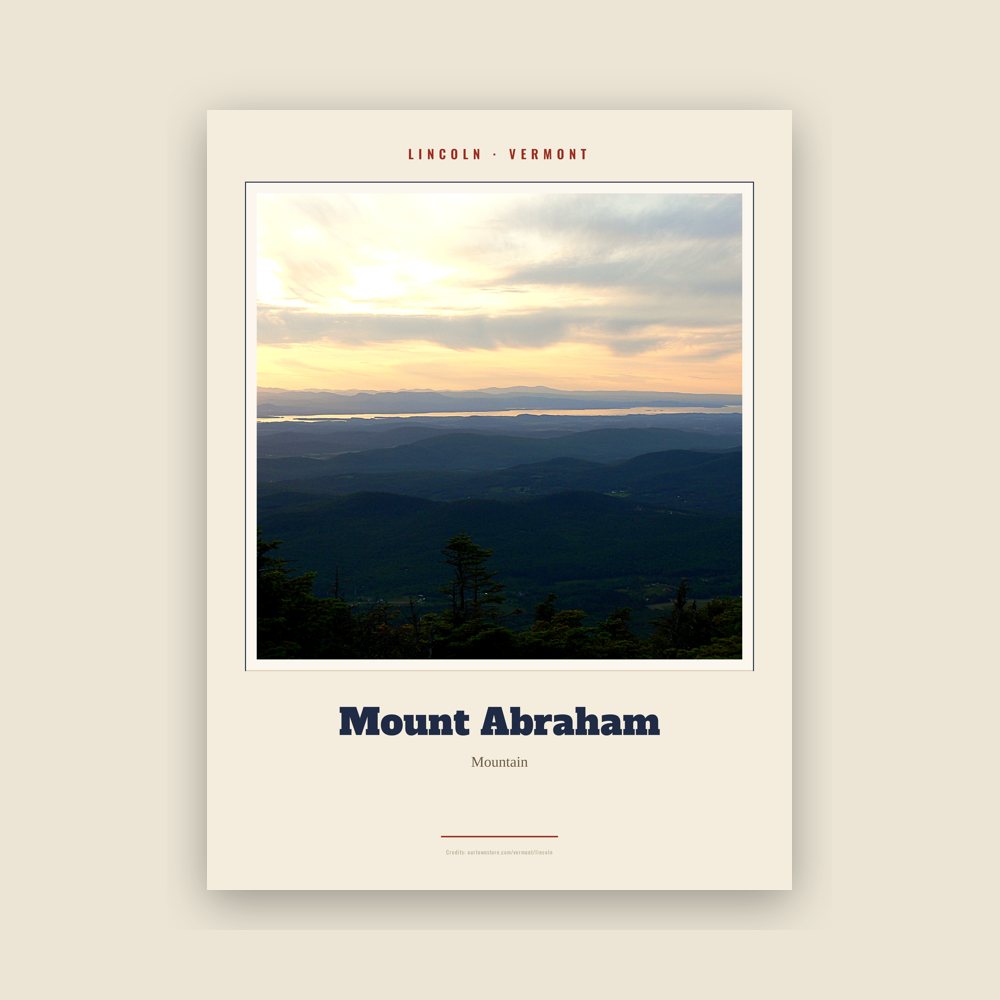
Archival matte print of a local landmark, credited to its photographer
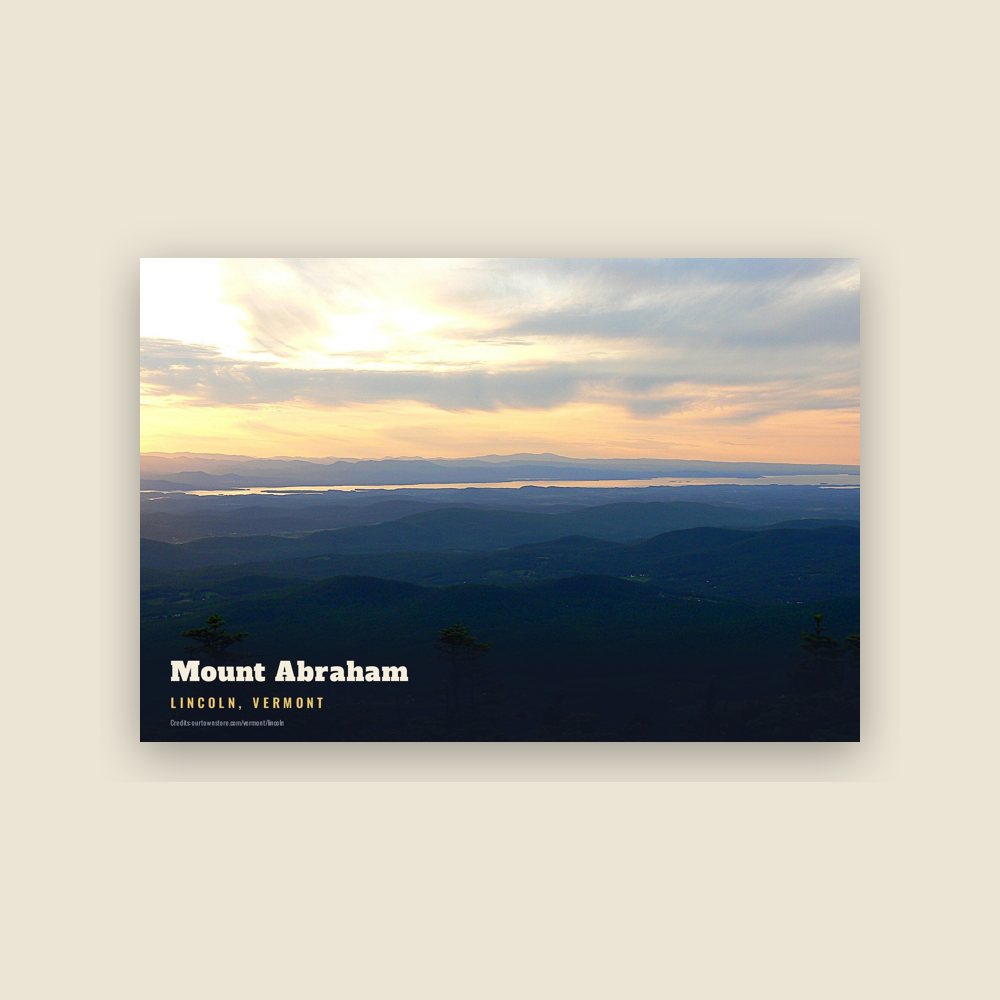
6″×4″ postcard, glossy front
Named for Benjamin Lincoln (Continental Army general (1733–1810)).
Population 2010: 1,271 → 2024: 1,379
From Wikidata (CC0).
Lincoln was chartered to Colonel Benjamin Simonds and 64 associates on November 9, 1780. As commander of the Massachusetts militia, Simonds fought at the Battle of Bennington in 1777. He named the new town in honor of his commanding officer, Major General Benjamin Lincoln, who played a vital role in getting the militia to Vermont. General Lincoln was respected and well liked by his contemporaries.
Like Ferrisburgh and several other Addison County towns, Lincoln was settled by members of the Society of Friends, or Quakers. The first Quakers settled in an area known as Mud Flat about 1795. As other Quakers joined the original group, the area became known as Quaker Stand. The meeting house is gone and the Society has dispersed, but one part of Lincoln village is still called Quaker Street. Lincoln's town government was officially organized in 1798, when the first town meeting was held in the log cabin of early settler Jedediah Durfee.
Until the latter part of the 20th century, Lincoln's economy centered around smallholder agriculture, ironworks, and mills. The earliest export products were potash and timber, sold by homesteading farmers after clearing their land. The town's population and economy peaked in the 1880s, when 15 lumber mills in town made shingles and clapboard, employing around 100 men. Dairies and potato farming comprised much of the rest of the town's industry. Lincoln also grew to comprise the settlements of Downingsville and West, South, and Center Lincoln, bringing it to its present area of 44 square miles. The town's proximity to the New Haven River has caused destructive floods in its history, in 1830, 1869, 1938, 1976, and 1998.
In 1919, Lincoln-born businessman Walter S. Burnham left a significant endowment to the town in his will, resulting in the creation of the Burnham Trust, a fund intended to "be expended for educational, charitable, and musical purposes." The Trust provided funding for the construction of Burnham Hall, a community meeting place and formerly the town library, as well as establishing a scholarship fund for future Lincoln students. Burnham Hall remains the site of Lincoln's town meeting.
Lincoln underwent a significant contraction in the mid-20th century, as its resource-based livelihoods dried up and families moved away. Dairy farms were unable to compete with larger, centralized enterprises elsewhere in the state and country. For Lincoln, the industry's death knell came in the 1980s, when the federal government offered to buy out smaller farms in an attempt to raise the price of milk and thereby make the industry more profitable; Lincoln's last dairy closed in 1992. Most of the mills and other industry also closed by the end of the century, though one pallet mill remains in operation. In 1968 Lincoln lost its post office (and thus its ZIP code) when postal services were transferred to Bristol.
In the 21st century, Lincoln's population has rebounded almost to its peak. Its proximity to the Green Mountains, tranquility, and well-supported community services have made it attractive as a residential community. Most working-age adults commute to jobs in neighboring towns, but Lincoln still has a general store, hotel, and multiple small-batch maple syrup producers, with some larger producers (the largest has 35,000 trees tapped).
Adapted (trimmed) from the Wikipedia article Lincoln, Vermont, revision 1374531166 by its contributors, licensed CC BY-SA 4.0.
We share a part of every Lincoln sale with local partners, and we'd love to print from your collection. Old photographs, maps and postcards make the best keepsakes.
Partner with us