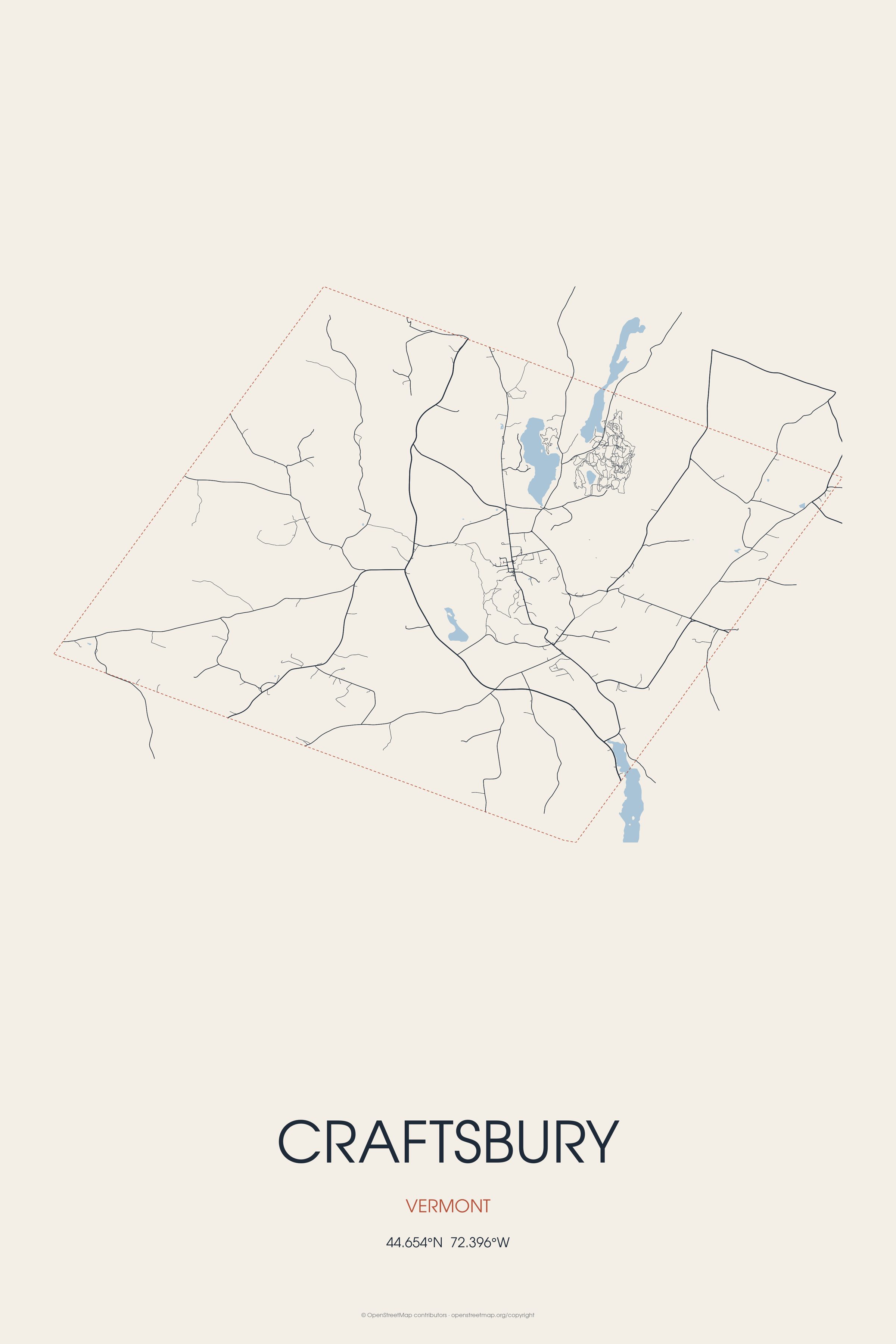
The town includes the unincorporated villages of Craftsbury, Craftsbury Common, Mill Village, and East Craftsbury. Craftsbury is the birthplace of Roger L. Easton, scientist.
Every piece is drawn from Craftsbury's own map data and historic archives, then printed and shipped from the USA when you order. No two towns look alike.
Every road in town, on archival matte paper
The same map, in navy and silver
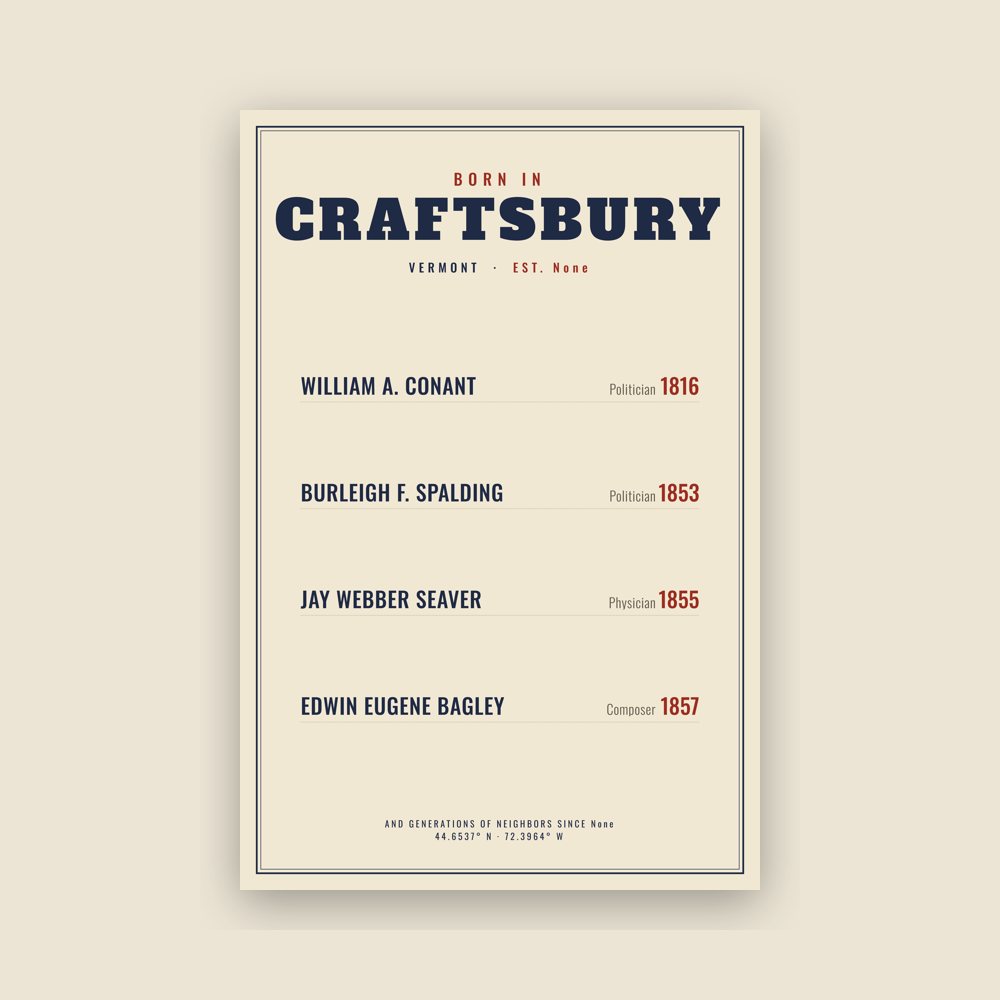
Famous natives, by birth year
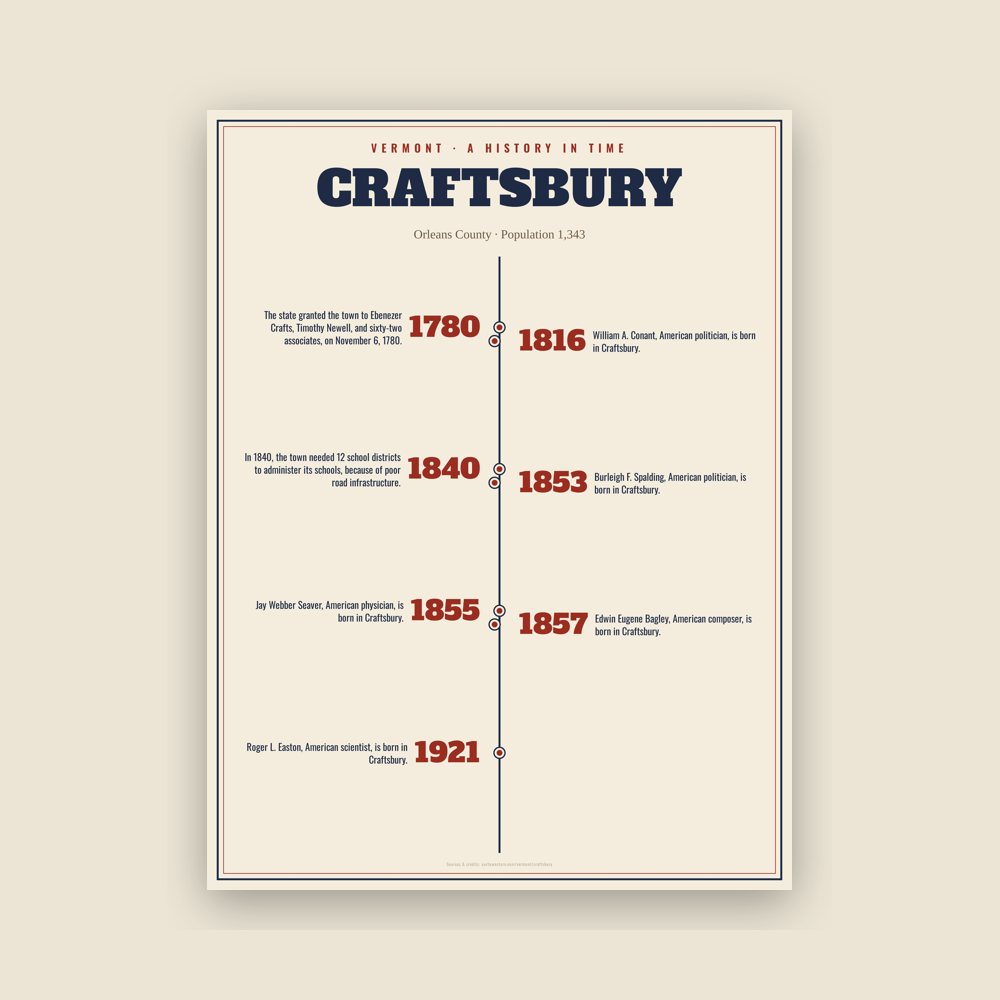
The town's story in dates, from its own records, for home or classroom
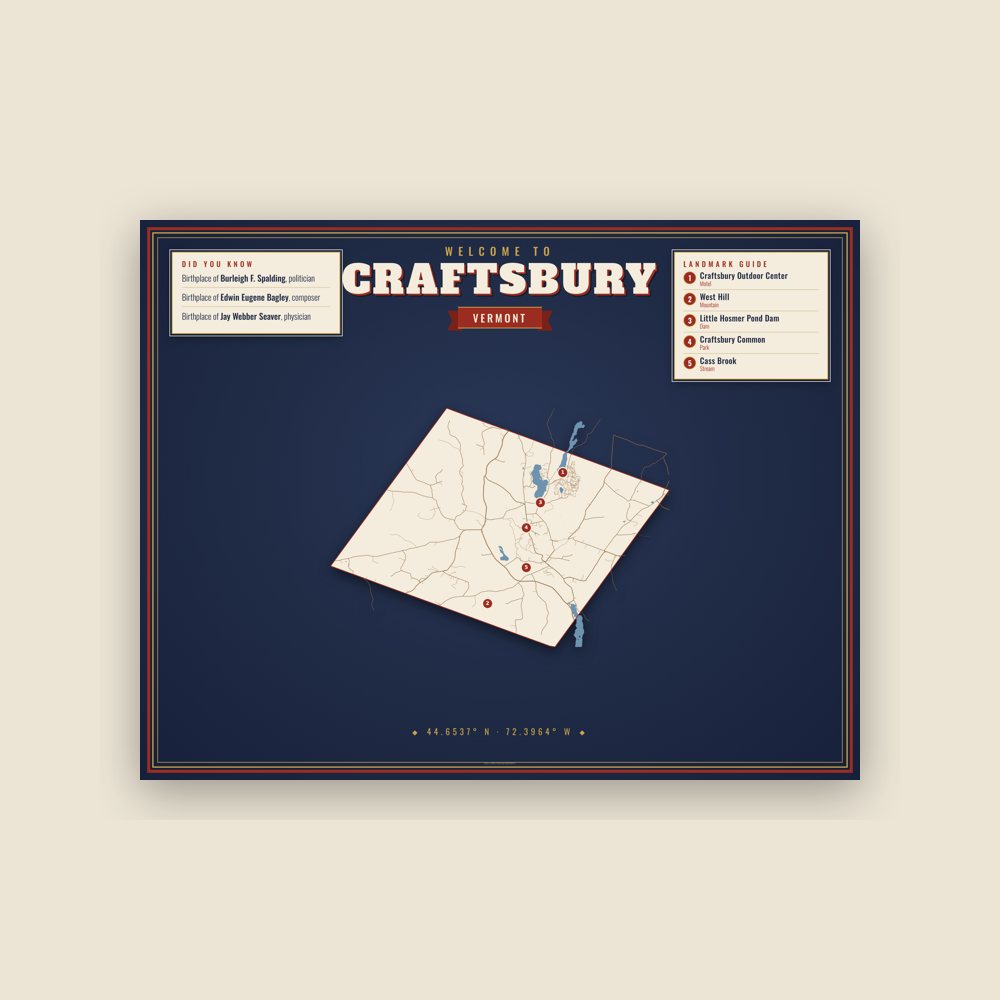
Map of local landmarks, washable fabric
Heavy-blend fleece, street map printed on the back
Soft Bella+Canvas jersey
Glossy ceramic, dishwasher safe
Ceramic keepsake, gold ribbon
Weatherproof, for the front walk
24″×16″, printed coir-look fibers, rubber back
12″×12″ printed wood, ready to hang
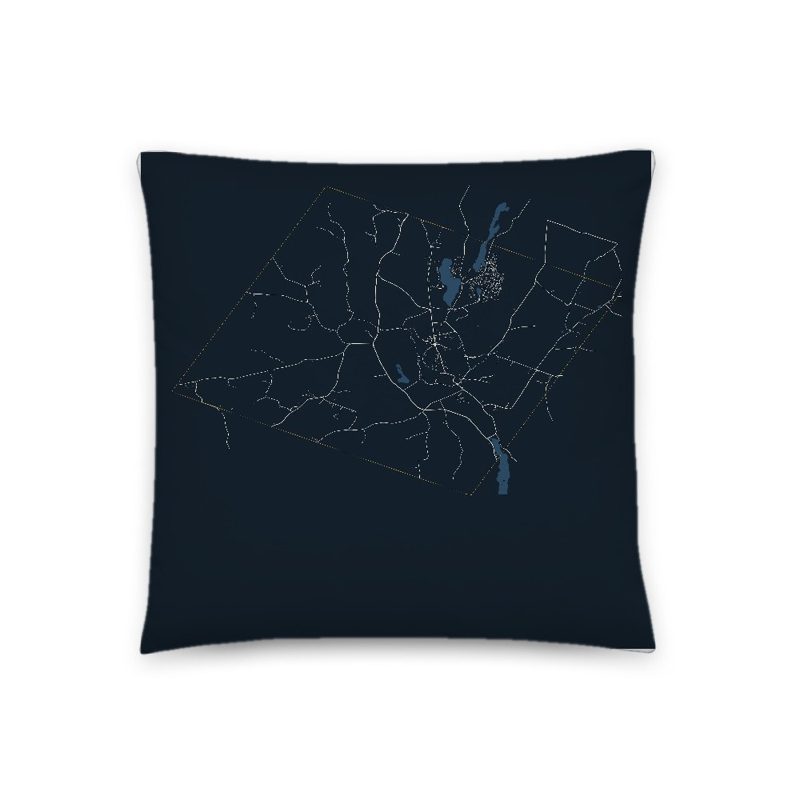
Soft-touch, zip cover
Sturdy all-over-print tote
Glossy top, cork back
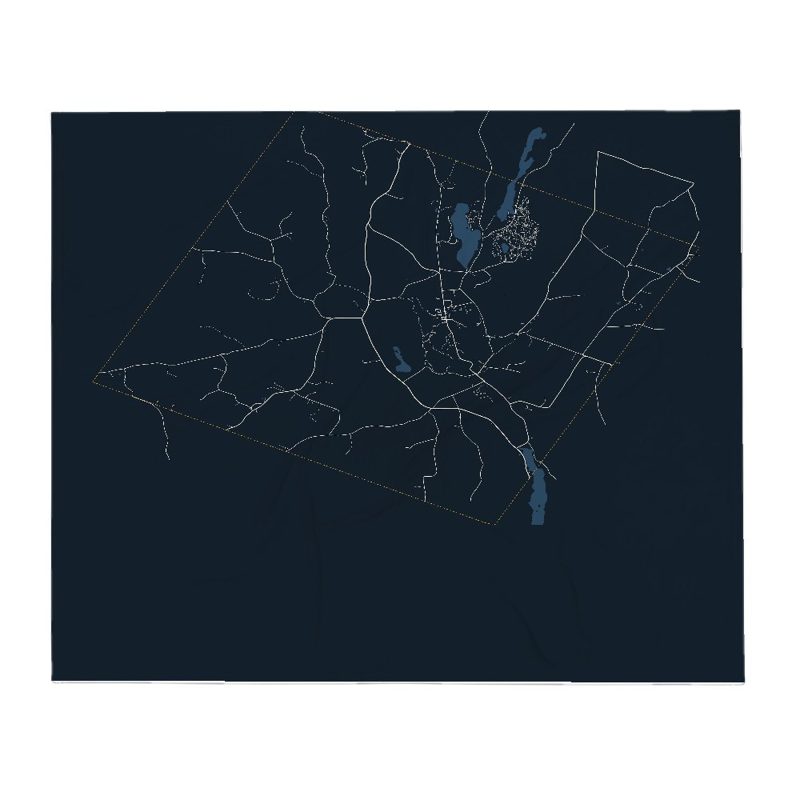
Soft fleece, 50″×60″
20 oz, double-wall stainless
Population 2010: 1,206 → 2020: 1,343
From Wikidata (CC0).
The state granted the town to Ebenezer Crafts, Timothy Newell, and sixty-two associates, on November 6, 1780. They named it Minden. It was changed to Craftsbury, in honor of Ebenezer Crafts, on October 27, 1790. Crafts was the first settler in the county.
North Craftsbury, later known as Craftsbury Common, was the first significant settlement in the town, and was for many years the center of culture and commerce, not only for Craftsbury, but for the greater region as well serving many of the neighboring towns. As mills multiplied around the town in the early 1800s additional settlements were made at Mill Village and in Craftsbury Village, while a predominantly Scottish settlement was made in East Craftsbury.
In 1840, the town needed 12 school districts to administer its schools, because of poor road infrastructure. There were 1,200 people, predominately engaged in farming. They owned 333 horses, 1,718 cattle, 3,166 sheep, and 658 pigs. They produced 47,906 pounds (21,730 kg) of potatoes, 14,398 US bushels (507,400 L; 115,180 US dry gal; 111,610 imp gal) oats, 5,705 US bushels (201,000 L; 45,640 US dry gal; 44,220 imp gal) of other crops, 3,171 short tons (2,877 t) of hay, and 35,412 pounds (16,063 kg) of maple sugar. The town had two gristmills, a hulling mill, two carding machine operations, ten sawmills, two fulling mills, three carriage makers, and one oil mill.
Adapted (trimmed) from the Wikipedia article Craftsbury, Vermont, revision 1378548013 by its contributors, licensed CC BY-SA 4.0.
We share a part of every Craftsbury sale with local partners, and we'd love to print from your collection. Old photographs, maps and postcards make the best keepsakes.
Partner with us