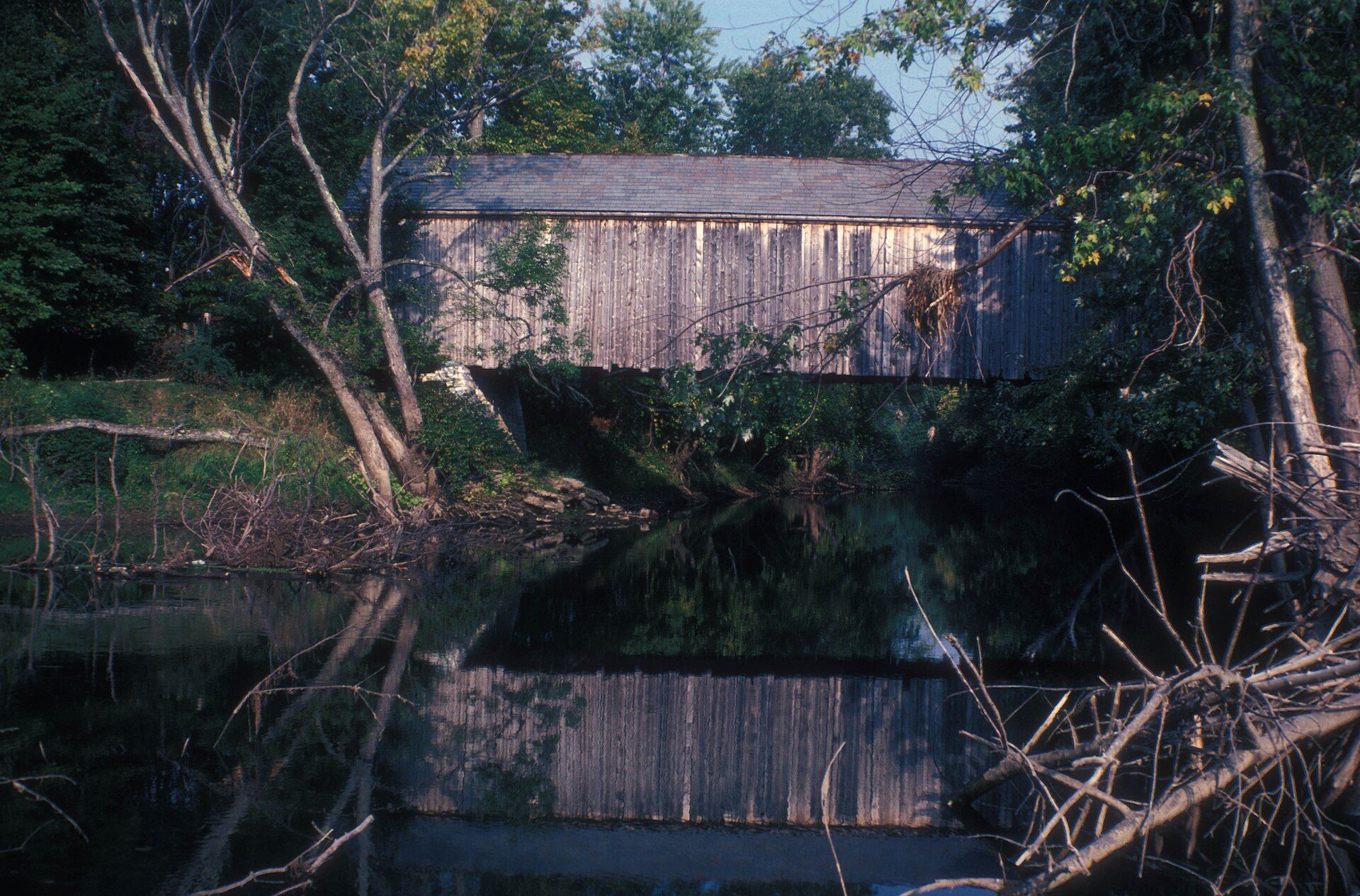
Brandon is a study in early American architecture and Vermont history. Landmarks include Brandon State School, Dean Covered Bridge and Sanderson Covered Bridge. Brandon is the birthplace of Stephen A. Douglas, politician and lawyer.
Every piece is drawn from Brandon's own map data and historic archives, then printed and shipped from the USA when you order. No two towns look alike.

Every road in town, on archival matte paper

The same map, in navy and silver
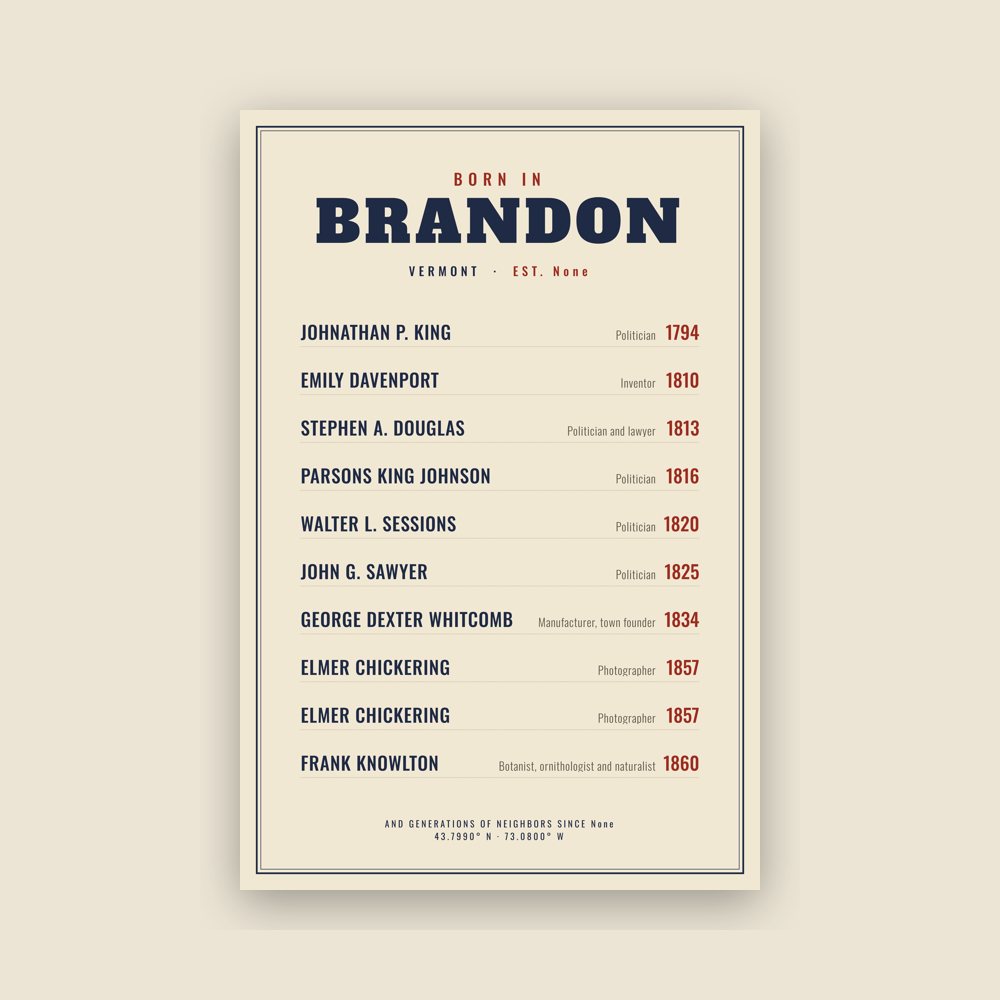
Famous natives, by birth year
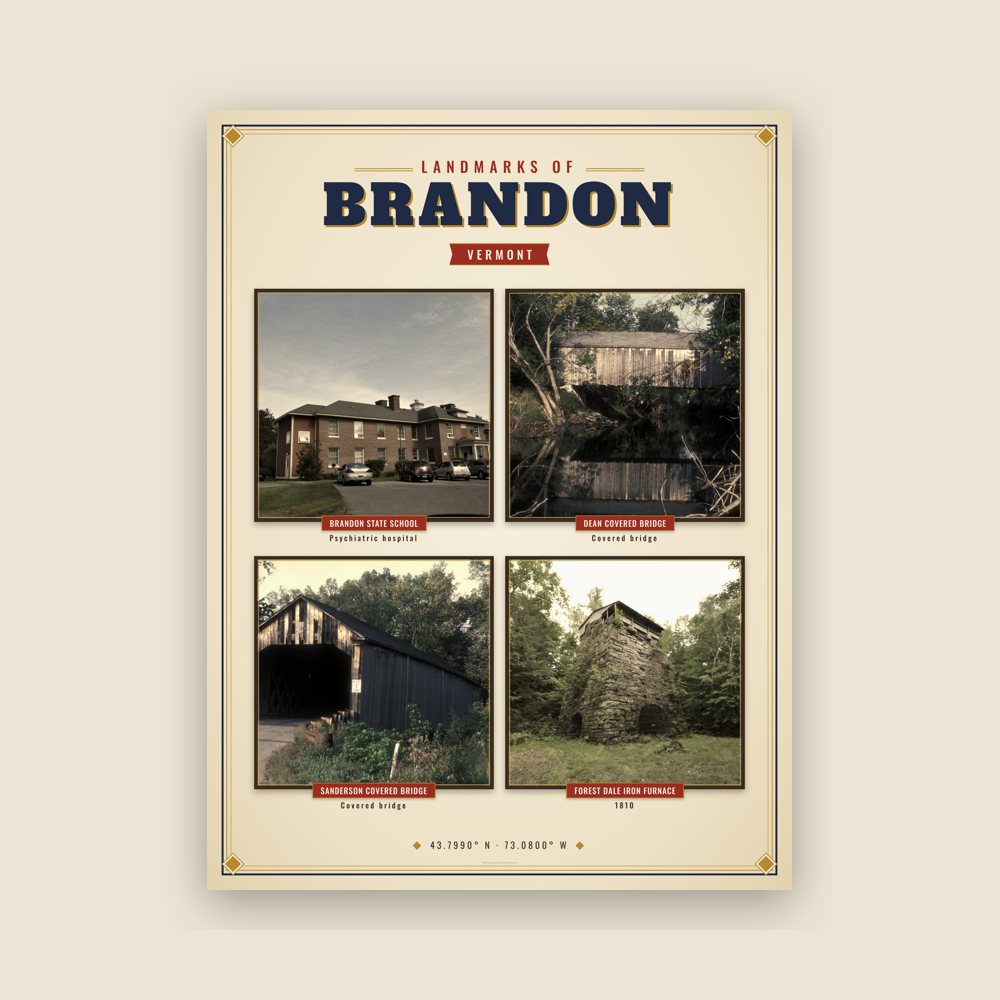
Nine local landmarks, archival matte
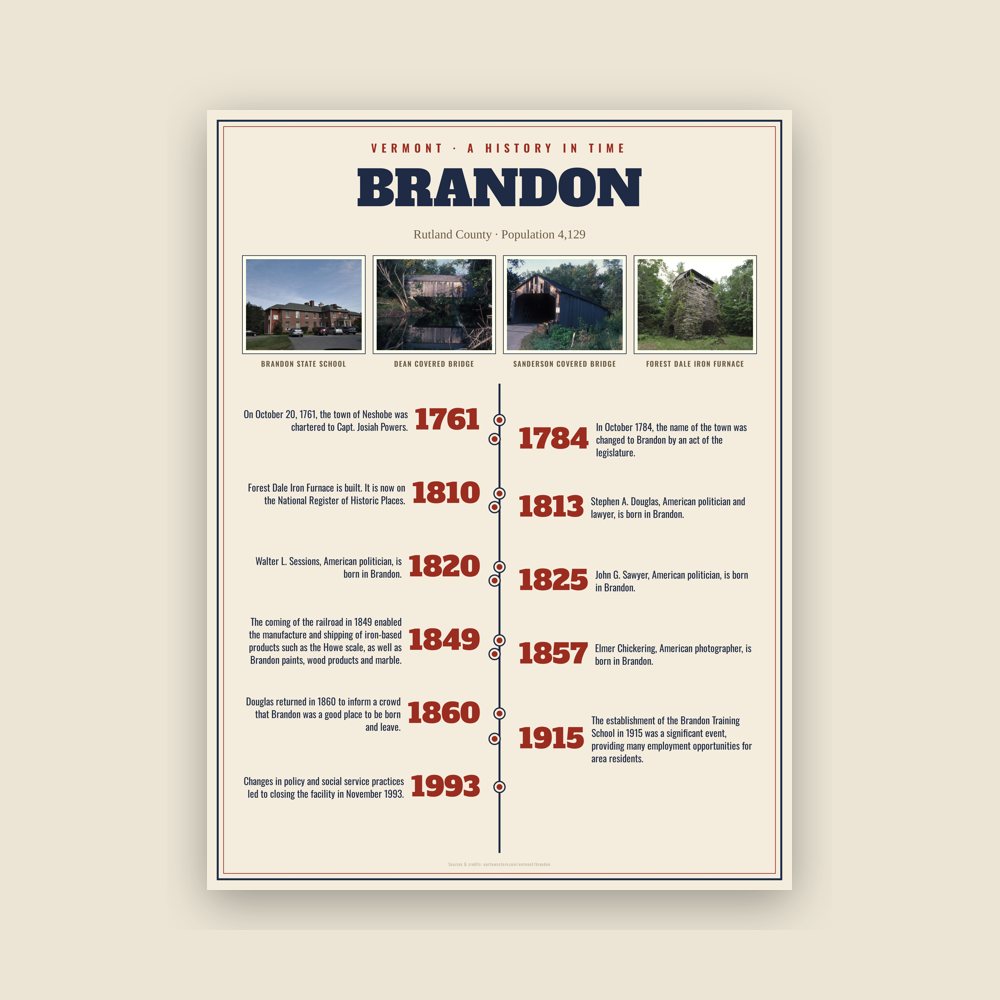
The town's story in dates, from its own records, for home or classroom
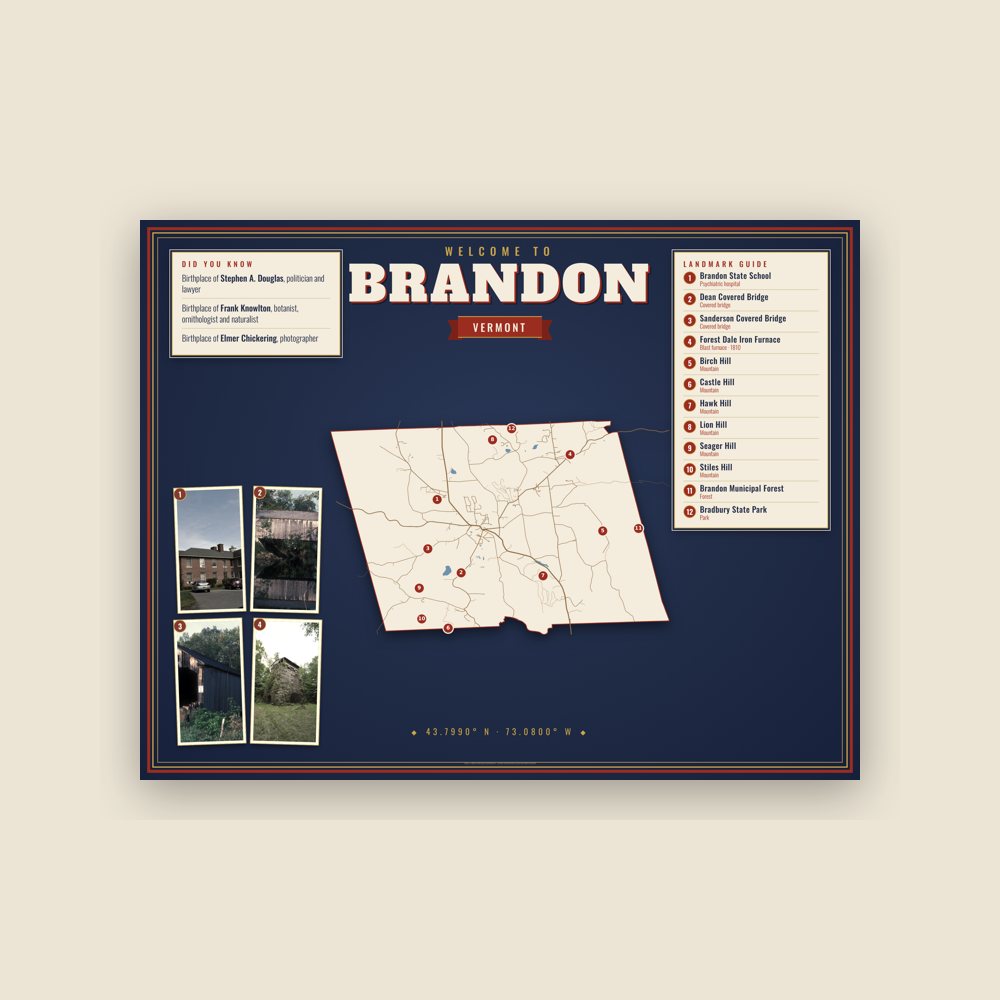
Map of local landmarks, washable fabric

Heavy-blend fleece, street map printed on the back

Soft Bella+Canvas jersey

Glossy ceramic, dishwasher safe
Ceramic keepsake, gold ribbon
Weatherproof, for the front walk
24″×16″, printed coir-look fibers, rubber back
12″×12″ printed wood, ready to hang
Soft-touch, zip cover

Sturdy all-over-print tote

Glossy top, cork back
Soft fleece, 50″×60″
20 oz, double-wall stainless
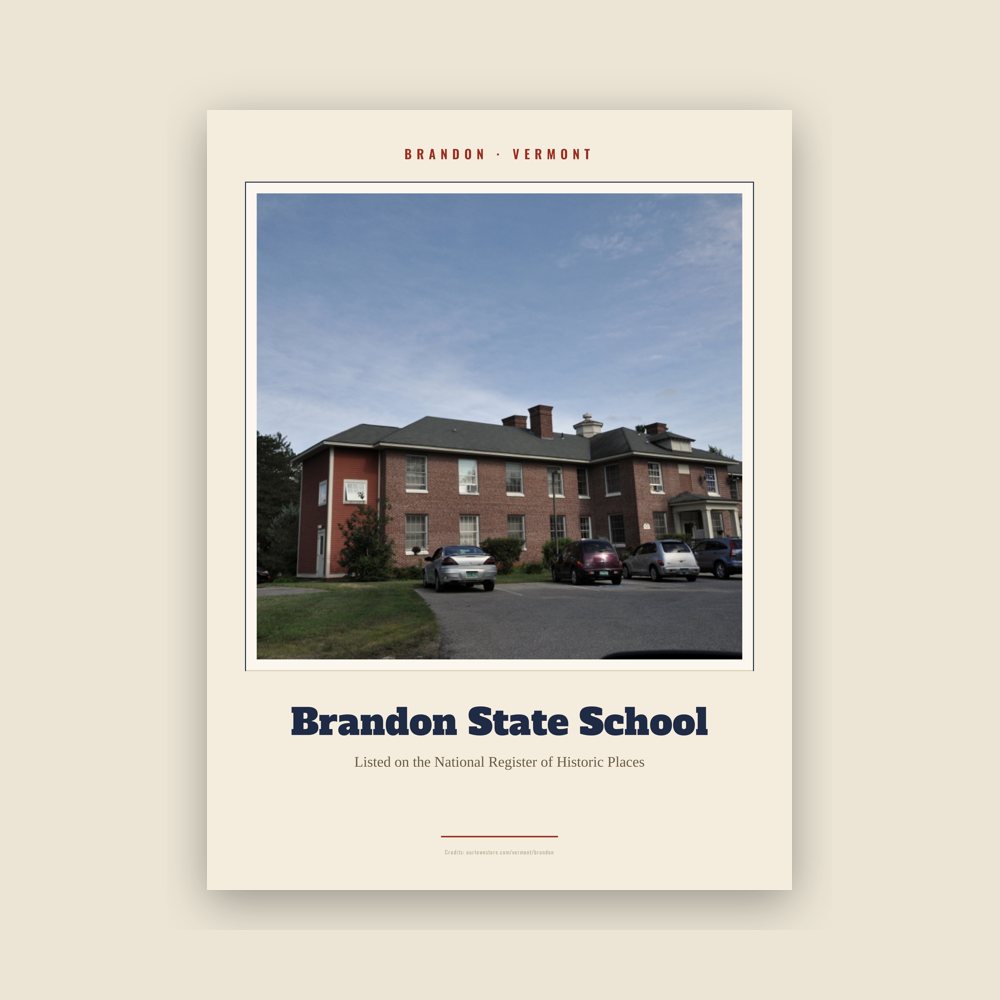
Archival matte print of a local landmark, credited to its photographer
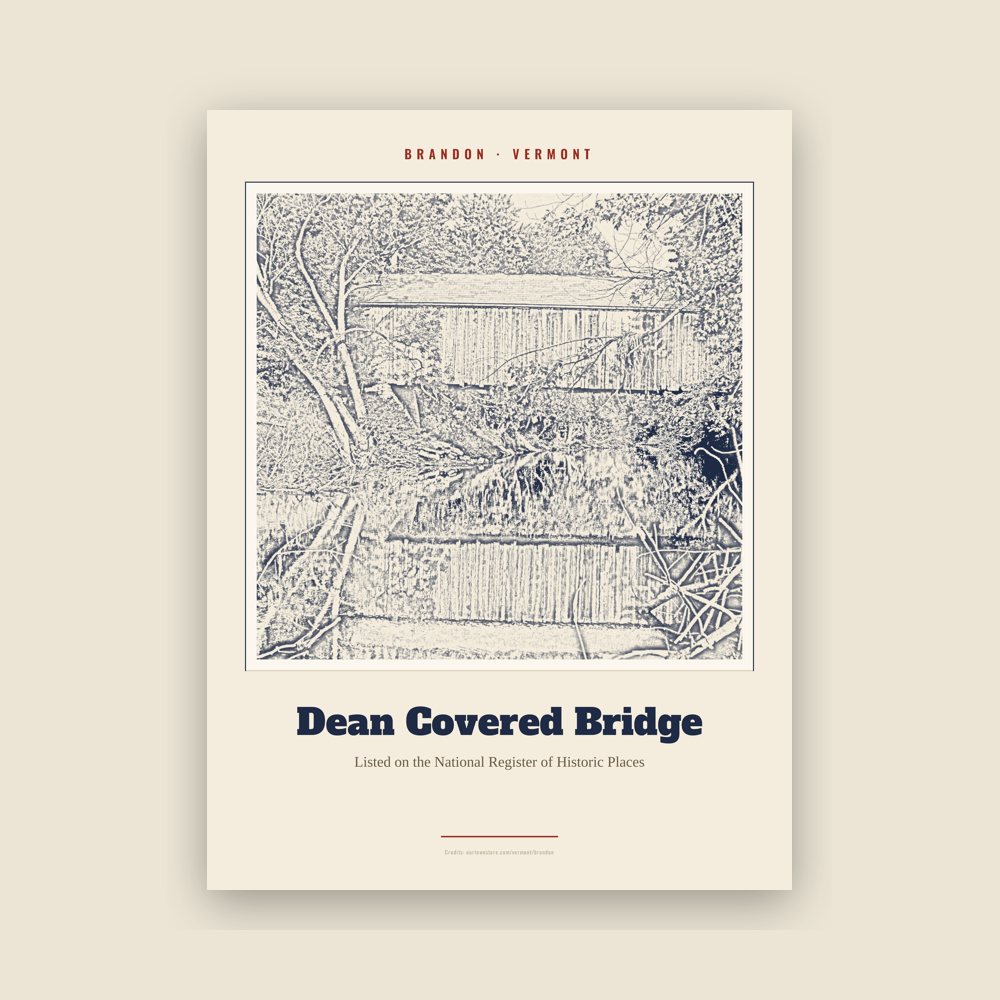
Archival matte print of a local landmark, credited to its photographer
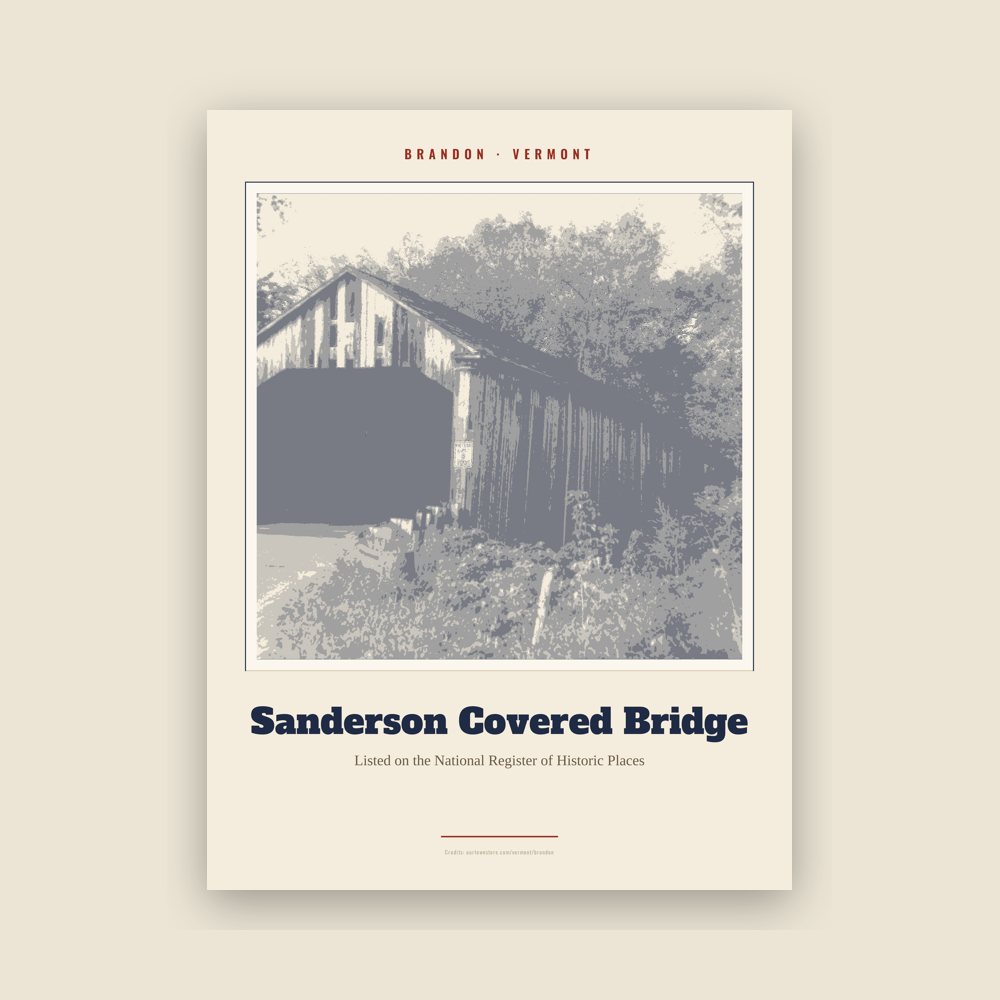
Archival matte print of a local landmark, credited to its photographer
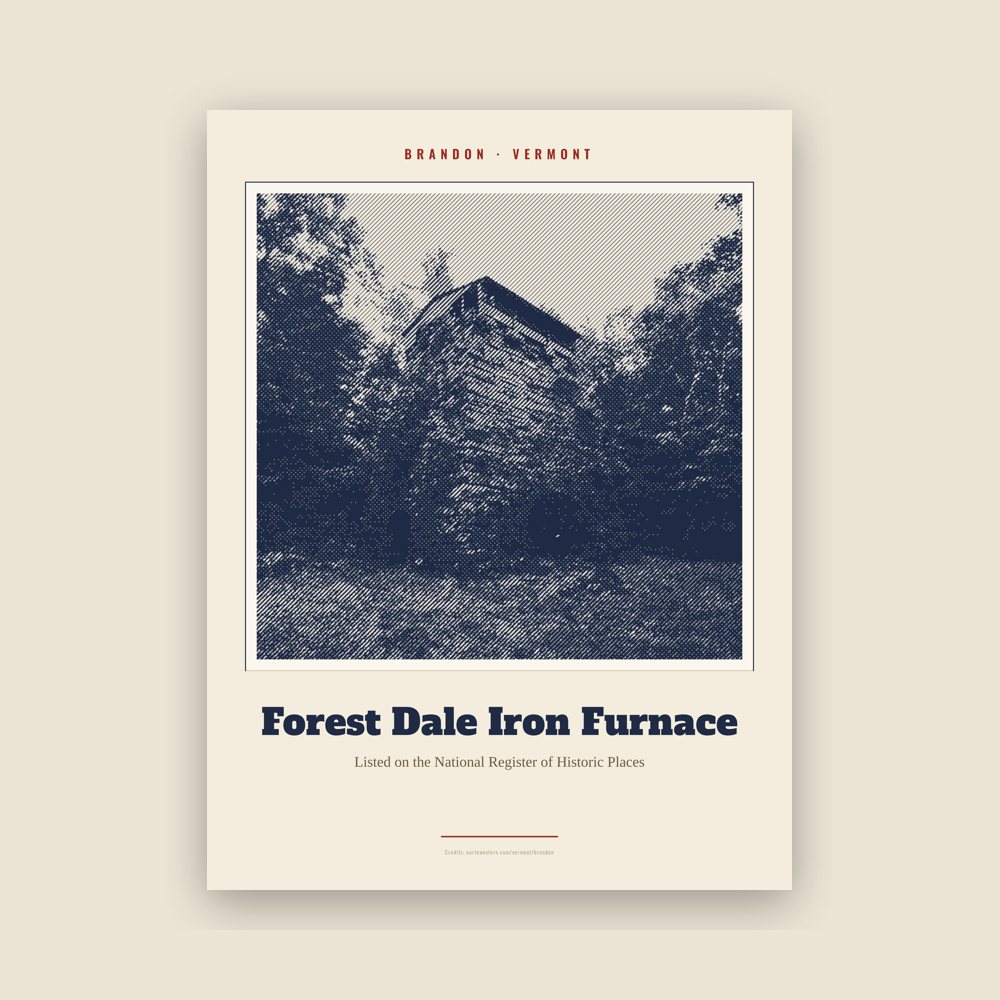
Archival matte print of a local landmark, credited to its photographer
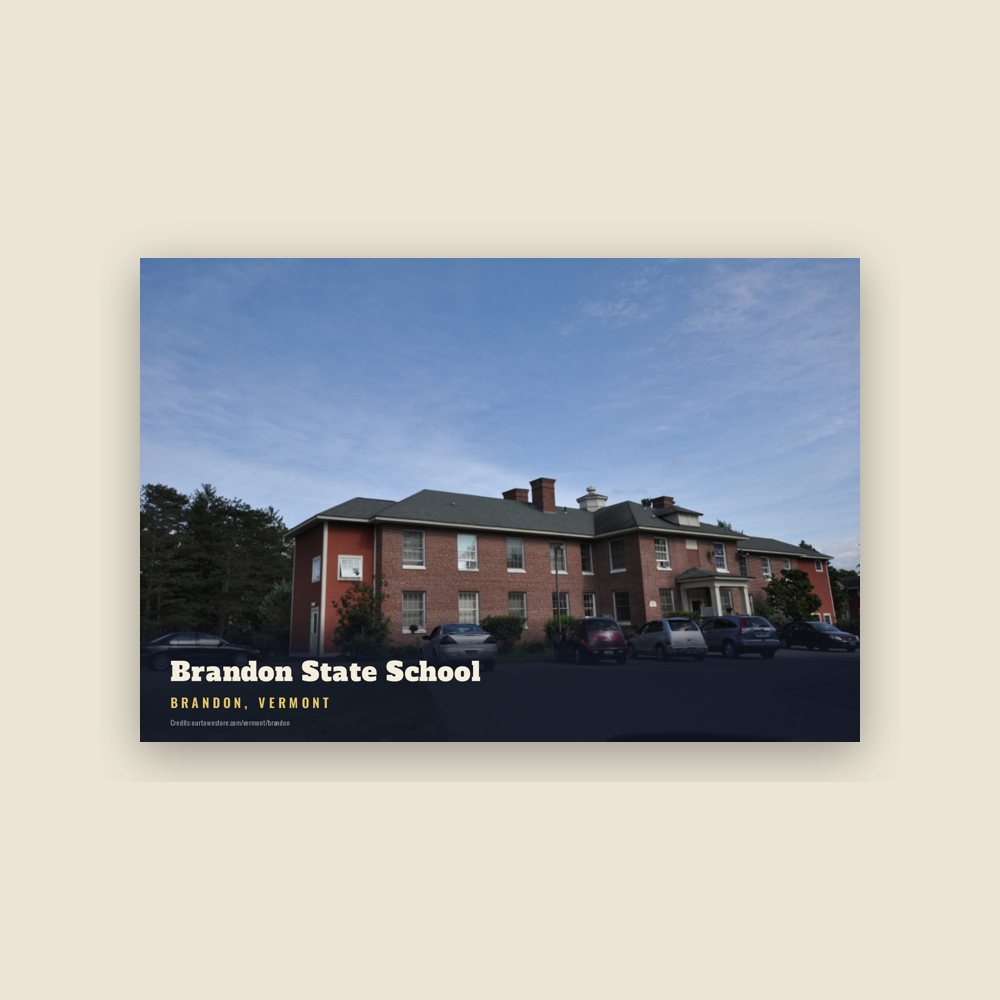
6″×4″ postcard, glossy front
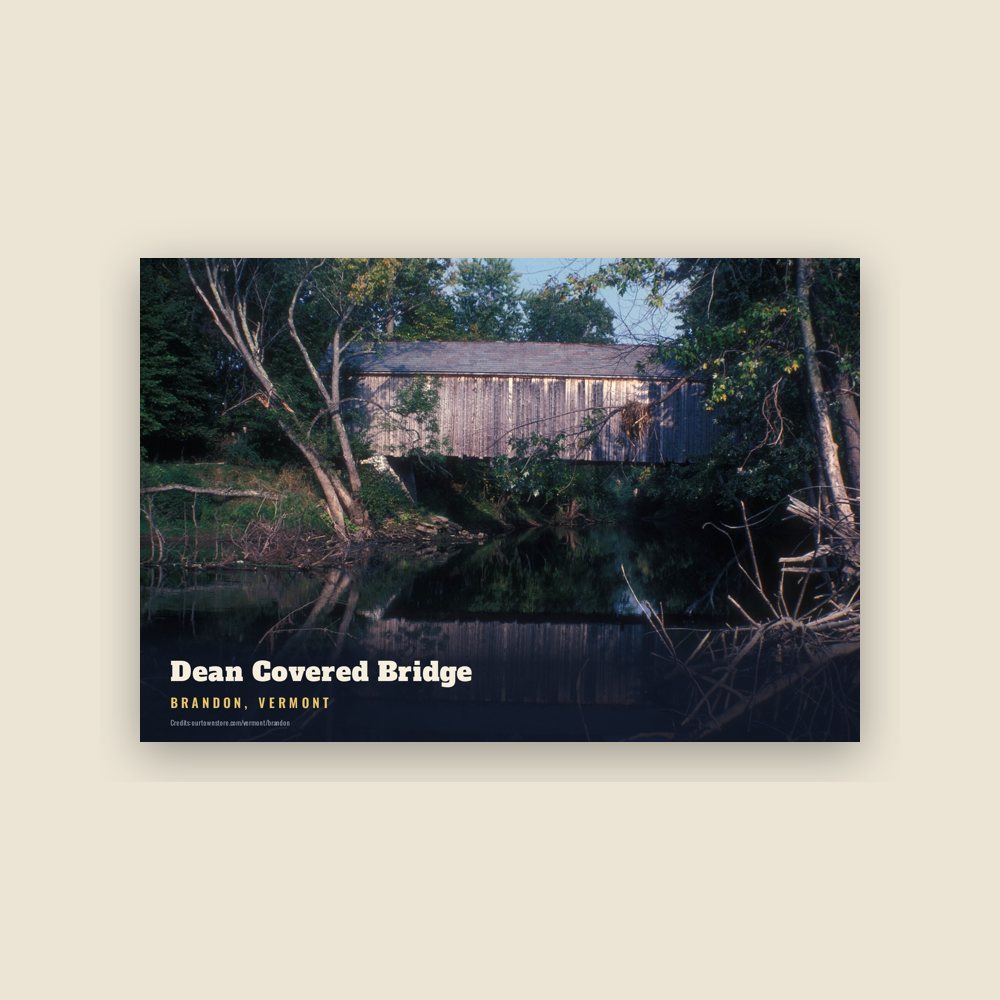
6″×4″ postcard, glossy front
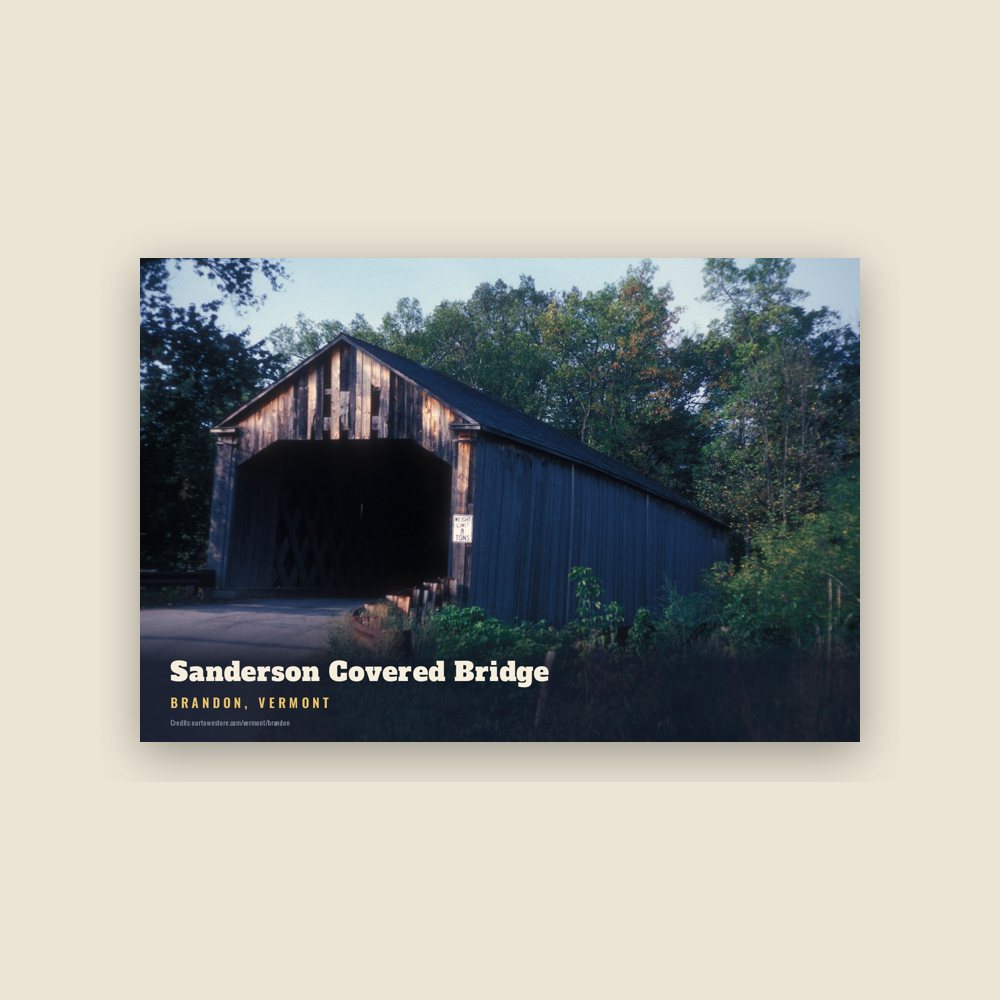
6″×4″ postcard, glossy front
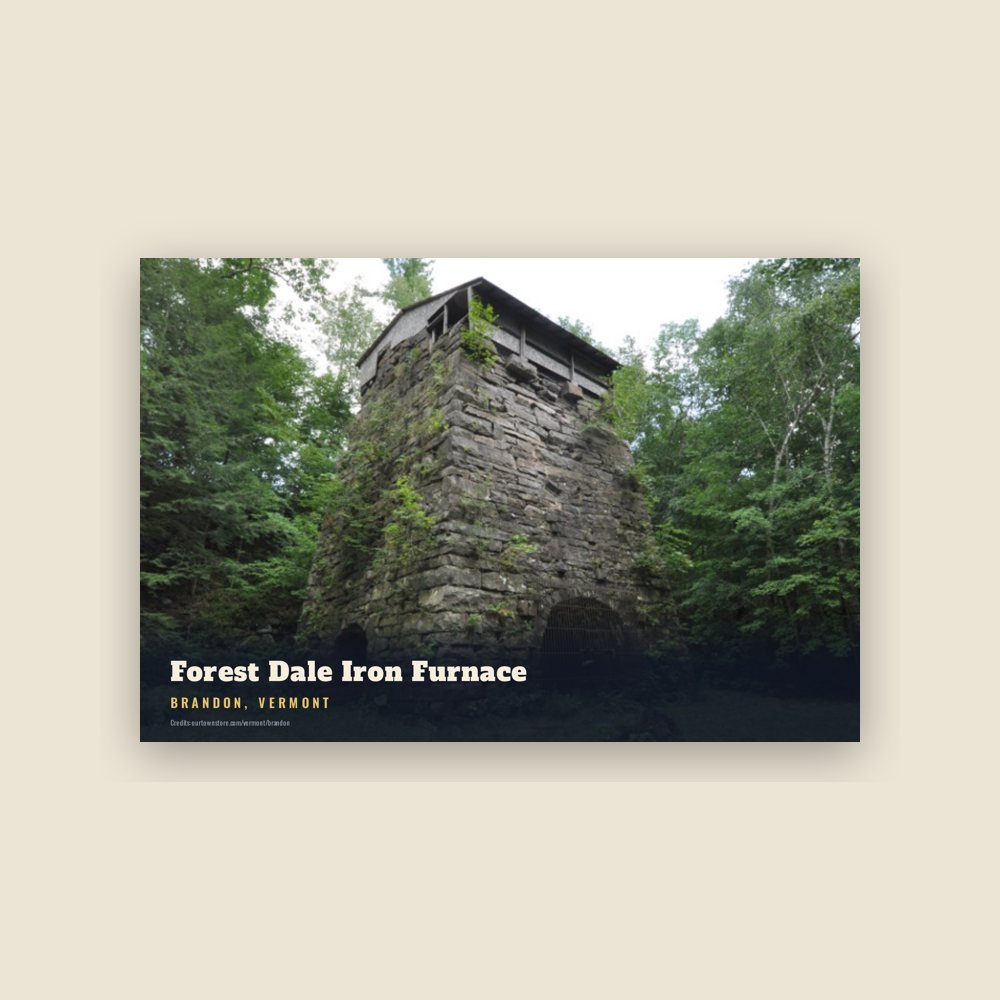
6″×4″ postcard, glossy front
Population 2010: 3,966 → 2020: 4,129
From Wikidata (CC0).
On October 20, 1761, the town of Neshobe was chartered to Capt. Josiah Powers. In October 1784, the name of the town was changed to Brandon by an act of the legislature.
Brandon is a study in early American architecture and Vermont history. When the first settlers came to the area in the mid-1770s, they established the village of Neshobe. The area was rich in natural resources with excellent farmland along the rivers and abundant supplies of timber and minerals. The town flourished during the 1800s with several industries relying on the key resources of waterpower, iron ore and marble. The coming of the railroad in 1849 enabled the manufacture and shipping of iron-based products such as the Howe scale, as well as Brandon paints, wood products and marble.
During its century of rapid growth, Brandon Village evolved a unique village plan. The historic Crown Point military road came through Brandon to connect Lake Champlain to the Atlantic coast. In the ensuing decades, government and individuals developed commercial streets at the core which radiated out from the greens lined with residences leading to farms, mines and quarries in the town. Pearl and Park streets were laid out to be suitable for militia training, resulting in broad, tree-shaded streets with deep front yards.
Statesman Stephen A. Douglas was born in Brandon, and his birthplace is now the Brandon Museum as well as the town's Visitor Center. Douglas returned in 1860 to inform a crowd that Brandon was a good place to be born and leave.
As the early industries began to decline, dairying, stock breeding and tourism became increasingly important and ensured the economic survival of Brandon in the 20th century. The establishment of the Brandon Training School in 1915 was a significant event, providing many employment opportunities for area residents. At its height, the Training School served over 600 Vermont residents. Changes in policy and social service practices led to closing the facility in November 1993. The campus, now called Park Village, is used for a variety of purposes including residential, industrial, and institutional uses.
Brandon's historic downtown, with its entire core of 243 buildings, is listed on the National Register of Historic Places.
Adapted (trimmed) from the Wikipedia article Brandon, Vermont, revision 1374145652 by its contributors, licensed CC BY-SA 4.0.
We share a part of every Brandon sale with local partners, and we'd love to print from your collection. Old photographs, maps and postcards make the best keepsakes.
Partner with us