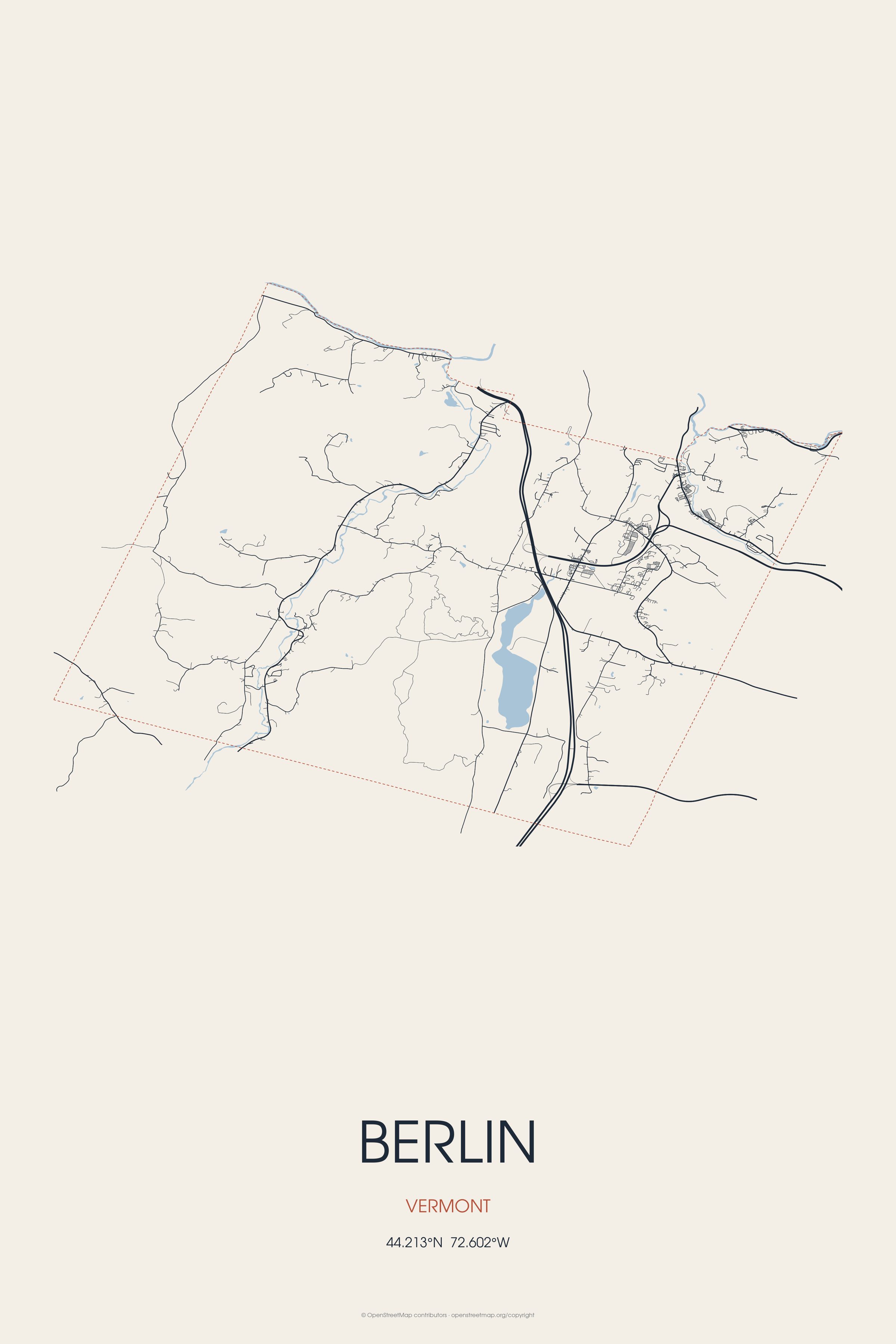
Berlin was chartered June 8, 1763. Landmarks include Edward F. Knapp State Airport, Montpelier and WSKI. Berlin is the birthplace of Chauncey L. Knapp, politician.
Every piece is drawn from Berlin's own map data and historic archives, then printed and shipped from the USA when you order. No two towns look alike.
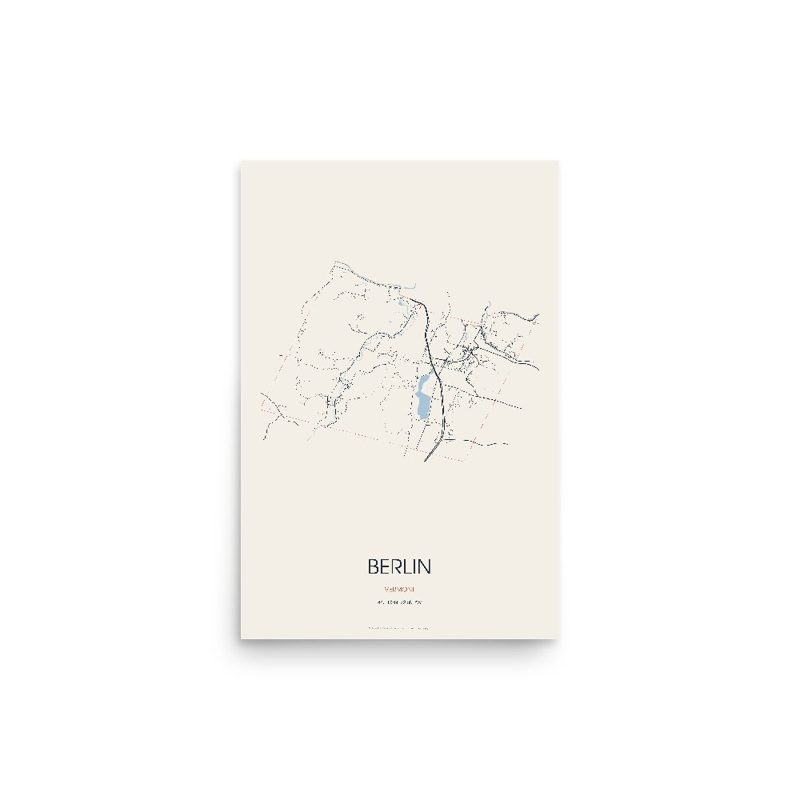
Every road in town, on archival matte paper
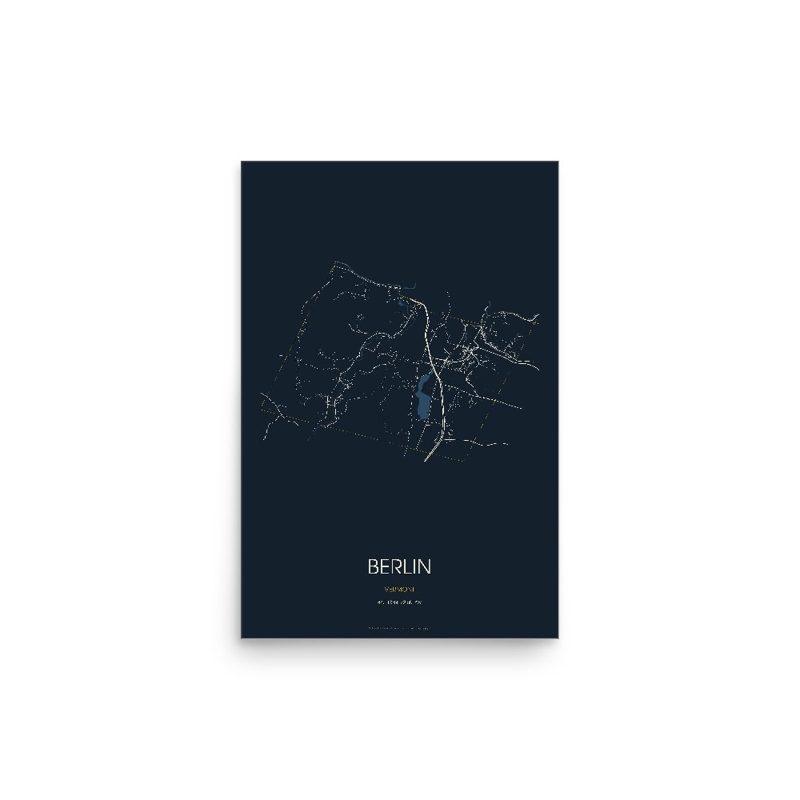
The same map, in navy and silver
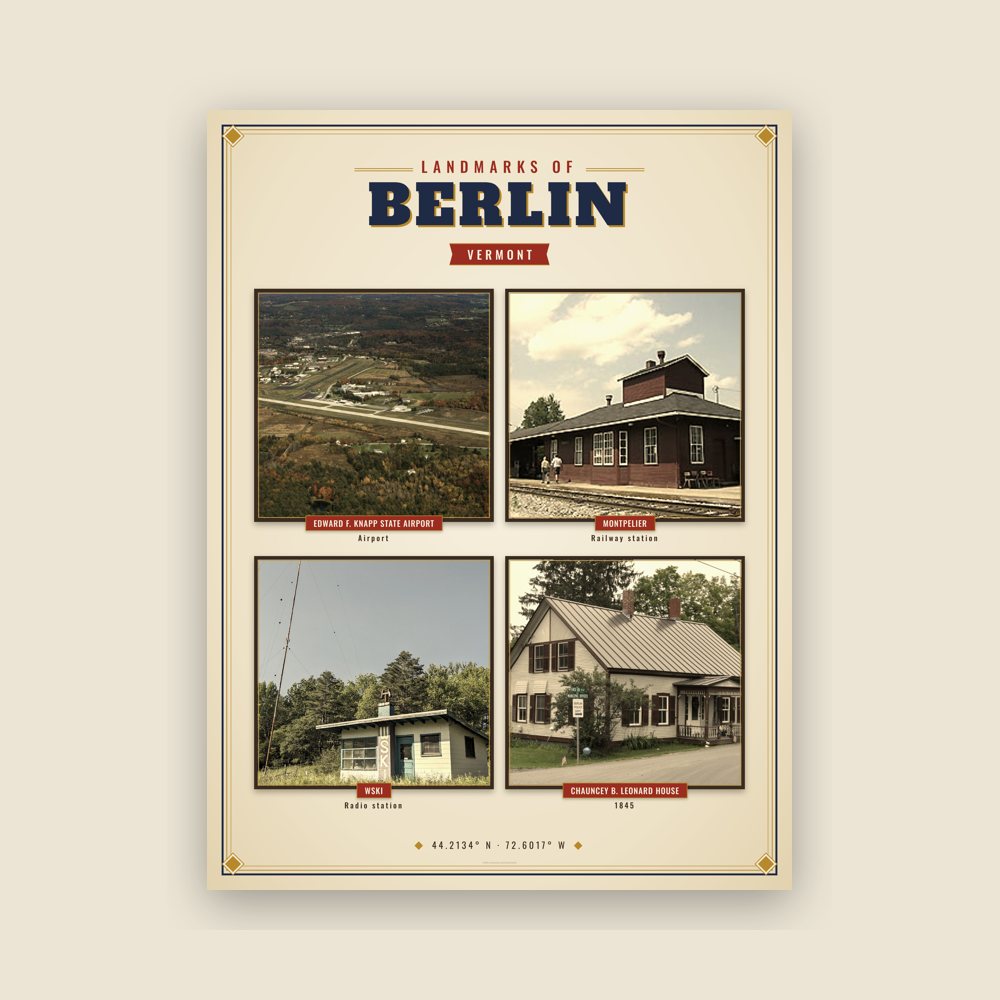
Nine local landmarks, archival matte
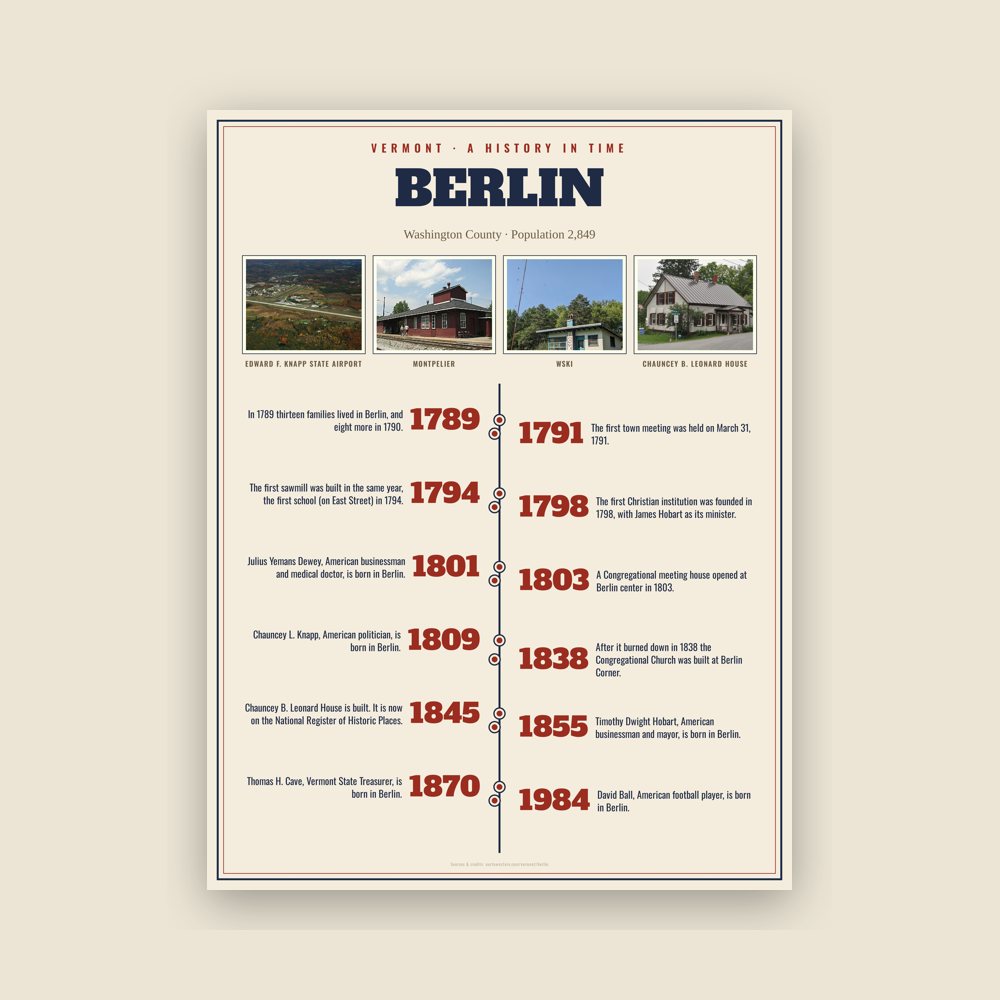
The town's story in dates, from its own records, for home or classroom
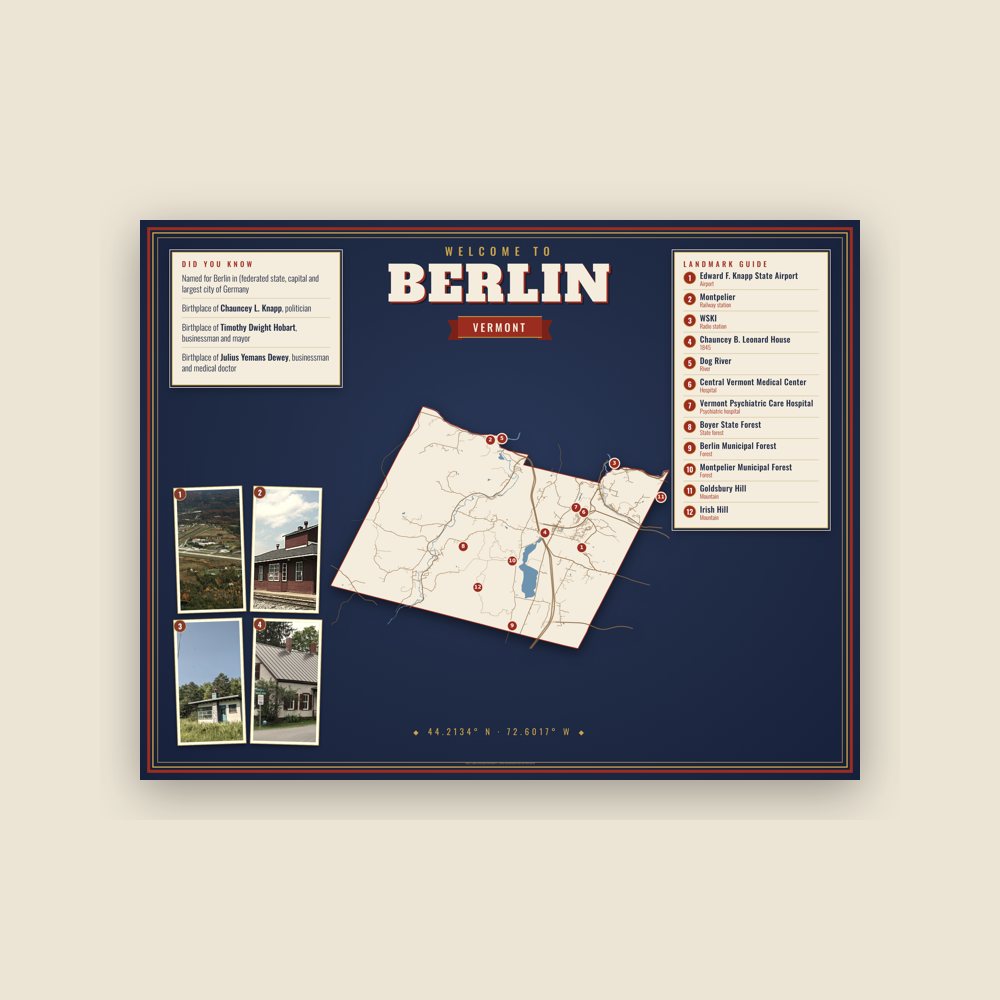
Map of local landmarks, washable fabric
Heavy-blend fleece, street map printed on the back
Soft Bella+Canvas jersey
Glossy ceramic, dishwasher safe
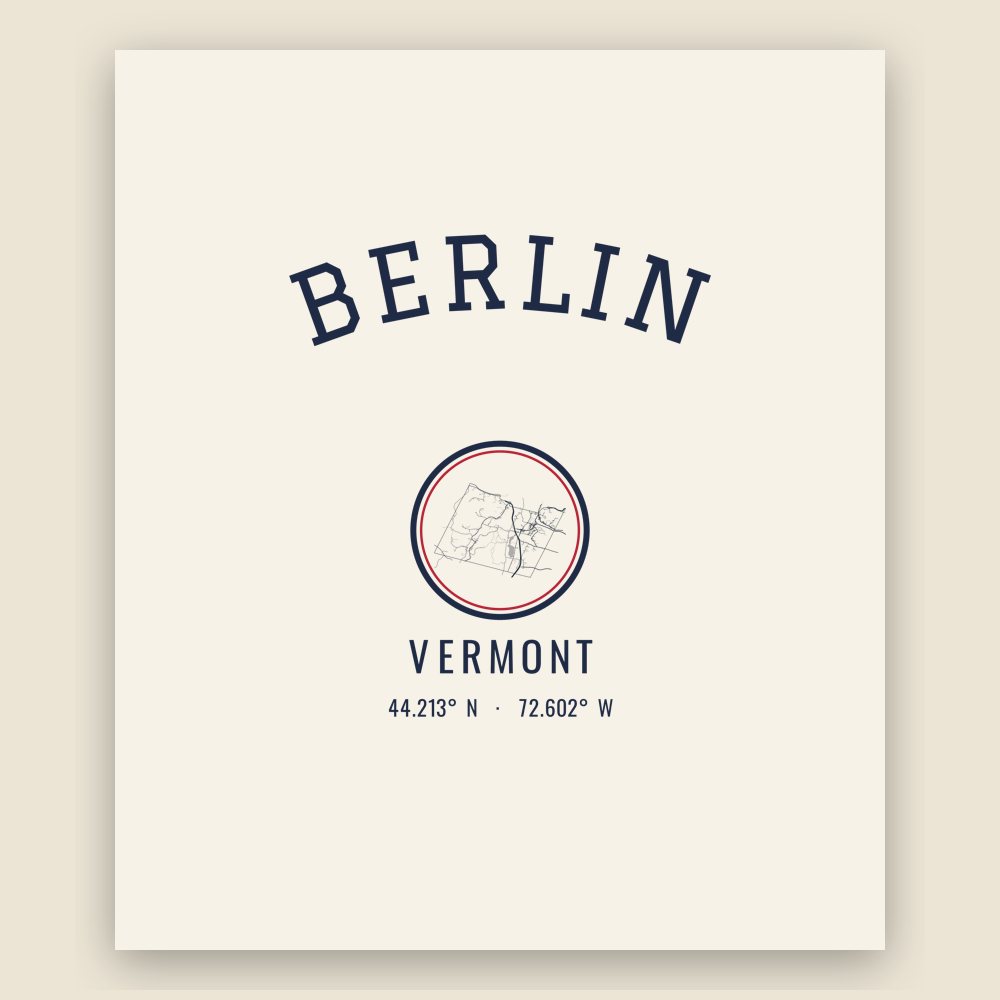
Ceramic keepsake, gold ribbon
Weatherproof, for the front walk
24″×16″, printed coir-look fibers, rubber back
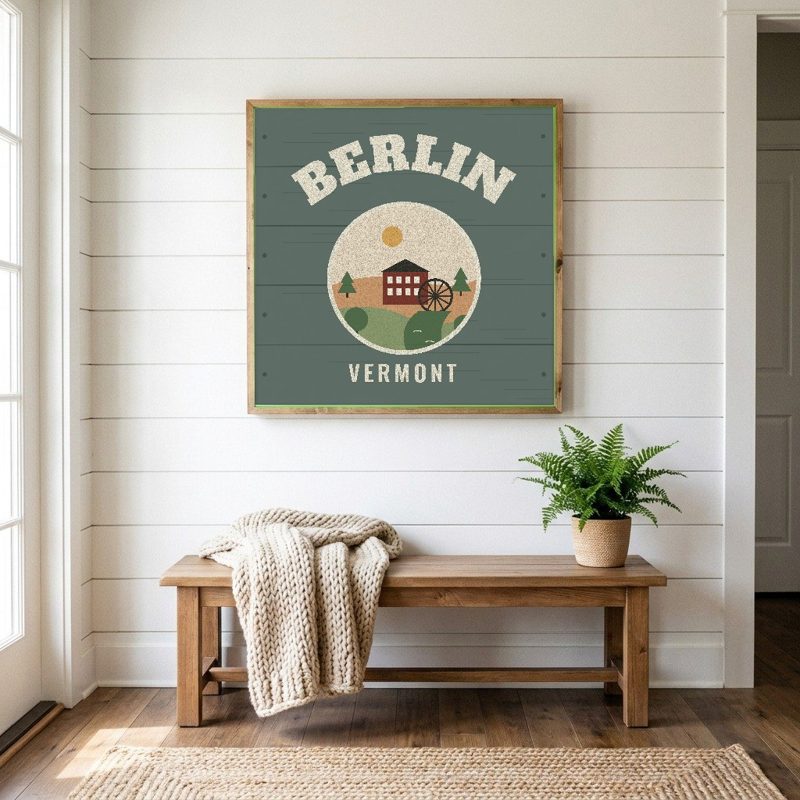
12″×12″ printed wood, ready to hang
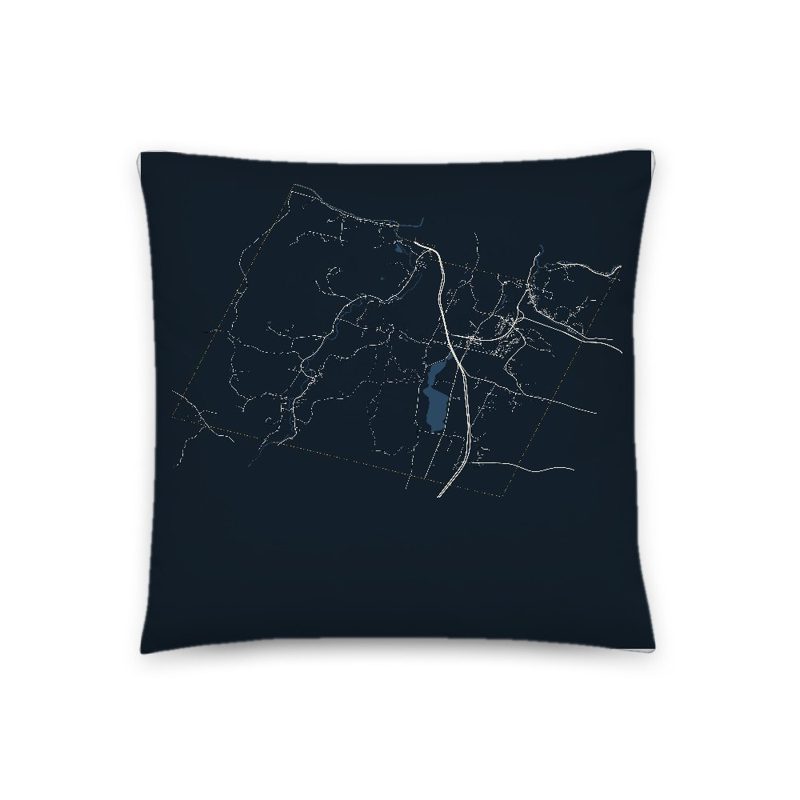
Soft-touch, zip cover

Sturdy all-over-print tote
Glossy top, cork back
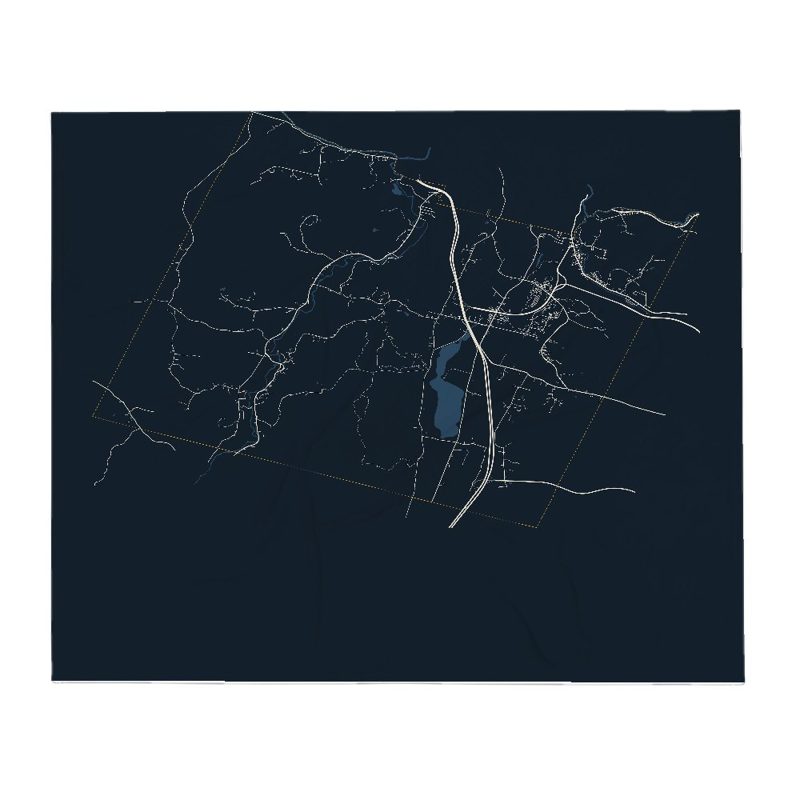
Soft fleece, 50″×60″
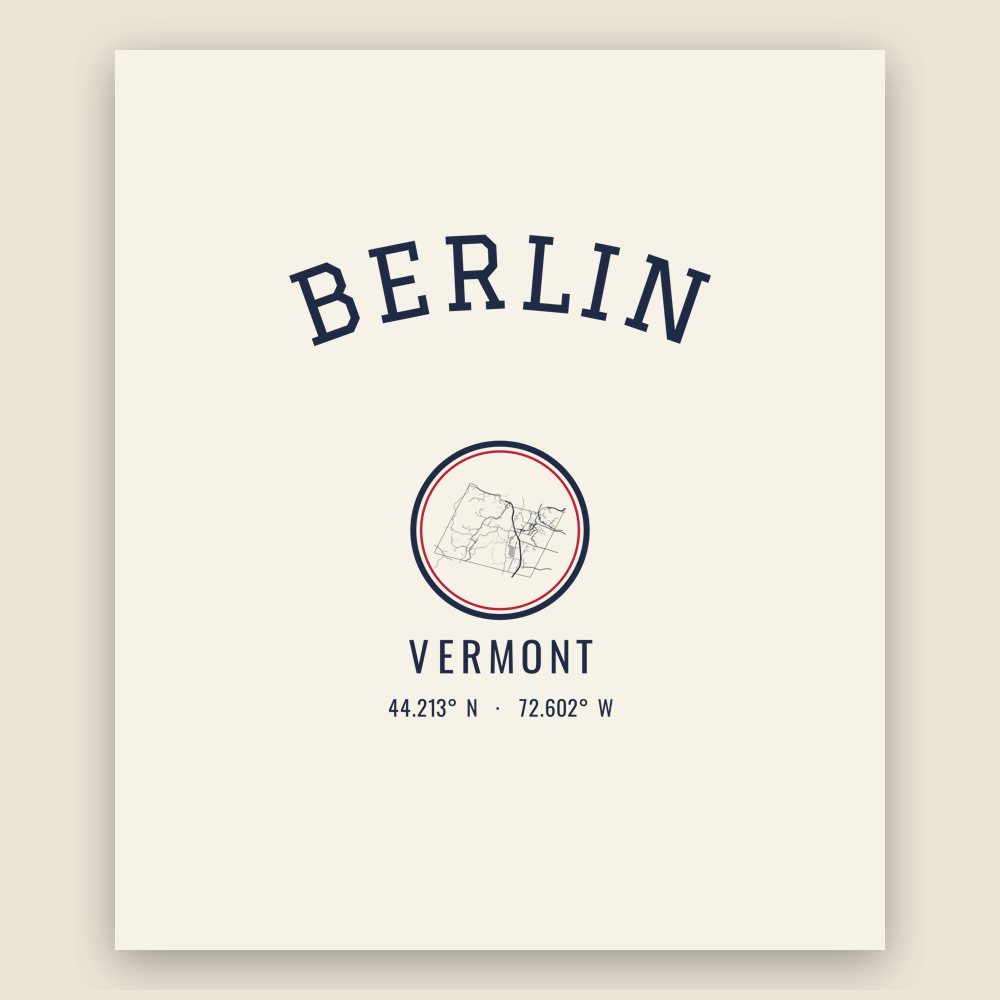
20 oz, double-wall stainless
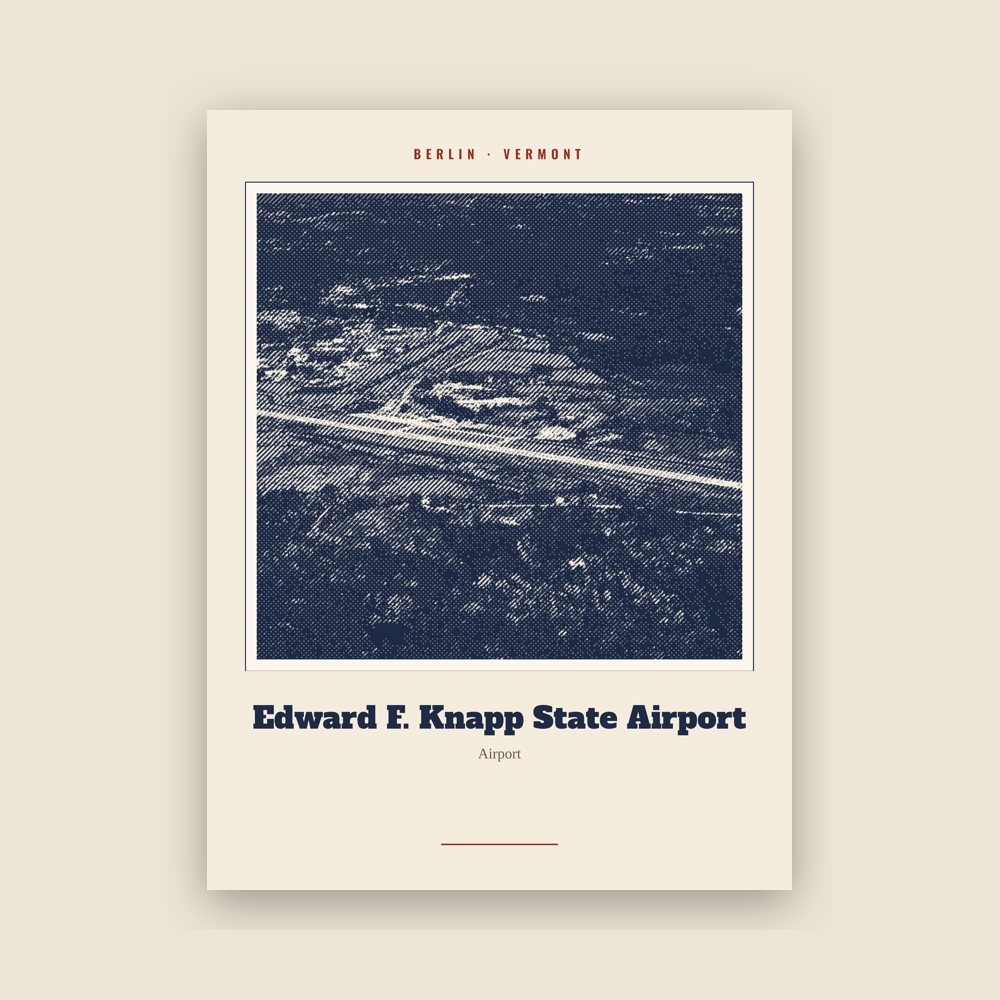
Archival matte print of a local landmark, credited to its photographer
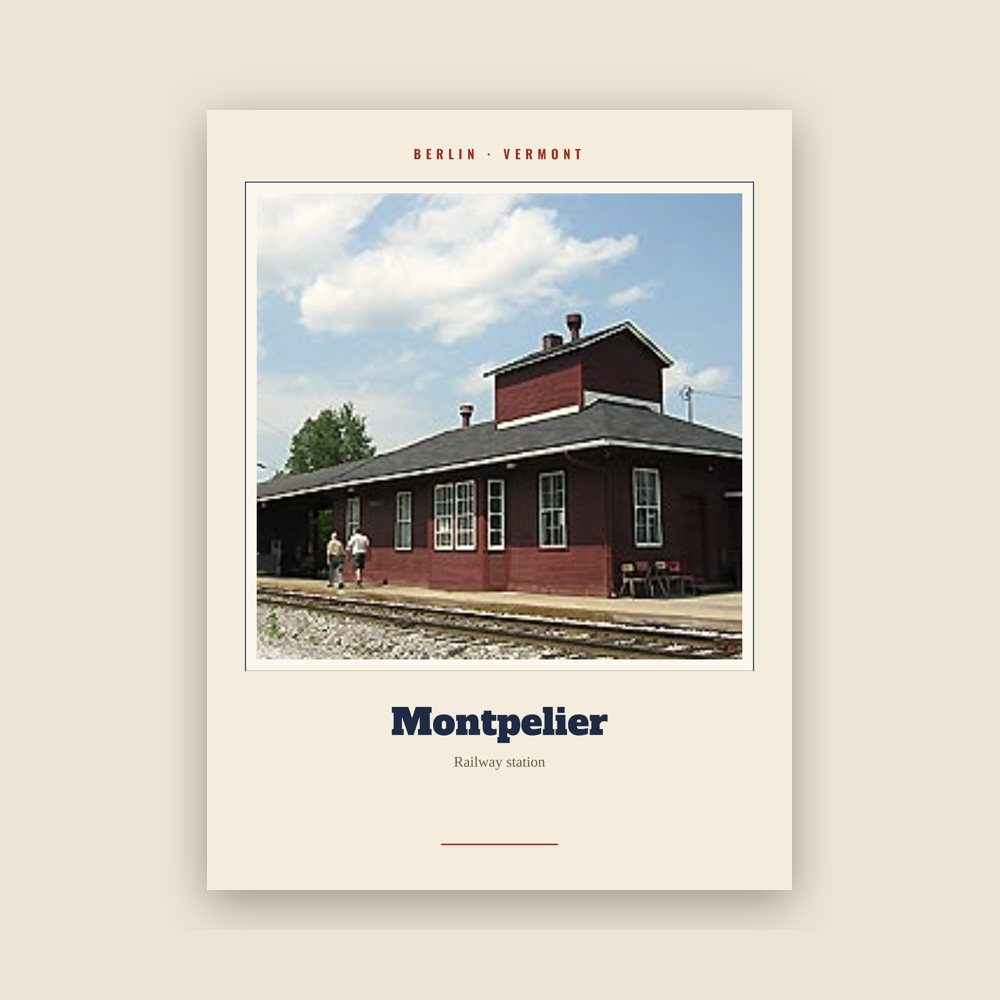
Archival matte print of a local landmark, credited to its photographer
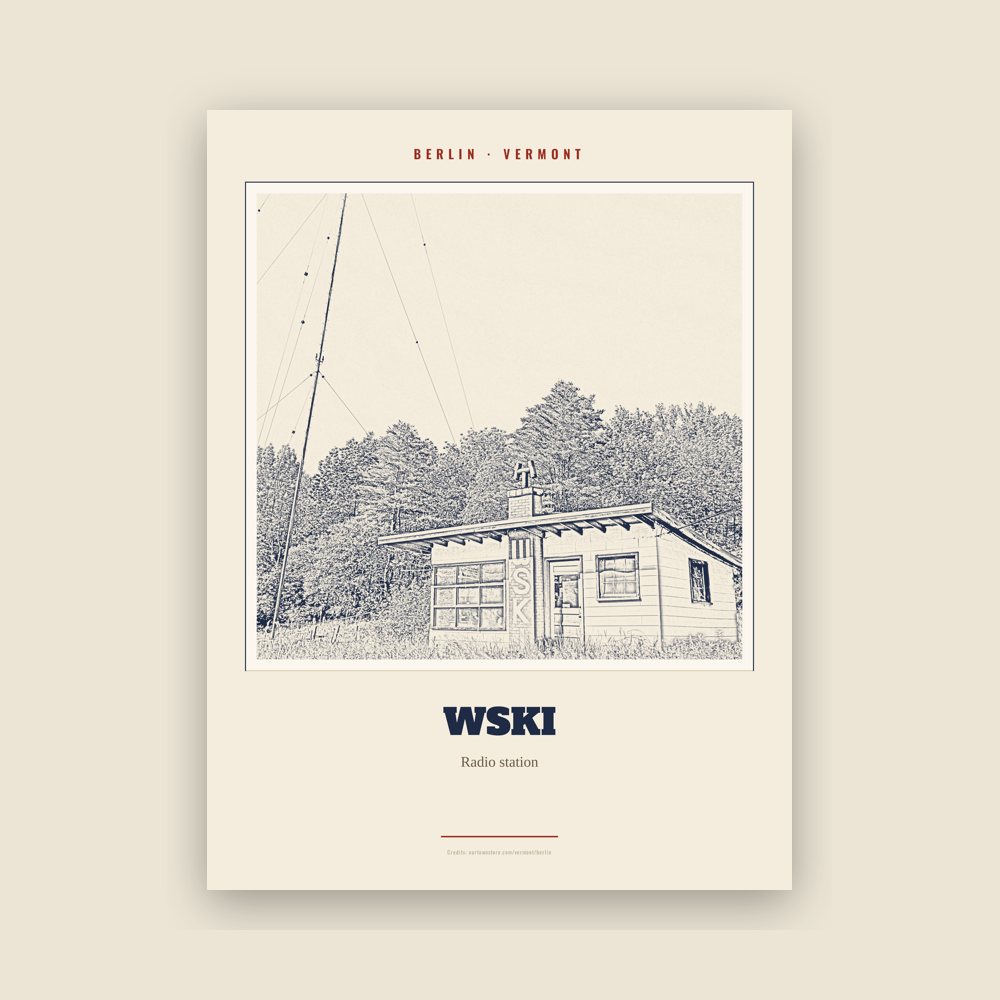
Archival matte print of a local landmark, credited to its photographer
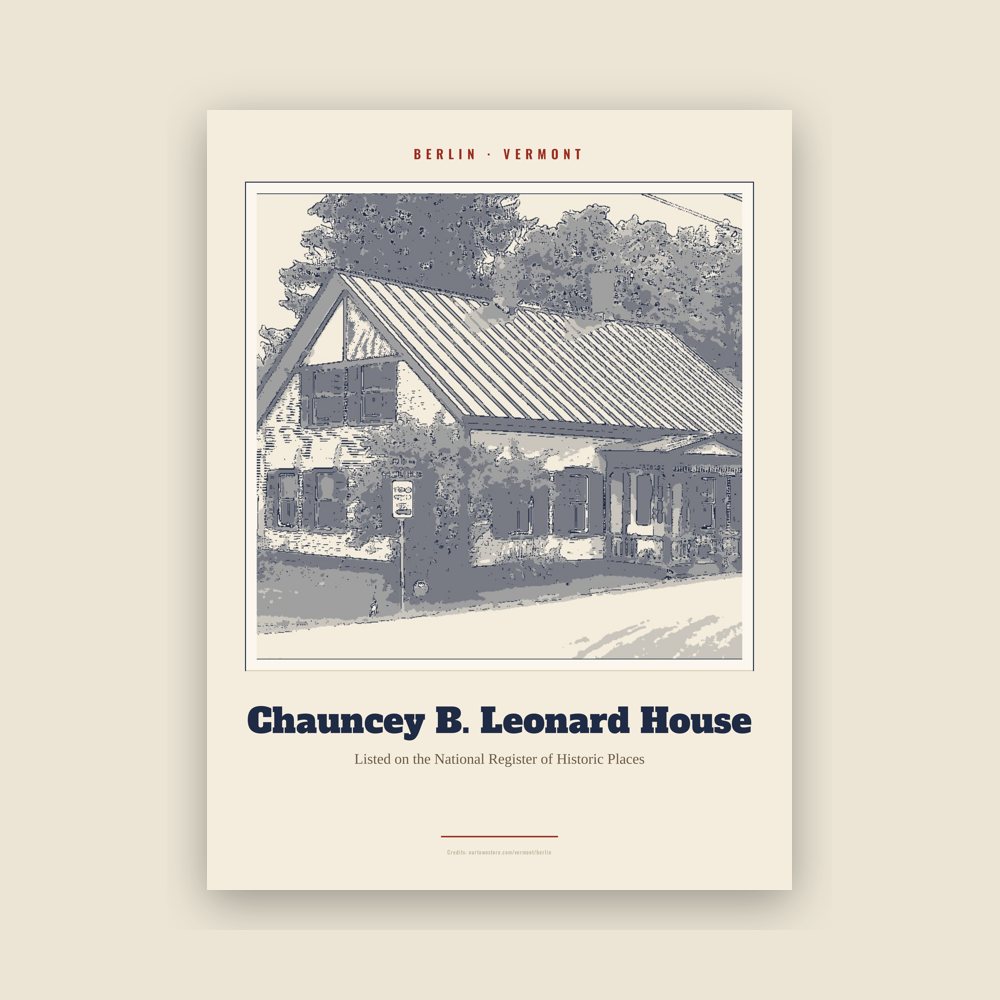
Archival matte print of a local landmark, credited to its photographer
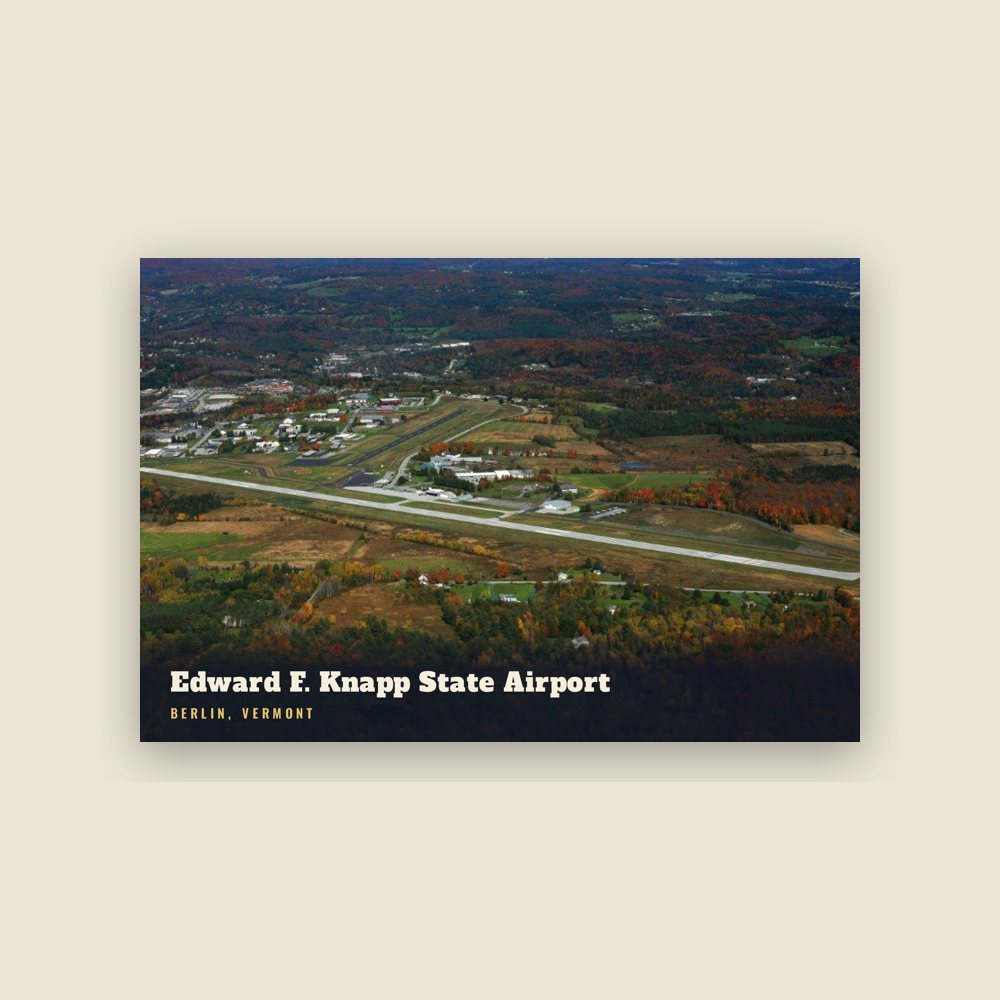
6″×4″ postcard, glossy front
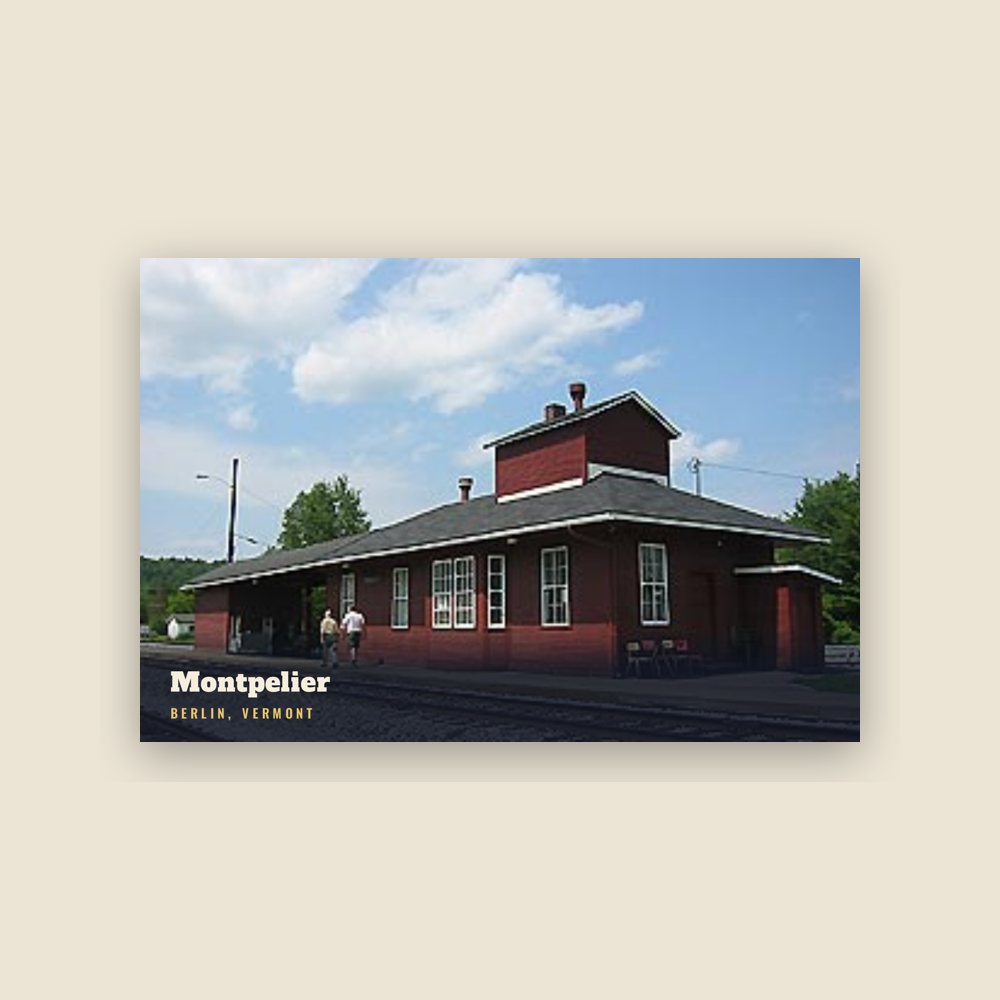
6″×4″ postcard, glossy front
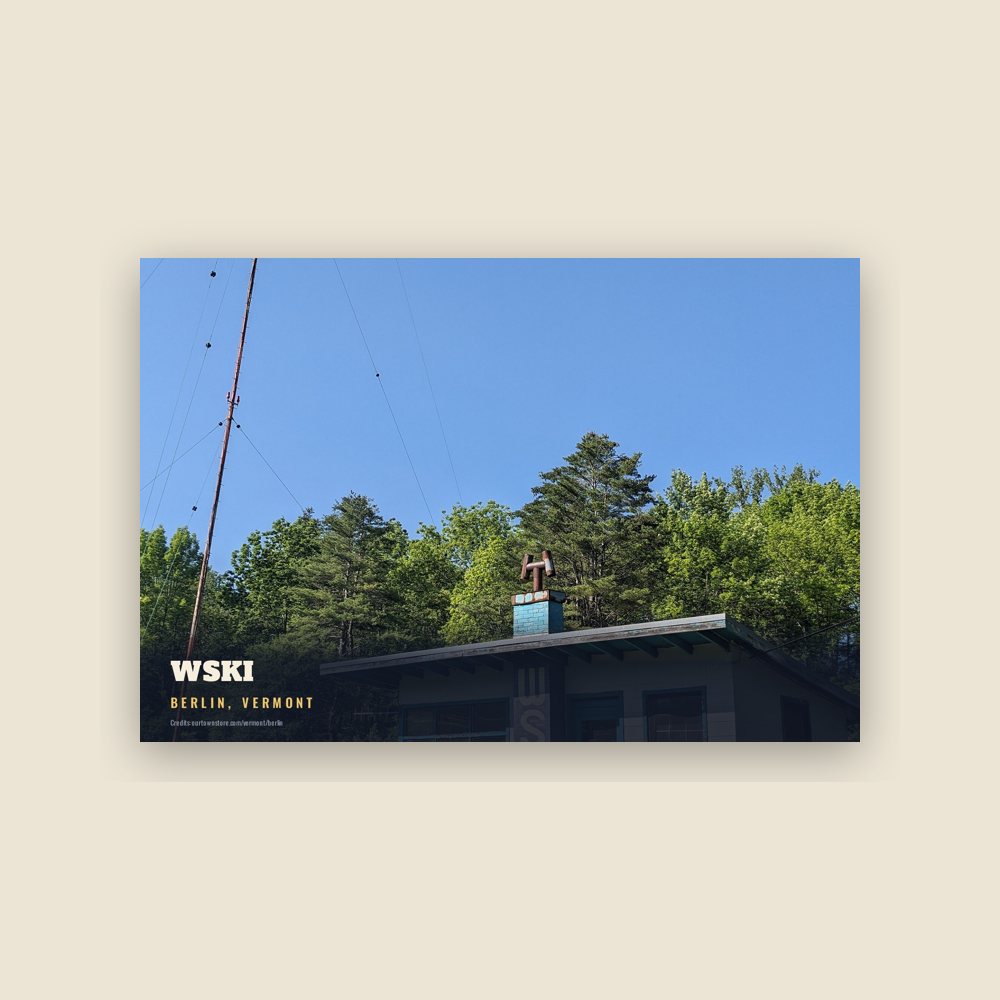
6″×4″ postcard, glossy front
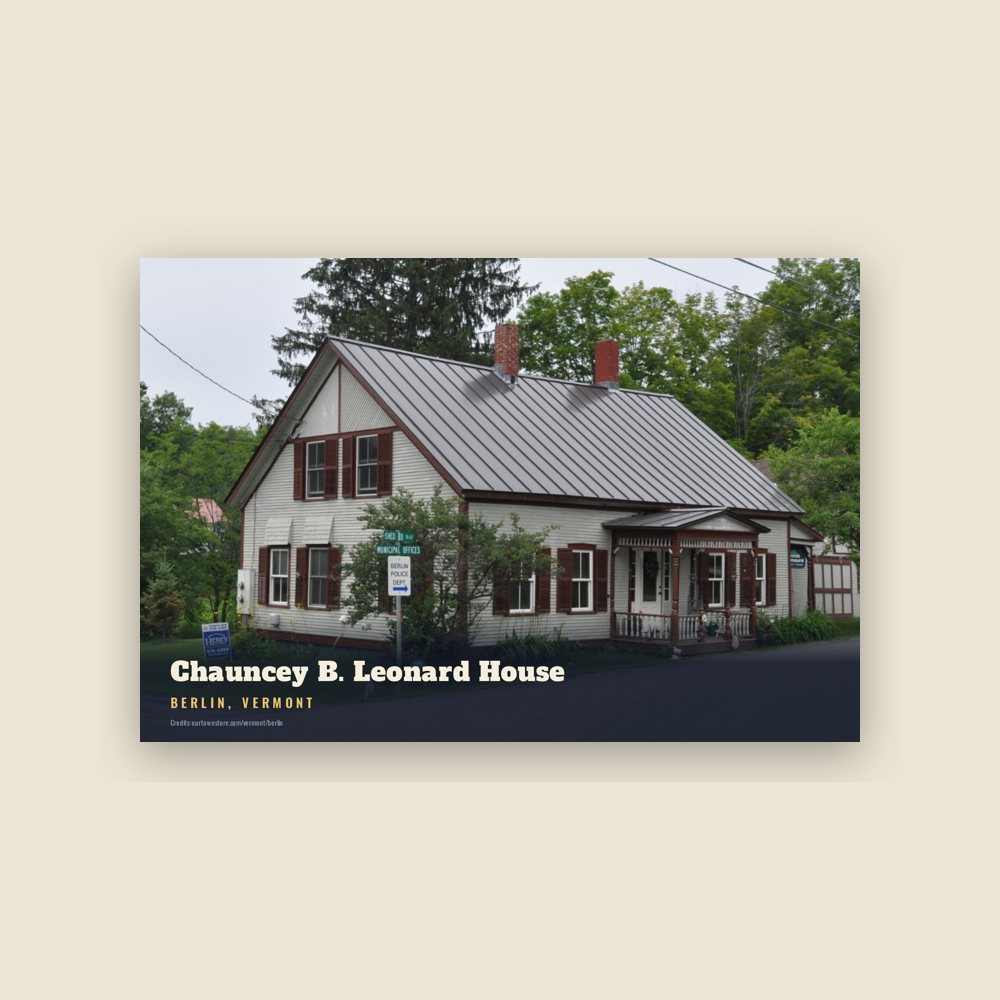
6″×4″ postcard, glossy front
Named for Berlin (federated state, capital and largest city of Germany).
Population 2010: 2,887 → 2020: 2,849
From Wikidata (CC0).
Berlin was chartered June 8, 1763. The name refers to Berlin, Germany, and was the only German town name in this new English colony. The grantees who received the 70 original rights to the township were priests, merchants and judges. The charter was issued by the Royal Governor of New Hampshire, Benning Wentworth, and stated that each "proprietor, settler or inhabitant" should pay one ear of Indian corn for each acre of land, and after ten years, one shilling for each 100 acres.
It took 22 years until the first settlers arrived in the area: Ebenezer Sanborn coming from nearby Corinth, founding the "Bradford farm", and Joseph Thurber from New Hampshire, founding the "Shepard farm". Both left a year later for New York state.
In 1788 a legislature of the state of Vermont stated that "the town of Randolph, Braintree, Brookfield, Roxbury, Williamstown, Northfield, Wildersburgh, Berlin and Montpelier [...] hereby are formed into one entire probate district, by the name of the district of Randolph."
Jacob Fowler, a hunter, was the first settler who stayed and left descendants in town. Other early settlers were Moses Smith, Daniel Morse, John Lathrop, and Hezekiah Silloway. In 1789 thirteen families lived in Berlin, and eight more in 1790. The first child born in Berlin was Abigail Black (1789).
The first town meeting was held on March 31, 1791. The first sawmill was built in the same year, the first school (on East Street) in 1794. The first Christian institution was founded in 1798, with James Hobart as its minister. A Congregational meeting house opened at Berlin center in 1803. After it burned down in 1838 the Congregational Church was built at Berlin Corner.
Adapted (trimmed) from the Wikipedia article Berlin, Vermont, revision 1378494077 by its contributors, licensed CC BY-SA 4.0.
We share a part of every Berlin sale with local partners, and we'd love to print from your collection. Old photographs, maps and postcards make the best keepsakes.
Partner with us